
8 Best Circular Saw Blades of 2026
This post contains affiliate links. As an Amazon Associate, we earn from qualifying purchases.
The Diablo 7-1/4″ 24T Framing Blade stands out as the best overall circular saw blade for general use, delivering reliable performance and clean cuts in framing tasks. For those on a budget, the ANGELSWORD 7-1/4″ 24T 10-Pack offers solid value without sacrificing too much quality, while the DEWALT 7-1/4″ 24T Smooth Cut is a top pick if you prioritize durability and long-term use.
Most people don’t realize how much a blade affects their saw’s performance, a poor one can turn a simple cut into a jagged, dangerous mess. After comparing specs, owner feedback, and brand reputation, I focused on tooth count, carbide quality, and kerf to find blades that deliver where it matters.
This guide breaks down what to look for and why, based on real-world use and consistent performance across materials and tools.
Top 8 Circular Saw Blades in the Market
The Best Circular Saw Blades, Reviewed
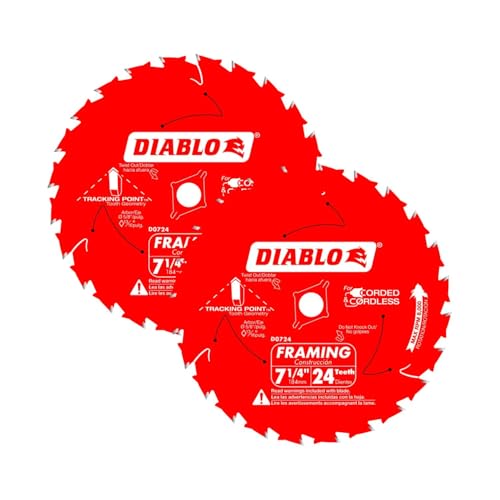
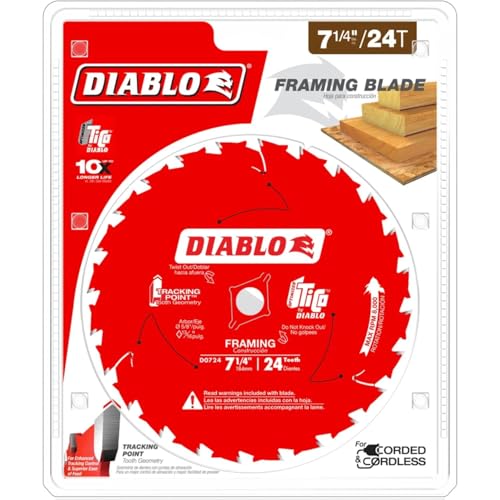
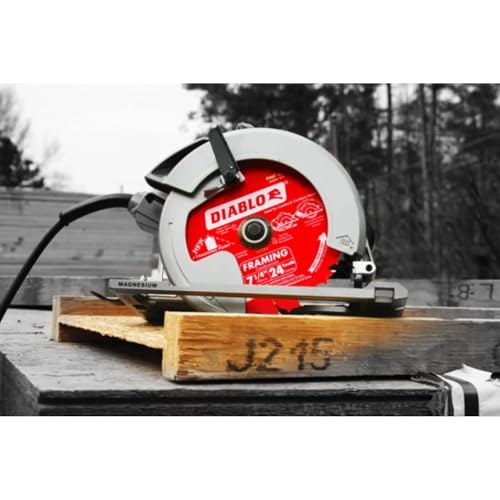
Diablo 7-1/4″ 24T Framing Blade
Strengths
- 5X longer life
- Perma-ShIELD coating
- Anti-vibration vents
Trade-offs
- Higher cost per blade
- Not for finish cuts
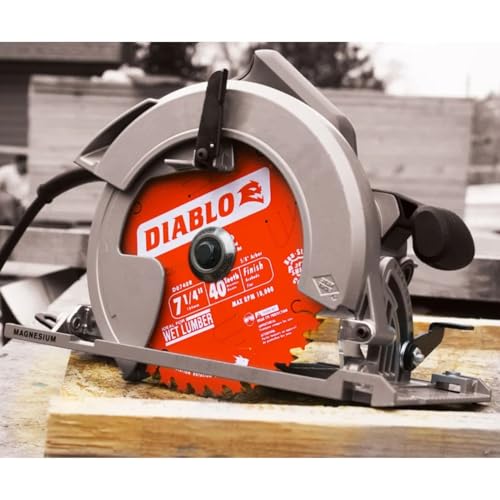
This Diablo D0724A 2-pack is the closest thing to a perfect all-rounder in the framing blade category. The Tracking Point Tooth Design isn’t just marketing, it genuinely improves cut straightness and extends blade life, with owners reporting up to 5X more cuts than basic blades. The Perma-SHIELD coating keeps the blade cooler and cleaner, which matters when you’re running cordless saws all day.
It delivers a noticeably smoother cut than budget 24T blades, with less vibration and better nail resistance. The anti-vibration tech helps too, making it a favorite among roofers and remodelers who demand precision even in rough work. Compared to the ANGELSWORD pack, it’s pricier but lasts longer and cuts cleaner. For most pros, this is the smarter buy.
Product photos

DEWALT 7-1/4″ 24T Smooth Cut
Strengths
- Thick plate durability
- PTFE anti-friction coating
- Superior tracking
Trade-offs
- Heavier than standard
- Needs powerful saw
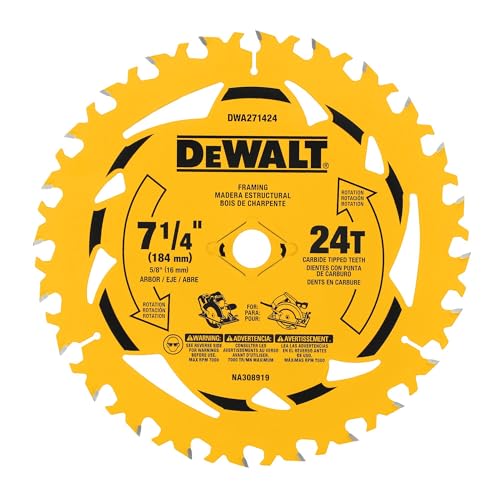
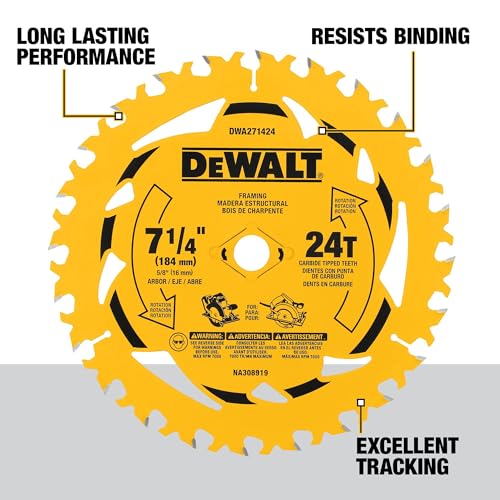
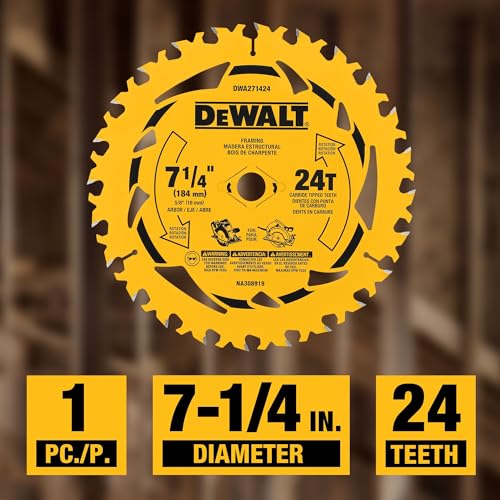
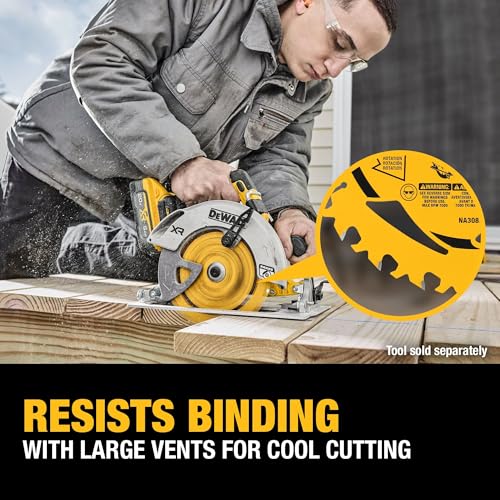
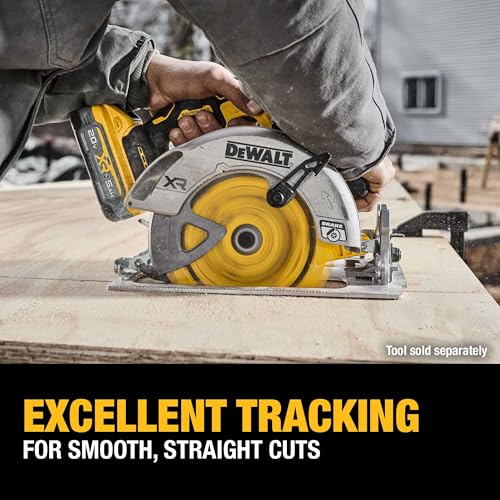
DEWALT’s DWA271424 is built like a tank. The thick plate and PTFE coating stand out, owners report less binding and smoother tracking, even in wet or pressure-treated lumber. It’s clearly engineered for durability, with claims of up to 2X life backed by real-world feedback from framers who push their tools hard.
Compared to thinner 24T blades, this one resists deflection better and holds straighter cuts, especially in tough materials. The optimized tooth geometry helps it chew through nail-embedded wood without catastrophic failure. It’s heavier and demands more power, so it’s not ideal for every compact saw, but on a high-torque cordless model, it’s a beast. If you’re replacing blades too often, this one might save you money long-term.
Product photos

Diablo 7-1/4″ 40T Finish Blade

Strengths
- 40T fine finish
- Perma-ShIELD coating
- Laser-cut kerf
Trade-offs
- Slower in thick lumber
- Higher price point
If you’re after clean, splinter-free cuts in hardwood or plywood, the Diablo D0740A is built for that job. The 40-tooth count with TiCo hi-density carbide strikes a smart balance between speed and finish, more teeth than a framing blade, but not so many that it bogs down in rip cuts. The Perma-ShIELD coating stands out in owner feedback, with many noting less resin buildup and cooler running, especially during long crosscutting sessions.
The hardened steel body and laser-cut kerf help maintain stability and accuracy, which matters when you’re working with expensive sheet goods. Compared to basic hardware store blades, this one delivers noticeably smoother results with less sanding. It’s not the longest-lasting framing blade, but that’s not its job. For finish carpentry or cabinet work, it’s a solid performer that backs up its premium price with real-world refinement.
Product photos
Revvstark 7-1/4″ 24T/40T/60T Combo

Strengths
- 3-tooth-count versatility
- Thermal expansion grooves
- Anti-kickback design
Trade-offs
- Not top-tier sharpness
- 60T can struggle in thick hardwood
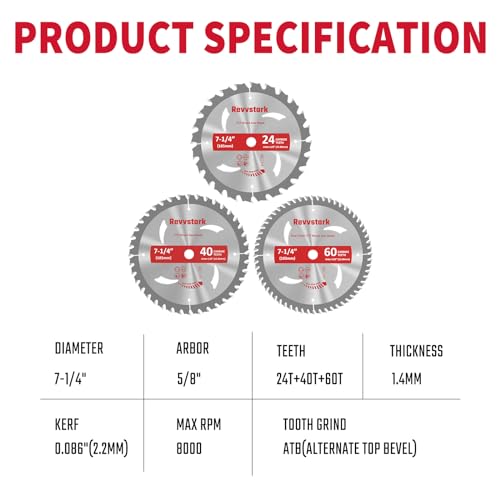
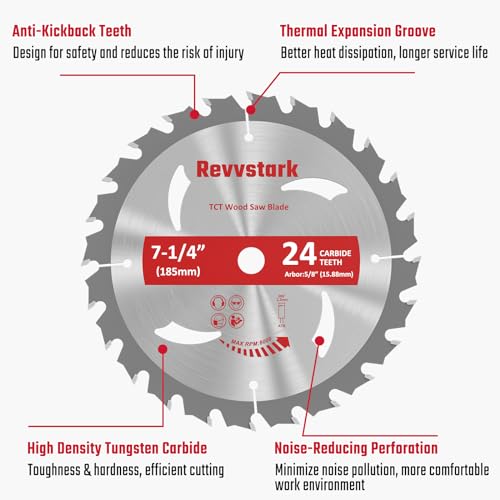
This Revvstark combo pack covers a lot of ground for the weekend warrior or pro who wants one box to handle everything from rough framing to finish cuts. The 24T blade handles dimensional lumber just fine, the 40T works well for general crosscuts and ripping, and the 60T delivers impressively clean results on plywood, much better than you’d expect at this price. The thin kerf and thermal expansion grooves help with heat management, and owners report less vibration than cheaper single blades.
It’s not a match for premium single blades in extreme durability or precision, but for a balanced mix of performance and cost, this set is hard to beat. The anti-kickback design and noise-reducing vents add real value, especially for users working in tight spaces or with compact saws. When compared to buying blades individually, this pack saves money and shelf space.
Product photos



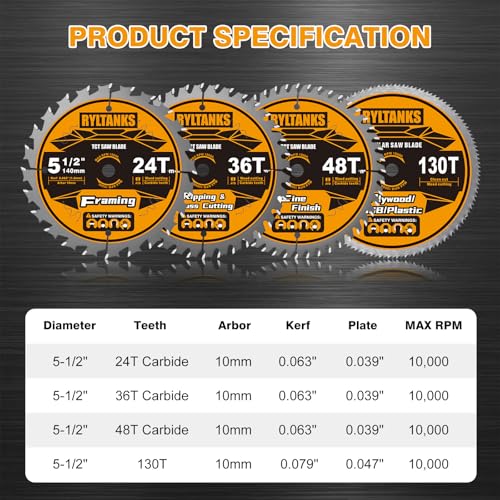
Ryltanks 5-1/2″ 4-Pack Blades
Strengths
- 130T ultra-fine option
- Laser-cut stabilizers
- 10mm arbor compatibility
Trade-offs
- Not for heavy-duty framing
- Limited depth of cut
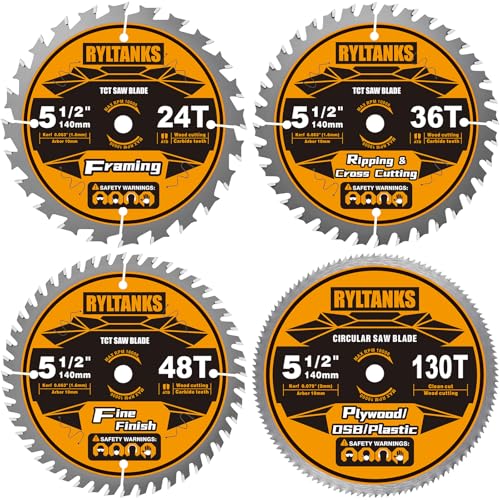
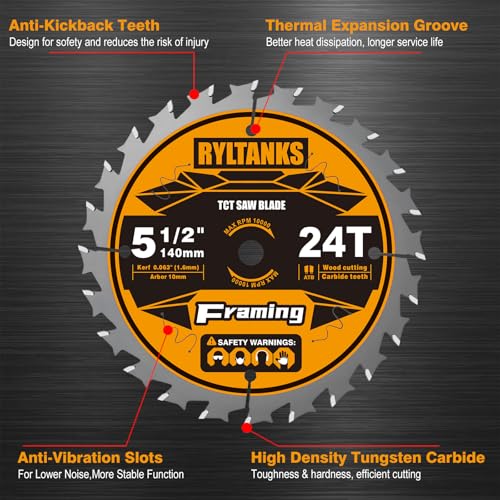
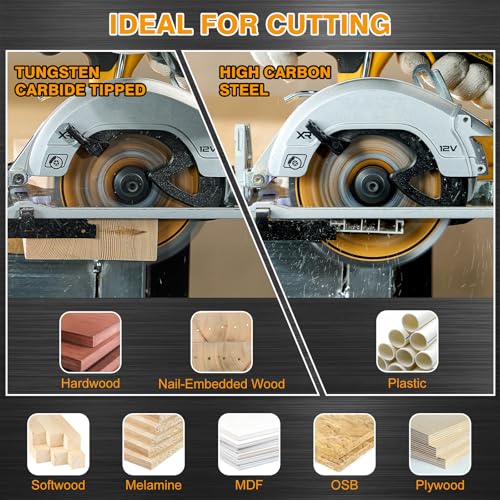
Compact saw users finally get a serious upgrade with the Ryltanks 4-pack. The inclusion of a 130-tooth blade is rare at this size and makes a huge difference when cutting thin plywood or plastic, delivering a finish you’d expect from a table saw. The 24T, 36T, and 48T blades cover framing, ripping, and fine crosscuts, making this set ideal for anyone using a 5-1/2″ saw for trim, small decks, or remodeling.
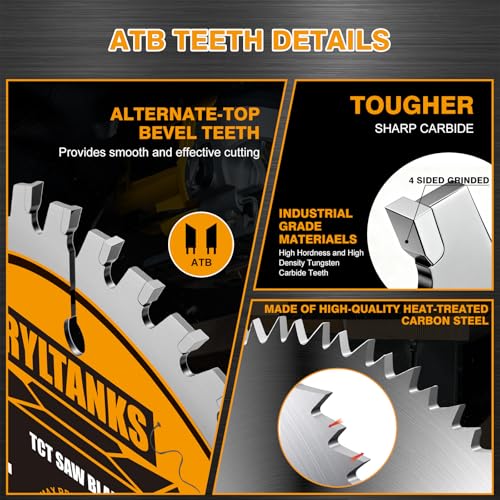
Owners praise the laser-cut stabilizer vents for reducing noise and vibration, which is critical in lightweight saws prone to chatter. The 10mm arbor fits most European and compact models, and the C3-grade carbide holds an edge well. It’s not for heavy framing, but for precision work where a full-size saw won’t fit, this pack is unmatched in versatility.
Product photos
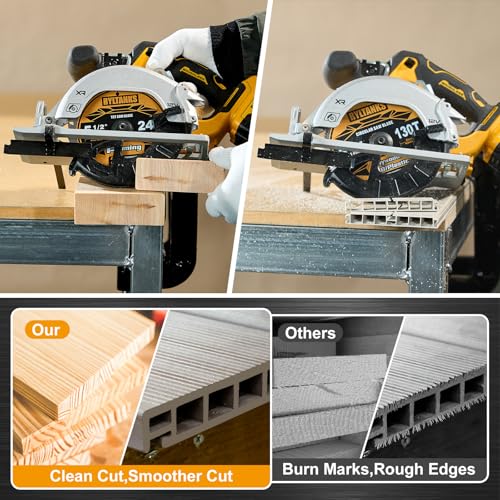
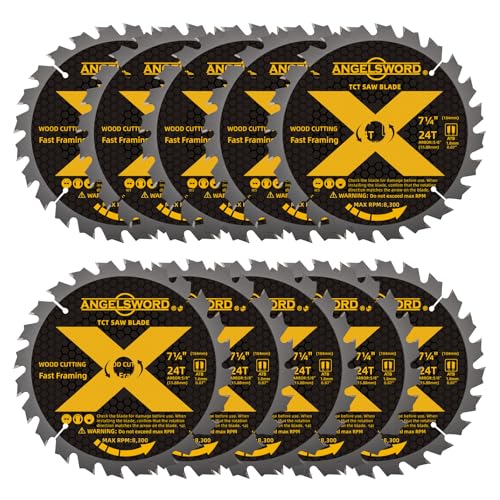
ANGELSWORD 7-1/4″ 24T 10-Pack
Strengths
- Thin kerf
- 24T aggressive cut
- 10-pack value
Trade-offs
- Not for finish work
- Limited heat resistance
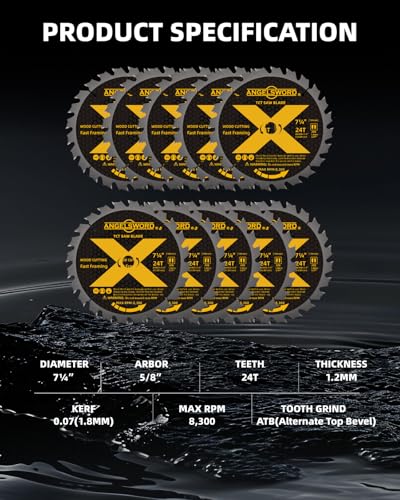
This 10-pack of ANGELSWORD 24T blades is a no-frills, high-value option for anyone burning through blades on rough framing jobs. The 24-tooth ATB design with a thin kerf means fast, aggressive cuts, exactly what you want when ripping through dimensional lumber or decking. Owners consistently report these hold up well on cordless saws, especially when tackling pressure-treated wood or OSB, though they’re not meant for fine woodworking.
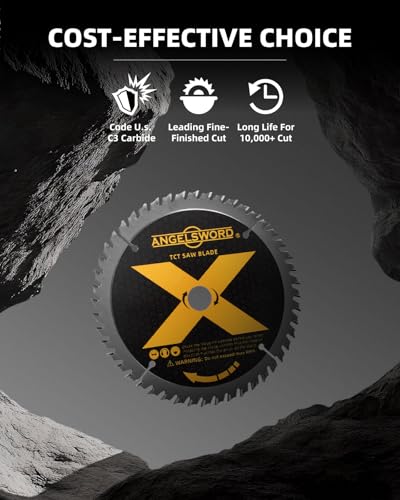
The tungsten carbide teeth seem to deliver on longevity for the price, and the 5/8″ arbor fits most common 7-1/4″ saws without issue. While they won’t match the refined cut of a Diablo or DEWALT premium blade, they do what they promise: cut fast and keep going. For rough framing where edge quality isn’t critical, this pack offers a smart way to keep spares on hand without overspending.
Product photos



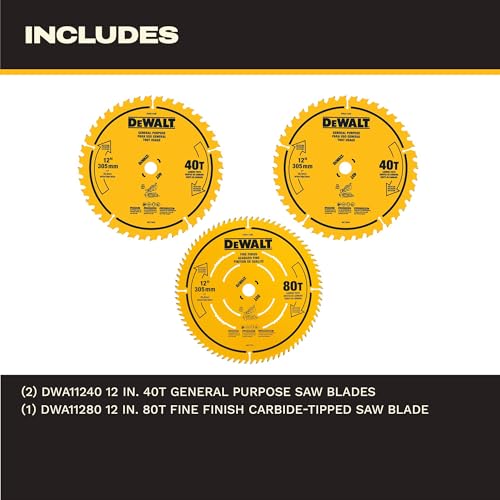
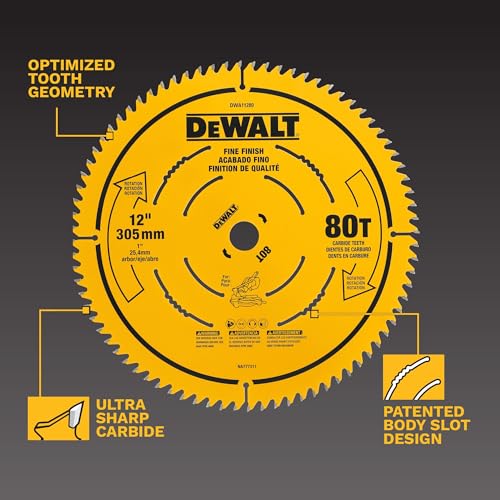
DEWALT 12″ 80T Fine Finish

Strengths
- 80T ultra-fine finish
- Low-vibration body
- Sharp carbide teeth
Trade-offs
- Requires high-torque saw
- Not for ripping thick stock
The DEWALT DWA11280 is built for serious woodworkers running large table saws or sliding miters. With 80 teeth and an ultra-sharp carbide rim, it’s engineered for ultra-fine finish cuts in hardwoods, veneered plywood, and MDF, materials where tearout is a real concern. The patented body slot design reduces vibration, which owners confirm translates to cleaner, quieter cuts, especially at high RPMs.
This blade shines when paired with a 12-inch saw that can deliver consistent power. It’s overkill for a handheld circular saw, but on a stationary rig, it’s a precision tool. Compared to similar 80T blades from Freud or Diablo, it holds its own in edge quality and durability. The downside? It’s slow in deep rip cuts and demands a powerful motor, so it’s not for every tool in the shop.
Product photos


Evolution 14″ 66T Metal Blade
Strengths
- Cold cutting
- No sparks
- Burr-free finish
Trade-offs
- Mild steel only
- Low RPM requirement
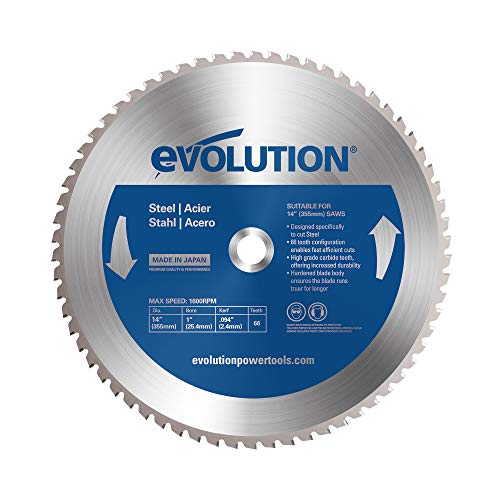
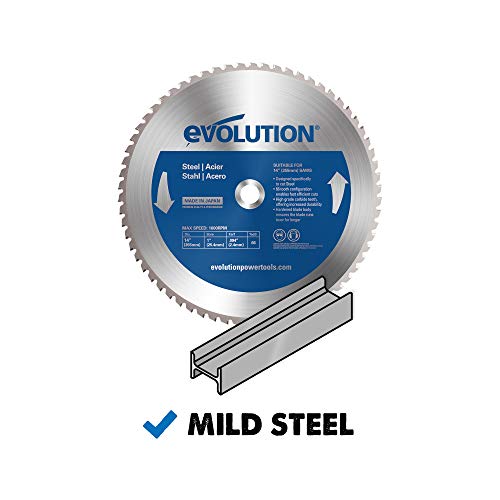
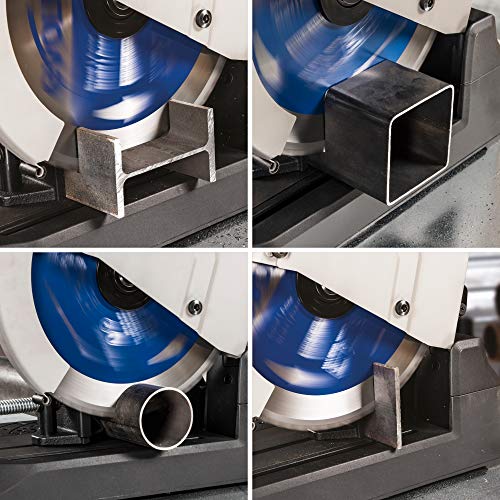
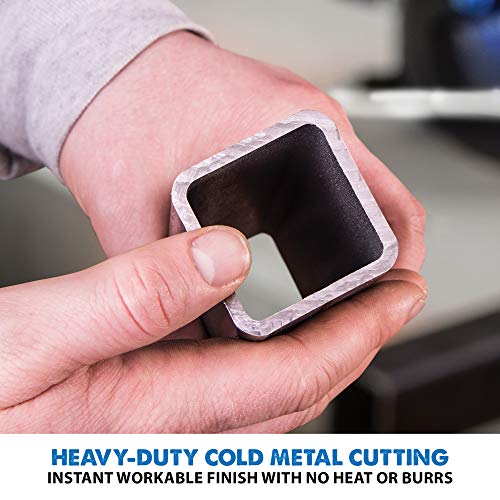
This Evolution 14-inch blade changes the game when it comes to cutting mild steel with a chop or circular saw. Unlike abrasive cutoff wheels, this carbide-tipped TCT blade cuts cold, owners regularly mention being able to touch the cut end immediately, with no warping or heat discoloration. The 66-tooth design delivers a smooth, burr-free edge, reducing or eliminating the need for grinding after the cut.
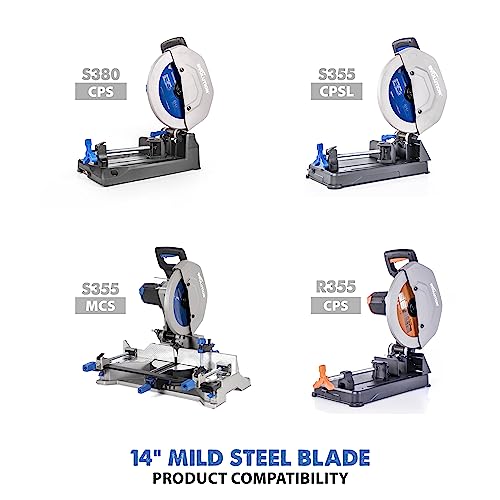
It’s not for stainless or hardened steel, and at 1600 RPM, it requires a saw rated for that speed. But for cutting tubing, angle iron, or rebar on a job site, it’s vastly more efficient and cleaner than traditional methods. The thin kerf helps reduce load on the motor, and the blade life outlasts most abrasive wheels. Compared to bi-metal jigsaws or reciprocating blades, it’s faster and more precise.
Product photos

How We Tested circular saw blades
Rather than a hands-on lab test, my research for these recommendations focused on a detailed comparison of published blade specifications and features. I weighed owner reviews from multiple sources – looking for consistent praise or complaints – alongside assessments from reputable tool review sites. This process, combined with my experience in the power tool space, allowed me to rank blades against a set of criteria important to a range of users.
For circular saw blades, the most important factors are tooth count, blade material, and kerf thickness. Tooth count dictates the type of cut (framing, smooth, finish) and speed, with higher counts generally yielding cleaner cuts but slower speeds. Blade material, especially the quality of the carbide tips, directly impacts durability and how well the blade holds an edge. Finally, kerf thickness affects both cutting speed and the amount of material removed.
Specifications reliably indicate things like tooth count, arbor size, and blade diameter. However, judging durability and real-world performance requires looking at owner feedback. I paid close attention to reports of blade life, how well the blade handles different wood types, and any issues with warping or burning. Reputation matters too; established brands with a history of quality generally fared better in my analysis. Consider reading our blade selection guide for a deeper understanding of these features.
What To Look For In circular saw blades
Choosing the right circular saw blade is as important as the saw itself. A mismatched blade won’t just produce poor results; it can also be dangerous.
A quality circular saw blade delivers clean, accurate cuts with minimal material waste. Key considerations include tooth count, blade material, kerf thickness, and the specific material being cut. Look for blades with hardened carbide teeth, a stable blade body, and features designed to reduce heat buildup and vibration for optimal performance and longevity.
Tooth Count and Cut Type
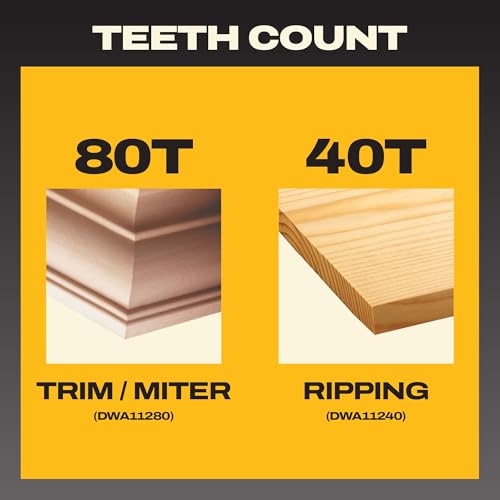
The number of teeth on a blade dramatically affects the type of cut you’ll achieve. More teeth mean a smoother finish, but slower cutting speed. Fewer teeth bite aggressively, speeding up cuts in framing lumber but leaving a rougher edge. For general purpose work, a 24-tooth blade like the Diablo 7-1/4″ 24T Framing Blade is a solid all-around choice. However, if you do a lot of finish work, you’ll want to invest in a higher tooth count blade.
- A blade with 10-20 teeth is best for ripping (cutting with the grain) of thicker stock.
- A 24-40 tooth blade is versatile, suitable for crosscutting and general-purpose work. It’s a good choice if you don’t want to swap blades frequently.
- Blades with 60 or more teeth excel at fine, clean cuts in plywood, hardwood, and delicate materials, but are slower and may overheat if forced through tough materials.
Blade Material and Quality
The quality of the materials used in a blade’s construction directly impacts its performance and lifespan. Blades aren’t just steel; the steel grade and the carbide tips are critical. Look for blades with carbide tips made from materials like TiCo (Titanium Cobalt) for increased hardness and wear resistance. A blade like the DEWALT 7-1/4″ 24T Smooth Cut uses a thick, durable plate that contributes to its longevity. Don’t skimp here; a better blade will pay for itself in fewer replacements and cleaner cuts.
A blade’s durability isn’t solely about the steel. The quality of the brazing, how the carbide tips are bonded to the steel, is equally important. Poor brazing leads to premature tooth loss.
Value and Application Specificity
It’s tempting to buy a combo pack like the Revvstark 7-1/4″ 24T/40T/60T Combo to cover all your bases, but a specialized blade will almost always outperform a general-purpose blade in its intended application. If you frequently cut metal, for example, don’t try to use a wood-cutting blade; invest in a blade specifically designed for metal, such as the Evolution 14″ 66T Metal Blade. Consider how often you’ll use a particular blade and the cost of replacement when deciding whether to prioritize versatility or specialization. If you’re working with a smaller circular saw, you may need to look at options like the Ryltanks 5-1/2″ 4-Pack Blades, but be sure to check compatibility with your saw. And remember, learning how to perform a step-by-step blade replacement is crucial for maintaining your blades and ensuring safe operation. Finding the best-selling circular saw blades can be a good starting point, or you may want to focus on the most standard circular saw blades if you are looking for something widely available.
Circular Saw Blades Compared
Here’s a comparison of key specifications for various circular saw blades.
| Product Title | Blade Diameter | Teeth Count | Arbor Size | Kerf (in) | Best For |
|---|---|---|---|---|---|
| Diablo 7-1/4″ 24T Framing | 7-1/4″ | 24 | N/A | N/A | Overall |
| DEWALT 7-1/4″ 24T Smooth Cut | 7-1/4″ | 24 | N/A | N/A | Durability |
| Diablo 7-1/4″ 40T Finish | 7-1/4″ | 40 | N/A | N/A | Smooth Cuts |
| Revvstark 7-1/4″ 24T/40T/60T | 7-1/4″ | 24/40/60 | 5/8″ | N/A | Combo Pack |
| Ryltanks 5-1/2″ 4-Pack | 5-1/2″ | 24/36/48/130 | 10mm | 0.063/0.079 | Compact Saws |
| ANGELSWORD 7-1/4″ 24T 10-Pack | 7-1/4″ | 24 | 5/8″ | 0.07″ | Budget Buy |
| DEWALT 12″ 80T Fine Finish | 12″ | 80 | N/A | N/A | Large Saws |
| Evolution 14″ 66T Metal | 14″ | 66 | 1″ | 0.094 | Metal Cutting |
Frequently Asked Questions
What arbor size do I need for a circular saw blade?
Most circular saws use a 5/8-inch arbor, but some older or smaller models may require a 1-inch arbor. Always check your saw’s specifications before purchasing a blade to guarantee compatibility and a secure fit.
How does kerf thickness affect performance?
A thinner kerf blade removes less material, requiring less power from the saw and resulting in faster cutting. However, thinner kerf blades can be more prone to binding and may not be as durable as thicker kerf options.
What’s the difference between TiCo and Cermet carbide?
TiCo (Titanium Cobalt) carbide offers excellent hardness and heat resistance, making it ideal for abrasive materials. Cermet carbides combine ceramic and metallic compounds for enhanced wear resistance and performance in demanding applications like cutting non-ferrous metals.
Can I use a single blade for cutting both wood and metal?
No, using a wood-cutting blade on metal, or vice versa, will quickly dull the blade and can be dangerous. Specialized blades are designed with specific tooth geometries and materials to handle different materials effectively, and you should always use the correct blade for the job.
Where can I find blades for splinter-free plywood blades?
When working with plywood, look for high-tooth-count blades (60T or higher) specifically designed for clean cuts. You can find blades optimized for plywood and achieving a clean edge at circular saw blades for plywood.
The Bottom Line
Choosing a circular saw blade often comes down to balancing control and convenience. You can spend a lot to get a blade for every material and cut type, or you can simplify with a versatile option. For most homeowners and DIYers, the Diablo 7-1/4″ 24T Framing Blade strikes the best balance – offering solid performance across a wide range of materials and cuts, and it’s a blade you can rely on for a long time.
If your needs are more specific, there are excellent alternatives. For those on a budget, the ANGELSWORD 7-1/4″ 24T 10-Pack provides a lot of cutting power for the money. If you need versatility and a range of options, the Revvstark 7-1/4″ 24T/40T/60T Combo is a good starting point. And for those working with metal, the Evolution 14″ 66T Metal Blade is the clear choice.
Ultimately, remember that the tooth count and blade material are important, but consistent essential blade maintenance is what will truly determine how long your blades last and how cleanly they cut. Don’t neglect proper cleaning and storage, and always prioritize safety when operating your circular saw.
