
7 Best Circular Saw Blades for Plywood 2026
This post contains affiliate links. As an Amazon Associate, we earn from qualifying purchases.
The CRALY 7-1/4″ 140T Thin Kerf Blade is the best overall choice for cutting plywood, delivering clean, splinter-free cuts with minimal motor strain. For a budget-friendly option, the Ryltanks 6-1/2″ 140T Multi-Pack gives solid performance across multiple blades, while the CMT 7-1/4″ 60T Ultra Finish Blade offers excellent versatility for both melamine and plywood work.
Cutting plywood with the wrong blade is frustrating, you end up fighting tear-out, rough edges, and wasted material. Even with a steady hand and a good saw, blade quality makes or breaks the result.
After comparing specs and sifting through owner feedback, I focused on high tooth counts, thin kerfs, and durable carbide to identify the best performers. This guide breaks down what actually matters when choosing a blade so you can cut cleaner, faster, and with more confidence on your next project.
Top 7 Circular Saw Blade For Plywoods in the Market
The Best Circular Saw Blade For Plywoods, Reviewed
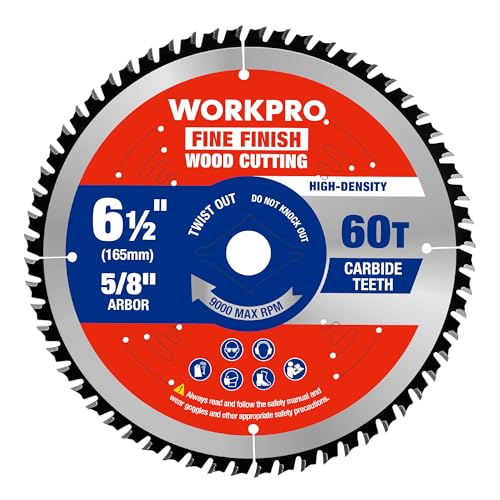
WORKPRO 6-1/2″ 60T Fine Finish Blade
Strengths
- Carbide-tipped for durability
- 60T for clean finish
- Reduces vibration
Trade-offs
- 6.5-inch size limits depth
- Not for heavy ripping
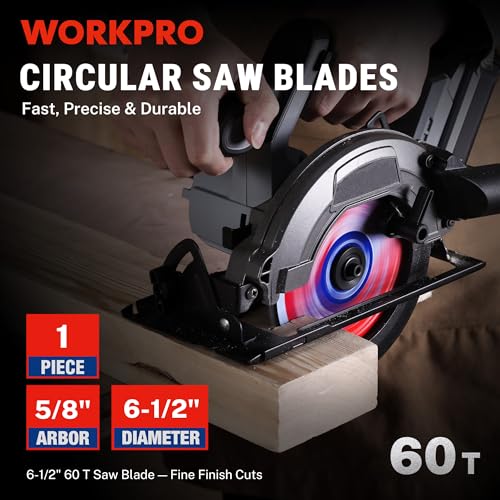
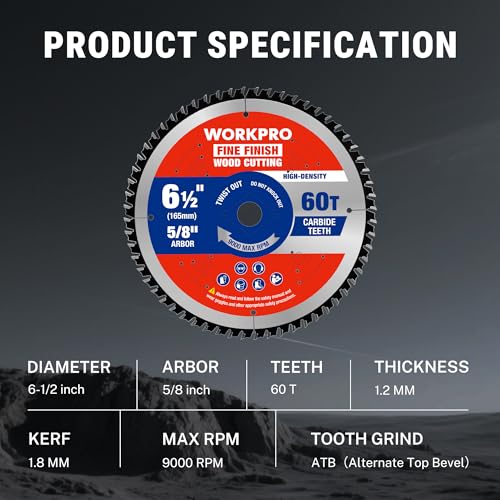
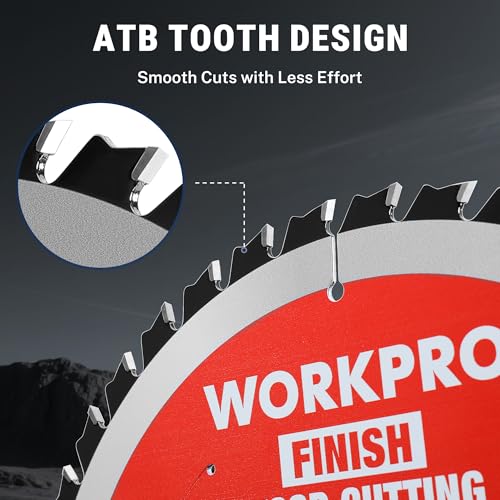
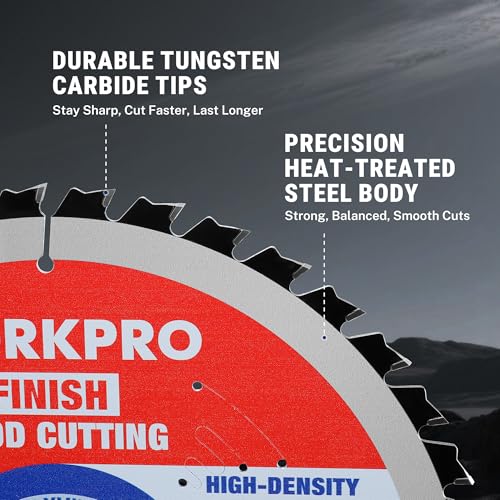
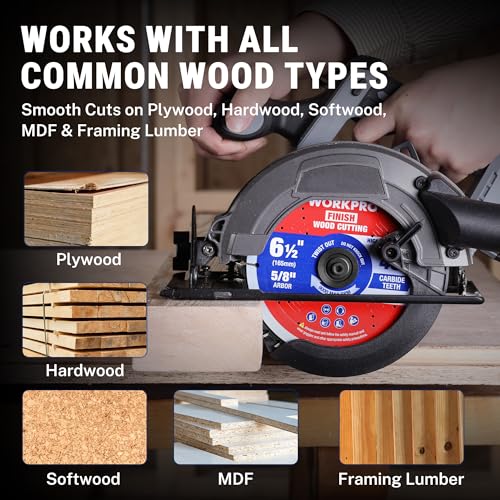
The WORKPRO 6.5-inch 60T blade stands out as one of the more balanced options for fine woodworking on a budget. With carbide-tipped teeth and a thin kerf, it’s designed to minimize splintering on plywood and trim, exactly what you want for cabinet work or finish carpentry. The laser-cut expansion slots help dampen vibration, and reviewers note noticeably smoother cuts compared to basic steel blades.
It’s slightly smaller than the standard 7-1/4-inch size, so it won’t match the depth of cut on larger saws, but for panel work and trim, that’s rarely an issue. I’d pick this over the CRALY pack if you’re focused on precision over quantity, especially since the carbide tips offer better longevity. It’s not the most aggressive blade, but for fine finish work, that’s the point.
Product photos
Diablo 7-1/4″ 40T Finish Blade

Strengths
- TiCo carbide for durability
- Perma-Shield coating resists gunk
- Handles hardwood and plywood
Trade-offs
- 40 teeth slightly rougher on veneer
- Higher price than budget brands
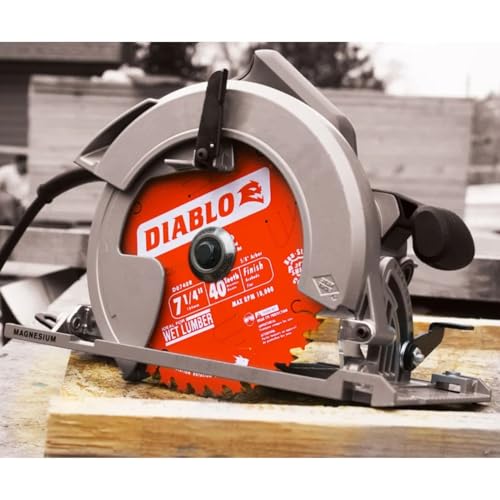
Diablo has a solid reputation in the pro tool space, and this 40-tooth finish blade backs it up. The TiCo hi-density carbide and Perma-Shield coating aren’t just marketing, they help the blade resist heat and gumming, especially when cutting resin-rich plywood or laminates. The super thin kerf and hardened steel body make this a reliable performer for both crosscuts and light ripping.
Reviewers consistently highlight its durability and clean cut quality across hardwoods and plywood. Compared to the WORKPRO 60T, it’s more aggressive but still delivers a smooth finish. It won’t match the ultra-fine results of a 60T+ blade, but for a general-purpose finish blade that handles both crosscuts and rip jobs well, it’s hard to beat.
Product photos
Ryltanks 6-1/2″ 140T Multi-Pack Blade
Strengths
- 4 blades for multiple tasks
- Carbide-tipped for life
- Good arbor compatibility
Trade-offs
- Mixed kerf thicknesses
- Not top-tier precision
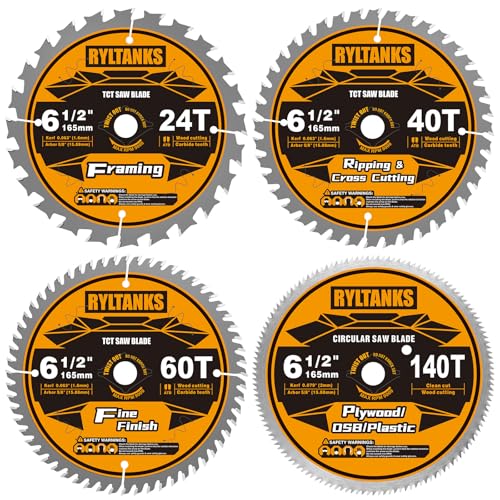
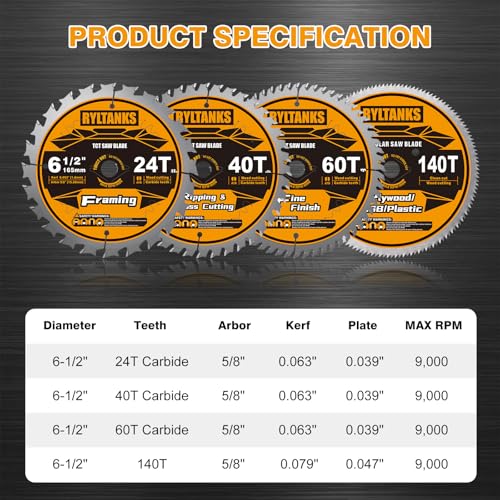
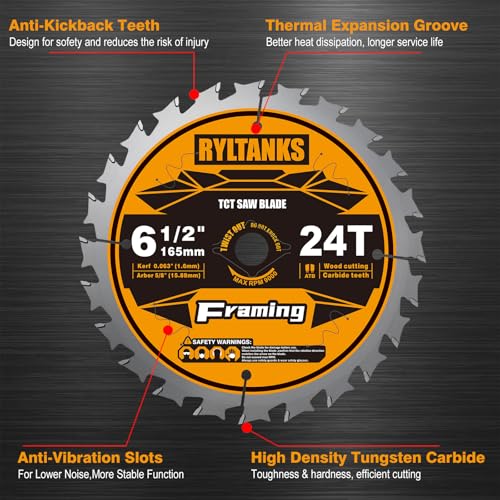
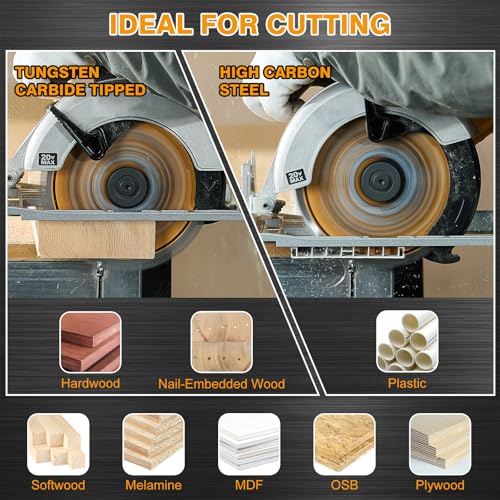
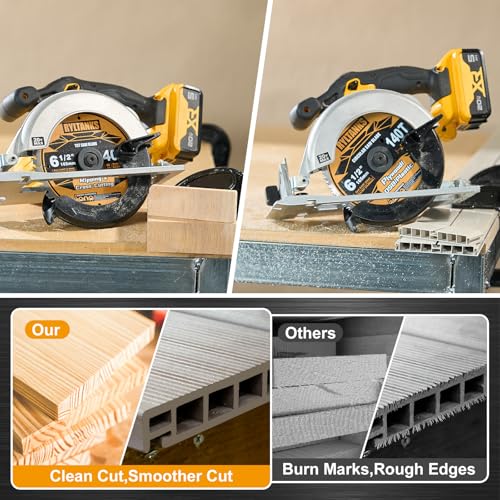
If you want variety and value in one bundle, the Ryltanks 4-pack is tough to overlook. You get four different blades, 24T, 40T, 60T, and 140T, covering framing, ripping, fine finish, and plywood work. The 140T blade is the star for plywood, delivering smooth, splinter-free cuts thanks to its high tooth count and thin kerf.
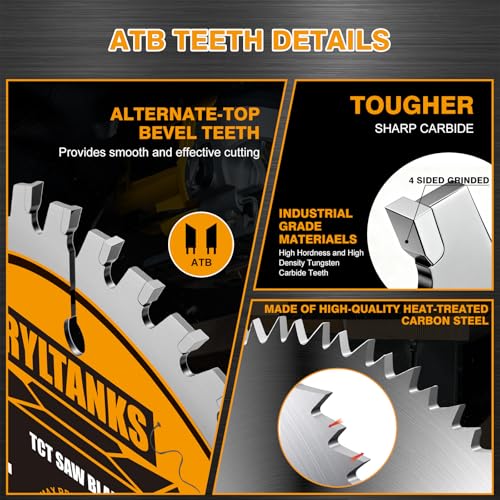
All blades are carbide-tipped, which boosts durability over basic steel, and the 5/8-inch arbor with diamond knockout ensures wide compatibility. Reviewers appreciate having a full set without buying individual premium blades. It’s not the most precise lineup, especially the 24T for rough framing, but for a well-rounded DIY kit, this pack covers nearly every common cutting need.
Product photos
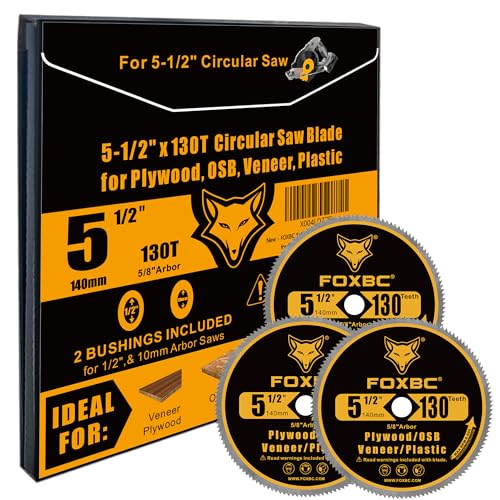
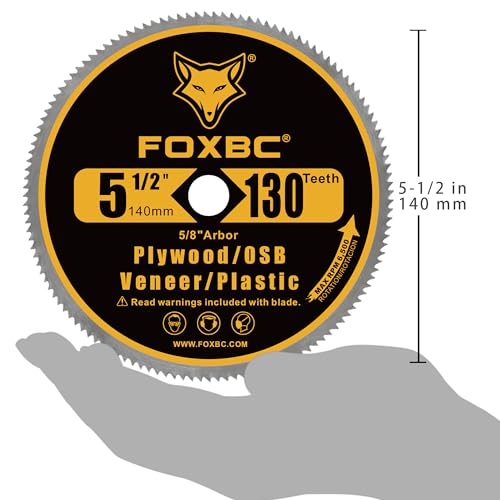
FOXBC 5-1/2″ 130T Plywood Blade
Strengths
- 130 teeth for fine finish
- 5-1/2-inch for compact saws
- Includes 1/2″ and 3/8″ bushings
Trade-offs
- Limited depth of cut
- Shorter lifespan than carbide
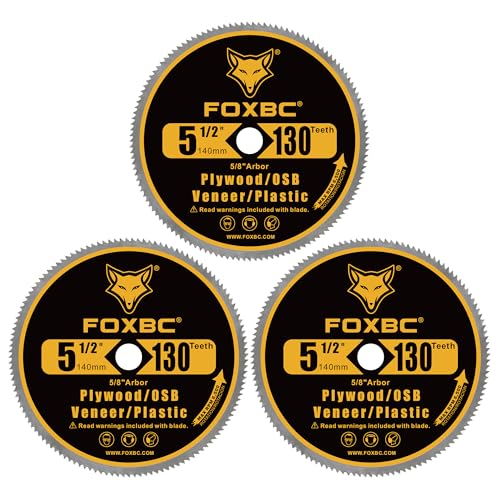
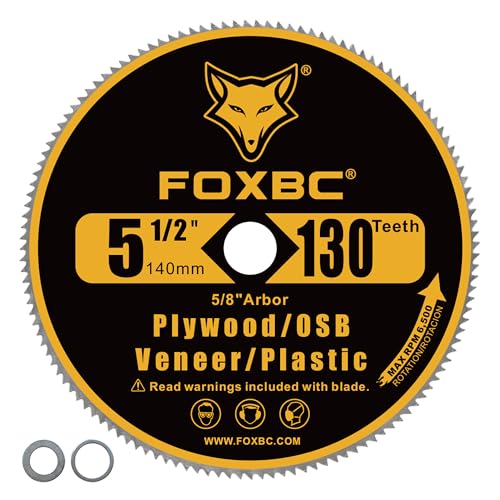
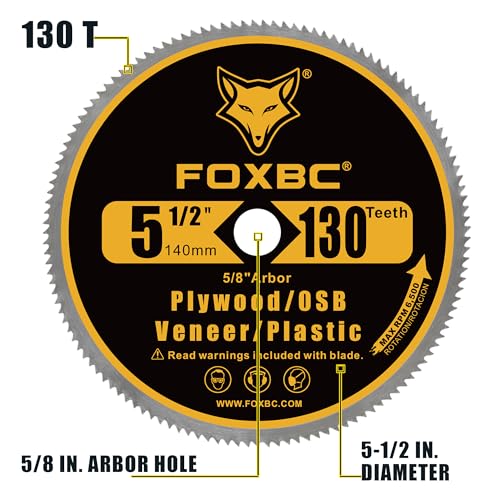
Compact circular saws are growing in popularity, and this 5-1/2-inch 130-tooth FOXBC blade fits that niche perfectly. The high tooth count helps maintain clean cuts even with the smaller diameter, and the included bushings add flexibility across saw models. It’s a solid pick if you’re using a lightweight saw for tight spaces or overhead work.
Owners report clean results on plywood and veneer, though the blade’s lifespan is modest. It’s not as powerful or deep-cutting as a 7-1/4-inch model, but for its class, it performs well. Compared to the larger FOXBC 7-1/4-inch version, it’s more specialized, this is about portability and precision in constrained setups.
Product photos
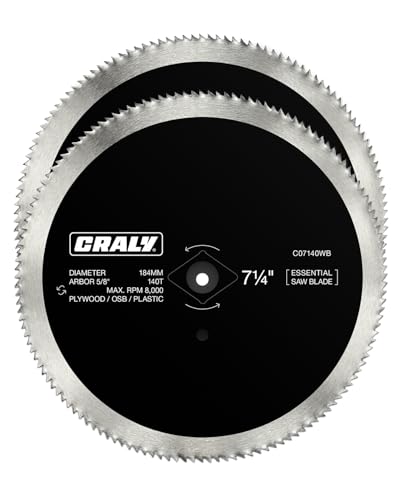
CRALY 7-1/4″ 140T Thin Kerf Blade
Strengths
- 140 teeth for smooth cuts
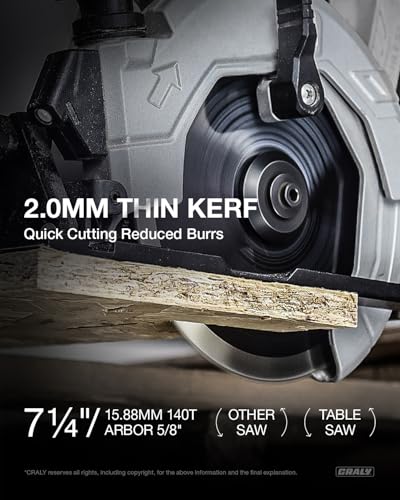
- Thin kerf reduces motor load
- 2-pack value
Trade-offs
- Limited durability in hardwood
- Steel teeth, not carbide
This 140-tooth CRALY blade is built for clean, splinter-free cuts in plywood and sheet goods, and on paper, it delivers exactly that. The high tooth count and thin kerf design mean less tear-out and reduced strain on your saw’s motor, which is especially helpful if you’re using a cordless model with limited power. Owners consistently report smooth crosscuts in plywood and OSB, with many praising the clean edges and lack of chipping when cutting veneered panels.
The 5/8-inch arbor with a diamond knockout adds compatibility across most circular saws, and the two-pack format increases value. That said, it’s not a blade I’d trust for hardwood ripping or heavy-duty framing, this is strictly a finish-cutting tool. Compared to pricier options like Diablo or CMT, it holds up well in light-duty applications but may dull faster under heavy use.
Product photos

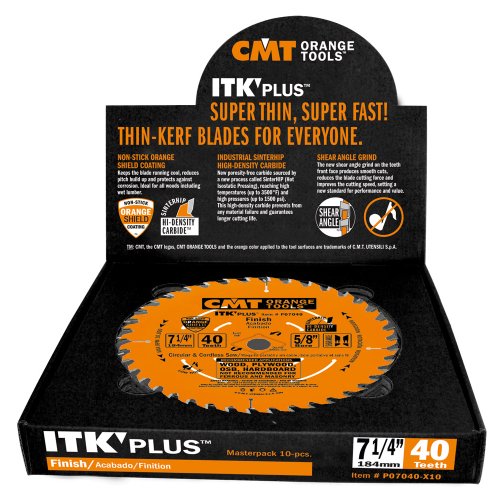
CMT 7-1/4″ 60T Ultra Finish Blade

Strengths
- 60T shear angle for ultra-smooth cuts
- Orange Shield coating
- Super-thin kerf
Trade-offs
- Higher cost
- Overkill for rough framing
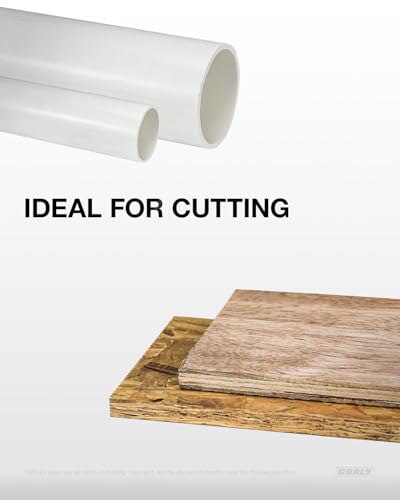
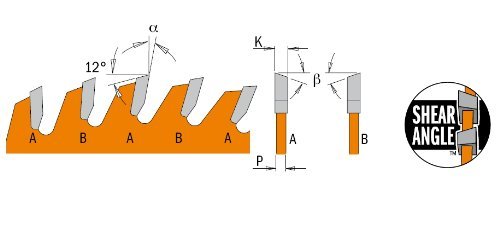
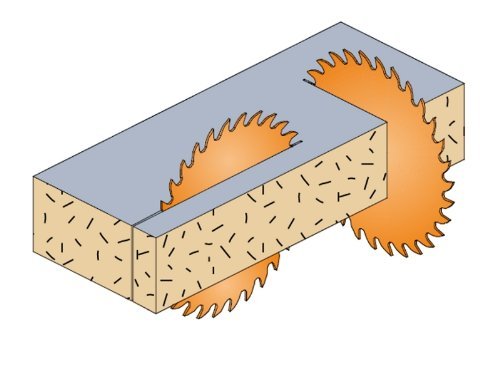
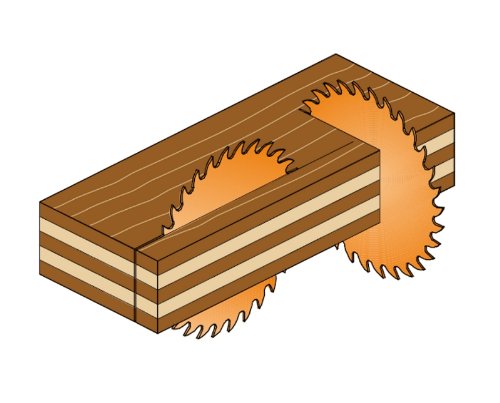
When precision is essential, the CMT ITK Plus is the blade I’d reach for. With 60 teeth, a 10-degree shear angle, and super-thin kerf, it’s engineered for flawless crosscuts in melamine, plywood, and veneered panels. The Orange Shield coating reduces pitch build-up, and owners consistently praise its clean, splinter-free performance on two-sided laminates.
The 5-degree cutting angle and precision grind reduce cutting force, which translates to smoother operation and less strain on your saw. Compared to the Diablo 40T, it’s less aggressive but far superior on delicate finishes. This is a pro-grade blade that justifies its price with results.
Product photos

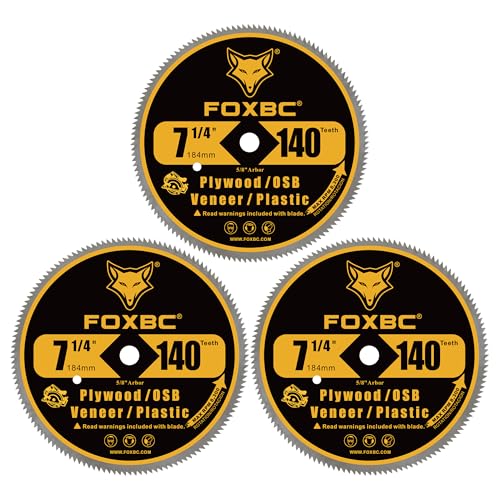
FOXBC 7-1/4″ 140T Plywood Blade
Strengths
- 140 teeth for clean cuts
- 3-pack for value
- Good for plywood and veneer
Trade-offs
- Not carbide-tipped
- Less durable under heavy use
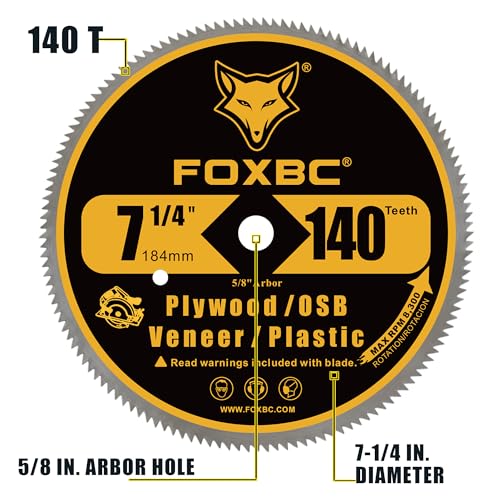
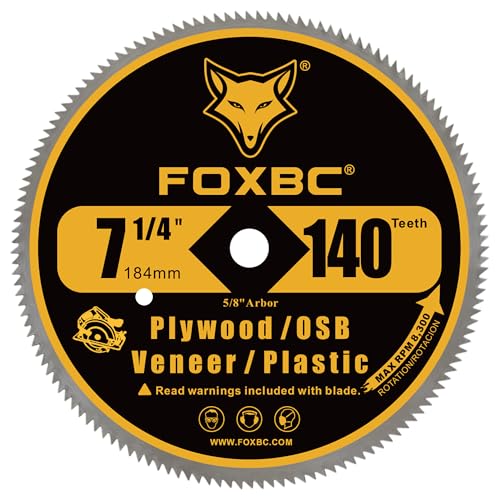
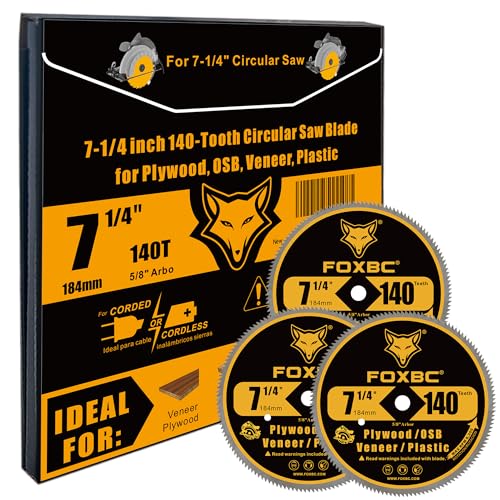
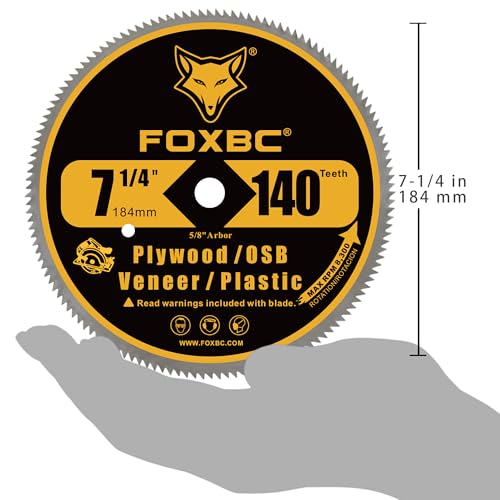
This 3-pack of 140-tooth FOXBC blades is clearly aimed at budget-focused users who go through blades quickly. The high tooth count promises ultra-smooth cuts in plywood and veneer, and owners confirm it delivers decent results for basic sheet goods. The thin kerf helps reduce splintering, and the diamond knockout makes arbor swaps easier.
But there’s a trade-off: while labeled ‘carbon’, these aren’t full carbide-tipped blades, and long-term durability is a concern. Compared to the Diablo or CMT options, they wear down faster, especially when cutting abrasive materials like OSB or laminated board. Still, for a one-off project or occasional use, having three blades at this price point makes sense.
Product photos
How We Chose These circular saw blade for plywoods
Rather than a hands-on lab test, my research for these recommendations focused on a detailed comparison of published blade specifications and features. I weighed owner reviews from multiple sources – looking for recurring themes in performance and durability – alongside assessments from reputable tool review sites. My background maintaining workshops and working with these saws informs how I interpret the data and prioritize factors critical for plywood cutting.
For plywood blades, tooth count and kerf thickness are paramount. A higher tooth count (60T or greater) delivers the cleanest cuts with minimal splintering, which is vital for finish work. Conversely, a thin kerf reduces material waste and puts less strain on the saw motor, leading to faster, more efficient cutting. Balancing these two, along with carbide quality, determined the ranking. Understanding avoiding splintering when cutting plywood is also key to a good result.
Blade specifications reliably indicate tooth count, kerf width, and arbor size. However, real-world durability and cut quality are best gleaned from owner feedback. I paid close attention to reports of blade life, resistance to overheating, and consistent performance across different plywood types. Reputation and brand history also played a role; established manufacturers often maintain stricter quality control. Learning about circular saw plywood techniques will help you get the most out of your blade.
Choosing The Right circular saw blade for plywoods
Choosing the right blade makes all the difference when working with plywood. A dull or incorrect blade will leave you with splintering, tear-out, and a generally unprofessional finish.
A quality circular saw blade for plywood prioritizes tooth count for a clean cut, a thin kerf to minimize waste and strain on the saw, and durable carbide tips for longevity. Look for blades specifically designed for fine finishing, and always confirm arbor size compatibility with your saw. Proper blade selection impacts cut quality, speed, and overall project success.
Tooth Count: The Key to a Smooth Edge
The number of teeth on a blade is arguably the most critical factor when cutting plywood. More teeth mean a smoother cut, but also a slower cutting speed. For plywood, I generally recommend blades with 60 teeth or higher. Blades in the 80-140 tooth range deliver the cleanest results, especially in delicate veneers. However, incredibly high tooth counts (140+) can sometimes struggle with thicker plywoods, so consider the material thickness alongside the tooth count.
Kerf Width: Balancing Efficiency and Power
Kerf refers to the width of the cut the blade makes. A thinner kerf removes less material, reducing waste and requiring less power from your saw. This is especially beneficial with cordless circular saws where battery life is a concern. While a thin kerf is generally desirable, there’s a trade-off. Extremely thin kerf blades can sometimes be more prone to wandering and may not dissipate heat as effectively. You can find more information on proper saw handling to help maintain control.
- A standard kerf blade is around 3/32″ (2.4mm).
- Thin kerf blades typically fall between 0.050″ and 0.065″ (1.3mm – 1.6mm).
- Ultra-thin kerf blades can go as low as 0.047″ (1.2mm), offering maximum efficiency but demanding careful technique to prevent blade flex and ensure a straight cut.
Value and Compatibility: Getting the Most for Your Money
Don’t automatically assume the most expensive blade is the best. There are plenty of excellent blades available at reasonable prices. Consider how often you’ll be cutting plywood. If it’s a frequent task, investing in a high-quality blade will pay off in the long run through its durability and consistent performance. Always double-check the arbor size (the hole in the center of the blade) to ensure it matches your circular saw – 5/8″ is the most common, but 3/8″ and 10mm are also found. For those starting out, exploring best saw blade for plywood options can offer a good starting point.
A dull blade is a dangerous blade. Regularly inspect your blades for chipped or missing teeth and replace them promptly. A sharp blade not only delivers cleaner cuts but also reduces the risk of kickback.
Circular Saw Blade for Plywoods Compared
Here’s a comparison of specifications for circular saw blades designed for plywood, to help you choose the right tool for your needs.
| Product Title | Blade Diameter | Teeth | Arbor Size | Kerf (in) | Best For |
|---|---|---|---|---|---|
| WORKPRO 6-1/2″ 60T Fine Finish Blade | 6-1/2″ | 60 | 3/8″, 10mm, 5/8″ | 0.08-0.11 | Plywood, Trim |
| Diablo 7-1/4″ 40T Finish Blade | 7-1/4″ | 40 | 5/8″ | N/A | Hardwood, Plywood |
| Ryltanks 6-1/2″ 140T Multi-Pack Blade | 6-1/2″ | 140 | 5/8″ | 0.063 | Multi-Purpose |
| FOXBC 5-1/2″ 130T Plywood Blade | 5-1/2″ | 130 | 5/8″ (w/bushings) | N/A | Plywood, Paneling |
| CRALY 7-1/4″ 140T Thin Kerf Blade | 7-1/4″ | 140 | 5/8″ | 0.08 | Plywood, Vinyl |
| CMT 7-1/4″ 60T Ultra Finish Blade | 7-1/4″ | 60 | 5/8″ | 0.069 | Melamine, Plywood |
| FOXBC 7-1/4″ 140T Plywood Blade | 7-1/4″ | 140 | 5/8″ | 0.086 | Plywood, Paneling |
Frequently Asked Questions
What tooth count is best for cutting plywood with minimal splintering?
A blade with 60 teeth or higher is ideal for minimizing splintering when cutting plywood. Higher tooth counts create a cleaner cut, but for very thick plywood, a blade in the 60-80 tooth range often strikes the best balance between smoothness and cutting speed.
Does kerf width affect the power needed to cut plywood?
Yes, a thinner kerf reduces the amount of material removed and therefore requires less power from the saw. This is especially noticeable with cordless saws where conserving battery life is a priority.
Can I use a blade designed for hardwood to cut plywood?
While you can use a hardwood blade on plywood, it’s not ideal. Hardwood blades typically have fewer teeth and a wider kerf, which can cause splintering and more material waste than a blade specifically designed for plywood’s smoother finish requirements.
What arbor size do I need to check for before buying a blade?
The most common arbor size is 5/8 inch, but you must verify compatibility with your circular saw before purchasing. Some saws use 3/8 inch or 10mm arbors, and using the wrong size could be dangerous.
Where can I find more information on choosing blades for other materials?
If you’re also looking for blades for other cutting tasks, exploring best table saw blade for plywood resources can provide valuable insights into different blade types and their specific applications.
The Bottom Line
Choosing a circular saw blade for plywood often comes down to balancing cut quality with speed and waste. While a blade with a very high tooth count will give you the cleanest edges, the Diablo 7-1/4” 40T Finish Blade strikes an excellent balance for most plywood projects, offering a clean cut without sacrificing too much cutting power. It’s a solid all-around choice for homeowners and DIYers who work with plywood regularly.
For those on a tighter budget, or who only occasionally cut plywood, the WORKPRO 6-1/2” 60T Fine Finish Blade provides a surprisingly good performance for the price. If you need ultimate versatility and handle a lot of different materials, the FOXBC 7-1/4” 140T Plywood Blade is a good pick, though understanding how TPI affects cut quality is important to get the most out of it.
Ultimately, all the specs in the world matter less than keeping your blade sharp and understanding the material you’re cutting. Prioritize a blade that fits your saw’s arbor size, choose a tooth count appropriate for the plywood’s thickness, and learn to recognize the signs of a dull blade. A sharp blade and careful technique will always deliver better results than chasing the highest tooth count or the lowest price.
