8 Best Circuit Breaker Finder Tools 2026
This post contains affiliate links. As an Amazon Associate, we earn from qualifying purchases.
The KAIWEETS KT301P stands out as the best overall circuit breaker finder for most users, combining reliable detection, GFCI testing, and a clear LCD display. If you’re watching your budget, the Sperry CS550A gets the job done with basic breaker location and LED indicators. For those needing more control in complex panels, the UNI-T UT25A offers adjustable sensitivity, a rare and useful feature.
Finding the right breaker shouldn’t mean guessing or flipping switches at random. A poor tool can lead to wasted time, confusion, or even safety risks when working near live circuits. I’ve seen it happen too many times in home panels that are already cluttered or poorly labeled.
This guide cuts through the noise by focusing on tools that deliver clear results, include practical safety features like non-contact voltage detection, and are backed by solid user feedback. I looked at specs, real-world performance, and the features that actually matter when you’re standing in front of a breaker box trying to isolate a circuit.
Top 8 Circuit Breaker Finder Tools in the Market
The Best Circuit Breaker Finder Tools, Reviewed
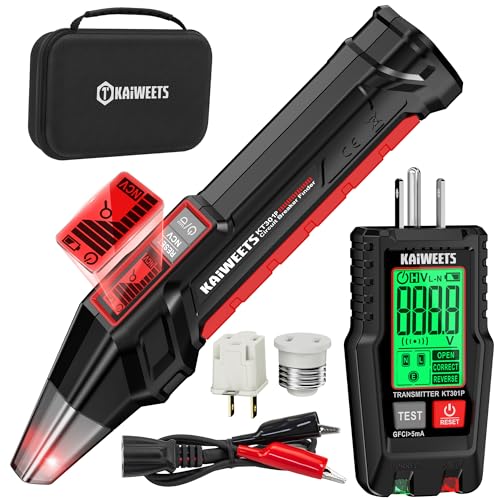
KAIWEETS KT301P Circuit Breaker Finder
Strengths
- Backlit LCD display
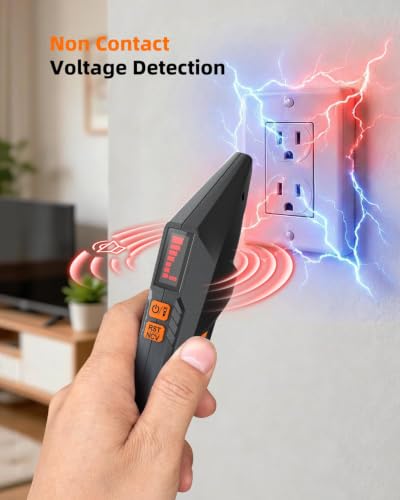
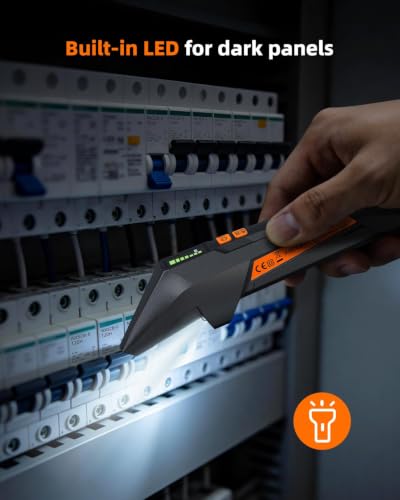
- NCV and flashlight
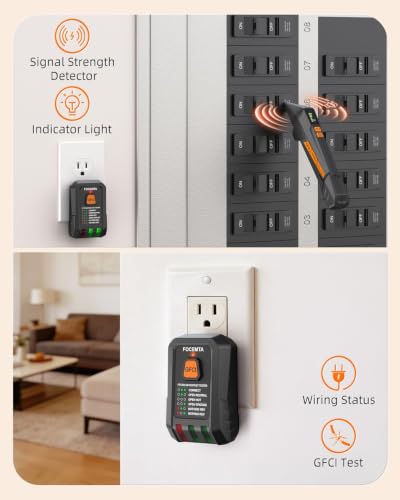
- GFCI auto-trip test
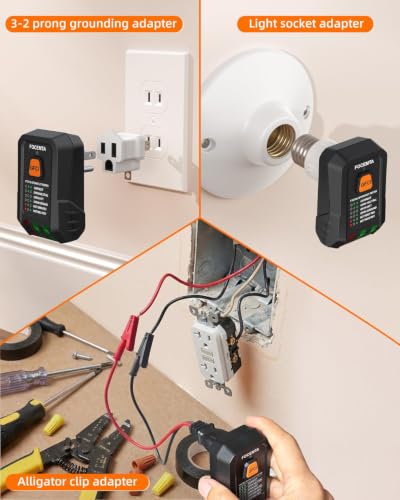
- Thorough adapter kit
- Auto-hold function
Trade-offs
- Slightly bulkier design
- Battery life average
- Menu navigation takes practice
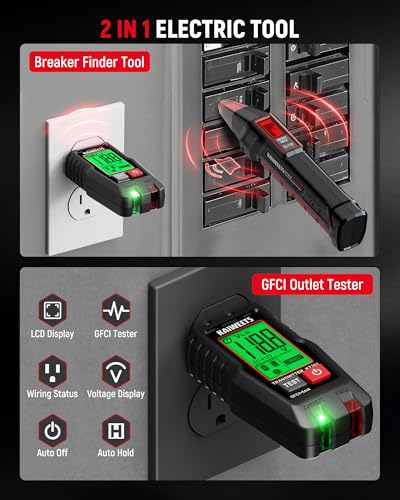
If you’re looking for one tool that does it all without compromise, the KAIWEETS KT301P is the strongest all-around contender. The large backlit LCD shows real-time voltage, signal strength, and wiring status, details that matter when you’re troubleshooting complex panels. Owners praise the clarity of the display, especially in dim basements or utility rooms where other tools force you to guess.
It’s packed with extras: NCV detection, a bright flashlight, GFCI auto-trip testing, and a full adapter kit including alligator clips and socket adapters. The auto-hold function that saves the last test result is a small touch, but it’s the kind of thing that saves time in the field. Compared to the Focemta FTCT02, this one offers better data and build quality. My recommendation: this is the smarter buy for serious DIYers and pros who want full diagnostics in one package.
Product photos


Focemta FTCT02 Circuit Breaker Finder
Strengths
- Color screen
- Beginner-friendly
- One-touch GFCI test
- NCV detection
Trade-offs
- Limited range in noisy panels
- Plastic build feels light
- No voltage measurement
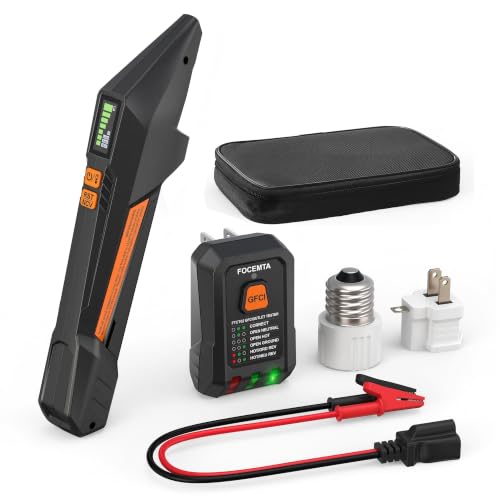
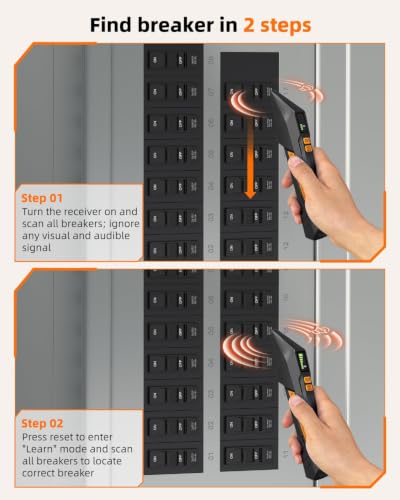
The Focemta FTCT02 is clearly designed with first-time users in mind. The color screen is intuitive, showing signal strength and wiring status in plain view, and the one-touch GFCI test makes safety checks simple for bathrooms and kitchens. Owners note it’s especially helpful for beginners who aren’t used to interpreting LED patterns on older testers.
It’s not the most advanced, but the NCV detection and flashlight add real utility, and the carrying case keeps everything organized. Compared to the Sperry CS550A, it offers much more guidance at a similar price. I’d recommend it as the better starting point for new homeowners. That said, pros will find it a bit too basic for daily use.
Product photos
Fluke BK120 SmartTrace Breaker Finder

Strengths
- Fluke build quality
- Dual-sensitivity NCV
- 4-in-1 functionality
- Bright LED flashlight
Trade-offs
- Higher price point
- No LCD or data display
- Limited adapter bundle
Fluke doesn’t play around when it comes to professional tools, and the BK120 is no exception. Packing four functions into one rugged unit, breaker finder, NCV detector, socket tester, and LED flashlight, it’s built for electricians who move fast and can’t afford guesswork. The dual-sensitivity NCV mode is a standout: it works reliably on both terminal strips and supply cords, which owners say reduces false readings in crowded panels.
The transmitter’s built-in socket tester is accurate and uses clear LEDs, making it easy to verify outlet wiring before even starting the trace. Compared to budget models, it’s overbuilt in the best way, this is the kind of tool that lasts years in a service van. I’d pick it over most others for field work where reliability trumps cost.
Product photos


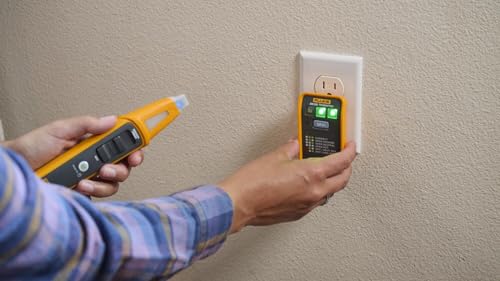
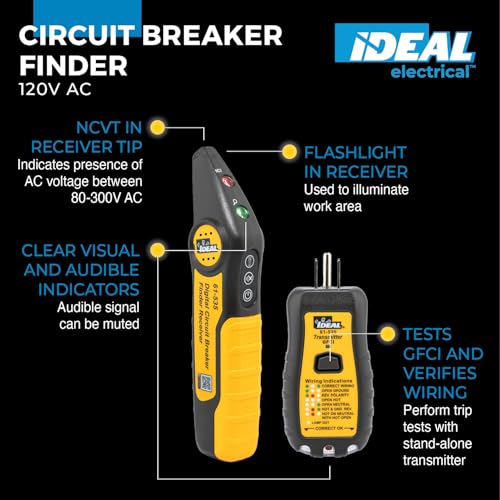
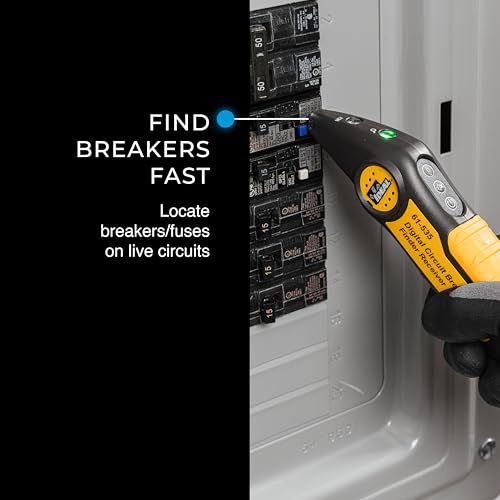
Ideal 61-535 Digital Circuit Breaker Finder

Strengths
- cULus 1436 certified
- Non-contact voltage testing
- Built-in work light
- Auto power-off
Trade-offs
- No LCD display
- Limited data feedback
- No GFCI trip test on receiver
Ideal’s 61-535 earns its “Best Safety Features” label with solid build and thoughtful touches that matter in real use. The cULus 1436 certification means it meets rigorous safety standards, something I always look for when recommending tools for live circuits. Reviewers note the non-contact voltage tip is reliable across 80–300V, and the ability to mute the audible alert is surprisingly useful in tight spaces where constant beeping becomes a distraction.
It’s not the flashiest, but the built-in work light is bright enough to illuminate a panel without needing a headlamp, and the automatic power-off preserves battery life. Compared to plug-and-play models like the Sperry CS550A, this one gives you more confidence in high-stakes environments. My recommendation? This is the smarter buy for anyone serious about safety and clarity.
Product photos


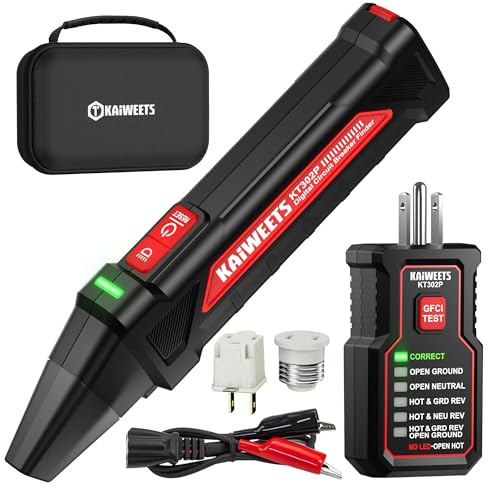
KAIWEETS KT302P Circuit Breaker Finder
Strengths
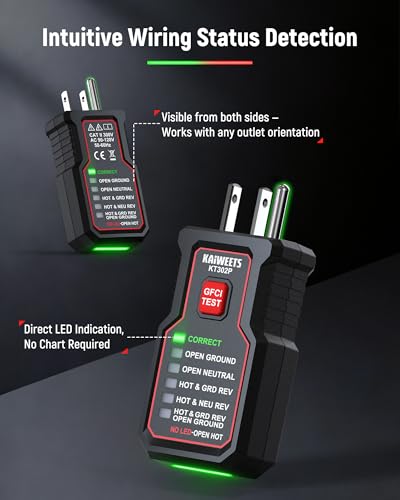
- Dual-sided LED display
- Auto trip GFCI test
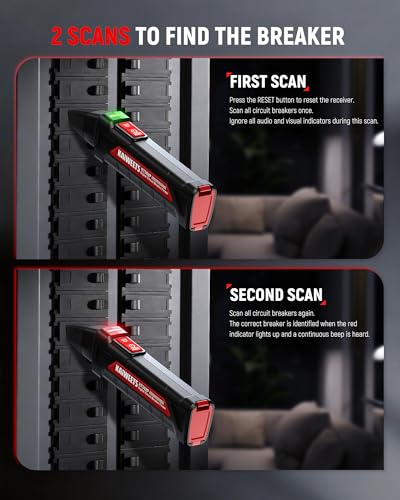
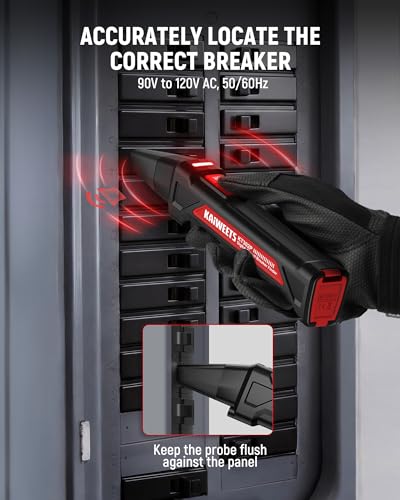
- Simple two-scan process
- Includes adapters
Trade-offs
- No LCD or voltage readout
- No NCV on some units
- Audible alert not adjustable
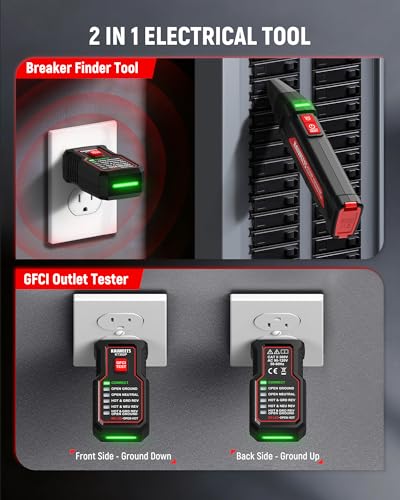
The KT302P solves a real-world problem most testers ignore: outlet orientation. With dual-sided LED indicators on the transmitter, you can read wiring status whether the outlet is installed ground-up or ground-down, no more craning your neck or guessing from an awkward angle. Owners consistently highlight this as a standout during renovations or in tight spaces.
It’s not as data-rich as the KT301P, lacking an LCD, but the two-scan process is stable and requires no sensitivity tweaks. The included adapters and carrying case make it practical for on-site work. Compared to the Sperry CS550A, it offers better visibility and GFCI testing. I’d pick this over basic models for anyone who values clear, unambiguous feedback.
Product photos
VCT03P Circuit Breaker Finder with LCD
Strengths
- Strong NCV detection
- Dual-color backlit screen
- Nesting design
- Includes all adapters
Trade-offs
- No real-time voltage display
- Fewer data features than top models
- Screen can glare in bright light
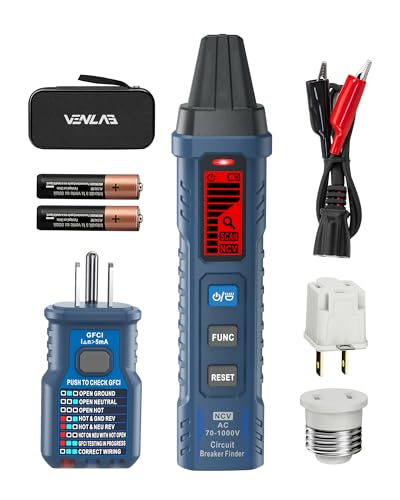
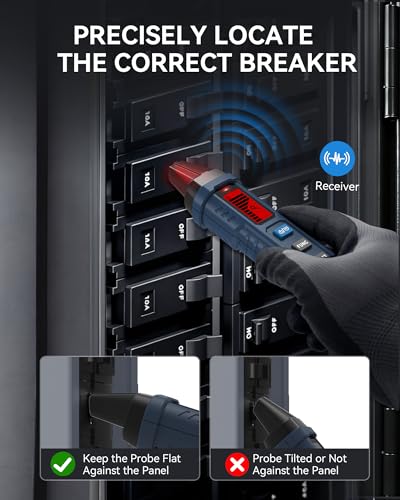
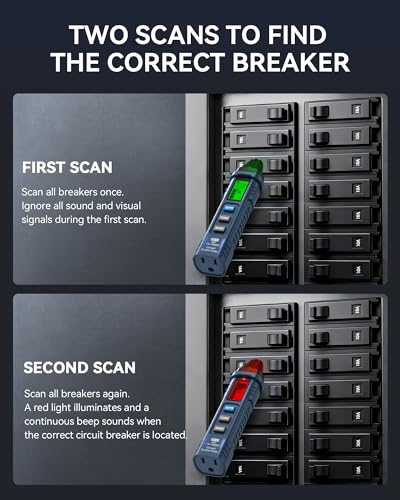
The VCT03P earns its “Best NCV Detection” label with a receiver that includes a responsive non-contact voltage sensor, owners report it picks up live wires quickly and reliably, reducing the risk of accidental contact. The dual-color backlit screen is easy to read, showing signal strength and mode at a glance, and the audible beep is sharp enough to hear in noisy environments.
It’s similar in layout to the KAIWEETS KT301P but lacks real-time voltage measurement, which limits its diagnostic depth. Still, the nesting design keeps transmitter and receiver together, which is a win for portability. For users who prioritize safety and quick scans over detailed data, this is a solid middle ground.
Product photos
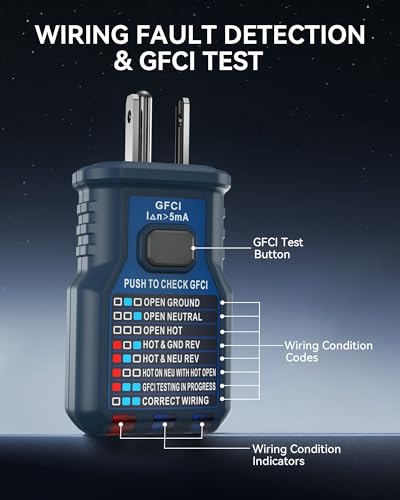
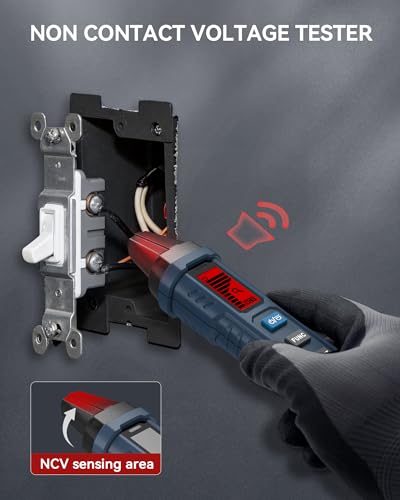
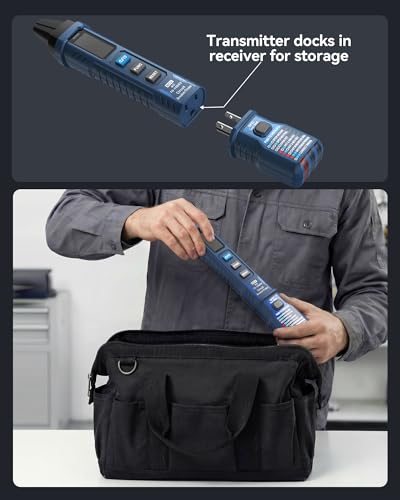
Sperry CS550A Circuit Breaker Finder
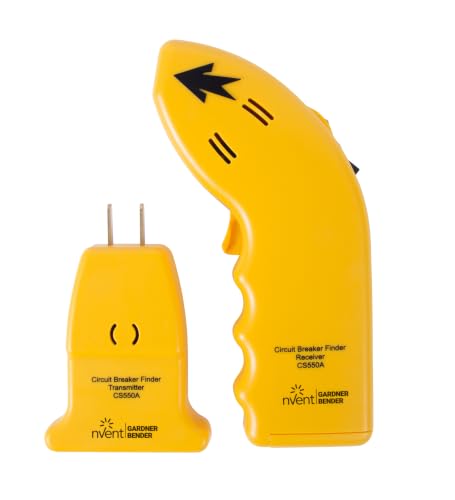
Strengths
- Simple operation
- UL listed
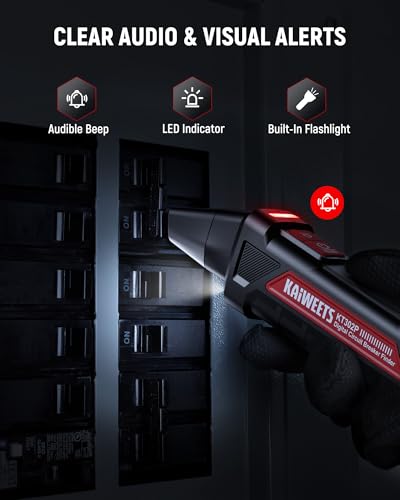
- Audible and visual alerts
- Plug-in transmitter
Trade-offs
- No NCV detection
- No outlet diagnostics
- No backlight or screen
The Sperry CS550A is the definition of plug-and-play. You plug it in, power up the receiver, and start scanning, no setup, no menus, no learning curve. That simplicity is its strength. Owners consistently report it works reliably on standard 120V circuits, with a loud audible alert and bright LED that make confirmation easy even in noisy environments.
It’s not fancy, but it’s UL listed and safe to use near electronics, which matters if you’re tracing breakers in a home office or entertainment center. Compared to models with LCDs and extra features, this one strips things down to the essentials. My take? If you want a dependable tool for basic breaker ID and plan to use it occasionally, this is the easy pick.
Product photos


UNI-T UT25A Circuit Breaker Finder

Strengths
- Adjustable sensitivity
- Clear visual/audible alerts
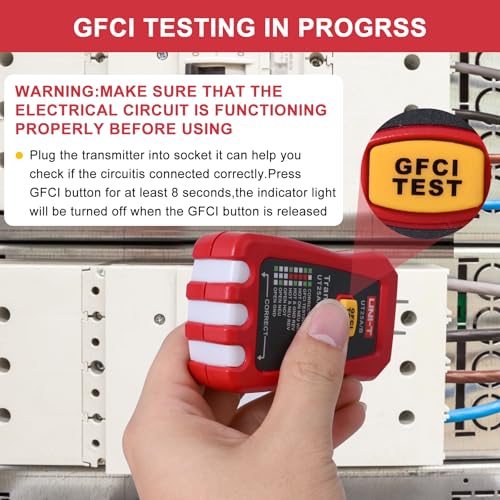
- GFCI test support
Trade-offs
- No NCV detection
- No backlight or screen
- Analog-only receiver
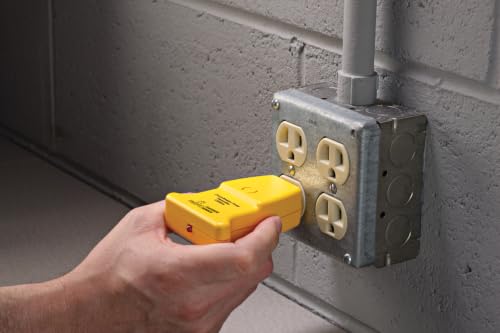
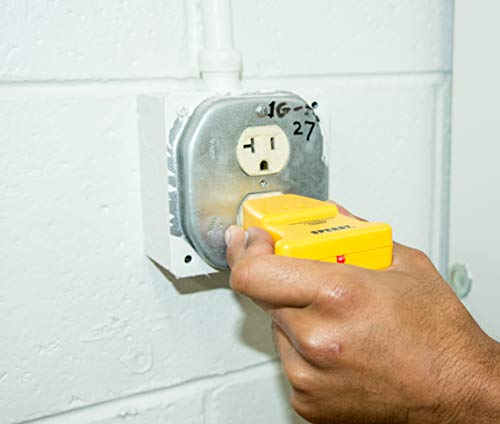
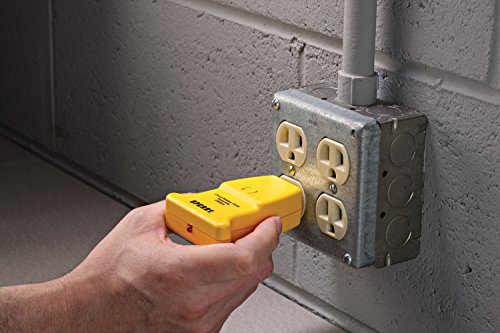
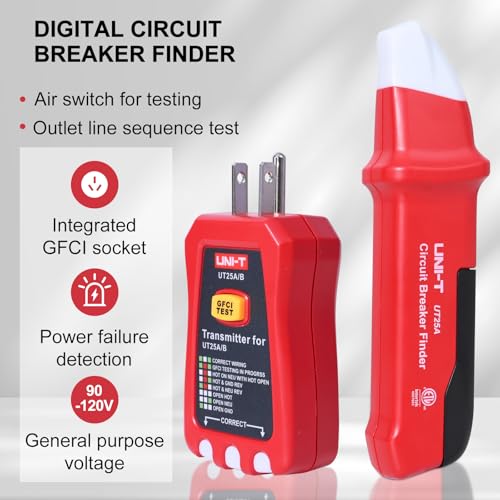
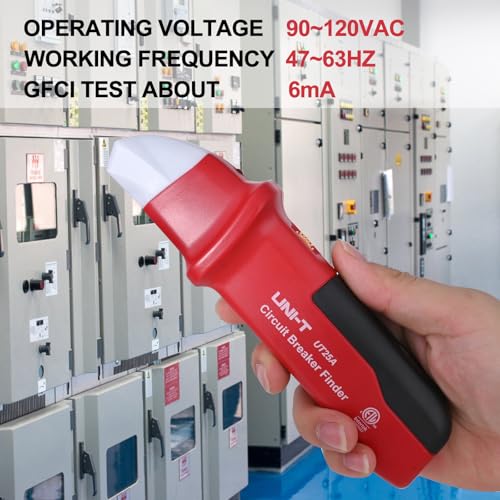
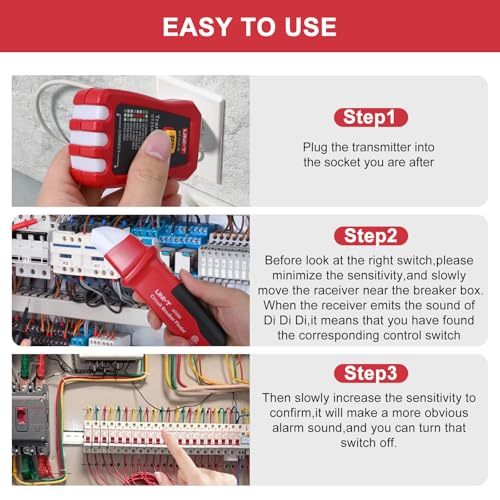
The UNI-T UT25A stands out in a crowded field by offering something rare at this price: adjustable sensitivity. That’s a big deal if you’re working in an older panel with noisy circuits or multiple breakers close together, owners consistently report it helps isolate the right breaker without false positives. On paper, it’s basic, a plug-in transmitter and analog receiver with LED and beep feedback, but that simplicity works in its favor for users who want a no-frills tool that just works.
Where it falls short is in modern features. No LCD, no NCV detection, and the receiver lacks a flashlight. But if your priority is precision in tricky environments and you’re comfortable interpreting LED patterns, this one delivers. Compared to others in the mid-tier, it’s more focused on core performance than bells and whistles.
Product photos

How We Picked These circuit breaker finder tools
Rather than a hands-on lab test, my research for these recommendations involved a detailed comparison of published specifications and features across numerous models. I weighed owner reviews from major retailers alongside assessments from reputable online sources like electrician forums and tool review websites. Applying my experience with electrical work and power tool functionality, I ranked each tool based on its potential performance and value for different user needs.
For circuit breaker finders, speed and accuracy are paramount, but safety features also heavily influenced my rankings. A clear, easy-to-read display – whether LCD or LED – is crucial for quickly identifying breakers, especially in dimly lit panels. The inclusion of a non-contact voltage tester is a significant advantage, adding an extra layer of safety and versatility. Finally, I prioritized tools offering GFCI outlet testing to ensure complete circuit diagnostics.
Specifications reliably indicate a tool’s core functionality – voltage range, testing capabilities, and included accessories. However, I placed greater emphasis on owner feedback regarding real-world usability and durability. Reports of false positives, unreliable readings, or flimsy construction significantly lowered a tool’s score. Understanding the nuances of electrical work often requires more than just specs; that’s why I looked for tools consistently praised for ease of use, even by those without extensive experience with professional electrician toolkits.
How To Choose The circuit breaker finder tools
Finding the right circuit breaker when troubleshooting a power outage or adding a new circuit can save a lot of time and frustration. A good circuit breaker finder will do just that, and more.
A quality circuit breaker finder combines speed, accuracy, and safety features. Look for models offering both audible and visual alerts, non-contact voltage detection, and the ability to test GFCI outlets. Consider the type of display (LCD vs. LED) and whether adjustable sensitivity is important for your typical work environment.
Understanding Sensitivity and Range
The ability to accurately pinpoint a breaker isn’t just about raw power; it’s about sensitivity. Some finders struggle in crowded breaker panels or with longer wiring runs. Look for models, like the UNI-T UT25A, that offer adjustable sensitivity. This lets you dial in the right level for your specific situation, reducing false positives and ensuring you locate the correct breaker. A wider operational voltage range (e.g., 90-120V) is also beneficial, offering more compatibility.
Beyond Basic Breaker Location
Don’t limit yourself to a tool that only finds breakers. The best options integrate additional testing capabilities. Many, such as the KAIWEETS KT301P, include a GFCI outlet tester to verify proper function. A non-contact voltage (NCV) detector is a valuable safety feature, allowing you to confirm whether a wire is live before working on it. If you’re planning any DIY electrical repair tools, having these features in one tool saves space and money.
- A simple breaker finder might cost $20–$30, but lacks the versatility of a multi-function tool.
- Mid-range options ($40–$80) offer a good balance of features like GFCI testing and NCV detection, making them suitable for most homeowners.
- Professional-grade models ($100+) often add features like adjustable sensitivity, more robust construction, and advanced display options for frequent or complex electrical work. This is where you’ll find tools designed for electrician’s essential tools.
A tripped breaker is often a symptom, not the problem. Before resetting, identify and address the cause of the overload.
Prioritizing Usability and Display Clarity
A circuit breaker finder is only useful if you can easily understand its readings. A clear, backlit display is crucial, especially when working in dimly lit breaker panels. The KAIWEETS KT302P boasts a dual-sided LCD display, which is a nice upgrade for easier viewing in tight spaces. Also, consider the type of alerts. Audible beeps can be helpful, but can also be annoying in quiet environments, so look for models that allow you to mute them. If you’re looking for other helpful circuit testing equipment, remember that clear, intuitive operation is key.
Circuit Breaker Finder Tools Compared
This table provides a specification comparison of various circuit breaker finder tools to aid in informed purchasing decisions.
| Product Name | Voltage Range (AC) | NCV Detection | GFCI Test | Display Type | Sensitivity Adjustment |
|---|---|---|---|---|---|
| KAIWEETS KT301P | 30–150V | Yes | Yes | LCD w/ Backlight | N/A |
| Focemta FTCT02 | N/A | Yes | Yes | Color Screen | N/A |
| Fluke BK120 SmartTrace | N/A | Yes | Yes | LEDs | N/A |
| Ideal 61-535 | 80-300V | Yes | Yes | LEDs | N/A |
| KAIWEETS KT302P | 90–120V | Yes | Yes | LEDs | N/A |
| VCT03P | N/A | Yes | Yes | LCD | N/A |
| Sperry CS550A | 120V | No | No | LEDs | N/A |
| UNI-T UT25A | 110-125V | No | Yes | LEDs | Yes |
Frequently Asked Questions
What voltage range should I look for in a circuit breaker finder?
A voltage range of 90-120V is generally sufficient for most residential applications, but a wider range like 30-150V offers greater compatibility if you anticipate working with different electrical systems. Some tools, like the UNI-T UT25A, offer this broader range.
Are more expensive circuit breaker finders actually better?
Price often correlates with features and build quality. While a basic finder around $20-$30 can work, investing in a mid-range ($40-$80) or professional-grade ($100+) model typically provides added benefits like GFCI testing, non-contact voltage detection, and adjustable sensitivity.
Can a circuit breaker finder also test outlets?
Many models include a built-in GFCI outlet tester, which is a valuable addition for verifying proper wiring and safety. The KAIWEETS KT301P and Focemta FTCT02 are examples of tools that offer this combined functionality.
What does “adjustable sensitivity” mean, and why is it useful?
Adjustable sensitivity allows you to fine-tune the tool’s responsiveness, reducing false positives in crowded breaker panels or with longer wiring runs. This feature, found on tools like the UNI-T UT25A, helps ensure you pinpoint the correct breaker more reliably.
Are there circuit breaker finders suitable for professional electricians?
Yes, professional electricians often prefer models with robust construction, advanced display options, and features like adjustable sensitivity. For those needing a versatile option, consider compact multi-tools for electricians that can handle multiple tasks on the job site.
The Bottom Line
Choosing a circuit breaker finder often comes down to balancing how much you want to spend with how often – and how thoroughly – you need to diagnose electrical issues. For most homeowners, the KAIWEETS KT301P offers the best overall combination of features and value. It provides essential functions like non-contact voltage detection and GFCI outlet testing at a reasonable price, making it a smart choice for tackling common electrical problems around the house.
If you’re on a tighter budget, the Focemta FTCT02 delivers essential breaker-finding capability without breaking the bank. For those who want the most versatile tool, and are comfortable spending a bit more, the Fluke BK120 SmartTrace stands out with its advanced features and reputation for reliability. And if you’re working with more delicate wiring, consider investing in some quality electrical crimping tools to ensure secure connections.
Ultimately, the most important thing isn’t any single feature or price point. Focus on a tool that’s easy you to understand and operate safely. A clear display, reliable readings, and built-in safety features like non-contact voltage detection are far more valuable than a long list of specifications you may never use.
