7 Best Circular Saw Blades for Laminate Flooring 2026
This post contains affiliate links. As an Amazon Associate, we earn from qualifying purchases.
The Diablo 6-1/2″ 52T Track Saw Blade is the best overall choice for laminate flooring, delivering clean cuts and solid durability. For those on a budget, the WEN 7-1/4″ 4T Diamond Blade offers surprising performance at a low price, while the Diablo 10″ 12T PCD Flooring Blade stands out for long-term use thanks to its wear-resistant PCD tips.
Cutting laminate flooring cleanly without chipping or splintering is harder than most people expect. The high-resin surface is tough on blades, and a poor cut can ruin an entire plank, wasting time and materials.
After comparing specs and owner feedback across dozens of blades, I focused on tooth count, material durability, and compatibility. This guide breaks down what actually matters when choosing a blade, so you can avoid frustration and get professional-looking results without guesswork.
Top 7 Circular Saw Blade For Laminate Floorings in the Market
The Best Circular Saw Blade For Laminate Floorings, Reviewed
Diablo 6-1/2″ 52T Track Saw Blade
Strengths
- High tooth count
- Triple chip grind
- Non-stick coating
- Universal fit
Trade-offs
- Not PCD
- Smaller diameter
- Less durability in pure laminate
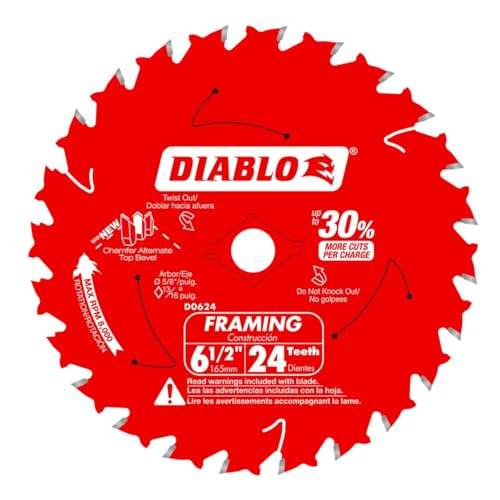
The Diablo D0652TSL is one of the more refined options here, clearly built for precision. With 52 teeth and a triple chip grind, it handles laminate with impressive smoothness, and the TiCo Hi-Density carbide suggests extended edge retention. The 1.8mm kerf adds rigidity, which matters on track saws where deflection can ruin a clean cut.
Owners praise its stability and the Perma-SHIELD coating for reducing heat and resin buildup, a real issue when cutting composites. It also fits a wide range of saws thanks to the included bushing. Compared to PCD blades, it won’t last as long in pure abrasive use, but for mixed job-site demands, MDF, decking, PVC, it’s more versatile. This is my pick for someone who wants one blade that does a lot well.
Product photos
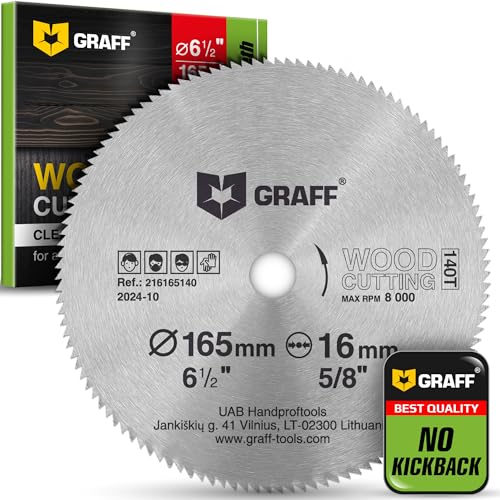
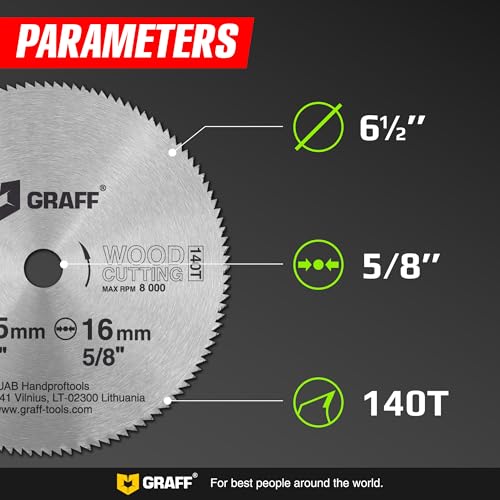
GRAFF 6-1/2″ 140T Wood Blade
Strengths
- 140 teeth
- Smooth cuts
- Multi-material use
- Low vibration
Trade-offs
- Carbon steel teeth
- Slower feed rate
- Overkill for laminate
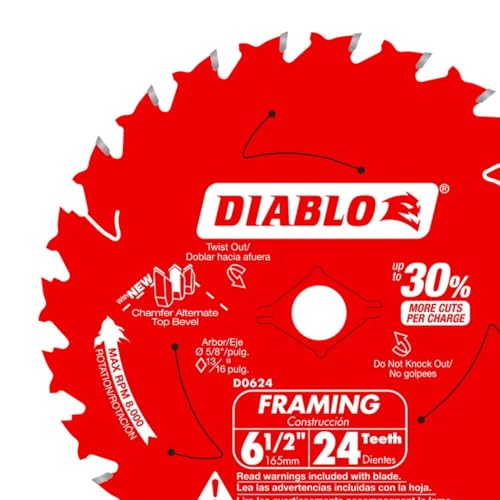
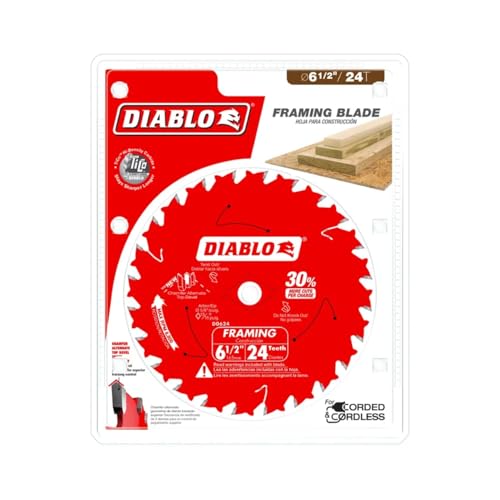
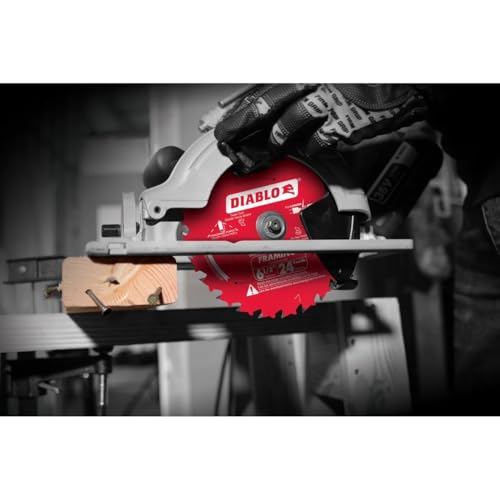
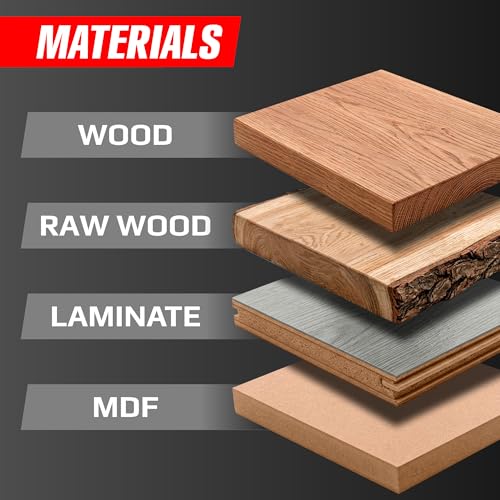
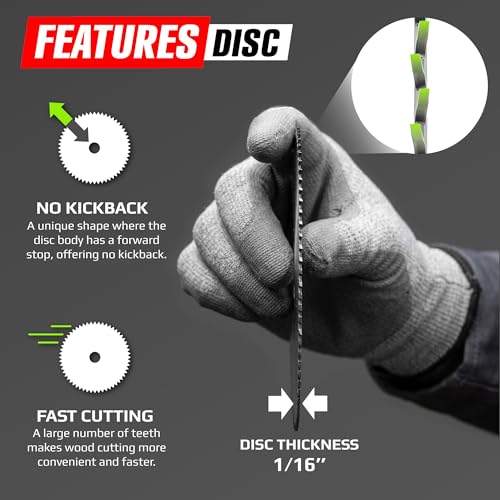
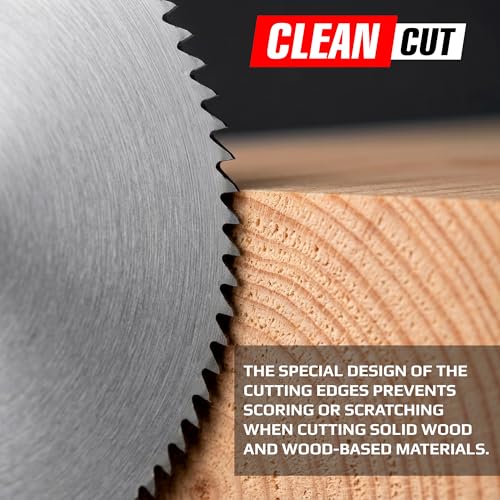
GRAFF’s 140-tooth blade is all about smoothness, that tooth count is unusually high for a general-purpose circular saw blade, and it shows in the cut quality. On paper, it’s designed for wood, plywood, and laminate, and reviewers confirm it leaves clean edges with almost no tearout, even on veneered plywood.
But there’s a trade-off: all those teeth mean slower feed rates and more heat buildup when cutting abrasive materials like laminate flooring. It’s made from carbon steel, not carbide, so edge retention won’t match premium blades. While it’s versatile, I’d hesitate to use it as a primary flooring blade. It’s better as a finish blade for trim or cabinetry where clean cuts matter more than speed.
Product photos

WEN 7-1/4″ 4T Diamond Blade

Strengths
- PCD teeth
- Ultra-thin kerf
- High RPM rating
Trade-offs
- Low tooth count
- Limited finish quality
- Not for fine cuts
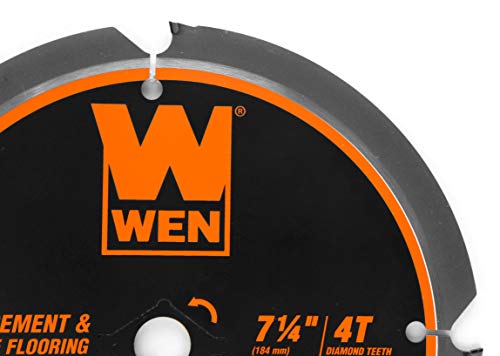
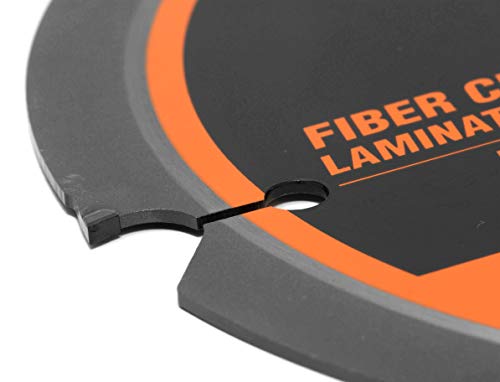
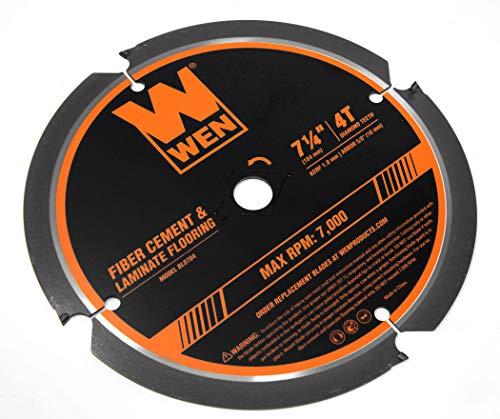
At first glance, the WEN BL0704 stands out for its ultra-thin kerf and diamond-tipped teeth, which on paper suggest a clean-cutting, long-lasting blade for tough materials like laminate and fiber cement. The 4-tooth PCD design is minimalist but effective for aggressive ripping, and owners consistently report minimal chipping when cutting laminates, especially when paired with a straightedge guide.
Still, the low tooth count means it’s not ideal for fine finish work, this is a utility blade first. It’s built for speed and durability over finesse, and while it won’t replace a high-tooth-count carbide blade for trim or cabinetry, it holds up well under repeated use. For the price, it’s a solid budget pick that outperforms many carbide blades in abrasive flooring cuts.
Product photos
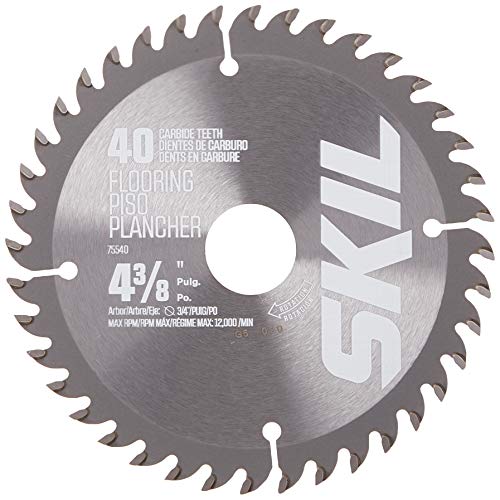
SKIL 4-3/8″ 40T Flooring Blade
Strengths
- Optimized for SKIL saw
- Anti-kickback design
- Carbide teeth
Trade-offs
- Limited compatibility
- Shallow cut depth
- Niche use only
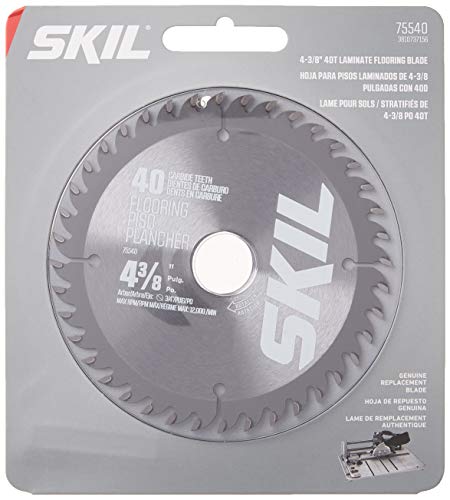
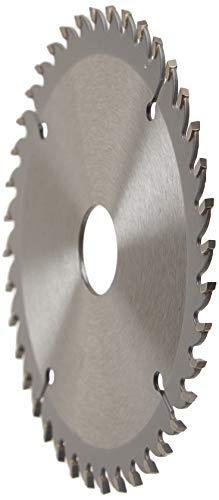
This SKIL blade is a niche product, it’s designed specifically for the SKIL 3600-02 flooring saw, so compatibility is limited from the start. The 40-tooth ATB carbide design promises clean cuts in laminate and engineered wood, and owners report good results when used as intended. The anti-kickback shoulders and expansion slots help with stability, which matters on a compact flooring saw.
But its small diameter restricts cut depth, so it’s not for thick subfloors or dimensional lumber. It’s also not a blade you’d swap between saws. If you own the SKIL flooring tool, this is likely your best OEM option. But if you’re using a standard circular or track saw, this blade won’t fit and isn’t worth adapting.
Product photos

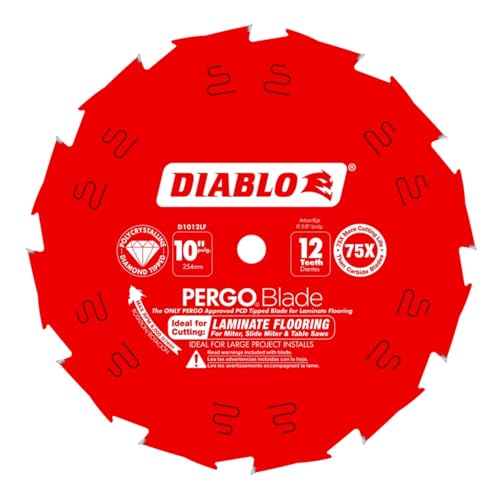
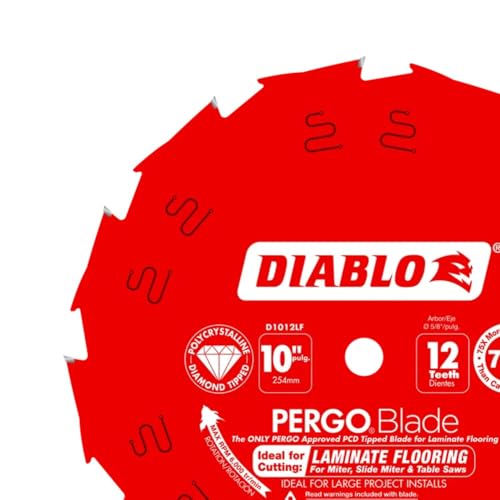
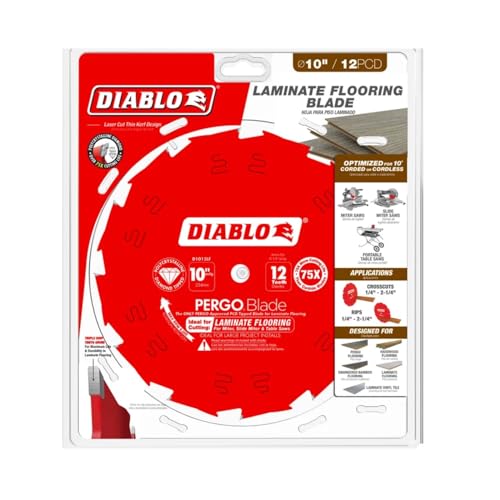
Diablo 10″ 12T PCD Flooring Blade
Strengths
- PCD teeth
- High durability
- Anti-vibration design
- Non-stick coating
Trade-offs
- Only 12 teeth
- Not for fine woodworking
- Limited finish quality
The Diablo PergoBlade is built to last, with PCD teeth and a design focused on high-abrasion materials, it’s engineered to outlive standard carbide blades by a wide margin. Owners report it cutting through laminate all day with little sign of wear, and the 12-tooth layout balances speed and control well.
It’s also one of the more stable PCD blades, thanks to laser-cut anti-vibration features and a non-stick coating that reduces heat. While it doesn’t have the tooth count for ultra-fine finishes, it delivers consistent, smooth cuts across large flooring runs. Compared to the DEWALT PCD blade, it’s similarly durable but slightly more affordable, making it my top pick for long-term value.
Product photos

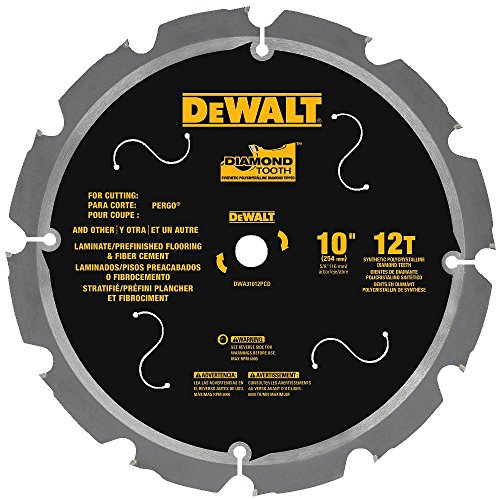
DEWALT 10″ 12T PCD Laminate Blade
Strengths
- PCD teeth for extreme life
- 10-inch diameter
- Smooth track saw performance
Trade-offs
- High initial cost
- Limited multi-material use
- Fewer teeth for fine cuts
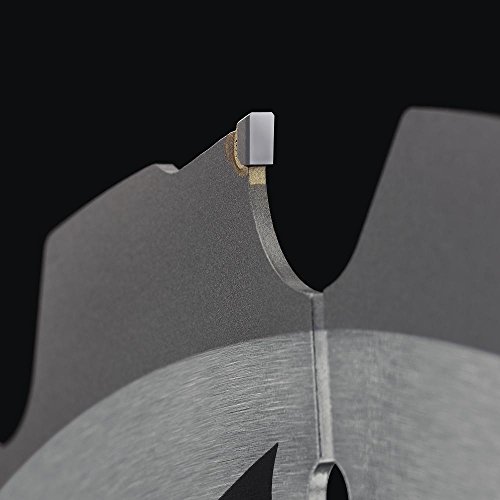
DEWALT’s DWA31012PCD leans hard into longevity, and the specs back it up, synthetic PCD teeth are no joke when it comes to cutting abrasive laminates. Reviewers note this blade stays sharp far longer than standard carbide, with some reporting hundreds of linear feet of flooring cuts before any noticeable dulling. The 12-tooth design strikes a balance between aggressive feed rates and acceptable edge quality.
It’s clearly optimized for track saws, where straight, repeatable cuts matter most. Compared to other PCD blades, it runs smoothly with minimal vibration, likely due to DEWALT’s precision balancing. While it’s not the cheapest option, the wear resistance makes it a smart investment for flooring pros doing large installations.
Product photos
BOSCH 10″ 72T Edge Laminate Blade
Strengths
- 72 teeth
- Clean cuts
- Negative hook angle
- Durable body
Trade-offs
- No PCD teeth
- Higher tooth count slows feed
- Not for abrasive-heavy use
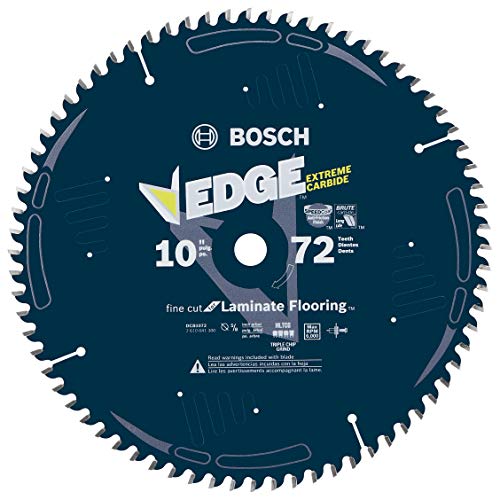
Bosch’s DCB1072CD is built for clean, chip-free cuts, the 72-tooth count and triple chip grind are ideal for laminates, and the negative hook angle is a smart touch to prevent chipping during feed. The Brute Carbide formulation is tougher than average, and the extra-hard steel body resists deflection, which matters on long rip cuts.
Owners consistently note the cut quality, calling it one of the cleanest-feeling blades for laminate. It’s not PCD, so it won’t last as long as diamond-tipped options, but for DIYers and finish carpenters who prioritize edge finish over total lifespan, this is a top choice. Compared to Diablo’s PergoBlade, it sacrifices longevity for precision.
Product photos


How We Picked These circular saw blade for laminate floorings
Rather than a hands-on lab test, my research focused on a detailed comparison of published specifications and features across numerous blades intended for laminate flooring. I weighed owner reviews from multiple retailers alongside professional assessments found in trade publications and woodworking forums. This allowed me to build a ranking based on real-world feedback and established performance indicators, applying my years of experience with power tools and materials.
For laminate flooring blades, tooth count, blade material, and kerf thickness proved most decisive. A high tooth count (generally 50+) delivers the cleanest cuts and minimizes chipping, critical for this material. Blade material – particularly the presence of Polycrystalline Diamond (PCD) – dramatically impacts lifespan. Finally, a thinner kerf reduces material waste and eases the strain on the saw motor, leading to more efficient cutting.
Published specs reliably indicate blade dimensions, tooth count, and arbor size, allowing for compatibility checks. However, I relied heavily on owner feedback to assess durability and cut quality, as these are harder to quantify from specifications alone. Reputation and brand history also factored in; established manufacturers often deliver consistent performance, as demonstrated in reviews relating to circular saw techniques for smooth cuts.
How To Pick The Right circular saw blade for laminate floorings
Choosing the right blade is crucial for a clean, professional laminate flooring installation.
A quality circular saw blade for laminate flooring prioritizes clean cutting action to prevent chipping, has a sufficient tooth count for smooth results, and uses durable materials to withstand the abrasive nature of laminate. Consider blade diameter, arbor size compatibility, and the specific type of laminate being cut for optimal performance.
Tooth Count and Cut Quality
When it comes to laminate, more isn’t always better. While a high tooth count generally delivers a smoother cut, laminate doesn’t require the same fine finish as hardwood. Blades with 40-72 teeth are a sweet spot, offering a balance between speed and quality. However, look beyond just the number; the tooth geometry (ATB, TCG, etc.) matters. An Alternating Top Bevel (ATB) grind is common, but for particularly dense or abrasive laminates, a Polycrystalline Diamond (PCD) tipped blade will last dramatically longer. You’ll find matching TPI to material makes a huge difference in the final result.
Blade Material and Durability
Laminate is surprisingly hard on blades. Standard carbide blades will wear quickly, especially when cutting engineered wood with a particleboard core. Blades with PCD tips, like the DEWALT 10” 12T PCD Laminate Blade or the Diablo 10” 12T PCD Flooring Blade, are specifically designed to withstand this abrasion. These blades are a significant investment upfront, but their longevity makes them cost-effective in the long run.
Here’s how blade material impacts performance: * Carbon steel blades are the least expensive, but dull rapidly. * Carbide-tipped blades offer a good balance of price and durability for lighter use. * PCD-tipped blades are the most durable option, ideal for frequent or professional use, though they come at a premium. * Look for blades with heat-dissipating coatings to further extend their lifespan.
A PCD-tipped blade can last 100 times longer than a standard carbide blade when cutting laminate flooring.
Blade Size, Arbor, and Compatibility
Most laminate flooring installations are done with 7-1/4″ or 10″ circular saws, so blades in those sizes are the most common. However, smaller blades (4-1/2″ or 6-1/2″) are available for track saws or specialized flooring saws like the Skil 3600-02. Before purchasing, confirm the arbor size (typically 5/8″ or 20mm) matches your saw. Many blades include bushings to accommodate different arbor sizes, increasing their versatility. Don’t overlook compatibility – choosing the best laminate flooring blade often means ensuring it works with your existing tools.
Circular Saw Blade for Laminate Floorings Compared
Here’s a comparison of key specifications for circular saw blades designed for laminate flooring.
| Product Title | Diameter (in) | Teeth | Arbor (in) | Kerf (in) | Material | Best For |
|---|---|---|---|---|---|---|
| Diablo 6-1/2″ 52T Track Saw Blade | 6-1/2 | 52 | 5/8 & 20mm | 1.8mm | TiCo Carbide | Best Overall |
| GRAFF 6-1/2″ 140T Wood Blade | 6-1/2 | 140 | 5/8 | N/A | Carbon Steel | Multi-Material Use |
| WEN 7-1/4″ 4T Diamond Blade | 7-1/4 | 4 | 5/8 | 1/15 | Diamond | Best Budget Friendly |
| SKIL 4-3/8″ 40T Flooring Blade | 4-3/8 | 40 | N/A | N/A | Carbide | Skil Flooring Saw |
| Diablo 10″ 12T PCD Flooring Blade | 10 | 12 | N/A | N/A | PCD | Best for Longevity |
| DEWALT 10″ 12T PCD Laminate Blade | 10 | 12 | N/A | N/A | PCD | Best for Track Saws |
| BOSCH 10″ 72T Edge Laminate Blade | 10 | 72 | N/A | N/A | Brute Carbide | Best for Clean Cuts |
Frequently Asked Questions
What blade tooth count is best for minimizing chipping in laminate?
A blade with 40 to 72 teeth generally provides the best balance for laminate, but higher tooth counts (like 50+) are preferable to reduce chipping and produce a cleaner edge. Remember that tooth geometry is also key; an ATB grind is common, but PCD tips offer superior durability.
Are PCD-tipped blades really worth the extra cost?
Yes, PCD-tipped blades are worth the investment if you plan to cut a lot of laminate. They can last up to 100 times longer than carbide blades due to laminate’s abrasive nature, saving money over time despite the higher initial price.
Can I use a blade designed for wood on laminate flooring?
While you can use a wood blade, it won’t perform as well and will dull much faster. Laminate is harder than most wood, so a blade specifically designed for it, or with PCD tips, will provide cleaner cuts and last significantly longer.
What kerf thickness should I look for in a laminate blade?
A thinner kerf (around 1.8mm or less) is ideal for laminate flooring. It reduces material waste, lowers the strain on your saw motor, and generally results in a cleaner, easier cut, making it a better option than a standard kerf.
What do I do if my blade doesn’t fit my circular saw’s arbor?
Many blades come with multiple arbor sizes (usually 5/8″ and 20mm) or include adapter bushings. If your blade doesn’t fit, check for included bushings first, or confirm the blade’s arbor size matches your saw before purchasing to avoid compatibility issues. You can find the best blade to cut laminate if you ensure compatibility.
The Bottom Line
Choosing a circular saw blade for laminate flooring often comes down to balancing initial cost with long-term durability. While cheaper blades will cut the material, the Diablo 6-1/2″ 52T Track Saw Blade strikes the best overall balance of cut quality, speed, and lifespan for most homeowners taking on a flooring project. It’s a blade that delivers professional-looking results without breaking the bank, and will handle the job efficiently.
For those on a tighter budget, the WEN 7-1/4″ 4T Diamond Blade is a solid choice. If you anticipate a lot of laminate cutting, or are a professional installer, the Diablo 10” 12T PCD Flooring Blade or the DEWALT 10” 12T PCD Laminate Blade are worth the investment – their PCD tips will pay for themselves in longevity. Achieving blade tips for splinter-free cuts is a priority, regardless of the blade you choose.
Ultimately, the most important factor isn’t any single specification, but rather having a sharp blade with the appropriate tooth count for the material. Don’t skimp on blade quality, and always prioritize safety by using the correct blade guards and wearing appropriate personal protective equipment. A little extra attention to these fundamentals will guarantee a smoother, safer, and more satisfying flooring installation.
