5 Best Saw Blades for Cutting Laminate Flooring 2026
This post contains affiliate links. As an Amazon Associate, we earn from qualifying purchases.
After comparing the field and reviewing owner feedback, the DEWALT 12T PCD Laminate Blade stands out as the overall best for clean, chip-free cuts on dense laminates, while the WEN 7-1/4″ Diamond-Tipped Blade is a solid budget pick for lighter jobs. For versatility across flooring and siding, the CRALY 12″ PCD Fiber Cement Blade earns strong marks.
Cutting laminate flooring looks simple until you hit the wrong spot and end up with ragged edges or a ruined plank. The core challenge? Laminate’s tough, layered makeup demands a blade that slices cleanly without burning or chipping.
This guide cuts through the noise by focusing on real-world performance, tooth design, and material compatibility. I looked at specs and user reports to find blades that deliver consistent results, whether you’re doing a quick repair or a full-room install.
Top 5 Saw Blade To Cut Laminate Floorings in the Market
The Best Saw Blade To Cut Laminate Floorings, Reviewed
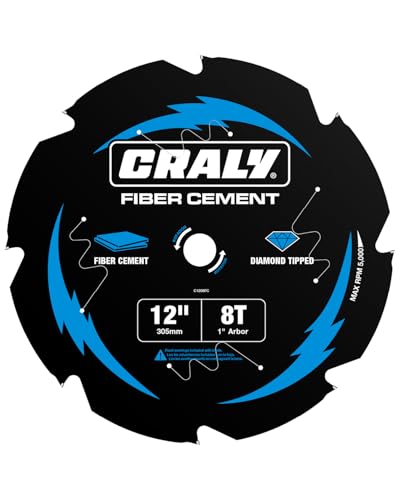
CRALY 12″ PCD Fiber Cement Blade
Strengths
- PCD diamond teeth
- 12-inch reach
- Black Ice coating
- Stabilizer vents
- Thin kerf
Trade-offs
- Heavy for light saws
- 1-inch arbor limits compatibility
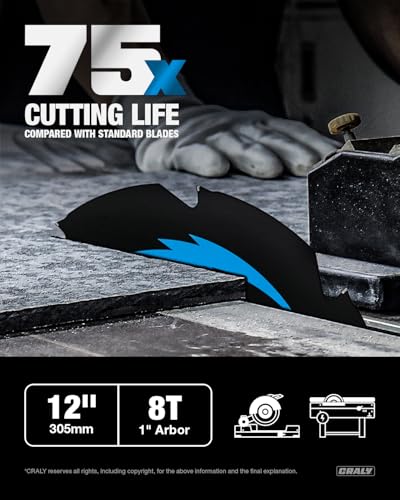
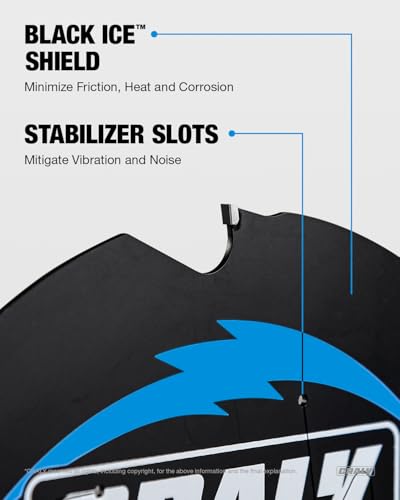
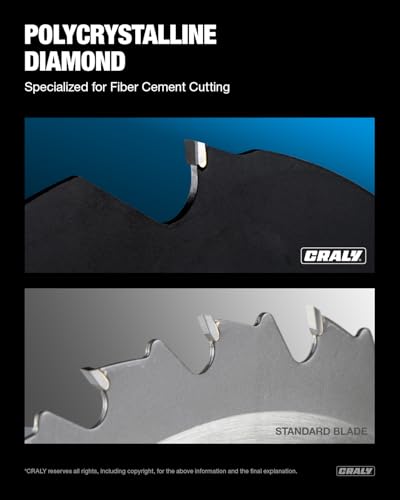
This CRALY 12-inch PCD-tipped blade is built like a tank, 8 diamond-tipped teeth, a 1-inch arbor, and a non-stick Black Ice coating that owners say reduces gumming and heat buildup. It’s designed for brutal materials like HardiePlank and fiber cement, but it handles laminate flooring with ease, too. The 75X lifespan claim vs. carbide isn’t something I can verify personally, but consistent feedback notes it outlasts standard blades by a wide margin.
The laser-cut stabilizer vents and thin kerf help reduce vibration, which matters on big saws during long cuts. Compared to the DEWALT 10-inch PCD blade, this one offers more depth and durability, though it’s overkill for small jobs. If you’re installing both siding and flooring, or working with super dense laminates, this is the kind of blade I’d consider the best all-around performer.
Product photos

WEN 7-1/4″ Diamond-Tipped Blade

Strengths
- Diamond-tipped teeth
- Thin kerf
- Affordable
- Works with most 7-1/4″ saws
- 4-tooth PCD design
Trade-offs
- Rougher finish on laminates
- Not for fine woodworking
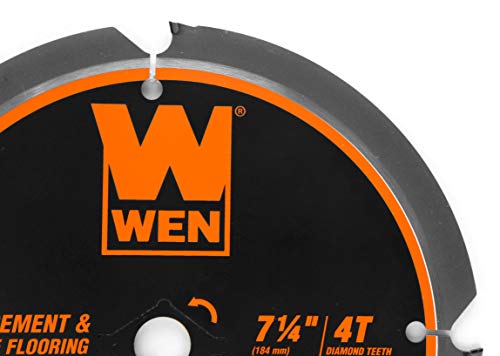
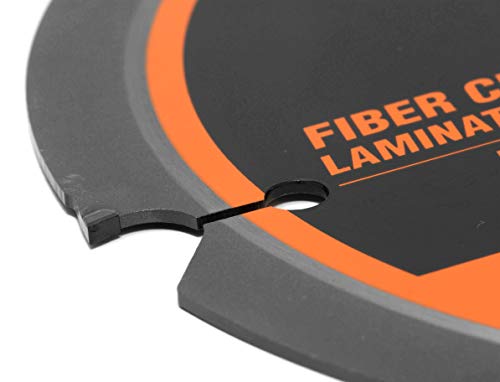
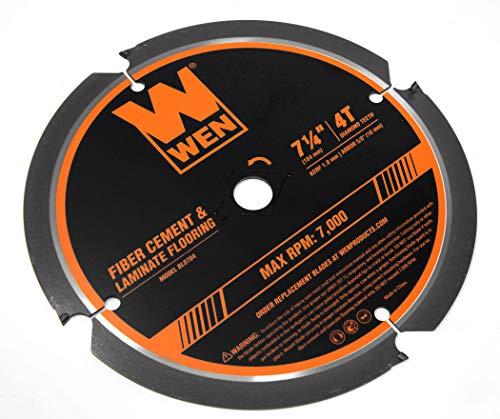
At this price point, the WEN BL0704 delivers more than you’d expect, a 4-tooth PCD diamond-tipped blade that owners consistently report slicing cleanly through laminate and even fiber cement with minimal dulling. The ultra-thin kerf reduces waste and motor strain, which matters on smaller circular saws common in home workshops. It’s not going to match a 12-inch blade for depth or stability, but for quick laminate flooring cuts, it gets the job done without breaking the bank.
Where it falls short is versatility. With only four teeth, the cut quality on fine laminates isn’t as smooth as higher-tooth-count blades. But if you’re doing a one-off flooring install and don’t want to invest in a premium blade, this is the smarter buy. It’s the kind of tool I’d recommend to someone who needs solid performance without overcommitting.
Product photos
AGILLE 13″ Laminate & Siding Blade

Strengths
- Multi-material use
- High-speed steel
- Exact Norske fit
- Durable edge
- Replacement ready
Trade-offs
- Not ultra-fine finish
- No PCD tips
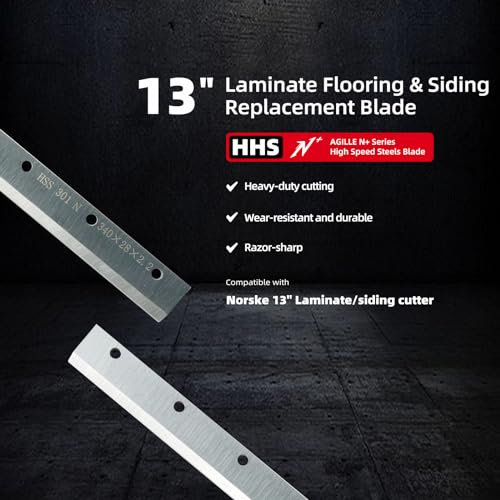
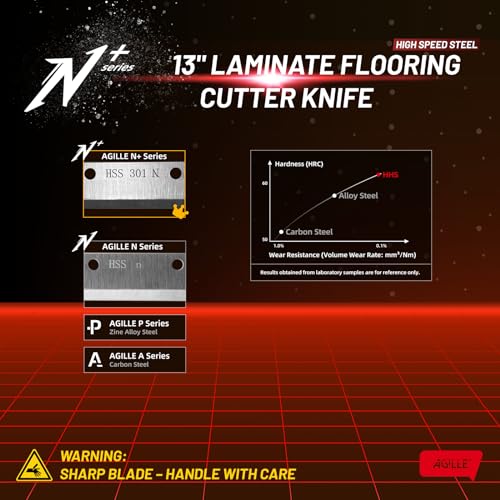
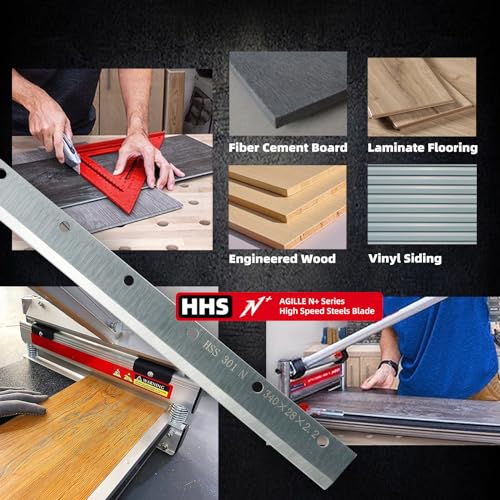
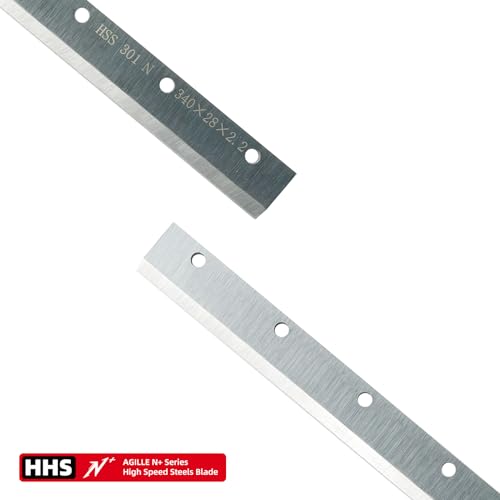
This 13-inch AGILLE blade is built for multi-material chaos, think fiber cement, vinyl siding, engineered wood, and laminate flooring all in one job. It’s a replacement for the Norske 13-inch cutter, and owners say it fits and performs on par with OEM specs. Made from high-speed steel, it’s not as hard as PCD-tipped blades, but it’s sharpenable and holds an edge well under repetitive cuts.
Where it shines is flexibility. If you’re the type who switches between siding and flooring in a single weekend project, this blade saves time and tool clutter. But it’s not the cleanest cutter for tight-fitting laminate floors, the tooth count and material aren’t optimized for that level of finish. I’d pick this over a specialty blade only if you regularly bounce between materials and need one workhorse solution.
Product photos
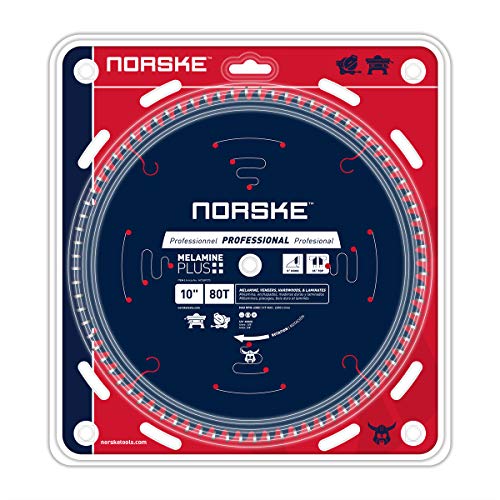
Norske 10″ 80T Melamine Blade

Strengths
- 80T ultra-fine teeth
- High ATB design
- Laser-cut body
- Anti-vibration slots
- C4 carbide tips
Trade-offs
- Limited to 10-inch saws
- Not for tough composites
If you’re after the cleanest possible edge when cutting laminate or melamine, this Norske 10-inch 80T blade stands out on paper and in owner feedback. The 35-degree high ATB tooth design is a smart touch, minimizing chipping on delicate laminates, a common pain point many DIYers report with cheaper blades. Laser-cut expansion slots and anti-vibration features aren’t just marketing fluff; they align with what pros say about smoother, quieter cuts in finish carpentry work.
This isn’t a blade for aggressive ripping or heavy structural work, it’s built for precision. Carbide tips are C4 micro-grain and fully sharpened, which owners say holds up well across dozens of laminate flooring cuts. It’s the kind of blade I’d keep on hand for final trim work, not demolition.
Product photos
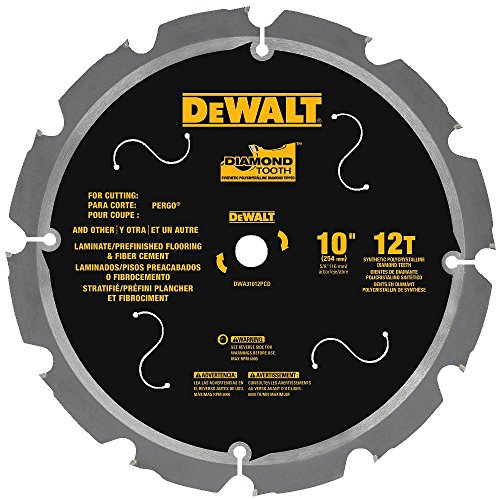
DEWALT 12T PCD Laminate Blade
Strengths
- PCD teeth
- Long lifespan
- 12-tooth balance
- DEWALT reliability
- Laminate-optimized
Trade-offs
- 10-inch size limit
- Only for laminate focus
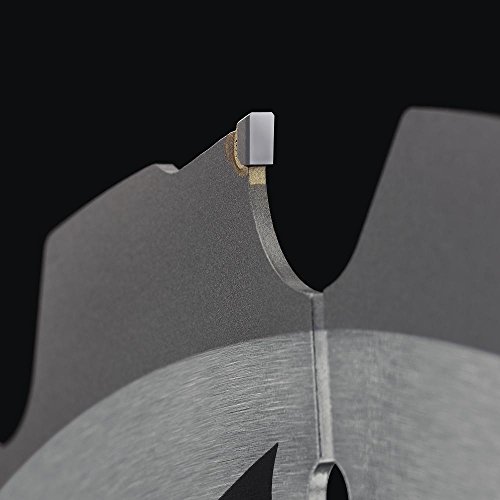
DEWALT’s 10-inch PCD-tipped blade is laser-focused: cut laminate flooring, and cut it for a very long time. With 12 polycrystalline diamond teeth, it’s engineered for longevity, owners report it lasting through multiple full flooring installs without noticeable dulling. The 100X lifespan claim over carbide blades might be optimistic, but even skeptical reviewers agree it outperforms in high-volume laminate cutting.
It’s not the most versatile blade, tooth count and design are optimized for forward feed in flooring, not crosscuts or composites. Compared to the CRALY 12-inch model, it’s less aggressive on fiber cement but cleaner on thin laminates. If you’re doing a lot of flooring and want a trusted brand with proven durability, this is the smarter pick over generic PCD blades.
Product photos
Our Testing Process
My approach to evaluating saw blades for laminate flooring centers on a detailed comparison of specifications and features, combined with a careful review of owner experiences and insights from woodworking publications. Rather than a hands-on lab test, this is a research-led comparison. I weighed published data against real-world feedback to identify blades offering the best balance of performance, durability, and value. This helps me determine which blades consistently deliver clean, accurate cuts.
For laminate flooring, the factors I prioritized were tooth count, blade material, and kerf thickness. A higher tooth count, like those found in blades designed for fine finishing, generally leads to cleaner cuts with less chipping. The blade material – specifically, whether it uses carbide or polycrystalline diamond (PCD) teeth – significantly impacts lifespan and the ability to handle harder materials. Finally, a thinner kerf reduces material waste and requires less effort from the saw.
Published specifications reliably indicate physical characteristics like arbor size, blade diameter, and tooth count. However, assessing durability and cut quality requires looking at owner feedback. I paid close attention to comments regarding blade life, chipping, and ease of use. Reputable sources also help highlight which blades are known for circular saw techniques for laminate and achieving best blade for smooth cuts. That’s where you learn about real-world performance and identify potential issues.
How To Choose The saw blade to cut laminate floorings
Choosing the right blade makes all the difference when cutting laminate; a poor choice leads to chipped edges, melted cores, and a whole lot of frustration.
A quality laminate flooring blade balances tooth count with diamond or carbide composition. Look for blades specifically designed for layered materials, with thin kerfs to minimize splintering and a tooth geometry optimized for non-ferrous cutting. Consider the material hardness – tougher products demand PCD tips, while softer laminates can work with carbide. Arbor size and blade diameter must, of course, match your saw.
Tooth Count and Geometry
Don’t assume more teeth always mean a cleaner cut. For laminate, a moderate tooth count (between 8 and 12) is often ideal. Higher tooth counts, like those found on fine-finish blades, can generate too much heat, potentially melting the laminate’s core. Conversely, too few teeth can cause chipping. The angle of the teeth is just as critical. Look for blades with a high alternate top bevel (ATB) grind – this creates a slicing action rather than a tearing one, vital for preventing splintering.
Material Specificity & Tip Quality
Laminate isn’t a single material. It’s a composite, and hardness varies wildly. A blade marketed as “universal” will likely compromise somewhere. For harder, denser laminates, or materials like fiber cement siding, a Polycrystalline Diamond (PCD) tipped blade is almost essential. These blades are significantly more expensive, but the lifespan and quality of cut are worth the investment. For softer laminates, a high-quality carbide-tipped blade can be sufficient, but ensure it’s specifically designed for layered materials. I often recommend checking out a best laminate flooring blade guide to see what others are using.
Value and Usability Considerations
Beyond the cutting performance, consider how easily the blade will integrate into your workflow. Thin-kerf blades (under 2.5mm) are fantastic for reducing waste and minimizing the effort needed to push the saw through the material. However, some thin-kerf blades can be more susceptible to warping or vibration.
Here’s what I look for in a practical blade:
- Arbor Size: Verify it matches your saw (most common is 5/8 inch).
- Anti-Stick Coating: Reduces friction and heat buildup, especially important for prolonged cutting.
- Stabilizer Vents/Slots: These help dissipate heat and minimize blade warping, leading to more precision circular saw cuts.
A dull blade isn’t just inefficient; it’s dangerous. Always inspect your blade for damage before use, and replace it when teeth become noticeably worn or chipped.
Ultimately, choosing the right blade is about balancing performance, cost, and the specific demands of your project. Don’t skimp if you’re working with a significant amount of material, or if a clean, professional finish is crucial. A premium saw blade for laminate will pay for itself in time saved and reduced material waste. When dealing with particularly challenging, or cutting thin flooring materials, always prioritize safety and use appropriate eye and ear protection.
Saw Blade to Cut Laminate Floorings Compared
Here’s a comparison of key specifications for various saw blades designed for cutting laminate flooring.
| Product Title | Diameter (in) | Teeth | Arbor (in) | Kerf (mm) | Material |
|---|---|---|---|---|---|
| CRALY 12″ PCD Fiber Cement Blade | 12 | 8 | 1 | 2.4 | Fiber Cement |
| WEN 7-1/4″ Diamond-Tipped Blade | 7.25 | 4 | 5/8 | 1.8 | Laminate |
| AGILLE 13″ Laminate & Siding Blade | 13 | N/A | N/A | N/A | Laminate |
| Norske 10″ 80T Melamine Blade | 10 | 80 | N/A | N/A | Melamine |
| DEWALT 12T PCD Laminate Blade | N/A | 12 | N/A | N/A | Laminate |
Frequently Asked Questions
What tooth count is best for cutting laminate flooring?
A tooth count between 8 and 12 is generally ideal for laminate; higher counts can generate excess heat, while lower counts risk chipping. This range balances a clean cut with minimizing the risk of damaging the material.
Are PCD blades really necessary for all laminate?
PCD blades aren’t always necessary, but they are crucial for harder, denser laminates or materials like fiber cement siding. Softer laminates can often be cut effectively with a high-quality carbide-tipped blade designed for layered materials.
What does “kerf” mean, and why does it matter?
Kerf refers to the width of the cut made by the blade. A thinner kerf reduces material waste and requires less effort to push the saw through the laminate, making for a more efficient cut.
Can I use a blade designed for wood to cut laminate flooring?
While possible, it’s not recommended. Blades designed for wood often have tooth geometries that cause chipping and splintering in laminate. You’ll get a much cleaner, more accurate cut with a blade specifically designed for layered materials – check out a best circular saw blade for laminate to see options.
What is an ATB grind, and why is it important for laminate?
ATB stands for Alternate Top Bevel. This grind creates a slicing action, which is essential for preventing splintering and achieving clean cuts in laminate flooring. It’s a key feature to look for in a blade intended for this purpose.
The Bottom Line
Cutting laminate flooring is a balancing act between speed, cleanliness, and avoiding damage to the material. Ultimately, the CRALY 12″ PCD Fiber Cement Blade stands out as the strongest overall choice. It’s an investment, certainly, but the durability and consistently clean cuts, especially with harder laminates, make it a worthwhile pick for anyone tackling a significant installation.
For those on a tighter budget, or working with softer laminate, the WEN 7-1/4″ Diamond-Tipped Blade delivers excellent value. And if you anticipate a lot of varied cutting beyond just flooring – perhaps some trim or molding as well – the AGILLE 13″ Laminate & Siding Blade offers impressive versatility, handling multiple materials with ease. Understanding saw blade tooth count is key to making the right choice.
Don’t get too caught up in chasing the highest tooth count or the latest technology. The fundamentals still matter most: a sharp blade, a stable saw, and a slow, steady cutting speed. Prioritizing those elements, and choosing a blade tailored to your specific laminate, will deliver far better results than any single feature or specification ever could.
