
7 Best Benchtop Wood Planers of 2026
This post contains affiliate links. As an Amazon Associate, we earn from qualifying purchases.
The JET 13-Inch Benchtop Planer is the overall best choice for serious DIYers and pros who want reliable performance, a durable helical cutterhead, and solid build quality. For those on a tighter budget, the WEN PL1303 offers solid basic functionality at a much lower price, while the WOODERS Spiral Cutterhead Planer stands out if you prioritize a smooth finish and quieter operation.
Most people shopping for a benchtop planer are trying to flatten rough lumber or bring consistency to project boards, but not all planers deliver clean, snipe-free results without constant tweaking. Poor motor power, flimsy tables, or outdated cutterhead designs can turn a simple job into a frustrating mess.
In this guide, I’ll walk you through the top models based on specs, owner feedback, and real-world performance trends. I focused on cut quality, power, dust collection, and long-term reliability to help you pick a planer that won’t let you down mid-project.
Top 7 Benchtop Wood Planers in the Market
The Best Benchtop Wood Planers, Reviewed
JET 13-Inch Benchtop Planer

Strengths
- Cast iron bed
- Helical cutterhead
- 2-HP motor
- Dual feed speeds
- Sturdy four-post design
Trade-offs
- Heavier than average
- Higher price point
- HSS inserts (not carbide)
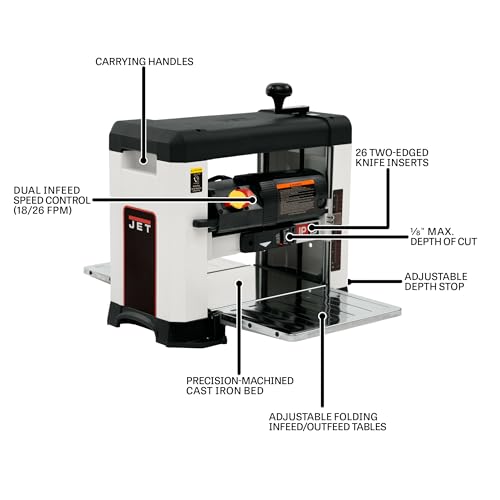
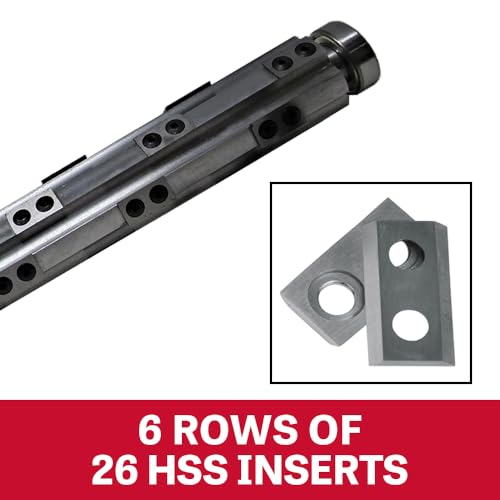
If I had to pick one planer for a mixed-use shop, hobbyist and pro-grade work alike, it’d be the JET JWP-13BT. The helical cutterhead with 26 quick-change HSS inserts delivers a noticeably smoother cut than three-knife flat heads, and the 2-HP motor maintains torque under load. The cast iron bed is a standout, adding serious rigidity that helps prevent snipe and keeps boards flat, something reviewers consistently praise.
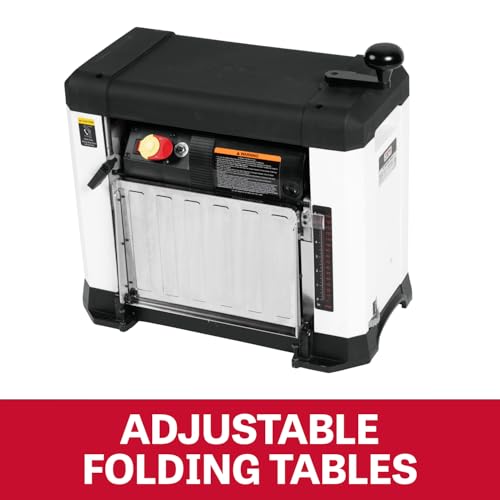
The dual feed speeds (18 and 26 FPM) let you balance finish quality with throughput, a feature even some DEWALT users wish they had. Foldable tables save space, and the four-post design adds stability. While it’s pricier than most, it’s built to last and backed by JET’s reputation for durability. Against the DEWALT DW735X, it trades some raw speed for quieter, more precise operation.
Product photos


DEWALT DW735X 13-Inch Planer
Strengths
- Heavy-duty motor
- Three-knife cutterhead
- Fan-assisted chip ejection
- Cast aluminum base
- 3-year warranty
Trade-offs
- Louder than helical models
- No helical cutterhead
- Basic dust port
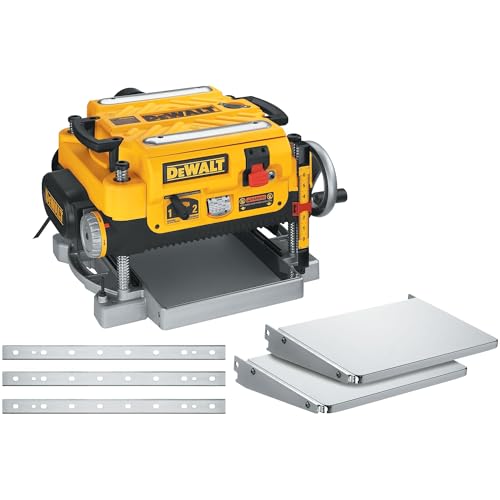
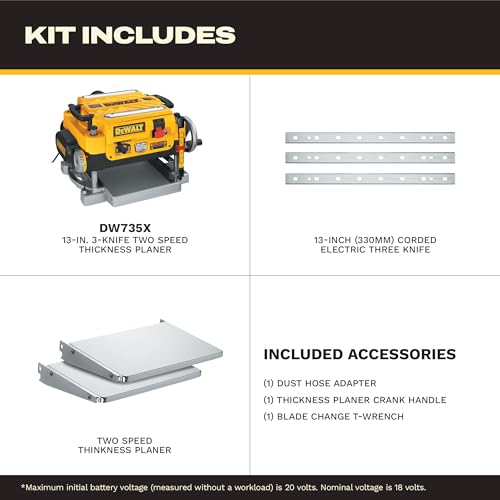
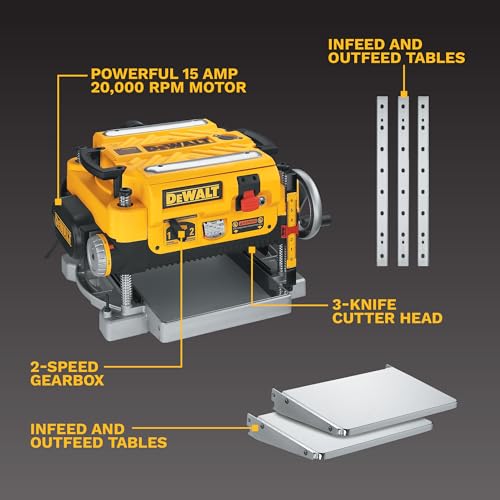
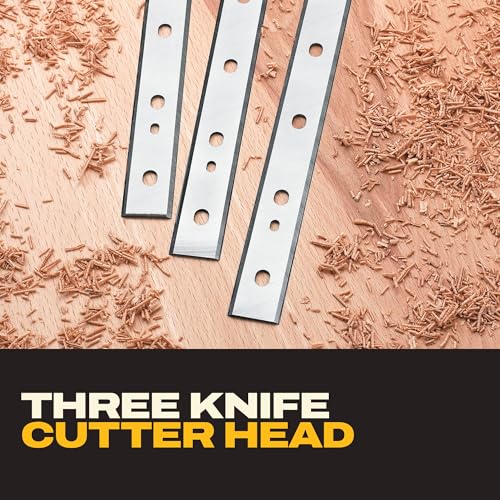
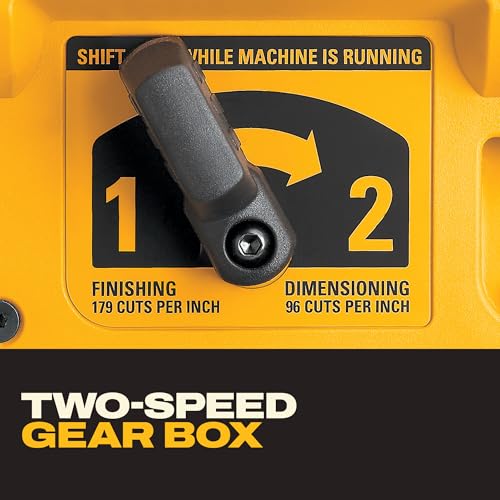
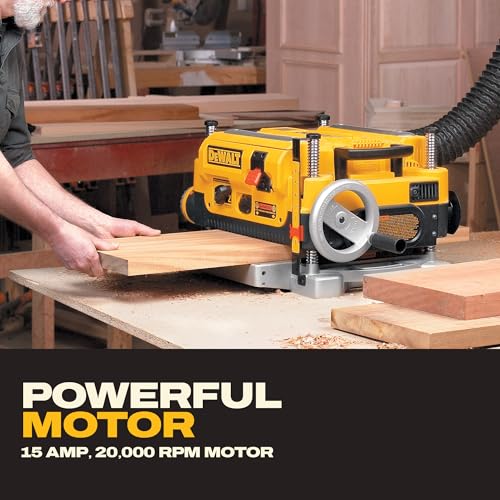
The DEWALT DW735X has earned its reputation as the go-to for heavy-duty planing, this is the tool I’d recommend if you’re running a busy shop or tackling thick, knotty hardwoods day after day. The 15A motor and 20,000 RPM cutterhead deliver serious cutting power, and the three-knife system spreads wear evenly, extending blade life by up to 30% compared to two-knife models.
Owners love the fan-assisted chip ejection, which keeps the cutter head clear and reduces clogging, a real issue with high-volume use. The cast aluminum base is rock-solid, and the automatic snipe-reduction carriage works without fuss. While it lacks a helical head, its raw durability and 3-year warranty make it a long-term investment. Next to the JET, it’s faster but noisier and less refined in finish.
Product photos
WOODERS Spiral Cutterhead Planer
Strengths
- Spiral carbide cutterhead
- Micro-adjust depth
- All-copper motor
- Smooth finish
- Durable aluminum cover
Trade-offs
- Slower RPM
- Limited feed speed options
- No dual feed rates
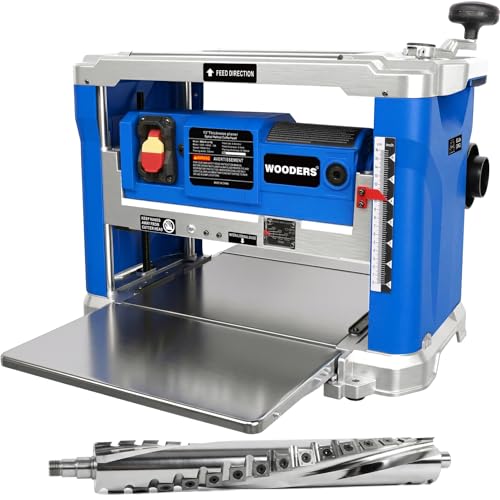
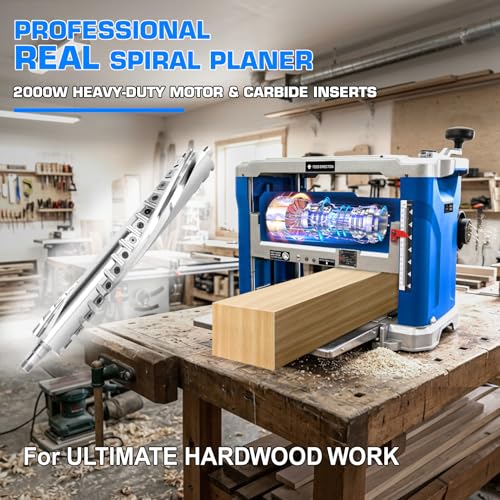
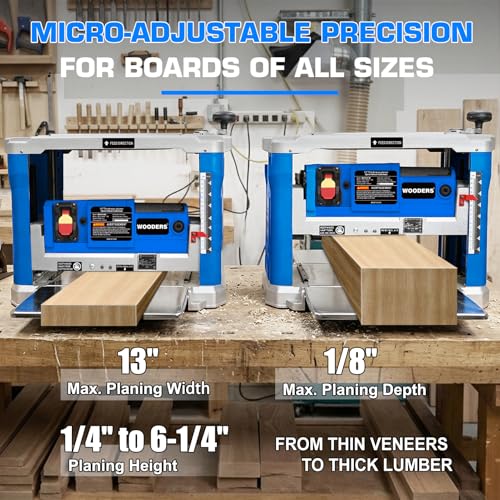
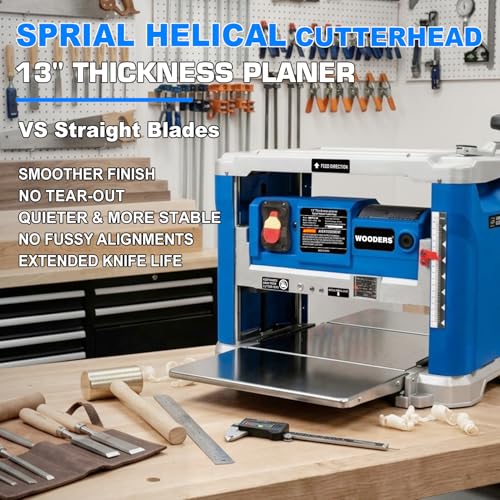
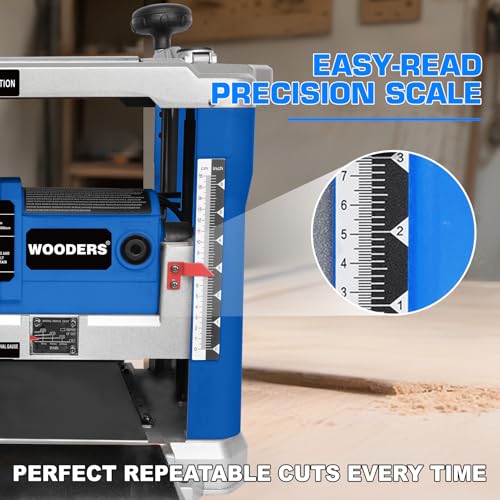
The WOODERS 13-inch planer is engineered for one thing: surface perfection. Its spiral helical cutterhead with tungsten carbide inserts is designed to eliminate tear-out, and owners confirm it leaves wood so smooth that sanding is often unnecessary. The 15A all-copper motor runs cool under pressure, and the micro-adjustable depth control allows for feather-light passes, ideal for high-end finishing work.
At 10,000 RPM, it’s not the fastest, but the balance between feed rate and cut quality is excellent. The aluminum top cover aids heat dissipation, a small but meaningful detail for longer sessions. Compared to the FindBuyTool model, it feels more refined in ergonomics and finish, though both target the same precision niche.
Product photos

WEN PL1303 13-Inch Planer
Strengths
- Affordable
- Reversible blades
- 15A motor
- Lightweight
- Simple operation
Trade-offs
- Basic dust collection
- No helical cutterhead
- Less stable on long stock
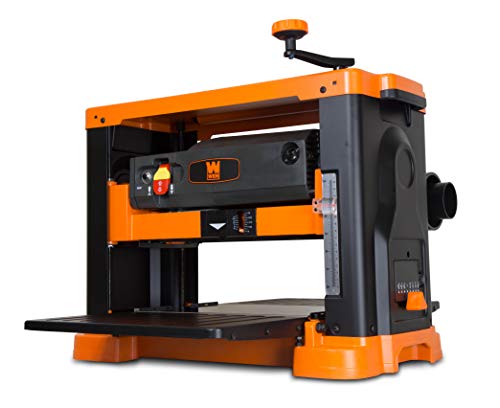
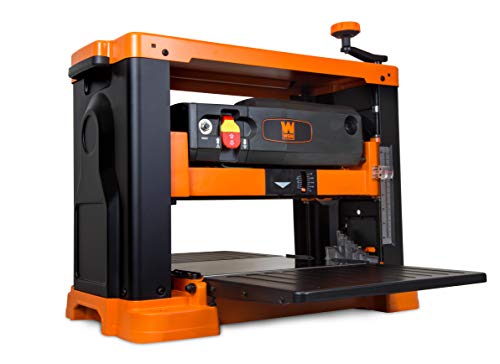
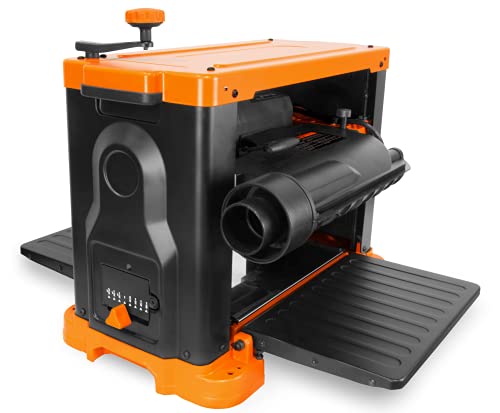
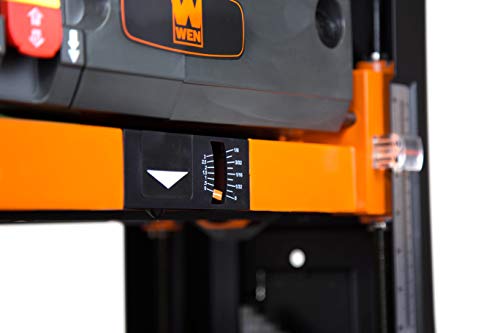
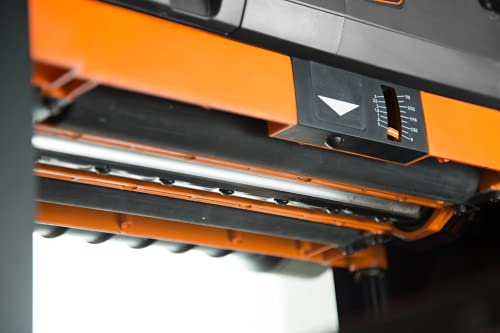
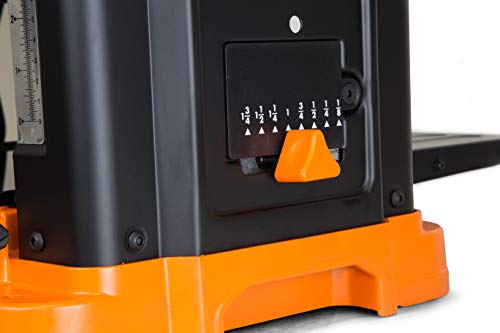
The WEN PL1303 is the bare-bones workhorse of this lineup, lightweight, simple, and built to get the job done without frills. With a 15A motor spinning at 30,000 cuts per minute, it has plenty of pep for softwoods and moderate hardwood use, and owners find it keeps up well for weekend projects. The three reversible SK5 steel blades help stretch service life, which is a smart touch at this price point.
It doesn’t offer helical cutters or dual feed speeds, and the build feels more utilitarian than rugged. Still, for someone just stepping into serious woodworking or running a small shop on a tight budget, this is the smarter buy over pricier models they might not fully use. Against the VEVOR, it’s lighter and less stable on long boards, but easier to move around.
Product photos
FindBuyTool Helical Cutterhead Planer
Strengths
- Helical cutterhead
- High precision
- 8-position depth stop
- Excellent dust flow
- Carbide inserts
Trade-offs
- Moderate motor power
- Feed rate on the slower side
- Assembly can be fiddly
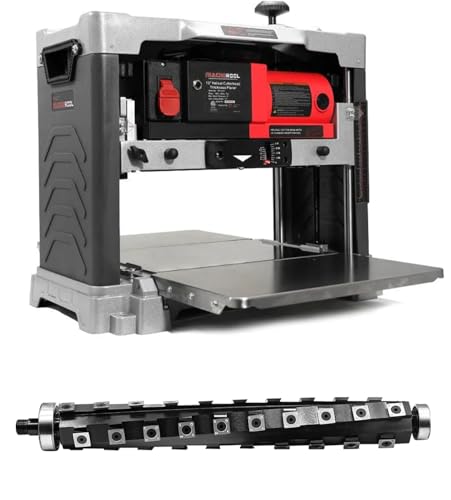
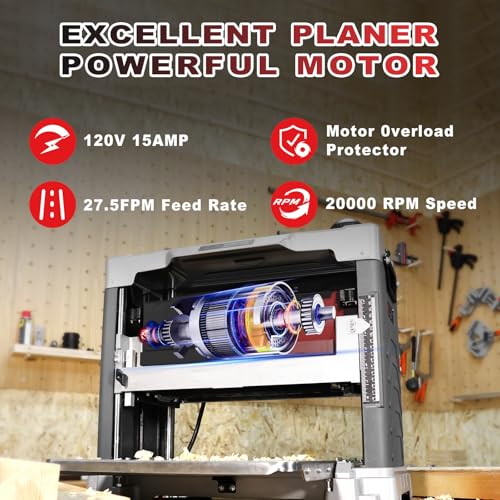
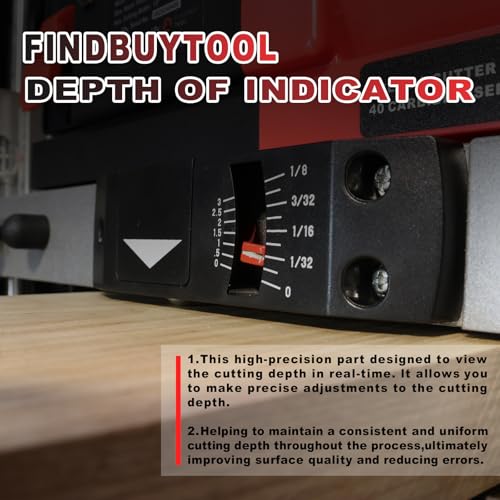
FindBuyTool’s FB131H stands out for one reason: precision. The 4-column design and helical cutterhead with 40 tungsten carbide inserts deliver a level of consistency that rivals more expensive units. Owners note the <0.1mm thickness tolerance across passes, which is critical when prepping wood for fine furniture or joinery. The 8-position depth stop makes it easy to knock out uniform stock, something I always recommend for production-style workflows.
It’s not the most powerful at 20,000 RPM, but the helical head compensates by slicing cleanly with less tear-out. Compared to the Cutech 40700H, it has a wider 13-inch capacity and better dust management, though it’s noisier. The Machorool branding suggests attention to detail, and that shows in the fit and finish.
Product photos



Cutech 12½-Inch Spiral Planer

Strengths
- Very quiet operation
- Snipe minimizer
- Board return rollers
- Two-sided inserts
- Low amp draw
Trade-offs
- 12.5-inch width limit
- No dual feed speeds
- Smaller capacity
Cutech built this planer with noise and user comfort in mind, and it shows. The spiral cutterhead with six rows of two-sided tungsten carbide inserts isn’t just quiet, it cuts efficiently with low amp draw, making it a favorite among beginners and home users who don’t want to disturb the household. Owners consistently report it’s one of the quieter benchtop models they’ve used, without sacrificing finish quality.
The snipe minimizer works well, thanks to four lead screws and a smart coupling design that negates the need for manual locks. Board return rollers are a thoughtful addition, letting you flip and re-feed without walking around. It’s slightly narrower at 12.5 inches, so it loses out to 13-inch models on wide stock, but for smaller projects, it’s a joy to use.
Product photos
VEVOR 13-Inch Three-Blade Planer
Strengths
- Dual-roll feeding
- Large worktable
- 2000W motor
- Dust hose compatibility
- Precise depth control
Trade-offs
- HSS blades wear faster
- No helical cutterhead
- Heavier than average
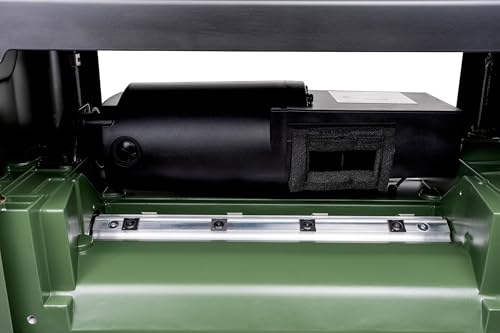
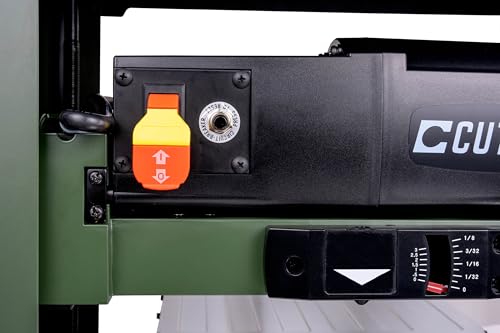
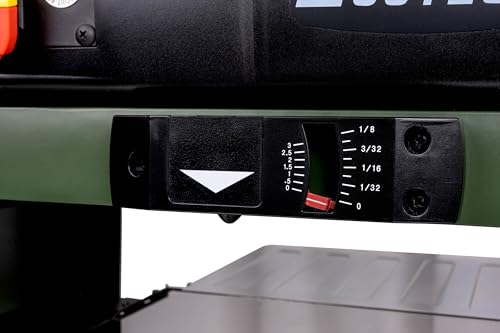
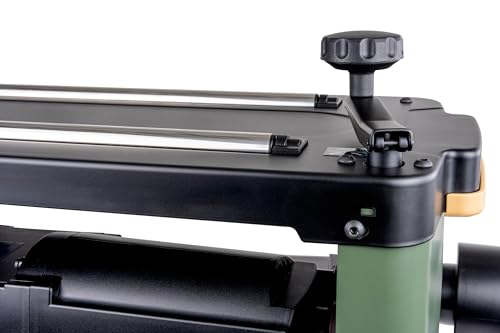
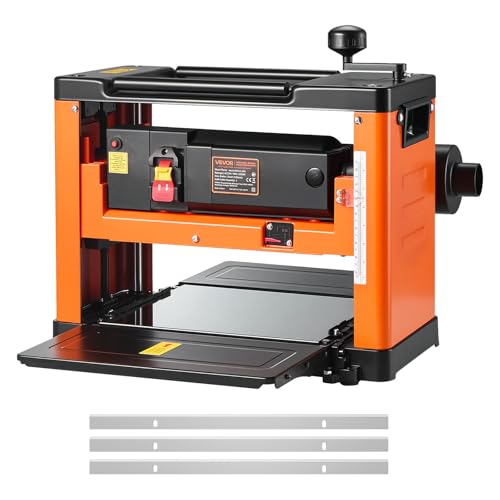
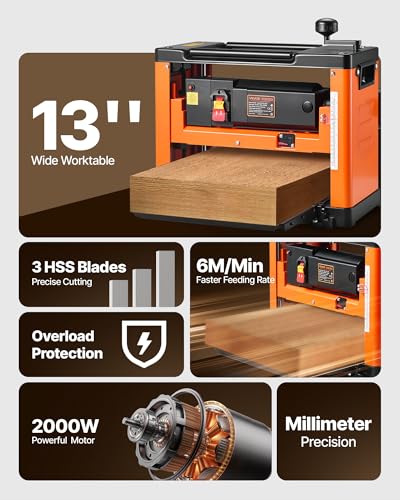
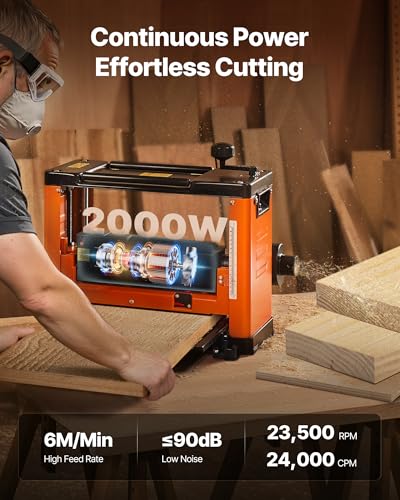
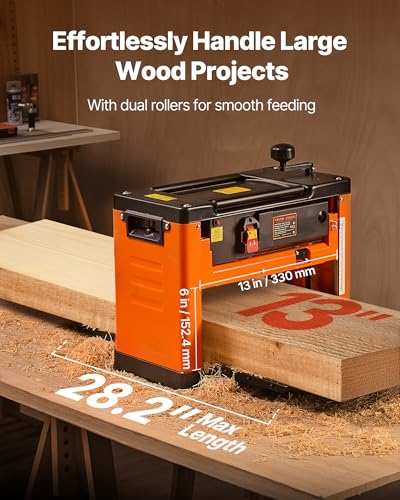
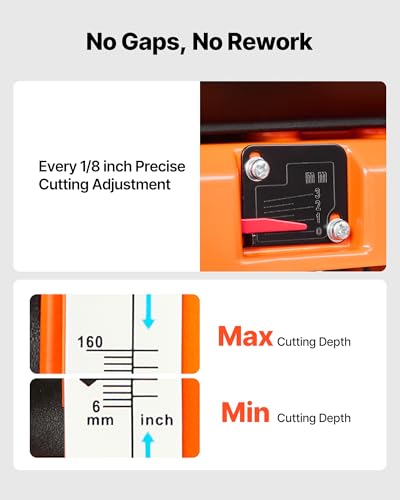
On paper, the VEVOR 13-inch planer looks like a solid contender for DIYers who need reliable material removal without breaking the bank. The 2000W motor and dual-roll feeding system are designed to keep warped or long boards tracking straight, which owners consistently report helps reduce snipe and vibration, two common pain points in budget-friendly planers. The three HSS blades deliver a decent finish, though not quite at the level of helical cutterheads, and the ability to adjust depth in precise 1/8-inch increments makes batch work manageable.
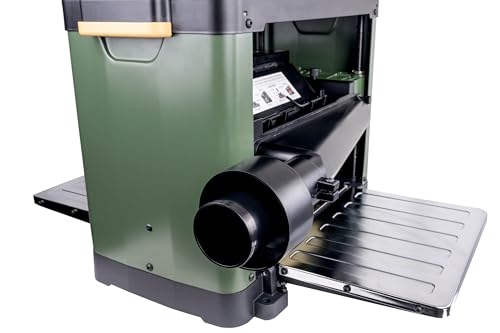
Where it stands out is in dust management, supporting both 2-inch and 4-inch hoses, a rare feature at this tier. That, combined with the large worktable, makes it a practical pick for those working in cramped shops or without a full dust collection setup. Compared to the WEN PL1303, it has more robust construction and better feed control, though it lacks reversible blades for extended life.
Product photos

How We Tested benchtop wood planers
Rather than a hands-on lab test, my research for this guide focused on a detailed comparison of published specifications and features across numerous models. I weighed owner reviews from multiple sources – paying close attention to recurring praise and complaints – alongside assessments from respected woodworking publications. My goal was to identify patterns in performance and reliability, ultimately ranking planers against criteria important to a range of woodworkers.
For benchtop planers, consistent cut quality, power to handle various wood types, and ease of use stood out as the most important factors. A powerful motor and a well-designed cutterhead are essential for tackling hardwoods without bogging down, while features like adjustable tables and depth stops directly impact accuracy and repeatability. I also prioritized models with effective dust collection, as this contributes significantly to a cleaner and safer workshop. You’ll find more information on these considerations in our wood planer buying guide.
Specifications reliably indicate a planer’s capacity (width, depth, height) and motor power, providing a baseline for comparison. However, owner feedback proved crucial for judging real-world performance – particularly regarding noise levels, smoothness of cut, and long-term durability. Reputation and brand trust also factored into my assessment, as established manufacturers often have a track record of producing quality tools and providing reliable support, as highlighted in our review of the top wood planer models.
How To Pick The Right benchtop wood planers
Finding the right benchtop planer can significantly improve the quality and efficiency of your woodworking.
A quality benchtop planer delivers flat, consistent surfaces by removing material evenly. Key considerations include motor power for handling different wood types, cutterhead design for finish quality and noise, and build quality for stability and longevity. Look for features like adjustable feed rates, depth stops, and effective dust collection to optimize performance and maintain a clean workspace.
Motor Power & Material Capacity
Don’t underestimate the importance of a robust motor. Softer woods like pine are forgiving, but tackling hardwoods like oak or maple demands more power. A 15-amp motor is generally sufficient for most hobbyists, but if you anticipate frequent work with dense materials, stepping up to a 2-HP or higher motor will prevent bogging down and ensure cleaner cuts. Beyond power, pay attention to the maximum planing width and thickness. Most benchtop planers handle up to 13 inches wide and 6 inches thick, but if you regularly work with wider boards, you’ll need to consider a floor-standing model.
Cutterhead Design: Helical vs. Straight
The cutterhead is arguably the most important component. Straight-knife cutterheads are the traditional design and are generally more affordable. However, they can be noisy and leave a slightly rougher finish. Helical cutterheads, like those found in the JET and WOODERS models, use multiple small, reversible carbide inserts. These produce a significantly quieter and smoother cut, and the inserts are much easier (and cheaper) to replace than entire knives. While helical heads come at a premium, the improved finish and reduced maintenance often justify the cost.
- Consider a helical cutterhead if noise is a concern – they’re demonstrably quieter than straight-knife designs.
- Look for cutterheads with easily replaceable inserts. This saves money in the long run, as you won’t need to replace the entire cutterhead when blades become dull.
- The number of inserts matters. More inserts (like the 6 rows of 26 in the JET) generally result in a smoother cut and longer tool life.
Build Quality & Usability Features
A solid, well-built planer will minimize vibrations and provide more accurate results. Look for a cast iron bed and steel cover, as these materials provide excellent stability. Features like adjustable infeed and outfeed tables are crucial for leveling the planer to your workbench and reducing snipe (that unwanted taper at the end of the board). A depth stop is invaluable for consistent repetitive cuts, and a good dust collection port is essential for keeping your shop clean. If you’re looking for a wider range of benchtop planer reviews, you’ll find a lot of useful information there.
A planer with a four-post design will provide superior cutterhead support, resulting in more accurate and consistent cuts, especially when working with wider stock.
Benchtop Wood Planers Compared
This table provides a specification overview of several benchtop wood planers to aid in product comparison.
| Product Name | Motor (HP) | Max. Width (in) | Max. Depth of Cut (in) | Cutterhead Type | Feed Rate (FPM) |
|---|---|---|---|---|---|
| JET 13-Inch Benchtop Planer | 2 | 13 | 1/8 | Helical | N/A |
| DEWALT DW735X 13-Inch Planer | N/A | 13 | N/A | Three-Knife | 96 / 179 |
| WOODERS Spiral Cutterhead Planer | N/A | 13 | 1/8 | Spiral | 10,000 RPM |
| WEN PL1303 13-Inch Planer | N/A | 13 | 1/8 | Three-Blade | 26 |
| FindBuyTool Helical Planer | N/A | 13 | 1/8 | Helical | 27.5 |
| Cutech 12½-Inch Spiral Planer | N/A | 12.5 | N/A | Spiral | N/A |
| VEVOR 13-Inch Three-Blade Planer | N/A | 13 | 1/8 | Three-Blade | 24,000 CPM |
Frequently Asked Questions
What’s the typical cost difference between straight-knife and helical cutterheads?
Expect to pay at least 50% more for a benchtop planer equipped with a helical cutterhead. While the initial investment is higher, the longer blade life and smoother cut quality often make it worthwhile for serious woodworkers, as discussed in our wood planer reviews.
How much dust can I realistically expect from a benchtop planer?
Benchtop planers produce a significant amount of wood shavings. Even with a dust port, some fine dust will escape, so a good shop vacuum or dust collection system is essential for maintaining a clean and safe workspace. Look for models with a larger dust port diameter for improved efficiency.
What amperage draw should I consider for my shop’s electrical circuit?
Most benchtop planers require a dedicated 15-amp circuit. Higher-powered models (2 HP or greater) may draw close to this maximum, so avoid plugging them into circuits shared with other power tools to prevent tripping breakers.
Are there benchtop planers suitable for very small workshops?
Yes, several compact benchtop planers are designed for limited space. The WEN PL1303 is a popular choice for its relatively small footprint and affordable price point. Consider portable and benchtop planers if space is a major concern.
What’s the best way to minimize snipe when planing?
Snipe (the tapered cut at the beginning and end of a board) is common, but can be reduced by feeding longer boards through the planer, using a pressure bar or sacrificial board, and ensuring the infeed and outfeed tables are properly leveled. You’ll find more details on techniques for avoiding snipe in our guide to the top thickness planer models.
The Bottom Line
Choosing a benchtop planer often comes down to balancing initial cost with long-term satisfaction. While plenty of options exist, the JET 13-Inch Benchtop Planer consistently rises to the top thanks to its powerful motor, helical cutterhead, and reputation for durability – it’s a strong pick for woodworkers who want a machine that will deliver quality results for years to come.
For those on a tighter budget, or who primarily work with softer woods, the WEN PL1303 13-Inch Planer offers a surprisingly capable entry point. If you need a versatile option that can handle a variety of projects without breaking the bank, the DEWALT DW735X 13-Inch Planer is a well-regarded choice, and you’ll find helpful benchtop planer buying advice on our site.
Ultimately, remember that features and specifications are only part of the story. A powerful motor and a fancy cutterhead won’t compensate for a poorly set-up or maintained machine. Prioritize a stable work surface, sharp blades, and a methodical approach – these fundamentals matter far more than any single specification when it comes to achieving beautifully planed lumber.
