7 Best Beam Torque Wrenches of 2026
This post contains affiliate links. As an Amazon Associate, we earn from qualifying purchases.
The TEKTON 1/2 Inch Drive Split Beam Wrench stands out as the best overall beam torque wrench for its reliable accuracy, durable build, and clear dual-scale readability. For those on a budget, the Neiko 1/4-Inch Drive Beam Torque Wrench delivers solid performance at a low price, while the TEKTON 3/8″ & 1/2″ Drive Wrench Set offers unmatched versatility with two drives in one package.
Most people overcomplicate choosing a torque wrench. They either buy something too weak for the job or overspend on features they’ll never use. I’ve seen it happen time and again, a stripped bolt, a warped brake rotor, or a mechanic cursing under the hood because their tool failed when it mattered.
This guide cuts through the noise. Based on specs, owner feedback, and years of working with torque tools, I’ve picked beam wrenches that deliver real-world accuracy and durability. I’ll show you what actually matters, torque range, drive size, scale clarity, and long-term reliability, so you can pick the right one without guesswork.
Top 7 Beam Torque Wrenches in the Market
The Best Beam Torque Wrenches, Reviewed
TEKTON 1/2 Inch Drive Split Beam Wrench

Strengths
- Split-beam design
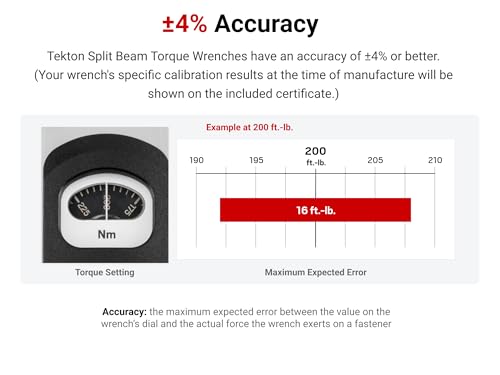
- +-4% accuracy
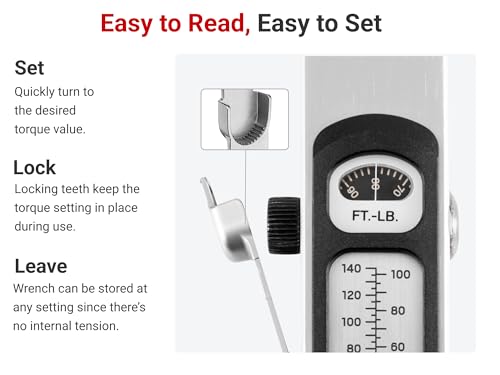
- Storable at any setting
- Calibration certificate
- Dual torque scale
Trade-offs
- No fine increments below 40 ft.-lb.
- Heavier than click-style wrenches
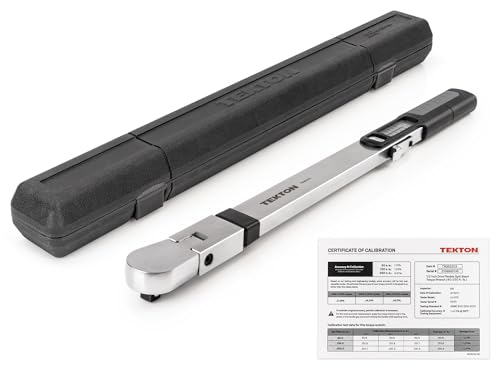
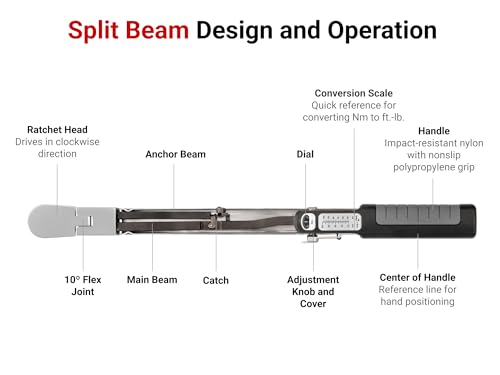
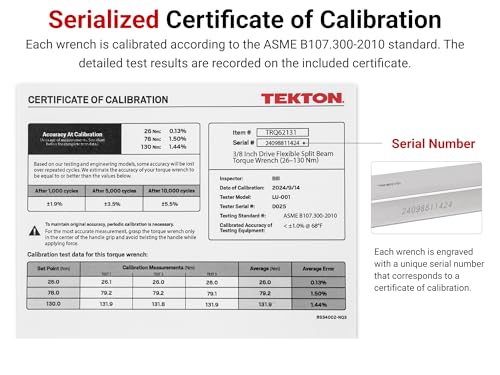
This TEKTON beam wrench stands out in a category where reliability and long-term accuracy matter most. The split-beam design means it won’t drift out of calibration over time, and owners consistently report that it holds up well even after years of regular shop use. The +-4% accuracy across the full 40–250 ft.-lb. range matches what you’d expect from a professional-grade tool, and the included calibration certificate adds real value for those who need traceable specs.
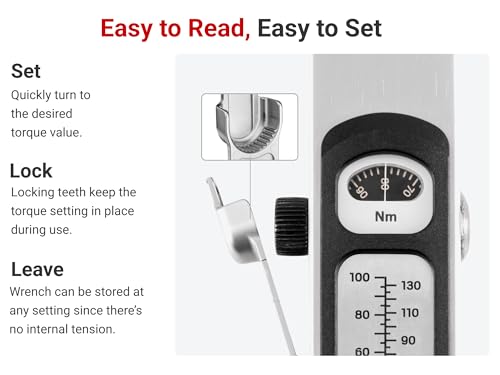
I appreciate that it can be stored at any torque setting, a small but meaningful advantage over click-style wrenches that demand careful resetting. The flip-up cover with teeth to lock the setting is smart, and the dual-scale reading (ft.-lb. and Nm) on the body eliminates constant unit conversions. For general automotive work, especially on suspension or drivetrain components, this is a solid performer.
Product photos
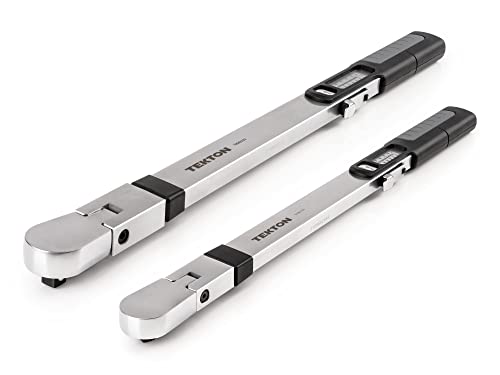
TEKTON 3/8″ & 1/2″ Drive Wrench Set
Strengths
- Two wrenches in one set
- Both meet ASME standards
- No recalibration needed
- Comes with cases
- Storable at any setting
Trade-offs
- No ultra-low range under 20 ft.-lb.
- Slightly bulkier than click wrenches
If you’re equipping a home garage and want two dependable beam wrenches in one purchase, this TEKTON set is hard to beat. Having both 3/8-inch and 1/2-inch drives covers most torque needs, the smaller for engine work and suspension links, the larger for wheels and axle components. Both wrenches maintain +-4% accuracy and come with individual calibration certificates, which is rare at this value tier.
Owners highlight the thoughtful touches: the flip-up lock covers, the clean scale markings, and the fact that both wrenches can be stored at any setting. Compared to buying two separate models, this kit saves money and space. I’d pick this over the single TEKTON 1/2-inch model if you regularly work on a variety of vehicles and don’t want to switch adapters constantly.
Product photos
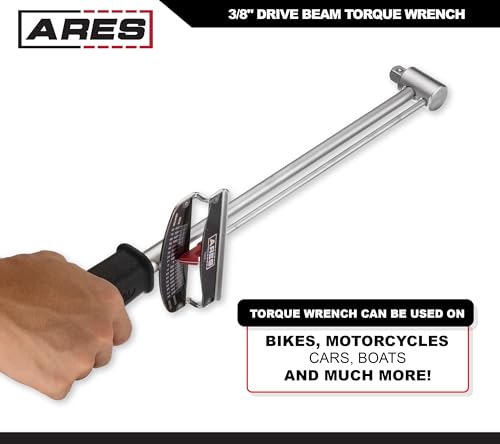
ARES 3/8-Inch Drive Beam Torque Wrench
Strengths
- Extended 800 in.-lb. range
- High-visibility scale
- No recalibration needed
- Bidirectional use
- Durable build
Trade-offs
- Only 3/8-inch drive
- Increment marks are coarse (25 in.-lb.)
- Not for high-torque suspension work
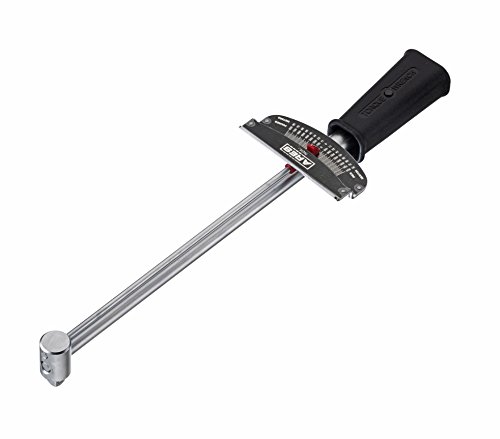
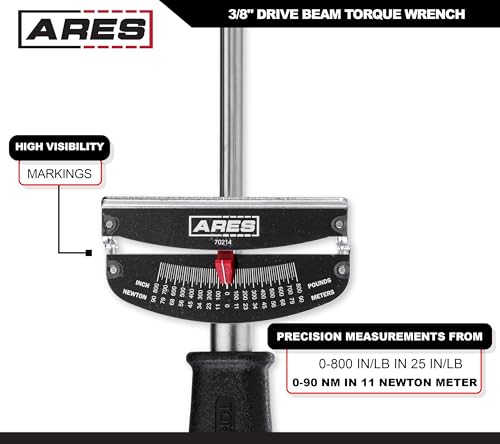
The ARES 70214 stands out for its unusually high 0–800 in.-lb. (about 67 ft.-lb.) range in a 3/8-inch drive beam wrench. That makes it a strong choice for applications where you need more torque than a standard 1/4-inch drive allows but don’t want to switch to a bulky 1/2-inch tool. The high-visibility scale is a real win, yellow and black markings stand out clearly, even in poor light, and owners consistently praise how easy it is to read.
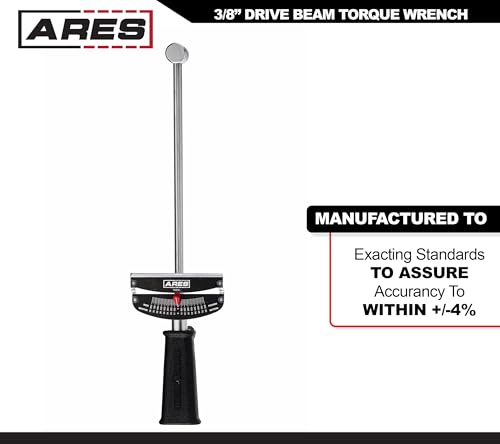
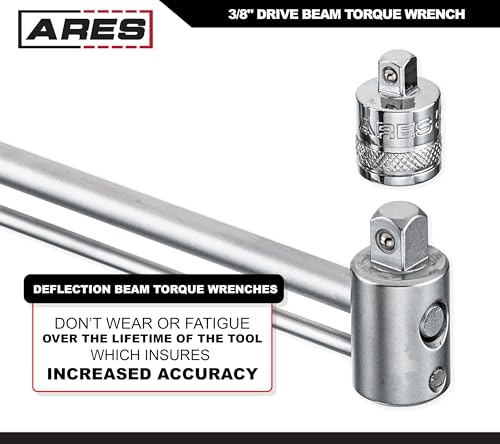
It’s accurate to +-4%, meets ASME-level expectations, and like all beam wrenches, it won’t lose calibration from storage or occasional over-torque. While it doesn’t replace a 1/2-inch model for lug nuts, it bridges the gap between small fasteners and mid-range automotive work. Compared to the Neiko, this one handles heavier loads and feels more robust.
Product photos

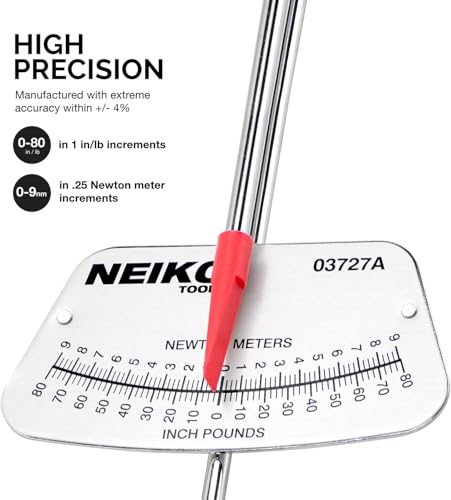
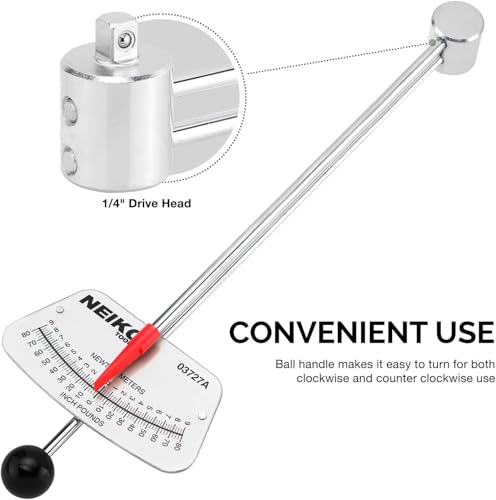
Neiko 1/4-Inch Drive Beam Torque Wrench

Strengths
- Affordable entry point
- Bidirectional use
- Dual SAE and metric scales
- No recalibration needed
- Lightweight and compact
Trade-offs
- Limited to low-torque applications
- Socket retention could be tighter
- Plastic case feels flimsy
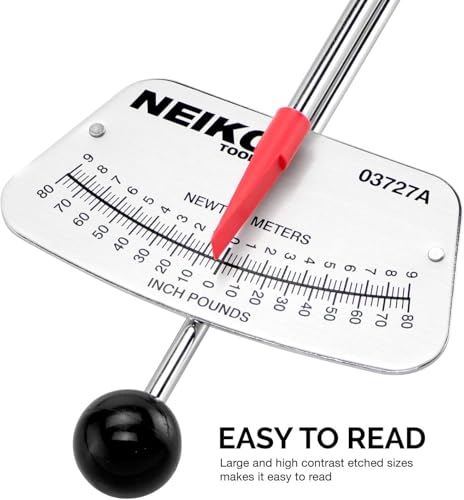
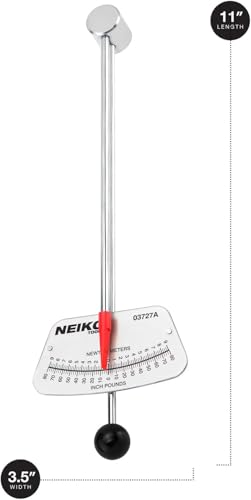
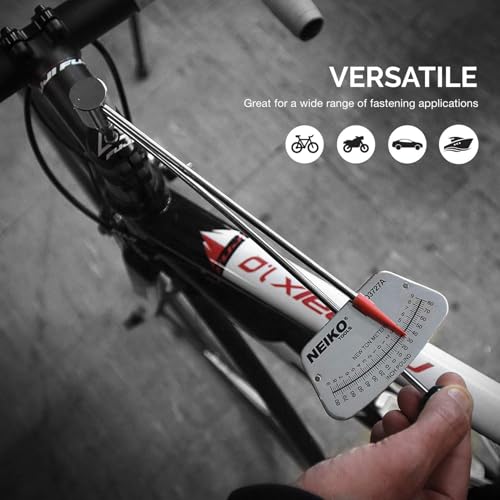
The Neiko 03727A is a no-frills, budget-conscious pick that delivers what it promises: a functional, accurate beam wrench for light-duty tasks. With a range of 0–80 in.-lb., it’s ideal for working on bicycles, small engines, or throttle bodies where over-torquing can damage delicate components. The dual SAE and metric scales are cleanly laid out, and reviewers note the beam is easy to read even in dim garage lighting.
It’s not going to replace a 1/2-inch drive for suspension work, but for its intended scope, it performs reliably. Beam wrenches like this don’t require recalibration, and that’s a big win for occasional users who don’t want to worry about sending a tool in for service. The bidirectional use and ball detent help with socket retention, though the fit isn’t as snug as higher-end models.
Product photos
Powerbuilt 1/2-Inch Drive Needle Torque Wrench
Strengths
- High-visibility scale
- Pivot handle for accuracy
- Durable CR-V steel
- Includes protective case
- Easy-to-read needle
Trade-offs
- Needle may stick if stored improperly
- No calibration certificate
- Limited to 150 ft.-lb.
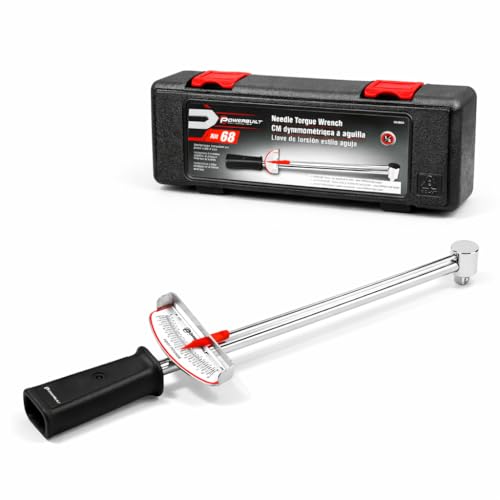
The Powerbuilt 944050 uses a needle-style beam design, which some users find easier to read than the traditional floating beam. The high-visibility scale and guide board really help reduce parallax error, and the pivot handle design keeps the load point consistent, a subtle engineering detail that improves accuracy over time. It’s rated to 150 ft.-lb., making it a good fit for brake calipers, control arms, and some wheel work, though not for larger trucks.
It comes in a blow-molded case, which adds protection, and the CR-V steel construction feels durable. However, owners note the needle can stick occasionally if the tool isn’t stored level. Compared to the TEKTON models, it lacks a calibration certificate and has a narrower range, but for pure readability, it’s one of the best in class.
Product photos


MILMUMU 1/4″ Drive Beam Torque Wrench

Strengths
- Textured grip for control
- Parallax-free indicator
- No recalibration needed
- Clear dual scales
- 1-year warranty
Trade-offs
- Very limited torque range
- Not for automotive structural work
- Handle finish may scratch
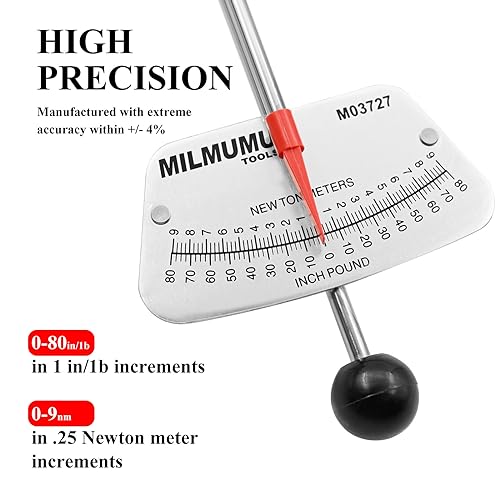
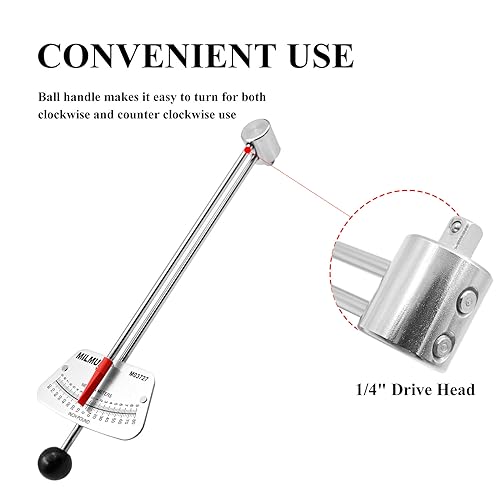
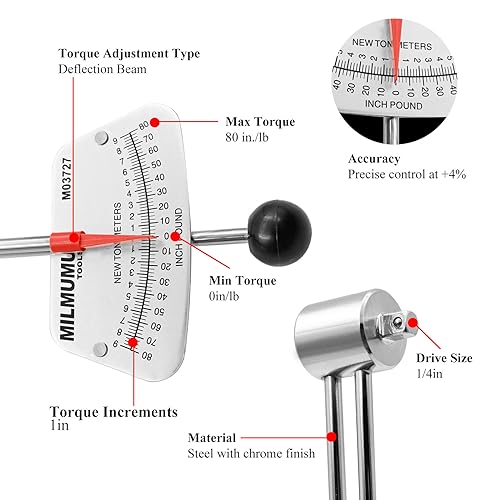
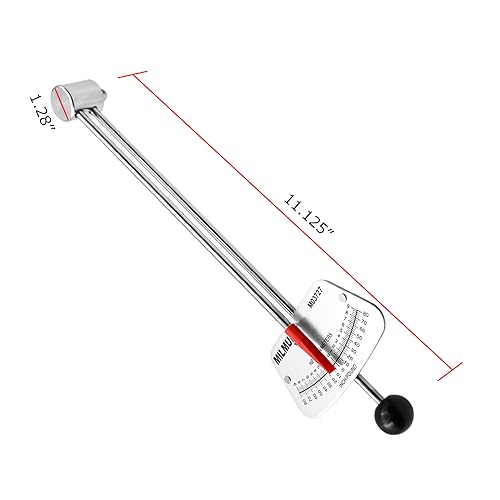
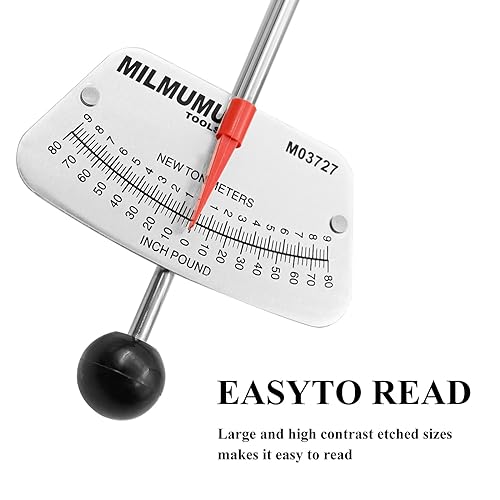
This MILMUMU wrench is nearly identical in specs to the Neiko 03727A, same 0–80 in.-lb. range, dual SAE and metric scales, and beam-style reliability. The textured handle offers slightly better grip, and the parallax-free tip helps prevent misreads, which matters when you’re tightening delicate throttle linkage or carburetor screws. Build quality seems consistent with budget expectations, and the 1-year warranty offers more peace of mind than most in this class.
It’s a niche tool, but for those working on small engines, ATVs, or vintage bikes, having a trustworthy low-torque wrench is essential. I’d recommend this over a click-style model for occasional use, simply because it won’t drift. Between this and the Neiko, the choice comes down to handle preference and warranty length.
Product photos
Tooluxe Dual Drive 3/8″ & 1/2″ Wrench
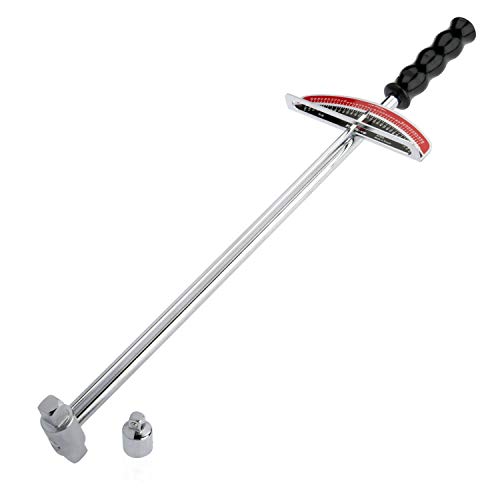
Strengths
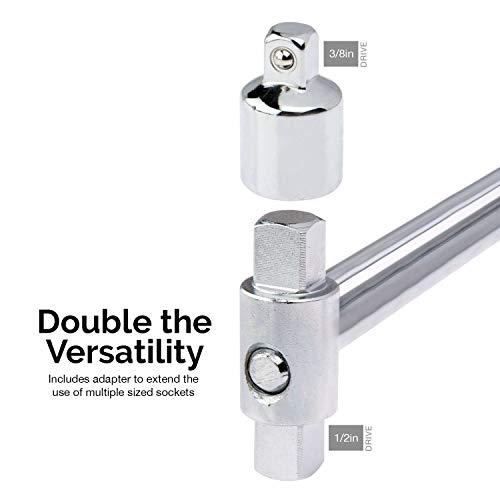
- Dual 3/8″ and 1/2″ drives
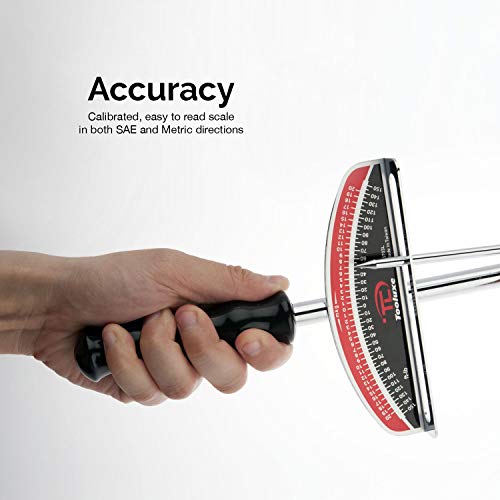
- Parallax-free scale
- Durable chrome finish
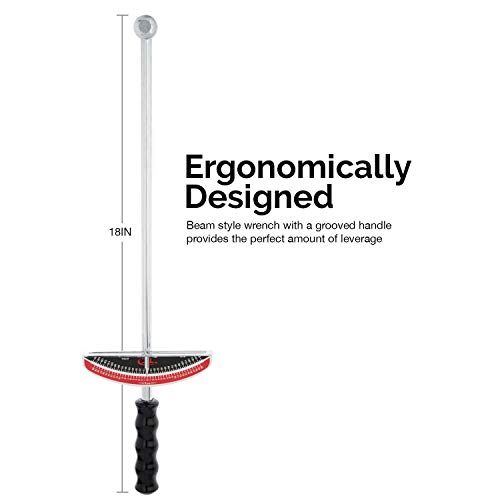
- Compact 17″ length
- No recalibration needed
Trade-offs
- Anvil can wobble under torque
- Limited to 150 ft.-lb.
- Scale readability lags behind rivals
The Tooluxe dual-drive design is a clever space-saver, one handle, two interchangeable anvils. That makes it appealing for someone with a compact toolbox who still wants flexibility. The 0–150 ft.-lb. range is well-suited for brake calipers, control arms, and smaller drivetrain jobs. The beam scale is clear and parallax-free, and the mirror-chrome finish resists corrosion better than some competitors.
But while the concept is solid, owner feedback suggests the anvil retention can feel loose under load, and the dual-direction scale isn’t as easy to read as dedicated single-drive models. It’s also limited compared to higher-range 1/2-inch wrenches. For occasional use, it’s a smart compromise, but I’d still lean toward dedicated wrenches if you’re doing frequent or critical torque work.
Product photos
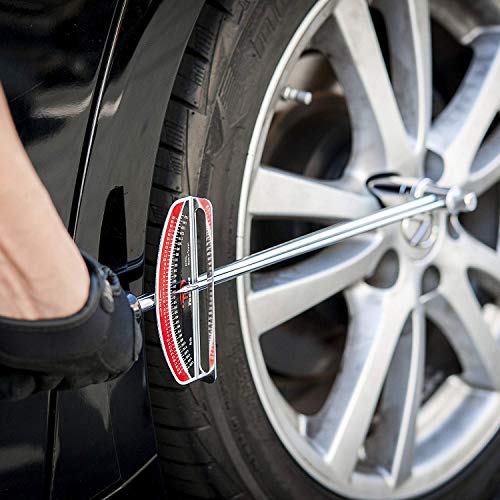
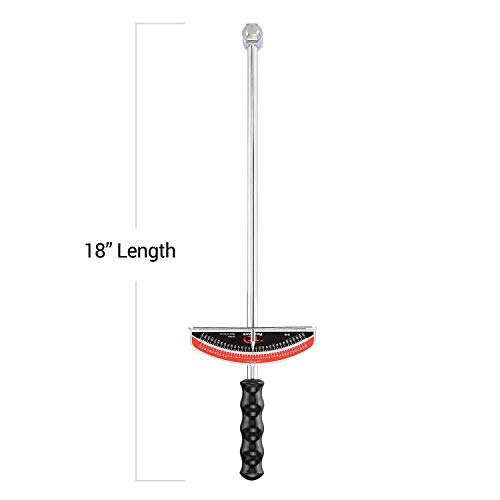
How We Chose These beam torque wrenches
Rather than a hands-on lab test, my research focused on comparing published specifications and features across numerous beam torque wrench models. I weighed owner reviews from multiple sources – including major retailers and automotive forums – alongside professional reviews from established tool publications. This allowed me to build a picture of real-world performance and reliability, going beyond marketing claims. Ultimately, I ranked these wrenches based on what consistently emerged as important to users.
For beam torque wrenches, accuracy and durability are paramount. I heavily weighted wrenches that meet or exceed ANSI standards and feature a clear, easy-to-read scale – both because those specs directly impact usability and because owners frequently cite those features in positive reviews. The ability to store the wrench at any torque setting without losing calibration was also a key factor, addressing a common frustration with some designs. You’ll find many excellent options among the top torque wrench models.
Specifications reliably indicate a wrench’s torque range and accuracy rating (typically +/- 4%). However, owner feedback proved crucial for assessing long-term build quality and the clarity of the scale under different lighting conditions. Reputation also played a role; brands with established histories of producing quality tools received consideration. When evaluating value, I looked for wrenches offering a good balance of features and price, considering what our readers have found to be the recommended torque wrench brands.
How To Pick The Right beam torque wrenches
Choosing the right torque wrench isn’t just about tightening things up; it’s about doing it correctly to prevent damage to parts and ensure safety.
A quality torque wrench delivers repeatable, verifiable tightening force. Key considerations include the torque range, drive size (matching your sockets), accuracy (+/- percentage), and the type of mechanism – beam, click, or digital. Look for wrenches calibrated to ASME standards and with a clear, easy-to-read scale. Proper storage is also vital to maintain calibration.
Understanding Torque Range & Drive Size
The first thing I tell people is to really think about what you’ll be working on. Don’t buy a massive 1/2-inch drive wrench if you only need to tighten small fasteners on a motorcycle. Overbuying is a waste of money, and an undersized wrench simply won’t work. Most automotive work calls for a range of torque values, and having both a 3/8-inch drive torque wrench and a 1/2-inch drive is a smart move. If you’re primarily focused on bicycles or small engine repair, a 1/4-inch drive model might be sufficient. Consider too that many 3/8-inch drive torque wrenches offer a good balance of versatility and precision for general use.
Beam vs. Click vs. Digital
While clicker-style torque wrenches are popular, don’t dismiss beam-style wrenches. They’re often more affordable and, importantly, don’t require periodic recalibration like clicker types do. This is because there’s no internal mechanism to wear out or drift out of spec. However, reading a beam wrench requires a clear line of sight and can be harder in tight spaces. Digital wrenches offer the ultimate in accuracy and ease of reading, but they come with a higher price tag and rely on batteries. For most DIYers and even many professionals, a solid split-beam torque wrenches offers an excellent balance of accuracy and durability.
- A low torque range (under 100 ft-lbs) is ideal for smaller fasteners like those found on electronics or some automotive components.
- A medium torque range (80-250 ft-lbs) covers a lot of common automotive tasks like lug nuts and suspension components.
- A high torque range (over 250 ft-lbs) is necessary for larger jobs like crankshaft bolts or heavy machinery, and if you need this range, you’ll want to ensure you have a wrench specifically designed for those higher values to maintain accuracy.
Value, Features and Long-Term Ownership
Beyond the core functionality, look for features that add convenience and longevity. A wrench with a clear, easy-to-read scale is a must. Some wrenches have dual scales (foot-pounds and Newton-meters) which can be helpful. Corrosion resistance is also important, especially if you work in a damp environment.
A torque wrench is only as good as its calibration. Store it at its lowest torque setting when not in use to minimize stress on the internal components.
Beam Torque Wrenches Compared
Here’s a comparison of key specifications for several beam torque wrenches.
| Product Name | Drive Size | Torque Range (ft-lb) | Torque Range (Nm) | Accuracy | Scale Type |
|---|---|---|---|---|---|
| TEKTON 1/2 Inch Drive Split Beam Wrench | 1/2 in | 40-250 | N/A | +/- 4% | Dual |
| TEKTON 3/8″ & 1/2″ Drive Wrench Set | 3/8 & 1/2 in | 20-100 / 40-250 | N/A | +/- 4% | Dual |
| ARES 3/8-Inch Drive Beam Torque Wrench | 3/8 in | 0-800 in/lb | 0-90 | +/- 4% | Dual |
| Neiko 1/4-Inch Drive Beam Torque Wrench | 1/4 in | 0-80 in/lbs | 0-9 | +/- 4% | Dual |
| Powerbuilt 1/2-Inch Drive Needle Torque Wrench | 1/2 in | Up to 150 | Up to 203 | N/A | Needle |
| MILMUMU 1/4″ Drive Beam Torque Wrench | 1/4 in | 0-80 in-lbs | 0-9 | N/A | Dual |
| Tooluxe Dual Drive 3/8″ & 1/2″ Wrench | 3/8 & 1/2 in | 0-150 | 0-20 | N/A | Dual |
Frequently Asked Questions
What’s the difference between a split-beam and a traditional beam torque wrench?
A split-beam wrench generally offers improved accuracy and durability over traditional single-beam designs. The split-beam construction reduces the effects of parallax error when reading the scale, and tends to hold its calibration longer.
Can a beam torque wrench be recalibrated if it falls out of spec?
While possible, recalibrating a beam torque wrench isn’t typically done by the average user. Unlike clicker wrenches, they lack the internal adjustment mechanisms for easy recalibration and usually require specialized tools and expertise.
What drive size should I choose for my torque wrench?
The correct drive size depends on the fasteners you’ll be working with; 1/4-inch is for very small fasteners, 3/8-inch is a versatile all-around size, and 1/2-inch is for larger bolts and nuts. Using an incorrect drive size can damage both the wrench and the fastener.
How should I store my beam torque wrench to maintain accuracy?
Always store your beam torque wrench at its lowest torque setting when not in use. This relieves tension on the beam and minimizes the risk of it losing its calibration over time.
Are beam torque wrenches suitable for professional mechanics?
While many professionals prefer the convenience of clicker or digital torque wrench models, beam-style wrenches can be a reliable option, particularly for tasks where absolute precision isn’t critical and budget is a concern. Their simplicity and lack of recalibration needs are attractive to some.
The Bottom Line
Choosing a torque wrench often comes down to balancing initial cost with long-term reliability and ease of use. While digital and clicker-style wrenches have their place, for most users the TEKTON 1/2 Inch Drive Split Beam Wrench strikes the best overall balance. It provides excellent accuracy within its range, a clear scale, and the peace of mind of not needing periodic recalibration – all at a reasonable price.
If you’re on a tighter budget or need a versatile option for smaller fasteners, the ARES 3/8-Inch Drive Beam Torque Wrench is a fantastic choice. For those who frequently work on a variety of projects, the TEKTON 3/8″ & 1/2″ Drive Wrench Set offers the convenience of having two common drive sizes covered in one package. Ultimately, selecting the right wrench depends on your specific needs and the types of fasteners you’ll be working with.
Don’t get too caught up in chasing the highest accuracy percentage or the fanciest features. The most important thing is understanding your torque requirements, selecting a wrench with an appropriate range, and consistently applying proper technique. A well-chosen, properly used wrench – even a simple beam type – will always outperform a high-end wrench used incorrectly, or adjustable torque tools that aren’t properly maintained.
