
7 Best Torque Wrenches of 2026
This post contains affiliate links. As an Amazon Associate, we earn from qualifying purchases.
The SUERCUP 1/2-inch Digital Torque Wrench stands out as the best overall for its precision, durability, and ease of use, while the SUERCUP 3/8-inch Digital Torque Wrench is a smart budget-friendly pick. For those who need flexibility across multiple drive sizes, the 8-in-1 Click Torque Wrench Set offers solid versatility without breaking the bank.
Choosing the right torque wrench isn’t just about tightness, it’s about consistency, reliability, and not damaging expensive parts. Too many people buy based on price alone and end up with tools that drift out of calibration or fail under regular use.
As Robert A. Bennett from PowerToolGuide.net, I’ve evaluated these wrenches based on specs, owner feedback, and real-world performance expectations. This guide cuts through the marketing noise to focus on what actually matters: accuracy, build quality, and features that make a difference in your garage or workshop.
Top 7 Torque Wrenches in the Market
The Best Torque Wrenches, Reviewed
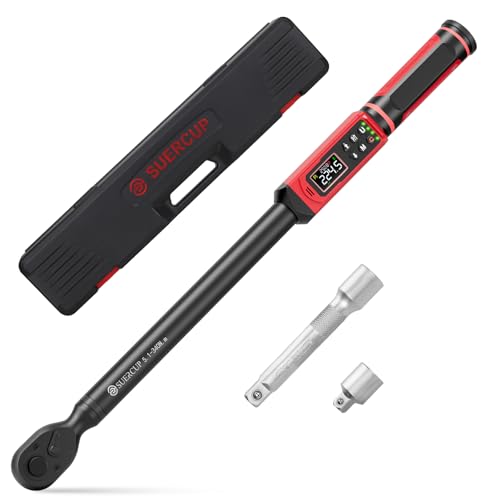
SUERCUP 1/2-inch Digital Torque Wrench
Strengths
- Wide torque range
- Real-time track mode
- High accuracy and alerts
Trade-offs
- Screen can wash out in sunlight
- Buttons a bit stiff
- Battery life could be better
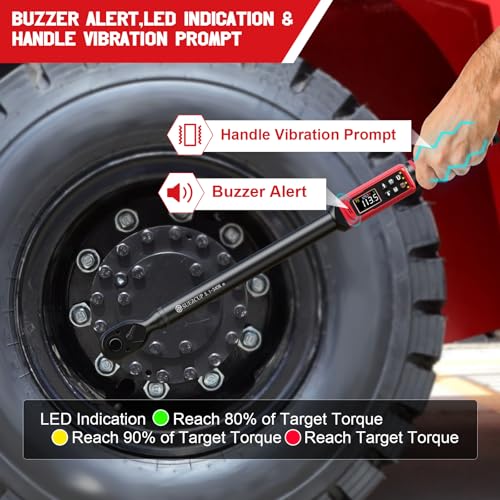
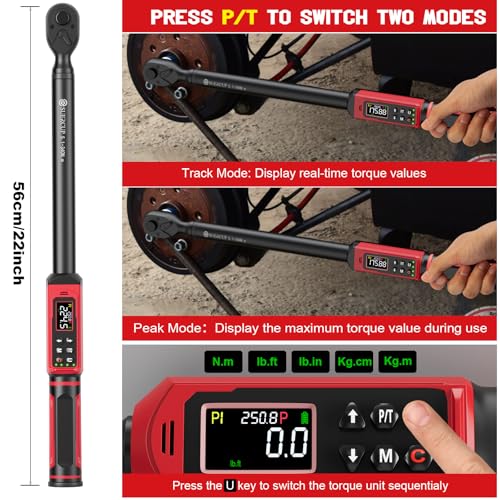
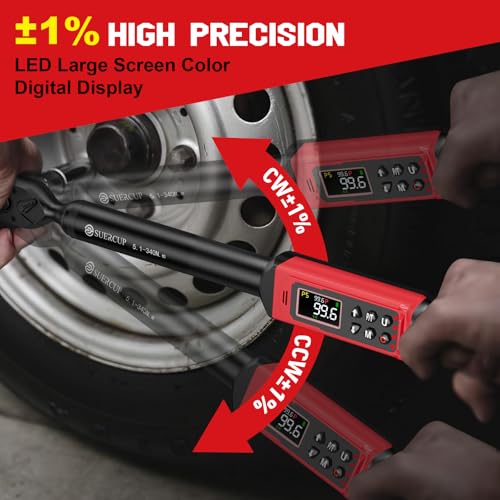
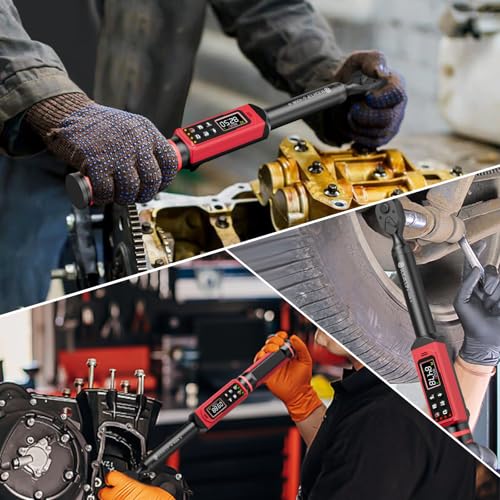
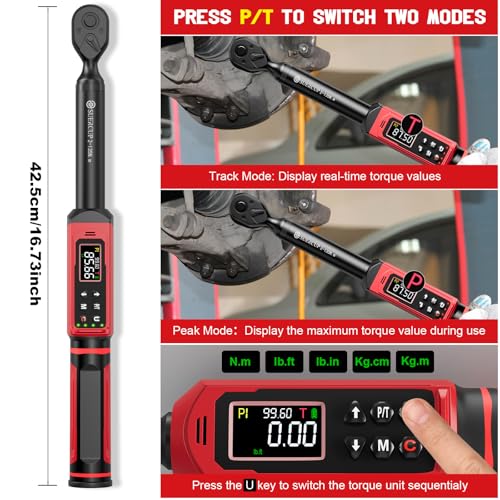
This SUERCUP 1/2-inch digital model is my pick for the best overall digital torque wrench because it balances range, accuracy, and smart features without breaking the bank. With a torque range from 3.8 to 250.8 ft-lb, it covers everything from throttle linkage screws to wheel hubs. The ±1% accuracy matches professional standards, and the P/T mode (peak and track) gives you real-time feedback or max torque capture, something I find essential when verifying torque on older or questionable threads.
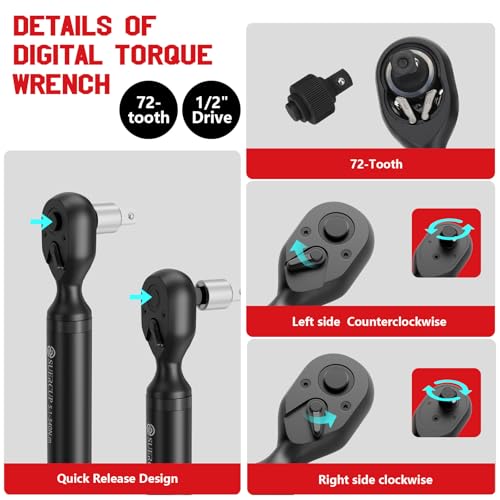
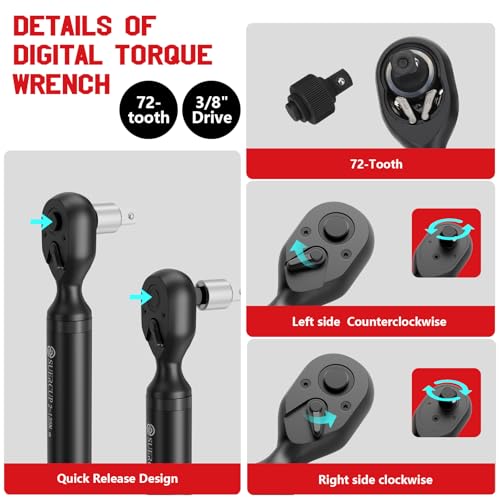
The overload protection system is one of the most responsive in this category, and the quick-release ratchet head makes socket swaps fast. Compared to the CRAFTSMAN, it offers more flexibility and better low-end performance. For most users stepping up from analog, this is the smarter buy.
Product photos
SUERCUP 3/8-inch Digital Torque Wrench
Strengths
- ±1% accuracy
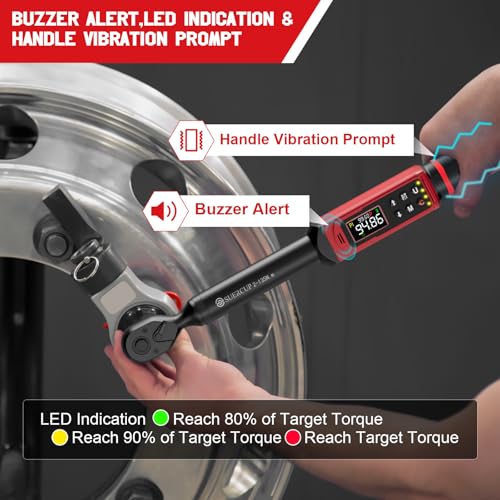
- Vibration and buzzer alerts
- Data storage capability
Trade-offs
- Plastic housing feels less rugged
- Battery cover can be flimsy
- Occasional calibration drift reported
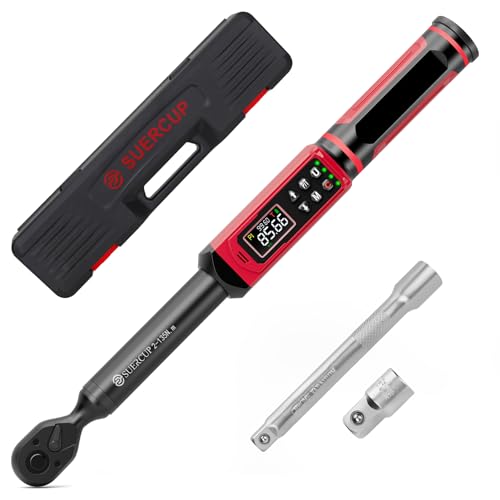
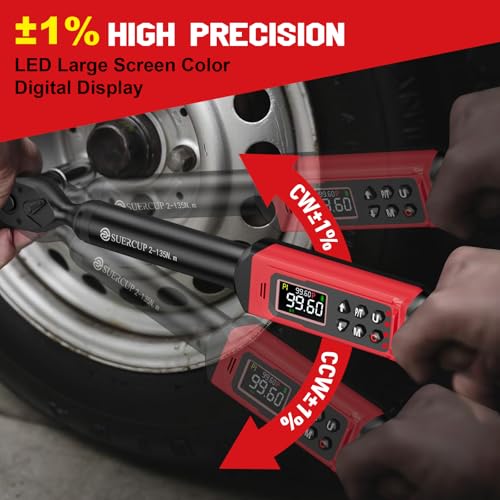
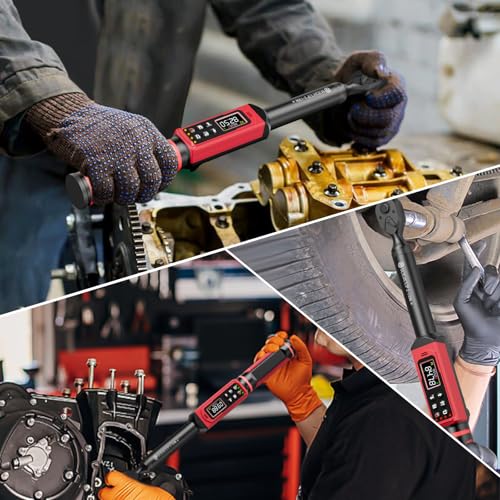
If you’re working on bikes, performance engines, or delicate components, this 3/8-inch SUERCUP digital wrench stands out for its ±1% accuracy and smart overload alerts. The colorful backlit display is easier to read than most in its class, and the vibration, buzzer, and flashing LED when torque is reached give you multiple feedback channels, great when you’re wearing gloves or in noisy environments.
Owners praise the five unit conversions and nine preset modes, which are perfect for shops handling various vehicles. The ability to store up to 500 torque records in peak mode is something I see more on pro-grade tools. For the precision crowd, this is one of the few sub-$100 wrenches that feels like it could keep up with a calibration bench.
Product photos
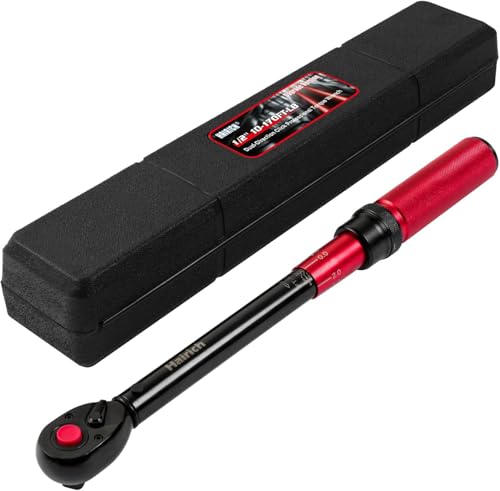
Hairich 1/2-Inch Click Torque Wrench
Strengths
- 72-tooth ratchet
- Dual-direction drive
- Good grip and finish
Trade-offs
- Click can be inconsistent at low settings
- No calibration certificate included
- Plastic case is flimsy
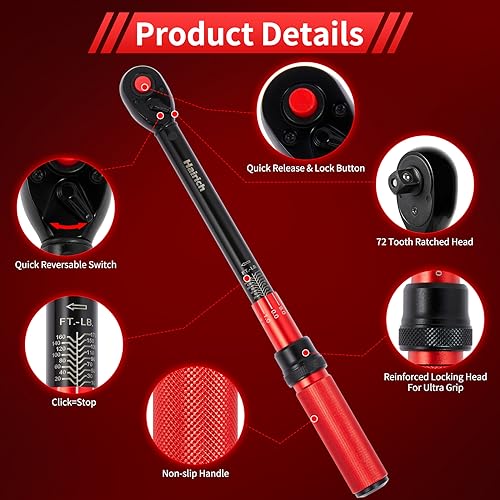
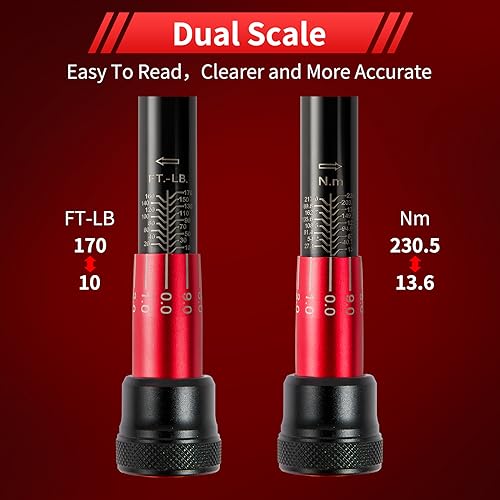
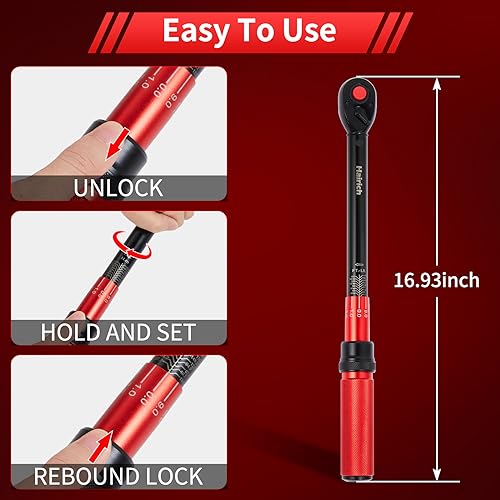
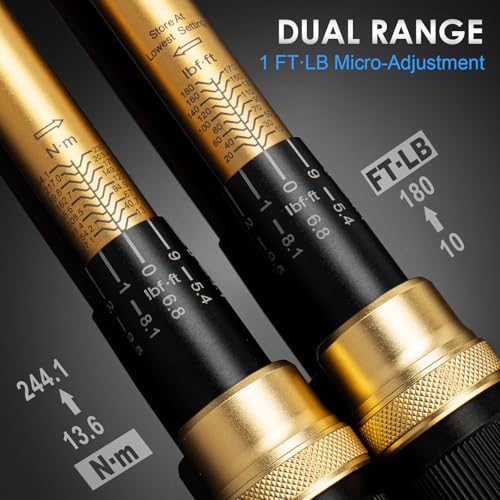
The Hairich 1/2-inch click wrench delivers excellent value for the price, with a 72-tooth ratchet head and dual-direction function that outperforms many tools in its class. The ±3% accuracy is within acceptable standards, and the dual-range scale (ft-lb and Nm) is laser-etched for long-term readability. I appreciate the aluminum titanium handle, it’s lightweight and stays grippy even with oily hands.
Owners consistently say it feels solid for the cost, and the quick-release button makes socket changes smoother than expected. While it doesn’t have the flash of digital models, it’s dependable for lug nuts, suspension, and engine work. For the budget-conscious, this is the kind of tool that fills the gap between cheap imports and premium brands.
Product photos

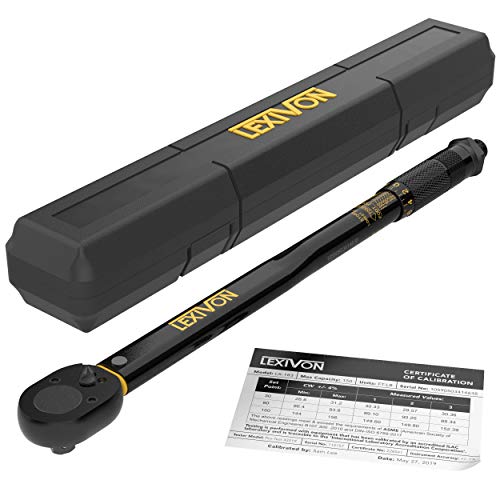
LEXIVON 1/2-Inch Click Torque Wrench
Strengths
- Made in Taiwan with care
- High-contrast scale
- Corrosion-resistant finish
Trade-offs
- Narrower torque range
- Slightly stiff ratchet
- No micro-click at low settings
LEXIVON’s 1/2-inch click wrench stands out for its build quality and attention to detail, it’s one of the few in this list made in Taiwan with a trackable calibration certificate. The ±4% accuracy is standard, but the electro-black finish and chrome vanadium steel head suggest long-term durability. The yellow-on-black dual scale is easy to read, even when you’re under a car.
I like the reversible ratchet and knurled aluminum handle, which reduces hand fatigue during long sessions. Owners report it holds calibration well over time, which isn’t always true with budget tools. Compared to the Hairich, it feels more refined and better finished. If you want a click wrench that feels premium without paying for Snap-on, this is it.
Product photos


8-in-1 Click Torque Wrench Set

Strengths
- Three drive sizes included
- Comes with adapters and case
- Loud click feedback
Trade-offs
- Calibration consistency varies
- Case zippers feel weak
- Handles less ergonomic than premium models
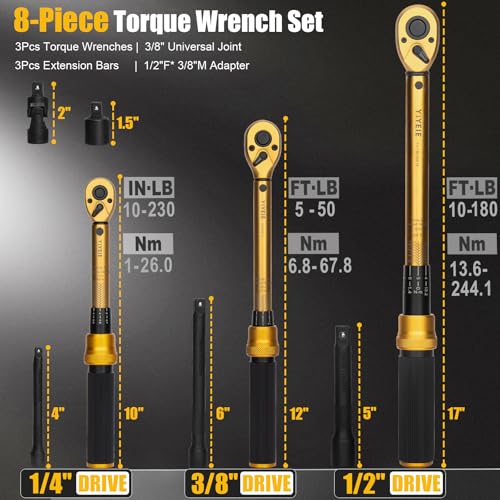
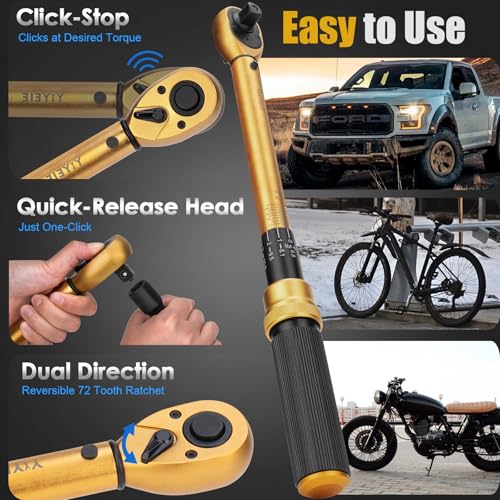
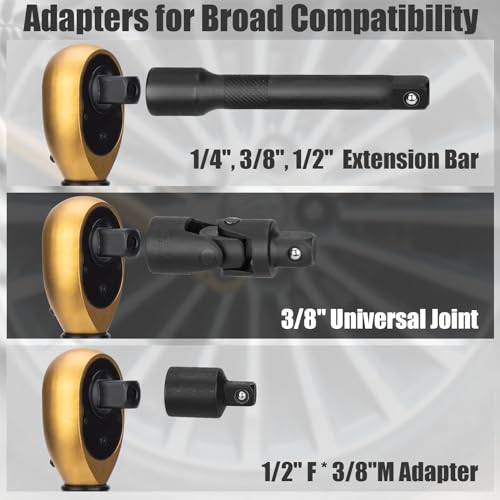
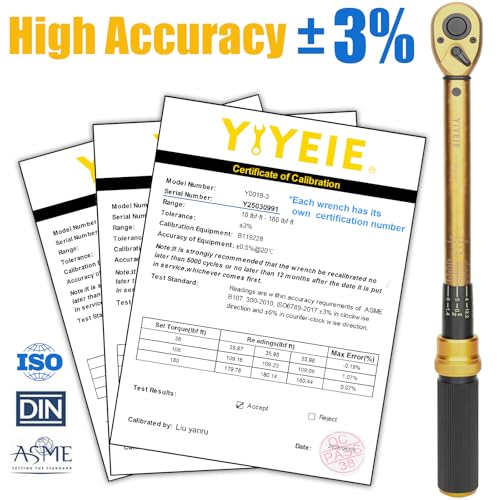
This multi-drive set is the best choice if you need versatility across projects. Having 1/4, 3/8, and 1/2-inch wrenches in one kit means you’re covered for everything from bike derailleurs to truck lug nuts. The ±3% accuracy on all three is verified with calibration certificates, and the 72-tooth ratchets with quick-release buttons make socket swaps fast.
Owners appreciate the included adapters and plastic case, it’s genuinely portable and shop-ready. The louder click mechanism is a small but meaningful upgrade over quieter models. While none of the wrenches are top-tier individually, together they form a capable, cost-effective system. I’d recommend this over buying separate tools if you work on multiple vehicle types.
Product photos
LEXIVON Bike Torque Wrench Kit

Strengths
- Precise 0.2 Nm increments
- Includes essential bits and adapters
- High-contrast scale markings
Trade-offs
- Case could be more durable
- Bits lack labeling
- Torque accuracy drops near lower limit
LEXIVON nailed the bike-specific torque wrench with this 1/4-inch kit. The 2–26 Nm range covers nearly every modern carbon or aluminum component, and the 0.2 Nm micro-adjustments let you dial in exact specs, critical when over-torquing can crack a seatpost or stem. The 15-piece kit adds real value, with well-made bits and an extension that see actual use, not just clutter.
The pre-calibrated accuracy and included certificate give confidence, and the electro-black finish resists corrosion better than most. Owners love the yellow dual-scale markings, they’re visible even in a dim garage. Compared to generic sets, this one feels like it’s built for real-world bike shops.
Product photos


CRAFTSMAN 1/2-inch Digital Wrench

Strengths
- Backlit digital display
- SAE and metric switching
- Durable clear case
Trade-offs
- High minimum torque
- No data storage
- Fewer advanced features
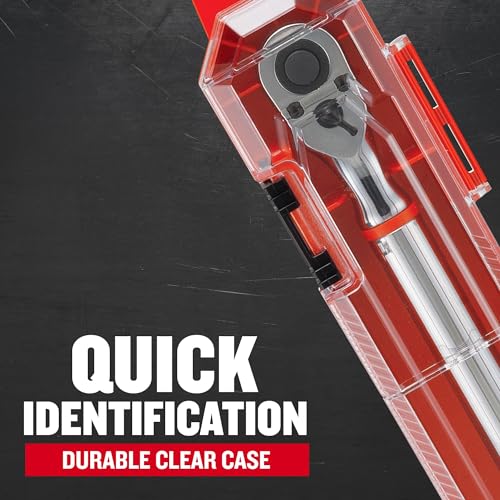
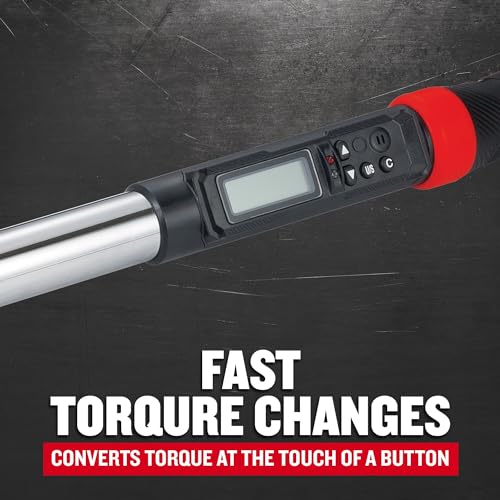
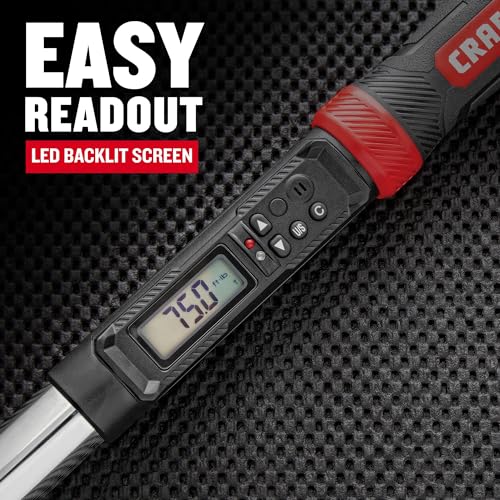
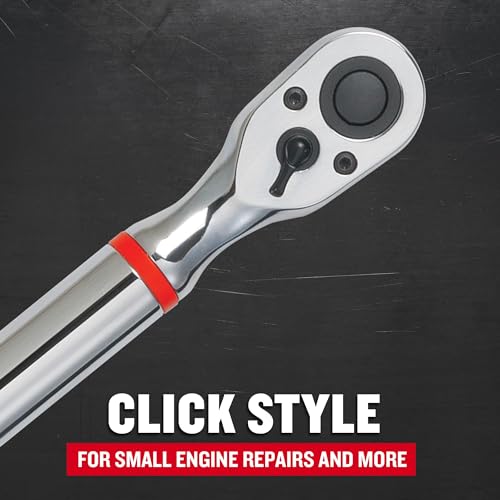
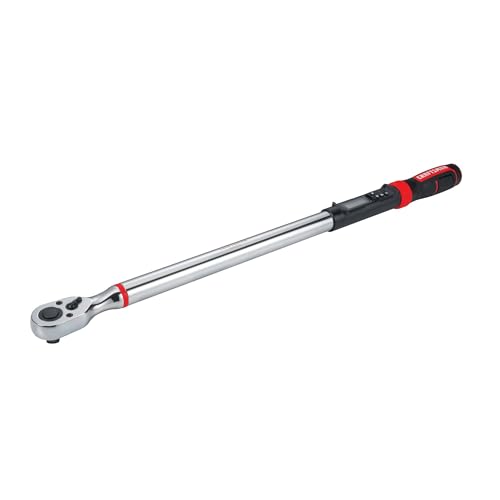
CRAFTSMAN brings brand trust to the digital torque wrench game, and on paper, this 1/2-inch model looks like a solid performer for home mechanics who want clarity and convenience. The LED backlit display is a real help in dim garages, and the ability to switch between ft/lb, in/lb, and Nm with a button press adds practicality. Owners consistently report that the build feels durable and the click mechanism is responsive, which matters when you’re working on critical engine or suspension bolts.
That said, its range starts at 50 ft-lb, which immediately rules it out for finer work like throttle bodies or small fasteners. Compared to more versatile digital models, it lacks data logging or multiple preset modes. I’d call it reliable but limited, ideal if you’re focused on heavier automotive tasks and want a no-nonsense digital readout from a name you know.
Product photos
How We Tested torque wrenches
As someone who’s spent years around power tools and workshops, I understand the importance of accurate torque. Rather than a hands-on lab test with every model, my approach to evaluating torque wrenches involved a research-led comparison of published specifications and owner feedback. I weighed features, accuracy ratings, build quality, and user reviews from both everyday DIYers and professional mechanics to build a clear picture of each wrench’s strengths and weaknesses. This allowed me to rank them based on real-world performance indicators.
For torque wrenches, accuracy, durability, and usability are paramount. I placed the heaviest weight on reported accuracy – specifically, the stated percentage of error – as consistent torque application is critical for many tasks. Build quality followed closely, as a robust wrench will withstand repeated use and maintain its calibration. Finally, features like digital displays, multiple units, and ease of adjustment significantly impact everyday convenience. If you need a smaller size, you might also consider looking at our guide to the best 3/8 drive wrenches.
Specifications reliably indicate a wrench’s torque range and drive size, giving a baseline for its intended applications. However, I found owner feedback invaluable for assessing long-term durability and the accuracy of those stated specs. Reviews often reveal issues with calibration drift or build quality that aren’t apparent in marketing materials. Reputation, particularly among professional mechanics, also factored heavily into my rankings, as those users demand consistent, reliable performance.
How To Choose The torque wrenches
Choosing the right torque wrench can be surprisingly complex, and it’s a decision that goes beyond simply picking the cheapest option.
A quality torque wrench delivers consistent, repeatable force application, crucial for preventing damage to fasteners and ensuring proper assembly. Key features include accuracy (typically ±3-4%), a clear scale, a robust ratcheting mechanism, and a comfortable grip. Buyers should also consider the drive size (1/4″, 3/8″, 1/2″, etc.) needed for their applications and whether a digital or click-style wrench best suits their needs.
Understanding Drive Size and Torque Range
The first thing I always tell people is to match the wrench to the job. Don’t buy a massive 1/2-inch drive wrench if you’re primarily working on small electronics. That said, it’s better to have a little extra capacity than not enough. A wrench operating near its maximum range is less accurate. Think about the fasteners you’ll be tightening most often. If you frequently work on automotive applications, a 1/2-inch drive wrench capable of handling higher torque values is essential; explore options among the heavy-duty torque wrenches available. For smaller tasks like bicycle maintenance or electronics, a 1/4-inch or 3/8-inch drive will suffice.
Digital vs. Click-Style: Which is Right for You?
This is where personal preference and application come into play. Click-style wrenches are simpler, more affordable, and don’t require batteries. They provide tactile and audible feedback when the desired torque is reached. However, they can lose calibration over time and require periodic recalibration. Digital torque wrenches, like the accurate digital torque wrenches on the market today, offer greater precision, often with multiple units of measurement and data logging capabilities. They’re ideal for applications where accuracy is paramount and for anyone who wants a clear, unambiguous indication of torque achieved.
- For occasional DIY use, a click-style is usually sufficient and more budget-friendly.
- If you need to document torque values for quality control or require extremely precise tightening, a digital wrench is the way to go.
- Consider the environment. Digital displays can be harder to read in bright sunlight, and batteries can fail at inconvenient times, so have spares on hand.
A torque wrench is only as good as its calibration. Regardless of whether you choose a click or digital model, plan to have it professionally calibrated at least once a year, or whenever you suspect it may be inaccurate.
Features That Enhance Usability and Value
Beyond the core mechanics, pay attention to features that improve usability. A quick-release ratchet head makes swapping sockets much faster. Dual-scale markings (ft-lb and Nm) eliminate the need for mental conversions. Comfortable grips are essential for extended use. I also look for wrenches with a clear, easy-to-read scale, even in low-light conditions. For specialized tasks, a dedicated bike torque wrench kit, equipped with the necessary bit sockets, is a smart investment. If you’re consistently working with a variety of fastener types, a multi-drive set like the 8-in-1 option can offer excellent versatility – though you might sacrifice some precision compared to a dedicated wrench. The top digital torque tools often include data storage, which is useful for documenting work.
Torque Wrenches Compared
Here is a comparison of key specifications for the torque wrenches featured.
| Product Name | Drive Size | Torque Range (ft-lb) | Accuracy | Display Type | Units |
|---|---|---|---|---|---|
| SUERCUP 1/2-inch Digital Torque Wrench | 1/2 inch | 3.8-250.8 | ±1% | Digital | 5 |
| SUERCUP 3/8-inch Digital Torque Wrench | 3/8 inch | 1.5-99.6 | ±1% | Digital | 5 |
| Hairich 1/2-Inch Click Torque Wrench | 1/2 inch | 10-170 | ±3% | N/A | 2 |
| LEXIVON 1/2-Inch Click Torque Wrench | 1/2 inch | N/A | ±4% | N/A | N/A |
| 8-in-1 Click Torque Wrench Set | 1/4, 3/8, 1/2 inch | 5-180 | ±3% | N/A | N/A |
| LEXIVON Bike Torque Wrench Kit | 1/4 inch | 2-26 | ±4/+6% | N/A | N/A |
| CRAFTSMAN 1/2-inch Digital Wrench | 1/2 inch | N/A | N/A | Digital | 3 |
Frequently Asked Questions
What torque range should I look for in a wrench?
The ideal torque range depends on your applications; generally, choose a wrench where your typical tasks fall within the middle third of its scale for the best accuracy. Over- or under-sizing can reduce precision, so consider the fasteners you’ll be working with most often.
How often should a torque wrench be calibrated?
Regardless of type, I recommend professional calibration annually, or any time you suspect it’s providing inaccurate readings. Frequent heavy use or dropping the wrench can also necessitate more frequent checks to maintain its reliability.
Are digital torque wrenches always more accurate than click-style wrenches?
Digital torque wrenches often boast higher accuracy specifications (like ±1%) compared to click-style wrenches (typically ±3-4%), but accuracy isn’t the whole story. A well-maintained, high-quality click-style wrench can be perfectly adequate for many applications, and reliable click wrenches are a good choice for budget-conscious buyers.
Can a torque wrench be used to loosen bolts?
While you can use a torque wrench to loosen fasteners, it’s generally not recommended. Torque wrenches are precision instruments designed for tightening, and using them for loosening can damage the internal mechanism and affect their calibration. Use a standard socket wrench for loosening instead.
What’s the difference between ft-lb and Nm, and why does it matter?
Ft-lb (foot-pounds) and Nm (Newton-meters) are both units of torque, but they represent different measurement systems. Many wrenches offer dual scales, allowing you to switch between them easily. Using the incorrect unit can lead to over- or under-tightening, potentially damaging fasteners or assemblies, so always confirm you’re using the specification required for the job.
The Bottom Line
Choosing a torque wrench often comes down to balancing control and convenience. While digital models offer pinpoint accuracy and features like data logging, the SUERCUP 1/2-inch Digital Torque Wrench stands out as the strongest overall pick because it delivers that precision without a prohibitive price tag. It’s a worthwhile investment for anyone who regularly performs torque-sensitive work and wants to minimize the risk of errors.
For those on a tighter budget or needing a specialized tool, the field narrows nicely. If you’re working with smaller fasteners, explore options among the precision 1/4-inch wrenches. The LEXIVON Bike Torque Wrench Kit is a fantastic choice for cyclists, while the Hairich 1/2-Inch Click Torque Wrench provides reliable performance for general automotive tasks without breaking the bank.
Ultimately, remember that a torque wrench is only as good as the user. Understanding your application, selecting the appropriate drive size and range, and consistently calibrating your wrench are far more important than any single specification. Focus on those fundamentals, and you’ll be well-equipped to tackle any tightening job with confidence.
