
8 Best Bandsaw Blades for Woodworking 2026
This post contains affiliate links. As an Amazon Associate, we earn from qualifying purchases.
The Lanties 93-1/2″ Assortment is our top pick for most woodworkers, offering a smart mix of widths and tooth counts with solid performance across resawing and detail work. For budget-focused buyers, the DARTOTEK 93-1/2″ Set delivers reliable cuts without breaking the bank, while the FOXBC 93-1/2″ 3/4″ 4 TPI stands out for heavy resawing tasks where blade stability matters most.
Choosing the wrong bandsaw blade can turn a simple cut into a frustrating mess, tear-out, wandering, or constant blade changes can kill your workflow fast. After comparing specs and digging into real-world feedback from woodworkers who use these blades daily, I focused on tooth pitch, steel quality, and application-specific performance to narrow down the best options.
This guide breaks down what actually matters when picking a blade and why certain models rise above the rest.
Top 8 Bandsaw Blades For Woodworkings in the Market
The Best Bandsaw Blades For Woodworkings, Reviewed
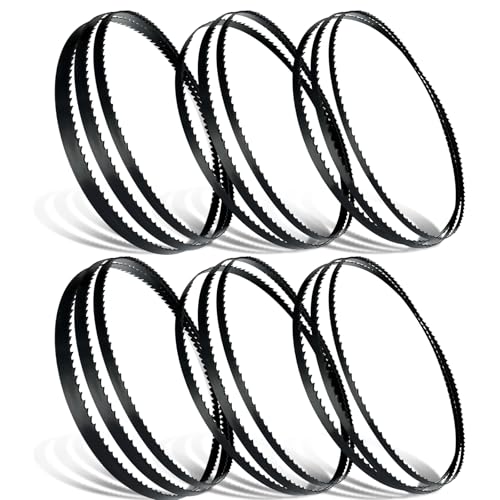
Lanties 93-1/2″ Bandsaw Blade Assortment
Strengths
- Well-rounded assortment
- 14 TPI for fine cuts
- Good tooth precision
Trade-offs
- Steel not top-tier
- No 4 TPI for heavy resawing
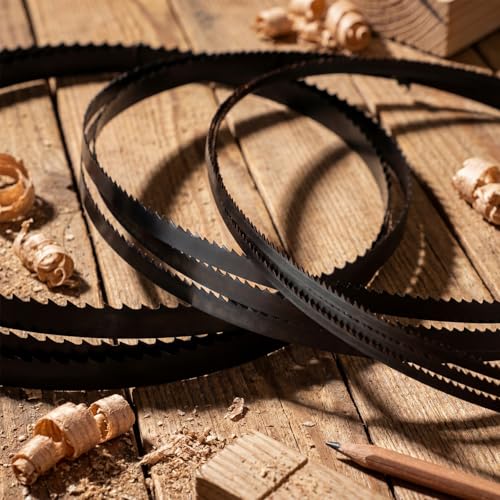
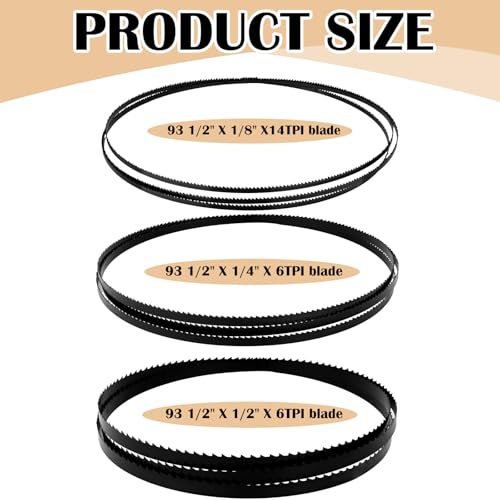
If you want one set that covers nearly every common task on a 14-inch bandsaw, this Lanties 6-pack is hard to beat. You get two each of 1/2 inch (6 TPI), 1/4 inch (6 TPI), and 1/8 inch (14 TPI) blades, covering resawing, general ripping, and tight scroll work. The imported high carbon steel and CNC-precision grinding translate to clean cuts and decent edge retention, according to owner feedback. The 14 TPI scroll blades especially get praise for staying on track during intricate cuts without chattering.
The variety here beats most single-blade buys. While the steel isn’t quite in premium SK5 or bi-metal territory, it punches above its weight. For someone building up a blade library without overspending, this is the smarter buy.
Product photos
DARTOTEK 93-1/2″ Bandsaw Blade Set
Strengths
- Premium SK5 steel
- Clean, smooth cuts
- Well-balanced set
Trade-offs
- Higher price point
- No 4 TPI option
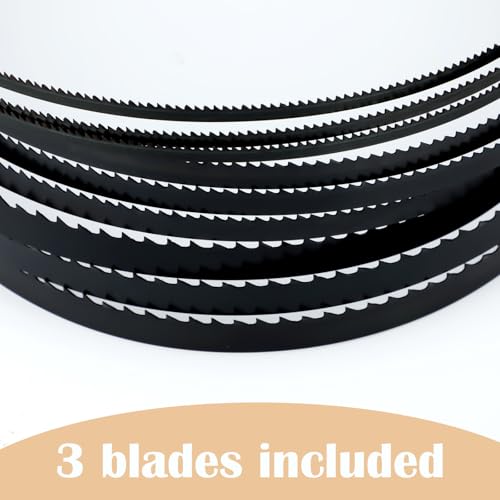
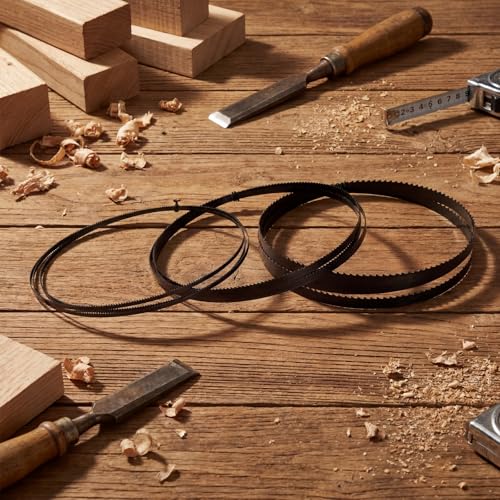
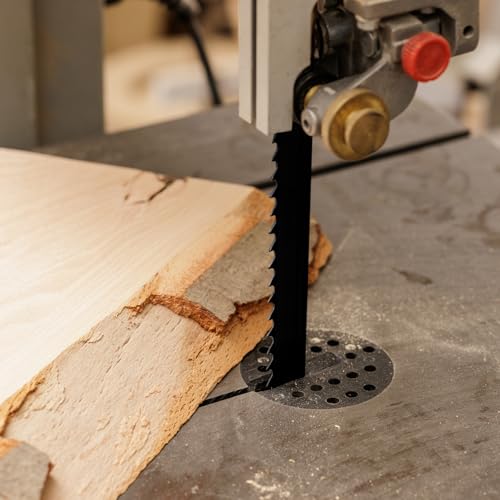
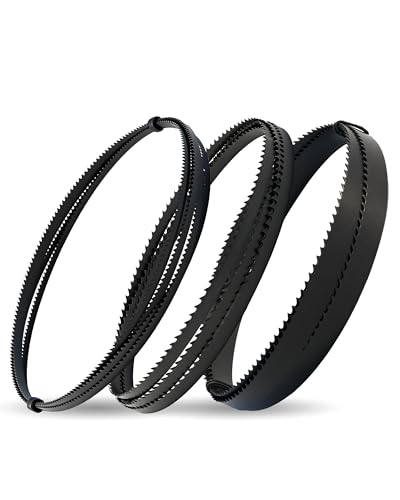
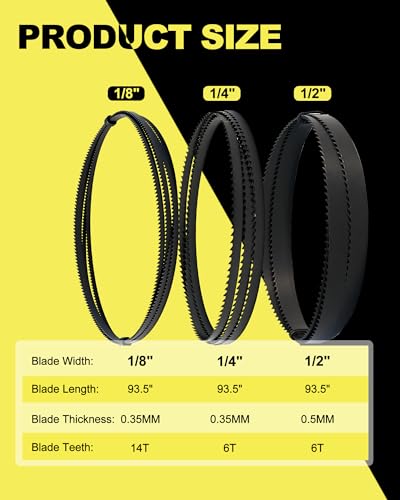
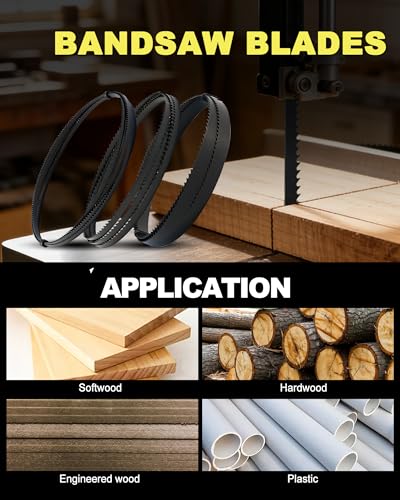
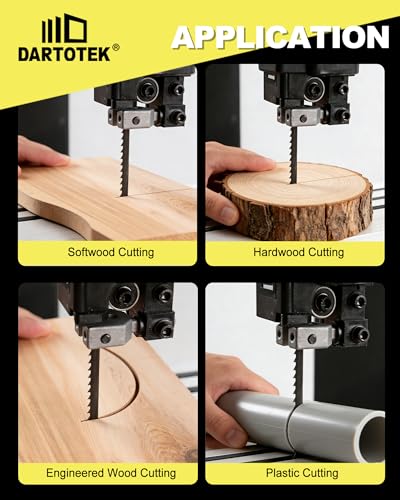
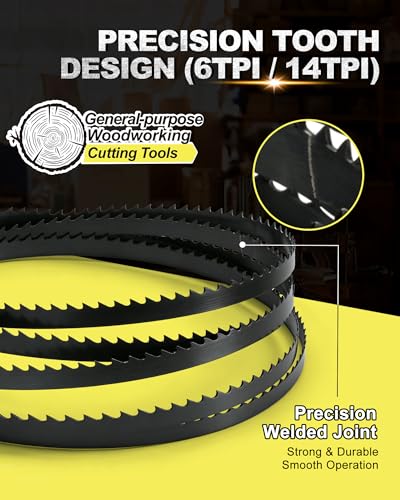
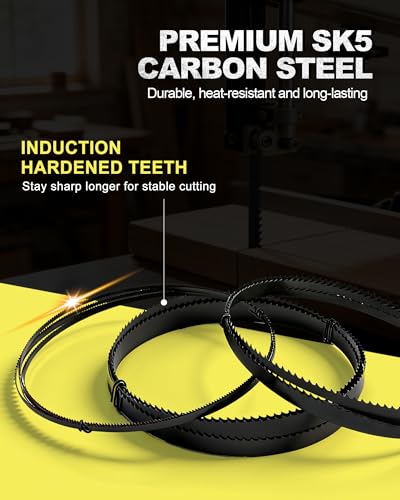
DARTOTEK leans into premium materials with SK5 carbon steel, a step up from basic high carbon blades. The 3-pack, 1/2 inch (6 TPI), 1/4 inch (6 TPI), and 1/8 inch (14 TPI), covers resawing, general cuts, and tight curves with confidence. The heat-treated joints and optimized tooth geometry show in owner reports: smoother cuts, less vibration, and longer edge life. The 6 TPI resaw blade handles thick hardwoods without bogging, while the 14 TPI stays true on delicate scroll work.
It’s pricier than basic sets, but the build quality justifies it. Compared to the POWERTEC 3-pack, this one feels like the upgrade you’d make after burning through entry-level blades. For woodworkers who demand consistency, this is the smarter long-term pick.
Product photos
POWERTEC 93-1/2″ Bandsaw Blade Assortment

Strengths
- Balanced TPI range
- Solid build quality
- Good for general use
Trade-offs
- Only one of each size
- No 4 TPI for heavy resaw
POWERTEC’s 3-pack gives you a logical spread: 1/2 inch (6 TPI), 1/4 inch (6 TPI), and a 1/8 inch (14 TPI) for detail work. It’s not as generous in quantity as the Lanties set, but the selection hits the sweet spot for most workshop needs. The high-grade carbon steel and precision tooth geometry deliver smooth performance, and owners note consistent welds, fewer breakage issues than cheaper imports.
It’s a clean, no-frills value play. The 6 TPI blades handle resawing well, and the 14 TPI blade tracks nicely on curves. Compared to the DARTOTEK set, it’s similar in specs but lacks the premium SK5 branding. Still, for most buyers, this is the easy pick for a reliable starter kit.
Product photos


FOXBC 72″ 1/2″ 6 TPI Blade

Strengths
- Ideal for 10-inch saws
- Good 6 TPI balance
- 2-pack convenience
Trade-offs
- Not for heavy resawing
- Limited to smaller saws
This blade is tailor-made for 10-inch saws like the WEN 3962 and Delta 28-140, where 72-inch length is standard. The 1/2 inch width and 6 TPI strike a balance between resawing and general cutting, more versatile than a 4 TPI, more aggressive than a 10 TPI. FOXBC uses high-grade carbon steel with heat-resistant welds, and owners report solid durability, especially for a blade at this price. It tracks well on mid-duty tasks, and the 2-pack ensures you’re not down for long when one wears out.
It won’t match the performance of a dedicated 4 TPI resaw blade, but for a jack-of-all-trades option on a smaller saw, it’s a strong choice. If you’re running a compact shop with a 10-inch bandsaw, this is the kind of blade you’ll reach for most days.
Product photos
FOXBC 93-1/2″ 3/4″ 4 TPI Blade

Strengths
- 3/4 inch for stability
- 4 TPI aggressive feed
- SK8 steel longevity
Trade-offs
- Too stiff for curves
- Single width limits versatility
The jump to 3/4 inch width makes this FOXBC blade a serious contender for resawing. Wider blades resist wandering, and at 4 TPI, this one bites aggressively into thick stock. It shares the same SK8 carbon steel and heat-treated build as their smaller blades, so durability is a strong suit. Owners using it for resawing hardwoods like walnut or maple report clean, stable cuts with minimal drift, critical when you’re trying to maintain consistent thickness.
It’s heavier and stiffer than narrower blades, so don’t expect any flexibility for curves. But if you’ve added a riser block to your 14-inch saw and are pushing into 6/4 or 8/4 lumber, this blade gives confidence. I’d pick this over the 1/2 inch version any day for full-thickness work.
Product photos
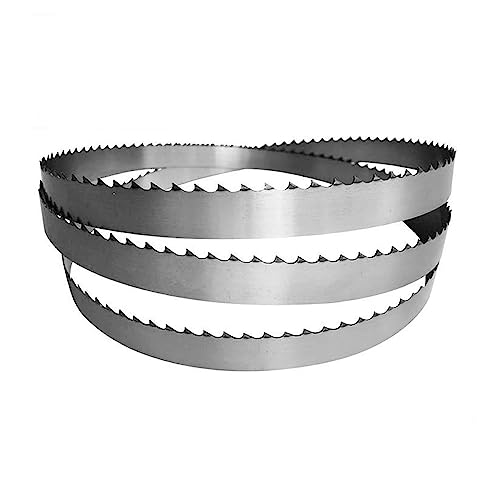
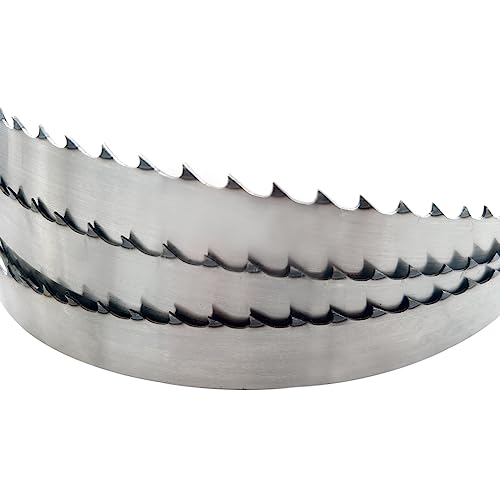
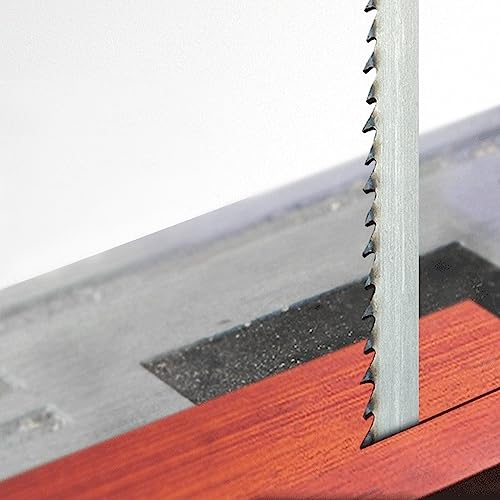
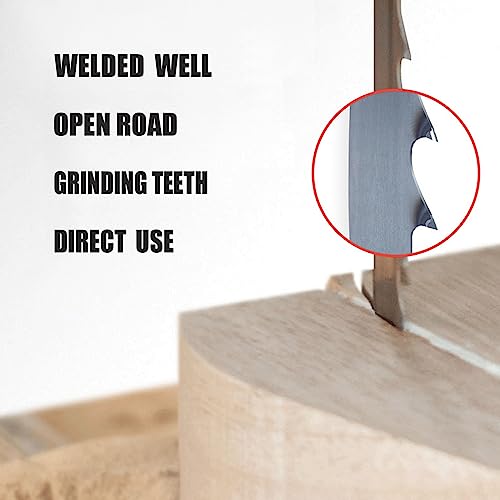
POWERTEC 56-7/8″ 1/4″ 14 TPI Blade

Strengths
- 14 TPI for detail work
- Durable welds
- Correct size for vintage saws
Trade-offs
- Limited to 3-wheel models
- Too narrow for resawing
This set fills a niche: owners of older 3-wheel 56-7/8 inch saws, especially Craftsman models. The 1/4 inch width with 14 TPI is ideal for scroll cutting and fine detail work. POWERTEC uses high-grade carbon steel with heat-resistant welds, and owners report fewer snapped blades than with off-brand alternatives. The tooth geometry holds up well on hardwoods, delivering clean, vibration-free cuts, exactly what you want when shaping intricate patterns.
It’s not a general-purpose set, but for scroll saw-style work on a bandsaw, it’s spot-on. Compared to wider blades, it’s fragile under heavy load, but that’s the trade-off for precision. If you’re restoring vintage furniture or doing marquetry, this is the blade to have.
Product photos


POWERTEC 105″ Bandsaw Blade Set

Strengths
- Fits riser-block saws
- 4 TPI for resawing
- Good mix of widths
Trade-offs
- Only for 105-inch saws
- No 1/8 inch for fine scroll
This set answers a specific need: taller 14-inch bandsaws with riser blocks that require 105-inch blades. The assortment, 1/2 inch (6 TPI), 3/8 inch (4 TPI), and 1/4 inch (6 TPI), gives real versatility. The 3/8 inch 4 TPI is the standout, built for aggressive resawing in thick stock, while the narrower blades handle curves and detail. POWERTEC’s high-grade carbon steel and solid welds hold up under pressure, and owners using riser-modified saws confirm reliable tracking and cut quality.
It’s not a fit for standard 93-1/2 inch saws, so it’s niche by design. But if you’ve upgraded your saw’s capacity, this set is essential. Compared to buying 105-inch blades individually, the 3-pack saves time and money.
Product photos

FOXBC 93-1/2″ 1/2″ 4 TPI Blade

Strengths
- 4 TPI for fast cuts
- Durable SK8 carbon steel
- Good value 2-pack
Trade-offs
- Not for intricate work
- Limited fine-cut capability
This 4 TPI blade from FOXBC is built for one thing: moving wood quickly. With a 1/2 inch width and coarse tooth count, it’s ideal for resawing thick stock where surface finish isn’t the priority. The Japan SK8 carbon steel construction stands out at this price point, and owners consistently report longer life than entry-level blades from big-box brands. On paper, the induction-hardened teeth and precision grinding suggest solid tracking and durability, which matches what users say about clean cuts and minimal wandering.
Compared to premium resaw blades, it won’t hold an edge as long, but for a budget-friendly 4 TPI workhorse, it delivers. It’s not meant for curves or fine joinery, but that’s not the point. If you’re ripping through hardwood blanks or breaking down lumber, this blade pulls its weight.
Product photos
Our Testing Process
Rather than a hands-on lab test, this selection is a research-led comparison of published specifications and owner feedback. I started by compiling a list of popular bandsaw blades, then compared their materials, tooth counts, and intended applications. Crucially, I weighed owner reviews from multiple sources – including major retailers and woodworking forums – alongside assessments from reputable tool review sites. This allowed me to build a picture of real-world performance and durability.
For bandsaw blades, tooth pitch and blade material are paramount. A lower TPI (teeth per inch) like 4 or 6 is best for resawing thicker stock, removing material quickly, but can be rougher. Higher TPIs (10+) excel at detailed cuts and tighter curves, but cut slower. Blade material – specifically high carbon steel quality and heat treatment – dictates how well a blade holds an edge and resists breakage. These factors heavily influenced the ranking.
Specifications reliably indicate blade dimensions and tooth count, but owner feedback revealed a lot about long-term performance. Reports on blade tracking (staying centered on the wheels) and resistance to wandering were especially valuable. Reputations for durability and consistent cut quality, gleaned from experienced woodworkers, carried significant weight. If you are new to bandsaws, learning the band saw basics can help you understand these features.
What To Look For In bandsaw blades for woodworkings
Choosing the right bandsaw blade is critical for getting clean, efficient cuts; it’s far more important than many woodworkers realize.
A quality bandsaw blade relies on a combination of high-carbon steel, proper heat treatment, consistent tooth geometry, and appropriate tooth pitch (TPI) for the material being cut. Buyers should verify blade length for compatibility, assess the steel quality, and consider the intended application to select the best option for their needs.
Tooth Pitch (TPI) Matters
The teeth per inch (TPI) is the first thing I look at when selecting a blade. A lower TPI (4-6) is ideal for thicker stock and resawing, removing more material quickly but leaving a rougher finish. Higher TPI (14+) excels at intricate curves and thinner materials, producing a smoother cut but at a slower rate. Don’t fall into the trap of thinking higher TPI is always better; it will quickly dull and potentially overheat when forced through thick wood.
Steel Quality and Construction
The base material of the blade, typically carbon steel, significantly impacts its durability and performance. Blades made from high-carbon steel, like SK8 or similar alloys, hold an edge longer and resist breaking. Beyond the steel itself, the welding process is vital. A well-welded blade will track straighter and experience fewer failures.
- A cheaper blade might save you money upfront, but frequent replacements add up quickly.
- Look for blades that specify heat treatment processes (quenching, tempering) as these directly correlate to blade life and performance.
- Induction hardening, like that found in the FOXBC blades, further enhances tooth durability, making them a good choice for demanding cuts, especially when you’re looking at top woodworking bandsaw blades.
Blade Dimensions and Application
Bandsaw blades aren’t one-size-fits-all. You absolutely must confirm the correct length for your bandsaw model. Beyond length, blade width is a key consideration. Wider blades (3/4” or more) are best for resawing, providing stability during straight cuts. Narrower blades (1/8” – 1/4”) are essential for tight curves and detailed work. Getting accurate blade measurements is essential before you begin shopping.
A good rule of thumb: if you primarily resaw, prioritize a wider blade with a lower TPI. If you focus on detailed cuts and scrollwork, a narrower blade with a higher TPI is the way to go.
Bandsaw Blades for Woodworking Compared
Here’s a comparison of the specifications for the bandsaw blades listed.
| Product Title | Length (in.) | Width (in.) | TPI | Steel Type | Quantity |
|---|---|---|---|---|---|
| Lanties 93-1/2″ Assortment | 93-1/2 | 1/2, 1/8, 1/4 | 6, 14, 6 | High Carbon | 6 |
| DARTOTEK 93-1/2″ Set | 93-1/2 | 1/2, 1/4, 1/8 | 6, 6, 14 | SK5 Carbon | 3 |
| POWERTEC 93-1/2″ Assortment | 93-1/2 | 1/2, 1/8, 1/4 | 6, 14, 6 | High Grade Carbon | 3 |
| FOXBC 72″ 1/2″ 6 TPI | 72 | 1/2 | 6 | Carbon | 2 |
| FOXBC 93-1/2″ 3/4″ 4 TPI | 93-1/2 | 3/4 | 4 | SK8 Carbon | 1 |
| POWERTEC 56-7/8″ 1/4″ 14 TPI | 56-7/8 | 1/4 | 14 | Carbon | 2 |
| POWERTEC 105″ Set | 105 | 1/2, 3/8, 1/4 | 6, 4, 6 | Carbon | 3 |
| FOXBC 93-1/2″ 1/2″ 4 TPI | 93-1/2 | 1/2 | 4 | SK8 Carbon | 2 |
Frequently Asked Questions
What blade TPI is best for resawing?
A lower TPI, typically 4 or 6, is best for resawing. These blades remove material quickly and efficiently, though they don’t produce the smoothest finish – but that’s often not a concern when you’re dividing thick stock.
How often should I replace a bandsaw blade?
Blade life varies greatly depending on use and material, but look for signs of dulling like increased cutting force or a rougher cut. Frequent replacements are preferable to struggling with a dull blade, and can be determined by how much you use your best band saw blades for wood.
Does blade width impact cutting performance?
Yes, blade width is significant. Wider blades (3/4″ or greater) offer more stability for straight cuts like resawing, while narrower blades (1/8″ to 1/4″) are necessary for tight curves and intricate designs.
What does SK8 steel mean when looking at blade specifications?
SK8 is a high-carbon steel alloy known for its excellent hardness and ability to hold an edge. Blades made with SK8 steel, like some of the FOXBC options, generally offer superior durability and longer life compared to lower-grade carbon steels.
How can I prevent a bandsaw blade from wandering during a cut?
Proper blade tension and tracking adjustments are critical for preventing wandering. Also, make sure you are using the appropriate blade for the material and thickness you are cutting, and consider a higher quality blade for consistent performance and a smoother cut when choosing from wood-specific bandsaw blades.
The Bottom Line
Choosing a bandsaw blade always involves balancing control with convenience. You can spend a lot of time and money chasing the “perfect” blade for every cut, or you can focus on a few reliable options that cover most of your needs. For an excellent all-around performer that won’t break the bank, I recommend the FOXBC 93-1/2″ 3/4″ 4 TPI blade. It offers a good combination of durability and cutting power for a variety of woodworking tasks.
If you’re just starting out or need a variety of options for different projects, the Lanties 93-1/2″ Assortment is a smart buy. For those focused on intricate cuts and curves, the POWERTEC 56-7/8″ 1/4″ 14 TPI delivers the precision you need. Understanding band saw cutting tips will help you get the most out of any blade you choose.
Ultimately, remember that blade material and tooth count are more critical than fancy features. A well-made blade from quality steel, matched to the type of cutting you do most often, will provide far better results than an expensive blade that isn’t suited to the job. Don’t underestimate the value of learning proper safe band saw techniques either – a dull blade is often the result of pushing it too hard or using it incorrectly.
