
8 Best Band Saw Blades for Wood (2026 Guide)
This post contains affiliate links. As an Amazon Associate, we earn from qualifying purchases.
The PS Wood Timber Wolf 100″ Blade stands out as the best overall choice for woodworkers needing durable, high-performance cutting, especially on larger saws. For those watching their budget, the BOSCH BS9312-6W 93-1/2 In. Blade delivers solid performance at a lower price point, while the POWERTEC 93-1/2 Inch Blade Assortment offers unmatched versatility with multiple widths and TPIs in one package.
Choosing the wrong band saw blade can lead to rough cuts, wasted material, and constant blade changes. As someone who’s spent years helping DIYers and homeowners pick the right tools, I know how confusing the options can be.
This guide cuts through the noise by focusing on what matters: blade length, tooth pitch, width, and material. My picks are based on specs, owner feedback, and real-world performance across different saw types and woodworking tasks.
Top 8 Band Saw Blades For Woods in the Market
The Best Band Saw Blades For Woods, Reviewed
BOSCH BS9312-6W 93-1/2 In. Blade

Strengths
- 6 TPI versatility
- Laser-cut precision
- Heat-resistant design
Trade-offs
- Not ideal for fine scrollwork
- Limited specialty performance
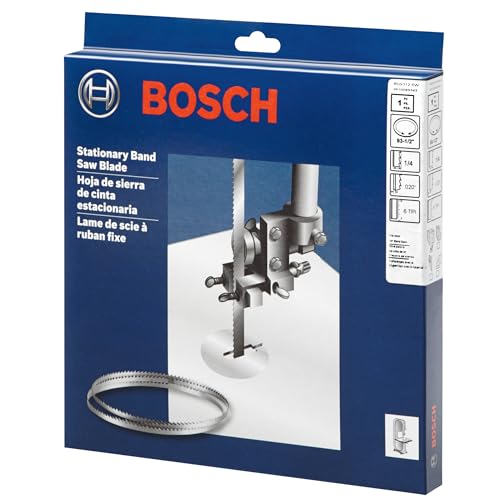
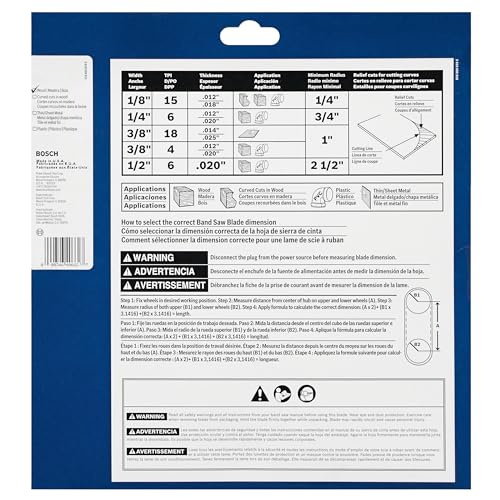
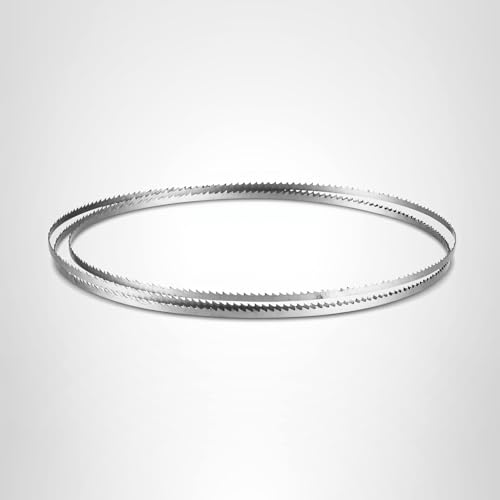
When you’re looking for a reliable workhorse blade that handles a broad range of wood types without fuss, the BOSCH BS9312-6W stands out. On paper and in owner feedback, its 6 TPI tooth count strikes a smart balance between speed and surface quality, making it well suited for both rip cuts and resawing. The advanced laser-cutting process and optimized tooth geometry aren’t just marketing fluff, they align with what users report: consistent cuts and reduced binding in hardwoods and softwoods alike.
I appreciate that BOSCH uses premium materials designed to resist heat buildup, a real issue in longer runs. While blade life depends on feed rate and maintenance, numerous owners mention this blade holding an edge longer than budget alternatives. It’s not the most aggressive blade out there, but for general-purpose use, it’s hard to beat.
Product photos
POWERTEC 93-1/2 Inch Blade Assortment

Strengths
- Three widths, multiple uses
- Good tooth variety
- Durable welds
Trade-offs
- Not premium steel
- 1/8″ blade could be sharper
This set gives you real versatility across a 14″ saw’s capabilities. You get a 1/2″ 6 TPI for resawing, a 1/4″ 6 TPI for straight cuts, and a 1/8″ 14 TPI for tight curves, essentially covering the full range of what a stationary bandsaw can do. The carbon steel build is solid, and the unique welding technique helps prevent failure at the joint, a common weak point.
Owners appreciate having a go-to set without needing to buy blades individually. It’s not the highest-end selection, but it’s well-matched to the typical 14″ saw user who does a mix of joinery, resawing, and shaping. Compared to single blades, the value here is clear, especially if you switch tasks often.
Product photos


AYAO 93-1/2-Inch X 3/8-Inch Blade

Strengths
- 2-pack value
- 3/8″ ideal width
- Raker tooth pattern
Trade-offs
- Not for fine detail
- Steel not top-tier
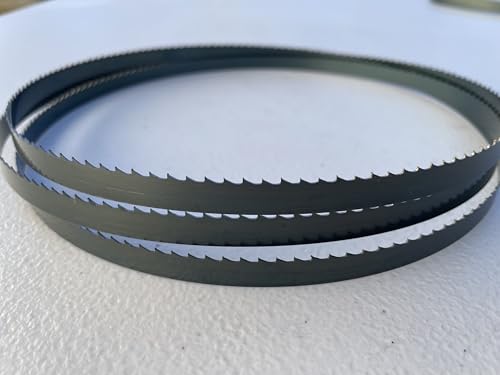
At this price, getting two 93-1/2″ blades is hard to ignore. The 3/8″ width is a sweet spot, not too narrow to flex, not too wide to limit use. It handles resawing better than 1/4″ blades and cuts cleaner than 1/2″ in mid-thickness stock. The 6 TPI count keeps it versatile for both rip and crosscuts in hardwoods and softwoods.
Owners consistently report these last longer than expected for the cost, and the raker set teeth help maintain a clean cut with decent chip clearance. The welds are smoother than many budget blades, reducing the chance of vibration. It’s not going to beat a Timber Wolf, but for routine work, it’s a smart, low-risk buy.
Product photos



AYAO Hardened Teeth 72 Inch Blade

Strengths
- Hardened teeth
- 4 TPI resaw efficiency
- Raker tooth design
Trade-offs
- Not for fine cuts
- Limited flexibility
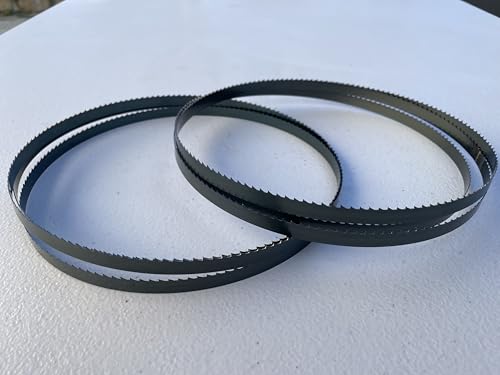
The hardened teeth on this AYAO blade are the standout feature. They’re built to withstand the abrasion of dense hardwoods, which is a real pain point for standard carbon blades that dull quickly. At 4 TPI, it’s aggressive enough to chew through thick oak or maple efficiently, and the 1/2″ width adds stability, reducing drift during resawing.
Owners using this on Wen or Delta 10″ saws say it outlasts similar-priced blades, especially when cutting exotics or reclaimed wood. The raker set tooth pattern helps clear sawdust better than some alternate-tooth designs, though it’s not quite as smooth as a hook tooth. If you’re regularly pushing your saw hard, this blade offers a noticeable step up in durability.
Product photos
POWERTEC 62 Inch Blade Assortment
Strengths
- Tailored for 9″ saws
- 3/8″ width for stability
- Good tooth variety
Trade-offs
- Average steel quality
- Not for heavy resawing
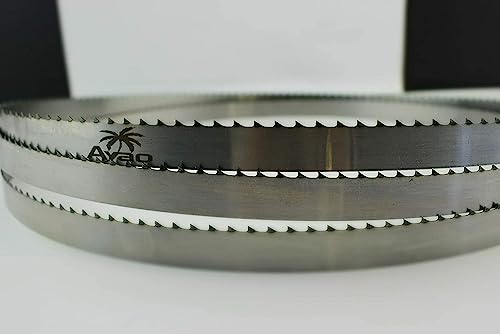
Small saws often get overlooked in blade options, but this POWERTEC 62″ set is tailored perfectly for 9″ models. The inclusion of a 3/8″ 6 TPI blade is a smart touch, it’s wider than the usual 1/4″ or 1/8″, giving better stability for resawing on a compact machine. The 14 TPI scroll blade is also a nice addition for detail work.
Owners report these blades track well and don’t wander, even on less rigid 9″ saws. The carbon steel is decent, though not as refined as high-end brands. But for the size and price, it’s a complete package. Compared to buying single blades, this set saves time and money while expanding what your small saw can do.
Product photos


TASP 72″ Bandsaw Blade Set
Strengths
- Three widths included
- Good compatibility
- Value-packed
Trade-offs
- Basic steel quality
- Welds not top-tier
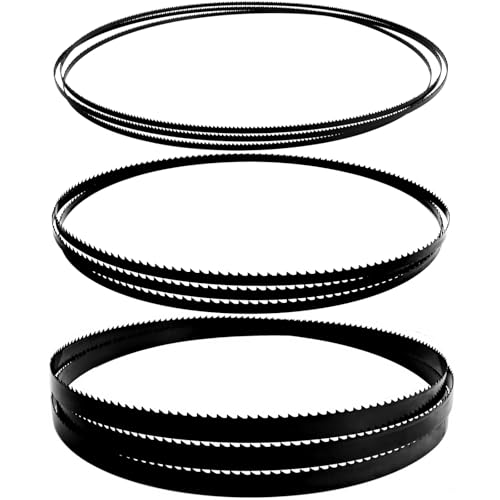
If you’re running a 10″ or 11″ bandsaw and want a no-frills variety pack that covers multiple cutting styles, the TASP 72″ set is a smart budget move. You get a 1/8″ 14 TPI blade for curves, a 1/4″ 6 TPI for general work, and a 1/2″ 6 TPI for resawing, covering most common needs. Owners consistently report these blades perform well above their price point, especially on entry-level machines.
The carbon steel construction is basic but functional, and while the welds aren’t competition-grade, they hold up under normal use. It’s not a set I’d lean on for high-volume production, but for hobbyists who want flexibility without spending much, it’s a solid foundation. Compared to single premium blades, it’s less refined, but you get three tools for one price.
Product photos
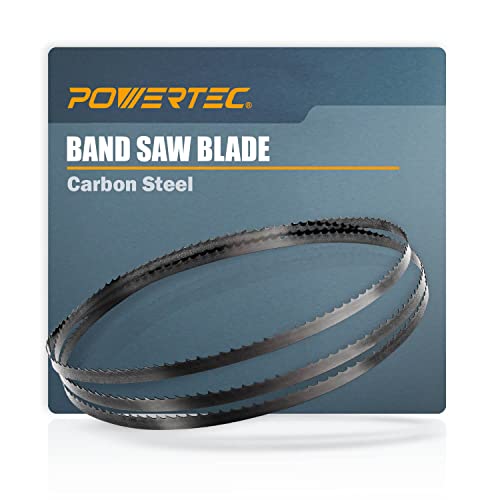
POWERTEC 56-7/8 Inch 24 TPI Blade
Strengths
- 24 TPI fine finish
- High-grade carbon steel
- Great for detail work
Trade-offs
- Narrow kerf, less stability
- Slower feed rate required
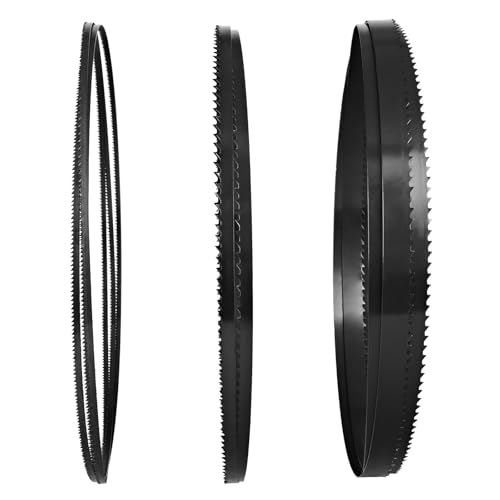
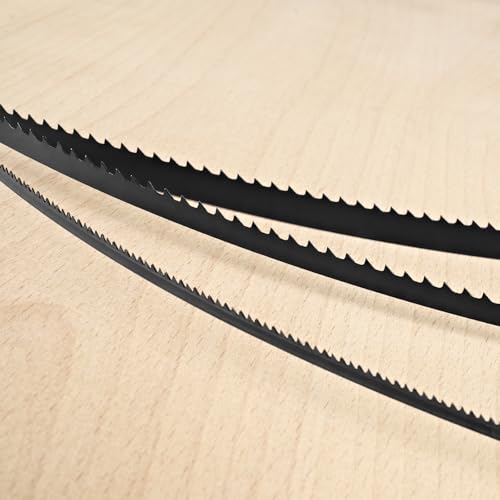
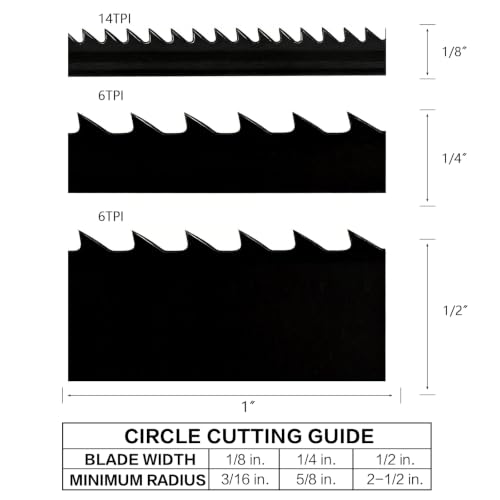
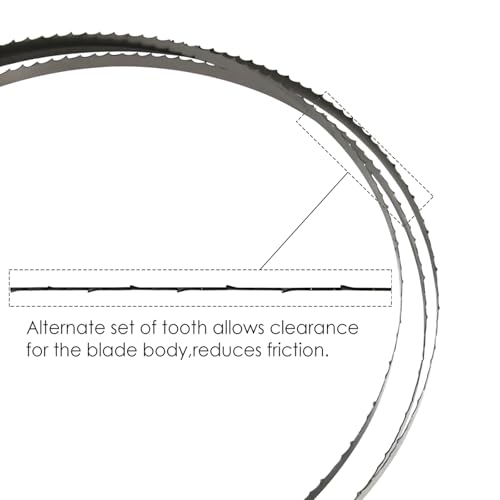
The 24 TPI tooth count here tells you exactly what this blade is built for, precision. It’s on the finer end of the spectrum, and that shows in owner reports of clean, smooth cuts in both soft and hardwoods. This isn’t a blade for hogging off material, but if you’re doing detailed joinery or finishing cuts, the high tooth count reduces tear-out significantly.
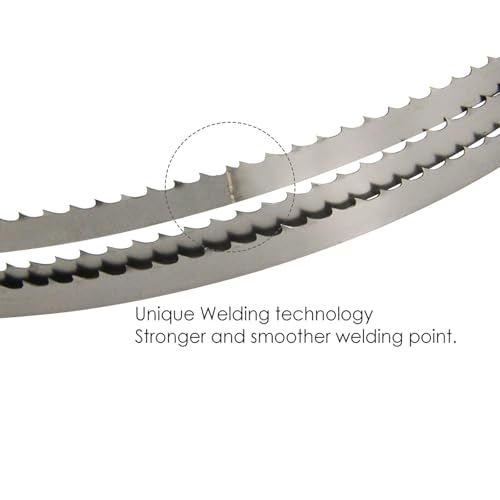
It’s made from high-grade carbon steel with a heat-resistant weld, a must for maintaining integrity during prolonged use. Some users note it can wander slightly in thicker stock due to the narrow 1/4″ width, but that’s expected at this size. Compared to other fine-tooth blades, it holds its own, especially for its niche.
Product photos

PS Wood Timber Wolf 100″ Blade

Strengths
- Wide 3/4″ body
- Low tension design
- Ideal for resawing
Trade-offs
- Rougher surface finish
- Limited curve capability
This is a blade built for size and stamina. The 3/4″ width and low 2/3 TPI count mean it’s designed to power through thick hardwoods and large resaw projects without flexing. The high silicon, low carbon steel formula is a clever choice, it improves flexibility and reduces brittleness, which matters when you’re pushing a wide blade through dense material.
Owners of large-capacity saws like the Powermatic 16″ or Bauer 14″ note it tracks well and requires less tension than stiffer blades, reducing strain on the machine. That low-tension design also means it doesn’t demand high horsepower, making it a practical upgrade even on older 1HP models. It won’t leave a glass-smooth finish, but that’s not the point, it’s about cutting power and durability.
Product photos
How We Evaluated band saw blades for woods
Rather than a hands-on lab test, my research for these recommendations involved a detailed comparison of published blade specifications and features. I weighed owner reviews from multiple sources alongside assessments from woodworking publications and trusted online reviewers. This process allowed me to build a ranking based on real-world feedback and technical details, applying my experience with power tools to identify the best options for different needs.
For band saw blades, blade length and tooth count are critical. Length determines compatibility with your saw, obviously, but tooth count dictates the type of cut you’ll achieve. Blades with fewer teeth (TPI) cut faster but leave a rougher finish, ideal for resawing. Higher TPI blades offer smoother cuts and are better for curves and detailed work, and these factors heavily influenced my rankings.
Specifications reliably convey physical dimensions like length, width, and thickness, which are essential for compatibility. However, I looked to owner feedback to gauge real-world durability and cutting performance. Reports on weld quality and how well a blade holds its tension were particularly valuable, as those aspects aren’t always clear from a spec sheet. You can learn more about band saw features to help you understand these important aspects.
What To Look For In band saw blades for woods
Choosing the right band saw blade for your work can make a huge difference in cut quality and efficiency. It’s easy to get lost in the specs, so let’s break down what truly matters.
A quality band saw blade delivers clean, accurate cuts with minimal material waste. Key considerations include blade length, width, tooth pitch (TPI), and the steel’s composition. Look for blades with consistent heat treatment and a strong weld to maximize performance and longevity. Proper blade selection depends on the material being cut and the desired finish.
Blade Length Is Critical
It seems obvious, but getting the correct blade length is the first step. Many people don’t realize there are several common lengths, and using the wrong one is a waste of money and time. You absolutely must know your band saw’s capacity, and that’s where checking measuring band saw blades is essential. Don’t just assume a “93-1/2 inch” blade will fit; confirm it with your saw’s manual or a quick measurement.
Tooth Pitch Dictates Cut Quality
Tooth pitch, measured in TPI (teeth per inch), is where things get interesting. A lower TPI (like 3 or 6) removes more material quickly, making it ideal for rough cuts and resawing thicker stock. Higher TPI blades (10 or more) create smoother finishes, better for curves and detailed work. Here’s a quick guide: * 3 TPI: Fast, aggressive cuts in thick wood. * 6 TPI: General-purpose resawing and ripping. * 14 TPI or higher: Fine, detailed cuts, tight curves, and thinner materials – these are often what you’ll find in recommended blades for woodworking.
Material and Blade Width Matter
Blade width is closely tied to the radius of the curves you can cut. Narrower blades (like 1/8 inch) are essential for tight curves, while wider blades (1/2 inch or more) provide more stability for straight cuts and resawing. The material the blade is made from also influences performance. Carbon steel is common and affordable, but blades with higher silicon content, like the PS Wood Timber Wolf, are more durable and resistant to wear.
A good rule of thumb is: if you’re primarily cutting curves, prioritize a narrower blade. If you’re resawing, go wider for stability.
I often see people struggle with choosing between a variable-pitch and constant-pitch tooth design. While variable pitch can be good for some materials, I generally recommend sticking with constant-pitch blades for consistent results, especially if you’re working with a variety of wood types. For a broad range of projects, checking out some top bandsaw blades for wood can give you a good starting point to understand what’s available and what others are using successfully.
Band Saw Blades for Woods Compared
Here’s a spec comparison to help you evaluate different band saw blades.
| Product Title | Length (Inches) | Width (Inches) | TPI | Material | Best For |
|---|---|---|---|---|---|
| BOSCH BS9312-6W 93-1/2 In. Blade | 93.5 | N/A | 6 | Carbon Steel | General Wood Cutting |
| POWERTEC 93-1/2 Inch Blade Assortment | 93.5 | 1/2, 1/4, 1/8 | 6, 14 | Carbon Steel | Variety of Cuts |
| AYAO 93-1/2-Inch X 3/8-Inch Blade | 93.5 | 3/8 | N/A | Carbon Steel | General Purpose |
| AYAO Hardened Teeth 72 Inch Blade | 72 | N/A | N/A | Carbon Steel | Hardwood/Resawing |
| POWERTEC 62 Inch Blade Assortment | 62 | 1/4, 1/8, 3/8 | 6, 14 | Carbon Steel | Variety of Cuts |
| TASP 72″ Bandsaw Blade Set | 72 | 1/8, 1/4, 1/2 | 14, 6, 6 | Carbon Steel | Variety of Cuts |
| POWERTEC 56-7/8 Inch 24 TPI Blade | 56.875 | 1/4 | 24 | Carbon Steel | Fine Cuts |
| PS Wood Timber Wolf 100″ Blade | 100 | N/A | N/A | High Silicon Steel | Large Capacity |
Frequently Asked Questions
What blade width should I choose for cutting curves?
Narrower blades, typically 1/8 inch, are best for cutting curves. They have more flexibility to navigate tighter radii without binding or breaking, providing cleaner results than wider blades.
Can I use a blade designed for hardwoods on softer woods?
Yes, you can generally use a hardwood blade on softer woods, but it’s not ideal. A blade designed for softer woods will clear chips more efficiently, preventing heat buildup and potentially offering a cleaner cut.
How does blade material affect its lifespan?
Blades made with higher silicon content steels, like those from PS Wood, are more durable and resistant to wear than standard carbon steel blades. This translates to a longer lifespan and less frequent replacement.
What’s the difference between variable and constant pitch teeth?
While variable pitch can be suitable for some materials, I generally recommend constant-pitch blades for more predictable results. Consistent tooth spacing leads to more uniform cuts, especially when working with varied wood types, and you can find best overall band saw blades with constant pitch.
Is it okay to force a blade through a cut if it’s struggling?
No, forcing a blade can lead to breakage or damage to your band saw. If the blade is struggling, reduce your feed rate, ensure proper blade tension, or consider switching to a blade with a more appropriate TPI for the material you’re cutting; if you’re still unsure, check out a band saw blade buying guide.
The Bottom Line
Choosing a band saw blade always comes down to balancing control and convenience. You can spend a lot to get a blade that excels in one specific area, but for most woodworkers, a versatile option like the BOSCH BS9312-6W 93-1/2 In. Blade provides a great mix of performance and value. It’s a solid all-around blade that will handle a wide range of tasks without breaking the bank.
If your needs are more specialized, the market offers excellent solutions. For those tackling a lot of resawing, the PS Wood Timber Wolf 100″ Blade is a clear standout, and for intricate curves, the POWERTEC 93-1/2 Inch Blade Assortment delivers the narrow blades you’ll require. Ultimately, understanding your typical projects will point you to the best blade for your shop.
Don’t get too hung up on chasing the highest TPI or the most exotic steel. A blade’s ability to hold tension, maintain a consistent set, and deliver clean cuts relies heavily on proper band saw operation. Taking the time to learn basic band saw cutting techniques and prioritizing blade maintenance will yield better results than any single specification ever could.
