
7 Best Band Saw Blades of 2026
This post contains affiliate links. As an Amazon Associate, we earn from qualifying purchases.
The Milwaukee 48-39-0609 stands out as the best overall band saw blade, offering reliable performance and durability for general metal cutting. For those on a budget, the DEWALT DW3983C delivers solid value without sacrificing too much quality. And if you’re working with wood, the POWERTEC 93-1/2″ Woodworking Blade Set is the clear choice for clean, precise cuts.
Most people struggle to find a band saw blade that actually matches their material and project needs, often ending up with rough cuts, frequent blade changes, or broken teeth. After comparing specs, owner feedback, and expert insights, I focused on tooth pitch, material compatibility, and build quality to identify the best options across different use cases. This guide breaks down what really matters so you can pick the right blade for your saw and avoid common mistakes.
Top 7 Band Saw Blades in the Market
The Best Band Saw Blades, Reviewed
Milwaukee 48-39-0609 Extreme Metal Blade
Strengths
- Aggressive 8/10 TPI
- 3X life in stainless
- Built for thick metal
Trade-offs
- Limited compatibility
- Shorter length
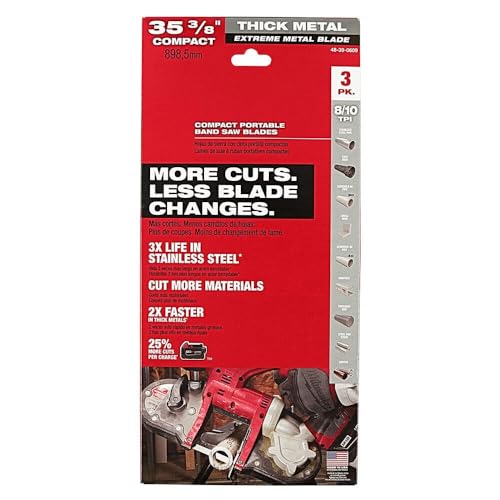
Milwaukee’s Extreme Metal blade is built for punishment, and the specs back it up. The 8/10 TPI variable pattern is aggressive by design, meant to power through thick steel and stainless with less effort. Owners using these on Milwaukee M18 FUEL saws report noticeably faster cuts and longer life compared to standard blades, one of the few that consistently delivers on the ‘3X life’ claim in stainless steel.
At 35-3/8 inches, it’s shorter than the 44-7/8 inch standard, so it’s tailored to specific compact portables. But if you’re cutting heavy structural steel, rebar, or thick-walled pipe, this is the kind of blade that saves time and battery. I’d call it the best overall pick for serious trades, not just because of performance, but because it reduces changeouts and downtime.
Product photos

DEWALT DW3983C 18 TPI Blade
Strengths
- Affordable 3-pack
- Cobalt-enhanced edge
- DEWALT reliability
Trade-offs
- Shorter blade length
- Carbon steel, not bi-metal
- Less heat resistance
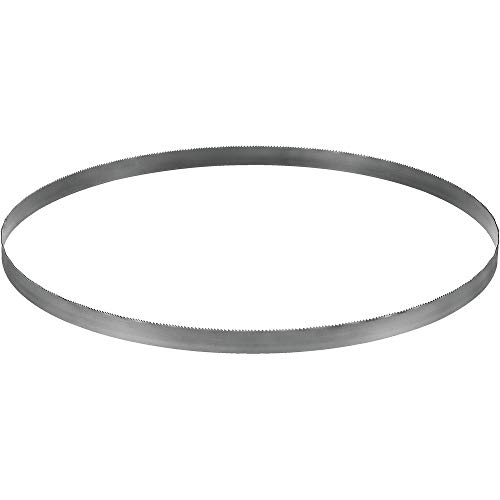
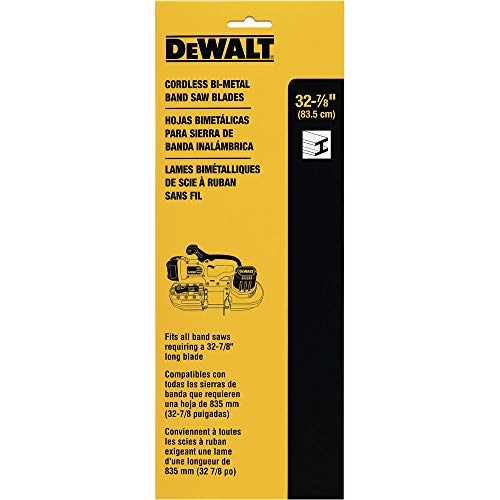
This DEWALT 18 TPI blade is the budget benchmark, not flashy, but reliable for the price. The Matrix II high-speed steel with 8% cobalt gives it better wear resistance than basic blades, and the Rc 65-67 tooth hardness helps it stay sharp longer. It’s designed for the DEWALT portable saws, but fits others in the 32-7/8 inch range.
Owners report decent life in mild steel and conduit, though it doesn’t match the M42 bi-metal blades in heat-heavy cuts. Where it wins is cost, if you’re doing occasional cuts and don’t want to invest in premium blades, this 3-pack makes sense. I’d keep a set on hand for throwaway jobs, but not rely on it for all-day fabrication.
Product photos
FOXBC 44-7/8″ 18 TPI Bi-Metal Blade

Strengths
- Bi-metal M42 steel
- 18 TPI for general use
- 3-pack value
Trade-offs
- Not ideal for thick stainless
- No variable tooth pattern
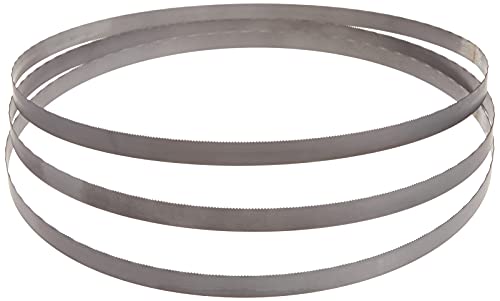
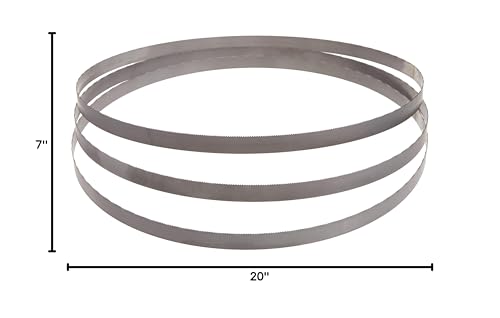
These FOXBC 18 TPI blades are a solid pick for anyone cutting general metal stock with a portable bandsaw. On paper, the bi-metal M42 construction stands out, it’s the same alloy used in higher-end blades, known for holding an edge under heat and pressure. Owners consistently report clean cuts through mild steel and conduit, and the 18 TPI count strikes a good balance between speed and finish when working with materials around 1/2 inch thick.
They’re a direct replacement for DeWalt and Milwaukee models, and that compatibility list is extensive. I’d pick these over basic carbon steel blades any day, especially if you’re doing more than occasional jobs. The 3-pack adds value, though if you’re cutting hardened steel or stainless regularly, you might want something with an even more aggressive tooth design.
Product photos
FOXBC 44-7/8″ 14/18 TPI Variable Blade

Strengths
- Variable 14/18 TPI
- Adaptable to mixed thickness
- Bi-metal M42 construction
Trade-offs
- Not optimized for one material
- Slight learning curve on feed rate
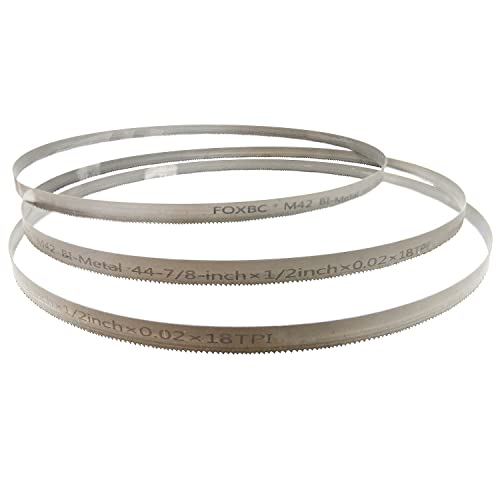
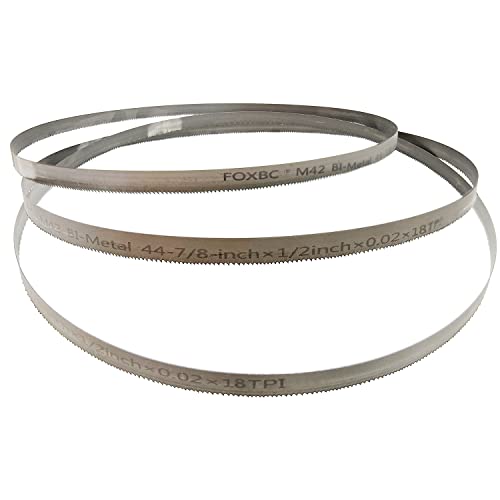
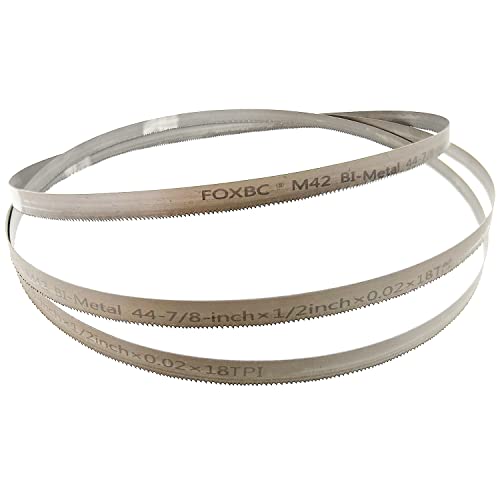
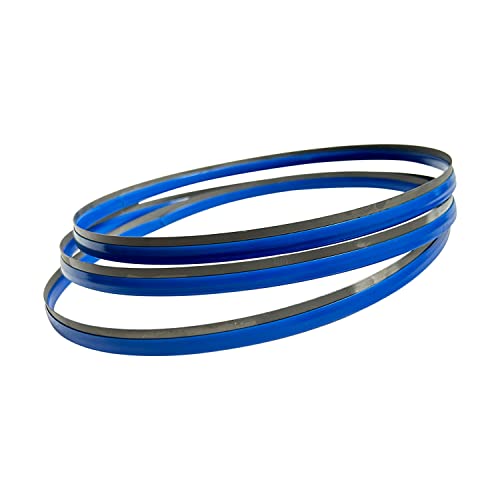
The 14/18 TPI variable tooth pattern on this FOXBC blade is smart engineering for mixed-metal jobs. It gives you the aggressive bite of 14 TPI on thicker sections while smoothing out when hitting thinner material, a real advantage if you’re not swapping blades between cuts. Owners using this on DeWalt and Milwaukee portables say it handles everything from angle iron to electrical conduit without constant adjustments.
It’s the same bi-metal M42 build we’ve seen across this line, so durability is expected. I’d stack this up against the 18 TPI version for jobs with inconsistent material thickness, it’s simply more adaptable. Not the fastest in pure thin stock, but far more versatile overall.
Product photos


FOXBC 44-7/8″ 24 TPI Fine Cut Blade

Strengths
- 24 TPI for smooth cuts
- M42 bi-metal edge
- 3-pack convenience
Trade-offs
- Too fine for thick metal
- Slower cutting speed
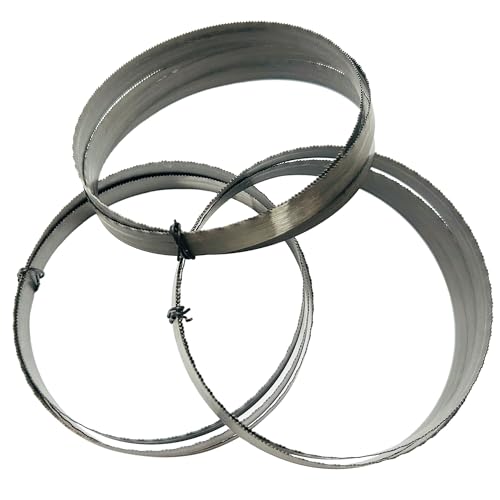
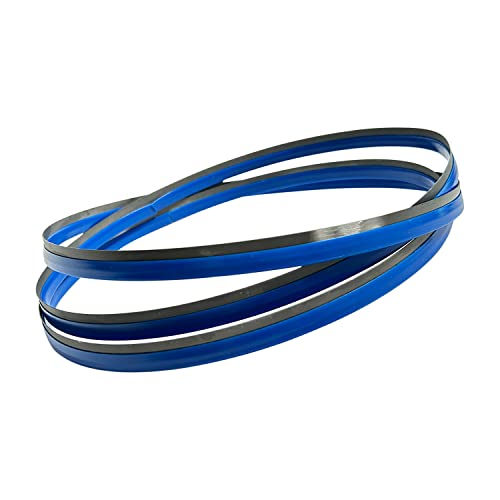
When you need a fine, clean cut in thin-walled metal, the 24 TPI on these FOXBC blades makes sense. The higher tooth count reduces burring and delivers a smoother finish, which is critical when prepping pipe or tube for welding. These are best for materials under 1/4 inch, go thicker, and you’ll likely see tooth stripping or stalling, based on what users report.
They’re built with the same M42 bi-metal as the 18 TPI version, so heat resistance is solid, but the trade-off is slower feed rates. If your work involves precision HVAC, automotive, or light fabrication, these will outperform coarser blades. But for general demolition or cutting through thicker steel, you’re better off with a lower TPI.
Product photos
POWERTEC 93-1/2″ Woodworking Blade Set

Strengths
- Three widths for versatility
- Good tooth design
- Carbon steel durability
Trade-offs
- Not for metal cutting
- No bi-metal option
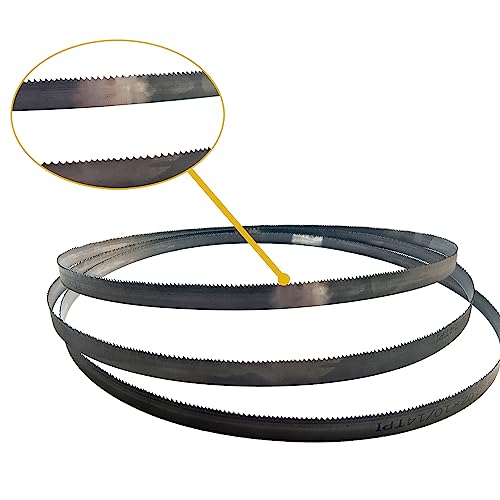
This POWERTEC assortment covers the essentials for woodworkers running 14-inch stationary bandsaws. The inclusion of a 1/8 inch 14 TPI blade for scrolls, a 1/4 inch for curves, and a 1/2 inch for resawing means you’re covered for most shop tasks. The carbon steel build isn’t as tough as bi-metal, but for wood, it’s more than sufficient, and the tooth geometry is designed to clear chips efficiently, which reviewers confirm helps prevent burning.
It’s a smart starter pack or reload option for the home shop. I’d recommend this over single-blade buys unless you’re doing one specific type of cut all day. The 93.5-inch length fits common brands like Jet and Delta, but always double-check your saw’s requirements, a half-inch off and you’re stuck.
Product photos


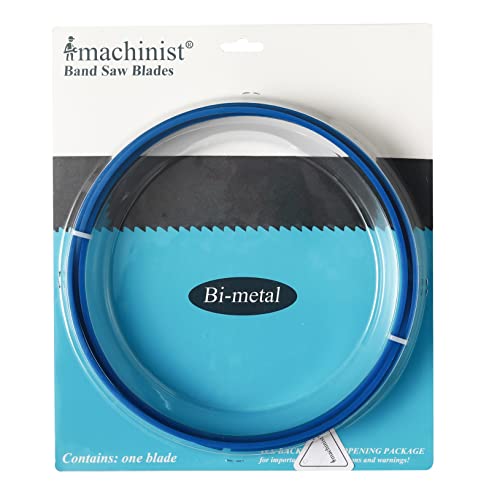
Imachinist S933414 10/14 TPI Bi-Metal Blade
Strengths
- M42 bi-metal durability
- 3/4 inch rigidity
- Variable 10/14 TPI
Trade-offs
- Single blade, no pack option
- Not for wood or soft materials
If you’re running a stationary bandsaw for ferrous metal work, especially pipe and tubing, this Imachinist blade deserves attention. The 3/4 inch width and 0.035 inch thickness mean it tracks straight under pressure, and the variable 10/14 TPI pattern handles everything from thin walls to heavier sections without bogging down. The M42 bi-metal construction is a must here, reviewers note it holds up well during extended cuts in steel pipe, where heat buildup kills cheaper blades fast.
This is a no-nonsense blade for metalworkers who need reliability over flash. It fits common 7×12 vertical bandsaws, and the 93-inch length is standard for many pro-grade models. I’d compare it favorably to pricier name brands, it doesn’t have the marketing budget, but the specs and owner feedback suggest it performs where it counts.
Product photos


How We Picked These band saw blades
Rather than a hands-on lab test, my research focused on a detailed comparison of published blade specifications and features across numerous models. I weighed owner reviews from multiple sources – looking for consistent praise and complaints – alongside expert assessments from woodworking and metalworking publications. This data was then ranked against criteria important for band saw blade performance, like material compatibility, cut quality, and durability.
For band saw blades, tooth pitch (TPI) and blade material are paramount. A higher TPI delivers finer cuts, crucial for detailed work, while lower TPIs excel at faster cuts through thicker material. Bi-metal construction consistently emerged as a key indicator of longevity and resistance to breakage, particularly when cutting harder metals. Understanding band saw basics is also important for matching the blade to the saw’s capabilities.
Specifications reliably reveal dimensions like blade length and width, ensuring compatibility with different saws. However, I placed greater emphasis on owner feedback regarding real-world performance – how well a blade holds an edge, how smoothly it cuts, and its resistance to wandering. Reputation and consistent positive reviews from experienced users heavily influenced my assessment, as these factors often reveal nuances not captured in technical data alone.
What To Look For In band saw blades
Choosing the right band saw blade can dramatically improve the quality of your cuts and extend the life of your saw. It’s not a one-size-fits-all situation.
A quality band saw blade delivers clean, accurate cuts with minimal material waste. Key considerations include tooth pitch (TPI), blade material (bi-metal is generally superior), blade width, and the specific material being cut. Look for blades with heat-treated teeth for increased durability and consistent performance. Proper blade tension and tracking are also critical for optimal results.
Tooth Pitch (TPI) is Critical
The teeth per inch (TPI) dictates how aggressively – and cleanly – a blade cuts. Lower TPI blades (6-10) are best for thicker materials and faster cuts, but they leave a coarser finish. Higher TPI blades (14-24+) excel at intricate curves and thinner stock, producing a smoother edge. Don’t fall into the trap of thinking higher TPI is always better; using a fine-tooth blade on thick steel will glaze the teeth and lead to frustratingly slow cutting. For general metalworking, a good starting point is an 18 TPI blade, but I often recommend keeping a selection on hand to match the material.
Blade Material and Construction Matter
While carbon steel blades are available, bi-metal blades represent the sweet spot for most users. These blades combine a high-speed steel (HSS) cutting edge, known for its hardness and ability to hold an edge, with a more flexible alloy steel backer. This construction provides both durability and resistance to breakage. You’ll find different grades of HSS (like M42), and generally, a higher grade indicates better heat resistance and longer life. If you are doing a lot of resawing or cutting hardwoods, consider checking out woodworking band saw blades to find a blade purpose-built for those tasks.
Blade Dimensions and Compatibility
Getting the right blade length is paramount. It’s easy to assume all band saws use the same size, but that’s not the case. You need to know your saw’s specifications. Thankfully, measuring band saw blades isn’t particularly difficult, but it’s essential. Beyond length, blade width impacts cutting capacity and turning radius. Wider blades (like 3/4 inch) are more rigid and suited for straight cuts and thicker materials, while narrower blades (1/8 or 3/8 inch) are better for curves.
A good rule of thumb: always prioritize blade quality over price. A cheaper blade that dulls quickly or breaks easily will ultimately cost you more in time, frustration, and replacement costs.
Band Saw Blades Compared
Here’s a spec-by-spec comparison of the band saw blades featured in this guide.
| Product Name | Blade Length | TPI | Blade Width | Blade Material | Package Qty | Best For |
|---|---|---|---|---|---|---|
| Milwaukee 48-39-0609 | 35 3/8 in | 8/10 | 1/2 in | Bi-Metal | 3 | Best Overall |
| DEWALT DW3983C | N/A | 18 | N/A | N/A | N/A | Best Budget Friendly |
| FOXBC 44-7/8″ 18 TPI | 44-7/8 in | 18 | 1/2 in | Bi-Metal | 3 | Best for General Metal Cutting |
| FOXBC 44-7/8″ 14/18 TPI | 44-7/8 in | 14/18 | 1/2 in | Bi-Metal | 3 | Best for Variable Thickness Metals |
| FOXBC 44-7/8″ 24 TPI | 44-7/8 in | 24 | 1/2 in | Bi-Metal | 3 | Best for Fine Cuts in Thin Metal |
| POWERTEC 93-1/2″ Woodworking Blade Set | 93-1/2 in | 6, 14 | 1/8, 1/4 in | Carbon Steel | 3 | Best for Woodworking |
| Imachinist S933414 | 93 in | 10/14 | 3/4 in | Bi-Metal | N/A | Best for Ferrous Metals & Pipes |
Frequently Asked Questions
What blade width should I choose?
Wider blades, like 3/4 inch, offer more rigidity for straight cuts in thicker materials, while narrower blades (1/8 or 3/8 inch) are better for tighter curves. Your saw’s capacity also limits the maximum blade width you can use.
How often should I replace a band saw blade?
Blade replacement frequency depends on material and use, but look for signs like increased cutting time, rough edges, or visible damage to the teeth. A well-maintained bi-metal blade should last significantly longer than a carbon steel one.
Can I use a band saw blade designed for metal to cut wood?
While technically possible, it’s not recommended. Blades designed for wood have different tooth geometry optimized for softer materials, and metal-cutting blades will likely tear and splinter wood fibers, resulting in a poor finish. Consider band saw blades for steel for metal, and woodworking blades for wood.
What does “set” refer to when discussing band saw blades?
“Set” describes the degree to which the teeth are angled outwards. A greater set provides more clearance for the blade to move through the material, reducing binding. It’s particularly important when cutting thicker stock or materials prone to clogging.
Is it better to have several band saw blades with different TPIs or one universal blade?
Having a selection of blades with varying TPIs is far more beneficial. A single “universal” blade will always be a compromise, whereas dedicated blades allow you to optimize cut quality and speed for the specific material and application.
The Bottom Line
Choosing a band saw blade often comes down to balancing control and convenience. Do you prioritize the absolute finest cut, or a faster, more versatile option? For most workshops, the Milwaukee 48-39-0609 strikes the best balance, offering excellent performance across a range of materials and thicknesses. Its bi-metal construction and variable tooth design make it a solid all-around performer that should serve most users well.
If you’re just starting out or working on smaller projects, the DEWALT DW3983C offers a fantastic value. For those tackling a wider variety of metal thicknesses, the FOXBC 44-7/8″ 14/18 TPI blade set provides the flexibility to handle everything from sheet metal to thicker stock. And for dedicated woodworkers, the POWERTEC 93-1/2″ Woodworking Blade Set delivers the carbon steel blades needed for clean, efficient cuts.
Ultimately, the best band saw blade isn’t about a single specification, but about understanding your needs and matching the blade to the task. Mastering band saw operation and prioritizing proper blade maintenance, keeping it clean, tensioned correctly, and sharp, will always yield better results than chasing the latest technology.
