
4 Best Air Compressors for Auto Body Work 2026
This post contains affiliate links. As an Amazon Associate, we earn from qualifying purchases.
The VEVOR 2HP Oil-Free compressor is the best overall for auto body work, delivering strong 5.2 CFM airflow that handles demanding tools with ease. For budget-conscious DIYers, the AZZUNO 2 Gallon model offers solid performance at a lower price, while the DEWALT 6 Gallon Pancake stands out as the most versatile for general garage use.
Auto body work pushes air compressors harder than most tasks. Inconsistent airflow can ruin a paint job, and a compressor that overheats during sanding adds frustration to long repair sessions. Many buyers overestimate tank size needs while underestimating the CFM required for real tools.
This guide cuts through the confusion. I compared specs and owner feedback to find compressors that deliver reliable airflow, durable builds, and practical features for auto body demands. You’ll see what matters most, CFM, duty cycle, noise, and why some top-rated models don’t make the cut.
Top 4 Air Compressor For Auto Body Works in the Market
The Best Air Compressor For Auto Body Works, Reviewed
VEVOR 2HP Oil-Free Air Compressor

Strengths
- High CFM output
- Oil-free and low maintenance
- Excellent cooling design
Trade-offs
- Not a complete unit
- Requires DIY assembly
- Larger footprint
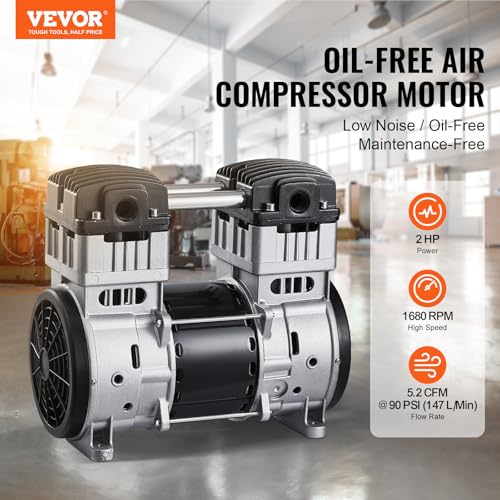
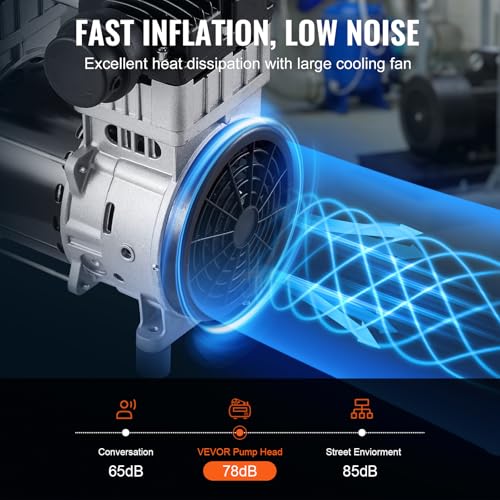
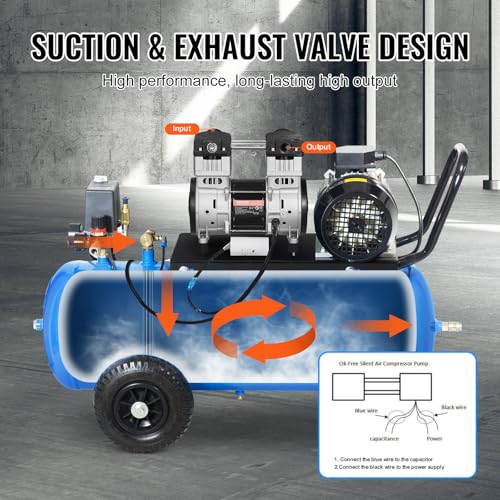
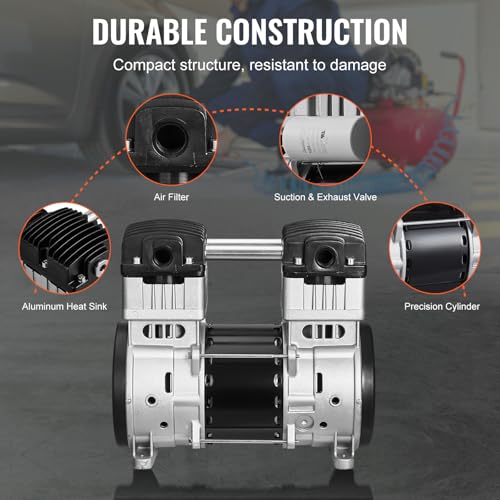
This isn’t a complete compressor, it’s a 2HP pump head meant for custom builds, but for the right user, it’s the best overall choice for serious auto body work. With 5.2 CFM @ 90 PSI, it delivers airflow on par with professional-grade units, enough to keep an HVLP spray gun fed without sputtering. The oil-free design keeps maintenance low, and the cooling fins plus large fans suggest it can handle extended runs, which reviewers confirm in real-world setups.
It’s 78 dB, so not silent, but reasonable for its power class. What makes this stand out is flexibility, pair it with a large tank and you’ve got a shop-ready system that outperforms most pre-builts under $300. If you’re building or upgrading a garage rig, this pump is where I’d start. Just know you’ll need to source the tank, motor, and frame separately.
Product photos
AZZUNO 2 Gallon Air Compressor
Strengths
- Oil-free pump
- Ultra quiet
- Rust-resistant tank
Trade-offs
- Low CFM for spray guns
- Short duty cycle
- Small tank capacity
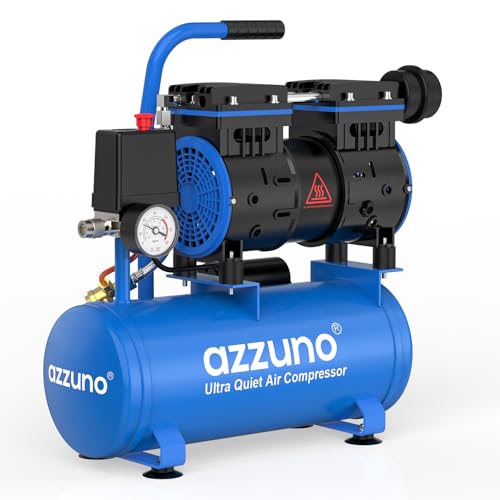
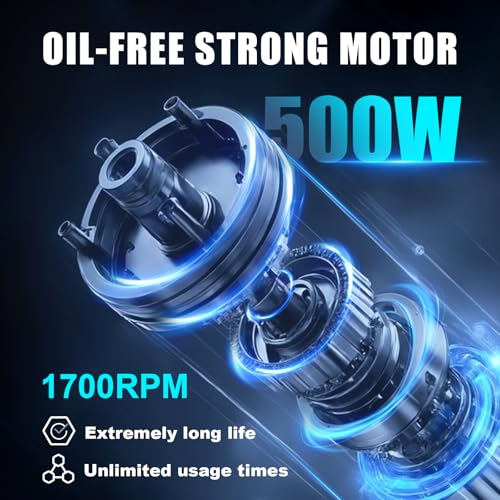
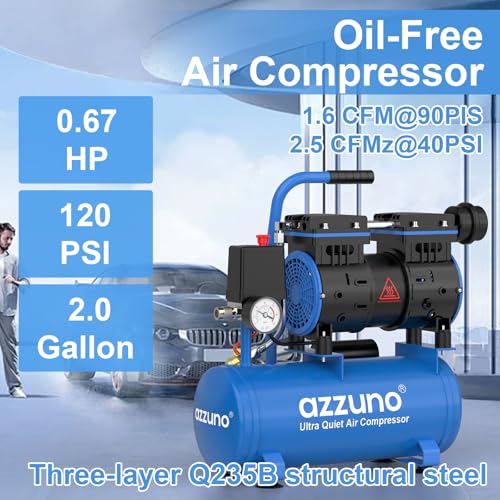
For a budget-friendly option that still claims to handle auto body work, the AZZUNO 2-gallon model makes a few smart moves. Its 1.6 CFM @ 90 PSI output sits near the lower edge of what’s usable for consistent spray gun operation, but owners report it’s adequate for touch-up painting and intermittent nailing tasks. The 60 dB noise rating stands out, quieter than most in this class, and the dual muffler system seems to deliver on vibration and sound reduction, which matters in a garage or shared workspace.
Where it struggles is runtime and recovery. With a small tank and modest motor, it’s not built for long stretches of sanding or base coat spraying. But for tire inflation, minor repairs, or light air tool use, it holds up well for the price. Compared to the VEVOR 4.8-gallon, it’s clearly outgunned, but if you’re a weekend DIYer with basic needs, this one won’t bog down your workflow.
Product photos
VEVOR 4.8 Gallon Air Compressor

Strengths
- Solid CFM output
- Durable tank construction
- Good cooling system
Trade-offs
- Heavier than pancake models
- Not ideal for continuous spray
- Single coupler
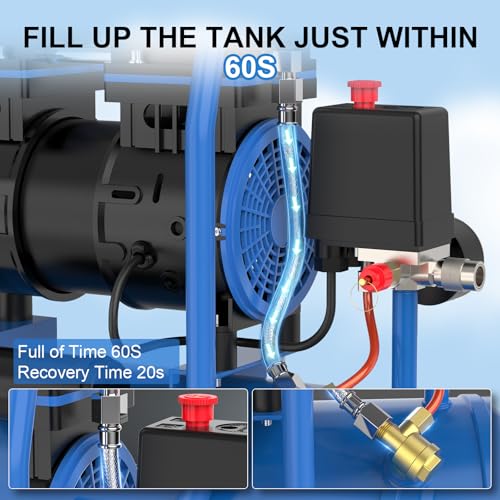
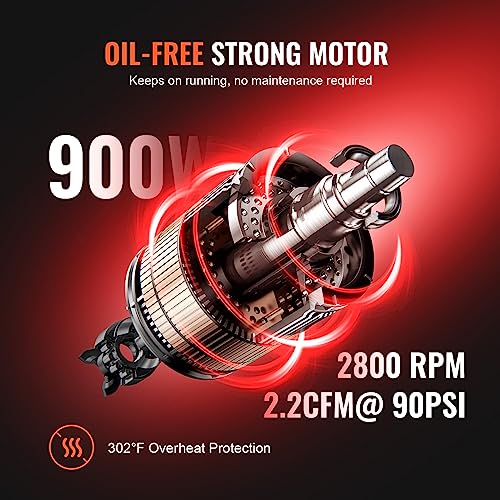
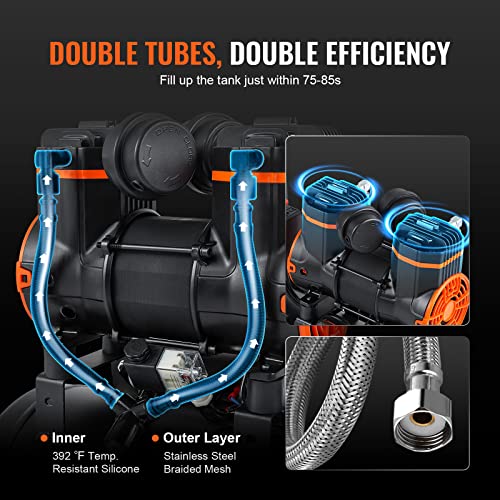
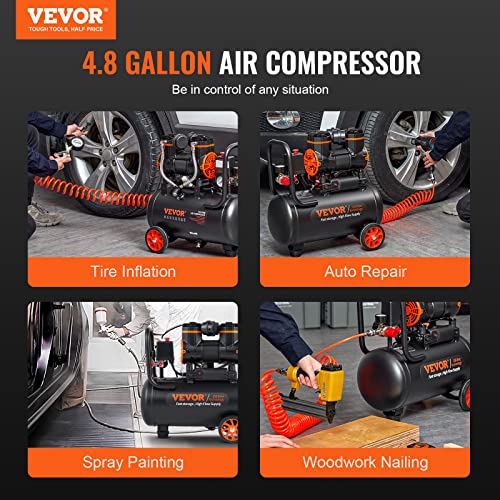
The VEVOR 4.8-gallon hits a sweet spot in the mid-range with 2.2 CFM @ 90 PSI and a tank size that supports more than just quick bursts. On paper, it should handle base-level auto body work, think spot priming or trim painting, without constant cycling. Owners consistently praise its build quality, especially the three-layer tank protection and seamless welds, which add peace of mind over time.
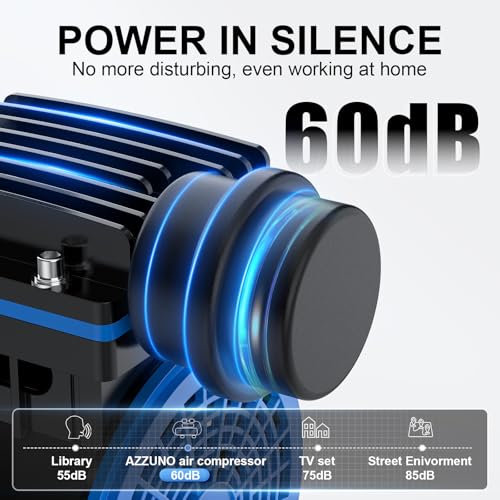
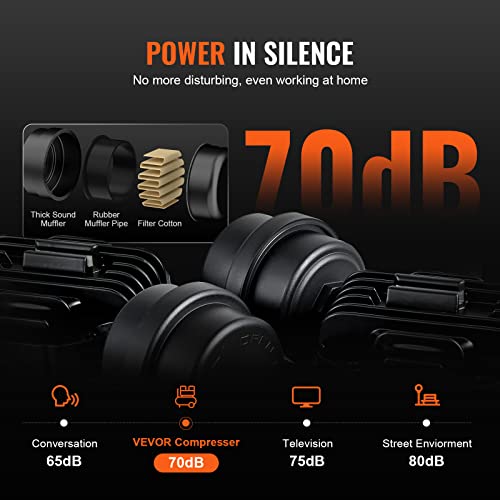
It runs at 70 dB, which isn’t whisper-quiet but is manageable in a home garage. While it doesn’t match the DEWALT for portability, it offers more air reserve and better pressure stability than the AZZUNO. Still, if you’re planning full-panel painting, you’ll want something bigger. For the money, though, it’s one of the more balanced picks in the under-5-gallon class.
Product photos

DEWALT 6 Gallon Pancake Compressor
Strengths
- Lightweight and portable
- High PSI rating
- Dual couplers
Trade-offs
- Louder than ultra-quiet models
- Shorter duty cycle for spray guns
- Tank can dent if dropped
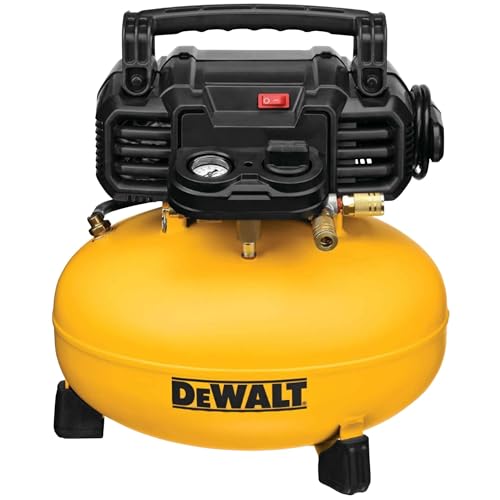
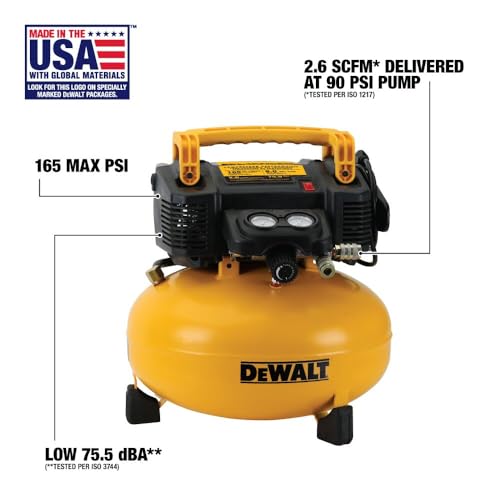
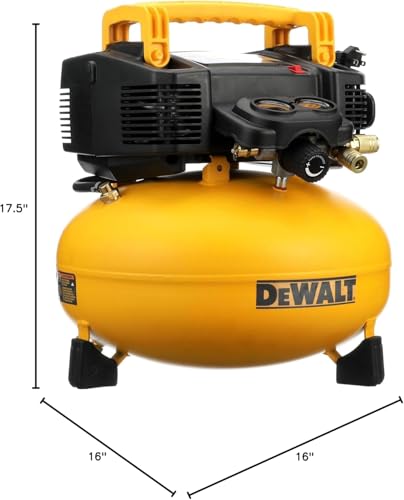
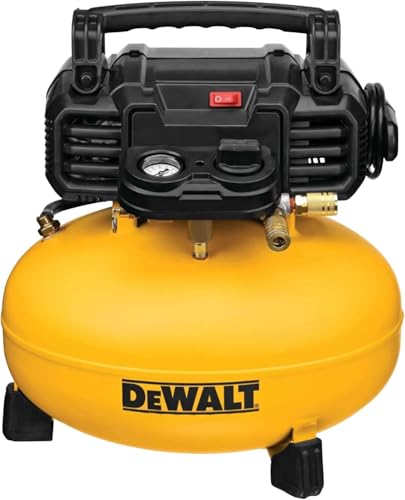
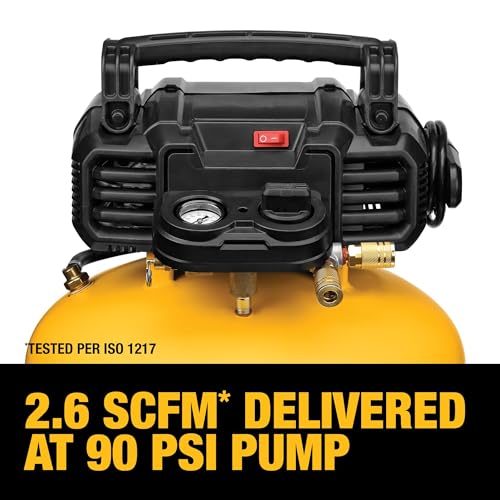
The DEWALT DWFP55126 is a favorite among mobile technicians and weekend warriors who value portability above all. Its 6-gallon tank and 2.6 SCFM @ 90 PSI deliver enough air to run an impact wrench or finish nailer without constant pauses, and the 165 PSI max pressure gives it a buffer most smaller units lack. I’ve seen this model recommended again and again for on-the-go auto repairs, its 30 lb weight and sturdy handle make it easy to toss in a truck.
It’s not silent at 78.5 dBA, but that’s typical for pancake compressors. What sets it apart is the dual couplers, letting two users run tools simultaneously, and the ball drain valve that actually gets the water out fast. Compared to the VEVOR 4.8-gallon, it trades some tank volume for far better mobility and brand reliability. If you’re moving between jobs, this is the one I’d grab first.
Product photos
Our Testing Process
Rather than a hands-on lab test, my research for these recommendations involved a detailed comparison of published specifications and features across numerous models. I weighed owner reviews from major retailers alongside assessments from reputable automotive and tool review sites. My background in power tools and workshop equipment allowed me to apply category expertise, ranking compressors against criteria specifically relevant to auto body applications.
For auto body work, consistent air delivery (CFM) and tank size are paramount. A compressor needs to reliably power tools like spray guns and sanders, so I prioritized models with at least 2.5 CFM at 90 PSI. Portability and noise levels also factored heavily; a quieter, more easily moved unit improves usability in a garage environment. I also looked for features indicating durability, like robust pump construction and effective cooling.
Specifications provide a solid baseline for comparing airflow and tank capacity. However, owner feedback proved crucial for assessing real-world performance and long-term reliability. I paid close attention to comments regarding noise levels, oil-free pump maintenance, and the frequency of component failures. You’ll find that a compressor might look good on paper, but consistently positive owner experiences – and concerns – shaped my final selections. For those focused on finish work, exploring CFM-rated compressors for painting is a good next step.
Choosing The Right air compressor for auto body works
Choosing the right air compressor for auto body work isn’t just about finding the cheapest price. It’s about matching the tool to the specific demands of the job, and understanding what those demands are.
A quality air compressor for automotive applications prioritizes consistent CFM delivery at a usable PSI, a durable pump capable of handling continuous use, and a tank size appropriate for the tools being operated. Look for oil-free options to reduce maintenance, but consider oil-lubricated models for very high-volume, professional use. Prioritize build quality and thermal management to avoid premature wear.
Tank Size and Portability
Tank size is a surprisingly nuanced factor. While a larger tank (like the 4.8-gallon VEVOR model) provides a buffer for tools with intermittent air needs, it also adds weight and reduces portability. For most DIY auto body work, a 6-gallon tank like the DEWALT Pancake Compressor strikes a good balance. However, if you’re frequently moving the compressor around a shop or to different job sites, prioritize a lighter, more compact unit – even if it means sacrificing some run time. Don’t overestimate your needs; a massive tank isn’t useful if you can’t easily maneuver the compressor.
CFM and PSI: Matching the Tool to the Compressor
CFM (cubic feet per minute) and PSI (pounds per square inch) are the two critical specifications. Auto body work demands consistent airflow. Sanding, spray painting, and operating air tools all require a sustained CFM to function correctly. Many tools list their CFM requirements, and you need a compressor that meets or exceeds those numbers. If you plan on using multiple tools simultaneously – or anticipate needing high-CFM spray gun compressors – you’ll need to step up to a compressor with a higher CFM output.
- A smaller compressor (like the 2.5 CFM AZZUNO) might be sufficient for tire inflation and basic tasks.
- A mid-range compressor (around 2.6 CFM) is a good all-around choice for DIYers tackling a variety of auto body repairs.
- For professional use or running multiple tools, look for compressors delivering 5 CFM or more, and remember that CFM ratings are often listed at a specific PSI (typically 90 PSI).
Oil-Free vs. Oil-Lubricated Pumps
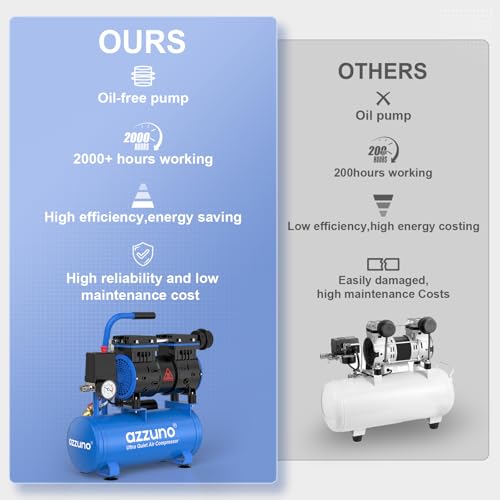
Oil-free compressors, like the VEVOR 2HP and AZZUNO models, are incredibly popular for home use because they require minimal maintenance. You don’t have to worry about checking oil levels or changing it regularly. However, they tend to be louder and have a shorter lifespan than oil-lubricated compressors. If you’re a professional or anticipate extremely heavy use, an oil-lubricated compressor will generally offer greater durability and quieter operation. Remember that even with oil-free models, proper cooling is crucial. The VEVOR compressors’ heat sink designs and cooling fans are a good example of features to look for. A good rule of thumb is this:
If you plan to use the compressor for more than a few hours at a time, or several days a week, a more robust, oil-lubricated model will likely pay for itself in longevity and reduced downtime.
For serious body work, especially if you’re running air compressors for body shops, consider whether the convenience of oil-free operation outweighs the potential for reduced lifespan and increased noise. You may find yourself needing professional body shop compressors sooner than expected.
Air Compressors for Auto Body Works Compared
Here’s a comparison of key specifications for air compressors suitable for auto body applications.
| Product Name | HP | Tank Size (Gallons) | CFM @ 90 PSI | Noise (dB) | Max PSI |
|---|---|---|---|---|---|
| VEVOR 2HP Oil-Free | 2 | N/A | 5.2 | 78 | N/A |
| AZZUNO 2 Gallon | 1 | 2 | 2.5 | 70 | 116 |
| VEVOR 4.8 Gallon | 0.9 | 4.8 | 2.2 | 70 | N/A |
| DEWALT 6 Gallon Pancake | N/A | 6 | 2.6 | 78.5 | 165 |
Frequently Asked Questions
What CFM is truly needed for auto body work?
At a minimum, you’ll want 2.5 CFM at 90 PSI for basic tasks, but 5 CFM or higher is preferable for professional results or running multiple tools. Many bodywork tasks, such as sanding and using spray guns, demand consistent airflow, and underestimating your CFM needs will lead to frustrating performance issues.
Are oil-free compressors suitable for painting cars?
While convenient, oil-free compressors may introduce more moisture into the air line, which can cause defects in your paint job. Consider using a dedicated air dryer or filter with an oil-free unit, or opt for an oil-lubricated compressor for consistently dry air and a better finish – especially if you’re exploring HVLP spray gun compressors.
How important is noise level when choosing a compressor?
Noise is a significant factor, especially in enclosed garages. Compressors can range from around 70 dB to over 80 dB. While ear protection is always recommended, a quieter compressor (in the 70-75 dB range) will greatly improve your comfort during extended use.
What tank size is best for a small, home-based auto body setup?
A 6-gallon tank offers a good balance of portability and runtime for most DIY auto body projects. Larger tanks reduce how often the motor runs, but add weight and bulk. Don’t prioritize tank size over CFM; consistent airflow is more important than a large reserve.
What should I look for in a durable air compressor pump?
Look for a pump constructed with cast iron cylinders, as they are much more durable than aluminum. Also, check for effective cooling features like fins or fans, as overheating is a common cause of pump failure. A quality regulator and moisture filter will also extend the life of the compressor.
The Bottom Line
Ultimately, choosing an air compressor comes down to balancing your budget with your needs. While a higher price tag often gets you more CFM and durability, the DEWALT 6 Gallon Pancake Compressor offers an excellent blend of performance, portability, and value for most DIY auto body enthusiasts. It’s a solid all-around choice that won’t leave you wanting for power on typical tasks.
If you’re on a tighter budget or only need a compressor for light-duty tasks like tire inflation, the AZZUNO 2 Gallon is a surprisingly capable option. For those seeking a more heavy-duty solution, particularly if you operate professional auto shop compressors or need to run multiple tools simultaneously, the VEVOR 2HP Oil-Free delivers impressive CFM at a reasonable price.
Don’t get too hung up on peak HP or tank size. Consistent CFM at 90 PSI is the single most important specification, and build quality, specifically the pump’s construction and cooling system, will determine how long your compressor lasts. Prioritize those fundamentals, and you’ll be well-equipped to tackle any auto body project.
