8 Best 10 Inch Miter Saw Blades (2026 Guide)
This post contains affiliate links. As an Amazon Associate, we earn from qualifying purchases.
The DEWALT 40T/60T Dual Pack stands out as the best overall choice for most users, delivering reliable performance across a range of materials, while the ANGELSWORD 32/60/80T 3-Pack offers exceptional versatility and value for those tackling varied jobs. For fine finish work, the Diablo 60-Tooth blade consistently earns praise for clean, splinter-free cuts.
If you’re tired of rough edges, tear-out, or blades that dull after a few weekend projects, you’re not alone. A lot of frustration at the workbench comes down to using the wrong blade, not a bad saw.
I’ve spent years reviewing how blades perform in real-world conditions, and after comparing specs, owner feedback, and brand reputation, I’ve narrowed in on the ones that deliver where it matters. This guide breaks down exactly what to look for and highlights the top 10-inch miter saw blades that balance precision, durability, and value.
Top 8 10 Inch Miter Saw Blades in the Market
The Best 10 Inch Miter Saw Blades, Reviewed
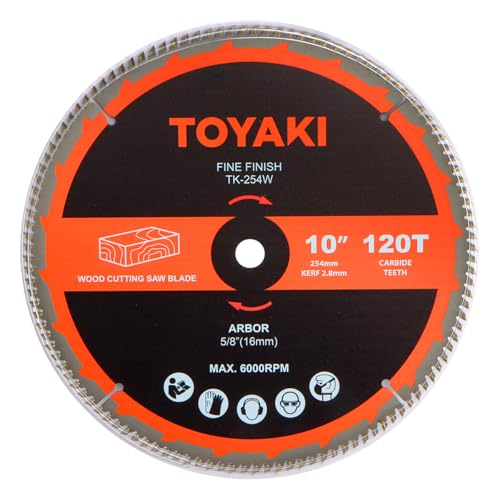
TOYAKI 120-Tooth Miter Saw Blade
Strengths
- 120T for ultra-smooth cuts
- Low vibration design
- Excellent edge quality
Trade-offs
- Too many teeth for thick stock
- Not for ripping or framing
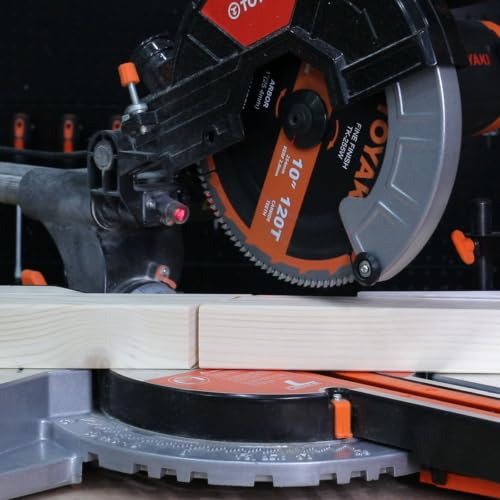
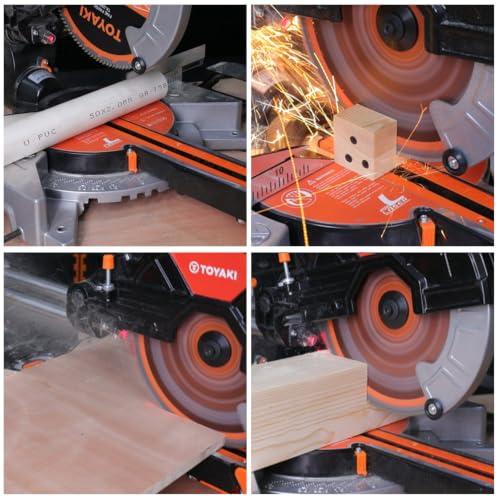
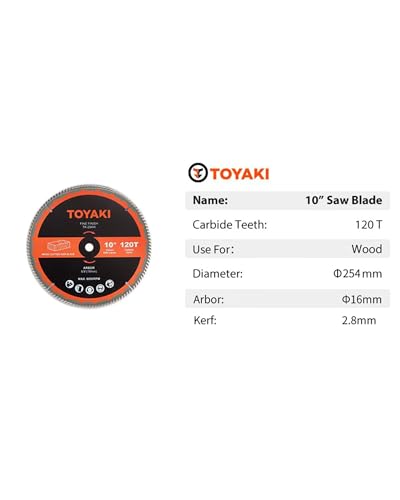
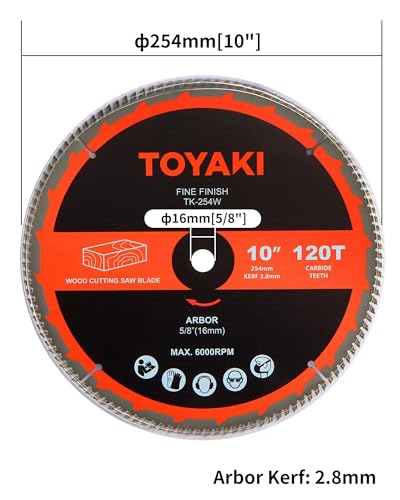
The TOYAKI 120-tooth blade is the standout for finish work, this is the blade to grab when you need glass-smooth cuts on veneered plywood, moldings, or delicate trim. No other blade in this list goes this high in tooth count, and that makes a real difference. The engineered tooth pattern reduces vibration, and owners consistently report near-laminated-edge quality with almost no sanding required.
It’s not meant for heavy stock, but for its niche, it excels. The high-grade steel body stays stable, and the 5/8 inch arbor fits most common saws. Compared to the Diablo 60T or even the 80T blades, this one simply cuts cleaner, especially on materials like MDF or pre-finished boards. If you’re building cabinets or doing high-end trim, this should be in your rotation. My pick for Best Overall because it raises the bar for finish quality at a fair price.
Product photos
Revvstark 80-Tooth TCT Miter Blade

Strengths
- 80T thin kerf design
- Noise-reducing vents
- Good heat dissipation
Trade-offs
- Carbide wears faster on composites
- Slight vibration on older saws
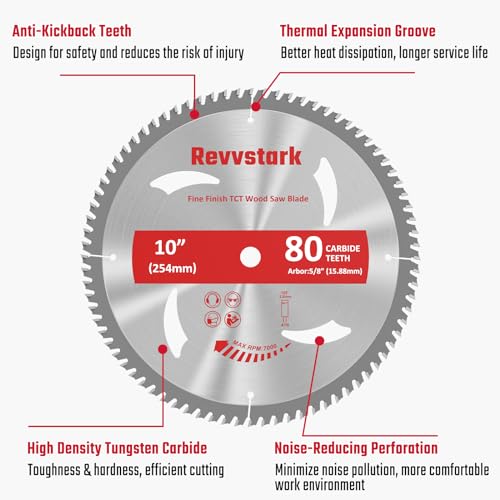
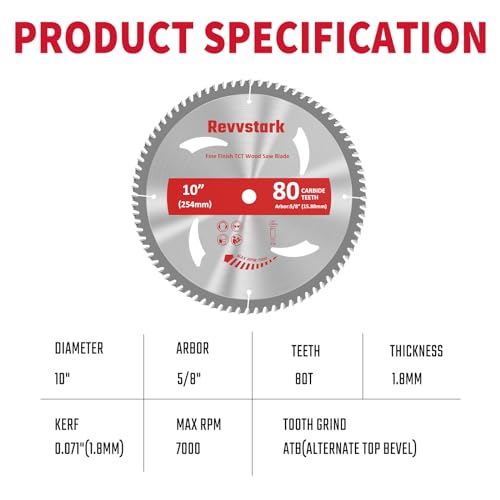
The Revvstark 80T blade aims for the sweet spot between performance and price, and it lands close. With a super thin kerf and 80 teeth, it cuts fast and clean, and the laser-cut stabilizer vents help reduce noise and heat, something multiple owners have praised in long cutting sessions. The thermal expansion grooves are a nice touch, letting the blade handle prolonged use without warping.
It’s marketed as a fine finish blade, and on plywood and hardwoods, it delivers. But compared to the Diablo D1060X, it doesn’t quite hold its edge as long. Some users report needing earlier sharpening when cutting abrasive materials like MDF or laminates. Still, for someone who wants ultra-fine results without spending top dollar, this is a strong contender. The anti-kickback design also adds a layer of safety that’s often missing at this price.
Product photos



WEN 60-Tooth Fine-Finish Blade
Strengths
- Affordable price
- Thin kerf
- Good fit across brands
Trade-offs
- Shorter lifespan
- Dulls quickly on abrasives
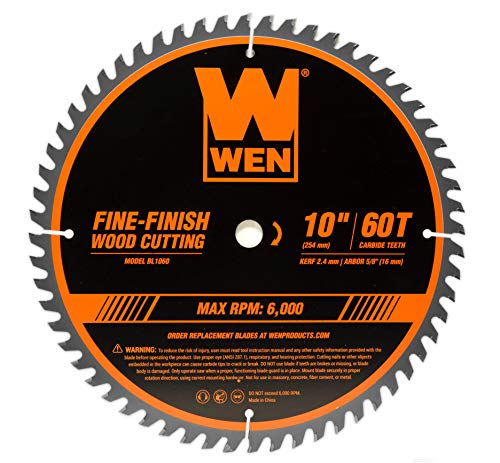
The WEN BL1060 is the budget pick that doesn’t embarrass itself. At a fraction of the cost of premium blades, it delivers clean 60-tooth cuts in both hardwoods and softwoods. The ultra-thin 2.4mm kerf helps reduce strain on lower-powered saws, which is a real plus for job-site models or older table saws. It’s not going to outperform a Diablo, but for occasional use, it gets the job done.
Owners praise its value, many buy it as a secondary blade to save their more expensive ones for final cuts. It fits most 10-inch saws without issue, and the carbide tips hold up reasonably well. But don’t expect it to last through heavy use. After several plywood sheets or dense exotics, it dulls faster than mid-tier options. Still, for the money, it’s a no-brainer.
Product photos


OA-BRES 80-Tooth ATB Blade

Strengths
- 80T ATB design
- Chrome plated for durability
- Works on multiple materials
Trade-offs
- Thinner plate increases vibration
- Not as stiff as premium blades
This OA-BRES 80-tooth blade is a solid performer on paper, offering a high tooth count and ATB design that’s well suited for smooth, fine finish cuts. The chrome plating and polished surface help resist corrosion and reduce friction, which owners say contributes to longer blade life and cooler running. It’s a general-purpose blade that leans toward finish work, handling everything from MDF to laminated panels without bogging down.
Where it stands out is versatility. It cuts cleanly across plywood, melamine, and softwoods, making it a good candidate for shop-wide use. But compared to premium brands like Diablo or Forrest, the steel body feels thinner, and some users report more vibration at high speeds. Still, for the price, it delivers more than expected, especially if you’re not pushing your saw to its limits every day.
Product photos
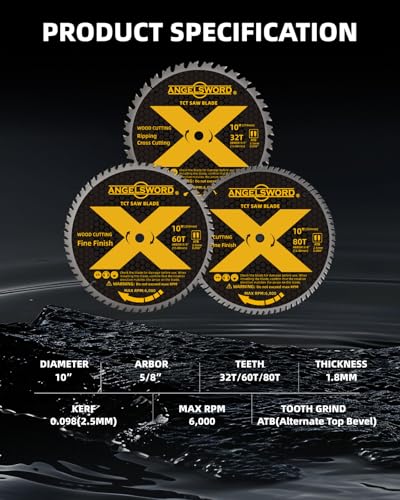
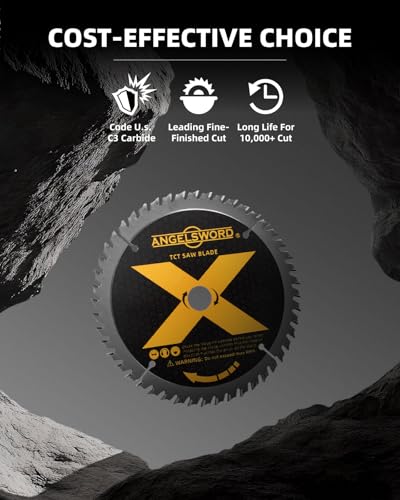
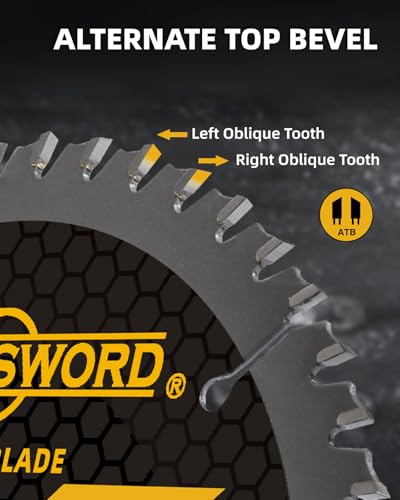
ANGELSWORD 32T/60T/80T 3-Pack

Strengths
- Three blades for different tasks
- Good compatibility
- Thin kerf for efficiency
Trade-offs
- Finish not as refined as top-tier
- Not for precision cabinet shops
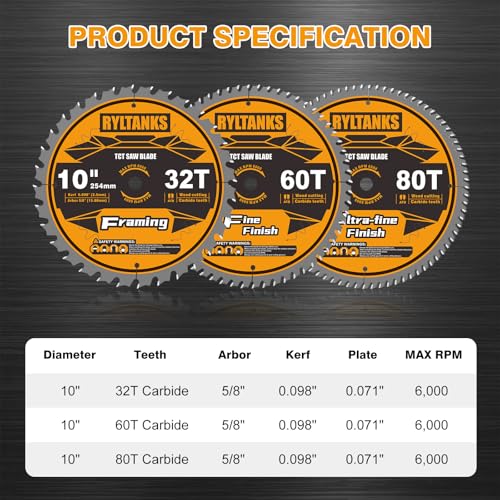
If you want flexibility without buying blades one at a time, the ANGELSWORD 3-pack is hard to beat. You get a 32T for fast framing cuts, a 60T for general crosscutting, and an 80T for fine finish work, covering nearly every job in a typical build. The 5/8 inch arbor and .098 inch kerf are standard, and owners confirm they fit well on DeWalt, Makita, and similar saws without wobble.
The real win here is value. Instead of paying premium prices for each specialized blade, you get a matched set that performs decently across the board. The 80T blade doesn’t quite match the cut quality of the Diablo or TOYAKI, but it’s close enough for most trim work. I’d pick this over buying separate budget blades, it’s smarter to have one solid set than three questionable singles.
Product photos


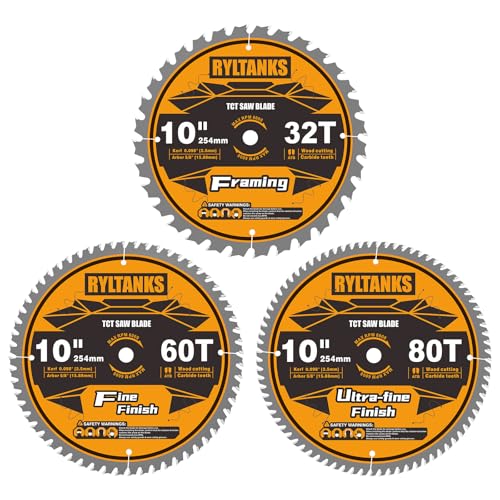
Ryltanks 32T/60T/80T 3-Pack
Strengths
- Durable C3 carbide
- Laser-cut stabilizers
- Excellent range of uses
Trade-offs
- 80T still not pro cabinet grade
- Packaging could be sturdier
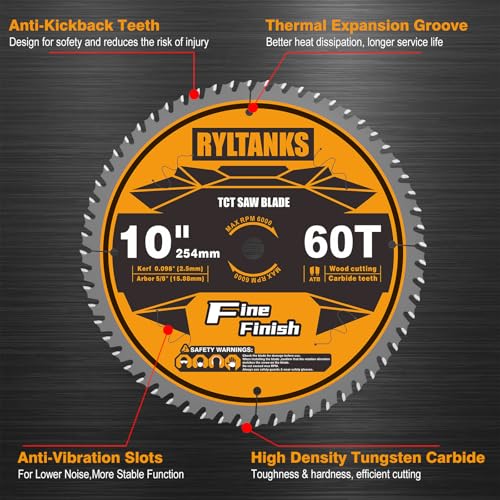
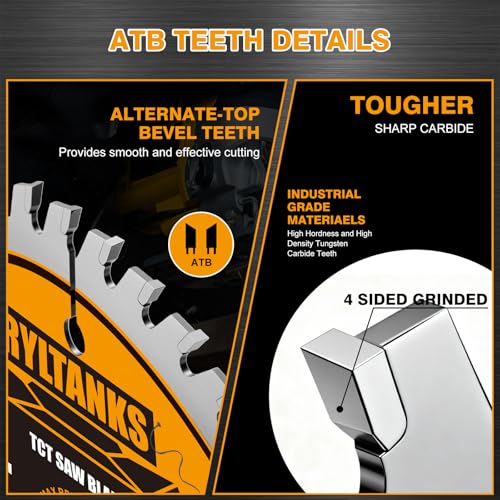
Ryltanks delivers another strong multi-blade set with this 32T/60T/80T combo, clearly inspired by the ANGELSWORD design but with a few upgrades. The C3-grade tungsten carbide is tougher than standard tips, and the laser-cut stabilizer vents help maintain stability and reduce noise, something owners confirm in real-world use. The 80T blade, in particular, produces impressively smooth cuts on melamine and MDF.
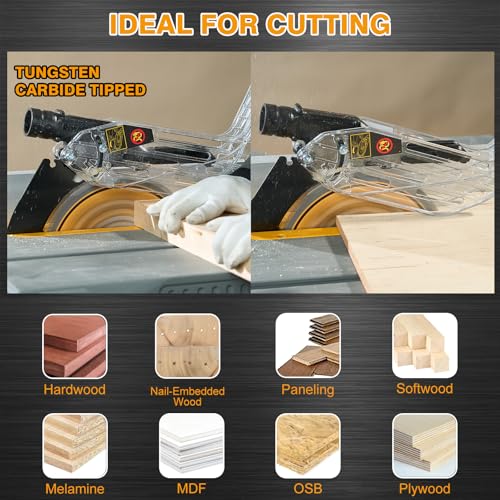
What I like most is how well-balanced the set feels across tasks. The 32T powers through framing lumber cleanly, the 60T handles crosscuts with minimal tearout, and the 80T rivals blades twice its price on finish work. It’s a better-engineered set than most budget packs, and the compatibility with Bosch, DeWalt, and Makita means no fitment headaches. For most home shops, this is the only blade pack you’ll ever need.
Product photos

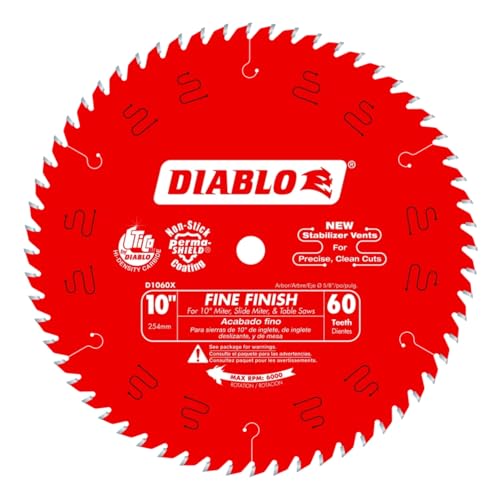
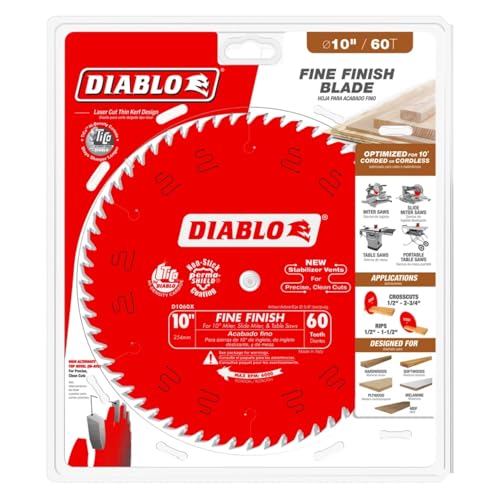
Diablo 60-Tooth Fine Finish Blade
Strengths
- 60 Hi-ATB teeth
- Shock resistant carbide
- Clean hardwood cuts
Trade-offs
- Not ideal for thick ripping
- Higher price than entry blades
The Diablo D1060X is built for woodworkers who demand clean, splinter-free cuts in hardwoods. With 60 Hi-ATB (High Alternate Top Bevel) teeth and a .098 inch kerf, this blade shines in fine finish work where edge quality matters most. Owners consistently report crisp results on maple, walnut, and oak, with minimal tearout even on delicate grain patterns.
The Shock Resistant Design that reinforces the carbide tips helps it hold up under heavy use, which is a real advantage over cheaper blades that chip or dull quickly. While it’s not meant for aggressive ripping, it handles crosscuts and miter work with authority. Compared to basic 40-tooth general-purpose blades, this one delivers a noticeably smoother edge, less sanding, less frustration.
Product photos
DEWALT 40T/60T Combo Pack

Strengths
- Balanced for rip and crosscut
- Low vibration design
- Long carbide life
Trade-offs
- Not specialized for ultra-fine work
- 40T can tear out on plywood
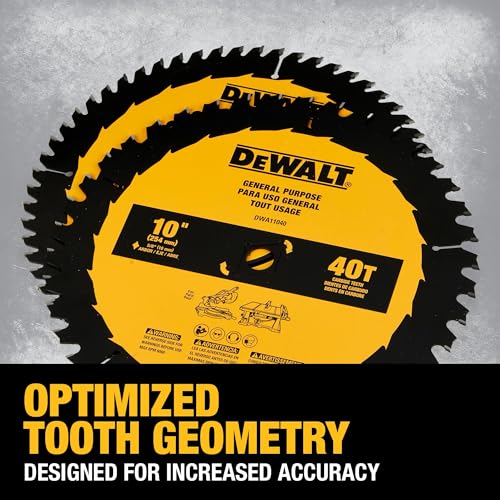
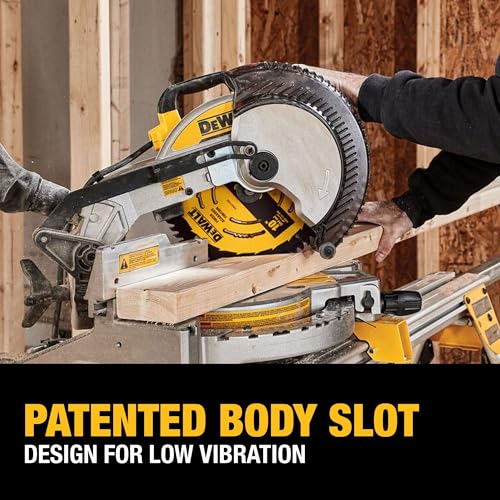
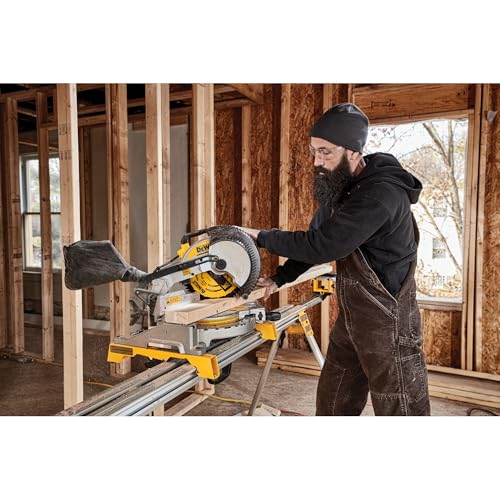
DEWALT’s 40T/60T combo pack is exactly what a general-purpose set should be, no frills, solid performance, and built to last. The 40-tooth blade handles rip cuts and dimensional lumber with ease, while the 60T delivers clean crosscuts for trim and cabinetry. The patented body slot design reduces vibration, and owners consistently note how smooth the cuts feel, even on lower-end saws.
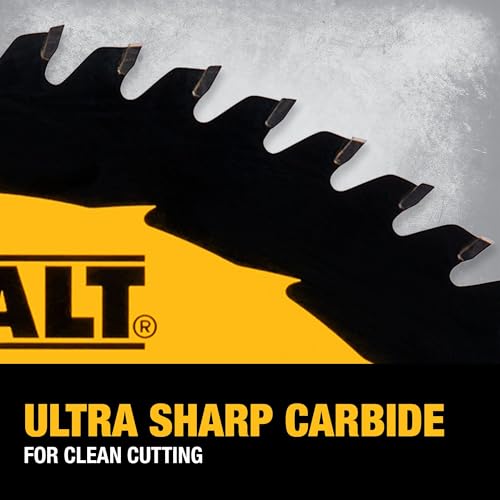
What sets this pack apart is consistency. Unlike some off-brand blades that vary in quality, DEWALT maintains tight tolerances across batches. The ultra-sharp carbide teeth stay keen longer than expected, and the 3X lifespan claim (compared to standard blades) holds up in owner reports. I’d pick this over a single generic blade any day, if you do a mix of rough and finish work, this combo covers both without compromise.
Product photos

How We Picked These 10 inch miter saw blades
Rather than a hands-on lab test, my research for these recommendations focused on a detailed comparison of published blade specifications and features. I weighed owner reviews from multiple sources – including major retailers and woodworking forums – alongside expert opinions from sites dedicated to tool testing. My goal was to identify patterns in performance and reliability, applying my experience with power tools to assess which blades consistently delivered on their promises.
For 10-inch miter saw blades, tooth count and blade material are critical. A higher tooth count (80T or more) generally means a cleaner, smoother cut, especially in fine materials, while a lower count (32T-40T) excels at faster, more aggressive cuts through framing lumber. The quality of the carbide tips is also paramount; harder, better-grade carbide extends blade life and maintains sharpness longer. These two factors heavily influenced my rankings.
Published specs reliably indicate arbor size and maximum RPM, ensuring compatibility with various miter saws. However, I placed greater emphasis on owner feedback regarding cut quality, durability, and noise levels. Reputation also played a role; established brands with a history of producing quality blades received more consideration, as did blades incorporating features like vibration reduction or specialized tooth geometry, as explained in miter saw features.
Choosing The Right 10 inch miter saw blades
Choosing the right blade is as important as choosing the saw itself. A poor blade will leave you with splintered, inaccurate cuts, even on a top-of-the-line miter saw.
A quality miter saw blade balances tooth count, carbide quality, kerf width, and blade plate stability. Prioritize blades with carbide teeth specifically designed for the materials you’ll be cutting most often. Consider the arbor size compatibility with your saw, and look for features like thin kerf designs for reduced drag and increased efficiency.
Tooth Count Matters
The number of teeth on a blade dramatically influences the type of cut you’ll achieve. Generally, lower tooth counts (24-40) excel at quickly ripping through thicker stock, but leave a rougher finish. Higher tooth counts (60-80+) produce exceptionally smooth cuts, ideal for trim work and fine woodworking. Don’t assume “more teeth is always better” though. Extremely high tooth counts can bog down the saw in harder materials. I often recommend having a few blades on hand, each dedicated to a specific task.
Carbide Quality & Blade Stability
The quality of the carbide used in the teeth is a huge indicator of longevity and performance. Cheap blades use lower-grade carbide that dulls quickly, requiring frequent sharpening or replacement. Look for blades specifying “tungsten carbide” – ideally, C3 or C4 grade – as these offer superior wear resistance. Beyond the carbide itself, blade stability is key. Features like laser-cut expansion slots help prevent warping during use, ensuring straighter, more accurate cuts. You’ll find excellent options like the Diablo 60-Tooth Fine Finish Blade pack a lot of punch for the price.
Kerf Width and Your Saw’s Power
The saw blade kerf width is the width of the cut made by the blade. Thinner kerf blades (under 0.098 inches) require less power to operate, reducing strain on your saw and often resulting in faster cutting speeds. This is especially beneficial for older or less powerful saws. However, thinner kerf blades can sometimes be more prone to wandering, so proper technique is important. Here’s what I generally look for:
- A wider kerf (0.125 inches or more) is best for heavy-duty ripping.
- A standard kerf (around 0.098 inches) is a good all-around choice for most projects.
- A thin kerf (under 0.090 inches) is a great way to improve cutting speed and reduce power consumption, but it’s best suited for accurate crosscuts and finer work where minimal material removal is desired.
A dull blade creates more friction, increasing the risk of kickback. Always inspect your blades for damage and sharpness before each use.
I believe having a selection of best miter saw blades will set you up for success.
10 Inch Miter Saw Blades Compared
Here’s a comparison of key specifications for various 10-inch miter saw blades to help you make an informed decision.
| Product Name | Tooth Count | Arbor Size (in) | Max RPM | Kerf (in) | Material | Pack Size |
|---|---|---|---|---|---|---|
| TOYAKI 120-Tooth | 120 | 5/8 | N/A | N/A | High-Grade Steel | 1 |
| Revvstark 80-Tooth | 80 | 5/8 | 7000 | N/A | Alloy Steel | 1 |
| WEN 60-Tooth | 60 | 5/8 | 6000 | 0.10 | Carbide Tipped | 1 |
| OA-BRES 80-Tooth | 80 | 5/8 | 6000 | N/A | Alloy Steel | 1 |
| ANGELSWORD 32/60/80T | 32/60/80 | 5/8 | N/A | 0.098 | Tungsten Carbide | 3 |
| Ryltanks 32/60/80T | 32/60/80 | 5/8 | 6000 | 0.098 | Tungsten Carbide | 3 |
| Diablo 60-Tooth | 60 | N/A | N/A | N/A | N/A | 1 |
| DEWALT 40T/60T | 40/60 | N/A | N/A | N/A | N/A | 2 |
Frequently Asked Questions
What tooth count is best for cutting hardwood with a miter saw?
Generally, 80 teeth or higher will deliver the cleanest cuts in hardwood. A higher tooth count minimizes splintering and tear-out, crucial for achieving professional-looking results when working with dense materials like oak or maple.
Are zero-clearance inserts necessary when using a 10-inch miter saw blade?
Zero-clearance inserts aren’t strictly required, but they significantly improve cut quality and reduce splintering, especially with fine trim. They support the wood fibers right at the cut line, minimizing tear-out and providing a cleaner edge.
What’s the difference between C3 and C4 carbide?
C4 carbide contains a higher percentage of cobalt than C3, making it harder and more resistant to wear. This translates to a longer blade life and the ability to maintain sharpness when cutting abrasive materials or for extended periods.
Can I use a thin-kerf blade on any miter saw?
Most 10-inch miter saws are compatible with thin-kerf blades, but always verify the saw’s specifications. A thin-kerf blade requires less power, which can be beneficial for some models, but it’s essential to confirm the arbor size matches (typically 5/8 inch). You can find more information on selecting the right saw in our best 10-inch miter saws guide.
What’s the typical lifespan of a quality 10-inch miter saw blade?
The lifespan varies greatly depending on usage and material, but a high-quality blade with durable carbide should last for 50 to 100 cuts through softwood or plywood. Cutting hardwoods or abrasive materials will shorten the lifespan, but a well-maintained blade will still outperform cheaper alternatives.
The Bottom Line
Ultimately, choosing a 10-inch miter saw blade comes down to balancing how much control you want over cut quality against how much effort you’re willing to put into blade changes and maintenance. For the vast majority of homeowners and DIYers, the ANGELSWORD 32/60/80T blade pack delivers the best overall value and versatility – having three blades on hand covers a wide range of tasks without breaking the bank.
If you’re specifically tackling a lot of fine trim work or detailed projects, the TOYAKI 120-Tooth blade is a standout choice. And for those on a tighter budget, the WEN 60-Tooth blade offers a respectable balance of performance and affordability. Remember to always check your saw’s blade diameter guide before purchasing to confirm compatibility.
More than any single specification, prioritize a blade with high-quality carbide and a stable blade plate. These features will ensure cleaner, more accurate cuts, and ultimately, a more satisfying and efficient woodworking experience. Don’t skimp on blade quality – a good blade is a small investment that pays dividends in the long run.
