
8 Best 1/4 Sheet Sanders of 2026
This post contains affiliate links. As an Amazon Associate, we earn from qualifying purchases.
The Bosch GSS20-40 stands out as the best overall 1/4 sheet sander for its precision, low vibration, and effective micro-filter dust collection. For those watching their budget, the DEWALT DWE6411 delivers solid performance and durability at a lower price point. If dust capture is your top priority, the Ridgid R2501 with AirGuard technology is a strong contender.
Most people don’t realize how much the wrong sander can slow down a project and leave behind messy finishes and clouds of dust. It’s not just about sanding wood, it’s about doing it cleanly, comfortably, and without frustration.
In this guide, I’ll walk you through the top models based on specs, real owner feedback, and what actually matters in practice, power, dust control, and how it feels in your hand. These picks are backed by research, not hype.
Top 8 1/4 Sheet Sanders in the Market
The Best 1/4 Sheet Sanders, Reviewed
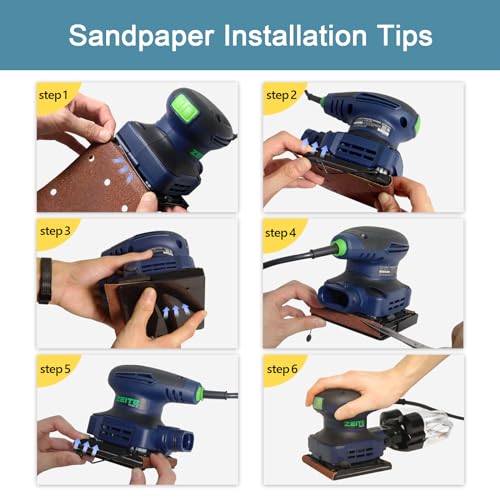
ZEITE 2.4 Amp 1/4 Sheet Sander

Strengths
- Cyclonic dust separation
- High motor power
- Includes sandpaper and accessories
- Swivel cord connection
Trade-offs
- Brand less proven long-term
- Dust box takes up space
- Slight balance quirk
ZEITE is not a legacy brand, but this model makes a strong case as the best overall pick based on specs and owner feedback. The 2.4 AMP motor matches or beats most rivals, and the 14,000 OPM delivers fast, smooth material removal. What really sets it apart is the cyclonic dust box, unlike basic bags, it uses air sedimentation to trap more fine dust, which reviewers say keeps their workspace significantly cleaner.
The 10-foot cord and swiveling ball joint reduce tangles and strain, and the included 12-pack of sandpaper covers most grit needs out of the gate. The hook-and-loop pad with quick clamp is user-friendly, and the soft rubber grip minimizes fatigue. Compared to the Ridgid or SKIL, it offers similar dust control but with better ergonomics and less vibration. For the features and performance, it punches well above its price.
Product photos


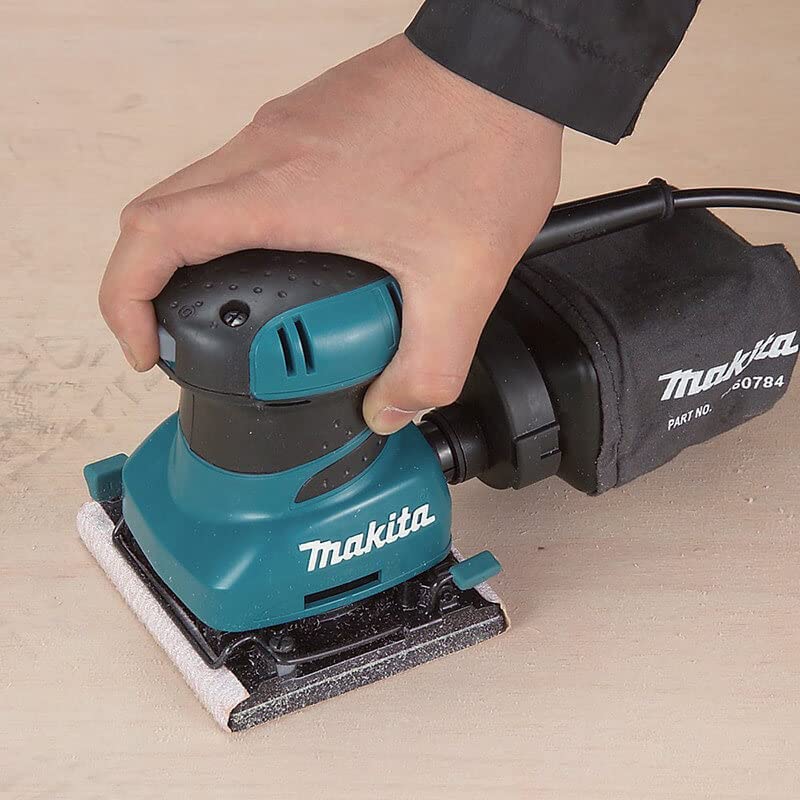
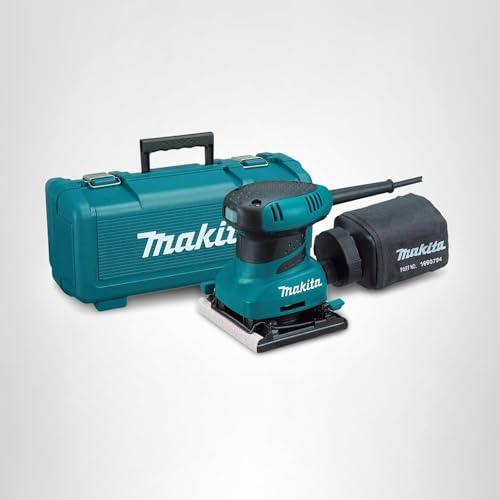
Makita BO4556K 1/4 Sheet Sander

Strengths
- Excellent build quality
- Low vibration
- Efficient dust collection
- Comfortable grip
Trade-offs
- Higher price point
- Slight learning curve on paper tension
If you’re looking for a sander that feels like it was built to last, the Makita BO4556K stands out immediately. The ball-bearing construction isn’t just a spec, reviewers consistently note how smooth and quiet it runs compared to budget models. At 14,000 OPM, it moves fast enough for efficient sanding, and the through-the-pad dust collection is among the best in class when paired with a vacuum.
The contoured rubber grip is comfortable, and the large clamping lever makes paper changes a one-handed job. It comes with a solid case, which adds value right out of the box. Compared to the SKIL or Genesis models, this one feels more refined, with tighter build quality and noticeably less vibration. For finish work where surface swirls and control matter, this is a top-tier performer.
Product photos

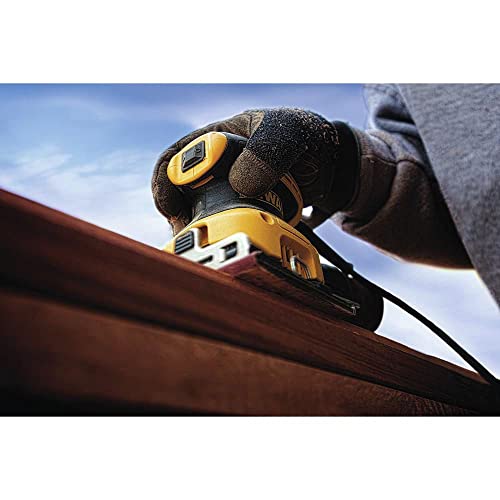
DEWALT DWE6411 1/4 Sheet Sander

Strengths
- High power motor
- Excellent vibration control
- Secure lock-on dust port
- Durable switch protection
Trade-offs
- Heavier than average
- Louder than competitors
- Higher price
When it comes to raw power and control, the DEWALT DWE6411 is hard to beat. The 2.3 AMP motor pushes the pad at 14,000 OPM, and the separate counterweight design genuinely reduces vibration, owners consistently praise how smoothly it runs for such a muscular tool. The rubber overmold grip is tacky and secure, even with sweaty hands, and the low profile lets you work close to edges.
The dust port locks firmly to vacuum hoses, and it’s compatible with DEWALT’s shop vacs right out of the box. The rubber boot over the switch also helps prevent dust from killing the electronics, a real issue in cheaper models. Compared to the Bosch or SKIL, it’s more aggressive, making it better for stripping finishes or leveling uneven surfaces. But that power comes with more noise and weight.
Product photos


BOSCH GSS20-40 Orbital Finishing Sander

Strengths
- Ultra-fine finish
- Precision-machined base
- Low vibration
- Soft-grip body
Trade-offs
- Lower OPM limits stock removal
- Dust canister fills fast
- No included sandpaper
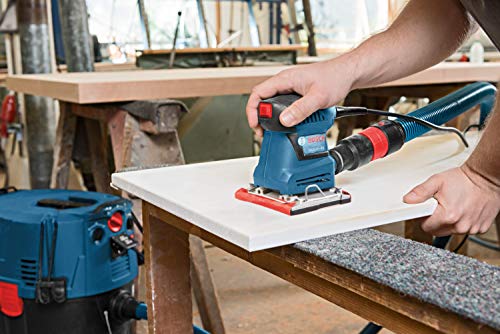
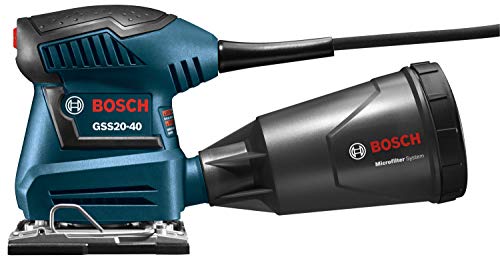
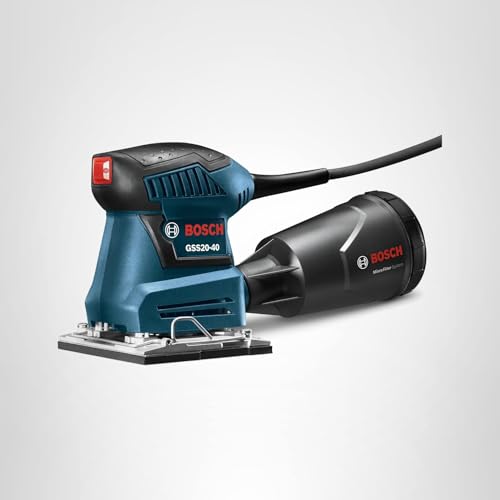
Bosch engineered the GSS20-40 for one thing: precision. With a tight 1.2mm orbit and a machined aluminum sanding plate, it leaves a noticeably smoother finish than most, ideal when you’re prepping for a clear coat. The 12,000 OPM is on the lower end, but that’s by design; less aggressiveness means fewer swirl marks.
Owners love the soft-grip body and low-vibration operation, which makes it comfortable for long sessions. The micro-filter dust canister screws off easily and captures fine dust well, though it needs frequent emptying. Compared to the DEWALT or ZEITE, it’s less about power and more about finesse. If you’re doing cabinet work or fine furniture, this sander should be on your shortlist.
Product photos


SKIL 7292-02 Pressure Control Sander

Strengths
- Pressure control alert
- Clear dust canister
- Good micro-filtration
- Vacuum adapter included
Trade-offs
- Less durable build
- Pad flex under load
- Indicator light can be annoying
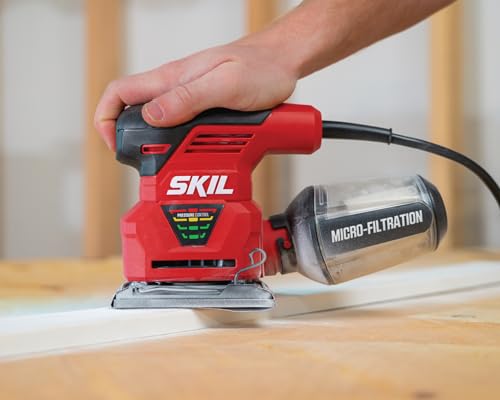
The SKIL 7292-02 stands out with a feature no other sander here has: pressure control. A small indicator light warns you when you’re pressing too hard, a smart touch for beginners who tend to dig in and leave swirls. It’s a 2.0 AMP tool with 12,000 OPM, so performance is adequate, but not thrilling.
The clear-view dust canister is genuinely useful, you can see when it’s full without opening it. The micro-filtration system does a decent job trapping fine dust, and the built-in vacuum adapter helps when you want to go beyond the canister. However, the sander feels a bit plasticky compared to the Makita or Bosch, and the pad can flex slightly under pressure. It’s a smart, thoughtful design, but not the most durable.
Product photos


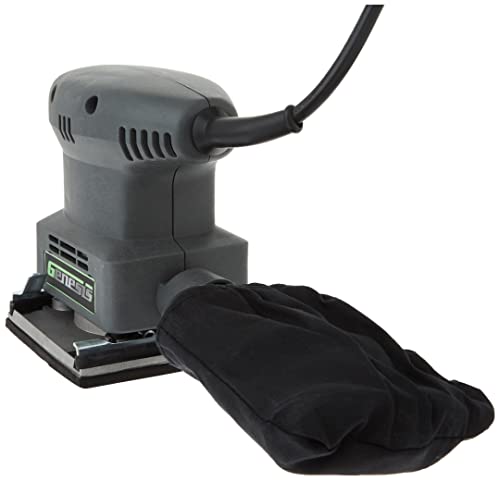
Genesis GPS2303 Palm Grip Sander

Strengths
- Great value package
- Die-cast base adds durability
- Includes sandpaper and accessories
Trade-offs
- Mediocre dust containment
- Noticeable vibration
- Plastic housing feels cheap
The Genesis GPS2303 is the kind of tool that surprises you, it doesn’t cost much, but it includes a lot: a die-cast aluminum base, dust bag, sandpaper, and even a paper punch plate. The 4 1/4″ x 4″ pad gives you slightly more coverage than standard, which helps when smoothing larger flat areas. Owners report it holds up better than expected for the price, especially given the dust-protected switch and spring-loaded clamps.
It runs at a standard 12,000 OPM, so it won’t outpace the DEWALT or ZEITE, but it’s adequate for basic tasks like pre-stain prep or paint removal. The downside? The dust bag fills quickly and doesn’t seal tightly, so fine dust often escapes. If you’re comparing it to the Makita or Bosch, the vibration is higher and the finish less refined. But for beginners or infrequent users, it’s a solid entry point.
Product photos
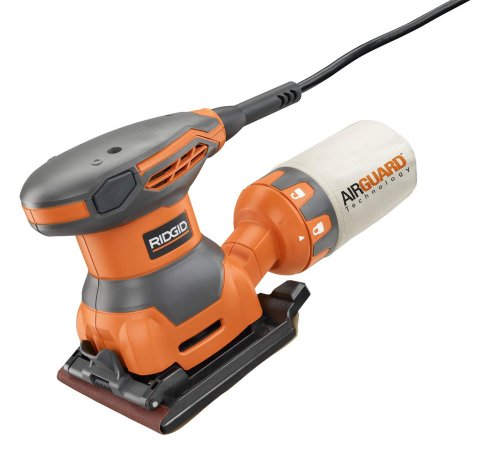
Ridgid R2501 1/4 Sheet Sander
Strengths
- Excellent dust collection
- Strong motor performance
- Onboard vacuum adapter
Trade-offs
- Heavier than rivals
- Lacks soft-start feature
- Noisy operation
Ridgid’s R2501 makes its claim to fame with AirGuard dust collection, and owners confirm it really does capture up to 90% of dust when used with a vacuum. That’s a standout feature if you’re working indoors or want to minimize cleanup. The on-board vacuum adaptor is a thoughtful touch, letting you connect directly without extra hoses or adapters.
It’s powered by a permanent magnet motor, which maintains speed under load better than many budget motors. The easy-load paper system works well, though it’s not as slick as the Makita’s lever. Compared to the DEWALT or ZEITE, it runs a bit louder and with more vibration, but the dust performance alone makes it a strong contender. If you hate breathing sawdust, this one deserves your attention.
Product photos
RYOBI ONE+ 18V Cordless Sander

Strengths
- Lightweight design
- Tool-free paper change
- Part of large battery ecosystem
Trade-offs
- Lower OPM than rivals
- No included accessories
- Dust collection mediocre
Going cordless with a sheet sander makes a lot of sense for quick touch-ups or when you’re working far from an outlet. On paper, the RYOBI PCL401B delivers solid convenience as part of the ONE+ ecosystem, if you already own RYOBI 18V batteries, this sander slips right into your workflow. It’s lightweight and well-balanced, which owners consistently report helps reduce fatigue during extended use.
The 12,000 OPM rating isn’t the highest here, but it’s enough for light to medium material removal. What stands out is the hook-and-loop pad and tool-free clamp lever, making paper changes fast. Still, it’s a bare tool, no sandpaper or case included, and while dust collection works decently with the bag, it’s not as effective as direct vacuum hookups on corded models. Compared to the DEWALT or Makita, it trades raw power and precision for mobility.
Product photos
How We Evaluated 1/4 sheet sanders
Rather than a hands-on lab test, my research for these recommendations involved a detailed comparison of published specifications and features across numerous models. I weighed owner reviews from major retailers alongside assessments from reputable tool-focused publications. My experience with woodworking and finish work then informed how I ranked each sander against key performance indicators. This approach aims to provide practical guidance for a variety of users.
For 1/4 sheet sanders, power, dust collection, and ergonomics stand out as the most critical factors. A motor capable of consistently delivering a high OPM (orbits per minute) directly impacts sanding speed and finish quality. Effective dust collection isn’t just about cleanliness; it’s about health and visibility. Finally, comfortable handling reduces fatigue during prolonged use, a common scenario with these tools. You’ll find our sheet sander recommendations reflect these priorities.
Specifications reliably indicate a sander’s raw power and potential sanding area. However, I placed greater emphasis on owner feedback regarding long-term durability, vibration levels, and the true effectiveness of dust collection systems. Reputable expert reviews helped validate claims about build quality and feature performance, providing a more balanced perspective than marketing materials alone. Ultimately, the goal was to identify models offering the best combination of features and real-world usability for different needs.
How To Pick The Right 1/4 sheet sanders
Picking the right 1/4 sheet sander can make a huge difference in how quickly and easily you finish projects. There’s a lot more to it than just grabbing the cheapest model.
A quality 1/4 sheet sander balances power with control, offering a comfortable grip, effective dust collection, and durable construction. Look for models with adjustable speeds, robust motors (2.0 amps or higher is a good starting point), and features that minimize vibration to reduce user fatigue. Prioritize designs that simplify sandpaper changes and offer compatibility with shop vacuums for a cleaner workspace.
Power and Performance
Don’t assume more amps automatically equals better results. While a powerful motor is essential for tackling tougher jobs and maintaining speed under pressure, it needs to be paired with a well-engineered sanding action. Look beyond the advertised amperage and consider the sander’s orbital pattern. Some models, like the Bosch GSS20-40, use tighter orbital motions for a more refined finish, which is ideal for precision work. A variable speed dial is a fantastic feature; lower speeds are best for delicate surfaces, while higher speeds remove material faster.
Dust Collection – It’s Critical
Dust control isn’t just about cleanliness; it’s about your health. Breathing in fine sanding dust is a real concern, and a good dust collection system makes all the difference. Many sanders, like the Ridgid R2501, boast features like AirGuard technology for exceptional dust capture. But don’t rely solely on the included dust bag.
Here’s what to look for in a dust collection system: * A decent-sized dust bag (easy to empty is a plus). * A vacuum adapter for connecting to a shop vac (essential for larger projects). * Effective sealing around the sanding pad to minimize dust escaping.
A sander’s dust collection isn’t just about keeping your workspace tidy. It’s about protecting your lungs. Always prioritize models with robust dust control features and consider wearing a respirator, even with a vacuum attached.
Ergonomics and Usability
A comfortable sander is a productive sander. You’ll be holding the tool for extended periods, so ergonomics matter. Look for features like rubber overmolds (DEWALT DWE6411 has a good one) to reduce vibration and provide a secure grip. The weight and balance of the sander are also important. A lightweight model is easier to maneuver, but a heavier one might offer more stability. Consider the sandpaper clamping system; quick-release clamps save time and frustration. If you’re exploring options, you might also want to check out our guide to the best hand sanders to see how sheet sanders stack up against other types like orbital and sheet sanders.
For more detailed reviews and quarter sheet sander reviews, check out our thorough guide.
1/4 Sheet Sanders Compared
Here’s a comparison of key specifications for various 1/4 sheet sanders.
| Product Name | Amps | OPM | Dust Collection | Corded/Cordless | Pad Size | Special Features |
|---|---|---|---|---|---|---|
| ZEITE | 2.4 | 14,000 | Cyclone Box | Corded | 1/4 Sheet | Low Vibration |
| Makita | N/A | 14,000 | Dust Port | Corded | 1/4 Sheet | Ball Bearing Const. |
| DEWALT | 2.3 | 14,000 | Dust Port | Corded | 1/4 Sheet | Reduced Height |
| BOSCH | 2.0 | 12,000 | Micro-Filter | Corded | 1/4 Sheet | Tight Orbital Motion |
| SKIL | N/A | N/A | Micro-Filter | Corded | 1/4 Sheet | Pressure Control |
| Genesis | N/A | N/A | Dust Bag | Corded | 4.25 x 4 in | Quick Paper Changes |
| Ridgid | N/A | N/A | AirGuard | Corded | 1/4 Sheet | 90% Dust Collection |
| RYOBI ONE+ | 18V | N/A | N/A | Cordless | N/A | N/A |
Frequently Asked Questions
What OPM (orbits per minute) should I look for in a 1/4 sheet sander?
A good starting point is 12,000 OPM, but 14,000 OPM offers more aggressive material removal and faster results. Higher OPMs are especially useful for larger projects or when working with tougher wood species.
Are cordless 1/4 sheet sanders as powerful as corded models?
Generally, no. Cordless models, like the Ryobi ONE+ listed in the comparison chart, prioritize convenience but typically deliver less consistent power than their corded counterparts, particularly during extended use.
Can I use a 1/4 sheet sander for more than just wood?
Yes, you can. These sanders are versatile enough for tasks like smoothing drywall, prepping surfaces for painting, or even light metal sanding with the right grit sandpaper. However, be mindful of dust collection and potential damage to the pad.
What’s the benefit of a sander with “AirGuard” technology?
AirGuard, found on some Ridgid models, refers to a design that actively captures dust at the source, improving dust collection efficiency. This technology aims to collect up to 90% of sanding dust, keeping your workspace cleaner and protecting your health.
If I need a sander for detailed work, should I consider other options?
Possibly. While 1/4 sheet sanders are useful, if you’re focusing on intricate shapes or small areas, you may find best palm sanders or even detail sanders easier to maneuver and control.
The Bottom Line
Choosing a 1/4 sheet sander often comes down to balancing control with convenience. If you need a workhorse for a variety of projects and aren’t overly concerned with a super-refined finish, the ZEITE sander stands out as the strongest overall performer with its powerful motor and effective dust collection. It provides a lot of capability for the money.
For those on a tighter budget, the Genesis sander is a solid pick, and for those who appreciate versatility, the DEWALT DWE6411 delivers a comfortable experience with features like its reduced height for detailed work. If you’re frequently switching between tasks and want to explore other options, be sure to check out our guide to the best random orbital sanders to see how they compare.
Ultimately, the specs don’t tell the whole story. Prioritize a sander that feels comfortable in your hand, has a dust collection system you’ll actually use, and, most importantly, matches the scale of your projects. A well-chosen tool, used with care, will always deliver better results than a top-of-the-line sander in the wrong hands.
