7 Best Corded Oscillating Tools of 2026
This post contains affiliate links. As an Amazon Associate, we earn from qualifying purchases.
The Dremel Multi-Max MM50-02 stands out as the overall best corded oscillating tool, thanks to its strong 5.0A motor and trusted brand performance. For those watching their budget, the DEWALT DWE315K delivers solid reliability without breaking the bank, while the ENERTWIST 4.2 Amp Oscillating Tool offers strong versatility with its 6-speed control and included accessories.
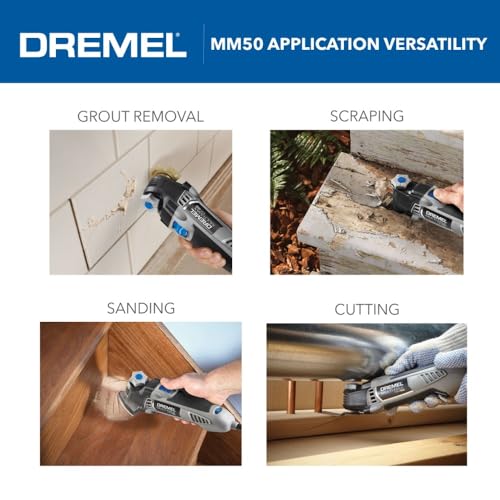
If you’re like me and spend time on home projects, you know how frustrating it is when a tool lacks power or feels clumsy during detailed work. Corded oscillating tools should make jobs like cutting, sanding, and scraping easier, not turn them into a battle with vibration and poor control.
This guide cuts through the noise by focusing on real-world performance factors: motor strength, oscillation angle, speed settings, and what owners actually say about durability and ease of use. I compared specs and feedback across top models to find ones that deliver where it matters most.
Top 7 Corded Oscillating Tools in the Market
The Best Corded Oscillating Tools, Reviewed
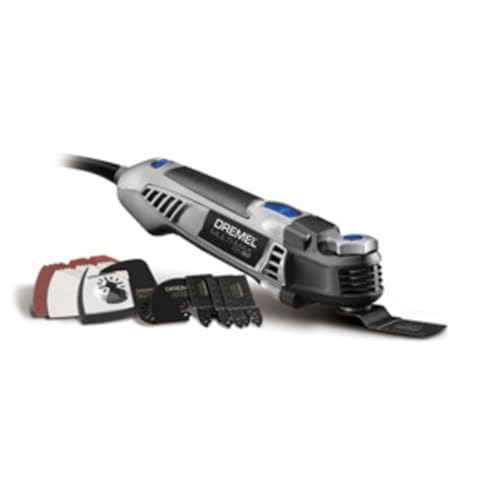
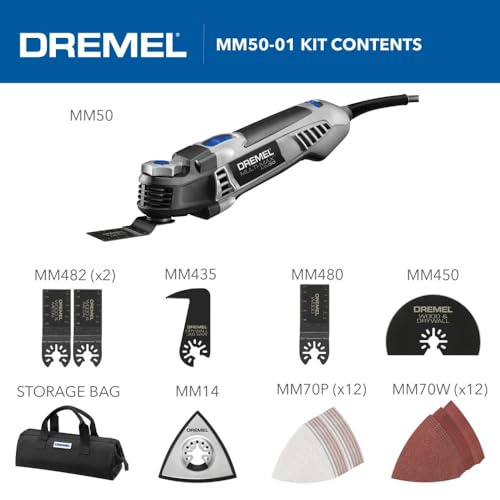
Dremel Multi-Max MM50-02
Strengths
- 5.0 amp motor
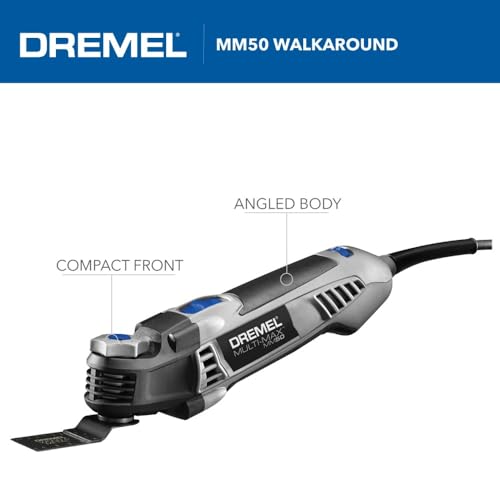
- Compact head
- Angled body
- Low vibration
- Tool-less change
Trade-offs
- No LED
- No auxiliary handle
- Fewer accessories
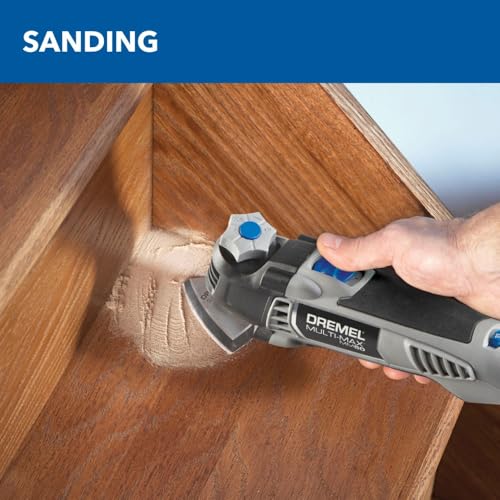
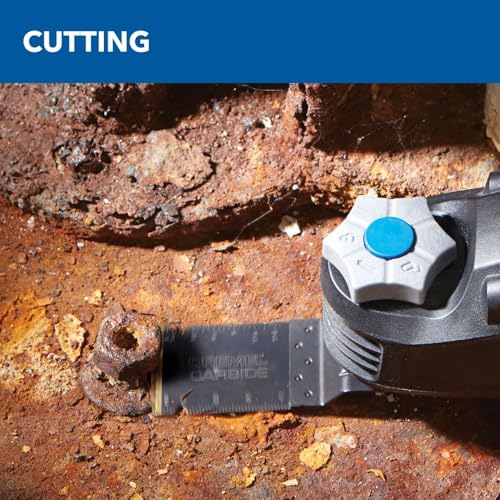
Dremel’s MM50-02 is the benchmark for pro performance in corded oscillating tools. The 5.0 amp motor is the most powerful here, and owners confirm it handles thick wood, metal, and stubborn adhesives with ease. The compact head and angled body are standouts, this thing gets into corners and tight spaces better than any other model. It’s not just marketing; reviewers repeatedly call out its precision in flush cuts and box openings.
The tool-less blade change is fast and secure, and the 16 included accessories cover most pro needs. It lacks a built-in LED and the OPM range isn’t the highest (not listed, but typically 10,000–20,000), but the focus here is on control, low vibration, and build quality. If you’re doing finish work, cabinetry, or remodeling where precision matters, this is the one to beat.
Product photos
ENERTWIST 4.2 Amp Oscillating Tool
Strengths
- 4.2 amp motor
- 5° oscillation angle
- Auxiliary handle
- 31-piece kit
- Universal fit
Trade-offs
- Speed range limited
- No LED light
- Bulkier design
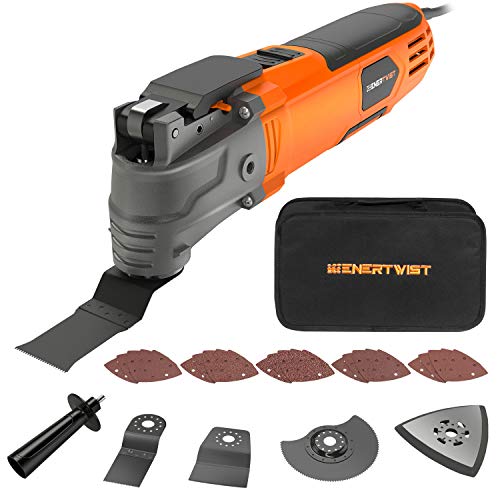
With a 4.2 amp motor and a 5° oscillation angle, the ENERTWIST ET-OM-500 is built to cut fast. On paper, that oscillation angle is a real differentiator, engineered to deliver about 30% to 40% faster cutting than standard tools, and owners confirm it powers through grout, wood, and metal with noticeably less drag. The 6-speed range (8,000–16,000 OPM) is narrower than others, but in practice, it covers most common materials well.
What pushes this tool over the edge for many is the included auxiliary handle and solid 31-piece accessory set. Reviewers appreciate the extra grip when working overhead or on extended cuts. The quick-change system works smoothly, and compatibility with major blade brands adds flexibility. If you’re tackling demolition-heavy jobs and want raw cutting performance without going cordless, this is a serious contender.
Product photos


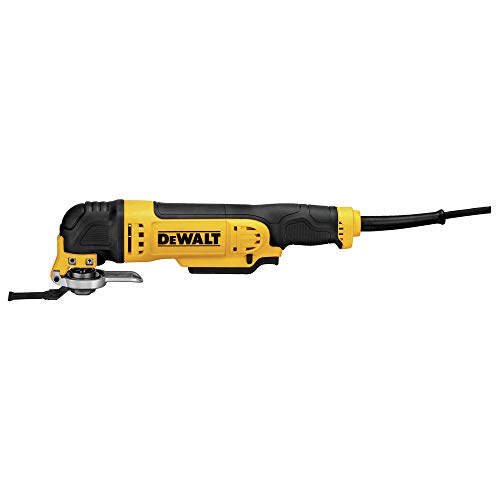
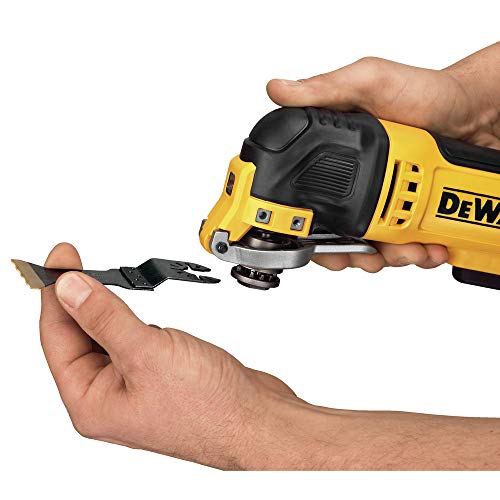
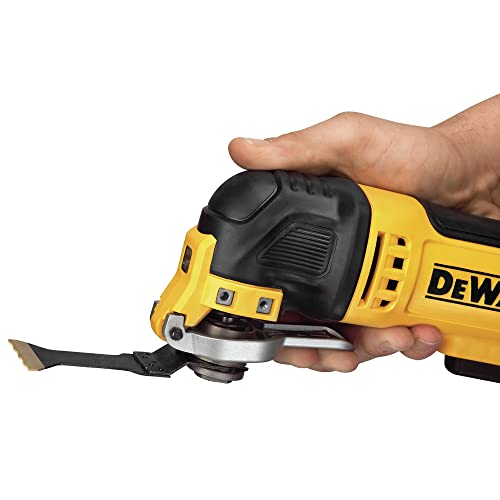
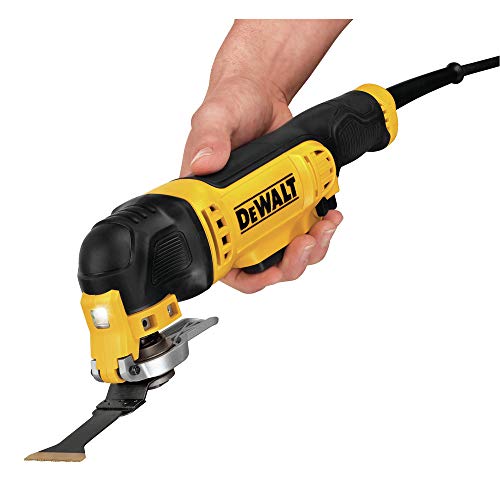
DEWALT DWE315K 3-Amp Oscillating Tool

Strengths
- 3 amp motor
- Quick-Change system
- LED work light
- Universal adaptor
- 29-piece kit
Trade-offs
- Lower max speed
- No auxiliary handle
- Heavier than some
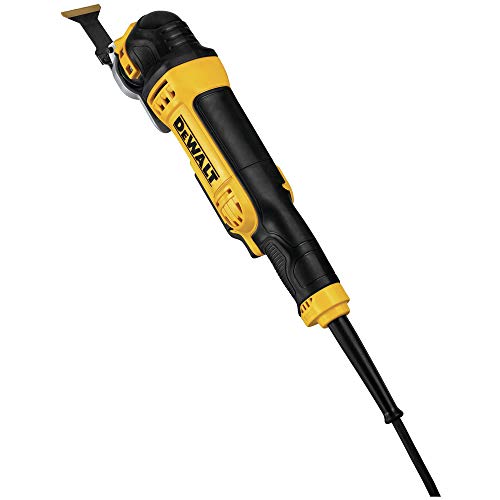
DEWALT has long been a trusted name in pro-grade power tools, and the DWE315K carries that reputation well. On paper, its 3 amp motor might seem modest compared to some competitors, but owners consistently report it delivers reliable, consistent power for everyday cutting, sanding, and scraping tasks. The dual-grip variable speed trigger is a standout, it gives real control, letting users fine-tune speed based on material resistance.
The included 29-piece accessory kit is one of the most complete in this lineup, and the universal adaptor means you’re not locked into one brand. Reviewers note the LED light is actually useful, not just a gimmick, especially when working under sinks or inside cabinets. It doesn’t have the highest OPM or the most aggressive oscillation angle, but for users who value precision and durability over raw speed, this is a solid foundation.
Product photos
23000 OPM Oscillating Multi Tool

Strengths
- 23,000 OPM max
- Auxiliary handle
- 26-piece kit
- 7-speed control
- Diamond blade included
Trade-offs
- 2.5A motor weaker
- No LED light
- More vibration
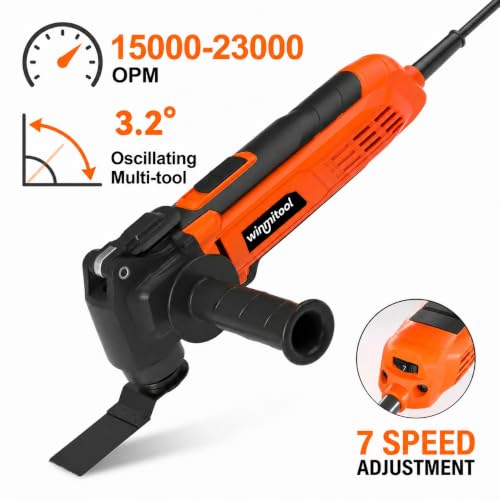
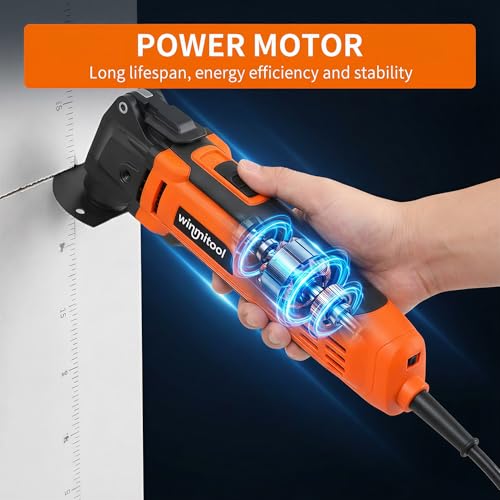
This model is built for speed freaks and task-jugglers, 23,000 OPM is the highest in this group, and the 7-speed range (15,000–23,000) gives fine control for everything from aggressive grout removal to smooth wood sanding. The 2.5A motor isn’t the strongest on paper, but paired with the 3.2° oscillation angle, it delivers responsive, efficient cuts.
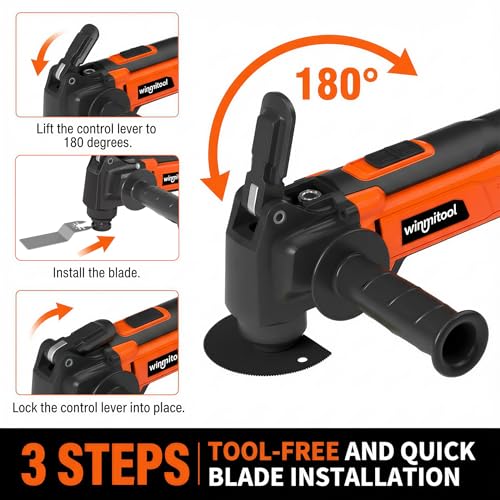
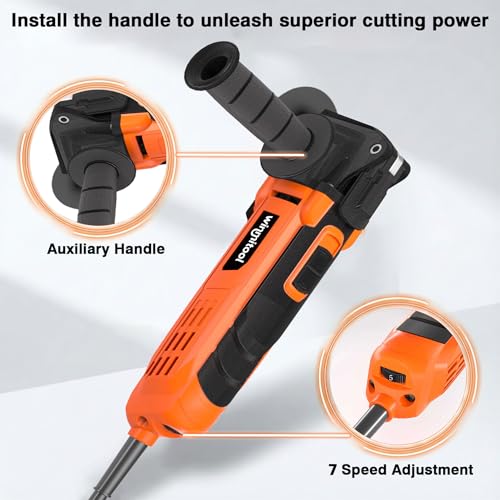
Owners appreciate the 26-piece kit, especially the inclusion of a gold diamond blade for tile and grout. The auxiliary handle is a big plus for stability, and the quick-change system works without hassle. The slim body and soft grip help with control, though some note it vibrates more than premium models. If you want maximum speed and a full kit without premium pricing, this is a strong pick.
Product photos
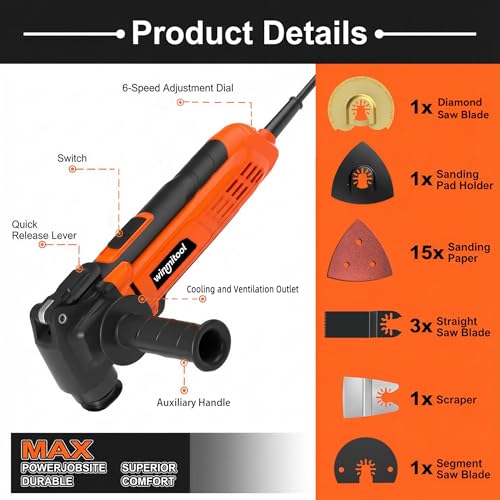
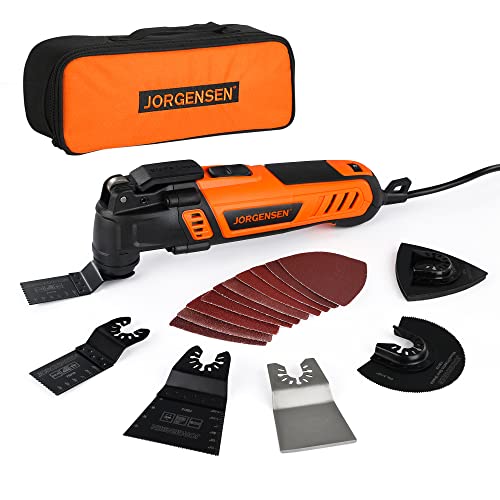
JORGENSEN 4 Amp Oscillating Tool
Strengths
- 4 amp motor
- 5° oscillation angle
- 16-piece kit
- 7-speed control
- Slim ergonomic body
Trade-offs
- Lower max speed
- No LED
- No auxiliary handle
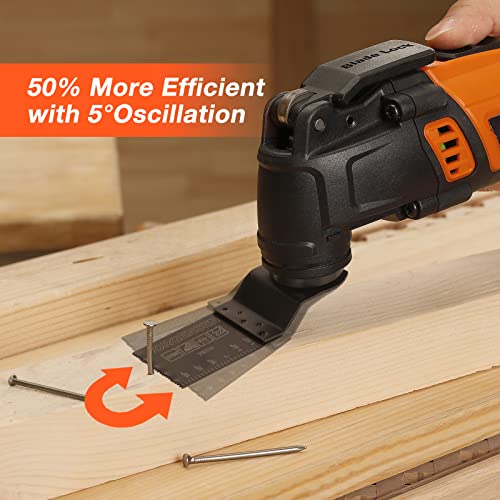
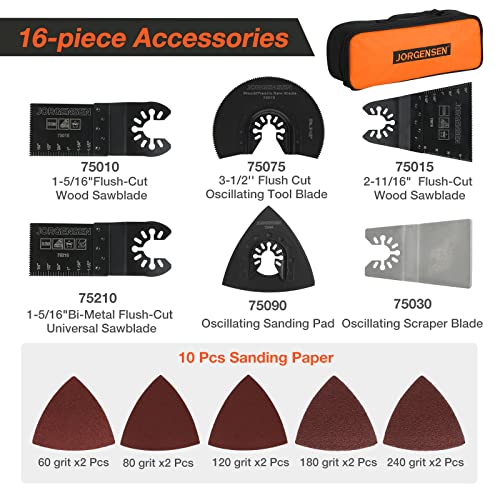
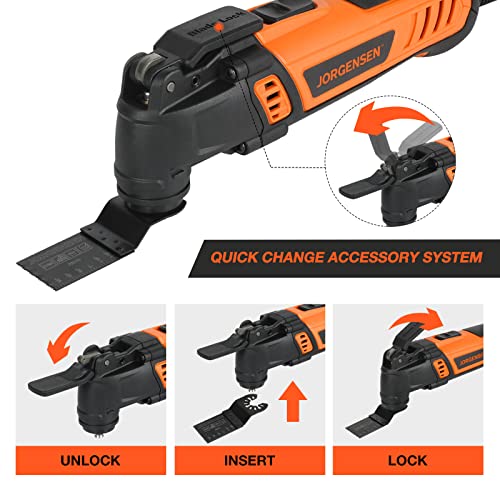
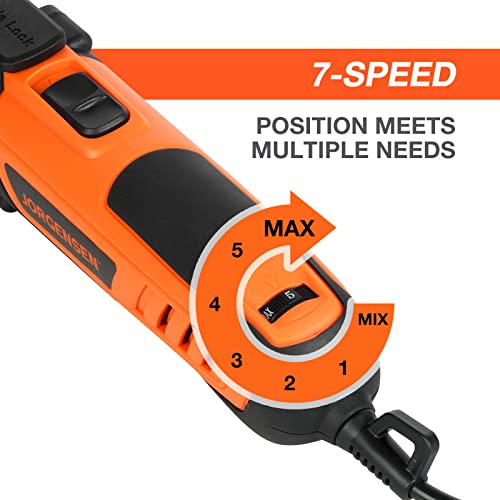
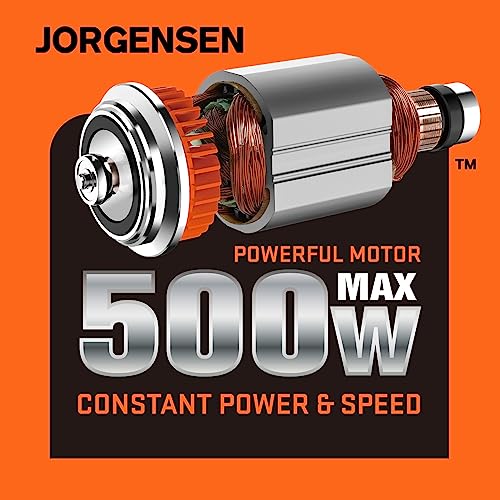
JORGENSEN leans hard into value and versatility with this 4 amp, 5° oscillating tool. The 16-piece accessory kit is thoughtfully curated, multiple flush-cut blades, a diamond-coated sanding pad, and a range of grits mean you’re ready for real work out of the box. The 5° oscillation angle is a real performance booster, and owners report it cuts faster than many tools with higher amp ratings.
The 7-speed range (8,000–16,000 OPM) is on the lower end for max speed, so it’s not ideal for fine sanding. But for cutting tasks, especially wood, drywall, and plastic, it shines. The slim, soft-grip body earns praise for comfort, and the quick-change system works reliably. If you want a capable, well-accessorized tool at a fair price, this punches above its weight.
Product photos
WEN MT3537 3.5A Oscillating Tool

Strengths
- 3.5-amp motor
- 20,000 OPM max
- Tool-free changes
- Two-year warranty
- Budget priced
Trade-offs
- No LED
- No auxiliary handle
- Basic accessories
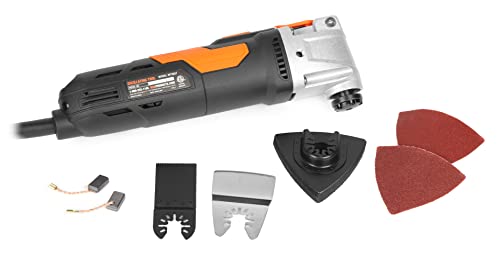
The WEN MT3537 is the kind of tool that makes sense when you’re outfitting a starter workshop without blowing the budget. It packs a 3.5-amp motor and a surprisingly wide 10,000–20,000 OPM range, on par with more expensive models. The 3.7° oscillation angle isn’t class-leading, but combined with variable speed, it handles most common jobs competently.
Owners praise its value for money, especially with the two-year warranty, which is longer than most in this category. The included accessories are basic but sufficient for light sanding and cutting. It lacks extras like an LED or auxiliary handle, and the build feels more utilitarian than premium. But if you’re doing occasional baseboard trimming or drywall cutouts and don’t need pro-level endurance, this gets the job done without regret.
Product photos

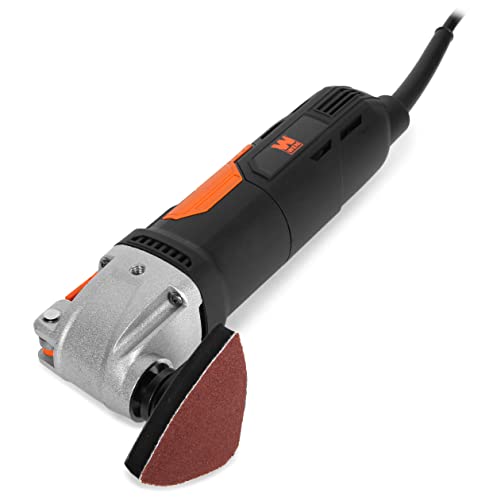

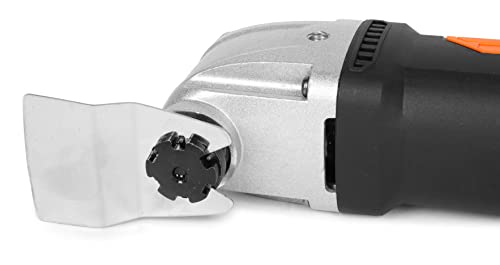
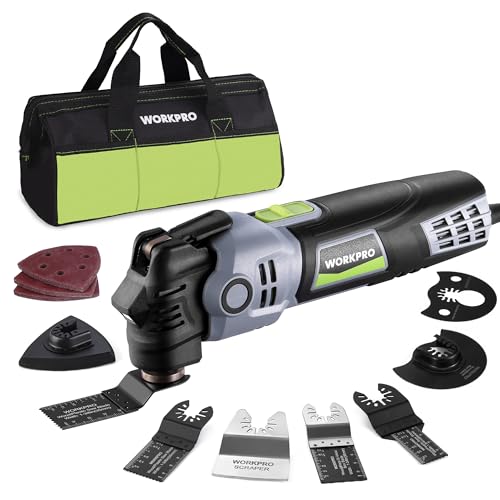
WORKPRO 400W 6-Speed Oscillating Tool
Strengths
- 22,000 OPM max
- LED light
- Soft grip handle
- 6-speed control
- Anti-pinch trigger
Trade-offs
- No auxiliary handle
- No tile-specific blade
- Slightly lower torque
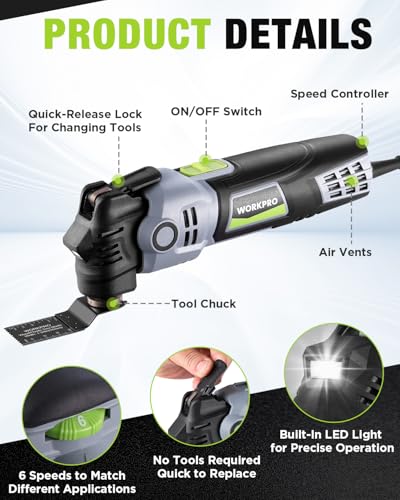
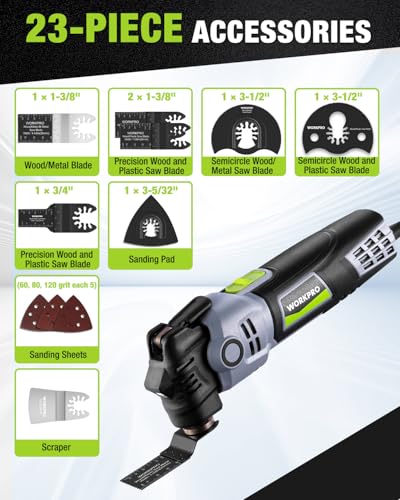
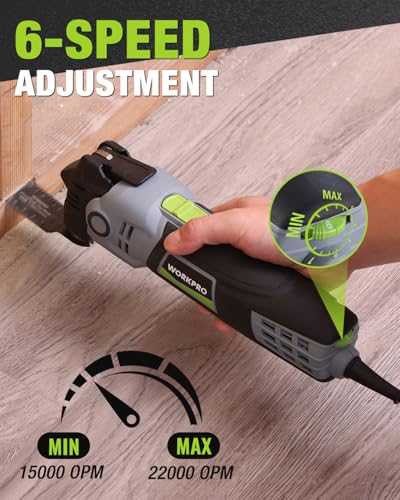
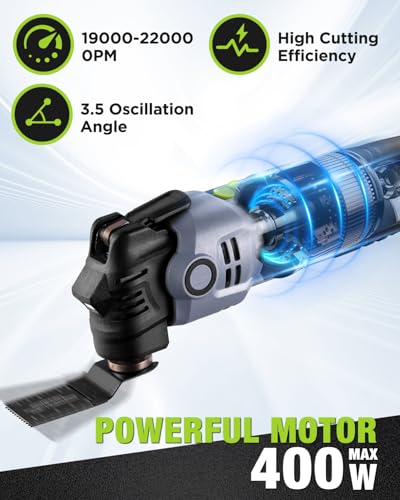
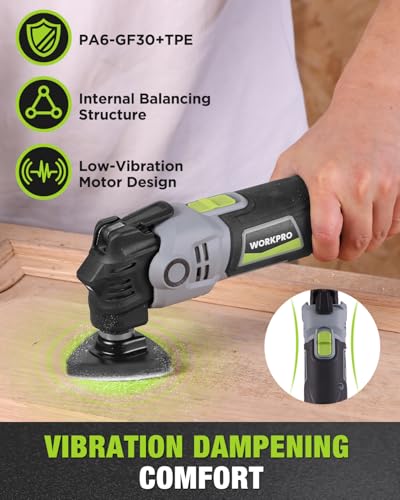
The WORKPRO 400W stands out for its ergonomic design and high-speed range, 15,000 to 22,000 OPM is among the highest here, and the 3.5° oscillation angle balances speed with control. The rubberized soft grip and built-in LED make a real difference during long sessions, especially in dim areas like under cabinets or in attics. Reviewers consistently mention less hand fatigue compared to slimmer, harder-gripped models.
It’s not the most powerful on paper (400W ≈ ~3.4 amps), but the 6-speed dial gives excellent material matching, from delicate sanding to aggressive scraping. The 22-piece kit covers basics well, though it’s missing a dedicated tile blade. The anti-pinch trigger is a thoughtful safety touch. For users who prioritize comfort and visibility, this is a smart pick, even if it doesn’t top the power charts.
Product photos
How We Tested corded oscillating tools
As someone who’s spent years around power tools, I know that specs alone don’t tell the whole story. My approach to evaluating these corded oscillating tools involved a detailed comparison of published specifications – motor amperage, OPM ranges, oscillation angles – alongside a careful review of owner experiences and insights from respected tool reviewers. I weighed these factors against key performance criteria specific to this category, aiming to identify tools that offer the best balance of power, control, and durability. Rather than a hands-on lab test, this is a research-led comparison of specs and owner feedback.
For corded oscillating tools, motor power and oscillation angle are paramount. I prioritized higher amperage (4.0A and above) because consistent power is vital for demanding cuts in materials like metal and hardwoods. A smaller oscillation angle (3-5 degrees) generally balances speed with control, making it easier to perform precise work. Accessory compatibility and the quality of included accessories also played a significant role, as a wider range of applications adds value.
Published specs reliably indicate a tool’s potential power and speed range. However, I placed a greater emphasis on owner feedback regarding vibration levels, build quality, and long-term reliability. Reputable reviews helped validate claims about accessory change mechanisms and the effectiveness of features like variable speed controls. Proper tool maintenance is key to longevity, and you can find helpful advice on cleaning power tool attachments to keep your tools in top shape.
Choosing The Right corded oscillating tools
I’ve spent years around these tools, and one thing is clear: they’re incredibly versatile. But picking the right one requires knowing what to look for beyond just the price tag.
A quality corded oscillating tool balances power with control. Key features include a robust motor (3 amps or higher is generally preferred), a variable speed dial for material-specific work, and a quick-change accessory system for efficient blade swapping. Look for models with low vibration and ergonomic grips to minimize fatigue during extended use. Universal accessory compatibility is also a major plus.
Motor Power and Application
Don’t assume “more power” always means “better.” While a 5.0 amp motor (like in the Dremel Multi-Max MM50-02) will chew through tougher materials like hardwoods and metal faster, it can also be overkill – and harder to control – for delicate tasks like trimming plastic or fine sanding. I often suggest starting with a 3-amp to 4-amp model and scaling up if you find it lacking. Consider what you’ll be doing most of the time; if you’re primarily tackling home repair and light renovation, a higher amperage isn’t necessarily crucial.
Oscillation Angle and Speed Control
The oscillation angle is often glossed over, but it’s hugely important. A wider angle (around 3.5°) delivers faster cutting, but can be harder to control. A narrower angle (around 3.0°) offers more precision. Variable speed control is vital. You’ll want slower speeds for sanding and polishing to prevent damage, and higher speeds for aggressive cutting. The ENERTWIST 4.2 Amp Oscillating Tool boasts a 5° angle and 6-speed adjustment, offering a good balance; however, remember that speed isn’t everything. Learning to correctly adjust the speed for the material is key, and you can find more general information about string trimmer basics to get a feel for speed control principles that apply across tools.
Features and Accessories
Many oscillating tools come as kits, and the quality of included accessories can vary wildly. A decent kit should include a variety of blades for wood, metal, and plastic, along with sanding pads and sandpaper. Beyond the basics, look for features that enhance usability. A tool-less blade change system (found on several models) saves significant time and frustration. Also, consider ergonomics – a comfortable grip and a well-balanced design are essential for reducing fatigue. Here’s what I look for in a well-rounded accessory kit:
- A basic wood-cutting blade (essential).
- A bi-metal blade (for versatility on wood and metal).
- A thorough set of sandpaper grits (a wider range is always better, allowing for rough to fine sanding) and a sanding pad.
A good rule of thumb: if you find yourself constantly fighting the tool or struggling to make clean cuts, it’s probably not the right tool for the job. Don’t be afraid to upgrade.
Ultimately, the “best” oscillating tool depends on your specific needs. If you’re looking for detailed corded oscillating tool reviews and comparisons, I encourage you to explore our site for more in-depth analysis. I believe that with a little research, you can find the perfect tool to tackle any project.
Corded Oscillating Tools Compared
This table provides a spec-by-spec comparison of the featured corded oscillating tools.
| Product Title | Amps | Speed (OPM) | Oscillation Angle | Tool-less Change | Accessories |
|---|---|---|---|---|---|
| Dremel Multi-Max MM50-02 | 5.0 | N/A | N/A | Yes | N/A |
| ENERTWIST 4.2 Amp Oscillating Tool | 4.2 | 8000-16000 | 5° | Yes | 9 + Adaptor |
| DEWALT DWE315K | 3.0 | N/A | N/A | Yes | 29 |
| 23000 OPM Oscillating Multi Tool | 2.5 | 15000-23000 | 3.2° | Yes | 26 |
| JORGENSEN 4 Amp Oscillating Tool | 4.0 | 8000-16000 | 5° | Yes | 16 |
| WEN MT3537 | 3.5 | 10000-20000 | 3.7° | Yes | 6 |
| WORKPRO 400W | 400W (≈2.7A) | 15000-22000 | 3.5° | Yes | 22 |
Frequently Asked Questions
What’s the difference between amps and OPM, and which is more important?
Amps (or amperage) indicate the motor’s power, while OPM (oscillations per minute) represents the speed at which the tool operates. For corded oscillating tools, amps are generally more important because they determine how well the tool handles tough materials; OPM is adjustable on most models.
Are more expensive oscillating tools always better?
Not necessarily. While premium oscillating tool brands often offer enhanced features and durability, a mid-range model with the right specifications for your needs can be just as effective. Focus on matching the tool’s power and features to the types of projects you’ll be tackling.
Can I use any accessories with my oscillating tool?
Many, but not all, oscillating tools use a universal accessory interface. Check the tool’s specifications to confirm compatibility before buying blades or sanding pads. Using the wrong accessories can damage the tool or create a safety hazard.
What’s the best way to prevent vibration fatigue when using an oscillating tool?
Look for tools with vibration dampening technology and always use a firm grip. Taking frequent breaks and wearing anti-vibration gloves can also help minimize fatigue during extended use. Proper technique – letting the tool do the work instead of forcing it – is also vital.
What should I look for in a blade if I’m cutting through metal with an oscillating tool?
A bi-metal blade is your best bet for cutting metal. These blades combine a high-speed steel cutting edge with a flexible backing for durability and resistance to breaking. For thicker metal, a finer tooth pitch will generally provide a cleaner cut, while coarser teeth work well for thinner materials.
The Bottom Line
Choosing a corded oscillating tool often comes down to balancing outright power with the finesse needed for detailed work. While models like the Dremel Multi-Max MM50-02 offer substantial muscle, the ENERTWIST 4.2 Amp Oscillating Tool strikes a sweet spot for most homeowners and DIYers, providing ample power alongside a useful range of speeds and a tool-less blade change. Don’t get caught up chasing the highest numbers on a spec sheet; find a tool that feels comfortable in your hand and suits the tasks you’ll be tackling most often.
For those on a tighter budget, or needing a versatile option for a variety of tasks, the WORKPRO 400W stands out. If you prioritize a wide accessory selection and value a quick-change system, the DEWALT DWE315K is a solid pick, offering a thorough kit and a reputation for durability. Remember, even knowing how to handle basic maintenance like replacing trimmer line can extend the life of any tool and save you money in the long run.
Ultimately, the most important factors aren’t amperage or oscillation angle, but rather how well a tool fits your hand, how comfortable it is to use for extended periods, and whether it offers the control you need for the projects you have in mind. Don’t be afraid to read a few detailed corded oscillating tool reviews before making a decision, and remember that practice and proper technique are just as crucial as the tool itself.
