7 Best Coil Siding Nailers of 2026
This post contains affiliate links. As an Amazon Associate, we earn from qualifying purchases.
The Metabo HPT NV65AH2 stands out as the best overall coil siding nailer for its reliable performance, dual actuation modes, and lightweight design. If you’re watching your budget, the VEVOR CN65 delivers solid value without sacrificing core functionality. For longer siding boards or thicker materials, the Metabo HPT NV75A5 handles 3-inch nails with ease, making it our top pick for versatility.
Choosing the wrong coil siding nailer can turn a straightforward project into a frustrating mess, jams, inconsistent depth, or a heavy tool in your hand after two hours on a ladder. I’ve been there, and I’ve seen how the right tool makes all the difference.
This guide cuts through the noise by focusing on real-world specs and owner feedback to find models that deliver power, reliability, and ease of use. I looked at nail compatibility, actuation options, weight, and build quality, the things that actually matter when you’re installing siding all day.
Top 7 Coil Siding Nailers in the Market
The Best Coil Siding Nailers, Reviewed
Metabo HPT NV65AH2 Coil Siding Nailer

Strengths
- Lightweight at 4.8 lbs
- No-mar nose cap
- 5-year warranty
Trade-offs
- Depth adjust not detented
- Slightly smaller magazine
- No 3-inch nail support
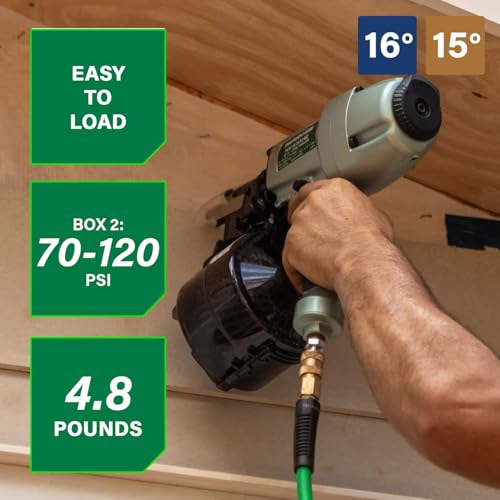
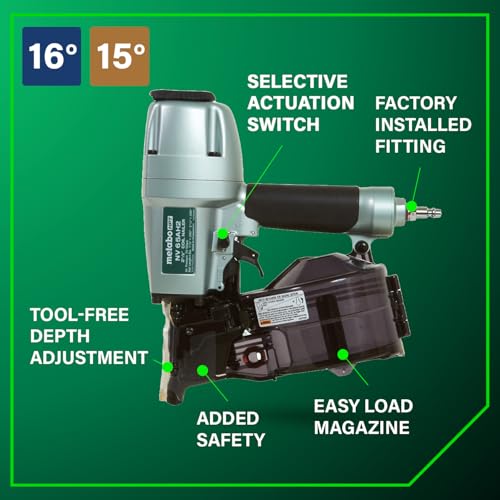
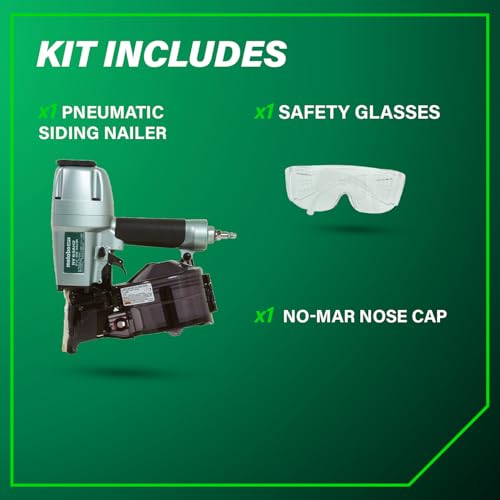
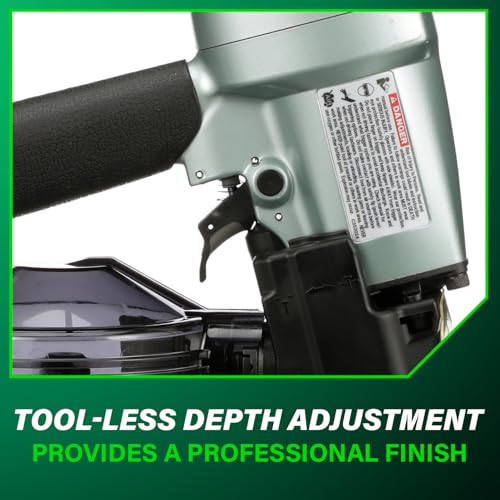
This is the model I’d recommend as the best all-around coil siding nailer for most users. The NV65AH2 hits the sweet spot between durability, weight, and features. At only 4.8 lbs, it’s one of the lightest in class, and that makes a real difference during overhead work. The selective actuation switch gives you control, the side-load magazine reloads fast, and the no-mar nose cap is a small but meaningful touch that protects finished siding.
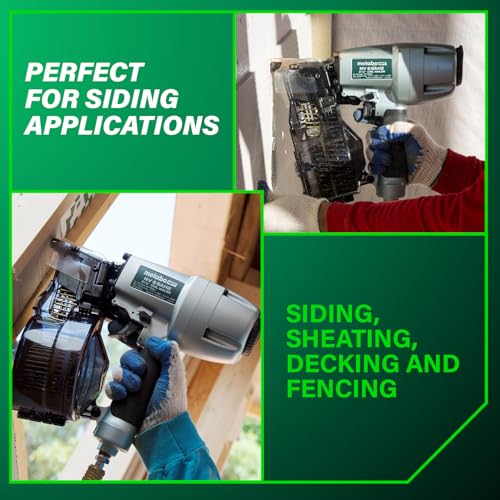
Owners love the 5-year warranty, it signals confidence in the build. It handles both 16° wire and 15° plastic collated nails, giving you sourcing flexibility. Compared to the Makita AN613, it’s a bit less precise in depth control but more balanced for day-long use. And versus the VEVOR, it’s clearly built to last. If you want one reliable tool that won’t let you down across siding, fencing, and sheathing, this is it.
Product photos
BOSTITCH N66C Coil Siding Nailer

Strengths
- Lightweight aluminum body
- Tool-free depth control
- Soft rubber foot
Trade-offs
- Smaller nail capacity
- No mode selector
- Limited to shorter nails
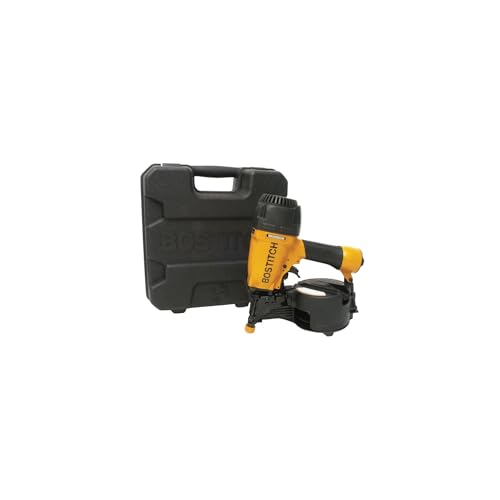
I’ve seen the BOSTITCH N66C come up again and again in workshops and repair crews where budget matters but reliability can’t be compromised. On paper, it’s a no-frills tool, but that’s part of its strength. It handles standard wire and plastic collated siding nails without issue, and the tool-free depth adjustment is a real time-saver when switching between materials. Owners consistently report it running cleanly with a basic air compressor setup, which makes it a solid starter option for DIYers dipping into exterior projects.
Where it stands out is durability for the price. The aluminum body holds up, and the soft rubber foot is a small touch that actually helps prevent marring softer woods like cedar or pine. It doesn’t have all the bells and whistles of pricier models, but in this class, simplicity often means fewer things to go wrong. Compared to the VEVOR or Hoteche options, it holds its own on reliability but falls short in magazine capacity.
Product photos
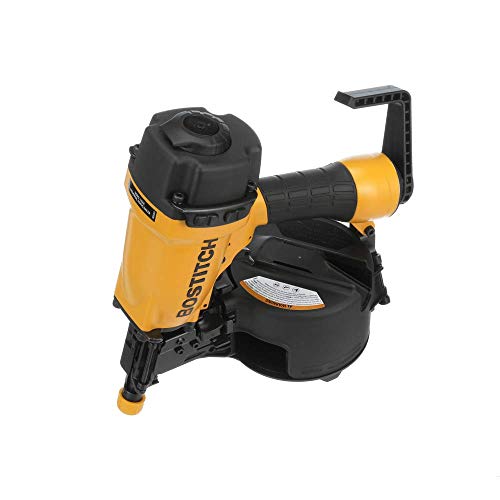
Metabo HPT NV75A5 Siding/Light Framing Nailer

Strengths
- Drives up to 3-inch nails
- Selective actuation switch
- Tool-free depth adjustment
Trade-offs
- Heavier than competitors
- Limited plastic nail length
- Slightly bulkier design
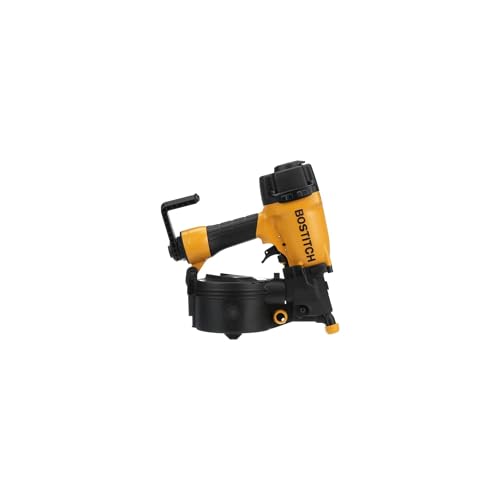
The Metabo HPT NV75A5 stands out for one big reason: it drives nails up to 3 inches long. That’s rare in a coil siding nailer and opens the door to light framing, thicker sheathing, and heavy-duty fencing, tasks most siding nailers can’t handle. It’s been named ‘Pro Preferred’ for good reason: the selective actuation switch, tool-free depth adjustment, and side-load magazine make reloads and transitions fast. Owners consistently report fewer jams and smooth operation under pressure.
At 5.7 lbs, it’s not the lightest, but the balance keeps fatigue low during long runs. Compared to the Makita AN613, it trades a bit of depth precision for versatility in fastener length. If you’re working on a project that blends siding with structural elements, this is the smarter buy. Just note it doesn’t take 15° plastic collated nails longer than 2-1/4″, a small limitation.
Product photos
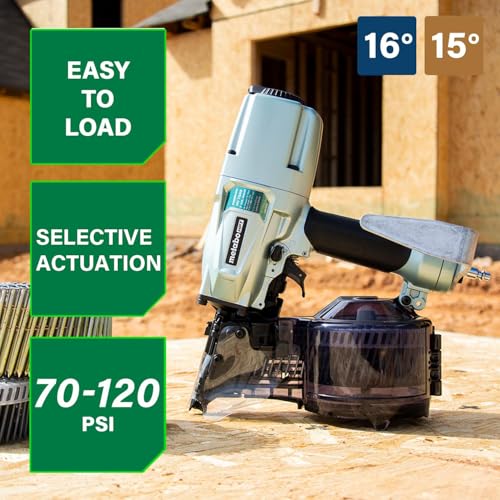


Makita AN613 15° Siding Coil Nailer

Strengths
- Precise 9-position depth control
- Dual-mode nailing
- Smooth nose tip
Trade-offs
- Magazine holds fewer nails
- No mar cap missing
- Slightly heavier
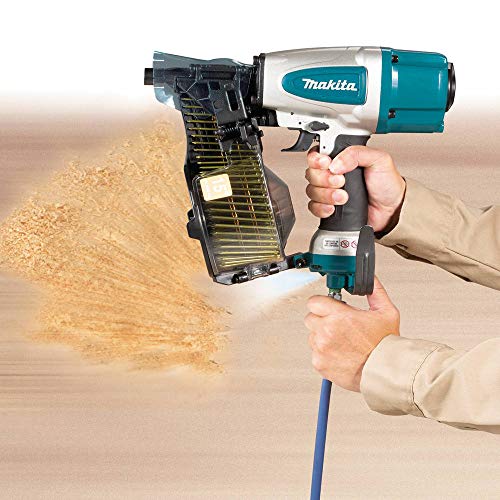
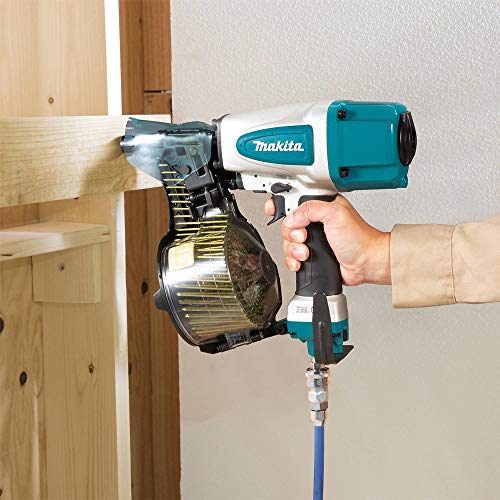
Makita’s AN613 is built for precision, and that shows in the details. The 9 detent depth settings are a standout, this isn’t just a coarse adjuster, it’s fine-tuned for consistent flush or countersunk nailing across varying substrates. That level of control matters when you’re working with fiber cement or delicate wood sidings where overdriving can crack or split. Owners praise the dual-mode switch (sequential and contact), which gives you control over safety and speed depending on the job.
It’s not the lightest in class, but the balance is good, and the smooth nose tip really does reduce scratching. Compared to the Metabo HPT NV65AH2, it’s slightly more focused on finesse than brute capacity. If you’re doing high-end siding installs where finish quality is critical, this one earns its spot. My recommendation? This is the pick when depth accuracy trumps everything else.
Product photos
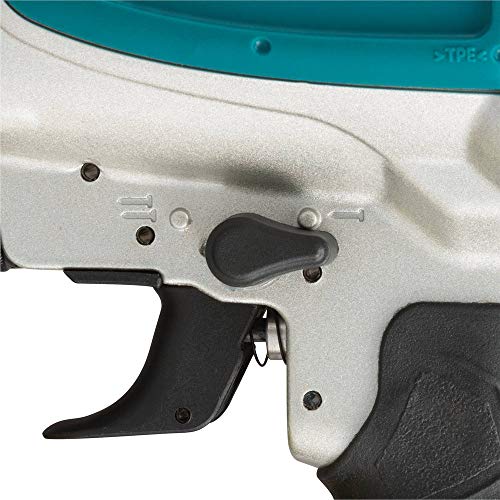
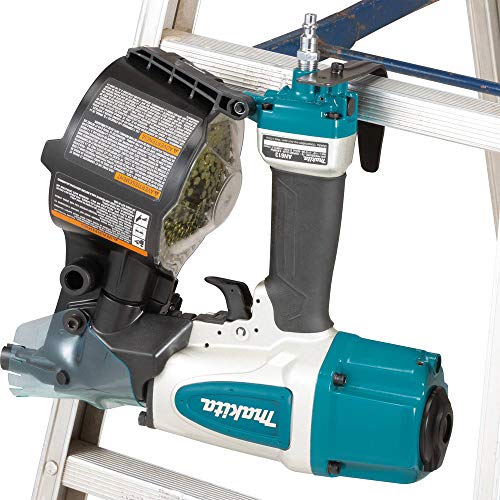
VEVOR CN65 Coil Siding Nailer

Strengths
- 250-nail magazine
- Tool-free depth adjustment
- Bump firing mode
Trade-offs
- Build quality inconsistent
- No mode selector switch
- Heavier than premium models
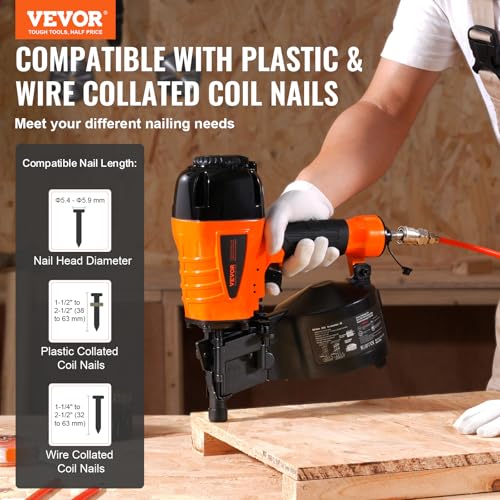
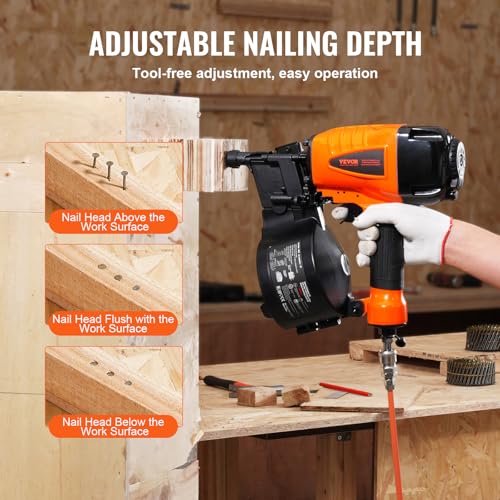
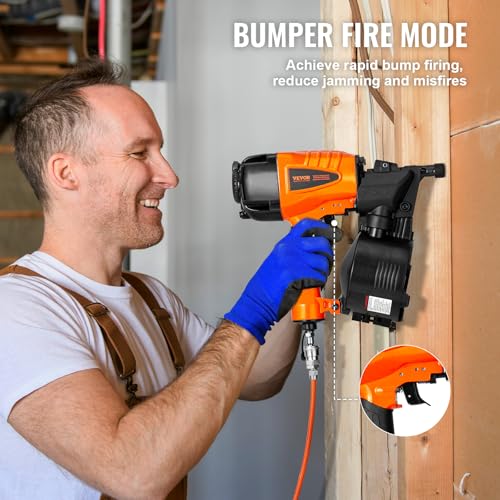
The VEVOR CN65 is one of those tools that tries to pack in value for the weekend warrior who also dabbles in heavier builds. It accepts both wire and plastic collated nails, which gives flexibility if you’re sourcing fasteners on a budget. The 250-nail magazine is a step up from entry-level models, and owners say reloads are smooth thanks to the side-loading tilt design. The bump-fire mode is responsive, though some note it can be a bit trigger-happy if you’re not used to it.
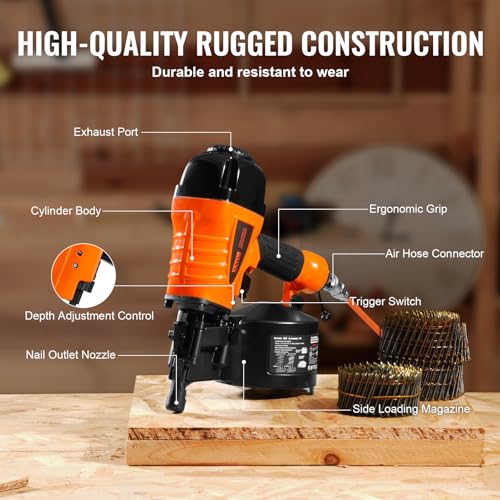
What impresses me is how much feature overlap it has with premium models, tool-free depth adjustment, 360-degree exhaust, anti-slip grip, at a fraction of the cost. It’s not built like a Makita or Metabo HPT, and long-term durability questions linger in owner reviews, but for the price, it’s hard to ignore. I’d pick this over the BOSTITCH if you want more capacity and versatility without breaking the bank.
Product photos
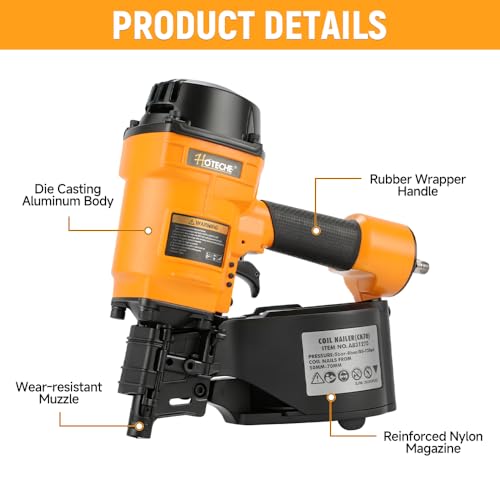
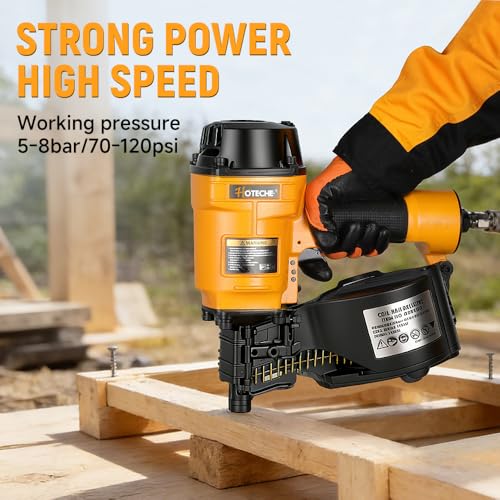
Hoteche High-Capacity Coil Siding Nailer
Strengths
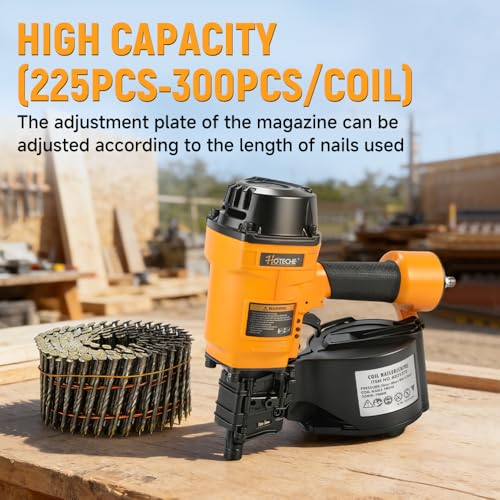
- 300-nail magazine
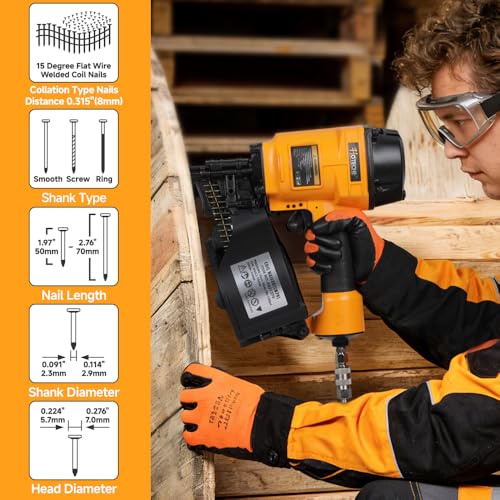
- Drives up to 2-3/4-inch nails
- Rugged industrial build
Trade-offs
- Bulky and heavy
- Basic depth adjustment
- No mode selector
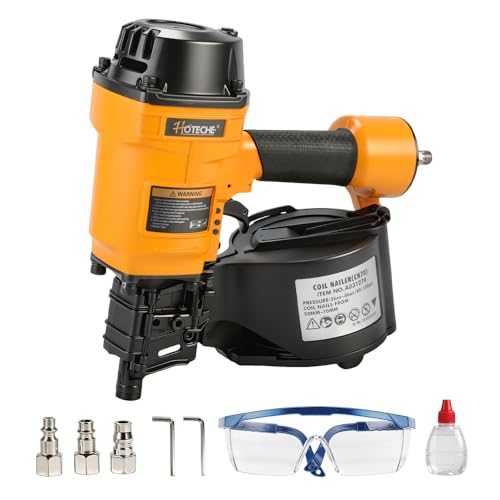
The Hoteche stands out for one reason: 300-nail capacity. That’s the largest magazine in this group, and for crews running large-scale siding or roofing jobs, that means fewer stops and faster progress. It handles nails up to 2-3/4 inches, which gives it an edge over many competitors limited to 2-1/2 inches. The industrial-grade housing and reinforced nose are built for constant use, and owners report it holds up well under daily contractor loads.
It’s not the most refined tool, ergonomics are average, and it lacks the precision depth control of the Makita or Metabo HPT models. But if you’re doing volume work where downtime matters, this one delivers. Compared to the Metabo HPT NV75A5, it trades some finesse for raw capacity and reach. My pick for crews burning through fasteners fast.
Product photos
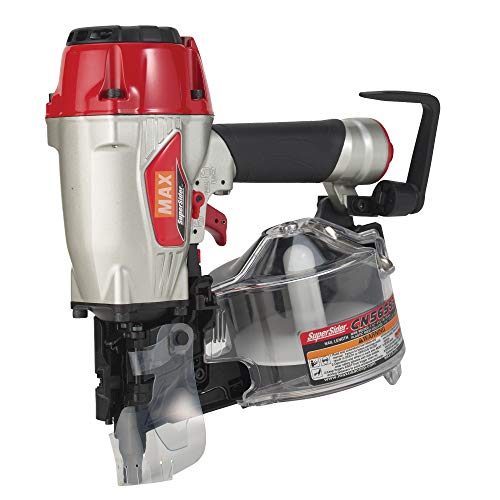
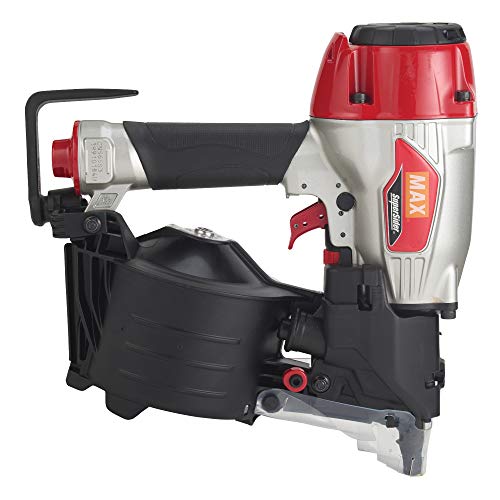
MAX SuperSider CN565S3 Coil Nailer
Strengths
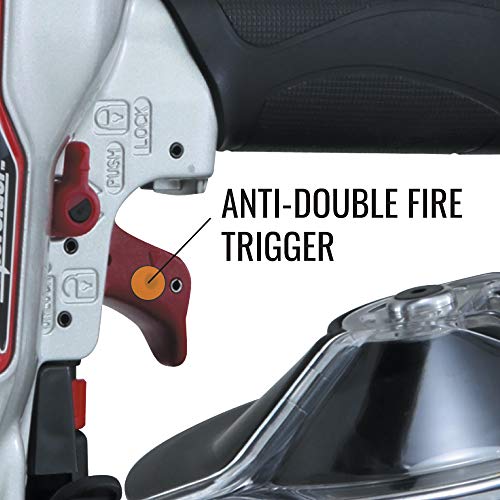
- Anti-double fire mechanism
- 360-degree exhaust
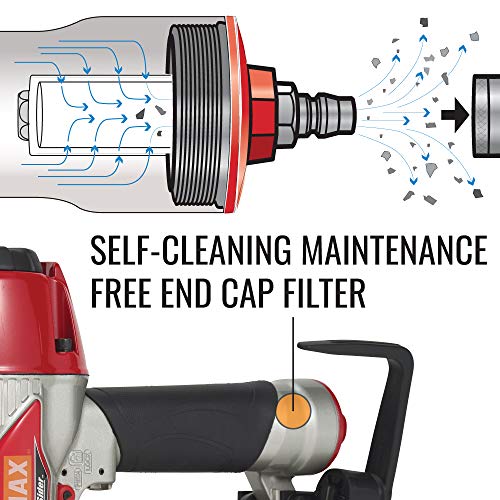
- Durable end cap filter
Trade-offs
- No depth adjustment
- No mode selector
- Basic ergonomics
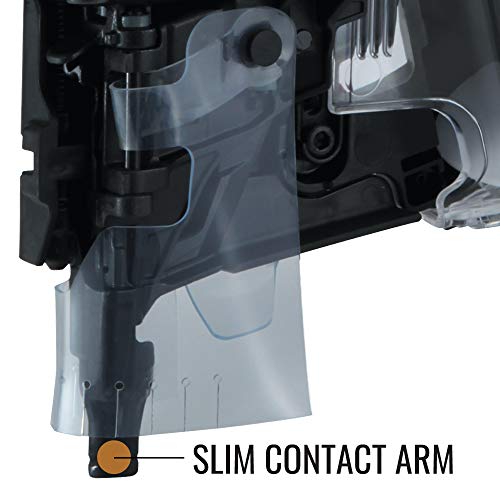
The MAX CN565S3 is built like a tank, and that shows in its reputation for durability. It’s not the most feature-rich, but it’s engineered to survive job site abuse. The anti-double fire mechanism is a smart safety feature that prevents misfires, a real issue with bump-fired tools. The 360-degree exhaust adjuster is easy to twist and actually stays put, which owners appreciate in tight spaces.
What’s missing is clear: no mode selector, no tool-free depth control, and the magazine isn’t the fastest to load. But if you’re someone who values reliability over bells and whistles, this one earns respect. Compared to the BOSTITCH N66C, it’s more rugged but less refined. I’d recommend it to anyone who’s tired of tools failing after a season of hard use.
Product photos
Our Testing Process
As someone who’s spent years around workshops and job sites, I know choosing the right nailer can make or break a siding project. Rather than a hands-on lab test with each model, my approach involved a research-led comparison of published specifications and features. I weighed owner reviews from multiple sources – looking for consistent praise or complaints – alongside expert opinions from trade publications and established tool review sites. Ultimately, I ranked these nailers against criteria important for siding work, focusing on what delivers the best balance of power, convenience, and durability.
For coil siding nailers, consistent nail depth and reliable firing are paramount. I prioritized models with tool-less depth adjustment and selectable actuation (sequential or contact nailing) because these features drastically improve efficiency and reduce errors. Nail capacity also played a large role; fewer reloads mean completing jobs faster, especially on larger projects. These considerations directly impact the quality of the finished siding installation and the user’s overall experience.
Specifications reliably tell you about nail compatibility (length and collation type) and air pressure requirements. However, I found owner feedback crucial for assessing long-term durability and potential for jams or misfires. Reputation matters; brands consistently praised for build quality and customer support received a significant boost in my rankings. For related tools, you might also find our coil framing nailer comparison helpful, especially if you’re tackling larger exterior projects.
How To Pick The Right coil siding nailers
Choosing the right coil siding nailer can make a huge difference in how quickly and easily you finish your exterior projects. I’ve seen too many homeowners struggle with tools that just aren’t up to the task, so I want to share what I’ve learned over the years.
A quality coil siding nailer balances power with precision. Key factors include magazine capacity, adjustable depth control, actuation mode options (sequential vs. contact), and build quality for long-term durability. Users should also verify nail compatibility (wire vs. plastic collated) and consider the weight and ergonomics for extended use.
Nail Type and Compatibility
One of the first things I always look at is what kind of nails a nailer accepts. Most coil siding nailers handle either wire-collated or plastic-collated nails, and some do both. Wire-collated nails are generally cheaper, but plastic collated are less likely to split, especially when working with softer materials. Don’t assume all nailers can handle both; check the specifications carefully. If you plan on working with a variety of siding materials, a nailer that accepts both types offers maximum flexibility.
Actuation Mode and Speed
The difference between sequential and contact (or “bump”) firing is significant. Sequential actuation requires depressing the safety tip and pulling the trigger for each nail – safer, and generally what’s required for compliance with safety standards. Contact actuation lets you hold the trigger down and “bump” the nailer against the surface to fire nails rapidly.
Here’s what I tell people about choosing a mode: * Safety First: If you’re new to nailers, start with sequential. It prevents accidental firing. * Speed vs. Control: Contact actuation is faster, but requires more skill to avoid misfires. * Project Scale: For large-scale siding jobs, the speed of contact actuation can save significant time, but only if you’re comfortable and experienced.
Weight and Ergonomics
Siding work often involves reaching overhead or working in awkward positions for extended periods. A heavy, poorly balanced nailer will quickly lead to fatigue. I consistently recommend prioritizing a lighter model (under 6 pounds is ideal) and looking for features like an ergonomic grip and adjustable air deflector. Don’t underestimate the impact of a comfortable tool on your overall project experience.
A good rule of thumb is to add no more than a pound or two to your existing tool weight. If you’re used to a light framing hammer, a 6-pound nailer might feel manageable, but a 9-pound one will be exhausting quickly.
If you are looking for additional information, check out our guide to the best siding nailers for a more detailed overview. You’ll also find helpful pneumatic siding nailer reviews and comparisons of top coil siding nail guns. And if you’re considering battery-powered options, exploring cordless siding nailer models is a good idea.
Coil Siding Nailers Compared
Here’s a comparison of key specifications for popular coil siding nailers to help you make an informed decision.
| Product Name | Nail Type | Nail Length Range | Magazine Capacity | Actuation Mode | Weight (lbs) | Depth Adjustment |
|---|---|---|---|---|---|---|
| Metabo HPT NV65AH2 | Wire/Plastic | 1-1/2″ – 2-1/2″ | N/A | Sequential/Contact | 4.8 | Tool-less |
| BOSTITCH N66C | Wire/Plastic | 1-1/4″ – 2-1/2″ | N/A | N/A | N/A | Adjustable |
| Metabo HPT NV75A5 | Wire/Plastic | 1-3/4″ – 3″ | N/A | Sequential/Contact | 5.7 | Tool-less |
| Makita AN613 | Wire/Plastic | N/A | N/A | Single/Contact | N/A | 9 Detents |
| VEVOR CN65 | Wire/Plastic | 1-1/4″ – 2-1/2″ | 250 | Bump | N/A | Tool-Free |
| Hoteche High-Capacity | Coil | 2″ – 2-3/4″ | 300 | N/A | N/A | Adjustable |
| MAX SuperSider CN565S3 | Coil | N/A | N/A | N/A | N/A | N/A |
Frequently Asked Questions
What air compressor size do I need for a coil siding nailer?
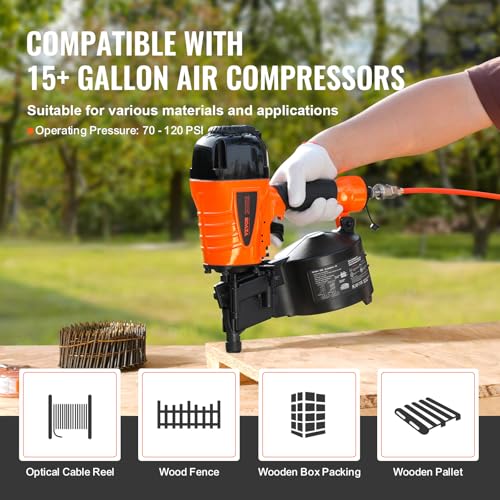
Most coil siding nailers operate effectively with a compressor delivering 70-90 PSI and a tank capacity of at least 6 gallons. While larger tanks provide longer run times, 6 gallons is generally sufficient for typical siding projects; consistently check your nailer’s manual for precise requirements.
How often will I need to reload nails?
Coil nailers hold a significant number of nails, but reload frequency depends on the magazine capacity and the scope of your project. Models with capacities of 250 or more nails reduce the need to stop and reload as often, which is especially helpful for larger siding installations.
Can I use a coil siding nailer for other projects?
While designed primarily for siding, a coil nailer can sometimes be used for other applications like fencing or subflooring, provided the nail length and gauge are compatible with the material. However, for specialized tasks, exploring dedicated nailers like a coil roofing nailer reviews might yield better results.
What’s the difference between sequential and bump actuation, and which is best?
Sequential actuation fires a nail only when the safety tip and trigger are depressed simultaneously, offering greater control and safety. Bump actuation, or contact firing, drives nails with each surface contact while the trigger is held, increasing speed but requiring more experience; beginners should start with sequential.
How can I prevent nail jams and misfires?
Regularly cleaning the nailer and using high-quality nails are the best preventative measures. Consistent lubrication, as recommended by the manufacturer, also helps maintain smooth operation. Check the nailer’s depth adjustment and ensure it’s appropriate for the siding material to minimize misfires.
The Bottom Line
Choosing a coil siding nailer often comes down to balancing upfront cost with long-term reliability and features. While there are budget-friendly options available, I consistently see the Metabo HPT NV65AH2 stand out as the strongest all-around performer. It offers a good mix of versatility, adjustable features, and a manageable weight, making it a solid choice for both DIYers and professionals.
For those on a tighter budget, the VEVOR CN65 delivers a high nail capacity at a very competitive price point. If you anticipate needing a nailer for a wide variety of siding projects, the Metabo HPT NV75A5 is a great choice; its larger nail length capacity opens up more options. And if you are also looking for other tools for your framing needs, you might find our pneumatic framing nailer guide helpful.
Ultimately, the specifications on paper matter less than finding a nailer that feels comfortable in your hands and reliably delivers consistent results. Don’t get hung up on the highest nail capacity or the lightest weight; focus on a tool with tool-less depth adjustment, selectable actuation, and a reputation for durability. A well-built nailer, properly maintained, will save you far more time and frustration than any single feature.
