
9 Best Flux Welders for 2026
This post contains affiliate links. As an Amazon Associate, we earn from qualifying purchases.
The ESAB Rogue EM 140 stands out as the best overall flux welder for its reliable arc performance and clean welds, even on thicker steel. If you’re watching your budget, the DURATECH 125A IGBT Inverter offers solid build quality and consistent results without the extra features. For those who want multi-process flexibility, the Futelo 145A brings MIG, TIG, and stick capability into one compact unit.
Flux welders are a go-to for DIYers and job-site pros who need something portable and effective on unclean or rusty metal. But too many models promise versatility and deliver frustration – weak arcs, confusing controls, or flimsy construction.
After comparing the field and weighing specs against real owner feedback, I focused on machines that deliver strong, stable welding performance without unnecessary complexity. This guide cuts through the marketing and highlights the models that actually work well for common home and repair projects.
Top 9 Flux Welders in the Market
The Best Flux Welders, Reviewed
ANDELI 135A Dual-Voltage MIG Welder
Strengths
- Dual-voltage operation
- PULSE MIG for cleaner welds
- Includes helmet and gloves
Trade-offs
- TIG torch not included
- Slightly heavier than others
- Complex for absolute beginners
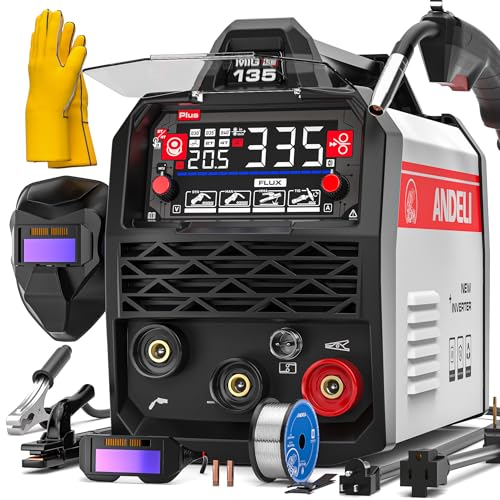
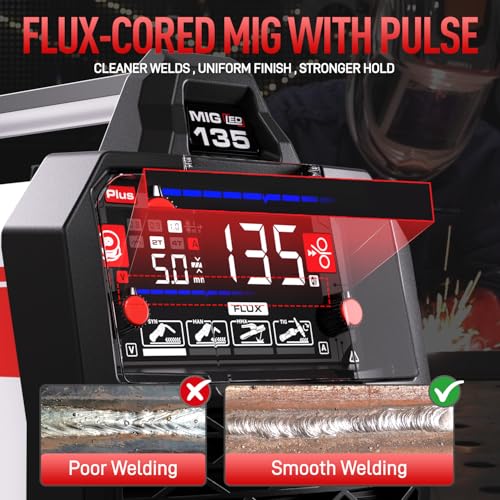
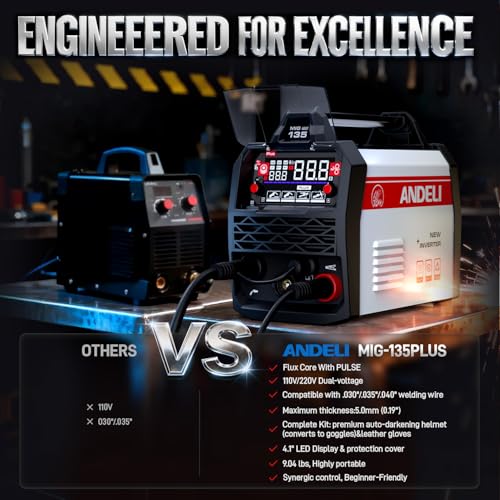
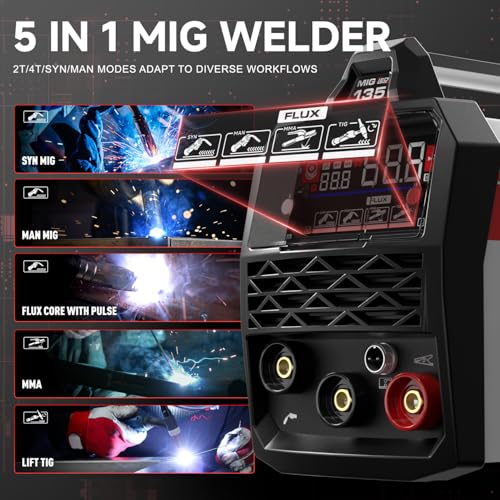
The ANDELI 135A is the most complete package here, and that’s why I call it the best overall. It’s not just the dual-voltage capability, 110V and 220V, that sets it apart, but the PULSE MIG function, which delivers noticeably smoother arcs and less spatter. That’s a feature usually found on much more expensive machines. The 4.1-inch LED display is protected by a clear cover, a small but smart touch for job-site durability.
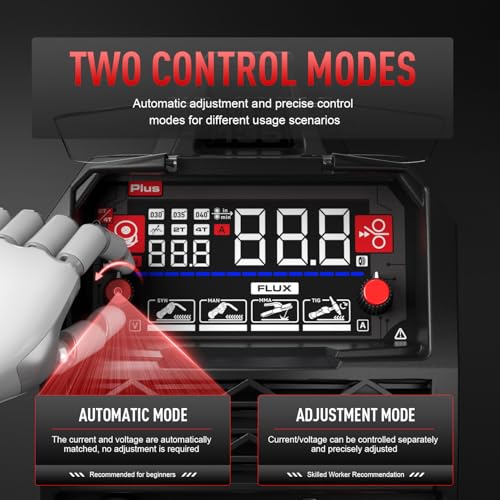
Owners love the full kit, it includes a premium auto-darkening helmet, gloves, and flux-core wire, so you’re truly ready to weld out of the box. The synergic control, 2T/4T trigger options, and adjustable inductance give real control. Compared to other 3-in-1 models, it’s more versatile and better built. Yes, the TIG torch is still extra, but for the price, you get more value and capability. If you want one welder that can grow with you, from home repairs to more advanced work, this is my top pick.
Product photos

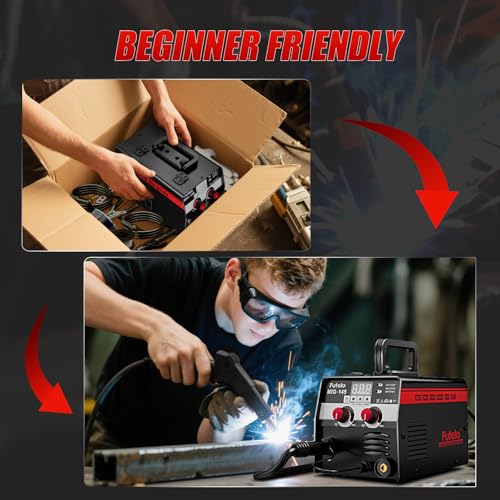
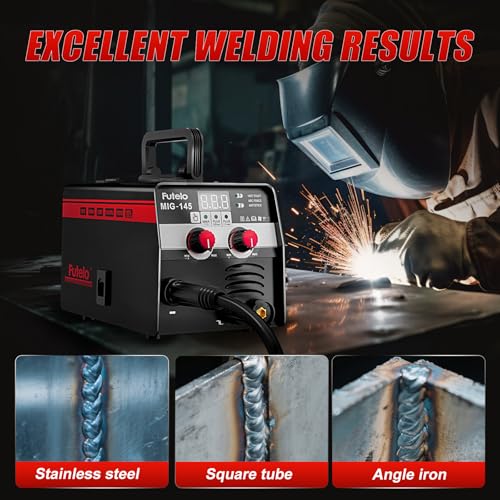
Futelo 145A 3-in-1 MIG Welder
Strengths
- Extremely lightweight
- Synergic control simplifies setup
- Full starter kit included
Trade-offs
- TIG torch sold separately
- Plastic housing feels less rugged
- Limited duty cycle
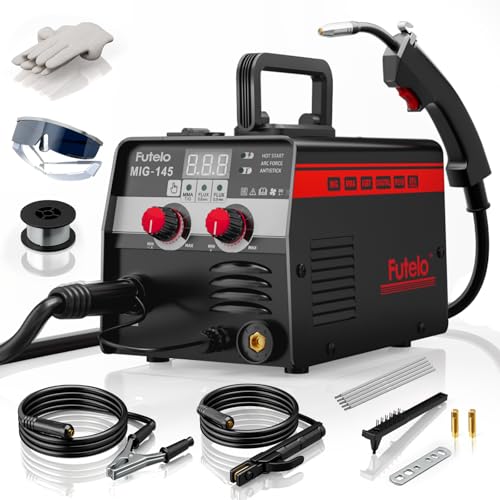
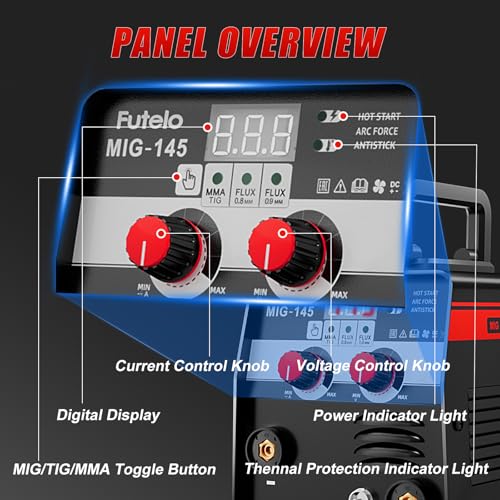
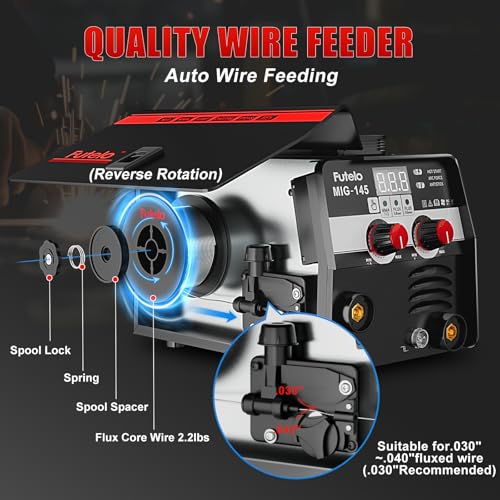
At just 7.5 pounds, the Futelo 145A is one of the lightest 3-in-1 welders on the market, and that makes it a standout for portability. But it’s not just about weight, owners praise how the synergic control takes the guesswork out for beginners. Set your wire size or amperage, and it auto-adjusts voltage and wire speed. The LED display is bright and helpful, letting you tweak on the fly without pulling off your helmet. For someone just getting into welding, that kind of feedback is huge.
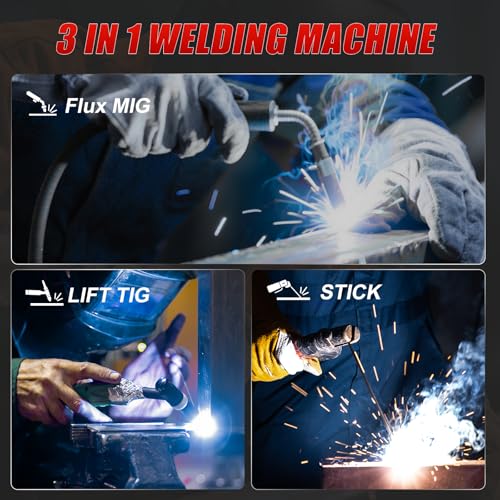
It’s not the most powerful, 145 amps is solid but not class-leading, and TIG capability requires a separate torch, which is a slight letdown. Still, for the price, it packs a lot: Stick, MIG, and Lift TIG in one box, plus gloves, goggles, rods, and even a small hammer. Compared to the TOOLIOM or ARCCAPTAIN models, it’s a little less refined in build, but owners say it holds up well for light to mid-duty use. My take? If you want one tool that does a little of everything without breaking the bank or your back, this is a smart pick.
Product photos
ARCCAPTAIN 135A with Large LED
Strengths
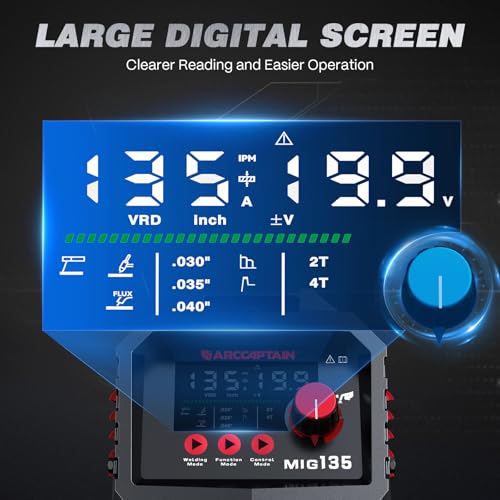
- Large, clear LED display
- Beginner-friendly synergy mode
- Lightweight with shoulder strap
Trade-offs
- TIG torch sold separately
- Plastic casing less durable
- Average duty cycle
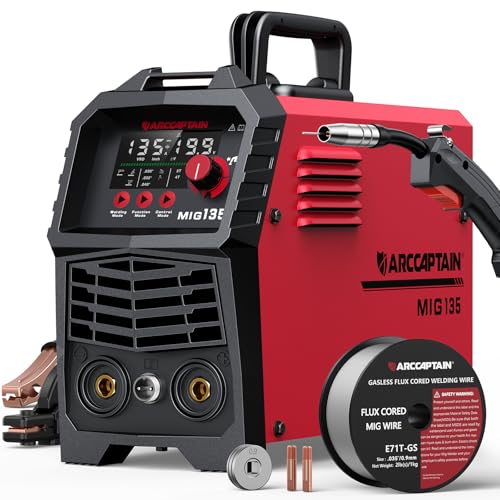
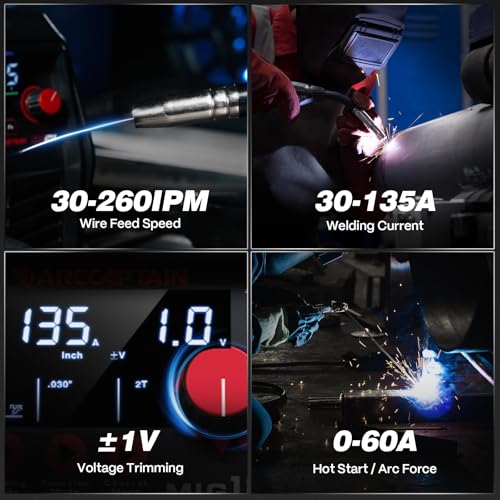
The ARCCAPTAIN 135A wins on usability. The large LED display is bright, easy to read, and stays visible even in dim garages, something many users specifically call out. The interface is intuitive, and the synergy mode really helps beginners get good results fast. Set wire size and thickness, and it dials in the settings. But it doesn’t lock out pros: you can manually tweak voltage, use 2T/4T triggers, and adjust Hot Start and Arc Force on Stick mode.
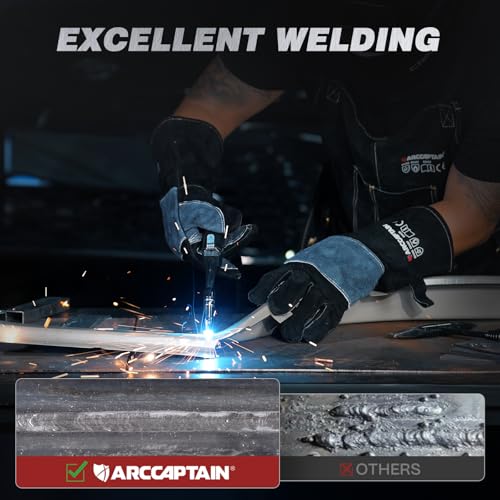
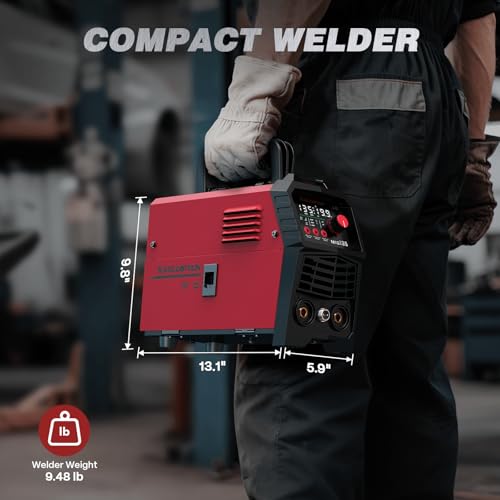
At just 9.48 lbs, it’s incredibly portable, and the shoulder strap is a nice touch for mobile work. Owners report strong arc starts and clean beads, especially in MIG mode. Compared to the YESWELDER or TOOLIOM, it feels slightly more polished in layout and responsiveness. It lacks a TIG torch, like most in this class, but overall, it strikes a great balance between beginner ease and pro-level control. If you want a machine that’s easy to learn on but won’t hold you back, this is a top contender.
Product photos
YESWELDER 135A 3-in-1 MIG
Strengths
- Affordable price point
- Bonus wire included
- Digital display
Trade-offs
- TIG torch sold separately
- Basic build quality
- Average heat management
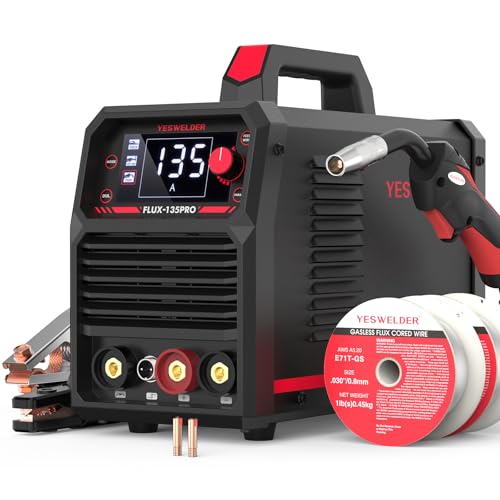
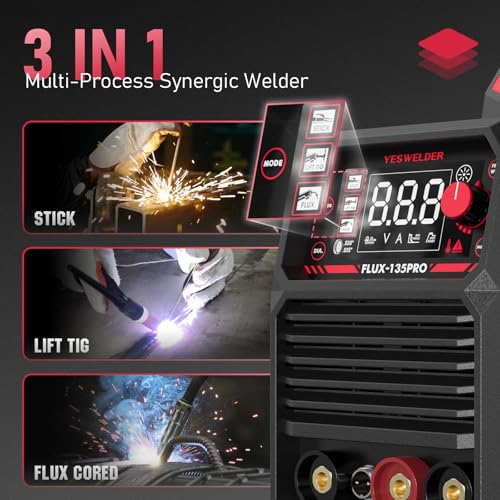
The YESWELDER 135A is the budget-friendly pick that doesn’t feel cheap. At 11.4 lbs, it’s light and easy to move, and the inclusion of a full 2LB spool of E71T-GS flux-core wire means you can start welding immediately, no extra trips to the store. The synergic control works well, automatically matching voltage to wire speed, and the digital display gives real-time current feedback, which is rare at this price.
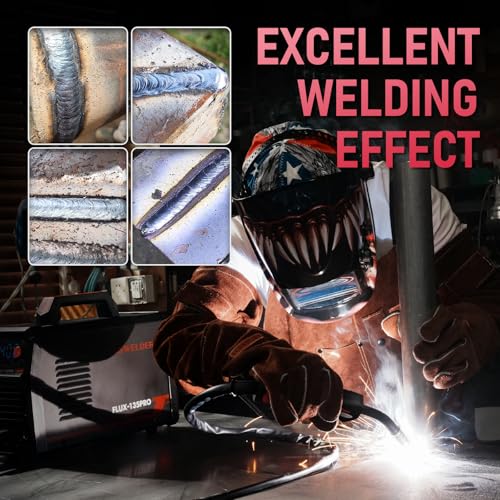
Owners consistently report solid performance for the cost, with good arc starts and manageable spatter. It doesn’t have dual voltage or PULSE like the ANDELI, but for someone on a tight budget who still wants 3-in-1 capability, it’s hard to beat. Compared to the Futelo, it feels slightly more robust, though both are strong value picks. I’d recommend this to first-time buyers or those who need a backup machine without overspending.
Product photos


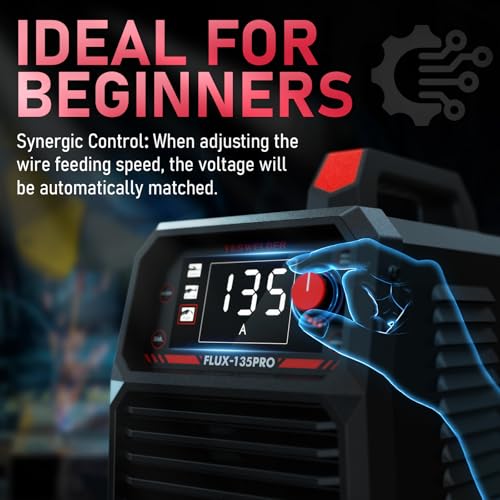
Lincoln Electric 90i FC Welder

Strengths
- Compact and portable
- Shoulder strap included
- Lincoln reliability
Trade-offs
- Low amperage (90A)
- Limited to thin metal
- No digital display
The Lincoln 90i FC is the definition of simple and effective. With 90 amps, it’s not powerful, but it’s designed for small jobs, think trailer hitches, broken brackets, or fence post repairs. What I appreciate is the shoulder strap and protective metal case, this is clearly built for someone who moves it from site to site. The two-knob control (voltage and wire speed) is dead simple, and Lincoln’s inverter tech keeps the arc smooth even on shaky power.
It won’t weld thick steel, and it’s not multi-process, but for light-duty users, that’s not the point. Compared to the Forney 140, it’s less powerful but more portable and easier to store. Owners say it’s reliable and perfect for occasional use. If you’re a homeowner who only welds a few times a year, this is the kind of set-it-and-forget-it tool that works when you need it.
Product photos


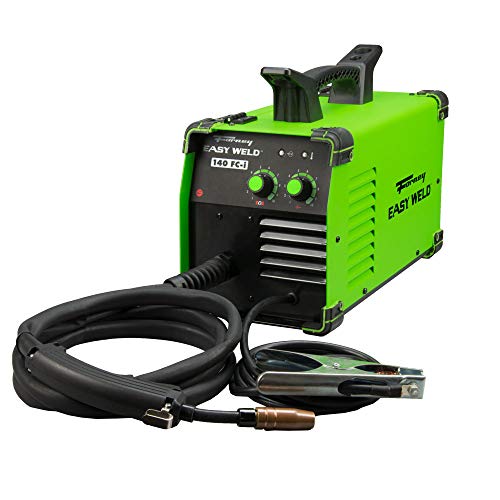
FORNEY 140 FC-I Flux Core
Strengths
- Durable metal housing
- No gas required
- True 140 amp output
Trade-offs
- Heavier than newer models
- Flux-core only
- No digital display
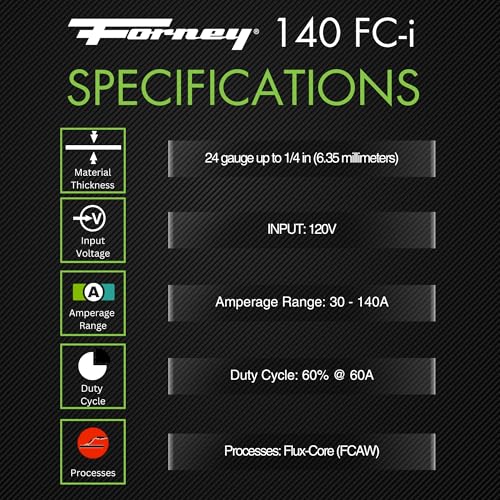
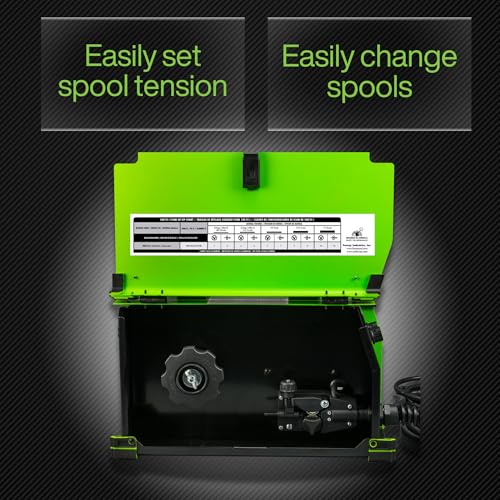
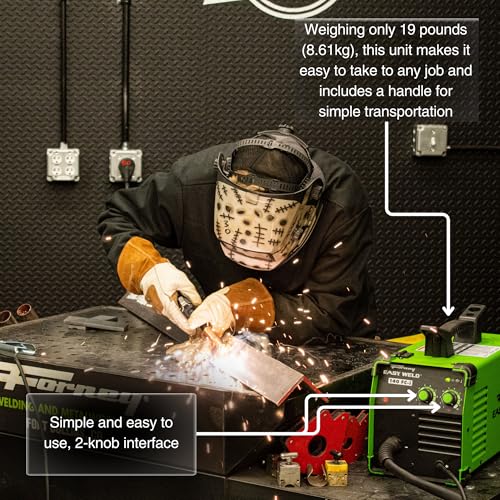
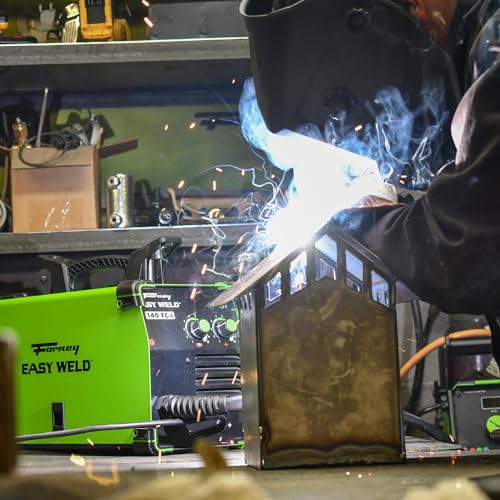
I’ve seen a lot of entry-level welders come and go, and the Forney 140 FC-i keeps showing up in garages and toolboxes for good reason. On paper, it’s simple: 140 amps, flux-core only, no gas required, and it runs on standard 120V. But what owners consistently report is how reliable and durable it feels for its class. The all-metal case isn’t just for looks, it holds up in real-world use, and that matters when you’re tossing it in a truck bed or using it on a muddy job site.
It doesn’t have digital displays or fancy synergy modes, but that’s not the point. This is a no-nonsense machine with infinite voltage and wire speed control, which gives you real tuning ability once you learn your wire. It’s not the lightest, at 19 pounds, but it’s manageable. Compared to the newer multi-process micro welders, it lacks versatility, but if you just need solid flux-core performance for basic repairs and light fabrication, I’d still consider this one of the most trustworthy starters out there.
Product photos

TOOLIOM 135A LCD MIG Welder
Strengths
- Excellent arc stability
- Large LCD display
- Fine voltage tuning
Trade-offs
- TIG torch not included
- No 220V option
- Average duty cycle
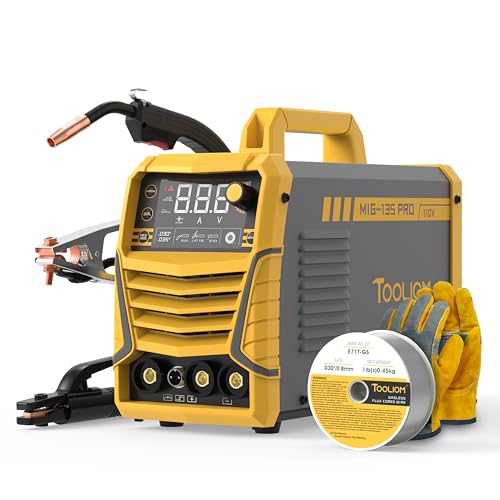
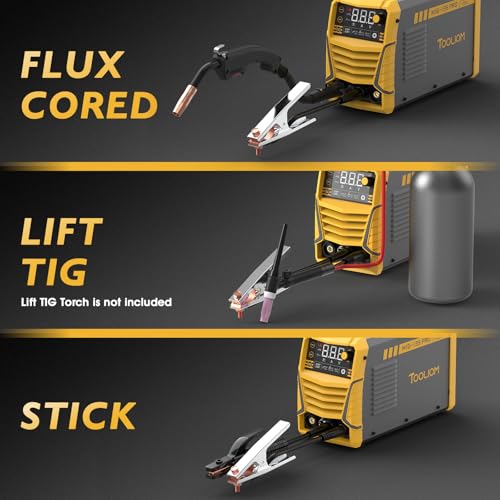
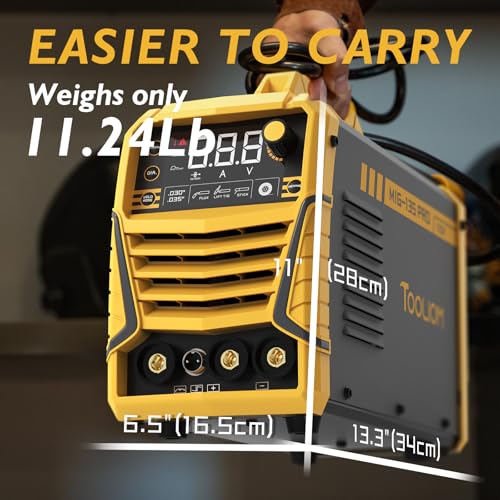
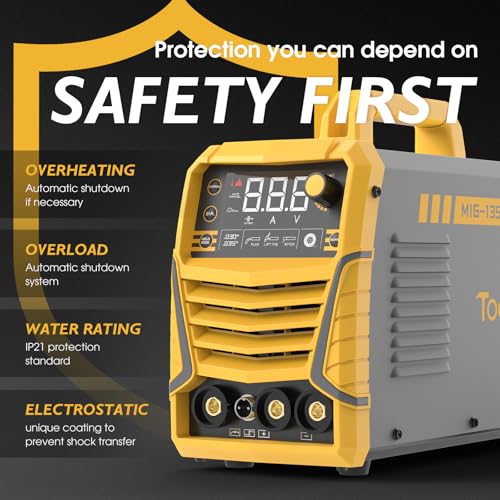
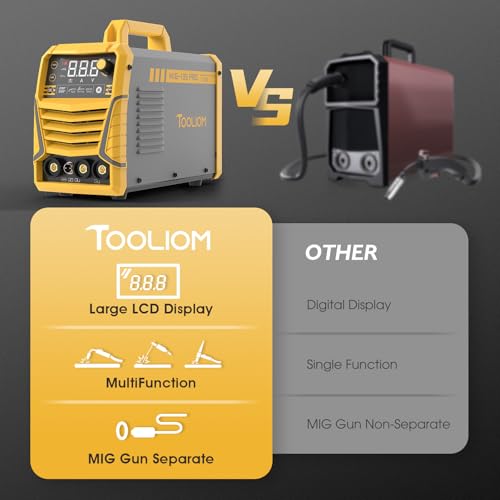
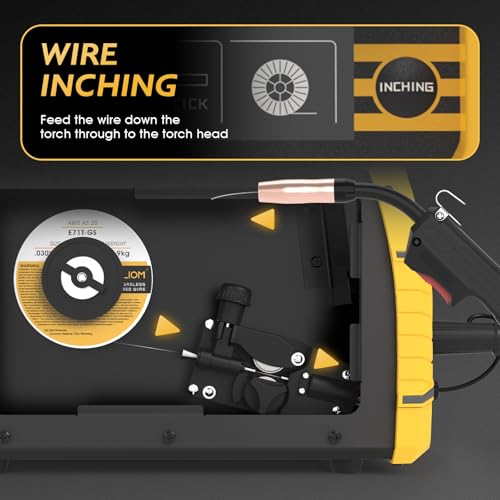
If clean, spatter-free welds are your goal, the TOOLIOM MIG135 stands out. Its precision synergic control and ±3V fine-tuning give experienced users real authority over the weld pool, while beginners can rely on auto-settings based on wire size and thickness. The LCD display is clear and shows real current, something not all budget models offer. Owners say the arc stability is noticeably smoother than comparable units, and that shows in the bead quality.
At 11.24 lbs, it’s light but not the lightest, and it includes gloves and wire, so you’re ready to go. Compared to the Futelo, it feels a bit more refined, with better internal component layout and heat dissipation. It’s not dual-voltage, which limits flexibility, but for 120V-only users, this is one of the cleanest-running flux-core machines in the sub-$300 range. I’d recommend it to anyone who values weld appearance and control, especially for visible repairs or artistic metalwork.
Product photos
DURATECH 125A IGBT Inverter

Strengths
- All-copper internal components
- CSA certified
- Very lightweight
Trade-offs
- Lower max amperage
- No multi-process capability
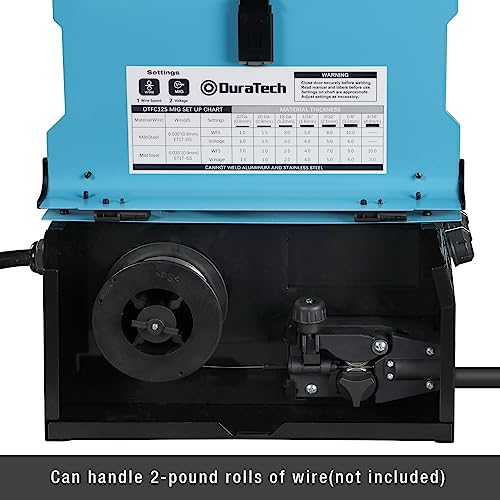
- Wire not included
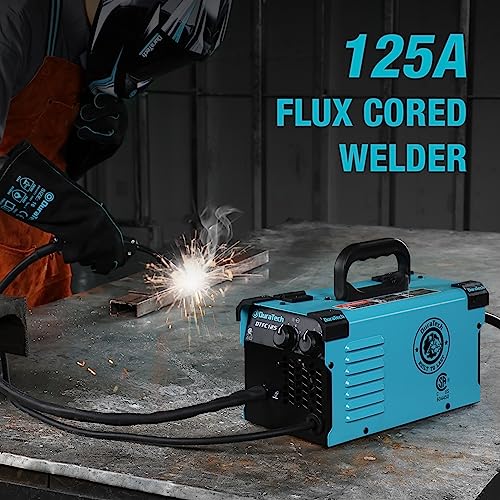
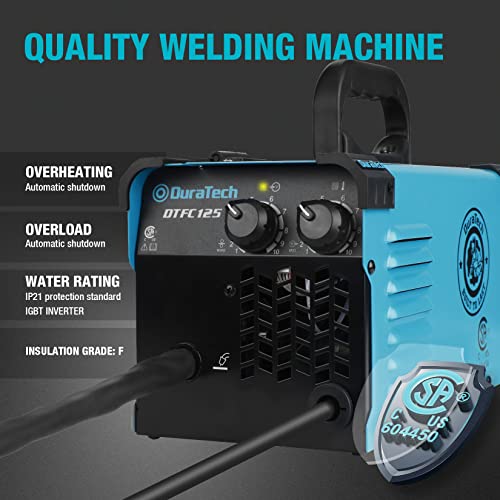
The DURATECH 125A stands out in a crowded field because of its all-copper components and CSA certification, two things that signal serious attention to electrical integrity and safety. At 10.5 lbs, it’s one of the lightest dedicated flux-core units, and the compact grip makes it easy to tote around. But what really grabs my attention is the smooth voltage and wire feed control, thanks to IGBT inverter tech. Owners report fewer arc stutters and better consistency than older-style transformers.
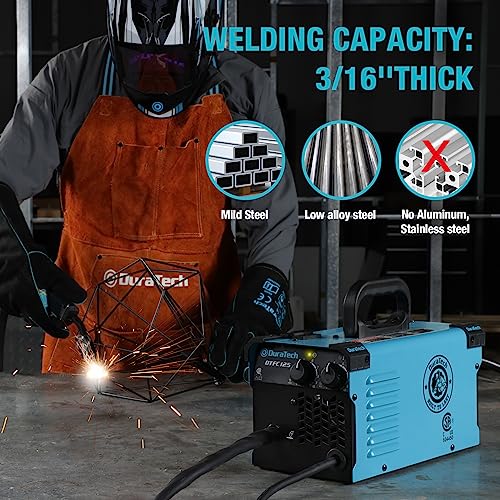
It’s only 125 amps, so it’s not the strongest, and it maxes out around 3/16″ steel, fine for small jobs but not heavy builds. Compared to the Forney 140, it’s less powerful but more modern and lighter. It doesn’t do Stick or TIG, but for pure flux-core work where build quality and electrical reliability matter, this is a quiet standout. I’d pick this for someone doing regular light welding who wants a well-built, safe machine that won’t overheat.
Product photos
ESAB Rogue EM 140 Welder

Strengths
- Trusted ESAB reliability
- Solid arc performance
- Durable construction
Trade-offs
- No digital controls
- Flux-core/MIG only
- Higher price for basic features
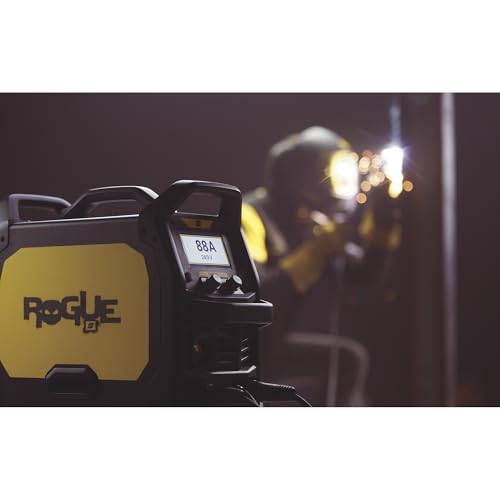
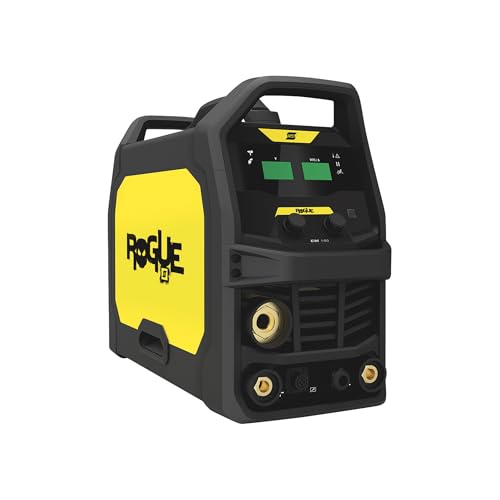
ESAB is a name you trust when things need to hold. The Rogue EM 140 doesn’t dazzle with features, it’s a straightforward flux-core/MIG machine with 140 amps and 120V input. But in my experience, brands like ESAB build tools for people who can’t afford downtime. This isn’t a flashy inverter with digital readouts, but it’s the kind of welder that gets used on job sites where reliability trumps bells and whistles.
Owners don’t rave about specs, they talk about consistent arcs and few failures. It’s built like older-school machines but with modern efficiency. Compared to budget inverter models, it’s likely overbuilt, and that shows in longevity. It doesn’t do Stick or TIG, but if you’re looking for a machine that just works, weld after weld, especially in less-than-ideal power conditions, this one earns its premium positioning. I’d pick it over flashier options if I were using it weekly for fence repairs or gate builds.
Product photos
How We Chose These flux welders
As someone who’s spent years around power tools and workshops, I understand the importance of reliable equipment, especially when it comes to welding. Rather than a hands-on lab test of each model, this selection is a research-led comparison of published specifications and features, combined with a careful weighing of owner reviews and expert opinions. I focused on identifying patterns in feedback – what users consistently praise or criticize – to build a clear picture of real-world performance.
For flux welders, the most important factors are portability and ease of use, followed closely by build quality and the ability to deliver clean, consistent welds. A welder’s amperage output and material thickness capacity dictate its versatility, but a machine is useless if it’s too cumbersome to move around the shop or if the arc is unstable. I prioritized models that struck a good balance between power and convenience, keeping in mind that many users will be tackling smaller projects or repairs. You can find a broader look at options in our MIG welder buying guide.
Specifications reliably tell you about amperage output, input voltage requirements, and duty cycle. However, owner feedback proved crucial for assessing real-world usability and build quality. Consistent reports of smooth arc starts and minimal spatter were heavily weighted, as were comments about the durability of components. Reputation matters – brands known for quality and customer support received a boost in my evaluation. I also looked at professional reviews to see which models are consistently included in lists of recommended MIG models.
How To Pick The Right flux welders
Choosing a flux welder can feel overwhelming, but focusing on a few key areas will quickly narrow down your options.
A good flux welder balances portability with enough power for the materials you intend to join. Look for models with adjustable controls for wire feed speed and voltage, a robust build quality, and safety features like overload protection. Consider the type of projects you’ll tackle – thinner materials need less amperage, while thicker steel requires more. Don’t skimp on included accessories; a complete kit saves money and gets you welding faster.
Power and Material Thickness
The amperage output is the first thing I look at. Don’t get caught up in chasing the highest number; instead, match the welder’s capacity to your typical projects. For thin sheet metal or auto body repair, a 90-125 amp machine will often suffice. If you plan on working with thicker steel – up to ¼ inch or so – you’ll want to step up to 140 amps or higher. Remember that “flux core” welding generally means you’re working with mild steel, so spec sheets referencing stainless steel or aluminum are often misleading or require additional equipment (like a spool gun).
Control and Adjustability
While “beginner-friendly” is often touted, truly useful flux welders offer more than just automatic settings. Synergic control, where the welder adjusts voltage based on wire speed, is a good starting point, but the ability to fine-tune that voltage is crucial for dialing in clean, consistent welds. Look for welders with a clear, easy-to-read display – the ESAB Rogue EM 140 stands out here – and intuitive controls. I’ve seen too many folks struggle with welders that have overly complex interfaces.
- A simple voltage adjustment knob is essential for experienced welders.
- Digital displays showing real-time amperage are incredibly helpful, especially for learning.
- A selectable 2T/4T trigger mode is useful: 2T requires you to hold the trigger for continuous welding, 4T lets you tap the trigger to start and tap again to stop, freeing up your hand.
A tight arc and minimal spatter are signs of a well-tuned welder, and that relies on having precise control over your settings.
Portability and Value
Flux welders are often chosen for their portability, so weight is a significant factor. Machines under 15 pounds are easy to move around a workshop or take to a job site. However, don’t sacrifice build quality for a lighter weight. The all-metal construction of the DURATECH 125A IGBT Inverter helps ensure durability. And speaking of value, consider what’s included in the box. A complete kit with a welding gun, ground clamp, electrode holder, and even some welding wire, like the Futelo 145A, can save you a significant amount of money and time. You can find more information about recommended flux core machines if you are still deciding. Don’t forget to research the best flux core wires to get the most out of your new welder.
Flux Welders Compared
Here’s a comparison of key specifications for several popular flux welders.
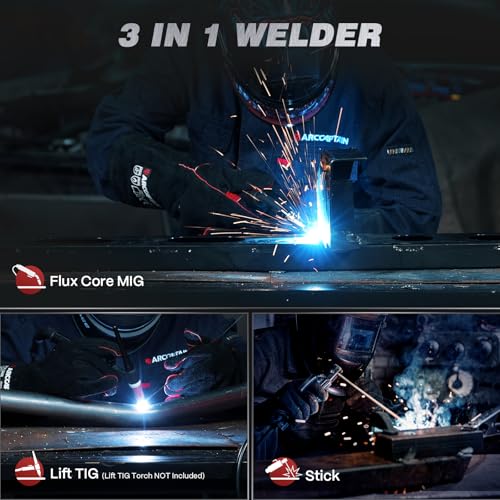
| Product Name | Amperage | Input Voltage | Processes | Wire Diameter Support | Weight (lbs) | Display Type |
|---|---|---|---|---|---|---|
| ANDELI 135A | 135A | 110V/220V | MIG, TIG, Stick | .030″.035″.040″ | 9.04 | LED |
| Futelo 145A | 145A | 110V | MIG, Stick, TIG | .030″.035″ | 7.5 | LED |
| ARCCAPTAIN 135A | 135A | 110V | MIG, TIG, Stick | N/A | 9.48 | Digital |
| YESWELDER 135A | 135A | 110V | MIG, Stick, TIG | .030”.035” | 11.4 | Digital |
| Lincoln Electric 90i FC | 90A | 120V | MIG (Flux Core) | N/A | 15 | N/A |
| FORNEY 140 FC-I | 140A | 120V | MIG (Flux Core) | 0.030 in | 19 | N/A |
| TOOLIOM 135A | 135A | 110V | MIG, Stick, TIG | 0.030”, 0.035” | 11.24 | LCD |
| DURATECH 125A | 125A | 120V | MIG (Flux Core) | 0.030″, 0.035″ | 10.5 | N/A |
| ESAB Rogue EM 140 | 140A | 120V | MIG (Flux Core) | N/A | N/A | N/A |
Frequently Asked Questions
What’s the difference between flux-cored and MIG welding?
Flux-cored welding uses a continuously fed tubular electrode filled with flux, eliminating the need for shielding gas. MIG welding requires external shielding gas, offering cleaner welds but adding complexity and cost – flux-cored is generally simpler for beginners and outdoor use.
Can a flux welder be used for aluminum?
Generally, no. Most flux welders are designed for mild steel, and flux-cored wire intended for aluminum is rare and requires specialized equipment like a spool gun to feed properly. You’ll need a dedicated MIG welder with the correct spool gun and aluminum wire for successful aluminum welding.
What input voltage do I need for a flux welder?
Most entry-level flux welders operate on standard 120V household outlets, which is convenient. However, some higher-amperage models require a 240V input, so confirm your shop or garage has the appropriate outlet before purchasing.
How much welding wire will I go through with a flux welder?
Wire consumption varies greatly based on amperage, welding speed, and project size. As a rough estimate, expect to use around 1-2 pounds of wire for every 100 feet of weld, but this is a very general guideline. It’s wise to buy a 10-pound spool initially to avoid running out mid-project.
Are flux welders suitable for outdoor projects?
Yes, flux welders are better suited for outdoor work than standard MIG welders. Because they don’t require shielding gas, wind isn’t a factor, and they’re often among the most portable welders available, making them convenient for on-site repairs.
The Bottom Line
Choosing a flux welder often comes down to balancing convenience with capability. While many models offer similar features, the FORNEY 140 FC-I consistently rises to the top as a strong all-around performer, offering a good blend of power, ease of use, and durability for a reasonable price. It’s a solid choice for most home DIYers and those tackling occasional repair work.
For those on a tighter budget, the Futelo 145A provides excellent value, bundling a good set of accessories with a surprisingly capable machine. If portability is your biggest concern, the ANDELI 135A is an attractive option, weighing in at just over 9 pounds without sacrificing too much power. You can find more in-depth reviews of best wire feed welders to help narrow your search.
Ultimately, specs and features are less important than understanding your own needs and developing a consistent technique. A well-maintained, properly set-up welder in the hands of a skilled operator will always outperform a top-of-the-line machine used incorrectly. Focus on learning the fundamentals of welding – proper travel speed, consistent arc length, and good joint preparation – and you’ll be well on your way to creating strong, reliable welds.
