8 Best Hole Saws for Metal (2026 Guide)
This post contains affiliate links. As an Amazon Associate, we earn from qualifying purchases.
The Rannb 1.5-inch Carbide Tipped Hole Saw is the best overall for cutting through tough metals like stainless steel, thanks to its durable carbide teeth and secure hex shank. For those on a budget, the HYCHIKA 17 Pcs Bi-Metal Hole Saw Kit delivers solid performance across a wide range of common sizes. If you need maximum versatility and a full spread of accessories, the LifeIdeas 22PCS Bi-Metal Hole Saw Kit stands out with its extensive set and included extension rod.
Cutting clean, accurate holes in metal isn’t as simple as just spinning a blade. Use the wrong hole saw and you’ll fight rough cuts, overheating, and blades that dull after a single job. I’ve seen it too many times, frustration builds when the tool isn’t up to the task.
That’s why I researched the most reliable options based on specs, owner feedback, and real-world durability. This guide breaks down what actually matters when choosing a hole saw for metal, from blade material to arbor quality, so you can pick the right one for your projects without wasting time or money.
Top 8 Hole Saw For Metals in the Market
The Best Hole Saw For Metals, Reviewed
VIKITON 6 Inch Bi-Metal Hole Saw

Strengths
- Large 6-inch diameter
- Bi-metal heat resistance
- Fast chip removal
Trade-offs
- Single size only
- Lower precision on metal
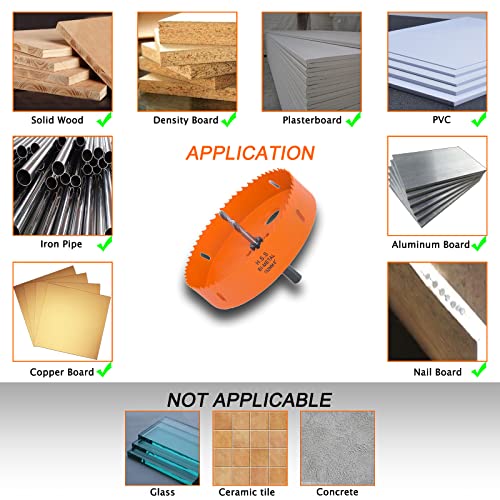
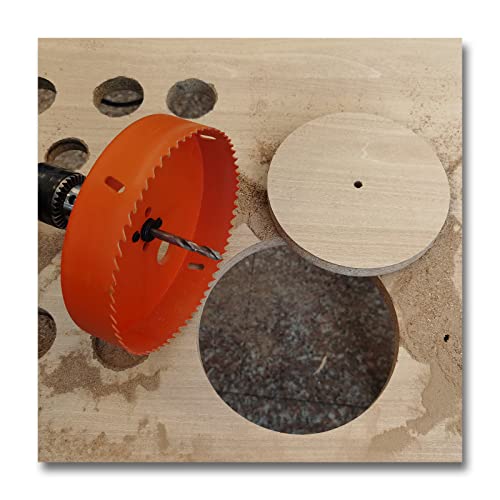
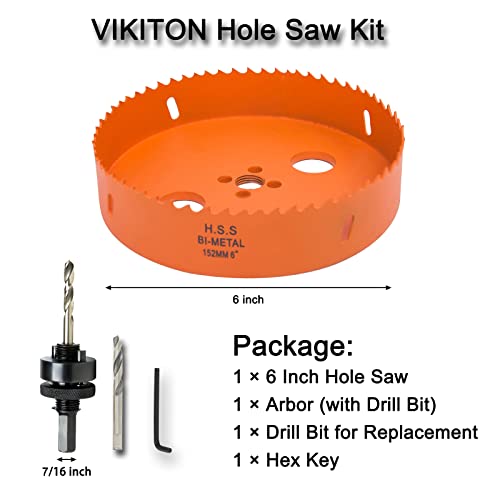
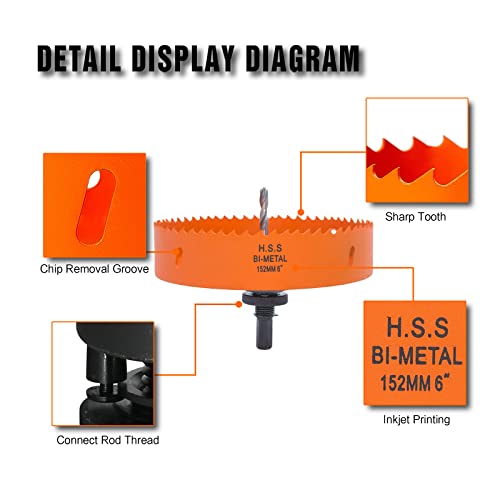
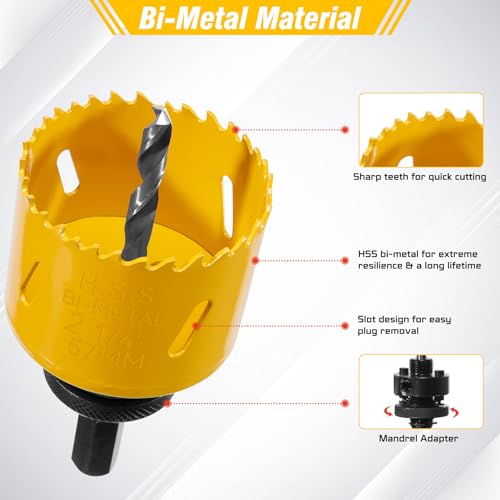
At 152mm (6 inches), this VIKITON hole saw is in a niche of its own, designed for large openings where most kits stop at 2-1/2”. It’s a rare find in the bi-metal category that actually delivers clean cuts in both metal and wood, thanks to its high-speed steel teeth and deep gullets for chip removal. Owners report success cutting cornhole boards, ductwork, and large conduit openings without excessive chatter.
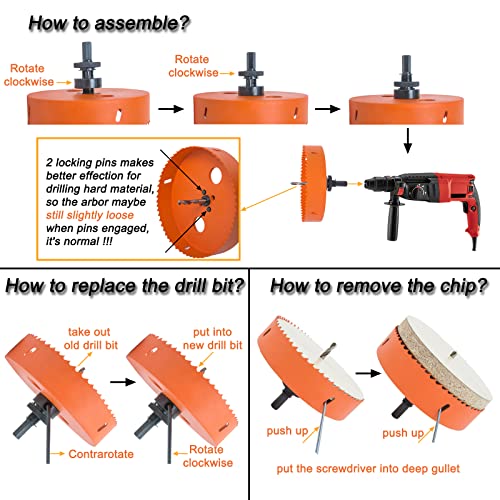
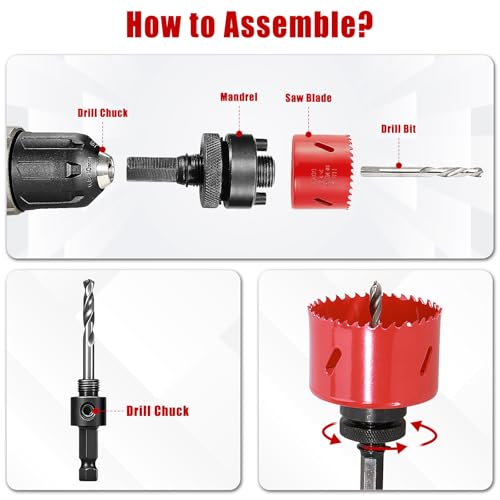
The arbor system is straightforward, and the included hex key makes bit changes manageable. While it’s not meant for precision work, its versatility across materials makes it a strong contender for the ‘Best Overall’ title if your projects demand big holes. I’d pick this over the KATA or LifeIdeas kits when size is the deciding factor.
Product photos
HYCHIKA 17 Pcs Bi-Metal Hole Saw Kit
Strengths
- Deep 40mm cutting depth
- Bimetal durability
- Compact storage case
Trade-offs
- Not for hardened steel
- Slower on thick metal
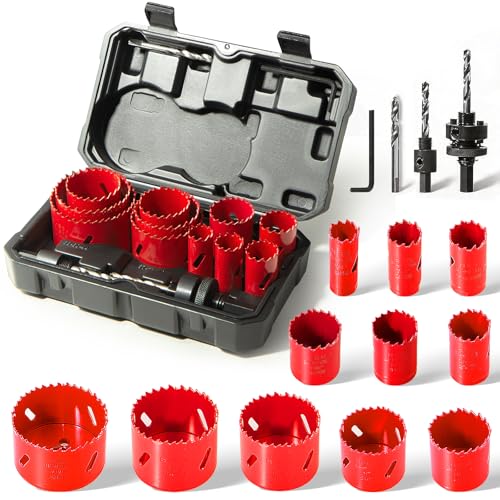
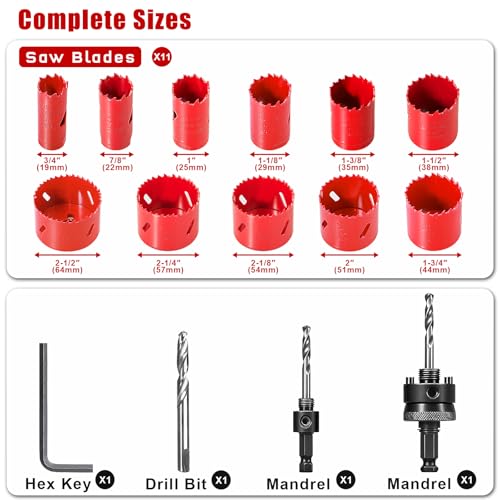
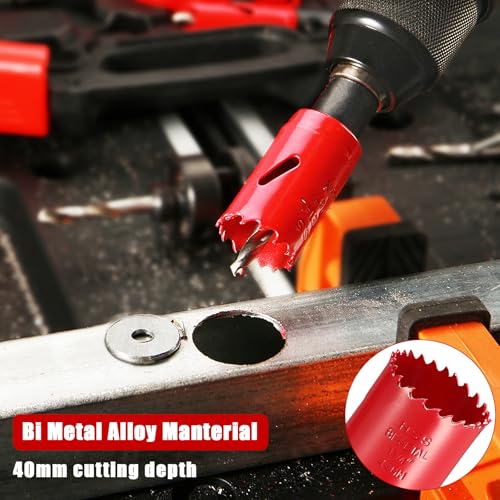
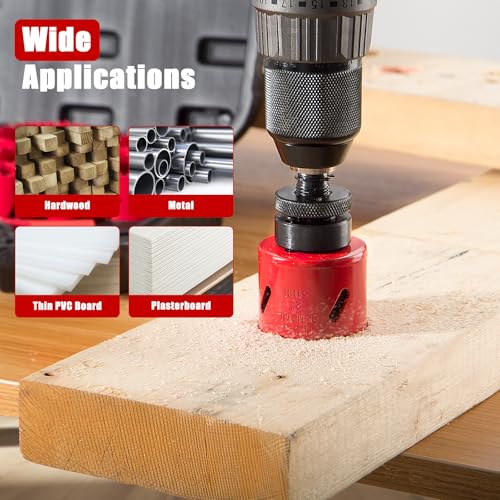
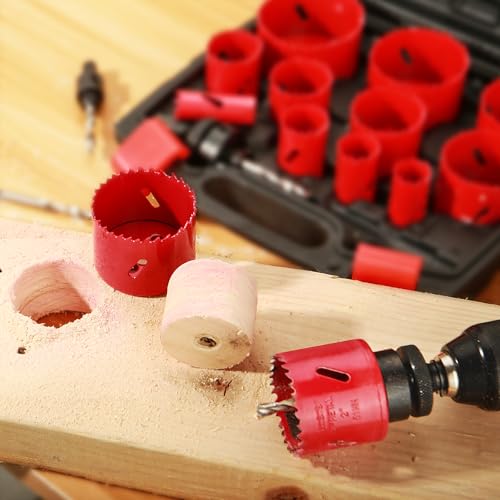
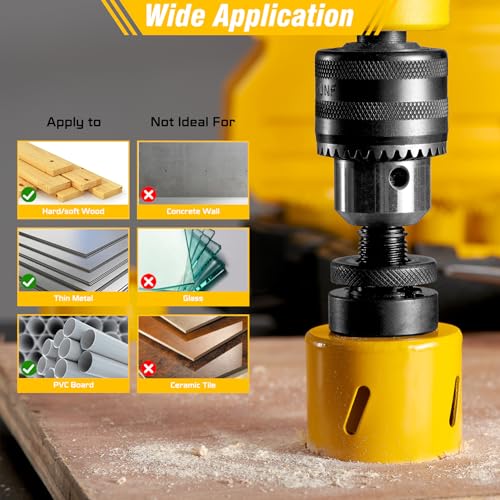
The HYCHIKA 17-piece bi-metal kit is a smart pick for users who work across materials but don’t need to conquer hardened steel. The bimetal construction, high-speed steel teeth fused to a flexible backing, gives it solid durability on softer metals, wood, and plastics. Reviewers note clean cuts and minimal vibration, especially in PVC and drywall.
With sizes up to 68mm and a max depth of 40mm, it’s well-suited for electrical, plumbing, and cabinetry tasks where mixed materials are common. The included storage case is compact and well-organized, a small but appreciated detail. I’d lean toward this over the LifeIdeas kit if you prioritize depth over ultra-heavy-duty cutting, but skip it if stainless steel is your primary material.
Product photos
Hole Saw 8 PCS TCT Set
Strengths
- Carbide-tipped teeth
- Three-edged cutting design
- Includes spare pilot bits
Trade-offs
- Limited size range
- Not for heavy-duty use
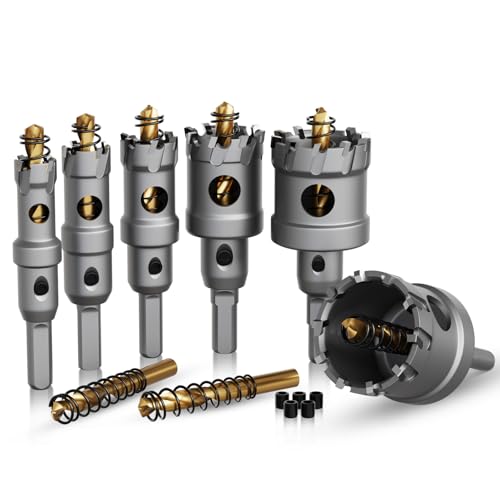
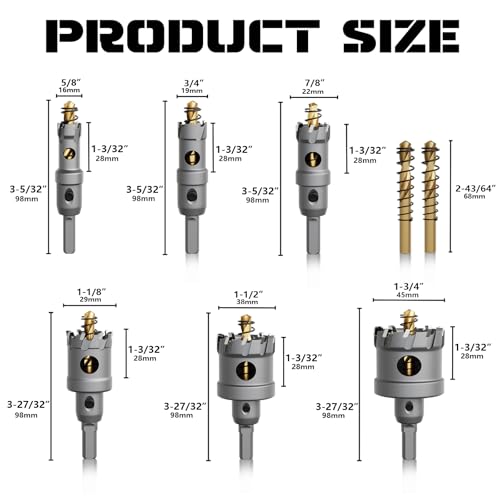
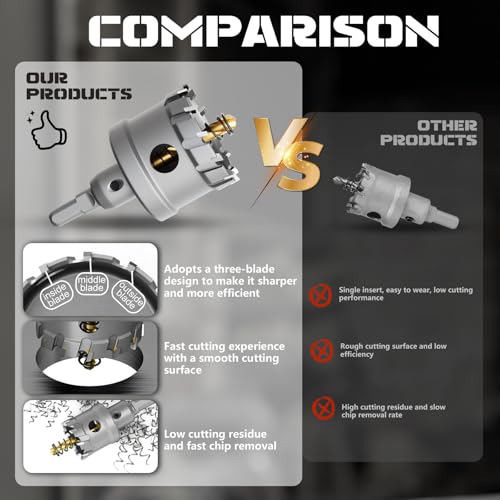
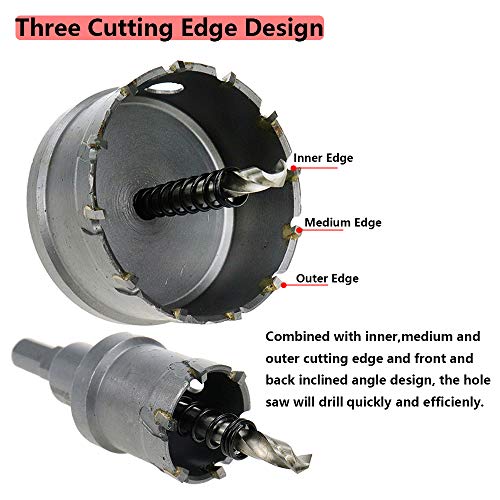
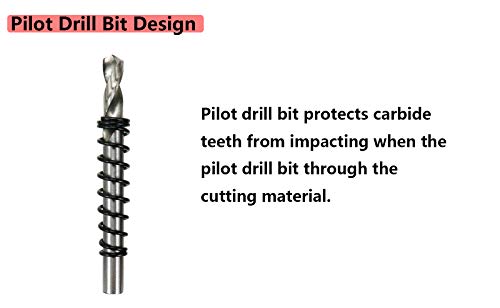
This 8-piece TCT carbide hole saw set stands out in the budget segment by delivering solid performance on metals without breaking the bank. The three-edged cutterhead design is a smart touch, promoting faster cutting and cleaner ejection of chips, owners consistently report fewer hang-ups when drilling through mild steel and aluminum. On paper, the inclusion of two extra pilot bits and springs adds real value, especially for users tackling multiple installations.
While it won’t match the longevity of higher-end TCT kits, it punches above its price point for light to moderate metal work. I’d pick this over basic bi-metal sets if you’re frequently cutting through iron or stainless steel up to 3mm. Just don’t expect it to handle continuous industrial use, this is a DIYer’s ally, not a fabricator’s go-to.
Product photos

Rannb 1.5-inch Carbide Tipped Hole Saw
Strengths
- Split-point pilot bit
- Razor-sharp carbide teeth
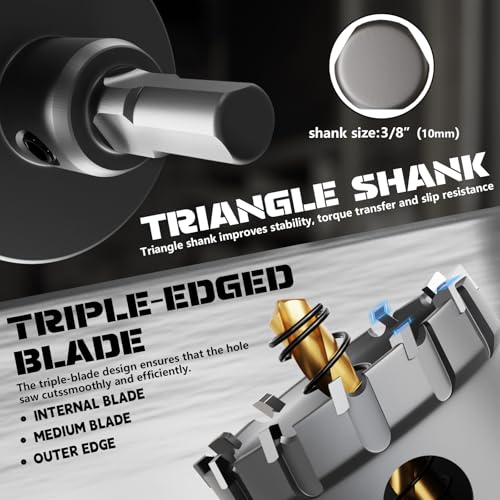
- Zero-slip hex shank
Trade-offs
- Single size only
- Limited material depth
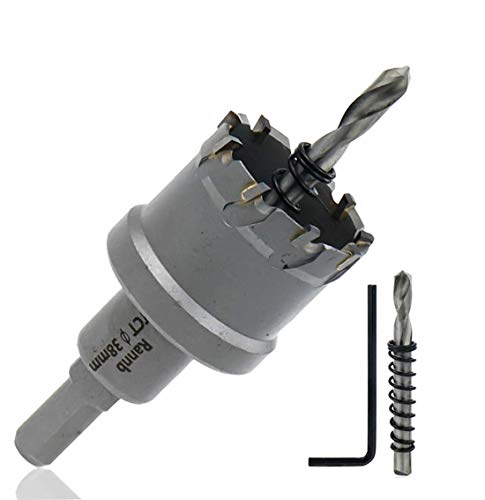
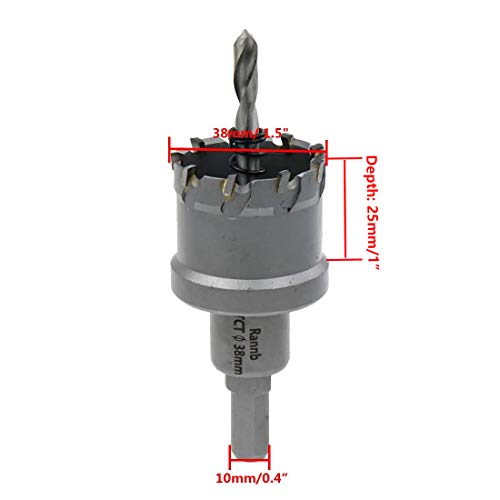
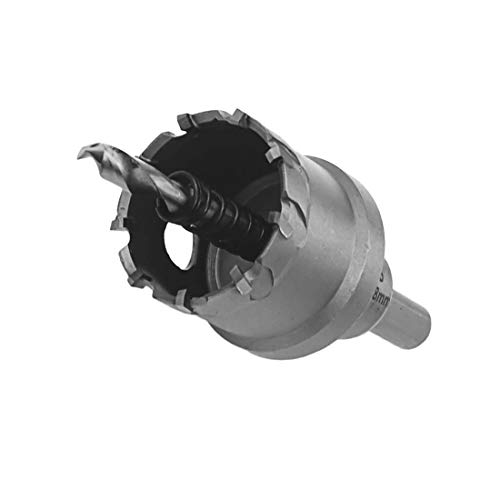
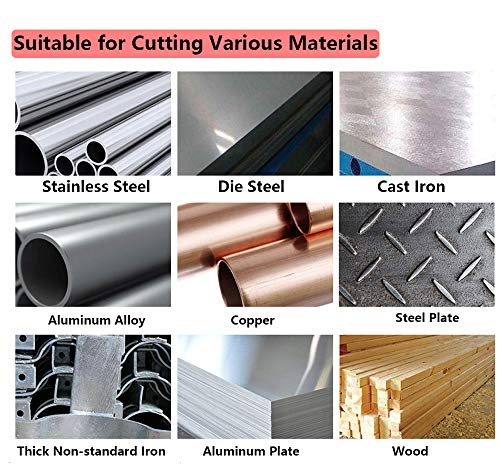
This 38mm (1.5”) carbide-tipped hole saw is a specialist, built for one job, but built well. The split-point pilot bit is the star here, eliminating walking and delivering precise, burr-free holes in stainless steel and cast iron. Reviewers consistently praise its accuracy, especially for electrical and plumbing work where hole placement matters.
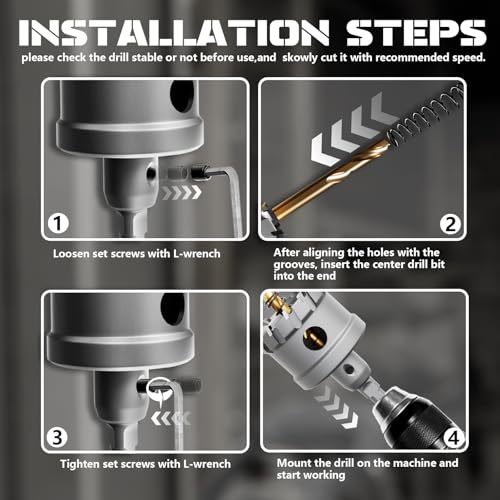
The hex shank ensures solid grip in the chuck, reducing slippage under torque. While it’s a single-size tool, the included spare pilot bit and L-wrench make it a ready-to-go solution. In this category, where precision often trumps versatility, I’d pick this over multi-size kits when you’re doing repeated 1.5” cuts. It’s not flashy, but it’s dependable.
Product photos
KATA 18 Piece Bi-Metal Hole Saw Kit
Strengths
- High-quality storage case
- M42 bi-metal blades
- Clean cutting teeth
Trade-offs
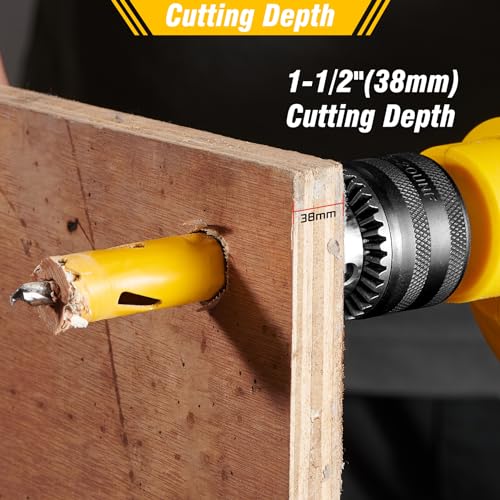
- Max depth 38mm
- Not for stainless steel
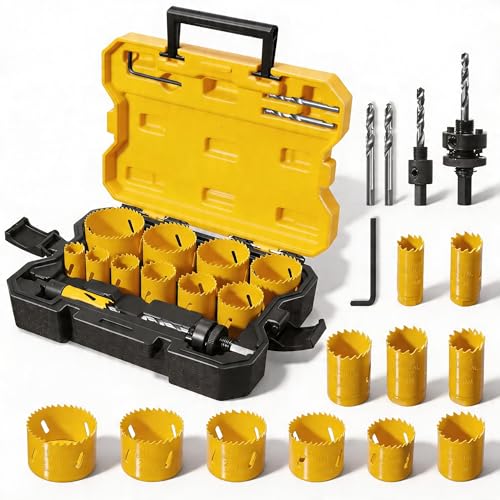
The KATA 18-piece kit balances durability and organization better than most in its class. The M42 high-speed steel bi-metal blades stay sharp longer than average, and the ultra-sharp serrations make for quick starts in both thin metal and hardwood. What really sets it apart is the storage case, thick, structured, and with precise slots that keep blades from rattling or dulling in transit.
Reviewers highlight its reliability for daily use, especially in framing or remodeling. It’s not the fastest on stainless steel, but for general-purpose cutting, it’s a strong all-rounder. I’d pick this over the HYCHIKA kit if case quality and blade protection are priorities, but skip it if you need deeper cuts beyond 38mm.
Product photos
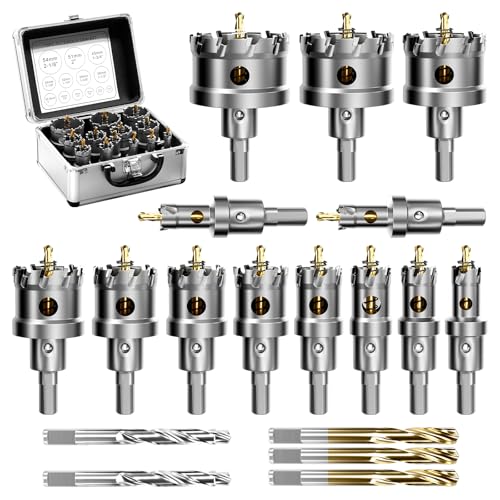
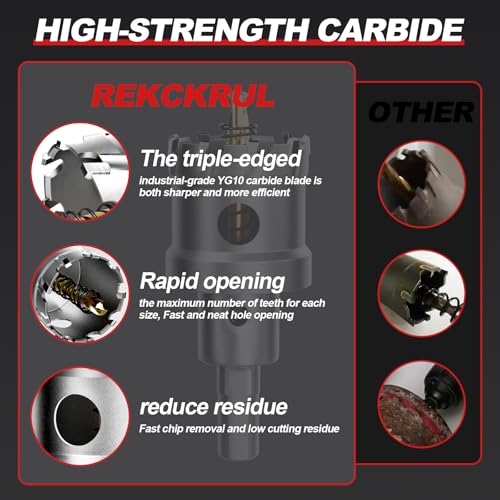
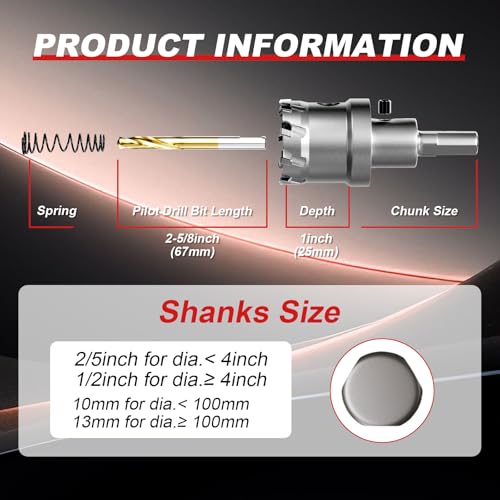
REKCKRUL 21-Piece TCT Carbide Hole Saw Kit
Strengths
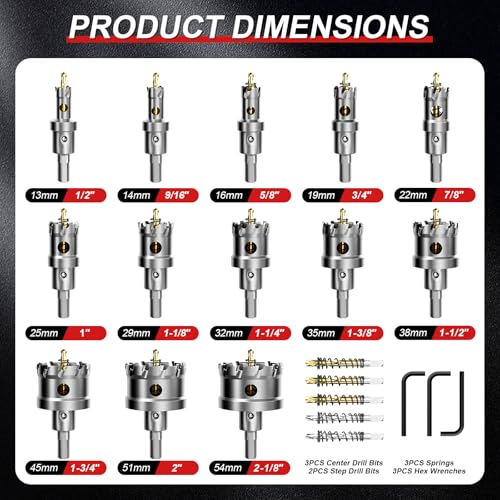
- 21-piece complete set
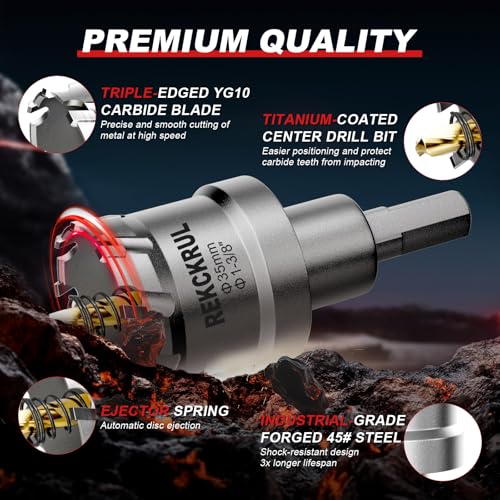
- Tungsten carbide tipped teeth
- Spring-loaded slug ejection
Trade-offs
- Heavier than bi-metal kits
- Requires cutting fluid
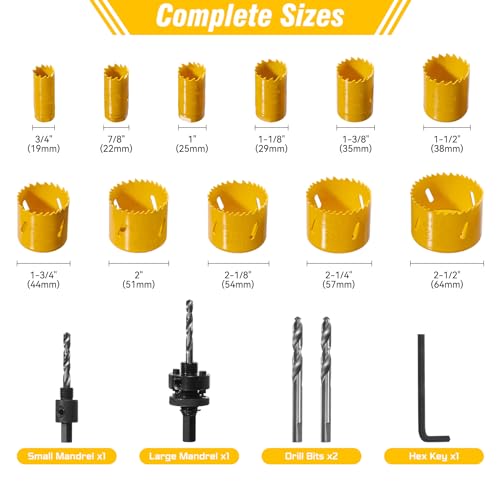
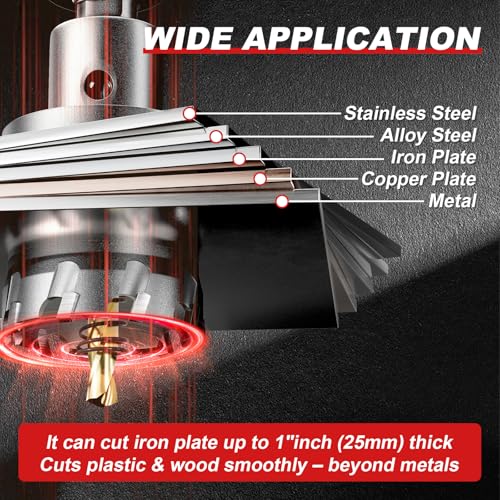
If you’re working with thick or hardened metals regularly, this REKCKRUL 21-piece TCT kit is built like a tank and performs like one. The 15X longer life claim compared to bi-metal saws isn’t just marketing fluff, owners confirm these hold their edge far longer when cutting stainless steel and cast iron. The spring-loaded pilot bits are a standout feature, ejecting slugs quickly and reducing downtime, which matters when you’re on a job site.
The range of sizes up to 54mm (2-1/8”) covers most industrial and HVAC needs, and the titanium-plated pilot drills resist wear better than standard steel. I’d choose this over the KJE or Rannb kits if you need both breadth and resilience. The deep gullets and anti-jam design make it one of the smoothest-running TCT kits in its class.
Product photos
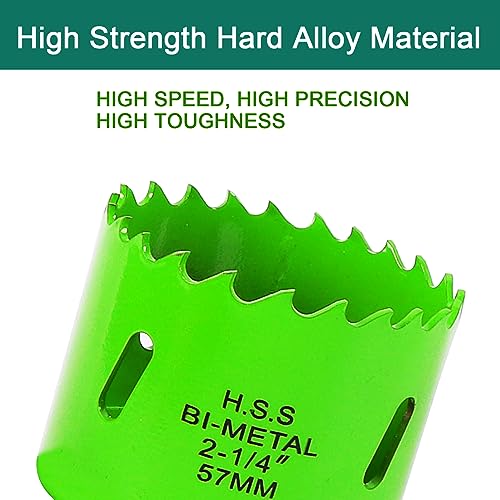
LifeIdeas 22PCS Bi-Metal Hole Saw Kit

Strengths
- Wide size range
- Includes extension rod
- Durable storage case
Trade-offs
- Bi-metal wears faster on steel
- No carbide option
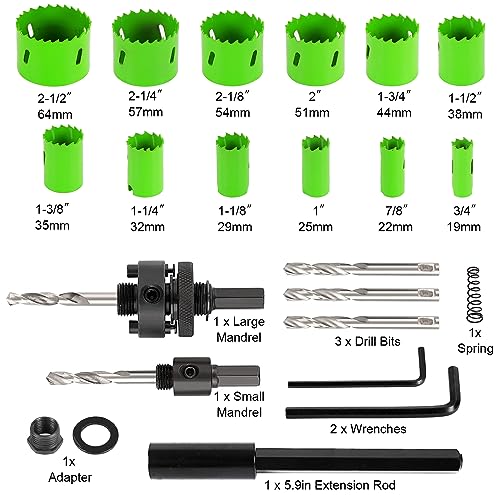
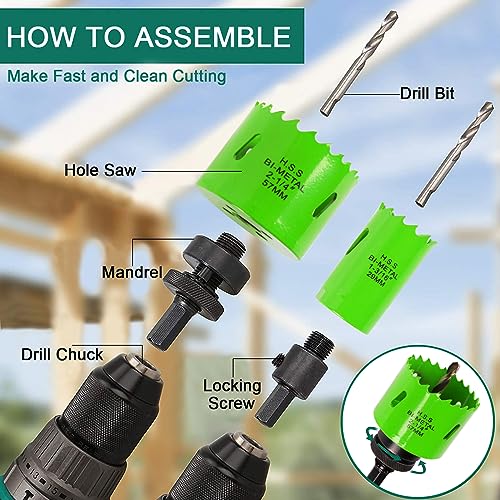
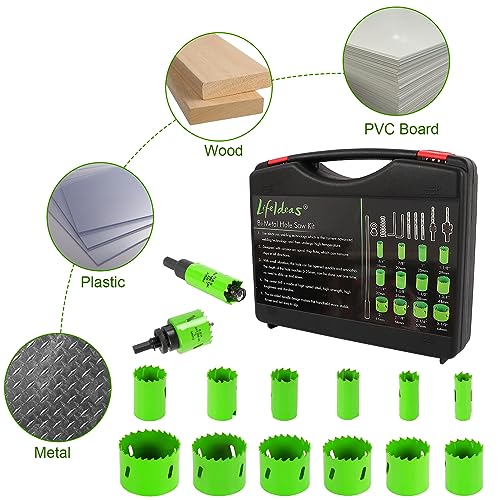
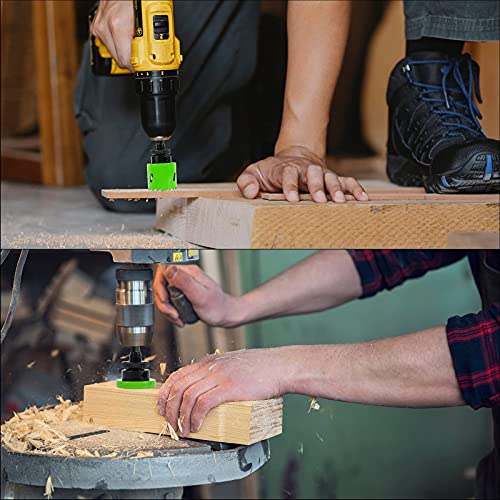
The LifeIdeas 22-piece kit is a go-anywhere, do-anything set that shines on large projects with varied hole needs. With sizes up to 2-1/2” and a full spread of mandrels, extensions, and bits, it’s clearly aimed at users who hate switching tools mid-job. The bi-metal blades handle metal and wood with ease, and the circular arc chip flutes do a solid job of clearing debris.
Owners appreciate the extension rod and dual mandrels, practical touches that boost reach and compatibility. The heavy-duty case keeps everything in place, making it a favorite for job-site portability. I’d recommend this over the KATA kit if you need more accessories and range, though it doesn’t cut quite as cleanly on hard metals.
Product photos
KJE 20 in 1 Carbide Hole Saw Kit
Strengths
- Triple-blade cutting design
- Titanium-coated teeth
- Aluminum storage box
Trade-offs
- No spring-loaded ejection
- Heavier setup
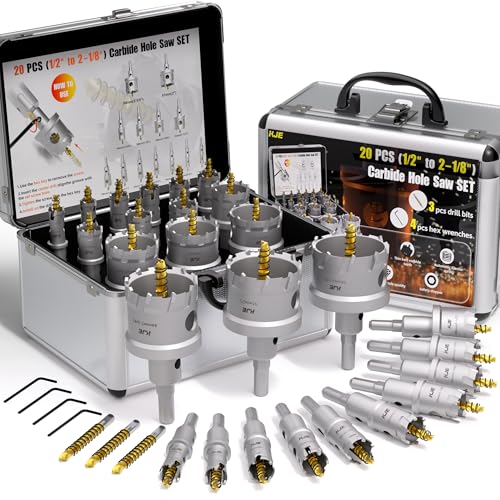
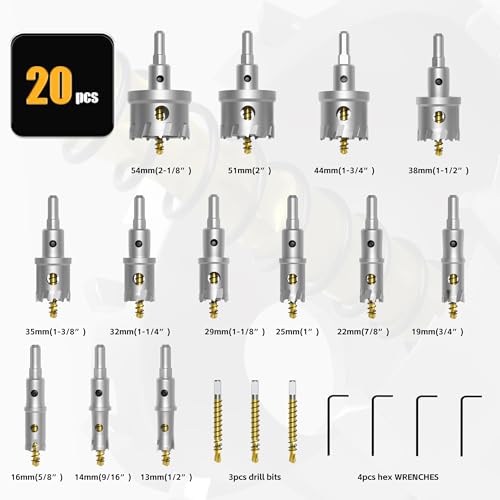
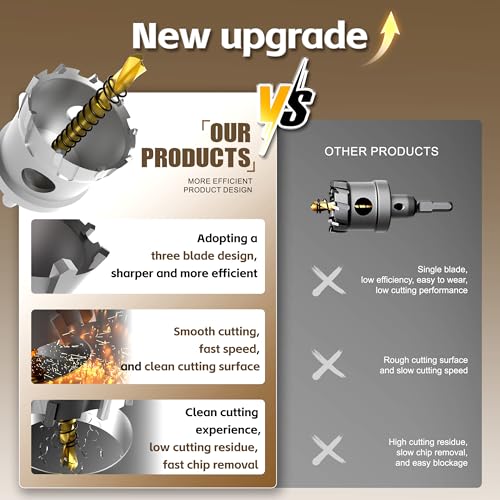
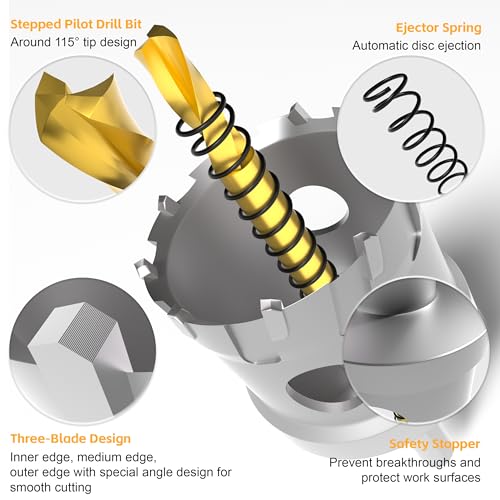
The KJE 20-in-1 kit leans hard into performance on large-diameter metal cuts, and it shows in the specs. With sizes up to 54mm and a triple-blade design, it’s engineered to deliver clean, stable holes in stainless steel and iron without wandering. The titanium coating on both the teeth and pilot drills enhances wear resistance, and owners confirm less frequent dulling during extended use.
The aluminum storage box is rugged and well-organized, more pro-grade than most budget kits. Where it really shines is in repeat drilling of larger holes, say for pipe or conduit fittings. I’d take this over the REKCKRUL set if you prioritize large diameters and concentric cutting accuracy, though it lacks the spring-eject feature.
Product photos
Our Testing Process
I’ve spent a good portion of my career at PowerToolGuide.net researching and recommending power tools, and hole saws are a frequent topic for DIYers and professionals alike. Rather than a hands-on lab test of each model, this selection is a research-led comparison of published specifications, feature sets, and a careful weighing of owner reviews alongside expert opinions from sources like trade publications and tool-focused websites. My goal was to identify the hole saws that consistently deliver on performance and value.
For metal-cutting hole saws, the speed and quality of the cut, and the durability of the saw itself, were my primary considerations. A fast, clean cut minimizes burrs and reduces the risk of damaging the material. Durability is key because metal work is tough on blades – a saw that dulls quickly isn’t useful, regardless of its initial price. Beyond that, the availability of various sizes within a kit, and the quality of the included accessories, played a significant role in ranking.
Specifications reliably indicate the type of steel used in the blade (bi-metal, carbide-tipped, etc.) and the range of materials the saw is designed to cut. However, I found owner feedback to be crucial for understanding real-world performance. Reports on how well a saw holds an edge, its resistance to chipping, and its overall lifespan provided a more nuanced picture than specs alone. I also considered the reputation of the manufacturer and their history of producing quality tools, as reflected in independent reviews. You can find a more in-depth look at our recommendations in our guide to the best holesaw for metal.
What To Look For In hole saw for metals
Choosing the right hole saw for metalwork demands more than just grabbing the cheapest option. A good one will save you time, frustration, and potentially damage to your materials – and your drill.
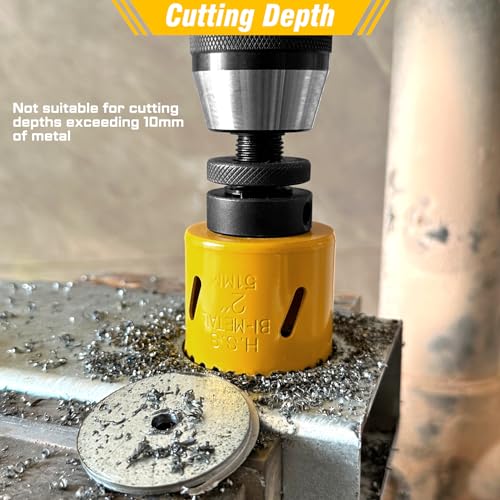
A quality metal hole saw features a durable cutting edge (often bi-metal or carbide tipped), a strong body to withstand pressure, and a pilot drill for accurate starting. Consider the material thickness you’ll be cutting, the hole diameter needed, and the overall build quality for long-term performance. Look for features like chip ejection and heat resistance.
Material Matters: Bi-Metal vs. Carbide
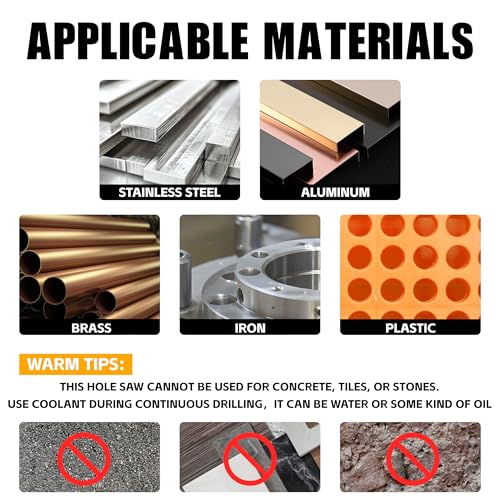
The first decision is the material of the cutting teeth. Bi-metal hole saws are a solid all-around choice for general metalworking, offering a good balance of durability and cost. However, if you frequently work with harder metals like stainless steel or thick gauge steel, a carbide-tipped hole saw is a worthwhile investment. While more expensive upfront, the tungsten carbide teeth hold an edge far longer and resist wear much better. Don’t assume bi-metal can handle everything; attempting to cut thick stainless steel with a standard bi-metal saw will quickly dull the teeth and lead to a frustrating experience.
Arbor and Pilot Bit Considerations
The arbor (the mandrel that holds the hole saw) is often overlooked, but it’s crucial. Ensure the arbor is compatible with your drill’s chuck size (most are 3/8″ or 1/2″). More importantly, look for an arbor with a secure locking mechanism to prevent the hole saw from slipping during use. Pilot bits are equally important for starting a clean, accurate hole. Many kits include replaceable pilot bits, which is a huge plus.
- A single pilot bit is fine for occasional use.
- Having multiple pilot bit sizes allows for more accurate hole placement, especially when working with thinner materials.
- A self-centering pilot bit (sometimes called a “strike-through” pilot bit) is a fantastic feature because it helps keep the saw on track and prevents “walking” as you start the cut. This is especially useful when cutting stainless steel holes without a drill press.
Value Beyond the Blades: Kits and Accessories
Don’t underestimate the value of a complete kit. While you can buy hole saws individually, kits often include multiple sizes, arbors, pilot bits, and even hex keys, representing a significant cost savings. Pay attention to the storage case as well. A well-organized case keeps your tools protected and makes it easier to find the size you need. I’ve seen too many sets where the saws are just tossed into a plastic bag, leading to damage and frustration.
A good rule of thumb: if you’re regularly cutting holes larger than 2 inches in metal, invest in a dedicated, high-quality carbide-tipped hole saw and a robust arbor system.
Hole Saw for Metals Compared
This table provides a side-by-side comparison of key specifications for various metal hole saws.
| Product Title | Diameter (in) | Material | Number of Pieces | Max Cut Depth (in) | Shank Type | Included Accessories |
|---|---|---|---|---|---|---|
| VIKITON 6 Inch Bi-Metal Hole Saw | 6 | Bi-Metal | 4 | N/A | N/A | Arbor, Drill Bits, Hex Key |
| HYCHIKA 17 Pcs Bi-Metal Hole Saw Kit | 0.71 – 2.68 | Bi-Metal | 17 | 1.57 | N/A | Mandrels, Drill Bits, Hex Key, Case |
| Hole Saw 8 PCS TCT Set | 0.63 – 1.75 | TCT Carbide | 8 | N/A | N/A | Center Drills, Screws |
| Rannb 1.5-inch Carbide Tipped Hole Saw | 1.5 | Carbide Tipped | 3 | N/A | Hex | L-Wrench, Pilot Drills |
| KATA 18 Piece Bi-Metal Hole Saw Kit | 0.75 – 2.5 | Bi-Metal | 18 | 1.5 | N/A | Mandrels, Drill Bits, Hex Key |
| REKCKRUL 21-Piece TCT Carbide Hole Saw Kit | 0.51 – 2.13 | Carbide Tipped | 21 | N/A | N/A | Pilot Drills, L-Wrenches |
| LifeIdeas 22PCS Bi-Metal Hole Saw Kit | 0.75 – 2.5 | Bi-Metal | 22 | N/A | N/A | Mandrels, Hex Keys, Adapter, Extension Rod, Drill Bits |
| KJE 20 in 1 Carbide Hole Saw Kit | 0.51 – 2.13 | Carbide Tipped | 20 | N/A | N/A | Pilot Drills, L-Wrenches |
Frequently Asked Questions
What drill speed should I use with a metal hole saw?
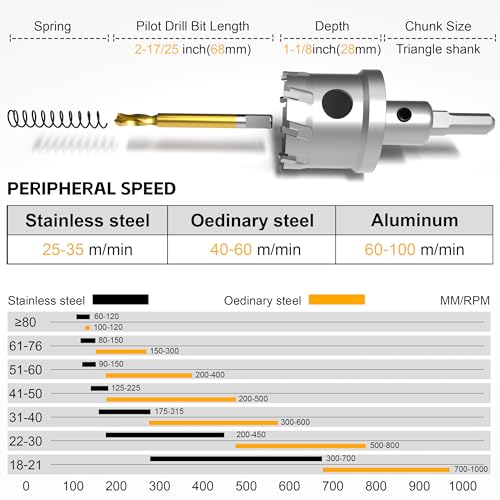
Generally, you should use a slow to moderate speed (around 300-600 RPM) when cutting metal with a hole saw. Higher speeds generate too much heat, which can quickly dull the blade and cause warping, while slower speeds allow the saw to cut efficiently without overheating.
Can I use cutting oil with a metal hole saw?
Yes, absolutely. Applying cutting oil to the cutting area significantly reduces friction and heat buildup, extending the life of the hole saw and improving the quality of the cut. It’s especially important when working with harder metals like stainless steel or aluminum.
What do I do if the hole saw “walks” or doesn’t start cleanly?
A self-centering pilot bit is the best solution, but if you don’t have one, start with a center punch to create a dimple. This gives the pilot drill a starting point and prevents the saw from wandering as you begin to cut.
How can I tell when a metal hole saw is dull?
A dull hole saw will require significantly more pressure to cut, produce rough edges, and may even start to skip or chatter. If you notice any of these signs, it’s time to replace the blade or have it professionally sharpened to prevent damage to your drill and workpiece.
Are more expensive hole saw kits actually better?
While price doesn’t always equal performance, investing in a quality hole saw kit can be beneficial. You’ll often get a wider range of sizes, better-quality arbors, and more durable pilot bits, giving you more best hole saw sets for your money in the long run.
The Bottom Line
Choosing a hole saw for metal always involves a trade-off between upfront cost and long-term durability. While a basic bi-metal set can handle many tasks, if you frequently work with harder metals or thicker stock, investing in a carbide-tipped set like the REKCKRUL 21-Piece TCT Carbide Hole Saw Kit is the way to go. It offers the best combination of cutting power and edge retention for demanding applications.
For those on a tighter budget or tackling lighter-duty projects, the HYCHIKA 17 Pcs Bi-Metal Hole Saw Kit provides excellent value. It includes a wide range of sizes and essential accessories, making it a versatile option for homeowners and DIYers. If you need a single, high-quality saw for specific tasks, the Rannb 1.5-inch Carbide Tipped Hole Saw is a solid choice, offering focused performance for frequently used sizes. You can find more hole saw recommendations on our site, too.
Ultimately, the best hole saw isn’t about the highest price or the fanciest features. It’s about selecting a tool that matches your typical projects and prioritizing a sharp, durable cutting edge, a secure arbor system, and proper technique. Don’t skimp on the arbor or pilot bits – those components are just as important as the blade itself for clean, accurate results.
