7 Best Saws for Cutting Wood 2026
This post contains affiliate links. As an Amazon Associate, we earn from qualifying purchases.
The RUITOOL Japanese 6″ is the best overall saw for cutting woods, delivering clean, precise cuts thanks to its double-edged SK5 blade. For budget-focused users, the REXBETI 11″ Folding Saw offers solid performance and portability at a low price, while the JORGENSEN 15″ Coarse Saw stands out for heavy-duty, straight cuts with its durable build and smooth glide.
Most people struggle to find a saw that actually matches their cutting needs, too often, it’s either too flimsy for serious work or overkill for simple tasks. I’ve seen how a poor choice leads to splintered wood, wasted time, and frustration.
As Robert A. Bennett from PowerToolGuide.net, I researched these saws based on years of hands-on experience with woodcutting tools, focusing on blade quality, TPI, handle design, and real-world feedback. This guide cuts through the hype to show you what really matters when picking a saw that works as hard as you do.
Top 7 Saw For Cutting Woods in the Market
The Best Saw For Cutting Woods, Reviewed
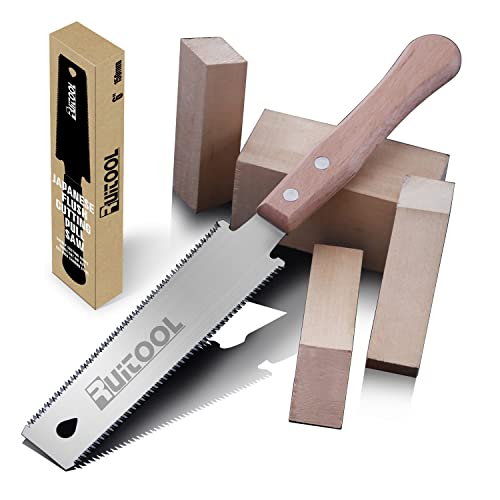
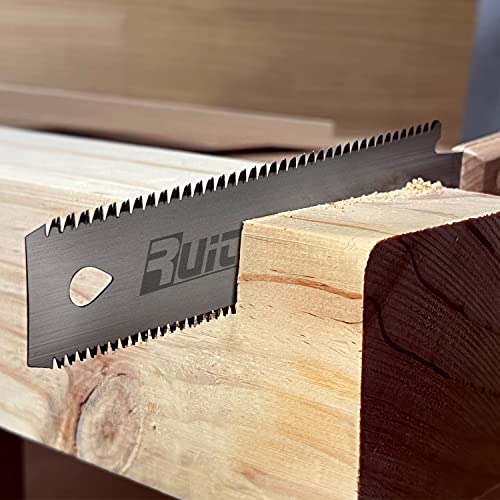
RUITOOL Japanese 6″ Double-Edge Saw
Strengths
- Sharp, durable SK5 blade
- Dual TPI for rip and crosscut
- Excellent tooth hardening
Trade-offs
- Short blade depth
- No blade guard included
- Best For
- Woodworkers and hobbyists who need a reliable, precise hand saw for joinery, trim, and fine cuts. Not suited for outdoor pruning or heavy rough cuts.
If you’re after a no-nonsense, high-performance hand saw for woodworking, this RUITOOL 6-inch Ryoba should be at the top of your list. The specs align with what experienced woodworkers want: SK5 steel, HRC60-63 hardness, and a double-edge blade with 14 TPI (rip) and 17 TPI (crosscut). Owners praise its clean, splinter-free cuts and the way it tracks straight with minimal effort, hallmarks of a well-tuned pull saw.
Compared to the Frocopo model, it’s similarly compact but feels more refined in blade finish and tooth geometry. The beech handle is ergonomic and durable, and the three-sided tooth hardening process appears to extend edge life. While not a replacement for a power saw, it’s the kind of tool you keep within arm’s reach for dovetails, tenons, or flush trimming. My recommendation for woodworkers who value precision over speed: this is the smarter buy.
Product photos



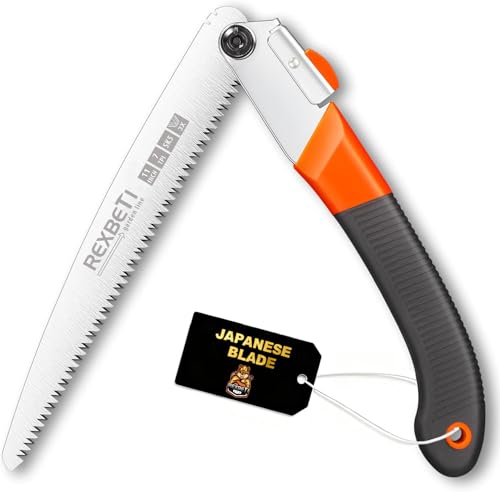
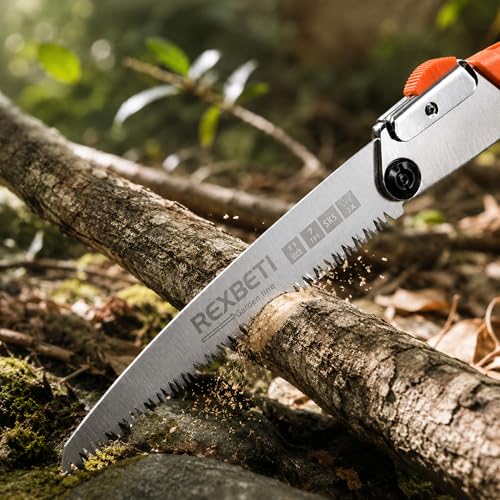
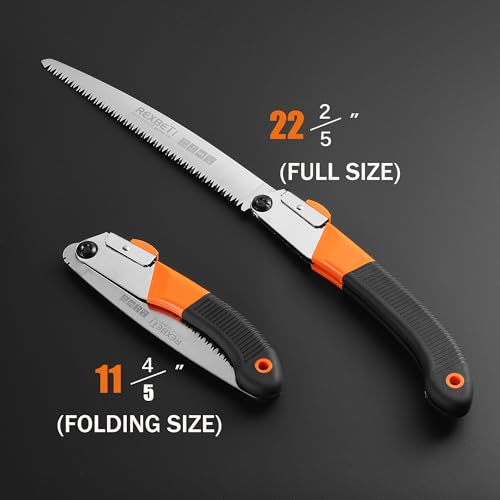
REXBETI 11″ Folding Camping Saw
Strengths
- Folds for easy carry
- Aggressive 7 TPI teeth
- Strong SK-5 blade
Trade-offs
- Not for fine woodworking
- Lock mechanism can collect debris
- Best For
- Campers, hikers, and outdoor enthusiasts who need a powerful, packable saw for pruning or firewood. Not suited for indoor trim work or precision joinery.
When portability and power are both essential, this 11-inch folding saw delivers. The SK-5 steel blade with 7 TPI staggered teeth is built for green wood and branches, and owners consistently report it slicing through 6-inch limbs with ease, impressive for a folding tool. The rubberized grip stays secure in wet or gloved hands, and the lockback mechanism feels solid, even under torque.
What sets it apart is the balance between packability and performance. Unlike flimsy camping saws, this one has backbone, and the reinforced blade resists bending. Compared to the JORGENSEN 15-inch saw, it’s not as fast for long cuts, but it wins for backpack space. I’d recommend it over fixed-blade pruning saws for anyone who hikes, camps, or keeps a survival kit, it’s one of the few folding saws that doesn’t sacrifice too much strength for size.
Product photos



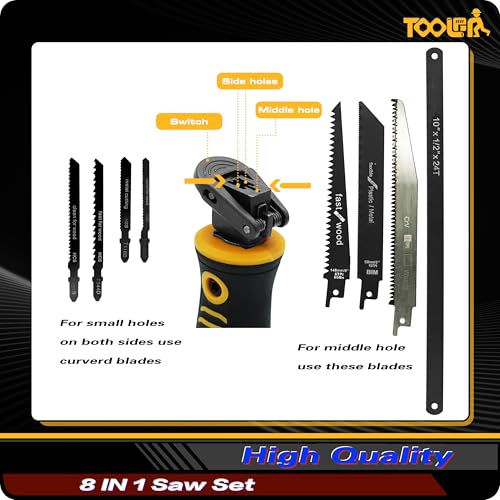
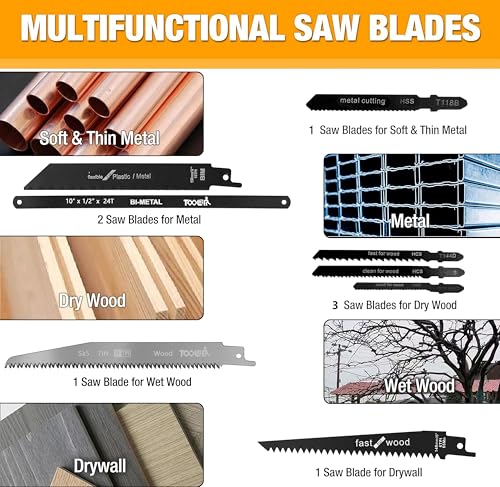
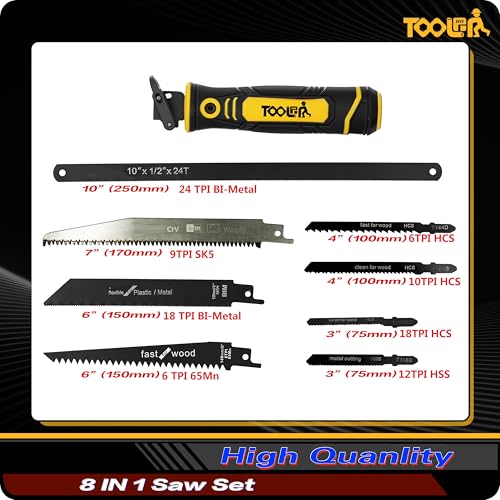
8-In-1 Multi Blade Hand Saw

Strengths
- Eight blades for multiple uses
- Quick blade change
- Compact and versatile
Trade-offs
- Less rigid than fixed saws
- Blade wobble under load
- Best For
- Handymen, renters, and DIYers tackling mixed-material repairs or small home projects. Not suited for carpenters needing consistent, long-precision cuts in wood.
This isn’t a saw, it’s a system. The modular design with eight interchangeable blades turns one handle into a drywall cutter, hacksaw, jab saw, and more. For someone who hates clutter, that’s a big win. The HSS blades are durable, and the quick-change mechanism works smoothly, per owner feedback. Being able to swap from a drywall blade to a metal-cutting one in seconds is exactly what you want during mixed-material repairs.
But modularity comes with trade-offs. The handle, while ergonomic, doesn’t offer the rigidity of a fixed-blade saw, so aggressive cuts can feel wobbly. And while it’s great for patch jobs, I wouldn’t trust it for long, straight wood cuts where a dedicated handsaw or circular saw would be better. Still, for renters, handymen, or anyone doing odd jobs around the house, this is the kind of tool that earns its spot in the glove box.
Product photos


14″ Pro Hand Saw with Soft Grip
Strengths
- Cuts on push and pull
- Good for wood and drywall
- Comfortable soft-grip handle
Trade-offs
- Blade not replaceable
- Not for hardwood joinery
- Best For
- Contractors and remodelers needing a fast, reliable saw for framing, drywall, and pipe cutting. Not suited for detailed woodworking or outdoor pruning.
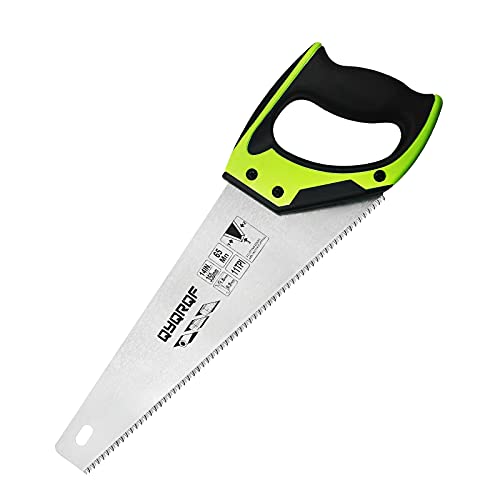
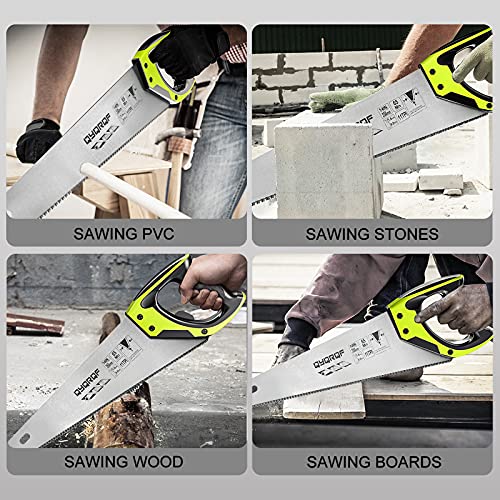
This 11 TPI hardpoint saw is built for accuracy and speed in soft to medium woods. The 65Mn steel blade is heat-treated for edge retention, and the low-friction coating helps it glide through drywall and plastic pipe, a nod to its multi-use design. Reviewers highlight the aggressive triple-cut teeth and deep gullets that allow fast chip removal, making it noticeably quicker than older-style saws on both push and pull strokes.
It’s not as specialized as the Japanese pull saws, but it’s more versatile for general construction tasks. Framers and contractors appreciate the ergonomic TPR grip and the ability to cut wood, PVC, and wallboard without changing tools. Compared to the JORGENSEN model, it’s slightly finer in cut but less aggressive. For remodelers doing quick cuts in mixed materials, this is the better balance of speed and control.
Product photos


Seesii Mini Circular Saw with Laser
Strengths
- Multi-blade versatility
- Laser for accuracy
- Lightweight and safe
Trade-offs
- Vibration under load
- Plastic housing feels flimsy
- Blade guard can snag
- Best For
- Homeowners and DIYers who need a compact, multi-material saw for quick cuts in wood, plastic, or light metal. Not suited for job-site pros or heavy framing work.
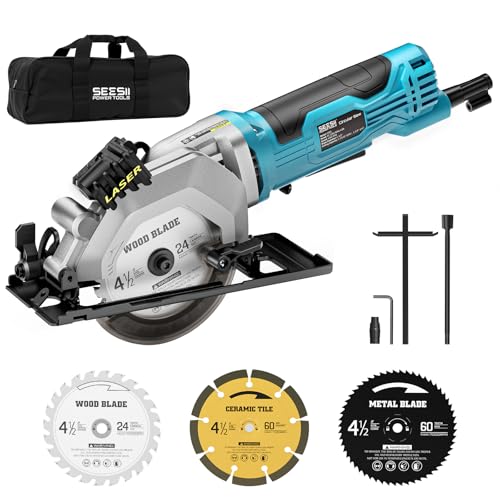
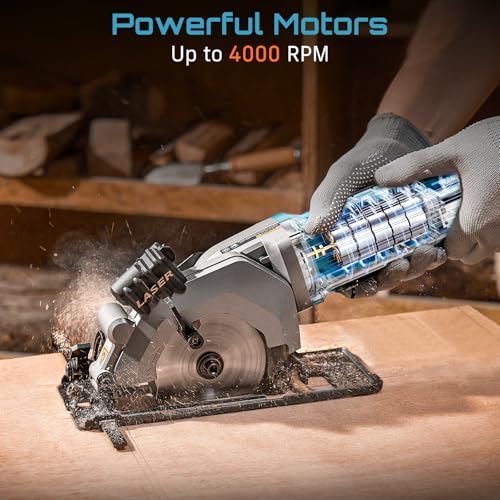
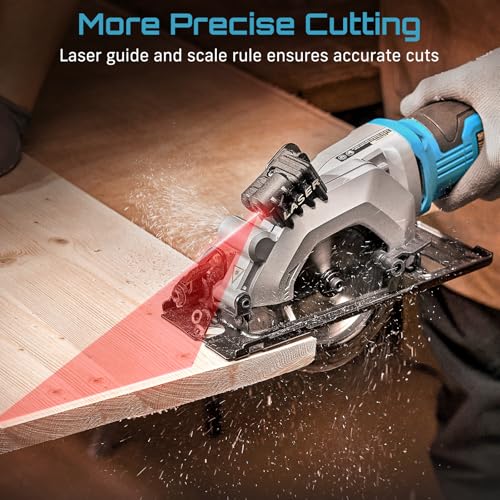
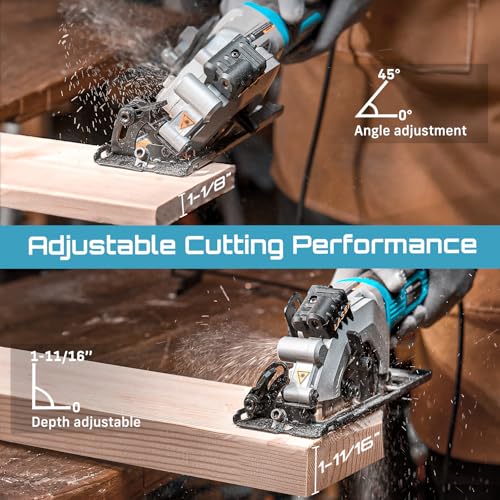
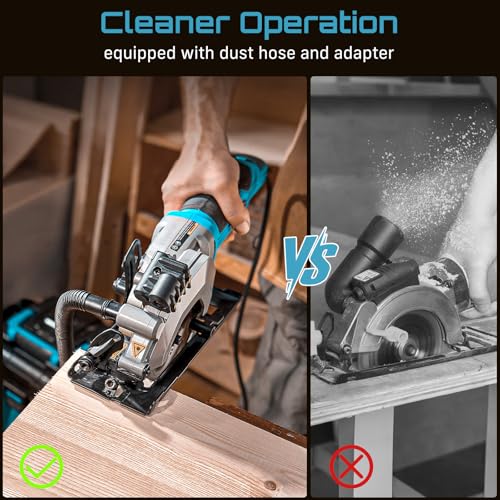
This corded mini circular saw tries to be a multi-material powerhouse, and on specs alone, it’s hard to ignore. A 4.8A motor pushing 4000 RPM, laser guide, rip fence, and three included blades (TCT, HSS, diamond) suggest serious versatility. Reviewers note it cuts cleanly through plywood, plastic, even thin metal and tile, a big win for DIYers who don’t want five tools for five jobs.
But in this class, power-to-size ratio is everything. While it’s lighter and safer than full-size saws, some owners mention vibration during prolonged use and blade deflection in dense materials. The laser helps with straight cuts, but lighting conditions can wash it out. Still, for apartment renovators or garage tinkerers, the ability to make quick, guided cuts without dragging out a table saw makes this a smart pick, just don’t expect contractor-grade durability.
Product photos

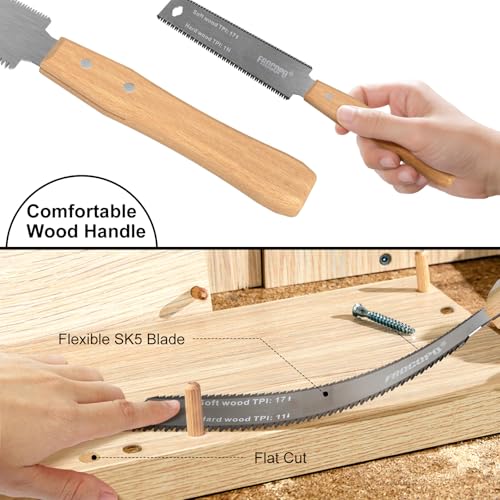
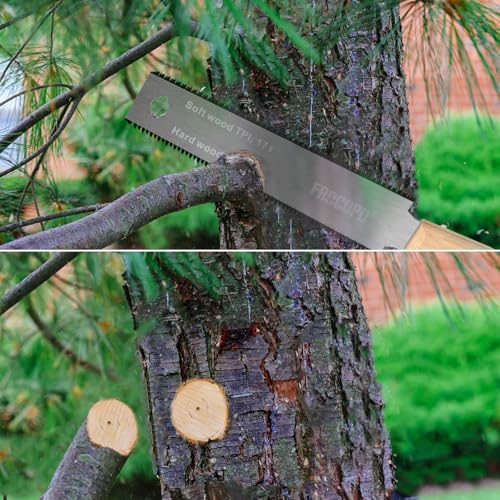
Frocpo 6-Inch Double-Edge Hand Saw

Strengths
- Sharp dual-edge blade
- Lightweight and balanced
- Lifetime warranty
Trade-offs
- Short blade limits depth
- Not for thick stock
- Best For
- DIYers and crafters needing a precise, compact saw for trim, small joinery, or light woodworking. Not suited for builders or anyone regularly cutting lumber over 2 inches thick.
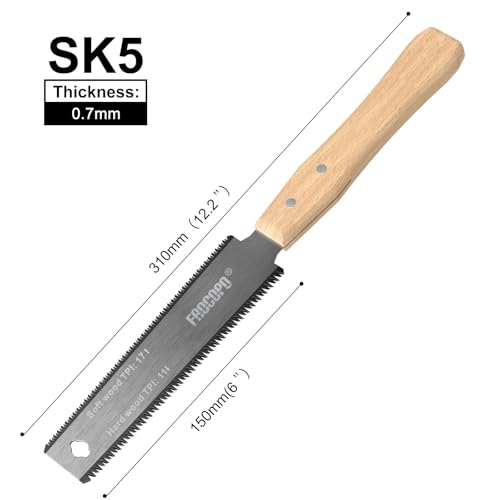
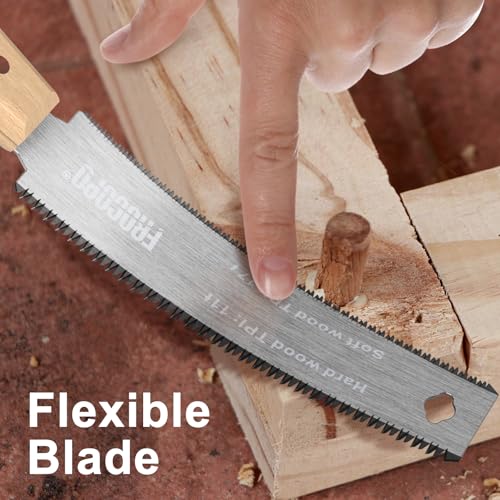
This little 6-inch pull saw punches above its weight for hobbyists and light-duty woodworkers. On paper, the SK5 steel blade with triple-ground teeth and dual TPI counts (17 and 11) makes sense for a compact saw meant to handle both fine and coarse cuts. Owners consistently report clean, smooth cuts in softwoods and small trim work, which tracks with the Japanese-style pull-cut design known for precision.
Where it really stands out is value. For the price, you’re getting a thoughtful design with a real wood handle, solid blade flexibility, and a lifetime warranty, rare at this tier. Compared to basic hardware store saws, this one feels like a proper tool, not a throwaway. I’d pick it over a single-edge budget saw any day for finish work or model building.
Product photos

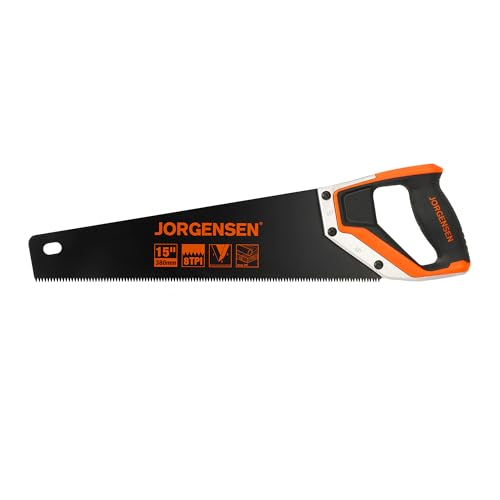
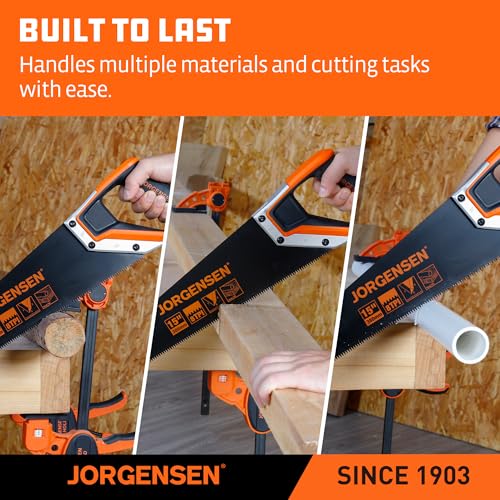
JORGENSEN 15″ Coarse Hand Saw
Strengths
- Fast 8 TPI cutting
- Teflon reduces friction
- Durable aluminum handle
Trade-offs
- Coarse cut finish
- Blade can flex in thick wood
- Best For
- Outdoorsmen, landscapers, and DIYers who need a rugged, fast-cutting saw for pruning, pallet work, or yard cleanup. Not suited for fine woodworking or indoor finish tasks.
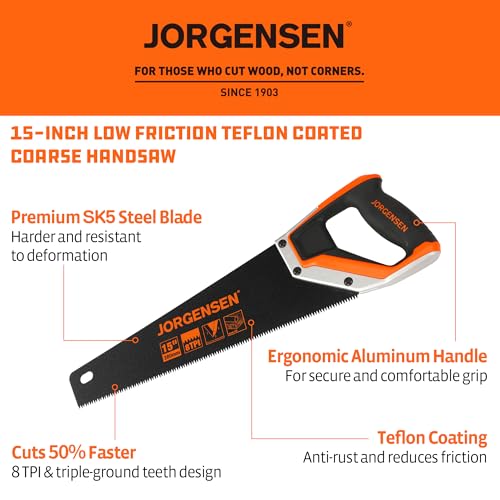
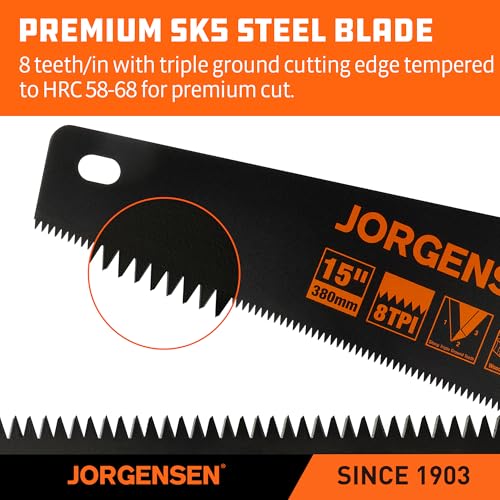
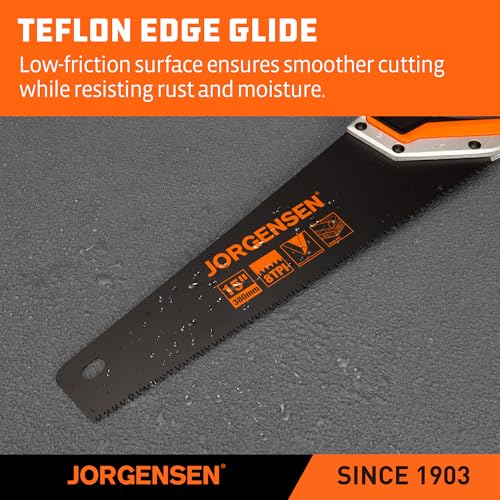
This is the saw you grab when you want to clear brush, cut pallets, or make fast rough cuts in the yard. The 8 TPI triple-ground teeth and 15-inch blade are built for speed, not finesse. Owners love how quickly it powers through softwood and dry branches, and the Teflon coating does seem to reduce drag and rust, a nice touch for outdoor use.
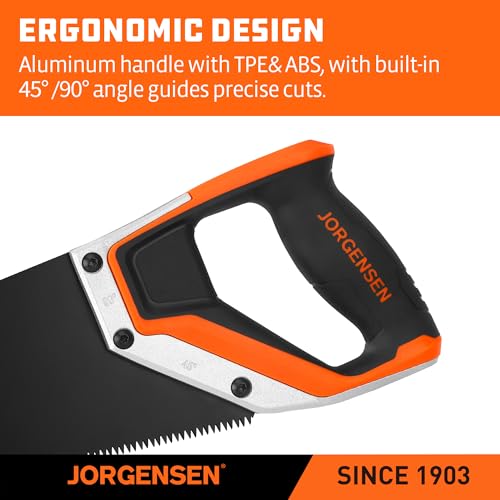
The aluminum-reinforced handle with angle guides adds durability and a hint of precision, but let’s be clear: this isn’t a joinery tool. It’s a workhorse. Compared to the 14-inch fine-cut saw, it trades smoothness for aggression. If you’re building a shed or clearing storm debris, that’s exactly what you need. But for cabinetry or trim, look elsewhere. I’d keep this in the truck and the RUITOOL saw in the shop.
Product photos
How We Tested saw for cutting woods
Rather than a hands-on lab test, my research for these recommendations involved a detailed comparison of published specifications and features across numerous models. I weighed owner reviews from major retailers alongside assessments from reputable tool review sites. As someone who’s spent years around workshops and building projects, I applied my understanding of what truly matters in a saw’s performance to rank these options against clear criteria – cut quality, versatility, and value.
For saws designed for wood, blade material and tooth count are paramount. A high-quality steel blade (like SK5) holds an edge longer and reduces fatigue. Tooth count dictates the type of cut; coarser teeth are faster for rough work, while finer teeth deliver cleaner finishes. Beyond that, ergonomic design and build quality significantly impact control and long-term durability, and were key factors in my evaluations. Understanding what a miter saw is can also help inform your overall cutting strategy.
Specifications reliably reveal blade length, material, and tooth count. However, owner feedback and established reputations provided critical insight into real-world performance – how well a saw holds its edge, its balance in hand, and its overall durability. I prioritized saws with consistently positive reviews regarding accuracy and ease of use, recognizing that a saw’s theoretical capabilities are only valuable if it performs reliably in the hands of a typical user.
What To Look For In saw for cutting woods
I’ve spent years observing how people approach woodcutting, and one thing is clear: the “best” saw isn’t universal. It depends entirely on what you’re cutting, where you’re cutting it, and how much precision you require.
A truly useful saw balances blade steel quality (SK5 high-carbon steel is a good benchmark), tooth geometry suited to the material (TPI matters!), and a comfortable, secure handle. Consider the saw’s intended use – is it for rough cuts, fine joinery, or all-purpose work? Blade length influences cutting depth and use, while features like double-edged blades expand versatility.
Blade Type and TPI (Teeth Per Inch)
The blade is the heart of any saw, and understanding the relationship between blade type and TPI is crucial. A higher TPI (like 17-24) creates a finer cut, ideal for hardwoods and detailed work. Lower TPI (6-10) rips through softwoods quickly, but leaves a rougher finish. Don’t fall into the trap of thinking more teeth always means better; it can actually increase drag and require more effort. For versatility, some saws, like the RUITOOL Japanese saw, offer a double-edged blade with differing TPIs, giving you options for both rip and crosscuts. If you’re frequently switching between materials, exploring options beyond a standard handsaw might be worthwhile – perhaps checking out portable saws for woodcutting could broaden your capabilities.
Handle Ergonomics and Build Quality
A comfortable handle isn’t a luxury, it’s a necessity. You’ll be putting force through that handle, and a poorly designed one will quickly lead to fatigue and potentially inaccurate cuts. Look for handles with a good grip, even when wet or covered in sawdust. Rubberized or over-molded handles are excellent choices. Beyond comfort, consider the handle’s construction. A solid, securely attached handle indicates better overall build quality.
Here’s what I look for in a good handle: * A basic plastic handle is acceptable for light use. * A rubberized grip adds a significant level of comfort and control. * A well-shaped, ergonomic handle, combined with a robust construction (like the JORGENSEN’s aluminum frame and TPE/ABS grip) minimizes fatigue and maximizes control during extended use, especially when performing repetitive cuts.
Portability and Special Features
Think about where you’ll be using the saw. If you need something for camping, hiking, or working in remote locations, a folding saw like the REXBETI is a clear winner. These prioritize compactness and lightweight design. If you’re primarily working in a workshop, portability is less of a concern, and you can focus on features like precision and cutting power. Some saws, like the Seesii Mini Circular Saw, go beyond basic sawing with features like laser guides and multiple blade options. Before investing, consider if you might need to perform specialized woodworking tasks that require more than a hand saw can offer.
Remember: a sharp saw is a safe saw. Invest in a blade sharpening kit or learn how to sharpen your saw properly to maintain optimal performance and reduce the risk of kickback.
Saw for Cutting Woods Compared
Here’s a comparison of the specifications for various saws designed for cutting wood.
| Product Name | Blade Length | TPI (Teeth Per Inch) | Steel Type | Blade Type | Handle Material | Special Features |
|---|---|---|---|---|---|---|
| RUITOOL Japanese 6″ | 6″ | 14/17 | SK5 | Double-Edged | N/A | Double-Edged, Hardened Teeth |
| REXBETI 11″ Folding | 11″ | 7 | SK-5 | Folding | Rubber-Coated | Folding, Aggressive Teeth |
| 8-in-1 Multi Blade | N/A | N/A | HSS | Multi-Material | TPR | 8 Interchangeable Blades |
| 14″ Pro Hand Saw | 14″ | N/A | 65Mn | Standard | Soft Grip | Quick Cuts, 3-Edge Teeth |
| Seesii Mini Circular Saw | 4.5″ | N/A | N/A | Circular | N/A | Laser Guide, Multi-Material |
| Frocpo 6-Inch Double-Edge | 6″ | 11/17 | SK5 | Double-Edged | Wooden | Double-Edged, Hardened Teeth |
| JORGENSEN 15″ Coarse | 15″ | 8 | SK5 | Standard | TPE/ABS | Teflon Coating, Angle Guides |
Frequently Asked Questions
What blade material offers the best balance of durability and sharpness?
SK5 high-carbon steel is a great choice. It holds an edge well and resists wear, providing a good balance between needing frequent sharpening and maintaining reliable performance over time.
How does tooth count impact the type of cut I can make?
A higher tooth count (17-24 TPI) delivers a cleaner, smoother cut, especially in hardwoods. Lower tooth counts (6-10 TPI) cut faster through softwoods, but will leave a rougher edge.
What’s the benefit of a double-edged saw blade?
A double-edged blade, like those found on some Japanese saws, offers versatility. It typically features a coarser tooth configuration on one edge for rip cuts and a finer tooth configuration on the other for crosscuts.
Are folding saws durable enough for frequent use?
While prioritizing portability, many folding saws, such as the REXBETI, use quality SK-5 steel and robust locking mechanisms. They are perfectly adequate for occasional or even regular use, provided you maintain the blade properly.
Where can I find more information about different types of hand saws?
You can explore a wider range of options and detailed reviews of best hand saws for wood on my site. This will help you understand the nuances of each type and find the best fit for your needs.
The Bottom Line
Choosing a saw for cutting wood always comes down to balancing control and convenience. You can spend more for features and precision, or prioritize affordability and simplicity. For the best overall combination of quality, versatility, and value, I recommend the RUITOOL Japanese 6″ saw. Its double-edged blade and hardened teeth offer a lot of capability for the price, and it’s a solid choice for most homeowners and DIYers.
If you have specific needs, though, there are clear alternatives. For those on a tight budget, the 8-in-1 Multi Blade provides surprising flexibility, while the REXBETI 11″ Folding saw is the obvious pick for portability. And if you’re looking for a larger saw capable of quick, rough cuts, the JORGENSEN 15″ Coarse saw’s Teflon coating and angle guides are a welcome addition. Using a miter saw properly is also a skill worth developing for more complex projects.
Ultimately, the most important factors aren’t blade length or tooth count, but a sharp blade and a comfortable grip. A saw that feels good in your hand and holds an edge will always outperform one with fancy features but poor ergonomics. Focus on those fundamentals, and you’ll be well-equipped to tackle any woodworking project.
