
8 Best Table Saw Miter Gauges of 2026
This post contains affiliate links. As an Amazon Associate, we earn from qualifying purchases.
The INCRA MITER1000SE Special Edition is our top pick for its unmatched precision and durable build, especially when working on repeatable, high-accuracy cuts. For those on a budget, the WEN Steel and Brass Premium Miter Gauge delivers solid performance without breaking the bank. And if you regularly handle wide stock, the GOINGMAKE Miter Gauge w/ Extensible Fence offers the most versatility.
A sloppy miter gauge can ruin even the best table saw setup. I’ve seen too many DIYers blame their saw for inaccurate cuts when the real issue is a flimsy, poorly designed gauge that wobbles in the slot or loses its setting mid-cut.
This guide cuts through the noise by focusing on what matters: real-world accuracy, build quality, and features that actually improve your work. We compared specs and owner feedback to find models that deliver consistent results, so you can choose with confidence.
Top 8 Table Saw Miter Gauges in the Market
The Best Table Saw Miter Gauges, Reviewed
INCRA MITER1000SE Special Edition Miter Gauge

Strengths
- Laser-cut V-stops
- Telescoping fence
- GlideLOCK miter bar
- Dual Flip Shop Stop
- Stainless steel scale
Trade-offs
- Expensive
- Overbuilt for simple tasks
- Setup takes time
If you’re serious about repeatable, dead-on miter cuts, the INCRA MITER1000SE isn’t just an upgrade, it’s a system overhaul. The GlideLOCK miter bar with six expansion points eliminates slop in the slot, something owners consistently report as a standout for consistency. Pair that with the 41 laser-cut V-stops, and you’ve got near-digital precision across common angles without fumbling with a protractor.
The telescoping fence that runs from 18 to 31 inches is solid, and when combined with the Flip Shop Stop, it makes batch-cutting crown molding or picture frames feel almost automatic. On paper, it’s overkill for casual users, but for anyone who values precision over speed, this is the gold standard. I’d pick this over the Kreg or GOINGMAKE models any day when accuracy is essential.
Product photos


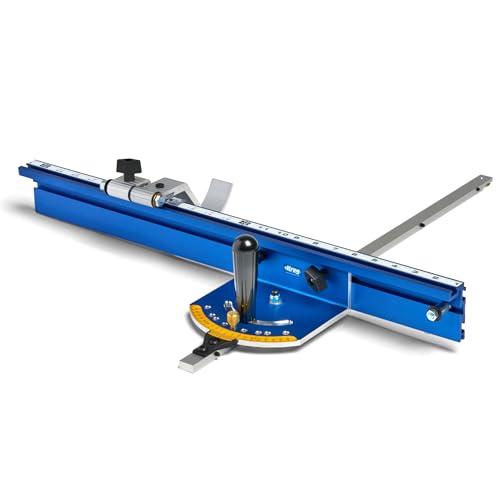
Kreg Precision Miter Gauge System
Strengths
- Highly adjustable fence
- Smooth glide bar
- Durable construction
- Easy calibration
- Kreg reliability
Trade-offs
- Fixed fence length
- No telescoping feature
- Fewer angle stops
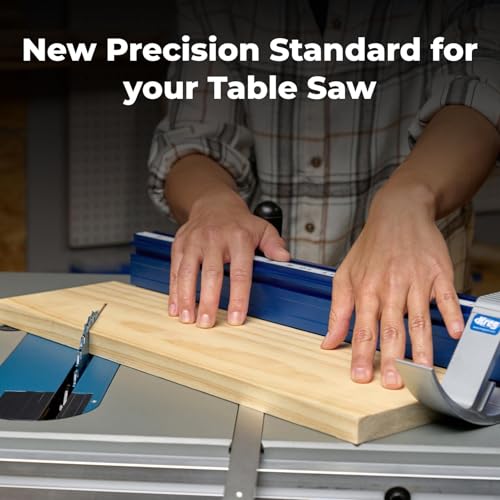
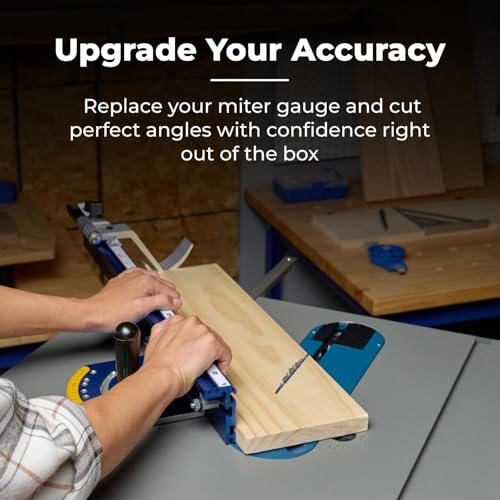
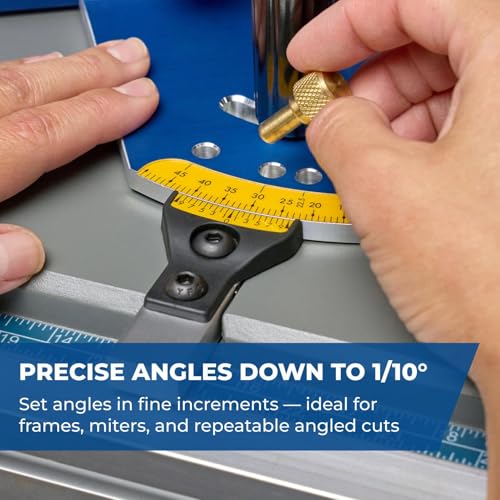
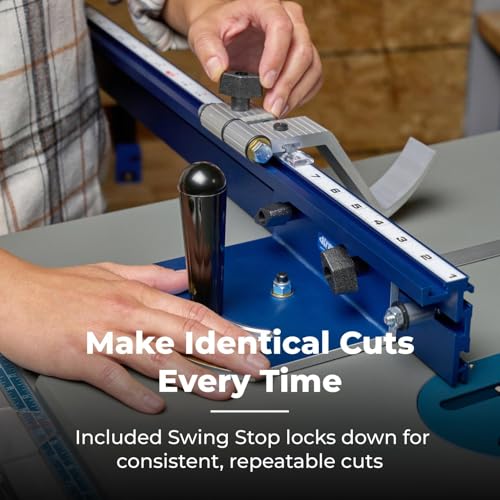
Kreg built a reputation on accuracy, and the KMS7102 doesn’t stray from that promise. The adjustable fence system is where it shines, owners praise how easily it can be fine-tuned for perfect squareness, which matters when you’re cutting expensive hardwood or doing cabinet work. The miter bar glides smoothly, and while it doesn’t have the V-stop density of the INCRA, it’s more than accurate enough for most shop tasks.
Where it falls short is in fence length, it’s not extendable like the INCRA or GOINGMAKE models, so large panels require external support. But for accuracy and ease of calibration, it’s a strong middle ground. I’d pick this over the VEVOR or WEN models if you’re doing detailed work but don’t want to pay INCRA-level prices.
Product photos
WEN Steel and Brass Premium Miter Gauge

Strengths
- Affordable
- Brass lock knobs
- 27 angle stops
- Durable construction
- Laser-etched scale
Trade-offs
- No micro-adjust
- Fence is fixed
- Less precision than high-end models
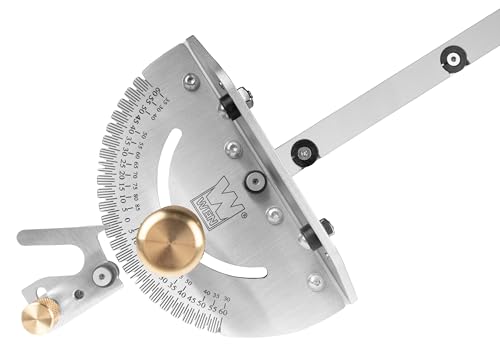
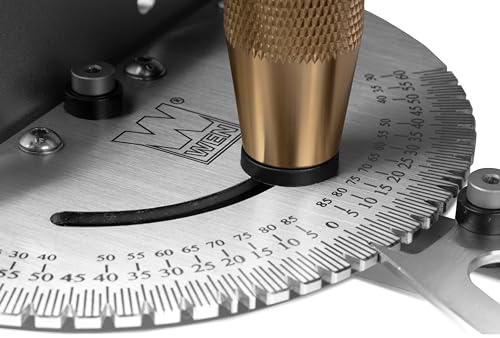
The WEN WA1401 is the kind of tool that reminds you not every upgrade needs to break the bank. Built with heavy-duty steel and brass, it’s clearly designed to outlast flimsy stock gauges, and owners confirm it holds up well even after months of weekend use. The 27 positive stops cover nearly every common angle you’ll need, and the laser-etched scale resists wear far better than painted markings on budget models.
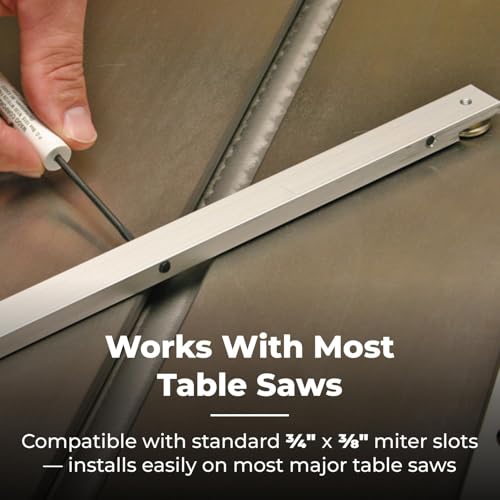
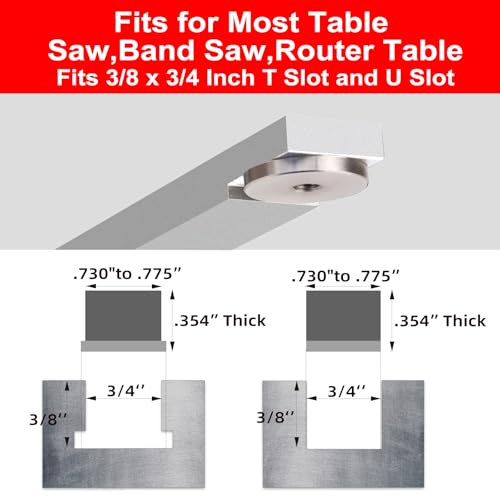
It’s not going to match the INCRA for repeatability, but for a beginner or mid-level DIYer setting up a garage shop, this delivers solid performance. The universal fit for standard 3/4″ x 3/8″ slots means it works across WEN and many other brands, making it a smart first upgrade from a factory-supplied gauge. I’d recommend this over the DEWALT OEM part if you’re not married to a single brand.
Product photos
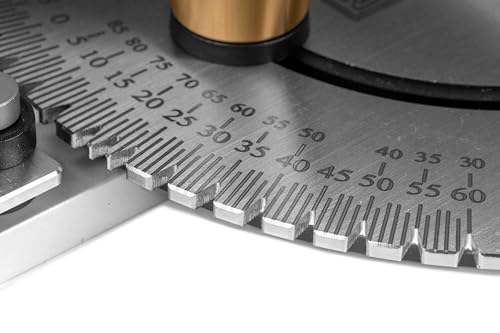
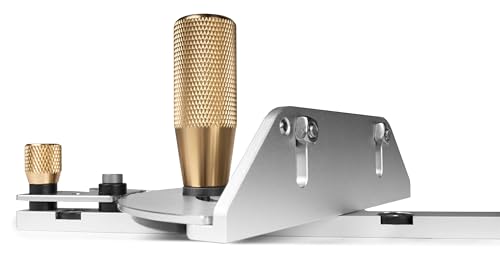
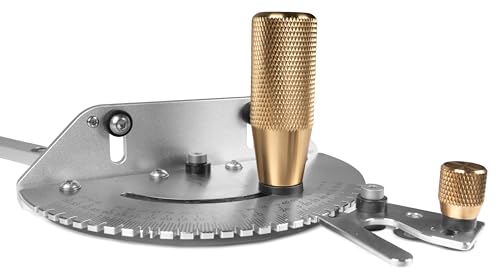
GOINGMAKE Miter Gauge with Extensible Fence
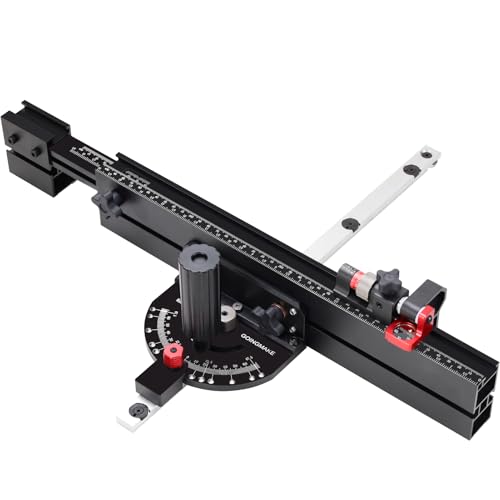
Strengths
- 32-inch extendable fence
- Micro-adjust flip stop
- Magnifier for scale
- Positive angle stops
- Universal fit
Trade-offs
- Fence extension feels a bit flimsy
- Setup can be finicky
- Build quality inconsistent in spots
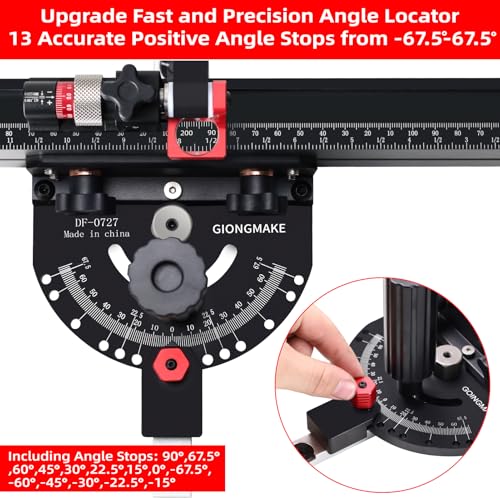
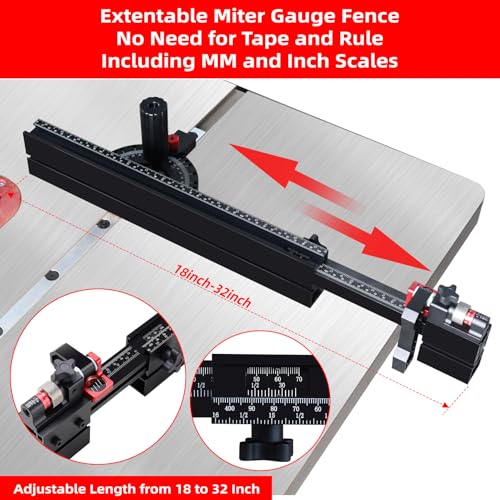
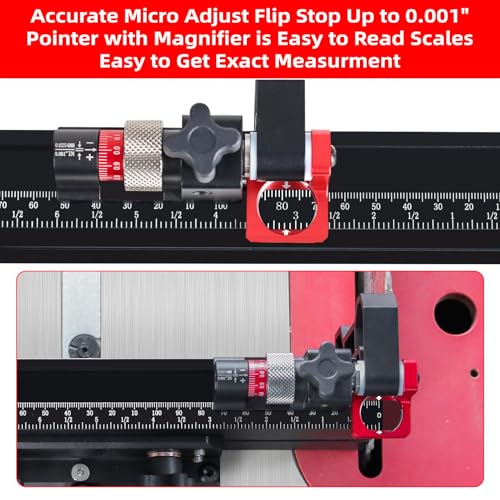
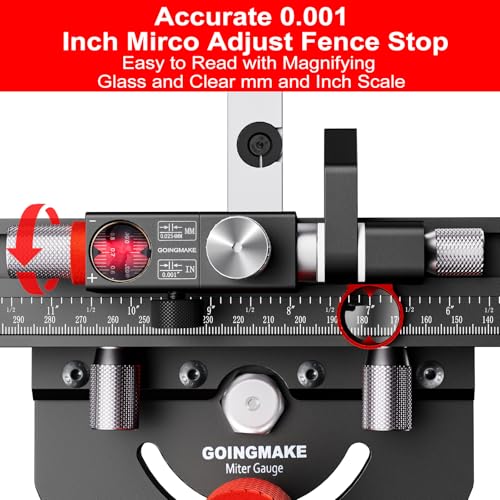
The GOINGMAKE B0GTV4C9R5 is built for woodworkers who cut wide panels and need repeatable setups without jerry-rigging a helper fence. The 18 to 32-inch extendable fence is a standout, and owners confirm it locks down solidly with minimal flex. The micro-adjust flip stop with magnifier is surprisingly precise, some report accuracy within 0.001″, which is rare at this price.
It’s not as refined as the INCRA, but for handling large sheet goods or long moldings, it’s one of the few aftermarket gauges that truly supports big workpieces. The 13 positive stops cover most needs, and the adjustable miter bar fits a wide range of saws. I’d choose this over the Kreg or DEWALT if you regularly work with wide stock.
Product photos
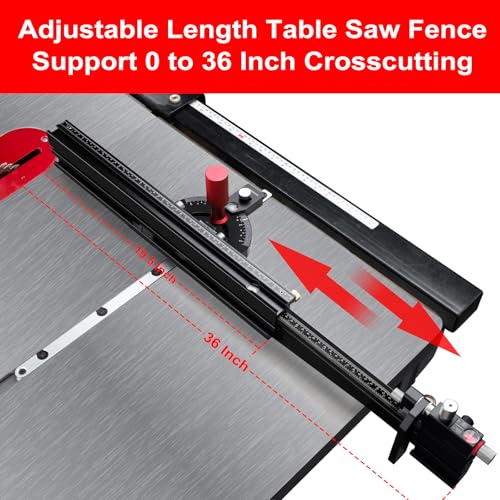
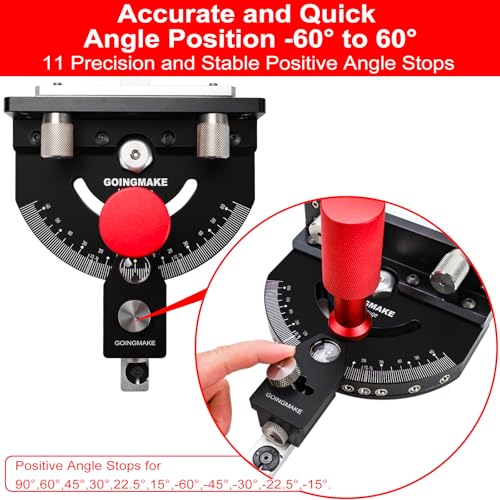
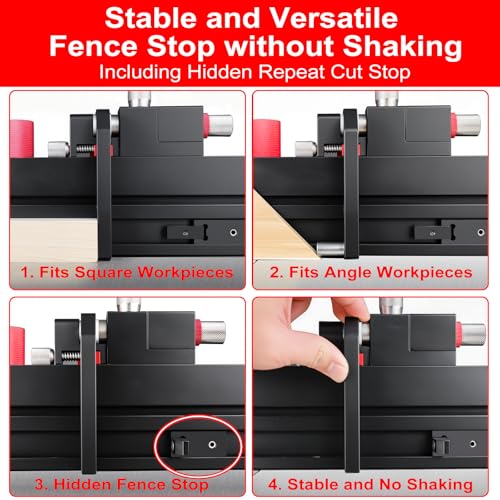
GOINGMAKE Miter Gauge with Micro Adjust
Strengths
- 36-inch extendable fence
- Fast zero calibration
- Micro-adjust stop
- Magnifier glass
- Universal fit
Trade-offs
- Plastic parts feel cheap
- Fence wobble at full extension
- Angle stops less precise
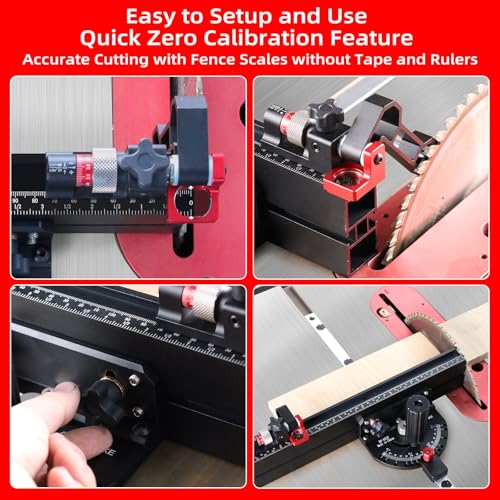
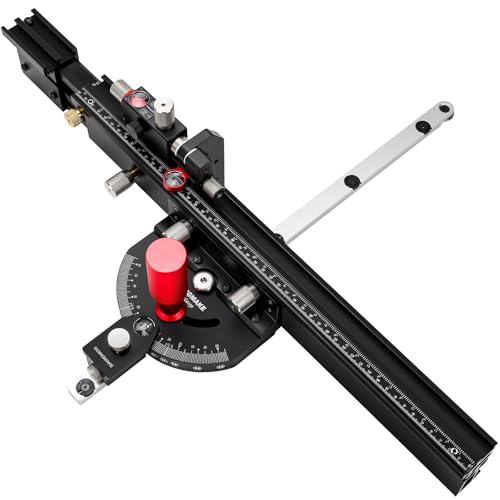
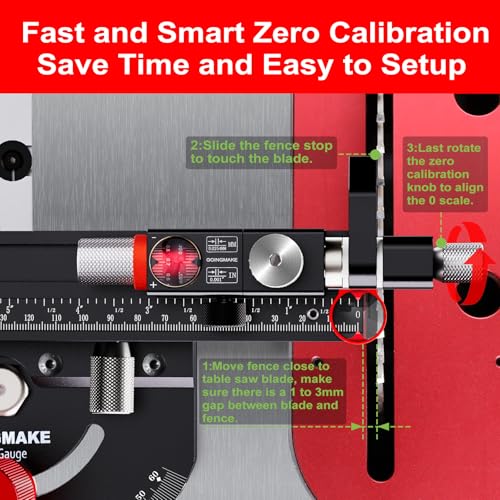
What sets this GOINGMAKE model apart is the fast zero calibration feature, a small but game-changing addition that lets you set zero quickly against the blade without tools. Owners love this for repetitive crosscuts where time adds up. The micro-adjust flip stop is again precise, and the 36-inch extendable fence is the longest in this group, making it ideal for oversized work.
It’s not as rigid as the INCRA, and the plastic components feel a bit light, but for quick setup and long reach, it’s hard to beat. I’d pick this over the B0GTV4C9R5 version if you value speed and maximum fence length over absolute rigidity.
Product photos
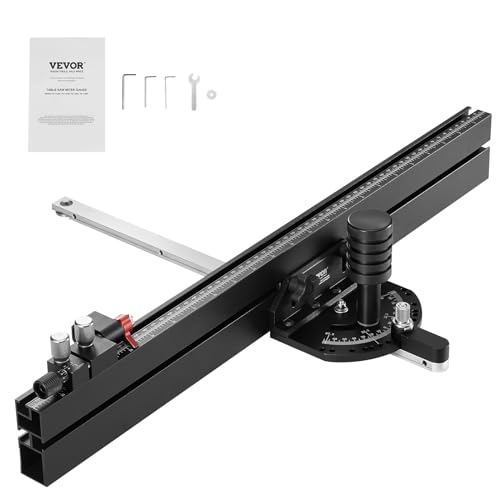
VEVOR Precision Miter Gauge 24 Inch
Strengths
- 24-inch fence
- 15 angle stops
- Laser-etched scale
- Spring-loaded plunger
- Good value
Trade-offs
- No micro-adjust
- Fixed fence
- Build quality varies
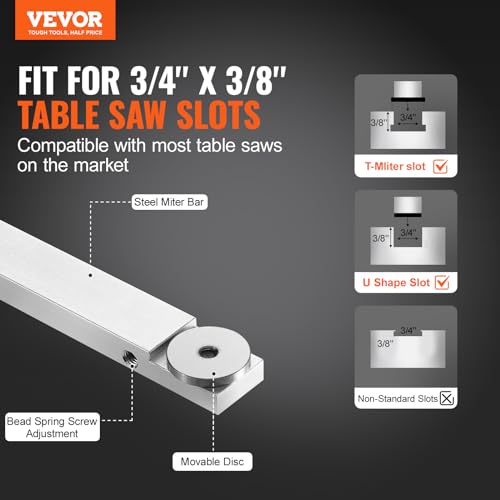
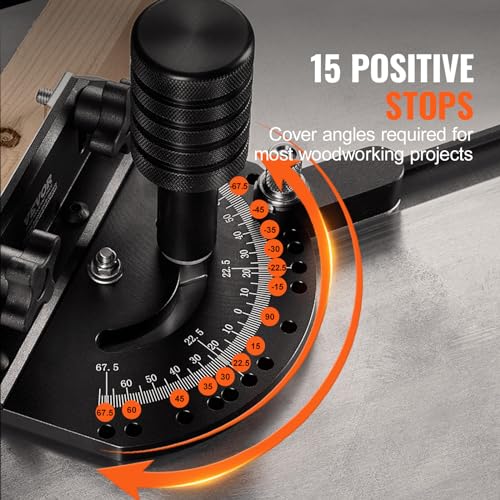
The VEVOR miter gauge is the definition of “quiet value.” It doesn’t have a name-brand pedigree, but on paper, it packs in features like a 24-inch grating scale, 15 positive stops, and an adjustable spring-loaded plunger for slot fit, all at a price that undercuts the competition. Owners say it’s “surprisingly accurate” and easy to set up, especially with the partially assembled delivery.
It’s not going to challenge the INCRA, and the fence isn’t extendable, but for a single, rigid fence at this length, it’s one of the best values out there. The laser-etched scale and textured handle add a touch of professionalism. I’d recommend this over the WEN if you want a longer fixed fence without stepping into premium pricing.
Product photos


DEWALT OEM N435108 Replacement Miter Gauge
Strengths
- OEM fit and finish
- Direct replacement
- Trusted DEWALT build
- Simple setup
- Durable miter bar
Trade-offs
- No micro-adjust
- Short fence
- Basic angle stops
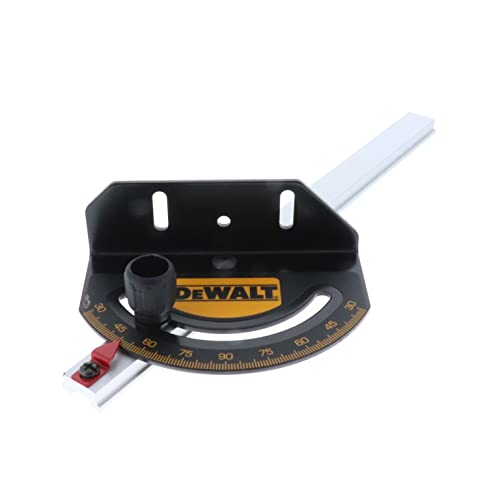
This is the replacement miter gauge you grab when you want to stay true to your DEWALT jobsite saw’s original design. It’s not flashy, and it won’t win any awards for innovation, but as an OEM part, it’s built to exact factory specs and fits models like the DWE7491RS without any fuss. Owners note it’s a direct swap that restores lost accuracy after a worn-out stock gauge gives up.
That said, it’s still a basic miter gauge, no micro-adjustments, no extended fence, nothing close to the precision of the INCRA or Kreg. But if you’re a contractor who just wants reliable, no-frills performance from a trusted brand, and you’re not doing intricate joinery, this gets the job done. I wouldn’t recommend upgrading to this from a better aftermarket model, but as a like-for-like replacement, it’s the safe bet.
Product photos
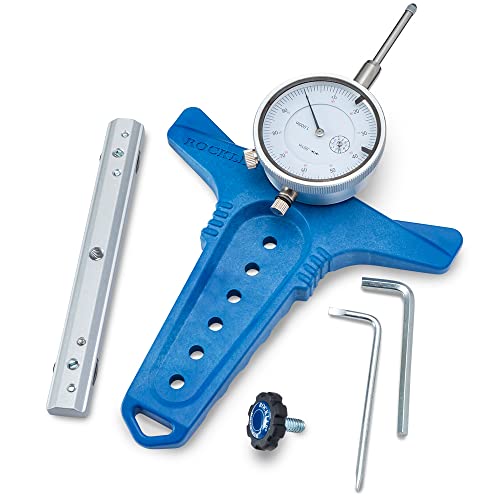
Rockler Table Saw Alignment Gauge

Strengths
- Dial indicator included
- Precision alignment
- Adjustable miter bar
- Enhances safety
- All-in-one kit
Trade-offs
- Not for cutting
- Niche use case
- Higher learning curve
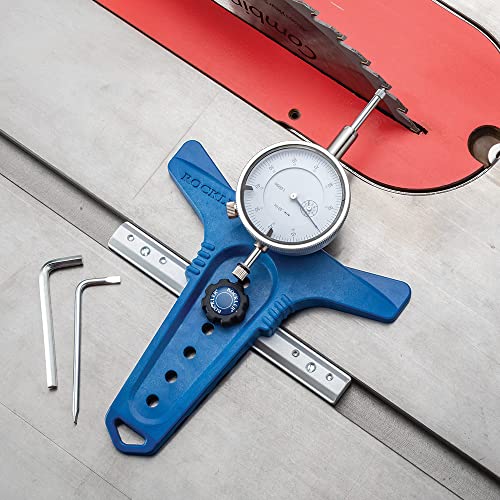
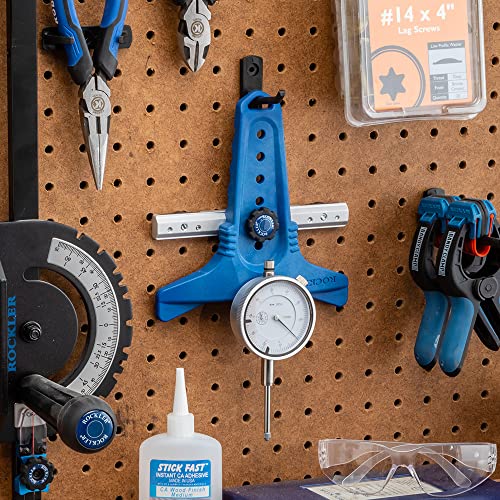
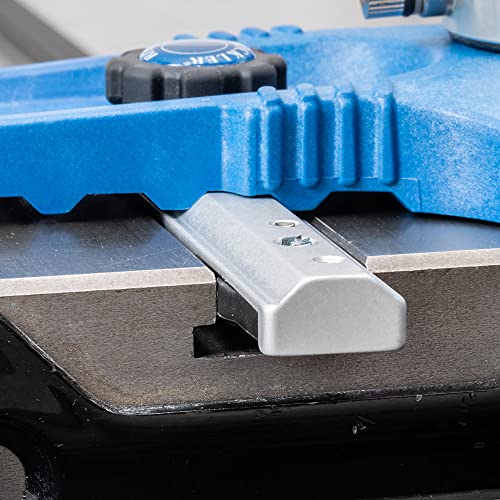
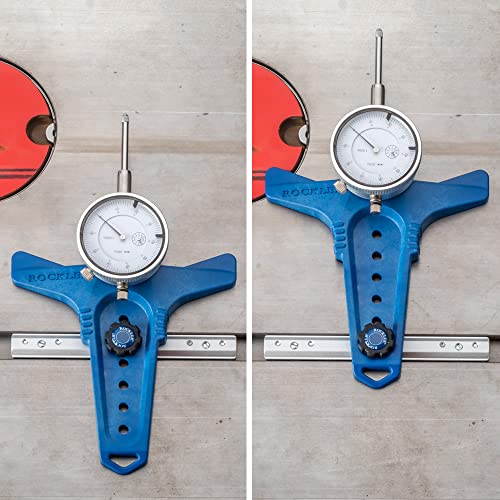
This isn’t a miter gauge for cutting, it’s a tuning tool for making your saw cut better. The dial indicator is the star here, letting you measure blade-to-miter slot parallelism down to thousandths of an inch. Owners use it to dial in their saws after assembly or maintenance, and many say it eliminated burning and kickback by ensuring perfect alignment.
The miter bar is solid and adjustable, but don’t expect to use this for regular crosscuts. It’s a specialty tool for setup, not production. If you’re serious about saw tuning, this is easier and more precise than using a feeler gauge and ruler. I’d pair this with the INCRA or Kreg for both tuning and cutting, this is the prep work that makes the rest possible.
Product photos
How We Chose These table saw miter gauges
As someone who’s spent years around power tools and workshops, I know a precise miter gauge can elevate your table saw work. Rather than a hands-on lab test with each model, we approached this guide with a research-led comparison of published specifications and owner feedback. We examined features, build materials, and adjustability, then weighed those against what real users are saying about accuracy and ease of use. Our goal was to identify the gauges that consistently deliver reliable results.
For table saw miter gauges, a smooth glide and accurate angle settings are paramount. We heavily weighted the quality of the miter bar – how well it fits in the slot and minimizes play – and the precision of the angle adjustments. A rock-solid fence, especially for larger workpieces, also factored significantly into our rankings. Ultimately, we prioritized gauges that owners consistently report deliver repeatable, accurate cuts, reducing wasted material and frustration.
Specifications reliably indicate build quality and potential features like fence length and positive stop angles. However, real-world performance – particularly how well a gauge stays calibrated and how smoothly it moves – is best gleaned from owner reviews. We looked for common trends in feedback regarding accuracy, durability, and the ease of making fine adjustments. Understanding table saw operation techniques is also helpful when evaluating the benefits of a precise miter gauge.
Choosing The Right table saw miter gauges
Choosing the right miter gauge can significantly improve the accuracy and quality of your cuts.
A good miter gauge prioritizes smooth gliding action within the table saw’s miter slot, precise angle markings, and a robust build quality. Look for features like adjustable heads, positive stops at common angles, and materials that minimize play and wobble. The fence should be stable and, ideally, extensible to support larger workpieces.
Gauge Head and Lock Mechanism
The gauge head is where accuracy begins. Don’t assume all heads are created equal. Many cheaper gauges use plastic heads which can flex under pressure, leading to inaccurate cuts. Look for heads made from metal – aluminum alloy is common – and pay attention to how securely the angle is locked. A simple friction lock can drift over time, while a more positive locking mechanism, using detents or a cam lock, will hold your angle consistently. I’ve seen users achieve far more repeatable results by upgrading just the head on an existing gauge.
Fence Quality and Length
The fence is often overlooked, but a flimsy fence defeats the purpose of an accurate gauge head. A solid, straight fence is vital for supporting the workpiece and ensuring clean, square cuts. Many gauges come with a fixed-length fence, but an adjustable or extensible fence is incredibly useful. If you frequently work with wider stock, you’ll appreciate the versatility. Consider the following when evaluating fence options:
- A short fence (under 18 inches) is fine for smaller pieces, but quickly becomes limiting.
- A fence with a micro-adjustment feature allows for fine-tuning of the angle, compensating for slight inaccuracies in the saw or gauge.
- An extensible fence, like those found on the GOINGMAKE models, dramatically increases versatility, allowing you to support boards up to 36 inches or more – a real advantage when dealing with sheet goods.
Value and Specialized Features
Beyond the core functionality, consider what additional features align with your needs and budget. Some gauges, like the INCRA MITER1000SE, include a wealth of features like laser-cut stops and patented locking mechanisms, but come at a premium price. Conversely, models like the WEN Steel and Brass Premium Miter Gauge offer excellent value for basic crosscuts. If you find your table saw isn’t quite dialed in, it might be worth checking out our guide on improving cut accuracy with sled before investing in a high-end gauge.
Don’t spend more on a miter gauge than your table saw is capable of delivering in accuracy. A precision gauge on a poorly tuned saw won’t magically produce perfect cuts.
I often recommend starting with a mid-range option and upgrading components as you identify specific needs. Exploring our best table saw miter gauges will give you a good overview of what’s currently available and the trade-offs involved.
Table Saw Miter Gauges Compared
This table summarizes key specifications of various table saw miter gauges to aid in product comparison.
| Product Title | Fence Length (in) | Angle Stops | Micro Adjust | Material | Slot Compatibility |
|---|---|---|---|---|---|
| INCRA MITER1000SE Special Edition | 18-31 | 41 | Yes | Steel/Aluminum | 3/4″ x 3/8″ |
| Kreg Precision Miter Gauge System | N/A | N/A | Yes | N/A | 3/4″ x 3/8″ |
| WEN Steel and Brass Premium Miter Gauge | N/A | 27 | No | Steel/Brass | 3/4″ x 3/8″ |
| GOINGMAKE Miter Gauge w/ Extensible Fence | 18-32 | 13 | Yes | Aluminum | 3/8″ x 3/4″ |
| GOINGMAKE Miter Gauge w/ Micro Adjust | Up to 36 | 11 | Yes | Aluminum | 3/8″ x 3/4″ |
| VEVOR Precision Miter Gauge 24 Inch | 24 | 15 | Yes | Aluminum | 3/4″ x 3/8″ |
| DEWALT OEM N435108 Replacement | N/A | N/A | No | N/A | N/A |
| Rockler Table Saw Alignment Gauge | N/A | N/A | Yes | Aluminum | 3/8″ x 3/4″ |
Frequently Asked Questions
What miter gauge slot size is most common?
The most common table saw miter slot size is 3/4 inch by 3/8 inch, but some older or import saws use a 3/8 inch by 3/4 inch slot. Always verify your saw’s slot dimensions before purchasing a gauge to guarantee compatibility.
Can I upgrade just the head of my miter gauge?
Yes, you absolutely can. Many aftermarket heads are available that offer improved accuracy and locking mechanisms. This is a good option if your existing gauge has a solid fence but a flimsy or inaccurate head.
What’s the benefit of a miter gauge with micro-adjustment?
A micro-adjustment feature lets you fine-tune the angle of the gauge beyond the standard stops. This is incredibly helpful for achieving precise angles and compensating for any slight inaccuracies in your saw or the gauge itself.
How important is the fence length on a miter gauge?
Fence length matters a lot depending on the width of material you typically cut. A shorter fence (under 18 inches) is fine for narrow pieces, but a longer or extensible fence is crucial for supporting wider boards and ensuring square cuts.
Are more expensive miter gauges always better?
Not necessarily. While high-end gauges often have advanced features and tighter tolerances, a more expensive gauge won’t fix problems with your saw’s alignment. Consider essential table saw upgrades before spending a lot on a miter gauge.
The Bottom Line
Choosing a table saw miter gauge often comes down to balancing precision with price. While high-end models like the INCRA MITER1000SE offer a wealth of features and unmatched adjustability, the GOINGMAKE Miter Gauge with Extensible Fence strikes a fantastic balance – providing a solid build, adjustable fence, and micro-adjustment for a more reasonable investment. Ultimately, the best gauge is the one that fits your needs and budget, and lets you confidently tackle projects requiring cutting precise miter cuts.
For those on a tighter budget, the WEN Steel and Brass Premium Miter Gauge remains a solid choice for basic crosscuts, and the DEWALT OEM Replacement is a good option if you simply need a direct replacement for a lost or damaged gauge. However, if you frequently work with wider stock or need the flexibility of positive stops, the GOINGMAKE models are worth the step up. Similarly, if you need a gauge specifically focused on fine adjustments, the Kreg Precision Miter Gauge System is a strong contender.
Beyond the gauge itself, remember that a precise cut relies on a properly tuned table saw and a good understanding of bevel and miter techniques. Don’t fall into the trap of thinking an expensive gauge will fix underlying issues with your saw or your setup. Prioritize a solid foundation – accurate fence alignment, a sharp blade, and a smooth miter slot – and the right gauge will simply help you unlock your saw’s full potential.
