
6 Best Miter Gauges for Table Saws 2026
This post contains affiliate links. As an Amazon Associate, we earn from qualifying purchases.
The VEVOR Precision Miter Gauge 18in stands out as the best overall choice for accuracy and reliable micro-adjustment, while the GOINGMAKE Extensible Fence Miter Gauge is the clear pick for versatility, especially when working with wider stock. If you’re on a budget but still want solid performance, the WEN Steel and Brass Miter Gauge delivers more than expected for its price.
Most people don’t realize how much a poor miter gauge can undermine their table saw’s potential. Even a high-end saw will deliver sloppy results if the gauge wobbles, loses calibration, or can’t handle the workload. I’ve seen too many DIYers struggle with inconsistent cuts simply because they’re using a flimsy stock gauge or an underbuilt aftermarket model.
This guide cuts through the noise by focusing on what actually matters: proven accuracy, build quality, and real-world usability. I looked at specs, analyzed owner feedback, and compared features that directly impact performance, so you can pick a gauge that works as hard as you do.
Top 6 Miter Gauge For Table Saws in the Market
The Best Miter Gauge For Table Saws, Reviewed
VEVOR Precision Miter Gauge 18in

Strengths
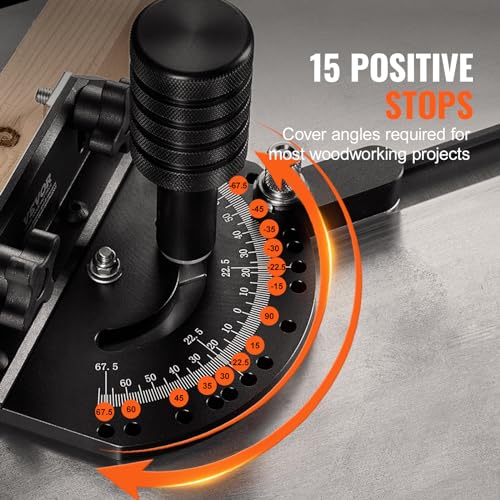
- 15 precise angle stops
- Durable aluminum build
- Easy miter bar adjustment
Trade-offs
- No fence extension
- No micro-adjust stop
- Basic fence design
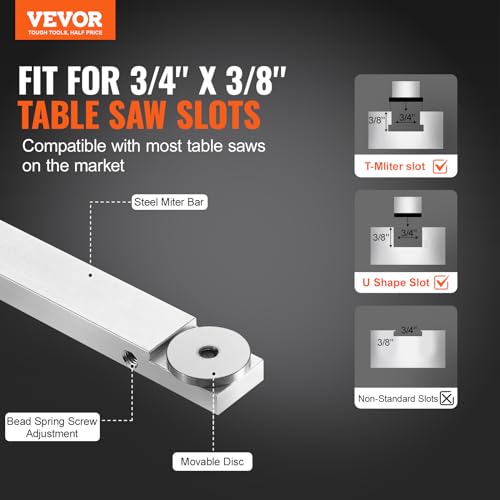
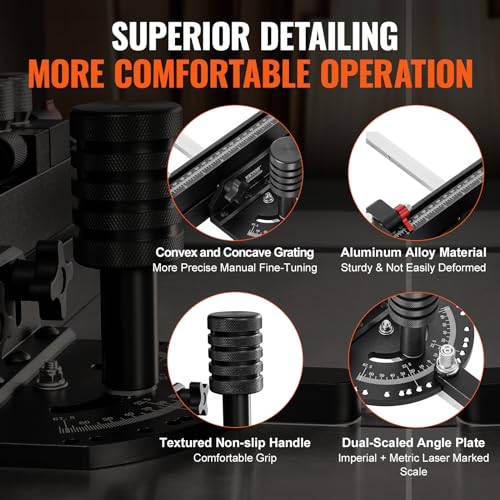
On specs alone, the VEVOR gauge looks like a strong all-rounder. The 15 positive angle stops cover nearly every common woodworking angle, and the laser-etched scale improves long-term legibility. Owners appreciate the spring-loaded plunger for miter bar adjustment, it’s a simple but effective way to eliminate play in looser saw slots. The aluminum alloy build feels durable, and the textured handle gives solid grip during operation.
Still, it’s clear this is designed for value, not refinement. The fence doesn’t extend, and there’s no micro-adjust flip stop, features you’d expect on mid-tier models. Compared to the GOINGMAKE or Woodpeckers, it’s more basic in execution. But if you’re after a solid, no-frills gauge with reliable angle presets and good slot fit, this one does the job without overpromising.
Product photos

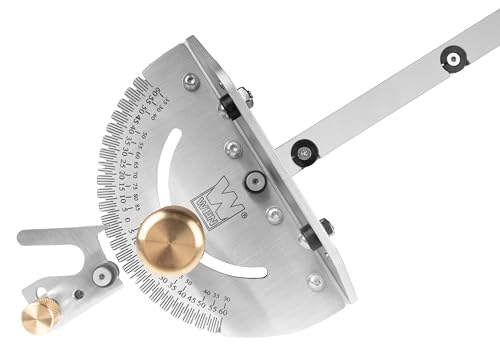
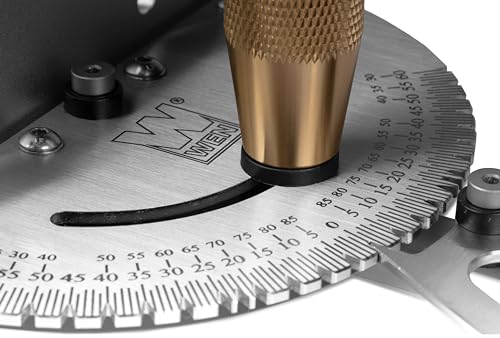
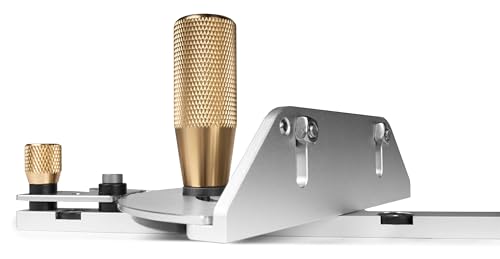
WEN Steel and Brass Miter Gauge

Strengths
- 27 angle stops
- Brass lock knobs
- Durable steel and brass
Trade-offs
- No flip stop
- No fence extension
- No micro-adjust
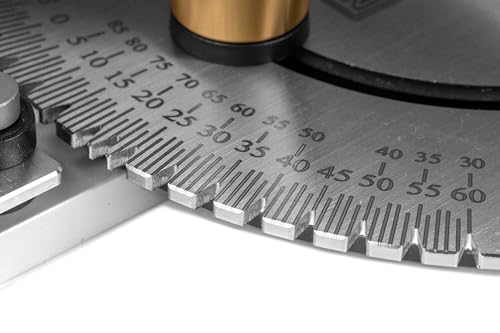
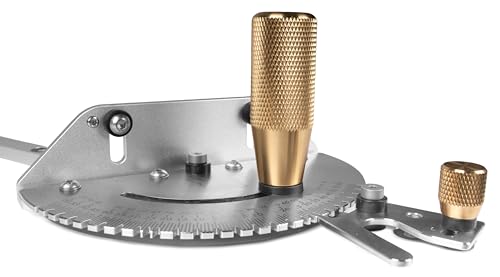
The WEN WA1401 is clearly aimed at users stepping up from a stock miter gauge but not ready to invest in high-end models. The steel and brass construction stands out, brass lock knobs and wear-resistant scale markings suggest it’s built to last in a home shop. With 27 positive stops, it offers finer incremental adjustments than most, which helps when dialing in less common angles.
But it’s held back by simplicity. There’s no flip stop, no extension, and no micro-adjustment, just a solid bar and a basic fence. Owners note it’s accurate enough for framing or basic shop tasks, but not for fine woodworking. Compared to the GOINGMAKE or Kreg, it’s a step down in functionality, but as a first real upgrade, it’s dependable. I’d recommend it only if you need something rugged and simple.
Product photos
GOINGMAKE Extensible Fence Miter Gauge
Strengths
- Extends to 32 inches
- Micro-adjust flip stop
- 13 precise angle stops
Trade-offs
- Fence extension lacks rigidity
- Plastic angle lock button
- No sacrificial fence included
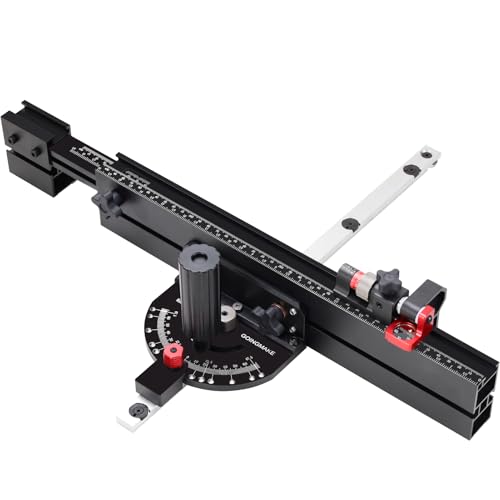
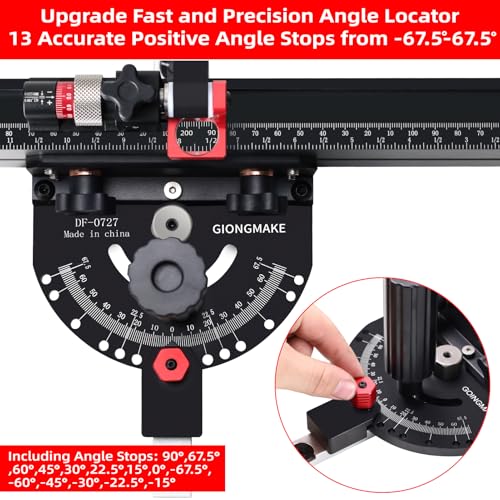
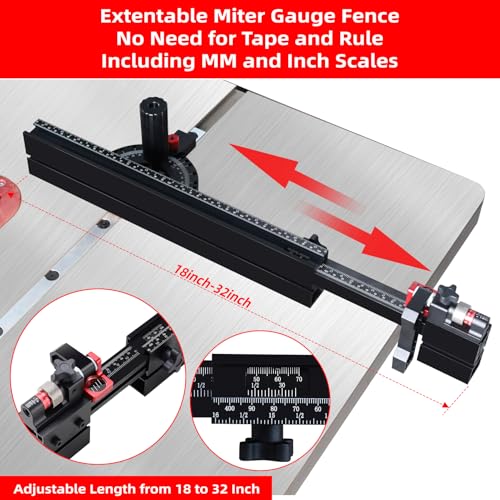
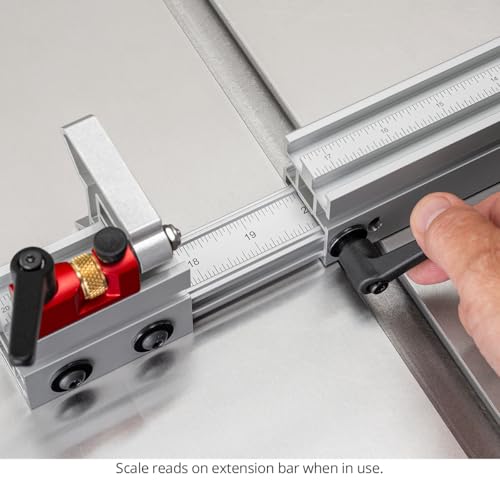
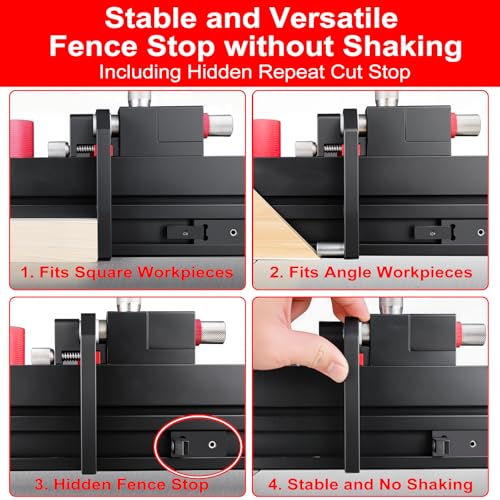
This GOINGMAKE model is clearly engineered for users who regularly make long crosscuts. The extendable fence from 18 to 32 inches is a real advantage, and the micro-adjust flip stop, again rated to 0.001”, gives precise control over repeat dimensions. The 13 positive angle stops cover a wide range, including 67.5°, which is useful for crown molding or trim work. Owners highlight the ease of setup and the stability of the locking angle mechanism.
It’s not as refined as the Woodpeckers, but it delivers similar functionality at a much lower cost. The miter bar adjustment system with four rings works well across different saws, minimizing play. Where it falls short is build quality, some report slight flex in the extension when cutting thicker stock. Still, for the crosscut capacity and feature set, it’s a strong pick.
Product photos
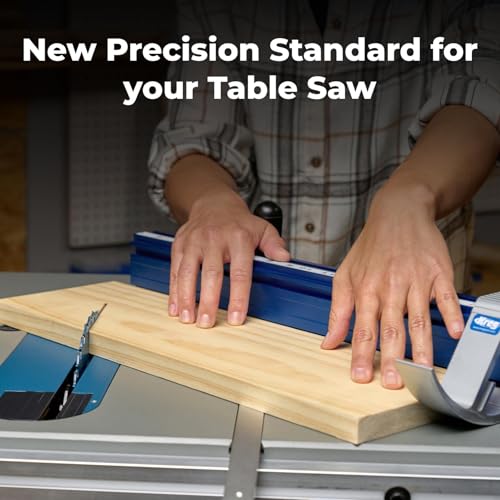
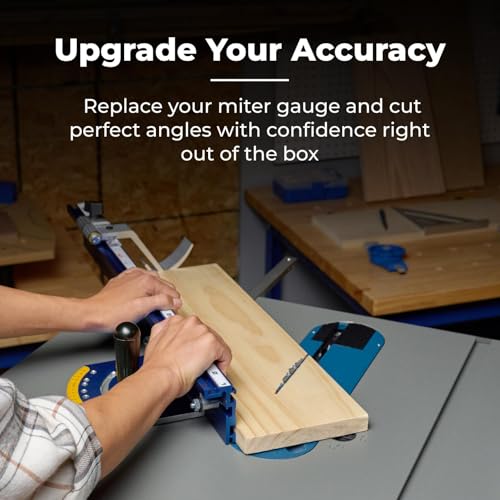
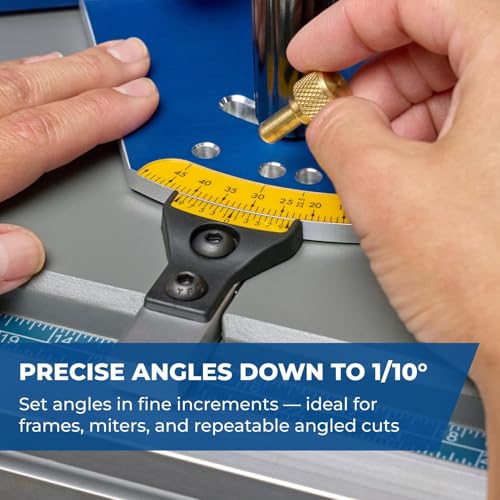
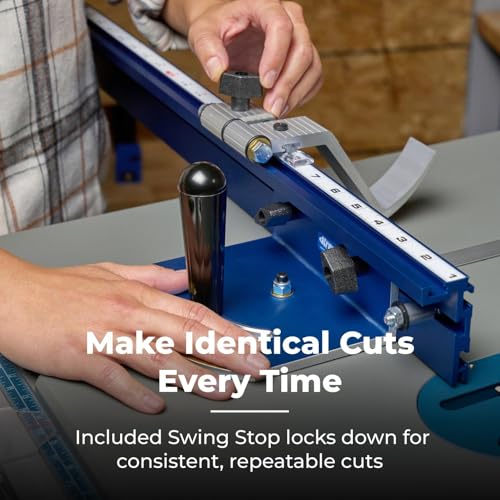
Kreg Precision Miter Gauge System
Strengths
- Heavy-duty construction
- Excellent fence stability
- Smooth slot tracking
Trade-offs
- No fence extension
- No micro-adjust miter bar
- Limited angle stops
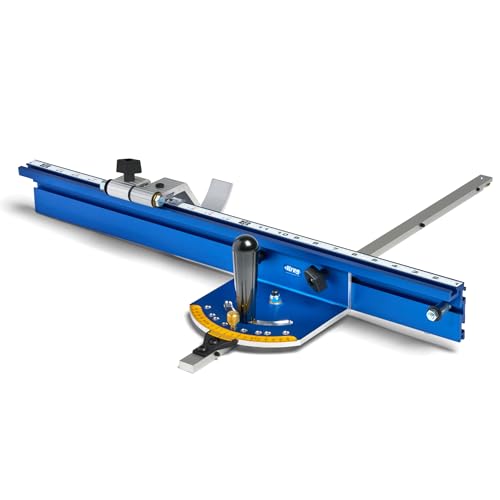
The Kreg KMS7102 stands out in a crowded field because it’s built like a system, not just a gauge. On paper, it delivers what Kreg’s known for, repeatable accuracy and thoughtful design. Owners consistently report tight tolerances and smooth tracking in miter slots, which translates to clean, square crosscuts without chatter. The adjustable fence is rigid and locks down solid, and while it doesn’t extend as far as some competitors, its stability over shorter spans is top-tier.
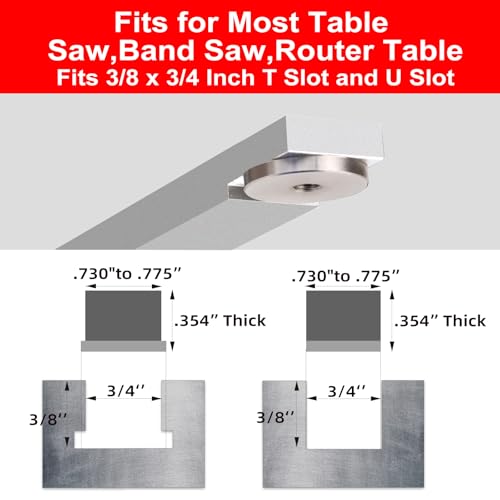
Where it really wins is consistency. The miter bar fits snugly in standard 3/8” x 3/4” slots, and the lack of micro-adjust on the bar isn’t a dealbreaker because the fit is reportedly consistent across different saws. Compared to budget options, this one feels like a permanent upgrade, less fiddling, more cutting. I’d pick this over most mid-range models if you prioritize long-term reliability and don’t need massive crosscuts.
Product photos
Woodpeckers in-DEXABLE Miter Gauge
Strengths
- Leaf-spring miter bar
- USA-made build quality
- Smooth micro-adjust stop
Trade-offs
- High price point
- Fence extension not longest
- No 0.001” scale magnifier
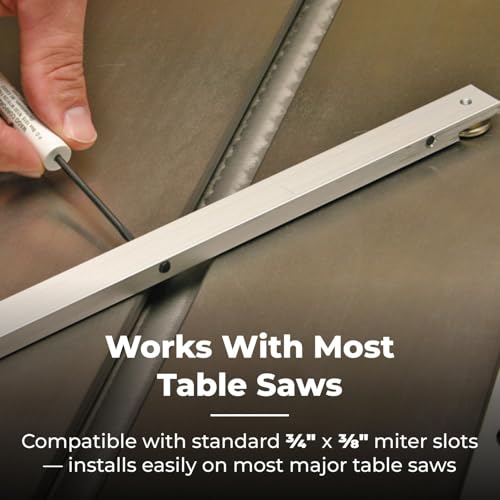
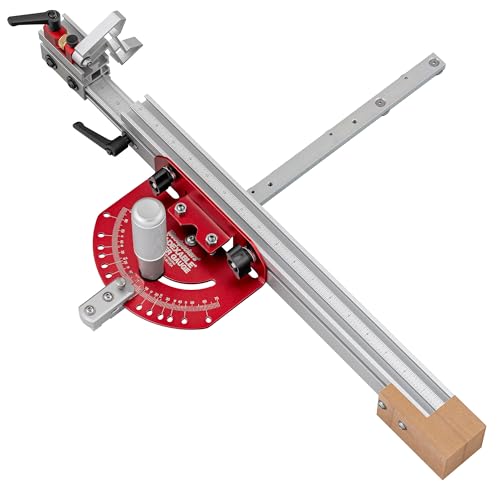
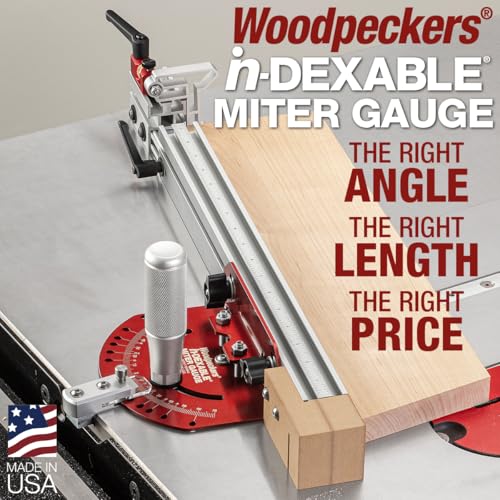
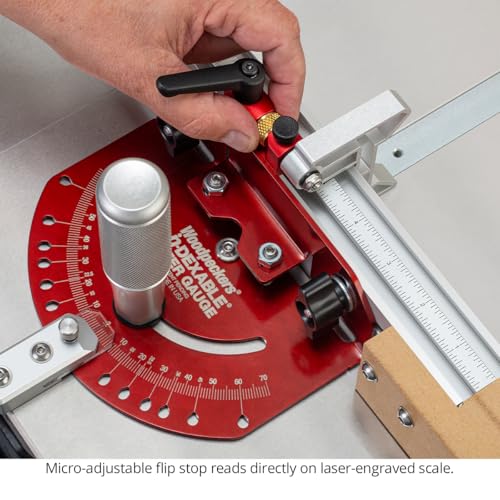
The Woodpeckers in-DEXABLE is the kind of tool that justifies its price through execution. The leaf-spring miter bar delivers near-universal fit in 3/8” x 3/4” slots, and owners consistently report zero slop or binding. The micro-adjust flip stop is buttery smooth and locks down rock-solid, something you notice when making fine cabinet parts. The extendable fence, from 18” to 31”, feels stiffer than most competitors, even when fully extended.
It’s made in the USA, and that shows in the fit and finish. Compared to the GOINGMAKE or Kreg, it’s more refined in every way, better materials, better ergonomics, better repeatability. The indexed angle system with hairline reticle makes setting repeat angles fast. My recommendation? If you’re doing serious woodworking and want one miter gauge to last a decade, this is the smarter buy.
Product photos
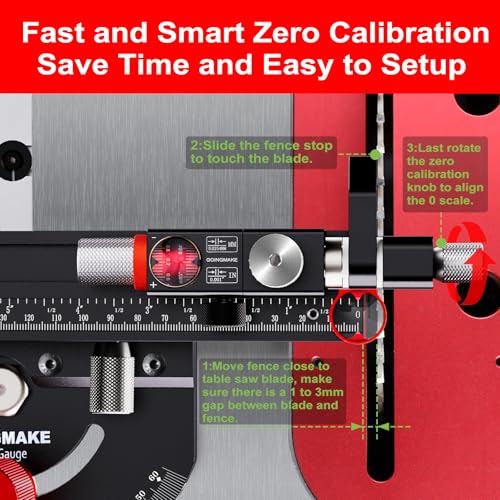
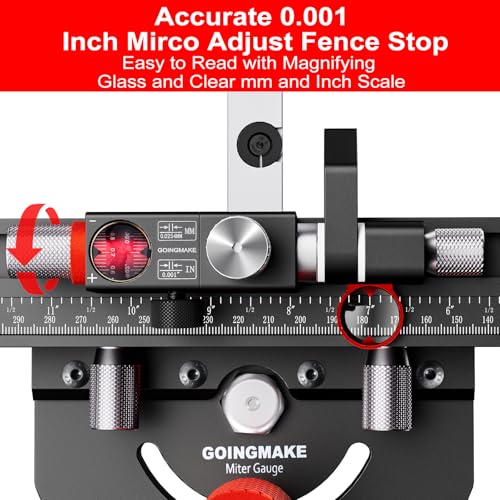
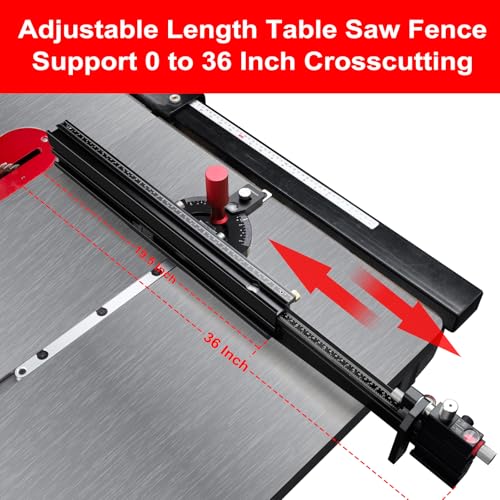
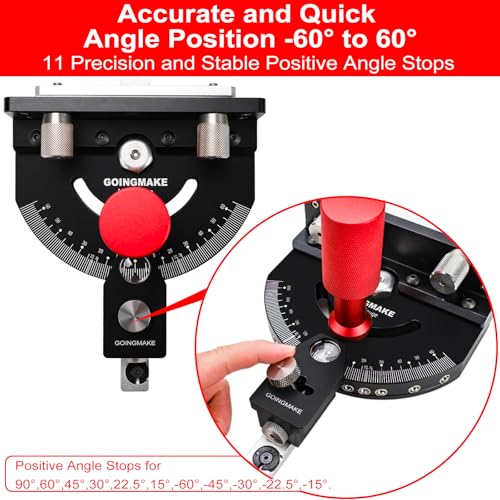
GOINGMAKE Micro Adjust Miter Gauge
Strengths
- Micro-adjust flip stop
- Fast zero calibration
- Extends to 36 inches
Trade-offs
- Fence wobble at full extension
- Plastic components in stop mechanism
- Angle scale lacks fine increments
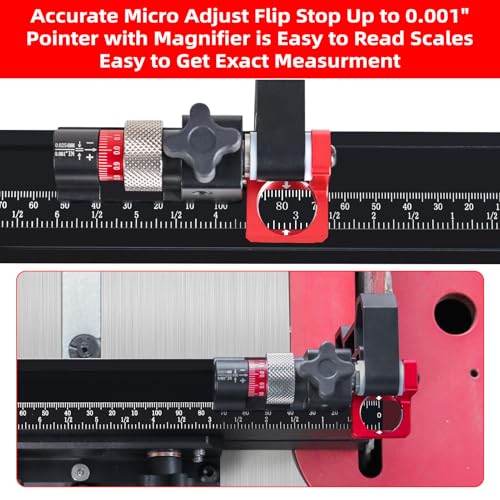
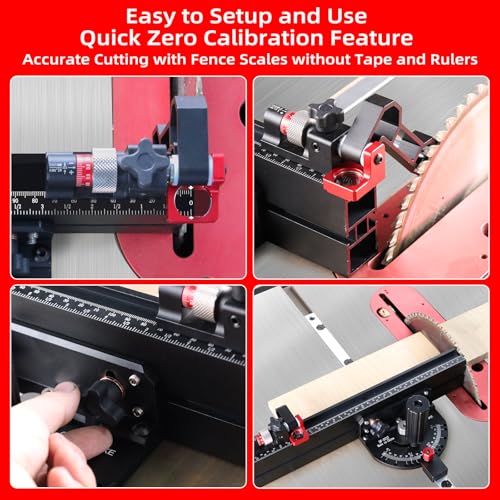
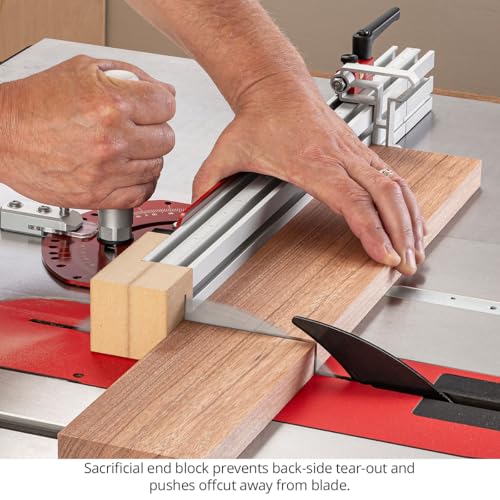
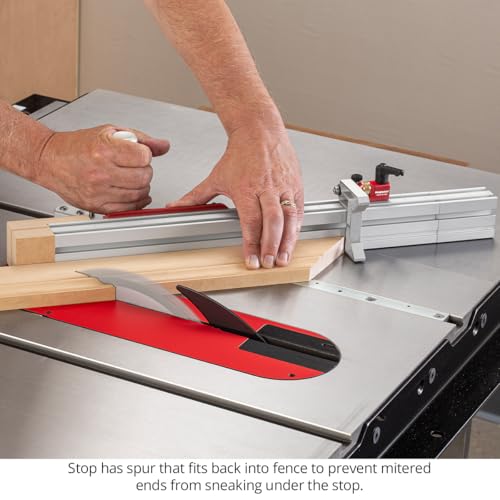
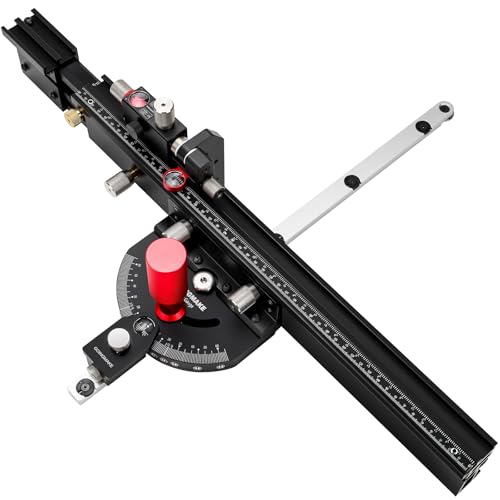
This GOINGMAKE model packs a surprising number of high-end features into an affordable package. The micro-adjustable flip stop, accurate to 0.001”, is a standout, and owners confirm it holds position well during repeat cuts. The magnifying lens over the scale is a small touch, but it makes a real difference in readability. The fast zero-calibration system gets praise for eliminating guesswork when setting up reference cuts, which speeds up workflow.
It’s not perfect. Some users note the fence extension feels a little less rigid than premium models when fully extended to 36 inches. But for the price, the feature set is hard to beat. Compared to the VEVOR or WEN, this one offers better adjustability and more thoughtful ergonomics. If you’re upgrading from a stock gauge and don’t want to spend Woodpeckers-level money, this is a smart entry point.
Product photos
How We Evaluated miter gauge for table saws
Rather than a hands-on lab test, my research focused on a detailed comparison of published specifications and features across numerous models. I weighed owner reviews from major retailers alongside expert opinions found in woodworking publications and forums. This information was then ranked against criteria relevant to accuracy, build quality, and ease of use – all factors crucial for reliable results.
For miter gauges, consistent accuracy and stability are paramount, so those were weighted most heavily. A gauge that can’t hold a precise angle is useless, no matter how affordable. Beyond that, the ability to handle larger crosscuts efficiently was a significant factor, as was the quality of the materials and construction, durable gauges simply last longer and maintain their calibration. Understanding these elements separates useful tools from those that disappoint.
Specifications reliably indicate slot compatibility and the range of angles offered. However, judging smoothness of operation, the precision of micro-adjustments, and long-term durability requires looking at owner feedback. Users consistently report on issues like wobble, looseness over time, and how well a gauge holds its calibration after repeated use. Learning about cutting precise angles on a table saw is also important to understand what features you will actually need.
How To Pick The Right miter gauge for table saws
Choosing the right miter gauge can significantly improve the accuracy and efficiency of your table saw work.
A quality miter gauge prioritizes smooth gliding action within the table saw’s miter slot, precise angle settings with clearly marked stops, and a stable fence for supporting longer workpieces. Look for durable materials like aluminum or brass, and features that minimize play or wobble during operation. Consideration should also be given to the types of cuts you’ll be making most frequently – simple crosscuts or more complex angled work.
Fence Length & Extensibility
Forget about a short, flimsy fence. The length of the miter gauge’s fence directly impacts how well you can support wider stock, and a stable fence is crucial for accurate cuts. For most hobbyists, an 18-inch fence is a starting point, but if you regularly work with larger panels, seriously consider an extensible fence. The GOINGMAKE Extensible Fence Miter Gauge, for example, offers a fence that expands to 32 inches, eliminating the need for separate support blocks. However, remember that longer fences can introduce more flex if not well-constructed.
Angle Accuracy and Stops
Don’t settle for a miter gauge with vague angle markings. Precision is key, and the best gauges offer a variety of positive stops at common angles (45°, 30°, 22.5°, etc.). These stops allow for quick and repeatable angled cuts, saving you time and reducing errors. Here’s what to look for in a good stop system: * Clear markings: Easily readable angle graduations are essential. * Positive locking: Stops should firmly lock into place, preventing accidental movement. * Micro-adjustment: The ability to fine-tune the angle beyond the preset stops is a huge advantage for achieving truly precise cuts.
A good rule of thumb is this:
Invest in a gauge with more positive stops than you think you’ll need. You’ll be surprised how often you use those less common angles.
Material Quality and Slot Fit
A miter gauge is only as good as its construction and how well it fits your table saw. Cheap plastic gauges will flex and wear quickly, leading to inaccurate cuts. Look for gauges made from aluminum alloy or brass; these materials are more durable and resistant to deformation. Ensuring a snug fit within your table saw’s miter slot is also vitally important. Many gauges, like the WEN Steel and Brass Miter Gauge, include expansion discs or adjustable features to accommodate both T-track and U-shaped slots. Before purchasing, double-check that the gauge is compatible with your saw’s slot dimensions. If you’re looking at top mitre gauge models, you’ll find that build quality is a consistent standout feature. Understanding table saw primary functions will also help you pick a gauge suited to the types of cuts you’ll be making most often, whether it’s for simple crosscuts or more complex angled work. Ultimately, choosing among the best table saw mitre gauges often comes down to balancing your budget with your need for precision and long-term durability.
Miter Gauge for Table Saws Compared
Here’s a comparison of specifications for various miter gauges to help you choose the right one for your needs.
| Product Name | Fence Extensibility | Angle Stops (Qty) | Slot Compatibility | Micro-Adjust Flip Stop | Material |
|---|---|---|---|---|---|
| VEVOR Precision Miter Gauge 18in | N/A | 15 | 3/4″ x 3/8″ | Yes | Aluminum Alloy |
| WEN Steel and Brass Miter Gauge | N/A | 27 | 3/4″ x 3/8″ | N/A | Steel & Brass |
| GOINGMAKE Extensible Fence Miter Gauge | 18-32 Inch | 13 | 3/8″ x 3/4″ | Yes | Aluminum Alloy |
| Kreg Precision Miter Gauge System | N/A | N/A | N/A | N/A | N/A |
| Woodpeckers in-DEXABLE Miter Gauge | 18-31 Inch | N/A | 3/8″ x 3/4″ | Yes | Aluminum |
| GOINGMAKE Micro Adjust Miter Gauge | Up to 36 Inch | 11 | 3/8″ x 3/4″ | Yes | Aluminum Alloy |
Frequently Asked Questions
What miter gauge slot size is most common?
The most common miter gauge slot size is 3/4 inch by 3/8 inch, though many gauges, like the WEN Steel and Brass Miter Gauge, include adapters for 3/8 inch by 3/4 inch T-tracks. Always verify compatibility with your specific table saw before purchasing.
Are expensive miter gauges always better?
Not necessarily. While higher-priced gauges often feature more precise micro-adjustments and robust construction, a well-built aluminum alloy gauge with positive stops can deliver excellent accuracy for most hobbyist needs, making features like extensibility less critical.
Can I modify a miter gauge to fit my table saw slot?
Yes, but it requires skill and caution. Many gauges include shims or adjustment mechanisms, and you can find aftermarket slot adapters. However, improper modification can compromise accuracy, so consider purchasing a gauge designed for your slot size instead.
What is a micro-adjust flip stop and why is it useful?
A micro-adjust flip stop allows for very fine adjustments to the angle of the miter gauge beyond the preset stops. This is especially helpful when creating angled cuts that aren’t at standard measurements, offering a level of precision that increases repeatability.
Where can I find more information on improving my table saw setup?
You can find a wealth of information on essential table saw upgrades to improve safety, accuracy, and efficiency, including dust collection systems, blade stabilizers, and improved fences.
The Bottom Line
Choosing a miter gauge often comes down to how much control you want versus how much fuss you’re willing to tolerate. If you prioritize absolute precision and repeatable angles, the Woodpeckers in-DEXABLE Miter Gauge is a standout choice, though it represents a significant investment. It offers a robust build and micro-adjustments that justify the price for serious woodworkers.
For those needing versatility and the ability to handle wider stock, the GOINGMAKE Extensible Fence Miter Gauge is an excellent option. And if you’re on a tighter budget but still want a reliable gauge with a good number of positive stops, the VEVOR Precision Miter Gauge 18in delivers a surprising amount of functionality for the money. Don’t forget that understanding table saw crosscut sled construction can be a valuable skill for specialized cuts.
Ultimately, the specs matter less than a solid, stable gauge that fits your table saw’s slot well. Don’t chase the highest number of angle stops if the gauge itself feels flimsy. A well-built gauge, used with careful technique, will always produce more accurate results than a feature-packed one that lacks rigidity and precision.
