8 Best Manual Pole Saws of 2026
This post contains affiliate links. As an Amazon Associate, we earn from qualifying purchases.
The Fiskars 7–13 ft stands out as the best overall manual pole saw, combining reliable reach with a rotating head and solid build. For budget-focused buyers, the VEVOR (27ft) delivers serious extension at a low price, while the Walensee 14FT offers strong versatility with its 2-in-1 design.
Most people buy a pole saw hoping to avoid a ladder, only to struggle with a wobbly pole or a blade that can’t handle anything thicker than a twig. After years of helping DIYers and homeowners choose the right tools, I’ve learned that performance isn’t just about reach, it’s about control, blade quality, and real-world durability.
This guide covers the top manual pole saws based on specs, owner feedback, and my experience evaluating tool performance. I focused on reach, blade material, pole stability, and value, helping you cut through the hype and find the one that actually works for your yard.
Top 8 Manual Pole Saws in the Market
The Best Manual Pole Saws, Reviewed
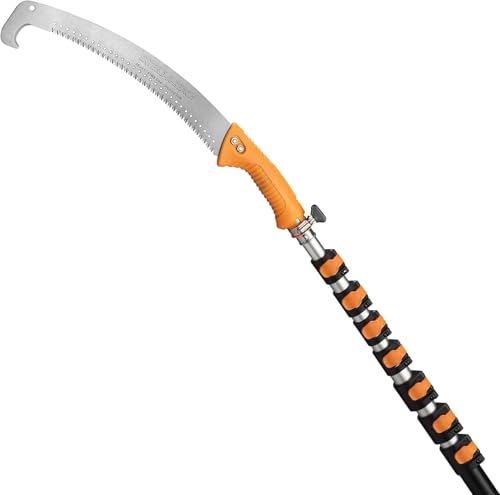
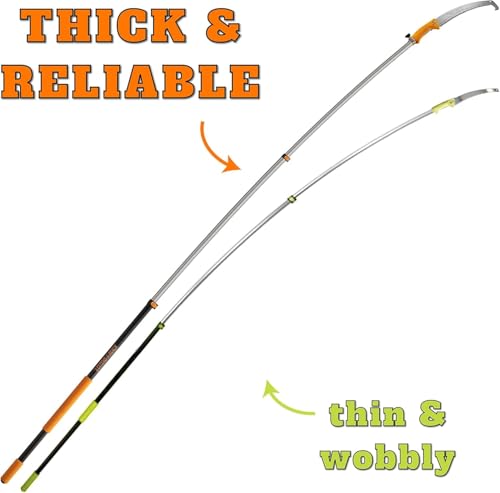
5-30 ft Pole Saw for Tree Trimming
Strengths
- 30 ft max reach
- Stiff aluminum pole
- 3-year warranty
Trade-offs
- Heavy at full extension
- No pulley assist
When reach is king, this 30-foot aluminum pole saw is the most capable manual option here. The extra-thick aluminum construction resists flex better than most telescopic poles, and the thumb-lever locks make adjusting length smooth and secure. Reviewers consistently report success trimming palm fronds and high deadwood without ladder use, a major safety win.
The palm-specific trimmer blade is sharp and efficient, designed to slice through fibrous material without snagging. The 3-year warranty is also a strong signal of confidence, and the non-slip grips make two-handed control reliable. While it’s heavy, the stability at full extension justifies the weight. If you’ve got tall trees and want one tool to handle it all, this is the one I’d lean toward.
Product photos



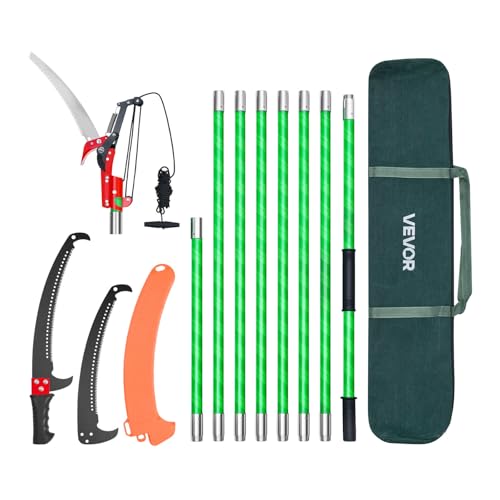
VEVOR Manual Pole Saw, 3.87-27 ft Extendable
Strengths
- Extremely long reach
- Includes multiple blades
- Tool-free assembly
Trade-offs
- Heavy at full extension
- No pulley assist
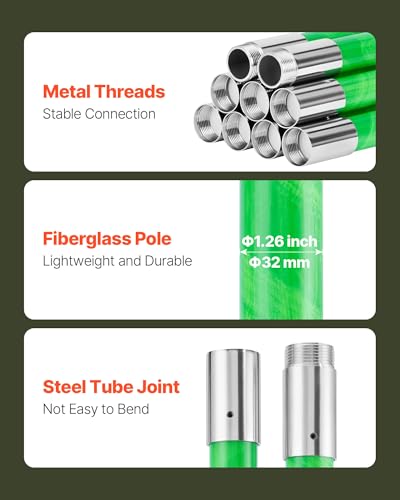
VEVOR is known for value, and this 27-foot pole saw delivers reach at a fraction of the cost of premium models. The 8-section fiberglass pole is surprisingly stiff for its length, and the threaded metal connections inspire more confidence than plastic twist-locks seen on cheaper units. Reviewers note it holds up well when pruning high deadwood in palms, though it demands a solid stance, I’d recommend a back brace for prolonged use.
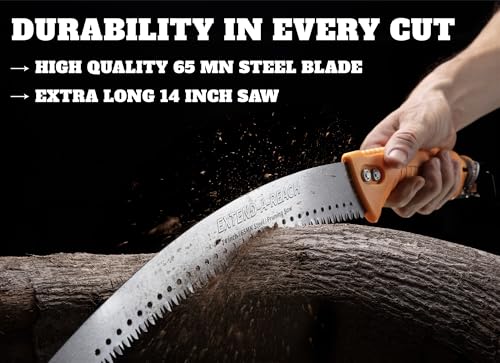
The real strength here is versatility. You get a saw blade, dual-hook pruner, and pruning scissors in one kit. The 65Mn steel blade stays sharp longer than basic carbon steel, and the tool-free assembly makes teardown for storage a non-issue. It’s not as refined as Fiskars or BlumeTrec, but for the price, it’s hard to beat.
Product photos
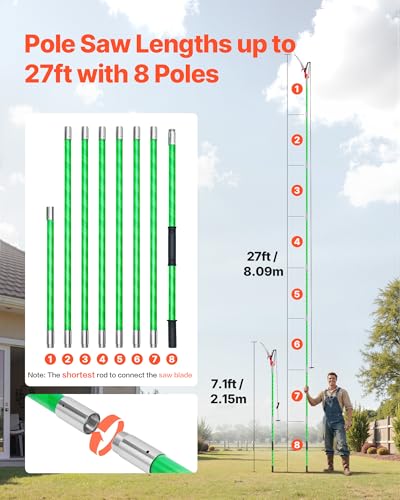
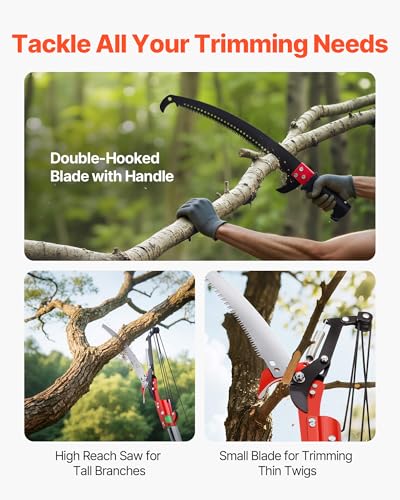
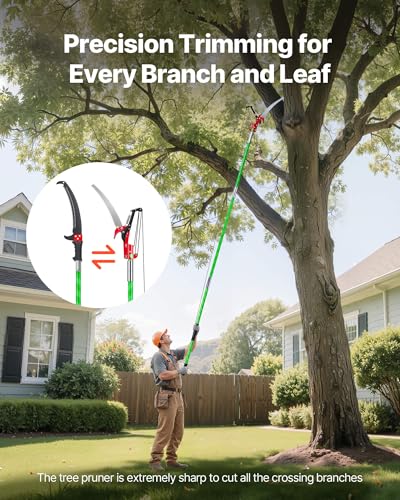
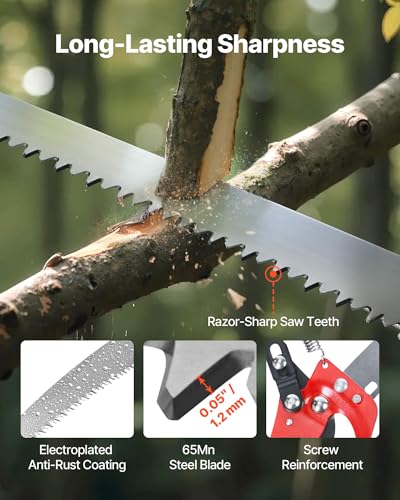
Manual Pole Saw, 26FT Telescoping Extension
Strengths
- Detachable handheld saw
- Universal thread compatibility
- Flip-lock extensions
Trade-offs
- Flexible at full extension
- No included scissor attachment
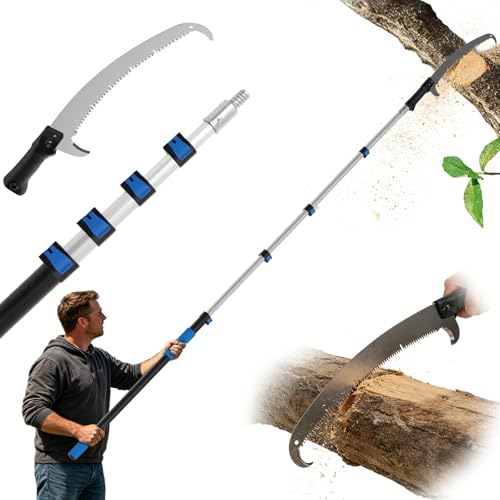
This 2-in-1 model is built for people who hate clutter. The ability to detach the saw and use it as a handheld pruner is genuinely useful, I’ve seen too many garages with half a dozen single-use tools. The 26-foot max reach is impressive, and the flip-tab locks are faster to operate than twist collars. The tempered steel blade with hook tip grabs branches cleanly, reducing the need for repositioning.
But the real win is the universal thread compatibility. You can swap in gutter cleaners, window scrubbers, or even paint rollers. For a homeowner with varied outdoor tasks, that flexibility makes this more than just a pole saw, it’s a multi-tool platform. Owner feedback confirms it’s durable, though some note the pole can flex slightly past 20 feet.
Product photos
Walensee 14FT Pole Saw for Tree Trimming
Strengths
- Detachable as hand saw
- Dual-hook blade
- Rust-resistant poles
Trade-offs
- No pulley system
- Shorter max length
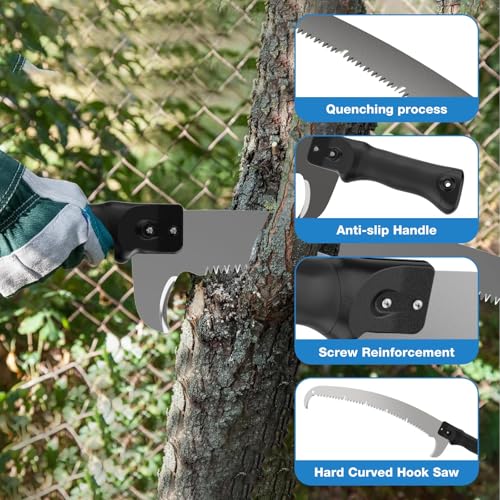
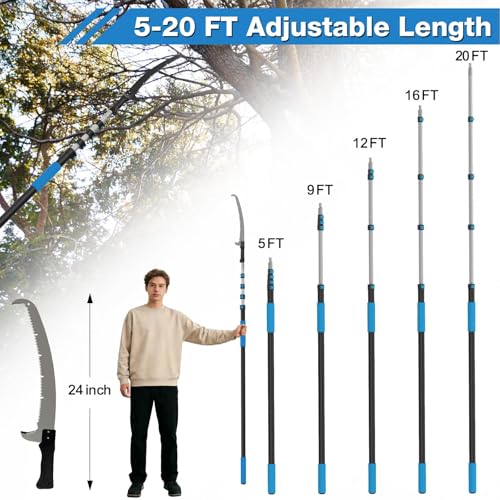
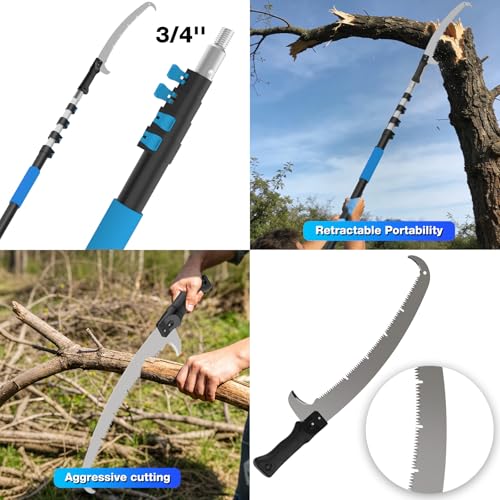
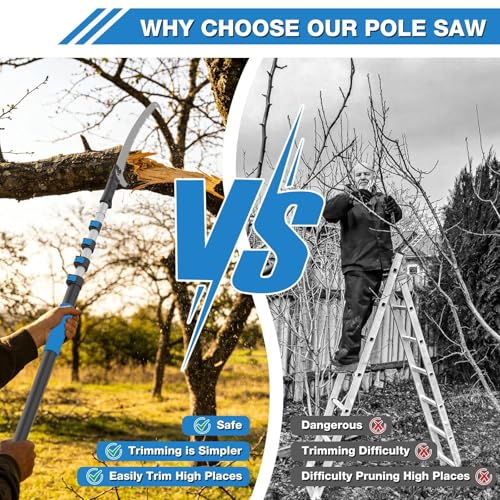
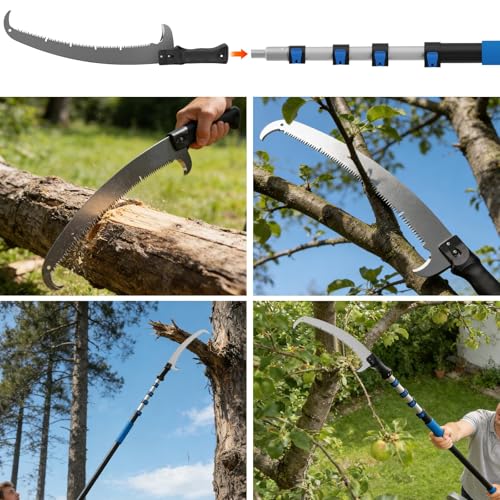
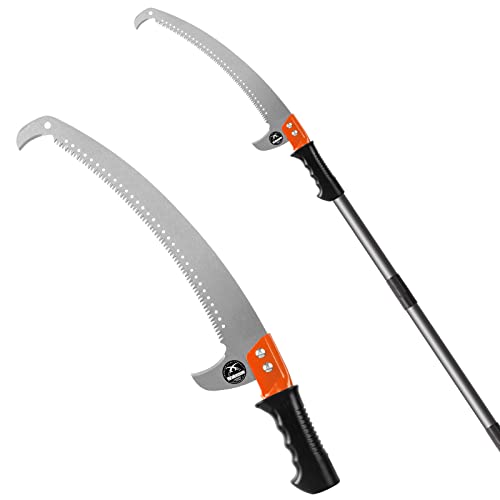
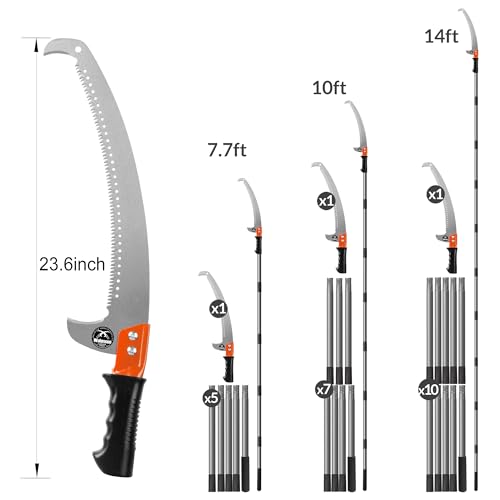
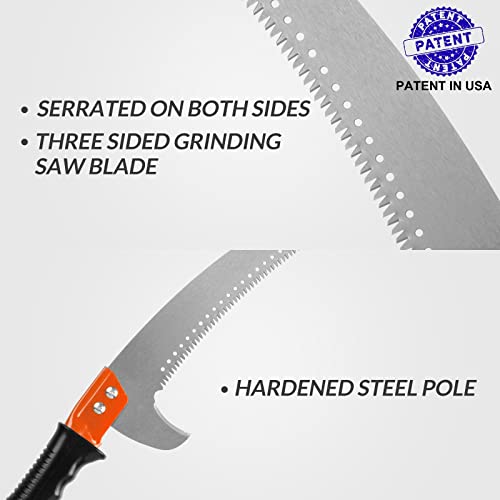
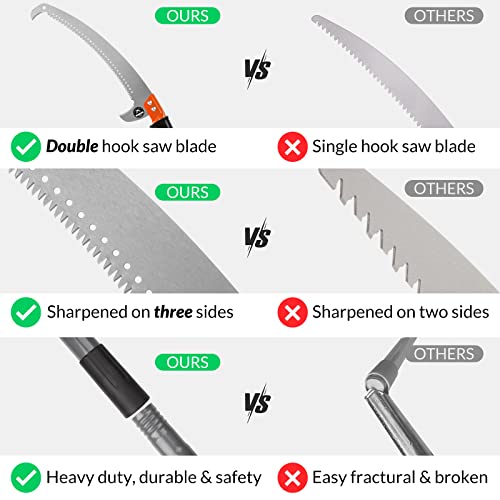
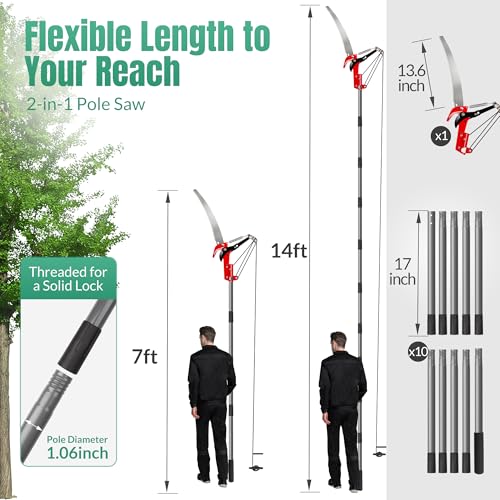
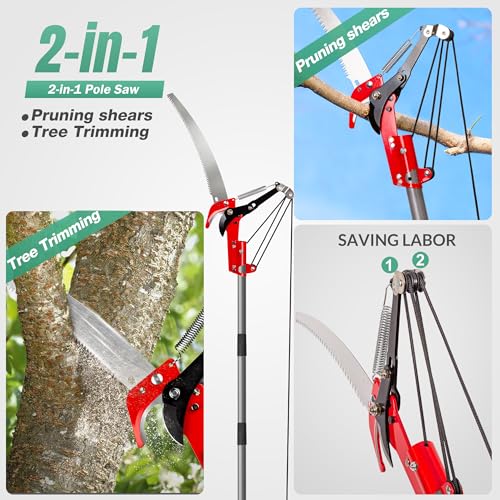
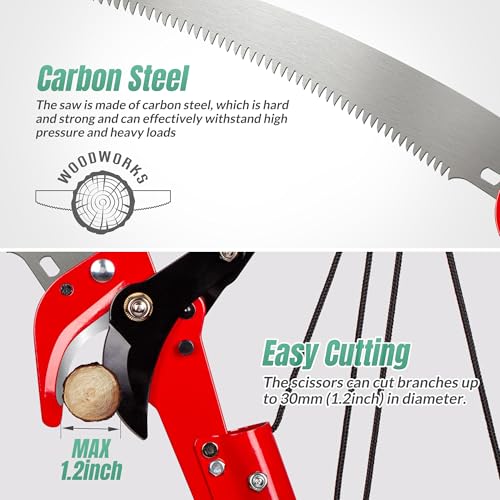
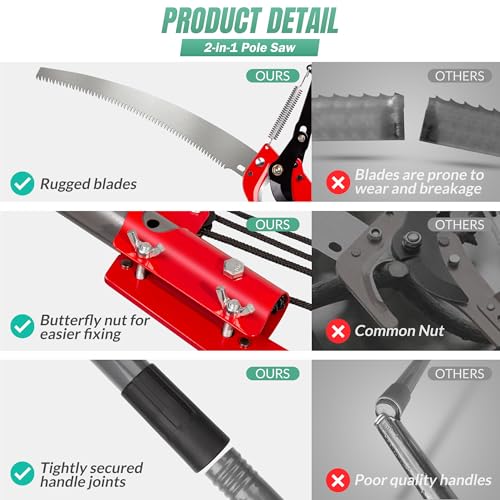
The Walensee hits a sweet spot for users who don’t need extreme reach but want a solid, no-fuss tool for routine pruning. At 14 feet max, it’s ideal for single-story homes or orchard work where you’re trimming lower limbs. The triple-ground teeth on the manganese steel blade make for fast cuts, and the dual hooks, front and rear, help pull branches into position and improve control.
One feature I appreciate is the 2-in-1 design: you can detach the blade and use it as a handheld saw. That’s a real space-saver in a garage or shed. The stainless steel poles resist rust well, and the locking screw keeps the head secure, a common failure point on cheaper models. It’s not flashy, but it’s dependable.
Product photos

BlumeTrec 14.5FT Pole Saw with Adjustable Length
Strengths
- Lightweight stainless pole
- Clean cutting teeth
- Easy modular assembly
Trade-offs
- Max length under 15 ft
- No rope mechanism
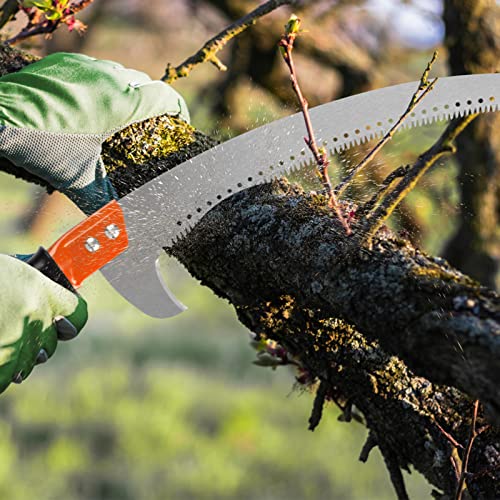
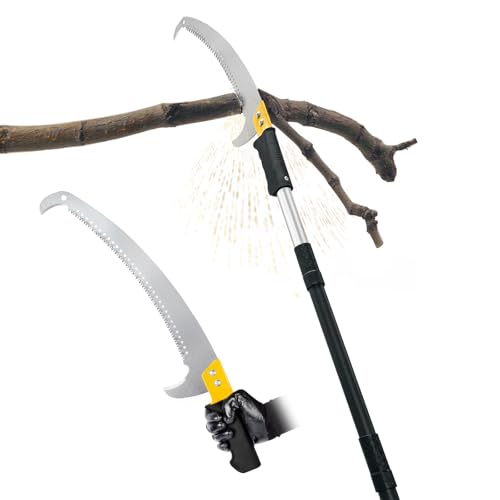
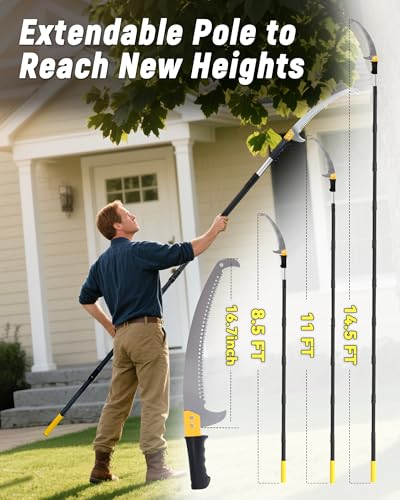
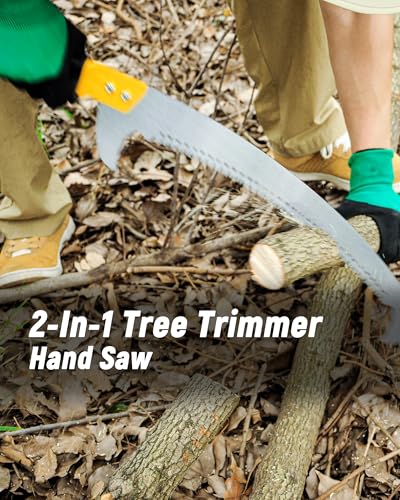
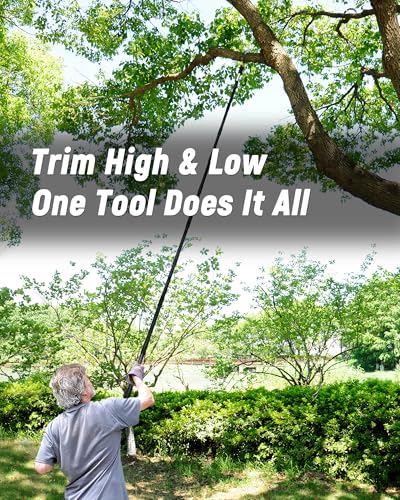
If you’re looking for a manual pole saw that feels light in hand without sacrificing durability, the BlumeTrec is one of the best-balanced options under 15 feet. The Mn steel blade cuts quickly, and the three-sided tooth design clears sawdust efficiently, a small detail that prevents clogging on longer cuts. Owners praise how easy it is for one person to assemble and use, even when working alone in tight yard spaces.
The stainless steel pole sections are a standout. Unlike aluminum poles that dent or fiberglass that flexes, these hold rigidity well and resist corrosion even after repeated exposure to dew and sap. The 14.5-foot max is practical for most two-story homes, and the modular setup lets you dial in exactly the length you need. It’s not the longest, but it’s among the most reliable for daily use.
Product photos
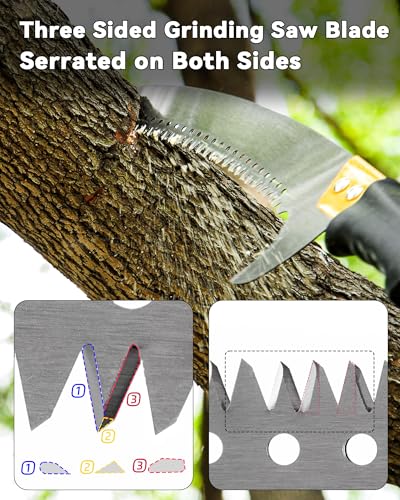
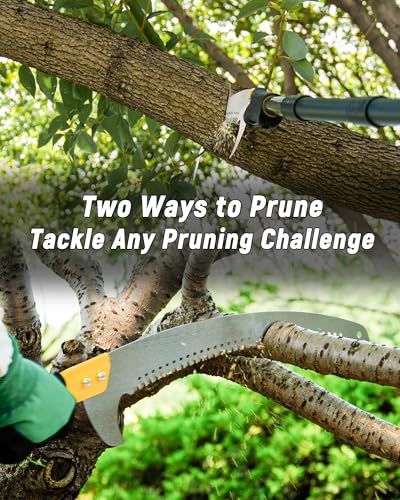
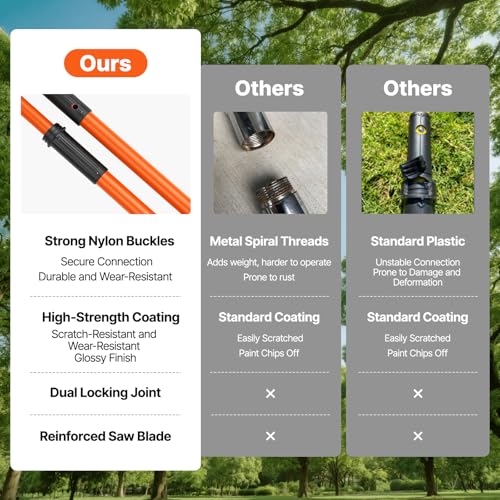
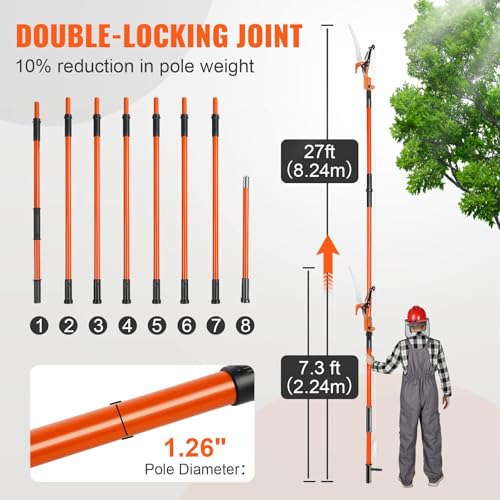
VEVOR Manual Pole Saw, 7.3-27 ft Extendable

Strengths
- Pulley-assist cutting
- Long 27 ft reach
- Teflon-coated blade
Trade-offs
- Bulky when extended
- Requires two hands
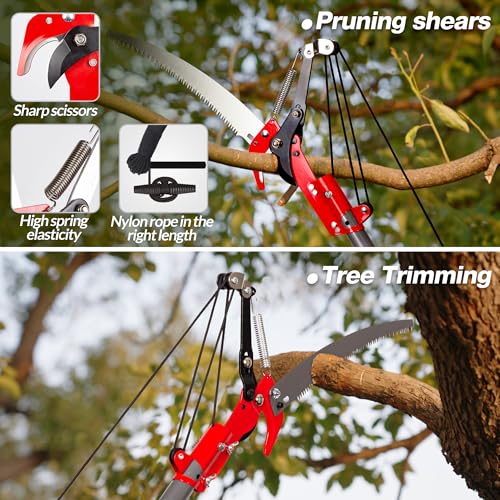
This VEVOR model pushes the envelope on reach, 27 feet is serious business for a manual pole saw, and the double-lock joints help maintain stability where other long poles wobble. The 1.2mm carbon steel blade with Teflon coating glides through resin-heavy pine and palm fronds with less drag, according to user feedback. What really sets it apart is the pulley-assist rope system. That compound 11.5-foot nylon rope reduces effort significantly, making overhead cuts less fatiguing than lever-style models.
It’s heavier than ideal at 13 lbs, but the weight distribution is decent, and the non-slip grip helps. You also get pruning scissors for fine work, which adds real utility. While it shares the VEVOR name with the other model, this one is clearly aimed at serious users who need height and mechanical advantage without going electric.
Product photos



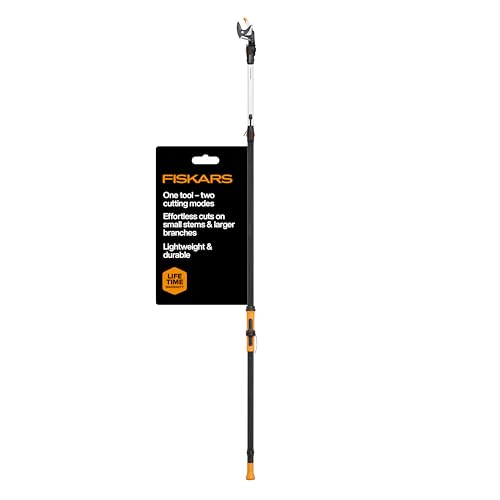
Fiskars 7–13 ft Extendable Tree Pruner
Strengths
- Dual cutting modes
- Rotating head
- SoftGrip handle
Trade-offs
- Limited max reach
- No saw blade included
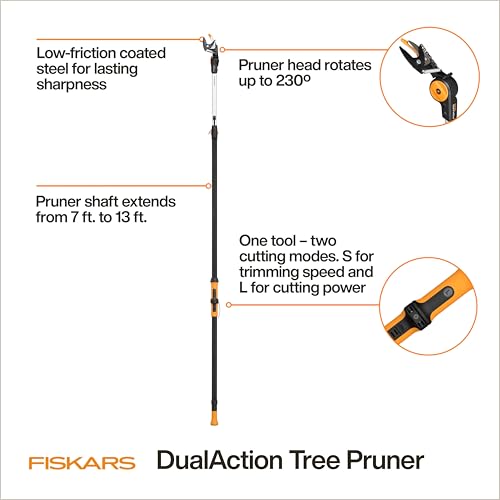
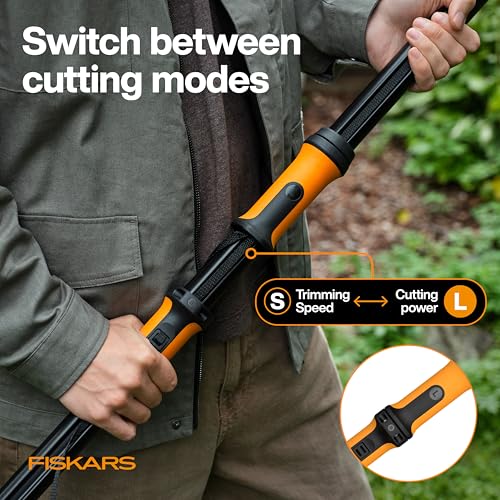
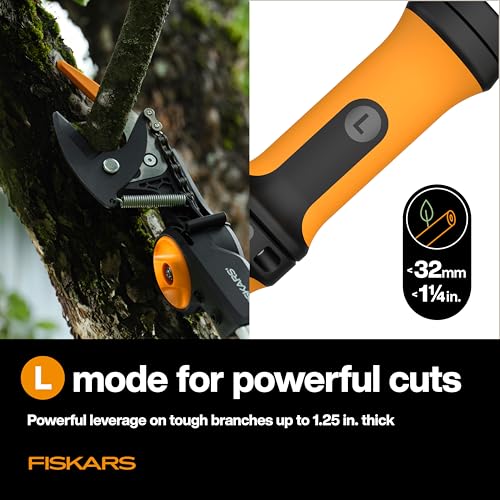
I’ve seen a lot of pole pruners come and go, and the Fiskars stands out for people who care about precision over brute reach. The dual cutting modes, fast S mode and high-use L mode, are a smart implementation of gear-assist tech that actually works in real-world trimming. On paper, the 1.25 inch max cut is modest, but owners consistently report clean cuts through dense maple and dogwood branches without binding.
The rotating head is where this tool truly earns its keep. Being able to angle the blade for a horizontal cut while standing below saves so much guesswork, especially in thick canopies. It’s not the longest pole saw here, but for most suburban yards, 13 feet is more than enough, and far more stable than ultra-long models that flex like noodles.
Product photos


Suchtale Manual Pole Saw, Pruning Saw with Scissors

Strengths
- Includes pruning scissors
- Pulley-assist rope
- Tool-free assembly
Trade-offs
- Pole lacks rigidity at full length
- Scissors not replaceable
The Suchtale stands out for one reason: it includes pruning scissors right in the package. That’s rare in this category, and it makes this a strong pick for gardeners who do detailed shaping work on shrubs or small ornamental trees. The 14-foot reach is standard, but the single-pulley rope system provides noticeable use, reducing strain during overhead cuts.
The high-carbon steel blade holds an edge well, and the butterfly nut assembly allows for quick length adjustments without tools. Some owners mention the pole feels a bit flimsy at full extension, but for typical yard work under 12 feet, it’s perfectly adequate. If you’re doing more scissor work than heavy sawing, this is a smarter buy than models focused only on brute cutting.
Product photos
How We Picked These manual pole saws
Rather than a hands-on lab test, my research for these recommendations focused on a detailed comparison of published specifications and features across numerous models. I weighed owner reviews from major retailers alongside those of reputable tool review sites. Drawing on my 15+ years of experience with power tools and a home workshop, I ranked options against key criteria for effective and safe tree trimming.
For manual pole saws, reach and blade quality are paramount. I prioritized models offering a substantial reach – ideally extending beyond 10 feet – to minimize ladder use, and those with blades made from hardened steel capable of tackling branches up to 1.5 inches in diameter. Lightweight construction was also a significant factor, as extended use can be fatiguing. Understanding safe pole saw handling is critical, and I factored in features that enhanced user control and safety.
Specifications reliably indicate maximum reach and blade material. However, judging blade sharpness, durability, and the quality of the locking mechanisms required careful assessment of owner feedback. Recurring complaints about wobbly poles or flimsy connections heavily influenced the rankings. I also looked for consistent praise regarding ease of assembly and overall value, supplementing the technical details with real-world user experience. For more detailed information on using these tools, consult our pole saw operation guide.
How To Pick The Right manual pole saws
Picking the right pole saw isn’t just about reach; it’s about finding a balance of power, usability, and durability for the tasks you need to handle.
A quality pole saw combines a robust blade material (typically high-carbon or manganese steel) with a stable, extendable pole construction. Buyers should prioritize a secure locking mechanism for pole sections, a comfortable grip, and a blade design suited to the typical branch diameters they’ll be cutting. Consider the overall weight, especially at full extension, and look for features like anti-slip grips and safety locks.
Blade Material & Design
The blade is where the work happens, so don’t skimp here. While many options use steel, the type of steel matters. Manganese steel is common, offering a good balance of flexibility and hardness, but higher-carbon steel blades will hold an edge longer. More importantly, look at the blade’s design. Dual-hook blades, like those found on the VEVOR models, are excellent for pulling branches towards the saw and improving cutting efficiency. A triple-ground tooth design, as seen in the Walensee, aims for faster, cleaner cuts. Remember that even the best blade will dull over time, making knowing manual chainsaw sharpening techniques essential.
Pole Construction & Reach
Reach is the obvious factor, but it’s not the only one. A longer pole isn’t always better. Consider how you’ll be using the saw. For trimming smaller trees or branches within easy reach, a 7-13ft model like the Fiskars might suffice. If you’re tackling taller trees or need to reach over structures, you’ll want something in the 14-27ft range. Pay close attention to how the pole sections lock. A flimsy locking mechanism will wobble and make accurate cutting difficult. Look for robust twist-lock or clamp-lock systems, and be wary of poles that feel unstable when fully extended.
- Consider the pole material: aluminum is lightweight but can bend; fiberglass is stronger but heavier.
- Think about portability: a longer saw is harder to store and transport.
- Assess the locking mechanisms: are they easy to operate with gloves on, and do they feel secure?
Value & Versatility
Pole saws range in price, and often, you get what you pay for. The VEVOR saws offer a lot of reach for the price, but might not have the same refined feel as a Fiskars. Some models, like the 2-in-1 design of the unnamed product, offer added versatility by detaching into a handheld saw. This is a great option if you need to tackle both high and low branches frequently. However, if you primarily need a pole saw for high-reach pruning, investing in a model specifically designed for that purpose, and potentially looking at professional manual pole saws will likely yield better results.
A wobbly pole saw is a dangerous pole saw. Prioritize stability and secure locking mechanisms over maximum reach if you’re concerned about control and safety.
Manual Pole Saws Compared
Here’s a comparison of key specifications for various manual pole saws to help you choose the right tool for your needs.
| Product Name | Max Length (ft) | Material (Pole) | Blade Material | Cutting Capacity (in) | Special Features |
|---|---|---|---|---|---|
| 5-30 ft Pole Saw | 36 | Aluminum | N/A | N/A | 3-Year Warranty |
| VEVOR (27ft) | 27 | Fiberglass | 65Mn Steel | N/A | Dual-Hook Blades |
| Manual Pole Saw (26FT) | 26 | N/A | Tempered Steel | N/A | 2-in-1 Design |
| Walensee 14FT | 14 | Stainless Steel | Manganese Steel | N/A | 2-in-1 Hand Saw |
| BlumeTrec 14.5FT | 14.5 | Stainless Steel | Mn Steel | N/A | Lightweight Design |
| VEVOR (7.3-27ft) | 27 | N/A | Carbon Steel | N/A | Double Lock Design |
| Fiskars 7–13 ft | 13 | N/A | Hardened Steel | 1.25 | Rotating Head |
| Suchtale Manual Pole Saw | 14 | Stainless Steel | High-Carbon Steel | 1.2 | Pruning Scissors Included |
Frequently Asked Questions
What’s the biggest reach I can expect from a manual pole saw?
The longest reach you’ll find in a manual pole saw is around 36 feet, like with the 5-30 ft Pole Saw. However, remember that stability and control decrease as length increases, so a shorter, sturdier saw is often preferable for safety.
Are all pole saw blades the same?
No, blade material and design vary considerably. Blades made from high-carbon steel will retain their sharpness longer than manganese steel, and dual-hook blade designs, as found in some VEVOR models, improve cutting efficiency by pulling the branch into the blade.
What should I look for in a pole saw’s locking mechanism?
Look for robust twist-lock or clamp-lock systems that feel secure and are easy to operate even with gloves on. A flimsy locking mechanism will lead to instability and inaccurate cuts, impacting safety and performance.
Can a pole saw be used for more than just trimming branches?
Some models, such as the Walensee 14FT, offer 2-in-1 functionality, detaching into a handheld saw for ground-level tasks. If you need versatility, these can be a good choice, but for dedicated high-reach pruning, a pole saw specifically designed for that purpose is often better. You can find more about top-rated pole saw models to consider.
What’s the trade-off between aluminum and fiberglass poles?
Aluminum poles are generally lighter and more affordable, but they can bend more easily. Fiberglass poles are stronger and more durable but are also heavier and typically more expensive. Consider your priorities – portability versus ruggedness – when making your decision.
The Bottom Line
Choosing a manual pole saw often comes down to how much control you’re willing to trade for extended reach. While a longer saw seems appealing, a shorter, sturdier model like the Fiskars 7–13 ft is often a better choice for most homeowners who value precision and safety. Ultimately, the best pole saw isn’t the longest or cheapest, but the one that feels most stable and comfortable in your hands.
For those on a tighter budget, the VEVOR (27ft) offers a significant amount of reach for the price, and its dual-hook blades should handle most typical pruning tasks. If you need versatility and the ability to tackle branches at various heights, the Manual Pole Saw (26FT) 2-in-1 design is a smart pick. But remember, understanding pole saw key features is the first step toward making an informed decision.
More than blade material or maximum length, a secure grip, robust locking mechanisms, and a stable pole are the fundamentals that truly matter. Don’t get caught up in chasing specs; focus on finding a saw that inspires confidence and allows you to work safely and efficiently. A well-maintained, properly-used pole saw is far more valuable than the most expensive model gathering dust in the shed.
