6 Best Plunge Routers for Woodworking 2026
This post contains affiliate links. As an Amazon Associate, we earn from qualifying purchases.
The Bosch GOF13-25 stands out as the best overall plunge router for woodworking, delivering reliable power and precise control. For those on a budget, the WEN RT6033 offers solid performance at a fraction of the cost. If you want maximum versatility, the Bosch 1617EVSPK combo kit gives you both plunge and fixed bases in one package.
Choosing the right plunge router can be overwhelming, especially when you’re trying to balance performance, precision, and price. Too many people end up with a tool that either can’t handle hardwoods or lacks the fine adjustments needed for clean joinery.
As Robert A. Bennett from PowerToolGuide.net, I’ve spent over 15 years working with power tools in real-world settings, and I know what actually matters in a router. This guide is based on a deep explore specs and owner feedback, focusing on motor consistency, depth control accuracy, and overall usability. I’ll help you cut through the marketing and find the router that truly fits your woodworking needs.
Top 6 Plunge Router For Woodworkings in the Market
The Best Plunge Router For Woodworkings, Reviewed
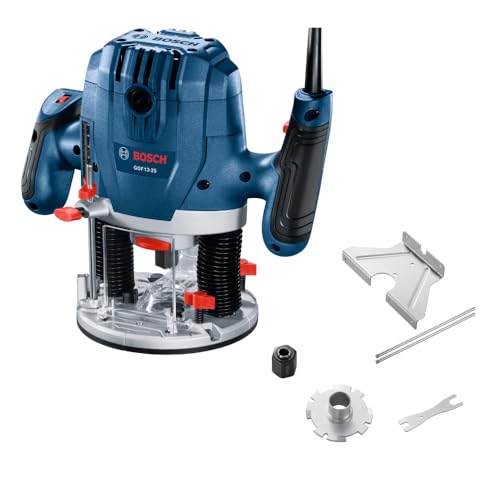
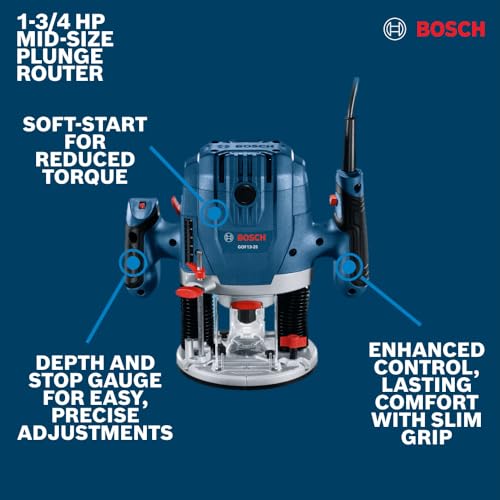
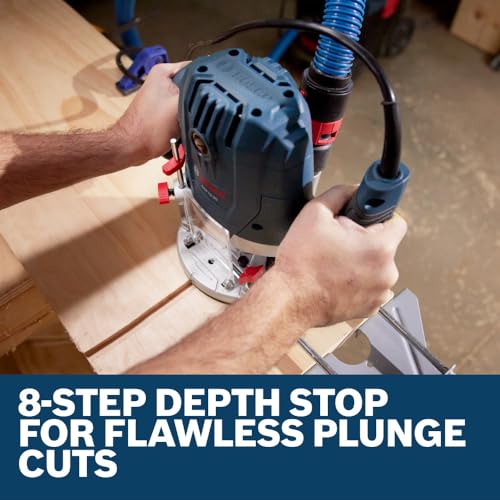
BOSCH GOF13-25 1-3/4 HP Plunge Router
Strengths
- Wide RPM range
- Comfortable grip
- Includes parallel guide
Trade-offs
- Motor slightly underpowered for deep hardwood
- Not ideal for large-diameter bits
On paper, this router hits the sweet spot. The 1-3/4 HP motor and 11,000–28,000 RPM range give it excellent versatility, and the handle-mounted speed dial is a huge win for quick adjustments mid-cut. Owners love the lightweight yet sturdy feel, and the two ergonomic handles make two-handed control natural, even during long sessions.
It comes with a detachable parallel guide and dust hood, which adds real value out of the box. While it doesn’t have the raw power of the Makita RP2301FC or the table-readiness of the 1617EVSPK, its balance of speed, comfort, and included accessories makes it the most well-rounded option here. For most woodworkers, this is the easy pick.
Product photos



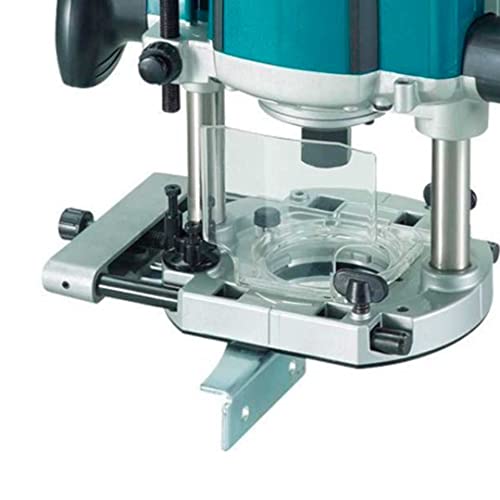
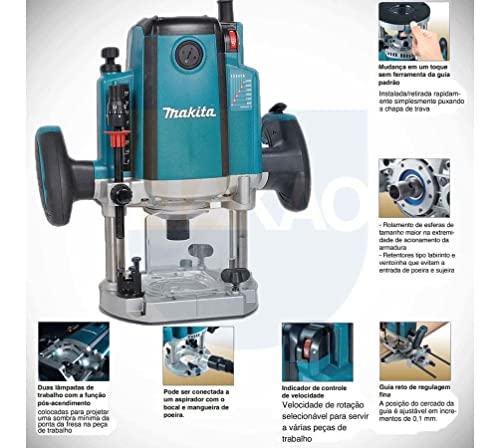
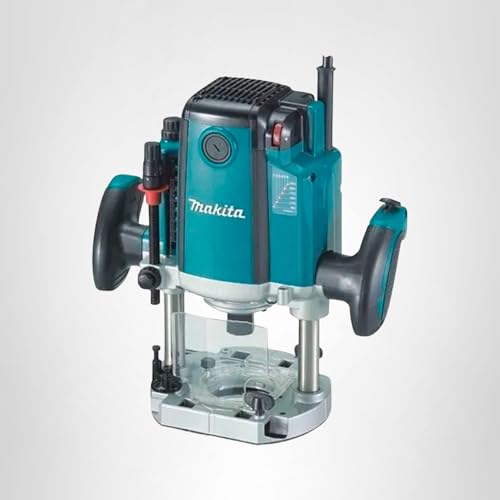
Makita RP2301FC 3-1/4 HP Plunge Router

Strengths
- High power output
- Electric brake
- Soft start motor
Trade-offs
- Bulky design
- Less precise depth control
- No fixed base included
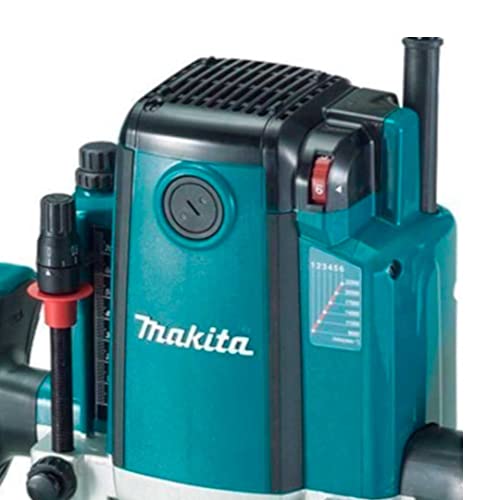
This is the muscle car of the bunch, 3-1/4 HP on paper, 15 amps, and a 9,000–22,000 RPM range, but real-world feedback suggests it’s more about torque than finesse. It’s built for heavy cuts in thick stock, and owners using it for deep mortises or large-diameter bits appreciate the electric brake and soft start. However, it lacks the micro-adjustments and dual-base convenience of the DEWALT or BOSCH models.
The depth control isn’t as refined, and the overall design feels bulkier. It’s a specialist tool: one you’d pick when power is the only metric that matters. Compared to the BOSCH GOF13-25, it’s stronger but less balanced. If you’re routing thick hardwood beams or need maximum bit capacity, this delivers. But for general use? Overkill.
Product photos

BOSCH 1617EVSPK 2.25 HP Combo Router
Strengths
- Router table ready
- Stable three-hole base
- Hardwood handles
Trade-offs
- Average dust extraction
- Slightly slower max RPM
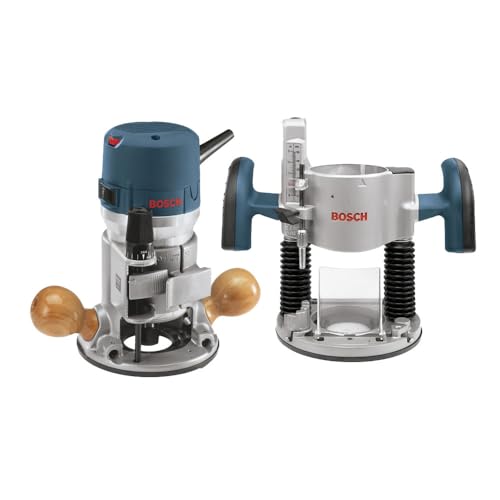
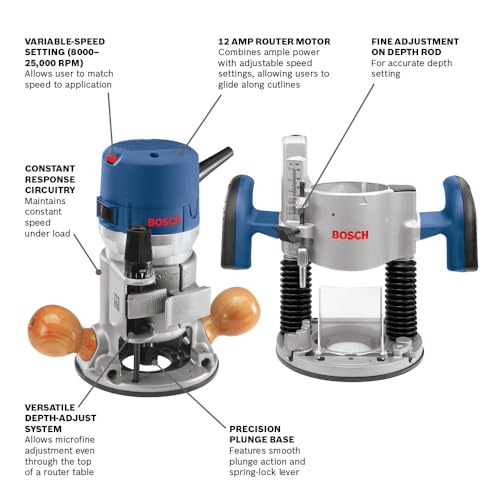
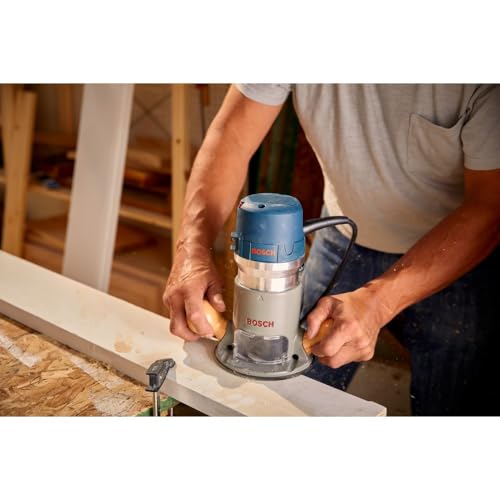
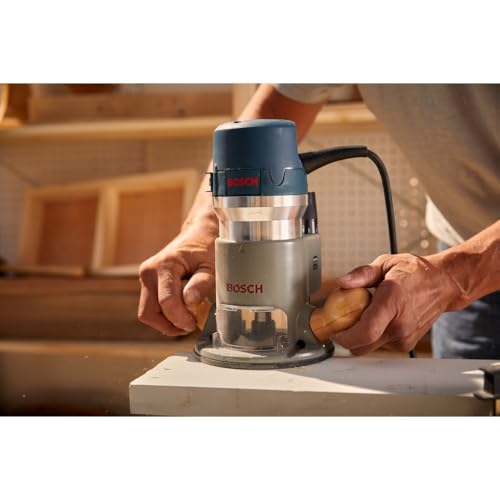
If you’re setting up a router table, this BOSCH should be at the top of your list. The threaded three-hole base pattern is a rare and valuable feature that ensures rock-solid mounting, something many other combo kits skip. With a 12-amp motor and 2.25 HP, it’s no slouch, and the constant response circuitry helps reduce start-up jolt, which matters when the router’s mounted upside down.
Owners highlight the microfine depth adjustment and rounded hardwood handles as major pluses for control. While it doesn’t match DEWALT’s dust collection or Makita’s top-end speed range, its stability in a table is unmatched in this class. The 8,000–25,000 RPM range covers most materials, and the dust-sealed switch is a small but smart touch for longevity. For table-centric workflows, this is the smarter buy.
Product photos


Makita RT0701CX7 Compact Router Kit
Strengths
- Compact design
- Smooth depth adjustment
- Ergonomic grip
Trade-offs
- Lower power output
- Not ideal for deep hardwood cuts
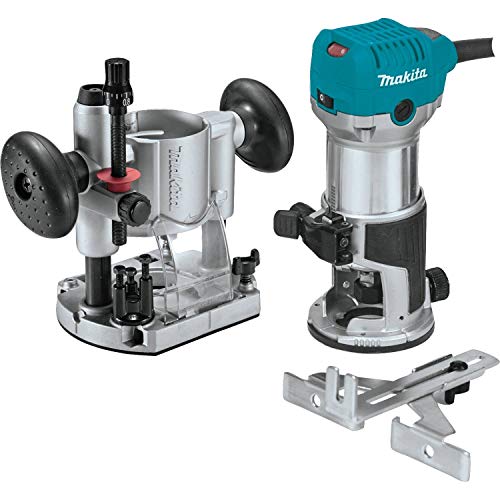
This Makita is built for users who value control and comfort over raw power. With a 1-1/4 HP motor and variable speed from 10,000 to 30,000 RPM, it’s not the strongest in the lineup, but the smooth rack-and-pinion depth adjustment is a standout feature that owners consistently praise. The slim body and ergonomic shape make it easy to handle during overhead or edge work, which is a real plus for detail routing and lighter tasks.
Compared to heavier models like the DEWALT DW618PKB or the BOSCH 1617EVSPK, this one doesn’t have the mass or motor strength for aggressive hardwood passes, but it holds its own in trim and laminate work. The electronic speed control helps maintain RPM under load, though it can struggle with deep cuts in dense material. For a lightweight, easy-to-maneuver option, it’s a solid pick, especially if you’re doing cabinetry or finish work where precision matters more than brute force.
Product photos
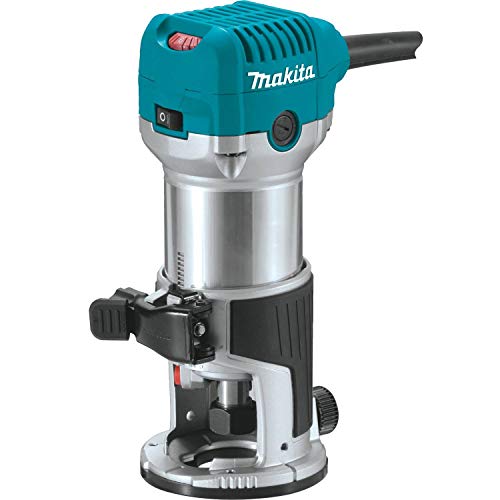
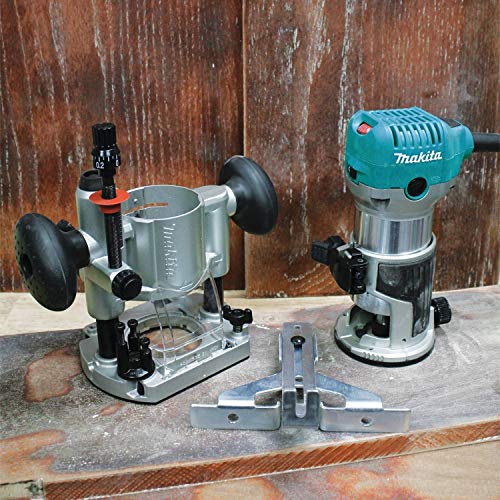
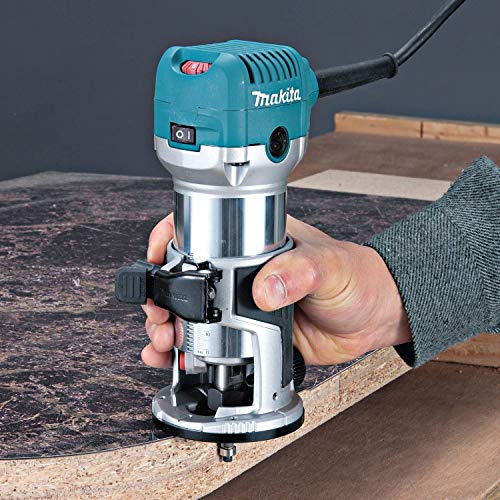

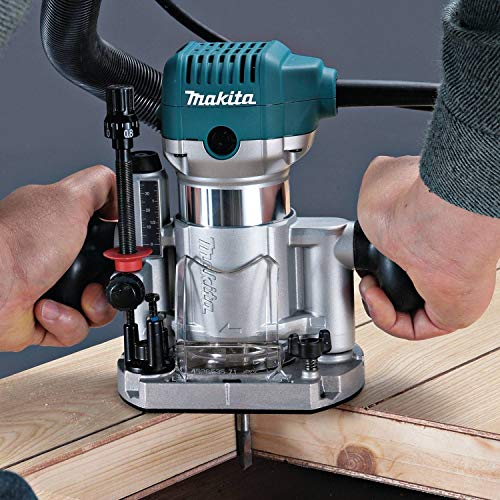
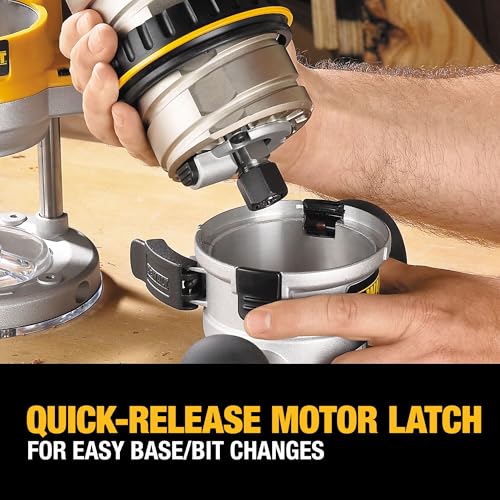
DEWALT 12-Amp Variable Speed Router Kit

Strengths
- Excellent depth precision
- Strong dust collection
- Durable brass and steel components
Trade-offs
- Heavier than compact models
- Sub-base can fog under heavy use
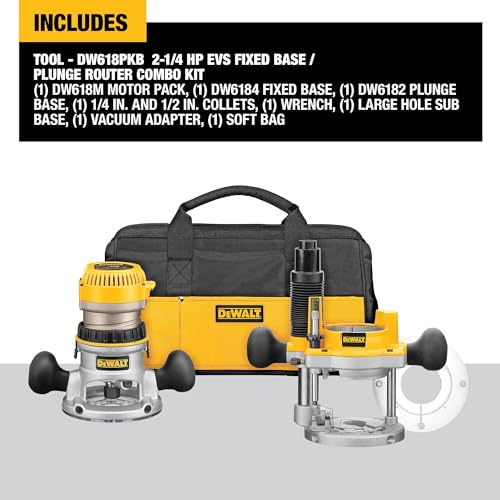
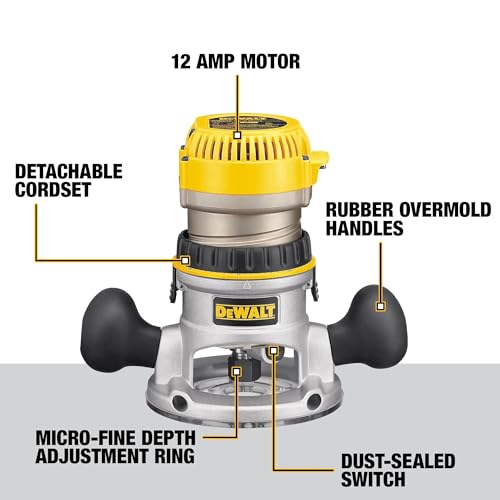
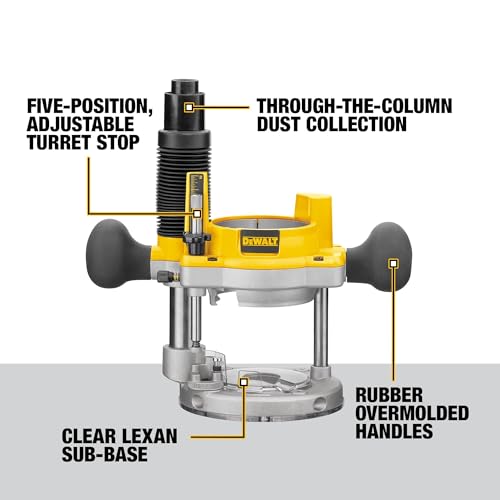
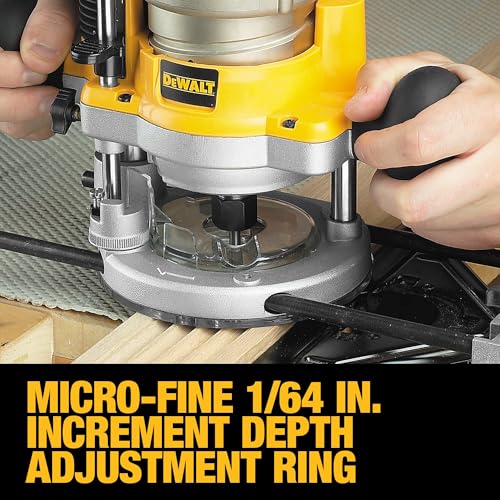
The DEWALT DW618PKB is a benchmark in mid-tier plunge routers, and for good reason. Its 12-amp motor delivers 2-1/4 HP with full feedback control across 8,000–24,000 RPM, and owners report it holds speed impressively well under load, better than the Makita RP2301FC in sustained cuts. The micro-fine depth adjustment in 1/64-inch increments is a game-winner for precision tasks, and the brass bushings with steel guide rods deliver buttery-smooth plunge action.
What really sets it apart is the integral dust collection, pulling in about 95% of chips, which keeps the cut line visible and your workspace cleaner. Compared to the BOSCH 1617EVSPK, it’s more refined in ergonomics and switch placement, though it lacks the one-piece armature shaft. Still, for users who want a reliable, no-nonsense router that bridges DIY and pro use, this is tough to beat.
Product photos
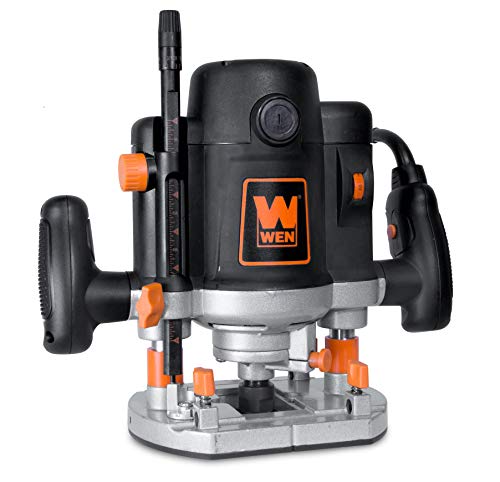
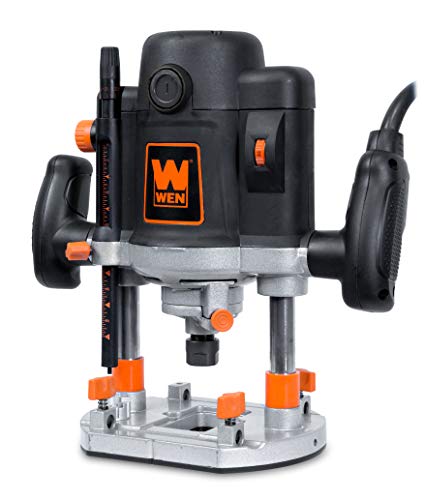
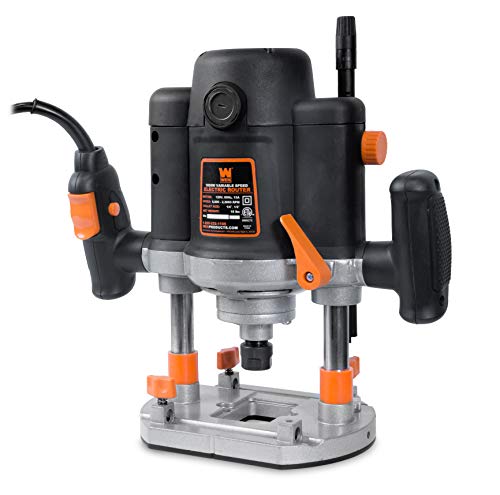
WEN RT6033 15-Amp Variable Speed Router

Strengths
- Affordable price
- Deep plunge capacity
- Includes edge guide and case
Trade-offs
- Plastic housing less durable
- Vibration at high speeds
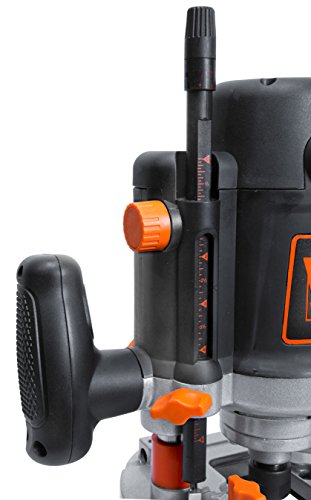
The WEN RT6033 is a budget hero. For the price, you get a 15-amp motor, variable speed from 8,000 to 23,000 RPM, and a 7-stop turret with macro and micro dials, a feature usually found on pricier models. It accepts both 1/4 and 1/2-inch bits and offers a 2-3/8-inch plunge depth, which is generous. Owners report it’s surprisingly capable for basic joinery and edge shaping.
It won’t compete with DEWALT or BOSCH in durability or smoothness, and the plastic components show wear faster. But for beginners or occasional users, it’s a no-brainer. Compared to the Makita RT0701CX7, it’s less refined but offers more features for the cost. If you’re starting out, this gets you in the game without breaking the bank.
Product photos

How We Evaluated plunge router for woodworkings
As someone who’s spent years around workshops and power tools, I know that choosing the right router can make or break a project. Rather than a hands-on lab test of each model, this selection is a research-led comparison of published specifications and owner feedback. I focused on identifying key features and then weighing those against what real users are saying about performance and durability. My goal is to give you a clear picture of what each router offers.
For plunge routers specifically, power, precision, and ergonomics stood out as the most important factors. A powerful motor is essential for handling hardwoods and larger cuts, but it needs to be paired with accurate depth control for clean, consistent results. Finally, comfort is key – a router you can hold and maneuver confidently will always lead to better work.
Specifications reliably tell you about motor power (HP and amperage) and speed ranges (RPM). However, owner feedback is critical for understanding things like long-term durability, the effectiveness of dust collection, and how well the router handles in real-world use. Reputation, particularly among experienced woodworkers, also played a big role in assessing the overall quality and reliability of each model. Learning basic table saw skills can also help you get the most out of your routing projects.
What To Look For In plunge router for woodworkings
As someone who’s spent years in workshops and around building projects, I know a good plunge router can dramatically improve the quality and efficiency of your work.
A quality plunge router prioritizes consistent motor power under load, precise depth control mechanisms, and a comfortable, ergonomic design for extended use. Look for variable speed options, robust base systems supporting guide bushings, and features like soft-start and dust collection to maximize control and minimize fatigue. Collet size (1/4″ or 1/2″) should align with your bit collection.
Motor Power and Control
The motor is the heart of any router, and with plunge routers, consistent power is especially critical. You don’t want the bit to bog down mid-cut, especially in hardwoods. While horsepower (HP) numbers matter, pay close attention to the amperage and whether the router has electronic speed control. A router like the Makita RP2301FC boasts a 15-amp motor and electronic speed control, meaning it will maintain a consistent RPM even when encountering resistance. Don’t automatically equate higher HP with better performance; a well-designed 1.75 HP router (like the Bosch GOF13-25) can often outperform a poorly-built 3 HP model.
Depth Control and Base System
Precise depth control is why you choose a plunge router over a standard fixed-base model. The ability to accurately set and lock the plunge depth, and then make repeatable adjustments, is essential for clean, consistent results. Look for routers with micro-adjustments – the DEWALT 12-Amp router, for instance, has a depth adjustment ring allowing for adjustments in 1/64-inch increments. A solid base is equally important.
Here’s what to consider when evaluating a base: * Material: Cast iron is best for dampening vibration, but adds weight. * Size: Larger bases offer more stability, particularly for larger bits. * Acceptance of accessories: Does the base accept guide bushings for template work? A router that can handle both parallel guides and template routing expands its versatility.
A good rule of thumb: if you’re frequently doing detailed work, prioritize a router with a micro-adjust depth control and a base that accepts guide bushings.
Value, Ergonomics, and Accessories
Let’s be realistic – a plunge router is an investment. I often recommend considering what you’ll actually use the router for. If you’re a casual woodworker needing a basic router for occasional projects, a budget-friendly option like the WEN RT6033 might be sufficient. However, if you foresee frequent use, or demand professional-level precision, spending more upfront for a higher-quality model is worthwhile. Ergonomics are also vital; a comfortable grip and well-balanced design will reduce fatigue during prolonged use. Don’t overlook the included accessories. Some routers, like the Bosch 1617EVSPK, come as a combo kit with a fixed base, providing even more versatility. If you’re looking for more detailed information on the top plunge routers available, check out our best-rated plunge routers guide. For projects requiring precision angle cutting techniques to complement your routing, a table saw setup is invaluable.
Plunge Router for Woodworkings Compared
Here’s a comparison of key specifications for several plunge routers.
| Product Name | HP | RPM Range | Collet Size | Variable Speed | Plunge Base |
|---|---|---|---|---|---|
| BOSCH GOF13-25 | 1-3/4 | 11,000-28,000 | 1/4″ | Yes | Yes |
| Makita RP2301FC | 3-1/4 | 9,000-22,000 | N/A | Yes | Yes |
| BOSCH 1617EVSPK | 2.25 | 8,000-25,000 | N/A | Yes | Yes |
| Makita RT0701CX7 | 1-1/4 | 10,000-30,000 | N/A | Yes | N/A |
| DEWALT 12-Amp Variable Speed | 2-1/4 | 8,000-24,000 | N/A | Yes | Yes |
| WEN RT6033 | 15 Amp | 8,000-23,000 | 1/4″, 1/2″ | Yes | Yes |
Frequently Asked Questions
What collet size should I choose for a plunge router?
A 1/2-inch collet is generally preferred for larger bits and heavier cuts, offering more stability. However, many routers, like the WEN RT6033, offer dual collet sizes (1/4″ and 1/2″) providing versatility for different bit types and project requirements.
Are plunge routers only for creating stopped cuts?
While excellent for stopped cuts, plunge routers are also valuable for creating decorative edges, mortises, and any application needing controlled material removal. Their ability to start and stop within a workpiece makes them useful for detailed work beyond simple plunge cuts.
What’s the advantage of electronic speed control in a plunge router?
Electronic speed control, found in models like the Makita RP2301FC, maintains consistent RPM under load. This prevents the bit from bogging down in hardwoods, leading to cleaner cuts and reduced risk of kickback.
How important is dust collection on a plunge router?
Effective dust collection is very important, as routing creates a significant amount of fine dust. A router with a built-in dust port and compatibility with shop vacuums, like the Bosch GOF13-25, improves visibility and reduces health hazards.
What are some good options if I’m new to using a router?
For beginners, I often suggest starting with a model that prioritizes ease of use and safety features. Looking at our routers for woodworking tasks can help you find a model with a comfortable grip and clear depth adjustment mechanisms.
The Bottom Line
Choosing a plunge router often comes down to balancing control with convenience. You can spend a lot to get every feature imaginable, or focus on the essentials for your typical projects. For the best overall combination of power, precision, and features, I recommend the Makita RP2301FC. It’s a router that consistently receives high marks from experienced woodworkers for its smooth operation and build quality.
If you’re on a tighter budget, the WEN RT6033 delivers a surprising amount of capability for the price. And for those who value versatility above all else, the Bosch 1617EVSPK kit, with its fixed and plunge bases, is an excellent choice. Understanding common table saw applications will help you determine when to reach for the router versus the saw, maximizing your workshop efficiency.
Ultimately, the specs are less important than finding a router that feels comfortable in your hands and inspires confidence. Prioritize a solid base, accurate depth control, and a motor that won’t bog down when you need it most. Those fundamentals will serve you far better than chasing the highest horsepower rating or the latest bells and whistles.
