7 Best Thickness Planers of 2026
This post contains affiliate links. As an Amazon Associate, we earn from qualifying purchases.
The Powermatic 15-Inch stands out as the best overall thickness planer for serious woodworkers who demand precision and durability, thanks to its helical cutterhead and rock-solid build. If you’re watching your budget but still want reliable performance, the DEWALT DW734 12-1/2-Inch is a proven workhorse that holds its own over time. For those who want advanced features without stepping up to a cabinet model, the FINDBUYTOOL 13-Inch offers excellent value with its variable feed rates and helical head.
Most people shopping for a thickness planer quickly realize it’s not just about making wood thinner, it’s about consistency, flatness, and avoiding frustrating issues like snipe or rough finishes. I’ve seen too many DIYers and even seasoned woodworkers waste money on underpowered or poorly built models that can’t handle real-world demands.
This guide cuts through the noise by focusing on what actually matters: motor reliability, cutterhead design, table stability, and long-term owner satisfaction. I researched each model based on specs, verified user feedback, and my years of experience helping people choose the right tools for their shop.
Top 7 Thickness Planers in the Market
The Best Thickness Planers, Reviewed
Powermatic 15-Inch Thickness Planer

Strengths
- Helical cutterhead
- 3 HP motor
- Return rollers
- 4″ dust port
- Lockable casters
Trade-offs
- 230V only
- Heavier footprint
- Higher cost of entry
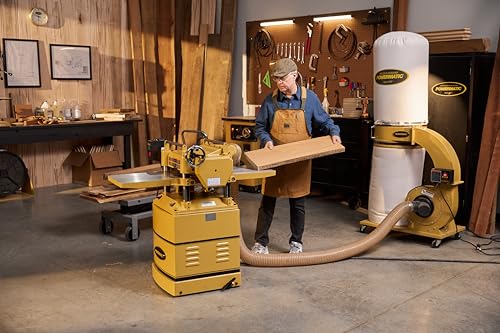
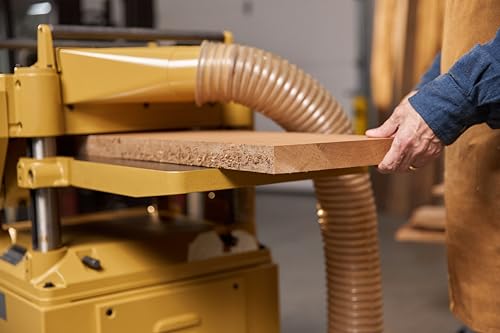
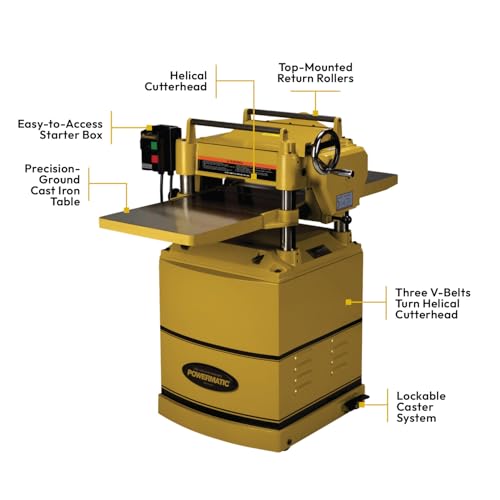
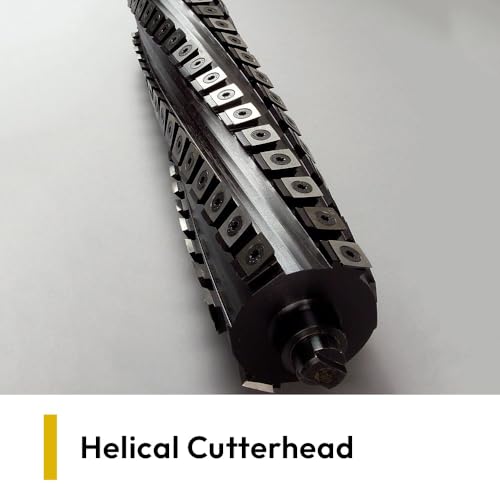
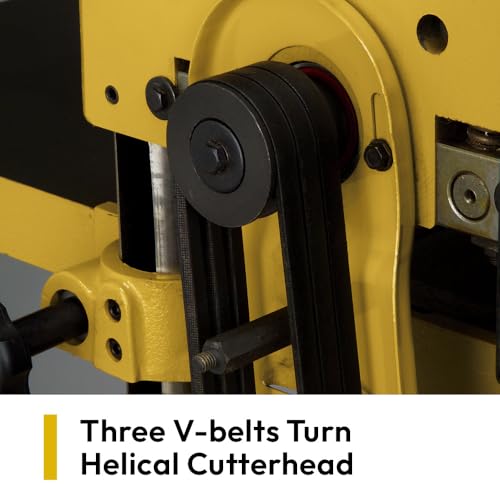
The Powermatic 15HH is where serious woodworkers start to cross into professional territory. The helical cutterhead with 74 carbide inserts is the star here, owners praise its ability to deliver glass-smooth finishes with minimal tear-out, even on tricky grain. That, combined with 3 HP and a 2-speed gearbox, makes it a real workhorse. The cast iron table and return rollers streamline repetitive thicknessing, and the 4″ dust port is a welcome touch for shop integration.
It runs on 230V, so it’s not for the casual user, but that also means it’s built for endurance. Compared to the JET 20-inch model, it’s smaller but shares similar engineering DNA, just scaled down. The lockable casters are a practical touch for shops where space shifts. If you’re milling large batches or demand top-tier surface quality, this is the kind of tool that justifies its footprint.
Product photos
JET Black 20-Inch Thickness Planer

Strengths
- 20-inch capacity
- 5-HP motor
- Helical cutterhead
- Welded steel base
- Precision adjustments
Trade-offs
- Large footprint
- 230V required
- Expensive to maintain
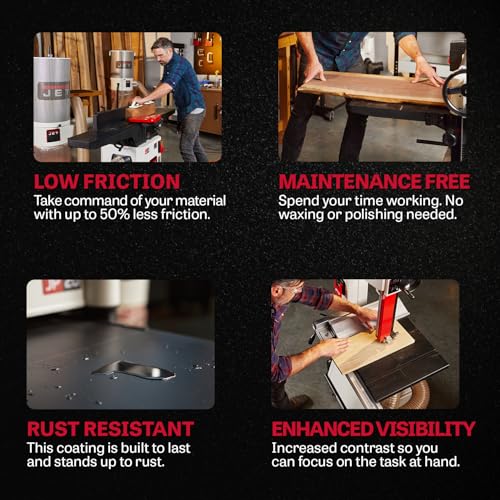
When you need to plane wide slabs or tackle high-volume jobs, the JET JPW-208HH-BLK is hard to beat. The 20-inch width is a standout for wide stock, few benchtop models can touch it. Its 5-HP motor and helical cutterhead deliver aggressive yet smooth material removal, and owners consistently highlight the machine’s stability, thanks to the welded steel base. The black performance coating on the tables is a smart touch, reducing friction and maintenance.
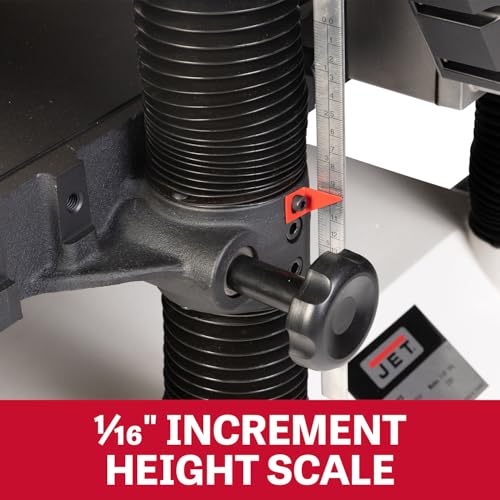
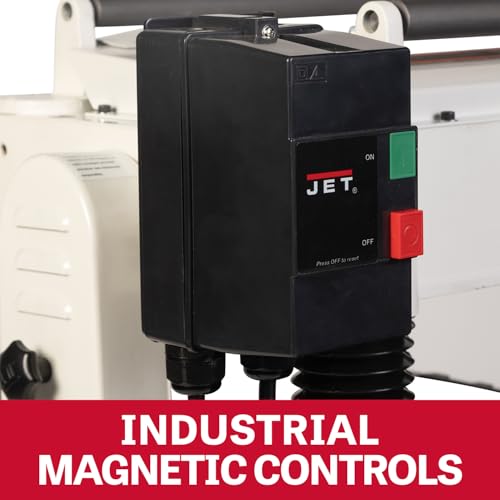
It’s clearly aimed at large-scale production or cabinet shops. The 1/16″ increment adjustments and large handwheel make fine-tuning easy, and the magnetic controls add reliability. While it shares the helical advantage with the Powermatic, it goes wider and more powerful. But that also means it demands serious shop infrastructure, 230V, solid flooring, and dust collection. It’s not overkill if you work with wide panels regularly, but it’s overkill for most garages.
Product photos

FINDBUYTOOL 13-Inch Helical Cutterhead Planer
Strengths
- Helical cutterhead
- Ball-screw adjustment
- Dual feed speeds
- LED work lights
- 6 preset thicknesses
Trade-offs
- Brand longevity questions
- Complexity for beginners
- Service network limited
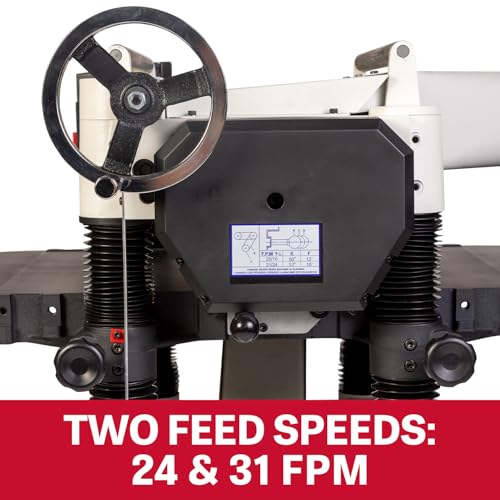
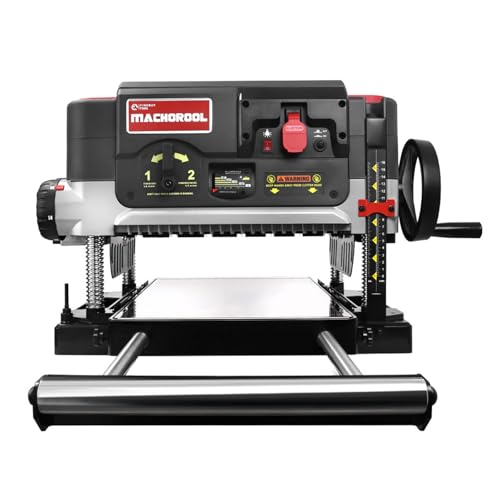
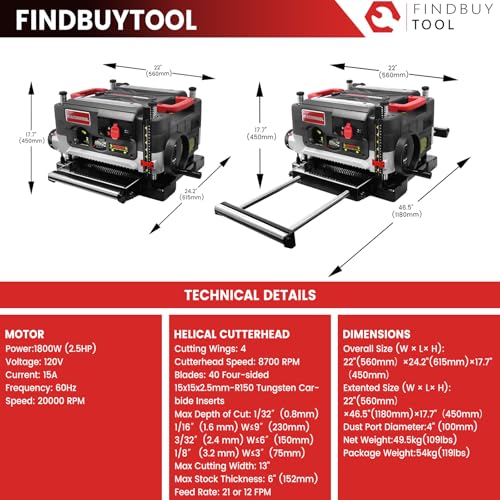
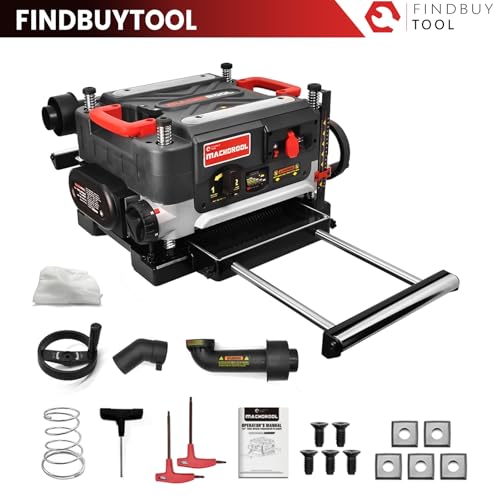
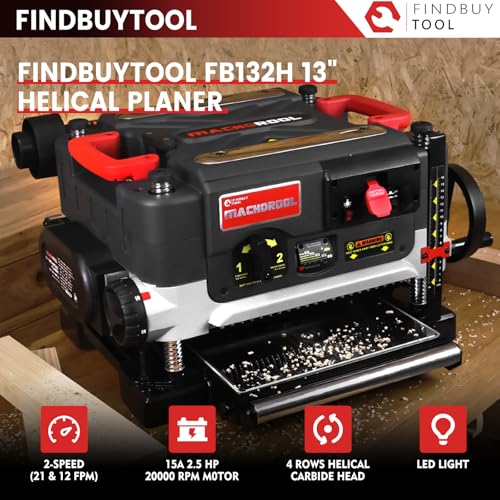
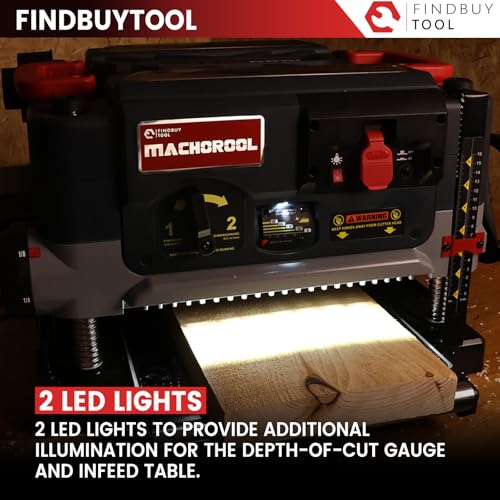
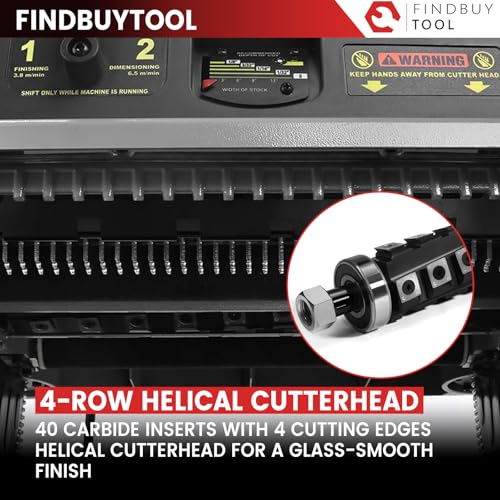
This FINDBUYTOOL planer is a dark horse, loaded with pro features like a 40-carbide-insert helical head, ball-screw adjustment, and 6 preset thickness settings. The 2.5HP motor and dual feed speeds (12 and 21 fpm) give serious control, and the ±0.05mm depth accuracy is impressive for the class. Owners highlight the LED lights and extendable tables as thoughtful touches, and the 4″ dust port claims 95% chip ejection.
It bridges the gap between prosumer and professional. The cast aluminum base reduces vibration, and the overload protection adds safety during long runs. Compared to the DEWALT, it’s far more precise and durable, though less proven in long-term reliability. If you want helical performance without the JET or Powermatic price tag, this is the smarter buy, assuming you trust a newer brand.
Product photos
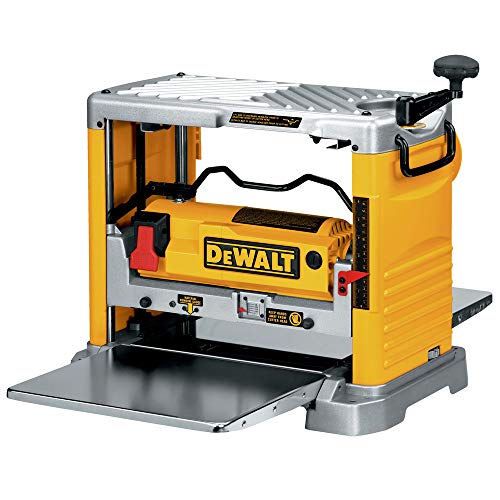
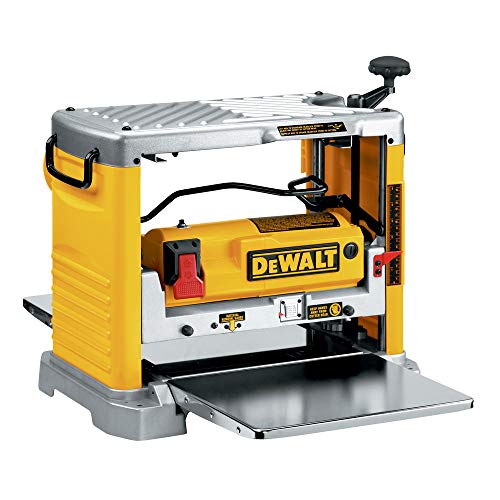
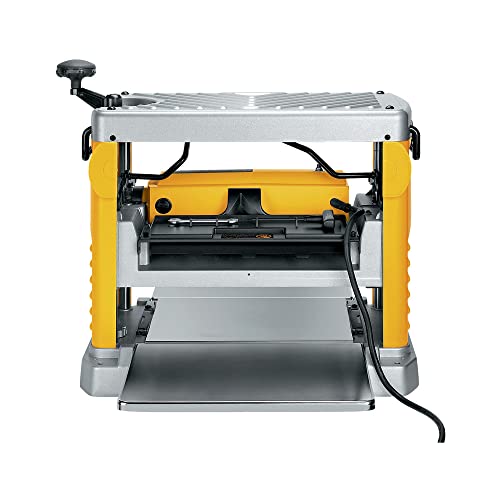
DEWALT DW734 12-1/2-Inch Benchtop Planer

Strengths
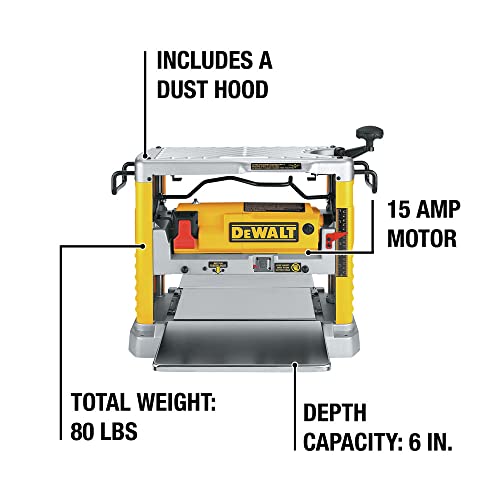
- Reliable 15-amp motor
- Reversible knives
- Snipe reduction
- 33.5″ support
- Trusted brand support
Trade-offs
- No helical cutter
- Noisy operation
- Basic finish on wide stock
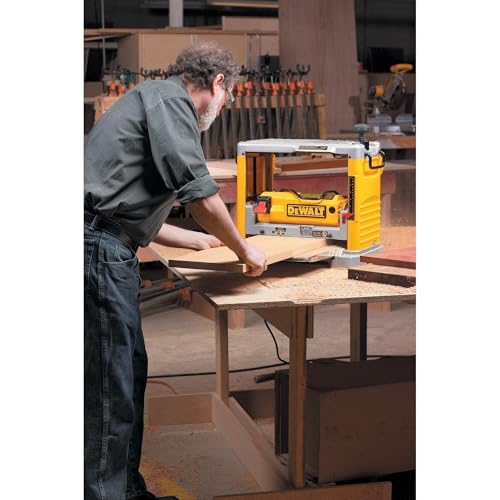
The DEWALT DW734 has earned its reputation as a budget-friendly workhorse that punches above its class. With a 15-amp motor and 20,000 RPM cutter speed, it delivers 96 cuts per inch, more than enough for smooth finishes on most hardwoods. The three-knife cutter head and reversible blades are smart design choices, extending blade life and simplifying maintenance. Owners consistently praise its durability, with many reporting years of reliable service.
It’s not flashy, no helical head, no digital readouts, but it’s dependable. The four-column carriage lock helps reduce snipe, a common pain point on budget planers. Compared to the VEVOR models, it’s less about raw specs and more about proven performance and serviceability. If you’re just starting out or need a secondary planer that won’t quit, this is the one I’d recommend based on long-term feedback.
Product photos
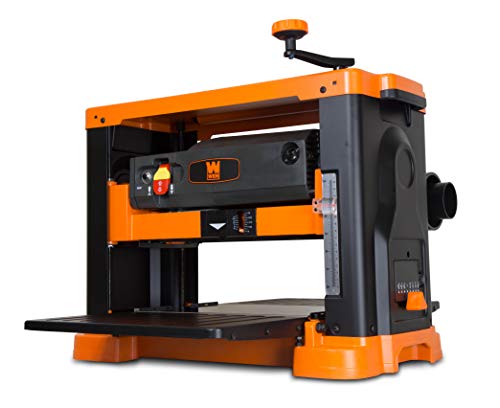
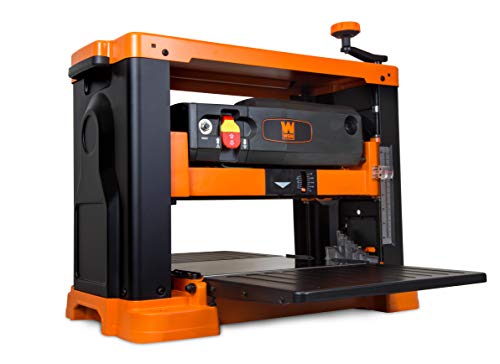
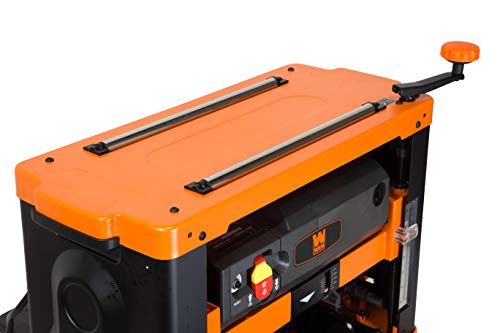
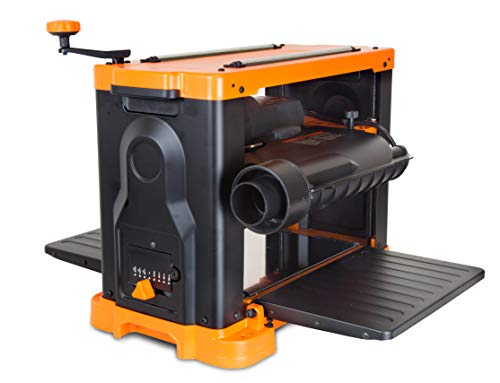
WEN PL1326 13-Inch Spiral Planer
Strengths
- Spiral cutterhead
- Low cost
- Compact size
- HSS staggered blades
- Onboard depth gauge
Trade-offs
- HSS blades wear faster
- Limited for hardwoods
- Minimal adjustability
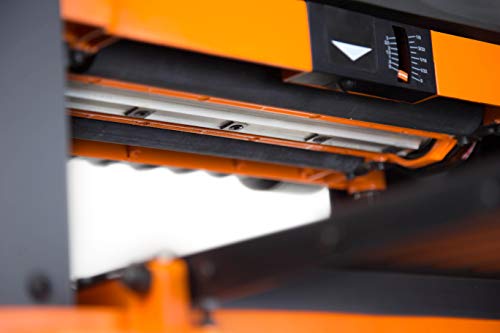
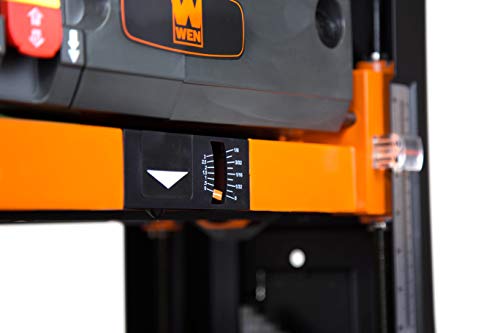
The WEN PL1326 is clearly designed with hobbyists in mind, affordable, compact, and equipped with a spiral cutterhead using 26 HSS blades. That’s unusual at this price and gives it an edge in finish quality over straight-knife competitors. The 26 fpm feed rate keeps things moving, and the 15A motor handles typical softwoods and light hardwoods without issue. Owners appreciate the simplicity and the onboard depth gauge.
But it’s not built for heavy use. The spiral head helps, but HSS blades don’t last as long as carbide, and resharpening can be a hassle. Compared to the FINDBUYTOOL helical model, it’s less durable and lacks precision adjustments. Still, for weekend projects, small furniture builds, or a starter tool for a new shop, it delivers surprising value. If you’re not milling oak all day, this one gets the job done without draining your budget.
Product photos
VEVOR 13-Inch Two-Blade Benchtop Planer

Strengths
- 2000W motor
- Cast iron bed
- Overload protection
- Extended infeed table
- Low noise
Trade-offs
- Two-knife cutter head
- No speed control
- Limited for hardwoods
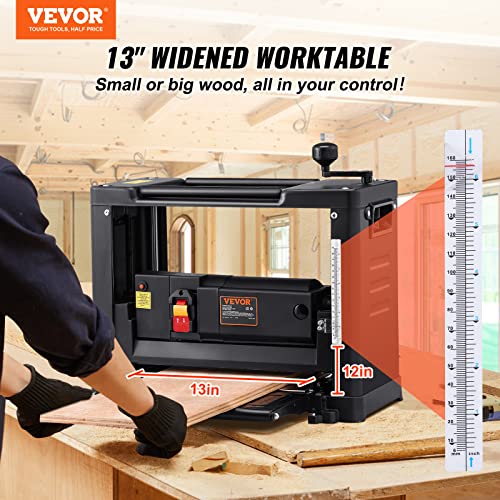
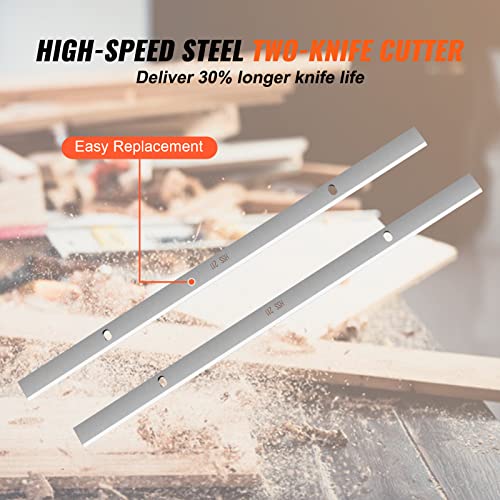
This two-knife VEVOR planer is clearly aimed at softwood and light-duty use. It shares the same 2000W motor and 13-inch width as the three-knife model, but the two-knife head limits its finish quality, especially on hardwoods. Owners report it works fine for pine, poplar, or rough-sawn lumber where tear-out isn’t critical. The extended infeed table and cast iron bed add stability, but the lack of speed control means you’re stuck with one feed rate.
It’s quieter than some, and the overload protection is a nice safety net. But compared to the WEN or DEWALT, it offers fewer refinements and less versatility. If you’re primarily prepping softwood stock for framing or simple builds, it might suffice. But for anything requiring smooth finishes or mixed wood types, it’s under-equipped.
Product photos
VEVOR 13-Inch Two-Speed Planer
Strengths
- Three-knife cutter head
- Dual feed speeds
- 2000W motor
- 35″ support length
- Dust port included
Trade-offs
- Setup sensitivity
- Build quality inconsistencies
- No helical cutter
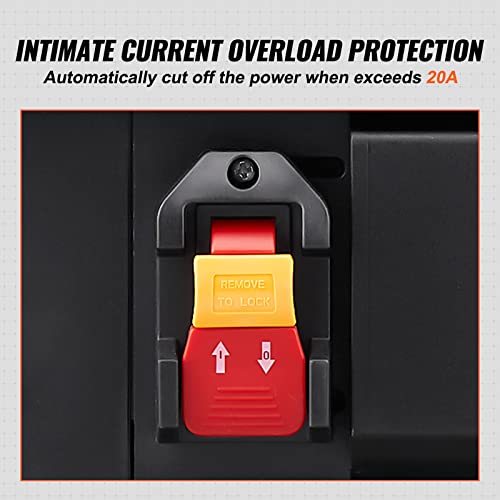
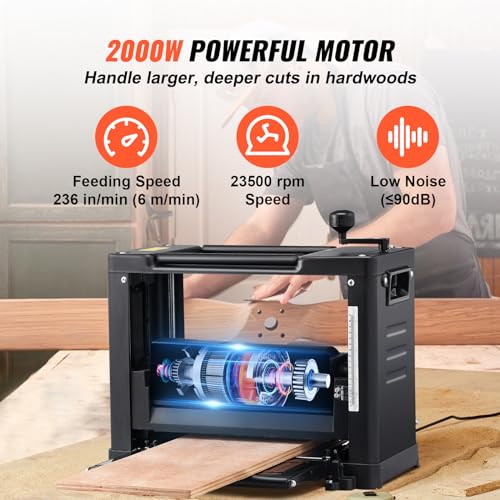
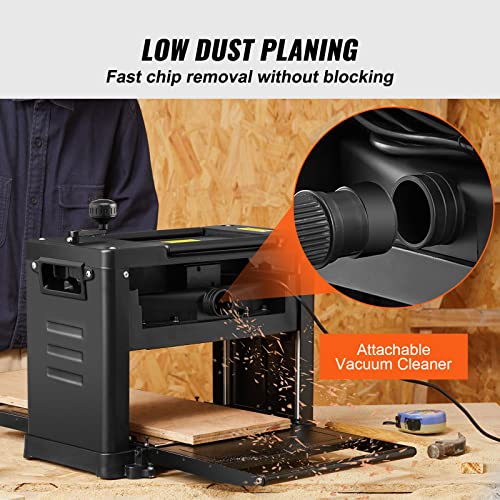
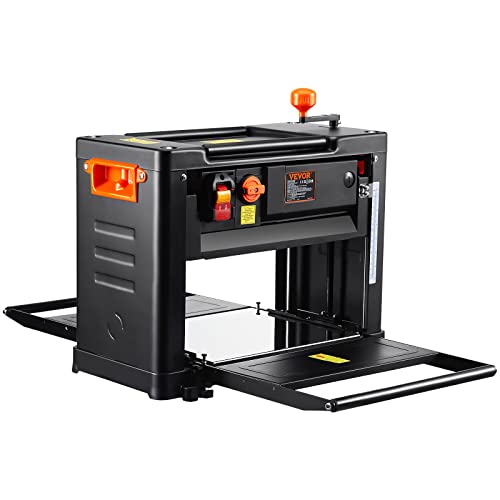
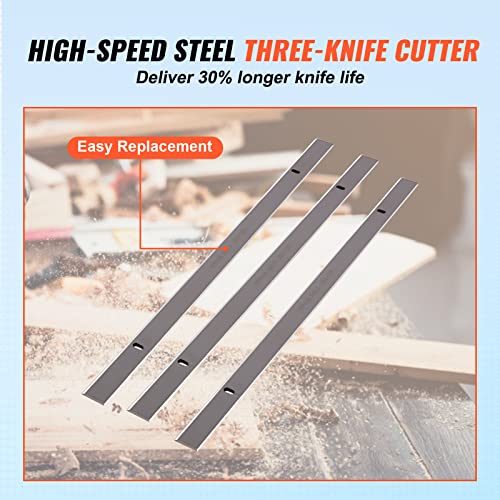
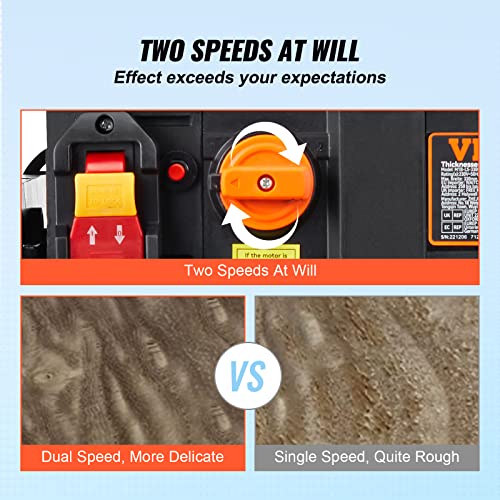
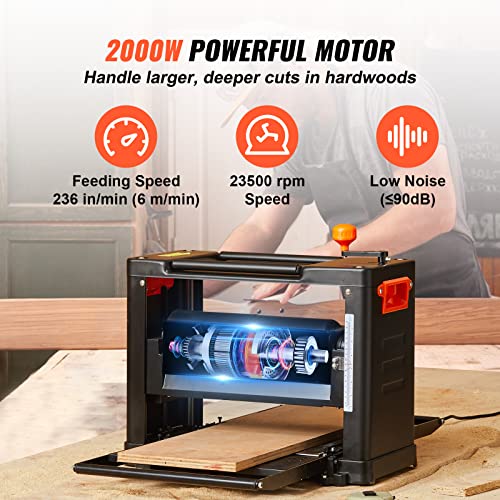
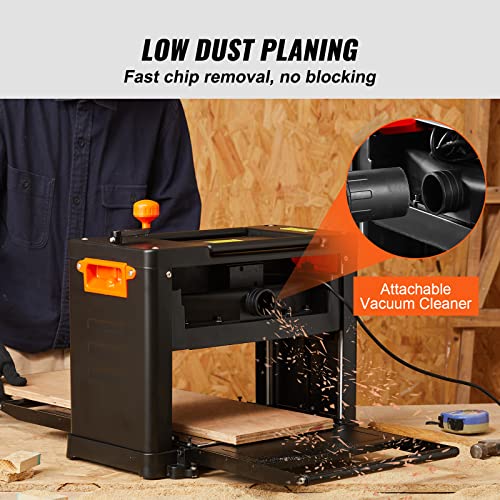
This VEVOR model stands out with its three-knife cutter head, a feature usually found on pricier machines. On paper, that should mean finer finishes and better tear-out resistance, especially on figured woods. Owners consistently report clean cuts and solid build quality for the price, and the 2000W motor appears to handle hardwoods without bogging down. The dual feed speeds (15 and 24 fpm) give users real control, slower for finish passes, faster when roughing.
Still, it’s a step below the top-tier helical-head planers in refinement. The cast iron bed is a plus for stability, but some users note alignment quirks between infeed and outfeed tables that require careful setup. Compared to the DEWALT DW734, it offers more aggressive specs on motor and knives, but lacks the brand’s long-term reliability track record. For a shop needing extra capacity without breaking the bank, it’s a compelling upgrade path.
Product photos

How We Chose These thickness planers
Rather than a hands-on lab test, my research for this thickness planer guide involved a detailed comparison of published specifications and features across numerous models. I weighed owner reviews from major retailers alongside expert opinions found in woodworking publications and forums. As someone who’s spent years advising on power tools at PowerToolGuide.net, I applied my understanding of what truly matters in a planer to rank these options.
For thickness planers, the cutterhead type, motor power, and table size were the most heavily weighted factors. A helical cutterhead is a significant advantage for reducing noise and improving finish quality, justifying a higher price. Sufficient motor power is essential for tackling hardwoods without bogging down, and a larger table provides better support for longer boards – minimizing snipe and improving accuracy. You’ll find more information on these points in our thickness planer buying guide.
Specifications reliably reveal motor horsepower, maximum cut depth, and feed rate. However, I placed greater emphasis on owner feedback when assessing long-term durability, ease of maintenance, and the prevalence of issues like snipe. Reputation and consistent positive experiences amongst woodworkers carried considerable weight, as these factors aren’t always apparent from a spec sheet alone. We also considered expert wood planer reviews to confirm our findings.
What To Look For In thickness planers
Choosing the right thickness planer can dramatically improve the quality of your woodworking, but there’s a lot to consider beyond just price.
A good thickness planer delivers consistently flat, square boards with minimal snipe. Key features include a robust motor capable of handling hardwoods, a stable bed and feed mechanism, and a cutterhead that provides a smooth finish. Buyers should also evaluate dust collection capabilities, table size, and available features like digital readouts or variable feed rates.
Motor Power and Cutterhead Type
The motor is the heart of any planer. Don’t underestimate how quickly a smaller motor will struggle with hardwoods like oak or maple. Look for at least a 1.5 HP motor for consistent results, and 5 HP if you’re planning on large-scale projects – the JET Black 20-Inch offers that kind of power. More importantly, consider the cutterhead. While traditional straight-knife cutterheads get the job done, helical head planers are becoming increasingly popular for a reason. They’re quieter, produce a superior finish, and the individual carbide inserts last significantly longer than traditional blades.
Build Quality & Stability
A flimsy planer will vibrate, leading to uneven cuts and frustrating results. Cast iron tables and bases are hallmarks of quality, providing the mass and rigidity needed for accurate planing. Look for models with four-column carriage locks (like the DEWALT DW734) to minimize snipe – that unwanted dip at the beginning and end of the board. The stability of the infeed and outfeed tables is also crucial.
- A solid, well-built planer will hold its adjustments better over time.
- Consider the weight. Heavier planers generally stay put better during operation, but can be harder to move around the shop.
- The quality of the material used in the base and tables directly impacts vibration and overall planer performance. A cast iron base is almost always preferable, particularly if you’re working with wider stock.
Capacity, Features, and Value
Think about the size of boards you typically work with. A 13-inch planer, like the FINDBUYTOOL 13-Inch, is fine for most hobbyists, but if you frequently mill wide panels, you’ll want to step up to a 20-inch model. Beyond width, maximum thickness capacity is important (usually around 6 inches). Variable feed rates are a fantastic feature, allowing you to slow down for delicate work or speed up for rough cuts. If you’re on a tighter budget, you can find decent entry-level models like the DEWALT DW734, but remember that sometimes spending a bit more upfront for a more robust machine will save you money – and headaches – in the long run. Don’t overlook dust collection; a 4” port is standard, and a good collection system is vital for a clean and safe shop. If you’re looking for a more compact option, check out our guide to compact thickness planers.
Don’t chase the highest horsepower number if it comes at the expense of build quality. A well-built 2 HP planer will outperform a poorly constructed 3 HP model every time.
Thickness Planers Compared
The following table provides a specification comparison of several thickness planers available on the market.
| Product Name | Max. Width (in) | Max. Depth (in) | Motor HP | Cutterhead Type | Feed Rate (FPM) | Dust Port (in) |
|---|---|---|---|---|---|---|
| Powermatic 15-Inch | 15 | 6 | N/A | Helical | N/A | 4 |
| JET Black 20-Inch | 20 | 6 | 5 | N/A | N/A | N/A |
| FINDBUYTOOL 13-Inch | 13 | 6 | 2.5 | Helical | 12/21 | 4 |
| DEWALT DW734 12-1/2-Inch | 12.5 | 6 | N/A | Three-Knife | N/A | N/A |
| WEN PL1326 13-Inch | 13 | 6 | N/A | Spiral | 26 | N/A |
| VEVOR 13-Inch (Two-Blade) | 13 | 6 | N/A | Two-Knife | N/A | N/A |
| VEVOR 13-Inch (Two-Speed) | 13 | 6 | N/A | Three-Knife | 15/24 | N/A |
Frequently Asked Questions
What is the typical lifespan of a thickness planer?
With proper maintenance, a quality thickness planer should last 10-20 years or more. The lifespan largely depends on how frequently it’s used and whether the cutterhead is kept clean and sharp, or the inserts are replaced when worn.
How much space do I really need for a thickness planer?
Beyond the planer’s footprint, you’ll need at least 6-8 feet of clear space in front and behind the machine to accommodate long boards. Consider the height too; some models are quite tall and require adequate ceiling clearance.
Are helical cutterheads really worth the extra cost?
Yes, helical cutterheads offer a quieter operation and a significantly better finish than traditional straight-knife cutterheads. While they’re more expensive upfront, the longer-lasting carbide inserts reduce long-term blade replacement costs.
What can I do to minimize snipe when planing?
Using pressure rollers or a bed extender can help reduce snipe, but a four-column carriage lock (found on models like the DEWALT DW734) is the most effective solution. Slowing down the feed rate and ensuring the boards are fully supported also minimizes this issue.
Where can I find affordable thickness planers for beginners?
If you’re looking for planers under $400, several brands offer entry-level models that provide good value for the price. Keep in mind that these models may have less power or fewer features than higher-end options.
The Bottom Line
Choosing a thickness planer often comes down to balancing control and convenience with your budget. While higher-end models offer features like helical cutterheads and more powerful motors, the Powermatic 15-Inch strikes a fantastic balance of performance and precision for serious woodworkers who demand consistently excellent results. It’s an investment, but one that will pay off in the quality of your work.
For those looking for specific solutions, the FINDBUYTOOL 13-Inch is a standout for those wanting a helical cutterhead without breaking the bank. If you need a capable machine on a tighter budget, explore affordable thickness planers – the VEVOR 13-Inch (Two-Speed) offers a surprising amount of functionality for the price. And for hobbyists primarily working with smaller stock, the DEWALT DW734 remains a popular and reliable option.
Ultimately, horsepower and cutterhead type aren’t everything. The most important things are a stable machine, a well-maintained cutterhead (regardless of type), and a commitment to understanding the fundamentals of planing – taking light passes, supporting your stock properly, and allowing the tool to do the work. Those basics will deliver far more improvement than chasing the latest specifications.
