
8 Best Cordless Reciprocating Saws of 2026
This post contains affiliate links. As an Amazon Associate, we earn from qualifying purchases.
The DEWALT 20V MAX XR Brushless stands out as the best overall cordless reciprocating saw, delivering strong power and long runtime in a reliable package. For budget-conscious buyers, the SOARFLY 21V Brushless offers solid performance at a lower price, while the WORX 2-in-1 brings unique versatility by doubling as a jigsaw.
Most people buying a cordless reciprocating saw want the freedom to cut anywhere without tripping over cords, but too many models sacrifice runtime or power for portability. Others struggle with heavy tools that wear them out fast or fiddly blade changes that slow down the job.
I looked at specs, owner feedback, and real-world performance trends to find models that actually deliver where it matters: cutting power, battery life, weight, and ease of use. These picks reflect what matters most based on years of working with power tools and hearing what users really experience on the job.
Top 8 Cordless Reciprocating Saws in the Market
The Best Cordless Reciprocating Saws, Reviewed
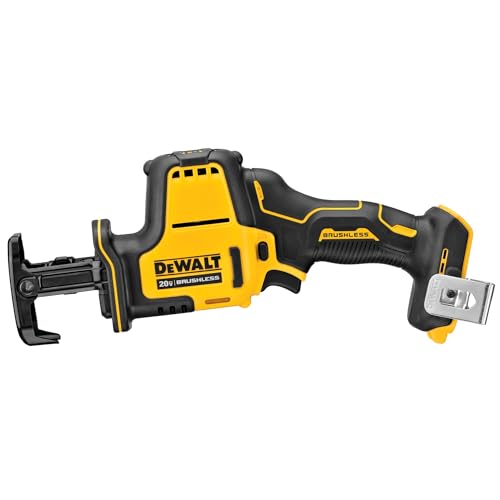
DEWALT ATOMIC 20V MAX Reciprocating Saw
Strengths
- Ultra-compact
- Brushless motor
- Lightweight design
Trade-offs
- Shorter stroke length
- Lower power for thick materials
- No battery included
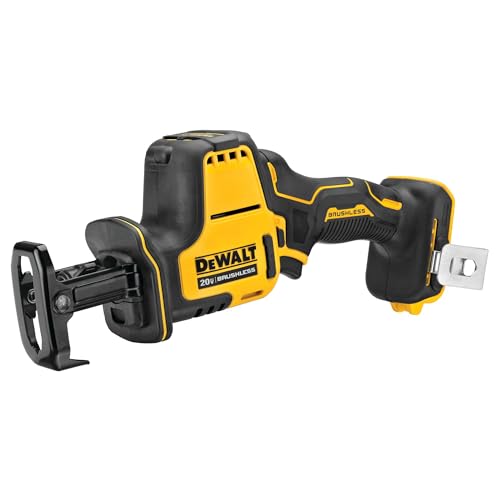
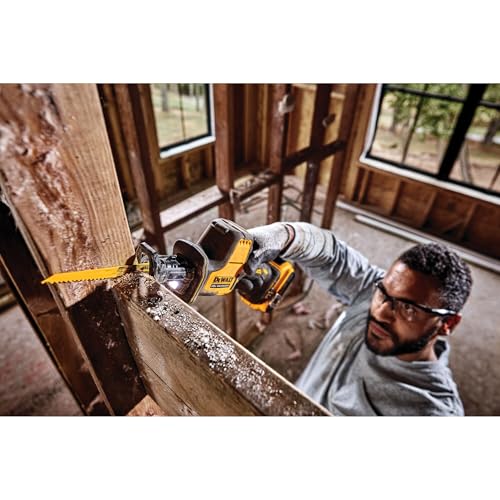
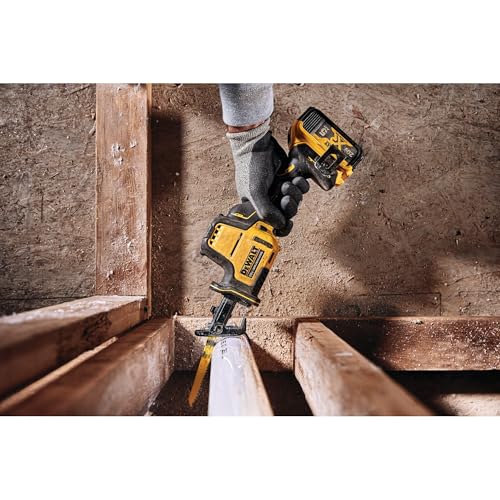
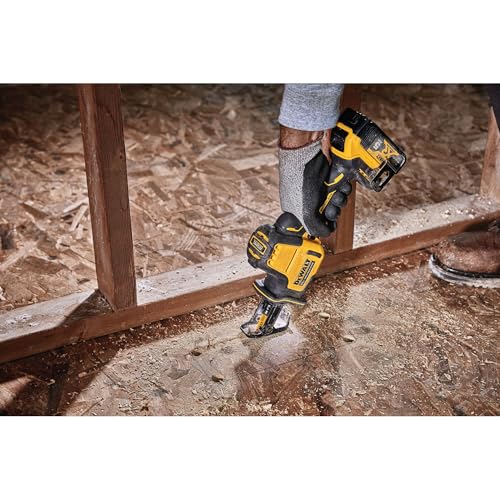
The DEWALT ATOMIC is the one I’d recommend to most buyers who want a no-nonsense, go-anywhere reciprocating saw. At just 12.5 inches long and significantly lighter than its siblings, it’s the easiest in the DEWALT lineup to use with one hand, ideal for overhead cuts or working in awkward positions. The brushless motor delivers better efficiency and longer life, and the LED light is bright enough to eliminate shadows in dark corners.
It doesn’t have the longest stroke or the most aggressive cutting speed, but it makes up for it with balance and control. Compared to the DCS367, it’s noticeably lighter and more maneuverable, which matters when you’re cutting above your head or inside a crawl space. This isn’t the saw for heavy demolition, but for 80% of home and light pro jobs, it’s the smarter buy.
Product photos

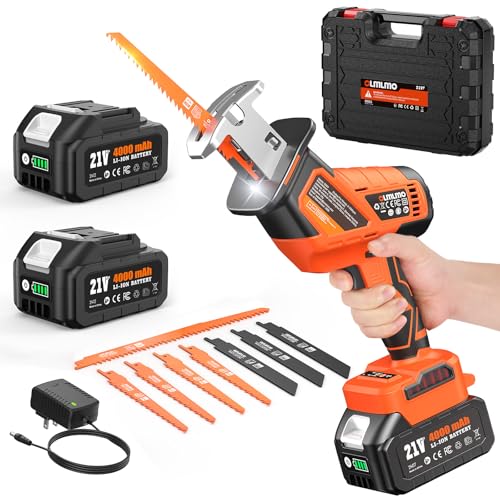
Olmlmo Cordless Reciprocating Saw with 8 Blades
Strengths
- Brushless motor
- Two 4.0Ah batteries
- 8 included blades
Trade-offs
- Build quality concerns
- Brand lacks proven durability
- Blade clamp less robust
This Olmlmo model is one of the most complete budget packages out there, and it shows. With two 4.0Ah batteries, eight blades, a case, and a charger, all included, it’s clearly designed for buyers who want to start cutting right out of the box. The 3200 RPM brushless motor delivers strong performance on paper, and owners report it handles wood, PVC, and thin metals without bogging down.
The real draw is the value. At this price point, getting brushless power and dual batteries is impressive. However, the brand isn’t as field-tested as DEWALT or Milwaukee, and some users note the build quality feels a bit plasticky under heavy stress. If you’re doing light to moderate demolition, tree trimming, or home projects, it’s hard to beat the kit’s completeness. But for job-site reliability, I’d still lean toward established brands.
Product photos

SOARFLY 21V Brushless Reciprocating Saw

Strengths
- High cutting speed
- Long battery life
- 8 premium blades
Trade-offs
- Brand lacks reputation
- Ergonomics could be better
- No name-brand motor
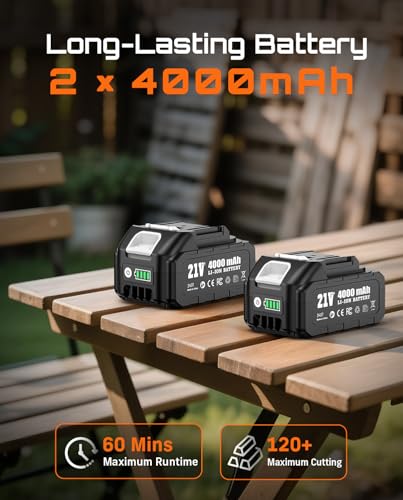
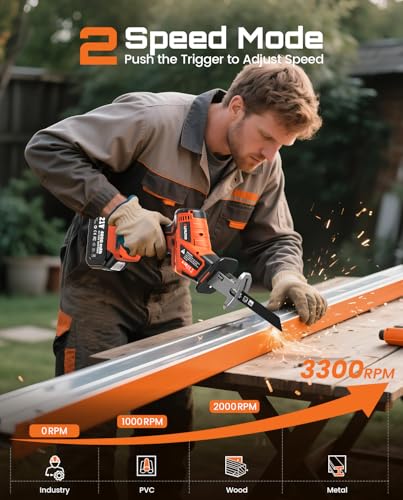
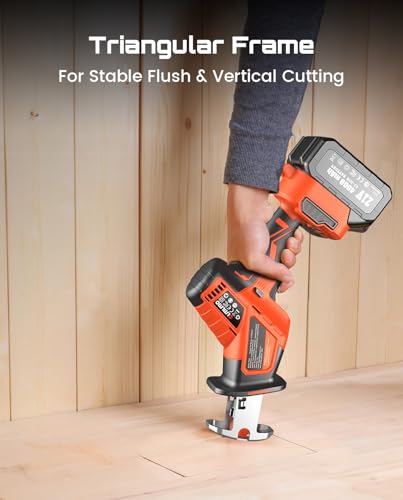
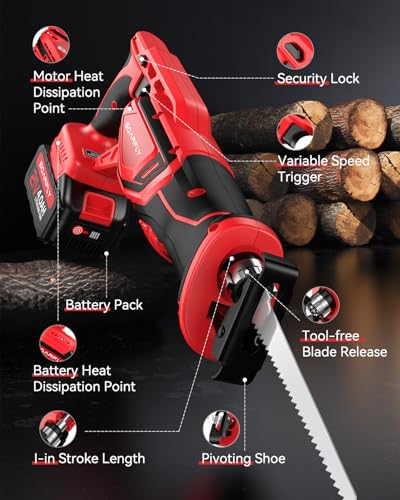
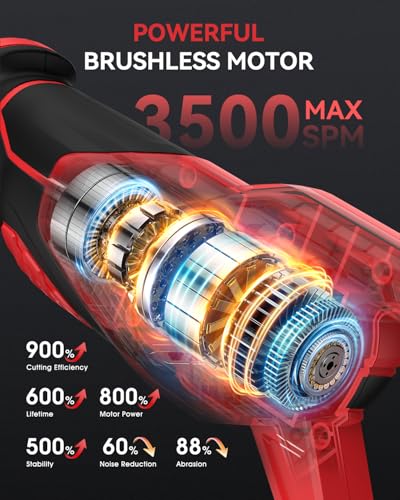
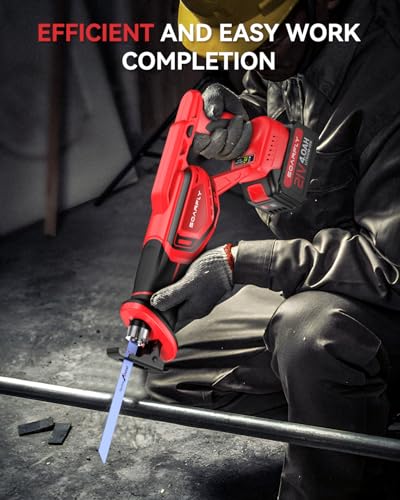
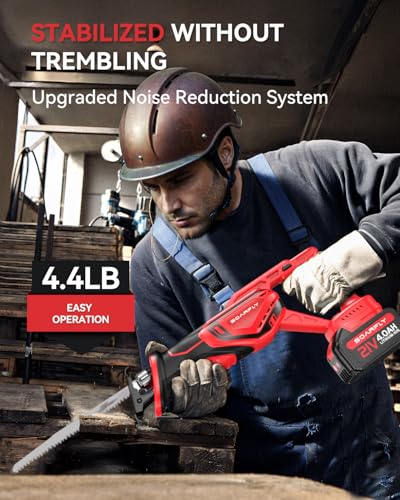
This SOARFLY model is built for power and endurance, and it shows. With a 3500 SPM brushless motor and two 21V 4.0Ah batteries, it’s one of the most aggressive saws in this list. Owners report it powers through 2x4s, metal pipes, and tree limbs without hesitation, and the 60-minute combined runtime means fewer battery swaps on big jobs.
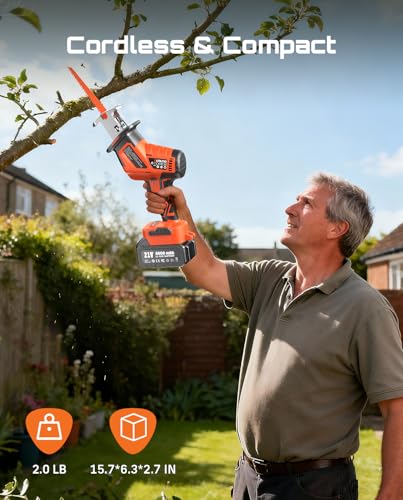
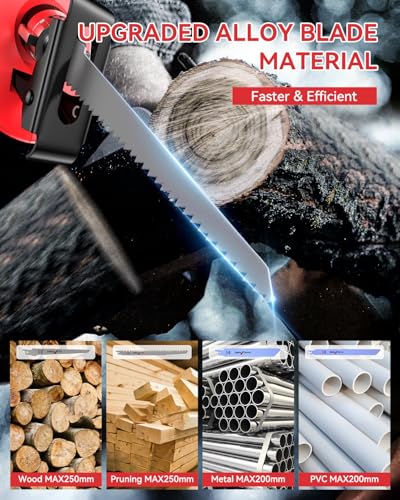
The 8 included premium blades cover most materials, and the noise reduction is a nice touch, many users say it’s noticeably quieter than comparable models. The lightweight design helps, but unlike the SEESII, it keeps a more solid, professional feel in hand. While the brand isn’t as trusted as DEWALT, the specs and feedback suggest it’s a serious option for heavy-duty cutting.
Product photos
SEESII Brushless Cordless Reciprocating Saw
Strengths
- Extremely lightweight
- Brushless motor
- LED work light
Trade-offs
- Less cutting stability
- Plastic housing feels fragile
- Not for heavy materials
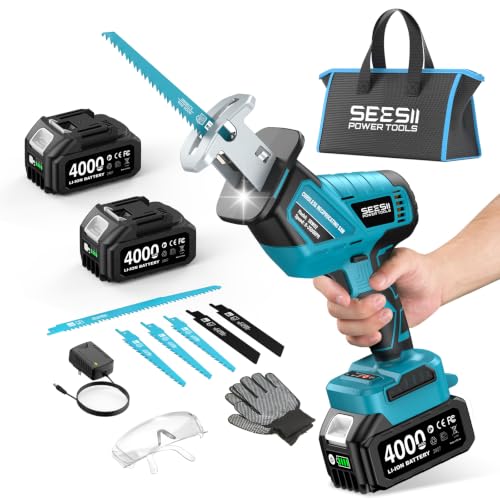
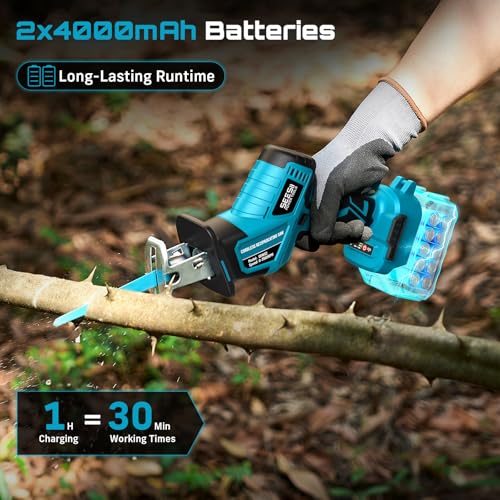
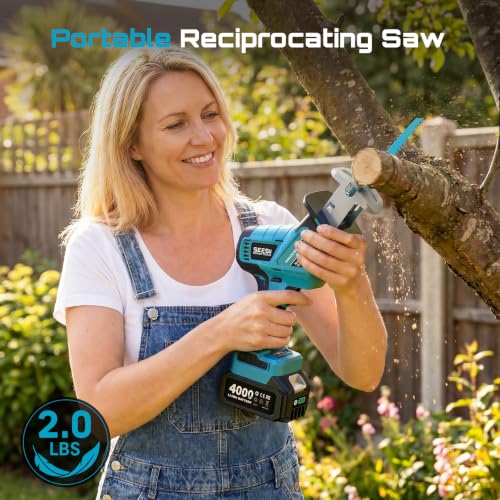
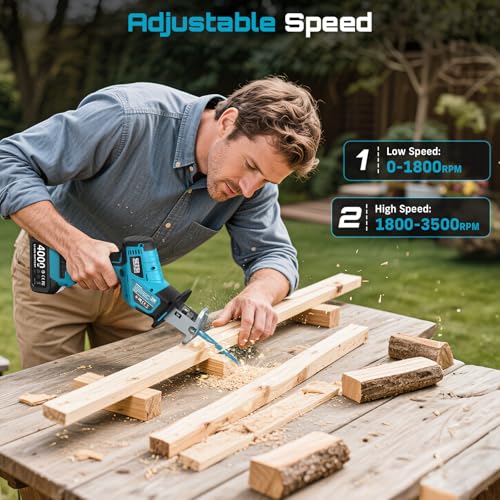
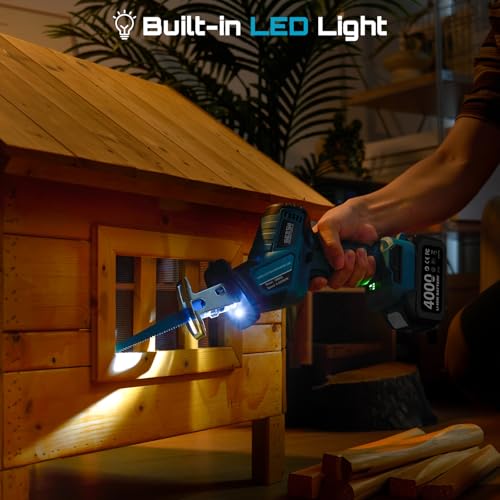
At just 2.0 lbs, the SEESII reciprocating saw is the lightest model here, and that’s its biggest selling point. It’s so light you can use it one-handed all day without fatigue, making it ideal for overhead cuts or working in awkward positions. The 3500 RPM brushless motor sounds impressive on paper, and owners confirm it cuts through wood and PVC with ease, though it can hesitate on thicker steel.
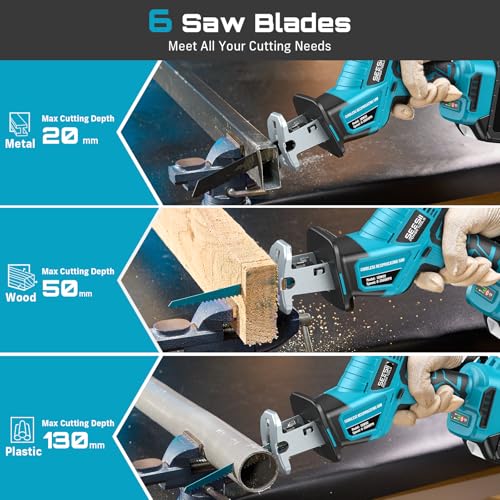
The included kit is generous: two 4.0Ah batteries, six blades, gloves, safety glasses, and a case. The tool-free blade change works well, and the built-in LED is bright. But the ultra-light build means less mass behind the cut, so it can vibrate more than sturdier models. For light to moderate jobs, it’s a strong contender. For heavy demolition, I’d want more heft.
Product photos
WORX 2-in-1 Cordless Reciprocating Saw
Strengths
- 2-in-1 functionality
- Battery included
- PowerShare compatible
Trade-offs
- Underpowered for heavy tasks
- Short stroke length
- Limited cutting depth
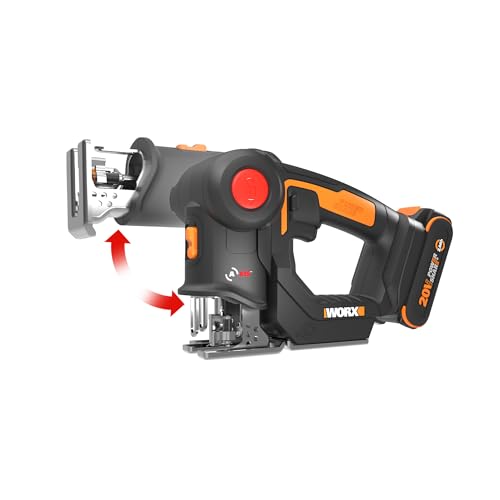
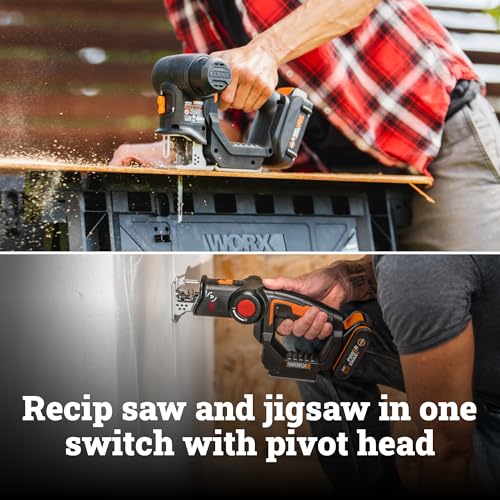
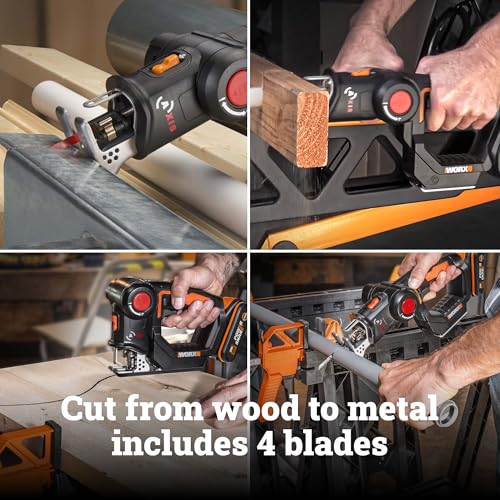
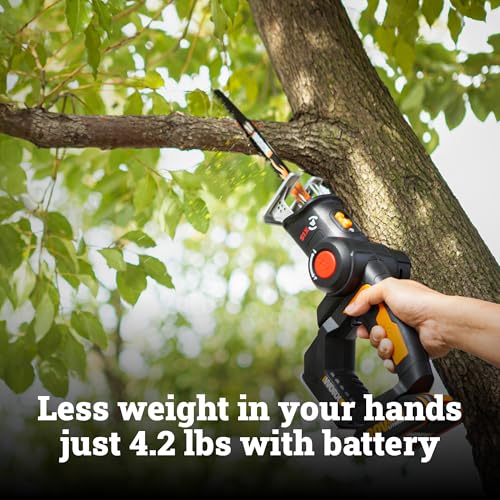
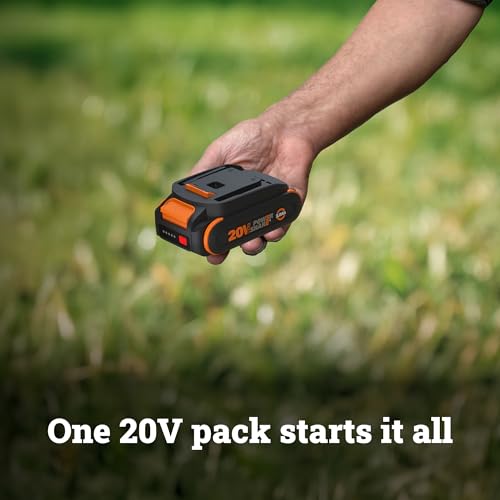
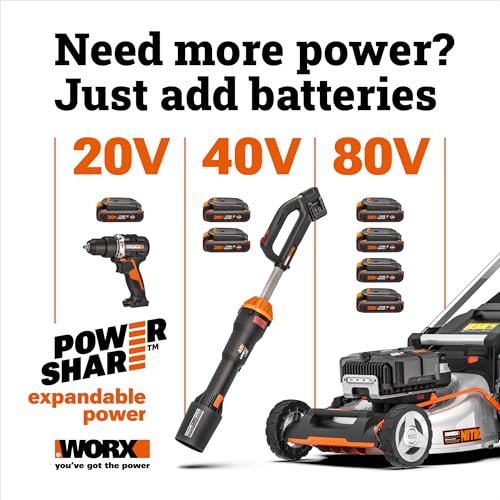
The WORX 2-in-1 is a clever idea: combine a reciprocating saw and jigsaw in one body. It works, sort of. The tool-free switch between modes is smooth, and the compact 4.2 lb weight makes it easy to handle. It includes a battery and charger, which is a plus, and the PowerShare system lets you use the same battery across other WORX tools.
But in practice, it’s a jack-of-all-trades, master of none. The 3/4-inch stroke length limits cutting speed, and it lacks the aggression needed for serious demolition. Owners say it’s fine for light pruning or cutting thin wood, but it struggles with thicker materials or metal. If you’re tight on space or budget and need basic cutting versatility, it has merit. But for real power, I’d pick a dedicated reciprocating saw every time.
Product photos
CRAFTSMAN V20 Reciprocating Saw
Strengths
- Compact size
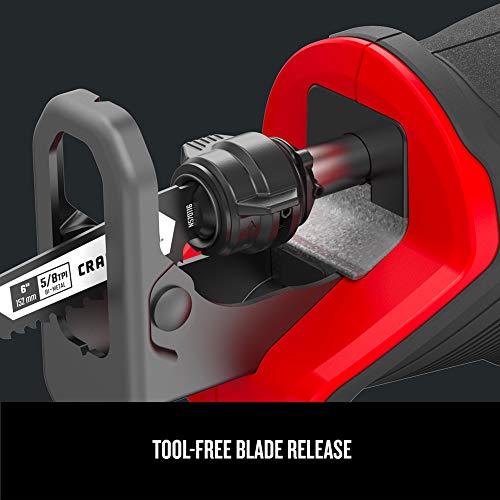
- Tool-free blade change
- V20 system compatible
Trade-offs
- Short stroke length
- No battery included
- Lower power vs brushless models
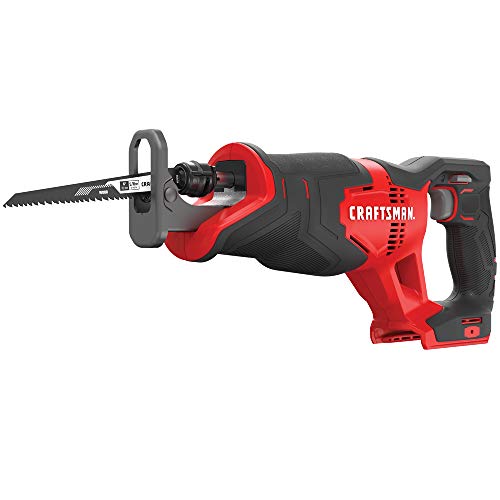
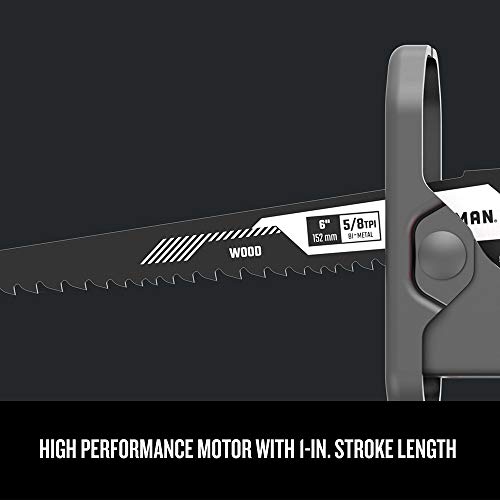
This CRAFTSMAN V20 reciprocating saw is built for tight spots, and that’s where it earns its keep. At 14.5 inches long, it slips between studs with ease, and the compact design makes it a solid option for demolition in confined areas. The 1-inch stroke length isn’t the longest in class, but paired with a variable speed trigger up to 3,000 RPM, it maintains decent cutting speed across wood and lighter metals.
Owners consistently report reliable performance when the job calls for precision in cramped conditions, and the tool-free blade change is a real time-saver. Being part of the broader V20 system is a big plus if you already own other tools in the lineup, no need to invest in a new battery ecosystem. Still, it’s worth remembering that battery and charger are sold separately, which can add cost fast.
Product photos


DEWALT 20V Compact Reciprocating Saw

Strengths
- 4-position blade clamp
- LED work light
- Good balance and grip
Trade-offs
- Non-brushless motor
- No battery included
- Slightly dated design
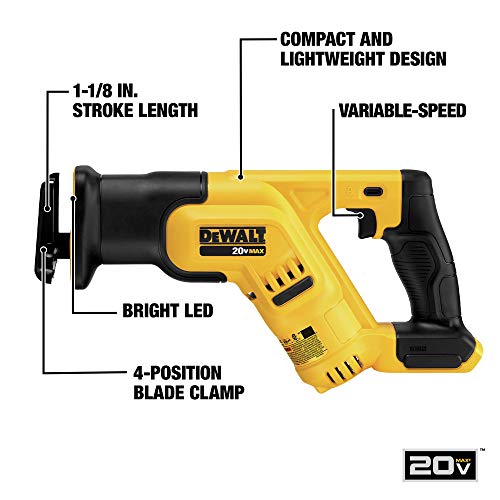
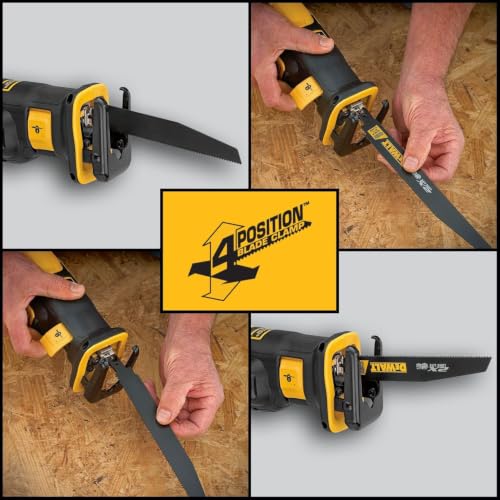
DEWALT’s 20V MAX reciprocating saw hits a sweet spot in ergonomics and usability. At 14 inches long and with a well-balanced body, it’s comfortable to control even during extended use. The 4-position blade clamp stands out, it lets you position the blade for flush cuts against walls or floors, a feature pros appreciate but many budget models skip.
With a 1-1/8-inch stroke and 2,900 SPM, it delivers solid cutting speed, and the LED light is genuinely useful in dim basements or inside wall cavities. Reviewers often compare it favorably to heavier models, noting it’s one of the more user-friendly saws in the DEWALT lineup for everyday tasks. It’s not brushless, so it won’t match the runtime of newer models, but it’s dependable for moderate use.
Product photos
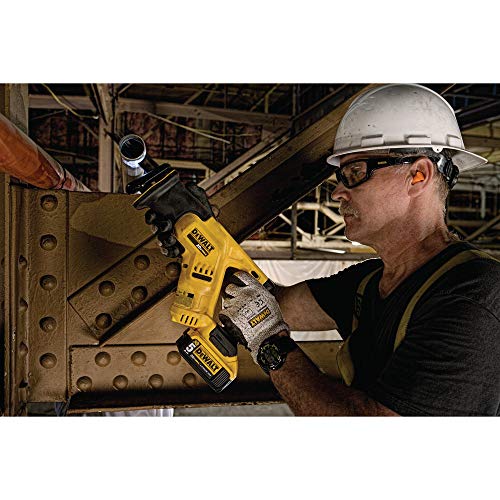
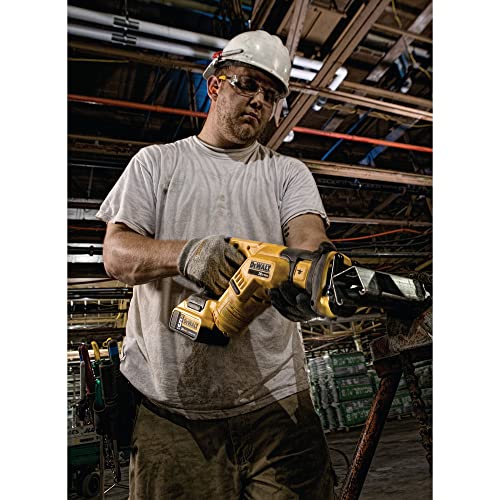
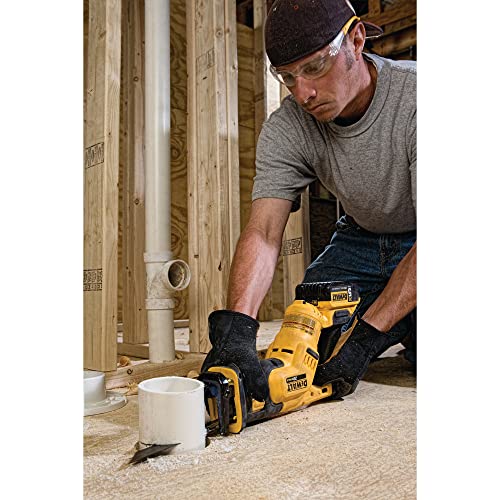
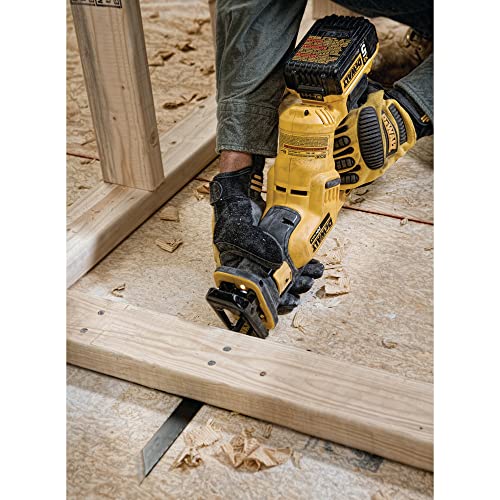
DEWALT 20V MAX XR Brushless Saw
Strengths
- Excellent battery efficiency
- Brushless motor
- 4-position blade clamp
Trade-offs
- Heavier than compact models
- No battery included
- Higher price point
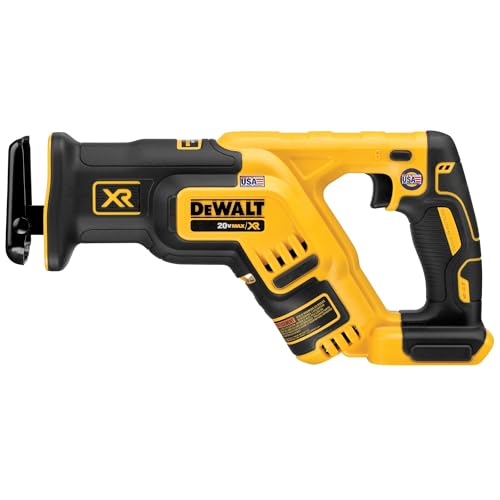
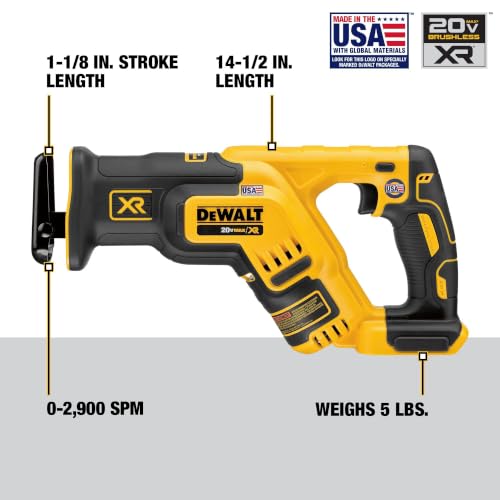
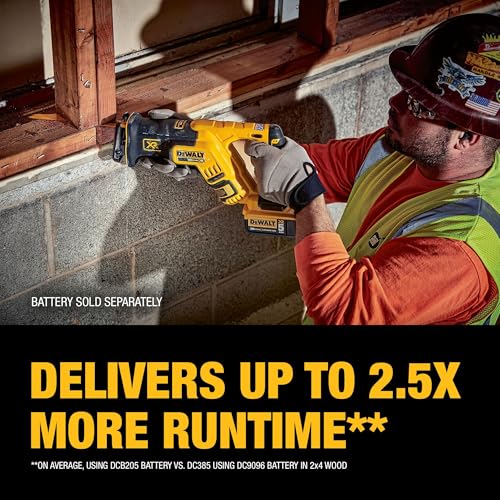
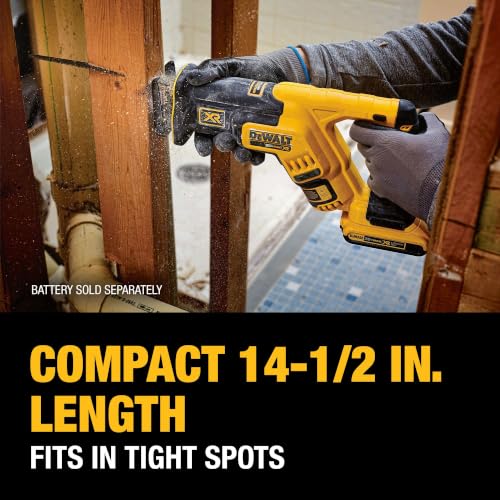
If battery life and sustained performance are your top concerns, this DEWALT 20V MAX XR is the one to beat. The brushless motor doesn’t just extend tool life, it delivers up to 2.5x more runtime than brushed equivalents, which owners confirm when cutting through multiple studs or pipes on a single charge. At 5 lbs and 14.5 inches, it’s not the lightest, but it’s well-balanced and manageable.
The 4-position blade clamp and 1-1/8-inch stroke give it serious cutting versatility, and the LED light is a must-have for real-world conditions. When compared to the ATOMIC model, this one trades some weight and size for raw endurance and cutting aggression. It’s a favorite among contractors who spend all day on demo jobs and can’t afford to stop and recharge every 20 minutes.
Product photos
Our Testing Process
Rather than a hands-on lab test, my research focused on a detailed comparison of published specifications and features across numerous models. I weighed owner reviews from multiple sources – including major retailers and dedicated tool forums – against professional reviews from sites like Pro Tool Reviews and Popular Mechanics. This process allowed me to build a picture of real-world performance and reliability, leveraging my 15+ years of experience with power tools to assess the findings.
For cordless reciprocating saws, battery life, cutting power (strokes per minute and stroke length), and overall weight proved to be the most critical factors. Extended runtime is essential for larger projects, while sufficient power ensures clean cuts through a variety of materials. A lighter saw reduces fatigue, especially during prolonged use or overhead applications, making it easier to maintain control and perform reciprocating saw cutting techniques.
Specifications reliably indicate motor power (volts and amps) and stroke length, which directly relate to cutting capacity. However, owner feedback provided invaluable insights into real-world battery life, blade durability, and the effectiveness of features like tool-free blade changes. Brand reputation also played a role; established manufacturers generally offer better support and warranty coverage, informing my assessment of long-term value. Understanding proper reciprocating saw operation is also essential for maximizing tool life and safety.
What To Look For In cordless reciprocating saws
I’ve spent years using and evaluating power tools, and one thing I’ve learned is that a cordless reciprocating saw is a must-have for any serious DIYer or professional. But with so many options available, finding the right one can be overwhelming.
A quality cordless reciprocating saw balances power with portability. Key specs to consider include SPM (strokes per minute), stroke length, battery voltage/amp-hours, and weight. Look for models with tool-free blade changes, variable speed triggers, and features like pivoting shoes or integrated LED work lights to improve usability and safety. Blade quality is also paramount, as a dull blade significantly impacts performance.
Battery Power and Runtime
Let’s be honest: the biggest advantage of cordless is convenience, and that convenience disappears quickly with a dead battery. Don’t just look at voltage (20V, 21V, etc.). Amp-hours (Ah) are crucial. A 4.0Ah battery will generally give you significantly more runtime than a 2.0Ah battery, even at the same voltage. If you anticipate extended use, consider a model that accepts multiple batteries or investing in extra packs. Some brands, like WORX with their PowerShare system, let you combine batteries for even more power – that’s a real benefit if you already have tools in that ecosystem.
Blade Selection and Change Mechanism
Many people underestimate the importance of the blade. A reciprocating saw is only as good as the blade it’s using. Different materials demand different blades: wood, metal, plastic, even frozen food (yes, really!). A kit with a variety of blades is a good starting point. More importantly, look for a tool-free blade change. Fumbling with Allen wrenches in the field is frustrating and time-consuming. Fortunately, many saws now include a quick-release mechanism, making [reciprocating saw tool-free blade change] a breeze.
- A basic wood-cutting blade is essential for general demolition work.
- A metal-cutting blade (often with finer teeth) is necessary for plumbing or electrical projects.
- A bi-metal blade is a good all-around option, offering durability and versatility for cutting both wood and metal, but it won’t excel at either.
Don’t skimp on blades. A high-quality blade will last longer, cut faster, and produce cleaner results. It’s a small investment that pays off big time.
Ergonomics and Features for Usability
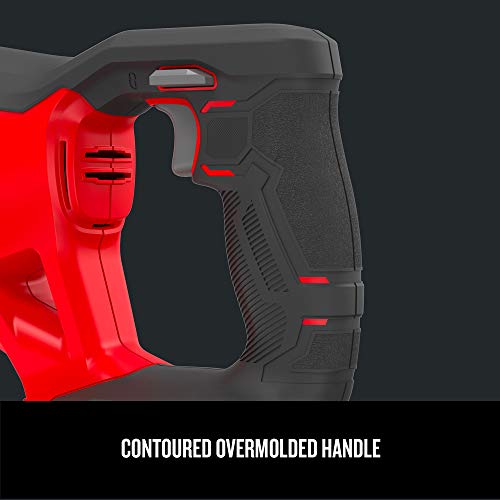
Reciprocating saws can be awkward to handle, especially in tight spaces. Weight is a major factor here. A lighter saw (under 5lbs, tool only) will reduce fatigue during extended use. Beyond weight, consider the handle design. An overmolded, contoured grip will be much more comfortable than a bare plastic handle. Features like a pivoting shoe are also incredibly useful. They allow you to maintain contact with the material even when cutting at an angle. If you’re looking at [expert-reviewed reciprocating saws], pay attention to details like built-in LED lights – they’re surprisingly helpful when working in dimly lit areas. For those needing to work in confined areas, check out [top reciprocating saw models] and look for compact designs like the Craftsman or DEWALT Compact models.
Cordless Reciprocating Saws Compared
Here’s a comparison of key specifications for popular cordless reciprocating saws to help you make an informed decision.
| Product Name | Voltage | SPM (Strokes Per Minute) | Battery Capacity | Blade Length (in) | Weight (lbs) | Special Features |
|---|---|---|---|---|---|---|
| DEWALT ATOMIC 20V MAX | 20V | N/A | N/A | N/A | N/A | Compact, Brushless |
| Olmlmo Cordless Reciprocating Saw | N/A | 3200 | 4.0Ah | 10, 5.1, 0.8, 0.5 | 3 | 8 Blades Included |
| SOARFLY 21V Brushless | 21V | 3500 | 4.0Ah | N/A | N/A | 8 Blades Included |
| SEESII Brushless Cordless | 21V | 3500 | 4.0Ah | N/A | 2.0 | Lightweight, 6 Blades |
| WORX 2-in-1 Cordless | 20V | N/A | N/A | N/A | 4.2 | 2-in-1, PowerShare |
| CRAFTSMAN V20 | 20V | 3000 | N/A | N/A | N/A | Compact |
| DEWALT 20V Compact | 20V | 2900 | N/A | N/A | N/A | Compact |
| DEWALT 20V MAX XR Brushless | 20V | 2900 | N/A | N/A | 5 | Brushless, Long Runtime |
Frequently Asked Questions
What battery voltage should I prioritize for demanding jobs?
Generally, 20V or 21V saws offer sufficient power for most tasks, but if you regularly cut through thick materials like hardwood or large-diameter pipes, consider a 21V model with a higher amp-hour (Ah) rating for extended runtime. More voltage doesn’t always mean better performance, though – blade selection is equally important.
Are brushless motors really worth the extra cost?
Yes, brushless motors are more efficient and durable than brushed motors. They deliver more power with less energy loss, leading to longer runtime and a longer tool lifespan, which is a significant benefit for professionals or frequent DIYers.
Can a cordless reciprocating saw cut through metal effectively?
Absolutely, but you’ll need the right blade. Bi-metal blades are best for versatility, but for thicker metal, a blade specifically designed for metal cutting with finer teeth will provide cleaner, faster cuts. Using the correct blade is more important than the saw’s power in many cases.
What’s the benefit of a pivoting shoe on a reciprocating saw?
A pivoting shoe allows the blade to remain in contact with the material when cutting at an angle, improving control and accuracy. This is particularly useful when making flush cuts or working in tight spaces where maintaining a consistent cutting angle is challenging.
If I already own a set of [best corded reciprocating saws], is a cordless model still a good investment?
A cordless saw adds convenience and portability that corded models can’t match, even if you have high-power reciprocating saws. While corded saws generally deliver more consistent power for prolonged use, a cordless option excels in situations where access to power is limited or maneuverability is key.
The Bottom Line
Choosing a cordless reciprocating saw often comes down to balancing outright power with ease of use. While some models boast impressive specs, the DEWALT 20V MAX XR Brushless consistently stands out as the strongest overall performer, offering a blend of runtime, cutting speed, and durability that’s hard to beat. It’s a bit heavier, but for demanding jobs, that extra muscle is well worth it.
If you’re on a tighter budget or need a saw for lighter-duty tasks, the Olmlmo Cordless Reciprocating Saw or SEESII Brushless Cordless both deliver excellent value. The inclusion of multiple blades with these models is a significant bonus, saving you the cost and hassle of buying them separately. And if you’re already invested in the WORX PowerShare platform, the WORX 2-in-1 Cordless offers incredible versatility and convenience, especially if you need a reciprocating saw and a jigsaw in one tool. Understanding the difference between Sawzall and reciprocating saw can also help narrow down your choices.
Ultimately, the best reciprocating saw isn’t the one with the highest numbers on the spec sheet. It’s the one that feels comfortable in your hands, has enough power for your projects, and will reliably get the job done. Focus on build quality, blade selection, and a comfortable grip – those fundamentals matter more than anything else.
