
8 Best Benchtop Bandsaws of 2026
This post contains affiliate links. As an Amazon Associate, we earn from qualifying purchases.
The VEVOR 10-Inch is the overall best benchtop bandsaw for most DIYers, offering solid capacity and build quality for the price. If you’re on a tight budget, the WEN 10-Inch delivers strong performance at a lower cost, while the DeWalt 9″ stands out for its brand reliability and dust collection options.
Choosing the right benchtop bandsaw means sorting through specs that look good on paper but don’t always translate to clean cuts or long-term durability. Many users end up frustrated with wobbly tables, poor blade tracking, or motors that stall on hardwood.
I focused on models that balance cutting capacity, motor performance, and real-world feedback from owners who’ve used them for projects like cutting curves, resawing, and trimming. These picks reflect what matters most after years of talking to woodworkers and reviewing how these tools actually perform.
Top 8 Benchtop Bandsaws in the Market
The Best Benchtop Bandsaws, Reviewed
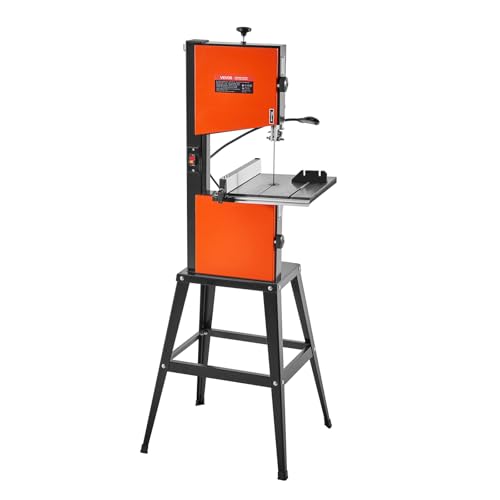
VEVOR 10-Inch Two-Speed Band Saw
Strengths
- Cast iron table for stability
- 6-inch cutting height
- Excellent 360° lighting
Trade-offs
- Heavy and less portable
- Fit and finish can be uneven
- Limited brand service network
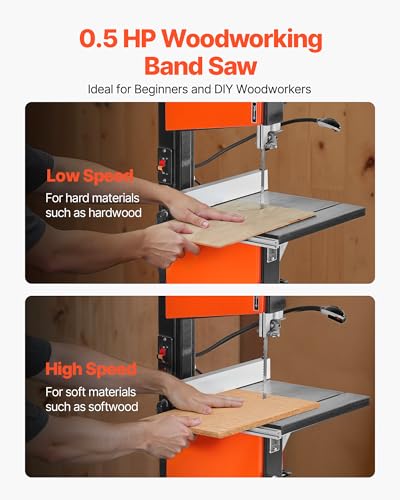
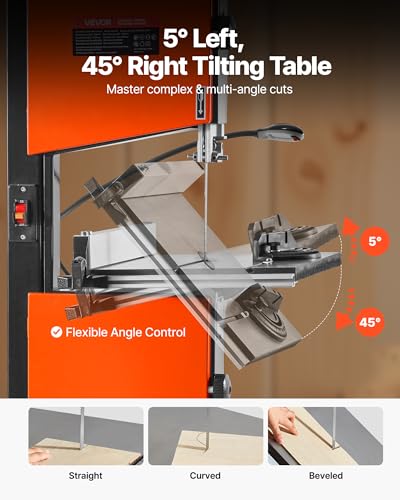
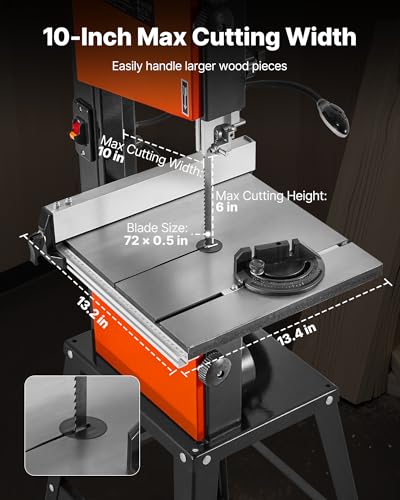
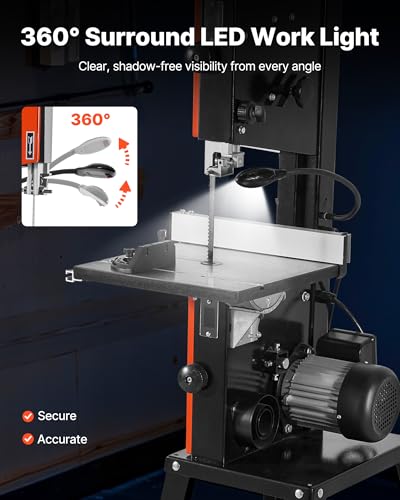
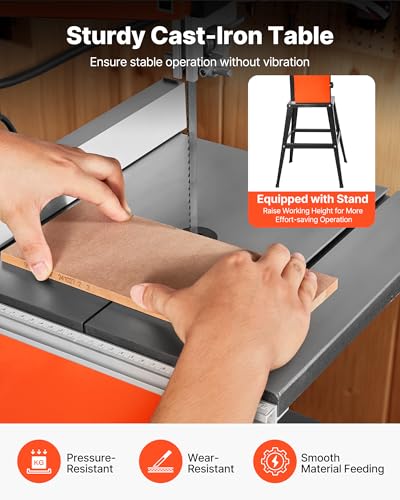
VEVOR’s 10-inch model is an outlier, it packs features you’d expect in a much more expensive saw, especially that cast iron table and 360° LED worklight. On paper, the 6-inch cutting height and dual-speed operation make it competitive with prosumer models, and owners report it handles 4×4 resawing with minimal drift, thanks to the six-point blade guide system. The light alone is a standout in poorly lit spaces, eliminating shadows from all angles.
But here’s the catch: while build quality seems solid for the price, long-term reliability is still unproven compared to brands like JET or DeWalt. It’s also heavier and less refined in fit and finish. Still, for the specs you get, this is arguably the best overall package if you want near-professional capability without the premium tag. I’d recommend it with a slight caveat about brand longevity.
Product photos
JET 10-Inch Woodworking Band Saw
Strengths
- Robust 1/2-HP motor
- Minimal vibration
- Quick blade tension release
Trade-offs
- Heavier and bulkier
- Higher price point
- Table not as large as competitors
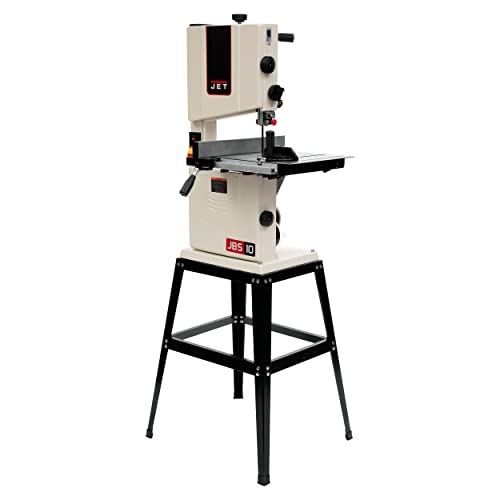
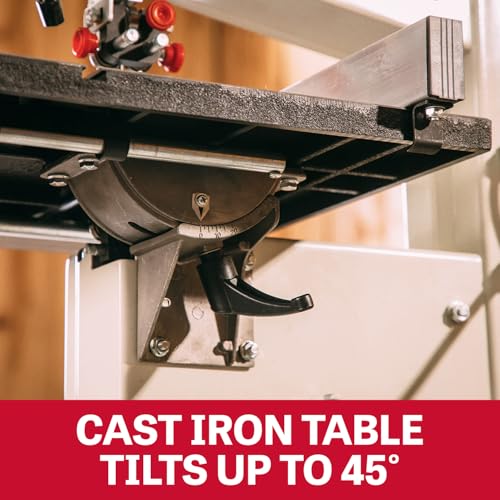
When someone asks me what a serious benchtop bandsaw should feel like, the JET JWB-10 is the answer. Its 1/2-HP induction motor and Poly-V drive system are specs you don’t see in entry models, and owners consistently praise the reduction in vibration and power loss under load. This thing runs like a floor-standing unit, and the rigid steel stand only reinforces that pro-grade impression.
The ball-bearing blade guides and quick-release tension system make blade changes faster and tracking more reliable, something seasoned users will appreciate after wrestling with cheaper models. It’s not the most portable, but that’s the trade-off for real stability and cutting capacity. If you’re doing regular resawing, cutting curves in thick stock, or need repeatable accuracy, this is where I’d put my money over flashier but less substantial options.
Product photos
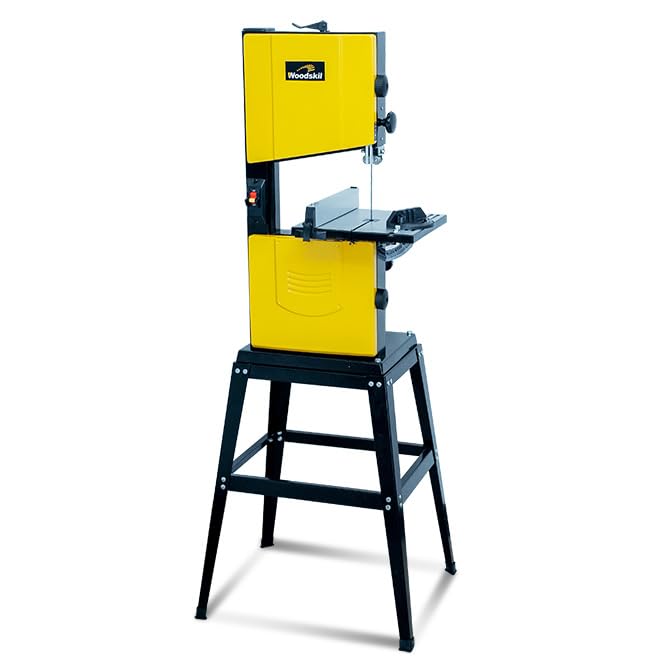
Woodskil 10-Inch Dual Speed Band Saw
Strengths
- Quick blade tension system
- Excellent blade guidance
- Handles 4×4 lumber
Trade-offs
- Stand feels slightly wobbly
- No cast iron table
- Motor noise at high speed
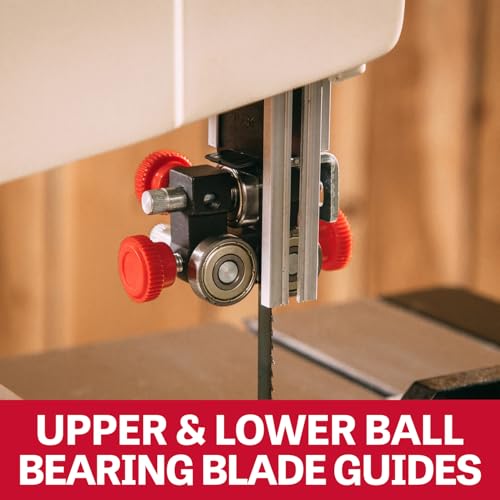
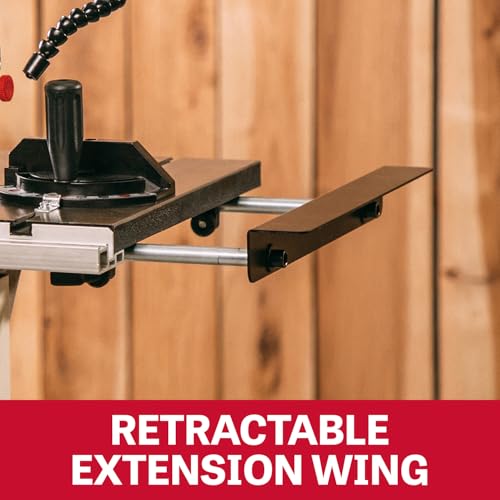
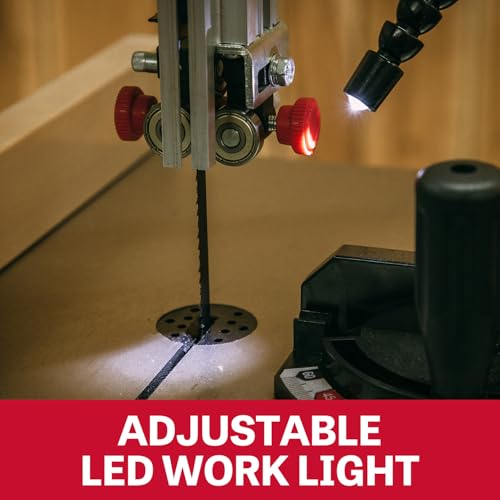
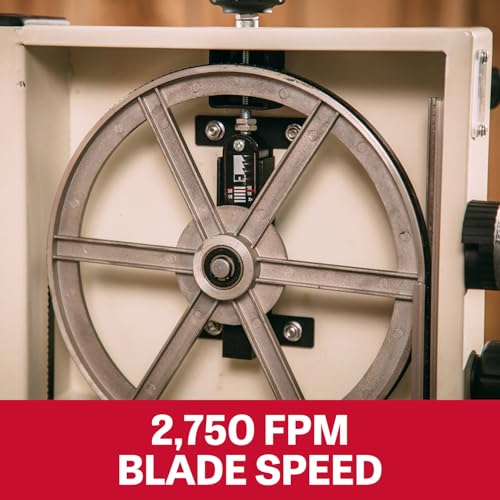
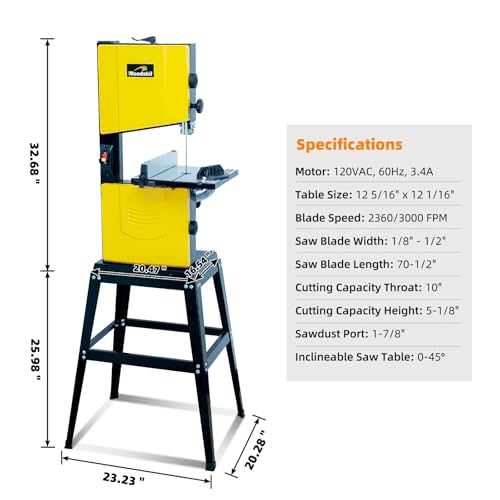
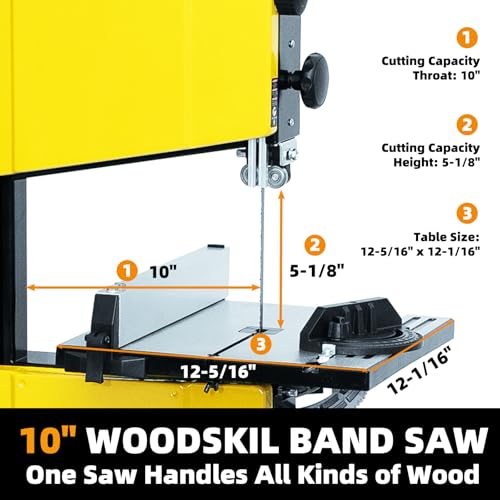
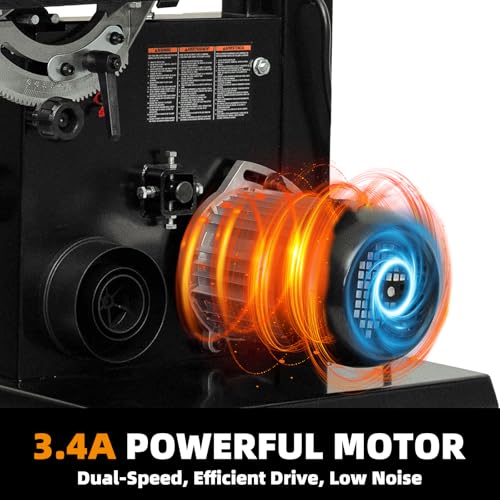
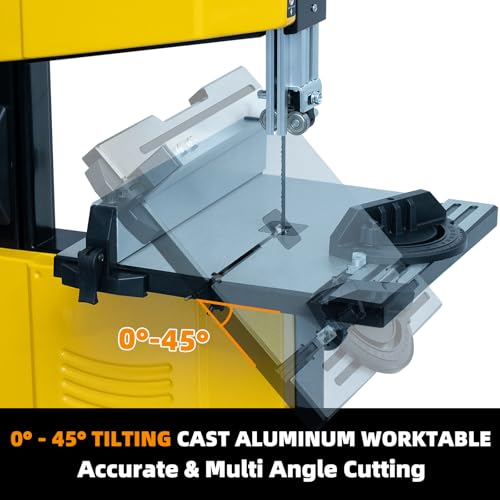
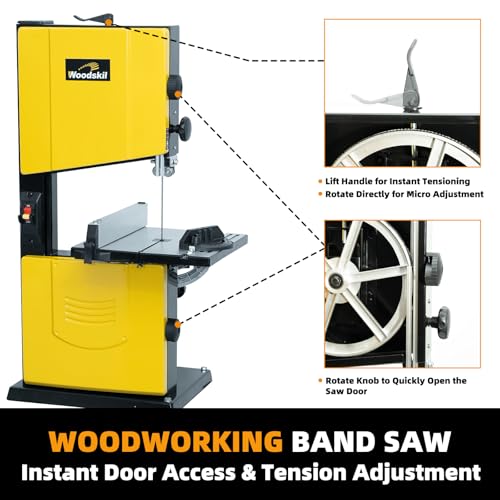
Woodskil’s dual-speed 10-inch model stands out with a higher amperage motor (4.3A) and a clever quick tension system that owners rave about, changing blades really does take minutes. The 6 ball bearing guides are a serious upgrade in this price range, delivering tracking stability that rivals more expensive models. And with a 5-1/8-inch cutting height, it handles 4x4s with room to spare, making it ideal for furniture builds or outdoor projects.
The tool-free doors are another underrated feature, cleaning out sawdust without tools is a small joy anyone with a dusty shop will appreciate. While the brand isn’t as established as DeWalt or JET, the feedback on long-term performance is surprisingly positive. For the price, this is one of the best value-packed bundles with a stand included. I’d pick this over the WEN BA3962 if you want faster maintenance and better cutting capacity.
Product photos
DeWalt 9″ Two-Speed Band Saw
Strengths
- Two-speed versatility
- Excellent visibility with LED
- Dust port adapters included
Trade-offs
- No stand included
- Same depth limit as budget models
- Slight vibration at high speed
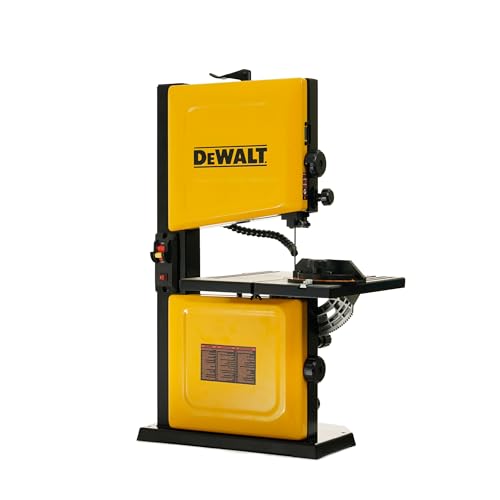
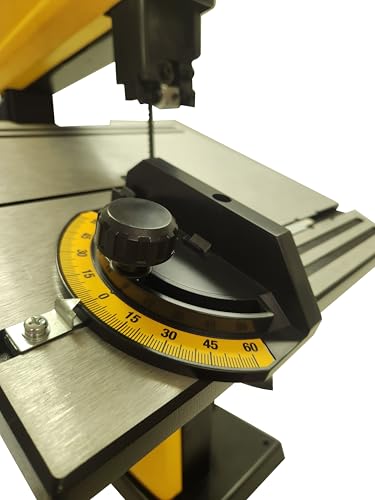
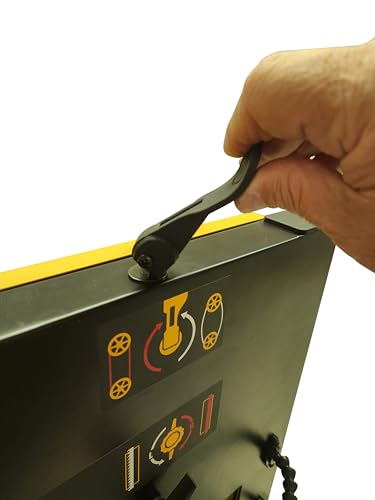
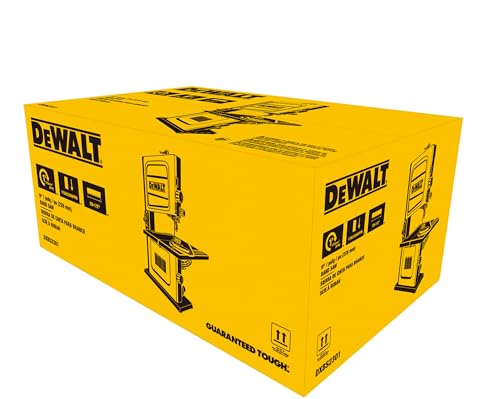
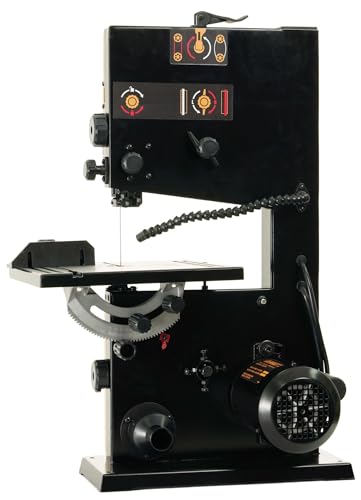
DeWalt brings its reputation for durability into this benchtop model, and while it’s not the most powerful in the lineup, its two-speed operation makes it a standout for precision-focused users. The ability to drop to 1700 SPM for hardwoods is a real advantage, reviewers note cleaner cuts and less burning, especially on dense materials. Pair that with the integrated LED worklight, and you’ve got one of the few benchtop saws that genuinely helps you see your line in dim garage lighting.
It doesn’t offer a huge throat or depth capacity, still capped at around 3-1/2 inches, so it won’t replace a floor model. But for detailed work like scroll cuts, joinery mockups, or model building, this is the tool I’d lean on over others in this size. It’s built like a jobsite tool, and that matters when you value consistency over brute force.
Product photos
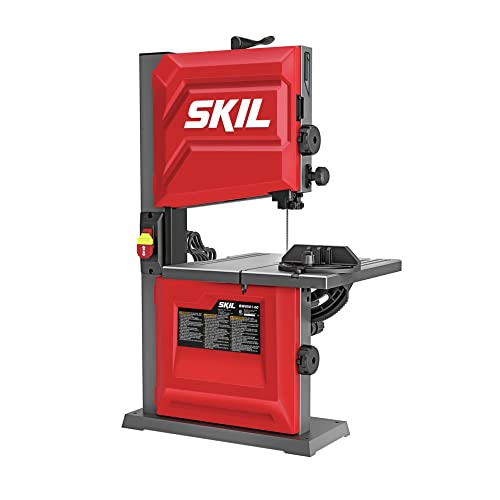
SKIL 2.8 Amp 9-Inch Band Saw
Strengths
- True budget option
- Tool-free adjustments
- Solid steel base
Trade-offs
- No included stand
- Basic blade guides
- Underpowered for thick stock
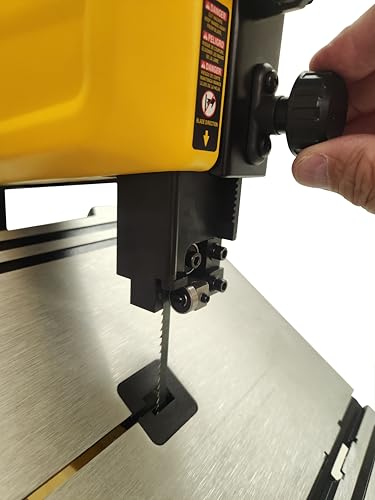
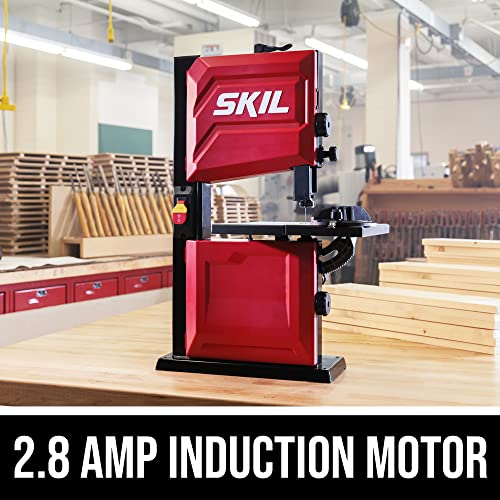
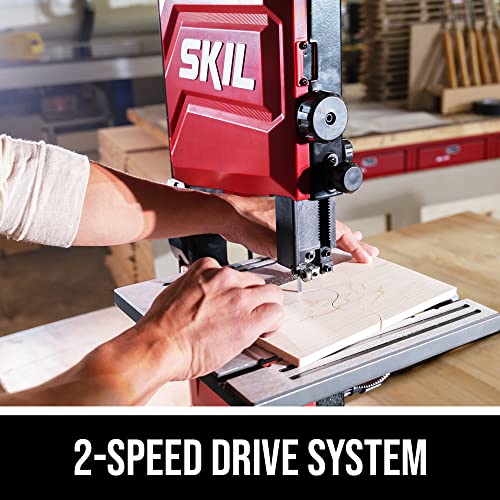
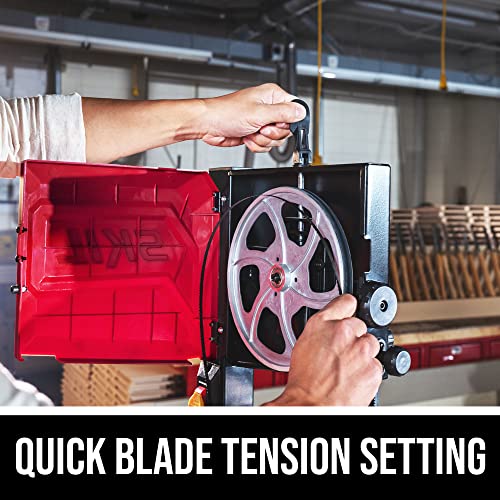
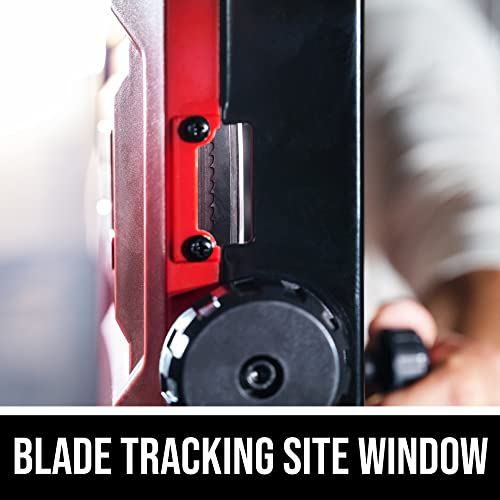
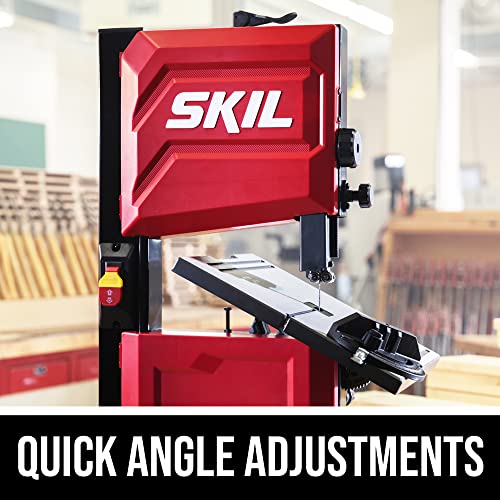
The SKIL BW9501-00 is the definition of a stripped-down workhorse, it’s built to do one job affordably and do it without drama. With a 2.8-amp induction motor and tool-free belt tensioning, setup and maintenance are simple, and owners appreciate the rack-and-pinion table adjustment for repeatable angle cuts. It’s not flashy, but it’s reliable for straight resawing, basic curves, and shop jigs.
Where it wins is pure cost efficiency. It lacks a stand, LED light, or high-end guides, but for someone who needs a second saw or is on a tight budget, it delivers core functionality without fluff. I’d recommend this over pricier models only if you’re certain your needs are light and infrequent, it’s the tool you buy when you can’t justify more.
Product photos
WEN 10-Inch Two-Speed Band Saw
Strengths
- Good cutting depth
- Two-speed flexibility
- Includes stand and work light
Trade-offs
- Motor lacks torque on hardwood
- Table adjustment can be stiff
- Dust collection is average
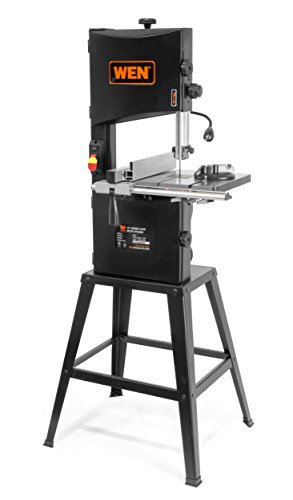
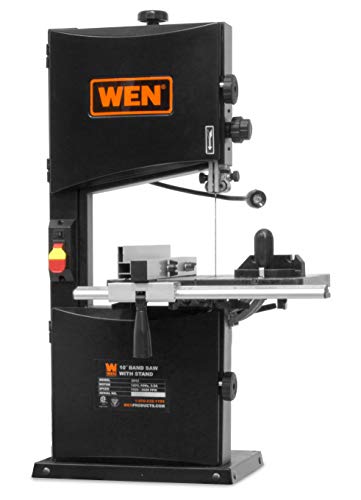
WEN’s BA3962 bridges the gap between basic and advanced, offering a two-speed motor, 6-inch cutting depth, and a cast aluminum table, all wrapped in a stand-ready design. At 3.5 amps, it’s not as powerful as the JET or VEVOR models, but owners say it keeps up well on medium-density woods, especially when dialed into the correct speed. The 3-in-1 dust port is a thoughtful touch, adapting to multiple hose sizes for better cleanup.
It’s clearly aimed at the active DIYer, someone upgrading from a 9-inch model but not ready to invest in a full shop saw. While the blade guides aren’t quite as refined as higher-end units, the overall balance of price, features, and included stand makes it a smart pick for home workshops. I’d choose this over the smaller WEN if you’re cutting thicker stock regularly.
Product photos

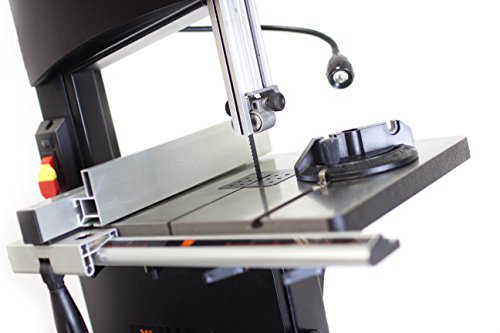
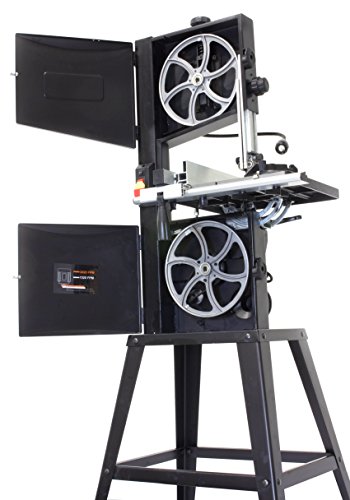

Woodskil 3-Amp 9-Inch Band Saw
Strengths
- Stronger motor than budget models
- Stable cast aluminum table
- Effective dust port
Trade-offs
- No dual speeds
- No stand included
- Blade guard feels flimsy
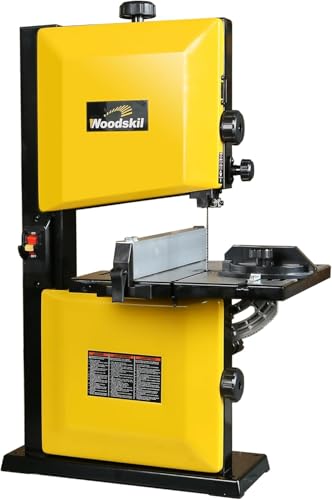
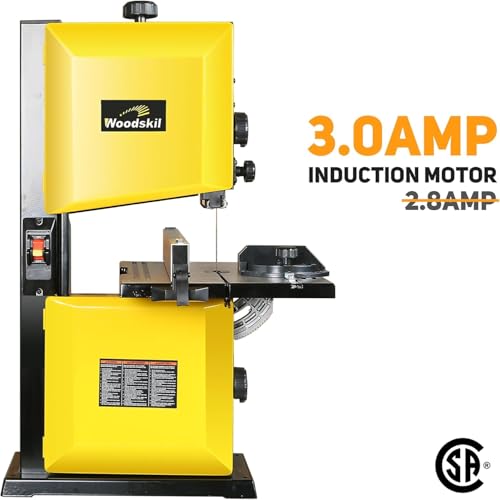
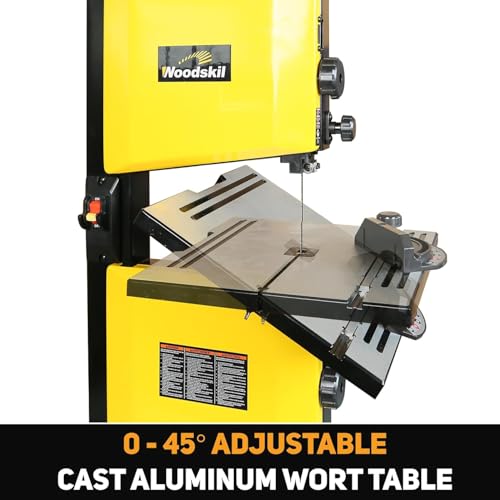
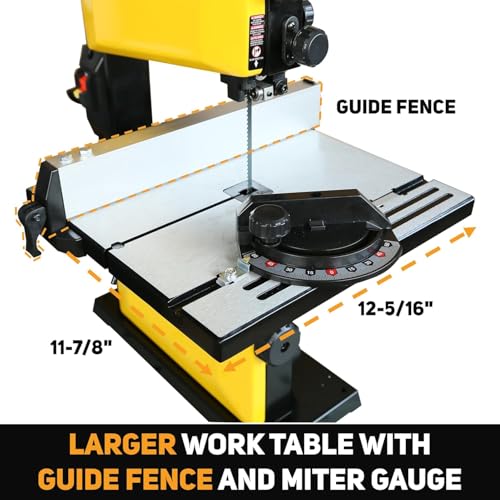
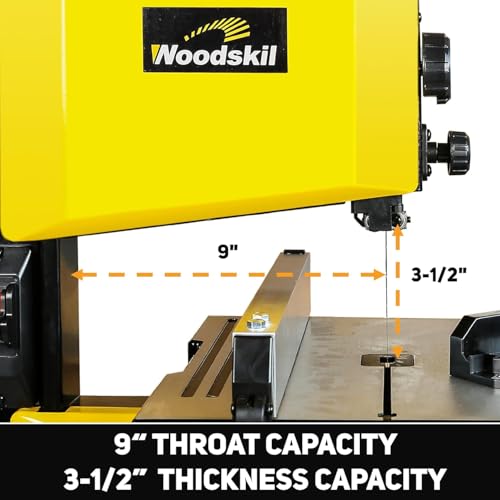
This 9-inch Woodskil model is a solid mid-tier contender, not as feature-rich as the dual-speed 10-inch version, but more capable than basic 9-inch saws from WEN or SKIL. The 3-amp motor delivers noticeable torque over 2.8-amp units, and owners confirm it powers through hardwoods with less bogging. The cast aluminum table is stiffer than plastic alternatives, improving cut accuracy, and the steel base reduces vibration significantly.
It’s clearly designed for users stepping up from beginner tools but not ready for premium models. The lack of dual speeds and a stand are drawbacks, but the core mechanics are sound. For the price, it’s a smarter buy than the SKIL if you want a little more power and stability without jumping into 10-inch territory.
Product photos
WEN 9-Inch Band Saw
Strengths
- Lightweight design
- Good accessory bundle
- Affordable entry point
Trade-offs
- Limited cutting depth
- Underpowered for hardwoods
- Plastic components feel flimsy
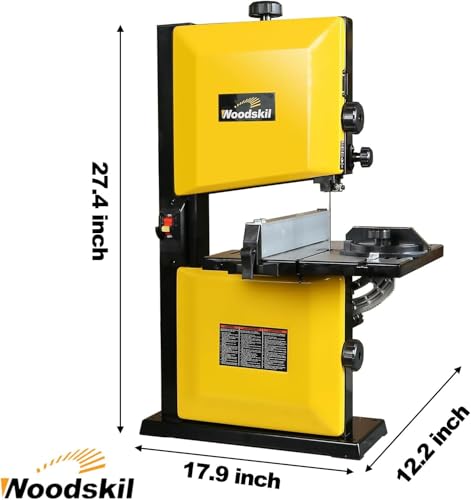
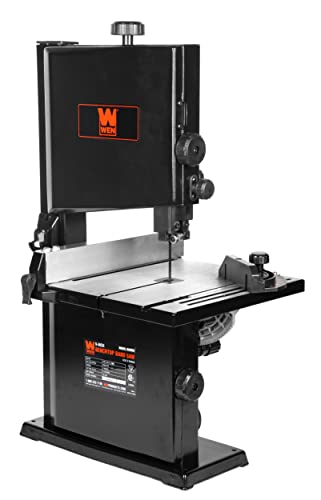
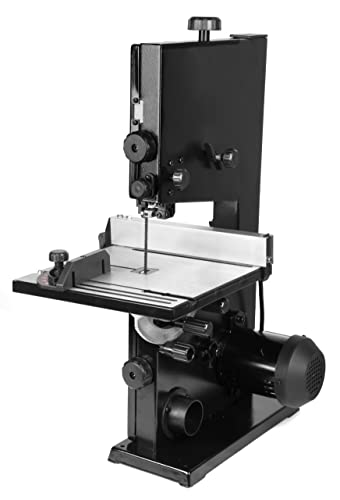
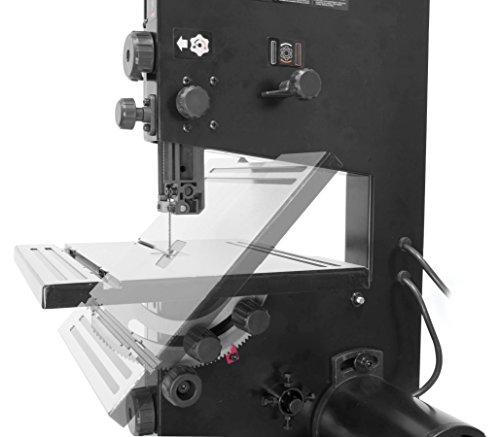
For beginners or those with limited space, the WEN BA3959 is a no-frills entry point that delivers basic functionality without surprises. On paper, its 2.8-amp motor and 2500 FPM speed are typical for this class, and owners consistently report it handles softwoods and light resawing just fine, though it struggles when pushed hard. The 3-1/2-inch cutting depth limits thicker stock, but for small projects like boxes or trim, it’s more than adequate.
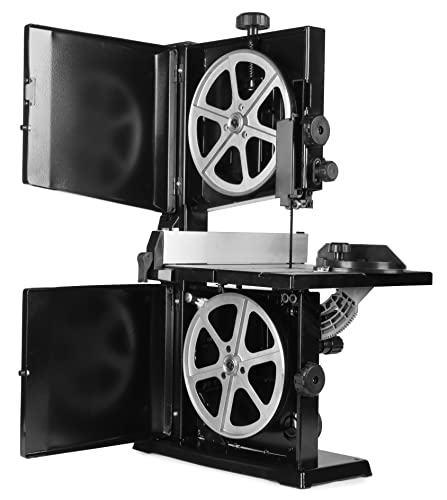
What stands out is the included accessory set, dust port, rip fence, miter gauge, and blade guard with ball-bearing support, which gives it solid value right out of the box. It’s not built for heavy use, but for someone just getting into woodworking or needing a secondary saw for occasional cuts, this one checks the right boxes without breaking the bank.
Product photos
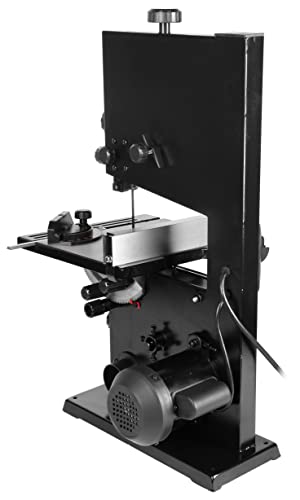
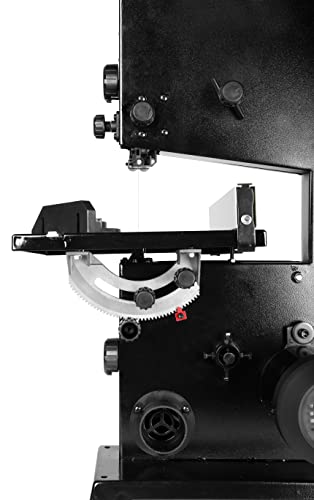
How We Chose These benchtop bandsaws
Rather than a hands-on lab test, my research for these recommendations focused on a detailed comparison of published specifications and features across numerous models. I weighed owner reviews from multiple sources – including major retailers and woodworking forums – alongside assessments from reputable tool review websites. As someone who’s spent years advising on power tool selection, I applied my understanding of what truly matters in a bandsaw to rank these options.
For benchtop bandsaws, cutting capacity and stability were the most important factors. A wider throat depth and cutting height open up project possibilities, while a solid table and frame minimize vibration, which directly impacts cut quality. Power (motor amperage/horsepower) also played a significant role; you want enough to handle the materials you’ll typically work with without bogging down. Understanding band saw basics is key to knowing what these specs mean for your projects.
Specifications reliably indicate a bandsaw’s maximum cutting capacity and motor power. However, I heavily relied on owner feedback and professional reviews to assess real-world performance, especially concerning build quality, noise levels, and the accuracy of factory-set adjustments. Reports on blade tracking, fence accuracy, and the effectiveness of included accessories were crucial in differentiating between models. Knowing the different types of band saws helps understand where benchtop models fit in the overall landscape.
How To Pick The Right benchtop bandsaws
Picking the right benchtop bandsaw can be surprisingly tricky. There’s a lot more to it than just horsepower and blade length.
A good benchtop bandsaw balances cutting capacity with stability and usability. Key considerations include motor power for the materials you’ll cut, a robust table and guide system for accuracy, and features like blade tensioning and dust collection to make operation easier and cleaner. Prioritize build quality and user feedback over simply the lowest price.
Motor Power and Cutting Capacity
Don’t assume a higher amperage motor automatically means a better bandsaw. What matters is how well that power is applied. For most DIYers, a 3.5-amp motor is sufficient for softer woods and thinner stock. However, if you plan on regularly cutting hardwoods like oak or maple, or thicker material (over 3 inches), you’ll want to seriously consider models with at least a 1/2-HP motor. The throat depth (distance from blade to frame) and cutting height are equally important. A 10-inch bandsaw with a 6-inch cutting height is a good starting point for general woodworking, but think about your projects and if you will need more.
Blade Guide and Table Quality
The quality of the blade guides directly impacts cut accuracy and blade life. Ball-bearing guides are far superior to plastic or bushing-type guides, as they reduce friction and provide more consistent support. A solid, cast-iron table minimizes vibration and provides a stable surface for your work. Look for tables that offer both tilting capability (for bevel cuts) and a smooth, precise adjustment mechanism.
- A basic miter gauge is included with most models, but consider how easily it locks into the table slot.
- Rip fences are crucial for making consistently straight cuts, but some fences are flimsy and difficult to adjust. Read reviews to see what users say about fence stability.
- The ability to quickly change blade tension is a huge time-saver. Many models require tools and a lot of fiddling, while others offer tool-free tensioning systems.
Features and Value
Beyond the core functionality, consider features that enhance usability and convenience. A built-in LED work light, like those found on the VEVOR and DeWalt models, is incredibly helpful for illuminating the cut line, especially in dimly lit workspaces. Dust collection ports are essential for keeping your shop clean and improving visibility. If you’re new to bandsaws, the WEN 9-Inch Band Saw is a good place to start, but be aware of its limitations. For more in-depth information on what to look for, check out these compact band saw reviews.
Don’t skimp on the blade. A high-quality blade, properly sized (learn about measuring band saw blades) and tensioned, will make a far bigger difference to your cut quality than any other single upgrade.
Benchtop Bandsaws Compared
Here’s a spec comparison of several benchtop bandsaws to help you evaluate your options.
| Product Name | Motor (HP) | Max Cut Height (in) | Max Cut Width (in) | Blade Speed (FPM) | Table Tilt (Degrees) | Dust Port (in) |
|---|---|---|---|---|---|---|
| VEVOR 10-Inch | N/A | 6 | 10 | N/A | 5 / 45 | N/A |
| JET 10-Inch | 0.5 | N/A | N/A | N/A | N/A | N/A |
| Woodskil 10-Inch | N/A | 5-1/8 | 10 | 2360 / 3000 | 0-45 | N/A |
| DeWalt 9″ | 3.5 AMP | N/A | N/A | 1700 / 2500 | N/A | 2-1/2, 1-1/4 |
| SKIL 9-Inch | 2.8 AMP | N/A | N/A | N/A | N/A | 2-1/2 |
| WEN 10-Inch | 3.5 AMP | 6 | 9-3/4 | 1520 / 2620 | 45 | 3 |
| Woodskil 9-Inch | 3 AMP | 3-1/2 | 9 | 2500 | 0-45 | N/A |
| WEN 9-Inch | 2.8 AMP | 3-1/2 | 9 | 2500 | 45 | 2-1/2 |
Frequently Asked Questions
What’s the biggest difference between a cheaper and a more expensive benchtop bandsaw?
Build quality and stability are the primary distinctions. More expensive models typically have heavier cast-iron frames and tables, which minimize vibration and improve cut accuracy, while cheaper saws often use lighter materials.
How much space do I really need for a benchtop bandsaw?
While marketed as “benchtop,” these saws still require a dedicated workspace. Plan for at least 3 feet of width, 2 feet of depth, and enough overhead clearance to comfortably operate the machine; consider space for material infeed and outfeed too.
Are blade tracking issues common with benchtop models?
Yes, blade tracking can be a challenge, especially with lower-priced saws. Consistent blade tracking relies on properly adjusted guides and a well-aligned system, so careful setup and occasional adjustments are essential, and reading reviews on best tabletop bandsaws can help identify models with fewer issues.
Can a benchtop bandsaw cut curves effectively?
They can, but it depends on the blade and the tightness of the curve. Using a narrower blade designed for curves is vital, and tighter curves require slowing down the cutting speed and carefully guiding the material; don’t expect the same precision as a larger scroll saw.
What’s the typical dust collection situation with these saws?
Most benchtop bandsaws include a dust port, usually 2.5 inches in diameter, for connecting to a shop vacuum or dust collector. However, the effectiveness of dust collection varies significantly between models; some systems are quite limited, so a good dust mask is still recommended.
The Bottom Line
Choosing a benchtop bandsaw often comes down to balancing how much control you want over your cuts with how much fuss you’re willing to tolerate. For most woodworkers, I believe the VEVOR 10-Inch Bandsaw strikes the best overall balance of features, capacity, and value. It provides a solid starting point for a variety of projects without breaking the bank, and owner feedback suggests it’s a surprisingly capable machine for its price point.
If you’re on a tighter budget, the WEN 9-Inch Bandsaw is a perfectly acceptable entry point. Or, if versatility is key and you value the convenience of quick blade changes and a well-designed dust port system, the DeWalt 9″ Bandsaw is an excellent choice. Remember to always review band saw safety tips before starting any project.
Ultimately, specs and features only tell part of the story. The most important aspects of any bandsaw are a stable frame, accurate guides, and a sharp blade. Focus on these fundamentals, and learning proper band saw use, and you’ll be well-equipped to tackle a wide range of woodworking projects with confidence.
