
8 Best Benchtop Band Saws of 2026
This post contains affiliate links. As an Amazon Associate, we earn from qualifying purchases.
The Woodskil 10″ Dual Speed Band Saw stands out as the best overall benchtop band saw for its solid build, dual-speed motor, and reliable performance across a range of materials. If you’re on a budget, the SKIL 9″ Benchtop Band Saw offers basic functionality at a low price, while the DeWalt 9″ Band Saw brings brand reliability and strong motor power for more demanding tasks.
Most people shopping for a benchtop band saw want something that cuts accurately without breaking the bank or taking over the garage. Too many models feel flimsy, vibrate excessively, or lack the capacity for real woodworking tasks.
This guide cuts through the noise by focusing on specs, owner feedback, and real-world usability. I compared cutting capacity, motor power, blade guides, and build quality to find models that deliver where it matters. These picks balance performance, durability, and value based on what actual users and experienced woodworkers say.
Top 8 Benchtop Band Saws in the Market
The Best Benchtop Band Saws, Reviewed
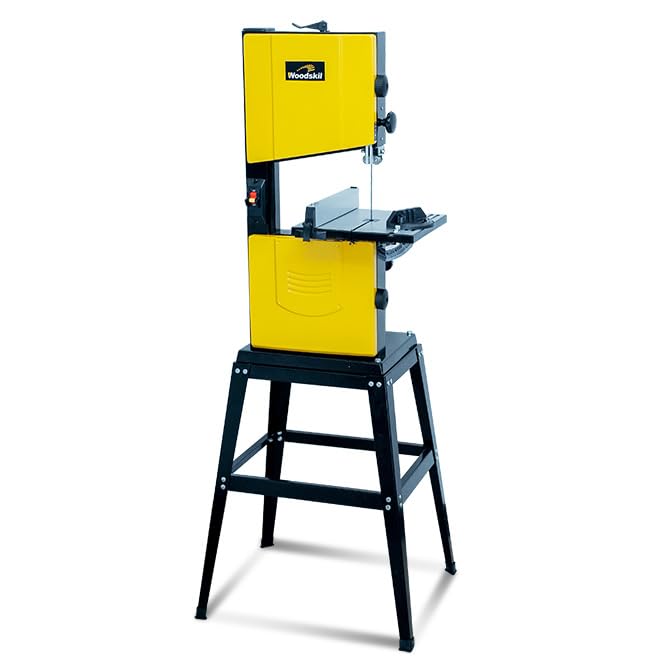
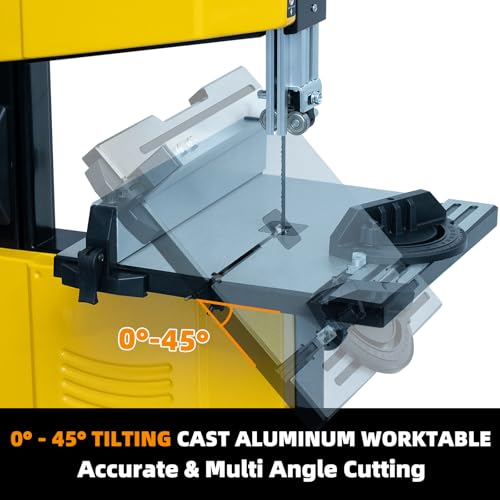
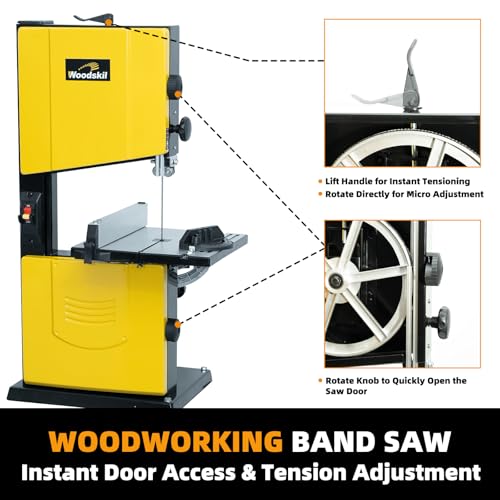
Woodskil 10″ Dual Speed Band Saw
Strengths
- Dual speed versatility
- 6 bearing blade support
- Tool-free maintenance
Trade-offs
- Stand assembly can be fiddly
- Blade guard could be sturdier
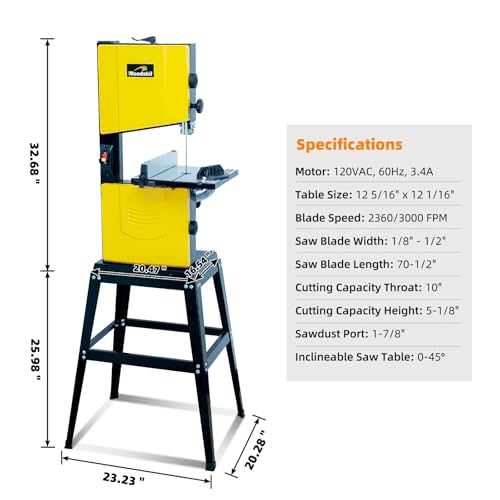
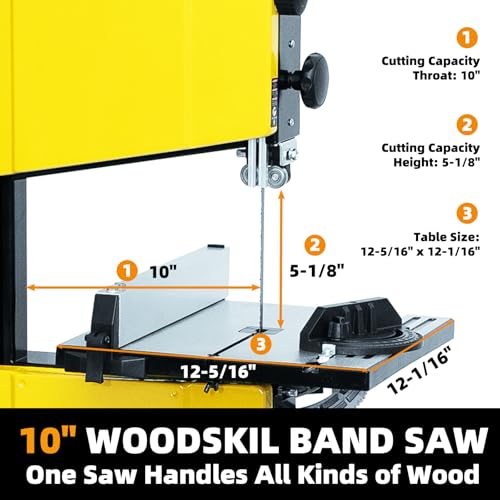
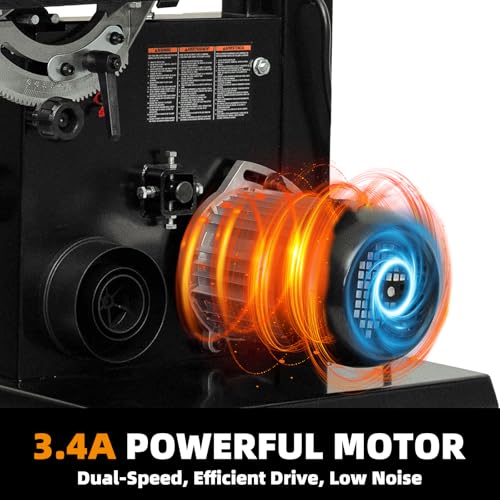
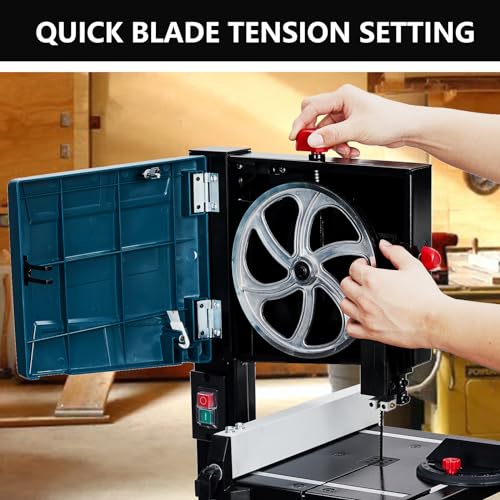
If I had to recommend one saw for the average DIYer who wants both performance and convenience, it’d be the Woodskil. It hits a sweet spot with a 3.4A motor, dual speeds (2360 and 3000 FPM), and a thoughtful design that includes a quick-tension system and tool-free access doors, features that make maintenance way less of a hassle. The 6 ball bearing guides are a big deal; reviewers consistently note how well the blade tracks, even during tight curves or long resawing passes.
It comes with a metal stand, which adds stability, and the 5-1/8″ cutting height is enough for most 4×4 stock. Compared to the SKIL or 8-inch models, it’s clearly in a higher tier, and while it doesn’t have the JET’s industrial pedigree, it offers more user-friendly touches like the dust port and included rip fence. The 2-year warranty adds peace of mind. On balance, it’s the most complete package here.
Product photos
QD-KYOHO 10″ Dual-Speed Bandsaw

Strengths
- Strong 5.3A motor
- Dual-sided fence
- Cast iron table
Trade-offs
- No work light
- Dust collection could be better
- Setup takes patience
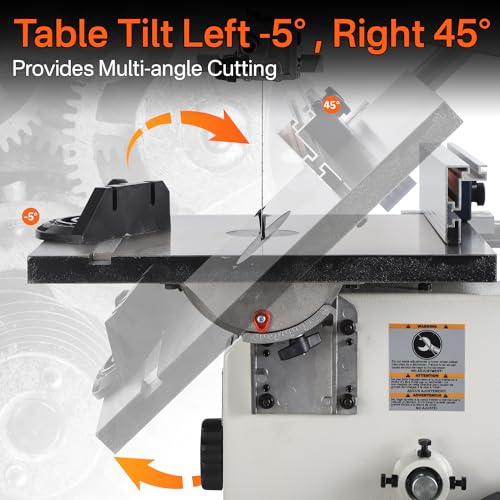
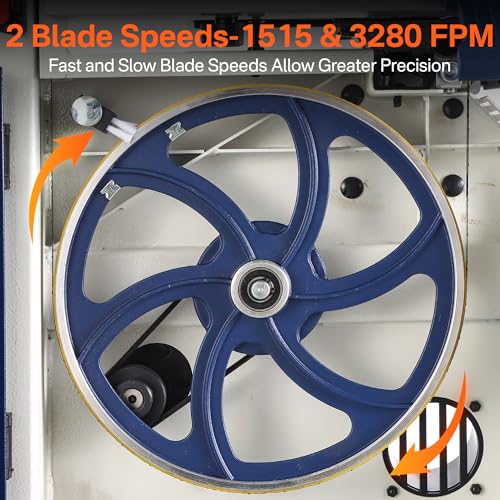
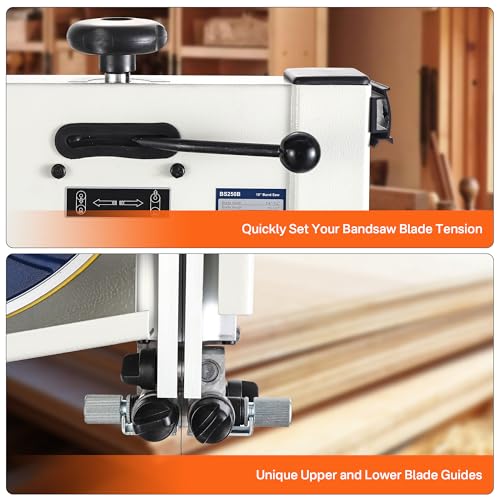
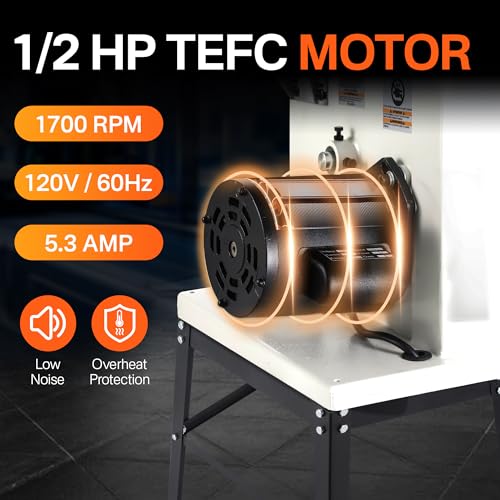
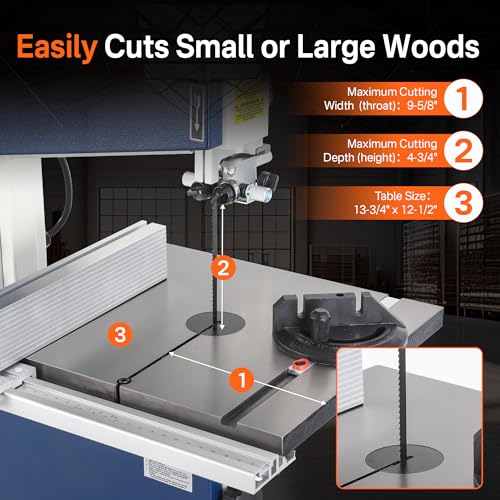
The QD-KYOHO brings serious specs to the table: a 5.3-amp motor, dual speeds from 1515 to 3280 FPM, and a rigid steel frame with a cast iron table. On paper, it’s built for hardwoods, and owner feedback supports that, users report clean, burn-free cuts in maple and walnut when running at the lower speed. The dual-sided fence is a clever addition, letting you reference from either side, which helps with symmetric parts or mirrored pieces.
But it’s not without quirks. The advertised 4-3/4″ cutting height is solid, but some owners mention slight blade drift until the guides are perfectly dialed in. It lacks a work light, and while the dust port fits standard hoses, the extraction isn’t as effective as on the WEN or DeWalt models. Still, if you’re focused on cutting dense material and want a rugged, no-nonsense machine, this one deserves attention. It’s more specialized than the Woodskil but excels where power and stability matter.
Product photos
SKIL 2.8 Amp 9″ Benchtop Band Saw
Strengths
- 2-speed operation
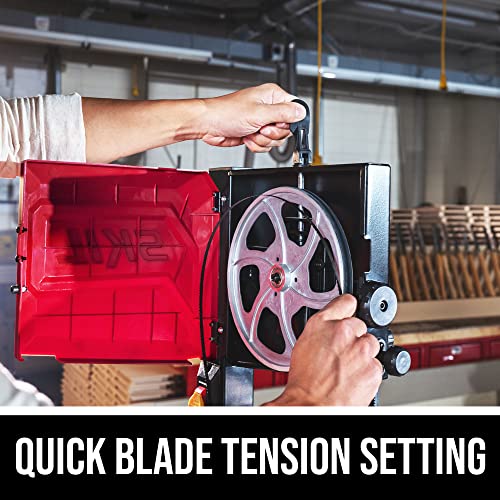
- Tool-free tensioning
- Dust port included
Trade-offs
- Limited cutting height
- Lighter build
- No work light
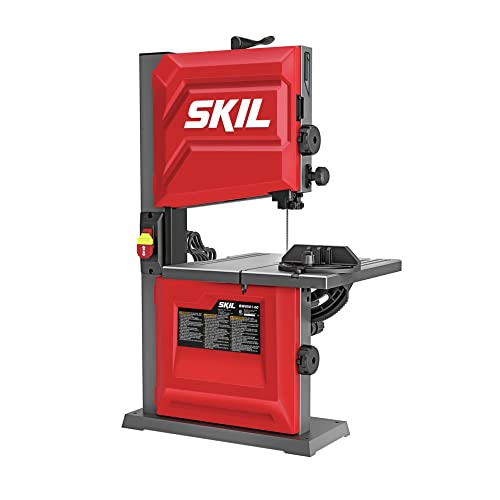
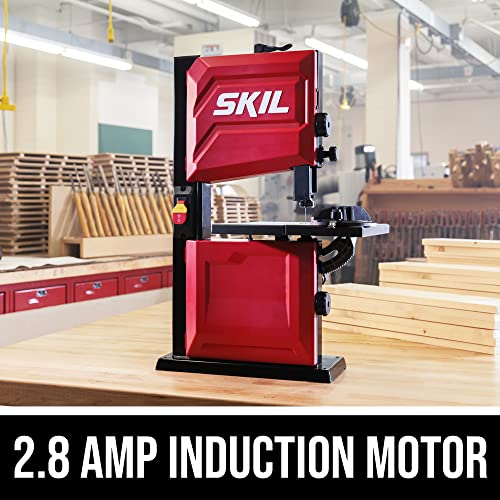
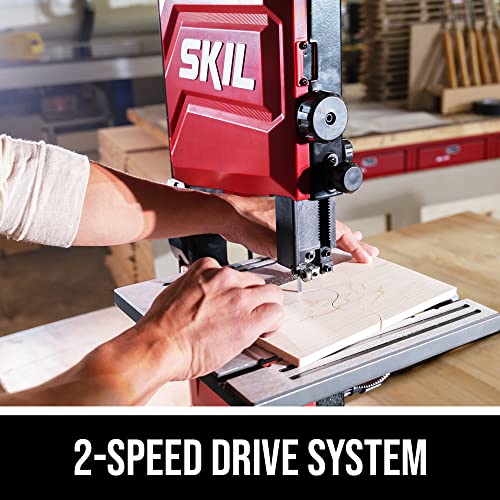
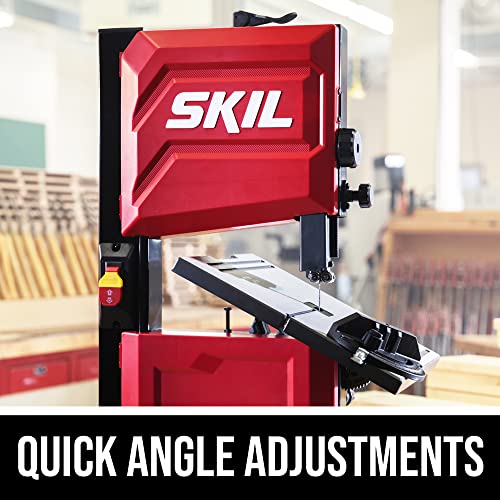
For the price-conscious DIYer just stepping into woodworking, the SKIL BW9501-00 makes a surprisingly capable first band saw. It runs on a 2.8 amp induction motor, which on paper isn’t going to power through thick oak like a shop-grade machine, but owners consistently report it handles softwood and 2x stock without bogging down. The 2-speed system is a standout at this price, not something you always get in budget models, and helps avoid burning hardwoods by letting you drop the blade speed.
The dust port is a practical touch, and the rack-and-pinion table adjustment is smoother than the twist-knob systems on some rivals. It won’t match the rigidity of heavier steel frames, but the steel base keeps it from dancing on the bench during use. Compared to the WEN or DeWalt options, it lacks a work light and has a smaller throat depth, but for basic resawing, curves, and cutting small blanks, it’s a solid starting point.
Product photos
DeWalt 9″ Band Saw
Strengths
- Bright LED worklight
- Clean dust port setup
- Compact footprint
Trade-offs
- Shallow throat depth
- No stand included
- Limited for thick stock
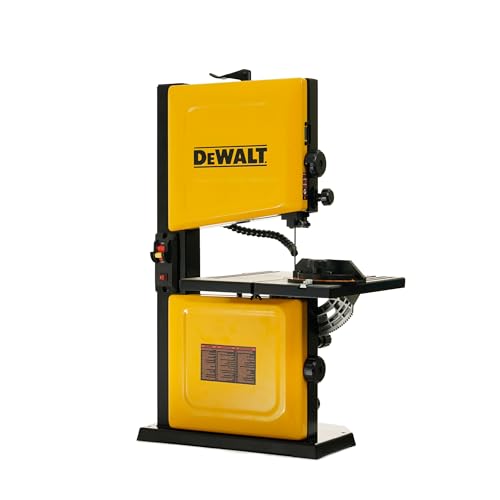
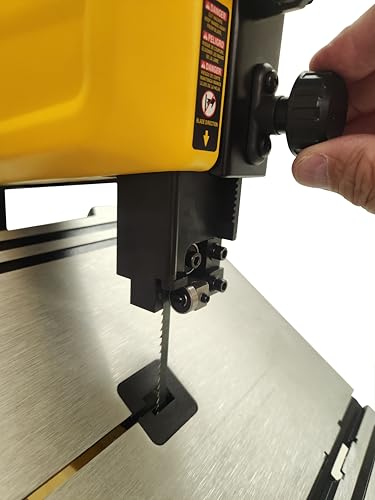
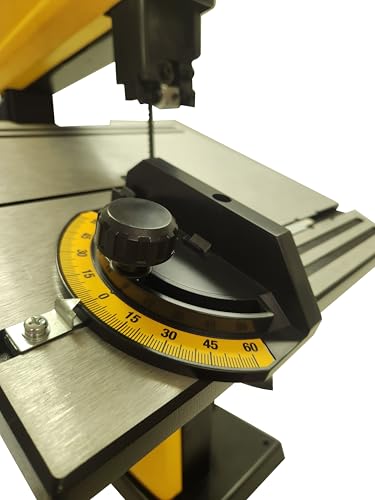
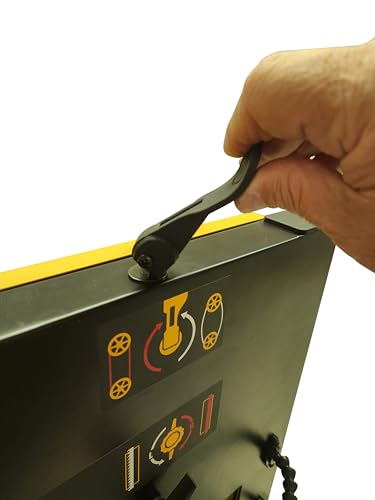
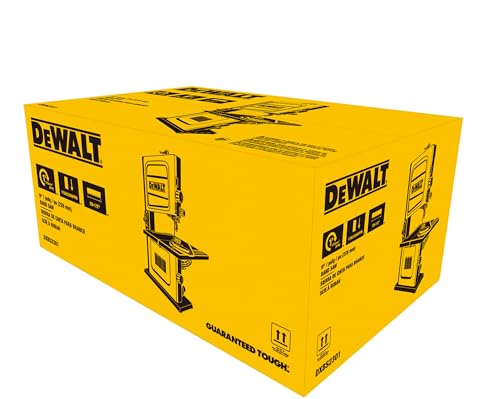
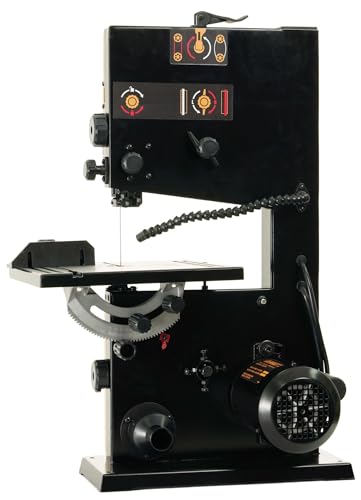
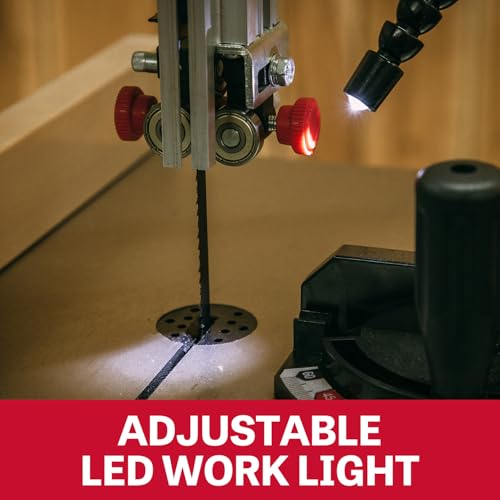
DeWalt built this 9-inch saw with visibility and precision in mind, and the integrated LED worklight is its standout feature. It floods the cut line with light, which is a standout for intricate scrollwork or when cutting in dim corners of the garage. The 3.5 amp motor delivers solid power, and the two-speed system (1700 and 2500 SPM) gives good control across materials.
It’s compact, so it fits on crowded benches, and the dual dust port adapters make connecting to any shop vac a snap. But it’s not the most powerful, the throat depth is shallower than the WEN or Woodskil, and it’s not meant for heavy resawing. Compared to the SKIL, it’s more refined; against the VEVOR, it’s more focused on clean woodworking. If your projects demand accuracy and you hate squinting at your cut line, this one earns its keep.
Product photos
WEN 10″ Two-Speed Band Saw
Strengths
- Excellent included accessories
- Spacious work table
- Stand included
Trade-offs
- Motor lacks high-end torque
- Dust collection average
- Blade quality so-so
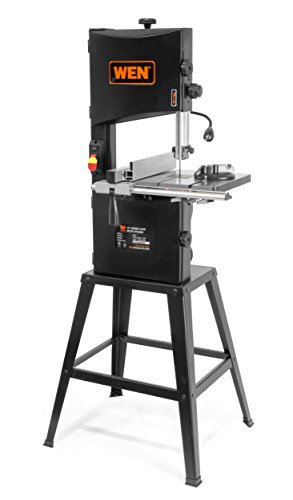
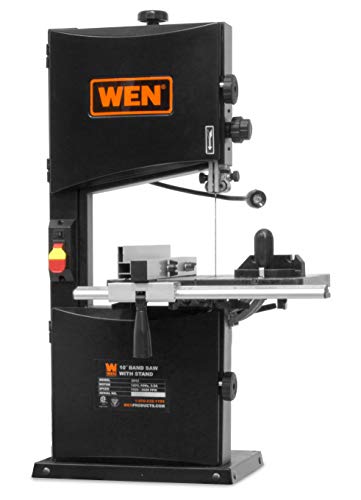
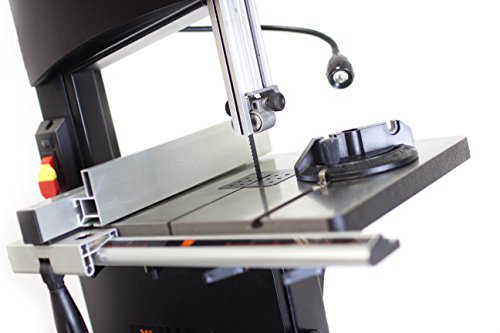
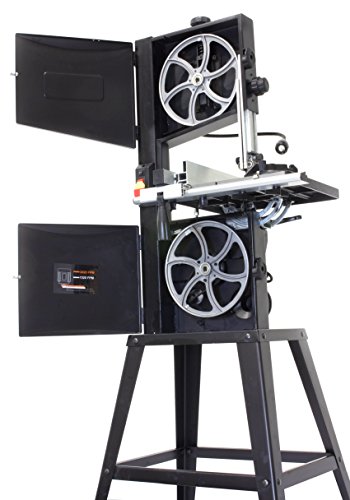
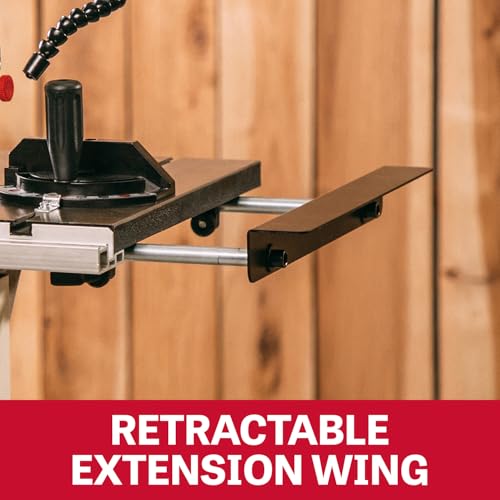
The WEN BA3962 is what I’d call the “most for your money” pick if you want a complete setup without overspending. It includes a stand, a 3.5-amp motor, two speeds (1520 and 2620 FPM), and a long list of extras: a work light, 3-in-1 dust port, fence, miter gauge, and even a blade. The cast aluminum table is larger than most, and the 6-inch cutting depth means it can handle resawing 4x4s in two passes.
Owners consistently praise its value, though some note the motor isn’t as robust as JET or QD-KYOHO when pushing through dense hardwood. Still, for the price, it’s hard to beat. Compared to the DeWalt, it offers more throat depth and a stand included; versus the SKIL, it’s clearly in a higher class. The 2-year warranty seals the deal. This is the one I’d recommend to someone building a first real home shop.
Product photos


JET 10″ Woodworking Band Saw
Strengths
- Durable steel construction
- Smooth Poly-V drive
- Excellent blade stability
Trade-offs
- Heavier and bulkier
- No LED work light
- Higher price point
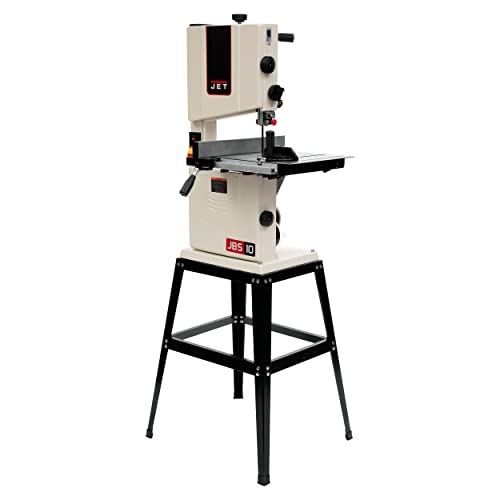
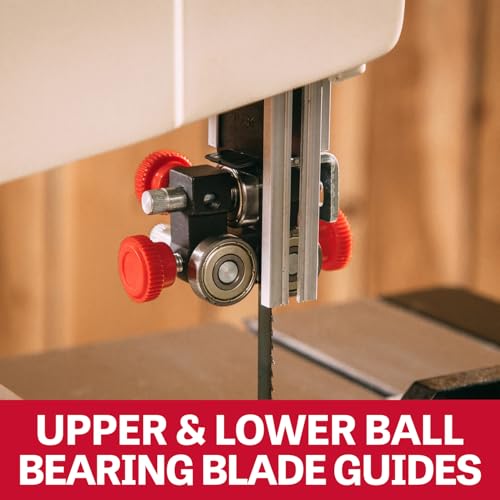
The JET JWB-10 stands out in this lineup for one reason: it feels like a piece of real shop equipment, not a weekend warrior’s toy. The 1/2 HP induction motor delivers consistent torque, and the Poly-V drive system reduces slippage and vibration, a detail serious users appreciate. Owners praise its blade tracking and stability, which comes from the upper and lower ball bearing guides, and the quick-release tension system makes blade changes genuinely fast.
While it’s labeled as benchtop, the rigid steel stand means you can treat it like a floor model. It’s heavier than most here, but that translates to less chatter and better accuracy. Against the Woodskil or WEN models, it trades some convenience features (like a built-in light) for rock-solid build quality and long-term reliability. If you’re setting up a permanent workstation and want something that will last a decade, this is the type of saw you build around.
Product photos
8″ Bandsaw with Tilting Table

Strengths
- Space-saving design
- Solid steel base
- Tilting table included
Trade-offs
- Low cutting height
- No dual speeds
- No work light
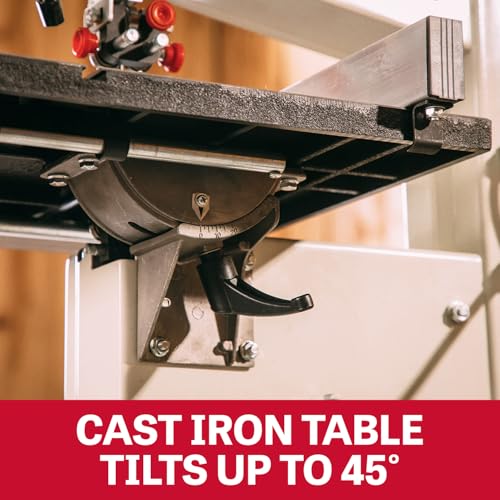
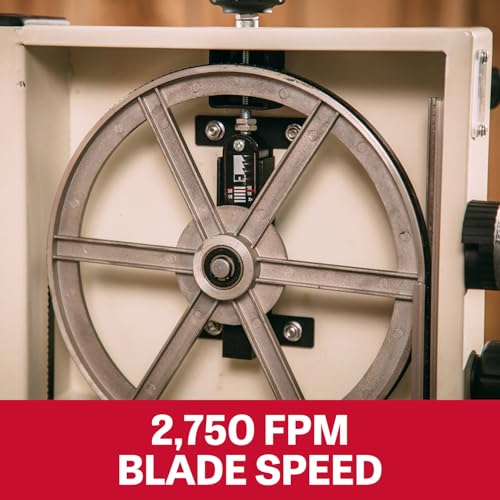
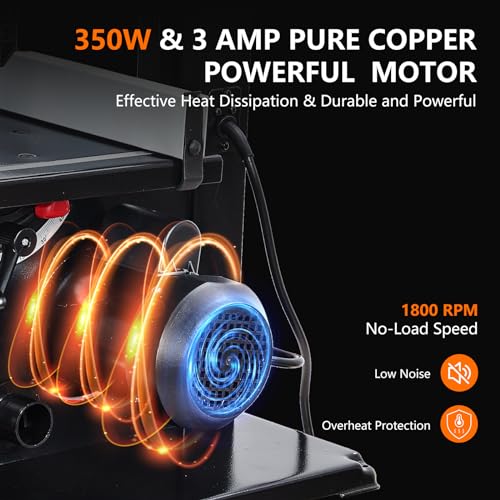
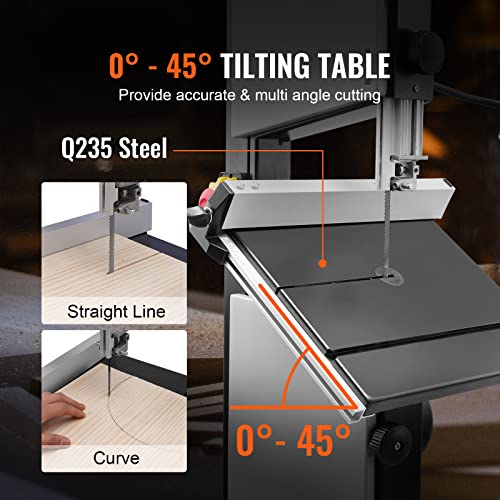
This little 8-inch model is all about saving space without giving up too much function. The 3-amp pure copper motor delivers decent power for its size, and at 1800 FPM, it keeps up with basic cutting tasks in softwood and thin stock. The compact footprint makes it a natural fit for garage shelves or mobile workshops, and the tilting table (0-45°) adds some versatility for angled cuts.
But make no mistake, its 3-1/2″ cutting height limits resawing, and it’s not going to handle 4x4s. Compared to the 10-inch models, it’s a clear step down in capability, but that’s the trade-off for size. Owners like its sturdiness for the class and the safety key feature, which prevents accidental starts. If you’re working in tight quarters or need a secondary saw for small jobs, it makes sense. Just don’t expect it to pull double duty.
Product photos

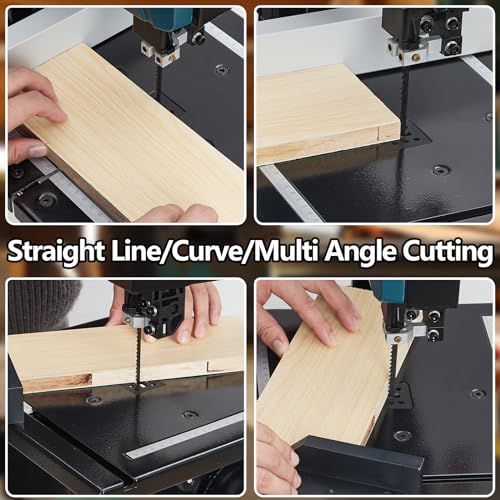
VEVOR 10″ Two-Speed Band Saw

Strengths
- Cuts wood and metal
- 6-inch cutting height
- Work light included
Trade-offs
- Tracking issues reported
- Clunky blade guard
- Assembly takes time
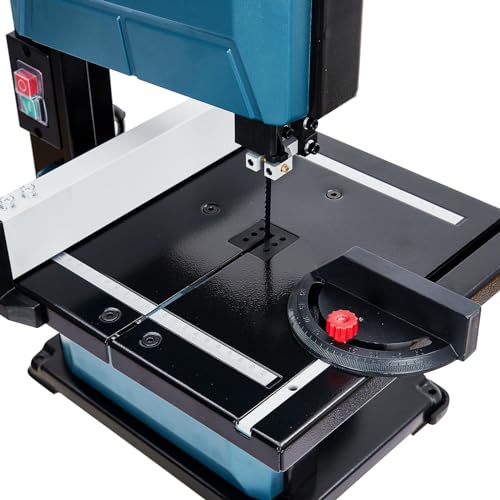
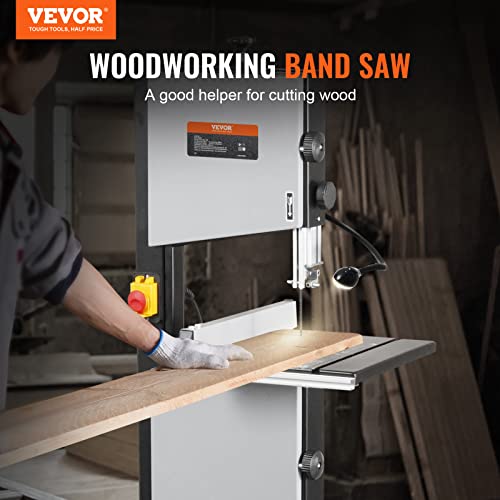
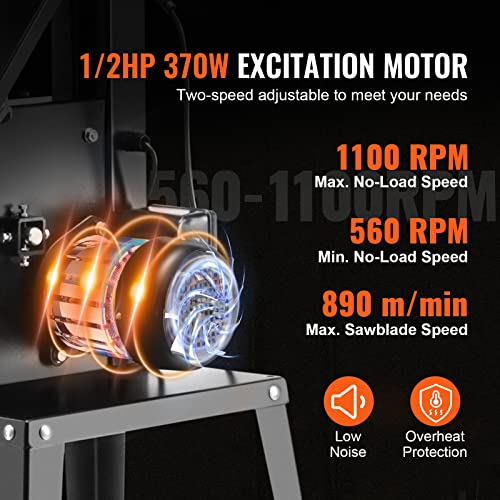
The VEVOR stands out for one unusual reason: it’s built to cut metal. With a 1/2 HP motor and two-speed settings (560 and 1100 RPM), it’s one of the few here rated for aluminum, copper, and plastic, not just wood. The lower RPM range is key for metal, and the Q235 steel frame adds the rigidity needed for those tougher materials. Owners confirm it handles light metal cutting well, though blade selection is critical.
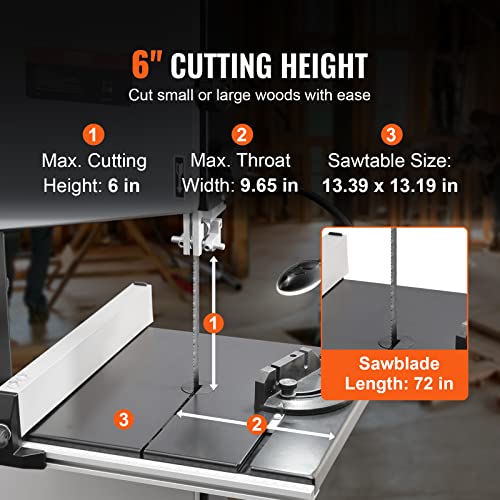
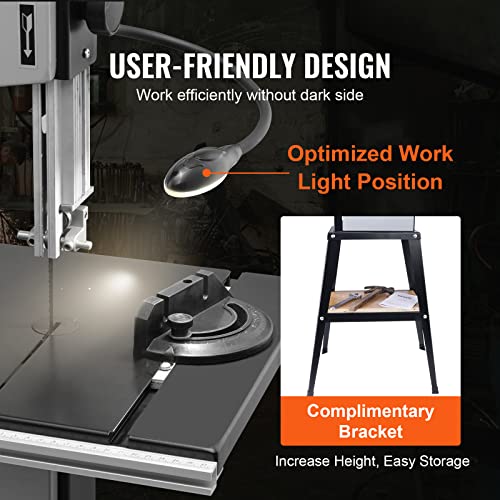
It also includes a flexible work light, which is well-placed and actually useful, a rare win in budget metal/wood combo saws. The 6-inch cutting height is among the highest here, and the stand includes storage, a small but appreciated touch. That said, blade tracking can be finicky, and some users report alignment issues out of the box. If your work spans both wood and metal, this is the most capable hybrid. If you’re only cutting wood, others offer better refinement.
Product photos
How We Chose These benchtop band saws
Rather than a hands-on lab test, my research for these recommendations focused on a detailed comparison of published specifications and features across numerous models. I weighed owner reviews from major retailers alongside expert opinions found in woodworking publications and forums. Ultimately, I ranked these benchtop band saws based on a combination of factors crucial for both beginners and experienced woodworkers.
For this category, cutting capacity and build quality were the most important considerations. A larger table and throat depth offer greater versatility, while a robust frame and motor translate to cleaner cuts and longer lifespan. Blade speed adjustability also played a key role, allowing users to tackle a wider range of materials effectively. Understanding band saw uses helped prioritize features relevant to common projects.
Specifications reliably indicate a saw’s potential cutting capacity and motor power. However, I placed significant weight on owner feedback regarding build stability, ease of blade changes, and the accuracy of the fence system. Reputation and consistent positive reviews concerning long-term durability were also heavily factored in, as those qualities aren’t always apparent from a spec sheet. Learning about band saw features helped me evaluate each model’s value proposition.
What To Look For In benchtop band saws
Picking the right benchtop band saw can make a huge difference in the quality of your projects and how much you enjoy working on them.
A good benchtop band saw balances power with precision. Key features include a stable table, adequate motor strength for the materials you’ll cut, a reliable blade guide system, and thoughtful features like a dust port. Buyers should prioritize build quality and look for models with positive owner reviews regarding accuracy and ease of use. Blade speed options are also crucial for versatility.
Motor Power & Cutting Capacity
The motor is the heart of any bandsaw, and benchtop models vary significantly in their power. Don’t automatically assume “more watts” equals better; consider what you’ll be cutting. A 2.8 amp motor, like the one in the SKIL 9″ model, might be fine for softer woods and occasional hobby use, but if you plan to tackle hardwoods regularly, or even thin metal, you’ll want something with at least a 1/2 horsepower (approximately 370 watts). Throat depth – the distance from the blade to the frame – is also critical. A wider throat allows you to cut larger panels, so look for at least 9 inches if you anticipate working with substantial material.
Blade Guide System & Stability
A shaky saw is a frustrating saw. The quality of the blade guide system directly impacts the accuracy and smoothness of your cuts. Ball bearing guides, as found in the Woodskil 10″ and DeWalt 9” models, are superior to basic bushing guides, offering more consistent support and reducing blade drift. Equally important is the overall stability of the saw. A heavy cast iron table and a solid base are essential for minimizing vibration. If you’re tight on space, consider one of the best compact bandsaws but don’t compromise on a stable platform.
Features & Value
While basic functionality is paramount, certain features can significantly enhance usability. A tilting table (like those on the QD-KYOHO 10″ and VEVOR 10″) is almost essential for bevel cuts, and a quick-release blade tension system simplifies blade changes. A dust port is a must-have for keeping your workspace clean.
Here’s how I generally assess the value proposition:
- Basic models: Sufficient for light hobby work, often lacking advanced features.
- Mid-range options: Offer a good balance of power, features, and price, suitable for serious DIYers.
- Premium models: Built for durability and precision, often including features like larger tables, more powerful motors, and better blade guide systems, making them worthwhile investments if you need ideal home workshop bandsaws.
Don’t skimp on the blade. A high-quality blade, properly sized (check out resources for measuring band saw blades) and tensioned, will make a far bigger difference to your cut quality than a more expensive saw with a cheap blade.
Benchtop Band Saws Compared
This table provides a detailed specification comparison of the featured benchtop band saws to aid in informed decision-making.
| Product Name | Throat Depth | Max Cut Height | Motor HP | Blade Speed (FPM) | Dust Port (in) | Table Tilt (Degrees) |
|---|---|---|---|---|---|---|
| Woodskil 10″ Dual Speed Band Saw | 10″ | 5-1/8″ | N/A | 2360/3000 | 1-7/8″ | 0-45 |
| QD-KYOHO 10″ Dual-Speed Bandsaw | 9-5/8″ | 4-3/4″ | 1/2 | 1515/3280 | N/A | 45/5 |
| SKIL 2.8 Amp 9″ Benchtop Band Saw | N/A | N/A | 2.8 | N/A | 2-1/2 | N/A |
| DeWalt 9″ Band Saw | N/A | N/A | 3.5 | 1700/2500 | 2-1/2, 1-1/4 | N/A |
| WEN 10″ Two-Speed Band Saw | 9-3/4″ | 6″ | 3.5 | 1520/2620 | 3 | 0-45 |
| JET 10″ Woodworking Band Saw | N/A | N/A | 1/2 | N/A | N/A | N/A |
| 8″ Bandsaw with Tilting Table | 8″ | 3-1/2″ | 3A | 1800 | 2 | 45 |
| VEVOR 10″ Two-Speed Band Saw | 9.65″ | 6″ | 1/2 | 890 m/min | N/A | 0-45 |
Frequently Asked Questions
What blade width should I use for cutting curves?
A narrower blade, typically 1/8 inch, is best for cutting tight curves. It allows for a smaller turning radius, but remember that narrower blades are also more prone to wandering, so slower feed rates and a good blade guide are essential.
Can a benchtop band saw cut metal?
Yes, but it requires a blade specifically designed for metal cutting (typically with finer teeth) and reduced blade speed. Many owners find success with thinner gauge metals, but thicker stock demands a more robust saw and can quickly dull a blade.
How often do I need to change the band saw blade?
Blade life varies greatly depending on the material cut and usage frequency. Expect to replace blades more often when cutting hardwoods or metal. However, as a general guideline, replace a blade when you notice increased vibration, difficulty tracking, or a decline in cut quality.
Are benchtop band saws loud?
They can be, but noise levels vary by model. Saws with cast iron tables and enclosed motors tend to be quieter. Wearing hearing protection is always recommended when operating power tools, including benchtop band saws.
What are the benefits of a two-speed band saw?
Having two speeds provides greater versatility. Lower speeds are ideal for cutting thicker materials and metal, while higher speeds are better suited for thinner materials and faster cutting of softer woods. Consider one of the best tabletop band saws if you need this flexibility.
The Bottom Line
Buying a benchtop band saw often comes down to how much you’re willing to spend for features and capacity. While a lower price point is tempting, the Woodskil 10″ Dual Speed Band Saw strikes the best overall balance, offering a good throat depth, dual-speed motor, and a tilting table that most hobbyists and DIYers will appreciate. It’s a solid performer that won’t break the bank.
For those on a tighter budget, the SKIL 9″ Benchtop Band Saw is a perfectly acceptable starting point. If you need maximum versatility and don’t mind spending a bit more, the VEVOR 10″ Two-Speed Band Saw delivers a larger cutting capacity and a tilting table. However, remember that even the best saw is only as good as the blade you put on it – selecting band saw blades is key.
Ultimately, the specs matter, but they aren’t everything. Prioritize a stable table, a motor strong enough for the materials you’ll be cutting most often, and a good blade guide system. Focusing on these fundamentals, and learning proper band saw cutting techniques, will serve you far better than chasing the highest numbers on a sheet.
