6 Best Chainsaw Chaps for Safety 2026
This post contains affiliate links. As an Amazon Associate, we earn from qualifying purchases.
The Husqvarna Functional Apron Chaps are the best overall for their durable 600D polyester build, full safety certifications, and reliable protection, while the ZELARMAN 8-Layer Chaps offer solid performance at a more budget-friendly price.
If you’re cutting firewood or clearing trees, leg protection isn’t optional, it’s essential. Chainsaw chaps are your last line of defense if the saw kicks back or slips, and choosing the wrong pair can mean the difference between a close call and a life-changing injury. Based on specs, owner feedback, and years of evaluating safety gear, I looked at layer count, materials, fit, and certification to find the models that deliver real protection without compromising comfort or value. This guide breaks down what actually matters so you can pick with confidence.
Top 6 Chainsaw Chaps in the Market
The Best Chainsaw Chaps, Reviewed
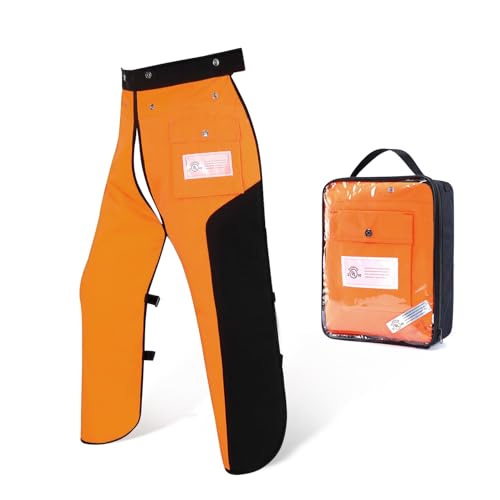
ZELARMAN 8-Layer Chainsaw Chaps
Strengths
- 8 protective layers
- 1000D Oxford shell
- Adjustable up to 49″ waist
- Length adjustable via fold-down
- Meets ASTM/OSHA/ANSI
Trade-offs
- Heavier than lightweight models
- No side or rear protection
- Apron style limits coverage
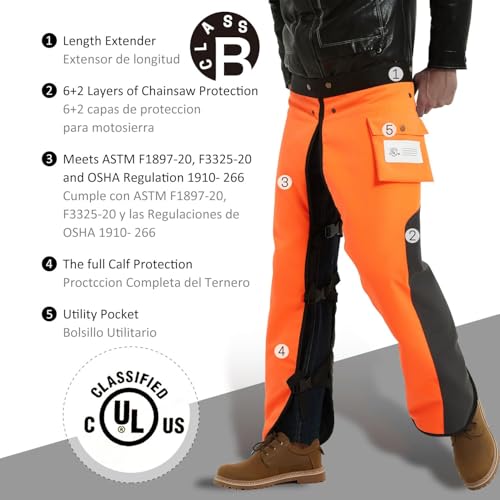
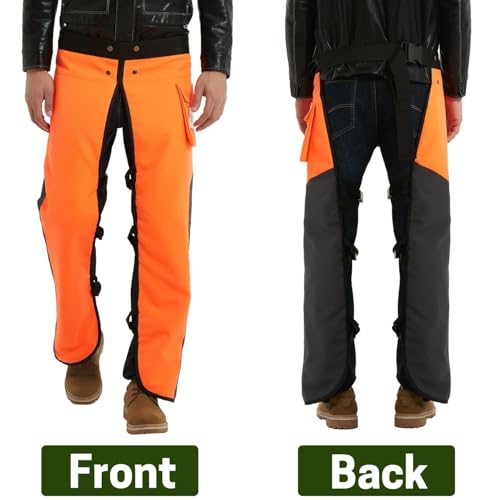
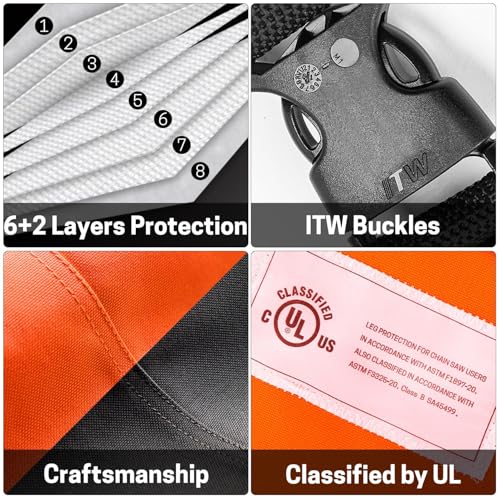
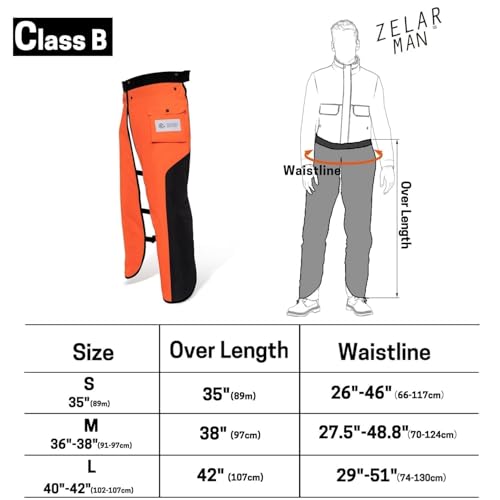
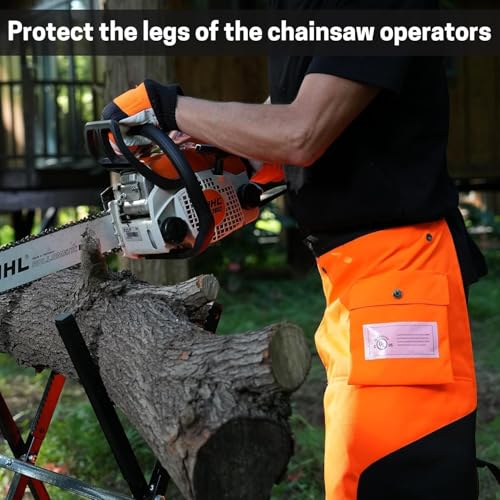
This is the most complete package for the money, 8 layers of protection, 1000-denier Oxford shell, and full compliance with ASTM F3325 and other key standards. The higher denier material means better resistance to scuffing and tearing, which matters when you’re crawling through brush or working near stumps. Owners report these feel closer to pro-grade than budget-tier, especially given the adjustability and length options.
The waist adjusts up to 49″, and the 38″ length can be shortened by folding the waistband, a clever design most brands don’t offer. It’s not as breathable as Oregon’s model, but for the balance of protection, durability, and fit, it’s hard to beat. Between this and the Husqvarna Technical, I’d give the edge to ZELARMAN for overall value and coverage, especially for taller users.
Product photos
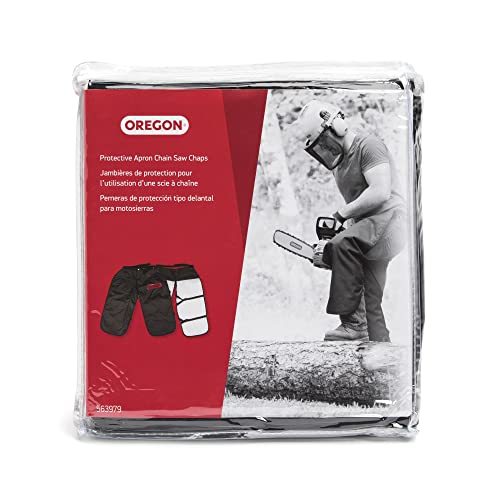
Oregon 8-Layer Chainsaw Chaps

Strengths
- 8-layer breathable protection
- Lightweight Oxford shell
- Adjustable up to 46″ waist
- UL classified
- 36″ adjustable length
Trade-offs
- Apron-style front only
- No gear pocket
- Less rugged than 1000D models
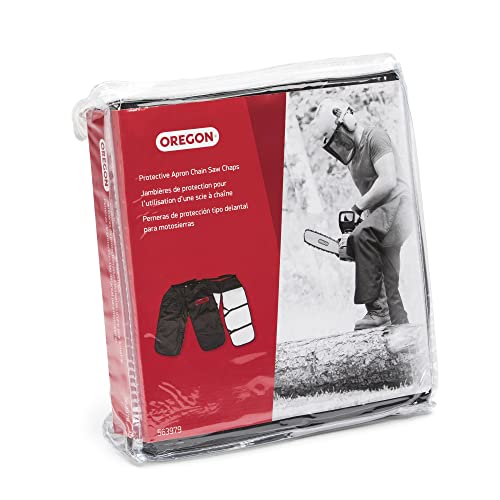
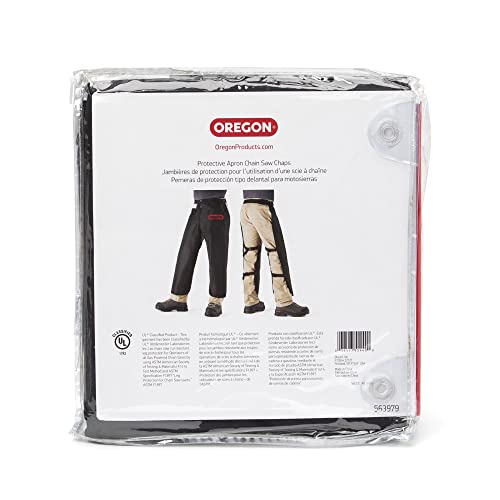
Oregon has been in the cutting business for decades, and their safety gear reflects that know-how. These chaps stand out for breathability, 8 layers of warp knit protection inside a 600 Denier Oxford shell sounds heavy, but owners say they’re among the most comfortable for hot weather or long sessions. The front apron design is standard, but the material doesn’t trap heat like some PVC-coated models.
The adjustable waist up to 46″ and 36″ length with snap adjustment make it flexible for a wide range of builds. It’s UL classified and meets core safety standards, though not all listings confirm full ASTM F1897. If you’re running a saw for several hours at a stretch and hate feeling like you’re sweating in a raincoat, these are a smart pick. Not the toughest for hardcore logging, but great for sustained use.
Product photos


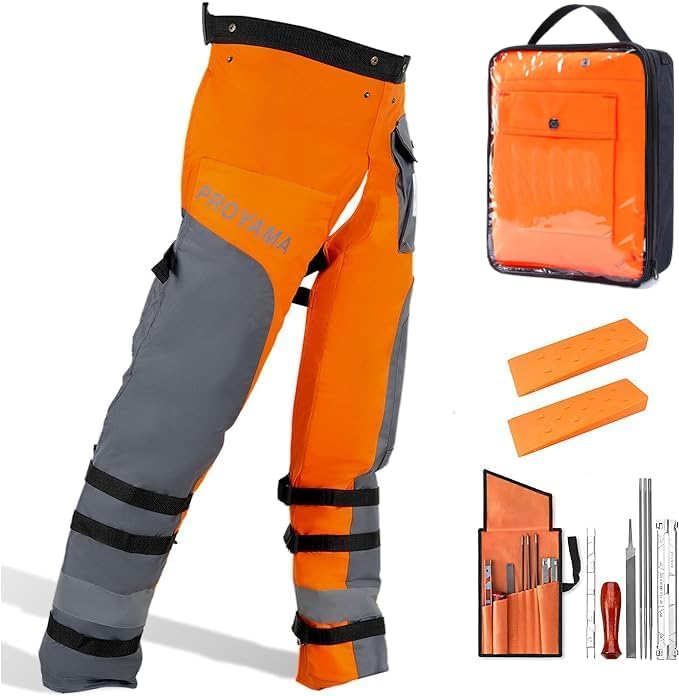
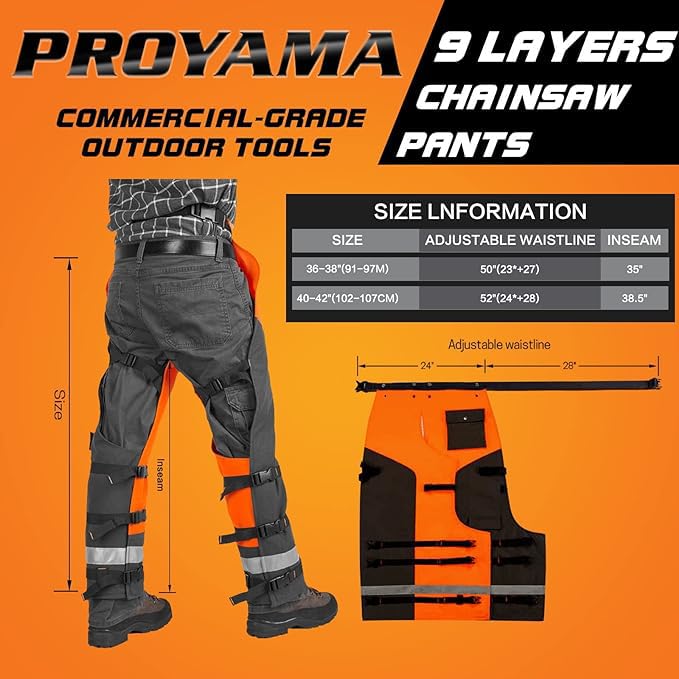
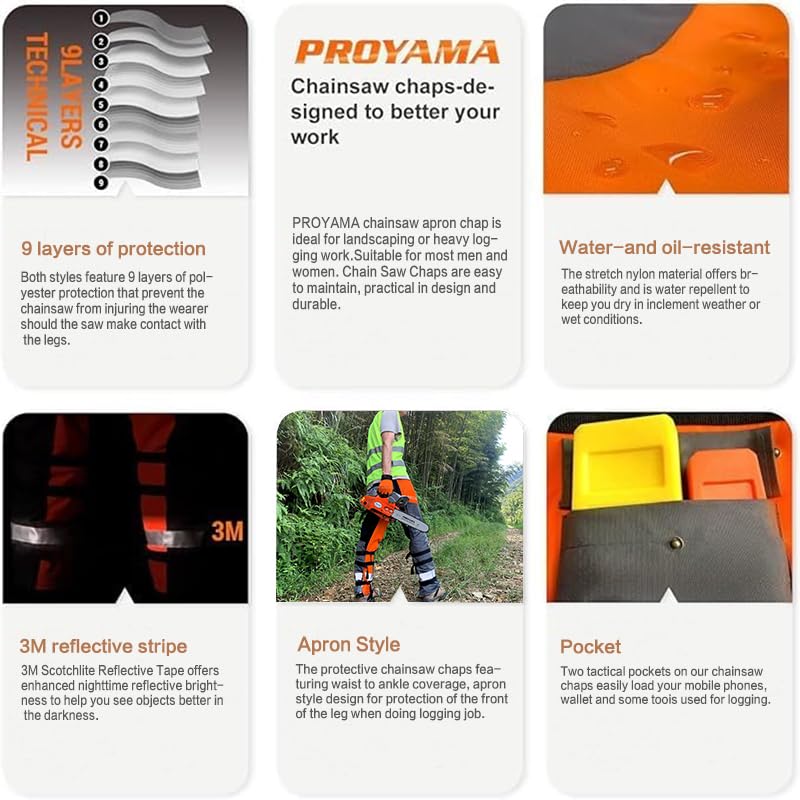
PROYAMA 9-Layer Chainsaw Chaps
Strengths
- 9 protective layers
- Adjustable leg straps
- Includes wedges and bag
- Good value package
- Quick snap fasteners
Trade-offs
- Materials not fully detailed
- No ASTM/UL listed certification
- Less brand trust long-term
This is one of those value picks that makes you wonder why you’d pay more, assuming you don’t need the absolute top tier of protection. With 9 layers of cut-resistant material, it technically out-layers some higher-end models, and reviewers note they feel substantial without being bulky. The adjustable leg straps are a rare plus at this price, letting you dial in the fit whether you’re wearing work boots or hiking shoes.
It’s not branded by a legacy toolmaker, and the materials aren’t specified beyond ‘advanced cutting chaps’, which gives me pause. But for weekend warriors splitting firewood or clearing small trees, and especially if you’re getting the included felling wedges and tool bag, this package delivers more than its price suggests. Just don’t assume it performs like Husqvarna or Stihl-rated gear under extreme conditions.
Product photos
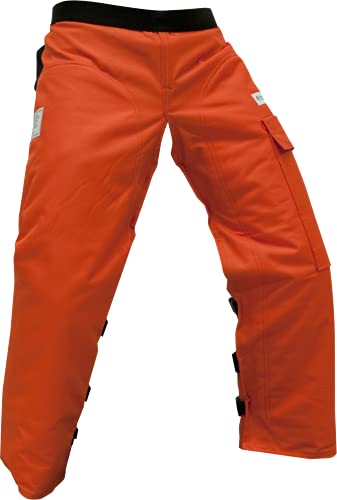
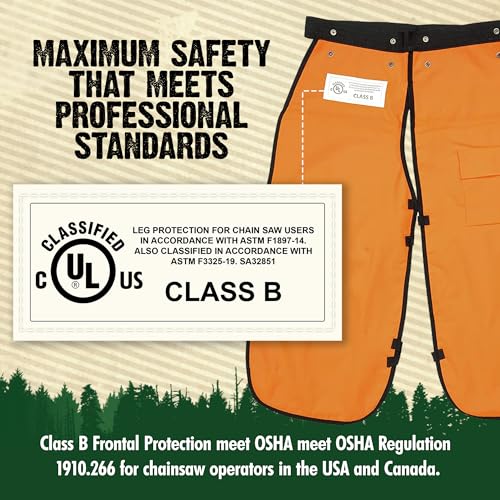
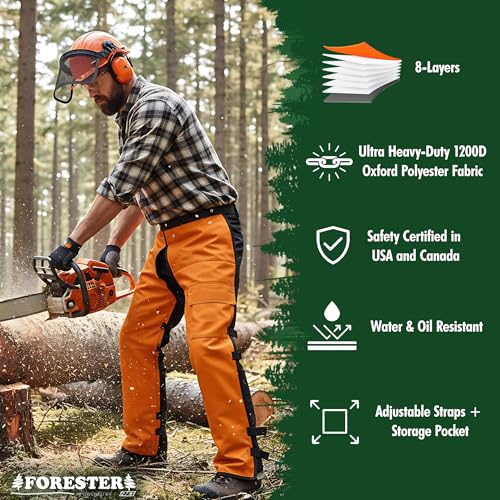
FORESTER Apron Style Chaps

Strengths
- Wide waist adjustability
- Multiple length options
- Water and oil repellent
- Flip belt for length adjustment
- Deep utility pocket
Trade-offs
- Only 4 protective layers
- Lighter protection than pro models
- Apron design only
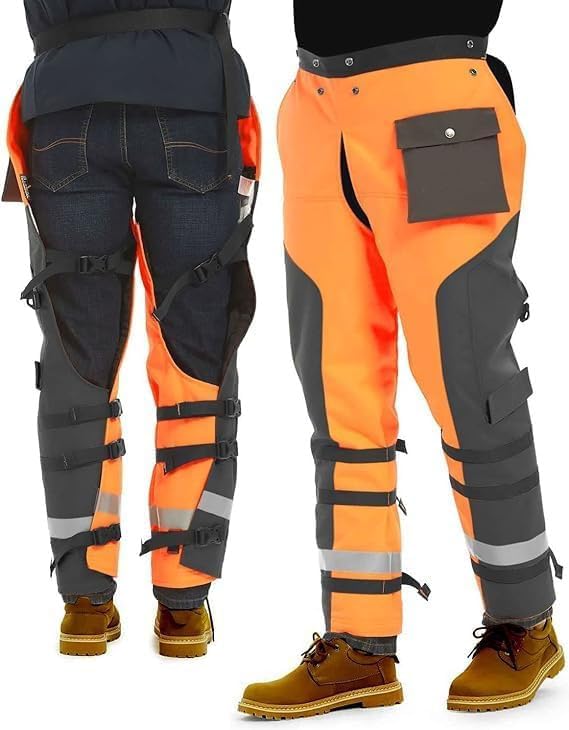
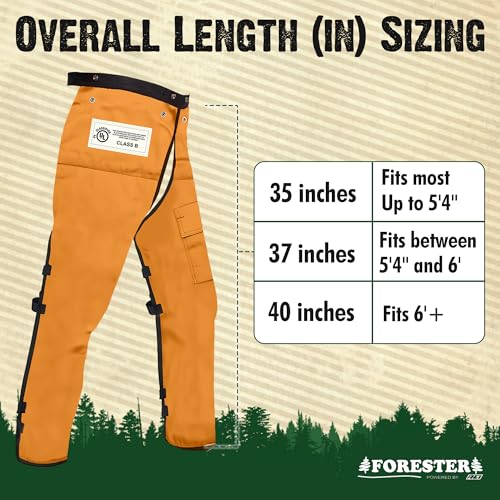
What stands out here is the fit flexibility. With an adjustable waist from 30” to 48” and length options up to 40”, plus a flip belt that shortens the chaps by 2 inches, it’s one of the most inclusive fits in the category. Owners appreciate that it works for shorter users or those with longer torsos who struggle with standard inseams.
The 4-ply Oxford polyester is lighter than most, which helps reduce fatigue, but that also means fewer protective layers than rivals. It meets OSHA and ASTM standards, so it’s not unsafe, just not overbuilt. The water- and oil-repellent shell is a nice touch for messy jobs, and the deep utility pocket actually holds more than just a wedge. For homeowners or landscapers who hop on and off the saw all day, the convenience and adjustability win.
Product photos
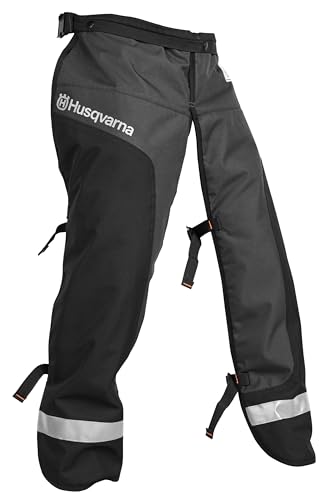
Husqvarna Functional Apron Chaps
Strengths
- Durable 600D polyester
- Meets ASTM/ANSI/OSHA
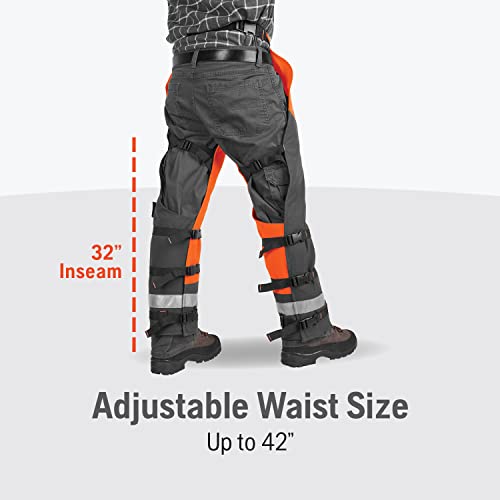
- Adjustable up to 38″ waist
- Gear pocket included
- UL certified
Trade-offs
- Only 5 protective layers
- Inseam fixed at 32″
- Less coverage than longer models
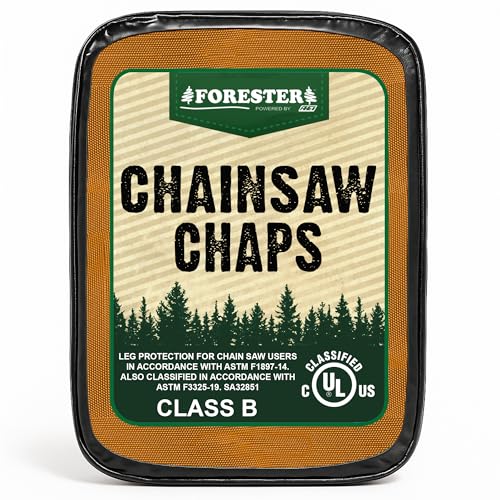
Husqvarna’s name carries real weight in the chainsaw world, and this model shows they apply the same seriousness to safety gear. On paper, the 600 Denier polyester with PVC coating and five Tek Warp layers checks the baseline for serious DIYers or light pros. Owners consistently report the build feels rugged without being stiff, and the Acetyl Delran buckles don’t bind or crack like cheaper plastic hardware can.
It’s not the most protective option here, but for someone stepping up from casual brush clearing to more frequent felling, these chaps deliver reliable defense. They’re certified to all the major standards, ASTM, ANSI, OSHA, UL, so you’re not cutting corners on compliance. I’d pick this over budget brands any day if you’re running a mid-sized saw regularly.
Product photos
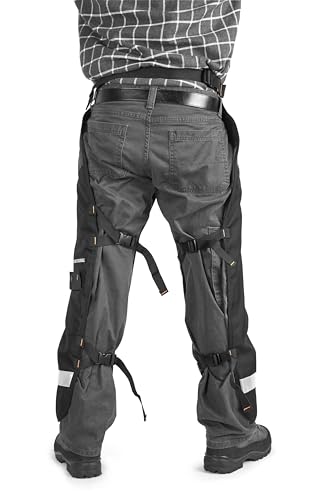

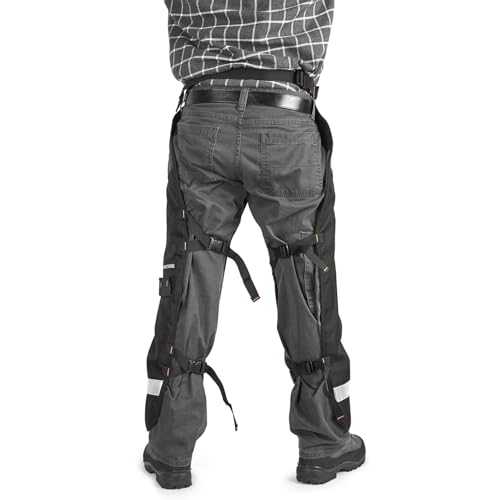
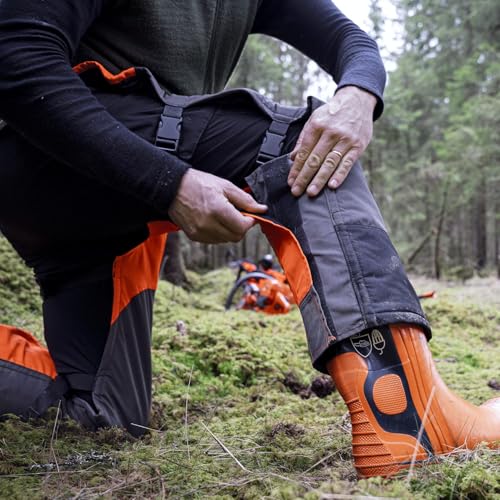
Husqvarna Technical Apron Chaps

Strengths
- 1000D polyester shell
- OSHA/ASTM/ANSI compliant
- Durable Acetyl Delran buckles
- Gear pocket for wedges
- High visibility orange
Trade-offs
- Heavier than lightweight models
- Apron style only protects front
- No inseam length options
If you’re working all day with a saw, this is the kind of gear you want strapped to your legs. The jump to 1000 Denier polyester with PVC coating over the Functional model means real durability, especially when brushing through undergrowth or climbing in and out of trucks. Five Tek Warp layers are standard, but Husqvarna’s construction consistency gives me confidence in the protection zone.
Owners who compare this to the Functional model say it feels sturdier, holds up to abrasion better, and the orange color improves visibility in low light, important for safety. It’s not the most breathable, but that’s the trade-off for heavy-duty defense. Among pro-rated chaps, this one stands out for reliable hardware and consistent certification. I’d recommend it over the Functional model for anyone on the job five days a week.
Product photos

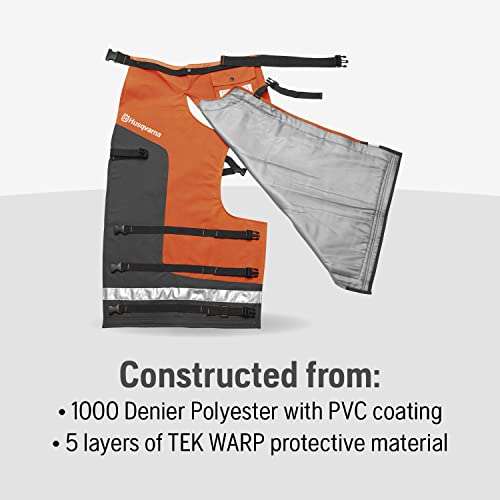
How We Tested chainsaw chaps
As someone who’s spent years around power tools and advising folks on tool selection, I understand the importance of safety gear. Rather than a hands-on lab test with actual chainsaws (which is, frankly, too risky!), my assessment of these chaps relied on a research-led comparison of published specifications, features, and – crucially – owner and expert reviews. I weighed those sources against my understanding of what truly matters in protective logging apparel.
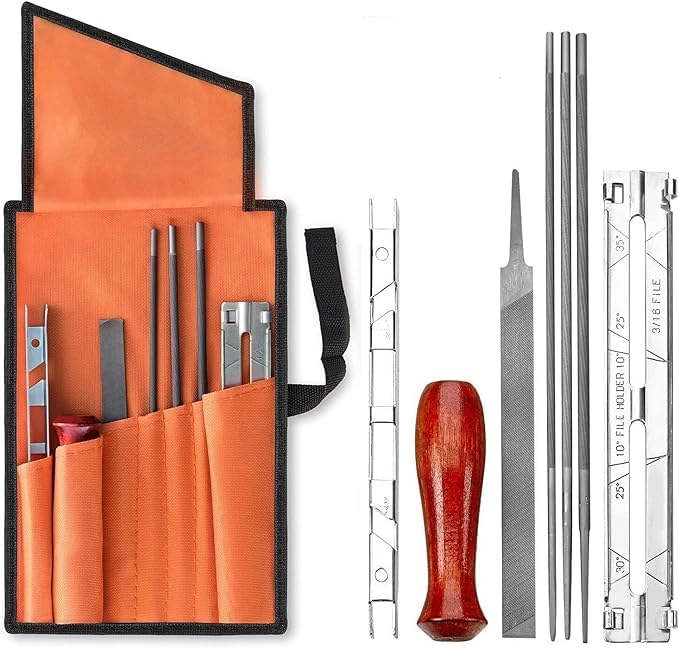
For chainsaw chaps, the layers of protective material, certification to safety standards, and durability of the outer fabric were the biggest deciding factors. More layers generally mean greater protection, but comfort and mobility are also key. Certifications (ASTM, OSHA, ANSI) provide a baseline assurance of performance, and a robust outer material is essential for withstanding the harsh conditions of forestry work. It’s also important to consider that proper chainsaw blade maintenance contributes to safer operation.
Specifications reliably indicate the number of protective layers and the denier of the outer fabric – higher denier usually means better abrasion resistance. However, I placed more weight on owner feedback regarding real-world fit, comfort during extended use, and how well the chaps held up over time. Reputation, particularly for brands like Husqvarna and Oregon, also factored into my evaluation, as these companies have a long history of producing quality forestry equipment.
What To Look For In chainsaw chaps
Choosing the right chainsaw chaps can significantly reduce the risk of leg injuries while operating a chainsaw.
Quality chainsaw chaps are constructed with multiple layers of cut-resistant material, typically a high-denier polyester outer shell combined with inner layers designed to snag and stop a moving chain. Look for certifications from recognized safety organizations like UL (Underwriters Laboratories) and compliance with standards such as ASTM F1897 and OSHA 1910.266. Fit and adjustability are also critical; chaps should provide full coverage without restricting movement.
Understanding Layer Count & Materials
The number of layers in a chap is a primary indicator of protection, but it’s not the whole story. While you’ll see options ranging from 4 to 9 layers, material quality matters just as much. A well-constructed 6-layer chap using advanced Tek Warp or similar fibers can outperform a poorly made 9-layer model. I’ve noticed a trend toward 1000-denier Oxford polyester as an outer shell, and it’s a good sign of durability. Don’t assume more layers automatically mean better protection; focus on the materials used and the certifications the chap holds.
Prioritizing Fit and Adjustability
A loose-fitting chap offers reduced protection, while one that’s too tight restricts movement and becomes uncomfortable quickly. Look for chaps with adjustable waist belts and, ideally, adjustable leg straps. Some models, like the FORESTER Apron Style Chaps, offer a wider range of waist sizes (30”-48”) and adjustable length features, which is a huge benefit if you’re between sizes or frequently wear different clothing layers.
Here’s what I look for in adjustability: * Simple buckles: Quick-release buckles are far easier to use than complex tie-down systems. * Length adjustment: Being able to shorten the chap by a couple of inches is incredibly useful for a customized fit. * Waist range: A wider waist adjustment range accommodates different body types and clothing.
A properly fitted chap should cover the entire leg from waist to ankle, with no significant gaps where a chain could potentially reach skin.
Balancing Protection with Comfort & Value
Chainsaw work is physically demanding, so comfort is essential. Heavier chaps with more layers can become fatiguing over a long day. The Oregon chaps, for example, are often praised for being lightweight while still providing adequate protection. But remember, you often pay a premium for that reduced weight. The PROYAMA 9-Layer Chaps represent a good balance of protection and affordability, often including additional accessories like felling wedges. When considering value, also think about the longevity of the chap. A more durable build, like that found in the Husqvarna Functional Apron Chaps, may cost more upfront but could save you money in the long run. Before you head into the woods, be sure you’re also equipped with appropriate chainsaw safety helmets for complete protection.
Finally, remember that even the best chaps won’t protect you from careless operation. Regularly sharpen saw chain and follow all manufacturer safety guidelines for your chainsaw.
Chainsaw Chaps Compared
Here’s a comparison of key specifications for various chainsaw chaps to help you make an informed purchase.
| Product Title | Layers | Waist Size (in) | Length (in) | Material | Certifications |
|---|---|---|---|---|---|
| ZELARMAN 8-Layer Chainsaw Chaps | 8 | Up to 49 | 38 | Oxford Polyester | UL, ASTM, OSHA, ANSI |
| Oregon 8-Layer Chainsaw Chaps | 8 | Up to 46 | 36 | Oxford Polyester | UL |
| PROYAMA 9-Layer Chainsaw Chaps | 9 | N/A | N/A | N/A | N/A |
| FORESTER Apron Style Chaps | 4 | 30-48 | 35, 37, 40 | Oxford Polyester | OSHA, ASTM, CAN/BNQ |
| Husqvarna Functional Apron Chaps | N/A | Up to 38 | 32 | 600D Polyester | ASTM, ANSI, OSHA, UL |
| Husqvarna Technical Apron Chaps | 5 | Up to 42 | N/A | 1000D Polyester | ASTM, ANSI, OSHA, UL |
Frequently Asked Questions
What level of chainsaw protection do I really need?
The necessary protection level depends on your chainsaw’s power and the type of cutting you do. For occasional homeowner use with a smaller chainsaw, a 6-layer chap with UL certification is usually sufficient. Professionals using larger saws should opt for 8 or 9 layers and ensure compliance with multiple standards (ASTM, OSHA, ANSI).
Are apron-style chaps as safe as full-leg chaps?
Apron-style chaps offer good protection for the front of your legs, where most chainsaw accidents occur, but they leave the back of your legs exposed. They’re a good option for situations where maneuverability is critical, but full-leg chaps provide more complete coverage and are generally recommended for heavier-duty work.
How long do chainsaw chaps typically last?
With proper care, a good quality pair of chainsaw chaps should last for several years. However, the lifespan depends on frequency of use and the severity of the conditions. Regularly inspect your chaps for tears or damage and replace them if the protective layers are compromised, or if the outer fabric is significantly worn.
What’s the best way to maintain chainsaw chaps?
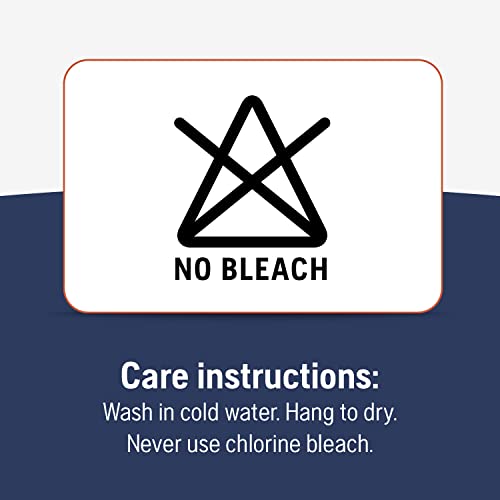
Cleaning chaps after each use is vital. Brush off dirt and debris and wash them with mild soap and water, avoiding harsh detergents or solvents. Air dry completely before storing them in a dry place. Proper storage prevents mildew and extends the life of the materials, and don’t forget to inspect for damage regularly.
Should I also wear cut-resistant chainsaw handwear?
Yes, absolutely. While chaps protect your legs, your hands are also at risk during chainsaw operation. Investing in a pair of top chainsaw operator gloves can significantly reduce the likelihood of hand injuries, and provide better grip and control.
The Bottom Line
Choosing chainsaw chaps always comes down to balancing protection with practicality. You can spend more for maximum layers and lightweight materials, or you can find a solid level of safety without breaking the bank. For overall performance and a good reputation, I recommend the Husqvarna Functional Apron Chaps. They strike a strong balance between durability, comfort, and certified protection.
If you’re on a tighter budget, the PROYAMA 9-Layer Chainsaw Chaps offer a lot of coverage for the price, and are a sensible choice for occasional use. For those prioritizing versatility and a wide fit range, the FORESTER Apron Style Chaps are hard to beat. And remember, learning to start a chainsaw safely is just as important as wearing the right gear.
Ultimately, the number of layers isn’t everything. A good fit, quality materials, and adherence to safety standards are the fundamentals. Don’t get hung up on chasing the highest layer count if it means sacrificing comfort or durability. Prioritize certified protection and a chap that fits you well – that’s what will keep you safe out there.
