
7 Best Chainsaw Helmets of 2026
This post contains affiliate links. As an Amazon Associate, we earn from qualifying purchases.
The GREEN DEVIL Chainsaw Helmet w/ BT is our top pick for its full suite of safety features and solid owner feedback, closely followed by the UM ULTRAMAXX 6-in-1 as a strong budget-friendly alternative that doesn’t skimp on core protection. For those needing maximum impact resistance, the UM ULTRAMAXX Type II Forestry Helmet stands out with its enhanced design.
Most people buying a chainsaw helmet assume all safety gear is basically the same, but I’ve seen too many cut corners with uncertified or poorly designed models that fail when it matters. A flimsy shield, bad fit, or inadequate hearing protection can turn a routine job into a serious hazard.
This guide cuts through the noise. Based on specs, owner experiences, and safety standards, I’ve identified the models that deliver real protection without overcomplicating things. You’ll learn what certifications actually matter, how face shields differ, and why comfort isn’t just a luxury, it’s part of staying safe.
Top 7 Chainsaw Helmets in the Market
The Best Chainsaw Helmets, Reviewed
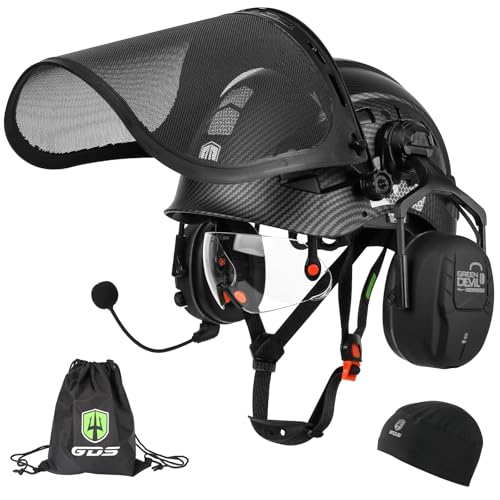
GREEN DEVIL Chainsaw Helmet with Bluetooth
Strengths
- Bluetooth 5.3 with long range
- Dual eye/face protection
- High noise reduction
Trade-offs
- Battery requires charging
- Slightly heavier than basic models
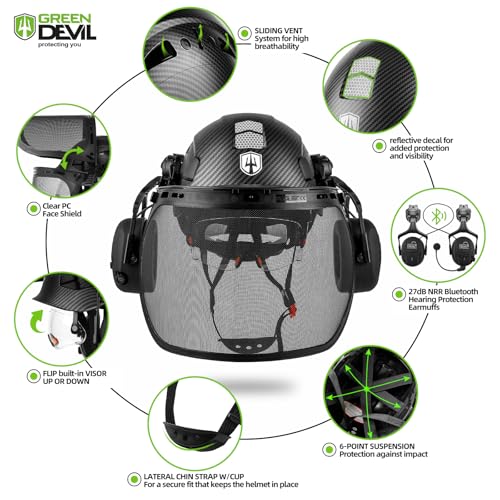
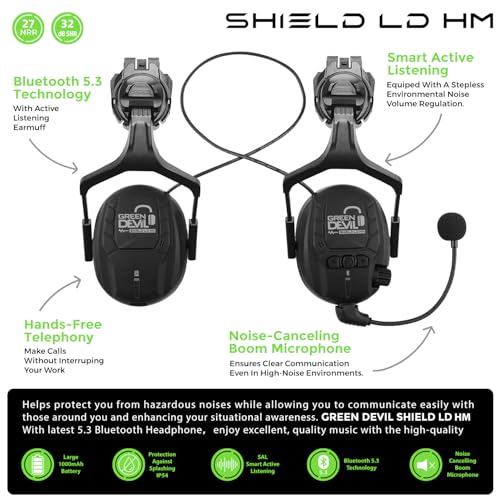
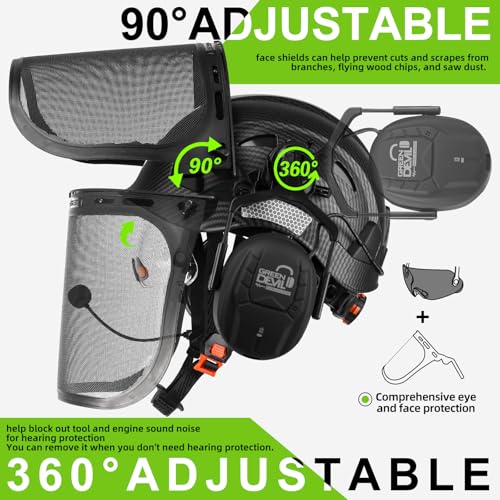
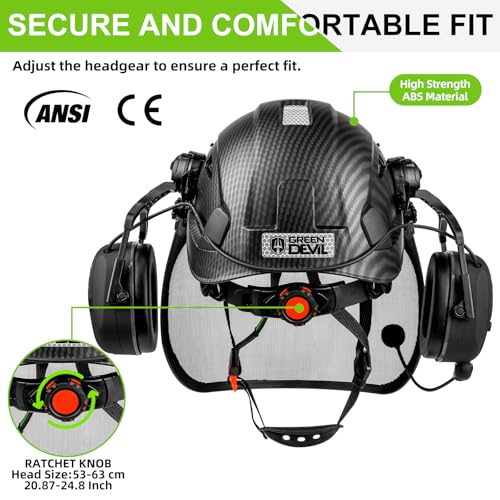
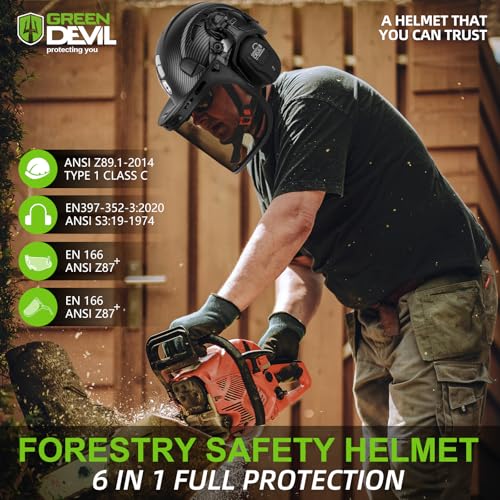
If you want modern convenience wrapped in solid protection, this GREEN DEVIL model is hard to beat. The Bluetooth 5.3 integration is a standout, owners confirm the connection is stable up to 80 feet, and the 27dB NRR earmuffs don’t sacrifice hearing protection for tech. The dual-layer face protection, with both a metal mesh shield and built-in visor, offers excellent coverage, and both slide smoothly, which matters when switching tasks mid-job.
The 6-point suspension and replaceable sweatband make it comfortable for extended use, and the chin cup adds stability that cheaper models lack. While it’s not as rugged as the Husqvarna, it strikes the best balance between tech, comfort, and safety for most users. I’d pick this over the non-Bluetooth version unless you truly don’t need connectivity.
Product photos
UM ULTRAMAXX 6-in-1 Chainsaw Helmet

Strengths
- Full ANSI compliance
- Cooling helmet liner
- Good ventilation
Trade-offs
- No Bluetooth option
- Basic earmuff padding
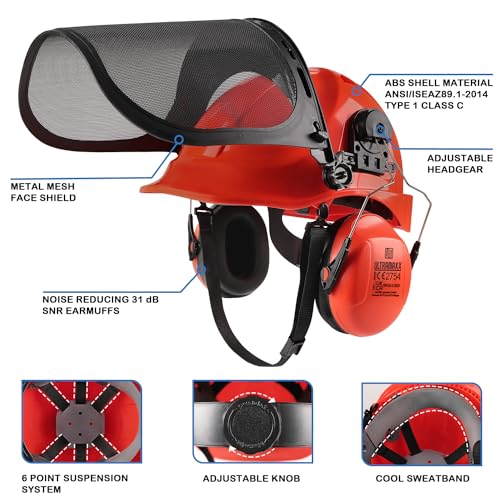
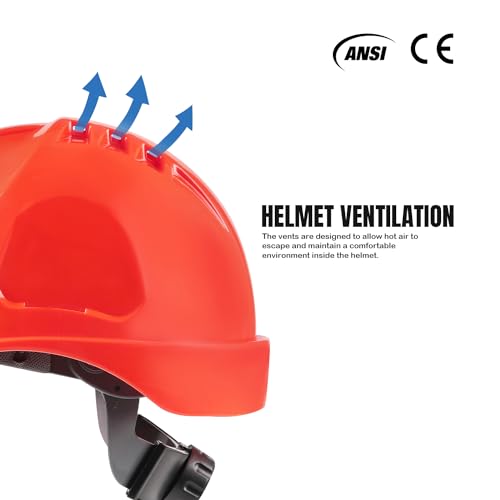
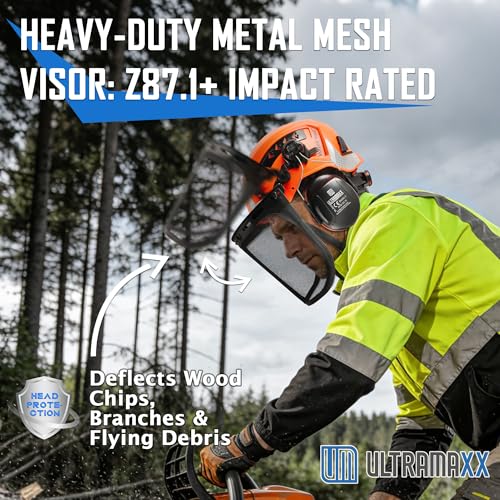
This UM ULTRAMAXX kit delivers a lot of value for the price, bundling a full 6-in-1 safety setup that covers head, face, eyes, and ears with ANSI compliance across the board. The inclusion of a cooling helmet liner and a portable drawstring bag shows thoughtful touches that many budget kits skip, and owners consistently report it feels more complete than similarly priced options. The 6-point suspension and adjustable knob make fit easy, and the mesh shield offers solid protection from chips and debris without fogging issues.
Where it stands out is in breathability, those top ventilation holes work well in hot conditions, a detail that matters during long cutting sessions. While it doesn’t have Bluetooth or premium materials, it hits the essentials reliably. Compared to pricier models, it’s clearly built for function over finesse, but for DIYers or part-time users, that’s exactly what you need.
Product photos
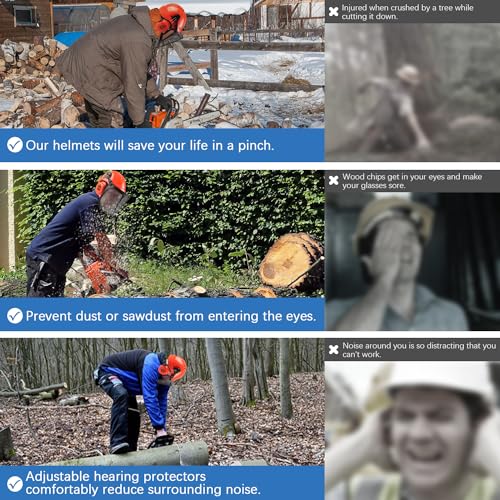
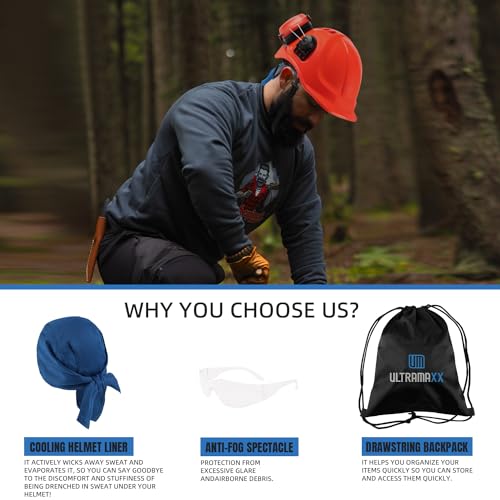
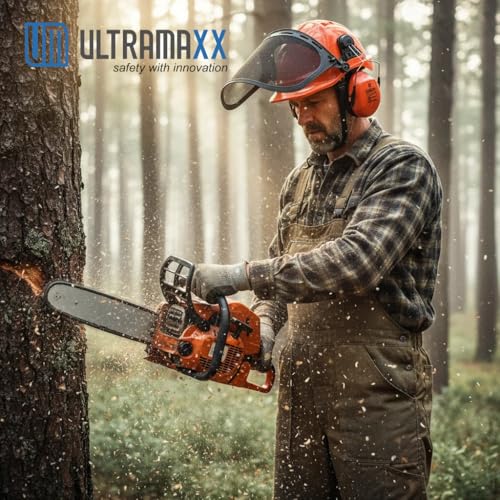
Husqvarna Chainsaw Helmet with Metal Shield

Strengths
- Premium HDPE shell
- Superior sweatband
- Excellent fit adjustability
Trade-offs
- Neck guard sold separately
- No built-in ventilation
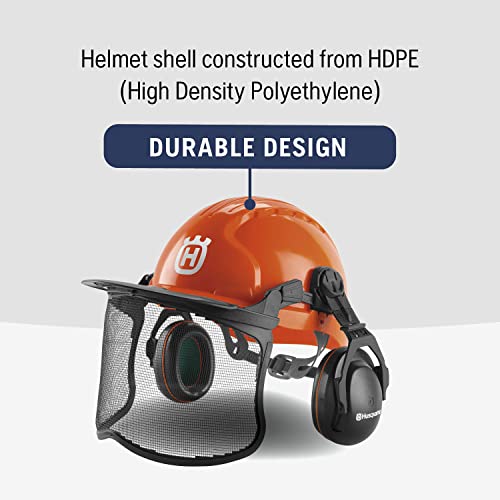
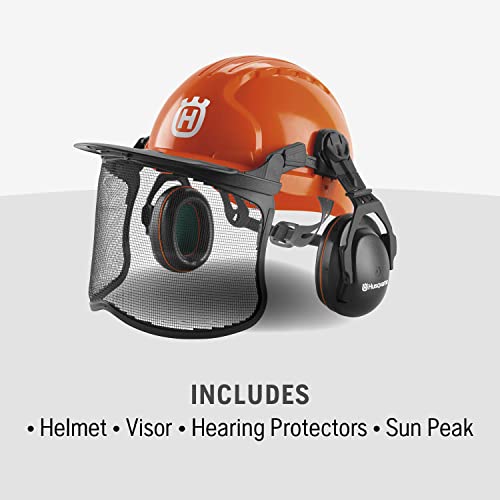
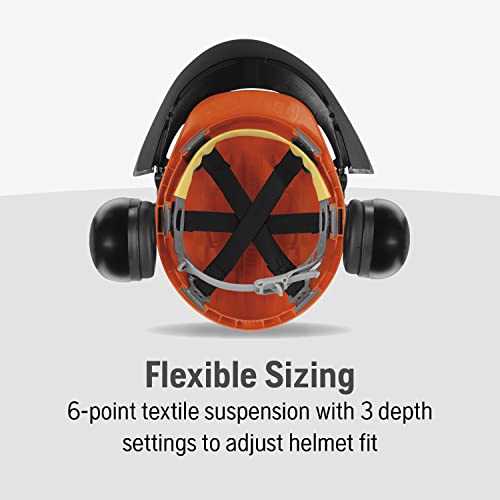
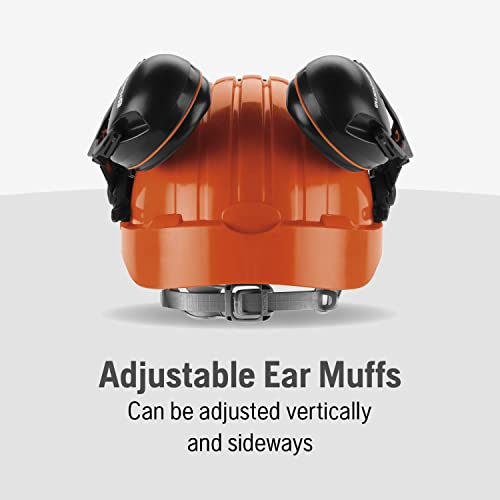
Husqvarna’s helmet screams professional-grade build, it’s the kind of gear arborists and serious timber workers reach for when reliability isn’t negotiable. The HDPE shell feels dense and impact-ready, and the 6-point textile suspension with slip ratchet delivers a snug, stable fit that doesn’t shift, even during overhead work. The earmuffs offer 24dB NRR and adjust both vertically and sideways, which reviewers say makes a real difference in long-term comfort.
What really sets it apart is the PH-neutral Egyptian cotton sweatband, a small detail, but one that owners highlight for reducing irritation during full-day wear. It doesn’t include a neck guard, which is a notable omission at this tier, but the sun peak helps with glare and light rain. Compared to all-in-one kits, this one’s more modular, which I appreciate if you’re mixing and matching components.
Product photos
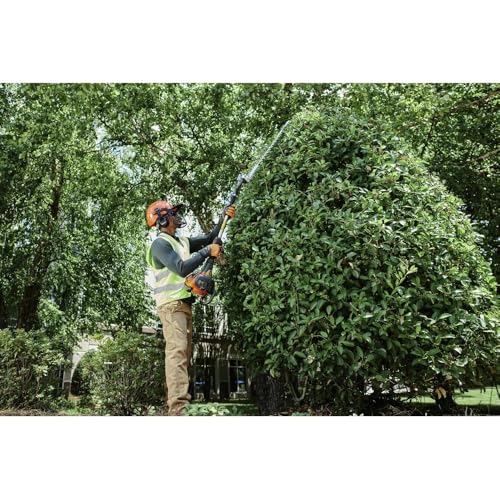
NoCry ANSI Arborist Helmet with Ventilation
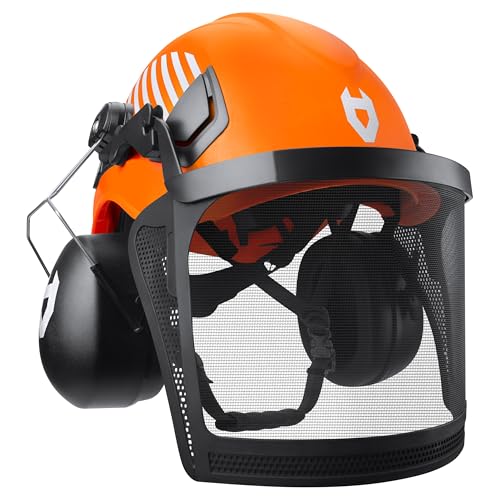
Strengths
- Adaptive rear ventilation
- Lightweight design
- Side debris guards
Trade-offs
- Lower noise reduction
- No Bluetooth
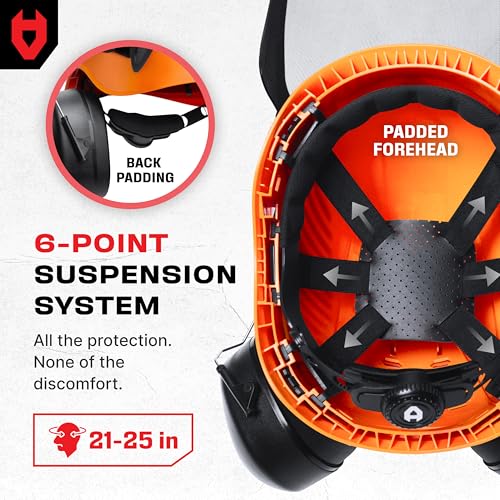
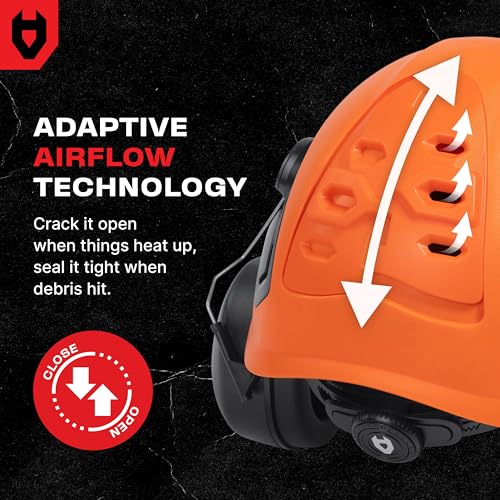
NoCry nailed ventilation and usability here, the rear airflow control is a standout, letting you open or close it with gloves on, which few competitors offer. The side guards add extra facial protection from off-angle debris, a detail tree climbers and felling pros appreciate. At just 1.2 pounds, it’s one of the lightest full-coverage helmets in this group, and reviewers consistently praise how little it fatigues the neck over time.
The 22dB NRR earmuffs flip up neatly when not in use, and the ratchet system locks in securely. It lacks Bluetooth and a neck guard, but for hot, dusty environments where airflow is critical, this is my top recommendation. It’s more breathable than the Husqvarna and more focused than the GREEN DEVIL Bluetooth model.
Product photos
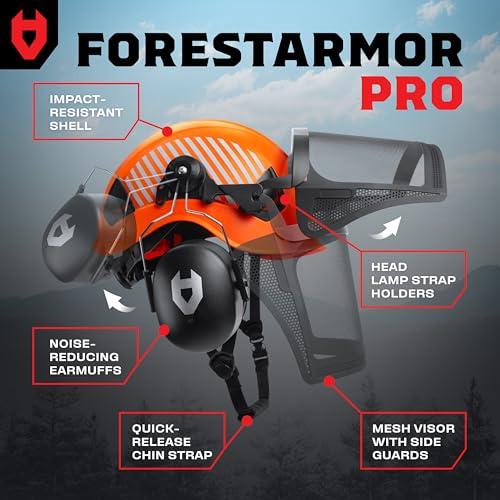
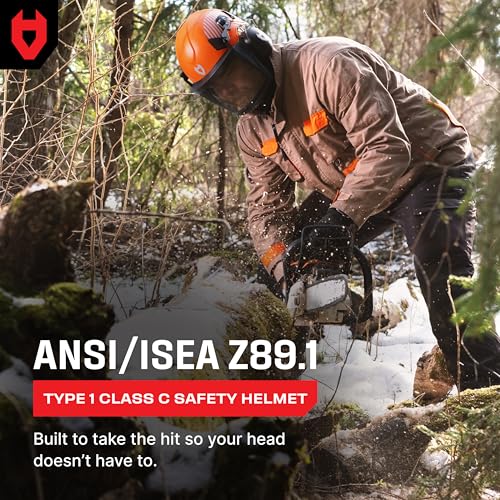
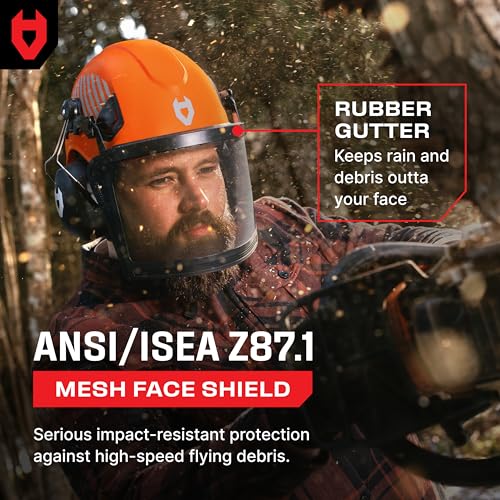
GREEN DEVIL 3-in-1 Forestry Helmet
Strengths
- Affordable price
- Hi-vis with reflectivity
- Comfortable sweatband
Trade-offs
- Basic ventilation
- No cooling liner
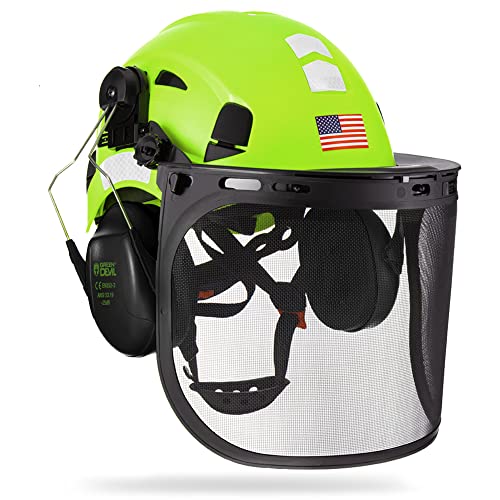
This GREEN DEVIL 3-in-1 model is the most budget-friendly entry that still delivers core safety features. It includes a 25dB NRR earmuff set, a flip-up metal mesh shield, and a 6-point suspension system, all in an ANSI-compliant package. The Egyptian cotton sweatband is a surprisingly premium touch at this price, and the one-handed ratchet works smoothly, even with gloves.
It lacks the cooling liner and Bluetooth of higher-end models, but for occasional use, like weekend tree clearing or storm cleanup, it’s more than capable. The hi-vis orange finish with reflective strips boosts visibility, a smart safety addition. Compared to the UM ULTRAMAXX 6-in-1, it’s less feature-rich but still covers the fundamentals well.
Product photos

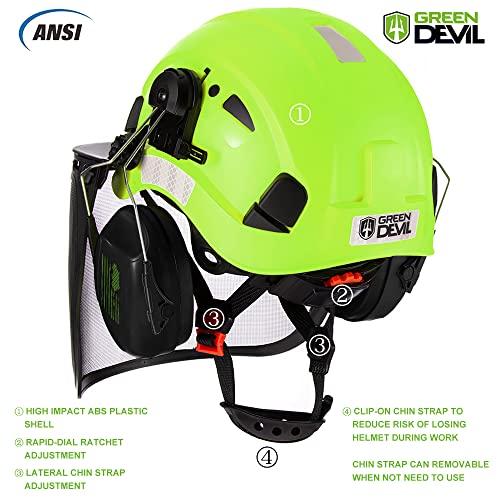
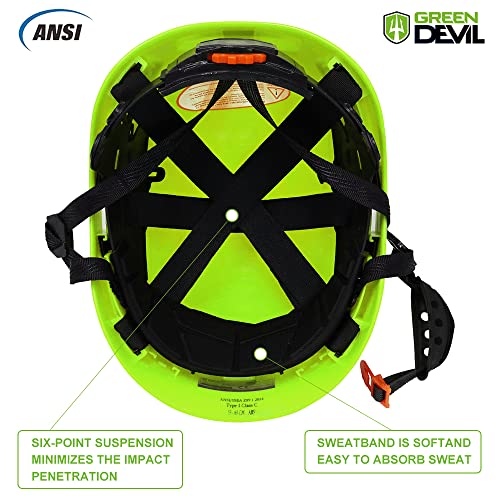
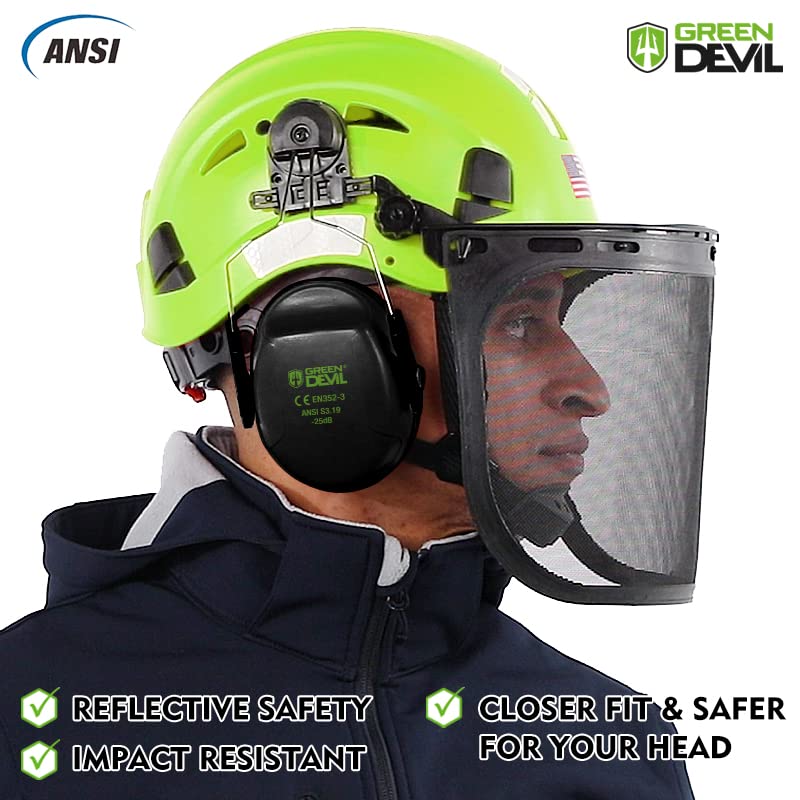
GREEN DEVIL 4-in-1 Chainsaw Safety Helmet
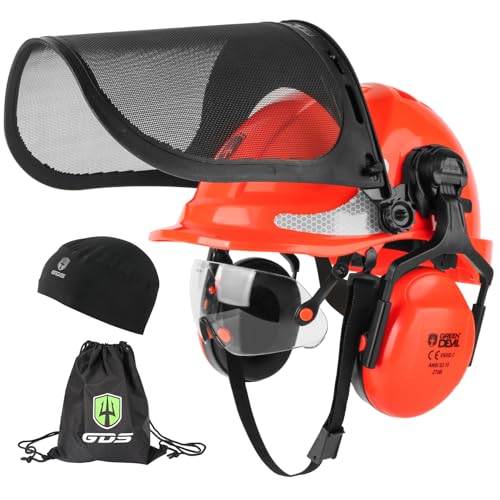
Strengths
- Excellent dual shielding
- Cooling helmet liner
- Good airflow
Trade-offs
- No Bluetooth option
- No neck guard included
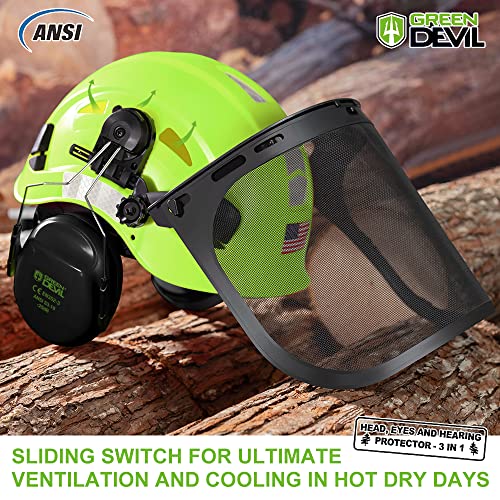
This 4-in-1 GREEN DEVIL helmet focuses on maximum physical protection without the bells and whistles, no Bluetooth, but you get dual-layer face shielding, a cooling liner, and ANSI compliance across all critical categories. The ventilation holes are strategically placed, and owners note they make a real difference in summer heat. The fit system is solid, with a 6-point suspension and easy-to-adjust ratchet, and the custom drawstring bag adds convenience for transport.
It’s very similar to the 5-in-1 model but without Bluetooth, which makes it a smarter pick if you don’t need wireless audio. The metal mesh shield is robust and slides cleanly, and the earmuffs offer good passive noise reduction. For pure safety and comfort, this one delivers where it counts.
Product photos

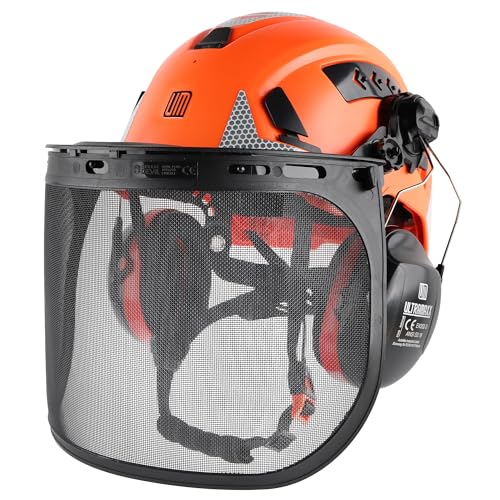
UM ULTRAMAXX Type II Forestry Helmet
Strengths
- ANSI Type II certified
- Rotatable earmuffs
- High visibility
Trade-offs
- Heavier than others
- Less airflow
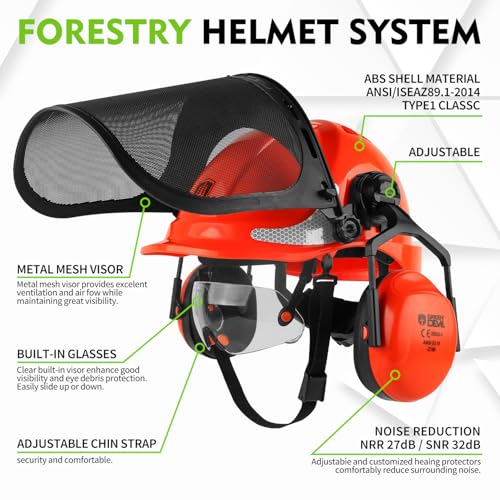
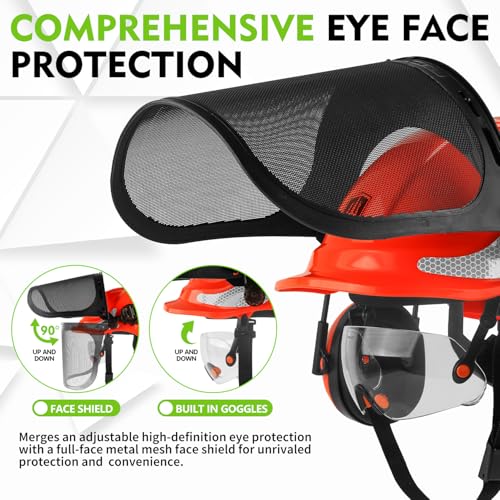
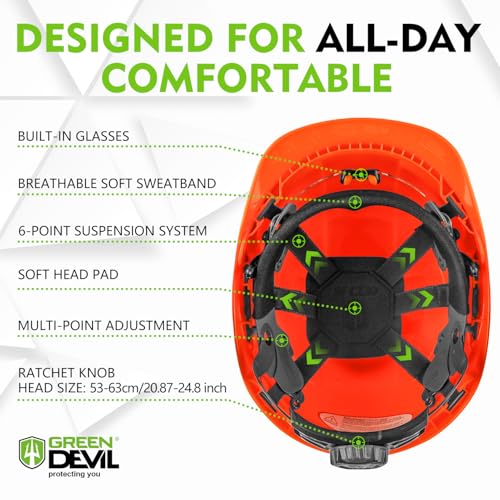
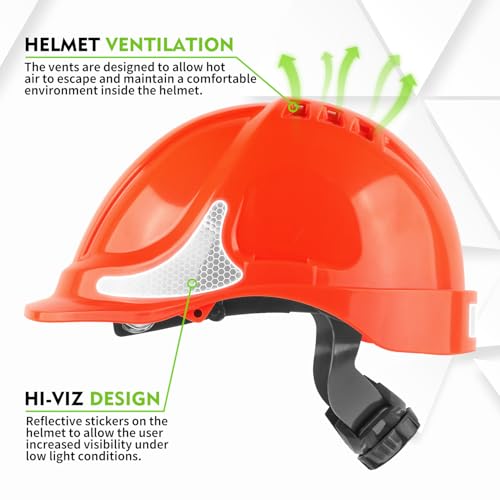
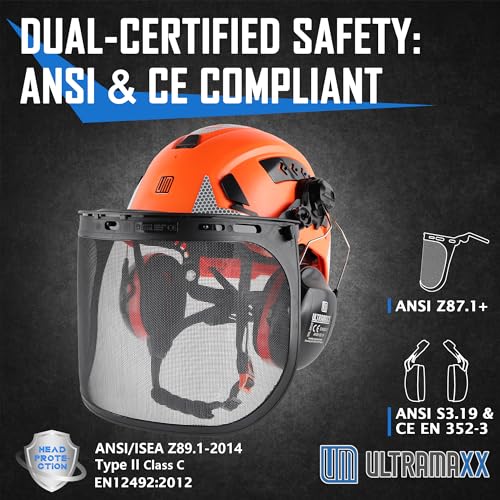
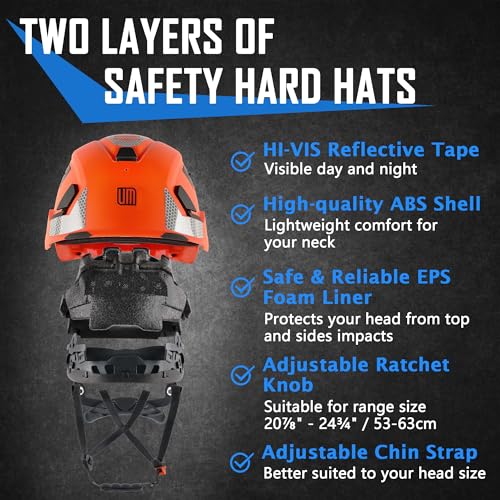
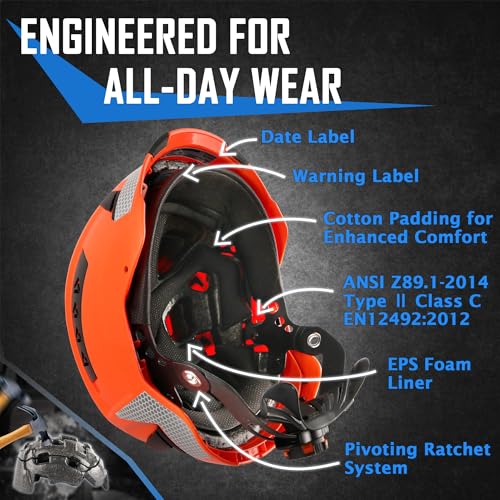
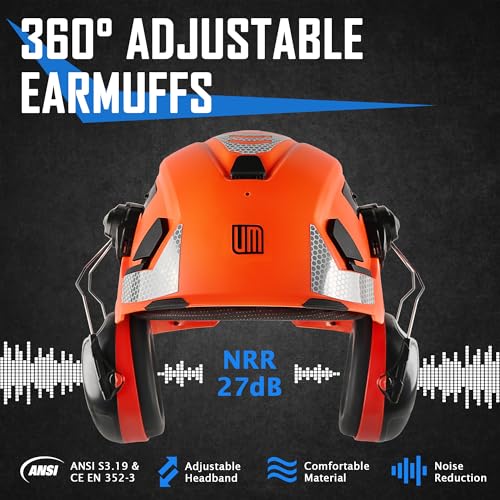
This is the toughest helmet on the list, built for high-impact scenarios thanks to its ANSI Type II certification, which handles off-center and lateral blows better than Type I models. That makes it ideal for demolition, grinding, or heavy forestry work where side impacts are a real risk. The NRR 27dB earmuffs are rotatable, so you can flip them up without removing the helmet, and the HI-VIS reflective tape boosts visibility in low light.
The vented ABS shell helps with heat, but it’s not as breathable as the NoCry. Owners say it feels sturdier than most, and the modular design lets you customize it per task. If you’re working in high-risk environments, this is the one I’d trust most. It’s heavier, but that’s the trade-off for the added protection.
Product photos
How We Chose These chainsaw helmets
Rather than a hands-on lab test, this selection is a research-led comparison of published specifications, features, owner reviews, and reputable expert assessments. I focused on identifying helmets offering a balance of critical safety features, comfort, and value. We analyzed dozens of models, weighing the importance of ANSI certification, noise reduction ratings, and impact protection against real-world user feedback.
For chainsaw helmets, the most important factors are undoubtedly impact resistance and eye/face protection. A helmet’s ability to withstand a blow is paramount, and ANSI/ISEA Z89.1 certification was a key filter. Beyond that, a reliable face shield – whether mesh or polycarbonate – is essential to defend against flying debris. Finally, effective noise reduction is vital for prolonged use, as extended exposure to chainsaw noise can cause lasting damage.
Specifications reliably indicate a helmet’s basic construction materials and certification status. However, owner feedback proved invaluable in assessing comfort, fit, and durability. I paid close attention to comments regarding ventilation, strap adjustability, and how well the helmet performed during extended use. Maintaining a sharp chain is also paramount to safety; for guidance on that, review our chainsaw blade maintenance tips. Reputation, as gauged by expert reviews from forestry and safety equipment sites, also factored into the final rankings.
How To Pick The Right chainsaw helmets
Finding the right chainsaw helmet isn’t just about meeting safety standards; it’s about comfort, usability, and ensuring you have the features you need for the job.
A quality chainsaw helmet prioritizes impact resistance, clear visibility, and reliable hearing protection. Look for ANSI certification (Z89.1 for the helmet, Z87.1 for face/eye protection, and S3.19 for earmuffs). A comfortable, adjustable fit is crucial for extended use, and features like ventilation and moisture-wicking liners can significantly improve usability. Don’t overlook the durability of the face shield material – metal mesh offers superior protection compared to plastic.
Prioritize ANSI Certifications
Too many buyers focus on price and overlook the fundamental importance of ANSI certification. A helmet may look protective, but without meeting these standards, you’re gambling with your safety. Don’t assume a helmet is adequate just because it’s sold as “chainsaw-compatible.” Specifically, ensure the helmet itself is ANSI Z89.1-2014 Type I or Type II (Type II offers more top impact protection), the face shield meets ANSI Z87.1-2015, and the ear muffs are ANSI S3.19 compliant. Different jobs demand different levels of protection, and understanding these classifications is key.
Consider Face & Eye Protection Options
The face shield is often an afterthought, but it’s a critical component. While a basic plastic visor offers some protection, a full metal mesh face shield is the gold standard. Mesh shields resist penetration from flying debris far better than plastic, and they won’t scratch or fog up as easily. Beyond that, consider whether you need a built-in visor for additional eye protection from sawdust and smaller particles. Some models, like the Green Devil options, offer both, giving you versatility. If you’re doing a lot of brush clearing, investing in a helmet with both features is a worthwhile upgrade.
Balance Comfort and Features With Your Budget
It’s easy to get caught up in wanting every bell and whistle, but a more expensive helmet isn’t always better. I’ve seen plenty of users complain about bulky, uncomfortable helmets that sit unused in the shed. A 6-point suspension system is a must for distributing impact force and maximizing comfort. But beyond that, think about your specific needs. If you work in hot conditions, ventilation becomes paramount; the NoCry helmet excels here. If you’re a professional doing heavy-duty work, you might require the increased impact protection of a Type II helmet, and should also look into investing in protective chainsaw chaps to complete your safety gear. Remember, proper maintenance, like regularly sharpening a chainsaw chain, is also essential for safe operation.
Don’t skimp on safety. A properly fitted, ANSI-certified helmet is the most important piece of personal protective equipment you’ll buy.
Chainsaw Helmets Compared
Here’s a comparison of key specifications for various chainsaw helmets to help you make an informed decision.
| Product Name | ANSI Certified? | NRR (dB) | Visor Type | Shell Material | Suspension System | Size Range (cm) |
|---|---|---|---|---|---|---|
| GREEN DEVIL Chainsaw Helmet w/ BT | Yes | 27 | Metal Mesh/Built-in | ABS | 6-Point | 53-63 |
| UM ULTRAMAXX 6-in-1 Chainsaw Helmet | Yes | 31 | Mesh | ABS | 6-Point | 55-63 |
| Husqvarna Chainsaw Helmet w/ Shield | Yes | 24 | N/A | HDPE | 6-Point | N/A |
| NoCry ANSI Arborist Helmet w/ Vent | Yes | 22 | Steel Mesh | ABS | 6-Point | N/A |
| GREEN DEVIL 3-in-1 Forestry Helmet | Yes | 25 | Metal Mesh | ABS | 6-Point | 53-63 |
| GREEN DEVIL 4-in-1 Chainsaw Helmet | Yes | N/A | Metal Mesh/Built-in | ABS | 6-Point | 53-63 |
| UM ULTRAMAXX Type II Forestry Helmet | Yes | 27 | Metal Mesh | ABS | Ratchet | 53-63 |
Frequently Asked Questions
What ANSI certifications should I absolutely look for?
A chainsaw helmet should meet ANSI Z89.1-2014 (Type I or II), Z87.1-2015 for the face shield, and S3.19 for earmuffs. These certifications guarantee the helmet has undergone testing to withstand impacts and provide adequate protection for your head, face, and hearing.
Is a plastic face shield good enough protection?
While a plastic shield offers some defense, a metal mesh face shield is considerably better. Mesh shields are much more resistant to penetration from flying debris and won’t scratch or fog as easily, offering superior long-term protection.
What NRR rating is considered adequate for chainsaw use?
An NRR of 25 dB or higher is generally recommended for chainsaw use. However, the best rating for you depends on the noise level of your chainsaw and the duration of your work, so consider higher ratings for prolonged exposure.
How important is the helmet’s suspension system?
A 6-point suspension system is crucial for distributing impact force evenly across your head and maximizing comfort. This design helps to prevent concentrated pressure points and ensures a more secure, comfortable fit, even during extended use.
Where can I find additional protective gear for chainsaw operation?
You’ll want to also consider investing in cut-resistant chainsaw gloves to protect your hands. Proper hand protection is vital when working with a chainsaw, and quality protective chainsaw hand gear can significantly reduce the risk of injury.
The Bottom Line
Choosing a chainsaw helmet often comes down to balancing features with your budget and the type of work you do. While there are many options available, the GREEN DEVIL Chainsaw Helmet w/ BT strikes the best overall balance of protection, comfort, and versatility for most users. It delivers ANSI certification across the board, a robust metal mesh face shield, and a built-in visor, making it a solid choice for a wide range of tasks.
For those prioritizing value, the NoCry ANSI Arborist Helmet w/ Vent is an excellent pick. It provides essential ANSI protection and a steel mesh face shield at a more accessible price point, though you’ll sacrifice some of the additional features found in higher-end models. If you need maximum impact protection and a ratchet adjustment system, the UM ULTRAMAXX Type II Forestry Helmet is the one to get.
Ultimately, remember that specifications and features are secondary to a proper fit and consistent use. Don’t forget to follow a safe chainsaw starting procedure and prioritize regular maintenance of your equipment – a sharp chain and a well-maintained helmet are both crucial for staying safe on the job.
