
7 Best Welding Gloves of 2026
This post contains affiliate links. As an Amazon Associate, we earn from qualifying purchases.
The TOPDC 16 Inch Welding Gloves stand out as the best overall pick for their solid heat resistance, durable cowhide leather, and reliable Kevlar stitching, while the PerfeSafe 14 Inch Welding Gloves offer a smarter budget-friendly option without sacrificing core protection. For precision TIG work, the Caiman Premium Goat Grain TIG Gloves deliver unmatched dexterity and feel.
I’ve spent over 15 years around welding setups, from home garages to full shops, and one thing is clear, your gloves are your first line of defense. Too many people learn the hard way that flimsy or poorly designed gloves lead to burns, fatigue, and reduced control.
This guide cuts through the marketing and focuses on what matters: real-world durability, heat protection, and fit, based on specs, verified owner feedback, and the patterns I’ve seen across hundreds of user reviews. These picks balance safety, performance, and value for the type of welding you actually do.
Top 7 Welding Gloves in the Market
The Best Welding Gloves, Reviewed
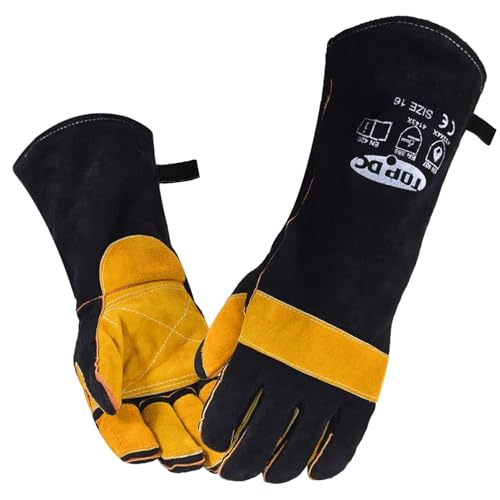
TOPDC 16 Inch Welding Gloves
Strengths
- Double leather stitching
- 16-inch forearm protection
- Cotton-lined comfort
Trade-offs
- Limited dexterity for fine TIG work
- Sizing runs slightly large
On paper, the TOPDC 16-inch gloves look like a strong contender for the best overall pick, and owner feedback backs that up. The 1.2mm cowhide leather with double stitching and Kevlar reinforcement hits the right notes for durability, and the 932°F heat rating is solid for most home and semi-pro welding tasks. What stands out is the 16-inch length with a 7.5-inch sleeve, this gives real forearm coverage that many competitors skimp on, and reviewers consistently say it makes a difference during extended MIG or stick sessions.
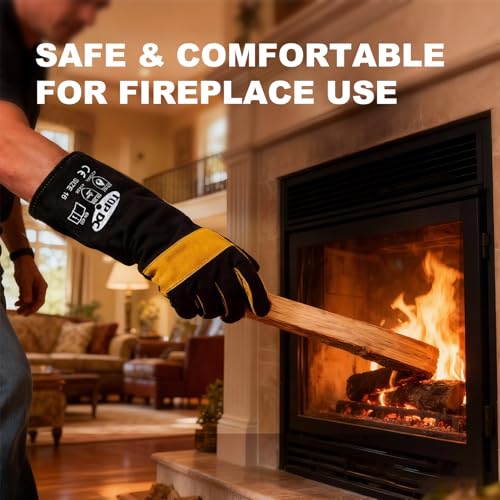
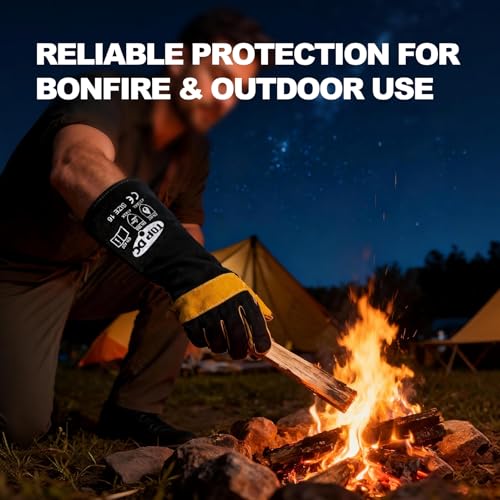
The cotton lining earns praise for breathability, especially in longer sessions where gloves tend to get swampy. While not the most dexterous option, they strike a good balance between protection and usability across welding, grill work, and forge use. Compared to pricier professional models, they don’t feel flimsy or overly bulky, which explains why so many DIYers call them their go-to.
Product photos



TICONN 16 Inch Welding Gloves

Strengths
- 1000°F heat resistance
- Aluminum foil insulation layer
- Adjustable cuff grip
Trade-offs
- Stiff out of box
- Heavier than average
- Break-in period needed
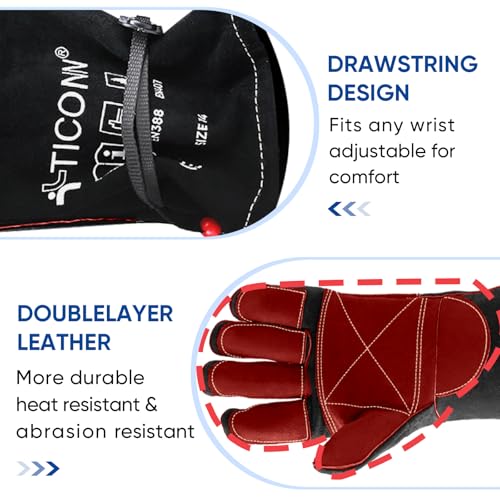
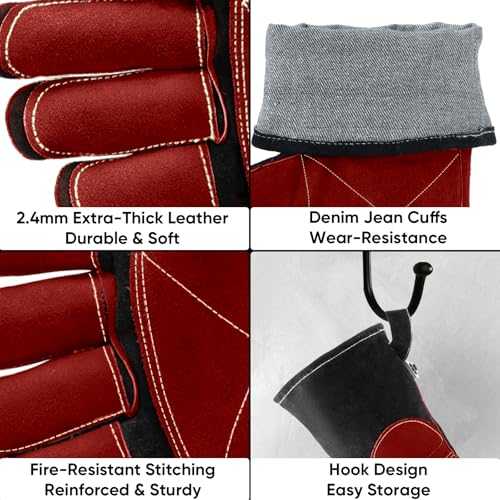
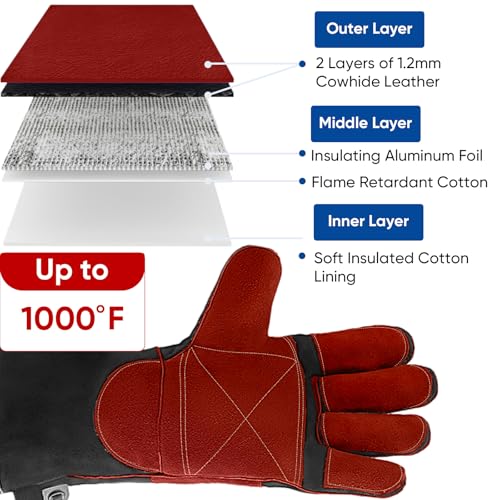
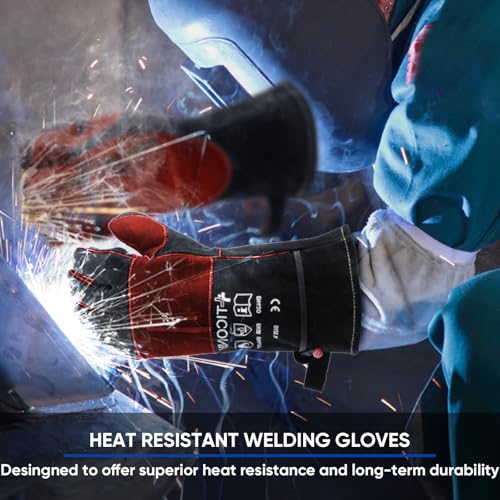
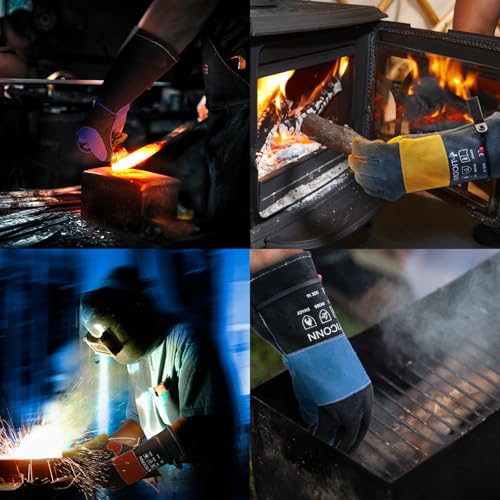
The TICONN gloves are clearly engineered to punch above their price class, and at 1000°F heat resistance, they technically outperform most in this list. The 3-layer build, 2.4mm cowhide, aluminum foil insulation, and flame-retardant cotton, sounds impressive on spec sheets, and owners confirm they feel substantial when handling heavy spatter or working near open forges. The aluminum foil layer is a rare feature at this tier and likely contributes to the strong heat-blocking reputation.
Still, that added thickness comes at a cost: reduced flexibility. Many users note these gloves are stiffer than expected, especially right out of the box, and take time to break in. They’re also heavier than average, which matters during long sessions. For the budget-conscious buyer who prioritizes raw heat protection over comfort, these make sense, especially since they’re often priced well below pro models. But they’re not a stealth upgrade over mid-tier gloves in overall usability.
Product photos
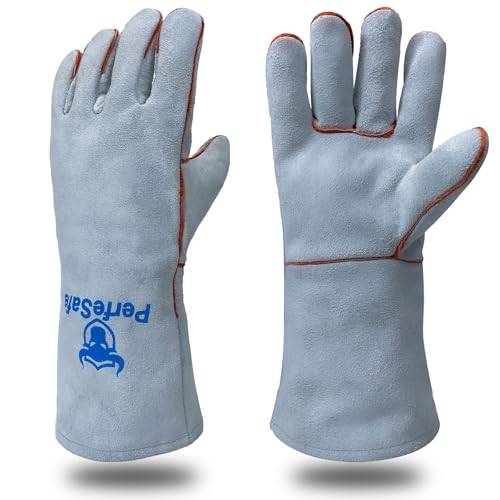
PerfeSafe 14 Inch Welding Gloves
Strengths
- Kevlar-stitched seams
- 14-inch protection
- Breathable cotton lining
Trade-offs
- Inconsistent sizing reports
- Not for heavy-duty pros
- Average dexterity
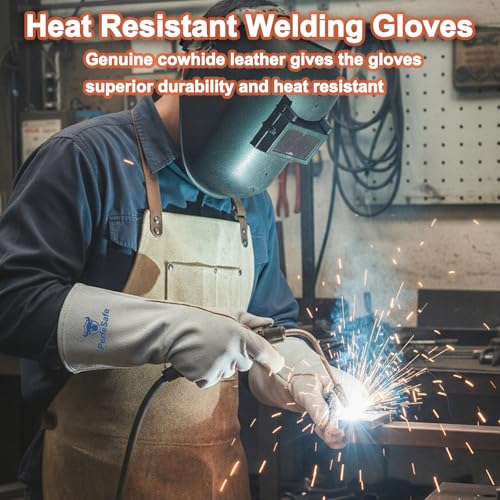
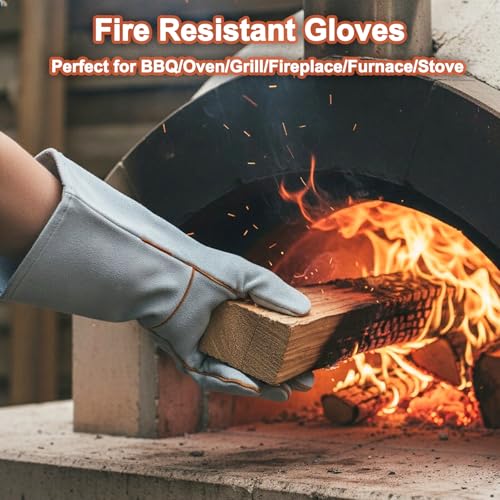
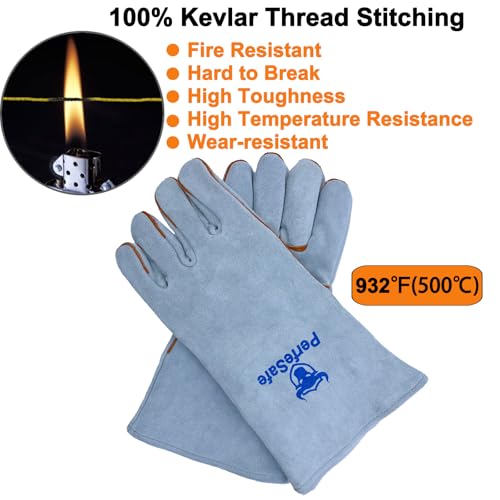
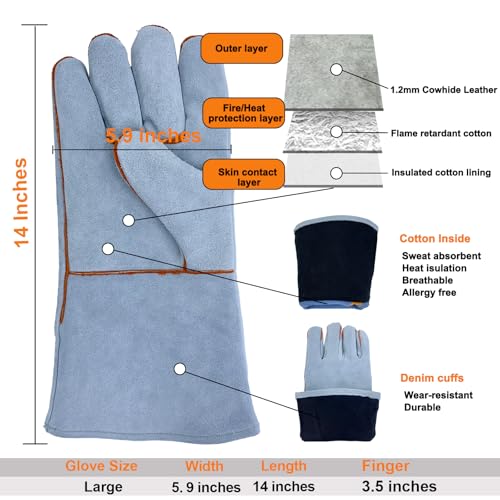
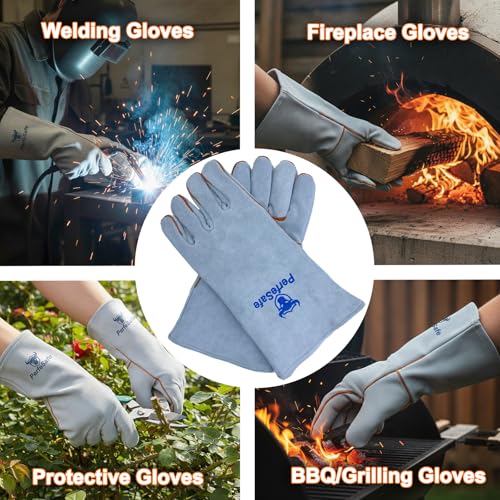
The PerfeSafe 14-inch gloves sit neatly in the middle, neither the cheapest nor the most advanced, but hitting the right notes for most DIYers. The 1.2–1.3mm split cowhide leather with Kevlar stitching delivers solid protection for MIG, TIG, and stick, and the 14-inch length with 5.5-inch cuff offers decent forearm coverage without feeling cumbersome. Owners appreciate the cotton lining for breathability, especially during summer welding or grill duty.
They’re not as refined as the Lincoln or Caiman models, and the sizing note about manual measurement gives pause, some users report slight inconsistencies. But overall, they’re seen as a reliable mid-tier option that doesn’t cut corners. Compared to budget gloves, they last longer and feel more substantial. For someone building a first welding kit without blowing the budget, these are a smart, balanced pick.
Product photos
Black Stallion MIG Welding Gloves

Strengths
- Reinforced palm and fingers
- Kevlar stitching
- Ergonomic wrist padding
Trade-offs
- Only 14-inch length
- Tan color shows soot quickly
- Not ideal for TIG or fine work
The Black Stallion GM1611-WT gloves are clearly optimized for MIG welders who move fast and handle hot metal all day. The reinforced patches on the palm, thumb, and index finger are a standout, owners say they noticeably extend glove life, especially where the gun grip rubs hardest. Add in the Kevlar stitching and extra padding at the wrist, and you’ve got a glove that’s built to endure repetitive, high-friction use.
The tan cowhide breaks in faster than some darker, thicker leathers, and the RestPatch wrist support gets quiet praise in reviews from users with hand fatigue. It’s not the longest glove here, but it’s one of the most thoughtfully reinforced. Compared to generic 16-inch models, it feels like it was designed by someone who actually uses a MIG gun daily. For that reason, I’d pick it over more generic options for anyone doing frequent metal fabrication.
Product photos
Lincoln Electric MIG/Stick Welding Gloves
Strengths
- Kevlar stitching throughout
- Straight thumb design
- Proven long-term durability
Trade-offs
- 14-inch length less coverage
- Not ideal for TIG
- Heavier than lightweight models
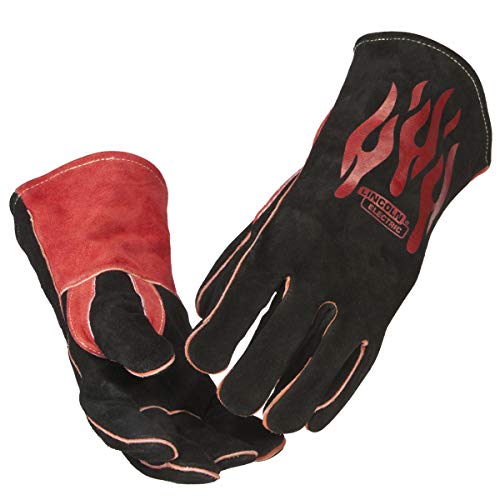
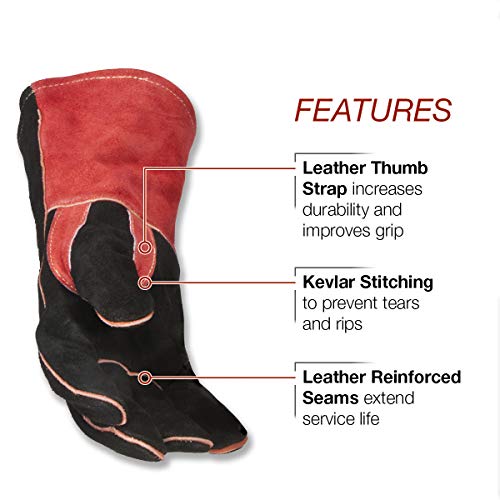
When owners say ‘this is what pro gloves feel like,’ they’re often talking about the Lincoln Electric K2979-ALL. These aren’t flashy, but they’re built like workhorses, kevlar stitching, reinforced stress points, and a soft cotton liner that soaks up sweat without breaking down. The 14-inch length is shorter than some, but pros seem to prefer it for better mobility, and the straight thumb design genuinely improves grip on welding guns.
This model has been around for years, and its staying power speaks volumes. Reviewers who’ve used them daily on fabrication jobs say they wear in well, not out, meaning they soften over time without splitting at the seams. Compared to newer ‘ultra-long’ gloves, these trade a bit of forearm coverage for more control, which is why I’d recommend them over flashier options for serious MIG or stick work. They’re not the lightest, but they’re the benchmark for reliability.
Product photos

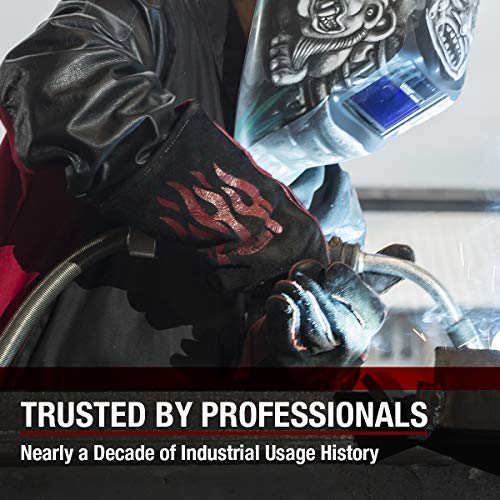

Caiman Premium Goat Grain TIG Gloves

Strengths
- Kontour hand fit
- Supple goat grain leather
- Patented wrist design
Trade-offs
- Shorter cuff than full-length models
- Premium price point
- Not for heavy spatter
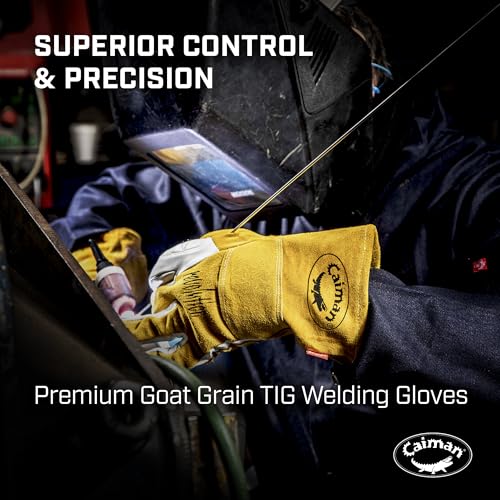
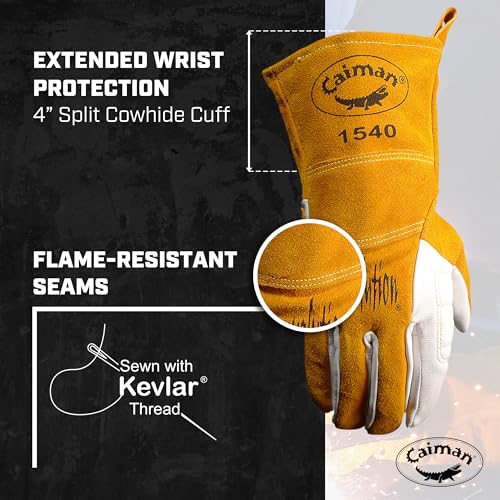
Caiman’s Kontour design isn’t just marketing fluff, owners say these gloves actually fit like a second skin, and that’s critical for TIG work. The goat grain leather is supple from the start, and the split cowhide back adds durability without sacrificing flexibility. The 4-inch extended cuff strikes a smart balance: more protection than basic gloves, but not so long that it hampers movement.
What really sets these apart is the wrist design. The Kontour Wrist Technology gets repeated nods for reducing slippage and hot-spot irritation during long sessions. Compared to the Tillman goatskin model, these feel a bit more refined, better stitching, more consistent leather quality. They’re not cheap, but for TIG specialists, the comfort payoff justifies it. If you’re tired of gloves that bunch or restrict finger movement, these are worth the investment.
Product photos


Tillman Top Grain Goatskin Gloves

Strengths
- Lightweight goatskin leather
- Excellent dexterity
- Ambidextrous fit
Trade-offs
- Minimal forearm protection
- Not for high-spatter work
- Less heat resistance than heavy-duty models
If you’re doing delicate TIG work, the Tillman 1328 gloves should be on your shortlist. Goatskin is naturally softer and more flexible than cowhide, and owners consistently report superior fingertip sensitivity, a must when you’re guiding a tungsten at low amperage. The ambidextrous design is a nice touch for left-hand welders or shared shop use, and the pull-on style makes them quick to grab and go.
But that lightness comes with trade-offs. These aren’t gloves for heavy spatter or long stick welding sessions. The single-layer construction and lack of extended cuff mean less protection when things get hot. Still, for the right job, they shine. Compared to bulkier models, they’re like switching from work boots to trail runners, less armor, but far better feel. If TIG is your main game, this is the glove that gets out of your way.
Product photos
How We Evaluated welding gloves
As someone who’s spent years around workshops and job sites (and as the guy behind PowerToolGuide.net), I understand the importance of good hand protection when welding. Rather than a hands-on lab test of each pair, my approach involved a detailed research-led comparison of published specifications, features, and – crucially – a deep explore owner and expert reviews. I assessed gloves based on materials, construction, heat resistance ratings, and reported comfort levels, looking for patterns in what welders actually say about performance.
For welding gloves, heat resistance and durability are paramount. I weighed these factors most heavily, alongside forearm protection, as those are the most common points of failure or discomfort reported by users. A glove can boast impressive specs, but if it tears quickly or doesn’t offer adequate heat shielding, it’s simply not a good choice. Finding the right balance between protection and dexterity is crucial too; a bulky glove is a clumsy glove.
Specifications reliably indicate the materials used and stated heat resistance, but owner feedback reveals how those translate to real-world use. I paid close attention to comments about how gloves held up over time, how comfortable they were during extended use, and whether the sizing was accurate. Reputable expert reviews helped validate claims and identify gloves offering particularly good value, like those designed for specific applications such as stick welding gloves.
How To Choose The welding gloves
Choosing the right welding gloves is about more than just protecting your hands from burns; it’s about maintaining control, comfort, and dexterity during extended work.
A quality welding glove balances heat resistance with tactile sensitivity. Look for durable materials like leather – split cowhide is common, but goat grain offers superior feel – and reinforced stitching, particularly Kevlar. Consider the length needed for forearm protection, the specific welding process (MIG, TIG, Stick), and features like padded palms for added comfort and impact resistance.
Material & Heat Resistance
The leather quality is the first thing I look at. Split cowhide is a good all-around choice, offering decent protection at a reasonable price. However, if you’re doing a lot of precision work, or if you’re working with thinner metals, you’ll want to seriously consider gloves made from goat grain leather. It’s significantly more supple and allows for better dexterity. Heat resistance ratings are important, but remember these are often tested under specific conditions. Real-world performance can vary, and owner reviews are invaluable here. Don’t automatically assume a higher temperature rating equals a better glove; sometimes, a slightly lower rating combined with better construction and a comfortable fit will be more effective.
Length & Coverage
Forearm protection is often overlooked, but it’s crucial. A 14-inch glove offers good coverage for most general welding tasks, but if you’re working overhead or in tight spaces, a 16-inch glove might be a better choice. Consider the type of welding you do. For example, if you’re doing a lot of overhead work, a shorter glove might give you better maneuverability, even if it means slightly less forearm protection.
- A basic 9-12 inch glove is fine for light hobbyist work.
- A 14-inch glove is a solid all-around choice for most home and shop welders, balancing protection and dexterity.
- A 16-inch glove is ideal for professional use and offers maximum forearm protection, especially when working with high-heat applications or in potentially dangerous positions.
Specialized Welding & Value
Different welding processes demand different glove characteristics. If you primarily do TIG welding, you will need dexterous welding gloves that prioritize feel and control. These are often made from thinner, more pliable goat skin. MIG and Stick welding, on the other hand, call for more robust protection against spatter and intense heat, so a thicker cowhide glove with reinforced stitching is essential.
A well-made welding glove should last through hundreds of hours of work. Don’t skimp on quality; replacing cheap gloves frequently will end up costing you more in the long run.
Welding Gloves Compared
Here’s a comparison of key specifications for various welding gloves to help you choose the right pair.
| Product Title | Length (in) | Heat Resistance (°F) | Material (Palm) | Stitching | Forearm Protection |
|---|---|---|---|---|---|
| TOPDC 16 Inch Welding Gloves | 16 | 932 | Cowhide | Kevlar | 7.5″ Sleeve |
| TICONN 16 Inch Welding Gloves | 16 | 1000 | Cowhide | Kevlar | 7.5″ Sleeve |
| PerfeSafe 14 Inch Welding Gloves | 14 | 932 | Cowhide | Kevlar | 5.5″ Cuff |
| Black Stallion MIG Welding Gloves | N/A | N/A | Cowhide | Kevlar | N/A |
| Lincoln Electric MIG/Stick Gloves | N/A | N/A | Leather | Kevlar | N/A |
| Caiman Premium Goat Grain TIG Gloves | N/A | N/A | Goat Grain | N/A | N/A |
| Tillman Top Grain Goatskin Gloves | N/A | N/A | Goatskin | N/A | N/A |
Frequently Asked Questions
What heat resistance rating should I look for in welding gloves?
A rating of 932°F is generally sufficient for most home and hobbyist welding, but higher ratings like 1000°F offer an extra margin of safety. Remember that ratings are tested under specific conditions, and real-world performance depends on glove construction and materials.
Are longer welding gloves always better?
Not necessarily. While 16-inch gloves provide maximum forearm protection, a 14-inch glove offers a good balance of coverage and dexterity for many welders. Shorter gloves may be preferable for tasks requiring greater maneuverability.
What’s the difference between split cowhide and goat grain leather in welding gloves?
Split cowhide is durable and affordable, making it a good all-around choice. Goat grain leather is much more supple, providing better dexterity and feel, ideal for precision work like TIG welding, but it’s typically more expensive.
How important is the stitching on welding gloves?
Very important. Kevlar stitching is the gold standard because it’s incredibly heat and abrasion resistant. Gloves with weaker stitching are more likely to tear and fail, compromising your protection.
Can I use the same welding gloves for MIG, TIG, and stick welding?
You can, but it’s not ideal. TIG welding benefits from thinner, more dexterous gloves, while MIG and stick welding require thicker protection against spatter and heat. Using a specialized glove for each process will improve your control and safety.
The Bottom Line
Choosing welding gloves always comes down to balancing protection with control. You want something durable enough to withstand the heat and spatter, but also flexible enough to allow for precise movements. Based on the specs and what welders are saying, the TOPDC 16 Inch Welding Gloves strike that balance best overall, offering substantial forearm coverage and high heat resistance.
For those on a tighter budget, the PerfeSafe 14 Inch Welding Gloves provide solid protection without breaking the bank. If you’re primarily a MIG welder, I recommend looking at options designed for that process – the Black Stallion MIG Welding Gloves or even checking out our guide to the versatile mig welder gloves will steer you right. And for TIG work, where dexterity is key, the Caiman Premium Goat Grain TIG Gloves are a clear choice.
Ultimately, specs tell part of the story, but fit and comfort are paramount. A glove that feels right in your hand and allows you to maintain control will always outperform one with a higher temperature rating but a clumsy feel. Prioritize quality materials, reinforced stitching, and a length appropriate for your typical work – those fundamentals matter more than any single number on the packaging.
