9 Best Compound Miter Saws of 2026
This post contains affiliate links. As an Amazon Associate, we earn from qualifying purchases.
The Bosch GCM12SD stands out as the best overall compound miter saw for its smooth axial-glide system and precision, while the DeWalt DWS779 is a strong budget pick that delivers reliable power and dust control. For those cutting a variety of materials beyond wood, the Evolution R210CMS offers unmatched versatility.
If you’ve ever struggled with misaligned joints or rough cuts on trim or framing, you know how much a bad saw can slow you down and ruin a project. A solid compound miter saw should make angled cuts repeatable, accurate, and efficient, without constant adjustments or guesswork.
This guide cuts through the specs and marketing to focus on what matters: real-world performance, build quality, and value. I looked at owner feedback, expert reviews, and key features like bevel range, sliding mechanism stability, and dust management to find the models that consistently deliver where it counts.
Top 9 Compound Miter Saws in the Market
The Best Compound Miter Saws, Reviewed
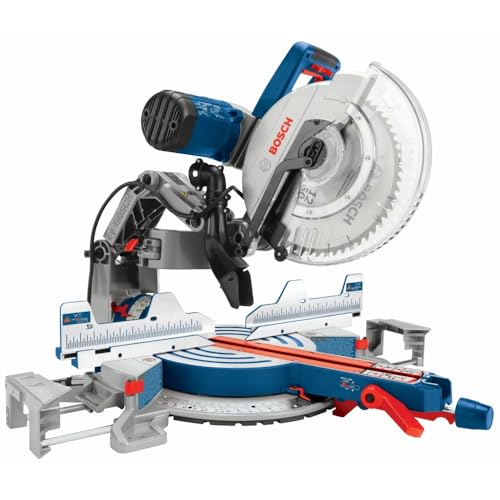
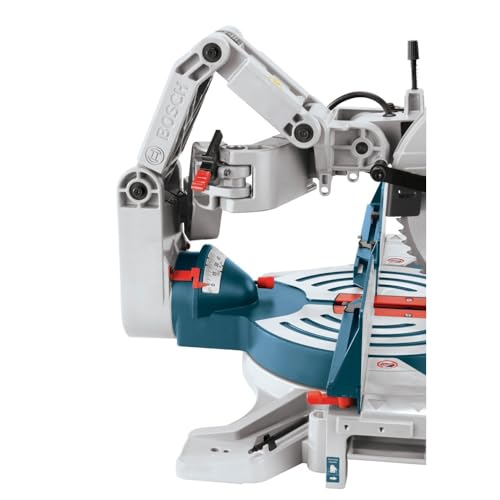
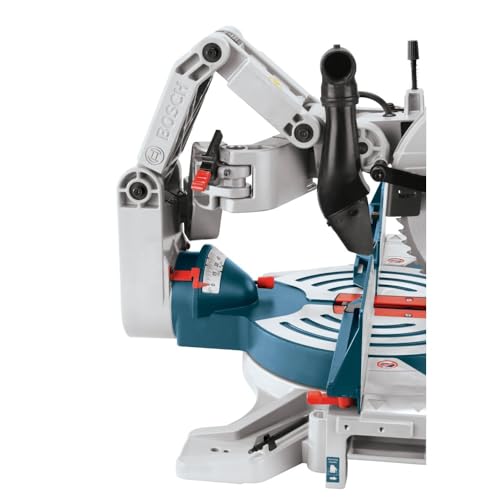
BOSCH GCM12SD 12-Inch Dual-Bevel Glide
Strengths
- Axial-glide system
- 90% dust collection
- Expanding base
- SquareLock fence
- Push-button override
Trade-offs
- Higher price point
- Slightly slower setup
- Heavier than some
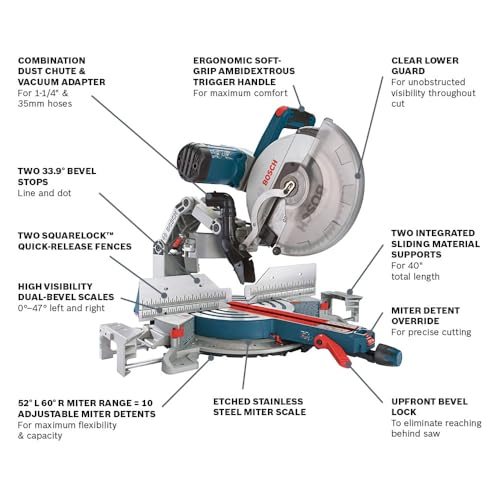
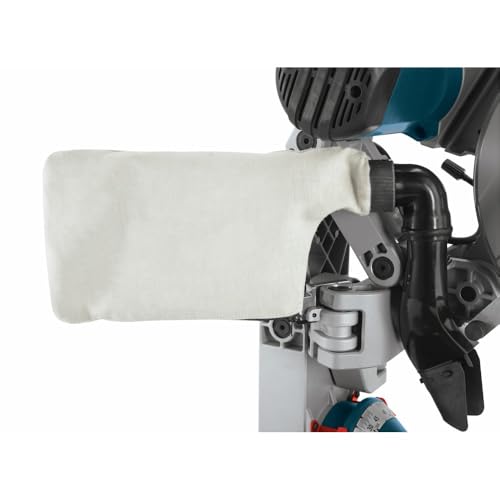
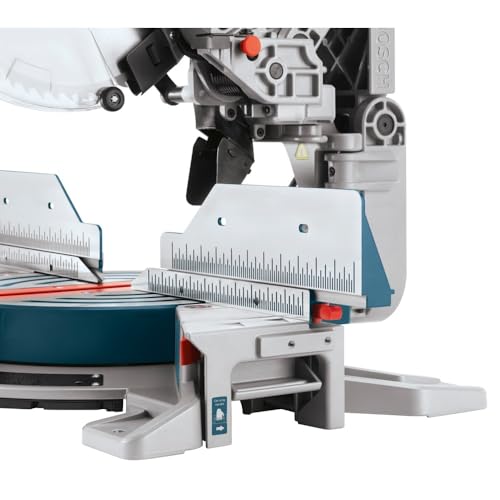
The Bosch GCM12SD is the gold standard in this group. The axial-glide system uses front-mounted rails instead of side arms, giving it a cleaner footprint and smoother action. Owners consistently report that it stays square longer than competitors, and the SquareLock fence system minimizes deflection. The 90% dust collection with a vacuum is unmatched, this saw keeps your site cleaner than any other here.
It also has the best material support, with expanding base extensions that handle wide panels confidently. The push-button detent override is a small luxury, but it speeds up workflow. Compared to the DEWALT DWS780, it’s more precise, better built, and collects more dust. For a pro or serious hobbyist who values accuracy and longevity, this is the smarter buy.
Product photos
DEWALT DWS779 12-Inch Double Bevel Sliding
Strengths
- 15-amp motor
- Tall sliding fences
- 3,800 RPM
- Dual steel rails
- 2×14 crosscut
Trade-offs
- No XPS cutline
- Heavier than rivals
- No built-in LED
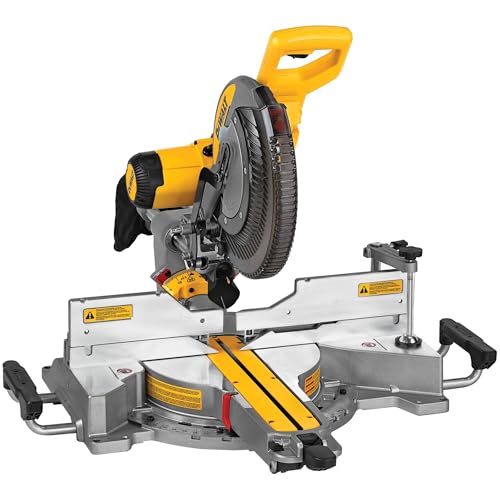
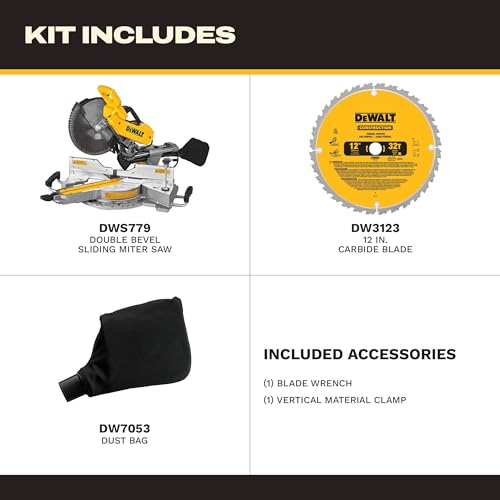
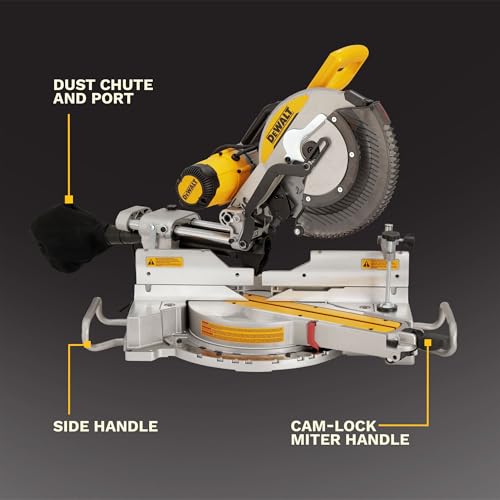
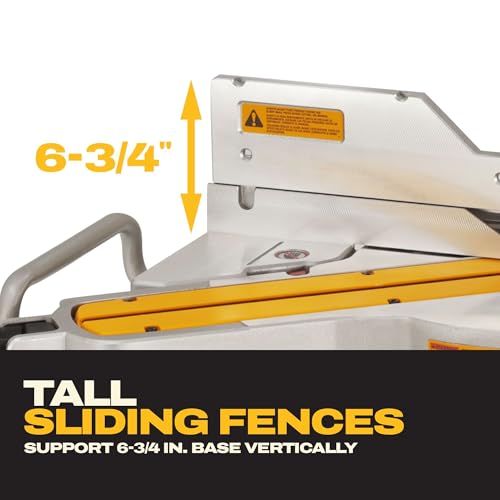
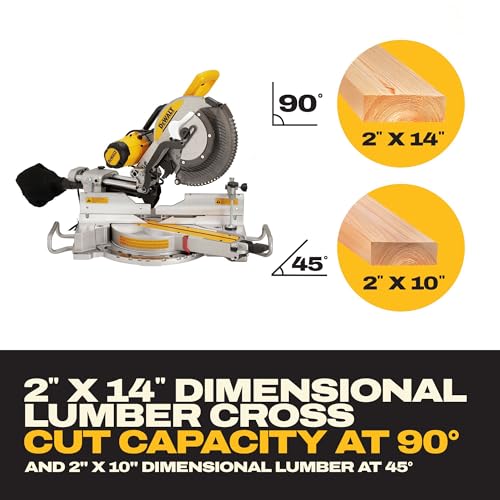
This DEWALT DWS779 is built like a contractor-grade workhorse, and on paper, it’s one of the most robust 12-inch sliding miter saws in its class. The 15-amp motor and 3,800 RPM output deliver consistent power, and the dual horizontal steel rails with linear ball bearings provide a solid glide that owners consistently praise for durability. The tall sliding fences are a real advantage when cutting crown molding up to 7-1/2 inches nested, and the 2×14 crosscut capacity at 90° means it handles long beams without hesitation.
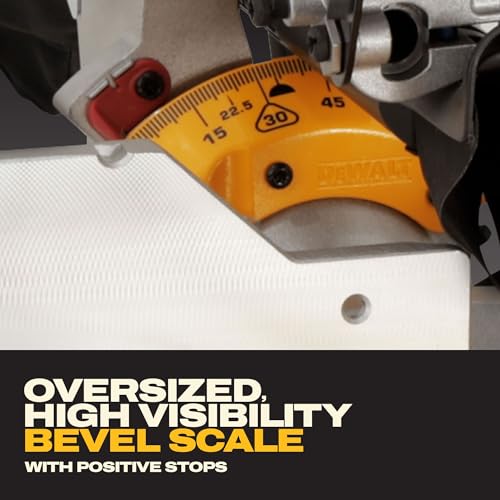
What really sets this model apart is its bevel and miter range, 50° left and 60° right miter, plus dual 49° bevels. That kind of reach is rare and useful for complex trim work. While it lacks an XPS or LED guide, the cam lock miter handle and oversized scales make repeat cuts efficient. Compared to the DWS780, it trades the shadow light for a slightly more rugged build and marginally better dust collection.
Product photos
DEWALT DWS780 12-Inch with XPS LED

Strengths
- XPS LED shadow line
- 3,800 RPM motor
- Lighter than DWS779
- Dust collection
- Tall sliding fences
Trade-offs
- Slightly reduced miter range
- No laser on base model
- XPS can dim over time
If precision matters more than raw power, the DWS780 is the smarter DEWALT pick. The XPS LED shadow line is a standout, it projects a real-time cutline without calibration, and owners love how it eliminates guesswork, especially on fine trim. The 15-amp motor and 3,800 RPM performance mirror the DWS779, but the compact, 58-pound design makes it easier to haul around. It’s still no lightweight, but it’s manageable for frequent transport.
The dust collection system captures over 75% of debris, which is solid for a corded saw, and the sliding fences support 7-1/2-inch nested crown, same as the DWS779. Where it pulls ahead is usability: the XPS system, combined with the cam lock miter handle and oversized bevel scale, makes repeatable, accurate cuts faster. For trim carpenters or finish work specialists, this one’s worth the premium over the DWS779.
Product photos
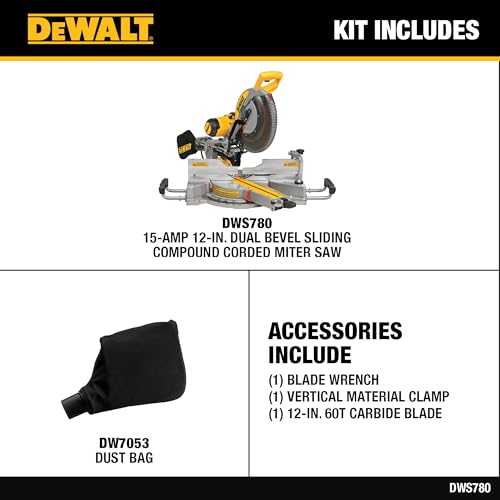
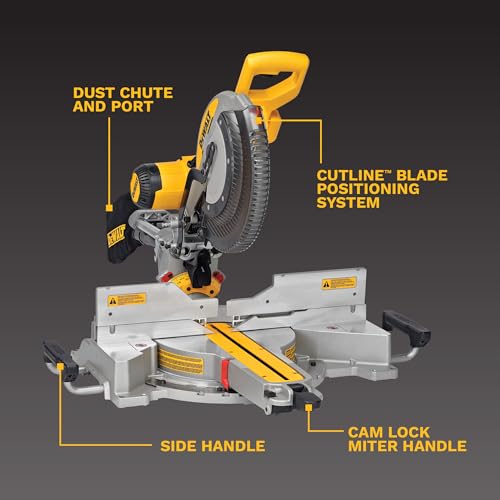
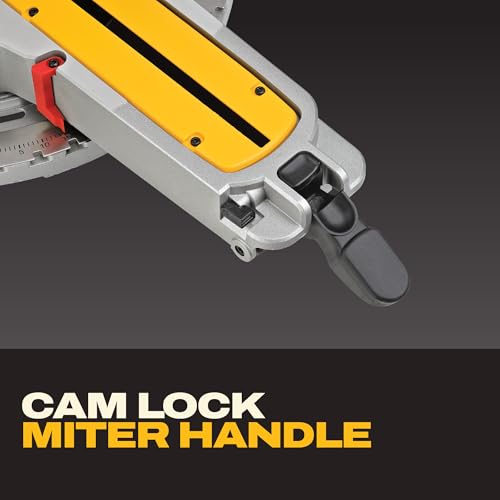

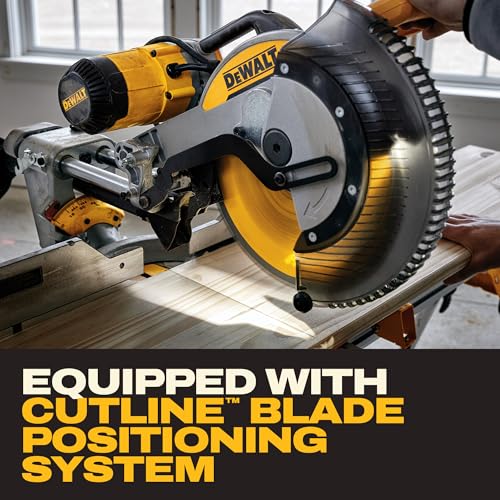
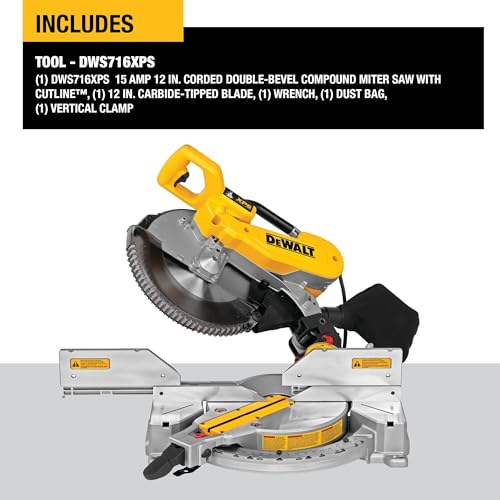
DEWALT DWS716XPS 12-Inch with XPS Cutline

Strengths
- CUTLINE LED system
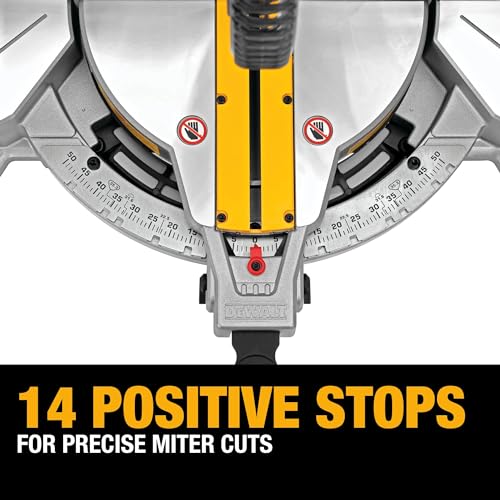
- 14 miter detents
- Compact footprint
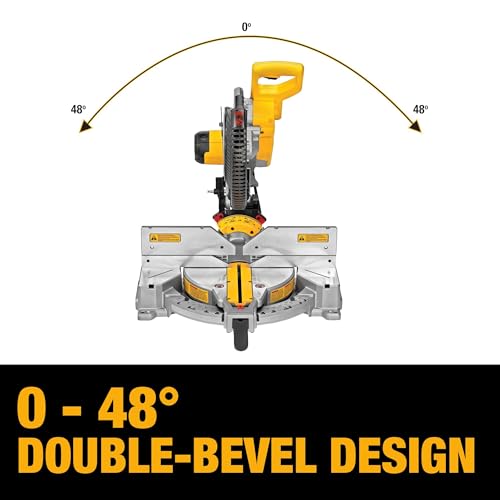
- Dual bevel design
- Stainless steel plate
Trade-offs
- No sliding rail
- Smaller cutting capacity
- Lower RPM than rivals
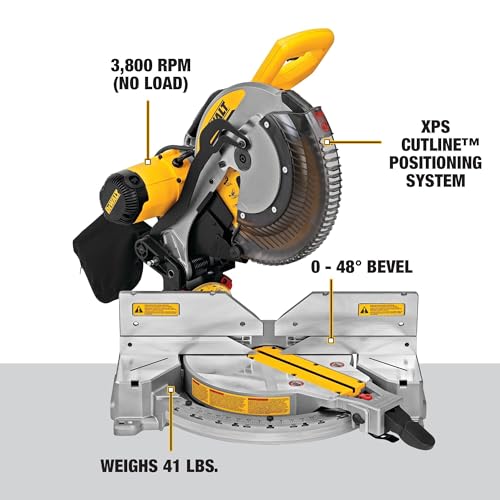
The DWS716XPS is DEWALT’s compact answer to high-accuracy dual-bevel needs. It doesn’t slide, so it lacks the crosscut capacity of the DWS779 or DWS780, but what it gives up in reach, it gains in precision and footprint. The CUTLINE LED system works instantly, no adjustment needed, and delivers a crisp shadow line that owners find more reliable than lasers. For small shops or garage builders with limited space, this is a big win.
It’s limited to 2×12 at 90°, but the 14 positive miter detents and dual 48° bevels make it excellent for repetitive angled cuts. The stainless-steel miter plate feels durable, and the cam lock handle speeds up adjustments. Compared to the SKIL MS6305-00, it’s less powerful but more refined. I’d pick this for detailed cabinetry or furniture builds where space and accuracy beat brute cutting depth.
Product photos

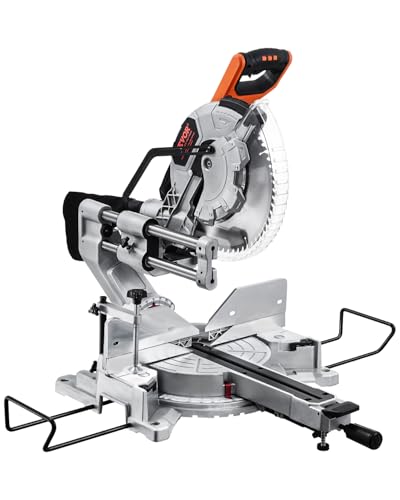
VEVOR 12-Inch Double Bevel Sliding Miter
Strengths
- LED alignment
- 5000 RPM motor
- Aluminum base
- Dual bevel
- 60-tooth blade
Trade-offs
- Loose tolerances
- Inconsistent calibration
- Plastic components
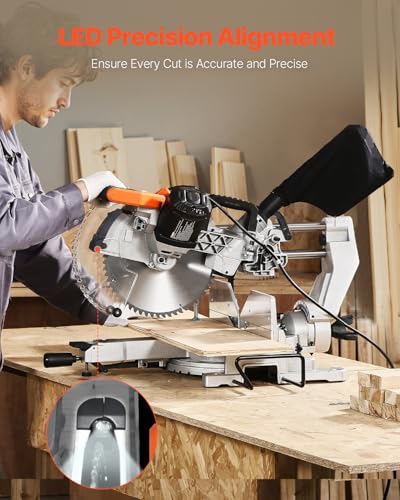
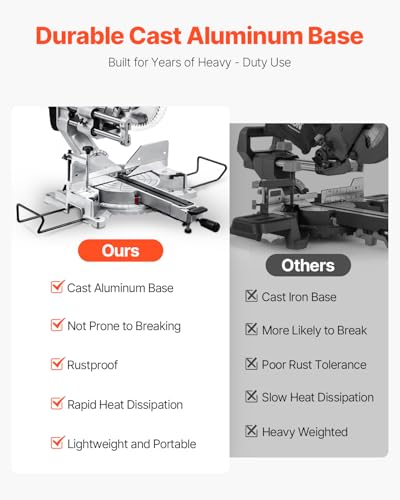
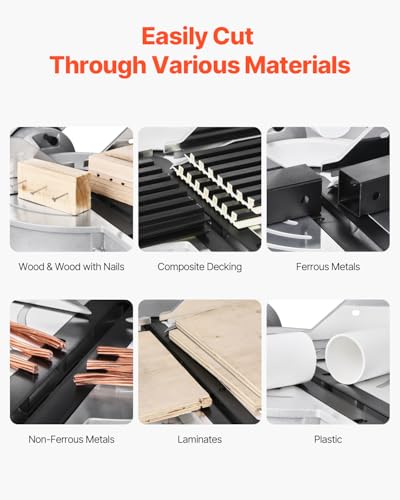
VEVOR is the budget king, and this 12-inch dual-bevel model delivers a lot on paper: 5000 RPM, LED alignment, 2×12 cutting capacity, and a lightweight aluminum base. The axial sliding system works smoothly, and the dual bevel range (0°–45° both sides) covers most common angles. For the price, it’s hard to ignore, especially with the 60-tooth blade included.
But owners report inconsistent calibration out of the box and a plasticky feel in the controls. The LED guide helps, but it’s not as sharp as DEWALT’s XPS. Still, for a homeowner building decks or shelves, it’s functional. Compared to the SKIL MS6305-00, it has similar specs but a slightly better dust system. If you’re on a tight budget and need a full-size dual-bevel saw, this gets the job done, just expect to tweak it first.
Product photos

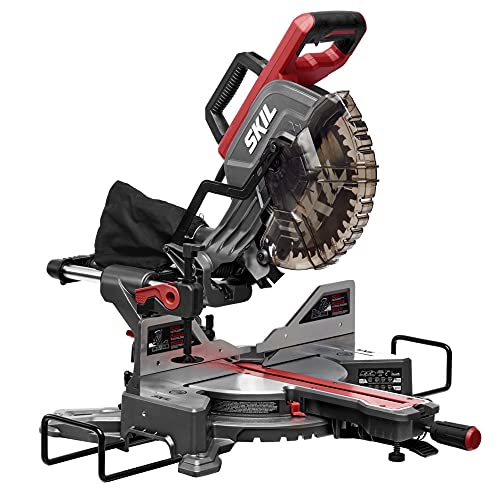
SKIL MS6305 10-Inch Dual Bevel Sliding
Strengths
- LED shadow line
- Dual bevel design
- 2×12 capacity
- 4,800 RPM motor
- 11 miter stops
Trade-offs
- Average dust collection
- Plastic base components
- Not for heavy pro use
SKIL packs dual bevel, sliding action, and a 15-amp motor into a surprisingly affordable 10-inch platform. The 4,800 RPM motor handles most wood cuts cleanly, and the 2×12 capacity at 90° is impressive for its size. The LED shadow line is sharper than lasers and works well for precise joinery. With 11 positive miter stops, it’s tuned for common angles, and the dual bevel function adds flexibility over single-bevel rivals.
It’s not as rugged as DEWALT or Bosch, and dust collection is average. But for a homeowner building decks or cabinets, it’s a smart balance of price and performance. Compared to the VEVOR, it feels more refined and has better ergonomics. I’d pick this over the VEVOR for slightly better build quality and consistency.
Product photos


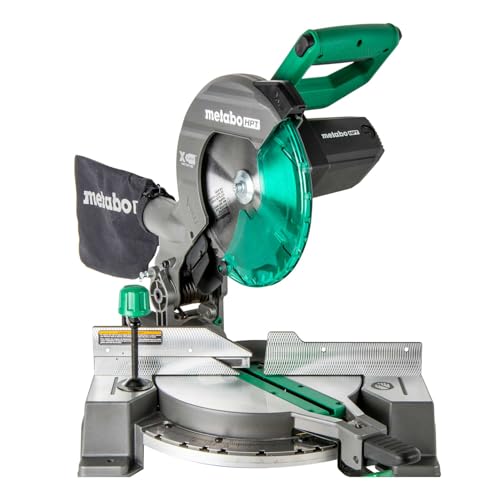
Metabo HPT C10FCG2 10-Inch Single Bevel
Strengths
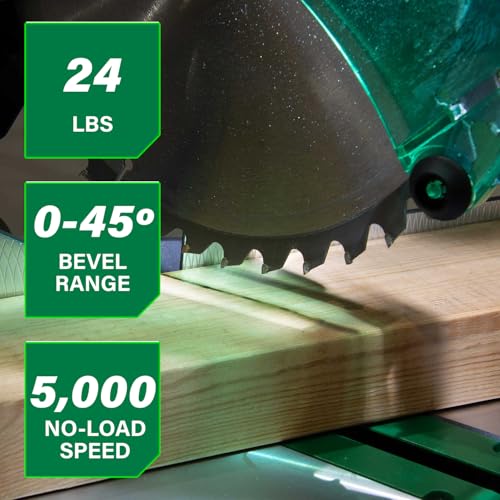
- 24 lbs lightweight
- 5,000 RPM motor
- Xact Cut shadow
- 5-year warranty
- Compact design
Trade-offs
- Single bevel only
- Smaller cutting capacity
- No sliding rail
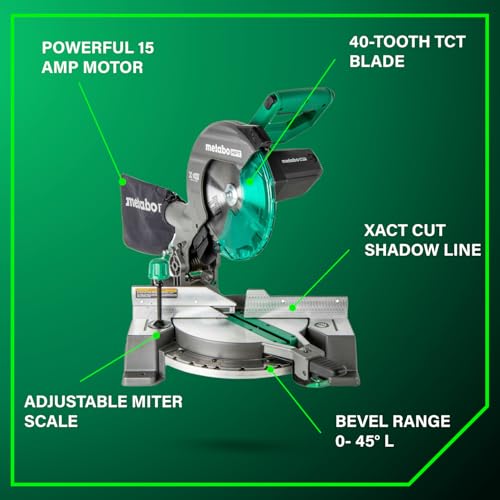
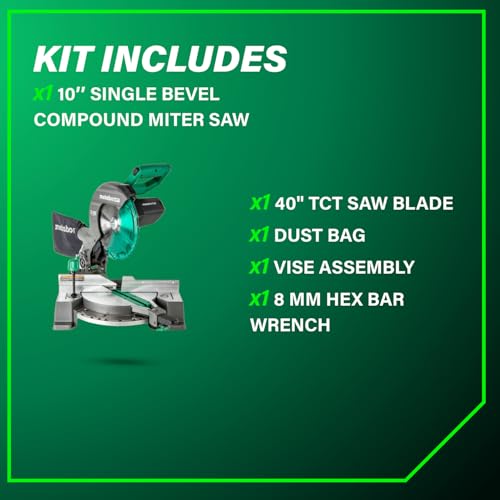
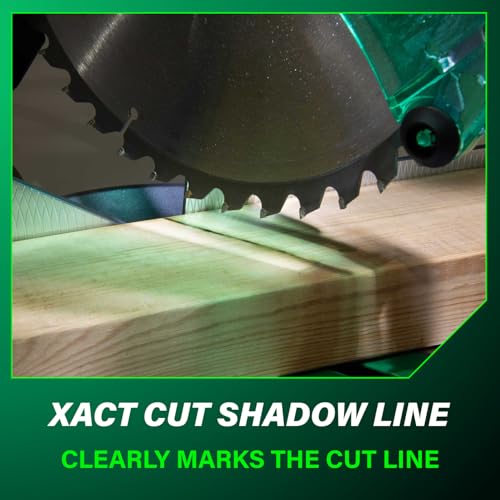
At just 24 pounds, this Metabo HPT is the lightest here, and that’s its superpower. The 15-amp motor pushes to 5,000 RPM, giving it surprising speed for a single-bevel saw. The Xact Cut shadow line is a standout at this weight class, delivering clear cut guidance without lasers. It’s ideal for roofers, framers, or electricians who climb ladders and need a saw that won’t tire them out.
It’s limited to single 45° bevels and 2x material crosscuts, so it’s not for complex trim. But the 5-year warranty is a strong vote of confidence, and Japanese engineering means long-term reliability. Compared to the SKIL 10-inch, it’s lighter and more durable. For pure portability and speed, this is the one to beat.
Product photos

DOVAMAN Updated 10-Inch Sliding Miter Saw

Strengths
- Dual-speed motor
- Three TCT blades
- Laser guide
- Ambidextrous design
- 10-inch sliding rail
Trade-offs
- Laser alignment issues
- Motor runs hot
- Build quality average
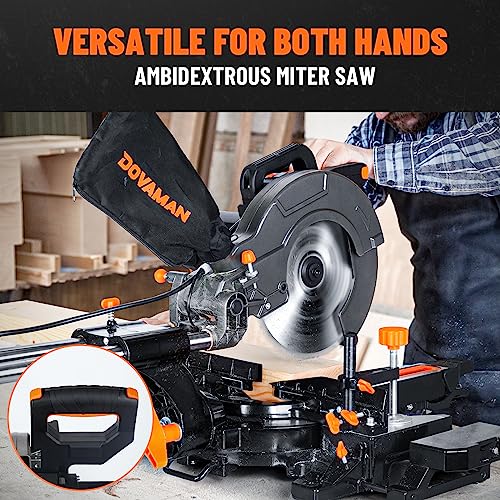
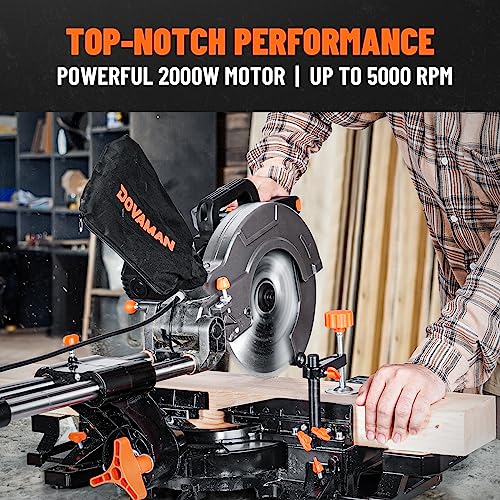
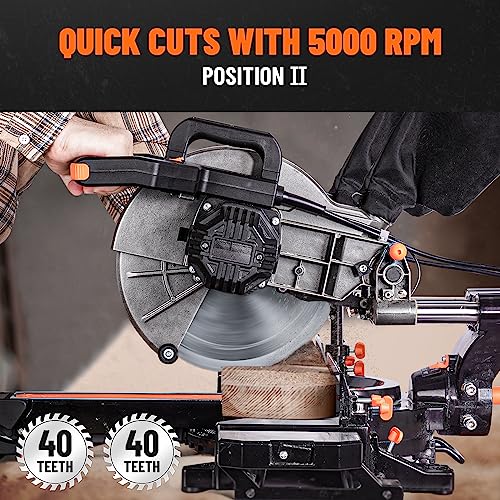
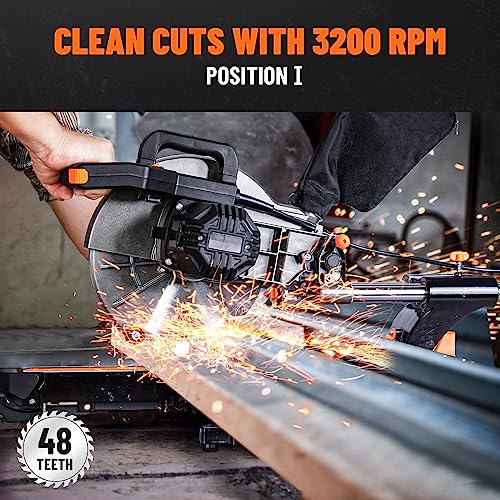
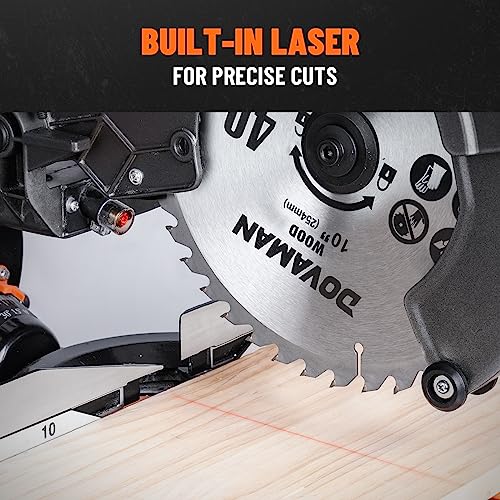
The DOVAMAN stands out with its dual-speed motor and three included TCT blades, this is clearly aimed at multi-material versatility. At 5000 RPM (wood) and 3200 RPM (soft metals), it adapts to the material, which is smart engineering. The laser guide helps with alignment, though owners report it can drift over time. The 13-inch sliding rail gives decent reach, and the ambidextrous design is a thoughtful touch for shared workshops.
It’s not as durable as DEWALT or Bosch, but for the price, it’s feature-packed. The 15-amp pure copper motor sounds impressive, but real-world feedback suggests it runs hot under load. Still, for DIYers tackling decks, PVC trim, or light metal, it’s a solid budget performer. Compared to the VEVOR, it has better speed control and more blades. I’d recommend it for weekend warriors who want flexibility without overspending.
Product photos
Evolution R210CMS 8-1/4″ Multi-Material Miter
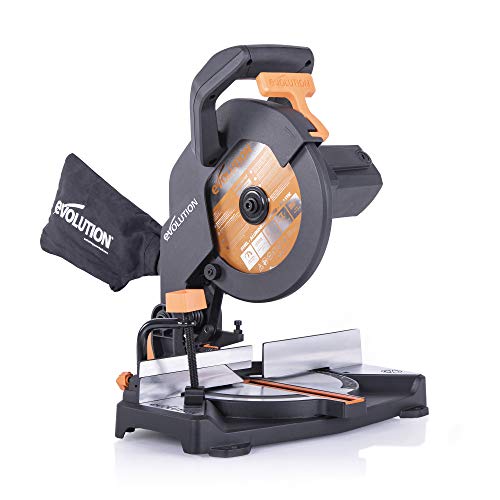
Strengths
- Cuts metal and wood
- TCT blade included
- Compact design
- 3-year warranty
- Multi-material use
Trade-offs
- Small blade size
- Limited crosscut depth
- Not ideal for large stock
This Evolution saw breaks the mold, it’s not just for wood. With a 1200W motor and a premium TCT blade, it cuts steel, aluminum, plastic, and wood with embedded nails, all without changing blades. That’s a rare capability, and for remodelers or handymen dealing with mixed materials, it’s a game-saver. The 8-1/4-inch blade keeps it compact, and the 3-year warranty adds peace of mind.
But don’t expect 12-inch capacity. It maxes out at smaller crosscuts, and the 45° bevel and miter limits reduce versatility for complex trim. Still, for demolition jobs or outdoor builds with metal railings and treated lumber, this one pulls double duty. Compared to the DOVAMAN 10-inch, it’s less powerful but more specialized in material range. If you regularly cut metal, this is the only real option here.
Product photos




How We Picked These compound miter saws
As a woodworker and power tool enthusiast for over 15 years, I understand the importance of a quality compound miter saw. Rather than a hands-on lab test with each model, this selection is based on a research-led comparison of published specifications and features, combined with careful consideration of owner reviews and insights from reputable expert sources. My goal was to identify saws that consistently deliver accuracy, power, and durability across a range of projects.
For compound miter saws, the most important factors are cutting capacity, accuracy, and build quality. A larger capacity allows for tackling bigger projects, while precise cuts are critical for professional-looking results. Durable construction, particularly in the base, fences, and bevel mechanisms, directly impacts the saw’s longevity and consistent performance. These three areas heavily influenced the ranking of each saw.
Specifications reliably indicate motor power, blade size, and cutting capacities. However, I placed significant weight on owner feedback regarding ease of use, dust collection effectiveness, and long-term reliability. Reputable reviews from sites specializing in woodworking tools helped validate these owner experiences and identify potential weaknesses. Understanding the difference between advertised capabilities and real-world performance is key – you can learn more about the compound miter saw definition to get a better grasp of these differences.
How To Choose The compound miter saws
Picking the right compound miter saw can be a bit overwhelming; there are a lot of features to sort through.
A quality compound miter saw balances power, accuracy, and usability. Key considerations include motor amperage, blade quality, bevel and miter range, dust collection efficiency, and the overall build quality of the saw’s base and fences. Look for models with positive stops at common angles and a clear scale for adjustments. A sliding function greatly expands cutting capacity for wider stock.
Blade Quality & Material Compatibility
Don’t assume all blades are created equal. While most saws come with a general-purpose blade, understanding what you’ll be cutting most often is crucial. For primarily woodworking, a high-tooth count blade (60-80 teeth) will produce cleaner cuts in hardwoods and fine materials. If you anticipate cutting a lot of rough lumber or need to tackle materials beyond wood, consider investing in specialized blades. A saw like the Evolution R210CMS, designed for multi-material cutting, can be a strong contender if you regularly work with steel, aluminum, or plastic. I frequently see folks underestimate the importance of a sharp blade, and it’s often the first place to look when cuts aren’t clean.
Bevel & Miter Capacity: Beyond the Numbers
The advertised miter and bevel ranges are important, but consider how those ranges are implemented. Positive stops at common angles (0, 22.5, 45 degrees) are incredibly useful for quickly and accurately setting up cuts. A detent override feature – like on the Bosch GCM12SD – allows you to bypass those stops for custom angles. Beyond the angle specifications, think about whether you need a dual bevel miter saw advantages. The ability to bevel in both directions can save you time and effort on certain projects.
- A single bevel saw is perfectly adequate for most common DIY tasks.
- If you frequently work with crown molding or complex angles, a dual-bevel saw will streamline your workflow.
- For professional carpenters or those tackling elaborate projects, the time savings and flexibility of a dual-bevel model are well worth the investment.
Don’t skimp on accuracy. A saw that consistently delivers precise cuts is far more valuable than one with flashy features that don’t perform reliably.
Power & Sliding Mechanism
Motor amperage is a good indicator of a saw’s power, but it’s not the whole story. A 15-amp motor is generally sufficient for most tasks, as found in saws like the DeWalt DWS779. However, the quality of the sliding mechanism is equally important. Look for saws with smooth, stable glide action and minimal play in the rails. A poorly designed sliding system can lead to inaccurate cuts and frustrating operation. I’ve seen many DIYers overlook this, opting for a powerful motor while ignoring the stability of the rails. If you’re looking at high-performance sliding compound miter saws, a robust sliding system is a must-have.
Compound Miter Saws Compared
Here’s a comparison of key specifications for popular compound miter saws to help you choose the right tool for your needs.
| Product Name | Motor (Amps) | Blade Size (in) | Bevel (Left/Right) | Miter (Left/Right) | Max Cut (2x Lumber – 90°) | Special Features |
|---|---|---|---|---|---|---|
| BOSCH GCM12SD | N/A | 12 | 47 / 47 | 52 / 60 | N/A | Axial-Glide System |
| DEWALT DWS779 | 15 | 12 | 49 / 49 | 60 / 50 | 2×14 | Dust Collection |
| DEWALT DWS780 | 15 | 12 | 49 / 49 | 60 / 50 | 2×14 | XPS LED, Dust Collection |
| DEWALT DWS716XPS | N/A | 12 | 48 / 48 | 50 / 50 | N/A | XPS Cutline, 14 Stops |
| VEVOR 12-Inch | N/A | 12 | 45 / 45 | N/A | N/A | LED Guide, Axial Sliding |
| SKIL MS6305 | 15 | 10 | 48 / 45 | 50 / 50 | 2×12 | LED Shadow Line |
| Metabo HPT C10FCG2 | 15 | 10 | 45 / 0 | 52 / 52 | N/A | Lightweight, 5-Year Warranty |
| DOVAMAN Updated 10-Inch | 15 | 10 | N/A | N/A | 4×13 | Dual-Speed, Laser Guide |
| Evolution R210CMS | N/A | 8-1/4 | 45 / 45 | 45 / 45 | N/A | Multi-Material Cutting |
Frequently Asked Questions
What blade size should I choose for my compound miter saw?
A 12-inch blade is the most versatile size for most users, offering a good balance between cutting capacity and maneuverability. However, if you frequently work with larger timbers, exploring the top 12-inch compound miter saws is a good idea, as they provide significantly greater cutting depth.
How important is dust collection on a miter saw?
Dust collection is very important, as miter saws generate a lot of fine sawdust. Effective dust collection improves visibility, reduces cleanup time, and most importantly, protects your lungs from harmful particles. Look for models with a dust port and consider pairing it with a shop vacuum.
What’s the difference between a single bevel and a dual bevel miter saw?
A single bevel saw can only bevel in one direction, while a dual bevel saw can bevel in both directions. Dual bevel saws offer more flexibility for cutting complex angles, like crown molding, and can save you time by eliminating the need to reposition the workpiece.
Are more expensive miter saws always better?
Not necessarily. While higher prices often reflect better build quality and features, it’s crucial to focus on your specific needs. A simpler, well-built single bevel saw can be a better value than a feature-rich dual bevel model if you don’t need those advanced capabilities. You can find some of the leading 12-inch compound saws at a variety of price points.
What should I look for in a sliding miter saw’s rails?
Smooth and stable rails are crucial for accurate cuts with a sliding miter saw. Look for models with a robust rail system that minimizes play and provides a consistent glide action. A poorly designed sliding mechanism will compromise the saw’s precision, even with a powerful motor and a sharp blade, so consider the high-capacity compound miter saws with this in mind.
The Bottom Line
Choosing a compound miter saw often comes down to balancing how much control you want with how much you’re willing to spend. For most homeowners and serious DIYers, the DeWalt DWS780 offers an excellent blend of power, accuracy, and helpful features like the XPS LED light system, making it our top overall pick. It’s a saw that will handle a wide variety of projects with confidence.
However, if you’re on a tighter budget, the SKIL MS6305 delivers impressive performance for the price. And for those who need maximum versatility – working with everything from wood to metal – the Evolution R210CMS is a standout choice, offering the ability to cut multiple materials cleanly. If you’re looking at a sliding compound miter saw benefits, remember to factor in the stability of the sliding mechanism.
Ultimately, the most important thing isn’t any single specification or feature, but rather a solid, well-built saw that feels accurate and inspires confidence. Focus on build quality, a smooth sliding mechanism (if applicable), and a clear line of sight. A sharp blade and consistent practice will always yield better results than the most expensive saw in the wrong hands.
