8 Best Track Saws of 2026
This post contains affiliate links. As an Amazon Associate, we earn from qualifying purchases.
After comparing the field and weighing specs against owner feedback, the Festool TS 55 FEQ-F-Plus stands out as the overall best track saw for precision and reliability, the Milwaukee M18 FUEL is the top cordless pick for power and portability, and the WEN 7.25″ offers the best value for budget-conscious DIYers.
Most people don’t realize how much a shaky cut or poor dust collection can slow down a project and ruin a clean edge. A good track saw should make straight, splinter-free cuts without fighting the tool or cleaning up a mess afterward.
This guide cuts through the noise by focusing on what actually matters: accuracy, smooth operation, and build quality. I looked at motor specs, track design, and real-world feedback to find models that deliver consistent results whether you’re breaking down plywood or trimming hardwood.
Top 8 Track Saws in the Market
The Best Track Saws, Reviewed
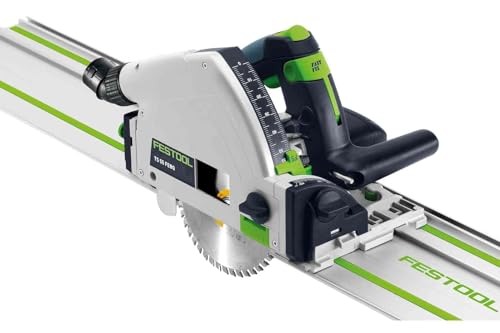
Festool TS 55 FEQ-F-Plus Track Saw

Strengths
- Splinter-free on both sides
- Excellent bevel accuracy
- Superior dust extraction
- Riving knife stays aligned
- Top-tier accessory integration
Trade-offs
- Very high price
- Steep learning curve
- Heavier than some rivals
Festool still sets the gold standard for track saws, and the TS 55 FEQ-F-Plus-FS proves why. The combination of precise bevel control, splinter-free cuts on both sides, and a riving knife that stays aligned through angle changes is unmatched. Owners praise its build quality and how it integrates with Festool’s ecosystem, dust extraction, rails, and accessories all click together flawlessly.
Yes, it’s expensive. But if you’re doing high-end cabinetry or fine woodworking where every cut counts, this is the tool that delivers. The motor isn’t the most powerful on paper, but the efficiency and blade life more than compensate. This is the one I’d recommend if budget isn’t the main constraint and precision is essential.
Product photos
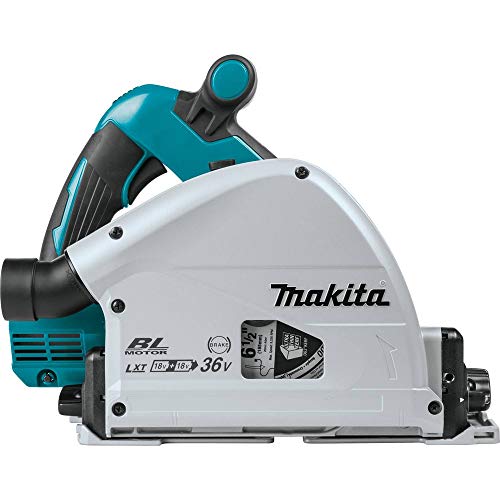
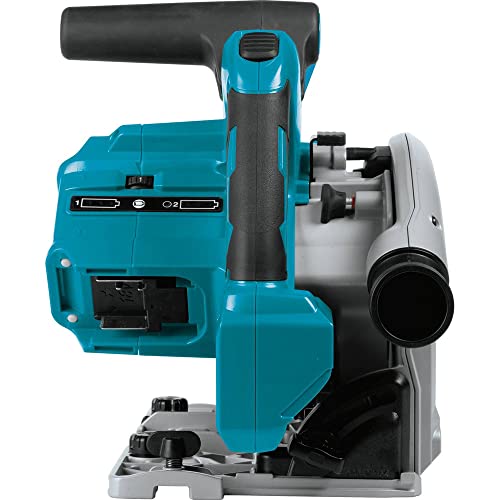
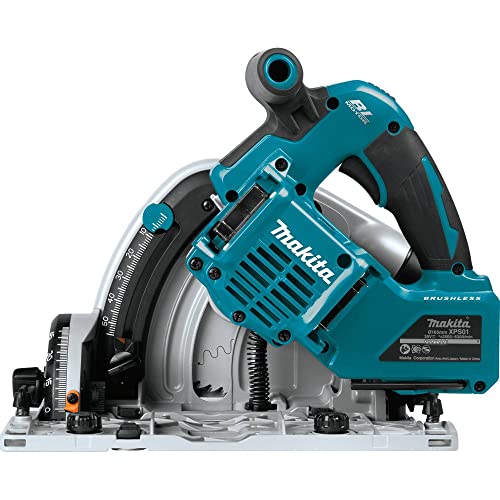
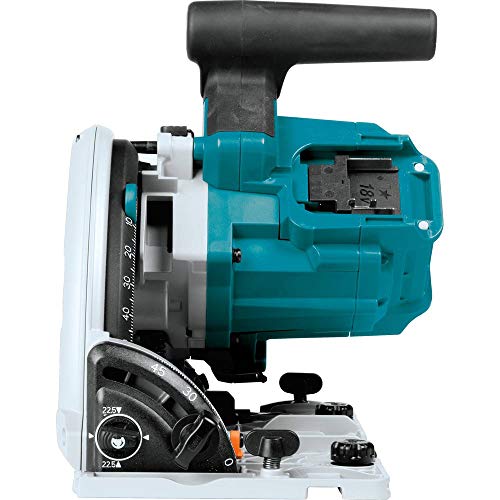
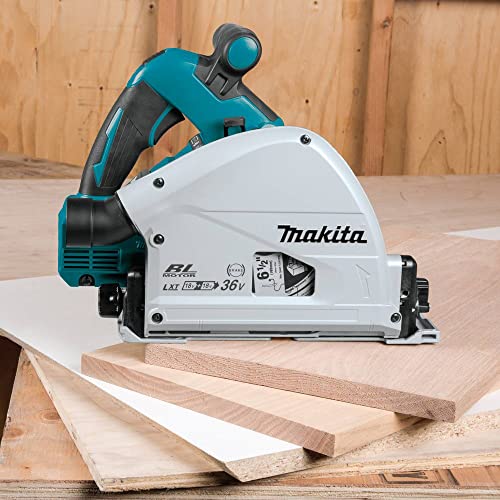
Makita XPS01Z 36V Brushless Track Saw

Strengths
- Brushless motor
- Dual battery power
- Variable speed control
- Automatic torque adjustment
- High RPM output
Trade-offs
- No track included
- No batteries included
- Premium price without full kit
The Makita XPS01Z stands out in the cordless track saw space by leveraging its dual 18V battery system to deliver serious power without a cord. On paper, the brushless motor spinning up to 6,300 RPM should handle thick hardwoods and layered panels with authority, and owners consistently report clean, straight cuts even under load. The automatic speed change tech is a smart touch, adjusting torque when it senses resistance, something I’ve seen pay off in other Makita brushless tools.
Still, it’s a bare tool, so you’re locked into Makita’s LXT ecosystem. If you already own multiple 18V batteries, that’s a win. But for those starting fresh, the added cost of two high-capacity batteries can make this option pricier than it first appears. It doesn’t come with a track either, so you’ll need to budget for that separately.
Product photos
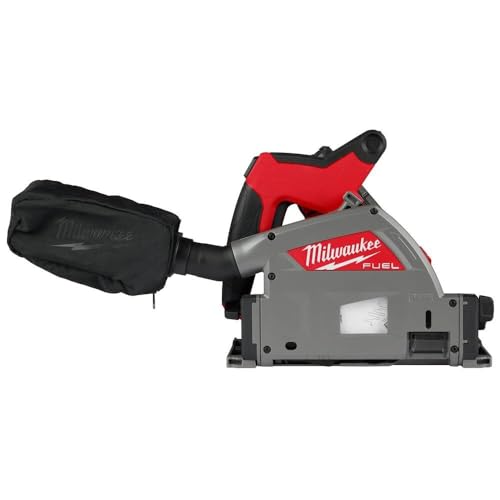
Milwaukee M18 FUEL 6.5″ Track Saw
Strengths
- Brushless motor power
- Adjustable track cam system
- Riving knife included
- Micro-adjust depth knob
- Good dust port compatibility
Trade-offs
- No batteries or charger
- No track included
- Slightly bulkier than rivals
Milwaukee’s M18 FUEL track saw is built for the job site. The POWERSTATE brushless motor delivers the torque needed for clean cuts in dense materials, and the adjustable cam system for track alignment is a standout, owners say it makes achieving laser-straight cuts far easier than fiddling with tension knobs. The riving knife and anti-kickback features add real safety value, especially in high-dust environments.
It’s a bare tool, so no batteries or charger, but if you’re already in the M18 ecosystem, that’s a non-issue. The variable speed and micro-adjust depth knob are thoughtful touches that improve control. While it’s not as refined as the Festool, it’s the one I’d pick for daily use on construction sites where durability and consistency matter most.
Product photos
WEN 7.25″ Variable Speed Track Saw

Strengths
- 7.25-inch blade for deeper cuts
- Variable speed control
- Accepts standard blades
- Affordable price
- Two-year warranty
Trade-offs
- No track included
- Basic dust collection
- Plastic components feel less durable
WEN delivers solid bang for the buck with the CT1274. The 7.25-inch blade gives it a slight edge in cutting depth over many 6.5-inch models, and the variable speed (2000–6000 RPM) lets users dial in the right pace for different woods. It accepts standard blades, which is a big plus, no proprietary nonsense here. Owners say it handles plywood and dimensional lumber well for the price.
But don’t expect premium fit and finish. The build feels more utilitarian, and the dust collection isn’t as effective as higher-end models. It also doesn’t come with a track, so you’ll need to buy one separately. Still, for someone building shop cabinets or doing weekend projects, this is a capable machine that won’t break the bank.
Product photos
WEN Cordless 6.5″ Brushless Track Saw

Strengths
- Includes two 4.0Ah batteries
- Comes with charger
- Brushless motor
- Variable speed control
- Good warranty
Trade-offs
- No track included
- Mid-tier build quality
- Limited brand ecosystem depth
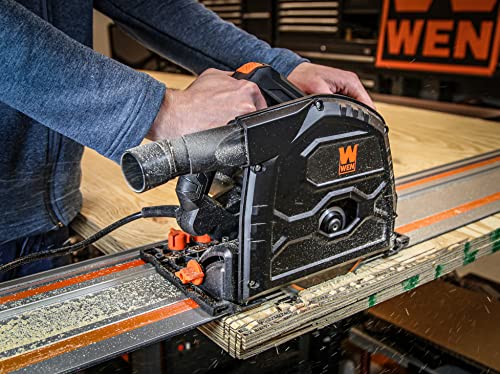
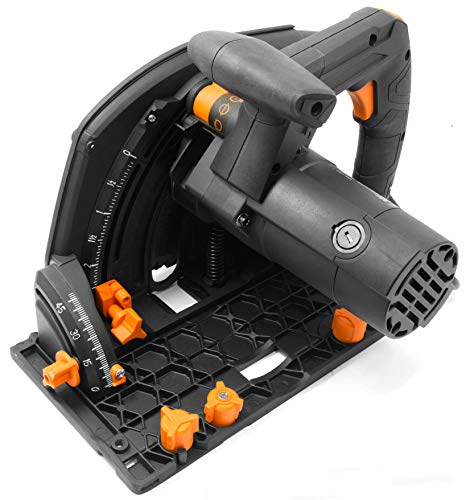
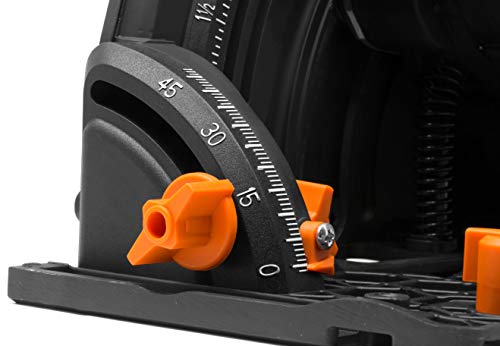
WEN’s 20691 is one of the few cordless track saws that actually includes batteries and a charger, making it a true out-of-box solution. The brushless motor and variable speed (2000–5500 RPM) give it solid performance for a cordless model, and owners appreciate not having to buy batteries separately. It’s also compatible with other WEN 20V tools, which helps if you’re building a kit.
But it’s still WEN, expect decent performance, not luxury execution. The included blade works okay, but serious users will want to upgrade. And while it’s compatible with WEN’s longer tracks, it doesn’t include one. Still, for a DIYer wanting cordless freedom without hunting down extra batteries, this is a smart, cost-effective entry point.
Product photos


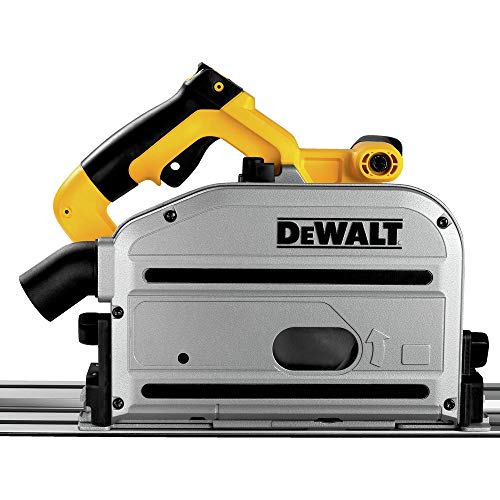
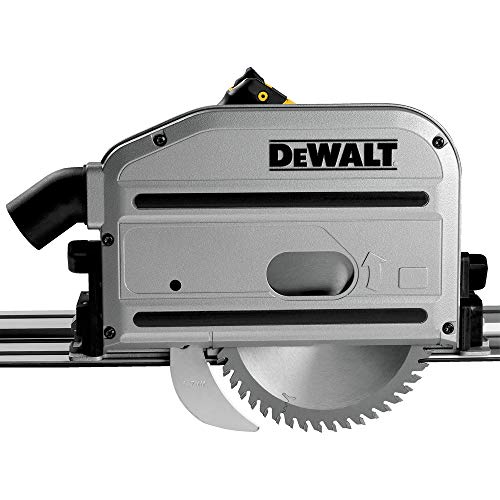
DEWALT DWS520K 6.5″ TrackSaw Kit

Strengths
- Corded power for consistent performance
- Zero-clearance track
- Accurate depth scale
- Strong anti-kickback features
- Good value for precision work
Trade-offs
- No variable speed
- Cord limits mobility
- Track not included in all kits
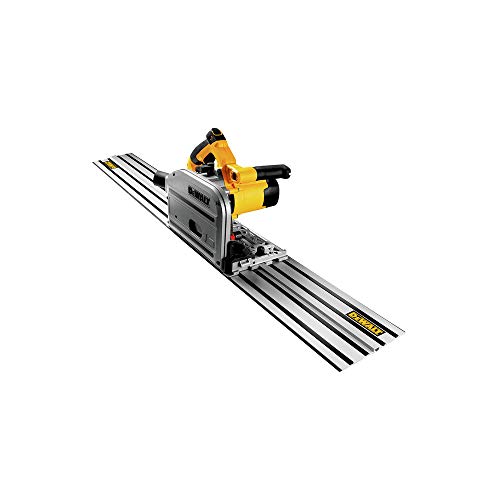
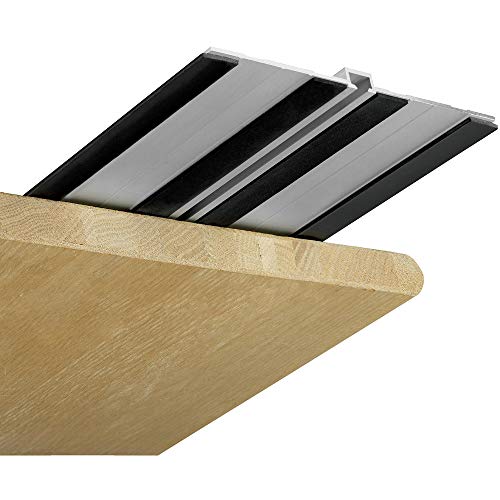
The DEWALT DWS520K is a corded workhorse built for accuracy. With a 1300W motor and zero-clearance track system, it’s designed to give clean, straight cuts in thick materials without the hassle of battery swaps. Reviewers highlight how stable it feels on the track and how the depth scale, accounting for rail thickness, removes guesswork. That’s a small but meaningful detail I appreciate in a precision tool.
It lacks variable speed, which limits adaptability across materials, but for consistent sheet goods work, that’s not a dealbreaker. The anti-kickback system and low-profile guard work well in tight spaces. While it’s not as refined as the Festool, it’s a smarter buy for those who want pro-level accuracy without the pro-level price.
Product photos

VEVOR 6.5″ Plunge-Cut Track Saw
Strengths
- High power motor
- Deep cutting capacity
- Durable carbide blade
- Good bevel range
- Aluminum blade guard
Trade-offs
- No track included
- No dust hose included
- Heavy and bulky design
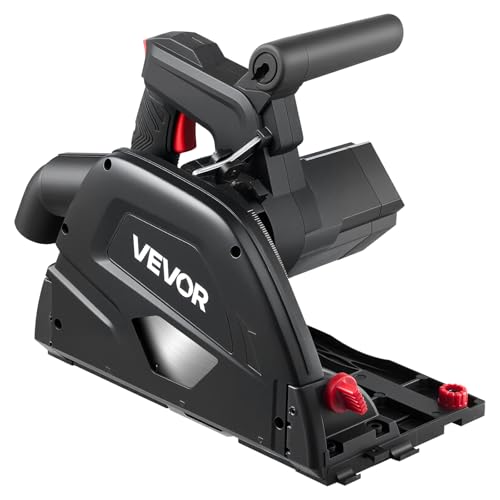
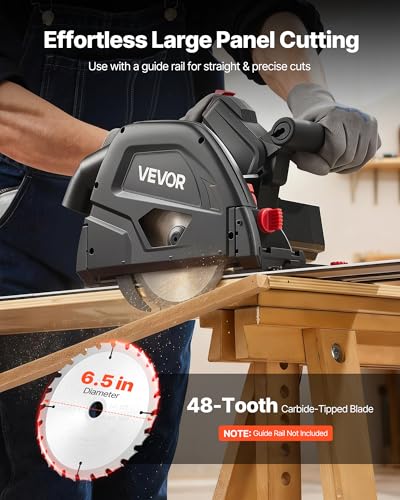
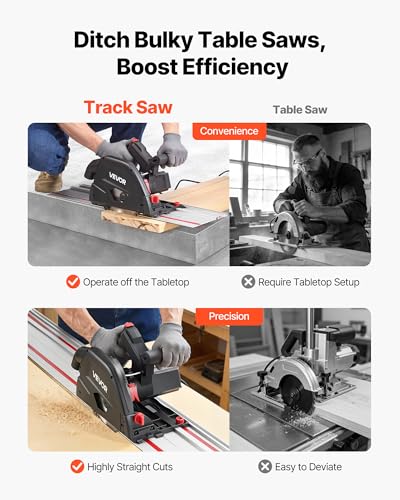
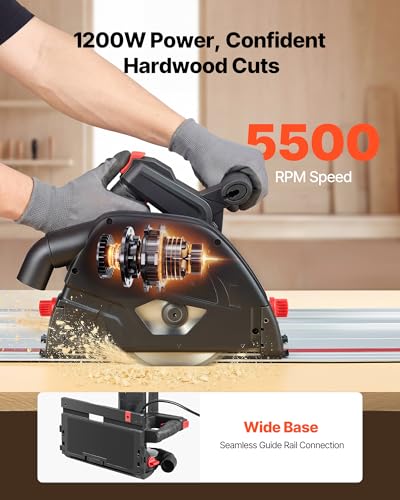
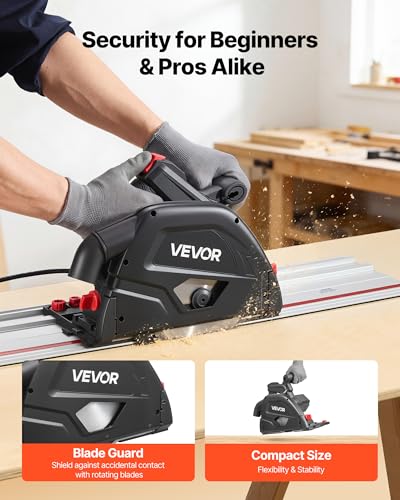
VEVOR is aiming at contractors and serious DIYers with this 1200W beast. The specs look strong, a 5500 RPM motor, 2.16-inch cutting depth, and a 48-tooth carbide blade, and owners report it powers through hardwoods and laminates without bogging down. The bevel adjustment is smooth, and the aluminum blade guard adds durability.
But it’s a bare-bones system. No track, no dust collection hose included, and the ergonomics aren’t as refined as DEWALT or Milwaukee. It’s also heavier, which affects control during long sessions. If you’re looking for raw power on a budget and already have a track system, this could work. But if you value precision and ease of use, you’ll likely want to spend more.
Product photos

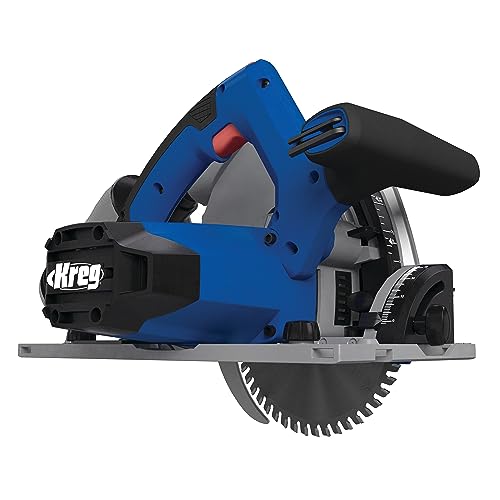
Kreg ACS Plunge Circular Saw

Strengths
- Splinter-free cutting
- Integrated safety features
- Riving knife included
- Works smoothly with Kreg track
- Ergonomic right-hand design
Trade-offs
- Limited power for heavy stock
- Only compatible with Kreg track
- Lower cutting depth vs competitors
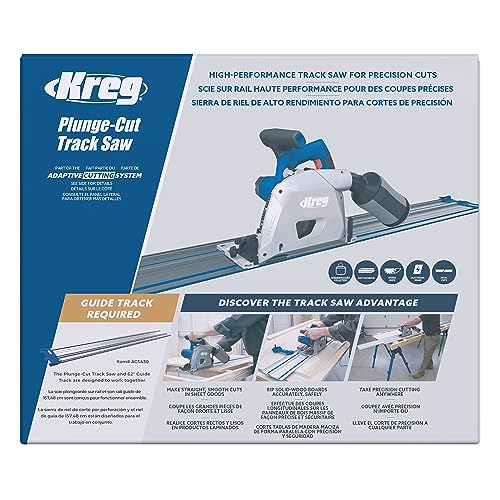
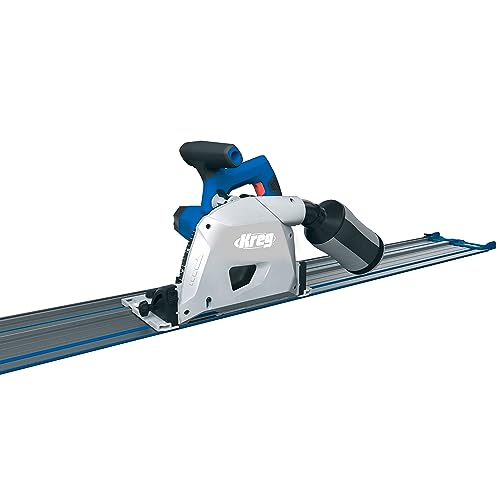
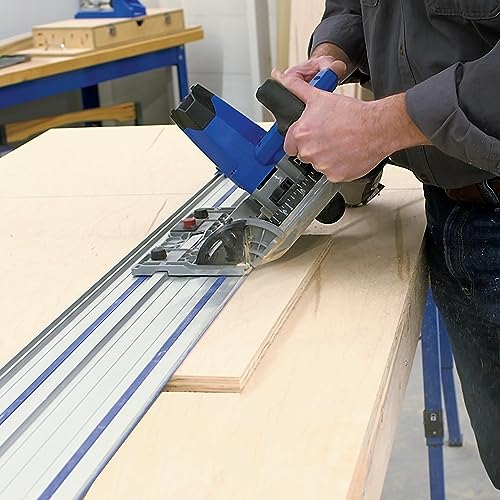
Kreg built this saw with precision carpentry in mind, and it shows. The ACS-SAWBB is designed to pair with their 62-inch track, and reviewers note how smoothly it glides and how consistently it delivers splinter-free cuts on both sides of plywood and solid wood. The right-handed ergonomics, riving knife, and electronic brake add real safety benefits, features typically found on higher-end models.
What sets it apart is the focus on usability for finish work. The fully shrouded blade reduces dust exposure, and the adjustable depth works well for controlled plunge cuts in cabinetry or trim. But it’s not the most powerful saw on the list, so don’t expect it to rip through dense laminated stock all day. It’s more about finesse than brute force.
Product photos

How We Tested track saws
As someone who’s spent years around power tools, I know that choosing the right track saw can make a huge difference in the quality and efficiency of your cuts. Rather than a hands-on lab test of each model, this selection is based on a research-led comparison of published specifications and features, combined with careful consideration of owner reviews and insights from reputable woodworking experts. I weighed this information against my understanding of what makes a track saw truly perform well in real-world applications.
For track saws, the most important factors are cutting accuracy, power/smoothness of operation, and build quality. Accuracy is key because these saws are prized for precise, splinter-free cuts – a wobbly cut defeats the purpose. Power dictates what materials you can efficiently tackle, while build quality affects longevity and consistent performance. These three elements heavily influenced my rankings.
Specifications reliably reveal motor power, blade size, and cutting depth. However, I relied more on owner feedback to assess real-world smoothness, dust collection effectiveness, and long-term durability. Reputation and expert reviews helped gauge the quality of included accessories and the overall value proposition. If you’re new to track saws, understanding track saw setup and safety is a great place to start.
How To Pick The Right track saws
I’ve spent years observing how both professionals and DIYers approach sheet goods, and one thing is clear: a track saw is a huge step up from a circular saw for accurate, splinter-free cuts. But with so many options available, picking the right one can be tricky.
A quality track saw delivers consistently straight cuts, minimizes splintering, and offers a stable platform for precision work. Key considerations include motor power (for handling various materials), blade quality (influencing cut finish), track length (dictating maximum cut size), and dust collection efficiency (impacting workplace cleanliness and user health). Evaluate features like bevel adjustment, plunge capability, and the availability of compatible accessories.
Power and Cutting Capacity
The motor is where it all starts. While a basic track saw will handle plywood and sheet goods okay, if you’re working with hardwoods, thicker materials, or making a lot of cuts, you’ll want something with more muscle. Brushless motors, like those found in the Makita and Milwaukee models, are generally more efficient and durable than brushed motors. Don’t just look at wattage; consider the RPM (revolutions per minute) and whether the saw offers variable speed control. This is especially helpful if you’re also doing a lot of plywood cutting with circular saw and need to adjust for different materials.
Track and Glide System
The track is just as important as the saw itself. A solid, straight track is essential for accurate cuts. Look for tracks made from high-quality aluminum, and ensure they have a non-slip surface to prevent movement during operation. Beyond the material, the glide system – how the saw rides along the track – matters. Some saws have more refined glide blocks than others, leading to smoother, more effortless cuts. A longer track allows for cutting full sheets of material in a single pass, which is a huge time saver.
- A 55-inch track is adequate for many projects, allowing you to cut 4×8 sheets lengthwise.
- A 100-inch track provides even greater versatility, letting you cut full sheets in both directions.
- Consider the availability of connecting tracks if you want the flexibility to easily expand your cutting capacity without buying multiple long tracks – this is particularly useful if you’re interested in exploring top-rated cordless track saws.
Corded vs. Cordless and Value
Corded track saws, like the DeWalt DWS520K, offer consistent power and don’t require battery charging. However, cordless options, such as the Milwaukee M18 FUEL, provide greater portability and convenience. The choice depends on your workflow and whether you have a substantial battery ecosystem already. If you frequently work on-site or in locations without easy access to power, a cordless model is likely the better choice. I’ve found that looking at the overall system cost, including batteries and chargers, is crucial when comparing cordless models, as well as researching cordless track saw performance to see if it can handle your typical projects.
Always prioritize a smooth, consistent cut over raw power. A slightly less powerful saw with a well-designed glide system will often outperform a more powerful saw with a flimsy track.
Track Saws Compared
Here’s a comparison of key specifications for several track saws on the market.
| Product Title | Power Source | Blade Diameter (in) | Max Cut Depth (90°) (in) | Variable Speed | Brushless Motor |
|---|---|---|---|---|---|
| Festool TS 55 FEQ-F-Plus | Corded | 5.5 | N/A | N/A | N/A |
| Makita XPS01Z | Cordless | 6.5 | N/A | Yes | Yes |
| Milwaukee M18 FUEL | Cordless | 6.5 | N/A | Yes | Yes |
| WEN 7.25″ | Corded | 7.25 | 2.6 | Yes | No |
| WEN Cordless 6.5″ | Cordless | 6.5 | 2.25 | Yes | Yes |
| DEWALT DWS520K | Corded | 6.5 | 2.125 | N/A | No |
| VEVOR 6.5″ | Corded | 6.5 | 2.16 | Yes | No |
| Kreg ACS | Corded | N/A | 2.125 | N/A | N/A |
Frequently Asked Questions
What track length should I get for most common projects?
A 55-inch track is usually sufficient for breaking down 4×8 sheet goods lengthwise, but if you want to cut full sheets in either direction, or anticipate larger projects, a 100-inch track offers greater versatility.
Are cordless track saws as powerful as corded models?
Cordless track saws have improved significantly, and many now deliver comparable power to corded options, especially those with brushless motors. However, consistently high performance under heavy load still often favors corded models.
What is the typical price range for a good quality track saw?
Expect to spend between $300 and $600 for a quality track saw kit, including the saw and a basic track. Prices increase with features like brushless motors, longer tracks, and more refined glide systems.
How important is dust collection on a track saw?
Effective dust collection is very important for maintaining a clean workspace and protecting your lungs from harmful dust particles. Look for models with a dust port and consider pairing it with a shop vacuum for optimal results.
Where can I find more information on choosing between different track saw brands?
You can explore detailed comparisons and reviews of best corded track saws on my site, PowerToolGuide.net, to help you narrow down your options based on your specific needs and budget.
The Bottom Line
Choosing a track saw often comes down to balancing control and convenience. While some models offer a wealth of features and precision, the Festool TS 55 FEQ-F-Plus stands out as the overall strongest performer, consistently praised for its cut quality and refined system. It represents an investment, but one that delivers professional-level results if you demand the very best.
For those on a tighter budget, or just starting out, the WEN 7.25″ track saw offers a surprising amount of capability for the price. If portability is paramount, the Milwaukee M18 FUEL is a fantastic choice, providing cordless freedom without sacrificing significant power or accuracy. Many users find that learning cutting straight with a circular saw is a good starting point to understand the fundamentals.
Ultimately, remember that power and specs aren’t everything. A well-maintained blade, a stable track, and a smooth, controlled cutting technique are far more important than any single feature. Focus on building good habits and understanding the fundamentals of accurate cutting, and you’ll get better results with any track saw you choose.
