Good Hedge Trimmer Selection: Avoid Common Mistakes
This post contains affiliate links. As an Amazon Associate, we earn from qualifying purchases.
A good hedge trimmer is the one you forget you’re holding. It’s balanced, matches the thickness of your hedge branches, and has enough power to finish the job without a trip to the outlet or the gas can. The core decision isn’t about the fanciest brand, it’s about matching three things: your hedge type, your property size, and your tolerance for maintenance.
Most people pick a trimmer based on price or blade length alone. They end up with a corded model that can’t reach the back fence, or a gas beast that vibrates their hands numb after twenty minutes. They fight the tool instead of letting it do the work.
This guide walks through the real-world factors that separate a decent trimmer from a great one. We’ll cover power types, blade specs that actually matter, and the ergonomic features you’ll be thankful for an hour into the job.
Key Takeaways
- Power choice dictates your range. Corded electric is cheap and powerful but tethered. Cordless offers freedom with modern battery life rivaling gas. Gas is for marathon sessions on thick, woody growth.
- Blade length is about reach, not power. A 22-inch blade covers more area per pass but is harder to control on top of a ladder. A 16-inch blade is more precise for shaping.
- Tooth spacing, or blade gap, is your cutting capacity. The spec (e.g., 3/4″) tells you the maximum branch diameter it can cleanly shear. Exceed it, and you’ll jam the blades and strain the motor.
- Dual-action blades are non-negotiable. They move in opposite directions, canceling out vibration. Single-action blades will make your hands and forearms ache.
- Ergonomics matter more than weight. A well-balanced 9-pound tool feels lighter than a poorly balanced 7-pound one after five minutes. Look for a rotating rear handle.
Hedge Trimmer Power Types: Corded vs. Cordless vs. Gas
Your first and most important choice is how the tool gets its juice. This decision locks you into a workflow, a maintenance routine, and a physical experience.
A dual-action hedge trimmer blade has two rows of teeth that move in opposite directions. This counter-motion cancels out the reactive force from each cut, transferring less vibration into the user’s hands and arms. Single-action blades, which only have one moving row of teeth, transfer nearly all the cutting shock directly to the operator, leading to significantly faster fatigue.
Corded Electric Trimmers are the budget champions. You get consistent, unlimited power for a low upfront cost. The limitation is literal. A 100-foot extension cord is a tripping hazard that snags on every shrub and limits you to about a 200-foot diameter from your outlet. They’re perfect for small, urban yards with one or two foundation hedges. The motor is usually lighter and quieter, but you trade all mobility for that plug.
Cordless/Battery-Powered Trimmers are the mainstream choice for a reason. Modern lithium-ion batteries, especially in the 40V to 80V range, deliver gas-like power without the fumes, noise, or pull-start agony. Runtime is the key metric, not just voltage. A 40V system with a 5.0Ah battery will outlast a 56V system with a 2.0Ah battery. The sweet spot for most suburban yards is a 40V or 56V tool with at least a 4.0Ah battery, giving you 45-60 minutes of continuous runtime, enough to trim several hundred linear feet. If you already own other tools from a brand like DeWalt, Makita, or EGO, buying into that battery ecosystem is a smart move.
Gas-Powered Trimmers are for the heavy lifters. If you have a half-mile of laurel hedge with thumb-thick branches, this is your tool. They offer total freedom and relentless power. The cost is weight, noise, vibration, and maintenance. You’re mixing oil and gas, dealing with carburetor issues if it sits, and wearing hearing protection. For 95% of homeowners, this is overkill. I used a gas trimmer on a rental property with overgrown privet for one season. The raw power was undeniable, but the morning-after arm vibration and the smell of gas on my hands weren’t worth it for my own tidy backyard hedges.
| Power Type | Best For | Runtime / Range | Maintenance | Noise & Vibration |
|---|---|---|---|---|
| Corded Electric | Small yards, tight budgets, light-duty trimming. | Unlimited (with outlet). Limited by cord length (~100 ft). | Minimal. Wipe blades, lubricate, store dry. | Quietest. Low vibration. |
| Cordless Electric | Most suburban yards. Medium to large properties. | 20–90 mins per battery charge. Swap batteries for longer jobs. | Battery care (don’t store empty). Clean blades, lubricate. | Quiet. Vibration varies by model (dual-action is key). |
| Gas-Powered | Large properties, very thick/woody hedges, all-day professional use. | Unlimited (refill gas can). Typically 45–60 mins per tank. | High. Fuel mixing, air filter, spark plug, winterization. | Loudest. Highest vibration. Hearing protection required. |
What Makes a Hedge Trimmer Blade Good?
The blade does the cutting, so its design determines what you can cut and how tiring it will be. Looking past marketing terms like “laser-cut” or “professional grade,” focus on three physical specs.
Blade Length is about reach, not quality. Longer blades (22-26 inches) let you cover more hedge surface per sweep, which is efficient for long, flat runs. They’re also more cumbersome for detailed shaping and can feel unwieldy on a ladder. Shorter blades (16-20 inches) offer more control for sculpting boxwoods or topiaries. My rule: match the blade length to your hedge height. If your hedges are mostly chest-high or below, a 20-inch blade is a versatile pick.
Tooth Spacing (Blade Gap) is the critical, often-overlooked spec. This is the distance between the teeth, measured in inches or millimeters. It dictates the maximum branch thickness the tool can cleanly bite. A 3/4-inch gap can handle most ornamental shrubs. A 1-inch gap is for serious, woody growth. Try to cut a 1-inch branch with a 5/8-inch gap, and the blades will pinch, stall, and potentially damage the gearbox. Check your hedge’s thickest stems before you buy.
Dual-Action vs. Single-Action is a comfort and durability choice. Dual-action blades have two cutting bars that move in opposite directions. This cancels out most of the vibration, making the tool far more comfortable to use. Single-action blades have one moving bar and one stationary bar. They’re cheaper to manufacture but transfer all the cutting shock into your hands. After ten minutes, the difference is stark. Always choose dual-action.
Blade Material matters for longevity. Steel blades are standard and durable. Stainless steel blades resist sap-induced corrosion better, which is a real issue if you’re trimming pines or other sappy evergreens. Coated blades (often non-stick Teflon or similar) help reduce sap and debris buildup, making cleanup easier. Aluminum blades are lighter but dull faster and can bend on tough wood.
Ergonomics and Safety: Features You’ll Actually Feel
A trimmer can have perfect specs on paper but be a nightmare to use. The feel in your hands determines whether you finish the job or quit with a sore back.
Weight and Balance are more important than the number on the scale. A 9-pound tool with its weight centered between your hands will feel lighter and more controllable than a 7-pound tool that’s front-heavy. Always try to hold a model before you buy, or at least read reviews that specifically mention balance.
Handle Design is where cheap models cut corners. You want two things:
1. A wraparound front handle that lets you grip from multiple angles for vertical and horizontal cuts.
2. A rotating rear handle that can be locked in multiple positions. This lets you hold the tool naturally when trimming the tops of hedges or doing vertical sides without bending your wrist into an awkward angle.
Safety Features are not optional. A clear, sturdy hand guard between the trigger and the blade prevents your hand from slipping forward. A blade brake or clutch stops the blades almost instantly when you release the trigger, this is crucial if you stumble or need to react quickly. Never buy a trimmer without these.
Noise and Vibration are long-term health factors. Gas models are loud enough to require earmuffs. Vibration, measured in meters per second squared (m/s²), is the silent culprit behind hand-arm vibration syndrome (HAVS). Dual-action blades are the best defense. Look for models with anti-vibration dampening in the handles if you have large trimming jobs.
How to Match a Hedge Trimmer to Your Specific Hedges
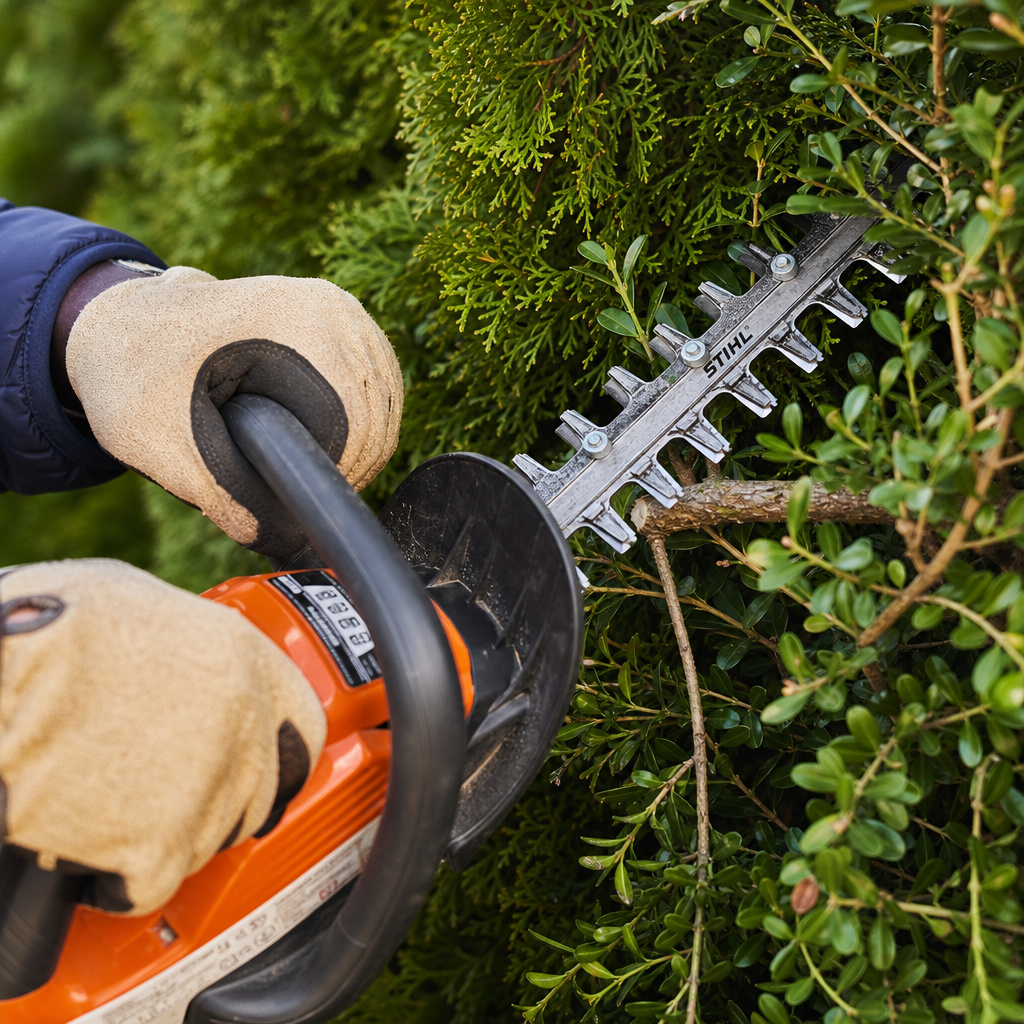
Not all hedges are created equal. A tool perfect for soft, fine-needled arborvitae will struggle against a gnarly privet.
- For Soft Needled Evergreens (Arborvitae, Juniper, Yew): These cut easily but produce a lot of fine, sappy debris. A medium-duty cordless trimmer with coated blades works well. The sap will gum up standard blades quickly, so a non-stick coating or diligent cleaning after each use is key.
- For Broadleaf Hedges (Boxwood, Privet, Holly): This is the standard test. A dual-action blade with a 3/4-inch tooth spacing is ideal. These species produce thicker stems, so you need the cutting capacity. A cordless 40V or 56V model provides a good balance of power and runtime.
- For Large, Woody Hedges (Laurel, Hawthorn, Overgrown Privet): You’re entering gas-trimmer territory. Branch thickness often exceeds 1/2 inch. Prioritize a 1-inch blade gap, the longest blade you can handle (24-26 inches), and maximum power. This is where a professional-grade gas model or a top-tier 80V cordless model earns its keep.
- For Tall Hedges: Reach is your enemy. A pole hedge trimmer is the right tool here, not a ladder with a standard trimmer. They are inherently more awkward and tiring to use, so look for lightweight models and a rotating head that can be adjusted for angle.
I bought a mid-range cordless model for my row of mature arborvitae. The first fall, the blades gummed up with sap so badly they barely moved by the end of the job. I spent an hour scraping resin with a plastic putty knife and mineral spirits. Now I wipe the blades with a rag and a dab of rubbing alcohol every 10-15 minutes during the cut. It adds five minutes to the job but saves an hour of agony later.
Top Contenders: What the Experts Actually Use
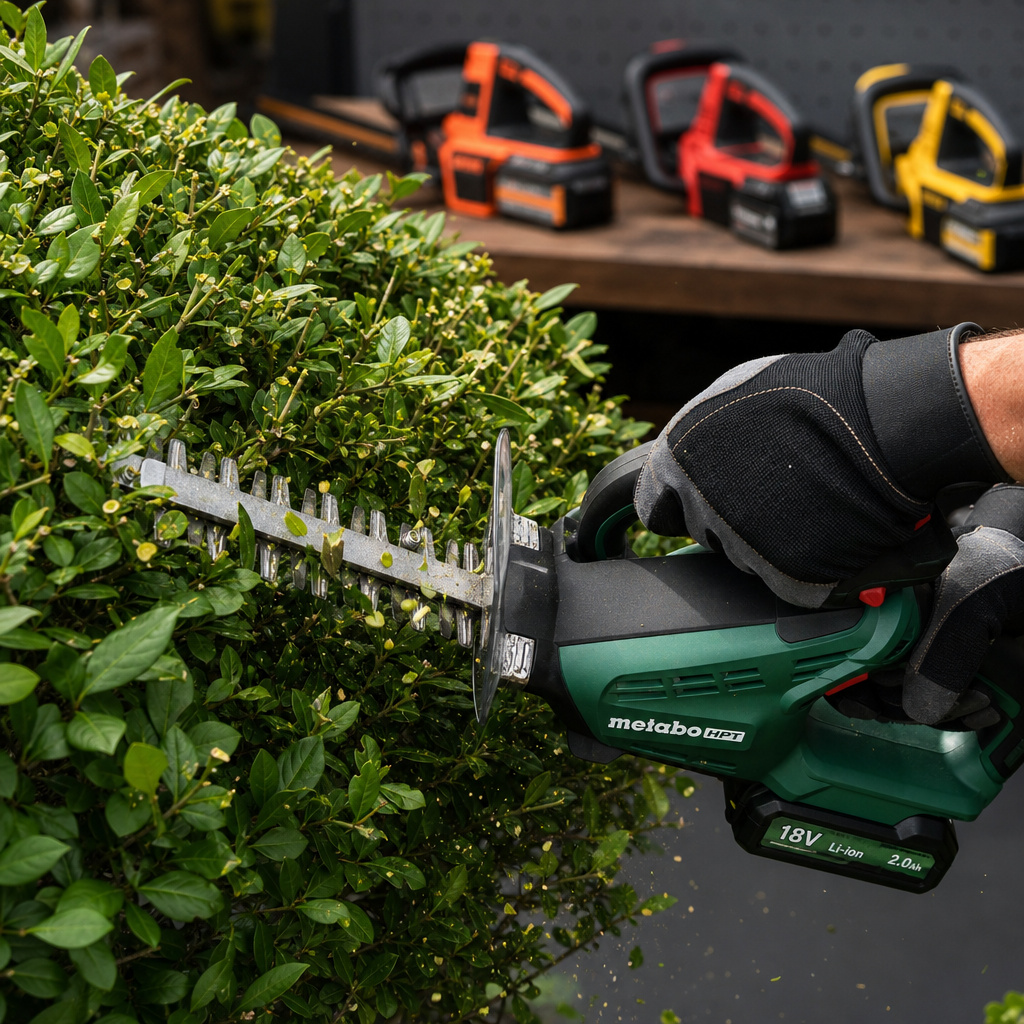
Based on professional reviews, long-term reliability surveys, and my own hands-on time, these categories represent the current standouts. Forget “best overall”, think “best for this specific job.”
For the Battery Ecosystem Investor (DeWalt 20V MAX Hedge Trimmer)
If you’re already committed to DeWalt’s 20V/60V FlexVolt platform, this is a no-brainer add-on. It’s a straightforward, powerful tool with a 22-inch dual-action blade that handles 3/4-inch branches. It’s not the lightest or the most feature-packed, but it’s a reliable workhorse that shares batteries with your drill, saw, and leaf blower. The balance is good, not great. It gets the job done without fuss.
For the Ergonomics-First User (Greenworks 24V Cordless Hedge Trimmer)
Greenworks nailed the handle on this one. The rotating rear handle and three-sided wraparound front grip make intricate shaping and overhead work far less straining. At around 6 pounds, it’s light and maneuverable. The 22-inch blade is sufficient for most suburban hedges. The trade-off is that its 24V system, while good for runtime, doesn’t have the raw cutting power of higher-voltage options for the thickest wood.
For the Power User with a Big Yard (EGO Power+ HT2601)
This is the cordless flagship. The 56V ARC lithium battery platform delivers gas-like performance. The 26-inch blade is the longest common size, and its 3,400 strokes-per-minute cutting speed is brutal on thick growth. The five-position rotating handle is superb. The downside is weight and price, it’s a premium tool for a premium job. If you have hundreds of feet of dense hedge, this is your tool.
For the Value-Seeking Homeowner (Black+Decker 40V MAX Hedge Trimmer)
Black+Decker’s 40V system offers a fantastic balance. You get substantial power and runtime (they claim up to 6,000 feet of hedge per charge) at a price point well below the premium brands. It has a wraparound handle, a battery fuel gauge, and solid 24-inch dual-action blades. It’s not as refined as the EGO, but for the average homeowner with a moderate amount of trimming, it represents the best dollar-for-performance value.
| Model | Power | Blade | Key Strength | Consideration |
|---|---|---|---|---|
| DeWalt 20V MAX | 20V Cordless | 22″, 3/4″ gap | Ecosystem value, reliable power | Heavier than some, basic ergonomics |
| Greenworks 24V | 24V Cordless | 22″, 3/4″ gap | Excellent rotating handle, very lightweight | Lower voltage limits peak power for very thick wood |
| EGO Power+ HT2601 | 56V Cordless | 26″, 1″ gap | Top-tier power and runtime, long reach | Premium price, heaviest in class (~9 lbs) |
| Black+Decker 40V MAX | 40V Cordless | 24″, 3/4″ gap | Best value, great runtime, good features | Build quality is good, not exceptional |
Maintenance Is Non-Negotiable
A hedge trimmer is a simple machine, but neglect guarantees a short life. The routine is easy if you’re consistent.
After Every Use:
- Disconnect the power. Remove the battery or unplug the cord. For gas, let it cool.
- Wipe down the blades. Use a damp rag to remove sap and plant debris. For stubborn sap, a rag with a bit of rubbing alcohol or a dedicated blade cleaner works.
- Spray the blades with a light lubricant. Use a dedicated tool lubricant or a dry Teflon spray. This prevents rust and keeps the cutting action smooth. Don’t use WD-40 as a lubricant; it’s a water displacer, not a long-term protectant.
- Check for damage. Look for nicks in the blades or loose bolts.
Seasonal/Annual Maintenance:
- Sharpen the blades. Dull blades tear branches instead of cutting them, stressing the motor and leaving brown, ragged edges on your hedge. You can use a flat file or a rotary tool with a grinding stone, following the original angle of each tooth. If that sounds daunting, many hardware stores offer sharpening services for under $20.
- Gas Engine Care: If it’s a gas model, run it dry at the end of the season or use a fuel stabilizer. Check the air filter and spark plug annually.
- Battery Care: For cordless models, don’t store batteries fully depleted or fully charged for long periods. A 40-60% charge is ideal for offseason storage.
Following a simple cleaning a hedge trimmer routine after each use and knowing when to perform sharpening hedge trimmers will keep your tool running for a decade.
Frequently Asked Questions
What is the most important feature in a hedge trimmer?
Tooth spacing (blade gap). This determines what you can actually cut. A powerful motor with a small gap will still jam on a thick branch. Always match the gap to the thickest stems in your hedge.
Is a more expensive hedge trimmer always better?
Not always, but you generally get what you pay for in durability, vibration dampening, and battery performance. A $80 corded trimmer might be perfect for a small boxwood hedge. A $300+ cordless model buys you better balance, a more robust motor, and a battery that won’t fade after two seasons.
How long do battery-powered hedge trimmers last on a charge?
Runtime varies wildly. Look at the battery’s Amp-hour (Ah) rating alongside the voltage. A 40V 2.0Ah battery might last 20-30 minutes. A 40V 5.0Ah battery can last 60+ minutes of continuous cutting. Manufacturer claims of “feet of hedge cut” are estimates, real runtime depends on how thick and dense your foliage is.
Can I cut branches thicker than the blade gap specification?
You can try, but you shouldn’t. The blades will pinch, the motor will strain and overheat, and you risk kicking back or damaging the gearbox. For branches over 1 inch, use loppers or a pruning saw.
The Bottom Line
Stop looking for a mythical “best” hedge trimmer. Find the best one for your yard. Start with your power source: corded for small, contained jobs; cordless for freedom and modern power; gas for relentless, heavy-duty work.
Then, let your hedge type dictate the blade, length for reach, tooth spacing for capacity. Finally, hold it. The right balance and handle design make the difference between a chore and a clean, satisfying job.
Your back and your hedges will thank you for choosing the tool that fits, not just the one on sale. Pick the specs that match your reality, keep the blades clean and sharp, and you’ll have a reliable partner for years of tidy edges.
