How to Replace an Edger Blade in 5 Steps (The Right Way)
This post contains affiliate links. As an Amazon Associate, we earn from qualifying purchases.
Replacing an edger blade requires matching three things: the correct replacement blade for your model, the right wrench to remove the mounting bolt, and a method to lock the spinning shaft so you can apply torque without the whole assembly turning. Get those three right, and the swap takes about ten minutes.
Most people grab the wrong wrench first. They reach for a standard adjustable wrench, then spend five minutes fighting a spinning shaft before they realize the bolt won’t budge because the entire blade and motor are freewheeling against their grip. That’s the universal mistake, not securing the shaft.
This guide walks through the exact steps, from disconnecting power to testing the new blade. It covers the tools you actually need, not a generic list, and explains how to handle the different locking mechanisms on gas and electric edgers. You’ll also learn what happens if you skip a step, like overtightening the bolt or installing the blade backwards.
Key Takeaways
- Lock the shaft first. Every edger has a method to stop the shaft from spinning, a hole for a screwdriver, an Allen key slot, or a secondary wrench flat. Find it before you touch the bolt.
- The bolt thread direction can be opposite. On many gas-powered edgers, the blade bolt has left-hand threads. Turn it clockwise to loosen, counterclockwise to tighten. Force it the wrong way and you’ll strip the threads.
- Note the washer order. There’s often a flange washer and a flat washer between the blade and the bolt. Mix them up during reassembly and the blade will wobble, causing vibration that cracks the housing within a few hours of use.
- Dispose of the old blade safely. Wrap the used blade in several layers of cardboard or duct tape before putting it in the trash. A bare blade in a plastic bag will slice through on the first touch.
- Test before you edge. After installation, hold the edger off the ground and run it for 10 seconds. Listen for grinding or knocking. A balanced blade spins quietly; an unbalanced one shakes the handle immediately.
What Tools Do I Need to Replace the Blade?
You need four things: a wrench that fits the bolt, a shaft locking tool, safety gear, and the correct replacement blade. The wrench size is almost always 9/16-inch or 17mm for American and metric edgers respectively. The locking tool is usually a flathead screwdriver or a specific Allen key size that matches a hole or slot in the shaft behind the blade.
Most residential gas edgers, like the Echo PE-210, use a 17mm bolt with left-hand threads and a 5mm Allen key slot in the shaft for locking. Corded electric models, such as the DeWalt DW755, often use a standard 9/16-inch bolt with right-hand threads and a simple hole for a screwdriver.
The safety gear isn’t optional. Gloves protect your hands from the sharp blade edges during handling. Safety glasses stop metal fragments or debris from flicking into your eyes if the wrench slips. You’re working with a tool designed to cut through turf and roots, treat the blade with the same respect.
For the replacement blade, you must match the original’s specifications. This isn’t just about diameter. You need the exact hole size, thickness, and sometimes the blade shape (straight, notched, or offset). The model number is usually stamped on the blade itself or listed in your edger’s manual. A common aftermarket blade for many Stihl models is the Oregon 20-025, but verify the fit.
If you try to use a blade with a larger center hole, it will wobble on the shaft. That imbalance transfers directly to the gearbox. The bearings wear out in a season instead of five. A blade that’s too thick won’t seat flush against the washer, creating the same wobble. Get the spec right.
How Do I Remove the Old Blade?
Disconnect the power completely. For a corded electric edger, unplug it. For a battery model, remove the battery. For a gas edger, disconnect the spark plug wire, pull the boot off the plug and tuck the wire away so it can’t accidentally reconnect.
This is the non-negotiable first move. I’ve seen a guy try to “quick change” a blade on a gas edger he thought was off. His knee bumped the starter cord, the engine kicked over a quarter-turn, and the spinning blade took a chunk out of his workbench. The edger wasn’t even running. The inertia alone did the damage.
Now locate the shaft locking point. On most edgers, you’ll find a small hole in the shaft directly behind the blade hub. Sometimes it’s a hexagonal slot. Rotate the blade by hand until that hole or slot is accessible.
Insert your locking tool, screwdriver or Allen key, into the hole until it seats firmly against the opposite side of the shaft channel. This jams the shaft, preventing it from rotating when you apply torque to the bolt. On some older models, you might need a second wrench on a flat section of the shaft instead.
Place your correctly sized wrench on the bolt head. Here’s the critical part: determine the thread direction. Most electric edgers use standard right-hand threads (lefty-loosey). Many gas edgers, especially those with direct-drive engines, use left-hand threads (righty-loosey).
Check your manual. If you’re not sure, try gentle pressure counterclockwise first. If it doesn’t budge, try clockwise. Forcing it the wrong way rounds the bolt corners in about three hard pulls.
Once the bolt is loose, remove it completely. Slide off any washers, noting their order and orientation. The old blade should now come free. If it’s rusted on, tap the side of the blade with a rubber mallet, not the cutting edge. Don’t pry it with a screwdriver; that can bend the mounting hub.
What Are the Different Blade Locking Mechanisms?
Not all edgers lock the same way. There are three common types, and using the wrong technique for your model wastes time and can damage the shaft.
| Mechanism Type | Common Models | How to Lock It | Risk If Misused |
|---|---|---|---|
| Shaft Hole | DeWalt DW755, Toro 51599 | Insert a flathead screwdriver into the hole behind the blade. | Using too small a screwdriver can deform the hole edges, eventually wallowing it out and making future locks ineffective. |
| Allen Key Slot | Echo PE-210, Stihl FC 70 | Insert the correct size Allen key (often 5mm or 6mm) into the hexagonal slot. | Stripping the hex with a worn or incorrect Allen key means you’ll need to clamp the shaft with vice grips for all future changes, marring the metal. |
| Secondary Wrench Flat | Some older Black & Decker, Craftsman | Use a second wrench on the flattened section of the shaft behind the blade. | Slipping the wrench off the flat can scratch or dent the shaft, creating a runout point that causes vibration. |
The first time I worked on an Echo edger, I spent ten minutes looking for a locking hole before I noticed the tiny hex slot. I didn’t have the right Allen key. I tried using a screwdriver in the slot, it slipped, scratched the shaft, and I had to file down the burr before the new blade would seat properly. Now I keep a set of metric Allen keys in the tool bag.
For models with a cotter pin (like some commercial-grade edgers), the process is different. You drive out the cotter pin with a punch before the bolt will come off. Bend the legs of the new cotter pin outward after installation; a pin that isn’t spread will work its way out from vibration.
How Do I Install the New Blade?
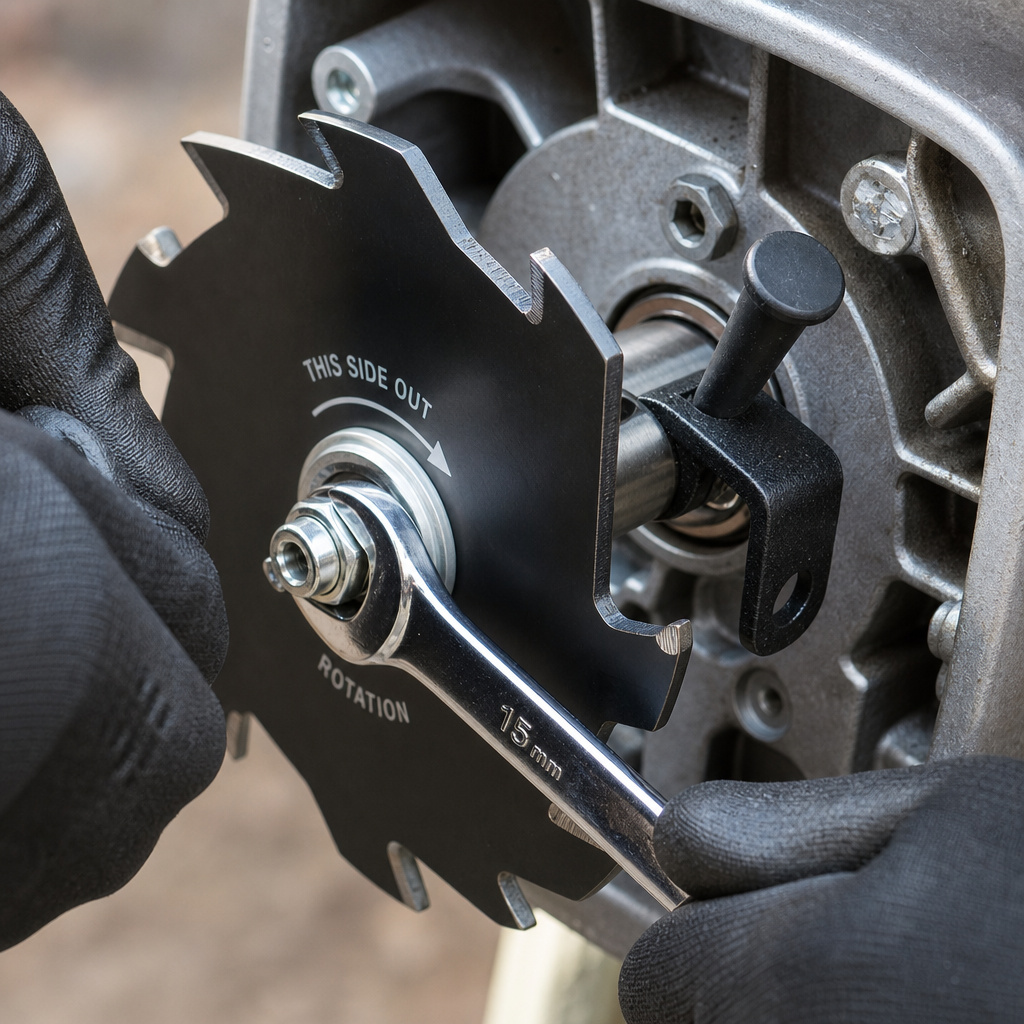
Clean the shaft and mounting surfaces first. Wipe off any dirt, grass, or rust with a rag. A clean surface ensures the blade sits flat and true.
Now look at your new blade. The cutting edge must face the correct direction. On a rotary blade, the sharpened bevel usually faces the direction of rotation, often indicated by an arrow stamped on the blade. If you install it backwards, it will scrape rather than slice, tearing the grass and bogging down the motor almost immediately.
Reassemble the washers and spacers in the exact order you removed them. This order maintains the proper blade offset and alignment. A typical sequence from the motor outward is: shaft > blade > flange washer (curved side out) > flat washer > bolt.
Hand-tighten the bolt first. This ensures the threads are started straight and cross-threading is avoided. Cross-threading a bolt into the motor shaft is a repair that requires pulling the gearbox apart. It’s a half-day job.
Now re-insert your shaft locking tool. Use your wrench to tighten the bolt firmly. The goal is snug, not Herculean.
Overtightening stretches the bolt, compromises the threads in the soft aluminum motor housing, or can even crack the blade hub. If your manual specifies a torque value (e.g., 25-30 ft-lbs), use a torque wrench. If not, tighten until the blade has no lateral play, then give it about a quarter-turn more. You should not be able to wiggle the blade on the shaft.
Remove the locking tool. Reconnect your power source, plug in the cord, reinstall the battery, or reconnect the spark plug wire.
What Should I Do After Installing the Blade?
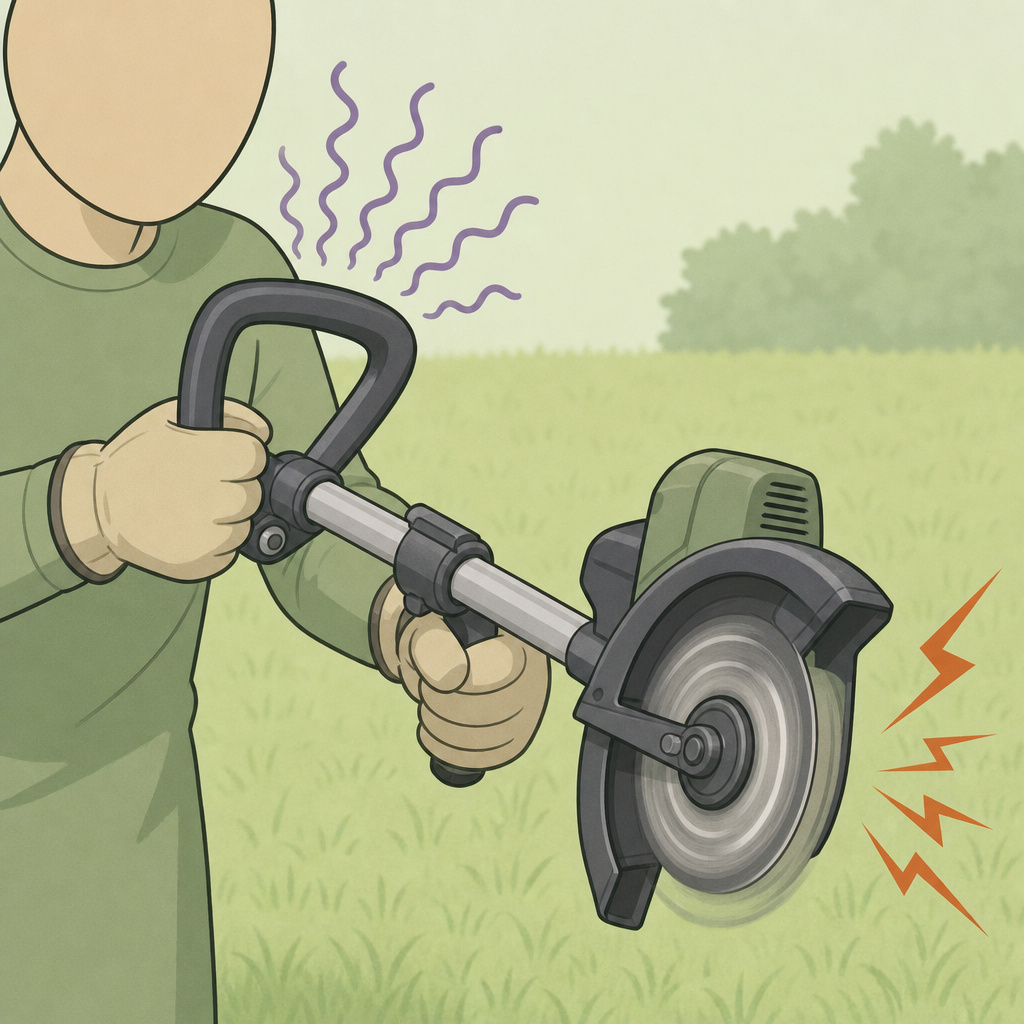
Do not immediately start edging. Perform a safety test. Hold the edger off the ground, clear of any debris or people. Start the motor (or turn on the electric switch) and let it run for 10-15 seconds. Listen and feel.
A properly installed blade spins smoothly with a steady whirring sound. If you hear a rhythmic clicking, grinding, or knocking, stop immediately. The blade is likely contacting the debris shield or is unbalanced. If you feel significant vibration in the handle, the blade might be damaged, mounted crooked, or the washers are in the wrong order.
Here’s a quick diagnostic table for common post-installation issues:
| Symptom | Likely Cause | Fix |
|---|---|---|
| Loud grinding noise | Blade touching the metal guard or housing. | Power off. Check blade alignment and ensure all spacers are installed. Bend guard back if it was struck during removal. |
| Strong handle vibration | Unbalanced blade or incorrect washer order. | Power off. Disassemble and verify washer sequence. Inspect new blade for manufacturing defects (uneven weight). |
| Blade won’t spin freely when off | Bolt overtightened or blade hub binding on shaft. | Loosen bolt slightly. Clean shaft and blade hub interior of any burrs. |
| Engine bogs down under load | Blade installed backwards (cutting edge wrong way). | Power off. Flip the blade to the correct orientation. |
If the test run is smooth, you’re ready. But make your first few passes on a straight, open section of lawn. This lets you confirm performance without the risk of hitting a curb or sidewalk.
Dispose of the old blade responsibly. Never throw a bare, sharp blade into a trash bag. Wrap it in multiple layers of cardboard or old newspaper, then tape the bundle securely. Label it “Sharp Metal” if possible. Some municipalities have specific disposal rules for metal blades; a quick check online can prevent a hazard for sanitation workers.
When Should I Replace My Edger Blade?
Replace the blade when you see visible wear, damage, or a decline in performance. A sharp blade severs grass cleanly; a dull one tears and frays it, leaving a ragged, white edge that invites disease.
Look for these signs:
1. The cut quality deteriorates. Your lawn edge looks torn and fuzzy instead of a crisp, vertical line.
2. The blade edge is rounded or nicked. Run your thumb lightly along the cutting edge (with the tool off and disconnected!). A sharp edge will catch slightly on your skin. A dull edge feels smooth and rounded. Look for chips or dents along the blade.
3. The edger requires more force to push. You’re leaning into the tool to make progress, and the engine sounds labored.
4. Excessive vibration or unusual noise. This can indicate a bent blade or one that’s lost its balance from uneven wear.
For the average homeowner edging monthly, a quality steel blade lasts about two to three seasons (20-25 hours of use). If you edge weekly or have sandy soil that acts as an abrasive, plan on a yearly replacement. Tungsten carbide-tipped blades last longer, often three to five seasons, but cost significantly more. They’re worth it if you have a large property or rocky soil.
You can sharpen some edger blades with a file, but it’s tricky. Sharpening removes material, altering the blade’s balance. An unbalanced blade vibrates, which transfers stress to the edger’s bearings and gearbox. For most DIYers, replacement is safer and more reliable than attempting a precise sharpen and rebalance.
Frequently Asked Questions
My edger blade bolt won’t budge. What do I do?
First, confirm you’re turning the correct direction (check for left-hand threads). Second, ensure the shaft is securely locked. If it still won’t move, apply a penetrating oil like PB Blaster to the bolt threads and let it sit for 15 minutes. Use a longer wrench for more leverage, but avoid excessive force that could snap the bolt. If it’s truly seized, you may need to drill it out, consider a professional repair at that point.
Can I use any 8-inch blade on my 8-inch edger?
No. Diameter is only one factor. The mounting hole size (arbor size), blade thickness, and the shape of the center hub must match your edger’s shaft and mounting hardware. Using a blade with the wrong arbor size, even if the diameter is correct, is unsafe and will damage your tool.
How tight should the blade bolt be?
Tighten the bolt firmly until all play is eliminated, but do not overtighten. If your manual provides a torque specification (e.g., 25 ft-lbs), follow it. If not, a good rule is to tighten with moderate force using a standard wrench, if you’re straining or your knuckles are white, you’ve gone too far. Overtightening can strip the threads in the motor shaft or crack the blade.
What’s the difference between a straight blade and a notched blade?
Straight blades are general-purpose and provide a clean cut. Notched blades (sometimes called “serrated” or “toothed”) are more aggressive and better for cutting through tough, overgrown edges or roots. However, notched blades can tear grass more easily if not kept very sharp. Use a straight blade for routine maintenance and a notched blade for reclaiming an overgrown bed.
Is it worth buying a more expensive tungsten carbide blade?
Yes, if you use your edger frequently or in abrasive conditions. Tungsten carbide tips are significantly harder than steel and hold an edge many times longer. They resist chipping from hidden rocks or debris. The higher upfront cost is offset by not needing to replace the blade every season. For occasional use, a standard hardened steel blade is perfectly adequate.
Why does my new blade vibrate so much?
The most common cause is incorrect reassembly, washers or spacers are out of order, or a washer is missing. Disassemble and verify the parts sequence against your manual or a photo you took during disassembly. Less commonly, the new blade itself could be defective or out of balance from the factory. Compare it to your old blade for symmetry.
Before You Go
Replacing an edger blade is a straightforward task that hinges on three actions: locking the shaft, using the correct wrench, and installing the new blade with the cutting edge facing the right way. The most common failure points are all preventable, skipping the safety disconnect, forcing a bolt in the wrong direction, or forgetting the order of washers.
Keep the old blade as a reference for your next purchase. Its markings and dimensions are the best guide for finding an exact match. Wrap it up and stash it in the garage, or dispose of it safely. A sharp blade transforms your edging from a chore into a quick, clean pass that defines your lawn.
Listen to the tool. A smooth, quiet spin means you did it right. Any vibration or grinding is the edger telling you to stop and check your work. That feedback is more reliable than any guide. Now go make a crisp edge.
