What Is a Drill Bit Used For | The 3 Things It Must Match
This post contains affiliate links. As an Amazon Associate, we earn from qualifying purchases.
A drill bit is a rotating cutting tool designed to create a hole in a material. Its specific job is to match three things: the material you’re drilling, the purpose of the hole you need, and the power of the drill driving it. Get one of those three wrong, and the bit either breaks, dulls instantly, or makes a mess of your workpiece.
That match is the whole game. A bit for concrete will skate across steel and shatter. A bit for wood will burn up in masonry. A bit for a cordless driver will snap in a magnetic drill press. The geometry, material, and coating of a drill bit are all engineered to solve for those three variables.
What follows: a breakdown of how a bit works, the three rules for matching it, and the specific types that solve for different jobs, from a standard HSS twist drill to a carbide-tipped masonry bit.
Key Takeaways
- A drill bit’s geometry, point angle, helix angle, and flute design, is tuned for specific materials. A 118° point angle works for steel; a 135° point angle is for harder alloys.
- The split point (manufactured to DIN 1412 C) on a standard HSS bit reduces walking and provides better centering on metal, but it’s useless on wood.
- Single-use surgical drill bits are a hard exception: they are sterile, non-resterilizable devices for removing damaged screws from implants, and using them for bone drilling is explicitly prohibited.
- Using a coolant can extend a drill bit’s operational life by a factor of up to six, but it’s often impossible with hand-held tools.
- For hard, brittle materials like stainless steel, you must start drilling with the bit already revolving and maintain the chosen axis to prevent cracking.
What Does a Drill Bit Actually Do?
It doesn’t just “cut.” It removes material in a controlled spiral. The tip, whether a sharp point for wood or a chisel-edged carbide insert for masonry, initiates the cut. The spiraling flutes behind it do two jobs: they channel the removed material (swarf) up and out of the hole, and they deliver cutting fluid down to the tip if you’re using coolant. The shank is the part you chuck into the drill, and its shape, round, hex, or SDS, determines how much torque it can handle before slipping.
A standard high-speed steel (HSS) twist drill bit, like a Ruko jobber length bit, is engineered for metal. Its geometry includes a split point manufactured to DIN 1412 C for precise centering, a point angle of 118° for general steel, and a helix angle between 20° and 30° to efficiently evacuate the thin, curled swarf metal produces.
That’s the baseline. Every other bit type is a variation on that theme, optimized for a different kind of swarf and a different kind of resistance.
The 3 Things a Drill Bit Must Match
You can have the most expensive bit on the shelf, but if it’s mismatched to the job, it will fail. The failure isn’t random; it’s predictable. This is where most weekend projects go sideways before the first chip flies.
| Match This | Why It Matters | What Happens If You Get It Wrong |
|---|---|---|
| The Material | Hardness, brittleness, and chip type dictate the bit’s tip material and geometry. | A wood bit in masonry blunts on first contact. A masonry bit in steel skates and shatters. |
| The Hole’s Purpose | Clean pilot hole, clearance hole, countersink, or flat-bottom? The bit’s tip and body shape are specialized. | A standard twist drill leaves a rough exit on wood. A Forstner bit leaves a perfectly flat bottom for hinge cups. |
| The Tool’s Power | Hand drill, cordless driver, drill press, or magnetic drill? RPM and torque capacity are fixed. | A large-diameter spade bit in a weak cordless drill will stall and burn the motor. |
The first match is non-negotiable. Drilling soft pine with a bit made for stainless steel is just inefficient. Drilling stainless steel with a bit made for pine is a broken bit and a ruined workpiece. The second match is about precision. If you need a clean, splinter-free hole in wood for a dowel, you reach for a brad point bit. If you need to enlarge an existing hole in thin sheet metal, you use a step bit. The third match is about not breaking your tools. A half-inch concrete bit demands a hammer drill’s impact function; running it in a standard rotary drill just grinds the tip to dust.
Where this goes sideways: Assuming any bit labeled “multi-purpose” can handle anything. A multi-purpose bit is a compromise, it does several jobs poorly instead of one job well. It will drill wood, plastic, and soft metal, but it will burn up in masonry and skate on steel.
How Drill Bit Geometry Dictates Performance
The numbers stamped on a bit’s packaging or etched on its shank aren’t marketing. They are a direct translation of the job it’s built to do.
Point Angle: This is the angle ground at the very tip. A 118° point is the standard for drilling into soft steel, aluminum, and plastic. A 135° point is for harder materials like stainless steel and cast iron, the more obtuse angle is stronger and less likely to chip. For wood, you want a sharp, centered spur, which is a different geometry entirely.
Helix Angle: This is the steepness of the spiral flutes. A low helix angle (around 20°) is for hard, brittle materials that produce short chips, like cast iron or some plastics. It provides more strength and slower chip removal. A high helix angle (around 40°) is for soft, stringy materials like aluminum or wood that produce long, continuous chips. It pulls those chips out fast to prevent clogging.
Flute Design: The channels that carry chips away. Deep, polished flutes are for efficient debris removal in soft materials. Shallow, strong flutes are for the high torque needed in hard metals.
Coating: A titanium nitride (TiN) coating isn’t just for looks. It increases surface hardness to approximately 2300 HV and raises heat resistance to 1100°F (600°C), according to Ruko’s spec sheets. This lets you run the bit faster and extends its life in abrasive materials. A black oxide coating mainly reduces friction and rust.
A Guide to Common Drill Bit Types and Their Uses
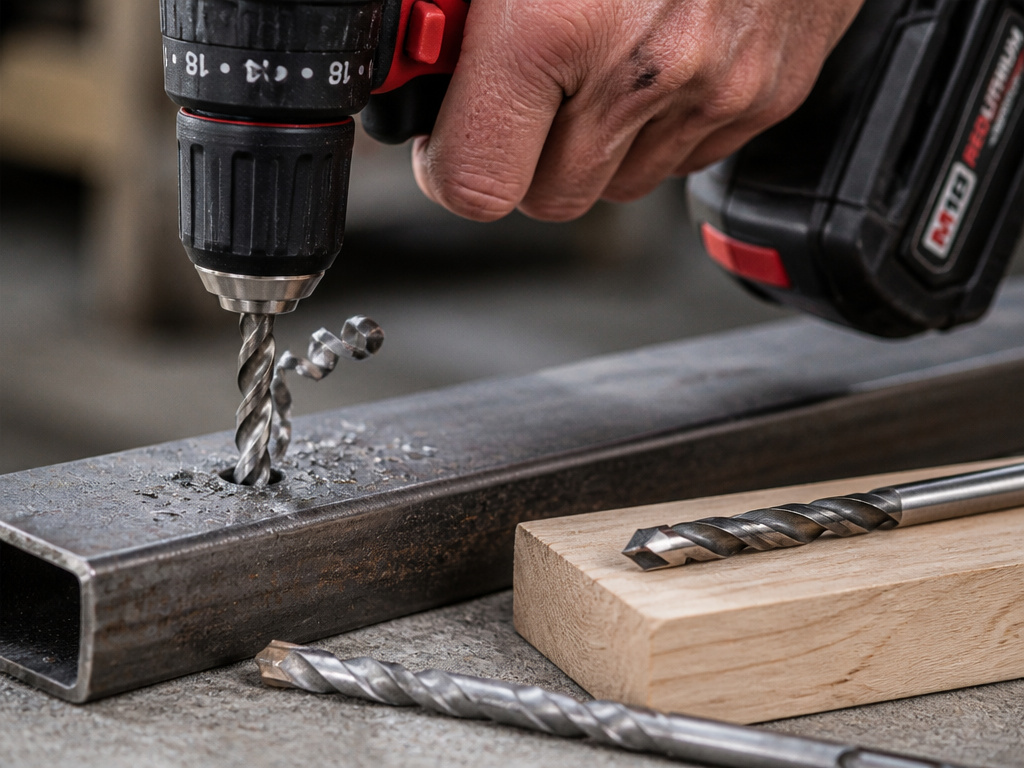
This isn’t a catalog. It’s a decision tree. Start with your material and the hole you need, then pick the bit that solves for both.
-
Twist Drill Bits (HSS, Cobalt, TiN Coated)
- Use For: Metal, plastic, wood (in a pinch).
- The Why-Layer: The spiral flute is designed for the curled, continuous chip that metals produce. The split point (DIN 1412 C) on quality bits like Bosch or Ruko models prevents “walking” on hard, curved surfaces. HSS-Co5 (5% cobalt) bits are the upgrade for stainless steel and hardened alloys, the cobalt alloy retains hardness at the higher temperatures these materials generate.
- Skip This If: You’re drilling masonry or need a perfectly clean, flat-bottomed hole in wood.
-
Masonry & Concrete Drill Bits
- Use For: Brick, block, concrete, stone.
- The Why-Layer: The tip is a blunt, carbide insert brazed onto a steel shaft. It doesn’t cut; it pulverizes. The hammering action of a hammer drill is mandatory, it smashes the carbide tip into the material, and the flutes carry the dust away. Using one in a standard rotary drill just polishes the tip.
- Skip This If: You’re working with tile (use a diamond-tipped bit) or metal.
-
Brad Point Bits
- Use For: Precision woodworking, dowel joints, anywhere you need a clean, accurate hole.
- The Why-Layer: The sharp, centered spur acts like a needle, punching a perfect starter hole before the outer cutting lips engage. This prevents the bit from wandering and gives you dead-on accuracy. The outer spurs score the wood fibers before the main cutters shear them, resulting in a clean, splinter-free exit hole.
- Skip This If: You’re drilling metal or just need a rough, fast hole. The fine point will snap.
-
Spade Bits (Paddle Bits)
- Use For: Drilling large-diameter (1/2″ and up), rough holes in wood quickly.
- The Why-Layer: They’re flat, so they’re cheap and fast. The center point guides, and the two cutting edges on the paddle shear the wood. They produce a ragged, torn hole, which is fine for running wires or plumbing where the hole will be hidden.
- Skip This If: You need a clean finish, are drilling near an edge (they can tear out), or are working with any material harder than softwood.
-
Forstner Bits
- Use For: Drilling flat-bottomed, clean-sided holes in wood, often for concealed hinges or inlay work.
- The Why-Layer: The rim and cutting teeth shear a perfect circle, and the flat bottom mills out the remaining material. They can drill overlapping holes and bore at an angle. They require a drill press or very steady hand for best results.
- Skip This If: You’re in a hurry or using a handheld drill on a wobbly surface. They demand high, consistent pressure.
-
Step Bits (Unibits)
- Use For: Drilling clean, burr-free holes in thin sheet metal, plastic, or aluminum.
- The Why-Layer: The conical shape has stepped diameters. You drill until the step marking your desired size is flush with the material. This design is inherently more rigid than a large twist drill in thin stock, so it doesn’t grab and tear the metal. It’s also the only bit that can cleanly enlarge an existing hole.
- Skip This If: You need a hole deeper than about 1/4 inch or are drilling into thick, solid metal.
The Critical Exception: Surgical and Single-Use Drill Bits
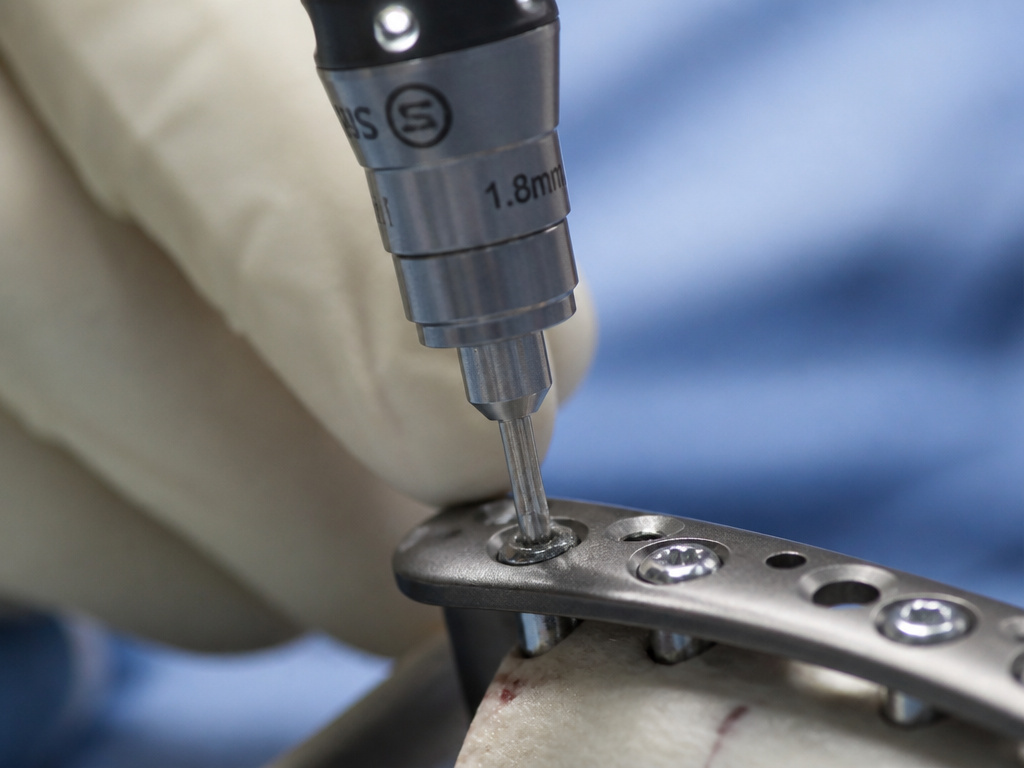
This is where the rules get absolute, and the consequences of a mismatch are not just a broken tool. Drill bits used in orthopaedic surgery, like those meeting the ISO 9714-1:2012 standard, are a completely different class of tool.
They are not for bone. Their sole purpose, as detailed in manufacturer instructions for use (IFUs), is to drill into metal, specifically, to remove locking screws from implants when the screw head is damaged. A DePuy Synthes HSS drill bit (like Art.No. 309.503S) is for steel implants. Their carbide drill bit (Art.No. 309.004S) is for titanium screws.
DO NOT USE THE HSS (TiN) DRILL BIT FOR BONE DRILLING! This warning, printed in all caps in the CHM.eu IFU, exists because the metallurgy and heat treatment for drilling metal are wrong for bone. Using it on bone would cause excessive heat, necrosis, and potential bit failure inside the patient.
Furthermore, these are single-use, sterile devices. The IFUs from both CHM and DePuy Synthes explicitly state “Do not resterilize” and “Single-use Device.” Re-sterilization “can result in product not being sterile, and/or not meeting performance specifications and/or altered material properties.” In short, they are engineered for one specific metal-removing task on one patient, then must be discarded. This isn’t a suggestion; it’s a patient-safety protocol.
How to Prolong Your Drill Bit’s Life
A dull bit is a dangerous bit. It requires more pressure, generates more heat, and is more likely to snap or grab. Here’s how to avoid that.
- Use the correct speed. Harder materials need slower RPMs. If your drill has multiple gears, use the low gear for high-torque, low-speed drilling in metal.
- Apply steady, firm pressure. Let the bit cut. Don’t force it so hard you stall the motor, and don’t be so gentle that you just friction-heat the material.
- Clear chips frequently. When drilling deep holes in metal or wood, pull the bit out every 1/2 inch to clear the flutes. A clogged flute can’t cut or cool.
- Use cutting fluid for metal. A drop of cutting oil or even some WD-40 on aluminum or steel reduces heat and friction dramatically, extending bit life. Bosch notes that using a coolant can extend a drill bit’s operational life by a maximum factor of about six.
- Store them properly. Loose bits in a toolbox will bang into each other, chipping the cutting edges. Use a bit index or a roll-up case.
Common mistake: Assuming a smoking-hot bit is “working hard.” That smoke is the temper leaving the steel. Once a high-speed steel bit turns blue from overheating, it’s lost its hardness and is effectively ruined. It will dull after the next hole.
Frequently Asked Questions
Can I use a wood drill bit on metal?
You can, but you shouldn’t. The sharp spur and cutting lips of a wood bit are designed for fibrous material. On metal, they’ll dull almost immediately, generate tremendous heat, and likely snap. You’ll ruin the bit and make a terrible hole. Always use a bit designed for the material.
What’s the difference between a drill bit and an end mill?
Both are rotating cutting tools, but their applications and geometries are different. A drill bit is designed primarily to plunge axially into material to create a hole. An end mill is designed for lateral, or side, cutting and is used in milling machines to shape slots, profiles, and contours. Using a drill bit for milling operations will break it.
Why do some drill bits have a gold color?
The gold color typically comes from a titanium nitride (TiN) coating. This isn’t just cosmetic; it’s a ceramic coating that increases surface hardness and heat resistance, reducing friction and extending the bit’s life, especially in abrasive materials. It’s a sign of a bit built for harder service.
What does the angle on a drill bit mean?
The angle, usually 118° or 135°, refers to the point angle, the angle formed by the two main cutting lips at the tip. A 118° point is a sharper, more aggressive cut for general-purpose drilling in softer steels and materials. A 135° point is a stronger, more durable tip for harder materials like stainless steel, as it’s less likely to chip or deform under pressure.
How do I know when to replace a drill bit?
Replace a drill bit when it no longer cuts efficiently, it requires excessive pressure, produces burning smells, or makes a squealing sound. Visually, look for rounded-over cutting edges, a discolored (blue or black) tip from overheating, or chipping. A sharp bit should bite into material with moderate pressure.
Before You Go
A drill bit is a consumable, not a heirloom. Its job is to wear out making holes so your more expensive workpiece and power tool don’t. The right bit for the job isn’t a luxury; it’s the cheapest way to guarantee a clean, accurate hole and walk away with all your tools intact. Match the bit to the material, match it to the hole you need, and match it to the tool in your hand. Everything else is just noise. For the vast majority of home shop work, a set of quality HSS twist drills and a separate set of carbide-tipped masonry bits will cover 95% of your needs. Keep them sharp, keep them cool, and they’ll return the favor.
