How to Start Your Stihl Edger Correctly on the First Pull
This post contains affiliate links. As an Amazon Associate, we earn from qualifying purchases.
To start a Stihl gas-powered edger, place it on flat ground, press the purge bulb 5-6 times until fuel is visible, set the choke lever to the cold-start position, engage the throttle trigger lockout, hold the unit firmly with your left hand on the shaft, and pull the starter cord briskly until it starts. After it sputters, move the choke to the warm-start position, pull again, then squeeze the throttle to release the choke and let it warm up.
Most people treat starting a Stihl edger like a brute-force contest. They yank the starter cord like they’re trying to start a lawnmower from the 1980s. The engine floods.
Their shoulder aches. They smell raw gas. The problem isn’t the tool. It’s a misunderstanding of the three-step dance between the purge bulb, the choke, and the throttle lockout.
The process is mechanical, not magical. Get those three controls in the right sequence and the engine fires. Miss one, and you’re just exercising your arm.
Key Takeaways
- Pump the purge bulb until you see fuel fill the clear line. Five pumps is a minimum; on a cold engine or after long storage, you might need seven.
- The choke has three positions: cold start (full choke), warm start (half choke), and run. Move it to warm start the instant the engine sputters or after five pulls.
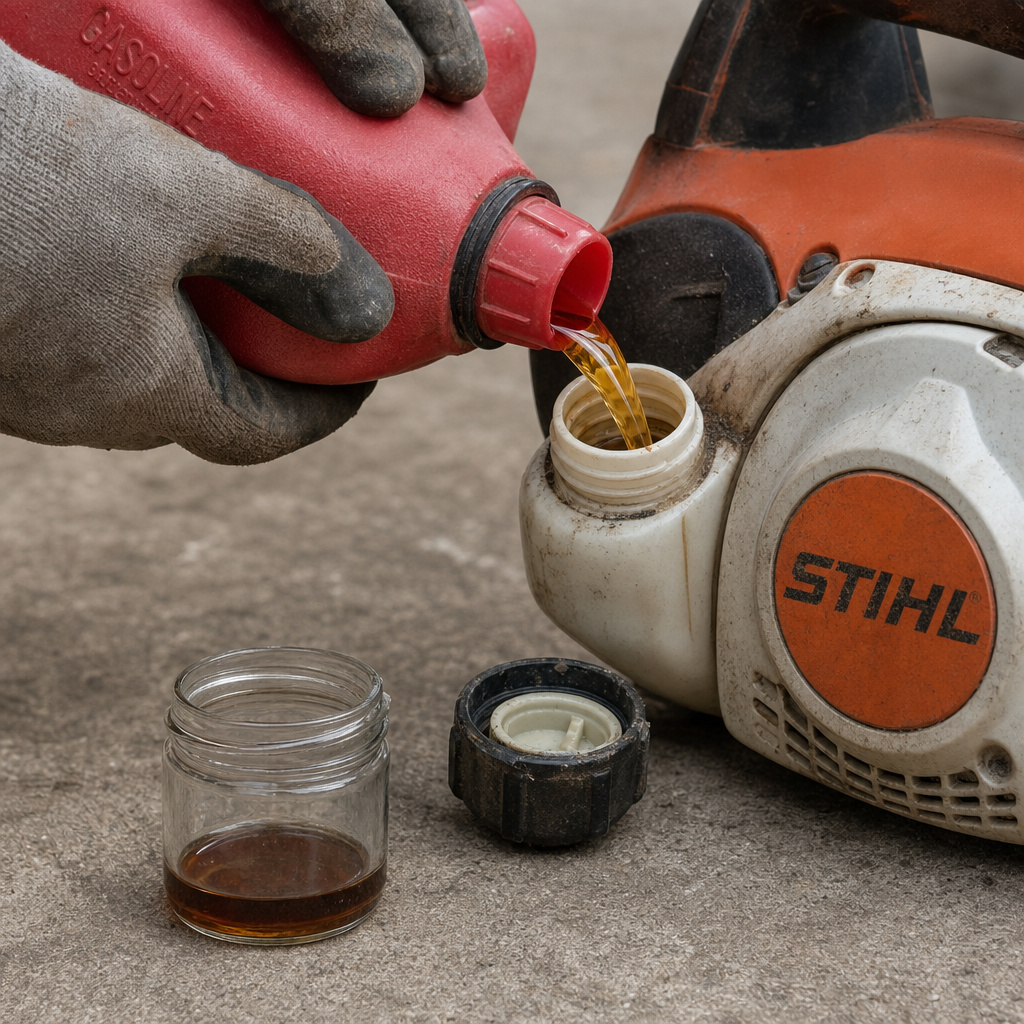
- Use the correct fuel. Stihl [MotoMix] 50:1 is foolproof. Mixing your own requires 89-octane ethanol-free gas and Stihl 2-stroke oil at a 50:1 ratio. Old gas is the most common reason an edger won’t start.
- Your stance matters. Plant your feet, grip the shaft below the powerhead with your left hand, and pull the cord straight out with your right. Don’t kneel on the tool.
- Let the engine warm up for 30-45 seconds at half throttle before you begin edging. A cold two-stroke under load will bog down and stall.
Before You Start: The Non-Negotiables
Before you start: Gasoline is flammable and two-stroke exhaust contains carbon monoxide. Operate outdoors only, on a flat, clear surface at least 10 feet from any structure. Wear ANSI Z87.1-rated safety glasses, hearing protection, heavy gloves, long pants, and sturdy boots. Never start the tool indoors or in an enclosed space like a garage, fumes accumulate and the fire risk is real.
This isn’t a suggestion. I’ve seen a fuel spill ignite on hot concrete. I’ve felt the sting of a rock kicked back from an edger blade. The gear is cheap insurance.
Check your edger before you even think about the starter cord. Is the blade tight and undamaged? Are the fuel and oil caps secure? Is the air filter clean?
A clogged filter starves the engine of air, making it impossible to start. A loose blade is a projectile. Do the walk-around. Every time.
The Step-by-Step Starting Procedure
Forget the generic “pull until it starts” advice. A Stihl two-stroke engine needs a specific sequence. The FC 70 C and FC 56 C-E models are the most common, and their controls are nearly identical.
- Position the Edger. Place it on a flat, stable surface like a driveway or sidewalk. The blade should not be touching grass or dirt. This ensures a stable pull and prevents the blade from digging in.
- Prime the Fuel System. Loc the small, black rubber bulb on the side of the carburetor. Press it firmly 5 to 6 times. You should see fuel move through the clear fuel line into the bulb. Stop when the bulb feels firm. If it stays squishy after 8 pumps, you might have an air leak or be out of fuel.
- Set the Choke. Find the combined choke/stop switch lever on the top of the engine. Push it all the way up to the rabbit symbol. This is the cold-start (full choke) position. It restricts air to create a richer fuel mixture for a cold engine.
- Engage the Throttle Lock. Depress the throttle trigger lockout on the handle, the lever you squeeze with your fingers, and while holding it, squeeze the throttle trigger itself. Release the trigger, but keep the lockout depressed. You’ll hear a click. This sets the starting throttle position.
- Secure the Tool and Pull. With your left hand, grip the shaft firmly just below the engine. Press down slightly to stabilize the unit. Do not wrap your hand around the shaft or put your knee on it. With your right hand, slowly pull the starter cord handle until you feel resistance, this engages the engine. Then, in one smooth, brisk motion, pull the cord straight out to its full length. Don’t yank it sideways.
- Listen for the Sputter. The engine should fire, run for a second, and then die. That’s normal. Immediately move the choke lever down one notch to the half-choke (warm-start) position. It’s marked by a single horizontal line.
- Pull Again. With the choke in warm-start, pull the starter cord again. The engine should start and stay running. If it doesn’t start after 2-3 pulls, move the choke back to cold-start for one more pull, then back to warm-start.
- Release the Choke. Once the engine is running, squeeze and release the throttle trigger. This automatically moves the choke lever down to the run position (the horizontal line with a slash through it). Let the engine idle and warm up for 30 to 45 seconds. You’ll hear the exhaust note smooth out from a ragged braap-braap to a steady hum.
The purge bulb doesn’t pump fuel into the cylinder. It fills the carburetor’s metering chamber and clears air from the fuel line. Air in the line causes a lean condition, and a cold two-stroke needs a rich mixture to ignite. Five pumps is the minimum to ensure the carburetor is primed and ready.
What Are the Three Choke Positions For?
The choke lever isn’t an on/off switch. It’s a air valve. Understanding what each position does explains why the starting procedure works.
| Lever Position | Symbol | Function | When to Use It |
|---|---|---|---|
| Cold Start | Rabbit | Closes the choke plate completely, allowing maximum fuel and minimum air into the engine. | Only for the first 1-5 pulls on a completely cold engine. |
| Warm Start | Single Horizontal Line | Opens the choke plate slightly, providing a slightly leaner mixture than cold start. | After the engine sputters on cold start, or for restarting a warm engine that has been off for less than 10 minutes. |
| Run | Slashed Circle | Choke plate is fully open. Engine runs on normal air/fuel mixture. | Default position once the engine is running. Also the “Stop” position when pushed down past Run. |
Leaving the choke in the cold-start position after the engine fires will flood it within seconds. Fuel pools in the cylinder, washing away the oil film and making the spark plug too wet to fire. That’s why you move it to warm-start the moment you hear that first cough.
Stihl Edger Won’t Start? Troubleshooting Checklist
You followed the steps. You pulled ten times. Nothing.
Don’t start swapping parts at random. Follow this list in order. Ninety percent of no-start issues live in the first three items.
First, verify the basics.
- Fuel: Is there fresh, properly mixed fuel in the tank? Gas older than 30 days degrades and gums up the carburetor. Smell it. Stale gas smells sour, not sharp. If in doubt, drain it and refill with Stihl MotoMix.
- Spark: Remove the spark plug, reconnect the boot, and rest the metal body against the engine cylinder. Pull the starter cord. You should see a bright blue spark jump the gap. No spark? The plug might be fouled (clean it with a wire brush) or the ignition coil might be faulty.
- Air: Is the air filter clogged? A dirty filter chokes the engine. Tap it clean or wash it if it’s the foam type. Let it dry completely before reinstalling.
- Compression: You should feel strong resistance when pulling the starter cord. If it pulls too easily, the engine may have lost compression due to a worn piston or cylinder, a bigger repair.
If the basics check out, the problem is often in the starting sequence itself. The process for starting a Stihl trimmer is nearly identical, and the same subtle mistakes apply.
I once spent twenty minutes trying to start an FC 70 that had been running fine the week before. I checked spark, air, fuel. Finally, I noticed the throttle trigger lockout wasn’t fully engaging. A small piece of twig was jammed in the mechanism. Cleared it, heard the definitive click, and it started first pull. The lockout is a safety, but it’s also part of the circuit.
The Right Fuel and Oil Mix: This Isn’t a Negotiation

You can’t run a Stihl two-stroke engine on the same gas you put in your car. The oil mix lubricates the crankshaft, connecting rod, and piston. The wrong mix destroys the engine.
| Fuel Option | Mix Ratio | Best For | Biggest Risk |
|---|---|---|---|
| Stihl MotoMix | Pre-mixed 50:1 | Everyone, especially casual users and for seasonal storage. | Cost per gallon is higher than mixing your own. |
| Ethanol-Free Gas + Stihl 2-Stroke Oil | 50:1 (2.6 oz oil per 1 gal gas) | High-volume users who go through fuel quickly. | Mixing error or using old gas. Ethanol in regular gas attracts water and gums up carburetors. |
Use a dedicated fuel mixing bottle with clear ratio markings. “Eyeballing” it leads to a lean mix (too much gas, not enough oil) which causes overheating and seizure. A rich mix (too much oil) fouls the spark plug and smokes excessively. Stihl engines are designed for 50:1. Don’t use 40:1 or 32:1 oil, it’s too rich.
Pour fuel on bare ground, away from your starting area. Wipe up any spills immediately. Spilled fuel kills grass and contaminates soil.
Breaking In a New Stihl Edger
A new engine needs gentle treatment for its first few hours. The piston rings need to seat properly against the cylinder wall.
- For the first 10 tanks of fuel, avoid running the engine at full throttle for extended periods.
- Vary the throttle speed. Don’t just set it and forget it.
- Let the engine warm up fully before applying load, and give it a minute to cool down at idle before shutting it off.
- This break-in period allows microscopic high spots on the metal surfaces to wear in smoothly. Skipping it can lead to reduced power and oil consumption later.
After break-in, you can run it hard. But for those first ten tanks, be kind.
How Do You Shut It Down and Store It Correctly?
When you’re done, let the engine idle for 30 seconds. This stabilizes temperatures. Then, simply push the choke lever down past the run position to the stop symbol. The engine will cut off.
For storage longer than 30 days, you have two choices. The best practice is to run the engine until it stalls from an empty fuel tank. This leaves the carburetor dry. The alternative is to add a fuel stabilizer (like Stihl’s own) to a full tank and run the engine for two minutes to circulate it through the system. Never store it with untreated fuel in the carburetor, it will turn to varnish.
Always clean your trimmer and attachments after use, including the edger blade. Grass sap and dirt accelerate corrosion. Proper off-season storage in a cool, dry place will get you a first-pull start next season.
Frequently Asked Questions
Why does my Stihl edger start and then immediately die?
This is almost always a fuel delivery issue. The engine burns the prime in the carburetor but then starves. Causes include a clogged fuel filter inside the tank, a pinched or cracked fuel line, a dirty carburetor jet, or a faulty fuel pump diaphragm. Check the fuel filter first.
Can I use my Stihl string trimmer attachment to edge?
Technically, yes. You can tilt a trimmer to edge. But it’s inefficient and hard on your back. A dedicated edger like the FC 70 has a fixed vertical blade and a guide wheel that follows the sidewalk, giving you a consistent, clean depth. For the proper edger operation and cleaner results, use the right tool.
How often should I replace the spark plug?
Annually, or every 100 operating hours. A worn plug causes hard starting and weak performance. Use the exact plug specified in your manual (typically a Bosch or NGK equivalent). Gap it with a feeler gauge before installing.
The pull cord is hard to pull or stuck. What now?
Stop pulling. The most common cause is a tangled or jammed starter rope inside the recoil assembly. Less common but more serious is engine seizure from running without oil. First, remove the spark plug and try pulling the cord. If it moves freely, the engine is likely okay and the starter needs servicing. If it’s still stuck with the plug out, the engine may be seized.
Is there a battery-powered Stihl edger?
Yes, Stihl offers several models in their AK System, like the ARE 141. The starting procedure is completely different: insert the battery, press the safety switch, and pull the trigger. No choke, no prime, no pull cord. They’re excellent for quick jobs and eliminate fuel mixing.
The Bottom Line
Starting a Stihl edger isn’t about strength. It’s about sequence. Prime five times, choke to rabbit, lock the throttle, pull until it sputters, choke down one notch, pull again. Use fresh MotoMix or a precise 50:1 mix.
Wear the safety gear. That’s it. Master that sequence and you’ll never fight with the pull cord again. The sound of that two-stroke settling into a steady idle is the sound of a job about to get done right.
