Does Soaking Trimmer Line Help? We Test the Water Method
This post contains affiliate links. As an Amazon Associate, we earn from qualifying purchases.
Soaking trimmer line in water helps because standard nylon line is a hygroscopic material that loses moisture during storage, becoming brittle. Rehydrating it for 24 hours in room-temperature water restores flexibility, significantly reducing mid-job breakage. This is not a myth; it’s a manufacturer-recommended practice endorsed by Stihl and Oregon for their monofilament nylon lines.
You probably heard this tip from a neighbor or saw it debated online. It sounds like an old wives’ tale, why would plastic need water? Most people dismiss it without trying, assuming modern materials don’t need such fuss. They then spend the afternoon cussing at a trimmer that keeps snapping line every five minutes, blaming the brand or the line itself.
The confusion is understandable. Let’s cut through the noise. This guide walks you through the polymer science behind why it works, the official word from the companies that make the line, the correct way to do it, and, critically, when it won’t help at all.
Key Takeaways
- Soaking works specifically on monofilament nylon trimmer line because nylon absorbs water molecules, which act as a plasticizer to soften the polymer chains and restore flexibility.
- Manufacturers like Stihl and Oregon officially recommend a 24-hour soak to combat brittleness caused by dry storage, a fact printed on some spool packaging.
- The practice is a preventative rehydration, not a repair. It won’t fix line that’s already cracked, sun-damaged, or melted from overheating against a guard.
- Soak in room-temperature water only. Hot water can degrade the nylon, and additives like bleach or oil offer no benefit and can damage the line or your trimmer head.
- For long-term storage, a sealed bag with a damp cloth is a cleaner alternative to a permanent water bucket, preventing stagnant water issues.
The Science Behind a Wet Plastic String
You pick up a spool of trimmer line. It feels stiff, maybe it has little white stress marks near the cut ends. It snaps when you try to bend it sharply. That’s not a defect in manufacturing. It’s chemistry.
Standard trimmer line is made from monofilament nylon. Nylon is a hygroscopic polymer. That’s a fancy term meaning its molecular structure attracts and holds water vapor from the surrounding air.
These water molecules nestle between the long polymer chains. In that position, they act as a lubricant or plasticizer, allowing the chains to slide past each other more easily. The result is a more flexible, less brittle material.
When you store that line in a dry environment, a hot shed, a garage shelf, a warehouse pallet for months before sale, it loses that moisture. The polymer chains pack tighter. The line becomes stiff and prone to fracturing under the sudden impact of hitting grass, a fence post, or even just the centrifugal force of spinning at 7,000 RPM. Soaking it is simply giving it a drink to replace what it lost.
Monofilament nylon trimmer line can absorb up to 10-15% of its weight in water. This absorbed moisture does not make the line weaker; instead, it occupies spaces between the polymer chains, reducing internal friction and allowing the material to flex without developing micro-cracks that lead to breakage.
This is why the practice is so common among professional landscapers. Their bulk spools live on trailers in the sun all season. A Friday night soak in a bucket means Saturday’s crews aren’t constantly stopping to bump-feed new line. The line cuts more consistently because it’s flexing on impact instead of shattering.
What Does Soaking Actually Do to the Line?
It doesn’t make it stronger. It doesn’t turn it into a magic filament that cuts through rock. Anyone claiming that is overselling it. Soaking has one job: reverse moisture loss-induced brittleness.
Think of a dried-out sponge. It’s hard and crumbly. Add water, and it becomes pliable again. The sponge isn’t better than new; it’s just returned to its intended, functional state. That’s exactly what happens to nylon line.
The tangible effects you’ll notice are all about flexibility and fracture resistance. A properly rehydrated line will have a softer coil memory coming off the spool. When you kink it between your fingers, it will resist snapping and try to spring back instead of holding the sharp crease. This translates directly to your trimmer head. The line can whip against an obstacle, bend, and recover instead of snapping off and leaving you with a shortened stump.
There’s a limit, though. The nylon can only reabsorb so much water, that 10-15% by weight threshold. A 24-hour soak in room-temperature water reaches near maximum absorption. Leaving it in for three days or a week doesn’t make it “more” hydrated. It just gives you a bucket of increasingly stagnant water.
The Manufacturer’s Verdict: Stihl and Oregon Chime In
This isn’t just backyard folklore. Major manufacturers are on record recommending it.
If you look closely at a spool of Stihl brand trimmer line, you might find a small symbol: a bucket with a water droplet entering it. That’s not a suggestion to clean the spool. It’s a direct instruction. Stihl USA has publicly stated that nylon trimmer line is hygroscopic and benefits from soaking to restore flexibility and reduce breakage. Their service departments confirm this to customers who call.
Oregon, another giant in outdoor power equipment, echoes this. Their guidance is straightforward: submerge the line in water for 24 hours to reduce brittleness.
| Manufacturer | Official Position | Recommended Soak Time | Primary Reason |
|---|---|---|---|
| Stihl | Recommends soaking | 24 hours | Rehydrates hygroscopic nylon to restore flexibility and reduce breakage from dryness. |
| Oregon | Recommends soaking | 24 hours | Reduces line brittleness that occurs during storage in dry conditions. |
| Generic Brands | Varies (often silent) | 24 hours (if attempting) | Same material science applies if line is monofilament nylon. |
The takeaway is clear. For their nylon lines, the companies that engineer the product say soaking helps. This official stance settles the debate for a huge portion of the trimmer line on the market.
How to Soak Trimmer Line Correctly (Step-by-Step)

Doing it right is simple. Doing it wrong can create a mess or even damage the line. Follow these steps.
Before you start: Use only clean, room-temperature water. Never use hot water, as excessive heat can alter the nylon’s crystalline structure, permanently weakening it. Avoid additives like bleach, vinegar, or motor oil, they don’t aid absorption and can degrade the line or gum up your trimmer head.
- Identify a candidate spool. This is for line that feels stiff or is fresh out of a dry storage package. If the line is already visibly cracked, frayed, or melted from friction, soaking won’t resurrect it. Toss it.
- Submerge the entire spool. Get a clean bucket, pail, or large container. Fill it with enough room-temperature water to completely cover the spool. Drop the spool in. You don’t need to unwind it.
- Wait 24 hours. Let it sit for a full day. Overnight is the minimum; a full 24-hour cycle ensures even saturation. Place the bucket in a shaded, cool spot if possible.
- Remove and shake dry. Pull the spool out. Give it a few firm shakes to shed the bulk of the water. Let it air-dry on a rag for 10-15 minutes. You don’t want it sopping wet when you’re winding the spool, as wet line can slip.
- Load and test. Spool the line onto your trimmer head as you normally would. You should feel the difference during the threading process, it will be more cooperative. Once running, it should exhibit less “pinging” and breaking on light contact.
The Damp-Cloth Storage Alternative
Don’t want a permanent bucket of water in your garage? There’s a cleaner method for long-term storage. Take your spare spool and place it inside a large, sealable plastic bag (like a freezer bag). Add a damp, not dripping wet, sponge or cloth to the bag. Seal it shut. The humid environment inside the bag will keep the line hydrated indefinitely. Check the cloth every few months and re-dampen if it’s dry. This is an excellent tactic as part of your off-season storage routine.
When Soaking Trimmer Line Doesn’t Help
This is the part that frustrates people who try it once and declare it a bust. Soaking is not a universal cure for every line problem. It addresses one specific cause of failure: dryness.
It will not help in these scenarios:
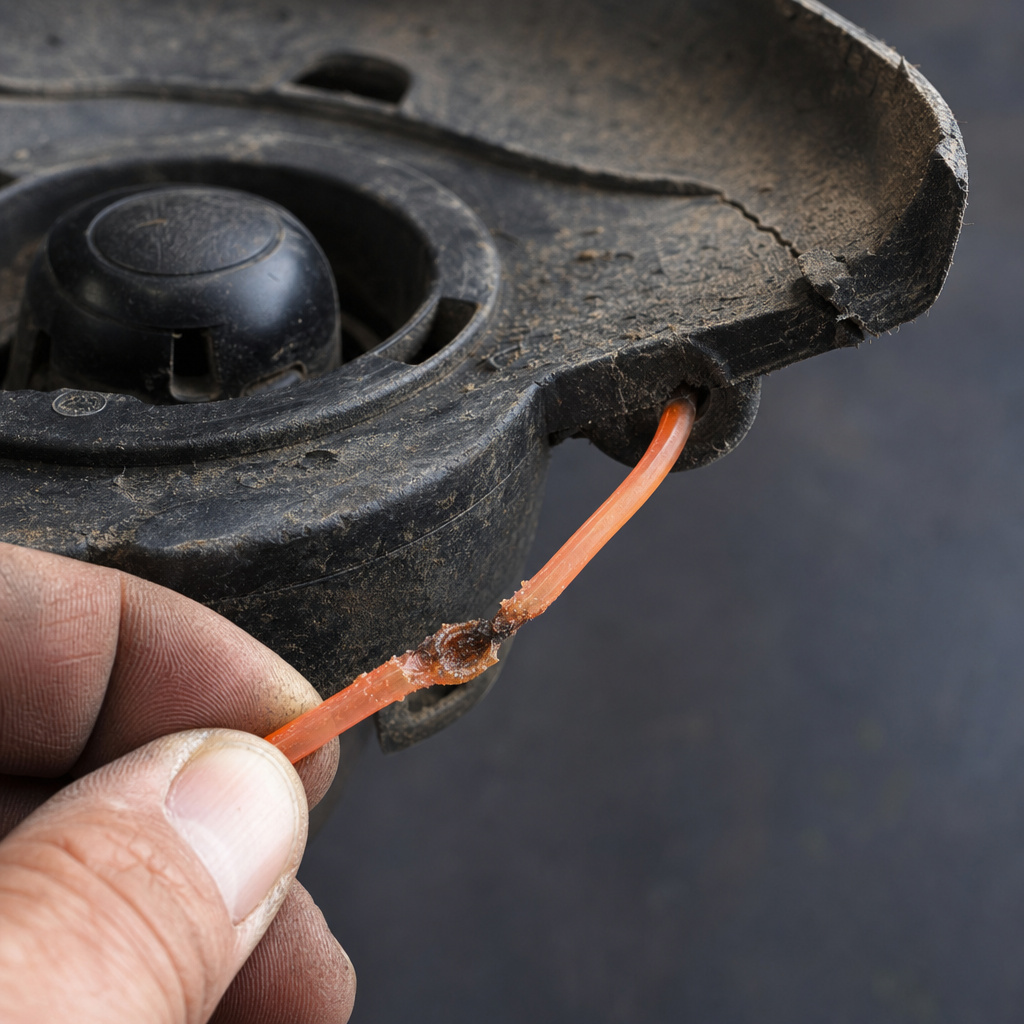
* Line is physically damaged. If it’s nicked, gouged, or has a melted section from rubbing against a cracked trimmer guard, water won’t heal it.
* You’re using the wrong line diameter. Soaking a .065-inch line won’t make it strong enough for a trimmer meant for .095-inch line. You’re overloading the machine.
* The trimmer head is faulty or overheated. A worn-out bump feed mechanism that jams, or a head that spins with excessive friction, generates heat. That heat melts the line at the exit hole. A soaked line will just melt faster.
* Poor trimming technique. If you’re “digging” with the trimmer head, slamming the line into immovable objects like concrete curbs or rocks, you’re causing mechanical failure. Soaking doesn’t increase tensile strength.
* Non-nylon lines. Some specialty lines are made from co-polymers, plastics blended with metals, or other materials that are not hygroscopic. Soaking these does nothing. Always check the packaging material.
I learned this the hard way with a generic “professional grade” line from a big-box store. The line kept snapping every few feet. I soaked it for two days, convinced it would solve everything. It didn’t.
The line was slightly more flexible, but it still snapped. The real problem was a slightly warped debris shield on my old gas trimmer that was creating a hot spot. The line was getting thermally degraded the moment it spun up. Fixing the shield was the actual solution.
Troubleshooting Common Soaking Questions
Does water temperature matter?
Yes. Use room-temperature water. Cold water slows absorption. Hot water (above 50°C/122°F) risks annealing the nylon, which can reduce its toughness and make it gummy. Lukewarm is fine; hot from the tap is too much.
How long does the effect last?
Once rehydrated and loaded on your trimmer, the line will gradually lose moisture again as it spins in dry air and heats up from friction. The benefit is most pronounced at the start of the job. For a homeowner, a soaked spool should stay pliable for several weeks of typical use if the trimmer is stored in a garage. For a pro using a full spool in a day, the effect lasts the job.
My bucket water got slimy. What now?
That’s algae or bacterial growth from sunlight and organic matter. It doesn’t hurt the line, but it’s unpleasant. Dump the water, rinse the spool with clean water, and wipe out the bucket. For the next soak, use a container with a lid, store it in the dark, or use the damp-cloth bag method.
Can I soak pre-cut lengths?
You can, but it’s less efficient. Tossing a handful of 10-foot precut segments into a water-filled jar works. Just ensure they’re fully submerged and give them the same 24 hours.
Frequently Asked Questions
Should you soak new trimmer line?
Yes, often. That new spool may have been sitting in a non-climate-controlled warehouse or on a retail shelf for over a year. It’s likely bone dry straight out of the package. A 24-hour soak brings it to its optimal, flexible state before you even start the standard replacement process.
What about other liquids like oil or fabric softener?
Don’t. Motor oil attracts dirt and will gum up your trimmer head. Fabric softener contains chemicals that can degrade nylon over time. Water is the specific plasticizer the polymer is designed to accept. Stick with water.
Does it work on all string trimmer lines?
No. It works on lines made from hygroscopic materials, primarily monofilament nylon. Check the packaging.
If it says “nylon,” it will likely benefit. If it’s a composite, “professional polymer blend,” or has metal fibers, soaking probably won’t help. Understanding your trimmer line materials is key.
How can I tell if my line needs soaking?
Perform the bend test. Take a 6-inch piece and try to make a sharp, U-shaped bend. If it snaps crisply or shows white stress lines at the bend point without much pressure, it’s brittle and a good candidate. If it bends easily and tries to spring back, it’s still flexible.
Will soaking make the line too thick or swell up?
Negligibly. The water absorption happens at a molecular level. You won’t see a visible increase in diameter. The line won’t swell enough to cause jamming in your trimmer head.
The Bottom Line
Soaking trimmer line in water isn’t a hack or a myth. It’s basic materials science applied to a common tool. For standard nylon line suffering from dry, brittle storage, a 24-hour bath in room-temperature water is a legitimate, manufacturer-backed method to restore flexibility and cut down on frustrating breakage.
It’s a preventative maintenance step, like sharpening a blade. It won’t fix other problems like a damaged head or bad technique, but when the conditions are right, it works unequivocally well. Keep a bucket handy for your next spool, or use the damp-bag trick for storage. You’ll spend less time reloading line and more time getting a clean cut.
{
“@context”: “https://schema.org”,
“@type”: “HowTo”,
“name”: “How to Soak Trimmer Line in Water to Reduce Breakage”,
“totalTime”: “PT24H”,
“tool”: [
{
“@type”: “HowToTool”,
“name”: “Bucket or large container”
},
{
“@type”: “HowToTool”,
“name”: “Clean water (room temperature)”
},
{
“@type”: “HowToTool”,
“name”: “Sealable plastic bag and damp cloth (optional)”
}
],
“step”: [
{
“@type”: “HowToStep”,
“name”: “Identify brittle line”,
“text”: “Check your trimmer line for stiffness, white stress marks, or a tendency to snap with a sharp bend. New line stored for months in a dry garage will also benefit.”
},
{
“@type”: “HowToStep”,
“name”: “Submerge the spool”,
“text”: “Place the entire spool of trimmer line in a bucket filled with enough room-temperature water to completely cover it. Avoid hot water, as it can soften the nylon excessively.”
},
{
“@type”: “HowToStep”,
“name”: “Soak for 24 hours”,
“text”: “Let the line soak for a full day. Nylon absorbs moisture relatively quickly, and longer soaking periods do not provide additional benefit.”
},
{
“@type”: “HowToStep”,
“name”: “Remove and dry the spool”,
“text”: “Take the spool out of the water. Shake off excess water and let it air-dry for a few minutes before loading it into your trimmer head to prevent slipping.”
},
{
“@type”: “HowToStep”,
“name”: “Test and use”,
“text”: “Feel the line. It should be noticeably more flexible and less prone to kinking. Proceed with your standard replacement process for loading the line onto your trimmer.”
}
]
}
{
“@context”: “https://schema.org”,
“@type”: “FAQPage”,
“mainEntity”: [
{
“@type”: “Question”,
“name”: “Should you soak new trimmer line?”,
“acceptedAnswer”: {
“@type”: “Answer”,
“text”: “Yes, often. That new spool may have been sitting in a non-climate-controlled warehouse or on a retail shelf for over a year. It’s likely bone dry straight out of the package. A 24-hour soak brings it to its optimal, flexible state before you even start the standard replacement process.”
}
},
{
“@type”: “Question”,
“name”: “What about other liquids like oil or fabric softener?”,
“acceptedAnswer”: {
“@type”: “Answer”,
“text”: “Don’t. Motor oil attracts dirt and will gum up your trimmer head. Fabric softener contains chemicals that can degrade nylon over time. Water is the specific plasticizer the polymer is designed to accept. Stick with water.”
}
},
{
“@type”: “Question”,
“name”: “Does it work on all string trimmer lines?”,
“acceptedAnswer”: {
“@type”: “Answer”,
“text”: “No. It works on lines made from hygroscopic materials, primarily monofilament nylon. Check the packaging.\n\nIf it says \”nylon,\” it will likely benefit. If it’s a composite, \”professional polymer blend,\” or has metal fibers, soaking probably won’t help. Understanding your trimmer line materials is key.”
}
},
{
“@type”: “Question”,
“name”: “How can I tell if my line needs soaking?”,
“acceptedAnswer”: {
“@type”: “Answer”,
“text”: “Perform the bend test. Take a 6-inch piece and try to make a sharp, U-shaped bend. If it snaps crisply or shows white stress lines at the bend point without much pressure, it’s brittle and a good candidate. If it bends easily and tries to spring back, it’s still flexible.”
}
},
{
“@type”: “Question”,
“name”: “Will soaking make the line too thick or swell up?”,
“acceptedAnswer”: {
“@type”: “Answer”,
“text”: “Negligibly. The water absorption happens at a molecular level. You won’t see a visible increase in diameter. The line won’t swell enough to cause jamming in your trimmer head.”
}
}
]
}
