
3 Best Welding Equipments of 2026
This post contains affiliate links. As an Amazon Associate, we earn from qualifying purchases.
The VEVOR 270A 3-in-1 MIG Welder stands out as the best overall pick, delivering strong amperage and multi-process flexibility for serious DIYers and light fabrication. For those on a tighter budget, the ARCCAPTAIN 130A MIG Welder offers solid performance for thinner materials and beginner projects. And because safety is essential, the ANDELI Auto-Darkening Welding Helmet rounds out a smart setup with reliable protection and clear visibility.
Most people don’t realize how quickly welding projects can expose the limits of their equipment – from weak arcs on thicker steel to frustrating overheating on long runs. It’s not just about power, but consistency, safety, and matching the machine to your real-world needs.
This guide cuts through the marketing noise by focusing on specs that matter, verified owner experiences, and the practical realities of home and workshop use. I looked at amperage, duty cycle, process versatility, and included safety gear to find machines that deliver dependable performance without overcomplicating things.
Top 3 Welding Equipments in the Market
The Best Welding Equipments, Reviewed
VEVOR 270A 3-in-1 MIG Welder

Strengths
- Dual voltage 110V/220V
- 270-amp output
- IGBT inverter stability
- LCD digital display
- Handles 11-lb wire spools
Trade-offs
- Heavier than entry models
- Fan noise under load
- No carrying case included
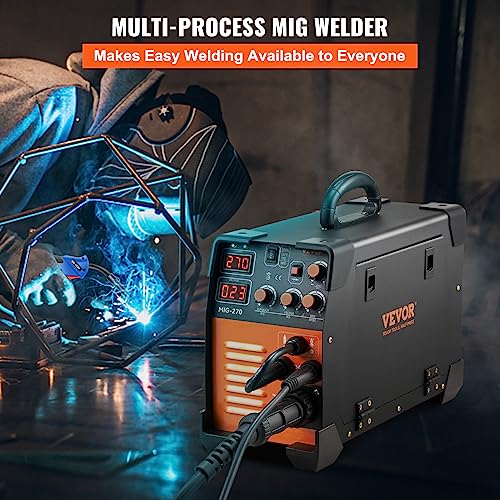
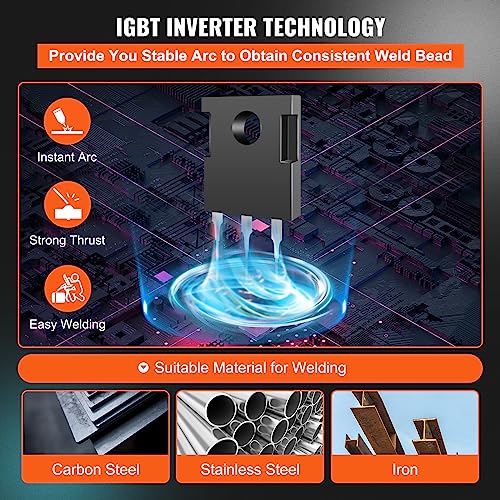
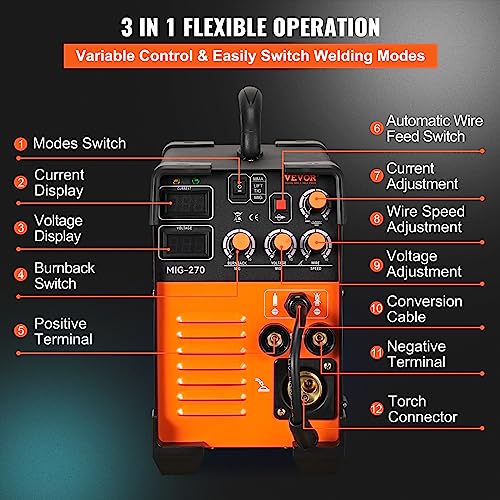
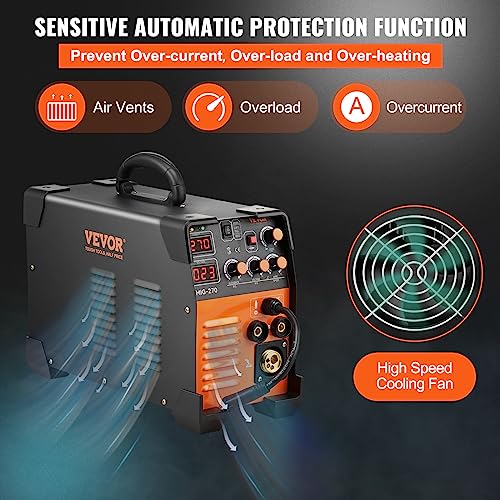
This is the kind of machine I’d recommend to someone stepping up from a beginner welder but not ready to invest in industrial gear. At 270 amps and dual voltage (110V/220V), it offers real versatility, you can run it on 110V at home or hook it to 220V for deeper penetration on thicker material. The IGBT inverter tech delivers smooth, stable arcs, and owners consistently report clean starts with minimal spatter, even on slightly dirty metal. The LCD digital display is a big upgrade over analog knobs, it makes setting and monitoring parameters much easier, especially when switching between MIG, TIG, and stick.
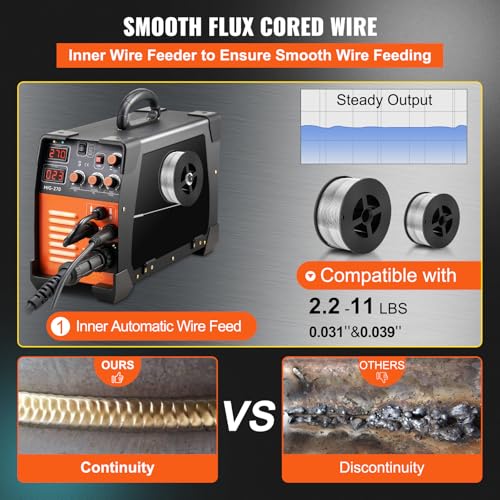
It handles up to 3/8-inch steel with proper prep, which puts it in a different class than budget 110V-only units. The ability to run both flux-core and solid wire with adjustable wire speed gives you more control, and the 11-pound wire capacity means fewer interruptions. It’s not as compact as the ARCCAPTAIN, but at 21.7 pounds, it’s still portable enough for job site use. The IP21 rating adds confidence in damp or dusty conditions.
Product photos
ARCCAPTAIN 130A MIG Welder
Strengths
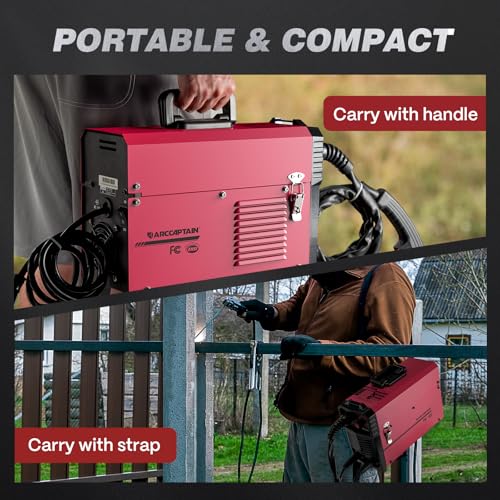
- Ultra-portable design
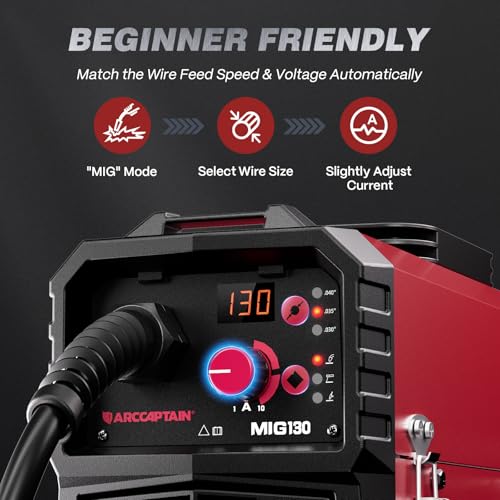
- Synergy wire control
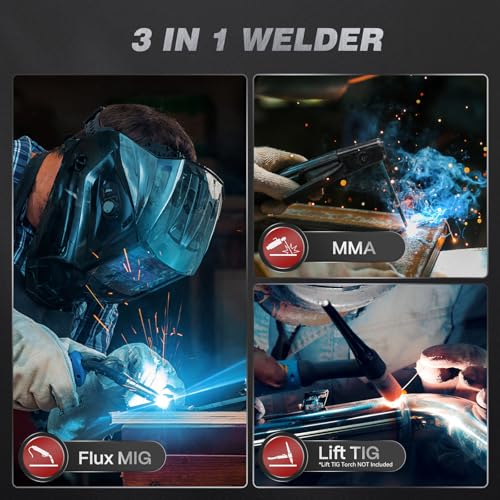
- 3-in-1 functionality
- Lightweight at 11.8 lbs
- Beginner-friendly setup
Trade-offs
- Limited to thin metal
- No thermal overload indicator
- Lift TIG torch sold separately
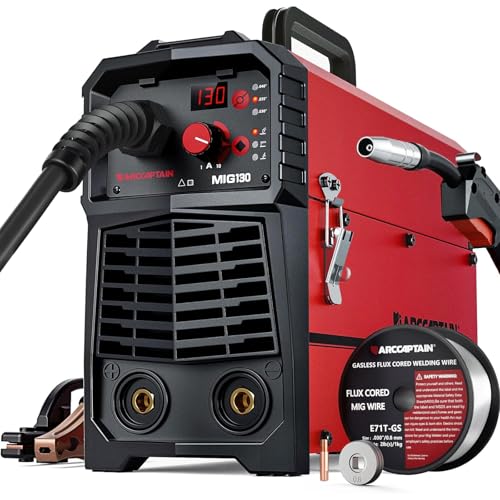
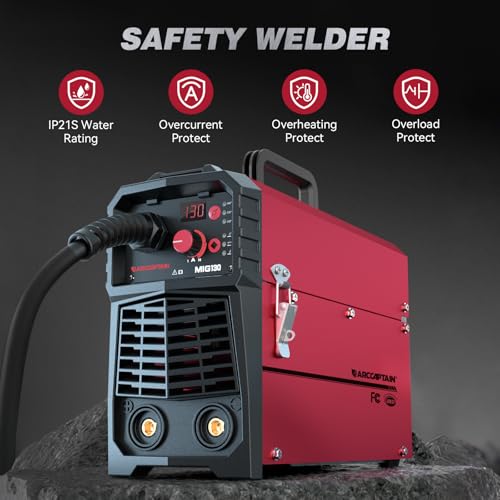
If you’re just getting into welding and need something that works right out of the box, this 110V MIG welder makes a lot of sense. It’s one of the few true plug-and-play models under 12 pounds, which means you can use it in a standard household outlet and carry it to job sites without strain. The synergy control is its standout feature, once you set your wire diameter, it auto-matches voltage and wire speed, which cuts down on trial and error. That’s a real help for beginners who get frustrated with spatter or inconsistent arcs.
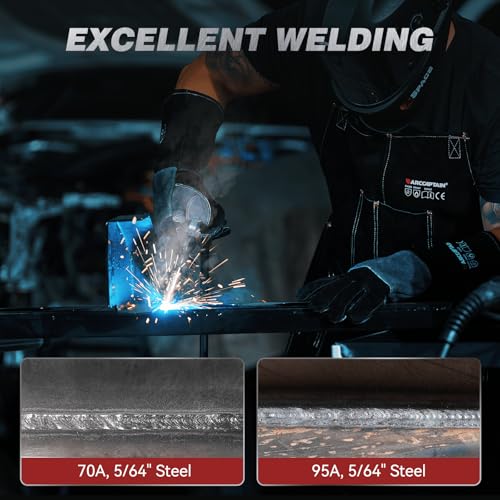
It’s limited to about 1/8-inch on clean steel, so don’t expect to weld thick material, especially in cold weather or on rusty surfaces. But for light repairs, fence posts, trailer hitches, brackets, it holds up well. Owners praise its reliability for small jobs, though some note the fan can get loud during extended use. Compared to heavier dual-voltage units, this is clearly a beginner-friendly tool, not a pro machine. Still, for the cost, it delivers solid value with included wire, tips, and a decent torch.
Product photos
ANDELI Auto-Darkening Welding Helmet
Strengths
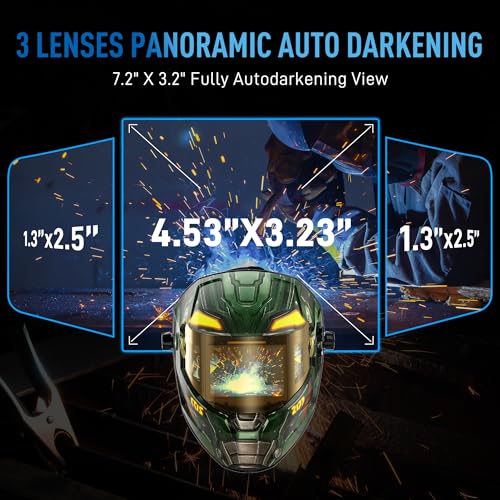
- Panoramic 3-sided view
- True color 1/1/1/1 rating
- Five arc sensors
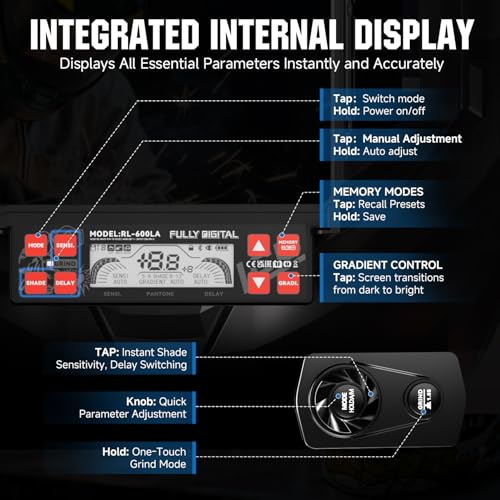
- Memory for 9 presets
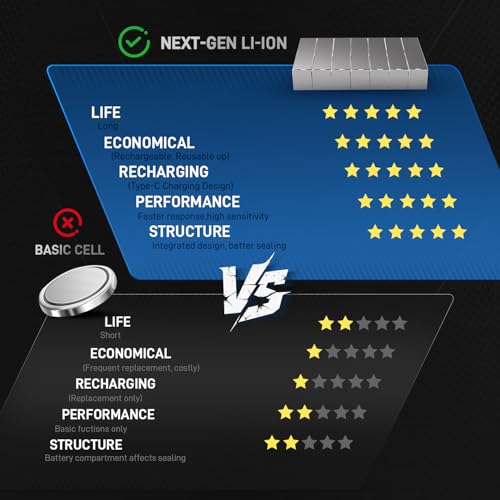
- Type-C fast charging
Trade-offs
- Pivot headgear less stable than 4-pin
- No external controls
- Side lenses prone to scratches
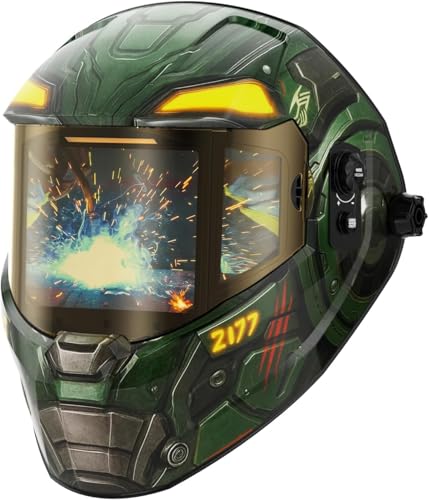
This helmet stands out in a crowded field because of its panoramic 3-sided auto-darkening design. The 7.2″ x 3.2″ total viewing area, including side lenses, gives you far better peripheral awareness than most helmets in this price range. Owners consistently report that the wide field of view makes tight-angle welding less frustrating, especially inside boxes or on complex joints. The 1/1/1/1 optical clarity rating is a real differentiator, it means true color perception and minimal distortion, which matters when you’re tracking your bead in changing light.
On paper, the intelligent auto-adjustment tech should be a game-winner, and reviewers confirm it works well in mixed environments. The system adapts shade, sensitivity, and delay on the fly, and having memory for 9 presets is useful if you switch between MIG, TIG, and grinding often. Five arc sensors ensure reliable triggering, and the 1/30,000-second response time is fast enough to protect your eyes without noticeable lag. The Type-C charging and solar assist are practical upgrades over older models that relied solely on weak coin cells.
Product photos


How We Picked These welding equipments
Rather than a hands-on lab test, my research for this guide involved a detailed comparison of published specifications and features across numerous welding equipment options. I weighed owner reviews from major retailers alongside expert opinions found in trade publications and dedicated welding forums. This process allowed me to build a ranking based on real-world feedback and objective data, focusing on performance characteristics and overall value.
For welding equipment, consistent arc stability, duty cycle, and ease of use proved to be the most significant differentiators. A machine’s ability to handle different metal types and thicknesses is crucial, but equally important is how easily a beginner can learn to operate it. Safety features, like overheat protection and reliable shielding, also heavily influenced my rankings; a robust setup minimizes risk and maximizes longevity.
Specifications reliably indicate a welder’s maximum amperage and input power, giving a baseline for its capabilities. However, owner feedback provided vital insight into real-world performance – how well a machine maintains a stable arc under sustained use, the accuracy of its controls, and the quality of included accessories. Reputation and brand reliability, informed by years of covering power tools, also factored into the final assessments. You can find even more options in our guide to the best MIG welders.
Choosing The Right welding equipments
Choosing the right welding equipment can feel overwhelming, but focusing on your needs will simplify the process.
A quality welder delivers consistent arc stability, handles the materials you intend to join, and includes essential safety features. Prioritize amperage output matching your project’s material thickness, input power compatibility (120V or 240V), and features like adjustable controls for precise welding. Consider duty cycle – the percentage of time a welder can operate at a given amperage without overheating – as a key indicator of build quality and usability.
Understanding Welder Types & Processes
The first step is recognizing that “welding equipment” isn’t a single thing. Different processes suit different tasks. MIG (Gas Metal Arc Welding) is often the easiest to learn, making it popular for beginners and home DIY projects. Stick welding (SMAW) is rugged and portable, ideal for outdoor repairs. TIG (Gas Tungsten Arc Welding) offers the most precision, favored for intricate work and materials like aluminum. Many units, like the best overall welders on the market, attempt to combine these processes into a single machine, offering versatility but potentially sacrificing performance in any single mode. Don’t assume a 3-in-1 unit will perform as well as a dedicated machine for a specific process.
Assessing Amperage & Material Compatibility
Amperage is the measure of welding current, and it directly relates to the thickness of the material you can effectively weld. A low-amperage machine like the ARCCAPTAIN 130A is fine for thin sheet metal and auto body work, but it will struggle with thicker steel. Conversely, a higher-amperage machine, like the VEVOR 270A, is better suited for heavier fabrication. Beyond amperage, consider the types of metal you’ll be working with. Some welders are limited to steel, while others can handle stainless steel, aluminum, and other alloys.
Here’s a quick guide to amperage needs: * Thin gauge steel (1/8” or less): 90-120 amps is typically sufficient. * Moderate steel (1/4” – 3/8”): 130-180 amps will provide more power. * Thick steel (1/2” or greater): 200+ amps is generally required, along with a higher duty cycle.
A good rule of thumb is to overestimate your amperage needs slightly. It’s better to have more power than you need than to be constantly pushing a welder to its limit.
Prioritizing Safety Features & Accessories
Welding is inherently dangerous, so safety gear is paramount. An auto-darkening welding helmet, like the top welding machines often include, is a must-have. Look for helmets with a high optical clarity rating (1/1/1/1 is excellent) and adjustable settings for sensitivity and delay. Beyond the helmet, consider welding gloves, a fire-resistant jacket, and safety glasses. Don’t overlook the importance of ventilation, especially when working indoors. If you plan on using your welder in various locations, investigate best portable welders and compact welding machines to ensure ease of transport.
Welding Equipments Compared
Here is a comparison of key specifications for the welding equipments featured.
| Product Title | Amperage | Welding Processes | Weight (lbs) | Auto-Darkening | Input Voltage |
|---|---|---|---|---|---|
| VEVOR 270A 3-in-1 MIG Welder | 270A | MIG/MMA/Lift TIG | 21.7 | No | 110V/220V |
| ARCCAPTAIN 130A MIG Welder | 130A | MIG/Lift TIG/MMA | 11.79 | No | N/A |
| ANDELI Auto-Darkening Welding Helmet | N/A | N/A | N/A | Yes | N/A |
Frequently Asked Questions
What input power do I really need for a welding machine?
Most home workshops are equipped for standard 120V outlets, but higher-amperage welders often require 240V for optimal performance. Using the wrong voltage can damage the machine or simply prevent it from operating correctly, so check your outlet and the welder’s specifications before you buy.
How important is a digital display on a welding machine?
A digital display offers precise control over amperage and voltage settings, which is particularly useful for more experienced welders and intricate projects. While not essential for beginners, it’s a feature that can improve weld quality and consistency, and it’s becoming increasingly common even on affordable models.
Are multi-process welding machines a good value?
Multi-process machines (MIG, TIG, stick) offer versatility, but dedicated machines generally perform better at a single process. If you anticipate needing multiple welding methods, a combo unit is convenient, but if you’ll primarily focus on one technique, consider a specialized welder for superior results.
What safety gear is absolutely essential when I start welding?
Beyond the welder itself, an auto-darkening welding helmet is the most critical piece of safety equipment. Quality welding gloves and a fire-resistant jacket are also vital to protect your skin from sparks and intense heat, and it’s important to always weld in a well-ventilated area.
Where can I find more information on stick welding options?
If you’re considering stick welding for its portability and ruggedness, exploring resources dedicated to that process is a smart move. You can find reviews and comparisons of the best stick welders to help you choose the right machine for your needs.
The Bottom Line
Choosing welding equipment always involves balancing capability with cost and complexity. While a high-end, multi-process machine like the VEVOR 270A 3-in-1 MIG Welder offers a lot of flexibility, it’s often better to start with a simpler, dedicated machine if you’re new to welding or have a specific project in mind. For most beginners, or for those tackling lighter-duty tasks, a focused machine will deliver a better experience and higher-quality results.
If you’re on a tighter budget or primarily plan to work with thinner metals, the ARCCAPTAIN 130A MIG Welder is an excellent entry point. For those needing to weld aluminum or requiring the precision of gas tungsten arc welding, exploring the best TIG welding equipment is a smart move. Ultimately, the best welder is the one that fits your specific needs and skill level.
Don’t get too caught up in chasing the highest amperage or the most features. Consistent arc stability, reliable safety features, and a machine that feels comfortable to operate are far more important than any single specification. Prioritize learning proper technique and investing in quality safety gear – those will have a bigger impact on your results than any expensive machine.
