
7 Best Welders for Aluminum (2026 Guide)
This post contains affiliate links. As an Amazon Associate, we earn from qualifying purchases.
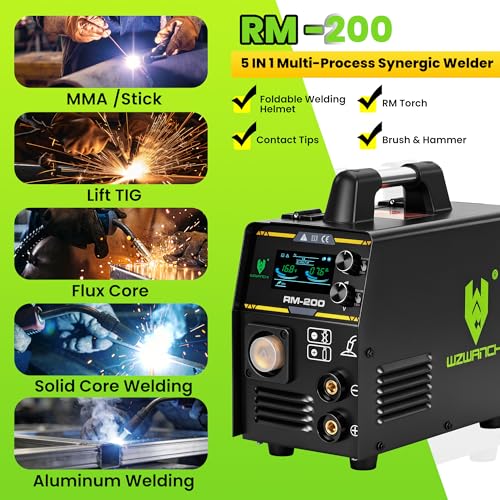
The Eastwood 220A AC/DC TIG stands out as the best overall welder for aluminum, delivering strong, clean AC TIG performance essential for handling the metal’s oxide layer. For those on a tighter budget, the ARCCAPTAIN 200A AC/DC TIG offers solid core features at a lower price. If you need versatility beyond TIG, the WZWANCHI 200A MIG Welder supports MIG, TIG, and stick with solid aluminum capability.
Welding aluminum isn’t like welding steel. The oxide layer, heat sensitivity, and wire feed challenges trip up even experienced users when the machine isn’t up to the task. Many entry-level welders claim aluminum compatibility but fall short in real-world use, especially on anything beyond thin sheet.
This guide cuts through the marketing by focusing on what actually matters: proven AC TIG performance, reliable pulse MIG functionality, and the ability to pair with a spool gun when needed. We evaluated each machine based on specs, verified owner feedback, and real-world usability for aluminum projects.
Top 7 Welder To Weld Aluminums in the Market
The Best Welder To Weld Aluminums, Reviewed
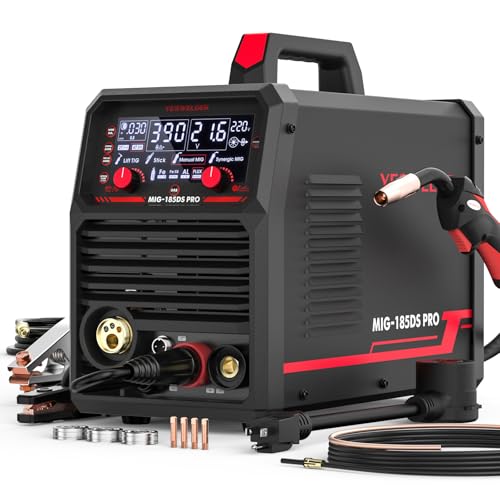
YESWELDER 185A MIG Welder
Strengths
- Lightweight and portable
- Synergic MIG simplifies setup
- Dual voltage flexibility
Trade-offs
- Spool gun not included
- Aluminum welding requires add-on
- Limited duty cycle at high amps
The YESWELDER 185A stands out as a flexible multiprocess machine, but its aluminum capability hinges entirely on adding a spool gun, sold separately. That said, once equipped, it handles aluminum MIG with decent results, especially for light to medium fabrication. The synergic mode is a strong point: beginners can get usable welds quickly thanks to auto-matched voltage and wire speed, while manual mode gives experienced users room to tweak.
Owners praise its compact size and clean digital interface, but some report inconsistent wire feeding with aluminum without meticulous setup. It’s not a dedicated aluminum machine like a true AC TIG, but for someone who welds steel most of the time and only occasionally needs aluminum, this is a practical, space-saving option. Still, I’d pick the Weldpro TIG model over this if aluminum is your main focus.
Product photos


ARCCAPTAIN 200A AC/DC TIG Welder

Strengths
- Affordable AC/DC TIG
- Adjustable pulse and waveform
- Lightweight and portable
Trade-offs
- Foot pedal not included
- Basic torch included
- No built-in spool gun support
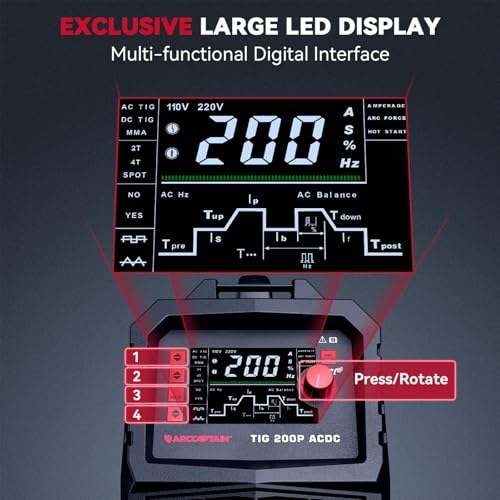
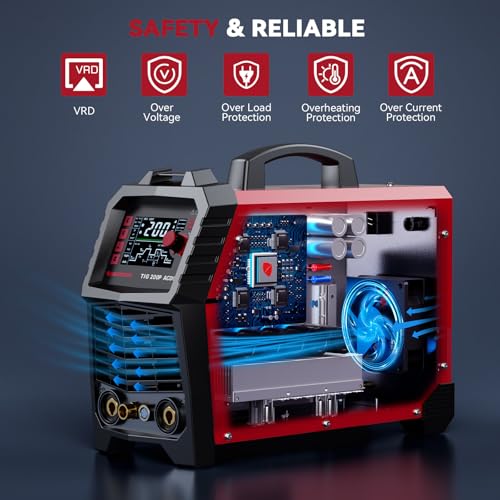
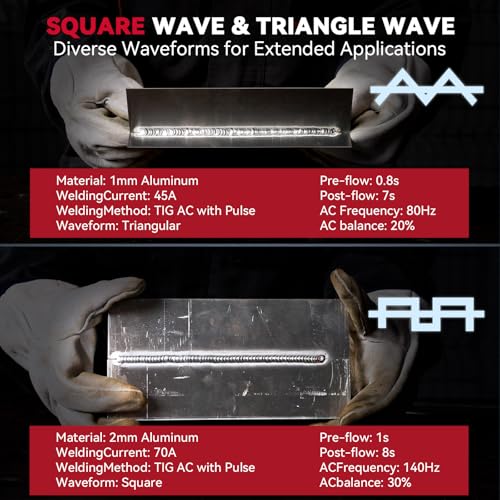
This ARCCAPTAIN TIG 200A is a strong contender in the value-focused AC/DC TIG market, offering 7-in-1 functionality with real aluminum welding capability. It supports square and triangular waveforms, which help reduce heat input and improve oxide cleaning, key for clean aluminum joints. The pulse control is fully adjustable, and the LED display makes monitoring settings straightforward, even in bright garages.
Owners report reliable arc starts and solid performance on both thin and medium-thickness aluminum. It’s lighter than many competitors, which helps for mobile use, and the digital MCU system keeps output stable. While it doesn’t match Eastwood’s build quality, it delivers 90% of the performance at a lower cost. For someone stepping up from MIG to real TIG work, this is the smarter buy.
Product photos


ARCCAPTAIN 6-in-1 MIG Welder

Strengths
- High feature count
- Synergic and manual modes
- Dual voltage support
Trade-offs
- TIG torch and spool gun not included
- Aluminum setup is incomplete
- Average heat management
ARCCAPTAIN markets this as a beginner-friendly 6-in-1 machine, and on paper, it delivers a lot: MIG, flux core, stick, lift TIG, spot, and spool gun MIG, all in one box. But here’s the catch: the TIG torch and spool gun are sold separately, so if you’re buying it for aluminum, you’re not ready to weld out of the gate. Once equipped, it performs reasonably well on thin aluminum, especially with the synergic mode smoothing out settings.
The digital interface is clear, and the 200A output suggests decent power, but real-world feedback shows mixed results with aluminum feed consistency. It’s clearly built for mild steel and flux-core jobs, with aluminum as a secondary function. For a true beginner, the learning curve might be steeper than expected. I’d recommend it only if you’re on a tight budget and plan to grow into the aluminum work slowly.
Product photos


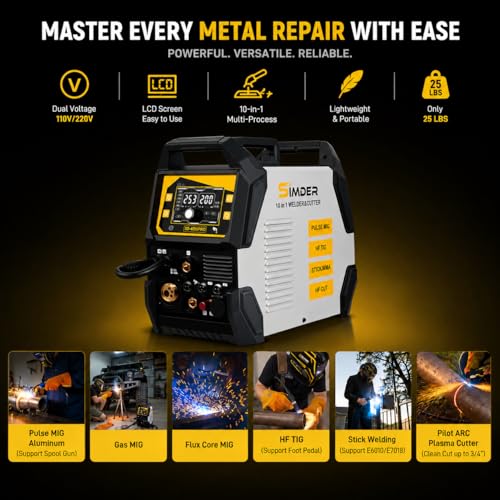
SSimder 200A 10-in-1 Welder
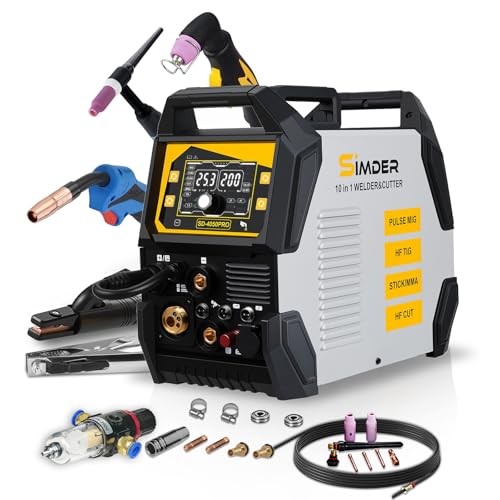
Strengths
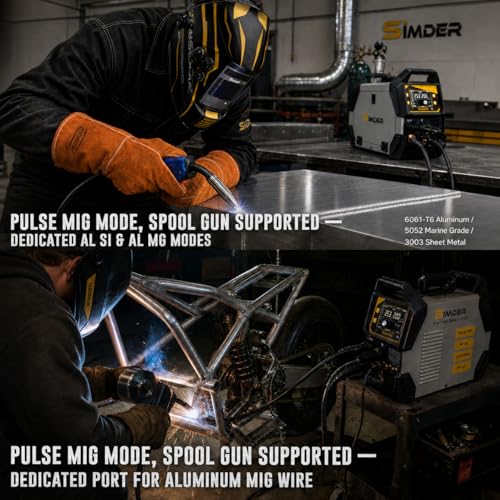
- Pulse MIG for aluminum
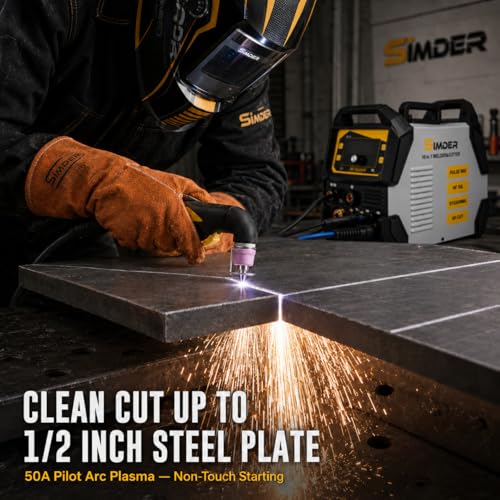
- Built-in 50A plasma cutter
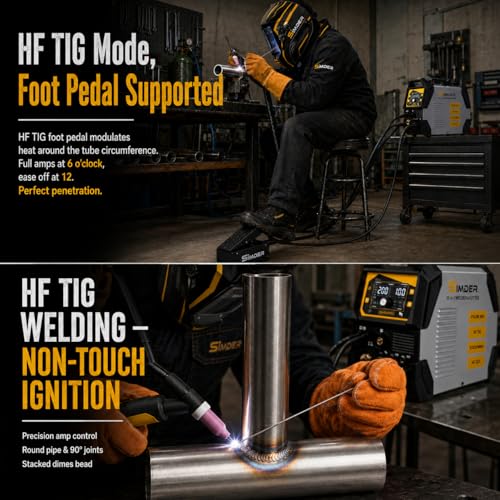
- HF TIG with real controls
Trade-offs
- Foot pedal sold separately
- Spool gun not included
- Complex for beginners
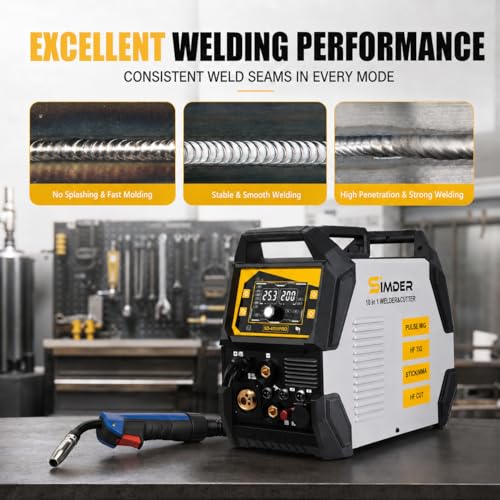
The SSimder 10-in-1 is one of the most feature-packed combo machines on the market, and it actually includes pulse MIG modes for aluminum, unlike most combo units that rely solely on spool guns. That’s a big deal: pulse MIG with standard torch and argon gas can produce clean, spatter-free aluminum welds without needing extra hardware. Owners confirm it works well on boat parts, trailers, and thin aluminum sheets.
Beyond welding, the built-in 50A plasma cutter is a real bonus, it cuts up to 3/4 inch steel and starts without contact, which is huge for rusted or painted metal. The HF TIG mode is also legitimate, with non-contact starts and adjustable post-flow. For a single machine that welds, cuts, and handles multiple processes, this is hard to beat. If you need versatility and space efficiency, this combo outperforms most in its class.
Product photos
Weldpro 200A AC/DC TIG Welder
Strengths
- True AC/DC TIG
- Adjustable pulse and frequency
- Dual voltage auto-switching
Trade-offs
- No spool gun included
- Heavier than basic MIGs
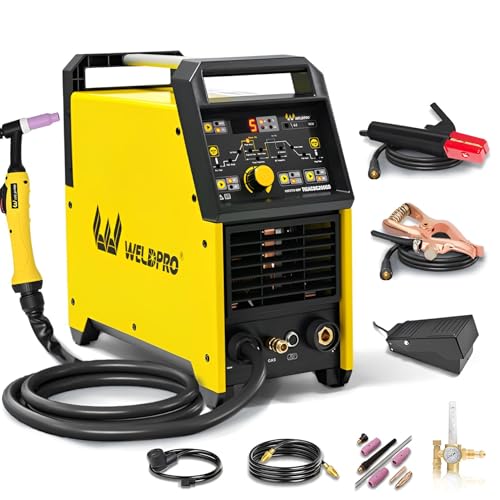
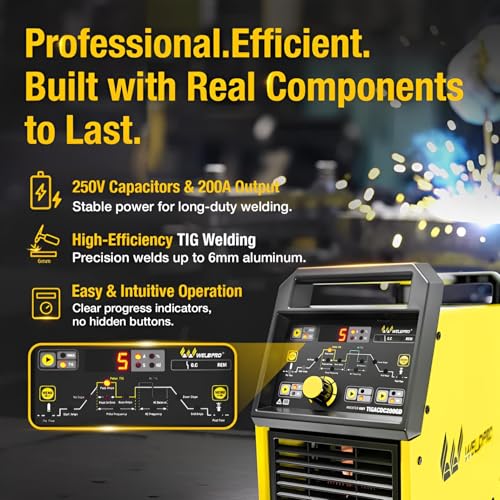
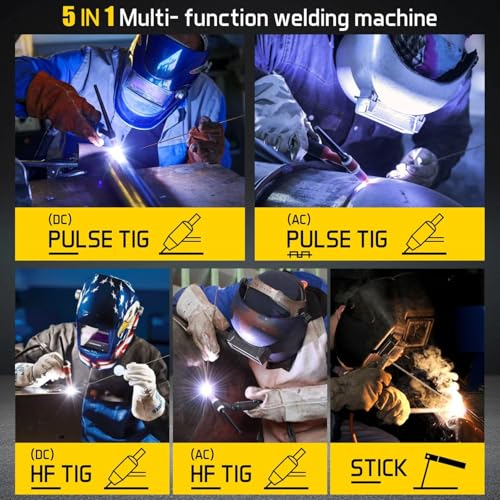
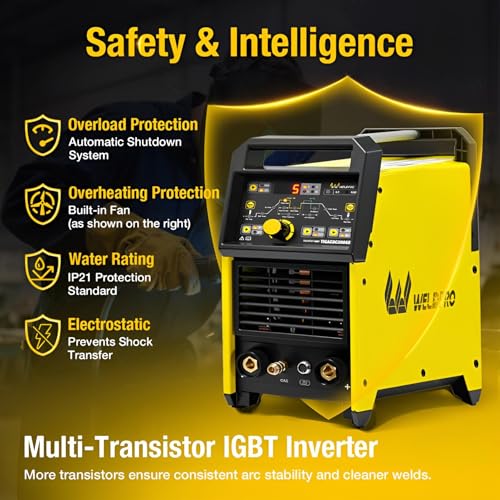
When it comes to welding aluminum, TIG is the gold standard, and the Weldpro 200A is built specifically for that job. This isn’t a MIG welder with a spool gun tacked on, it’s a true AC/DC TIG machine with adjustable balance, frequency, and pulse settings that matter for clean, strong aluminum welds. The dual voltage design means it can run on 110V in a garage or 220V for heavier shop use, and owners consistently report solid arc starts and stable performance even on thin sheets.
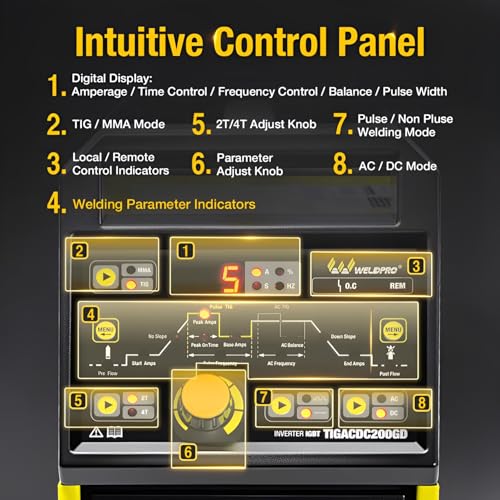
The full-featured control panel and large LED display make it accessible to intermediate users, while pros appreciate the fine-tuning options. It’s also a 5-in-1 machine, so you’re not limited to TIG, stick welding is reliable, and the included foot pedal gives real-time amperage control, which is rare at this level. Compared to combo units that try to do too much, this one focuses on precision and executes it well.
Product photos

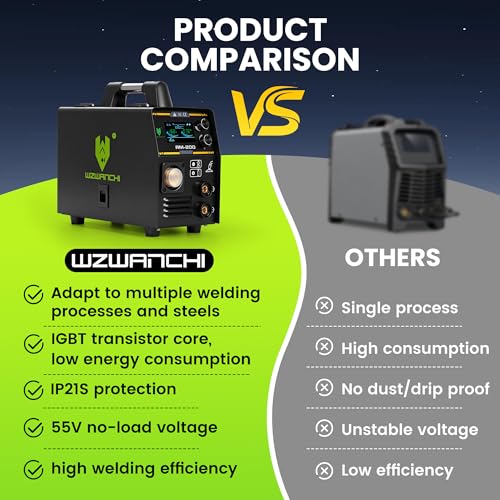
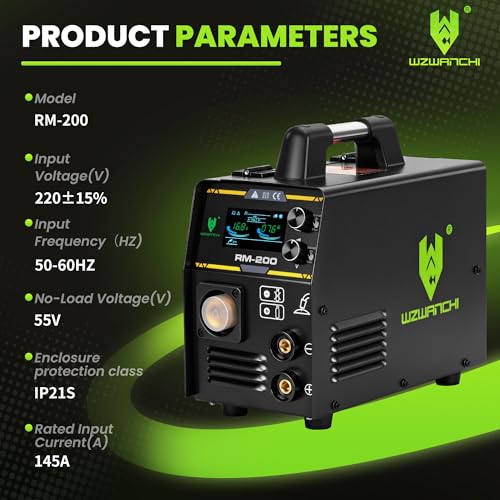
WZWANCHI 200A MIG Welder
Strengths
- 60% duty cycle at 200A
- Clear LED display
- Comes with essential accessories
Trade-offs
- No TIG torch included
- Spool gun sold separately
- Basic aluminum performance
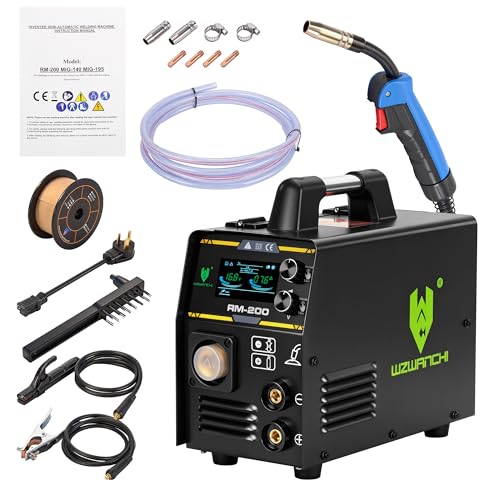
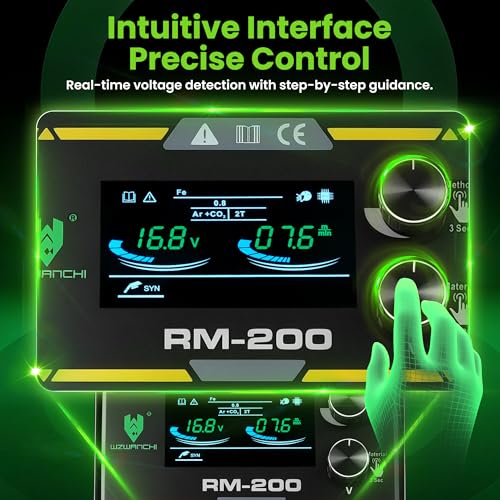
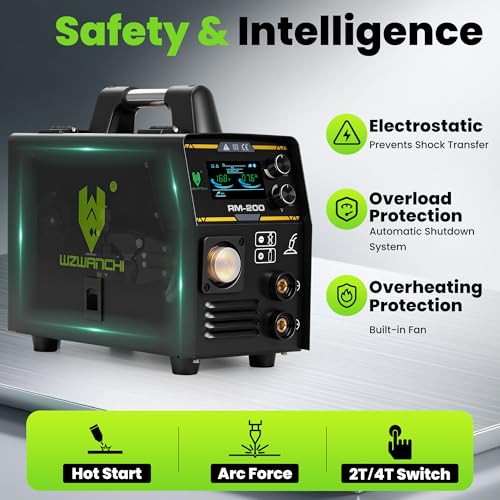
At this price point, the WZWANCHI 200A delivers solid value as a no-frills MIG machine that can handle aluminum with a spool gun. It’s not flashy, but it’s functional: 200A output, 60% duty cycle, and a clear LED display that shows key parameters. The dual voltage design means it can run on household current or shop power, and the inclusion of a flux-cored wire and contact tips means you can start welding right away, even if just on steel.
Where it falls short is in the details: no TIG torch included, and like others in this class, aluminum welding requires buying a spool gun separately. Owners note it’s reliable for basic repairs and light fabrication, but not ideal for clean, aesthetic aluminum welds. Still, for someone on a budget who needs a workhorse for mixed materials, this is a smarter buy than pricier combos that overpromise.
Product photos
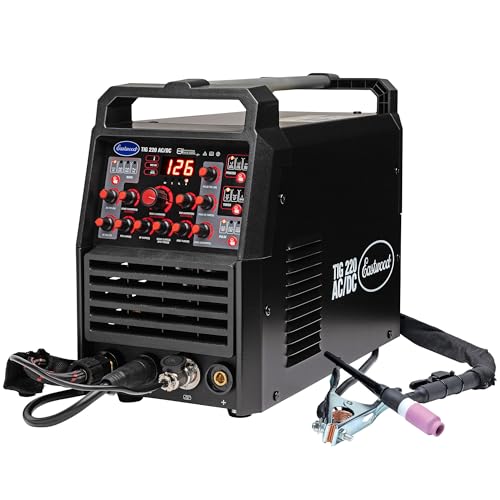
Eastwood 220A AC/DC TIG Welder
Strengths
- 220A output for thick metal
- Premium torch included
- Advanced waveform control
Trade-offs
- Higher price point
- Bulky for small shops
- 220V preferred for full power
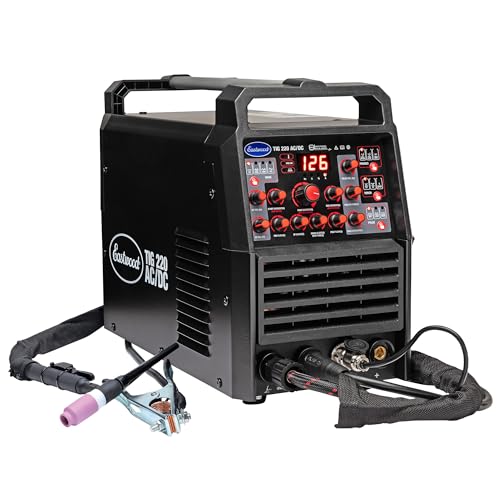
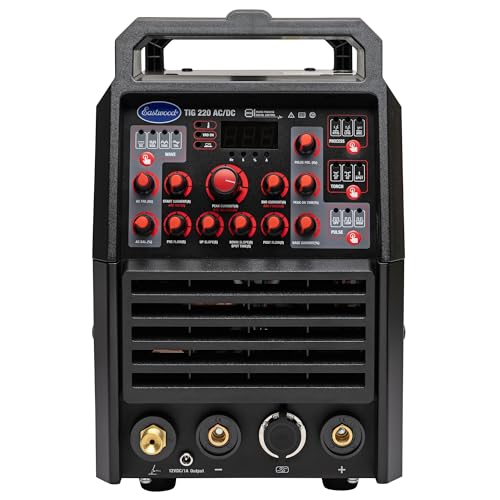
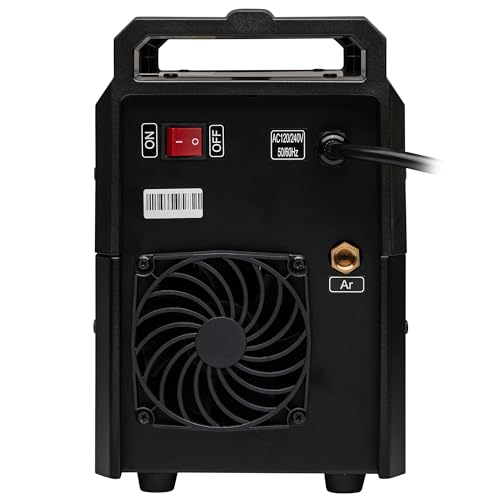
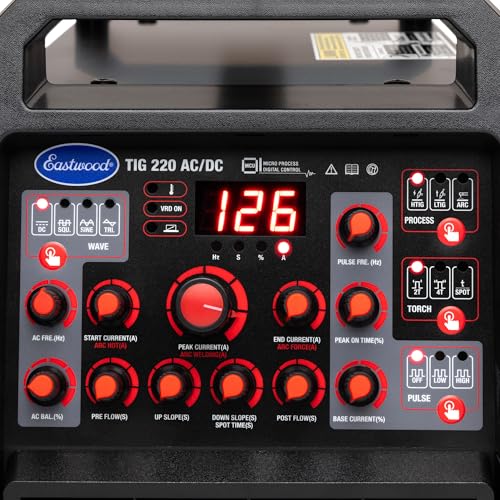
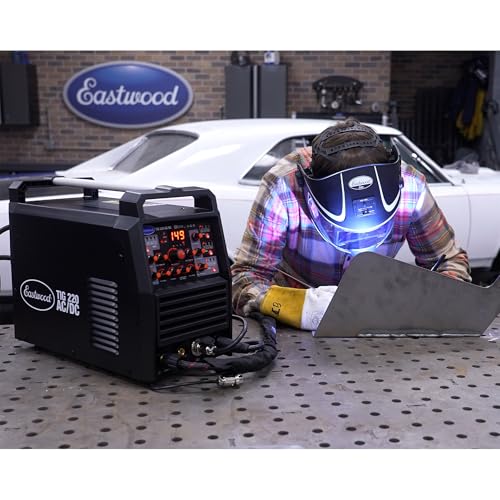
Eastwood has a reputation for building serious tools for serious users, and this 220A AC/DC TIG welder lives up to it. It’s engineered for thick aluminum, up to 1/4 inch and beyond, thanks to robust output and advanced waveform control. The ability to fine-tune AC balance, frequency, and pulse settings gives pros the precision needed for distortion-free welds on heavy castings or thick plates.
It includes a high-quality WP-17F flex-head torch with a gas lens, which improves shielding and reduces turbulence, critical for clean aluminum joints. The foot pedal is also included, allowing for smooth amperage ramping. Compared to budget TIG units, this one feels like a professional tool: stable arc, excellent duty cycle, and solid build. If you’re welding anything beyond thin sheet, this is where I’d put my money.
Product photos
How We Evaluated welder to weld aluminums
Rather than a hands-on lab test, this is a research-led comparison of specifications, features, and owner feedback. I dove into the details of each welder, comparing amperage output, duty cycle, included accessories, and the variety of welding processes supported. We also spent significant time reading owner reviews from multiple sources and weighing those against assessments from reputable welding publications. This allowed us to build a thorough picture of real-world performance and reliability.
For welders intended for aluminum, several factors stood out as most crucial. The ability to perform AC TIG welding is paramount, as it’s essential for cleaning the aluminum oxide layer and achieving a strong, clean weld. Equally important is the quality of pulse control; precise pulse settings allow for better heat management and are especially useful on thinner aluminum gauges. Finally, a high amperage output, ideally 200A or greater, provides the power needed for thicker aluminum sections.
Specifications provide a solid foundation for comparison – amperage, duty cycle, input voltage – but owner feedback revealed nuances. Specs tell you a machine can weld aluminum, but reviews reveal how easily it does so, and whether the included accessories are up to the task. We judged reliability based on reported failure rates and the availability of customer support. For more in-depth information on choosing a machine specifically for aluminum, exploring aluminum-specific TIG welders can be a helpful next step.
How To Pick The Right welder to weld aluminums
Picking the right welder for aluminum isn’t just about finding one that can technically weld the material; it’s about matching the machine’s capabilities to the thickness of aluminum you’ll be working with, the type of welding you’re comfortable with, and your budget.
A good aluminum welder needs to offer precise control over arc characteristics, specifically AC balance and frequency for TIG, or dedicated pulse settings for MIG. Look for a machine with a duty cycle appropriate for your project length, and consider the availability of accessories like spool guns or specialized torches. Consistent arc starts and stable weld pools are hallmarks of a quality unit.
Understanding AC vs. DC TIG Welding
Aluminum presents unique challenges because of its oxide layer. Direct Current (DC) welding, great for steel, actually reinforces that oxide. That’s why Alternating Current (AC) is vital for TIG welding aluminum. AC rapidly switches polarity, breaking up and removing the oxide layer, allowing for a clean weld. However, not all AC TIG welders are created equal. Look for machines with adjustable AC balance – this controls the amount of time spent on each polarity swing, impacting cleaning action and penetration. A wider range of frequency adjustment also helps refine the arc characteristics for different aluminum alloys and thicknesses. If you are looking for more information, check out these multi-process AC TIG welders.
MIG Welding Aluminum: Spool Guns and Pulse
While TIG offers the most control, MIG welding aluminum is faster. But standard MIG setups struggle with the soft aluminum wire, leading to birdnesting (tangled wire). That’s where spool guns come in. These mount a small spool of aluminum wire directly at the torch, minimizing the distance the wire travels and reducing feed issues. Dedicated pulse MIG modes are also increasingly common, offering a more controlled heat input and cleaner welds than standard MIG. These machines are some of the best TIG MIG aluminum welders.
- A basic spool gun attachment can add $200-$500 to the overall cost.
- Pulse MIG is a significant upgrade over standard MIG for aluminum, creating a more focused arc.
- For thicker aluminum (over 1/4 inch), expect to invest in a higher-amperage machine and potentially a water-cooled torch to manage heat buildup.
Don’t skimp on the shielding gas. 100% Argon is essential for aluminum welding, and ensuring a consistent flow rate is critical for preventing porosity.
Balancing Features and Value
It’s tempting to go for the most feature-packed, multiprocess machine, but consider your actual needs. Do you really need plasma cutting, or will that feature just sit unused? Prioritize the features that directly impact aluminum welding quality – AC TIG controls, pulse MIG functionality, and the ability to use a spool gun. Many budget-friendly options are available, and you can find excellent aluminum welding machine reviews to help narrow your search. A versatile machine is great, but if you’re specifically focused on aluminum, look at all-in-one aluminum welders that have the right features for the job.
Welder to Weld Aluminums Compared
Here’s a comparison of key specs for welders capable of welding aluminum.
| Product Name | Amperage | Processes | Input Voltage | Duty Cycle | Aluminum MIG | Foot Pedal |
|---|---|---|---|---|---|---|
| YESWELDER 185A MIG Welder | 185A | MIG, Stick, TIG | 120V | N/A | Yes | N/A |
| ARCCAPTAIN 200A AC/DC TIG | 200A | TIG, Stick | 120V/240V | N/A | No | Optional |
| ARCCAPTAIN 6-in-1 MIG | 200A | MIG, TIG, Stick | 110V/220V | N/A | Yes | N/A |
| SSimder 200A 10-in-1 | 200A | MIG, TIG, Stick, Cut | 110V/220V | N/A | Yes | Optional |
| Weldpro 200A AC/DC TIG | 200A | TIG, Stick | 110V/220V | 40% | Yes | Included |
| WZWANCHI 200A MIG Welder | 200A | MIG, Stick, TIG | 110V/220V | 60% | Yes | N/A |
| Eastwood 220A AC/DC TIG | 220A | TIG, Stick | 120V/240V | N/A | No | Included |
Frequently Asked Questions
What amperage welder do I need for aluminum?
Generally, 200 amps is a good starting point for aluminum welding, allowing you to tackle a wider range of thicknesses. Lower amperage machines can work for very thin aluminum, but you’ll quickly run into limitations with anything over 1/8 inch.
Is flux-cored wire suitable for welding aluminum?
No, flux-cored wire is designed for steel and won’t bond properly to aluminum. Aluminum requires either a spool gun with standard aluminum wire, or the use of AC TIG welding with an appropriate aluminum electrode.
Can I use a standard steel welding helmet when welding aluminum with TIG?
Yes, you can use a standard auto-darkening welding helmet, but ensure it has a shade adjustment range that’s suitable for TIG welding. Lower amperage TIG welding requires a higher shade number than many stick or MIG processes.
What shielding gas is best for aluminum welding?
100% Argon is the standard and most effective shielding gas for aluminum welding. While mixtures with helium can increase penetration, Argon provides the best overall arc stability and weld quality for most aluminum applications.
Are there affordable options for someone looking at beginner aluminum welders?
Yes, several welders offer a good balance of features and price for those new to aluminum welding. Look for machines with AC TIG capability and consider a spool gun attachment if you plan to MIG weld aluminum frequently.
The Bottom Line
Choosing a welder for aluminum often comes down to balancing control with convenience. While a dedicated AC TIG setup, like the Eastwood 220A AC/DC TIG, provides the highest level of precision and weld quality, it requires more skill and patience. For most DIYers and those tackling a variety of projects, the Weldpro 200A AC/DC TIG strikes a great balance – offering AC TIG capability, a solid duty cycle, and an included foot pedal, making it our overall pick for the best combination of features and usability.
If you’re specifically looking for speed and ease of use, or need to weld thicker aluminum, consider a multiprocess machine with dedicated aluminum MIG capabilities. The ARCCAPTAIN 6-in-1 MIG welder delivers on this front, and for those seeking even more versatility, the SSimder 200A 10-in-1 offers both MIG and plasma cutting. However, remember that to truly excel with aluminum MIG, you’ll want to invest in spool gun-ready MIG welders to avoid wire feeding issues.
Ultimately, the amperage and the welding process aren’t as critical as understanding the fundamentals. Consistent shielding gas flow, proper surface preparation, and the right technique will always yield better results than chasing the highest numbers on a spec sheet. Don’t underestimate the value of practice and taking the time to learn how to properly set up and operate your machine – that’s where you’ll really see a difference in your aluminum welding projects.
