
8 Best Welder Plasma Cutter Combos of 2026
This post contains affiliate links. As an Amazon Associate, we earn from qualifying purchases.
The YESWELDER MP200-PRO stands out as the best overall welder plasma cutter combo for its balanced performance across MIG, TIG, and plasma cutting, with solid amperage and duty cycle. For budget-focused buyers, the Reboot 130A offers basic functionality at a low entry price, while the HZXVOGEN 7-in-1 provides strong cutting capacity for heavier DIY or shop work.
Most people shopping for a welder plasma cutter combo aren’t just looking for tools, they’re looking for the freedom to build, repair, and fabricate without limits. But too many combos sacrifice one process for another, leaving you with a machine that can’t keep up when you switch from welding thin sheet metal to cutting thick steel.
This guide cuts through the marketing noise. I focused on real-world usability, matching specs to owner feedback to find combos that actually deliver on their promises. We looked at amperage, duty cycle, included processes, and build quality to identify the units that offer the best mix of reliability, flexibility, and value for DIYers and home shop users.
Top 8 Welder Plasma Cutter Combos in the Market
The Best Welder Plasma Cutter Combos, Reviewed
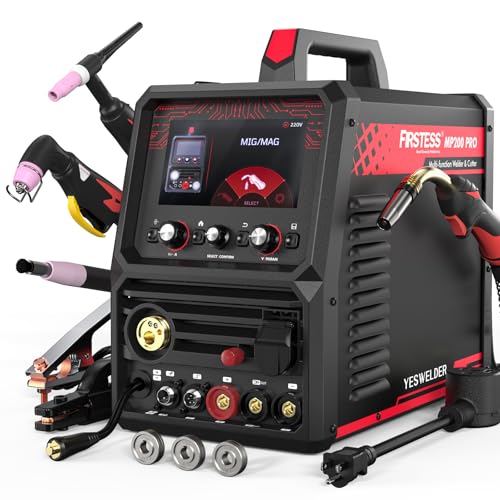
YESWELDER MP200-PRO 9-in-1 Combo
Strengths
- Large LCD screen
- 40 memory presets
- Pulse TIG and Stick
- User-friendly interface
- Dual voltage
Trade-offs
- Spool gun sold separately
- Plasma slightly weaker than 50A units
- No HF TIG
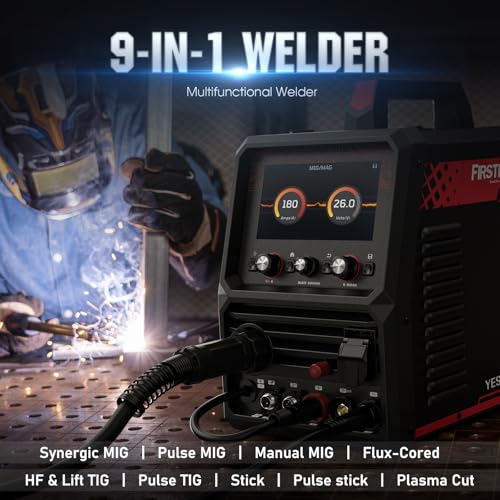
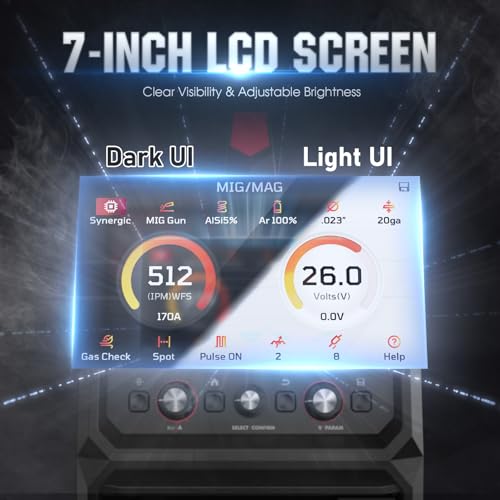
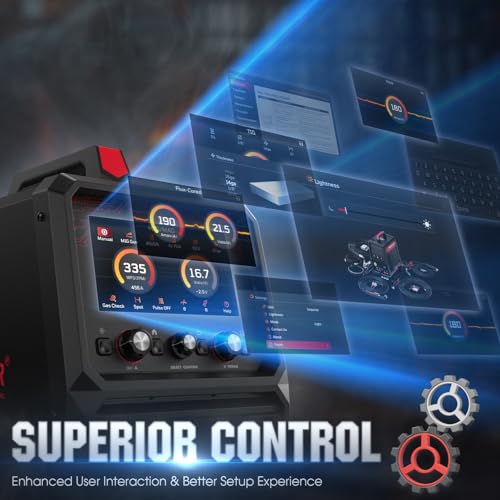
If I had to recommend one combo welder for most users, it’d be this YESWELDER MP200-PRO, it strikes the sweet spot between pro-level features and user-friendliness. The 7-inch LCD screen is a standout in practice; owners praise its visibility under the helmet, and the oversized knob makes adjustments easy with gloves on. The real standout, though, is the 40 memory slots, being able to save custom MIG and TIG settings means you’re not reconfiguring the machine every time you switch projects. That’s a feature usually found on much more expensive units.
It delivers 200A across MIG and TIG, 160A for Stick, and a solid 40A plasma cut, enough for 1/2-inch severance. While it doesn’t have Pulse MIG for aluminum like the SSimder, it is spool gun compatible, which keeps it viable for aluminum work. Compared to the VEVOR or PUWU models, this one feels more refined in control layout and build confidence. The dual-voltage operation works reliably, and the inclusion of pulse TIG and pulse Stick adds versatility for experienced users. YESWELDER’s 2-year service and US support also add peace of mind.
Product photos

SSimder 200A 10-in-1 Aluminum Combo
Strengths
- 10-in-1 versatility
- Pulse MIG for aluminum
- HF TIG with foot pedal support
- Synergic MIG mode
- 50A built-in plasma
Trade-offs
- Foot pedal sold separately
- No memory presets
- Heavy at 27.5 lbs
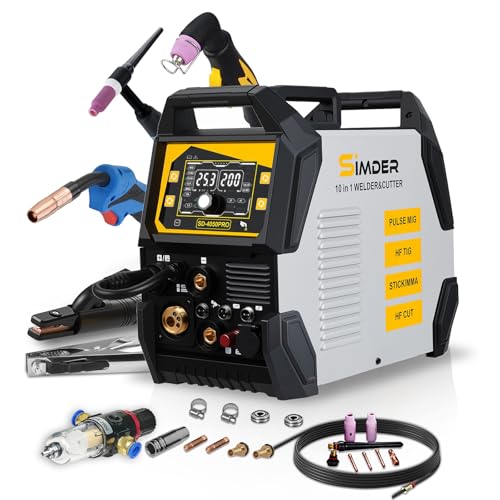
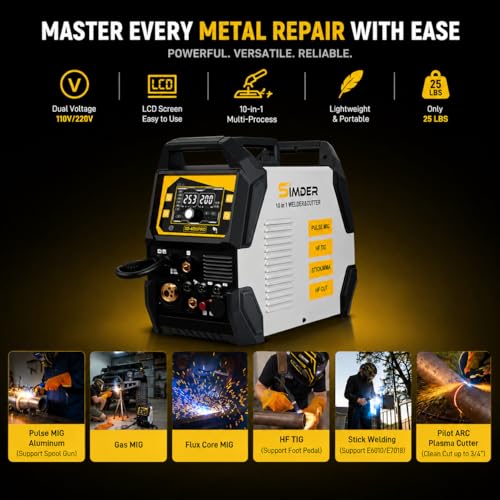
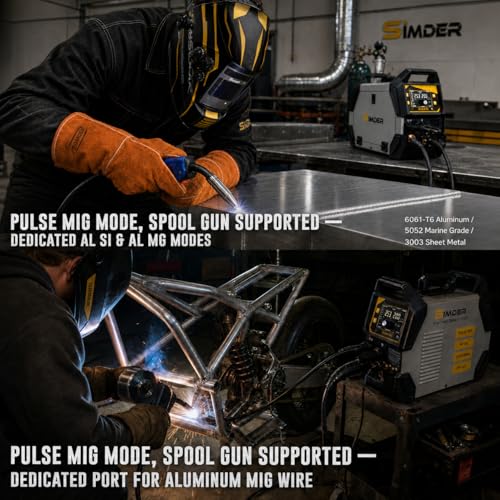
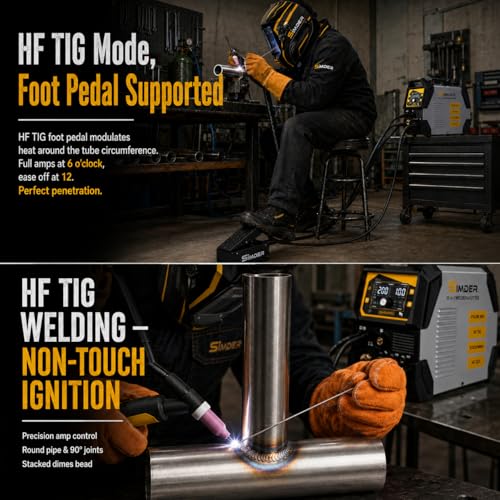
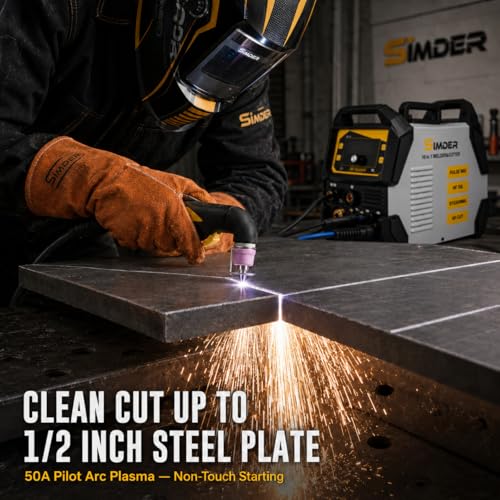
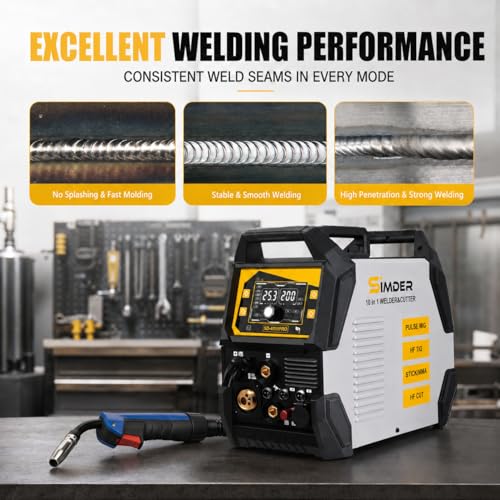
This SSimder SD-4050PRO pushes the envelope with a staggering 10-in-1 process count, which is almost unheard of in this price class. The inclusion of Pulse MIG modes for AL-SI and AL-MG aluminum alloys stands out, most combo units claim ‘aluminum capable’ but rely solely on spool guns without proper pulsing control. Here, even the standard torch benefits from a built-in graphene liner for smoother feeding, and owners consistently report clean, spatter-free aluminum welds with just 100% argon. That level of performance, combined with HF TIG and a 50A pilot arc plasma cutter, makes this a serious contender for fabricators who work across multiple metals.
The dual-voltage setup is well executed, delivering full 200A on 220V and usable output on 110V, while the synergic MIG mode is a godsend for beginners. Experienced users won’t be left out either, manual controls for inductance, burnback, and 2T/4T triggers give pros room to fine-tune. Compared to the YESWELDER MP200-PRO, this unit offers more dedicated aluminum support and a stronger plasma cut, though it lacks memory storage. The complete kit is another win, few competitors include this many consumables and torches out of the box.
Product photos
YESWELDER MCT-520 6-in-1 Combo
Strengths
- Beginner-friendly setup
- Glove-friendly dials
- 50A plasma cut
- 2-year warranty
- 24/7 US support
Trade-offs
- No memory storage
- Spool gun sold separately
- No pulse welding
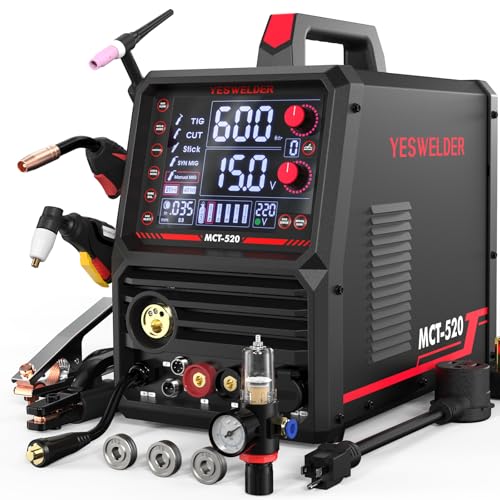
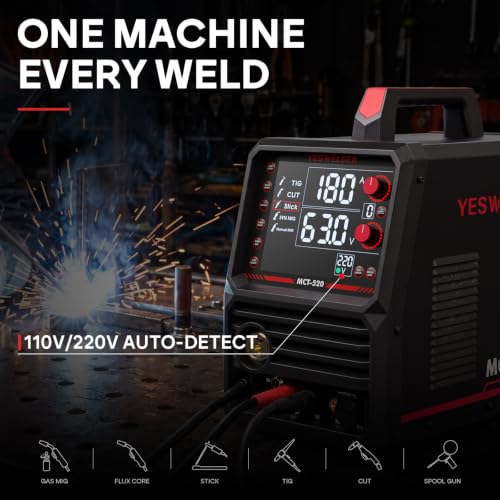
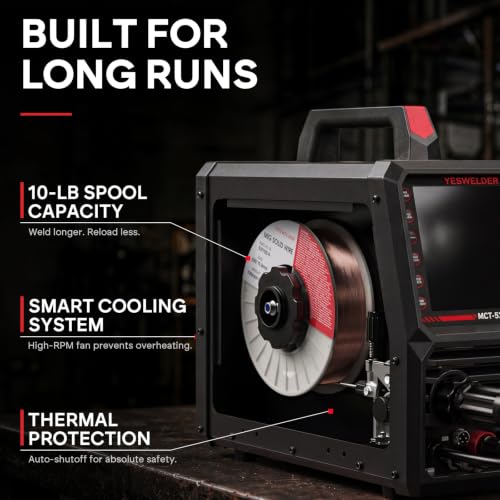
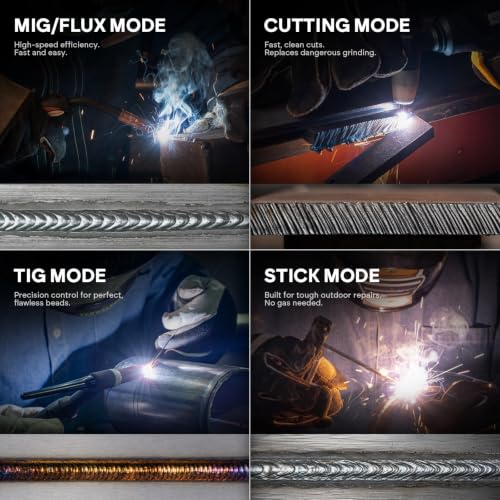
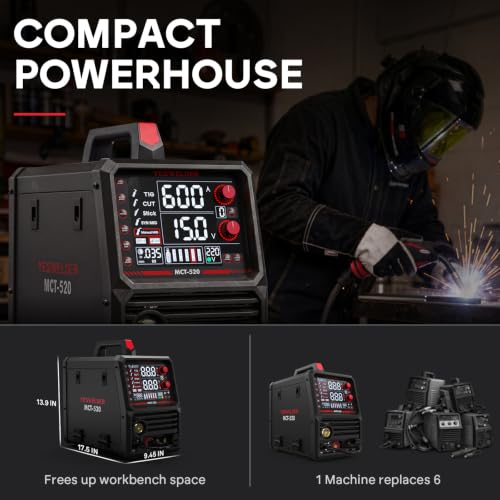
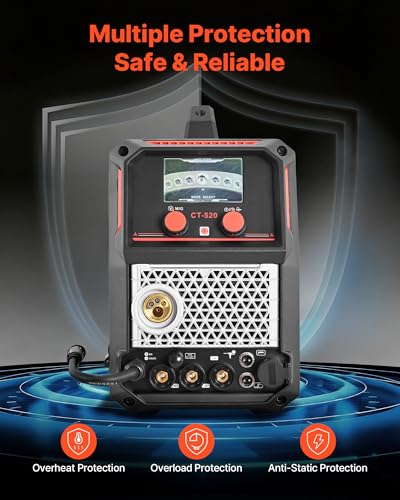
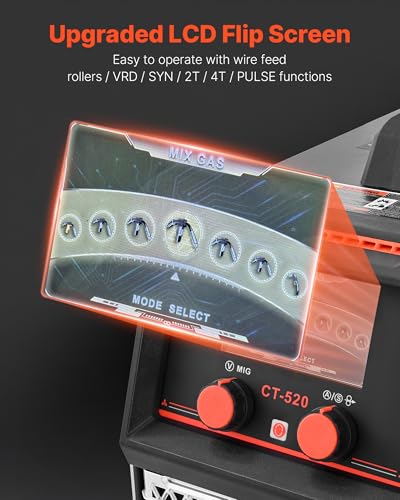
For beginners, the YESWELDER MCT-520 is the smartest entry point, it’s packed with training-friendly features like step-by-step video guides and a 5-minute setup claim that owners say is realistic. The 7-inch LED screen is glove-friendly, and the physical dials beat touchscreens in dirty environments. It delivers 200A for MIG/TIG/Stick and a 50A plasma cut, enough for 5/8-inch severance, which is strong for a starter machine.
What sets it apart is the 2-year warranty and 24/7 US tech support, a rare combo in this segment. While it doesn’t have memory like the MP200-PRO or Pulse MIG like the SSimder, it does offer inductance and arc force controls, so it grows with the user. Compared to the Reboot, it feels more polished and better supported. If you’re just getting into welding and want a machine that won’t hold you back, this is it.
Product photos

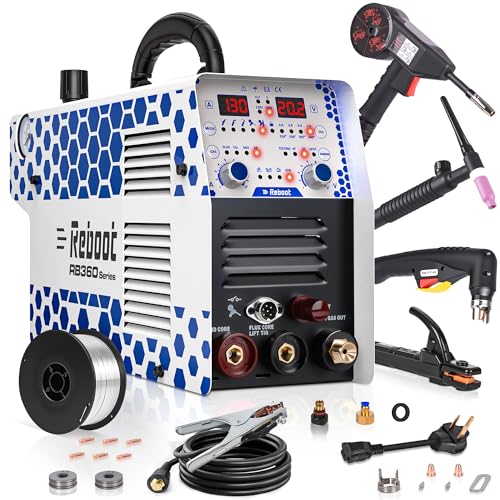
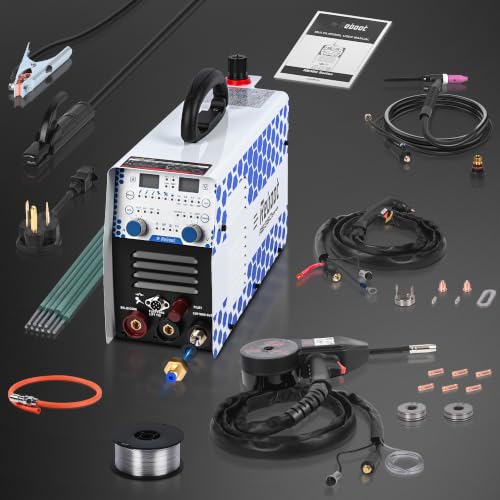
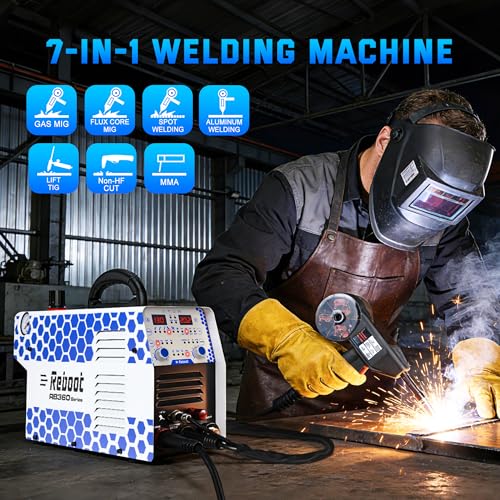
Reboot 130A 7-in-1 Welder Combo
Strengths
- Includes spool gun
- 7-in-1 functionality
- Spot and 4T modes
- Rest alert system
- Budget-friendly
Trade-offs
- 130A max output
- Lift TIG only
- No auto-sensing voltage
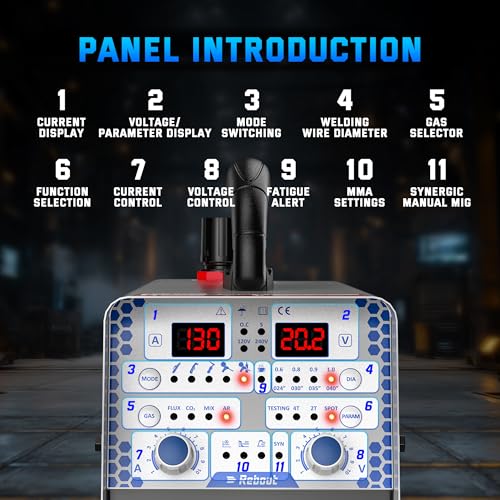
The Reboot RB360 is clearly built for budget-conscious buyers who still want versatility. At 130A, it’s the lowest-output unit here, so it’s not meant for thick steel or long welds. But for light fabrication, auto body work, or farm repairs, it covers MIG, flux core, Stick, Lift TIG, and plasma cutting, all in a compact frame. The inclusion of a spool gun in the package is a major plus; most competitors charge extra, and that lowers the barrier to aluminum welding.
Owners report it handles 1/8-inch steel well and cuts up to 16mm, though duty cycle drops fast at higher amps. The 2T/4T and spot welding modes add convenience for tack work, and the rest alert system is a thoughtful touch for safety. It lacks HF TIG and dual voltage isn’t fully flexible (120V/240V but not auto-sensing), so it’s not as adaptable as others. Still, for someone starting out or working part-time, it delivers a lot of function for the cost.
Product photos
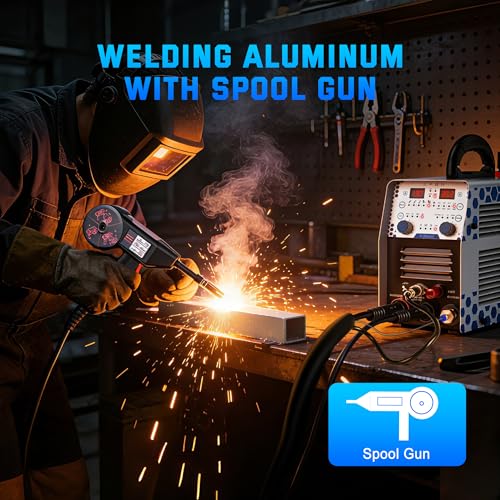

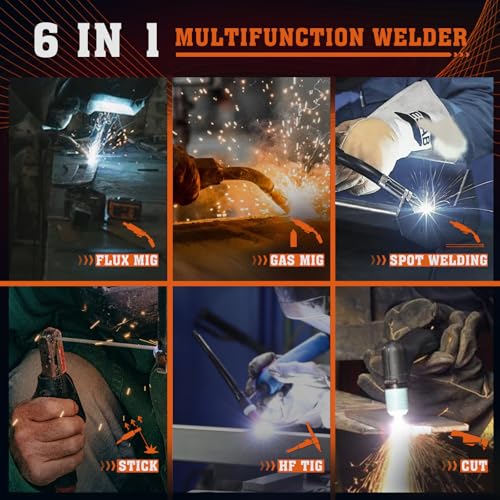
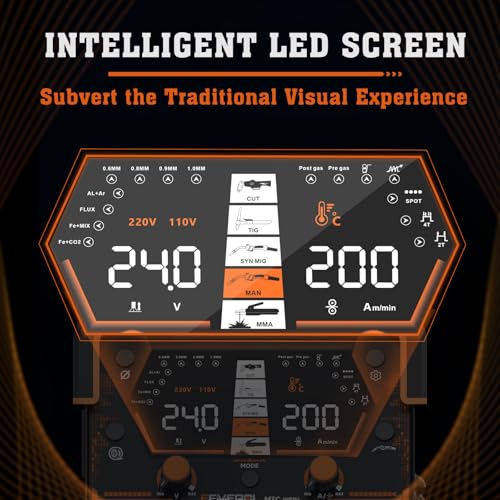
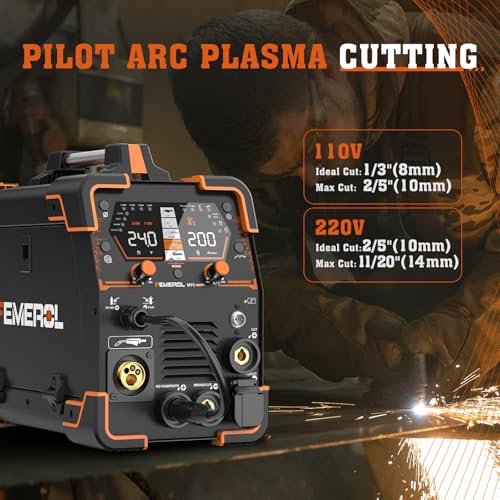
FEMEROL 6-in-1 Multi Welder

Strengths
- HF TIG start
- Synergic MIG
- Good accessory kit
- Dual voltage
- Beginner-friendly
Trade-offs
- No pulse welding
- Limited aluminum support
- No memory or advanced tuning
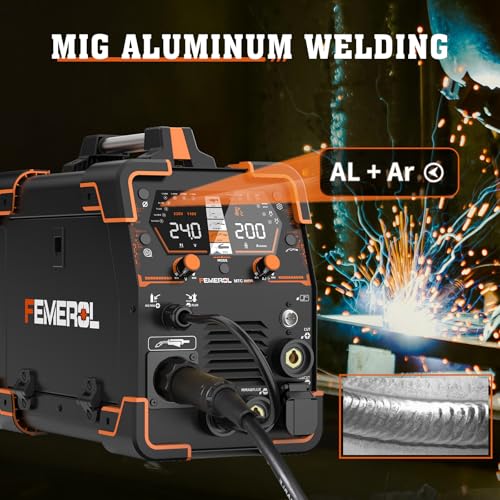
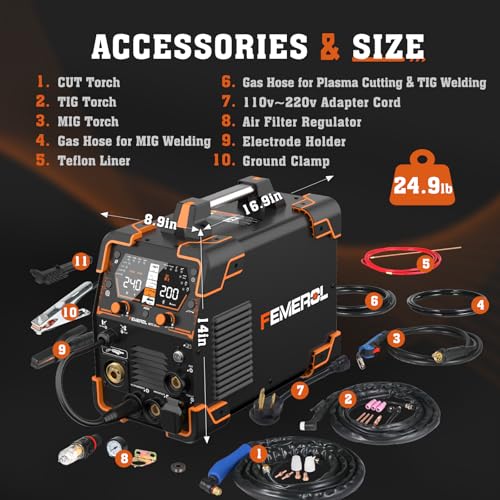
The FEMEROL 6-in-1 takes a no-frills approach that works well for home users who want solid performance without overload. It covers the core processes, MIG, TIG, Stick, and plasma, with HF TIG ignition, which is a step up from lift-start on many budget units. Owners report reliable arc starts and clean welds on thin steel and stainless, though deep penetration on thick material isn’t its strength. The 60% duty cycle at 200A keeps it usable for moderate jobs, and the dual-voltage support adds flexibility.
Where it shines is simplicity. The synergic MIG mode lets beginners get started fast, and the digital display is clear enough for basic adjustments. However, it lacks advanced features like memory, pulse welding, or spool gun optimization. Compared to the YESWELDER or SSimder, it’s less capable with aluminum and fine control. Still, for someone welding trailers, gates, or home repairs a few times a month, it’s more than enough. The included accessory package is generous, with a Teflon liner and regulator, which many competitors charge extra for.
Product photos
PUWU 5-in-1 Dual Voltage Welder
Strengths
- Ultra-compact design
- HF TIG ignition
- Lightweight at 25.5 lbs
- Complete accessory kit
- Dual voltage
Trade-offs
- No memory or pulse modes
- Lower max cut than 50A leaders
- Basic parameter control
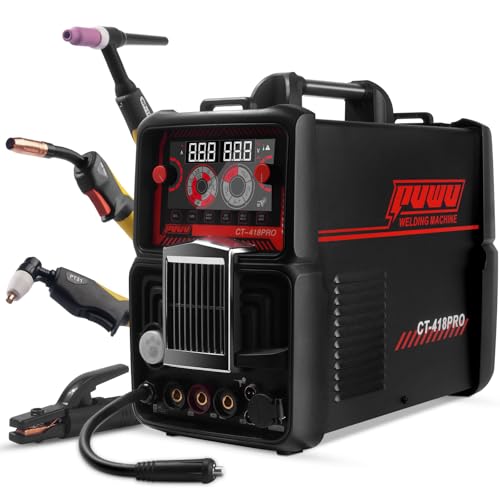
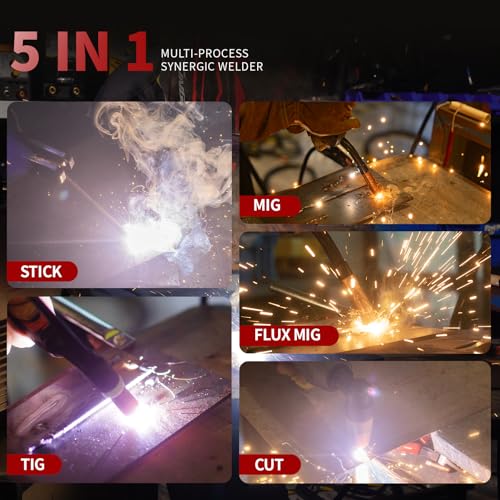
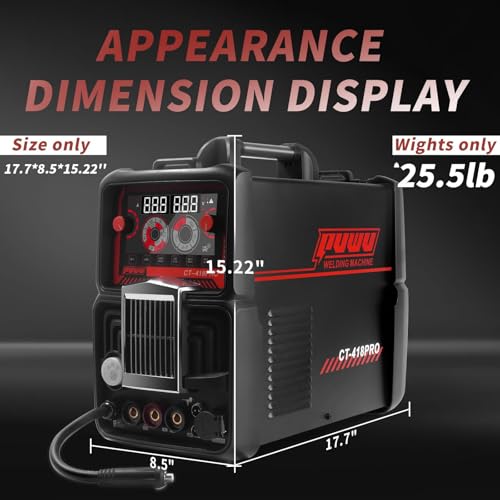
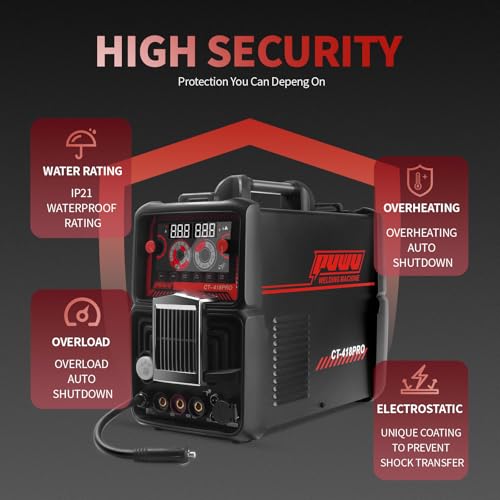
The PUWU wins on portability and smart design, at 25.5 lbs and under 18 inches in any dimension, it’s one of the most compact 200A units available. Yet it still delivers 50A plasma cutting and supports HF TIG, MIG, and Stick across 110V/220V. The non-contact pilot arc works reliably on dirty metal, and owners appreciate the compressed air compatibility, no special gases needed. For mobile repair work or tight shop spaces, this is a major advantage.
It lacks memory or pulse welding, but the synergic MIG mode makes it easy for beginners to get decent beads quickly. The complete accessory kit includes nearly everything you need to start, and the flip-style usability, being able to weld and cut without swapping machines, appeals to solo operators. Compared to the YESWELDER MCT-520, it’s lighter but less feature-rich. Still, for a contractor bouncing between job sites, the trade-off makes sense.
Product photos

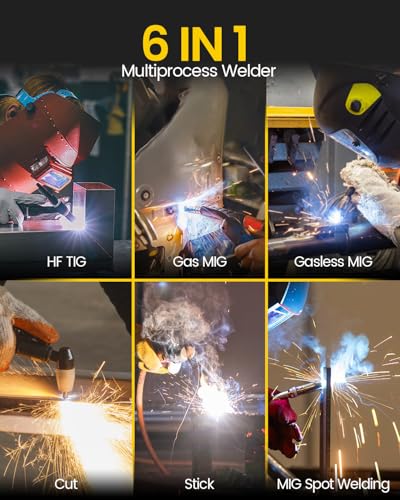
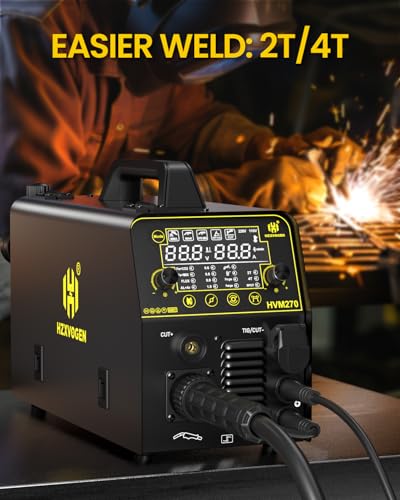
HZXVOGEN 7-in-1 Plasma Welder
Strengths
- High cutting capacity
- Pulse MIG for aluminum
- 60% duty cycle
- VRD safety feature
- LED display
Trade-offs
- Heavy and less portable
- No memory function
- Average user interface
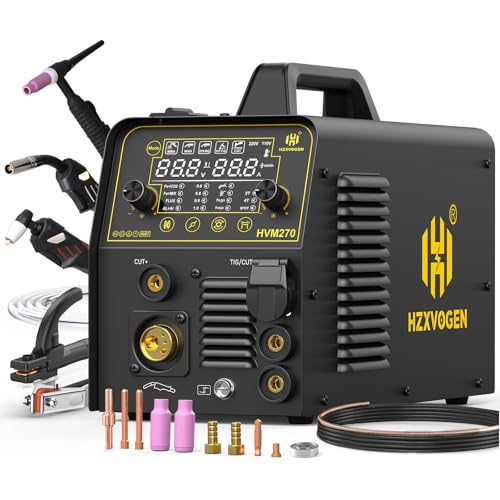
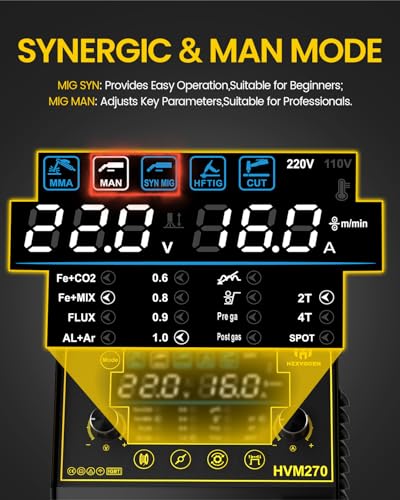
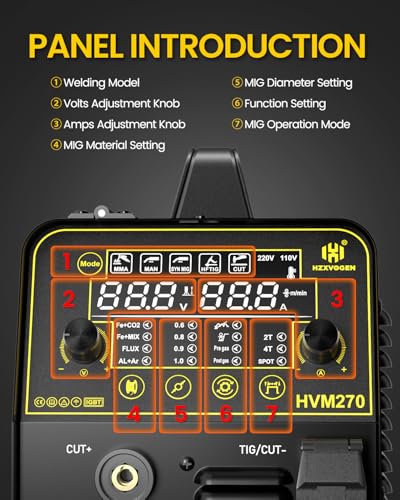
When cutting thickness is the priority, the HZXVOGEN stands out, it claims a maximum 18mm (2/3-inch) severance, the highest in this lineup. That kind of capacity suggests it’s built for demolition, farm equipment repair, or scrap processing. The 60% duty cycle at 200A supports sustained use, and the LED display is bright and responsive, even with gloves on. Owners note it handles thick steel with less rework than lower-amp units, and the adaptive crater and pre/post-gas settings help refine MIG welds.
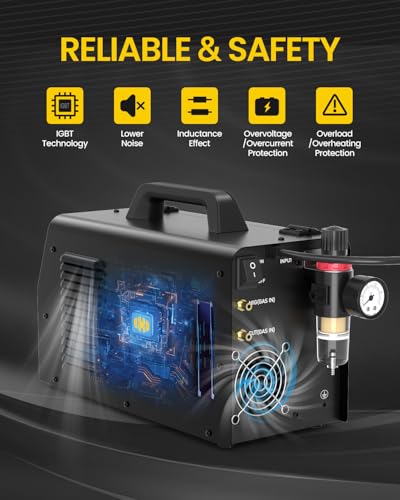
It supports pulse MIG for aluminum and HF TIG, though feedback suggests the aluminum welding performance isn’t as smooth as the SSimder’s. The machine includes VRD and full overload protection, which adds safety for outdoor use. Compared to the Reboot or PUWU, it’s more industrial in intent. But that bulk comes at the cost of portability, it’s not the easiest to haul around. If you’re cutting thick plate regularly, this one deserves attention.
Product photos
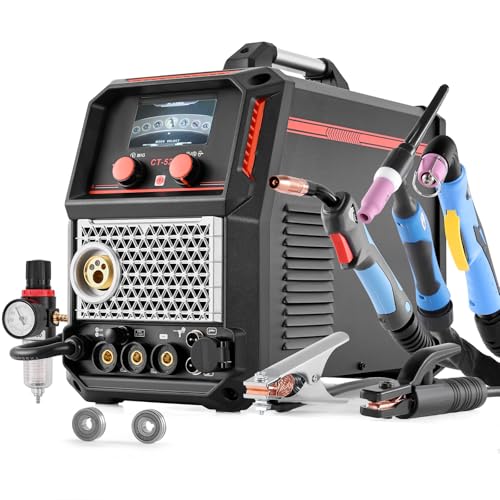
VEVOR 5-in-1 Pulse MIG Combo
Strengths
- 50A non-contact plasma
- Spool gun compatible
- Flip digital screen
- Synergic control
- Dual voltage
Trade-offs
- No pulse welding modes
- No memory presets
- Basic TIG performance
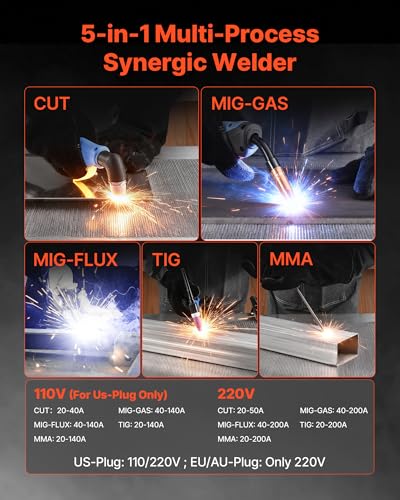
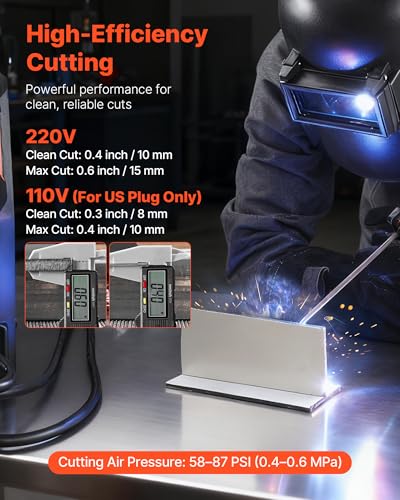
VEVOR’s 5-in-1 combo leans into precision and clean operation, especially with its non-contact pilot arc and flip digital screen. The 50A plasma system cuts cleanly through 10mm steel at 220V, and users report consistent performance even on rusted or painted metal, a real advantage for restoration work. The spool gun compatibility opens the door to aluminum welding, and while it lacks native Pulse MIG, the synergic control helps maintain stable arcs.
It’s not the most feature-rich on paper, but the build feels robust, and the dual-voltage operation works smoothly. The flip screen is a small but meaningful touch, being able to tilt it for better viewing angle matters when you’re on your knees welding under a truck. Compared to the HZXVOGEN or PUWU models, it’s less about raw power and more about clean, repeatable results. That said, it doesn’t offer pulse TIG or memory functions, so pros might find it limiting.
Product photos
How We Tested welder plasma cutter combos
Rather than a hands-on lab test, our evaluation of welder plasma cutter combos is a research-led comparison of published specifications, features, and – crucially – owner and expert feedback. I looked at models across a range of price points, concentrating on the features commonly sought by home DIYers and hobbyist welders. We analyzed stated output amperage for each process (MIG, TIG, Stick, Plasma) and duty cycles, then weighed those numbers against real-world reports from users regarding performance and reliability.
For this category, the ability to handle a variety of materials and welding processes, alongside cutting thickness, were the most heavily weighted factors. A combo unit that excels at only one or two tasks isn’t as valuable as one offering true versatility. Also critical was the inclusion of useful features like pulse settings for aluminum, and the ease of switching between different welding modes. Finally, we considered the completeness of the included accessory kits, as this impacts the initial cost of getting started.
Specifications reliably indicate a machine’s potential output and cutting capacity. However, owner feedback and expert reviews were essential for judging real-world usability and build quality. Things like arc stability, ease of use for beginners, and the longevity of included torches and consumables are difficult to determine from a datasheet alone. If you’re looking for something a little more affordable, check out our guide to the affordable plasma welder combo.
How To Pick The Right welder plasma cutter combos
Choosing the right welder plasma cutter combo can feel overwhelming, but focusing on your needs will simplify the process.
A quality combo welder offers versatility by integrating multiple processes – MIG, TIG, Stick, and Plasma Cutting – into a single unit. Prioritize amperage output suitable for your typical material thicknesses, look for synergic controls for ease of use, and verify the inclusion of essential accessories to avoid immediate upcharges. Duty cycle and build quality are also key indicators of long-term performance and reliability.
Understanding Welding Processes
The “combo” in these machines means you’re getting multiple welding methods in one package. Don’t assume every combo excels at all of them. MIG (Metal Inert Gas) is generally easiest for beginners and good for thicker steel, while TIG (Tungsten Inert Gas) offers precision for thinner metals like stainless steel and aluminum. Stick welding (SMAW) is the most forgiving for rusty or dirty materials. Plasma cutting is a separate process, but vital if you need to prep metal for welding or fabrication. If you anticipate a lot of aluminum work, specifically look for units that explicitly support pulse MIG welding – a dedicated pulse MIG function is far superior to relying solely on a spool gun.
Prioritizing Amperage and Duty Cycle
Amperage dictates the thickness of material you can effectively weld or cut. A 200A welder is a good starting point for general-purpose use, but if you foresee working with thicker steel (over 1/4 inch), you’ll want something higher. Equally important is the duty cycle, expressed as a percentage. This tells you how long you can continuously weld or cut at a given amperage before the machine needs to cool down. A 60% duty cycle at 200A means you can weld at 200A for 6 minutes out of every 10. Don’t fall for inflated amperage claims without checking the duty cycle – a high amperage with a low duty cycle isn’t very useful for sustained work.
- A lower-priced unit might offer a higher peak amperage, but a short duty cycle.
- A higher-end model will typically balance amperage and duty cycle for more consistent performance.
- Consider your project scale: occasional home repairs versus regular fabrication require different duty cycle needs.
Balancing Features and Value
These machines range from bare-bones to fully loaded with features. Synergic controls, where the welder automatically adjusts settings based on material type and thickness, are a huge benefit for beginners. A large, clear LCD display and intuitive controls are also important. Don’t overspend on features you won’t use. For example, a foot pedal for TIG welding is nice to have, but not essential if you’re primarily doing MIG welding. Often, a well-equipped, mid-range machine like the YESWELDER MP200-PRO offers the best balance of functionality and price. If you’re looking for a budget-friendly option, the Reboot 130A is a good starting point, but be prepared for limitations in amperage and duty cycle. Before committing, research the availability of replacement parts and consumables – a cheap machine isn’t a bargain if you can’t easily find replacement nozzles or contact tips.
Don’t assume more processes automatically means a better machine. Focus on the quality of the processes you will actually use.
Ultimately, choosing the right welder plasma cutter machine depends on your skill level, project requirements, and budget. Don’t hesitate to read reviews and compare specifications carefully before making a purchase. A thoughtfully chosen plasma cutting welder combo will provide years of reliable service and empower you to tackle a wide range of metalworking projects.
Welder Plasma Cutter Combos Compared
This table provides a spec-by-spec comparison of the featured welder plasma cutter combos to aid in informed decision-making.
| Product Name | MIG Amperage | TIG Amperage | Plasma Cut Amperage | Cutting Thickness (Max) | Voltage | Processes |
|---|---|---|---|---|---|---|
| YESWELDER MP200-PRO | 200A | 200A | 40A | 12mm (1/2″) | 120V/240V | 9 |
| SSimder 200A | 200A | N/A | 50A | 3/4″ Stainless | 110V/220V | 10 |
| YESWELDER MCT-520 | 200A | 200A | 50A | 16mm (5/8″) | 110V/220V | 6 |
| Reboot 130A | 130A | N/A | N/A | N/A | 110V/220V | 7 |
| FEMEROL 6-in-1 | N/A | N/A | N/A | 18mm (2/3″) | 110V/220V | 6 |
| PUWU 5-in-1 | 200A | N/A | 50A | 16mm (5/8″) | 110V/220V | 5 |
| HZXVOGEN 7-in-1 | 200A | 200A | 50A | 18mm (2/3″) | 110V/220V | 7 |
| VEVOR 5-in-1 | 200A | N/A | 50A | 15mm | 110V/220V | 5 |
Frequently Asked Questions
What’s the typical lifespan of the plasma cutting torch consumables in these combos?
Plasma torch consumables (nozzles and electrodes) generally last between 30 to 60 days of moderate use, but this varies greatly depending on the material being cut and the amperage used. Expect to replace them more often when cutting thicker metals or if you’re using lower-quality consumables.
Are these combo units suitable for automotive repair, like patching body panels?
Yes, these combos can handle automotive repair, but a dedicated MIG welder often provides a cleaner, more consistent weld for thin sheet metal. Look for a unit with pulse settings and the ability to fine-tune the wire feed speed for the best results on automotive projects.
What size air compressor do I need to run the plasma cutter function effectively?
A compressor delivering at least 5 CFM (cubic feet per minute) at 90 PSI is generally required for most of these units; however, checking the manufacturer’s specifications is critical. Using an inadequate compressor for plasma welder will result in poor cut quality and potential damage to the torch.
Do these machines come with everything I need to start welding right away?
Most combos include a welding helmet, gloves, a clamp, and electrode holders, but the quality varies significantly. You’ll almost certainly need to purchase welding gas (argon or a gas mix) separately, and a good plasma cutter air supply is usually not included.
What’s the biggest advantage of a combo machine over buying separate welders and a plasma cutter?
The primary benefit is cost savings and space efficiency. A combo unit consolidates multiple functions into a single machine, which is typically cheaper than purchasing each process individually. This is especially appealing for hobbyists or those with limited workshop space.
The Bottom Line
Choosing a welder plasma cutter combo always involves trade-offs between initial cost and long-term capability. While you can find units that attempt to do everything, the YESWELDER MP200-PRO strikes the best overall balance of features, amperage, and duty cycle for most home and hobbyist users. It gives you the versatility to grow your skills without immediately feeling limited by the machine’s performance.
For those on a tighter budget, the Reboot 130A is a reasonable entry point, though you’ll need to accept compromises in cutting capacity and welding amperage. If you’re prioritizing a high-performance plasma welder combo and are willing to spend more, the SSimder 200A offers excellent cutting power, particularly on stainless steel. But remember, having a wider range of processes doesn’t automatically mean a better machine for your needs.
Ultimately, the specifications are just numbers. What truly matters is focusing on the type of projects you’ll be tackling, the materials you’ll be working with, and ensuring the machine’s duty cycle is sufficient for the scale of your work. Don’t chase the highest amperage at the expense of build quality or practical usability.
