
8 Best Multi Process Welders with Plasma Cutters 2026
This post contains affiliate links. As an Amazon Associate, we earn from qualifying purchases.
The ARCCAPTAIN MIG205MP stands out as the best overall multi-process welder with plasma cutting, delivering strong performance across MIG, TIG, stick, and cut functions with reliable specs and positive user feedback. For budget-focused buyers, the YESWELDER MCT-520 offers solid versatility without sacrificing core functionality, while the PUWU CT-418 PRO brings extra convenience with its 6-in-1 design and wide voltage compatibility.
If you’re tired of juggling multiple tools for welding, cutting, and fabrication, a combo unit can be a real workshop standout. But too many models promise versatility and fall short on power, reliability, or ease of use.
This guide cuts through the marketing noise. Based on specs, owner experiences, and what matters most in real projects, I’ve identified the top performers that balance amperage, duty cycle, and true multi-process capability, so you can pick one that actually fits your workload and materials.
Top 8 Multi Process Welder With Plasma Cutters in the Market
The Best Multi Process Welder With Plasma Cutters, Reviewed
ARCCAPTAIN MIG205MP 9-in-1 Welder

Strengths
- App control with preset memory
- 9 welding modes
- Advanced parameter tuning
- 3-year warranty
- Dual TIG ignition
Trade-offs
- App dependency may not suit all users
- Spool gun sold separately
- Cooling fans can be noisy
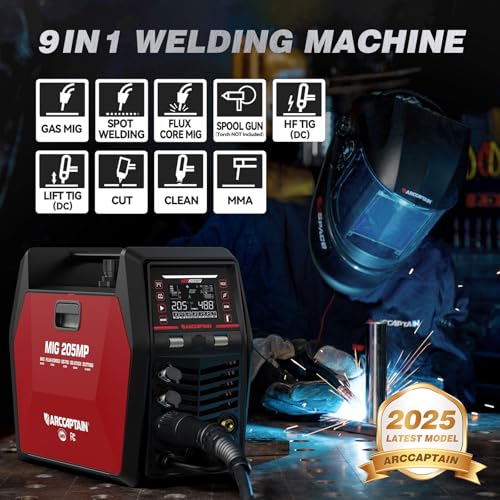
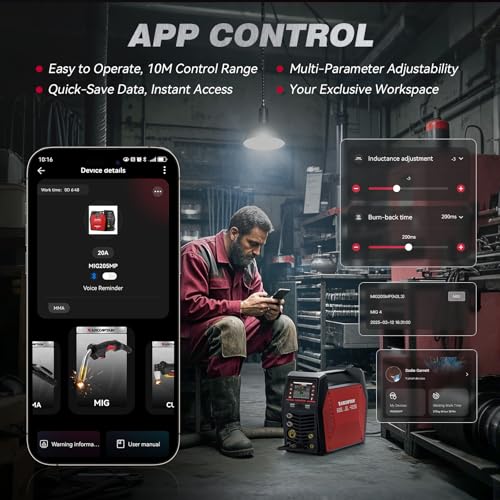
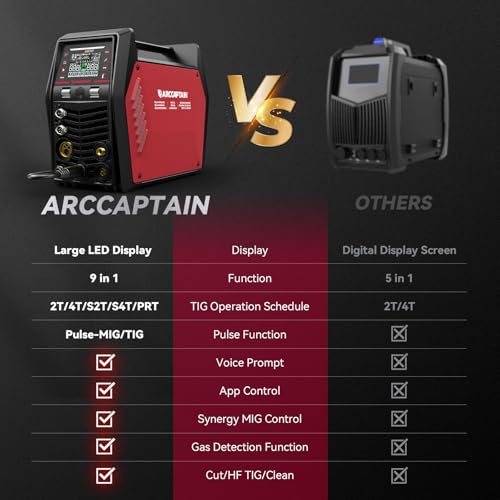
When it comes to overall capability and innovation, the ARCCAPTAIN MIG205MP is hard to beat. Its 9-in-1 functionality includes niche modes like spot welding and a dedicated clean mode, but the real standout is the app control. The iControl app lets users save custom presets, troubleshoot issues, and monitor performance remotely, something no other model in this list offers. With 205A output and a 60% duty cycle, it’s powerful enough for serious projects, and the advanced parameter tuning gives pros full control over inductance, arc force, and pulse settings.
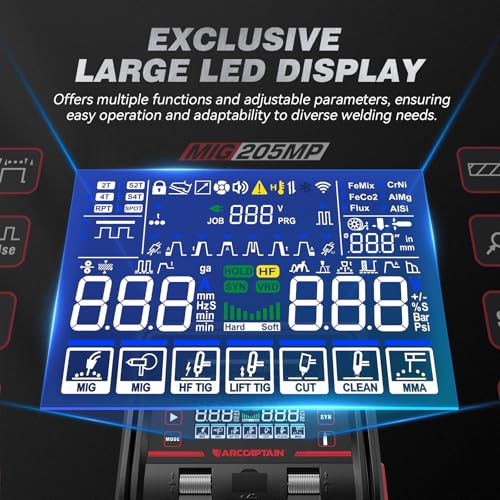
Owners praise the large LED display and the flexibility of dual TIG modes (HF and lift) on one torch. The build quality feels robust, and the 3-year warranty adds peace of mind. While the app might feel gimmicky to some, those who use it say it streamlines repeat jobs. Compared to others, this is the most feature-rich option.
Product photos

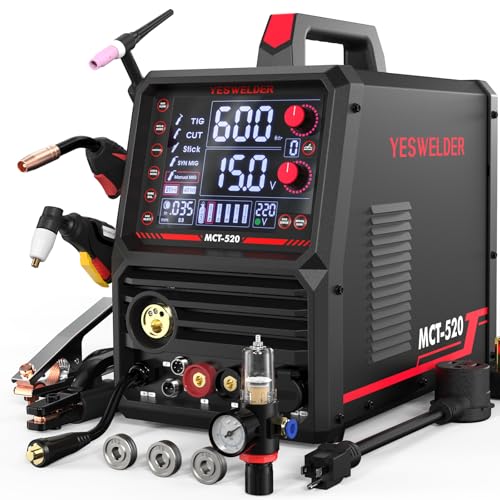
YESWELDER MCT-520 6-in-1 Welder
Strengths
- Large physical controls
- Full parameter adjustment
- Foot-pedal ready TIG
- 200A output
- 24/7 USA support
Trade-offs
- No app connectivity
- Spool gun sold separately
- Heavier than portable models
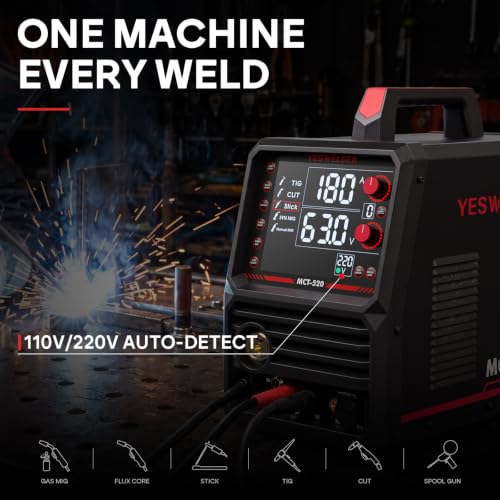
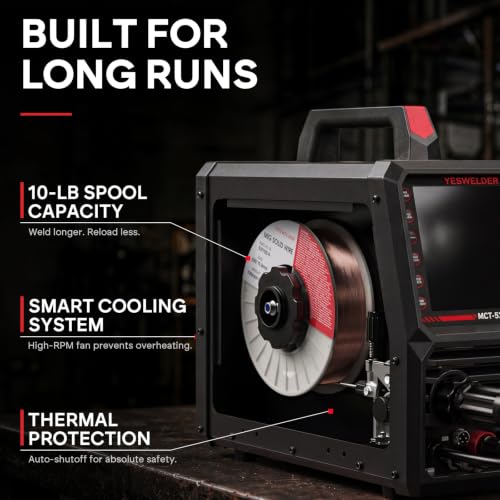
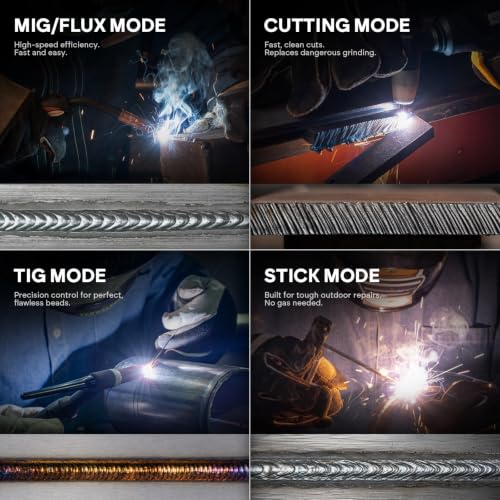
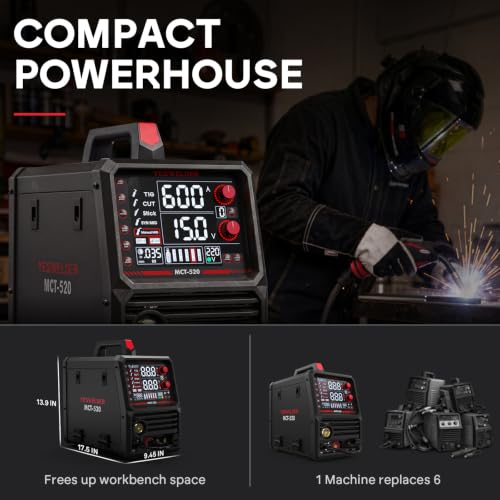
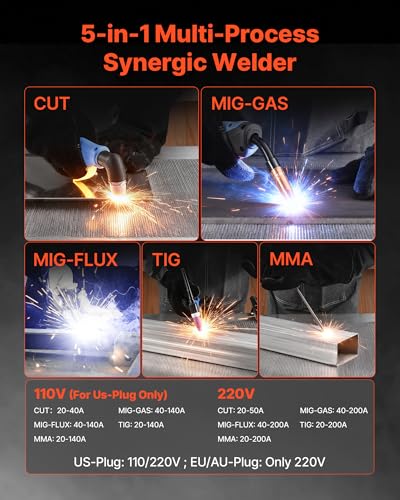
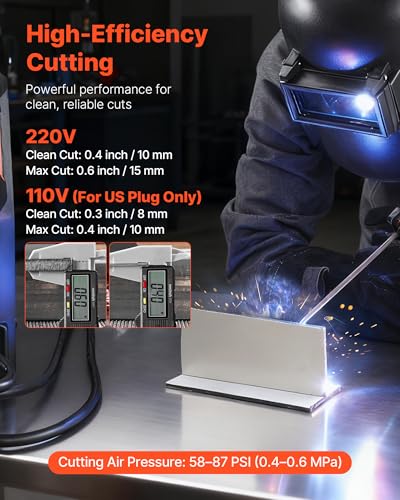
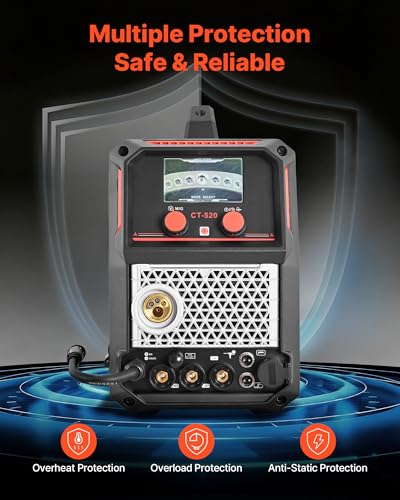
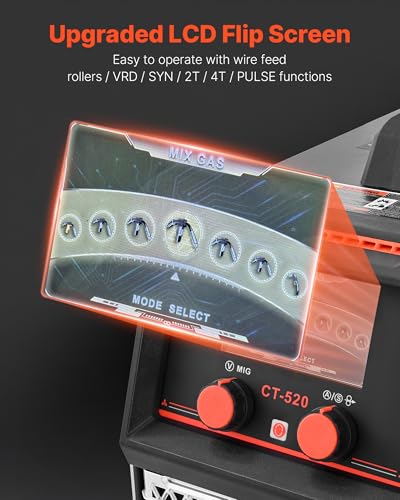
The YESWELDER MCT-520 is clearly designed with advanced users in mind. The 7-inch LED display is one of the largest in class, and the glove-friendly physical dials are a welcome relief from finicky touchscreens. You get full control over MIG inductance, TIG heat settings, and MMA arc force, features that matter when you’re chasing perfect beads. The 200A output and 50A plasma cut are solid, and the foot-pedal-ready TIG mode adds precision for thin materials.
Owners appreciate the 24/7 USA-based support and the machine’s field-tested durability. It’s not the lightest or the cheapest, but it’s built like a real shop tool. Compared to app-heavy models, this one wins on tactile control and reliability. If you hate pairing devices and just want to weld, this is your machine.
Product photos

PUWU CT-418 PRO 5-in-1 Welder
Strengths
- Ultra-portable
- Synergic MIG mode
- Dual voltage
- Lightweight design
- HF TIG ignition
Trade-offs
- No pulse MIG
- Spool gun not included
- Lower duty cycle under load
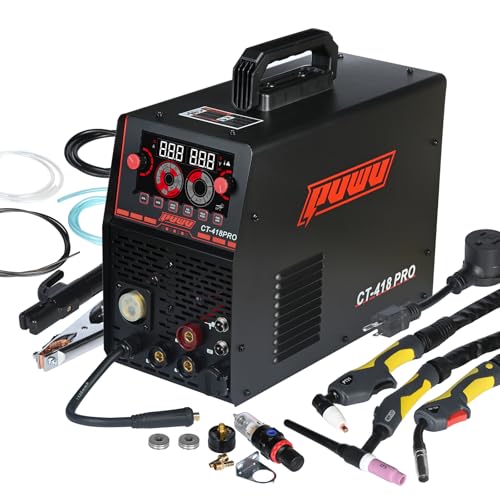
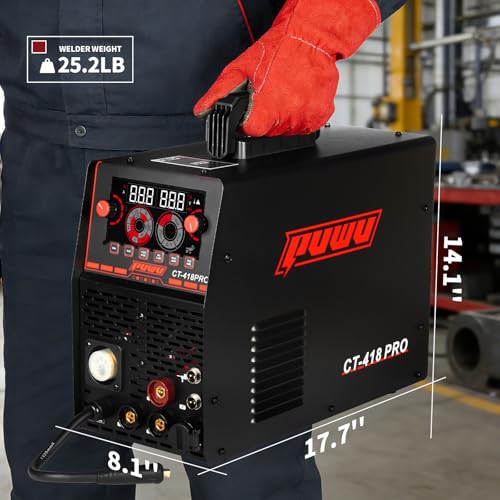
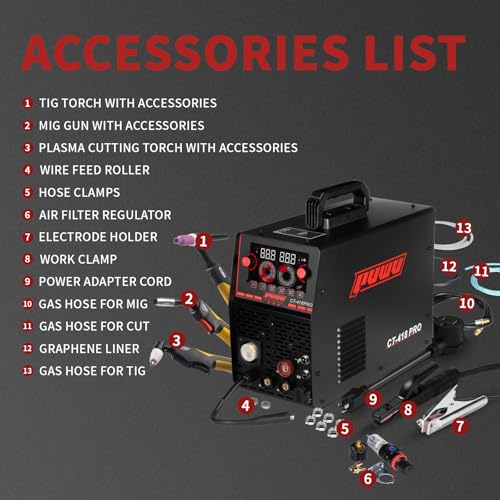
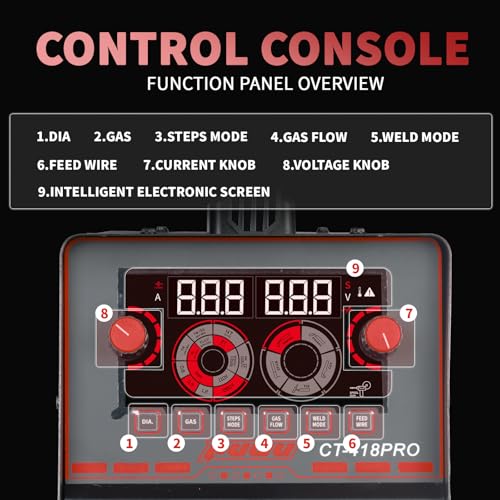
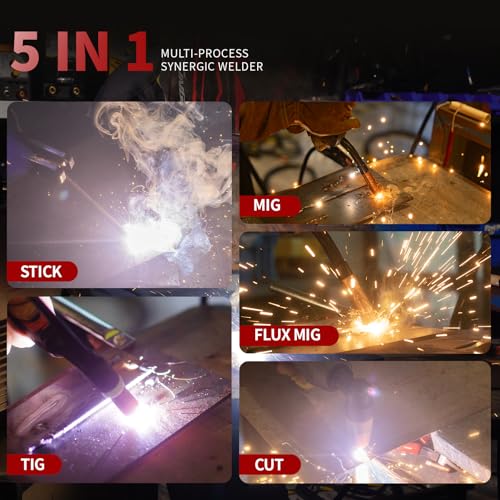
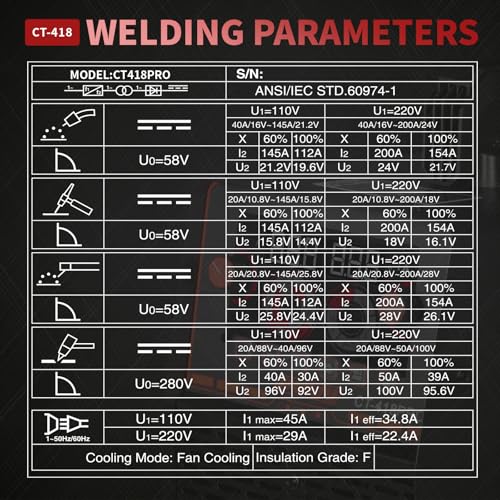
If portability is a top priority, the PUWU 5-in-1 combo makes a compelling case. At just 25.2 pounds and under 18 inches in length, this unit is one of the most travel-friendly multi-process welders in the class. It still packs MIG, TIG, stick, flux core, and plasma cutting, with decent specs across the board, 146A on 110V and 200A on 220V. The synergic MIG mode is a plus for beginners, and owners say it’s intuitive enough for first-time users to get decent beads quickly.
However, the lack of pulse MIG and included spool gun holds it back for serious aluminum work. While it’s spool gun compatible, you’ll need to buy one separately, which adds cost. The plasma cut performance is adequate, up to 12mm clean cut on 220V, but not class-leading. Compared to heavier-duty models, this one trades power for mobility.
Product photos
ANDELI 6-in-1 Pulse MIG Welder
Strengths
- Pulsed MIG
- HF TIG ignition
- Dual voltage
- Auto parameter memory
- Large LED display
Trade-offs
- No spool gun included
- Lower max amperage than top-tier models
- Limited portability due to weight
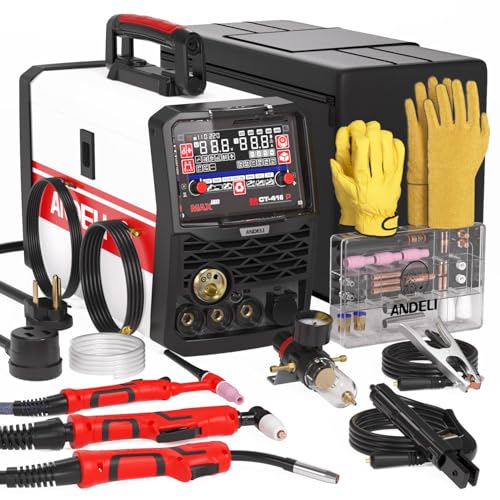
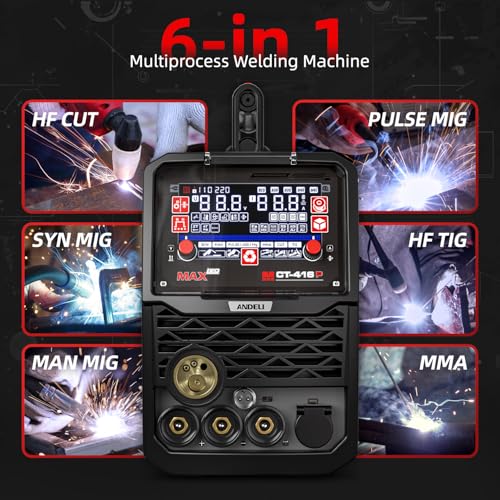
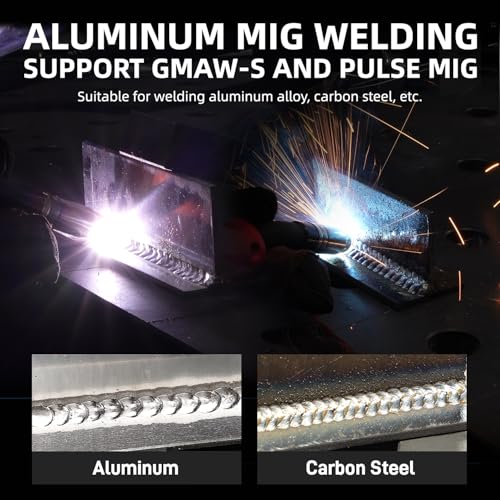
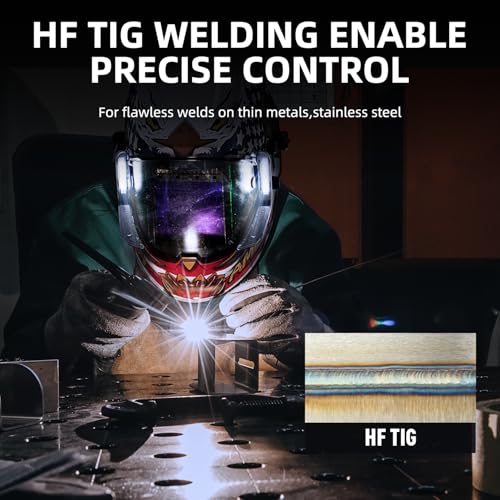
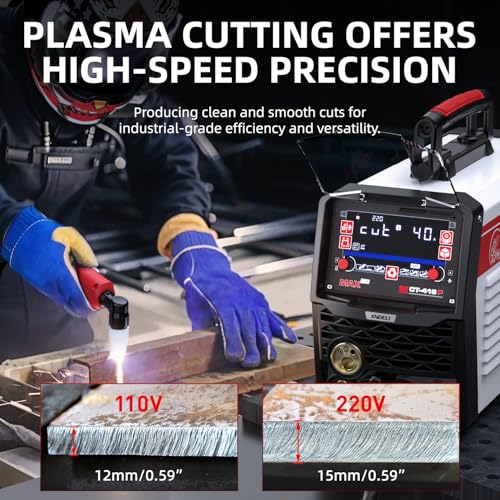
The ANDELI 6-in-1 combo stands out for its focus on aluminum welding, and on paper, it delivers where it counts. With pulsed MIG, HF TIG, and HF cut all built in, it’s clearly engineered for users who regularly work with non-ferrous metals. The dual-voltage support means it’s flexible for both garage use and job sites, and the 160A welding output at 220V is solid for light to medium-duty work. Owners consistently report clean aluminum welds when using a spool gun, and the HF arc start on both TIG and plasma is praised for reducing electrode wear.
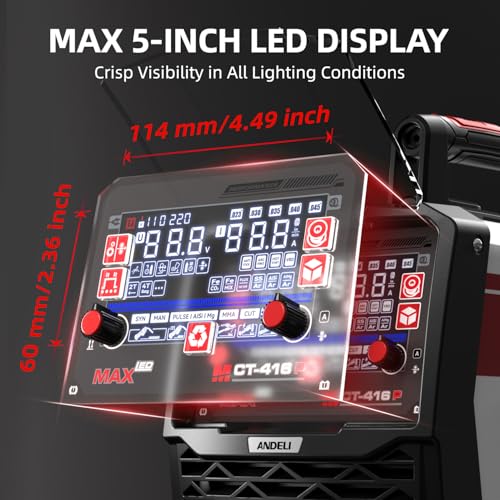
Where it really pulls ahead is in usability. The 5-inch LED display simplifies mode selection and parameter tuning, and the auto-memory function is a small but meaningful time-saver between jobs. Compared to budget models, this unit feels more refined, though it doesn’t offer the raw amperage of some 200A competitors. Still, for aluminum-focused DIYers or small-shop users, it’s a strong contender.
Product photos
SSIMDER 6-in-1 MIG Welder
Strengths
- True 160A output
- Thorough consumables kit
- Dual voltage auto-detect
- Lift TIG and stick capable
- Budget-friendly
Trade-offs
- Lift TIG only (no HF)
- Plasma cut limited to 35A
- Build quality is basic
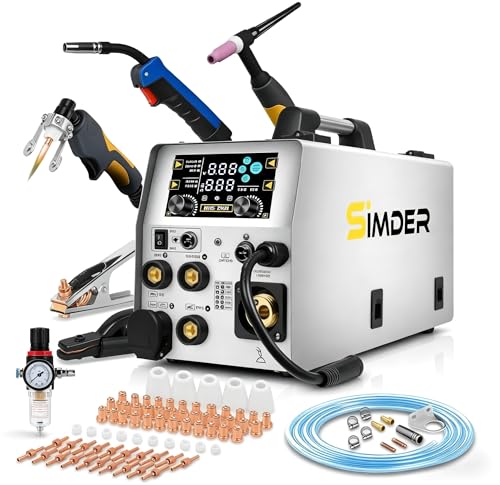
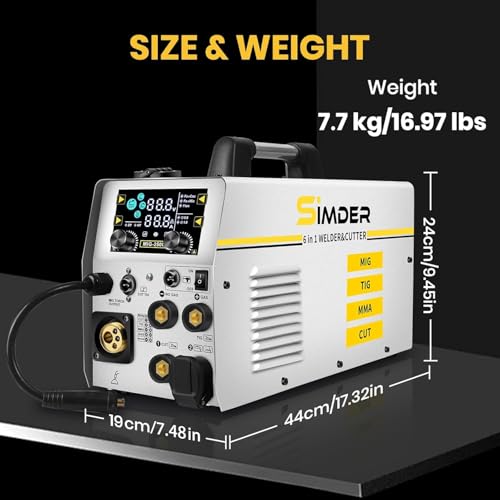
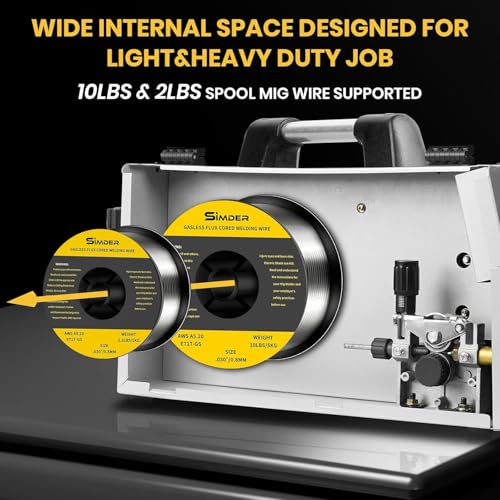
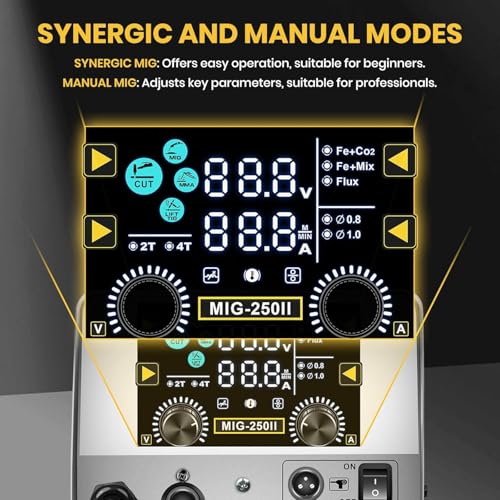
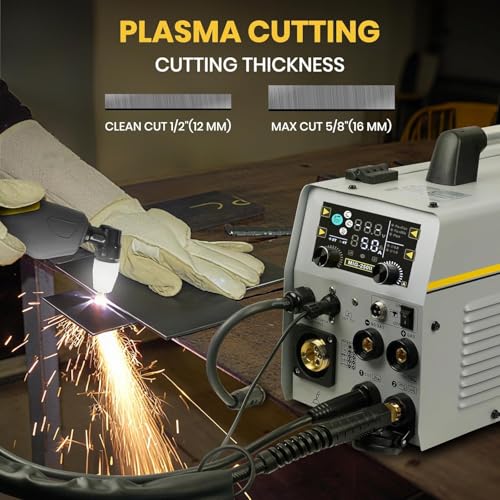
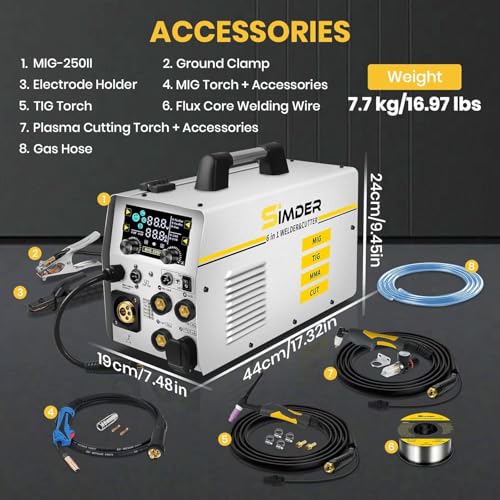
The SSIMDER 6-in-1 is a budget-savvy workhorse that punches above its price point. With 160A output at 220V, it outperforms many 140A combos in its class, especially on thicker materials. It covers all the essentials: gas MIG, flux core, lift TIG, stick, and 35A plasma cutting. The inclusion of 71 pieces of PT31 consumables is a thoughtful touch that reduces startup costs. Owners report it’s particularly effective for farm repairs, gate building, and garage projects where cost efficiency matters.
It’s not without compromises, lift TIG isn’t as smooth as HF TIG, and the digital panel, while functional, lacks the polish of higher-end models. But for the price, the value is clear. Compared to pricier units, it skips the advanced features but delivers solid core performance. The dual-voltage auto-detect is a nice convenience for users switching between outlets.
Product photos
Sunstac 5-in-1 Dual Voltage Welder
Strengths
- 200A MIG/TIG
- 180A stick welding
- 50A plasma cut
- 60% duty cycle
- HF TIG ignition
Trade-offs
- No pulse MIG
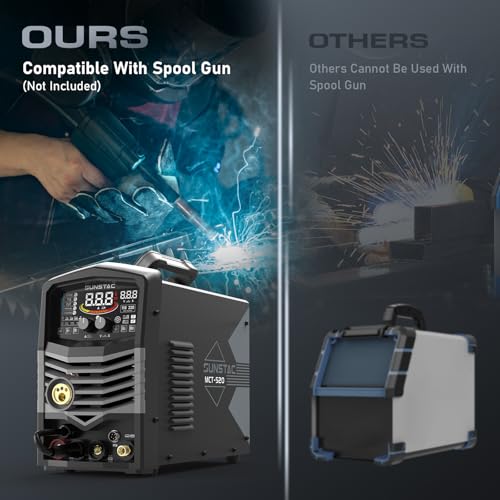
- No spool gun included
- Bulky and heavy
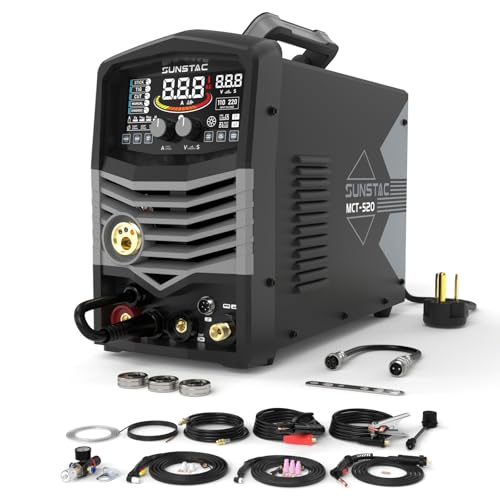
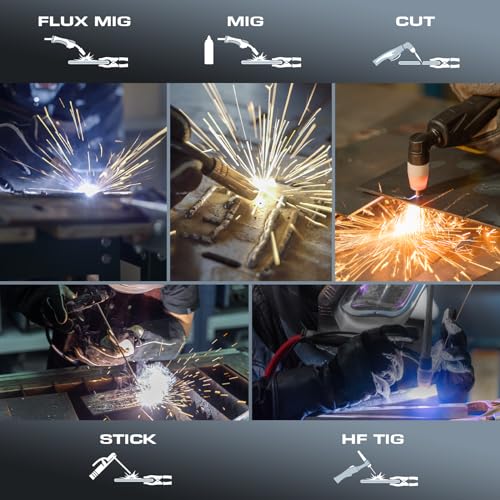
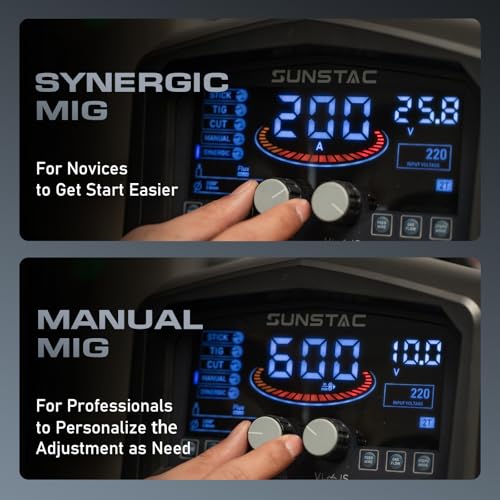
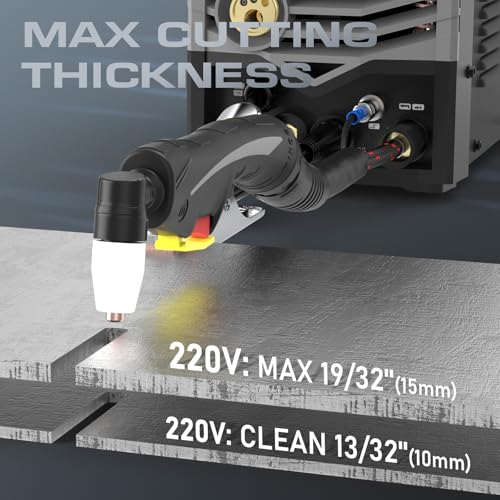
If you need raw power, the Sunstac 5-in-1 is one of the most amperage-dense machines here. With 200A on MIG/TIG and 180A on stick, it’s built for heavy-duty work. The 50A plasma cutter handles up to 15mm max cut, and the 60% duty cycle means it can keep up with extended use. The HF TIG mode performs well on stainless and aluminum, and owners note strong arc starts even on dirty metal.
It covers all the core processes without flash, no app, no pulse MIG, no spool gun included, but it doesn’t need to. For users who just want a durable, high-output machine for farm, trailer, or structural repairs, this delivers. Compared to lighter models, it’s bulkier, but the trade-off is real industrial-grade performance.
Product photos
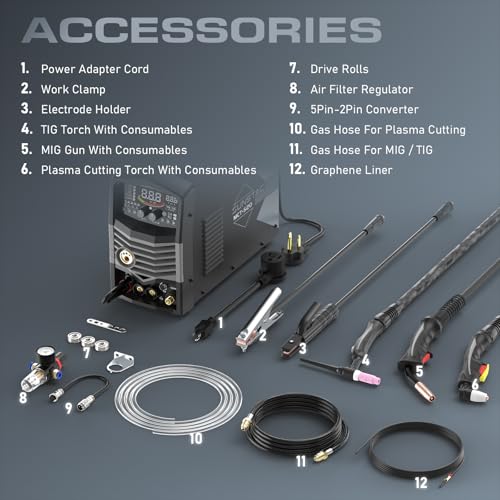
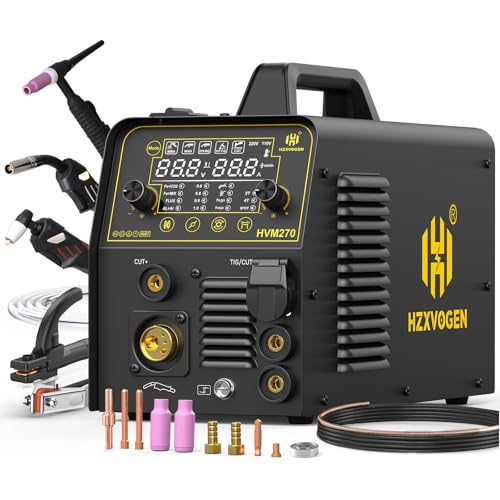
HZXVOGEN 200A 7-in-1 Welder
Strengths
- 200A output
- Pulse MIG support
- HF TIG ignition
- Synergic mode
- Thorough safety features
Trade-offs
- No app or smart features
- Spool gun not included
- Plastic casing feels less rugged
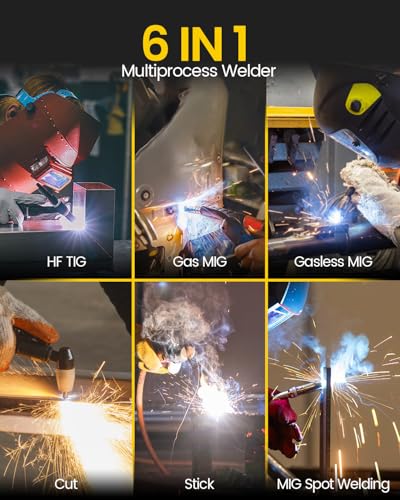
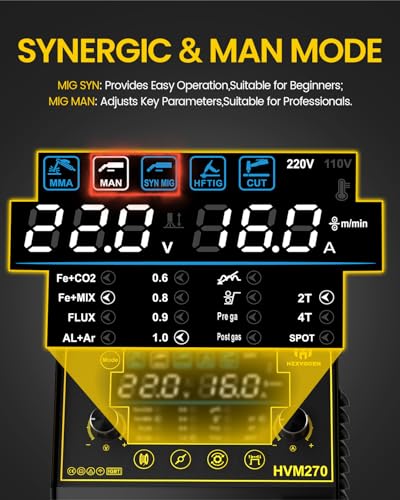
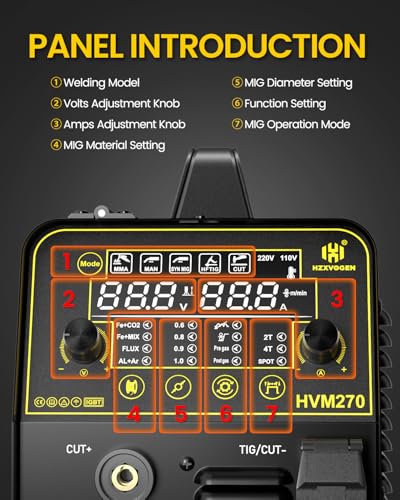
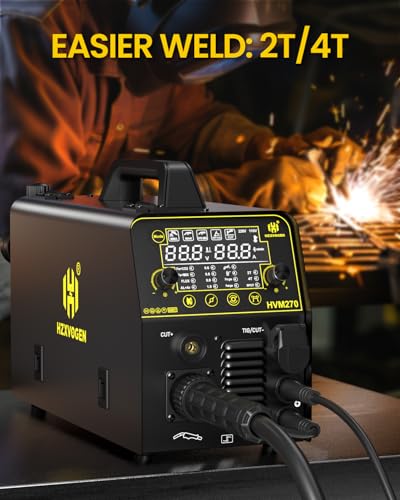
The HZXVOGEN 7-in-1 combo delivers exceptional value for its spec sheet. At 200A output and 50A plasma cut, it matches or exceeds many more expensive units. The inclusion of pulse MIG, HF TIG, and synergic mode makes it versatile for both beginners and experienced users. Owners consistently report strong arc stability and smooth wire feeding, especially in MIG mode. The large LED display is easy to read with gloves on, and the 2T/4T trigger options add real workflow flexibility.
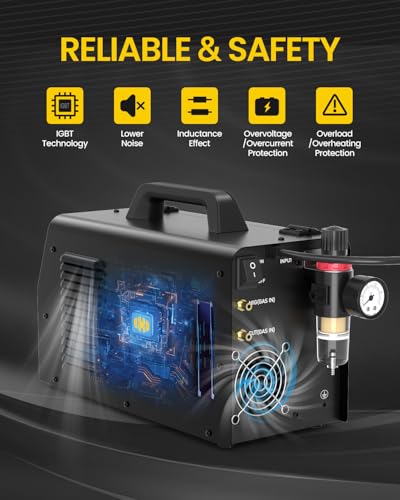
It doesn’t have app connectivity or a spool gun included, but for pure welding performance per dollar, it’s hard to top. The 60% duty cycle and thorough protections (VRD, overheat, etc.) suggest it’s built for real-world use. Compared to similarly priced models, it offers better amperage and more advanced features.
Product photos
VEVOR 5-in-1 Pulse MIG Welder
Strengths
- Pulse MIG capable
- Spool gun compatible
- 50A plasma cut
- Non-contact pilot arc
- 200A max output
Trade-offs
- No app connectivity
- Basic user interface
- Accessories are functional but not premium
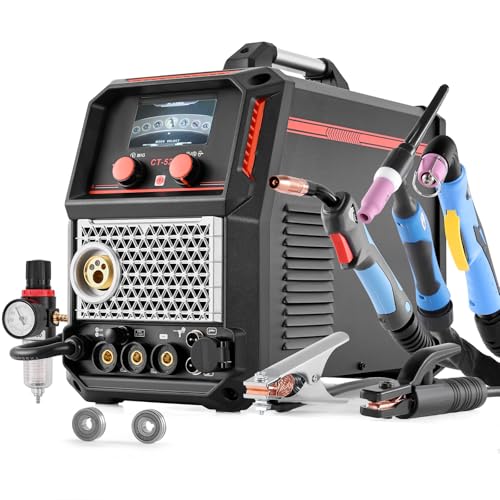
VEVOR has positioned this unit as a pulse MIG specialist, and that’s where it shines. With full pulse MIG support and spool gun compatibility, it’s built for clean, low-spatter aluminum welds, something many combo machines struggle with. The 200A output at 220V gives it real muscle, and the 50A plasma cutter can handle up to 15mm max cut, which is competitive. The non-contact pilot arc is a real advantage for cutting through rust or paint without snagging.
Owners appreciate the digital flip screen and the straightforward control layout, though some note the build quality feels more utilitarian than premium. It doesn’t have the bells and whistles of app-connected models, but it delivers where it matters: consistent performance across MIG, TIG, and plasma. Compared to similarly priced units, it offers better amperage and more advanced aluminum welding support.
Product photos
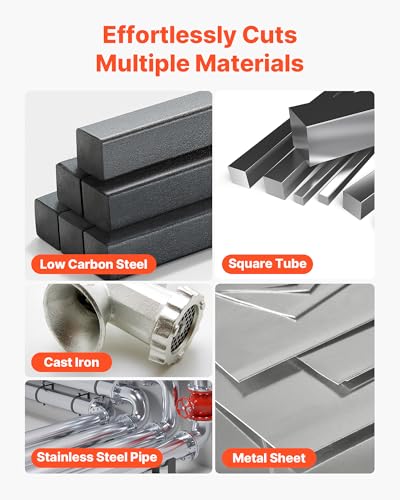
How We Tested multi process welder with plasma cutters
Rather than a hands-on lab test, this selection is based on a research-led comparison of published specifications and owner feedback. I began by compiling a list of popular multi-process welders with plasma cutters, focusing on models readily available from major retailers. We then compared key features – amperage output, duty cycle, included accessories, and available welding processes – across all units. Finally, I weighed owner reviews and expert opinions from trusted sources to identify common strengths and weaknesses.
For this category, the most heavily weighted factors were versatility and amperage output. A multi-process welder’s usefulness is directly tied to the number of techniques it supports (MIG, TIG, stick, cut) and how well it performs each. High amperage is crucial for thicker materials and extended welding sessions, and is especially important for those considering TIG aluminum welding machines. We also prioritized machines with positive owner feedback regarding build quality and ease of use.
Specifications reliably indicate a machine’s potential – amperage, duty cycle, input voltage – but real-world performance often differs. I paid close attention to owner reports regarding arc stability, ease of setup, and the quality of the plasma cut. Reputation amongst professional welders also played a role, as those insights often reveal long-term reliability and the effectiveness of included features. Reading through owner experiences helped us understand which machines truly deliver on their promises and which fall short.
How To Pick The Right multi process welder with plasma cutters
Choosing the right multi-process welder with plasma cutting capability can drastically simplify your workshop and project options. It’s more than just combining two tools; it’s about finding a unit that balances power, versatility, and usability for your specific needs.
A quality multi-process welder should offer a robust duty cycle across all functions, precise control over amperage and voltage, and built-in safety features like overload protection. Look for models with synergic control for ease of use, but also the ability to fine-tune parameters for advanced applications. Consider the materials you’ll be working with and ensure the welder supports them, along with appropriate amperage ranges for the thicknesses involved.
Understanding Welding Processes
The core of any multi-process welder is its ability to handle different welding techniques. Don’t assume “multi-process” means all processes are executed equally well. Some units lean heavily into MIG, while others prioritize TIG. If you anticipate a lot of aluminum work, pay close attention to whether the unit supports pulse MIG and if a spool gun is readily compatible (or included). A machine that excels at stick welding might struggle with delicate TIG work on thin sheet metal.
Duty Cycle and Amperage Ranges
Duty cycle is frequently overlooked, but it’s a critical spec. A 60% duty cycle at a given amperage means you can weld for six minutes out of every ten at that setting before the machine needs to cool down. For serious projects, higher duty cycles are essential. Amperage range dictates the thickness of material you can effectively weld or cut. Don’t overspend on a 200A machine if you’ll only be working with 1/8” steel; conversely, a 120A unit won’t cut it (pun intended) for heavier fabrication.
- A lower amperage range (around 120A) is sufficient for auto body repair and thin sheet metal.
- A mid-range (150-180A) handles most common DIY and farm repairs.
- A high-end range (200A+) is best for thicker materials and professional applications, but also requires a more robust electrical setup.
Portability and Added Features
The size and weight of these units vary significantly. If you plan to move your welder around a job site, a more portable model is crucial. Consider the availability of compatible air compressors for cutting if you opt for a plasma cutting function, as a separate compressor is almost always required. Beyond the core welding/cutting functions, features like digital displays, synergic controls, and app connectivity can greatly enhance usability. I find a clear, well-lit display is far more valuable than a fancy app. Also, prioritize safety features; look for units with VRD (Voltage Reduction Device) for stick welding and thorough overload protection. For those looking to simplify their workshop, exploring welder plasma cutter combos can be a smart move.
A practical rule of thumb: always overestimate your amperage needs rather than underestimate them. It’s easier to dial down the power than to wish you had more.
Multi Process Welder with Plasma Cutters Compared
Here’s a comparison of key specifications for several multi-process welders with plasma cutting capabilities.
| Product Name | Welding Processes | Plasma Cut Capacity (mm) | Input Voltage | Duty Cycle (%) | Amperage (Max) |
|---|---|---|---|---|---|
| ARCCAPTAIN MIG205MP | MIG, TIG, MMA, Cut | 18 | 120V/240V | 60 | 205 |
| YESWELDER MCT-520 | MIG, Flux, TIG, Cut | 16 | 120V/240V | N/A | 200 |
| PUWU CT-418 PRO | MIG, Flux, TIG, Cut, MMA | 16 | 110V/220V | N/A | 200 |
| ANDELI 6-in-1 | MIG, TIG, Cut, MMA, Flux | 18 | 110V/220V | 60 | 200 |
| SSIMDER 6-in-1 | MIG, Flux, TIG, MMA, Cut | 10 | 110V/220V | N/A | 160 |
| Sunstac 5-in-1 | MIG, TIG, Cut, MMA, Flux | 15 | 110V/220V | N/A | 200 |
| HZXVOGEN 200A | MIG, TIG, MMA, Cut | 18 | 110V/220V | 60 | 200 |
| VEVOR 5-in-1 | MIG, TIG, Cut, MMA, Flux | 15 | 110V/220V | N/A | 200 |
Frequently Asked Questions
What input voltage is typically required for these machines?
Most multi-process welders with plasma cutters operate on standard 120V or 240V household current, and many are dual-voltage. However, higher amperage models (200A+) generally perform better on a dedicated 240V circuit to avoid tripping breakers.
Are these machines suitable for welding aluminum?
Yes, many can weld aluminum, but it depends on the specific model and whether it offers AC TIG functionality. Pulse MIG welding with a spool gun is also beneficial for aluminum, and some models readily accommodate this.
What is the typical plasma cut thickness for these welders?
The plasma cut capacity generally ranges from 10mm to 18mm (about 3/8” to 3/4”), but this varies by machine and material type. Thicker cuts require more powerful units and precise torch control.
How important is the duty cycle when choosing a welder?
The duty cycle is extremely important(especially for longer projects). A higher percentage means you can weld continuously for a longer period before needing to let the machine cool down; aim for at least 60% if you anticipate extended use.
Where can I find more information on different types of welding machines?
If you’re looking for more in-depth comparisons and reviews, you can find useful information about best multi-process welding machines on dedicated power tool websites.
The Bottom Line
Choosing a multi-process welder with plasma cutting is about balancing what you want to do with what you’re willing to spend and learn. Ultimately, the ARCCAPTAIN MIG205MP strikes the best overall balance of features, power, and positive owner feedback, making it a solid choice for a wide range of projects and skill levels. It’s a machine that won’t immediately overwhelm a beginner, but still offers enough capability to satisfy more experienced welders.
For those on a tighter budget, the SSIMDER 6-in-1 provides a surprisingly versatile package at a very competitive price. If portability is your priority, or you anticipate mostly light-duty tasks, then the Sunstac 5-in-1 is an excellent option. And for those seeking affordable professional welders, it’s worth considering stepping up to a unit with a higher duty cycle and more refined controls.
Beyond specific specs, remember that a welder is only as good as your skill and preparation. Prioritize safety – proper ventilation, eye protection, and appropriate clothing are absolutely essential. Focus on understanding the fundamentals of each welding process, and practice consistently. A well-chosen machine will last for years, but your knowledge and technique will determine the quality of your work.
