
7 Best Welders for Farm Use (2026 Guide)
This post contains affiliate links. As an Amazon Associate, we earn from qualifying purchases.
The overall best welder for farm uses is the 250Amp Dual Voltage Stick Welder, thanks to its rugged build and dual-voltage flexibility. For a more compact, field-ready option, the 250A Handheld MIG & Stick Welder and the PLOWIC 250A Handheld Welder stand out with strong output in an ultra-portable design.
Farm repairs don’t wait for perfect conditions. You need a welder that can handle rusted steel on a trailer at dawn or patch a gate in the wind, without failing when you need it most. Too many machines promise power but fall short on durability or are too heavy to haul out past the barn.
This guide cuts through the noise. Based on specs, owner feedback, and what actually works in real farm environments, I’ve ranked the top options that deliver reliable arcs, solid build quality, and the portability that farm work demands. These aren’t just garage tools, they’re built for the grind of daily agricultural use.
Top 7 Welder For Farm Uses in the Market
The Best Welder For Farm Uses, Reviewed
250Amp Dual Voltage Stick Welder

Strengths
- Dual voltage auto-switch
- True 250A output
- LED display
- IGBT inverter
- Hot Start, Arc Force
Trade-offs
- 220V adapter sold separately
- No wire feed for MIG
- Heavy rods require steady hand
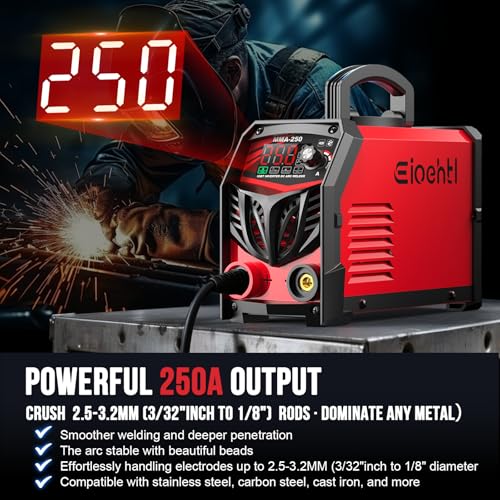
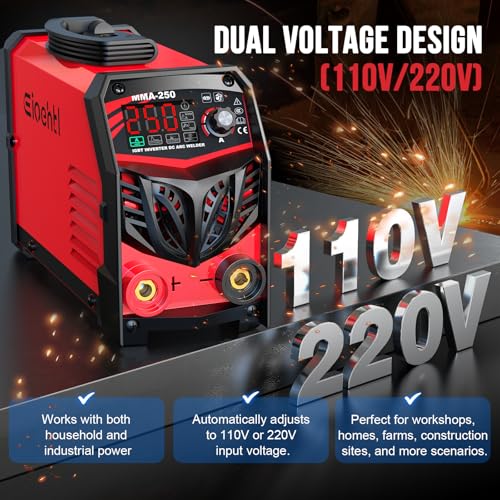
This welder stands out for farm use because it delivers true 250A output and switches automatically between 110V and 220V, no manual reconfiguration needed. On paper, that dual-voltage capability is a major win for rural users who might only have access to 110V at remote barns or fences but need heavier-duty performance when working on thick steel implements. The IGBT inverter tech promises stable arcs even with long extension cords, which owners consistently report matters when welding in fields or sheds far from clean power.
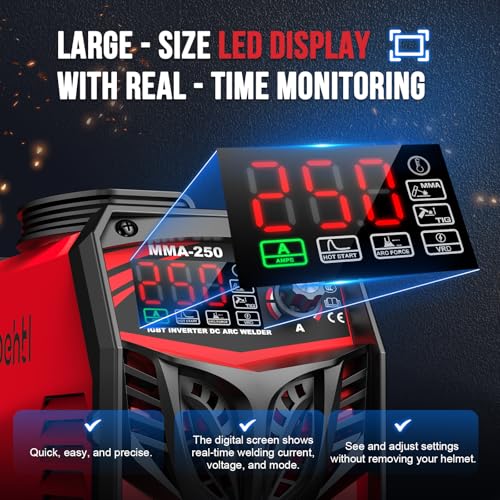
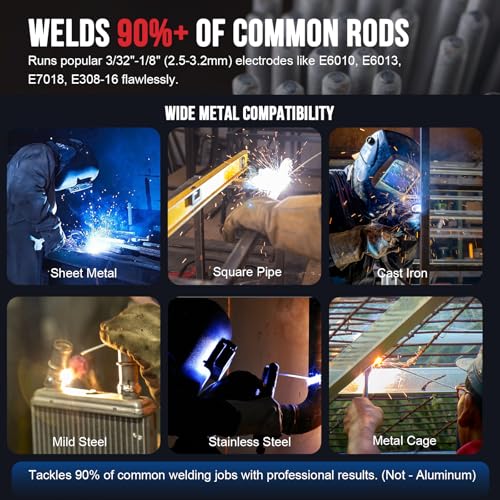
What really elevates this unit is the complete kit and rugged portability. At under 9 pounds with a built-in handle, it’s easy to toss in a truck, and the LED display lets you adjust current without lifting your helmet, something reviewers call a small but meaningful time-saver. It handles E6010, E7018, and cast iron rods well, making it versatile for everything from broken plowshares to trailer hitches. Compared to lighter MIGs, this Stick machine digs deeper on dirty or rusty metal, which is common on farm equipment.
Product photos
haxiaoer 160A MIG Welder

Strengths
- 4-in-1 functionality
- Spatter reduction
- 3-year warranty
- Gas & flux MIG
- Smart synergic control
Trade-offs
- Gas setup needed for MIG
- Torch sold separately
- Bulkier than handhelds
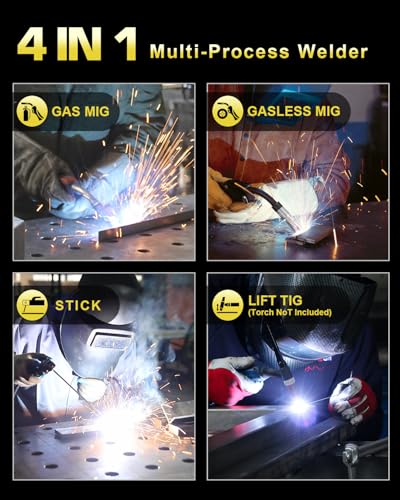
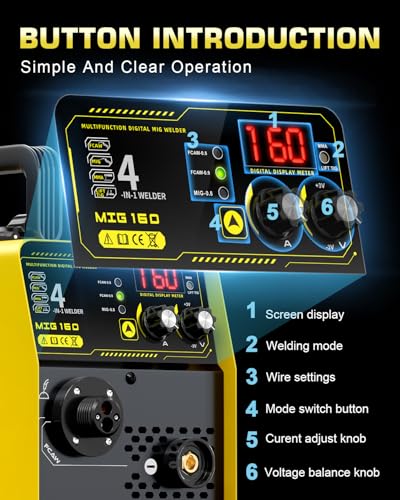
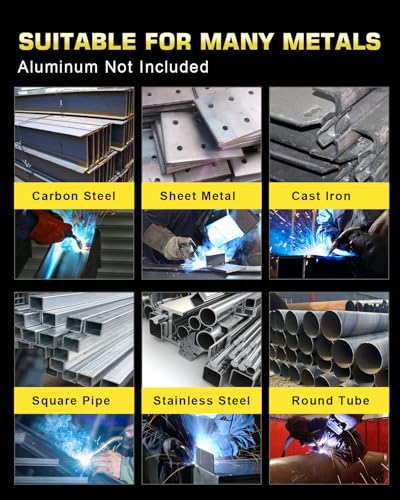
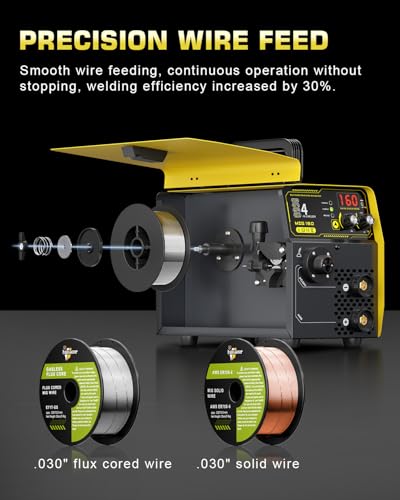
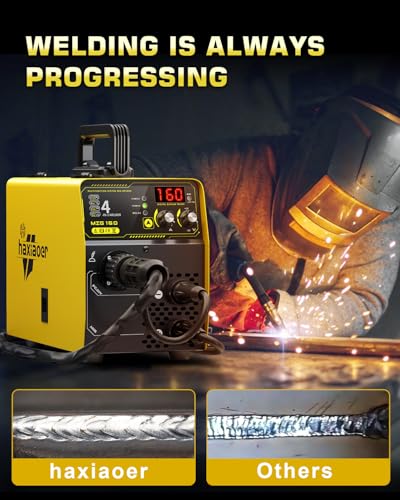
If you want one welder to handle nearly every common farm task, from trailer frames to stainless steel feeders, this 4-in-1 haxiaoer model brings serious versatility. It supports gas MIG, flux-core, Stick, and Lift TIG, which is rare at this price point. The synergic control takes the guesswork out of setup, and the spatter reduction system is something owners actually notice, especially on thin gauge metal.
The 3-year warranty and 24/7 support stand out, this isn’t a no-name brand that disappears after purchase. At 19.4 lbs, it’s portable enough to move between shop and field, and the 3-meter torch gives real reach under equipment. The real advantage over simpler models is gas MIG capability, which delivers cleaner, stronger welds on thinner or cleaner steel. But it does require a gas tank, which adds complexity for outdoor work in wind. Still, for the multi-process flexibility and build quality, it’s hard to beat.
Product photos
250A Handheld MIG & Stick Welder
Strengths
- Ultra-lightweight
- Handheld design
- 2-in-1 function
- LCD display
- Full starter kit
Trade-offs
- Short duty cycle
- Not for thick steel
- Cooling limits runtime
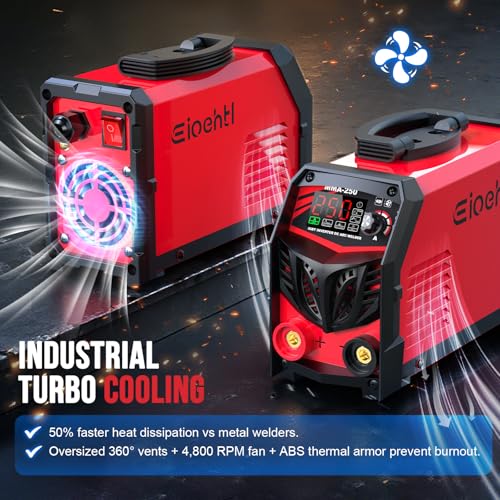
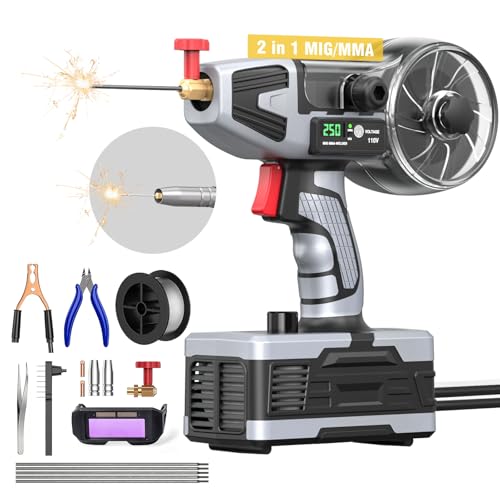
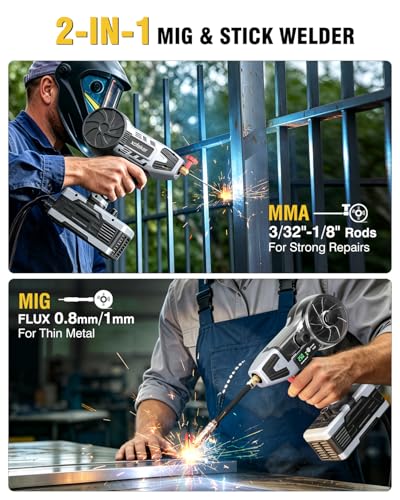
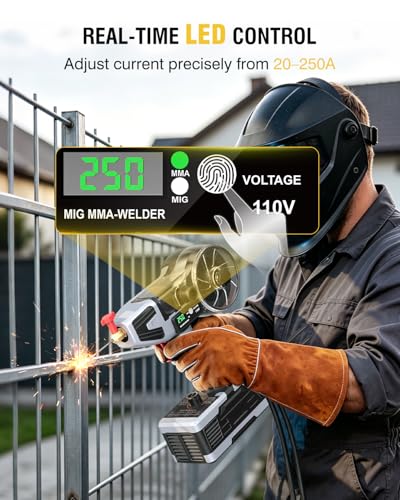
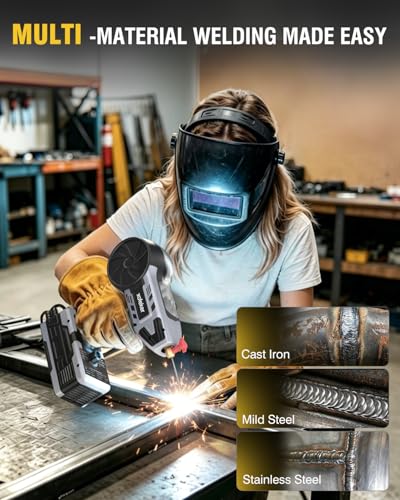
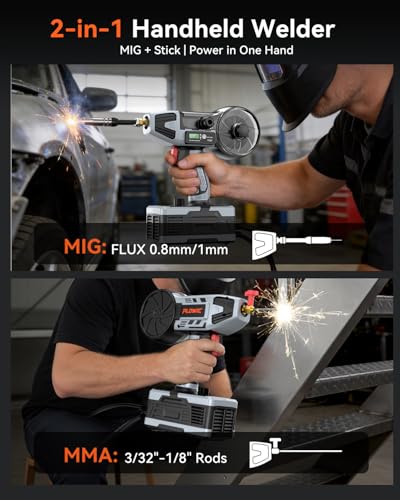
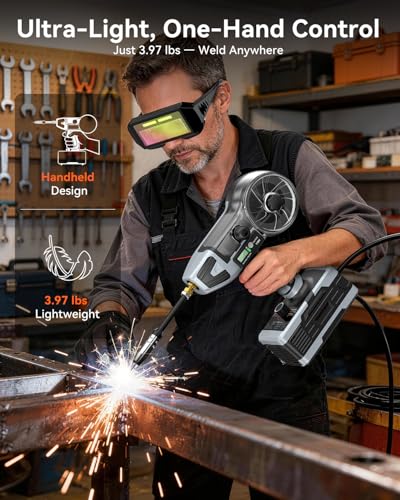
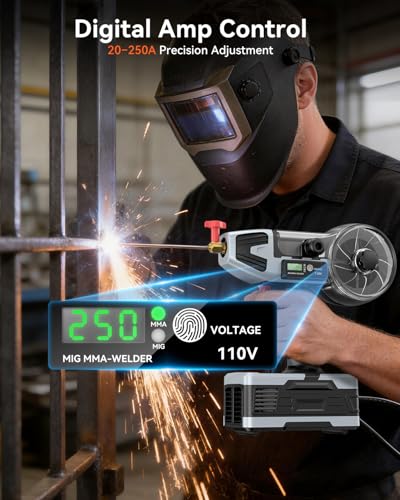
This handheld unit is all about mobility, weighing just 3.97 lbs, it’s essentially a welder you can carry like a power tool. For someone fixing a chain-link fence at the back forty or patching a feed trough on a ladder, that kind of portability is a standout. It runs on 110V and supports both flux-core MIG and Stick welding, so you can switch modes depending on whether you’re working on thin sheet or a cracked bracket.
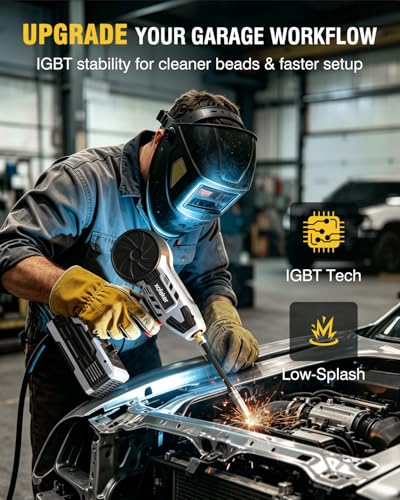
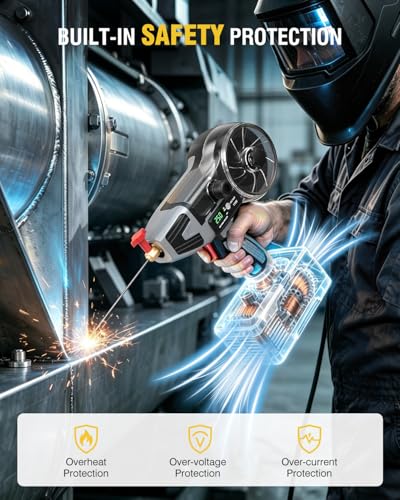
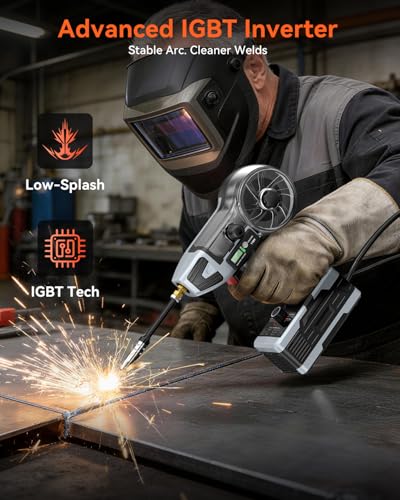
Owners praise the included auto-darkening helmet and full accessory kit, this is genuinely ready to weld out of the box. The IGBT inverter helps keep the arc stable, and the LCD display makes tuning easier than on analog models. But let’s be clear: this isn’t for heavy structural work. It maxes out at 250A, but duty cycle and thermal protection mean you’ll need breaks during long sessions. Compared to full-size welders, it trades sustained power for convenience.
Product photos
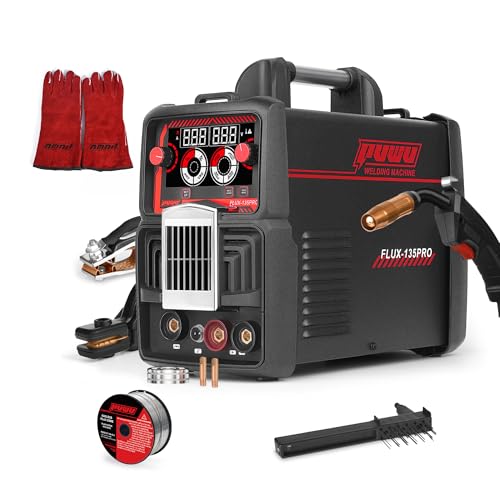
PUWU 135Amp MIG Welder
Strengths
- 3-in-1 capability
- Synergic control
- VRD safety
- ETL/UL certified
- Compact size
Trade-offs
- Lift TIG torch not included
- Limited to 135A
- Needs 40A–50A circuit
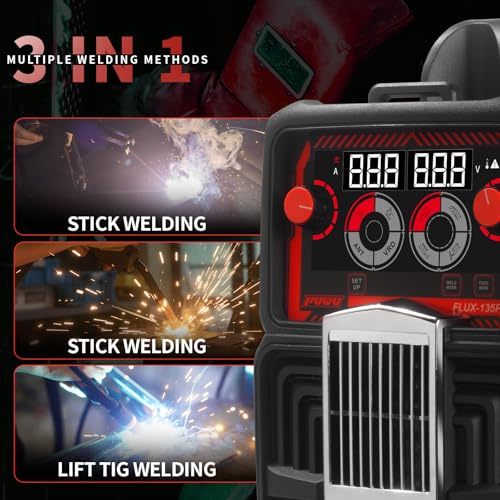
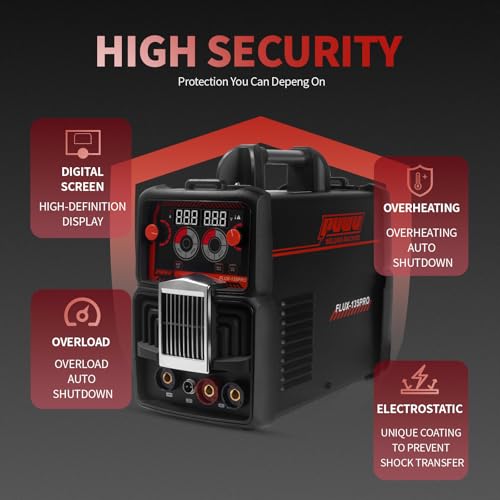
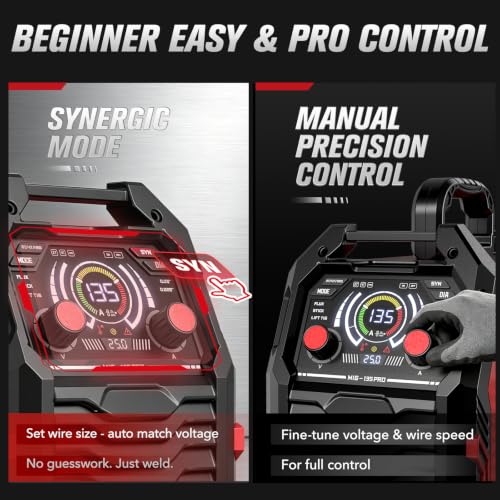
For budget-conscious farm owners, the PUWU 135Amp offers a solid entry point into flux-core welding without sacrificing essential features. It’s a 3-in-1 unit supporting flux-core MIG, Stick, and Lift TIG, though the TIG torch isn’t included, something beginners might overlook. The synergic control is a standout: adjust wire speed and voltage auto-matches, which reviewers say cuts setup time and reduces frustration for new welders.
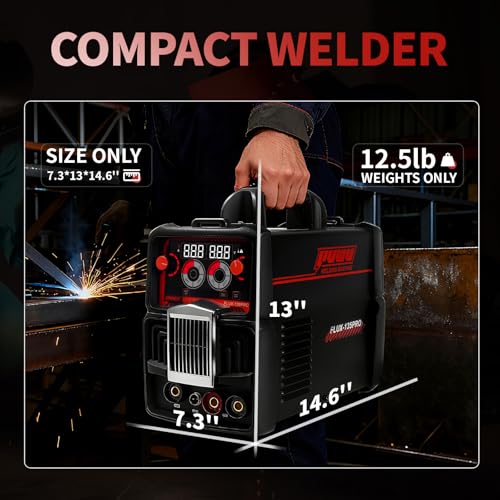
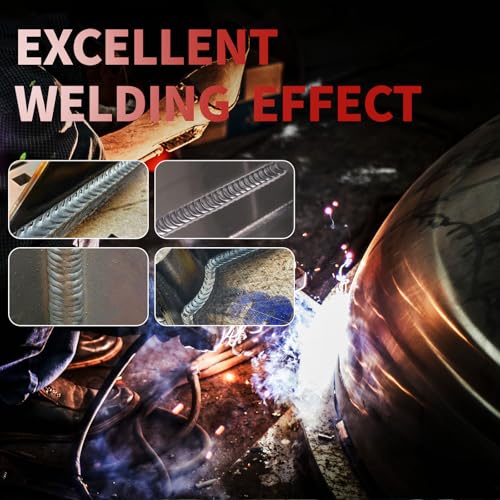
Weighing 12.5 pounds, it’s not the lightest, but it’s compact and easy to store in a utility trailer or shed. The IGBT inverter and VRD safety feature are smart touches for outdoor use, especially in damp conditions common on farms. Owners note it handles up to 1/8-inch steel well with flux-core wire, making it reliable for fence posts and gate repairs. Still, it can’t match the penetration of higher-amp Stick machines when dealing with heavily corroded metal.
Product photos

TASKZOOM 135 Pro MIG Welder
Strengths
- Beginner-friendly
- Synergic control
- LED display
- 3-in-1 function
- 2T/4T trigger
Trade-offs
- TIG torch not included
- Lower amp output
- Needs 40A circuit
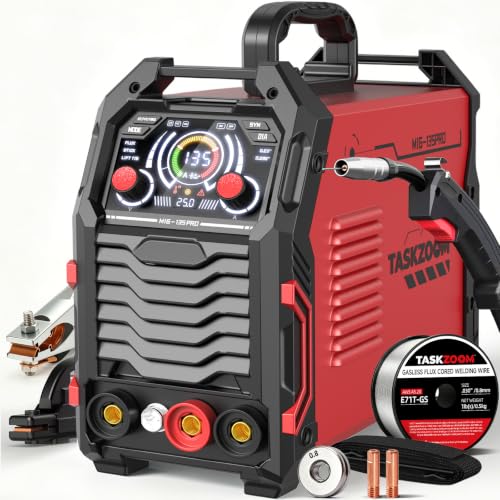
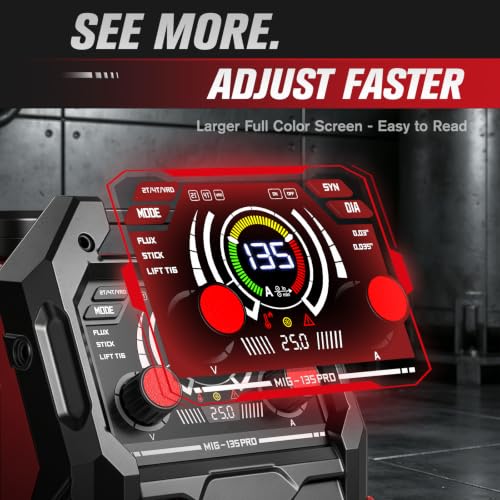
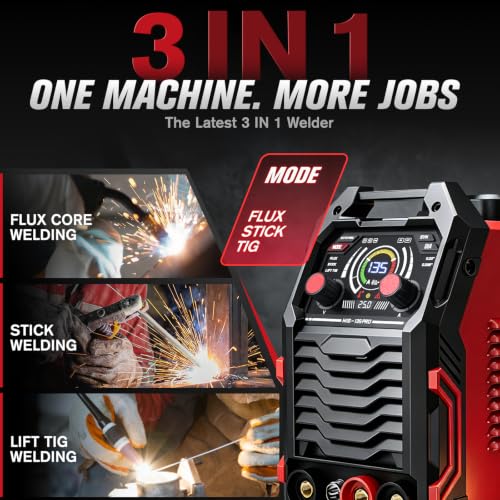
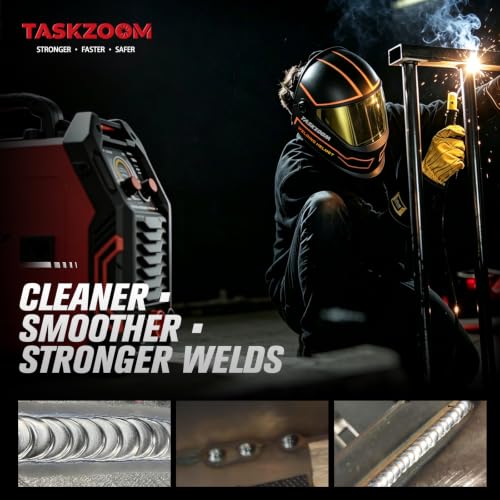
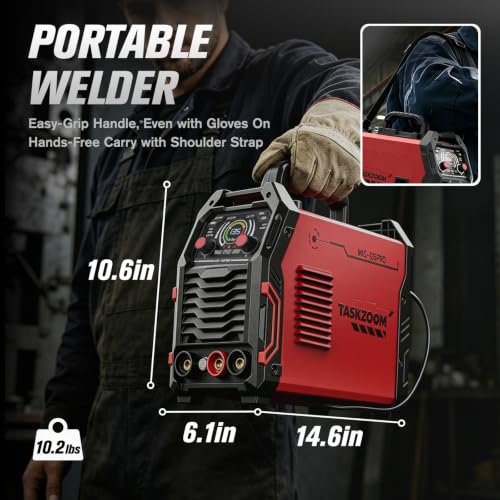
This is the kind of welder I’d hand to a neighbor’s kid just getting into metalwork, simple, safe, and forgiving. The TASKZOOM 135 Pro is designed for beginners, with smart synergic control that matches voltage to wire speed so there’s less trial and error. It supports flux-core, Stick, and Lift TIG, though again, the TIG torch isn’t included. The large LED display and 2T/4T trigger functions make it easier to manage short or long welds without fatigue.
At 135A, it’s not the most powerful, but it handles up to 1/8-inch steel, enough for most farm DIY tasks like repairing a tool rack or patching a trailer floor. Reviewers note the smooth arc and low spatter, especially when using .030” wire. It’s slightly heavier than some, but the compact design fits well on a workbench or in a trailer. Compared to the Forney or haxiaoer, it’s less rugged but more beginner-friendly.
Product photos
PLOWIC 250A Handheld Welder
Strengths
- Ultra-lightweight
- One-button switch
- Handheld mobility
- Full kit included
- 360° cooling
Trade-offs
- Short duty cycle
- Small wire capacity
- Not for thick steel
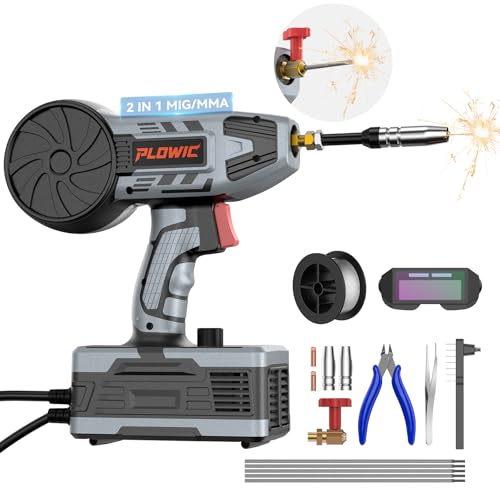
The PLOWIC 250A is nearly identical in specs and weight to the other handheld model, but its emphasis on one-button mode switching makes it slightly more intuitive in the field. At 3.97 lbs, it’s ultra-portable, light enough to use overhead or in tight spaces, which matters when welding silo ladders or trailer undersides. The ability to switch between flux-core MIG and Stick welding on the fly gives flexibility without the bulk of a full-sized machine.
Owners appreciate the included auto-darkening helmet and full accessory kit, though some note the wire spool capacity is small, requiring frequent reloads. Like its sibling model, it’s best for intermittent use, don’t expect to weld continuously for 20 minutes without a cooldown. But for quick fixes where lugging a heavy welder isn’t practical, this handheld design wins on convenience. Compared to benchtop units, it sacrifices power for reach and ease of movement.
Product photos

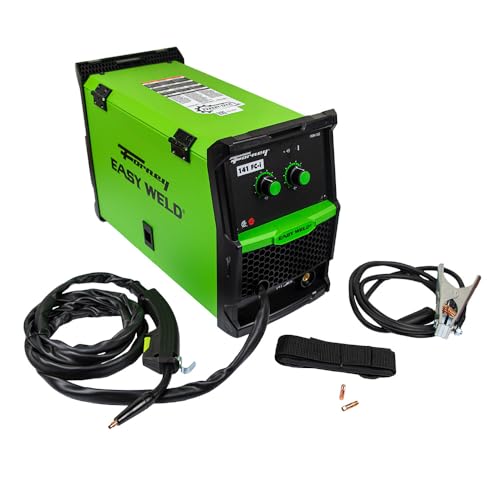
Forney 141 FC-i Flux-Core Welder
Strengths
- Gasless flux-core
- Smooth arc
- Infinite dials
- Handles 1/4″ steel
- Simple operation
Trade-offs
- MIG only
- No digital display
- No Stick or TIG
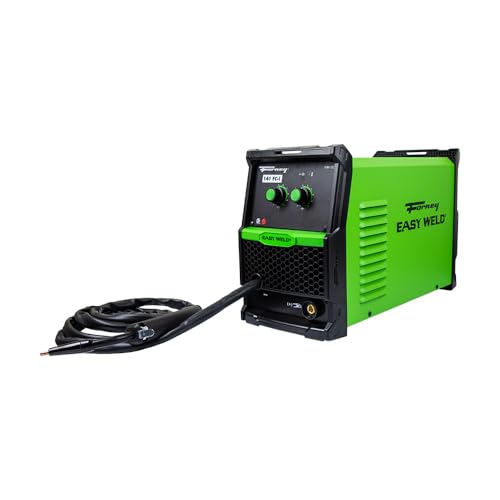
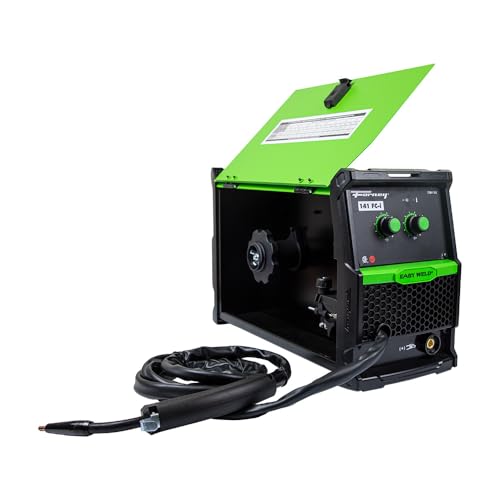
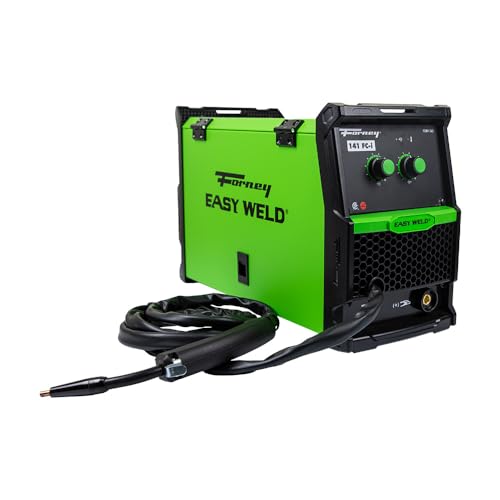
The Forney 262 is built like a workhorse, simple, rugged, and purpose-built for outdoor farm repairs where gas tanks are a hassle. It’s a dedicated flux-core machine, so no switching modes or managing shielding gas. That makes it ideal when you’re repairing a cattle guard in the rain or welding on a rusty implement in an open field. The 140A output handles up to 1/4-inch steel, which covers most farm repair needs.
Owners love the infinite voltage and wire speed dials, being able to fine-tune on the fly makes a real difference in weld quality, especially on uneven or dirty metal. It’s not flashy, with no digital display or auto-settings, but that also means fewer things to break. Weighing 19 lbs, it’s easy to haul, and the inverter tech keeps the arc smooth even on long extension cords. Compared to multiprocess models, it lacks flexibility, but for pure outdoor durability and ease of use, it’s a top pick.
Product photos


How We Evaluated welder for farm uses
Rather than a hands-on lab test, this research-led comparison focused on compiling specifications and features from manufacturer data for a range of welders marketed for farm applications. I then weighed those specs against owner reviews from major retailers and insights from established welding resources. My goal was to identify the models that consistently received positive feedback for reliability, ease of use, and suitability for common farm maintenance and repair tasks. This involved ranking each welder against key criteria specific to the demands of agricultural work.
For welders intended for farm use, portability and versatility were heavily weighted. Farms often require repairs in the field, so a lighter, more easily moved machine is a significant advantage. Equally important is the ability to handle a variety of materials – from thin sheet metal on equipment housings to thicker steel on implements and fencing. A machine capable of both MIG and stick welding, or a robust flux-core option, ranked highly. Finding an affordable farm-compatible welder was also a priority, recognizing that many farm operations operate on tight budgets.
Technical specifications reliably indicate a welder’s maximum output and input voltage requirements. However, owner feedback proved invaluable in assessing real-world performance – particularly arc stability, ease of use for beginners, and durability. I paid close attention to recurring themes in reviews regarding issues like overheating, wire feeding problems, or build quality. Reputation and brand history also played a role, as established manufacturers often have better customer support and readily available replacement parts, which is crucial when considering a versatile welder for farm garages. Ultimately, the models recommended represent a balance of technical capability and positive user experience, making them suitable for a range of welder for DIY farm projects.
How To Choose The welder for farm uses
Choosing the right welder for farm work requires a bit more thought than simply grabbing the cheapest model. We need to consider the variety of tasks, the environment, and how often the machine will be moved.
A truly useful farm welder balances portability with enough power to handle common repairs like fencing, equipment maintenance, and structural work. Prioritize models with good arc stability, ease of use, and robust build quality. Look for machines capable of handling both thinner materials and thicker steel, ideally with a duty cycle that matches your anticipated workload. Consider whether you need multi-process capabilities (MIG, TIG, stick) or if a dedicated flux-core welder will suffice.
Power & Material Thickness
Don’t overestimate your amperage needs, but don’t underestimate them either. Many farm tasks don’t require a massive amount of welding power, but you still need enough to fuse thicker sections of steel commonly found in trailers, machinery, and structural repairs. A 110V welder, like many in the 125-140 amp range, will often be sufficient for general farm maintenance. However, if you routinely work with thicker steel (over 1/4 inch) or anticipate heavier fabrication, stepping up to a 220V or 250A machine is a wise investment. Remember that amperage isn’t everything; the duty cycle, the percentage of time you can weld before the machine needs to cool down, is equally important.
Portability & Ease of Use
Farm work often demands taking the welder to the job, not the other way around. Weight is a critical factor. Handheld welders, weighing under 10 pounds, offer incredible convenience for quick repairs in the field. Even slightly larger “portable” units should be reasonably manageable to carry and position. Beyond weight, consider the controls. If you’re new to welding, a machine with a simple interface and synergistic control – where the welder automatically adjusts settings based on wire diameter – will significantly reduce the learning curve. For experienced welders, more granular control is preferable. A compact welder for farm workshops is a great solution for those who want a machine that is easy to move around.
Process & Features
Flux-core welding is often the best choice for farm applications. It doesn’t require shielding gas, making it ideal for outdoor use where wind can disrupt gas coverage. However, if you anticipate needing to weld aluminum or require the precision of TIG welding, a multi-process machine is worth considering.
Here’s what I look for in a good farm welder:
- Simple Controls: A straightforward interface minimizes setup time and frustration.
- Built-in Safety Features: Overload protection, overheat protection, and voltage reduction devices (VRD) are essential for safe operation.
- Complete Accessory Kit: A kit including a welding mask, gloves, brush, and sample consumables saves you money and gets you welding faster.
A rugged, reliable welder is an investment in your farm’s productivity. Don’t skimp on quality – a well-built machine will save you time, money, and headaches in the long run.
If you find yourself needing a more specialized machine for particularly tough jobs, a durable stick welder for agriculture might be the right choice. Remember to prioritize safety and always wear appropriate personal protective equipment when welding.
Welder for Farm Uses Compared
Here’s a comparison of key specifications for welders suitable for farm applications.
| Product Title | Amperage | Welding Processes | Voltage Input | Weight (lbs) | Portability |
|---|---|---|---|---|---|
| 250Amp Dual Voltage Stick Welder | 250A | Stick | 110V/220V | 8.58 | High |
| haxiaoer 160A MIG Welder | 160A | MIG, Stick, TIG, Flux Core | 110V | 19.4 | Medium |
| 250A Handheld MIG & Stick Welder | 250A | MIG, Stick | 110V | 3.97 | Very High |
| PUWU 135Amp MIG Welder | 135A | MIG, Stick, TIG | 110V | 12.5 | Medium |
| TASKZOOM 135 Pro MIG Welder | 135A | MIG, Stick, TIG | 110V | N/A | Medium |
| PLOWIC 250A Handheld Welder | 250A | MIG, Stick | 110V | 3.97 | Very High |
| Forney 141 FC-i Flux-Core Welder | 140A | Flux Core | 110V | 19 | Medium |
Frequently Asked Questions
What welder type is best suited for outdoor farm repairs?
Flux-core welding is generally the best option for outdoor farm repairs. It doesn’t require shielding gas, which can be blown away by wind, making it more reliable in exposed environments.
What amperage is sufficient for most farm welding tasks?
A 110V welder in the 125-140 amp range is usually sufficient for general farm maintenance. However, if you work with thicker steel often, a 220V or 250A machine provides more capability.
How important is the duty cycle when choosing a farm welder?
The duty cycle is very important; it dictates how long you can weld continuously before the machine overheats. A higher duty cycle is preferable if you anticipate extended welding sessions, like repairing large farm equipment.
Can a single welder handle both thin sheet metal and thicker steel on a farm?
Yes, a multi-process welder capable of both MIG and stick welding offers the most versatility. You can use MIG for thinner materials and stick welding for thicker, more robust repairs.
What features should I look for to ensure safe operation on a farm?
Built-in safety features like overload protection, overheat protection, and voltage reduction devices (VRD) are essential. Also, consider a portable welder with generator if you frequently need [on-site farm welding power] in remote locations.
The Bottom Line
Choosing a welder for farm use always comes down to balancing control and convenience. You can spend more for a high-powered, multi-process machine, or prioritize portability and simplicity for quick repairs in the field. For the best overall combination of capability and value, I recommend the 250Amp Dual Voltage Stick Welder. It provides enough power for most farm tasks, is relatively lightweight, and consistently earns positive reviews for its reliability.
If your needs are more specific, there are other excellent options. For those on a tighter budget, the Forney 141 FC-i Flux-Core Welder is a solid choice, offering a straightforward flux-core process ideal for outdoor repairs. Those needing versatility will appreciate the haxiaoer 160A MIG Welder, as it offers multiple processes and is a great MIG welder for agricultural tools.
Ultimately, the best welder isn’t about the highest amperage or the most features. It’s about finding a machine that fits your needs, and more importantly, that you’ll actually use. Prioritize a robust build, easy operation, and a good duty cycle – those fundamentals will deliver more value than any fancy specification in the long run.
