
7 Best Welders for Body Work (2026 Guide)
This post contains affiliate links. As an Amazon Associate, we earn from qualifying purchases.
The VEVOR 1.8KW Stud Welder Dent Kit is the overall best pick for most bodywork thanks to its strong, consistent output and full kit. For lighter jobs, the VEVOR 800VA Stud Welder Kit is a solid budget option. If you need true versatility beyond dent pulling, the Hobart Handler 140EZ MIG Welder handles a wider range of repairs.
Bodywork demands precision. Too much heat and you warp the panel. Too little and the weld fails. Most DIYers struggle to find a tool that balances control, power, and value without risking damage to thin auto metal.
This guide cuts through the noise. I compared specs, owner feedback, and real-world performance to find welders that actually deliver clean, reliable results on sheet metal. Whether you’re pulling dents or patching panels, these picks meet the demands of automotive repair.
Top 7 Welder For Body Works in the Market
The Best Welder For Body Works, Reviewed
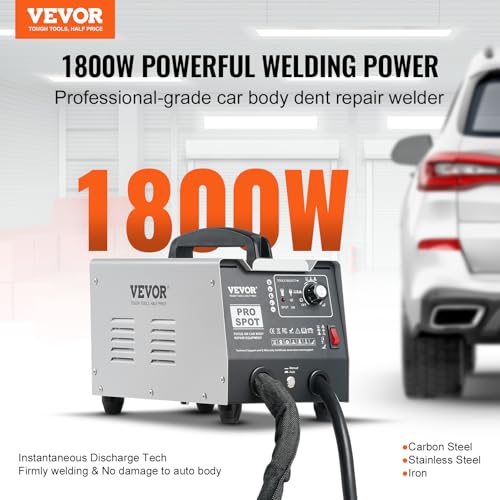
VEVOR 1.8KW Stud Welder Dent Kit

Strengths
- 7 welding modes
- User-friendly panel
- Good accessory kit
Trade-offs
- No welding cart
- Lower peak current
- Single gun only
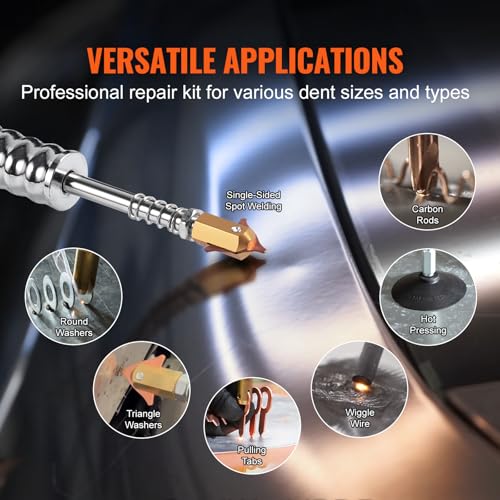
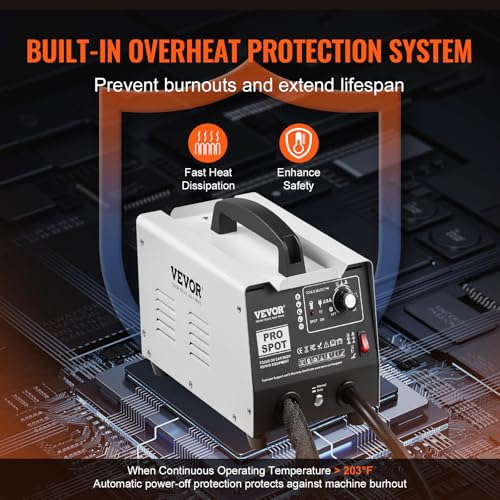
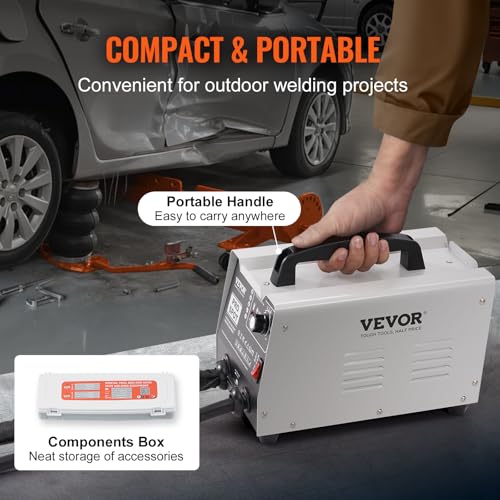
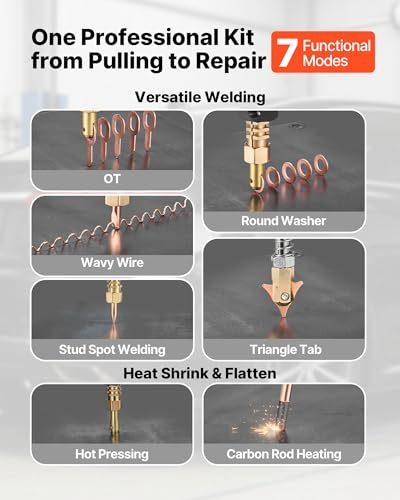
This 1.8KW model hits the sweet spot for most home users who need a reliable, versatile dent puller without overspending. With 7 preset welding modes and dual auto/manual operation, it adapts well to different stud types and dent complexities. The control panel is straightforward, and owners say it’s easy to get consistent welds even with minimal experience.
It’s clearly designed with steel panels in mind, and it performs reliably on everything from door dings to fender creases. The included accessory set is thorough enough for most jobs, though it doesn’t come with a cart like the 3KW version. When stacked against the YELLOW JACKET 3KW model, it’s less powerful but more than sufficient for typical bodywork.
Product photos

VEVOR 300W Stud Welder for Aluminum
Strengths
- Aluminum-specific design
- Capacitor discharge speed
- Heat gun included
Trade-offs
- Lower power output
- Not ideal for steel panels
- Limited stud variety
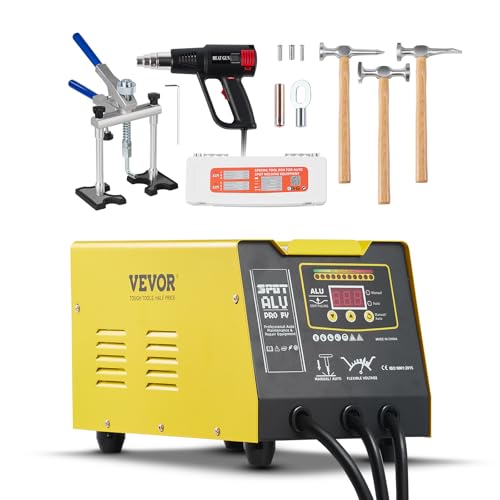
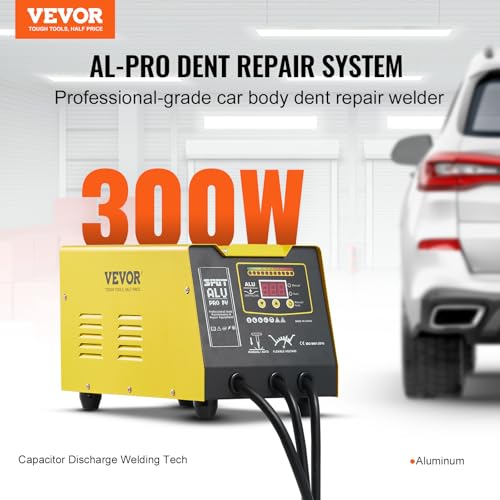
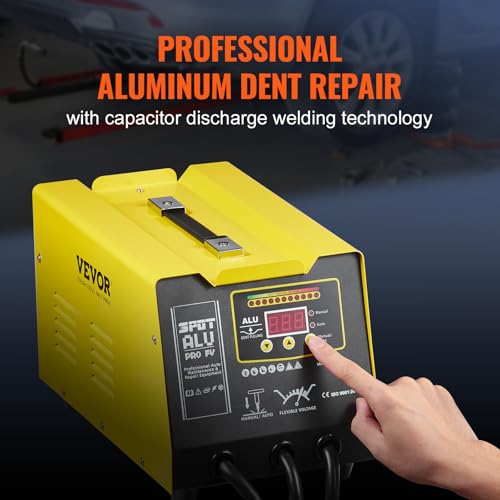
If you’re working on aluminum body panels, this VEVOR model stands out because it’s built specifically for that delicate material. Aluminum requires lower heat input and more controlled pulling force than steel, and this unit’s capacitor discharge welding tech delivers just that, fast, clean welds in 0.3 seconds with minimal risk of warping. The inclusion of a heat gun and bridge-style puller shows VEVOR understands the full repair workflow for softer metals.
Owners consistently report fewer stud pop-offs on aluminum compared to standard spot welders, which speaks to its targeted design. While it lacks the raw power of higher-wattage models, that’s by design, precision over brute force. Compared to the heavier-duty 3KW VEVOR units, this one is more of a finesse tool.
Product photos

VEVOR 800VA Stud Welder Kit

Strengths
- Ultra-portable design
- One-handed trigger
- Thermal protection
Trade-offs
- Low power output
- No preset modes
- Not for deep dents
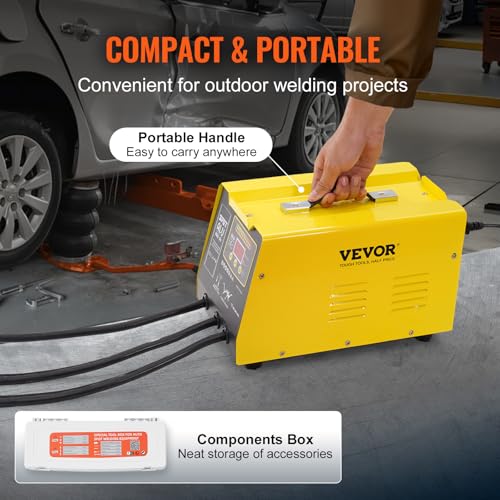
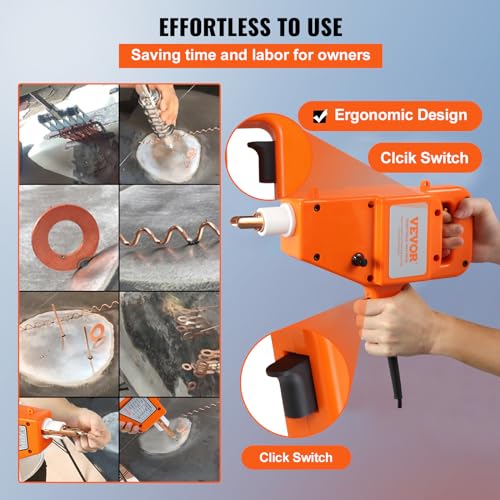
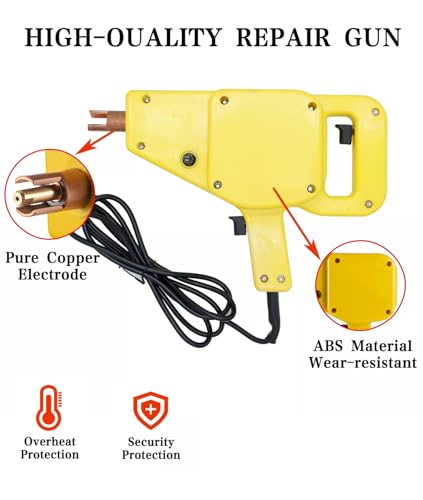
Lightweight and simple, this 800VA VEVOR kit is the easiest to maneuver in tight spaces or for quick fixes. Weighing less than the 1.8KW model, it’s ideal for users who value portability and one-handed operation. The touch-switch trigger makes welding studs intuitive, and the vinyl-coated handle ensures a solid grip even when pulling stubborn dents.
It shares core features with other VEVOR units, thermal protection, ABS housing, pure copper electrodes, but lacks advanced modes or high current output. Owners report it works well for small dings and minor dents but struggles on thicker metal. Compared to the Flieeya 800VA, it’s simpler but better organized, with a neat toolbox layout.
Product photos

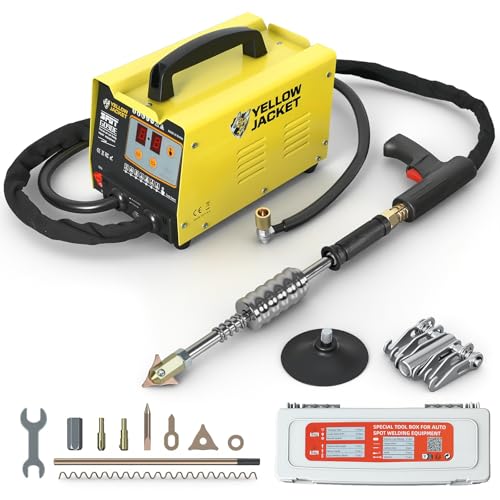
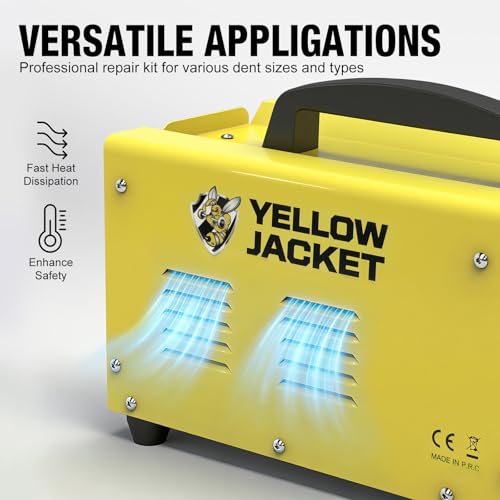
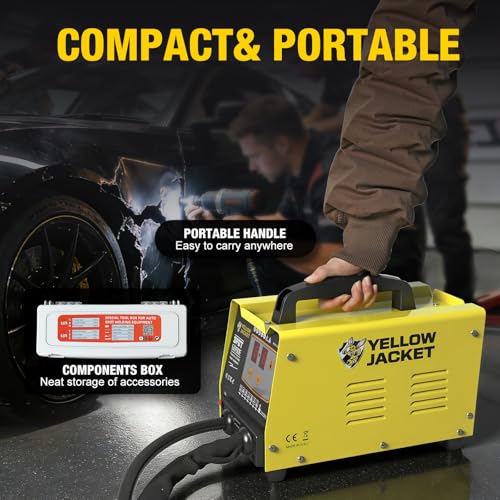
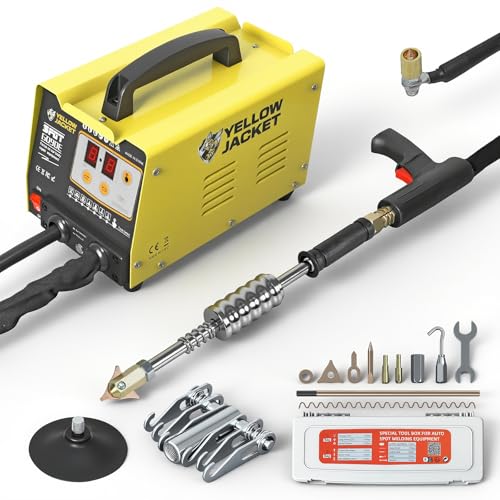
YELLOW JACKET 3KW Spot Welder Dent Puller
Strengths
- Strong 3KW output
- Paint-safe welding
- Full accessory kit
Trade-offs
- No cart included
- Single gun only
- No dual-voltage option
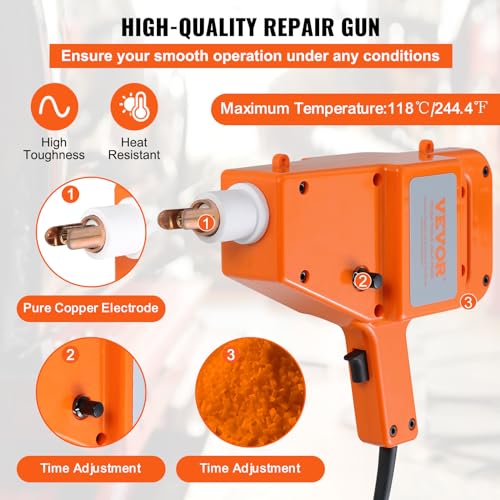
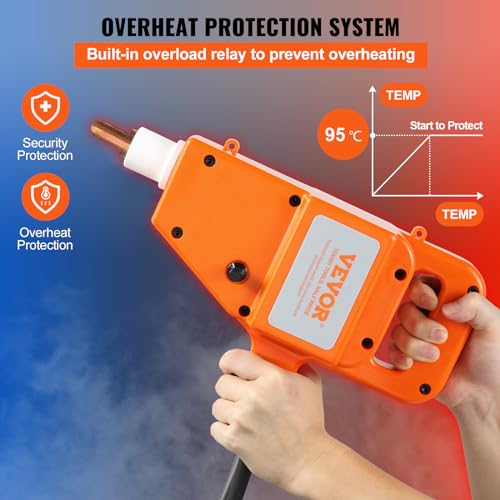
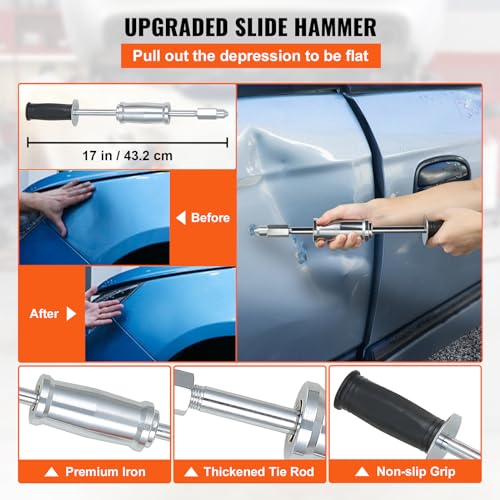
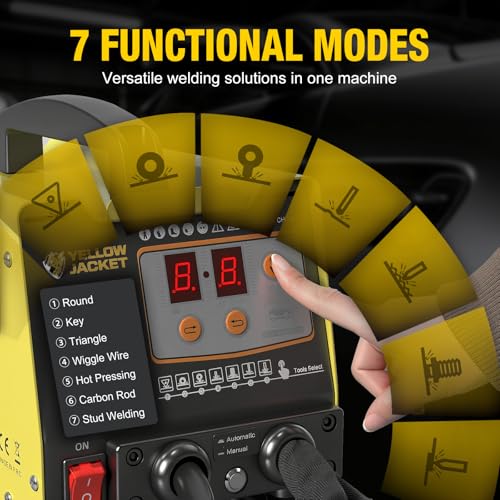
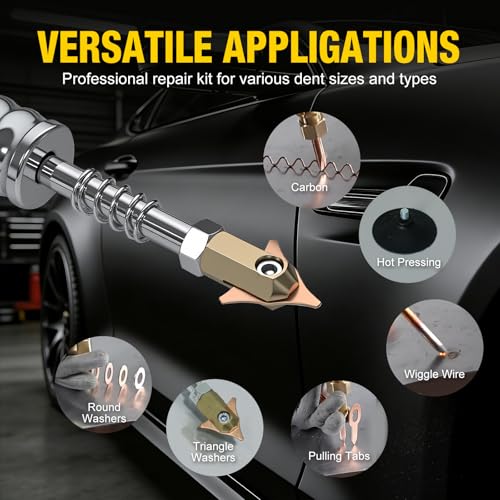
For budget-conscious buyers who still want pro-level results, this YELLOW JACKET model delivers. It matches the VEVOR 3KW unit in power (3000W) but strips away some of the extras to hit a lower price point. What it keeps, the 7 welding modes, auto/manual switching, and single-sided welding, is what most users actually need.
The standout here is paint preservation. Because it creates compact, high-strength welds, it minimizes damage to the backside coating and surrounding paint, something owners highlight when working on newer vehicles. It doesn’t come with a cart or dual guns, but for solo operators, that’s often overkill. When compared to the 1.8KW VEVOR, it’s more powerful and better suited for frequent use.
Product photos
Flieeya 800VA Stud Welder & Slide Hammer

Strengths
- Multi-point dent focus
- Includes slide hammer
- Wavy line repair mode
Trade-offs
- Lower power rating
- No preset modes
- Basic interface
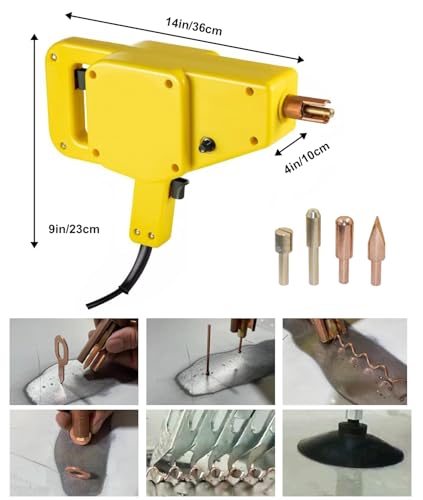
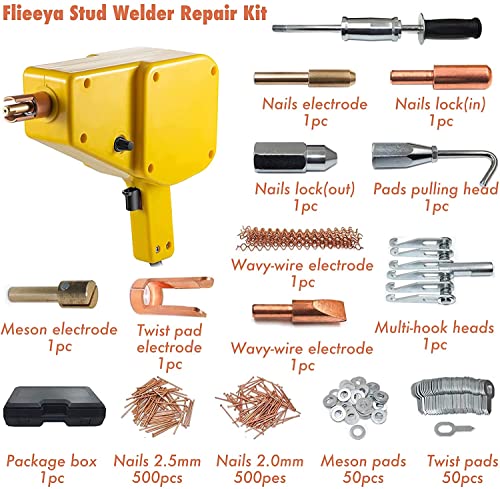
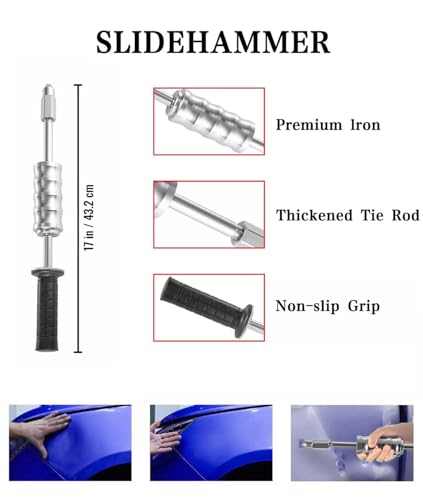
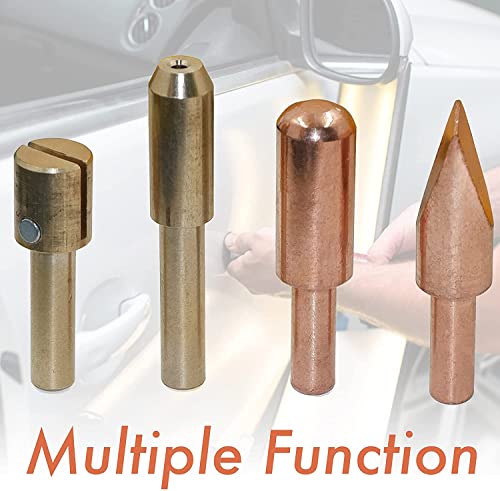
This Flieeya unit is built for one thing: handling complex, multi-point dents efficiently. With a max current of 1600A and a slide hammer included, it’s designed to tackle clustered or wavy dents where multiple studs are needed across a damaged area. The wavy line function is a niche but useful feature for restoring contoured panels without over-pulling.
It’s not the most powerful, but it’s well-built with a cast iron slide hammer and quick-release chuck that owners say holds pins securely. The thermal protection kicks in at 95°C, which is earlier than others but helps prevent overheating during extended use. Compared to the VEVOR 800VA model, it offers similar specs but with more emphasis on multi-point repair functions.
Product photos
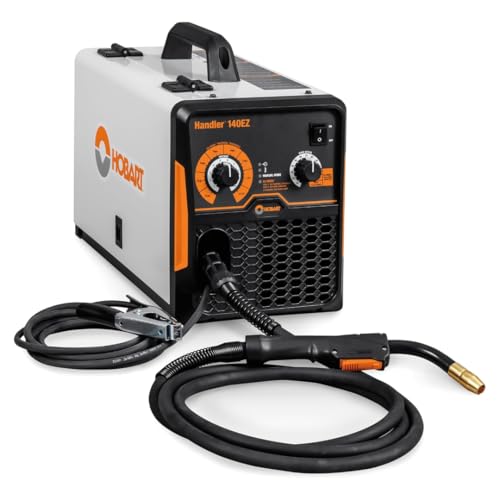
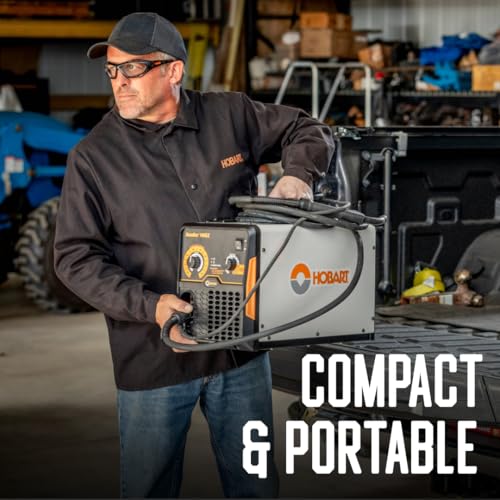
Hobart Handler 140EZ MIG Welder
Strengths
- True MIG/flux-core capability
- Aluminum-ready with spool gun
- 5-year warranty
Trade-offs
- Not a dent puller
- Requires gas for MIG
- More complex setup
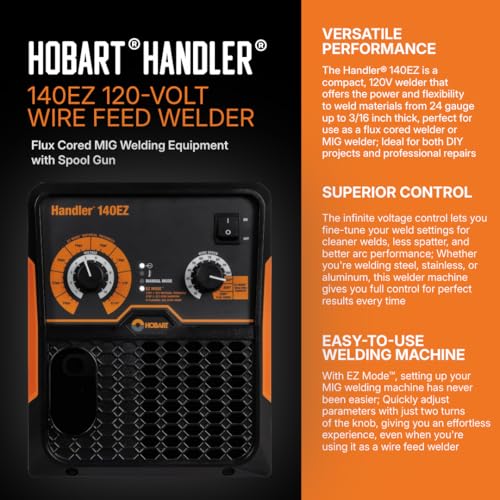
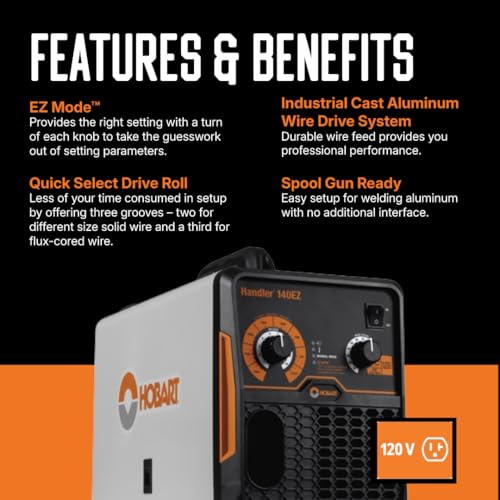
If you’re not just pulling dents but actually welding full panel sections, the Hobart Handler 140EZ is in a different class. This isn’t a stud welder, it’s a true MIG and flux-core wire feed welder with a spool gun for aluminum, giving you the versatility to handle full-frame repairs, patch panels, or custom fabrication.
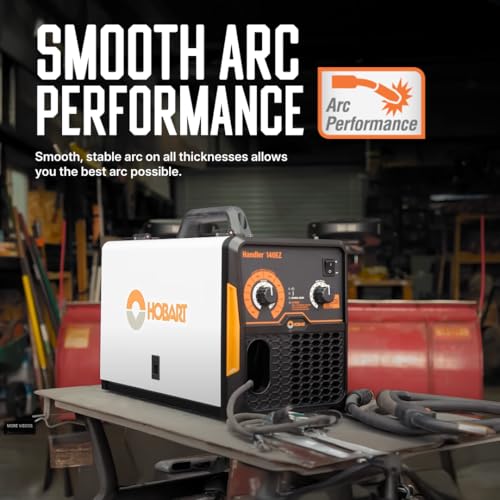
With an amp range of 30–140A, it handles everything from thin sheet metal up to 3/16-inch steel, which covers nearly all auto body needs. The infinite voltage control is a big deal, it lets you dial in clean arcs with minimal spatter, something beginners and pros both appreciate. While it’s not a dent puller, its ability to make permanent welds makes it the smarter choice if you’re doing structural or cosmetic welding beyond stud-based repairs.
Product photos

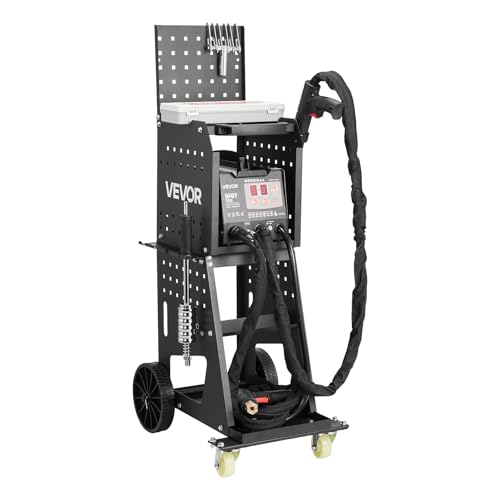
VEVOR 3KW Stud Welder with Dual Guns
Strengths
- 3500A peak output
- Dual welding guns
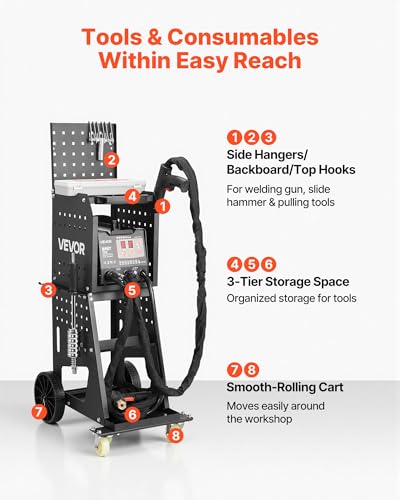
- Includes mobile cart
Trade-offs
- Bulky for small spaces
- Higher learning curve
- Pricier than entry models
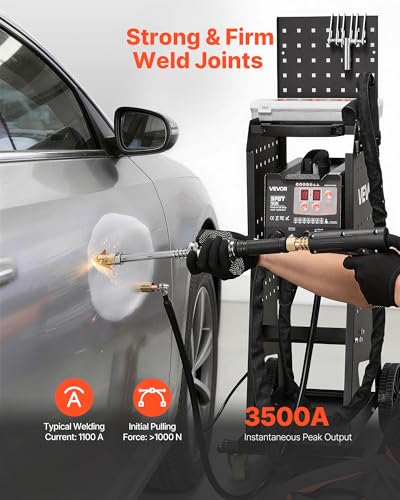
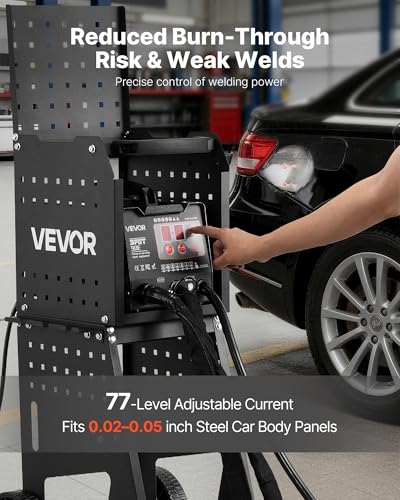
At 3KW and 3500A peak output, this is the most robust option in the lineup, and it shows. The dual welding guns alone make it a productivity booster, letting you weld multiple studs without switching tools. Paired with 77-level current adjustment, it gives experienced users fine control over weld strength, which matters when working on thicker steel or curved panels where burn-through is a risk.
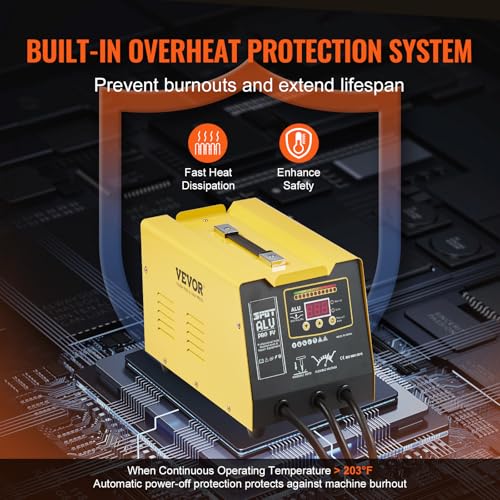
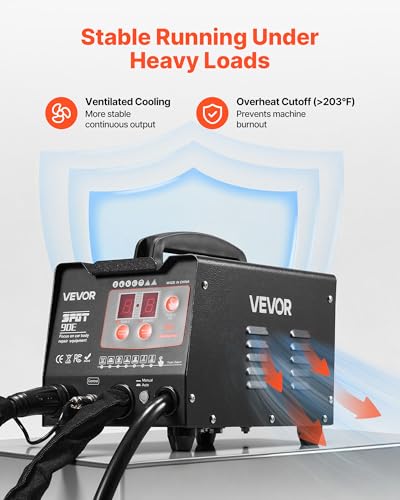
The included welding cart isn’t just a bonus, it transforms how you work. Tools stay organized, mobility improves, and the setup feels professional-grade. Reviewers note the split structure helps with heat dissipation, and the auto-shutdown at 203℉ adds peace of mind during long sessions. Compared to the YELLOW JACKET 3KW model, this one offers more features and better workflow integration.
Product photos
How We Picked These welder for body works
Rather than a hands-on lab test, my research for these recommendations was a detailed comparison of published specifications and features across numerous models. I weighed owner reviews from a variety of sources, alongside expert opinions from automotive repair publications and welding forums. My goal was to rank these welders against criteria important for bodywork, drawing on 15+ years of experience with power tools and automotive projects.
For dent repair, consistent weld strength and control are paramount, followed closely by ease of use – especially for DIYers. A welder’s ability to handle thinner gauge metal without burn-through is also critical. These factors directly influence the quality of the repair, the time it takes to complete, and the potential for damaging the vehicle’s finish. I also considered portability and included accessories, knowing many repairs happen outside of a shop.
Specifications provide a solid foundation for comparing power output, input voltage, and duty cycle. However, owner feedback provided crucial insight into real-world performance and durability. I paid particular attention to comments regarding ease of operation, the frequency of weld pop-offs, and the quality of included accessories. For more involved metalwork, consider a multi-process welder auto body capable of both stud welding and other techniques.
What To Look For In welder for body works
Choosing the right welder for body work can be tricky. There are a lot of options out there, and the “best” one really depends on the type of repairs you’ll be doing most often.
A quality welder for auto body repair prioritizes precise heat control to avoid warping thin metal. Look for models offering adjustable settings, robust safety features like thermal overload protection, and compatibility with the materials you’ll be working with (steel, aluminum, etc.). Consider the power source (120V vs. 240V) based on your shop’s electrical setup and the thickness of the metal you commonly repair.
Understanding Welding Methods
The first thing to consider is the welding method itself. While a traditional stick welder can be used for body work, it’s generally not the best choice. The heat input is often too high, leading to warping and distortion of the metal. Spot welders and MIG welders are far more common. Spot welding, using a stud welder, is excellent for pulling dents. However, for actual metal fabrication – patching panels, creating reinforcements – a MIG welder is usually preferable. If you’re planning on more than just dent repair, investigating a MIG welder for bodywork is a good idea.
Power and Material Compatibility
The thickness of the metal you’ll be working with dictates the power needed from your welder. Thin sheet metal, typical of car bodies, doesn’t require massive amperage. In fact, too much power will burn right through it. Look for welders with adjustable voltage and wire feed speed (for MIG) to fine-tune the process. Equally important is material compatibility. Steel is the most common, but many modern vehicles use high-strength steel and aluminum. A welder capable of handling aluminum will significantly expand your repair options.
- For very minor dents and pulls, a lower-power (under 800VA) stud welder can be sufficient.
- For more substantial dent pulling and occasional patching, a 1.8–3KW stud welder offers a good balance of power and portability.
- If you anticipate frequent, extensive repairs – especially full panel replacement or building custom parts – a best MIG welder auto body is the long-term investment.
Don’t overestimate the power you need. Lower amperage, carefully controlled, will always produce better results on thin sheet metal than blasting it with too much heat.
Portability and Accessories
Body work often happens in less-than-ideal spaces. A bulky, heavy welder can be a real hindrance, especially if you’re mobile. Consider the weight and size of the unit. Many models come with wheels or are designed to be easily transported. Don’t overlook the included accessories. A good kit will include a variety of welding studs (for stud welders), welding wire (for MIG), a regulator, a welding mask, and potentially even a chipping hammer and wire brush. These accessories add value and save you the hassle of purchasing them separately. A welder dedicated to welder for sheet metal repair will likely need more extensive accessories than a simple dent puller.
Welder for Body Works Compared
This table provides a specification comparison of various welders suitable for body work applications.
| Product Name | Power (Watts) | Welding Type | Material Suitability | Voltage (V) | Key Features |
|---|---|---|---|---|---|
| VEVOR 1.8KW Stud Welder Dent Kit | 1800 | Stud | Steel | N/A | Dual Modes, Thorough Kit |
| VEVOR 300W Stud Welder for Aluminum | 300 | Stud | Aluminum | N/A | Capacitor Discharge, Heat Repair |
| VEVOR 800VA Stud Welder Kit | 800 | Stud | Steel | N/A | Durable, Thermal Protection |
| YELLOW JACKET 3KW Spot Welder Dent Puller | 3000 | Spot | Steel | N/A | Paint Preservation, Auto/Manual |
| Flieeya 800VA Stud Welder & Slide Hammer | 800 | Stud | Steel | 110 | Multi-Point Dent Repair, Safety |
| Hobart Handler 140EZ MIG Welder | N/A | MIG/Flux | Steel, Stainless, Al | 120 | Versatile, Easy-to-Use |
| VEVOR 3KW Stud Welder with Dual Guns | 3000 | Stud | Steel | N/A | Dual Guns, High Output |
Frequently Asked Questions
What amperage is sufficient for most auto body welding?
Generally, 120-175 amps is enough for most auto body work on typical steel thicknesses. Going much higher risks burn-through, while lower amperage struggles with thicker or high-strength steel.
Can I use a standard stick welder for dent pulling?
While technically possible, a standard stick welder isn’t ideal for dent pulling. The wider heat input often causes more distortion than a dedicated stud welder or a properly dialed-in MIG welder.
What’s the difference between spot welding and MIG welding for auto body repair?
Spot welding, using a stud welder, excels at pulling dents without extensive metal prep. MIG welding is best for patching holes, reinforcing panels, or full panel replacement, offering more versatility in fabrication.
What voltage input should I look for in a welder for my shop?
Most home shops are equipped for 120V operation, which limits you to lower-power welders suitable for thinner metal. A 240V circuit unlocks more powerful machines capable of handling thicker materials and sustained welding.
Are there welders specifically designed for aluminum auto body parts?
Yes, some welders, like the VEVOR 300W Stud Welder for Aluminum, are designed for aluminum. Welding aluminum requires a different technique and often a spool gun to prevent the wire from binding, so a welder for automotive bodywork capable of aluminum is a valuable investment if you work on newer vehicles.
The Bottom Line
Choosing a welder for body work often comes down to balancing control with convenience. While a higher-end, more versatile machine like the Hobart Handler 140EZ MIG Welder offers the broadest capabilities, the VEVOR 1.8KW Stud Welder Dent Kit strikes an excellent balance for most DIYers focusing on dent repair and panel patching. It provides enough power for common tasks without the complexity – and cost – of a full-featured MIG setup.
For those primarily tackling dent pulling, the VEVOR 3KW Stud Welder with Dual Guns is a standout. And if you’re working with aluminum, the VEVOR 300W Stud Welder for Aluminum delivers focused power for those specific repairs. But remember, even the best welder for thin sheet metal won’t compensate for a lack of skill or preparation.
Ultimately, the most important factors aren’t peak amperage or fancy features. A consistent arc, precise heat control, and a solid understanding of the material you’re working with will always deliver better, more lasting results than chasing the highest specifications. Don’t overlook the value of practice, proper safety gear, and taking the time to learn the fundamentals of welding technique.
