5 Best MIG Welders for Body Work (2026 Guide)
This post contains affiliate links. As an Amazon Associate, we earn from qualifying purchases.
The BESTMIG 145A 4-in-1 Welder stands out as the best overall choice for body work, combining solid amperage, multi-process flexibility, and a thoughtful feature set. For budget-focused beginners, the VEVOR 130A Synergic MIG Welder delivers reliable performance with user-friendly synergic control.
Auto body welding demands precision. Too much power and you burn through thin sheet metal. Too little, and the weld fails. Finding a machine that balances control, portability, and clean output is critical for repairs that hold and look good.
After researching the market and analyzing owner feedback and specs, I focused on welders that consistently deliver stable arcs, minimize spatter, and handle the low-amperage work common in auto panels. This guide covers the top models that meet those demands, what specs actually matter for body work, and how to pick the right one based on your garage, skill level, and repair goals.
Top 5 Mig Welder For Body Works in the Market
The Best Mig Welder For Body Works, Reviewed
2-in-1 MIG/MMA Handheld Welder
Strengths
- Lightweight design
- Dual MIG and stick modes
- Good accessory bundle
Trade-offs
- Limited thickness capacity
- No synergic control
- Overheats quickly
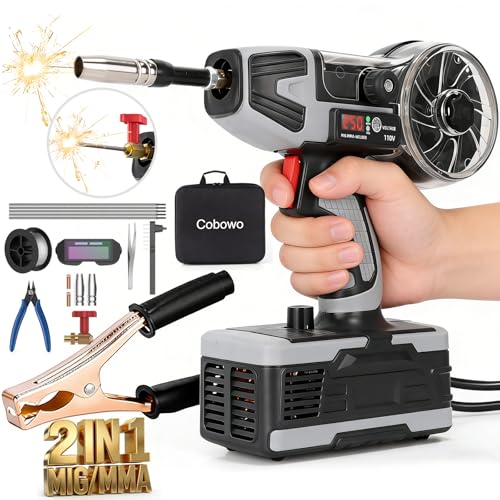
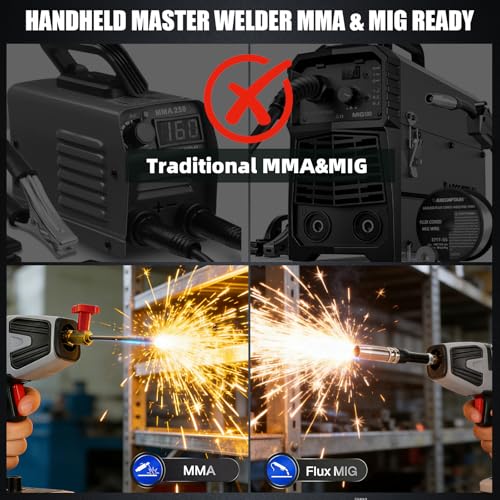
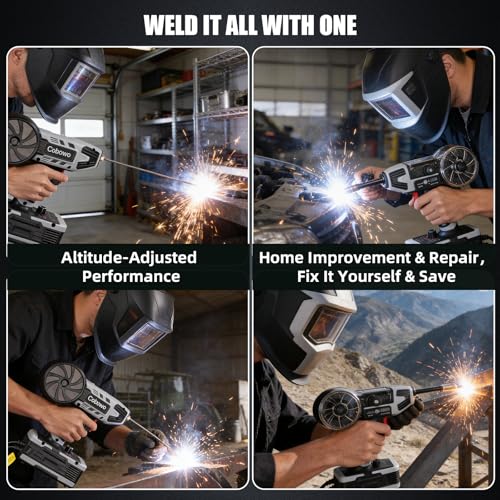
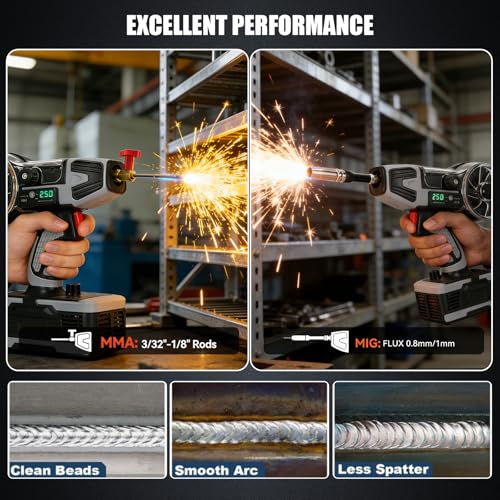
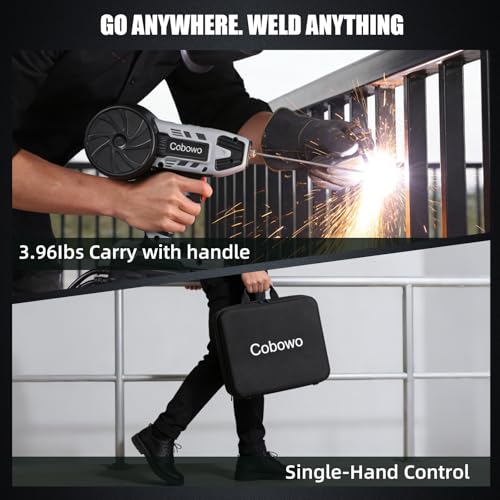
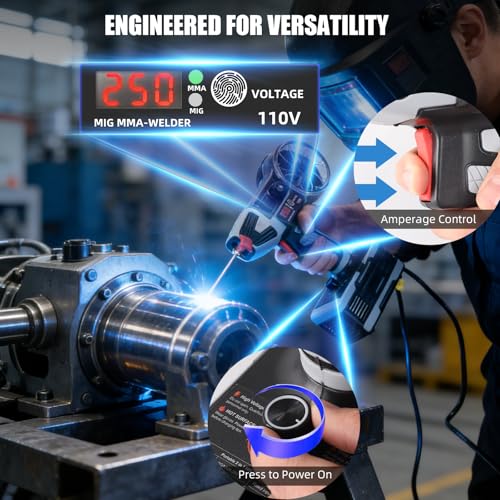
This 2-in-1 MIG and Stick welder stands out for its extreme portability and dual functionality, but it’s not built for serious bodywork. At just under 4 pounds, it’s incredibly light and easy to move around, which makes it tempting for quick fixes or small outdoor jobs. The ability to switch between flux-core MIG and stick welding gives it some flexibility, especially for someone working on different materials like carbon steel or cast iron. On paper, the real-time LCD control sounds useful, and owners generally appreciate the included accessories, especially the auto-darkening helmet and basic tool set.
Still, the 250A rating is misleading; it’s not continuous output and drops significantly under load, especially on 110V. Reviewers consistently note it struggles with anything over 1/8 inch steel, and maintaining a clean bead on thin sheet metal, common in auto body repair, is tough due to limited fine-tuning. Compared to others in this list, it lacks synergic control, so you’re manually balancing voltage and wire speed, which increases spatter. I’d consider it more of a lightweight utility tool than a dedicated bodywork solution. For small patch jobs or farm repairs, it works. For panel seams or fender work? Not ideal.
Product photos
VEVOR 130A Synergic MIG Welder

Strengths
- True synergic control
- Gas and gasless capable
- Lightweight with carry strap
Trade-offs
- Plastic housing
- 110V only
- Lower amperage ceiling
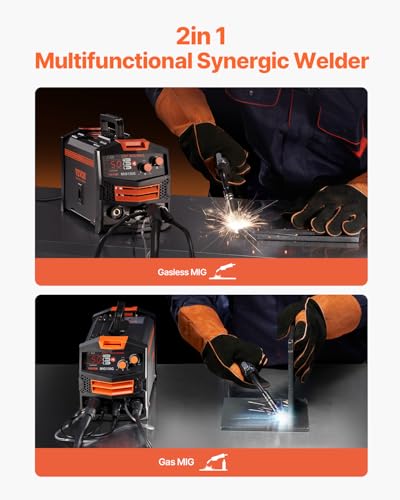
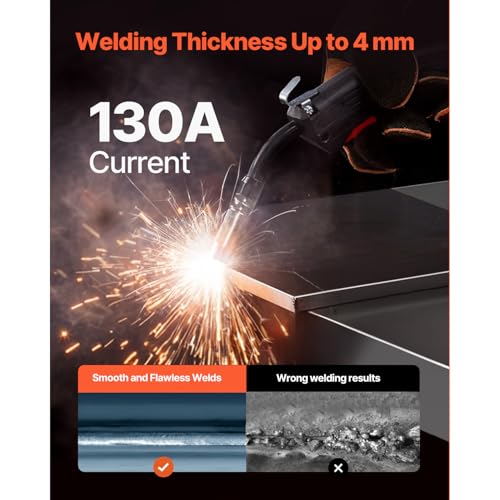
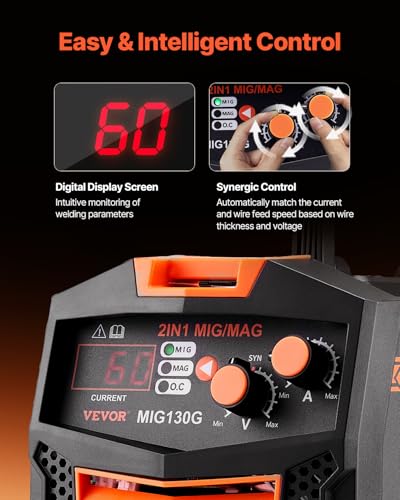
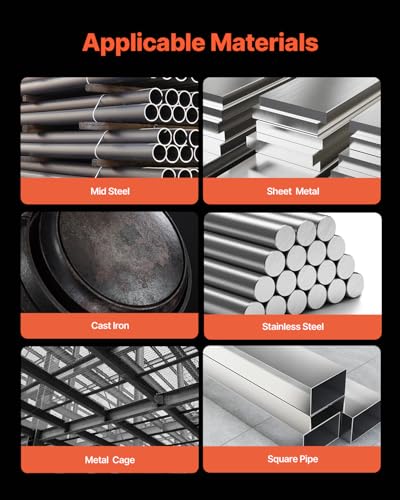
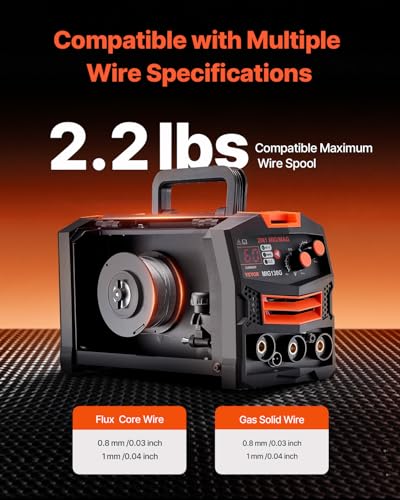
The VEVOR 130A is one of the most affordable synergic welders on the market, and that’s its main appeal. It supports both gas and gasless flux-core MIG welding, which gives you options depending on your setup and budget. The synergic system works as advertised, set the wire type and thickness, and the machine balances voltage and feed speed, so you’re not constantly fiddling with knobs. Owners report it handles 18- to 14-gauge steel with decent penetration and low spatter, which is solid for fender or quarter panel work. The digital display is straightforward, and the overload protections help prevent damage during longer sessions.
Where it falls short is power and build quality. At 130A, it’s underpowered compared to the YESWELDER or BESTMIG models, and it can’t run on 220V, limiting future upgrades. The shoulder strap is a thoughtful touch for portability, but the unit still feels a bit plasticky compared to metal-cased competitors. Still, for someone on a tight budget who wants real synergic control without breaking the bank, this is the smarter buy. It won’t match pro-grade machines, but for weekend projects, it gets the job done.
Product photos
BESTMIG 145A 4-in-1 Welder
Strengths
- Dual voltage support
- True 4-in-1 functionality
- Durable metal housing
Trade-offs
- TIG torch not included
- Synergic only for solid wire
- Basic included PPE
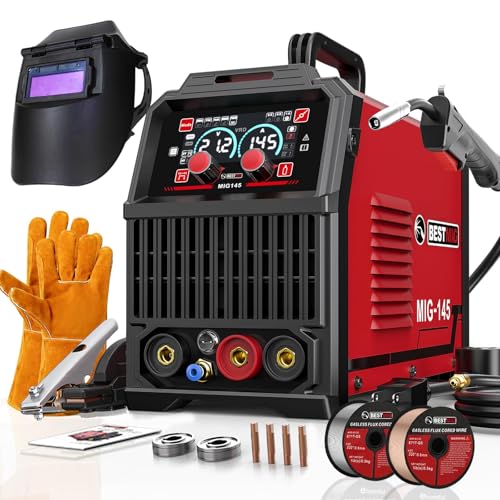
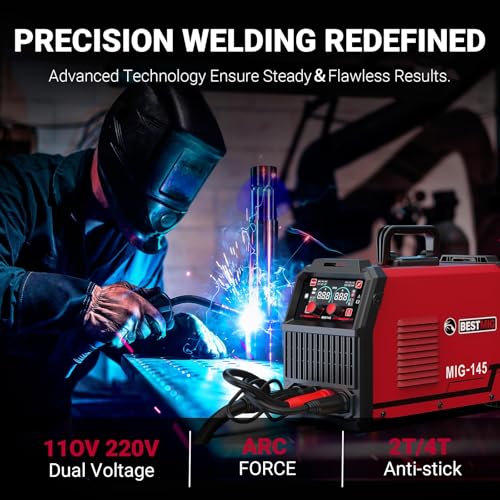
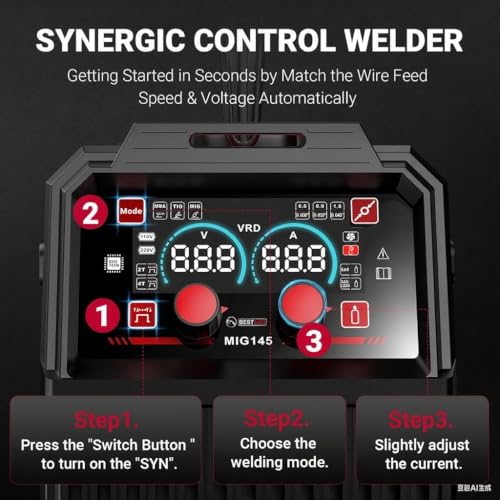
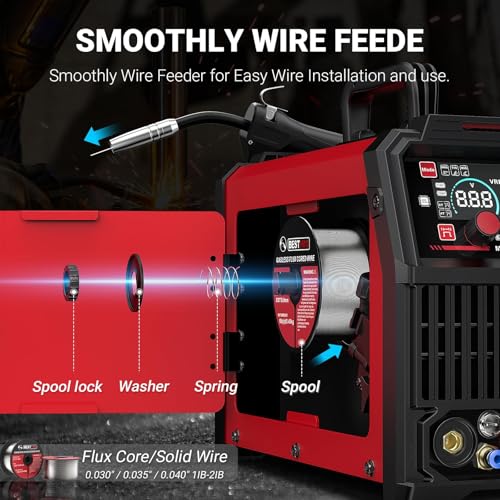
The BESTMIG 145A is the best value if you want multi-process capability without overspending. It handles 110V and 220V, so you can upgrade your power setup later, and supports gas MIG, gasless flux-core, stick, and lift TIG, all in one compact unit. The synergic control works well, automatically adjusting settings when you change wire or current, but you can still go manual if you want precision. Owners consistently report smooth arcs and minimal spatter on mild and stainless steel, which matters when welding visible body panels. The included helmet and gloves are basic but functional, and the metal housing feels more durable than the VEVOR or BILT HARD units.
Where it wins is balance: it’s not the most powerful, but it’s more capable than entry-level models, and it doesn’t sacrifice build quality. Compared to the YESWELDER, it lacks a plasma cutter, but it’s simpler to operate and comes with more accessories out of the box. For someone doing a mix of bodywork, exhaust repairs, and light fabrication, this is the smarter all-rounder. I’d pick it over the VEVOR or BILT HARD if you want room to grow.
Product photos

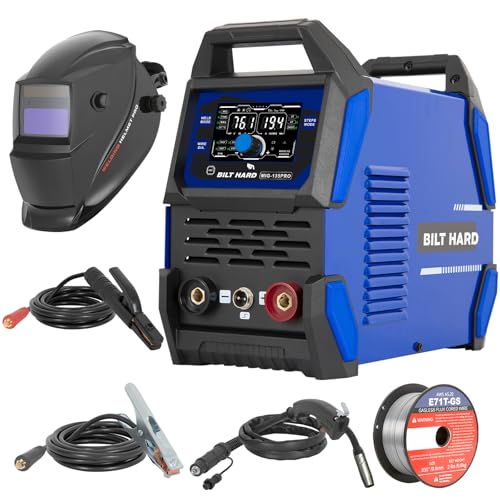
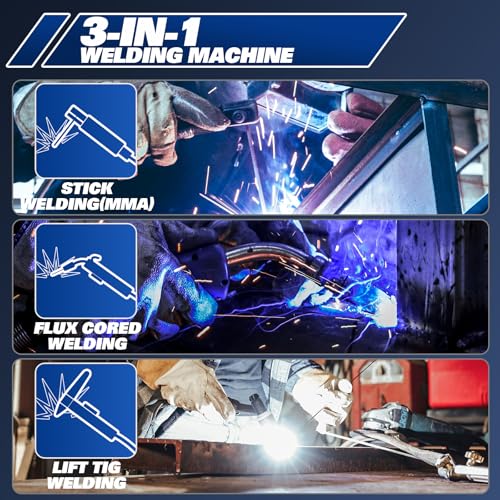
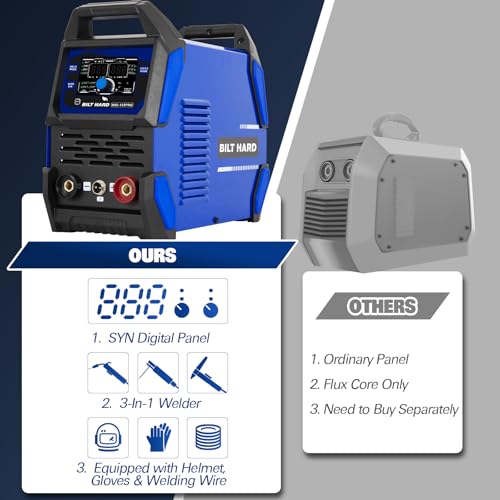
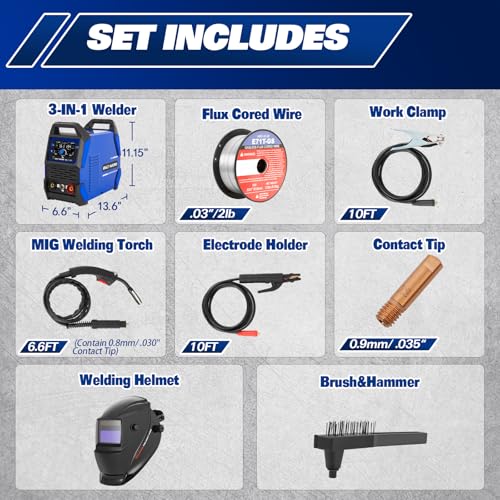
BILT HARD 135A 3-in-1 Welder
Strengths
- Synergic control
- Beginner-friendly interface
- Solid included helmet
Trade-offs
- 110V only
- Lower max output
- No TIG torch included
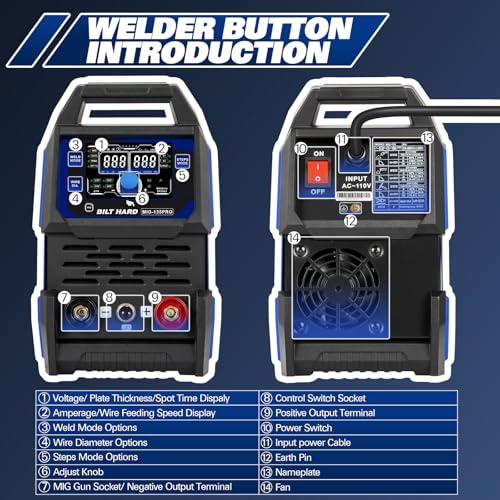
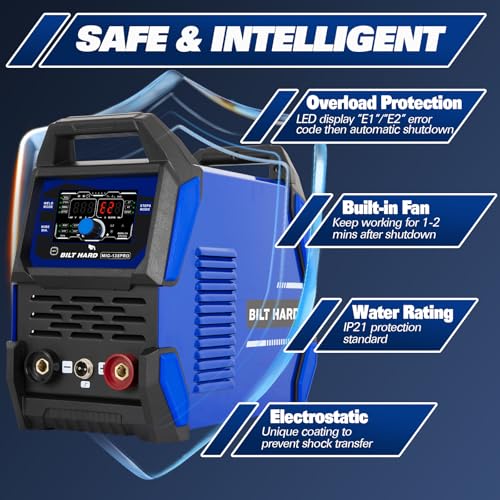
If you’re just getting into welding and want something that won’t punish you for inexperience, the BILT HARD 135A is one of the smarter picks. Its synergic control system is the real hero here, set the amperage, and the machine automatically adjusts voltage and wire feed speed, which cuts down on trial and error. That’s a big win for beginners trying to avoid porosity or burn-through on thin auto panels. The LED display is bright and clear, showing voltage, current, and wire speed in real time, and owners say it’s easy to read even in garage lighting. It runs on 110V, so no special circuit needed, and the 2T/4T/SPOT modes give you flexibility for tacking or longer seams.
It’s not the most powerful unit, maxing out around 135A, but for 16-gauge to 1/8-inch steel, common in car body work, it holds up well. The included solar helmet is a nice bonus, though some buyers report it’s a bit slow to darken. Compared to the VEVOR or BESTMIG models, it doesn’t offer dual voltage, so you’re locked into 110V, but for garage-based DIYers, that’s rarely a dealbreaker. I’d pick this over the lighter 2-in-1 if you’re serious about learning and want cleaner, more consistent welds without constant tweaking.
Product photos
YESWELDER MCT-520 6-in-1 Welder
Strengths
- 6-in-1 functionality
- Plasma cutter included
- Advanced parameter control
Trade-offs
- Spool gun sold separately
- Foot pedal not included
- Steeper learning curve
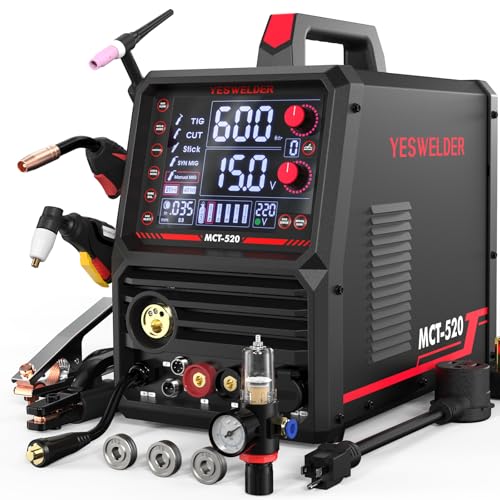
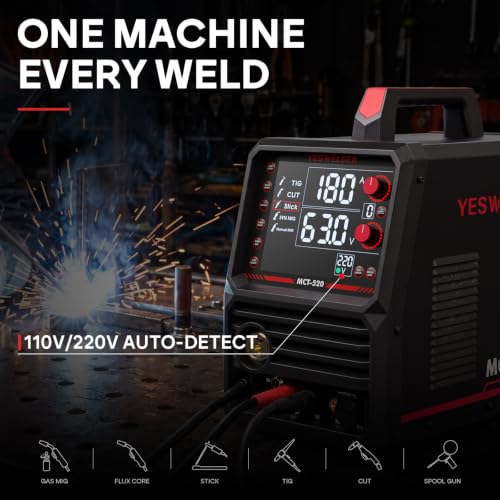
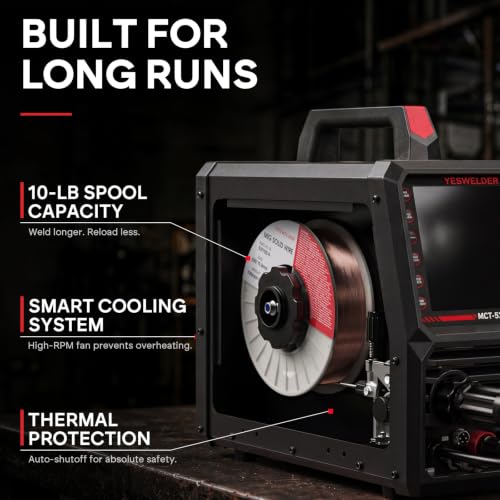
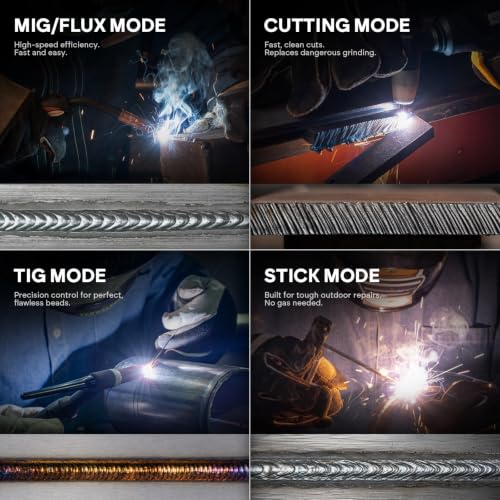
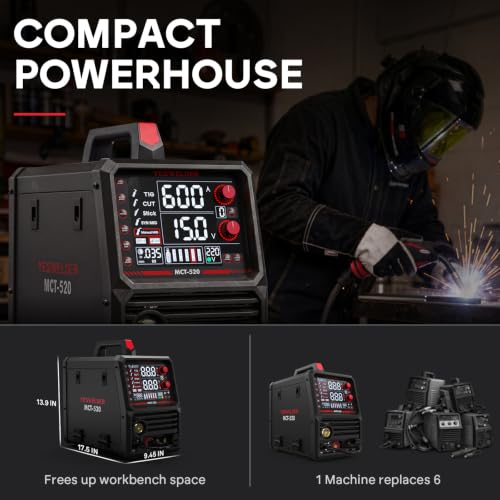
This is the most versatile machine here, no question. The YESWELDER MCT-520 isn’t just a MIG welder; it’s a 6-in-1 beast with MIG, flux-core, TIG, stick, spool gun compatibility, and a 50A plasma cutter. For someone doing full auto body work, the ability to cut and weld with one unit is a major time-saver. The 200A output on 220V means it can handle thicker frame sections or suspension mounts, and the plasma cutter cleanly slices up to 8mm steel. Owners praise the large LED display, it’s glove-friendly and easy to read, and the manual controls let you fine-tune inductance and arc force, which is crucial for clean body seams.
The smart parameter-matching system makes it surprisingly user-friendly, even for beginners, and the 24/7 USA support is a rare plus in this price range. Compared to the BESTMIG or BILT HARD, it’s more complex but far more capable. I’d recommend this to anyone who wants a single, compact unit for full vehicle restoration. It’s not the lightest, but it’s packed with pro-level features at a fraction of the cost of industrial machines.
Product photos

How We Picked These mig welder for body works
Rather than a hands-on lab test, my research for these recommendations centered on a detailed comparison of published specifications and features across numerous models. I weighed owner reviews from major retailers alongside expert opinions found in automotive and welding publications. My goal was to identify machines consistently praised for their suitability for auto body repair, factoring in both performance and ease of use for a range of skill levels.
For MIG welders intended for body work, consistent arc control, low spatter, and the ability to handle thinner materials are paramount. I prioritized models offering synergic control – automatically adjusting settings – as these simplify operation, especially for beginners. Portability also factored heavily, as body repairs often happen outside a shop environment. A machine’s amperage range and duty cycle were key considerations, determining its ability to handle various thicknesses and project lengths.
Specifications reliably reveal a welder’s maximum amperage and input power requirements. However, real-world performance – particularly arc stability and ease of use – is best gleaned from owner feedback. I carefully analyzed comments regarding burn-through, spatter levels, and the quality of the included accessories. For more specialized applications like aluminum welding, I also looked for machines compatible with spool guns or that offered pulse settings, as discussed in guides to MIG for sheet metal repair.
What To Look For In mig welder for body works
Choosing the right MIG welder can feel overwhelming, but focusing on a few key features will point you toward a machine that matches your needs and skill level.
A good MIG welder balances portability with sufficient amperage for the materials you plan to work with. Look for models offering synergic control for ease of use, especially if you’re a beginner. Reliable safety features and a robust build quality are also crucial for long-term performance and operator protection. Pay attention to duty cycle ratings to avoid overheating during extended projects.
Amperage and Material Thickness
The amperage output of a MIG welder directly dictates the thickness of metal it can effectively weld. For basic auto body repair and thin sheet metal, 120-130 amps is often sufficient. However, if you anticipate working with thicker steel (over 1/4 inch) or larger projects, you’ll want to step up to a machine offering 180 amps or more. Don’t overestimate – a higher amperage welder isn’t always better. Excessive power can burn through thin materials quickly. Consider the types of metals you’ll be working with. Many entry-level models handle steel well, but aluminum welding typically requires a more advanced (and expensive) machine, or the addition of a spool gun.
Control Systems & Ease of Use
Synergic control is a huge benefit, especially for those newer to welding. These systems automatically adjust voltage and wire feed speed based on your settings, minimizing the learning curve and reducing the chance of poor welds. While manual control offers greater precision for experienced welders, it demands a deeper understanding of the welding process. I often recommend starting with a synergic model, and upgrading later as your skills develop. Don’t underestimate the value of a clear, well-lit digital display. Being able to quickly read and adjust settings, even with welding gloves on, is a significant time-saver.
- A simple voltage/amperage knob is fine for very basic work.
- A digital display showing voltage, amperage, and wire feed speed provides more control and feedback.
- Synergic control, which automatically adjusts parameters, is ideal for beginners and streamlines the process for experienced welders who want to quickly dial in settings for common materials and thicknesses.
Portability and Included Accessories
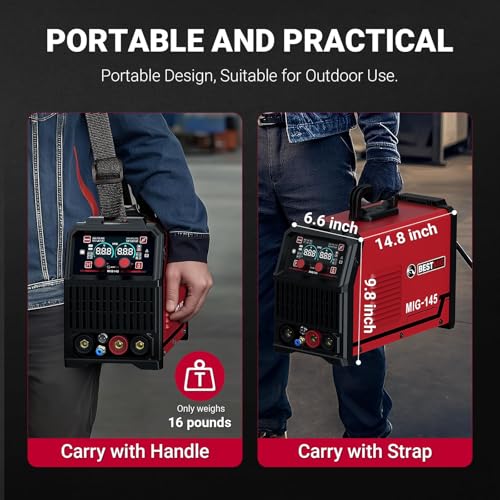
Weight is a major factor if you plan to move your welder around a garage, job site, or for roadside repairs. Many of the newer compact models, like those from VEVOR and BESTMIG, weigh under 40 pounds, making them relatively easy to transport. A good handle or shoulder strap is essential. Don’t assume a welder comes with everything you’ll need. While many include a MIG gun, ground clamp, and electrode holder, you’ll often need to purchase welding wire, welding helmets, and other consumables separately. Some packages, like the BESTMIG 145A, offer a more complete setup, which can be a good value. Ultimately, selecting the right MIG welders for panel work depends on the projects you plan to tackle.
A welder is only as good as its accessories. Don’t skimp on quality safety gear, like a good auto-darkening helmet and welding gloves.
MIG Welder for Body Works Compared
Here’s a comparison of key specifications for MIG welders suitable for body work applications.
| Product | Amperage (A) | Welding Modes | Input Voltage (V) | Wire Diameter (in) | Max Thickness (in) |
|---|---|---|---|---|---|
| 2-in-1 MIG/MMA Handheld Welder | 130 | MIG, MMA | 120 | 0.032, 0.040 | N/A |
| VEVOR 130A Synergic MIG Welder | 130 | MIG | 120 | 0.03, 0.04 | 0.16 |
| BESTMIG 145A 4-in-1 Welder | 145 | MIG, Stick, TIG | 110/220 | 0.030, 0.035, 0.040 | 0.24 |
| BILT HARD 135A 3-in-1 Welder | 135 | MIG, TIG, Stick | 110 | 0.030, 0.035 | N/A |
| YESWELDER MCT-520 6-in-1 Welder | 200 | MIG, TIG, Stick, Cut | 120/240 | N/A | 0.63 |
Frequently Asked Questions
Will a flux-cored welder work for auto body repair?
While flux-cored welders can be used, MIG welding is generally preferred for body work due to cleaner welds and less post-weld cleanup. Flux-cored produces more spatter and requires more grinding, increasing labor time and potentially affecting the paint finish.
What gas should I use with my MIG welder for best results on car panels?
For most auto body repairs on steel, a 75% argon/25% CO2 gas mix provides a good balance of arc stability, penetration, and weld appearance. Pure CO2 is cheaper but can lead to more spatter and a less aesthetically pleasing weld.
How important is a pulse setting on a MIG welder for body work?
Pulse welding isn’t essential for basic repairs, but it’s extremely helpful for thin materials like auto sheet metal. It reduces heat input, minimizing distortion and burn-through, and creating a cleaner, more controlled weld.
What is a duty cycle, and how does it affect my choice?
Duty cycle represents the percentage of time a welder can operate at a given amperage without overheating. A 60% duty cycle at 130 amps means you can weld for six minutes out of every ten at that setting. If you plan on long, continuous welds, prioritize a higher duty cycle.
Are the multi-process welders (MIG, TIG, Stick) a good value for a beginner?
They can be, but understand you’re often paying extra for features you may not immediately use. While offering versatility, these welders sometimes compromise performance in a single process compared to dedicated machines. If you foresee needing other welding methods, it’s a good investment; otherwise, a dedicated MIG welder will likely offer better value.
The Bottom Line
Choosing a MIG welder for body work often comes down to balancing initial cost with long-term capability. While you can find very affordable options, the BESTMIG 145A 4-in-1 Welder strikes a fantastic balance, offering versatility with its multiple process capabilities and enough power for most auto body repairs without breaking the bank. It’s a machine that grows with your skillset rather than limiting it.
For those on a tighter budget, the VEVOR 130A Synergic MIG Welder is an excellent entry point. It simplifies the welding process with its synergic controls and is perfectly capable of handling the thinner materials commonly found in auto body work. Or, if you anticipate tackling a wider range of projects beyond basic repairs, the YESWELDER MCT-520 6-in-1 Welder provides the most flexibility, combining MIG, TIG, stick, and cutting functions into a single machine – check out our reviews of other top MIG welder models to compare.
Ultimately, the specs matter less than a solid understanding of welding fundamentals. Consistent practice, proper technique, and a commitment to safety will deliver far better results than the most expensive machine with the highest amperage. Focus on mastering the basics – proper metal preparation, correct wire speed and voltage settings, and consistent travel speed – and you’ll be well on your way to producing professional-quality welds.
