7 Best Welders for Beginners 2026
This post contains affiliate links. As an Amazon Associate, we earn from qualifying purchases.
The ARCCAPTAIN 160A MIG Welder is the best overall choice for beginners thanks to its versatility and smooth performance, while the GNI Super MINI Welder stands out as a top budget-friendly and ultra-portable option for light-duty work.
Most new welders struggle with gear that’s either too complicated or too limited. You don’t need a pro rig, but you do need something reliable, simple to set up, and capable enough to grow with you.
After comparing the field and reviewing owner feedback, I focused on models that balance ease of use, solid build quality, and real-world usability. This guide breaks down the key factors, like welding process, amperage control, and portability, so you can pick the right machine without getting lost in the noise.
Top 7 Type Of Welder For Beginners in the Market
The Best Type Of Welder For Beginners, Reviewed
ARCCAPTAIN 160A MIG Welder
Strengths
- 4-in-1 flexibility
- Synergic control
- Dual voltage
Trade-offs
- TIG torch not included
- No gas regulator
- Slight learning curve
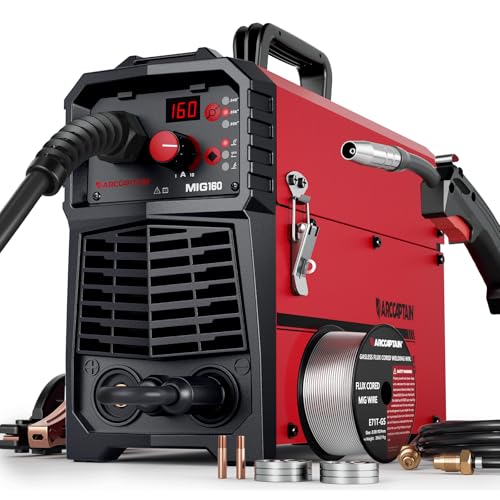
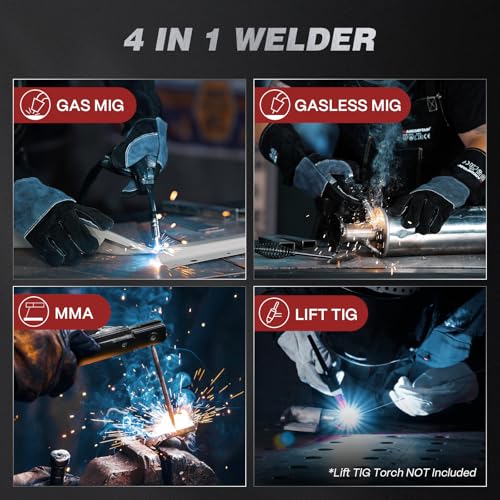
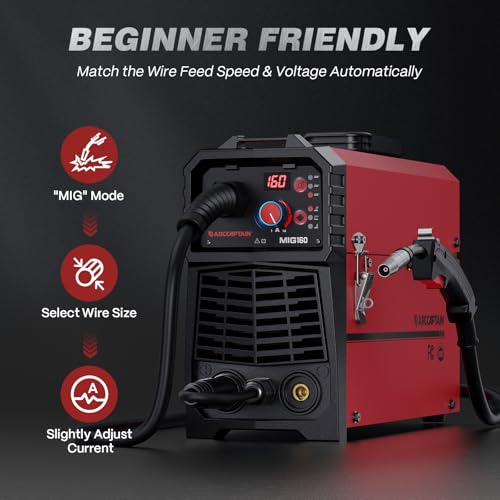
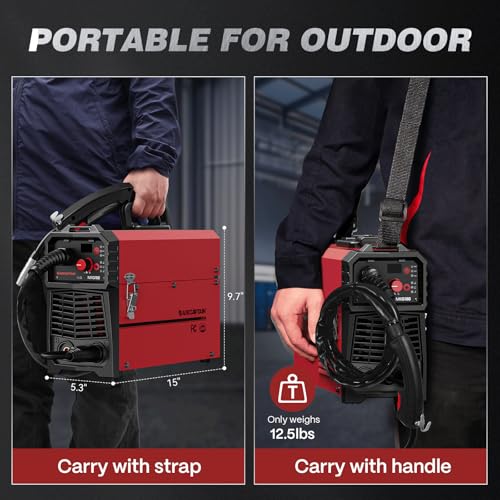
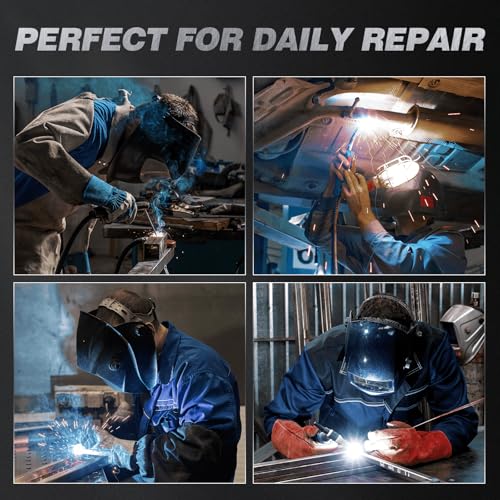
This ARCCAPTAIN is the most versatile beginner-friendly welder in the group. With 4-in-1 capability, gas MIG, flux-core, lift TIG, and stick, it’s the closest thing to a full-featured training platform. The synergic control is a standout: pick your wire size, and the machine sets voltage and feed speed automatically. That’s a real confidence booster when you’re still learning what settings work.
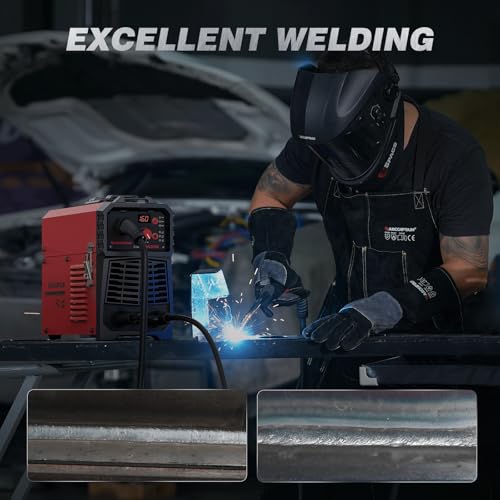
It runs on 110V or 220V, weighs under 12 pounds, and has solid safety protections. Owners consistently report smooth welds on car panels and farm equipment, with low spatter and easy restarts. Compared to the PANERGYRIC, it offers the same core features but with a slightly more intuitive interface and better build quality in user tests. The only catch? The lift TIG torch is sold separately. But for someone serious about learning, this is the smarter buy.
Product photos
Saker Handheld Welder Gun
Strengths
- Beginner-friendly dial
- Full starter kit
- Lightweight
Trade-offs
- Low max amperage
- Short duty cycle
- No advanced modes
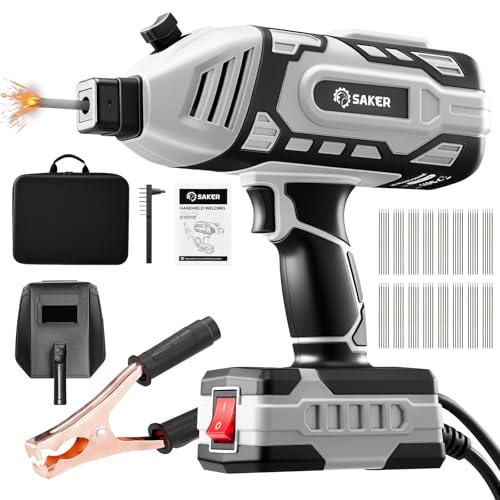
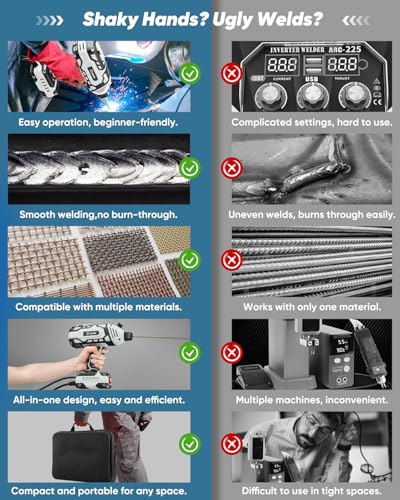
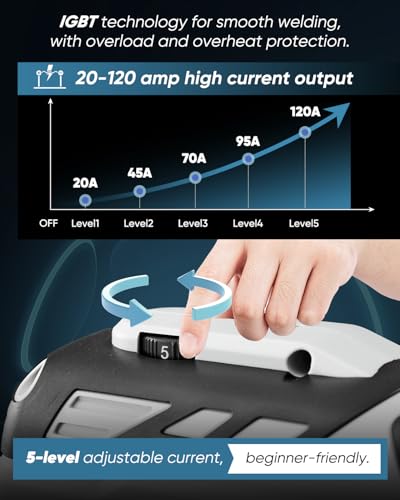
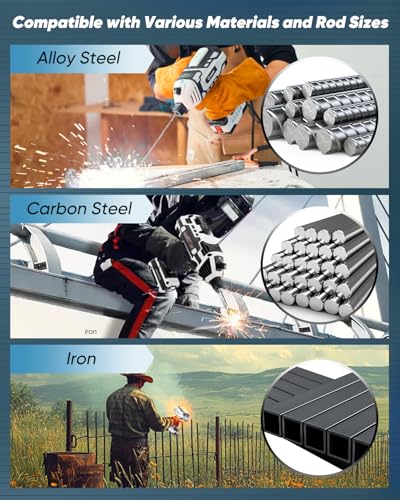
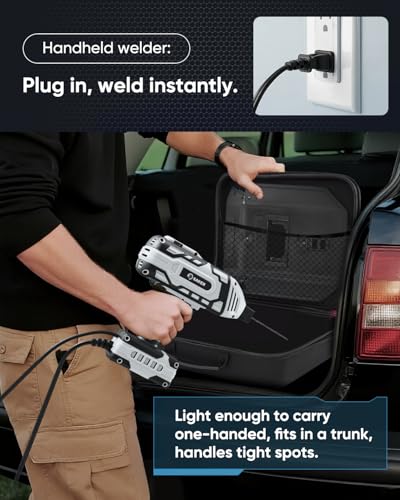
This Saker handheld welder is built like a plug-and-play tool for total newcomers. At 1.7kg and with only five current settings, it’s designed to take the guesswork out of amperage selection. The 5-level adjustment is a smart feature, beginners can match material thickness without diving into fine-tuned dials. Real-world feedback shows it handles thin metal well, with less burn-through than expected at this price. But that max 120A output means it struggles on anything over 1/8-inch steel.
Where it shines is the complete starter kit, 80 rods, helmet, brush, and case. That’s rare at this level. The IGBT inverter keeps the arc stable, and owners say it restarts cleanly after overheating. Still, it’s a basic stick machine with no TIG or MIG option. If you’re on a tight budget and want everything in one box, this beats buying parts separately. But don’t expect deep penetration or all-day runtime.
Product photos
Sakerplus Handheld Welder Kit
Strengths
- Complete safety gear
- Low-spatter arc
- Ergonomic design
Trade-offs
- 120A limit
- No TIG option
- Case quality could be better
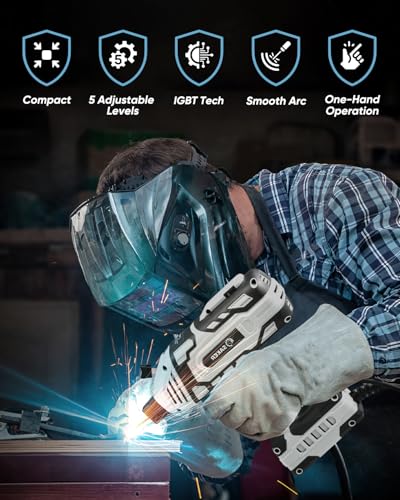
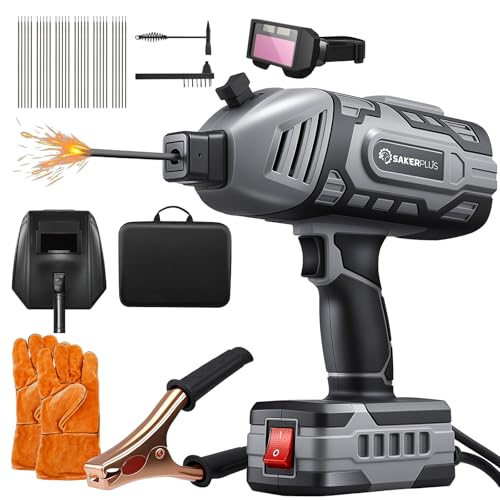
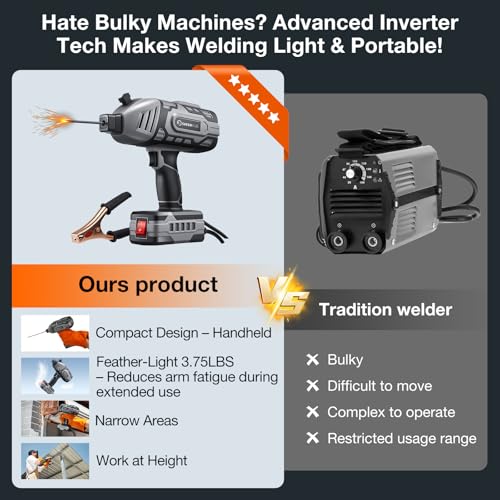
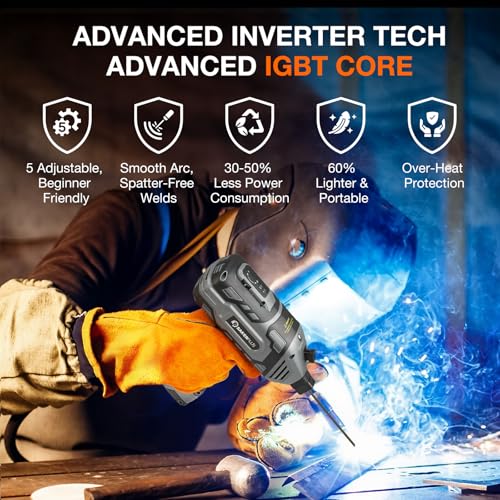
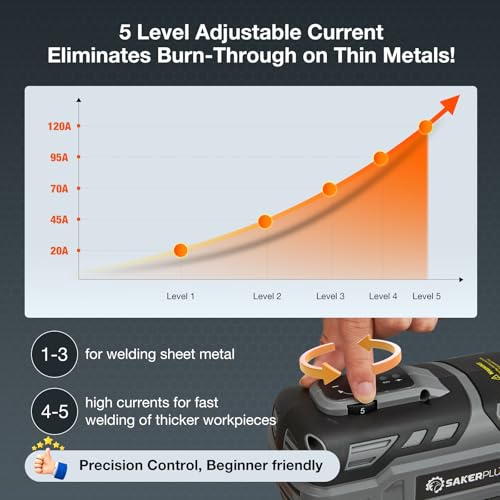
The Sakerplus handheld welder stands out not for raw power, but for how thoughtfully it’s packaged for beginners. At 120A max, it’s not the strongest, but the 5 precision current settings make it easy to avoid burning through thin metal, a common frustration for new users. The IGBT inverter tech delivers stable arcs with minimal spatter, and owners say it reignites quickly after cooling.
What really sets it apart is the full safety kit, helmet, gloves, goggles, hammer, brush, and 30 rods, all in a carrying case. That’s a rare value at this level. Compared to the basic Saker model, this one feels more complete and durable. It’s not for heavy steel, but for patching trailers, fixing railings, or welding brackets, it’s more than capable. I’d recommend this over the budget Saker if you want fewer add-on purchases and better build quality.
Product photos
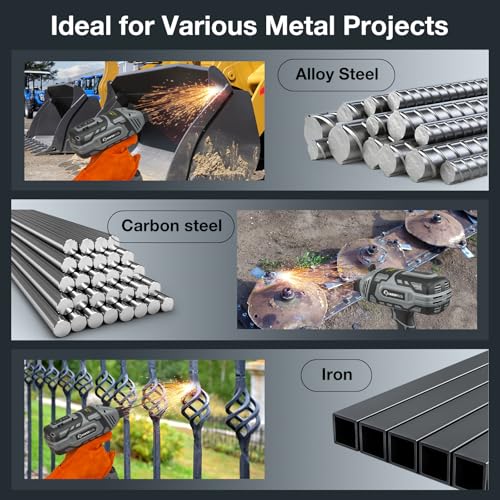
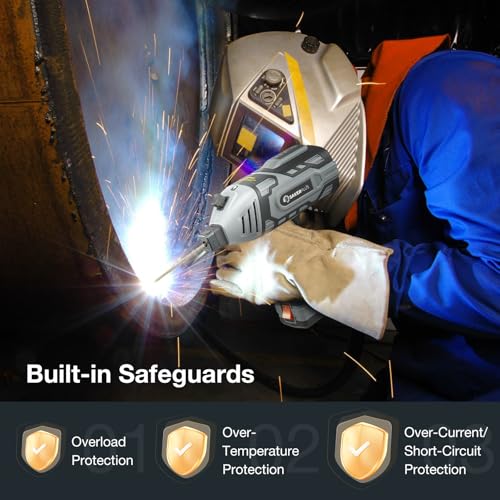
Wrdlosy MINI Stick Welder
Strengths
- 250A output
- Full starter kit
- Clear polarity guide
Trade-offs
- No multi-process capability
- Fan noise reported
- Not for aluminum
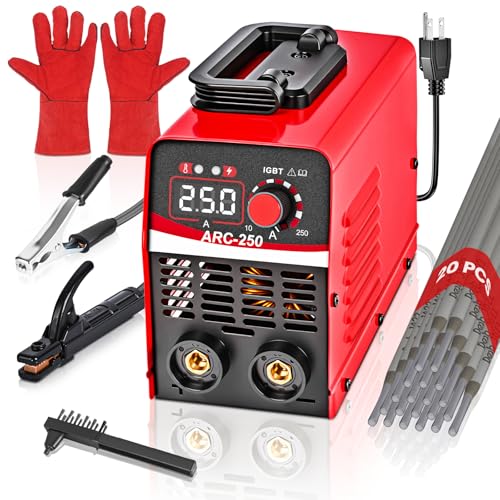
This Wrdlosy welder hits the sweet spot for beginners who want real power in a compact form. With 250A output on 110V and a full set of safety protections, it’s built to handle everything from thin sheet metal to 0.2-inch steel. The dial-in power control is simple but effective, letting new welders adjust based on thickness without confusion. Owners praise the clean arc starts and consistent fusion, especially with the included E6013 rods.
The complete kit, 20 rods, gloves, brush, holder, and clamp, means you’re truly ready to weld out of the box. It’s nearly identical in specs to the GNI model, but the Wrdlosy includes more rods and clearer polarity guidance for different rod types. That small detail matters for beginners who might otherwise damage their workpiece. Where it falls short? Like other mini stick welders, the duty cycle limits long runs. But for learning and light fabrication, it’s one of the most user-friendly options.
Product photos
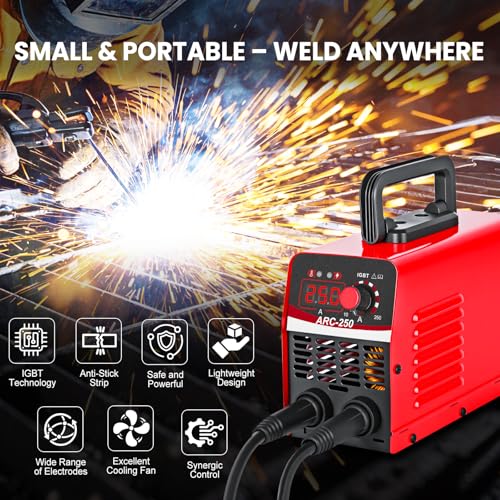

PANERGYRIC 160A MIG Welder

Strengths
- 3-in-1 capability
- Dual voltage
- Digital display
Trade-offs
- No gas regulator included
- TIG requires extra torch
- Heavier than mini stick welders
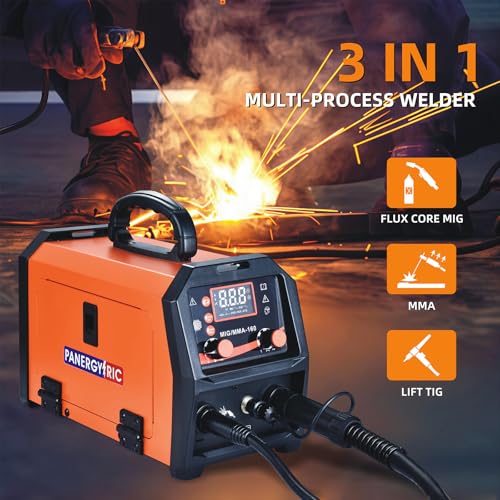
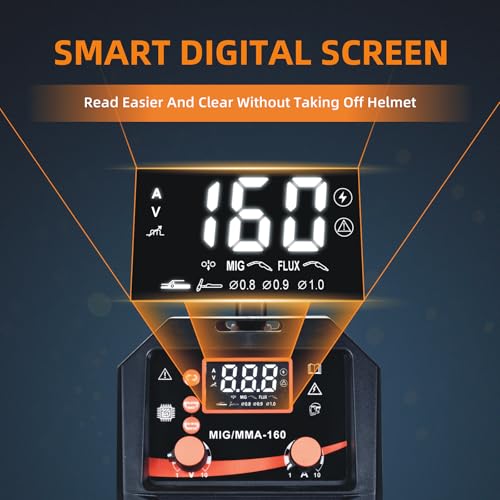
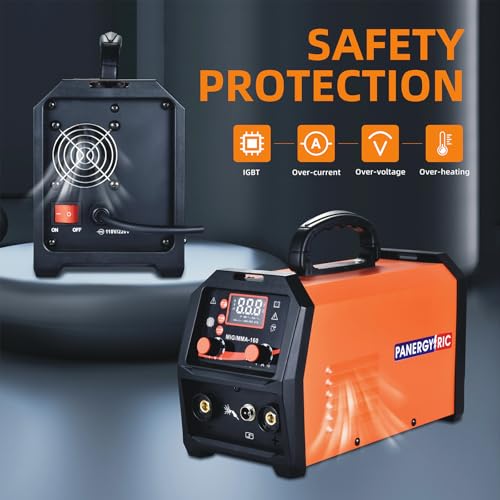
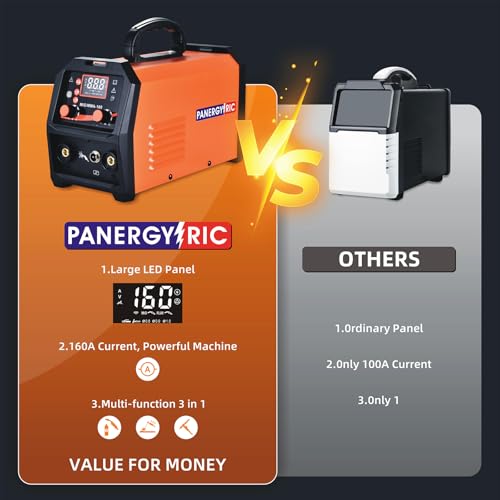
If you’re ready to grow beyond basic stick welding, this PANERGYRIC 160A model is a solid leap forward. It’s a 3-in-1 machine, flux-core MIG, lift TIG, and stick, which gives beginners real room to learn multiple processes without buying three tools. The dual-voltage support (110V/220V) means you can use it at home or on job sites, and the digital display makes setting adjustments intuitive. Owners appreciate the synergic control, which auto-matches wire feed speed and voltage, a big help when you’re still learning the balance.
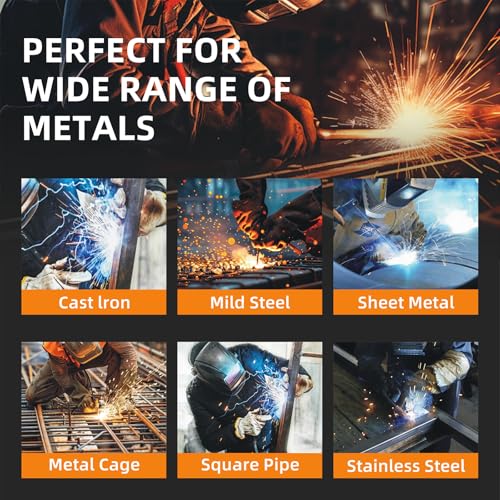
It won’t replace a professional rig, but for hobbyists, it punches above its weight. The max 160A output handles up to 3/16-inch steel in MIG mode, and reviewers note clean, low-spatter welds on car panels and gates. Compared to the Saker or GNI models, this is a more serious investment in skill-building. My recommendation? Get this if you’re serious about learning and want one machine that grows with you.
Product photos
GNI Super MINI Welder
Strengths
- Ultra-lightweight
- 250A output
- Anti-stick tech
Trade-offs
- Limited duty cycle
- Basic PPE included
- No TIG or MIG capability
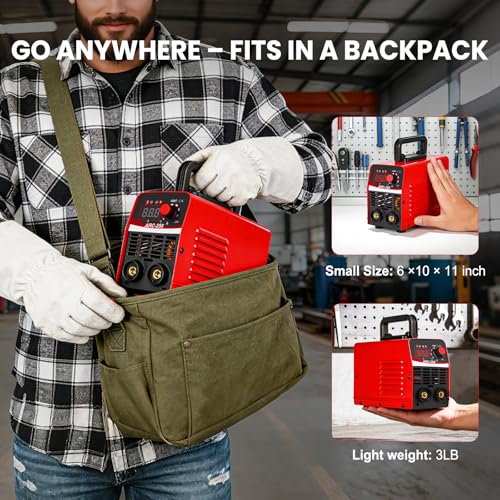
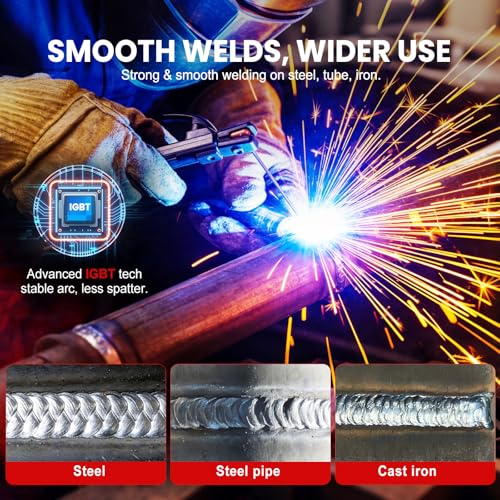
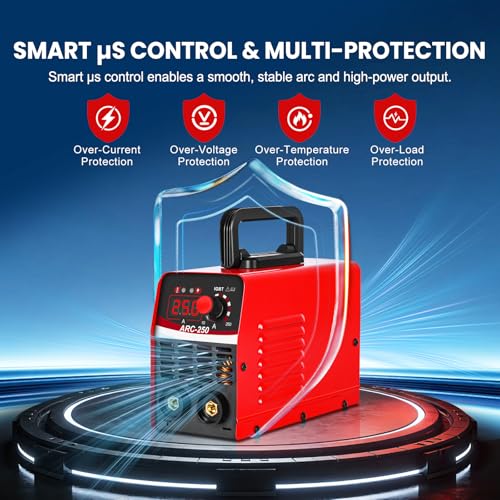
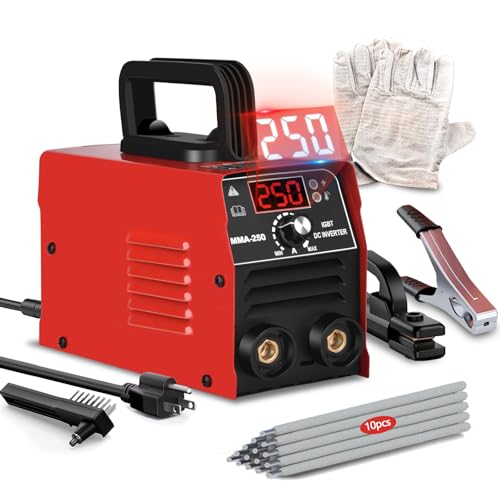
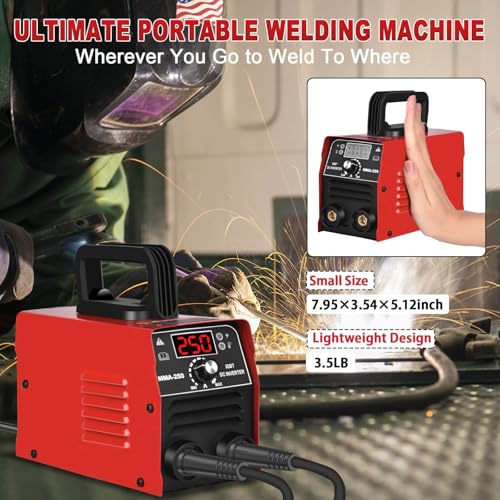
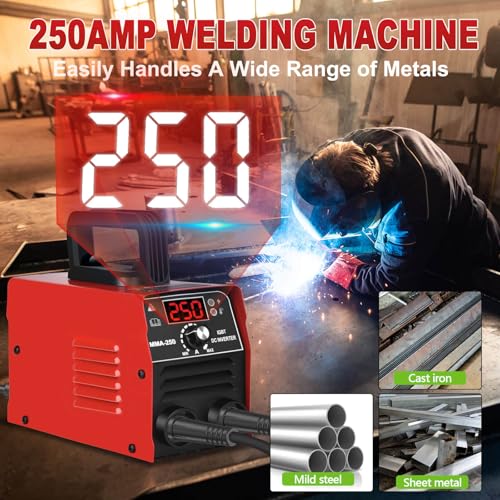
At just 3.5 pounds, this GNI stick welder is one of the lightest on the market, and that’s a real win for portability. For beginners who want to dabble in welding without hauling around a bulky machine, the size and weight make it genuinely convenient, toss it in a backpack and you’re ready for small fixes on the go. On paper, 250 amps at 110V sounds strong, but keep in mind that duty cycle and sustained output on mini welders like this are limited. It’s best suited for thin to medium steel, not heavy structural work.
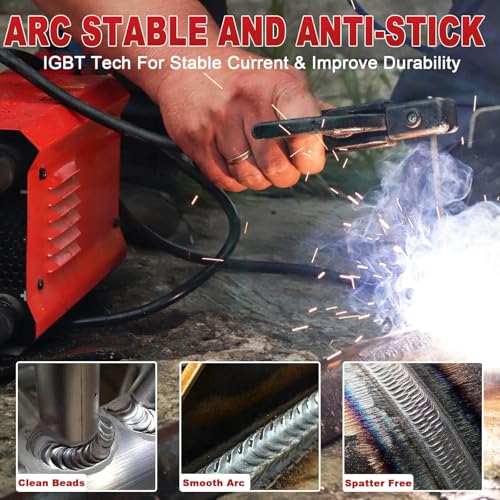
Owners consistently report clean arc starts and minimal sticking, thanks to the IGBT inverter and anti-stick tech, which are real confidence-builders for new welders. The included 10 rods and basic accessories get you started, but you’ll likely need more rods and better PPE fast. Compared to other starter welders, this one trades versatility for ultra-portability. I’d pick it for someone doing occasional light repairs, not someone aiming to build metal art or frame trailers.
Product photos
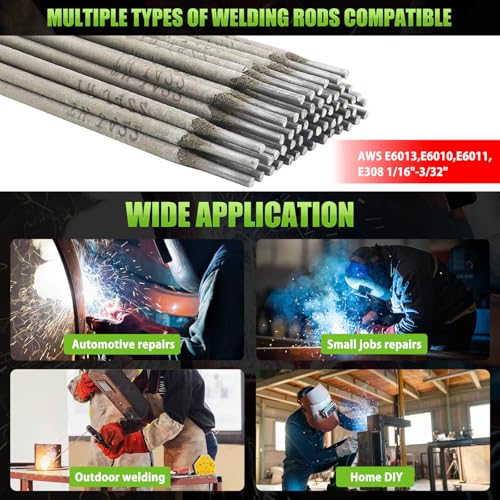

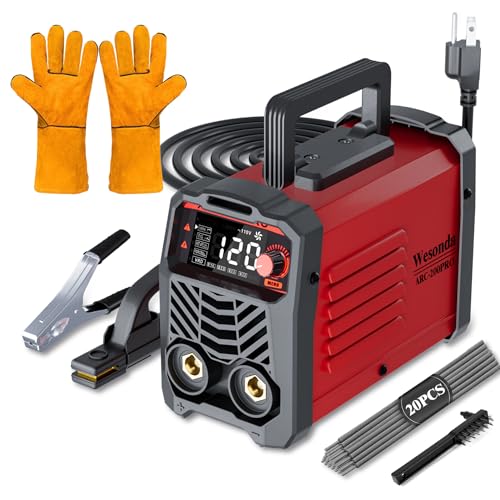
110V Stick Welder Beginner
Strengths
- Lift TIG capable
- Clear digital display
- Hot start feature
Trade-offs
- Limited to 135A
- No wire feeder included
- TIG requires extra gear
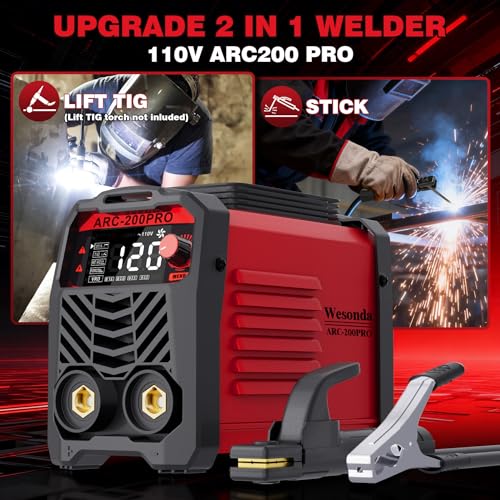
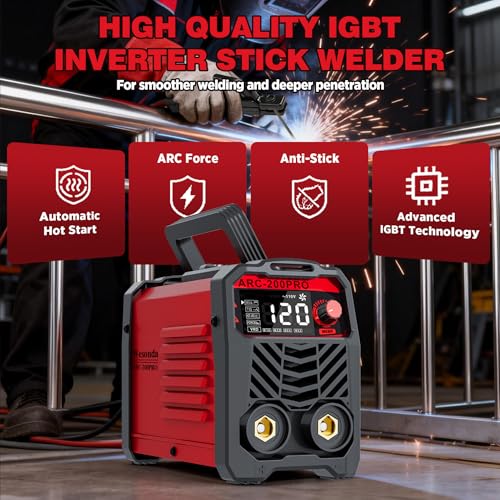
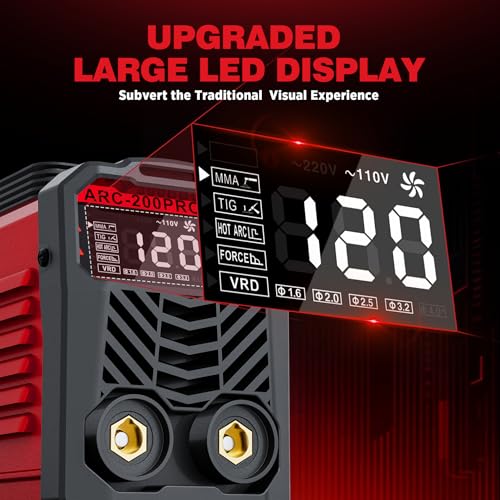
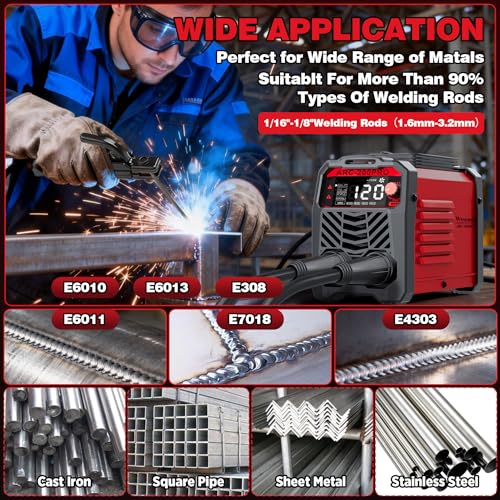
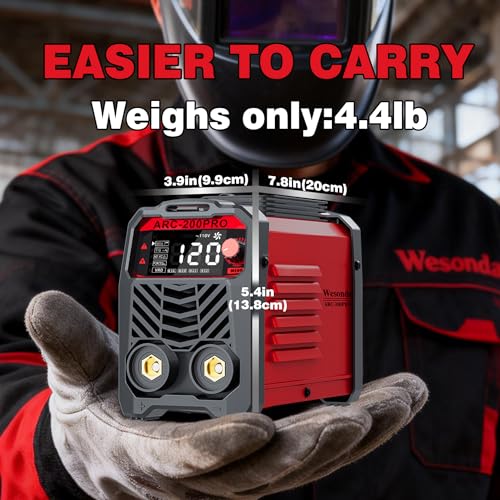
This 2-in-1 stick and lift TIG-ready welder is a quiet standout for those ready to take the next step after basic projects. At 135A, it’s not the most powerful, but the large LED display makes setting adjustments fast and accurate, something many beginners struggle with. The hot start and anti-stick features work as advertised, with owners reporting smooth arc ignition and fewer stuck rods, which keeps frustration low during practice.
It’s not as portable as the mini stick welders, but it’s more capable than most in its class. The IGBT inverter ensures stable output, and polarity guidance for E6013 vs E7018 rods helps avoid common mistakes. Compared to the Wrdlosy or GNI models, this one feels more like a transitional tool, ideal for someone moving from hobbyist to serious DIYer. I’d pick it for its balance of simplicity and upgrade potential.
Product photos
How We Picked These type of welder for beginners
As someone who’s spent years around power tools and workshops, I understand how daunting choosing a welder can be, especially for those just starting out. Rather than a hands-on lab test of each model – which isn’t practical for a category with this range of price and function – we focused on a research-led comparison of published specifications and owner feedback. I looked at features, power output, duty cycles, and included accessories, then weighed that against what real users are saying about ease of use and reliability.
For beginner-focused welders, portability, ease of setup, and arc stability were the biggest deciding factors. A heavy, complex machine is going to discourage a new welder quickly. Smooth arc starts and consistent performance are critical for building confidence and achieving good results without a steep learning curve. We also prioritized models with built-in safety features, as learning to weld involves inherent risks. If you’re looking for more detailed guidance, check out our best stick welder for beginners.
Specifications reliably indicate a machine’s power output and input requirements. However, judging usability, arc characteristics, and long-term durability really requires looking at owner reviews and expert opinions. We paid close attention to comments regarding electrode sticking, ease of adjusting settings, and the quality of included accessories. Reputation and brand history also played a role, as established manufacturers often have better quality control and customer support. For those new to the world of welding, our entry-level stick welder recommendations can be a helpful starting point.
How To Pick The Right type of welder for beginners
Picking your first welder can feel overwhelming. There’s a lot to consider beyond just price, and the best choice depends heavily on the kinds of projects you envision tackling.
A good welder for a beginner balances ease of use with sufficient capability. Key features include adjustable amperage control, a stable arc, built-in safety protections, and a manageable weight. Look for models that offer multiple process options (like MIG, Stick, and TIG) to expand your skillset, but prioritize simplicity in the controls for your initial learning phase. Consider the thickness of materials you’ll be working with and ensure the welder’s output range is appropriate.
Understanding Welding Processes
The first thing I always tell someone starting out is to think about what they want to weld. Different processes excel at different jobs. Stick welding (SMAW) is incredibly versatile and forgiving, making it a good starting point for thicker materials and outdoor projects. MIG welding (GMAW) is faster and cleaner for thinner metals, and generally easier to learn, especially with flux-core wire. TIG welding (GTAW) offers the most control and precision but has a steeper learning curve. Many welders now offer multiple processes in a single machine, which is a plus, but don’t get caught up in needing all the options right away.
Amperage Control and Duty Cycle
Don’t underestimate the importance of adjustable amperage. You need to be able to fine-tune the power output to match the material thickness and type. A welder with limited amperage settings will restrict your capabilities. Equally important is the duty cycle. This tells you how long you can weld continuously at a given amperage before the machine needs to cool down. A lower duty cycle means more downtime. For hobbyist use, a 60% duty cycle at a reasonable amperage is often sufficient, but if you plan on longer projects, look for a higher percentage.
Portability and Included Accessories
Weight and size matter, especially if you plan to move your welder around. Some of the models I’ve seen, like the GNI Super MINI Welder, prioritize portability to a remarkable degree, weighing in at just 3.5lbs. That’s a huge benefit for jobs around the property. Beyond the welder itself, pay attention to what’s included in the kit. A good starter kit will have an electrode holder, ground clamp, welding rods, a brush, and perhaps even a basic helmet and gloves. Buying a complete kit saves you money and ensures you have everything you need to get started. For more details on choosing a machine suited to your needs, check out this best welding machine for beginners guide.
A welder’s value isn’t just about the initial price. Factor in the cost of consumables (rods, wire, gas) and replacement parts. Look for machines with readily available parts and good customer support.
Finally, don’t overlook resources to help you learn. There are tons of free tutorials available online, and a solid understanding of welding principles will go a long way. If you’re leaning towards MIG welding specifically, our best MIG welder for beginners guide can provide further insight.
Type of Welder for Beginners Compared
Here’s a comparison of key specifications to help you choose the right welder for getting started.
| Product Title | Welding Processes | Amperage (A) | Voltage (V) | Weight (lbs) | Portability | Key Features |
|---|---|---|---|---|---|---|
| ARCCAPTAIN 160A MIG Welder | MIG, TIG, Stick | 160 | N/A | 11.8 | High | 4-in-1, Synergic Control, Safety Protection |
| Saker Handheld Welder Gun | Stick | 20-120 | N/A | 1.7 | Very High | 5-Level Current Control, IGBT Technology |
| Sakerplus Handheld Welder Kit | Stick | 20-120 | N/A | 3.75 | Very High | Lightweight, 5 Current Settings, IGBT |
| Wrdlosy MINI Stick Welder | Stick | 250 | N/A | 3 | Very High | 250Amp, Compact, Safety Protections |
| PANERGYRIC 160A MIG Welder | MIG, TIG, Stick | 160 | N/A | N/A | N/A | 3-in-1, Digital Display, Synergic Control |
| GNI Super MINI Welder | Stick | 20-250 | N/A | 3.5 | Very High | Ultra-Lightweight, 250Amp, ARC Stable |
| 110V Stick Welder Beginner | Stick, TIG | N/A | N/A | N/A | High | 2-in-1, Smooth Arc, Safety Protection |
Frequently Asked Questions
What’s the biggest mistake beginners make when buying a welder?
Many newcomers overestimate the amperage they’ll actually need. For most home and hobby projects, a welder in the 120-160 amp range is perfectly sufficient and far easier to control than a larger, more powerful machine.
Are multi-process welders (MIG, TIG, Stick) a good choice for starting out?
While versatile, multi-process welders can add complexity. I recommend focusing on mastering one process, typically Stick or MIG, before trying to learn them all at once; however, if you’re interested in exploring different techniques, a multi-process machine can be a good long-term investment.
How much does a beginner welder typically cost?
Expect to spend between $200 and $600 for a decent entry-level welder. The price varies greatly depending on the process, amperage, included accessories, and brand reputation. Don’t automatically go for the cheapest option; reliability is key.
What safety gear is absolutely essential for a new welder?
Beyond the welder itself, a good auto-darkening welding helmet, welding gloves, a fire-resistant jacket or apron, and safety glasses are critical. Proper ventilation is also important, especially when working indoors. You can find more information on safe practices in our guide to beginner welding process comparison.
Is Stick welding really the best option if I’m completely new to welding?
Stick welding is often recommended for beginners because it’s relatively forgiving and doesn’t require shielding gas. However, you should understand your project needs. If you’re primarily working with thin sheet metal, exploring easiest welding type for beginners like MIG welding might be a better fit.
The Bottom Line
Choosing a welder always comes down to balancing control with convenience. You can spend a lot of time and money getting a machine with every bell and whistle, or you can start with something simple and learn the fundamentals. For most beginners, I recommend the ARCCAPTAIN 160A MIG Welder. It offers a great blend of versatility – handling MIG, TIG, and Stick – with user-friendly features like synergic control that take a lot of the guesswork out of settings.
If budget is a primary concern, or you foresee primarily doing stick welding, the GNI Super MINI Welder is an excellent choice. It’s incredibly portable, surprisingly powerful for its size, and offers a stable arc that’s forgiving for new welders. For those specifically interested in TIG, consider exploring our best TIG welder for beginners guide to find an entry-level TIG welding machines tailored to your needs.
Ultimately, specs and features matter less than developing a solid understanding of welding techniques. A stable arc and adjustable amperage are critical, but consistent practice and a commitment to safety are what will truly make you a skilled welder. Focus on mastering the fundamentals, and the right machine will simply be a tool to help you achieve your goals.
