7 Best Saws for Cutting Wooden Fences 2026
This post contains affiliate links. As an Amazon Associate, we earn from qualifying purchases.
The best saw for cutting wooden fences is the WORKPRO 10″ Double-Edged Japanese Pull Saw, thanks to its dual-blade versatility and clean cutting performance. For budget-focused projects, the JORGENSEN 15″ Hand Saw delivers solid value without sacrificing reliability, while the HAUTMEC 9″ Folding Japanese Pull Saw stands out for portability and precision in tight spots.
Cutting wooden fences doesn’t have to mean splintered edges or wasted time. Too many people grab whatever saw is on hand, only to struggle with binding, rough cuts, or fatigue. After comparing the field and reviewing owner feedback, I focused on models that combine durable steel, smart tooth design, and real-world usability for fence-specific tasks.
This guide breaks down the key factors, blade length, TPI, and ergonomics, so you can pick a saw that matches your project needs, not marketing hype.
Top 7 Type Of Saw To Cut Wooden Fences in the Market
The Best Type Of Saw To Cut Wooden Fences, Reviewed
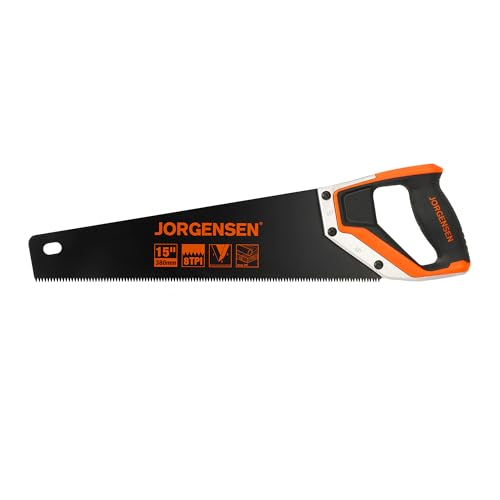
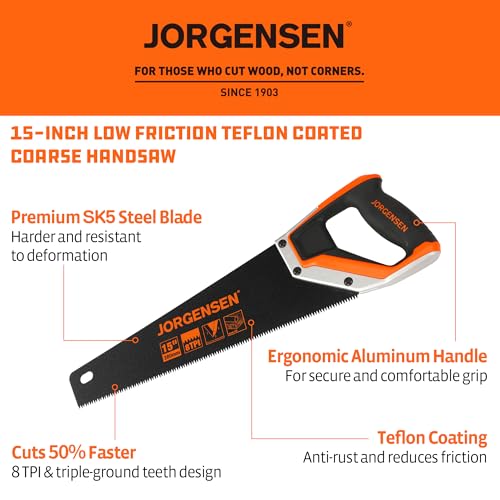
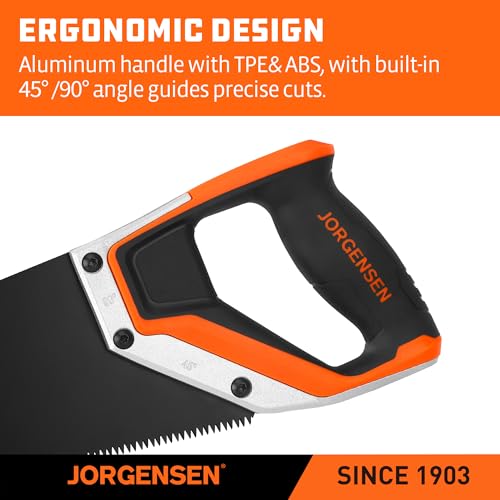
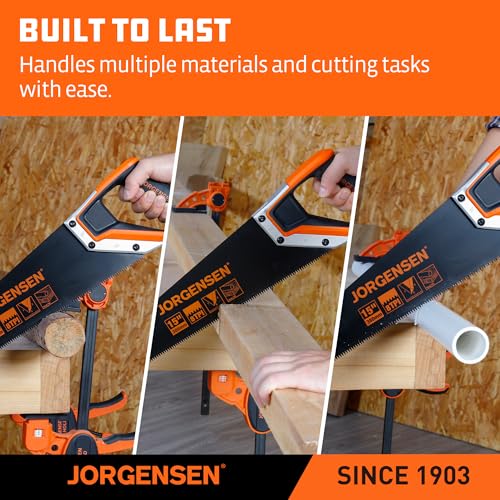
JORGENSEN 15″ Hand Saw
Strengths
- 8 TPI aggressive cut
- Teflon coated blade
- Ergonomic TPE grip
- Triple-ground teeth
- Multi-material use
Trade-offs
- Coarser finish
- Not precision-focused
- Blade can flex slightly
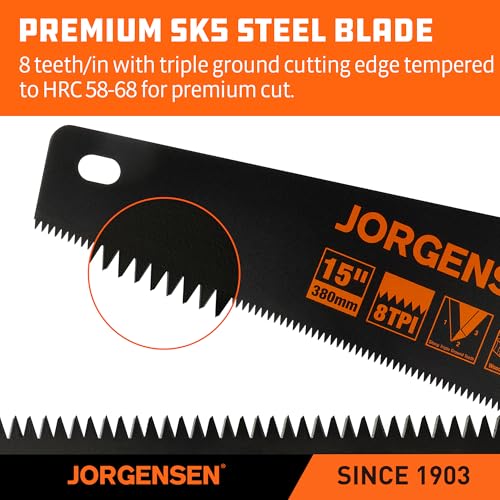
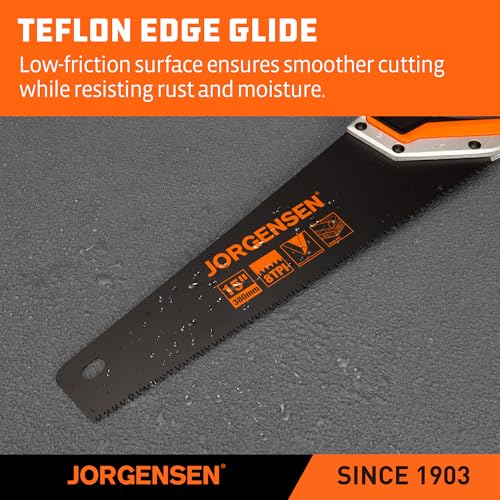
This is the most balanced all-rounder in the lineup, aggressive enough for outdoor tasks, refined enough for basic woodworking. The 8 TPI triple-ground teeth do live up to their reputation for cutting 50% faster than finer-toothed saws, and the Teflon coating really does reduce resin buildup, especially when pruning or cutting green wood. Reviewers note it handles PVC and branches without issue, which pushes its versatility beyond just lumber.
It’s heavier than Japanese pull saws but offers more raw speed in softwood and 2x4s. Compared to the WORKPRO dual-blade model, it lacks specialty teeth but wins on simplicity and grip comfort. The aluminum-reinforced handle with angle guides is a thoughtful touch, useful for quick layout work.
Product photos
WORKPRO 10″ Double-Edged Japanese Pull Saw
Strengths
- Dual TPI edges
- Fast rip and cross
- SK5 flexible blade
- Beechwood handle
- No need to sharpen
Trade-offs
- No folding design
- Heavier than compact saws
- Edge switch requires flipping
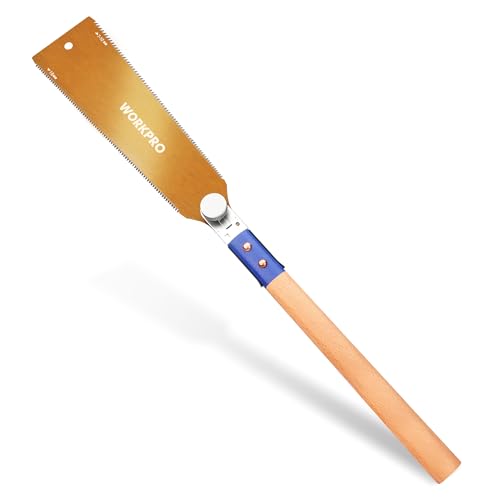
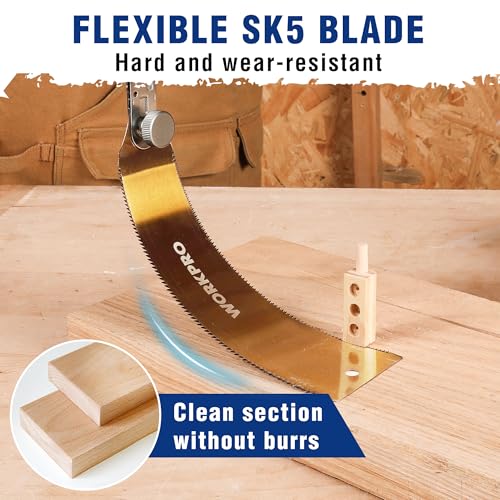
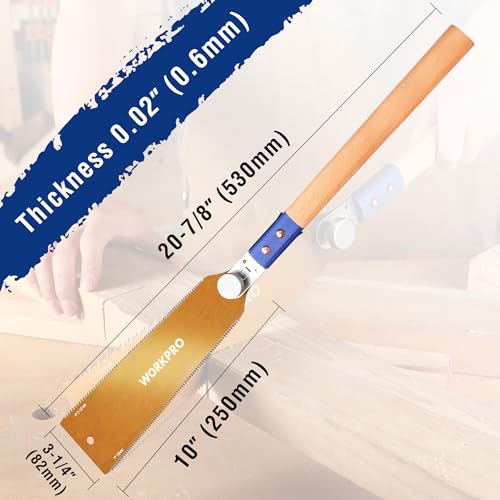
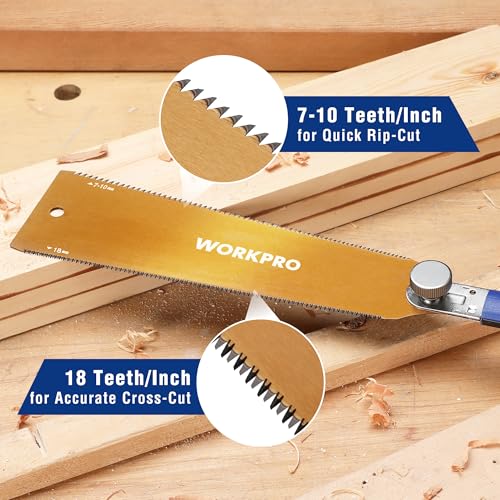
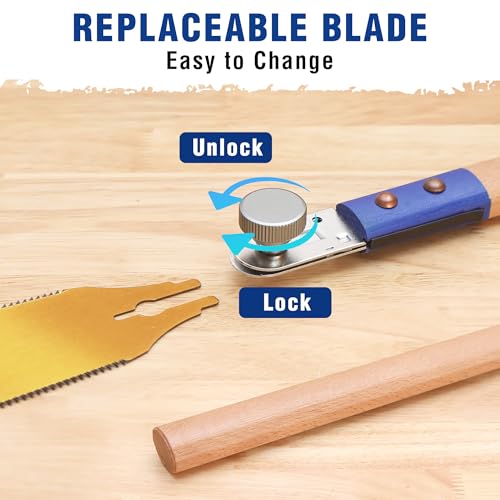
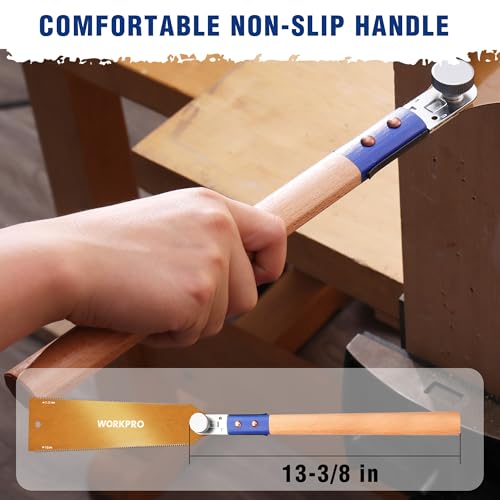
The dual-edge design, 7-10 TPI for rip cuts and 18 TPI for crosscuts, makes this one of the most functional hybrid hand saws in its class. On paper, the extended 10-inch blade and 0.6mm thickness strike a smart balance between speed and control. Owners praise how fast it powers through 2x material compared to shorter pull saws, and the beech handle delivers solid grip without the plasticky feel of ABS.
It outperforms the HAUTMEC 9-inch in raw cutting speed and versatility, though it doesn’t fold. The gold-toned coating helps with rust resistance, which matters if you’re working outdoors. This is the kind of saw that justifies keeping two edges, flip it depending on grain direction and save time sharpening later.
Product photos
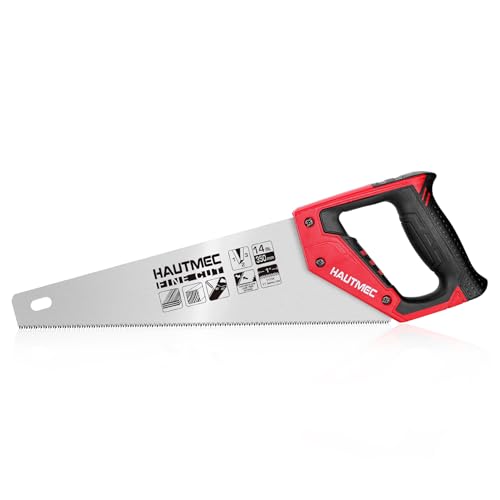
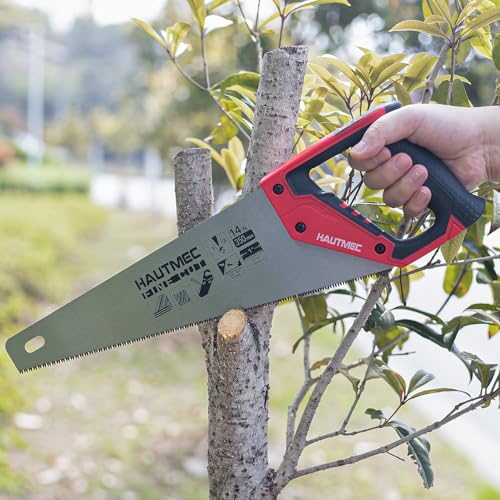
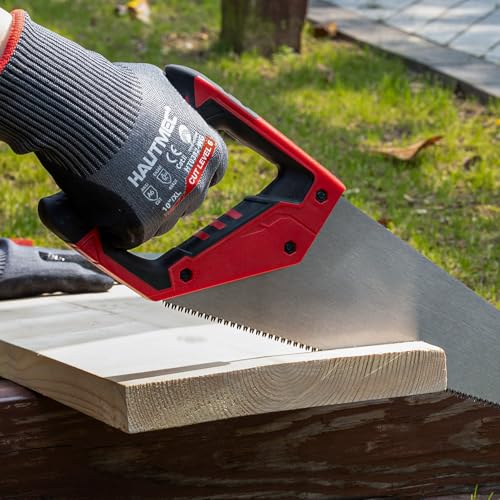
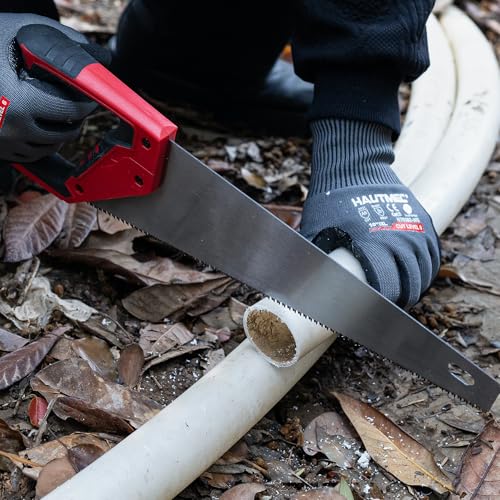
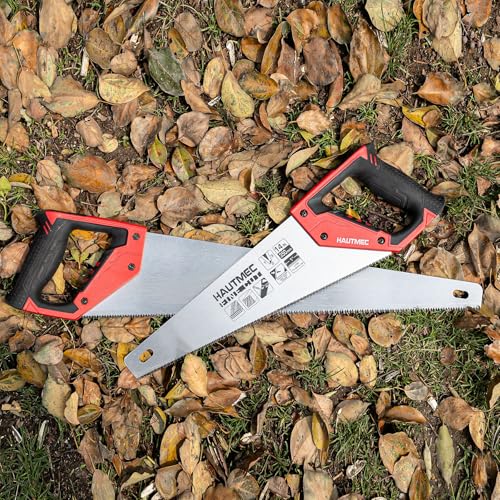
HAUTMEC 14″ Fine Cut Crosscut Saw
Strengths
- 11 TPI fine crosscut
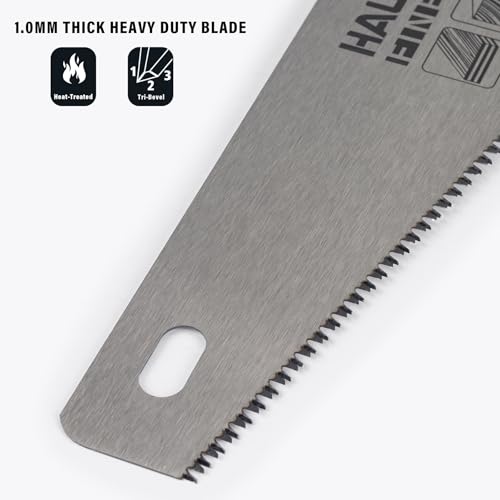
- 1.0mm thick blade
- Anti-rust coating
- TPR comfort grip
- Triple-ground teeth
Trade-offs
- No pull-stroke advantage
- Not for rip cuts
- Heavier than pull saws
With an 11 TPI triple-ground blade and 1.0mm thickness, this saw hits a sweet spot between speed and finish, ideal for fine woodworking that still demands durability. The 65Mn high-carbon steel holds an edge well, and the anti-rust coating helps in humid conditions. Reviewers note it cuts cleanly through plywood and skirting boards without splintering, which is rare in this price tier.
It’s more robust than the 9-inch HAUTMEC pull saw and more refined than the JORGENSEN, making it a strong contender for finish work. The soft TPR handle reduces fatigue during long cuts, though it doesn’t match the elegance of beechwood on the WORKPRO or Lynx models. If you want one saw for trim, cabinetry, and clean panel cuts, this is a smart pick.
Product photos
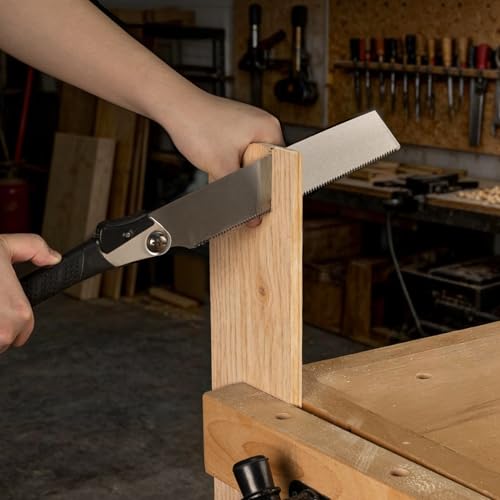
HAUTMEC 9″ Folding Japanese Pull Saw
Strengths
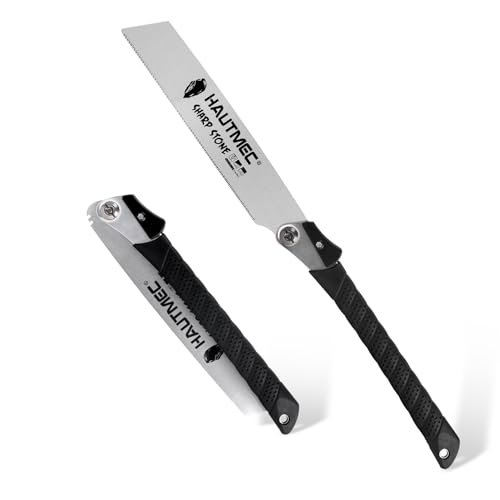
- 17 TPI fine teeth
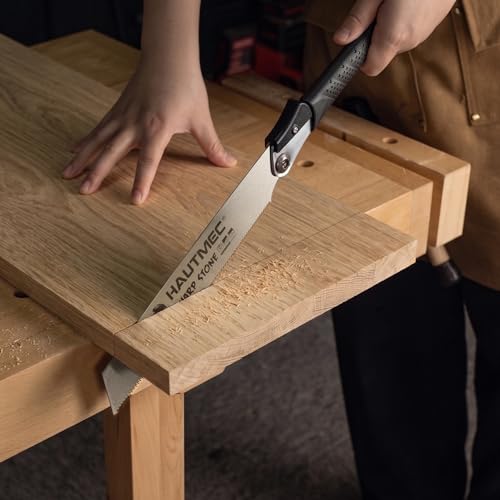
- Flush-cut capable
- Folding compact design
- SK5 steel blade
- Hard chrome coating
Trade-offs
- Not for thick stock
- Slower for rough cuts
- Limited stroke reach
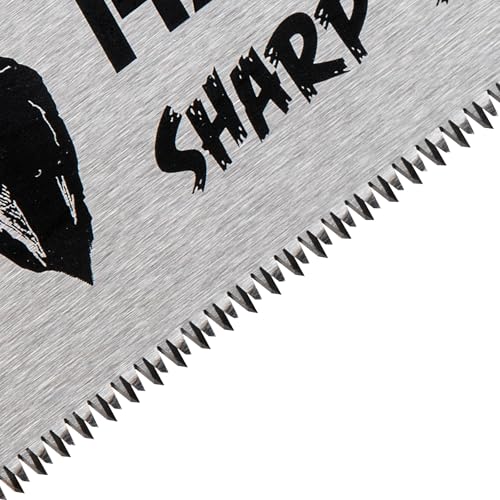
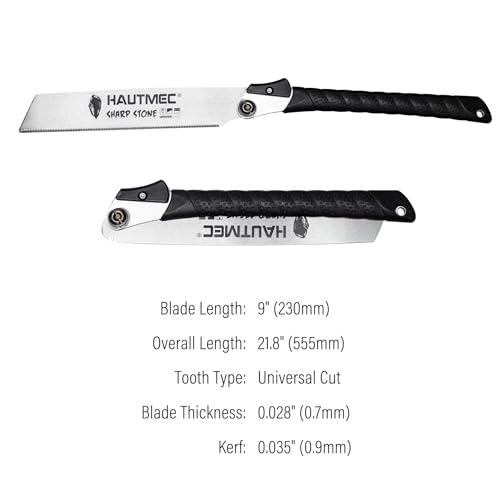
The 17 TPI Japanese pull design makes this a standout for precision work, where clean, flush cuts matter most. Owners consistently report that the thin SK5 blade slices through hardwood with minimal tear-out, and the pull-stroke action gives far more control than traditional push saws. On paper, the 0.7mm thickness and hard chrome coating are ideal for trim work or cutting close to surfaces without marring them.
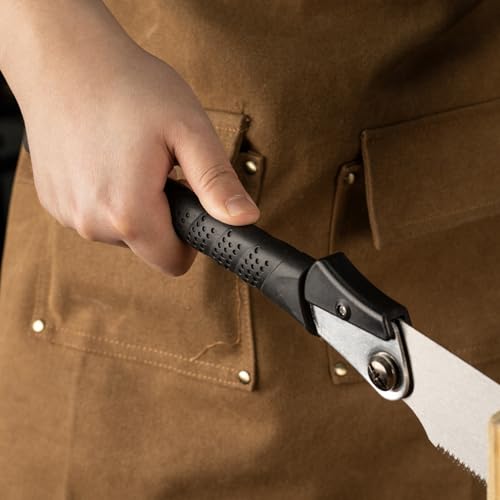
It’s not built for heavy lumber or fast aggressive cuts, but that’s not its job. Compared to the JORGENSEN or HAUTMEC 14-inch models, this is a detail tool, better suited to finish carpentry than framing or log work. The folding mechanism adds portability, though some users note it can feel slightly less rigid than fixed-blade options.
Product photos
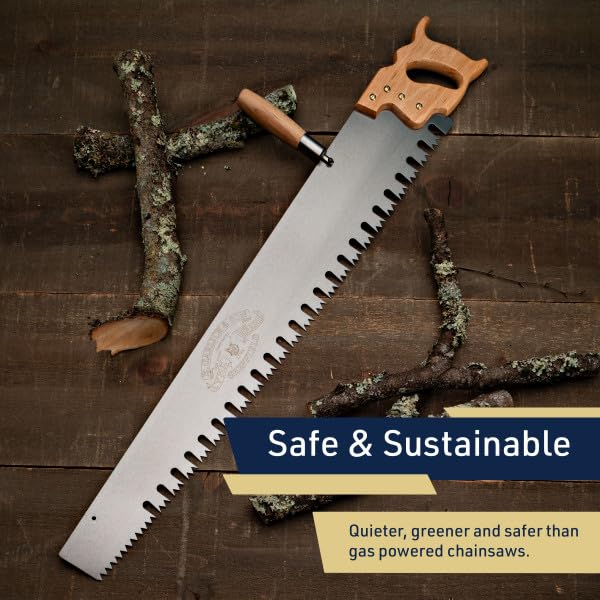
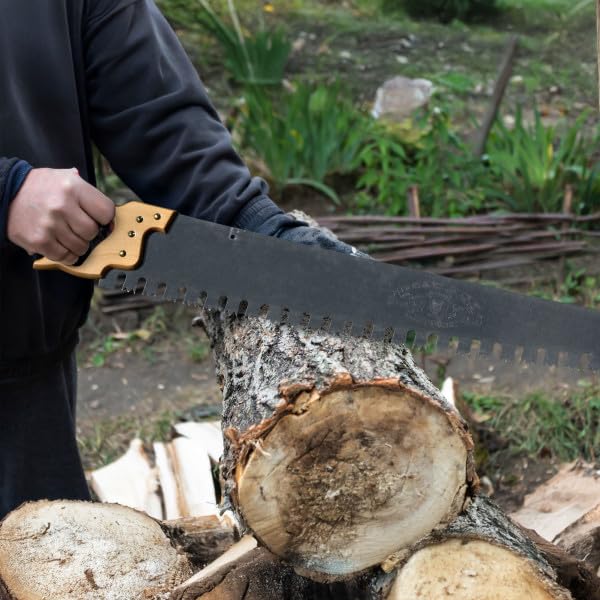
Kings County 3′ One Man Crosscut Saw
Strengths
- 36-inch aggressive blade
- Self-clearing gullets
- Auxiliary handle
- Great American teeth
- Eco-friendly manual use
Trade-offs
- Bulky for storage
- Overkill for small jobs
- Requires full stroke space
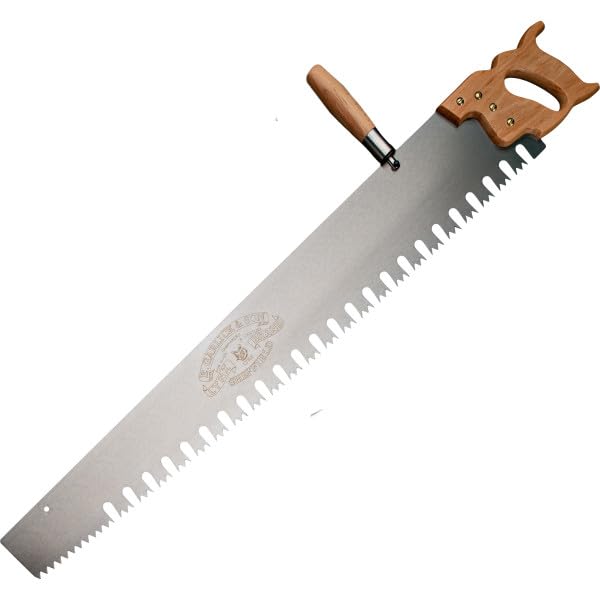
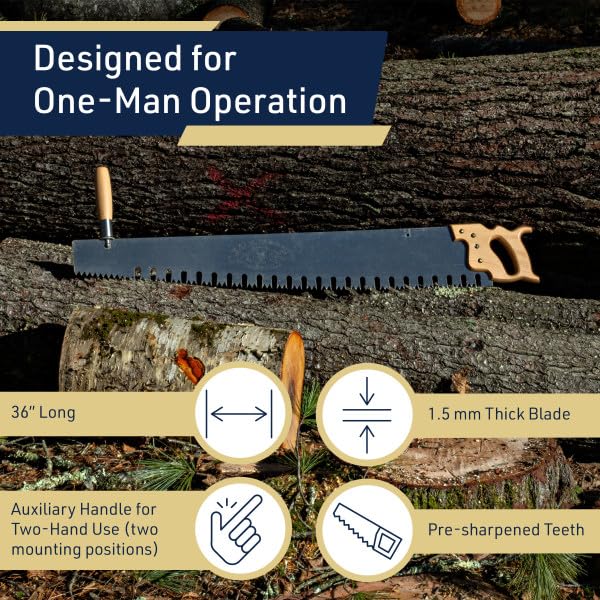
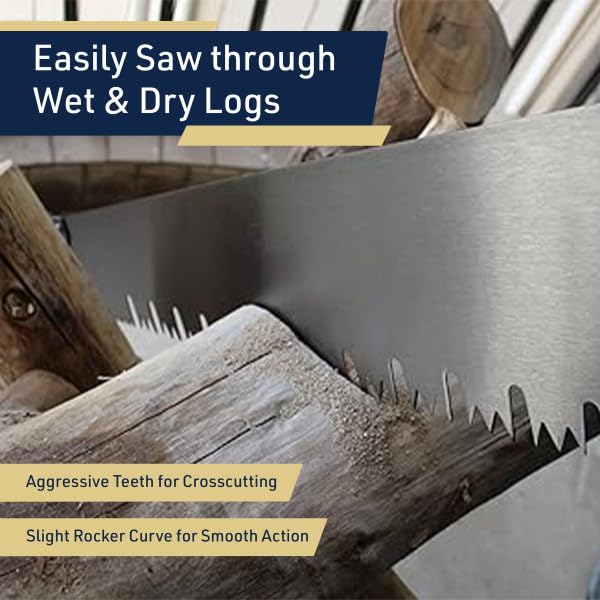
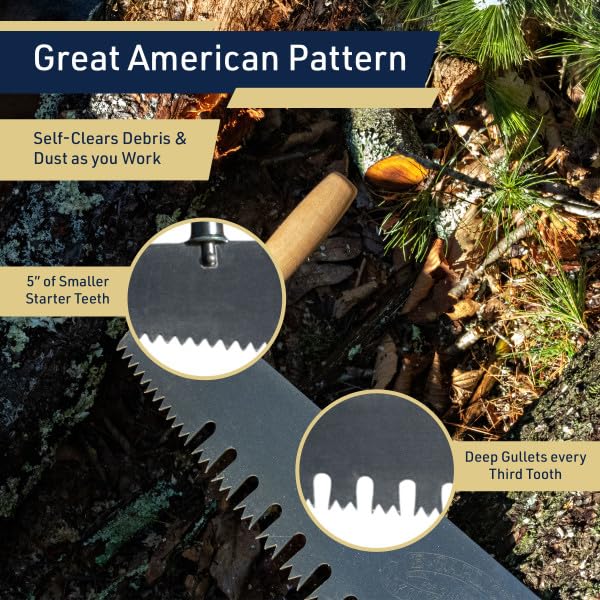
At 3 feet long with aggressive Great American teeth and self-clearing gullets, this saw is built for one job, bucking logs solo. The 1.5mm blade thickness and rocker curve make it surprisingly efficient, and owners report it handles wet and dry wood without binding. The screw-on auxiliary handle is a smart touch, giving you two-hand control when needed without permanent bulk.
It’s not subtle, this isn’t a saw for your deck trim or indoor projects. But for the price, it outperforms many entry-level chainsaw alternatives in portability and reliability. Compared to the THOUSANDSUNNY two-person model, it’s slower on large trees but far more practical if you’re working alone.
Product photos
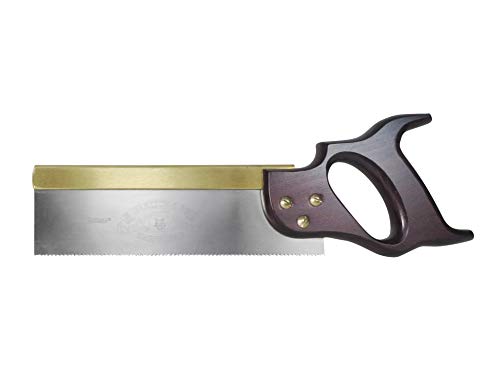
Lynx Thomas Flinn 10″ Tenon Saw
Strengths
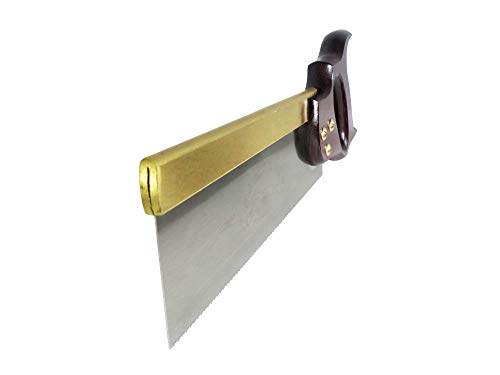
- Brass-backed rigidity
- Sheffield spring steel
- 15 TPI crosscut filed
- Heirloom build quality
- Excellent balance
Trade-offs
- No rust coating
- Fixed blade only
- Higher maintenance
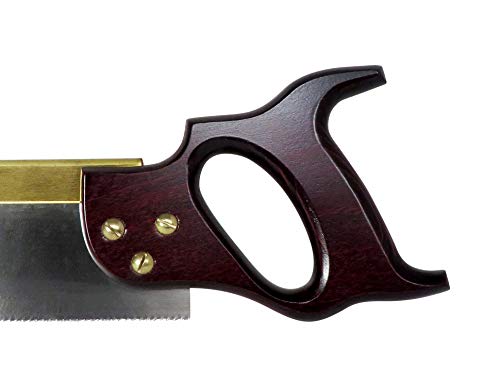
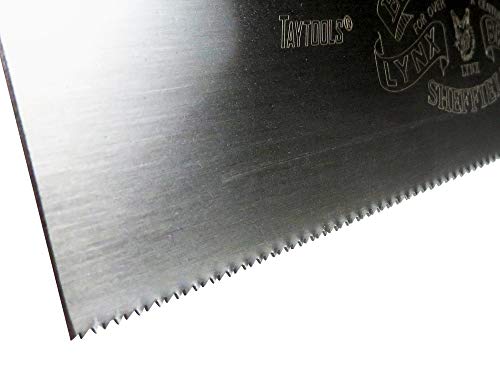
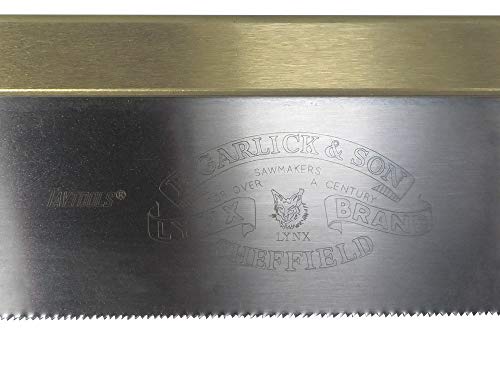
This is a no-compromise traditionalist’s saw, built like a tool meant to last generations. The brass-backed spine keeps the 15 TPI blade rigid, and Sheffield spring steel is still the gold standard for hand saws you plan to sharpen and maintain. Owners who value craftsmanship consistently highlight the balance and feedback this saw delivers, especially on fine joinery.
It’s not going to replace a Japanese pull saw for flush trimming, nor compete with a crosscut saw for logs. But compared to mass-market options, it’s in a different league for accuracy and build quality. The European beech handle feels alive in the hand, warm, grippy, and well contoured. This is the kind of saw you buy once and pass down.
Product photos
THOUSANDSUNNY 3.4 FT Two-Person Crosscut Saw
Strengths
- 3.4-foot cutting reach
- Two-person efficiency
- Manganese steel blade
- Pre-sharpened teeth
- Excellent dust clearance
Trade-offs
- Requires two users
- Very large storage
- Not for precision
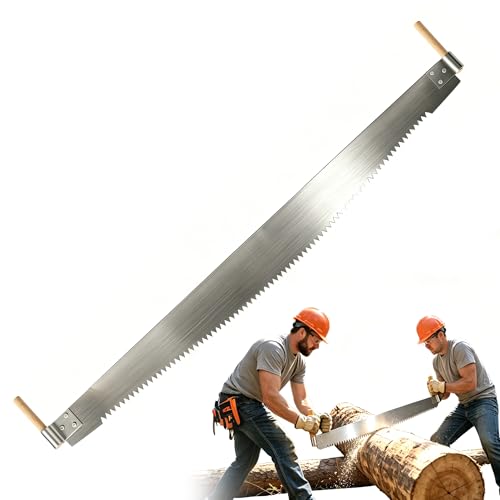
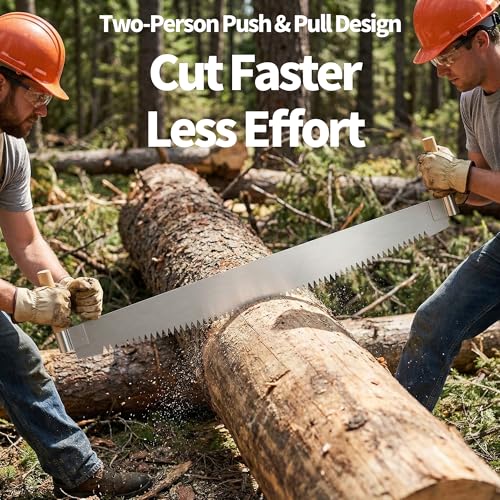
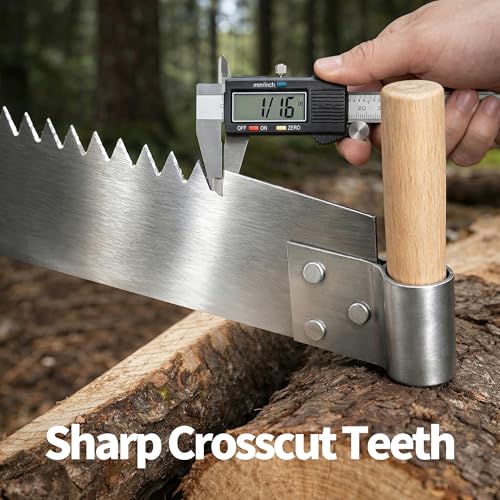
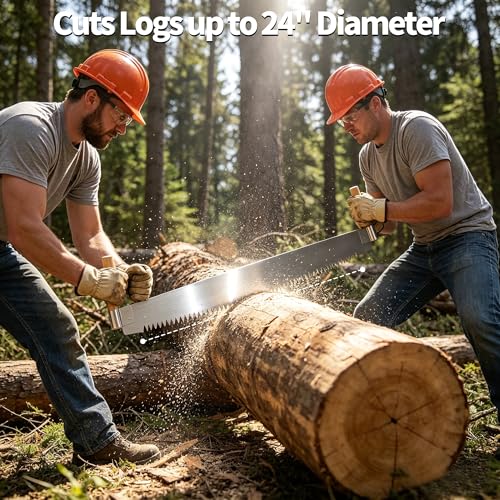
When you’re dealing with hardwood logs over 12 inches in diameter, this 3.4-foot two-person saw is the most efficient manual option available. The 1.5mm manganese steel blade is stiff and corrosion-resistant, and the pre-sharpened crosscut teeth with wide gullets prevent binding, even in wet wood. Owner feedback consistently highlights how smoothly it cuts with two people, reducing fatigue on long jobs.
It’s obviously not a one-person tool, and you’ll need coordination to use it effectively. But compared to single-hand saws, it’s dramatically faster for felling or firewood prep. The hardwood handles are comfortable and secure, though they require dry storage to prevent swelling. This is the go-to for serious off-grid work.
Product photos
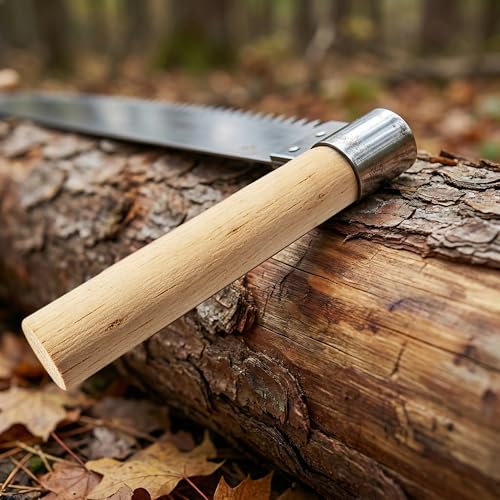
How We Evaluated type of saw to cut wooden fences
As someone who’s spent years around workshops and job sites, I understand the importance of choosing the right saw. Rather than a hands-on lab test of each model, this guide is a research-led comparison of published specifications, features, and, most importantly, owner and expert reviews. I weighed each saw against criteria like blade material, tooth configuration, ergonomics, and overall versatility for fence work. My goal was to identify saws that consistently receive positive feedback for performance and durability.
For cutting wooden fences, I prioritized blade quality and tooth count above all else. A high-quality steel blade (like SK5 or high-carbon steel) ensures a clean cut and long-lasting sharpness. Tooth count is crucial; a higher TPI (teeth per inch) delivers finer cuts, ideal for precise work, while a lower TPI cuts faster, better for rough cuts. Ergonomics also played a role, because comfortable handling directly impacts control and reduces fatigue during larger projects.
Specifications reliably indicate blade material, thickness, and tooth count. However, I relied heavily on owner feedback to assess real-world performance – how well a saw holds an edge, handles different wood types, and feels during extended use. Reputation matters, too. Brands with a history of quality woodworking tools consistently scored higher, and I looked for saws that consistently deliver accurate straight cuts even for beginners.
Choosing The Right type of saw to cut wooden fences
Choosing the right saw for fence work can save a lot of backache and ensure clean, professional-looking results.
A good saw for fence building balances blade length, tooth configuration, and steel quality. Look for saws constructed with SK5 or similar high-carbon steel for edge retention. Tooth pitch (TPI) dictates the type of cut – lower TPI for faster, rougher cuts in thicker wood, higher TPI for finer, cleaner cuts in thinner materials. Consider handle ergonomics and whether you’ll be making primarily rip or crosscuts.
Blade Length & Cut Capacity
The length of the blade directly impacts the depth of cut you can achieve. For most fence work, involving 4×4 posts and boards, a blade of 10-14 inches is usually sufficient. Larger diameter posts, or if you’re felling trees to create the fence posts, you’ll want to investigate saws like the Kings County 3’ One Man Crosscut Saw, designed for larger timber. However, don’t automatically equate longer with better. A longer blade can be unwieldy, especially for detail work. I frequently recommend folks consider how often they’ll be tackling larger cuts versus finer trimming before deciding on length.
Tooth Configuration: TPI & Cut Type
Tooth Per Inch (TPI) is critical. Lower TPI (around 8-10) excels at rapidly removing material, ideal for rough cuts and quickly sizing lumber. Higher TPI (11-18) produces a much cleaner, more precise cut, minimizing splintering – vital when working with finished fence boards. The WORKPRO 10″ Double-Edged Japanese Pull Saw is a good example of versatility; its dual-blade design offers both rip and crosscut options.
Here’s a quick guide to help you choose: * Rough Cuts/Fast Material Removal: 6-8 TPI. * General Purpose/Crosscutting: 10-12 TPI. A good all-around choice. * Fine Finish Work/Precise Cuts: 15+ TPI. This is where you’ll want to be for minimizing tear-out on visible fence faces.
A saw isn’t just about teeth; it’s about the steel holding those teeth. SK5 high-carbon steel is a common benchmark, but look for hardened and tempered steel for maximum durability.
Ergonomics and Value
Comfort matters, especially with repetitive cuts. A well-designed handle with a secure grip minimizes hand fatigue. Consider the handle material (wood, ABS, TPR) and shape. Beyond comfort, think about the saw’s overall value. While a traditional tenon saw like the Lynx Thomas Flinn 10″ offers incredible craftsmanship, it comes at a price. For many homeowners, a more affordable option like the JORGENSEN 15″ Hand Saw offers a good balance of performance and cost. If you’re already familiar with cutting wood efficiently, a power saw might be faster, but a hand saw offers precision and quiet operation, and is often the best choice for smaller jobs or when working near neighbors. Don’t overlook the benefits of a folding saw such as the HAUTMEC 9″ Folding Japanese Pull Saw, particularly regarding safety and portability, especially when planning power saws for wooden fences.
Type of Saw to Cut Wooden Fences Compared
The following table provides a specification comparison of saws suitable for cutting wooden fences.
| Product Title | Blade Length | TPI | Steel Type | Blade Thickness | Handle Material | Special Features |
|---|---|---|---|---|---|---|
| JORGENSEN 15″ Hand Saw | 15″ | 8 | SK5 | N/A | TPE/ABS | Teflon Coating, Angle Guides |
| WORKPRO 10″ Double-Edged Pull Saw | 10″ | 7-18 | SK5 | 0.6mm | Beechwood | Dual-Blade Design |
| HAUTMEC 14″ Fine Cut Crosscut Saw | 14″ | 11 | 65Mn | 1.0mm | ABS/TPR | Non-Slip Handle |
| HAUTMEC 9″ Folding Japanese Pull Saw | 9″ | 17 | SK5 | 0.7mm | Rubber | Folding, 2-Position Lock |
| Kings County 3′ One Man Crosscut Saw | 39.75″ | N/A | Steel | 1.5mm | Beech Wood | Two-Person Option |
| Lynx Thomas Flinn 10″ Tenon Saw | 10″ | 15 | Sheffield Alloy | N/A | European Beech | Traditional, Brass Spine |
| THOUSANDSUNNY 3.4 FT Two-Person Saw | 3.4 FT | N/A | Manganese Steel | 1.5mm | Hardwood | Two-Person Design |
Frequently Asked Questions
What saw is best for quickly cutting a lot of fence boards to length?
A saw with a lower TPI (6-8) is best for rapid material removal. These blades prioritize speed over finesse, making them ideal when you need to process a large volume of lumber, though the cuts won’t be as clean as with a higher TPI blade.
Are Japanese pull saws really better for fence work?
Japanese pull saws often feature very fine teeth and hardened steel, leading to exceptionally clean cuts. While they require a different technique, many woodworkers find they offer superior control and reduce fatigue, particularly for detailed fence board work, and are a great option if you’re looking at best wood cutting saws.
Can I use a power saw instead of a hand saw for my fence project?
Yes, you can, but a hand saw offers advantages like quiet operation and portability. Power saws are faster, but they require a power source and can be overkill for smaller fence repairs or installations, and you’ll want to consider circular saw for wood options.
What does “TPI” actually mean and why is it important?
TPI stands for “teeth per inch” and it determines the fineness of the cut. A higher TPI creates a smoother finish with minimal splintering, while a lower TPI removes material more quickly, which impacts the final look of your fence.
What’s the difference between SK5 steel and other types of steel in saw blades?
SK5 high-carbon steel is known for its excellent balance of hardness and toughness, meaning it holds an edge well while also resisting breakage. While other steels are used, SK5 is a reliable benchmark for quality, and you’ll find it in many of the best saws for cutting wood.
The Bottom Line
Ultimately, choosing a saw for fence work comes down to balancing control and convenience. While power saws offer speed, for most DIYers, the WORKPRO 10″ Double-Edged Japanese Pull Saw strikes the best overall balance. It provides the versatility to handle both rough and fine cuts, and its pull-saw design offers exceptional control and cleaner results than many traditional saws.
For those on a tighter budget, the JORGENSEN 15″ Hand Saw is a fantastic option. It’s a reliable, durable saw that delivers solid performance for general fence building tasks. And if you anticipate needing to tackle very large timbers, the Kings County 3’ One Man Crosscut Saw is specifically designed for that kind of demanding work, though it’s a specialized tool.
Don’t get too hung up on specs like TPI or steel alloy if you’re just starting out. Focus instead on finding a saw that feels comfortable in your hand and allows you to make accurate, controlled cuts. Mastering safe circular saw use is great, but a solid technique with a well-chosen hand saw will always deliver better results than a fancy tool used poorly.
