
8 Best Tools to Trim Tree Branches 2026
This post contains affiliate links. As an Amazon Associate, we earn from qualifying purchases.
The best tool to trim tree branches is the Fiskars PowerGear2 Lopper, especially for clean cuts on medium-thick limbs. For taller branches, the Fiskars 2-in-1 Extendable Tree Pruner is our top versatility pick, while the Suchtale 10FT 2-in-1 Pole Saw offers solid performance at a budget-friendly price.
Reaching high or thick branches without a ladder can be frustrating, and using the wrong tool often leads to ragged cuts, strain, or even accidents. Many people overestimate their strength or underestimate how important reach and blade design really are.
This guide cuts through the clutter, comparing specs and real owner feedback to find tools that actually perform. We focused on cutting capacity, maximum reach, blade quality, and ergonomics, key factors that determine how safe and effective your trimming will be.
Top 8 Tool To Trim Tree Branches in the Market
The Best Tool To Trim Tree Branches, Reviewed
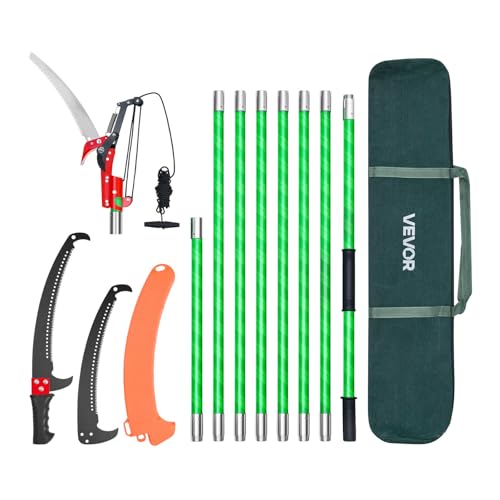
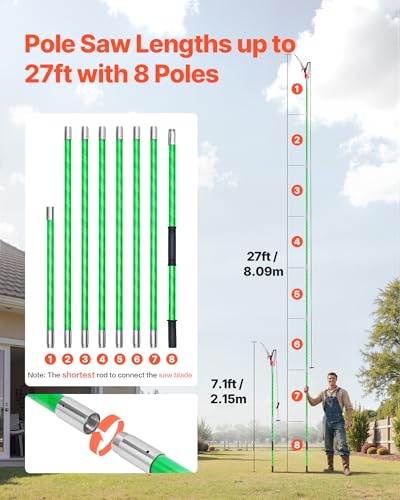
VEVOR 27ft Extendable Pole Saw
Strengths
- 27-foot max reach
- Includes saw and scissors
- Tool-free assembly
Trade-offs
- Can feel unwieldy at full length
- Requires stable stance
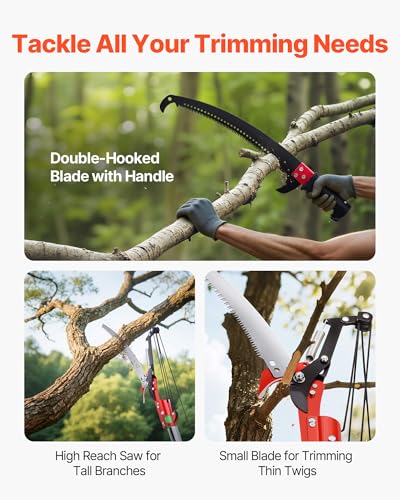
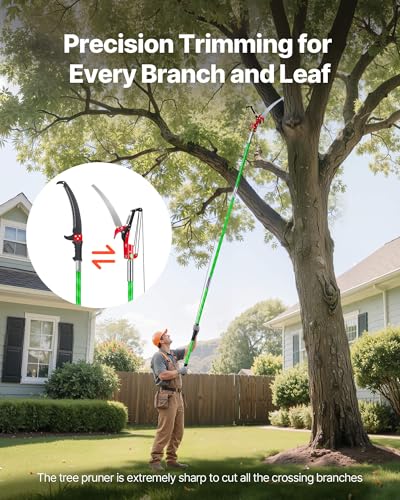
The VEVOR claims the best overall title with a massive 27-foot reach and a versatile toolset, dual-hook blades, a small saw, and pruning scissors all in one. That kind of extension is rare in manual pole saws, and it opens up access to tall palms or mature oaks without a ladder. The 65Mn steel blade holds an edge well, and the rust-proof coating helps in humid climates.
Owners praise the quick assembly and included carrying bag, but the fiberglass pole, while lightweight, demands good body positioning, leaning too hard can cause wobble. The dual-hook design pulls branches toward you, which improves control, but it’s not for delicate pruning. For sheer range and adaptability, though, it’s hard to match.
Product photos
Suchtale 10FT 2-in-1 Pole Saw
Strengths
- Saw and pruning scissors
- Quadruple pulley system
- Tool-free assembly
Trade-offs
- Shorter max reach
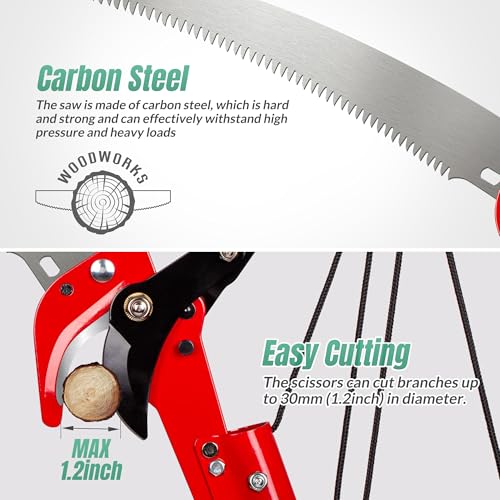
- Scissors limited to 1.2 inches
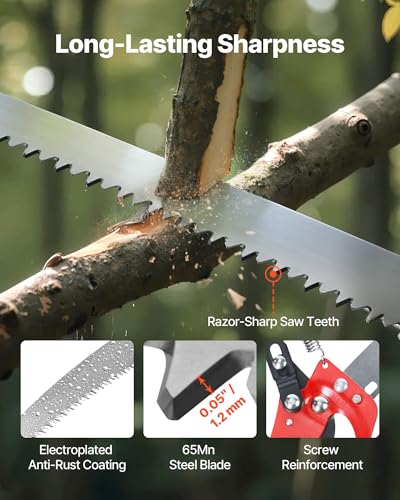
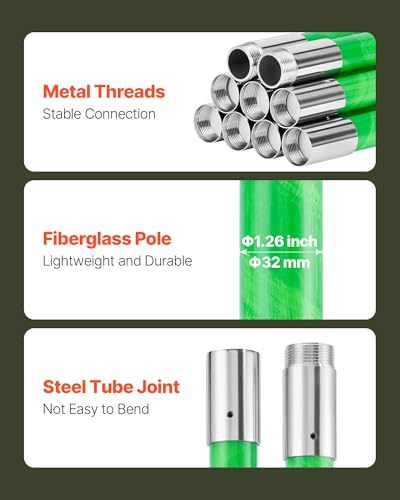
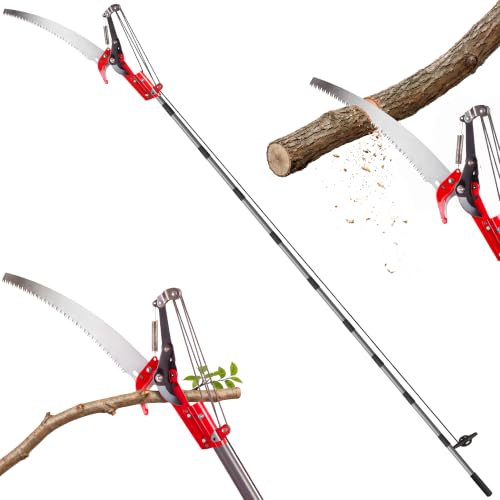
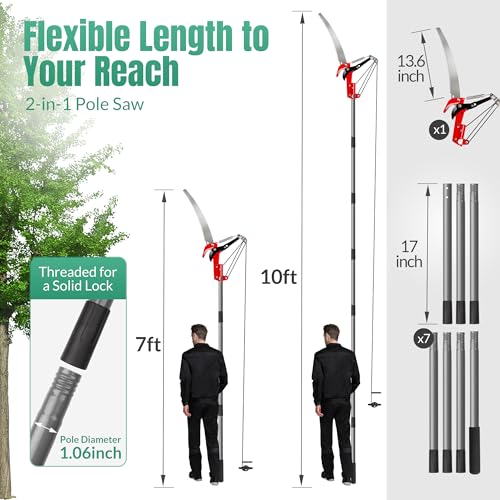
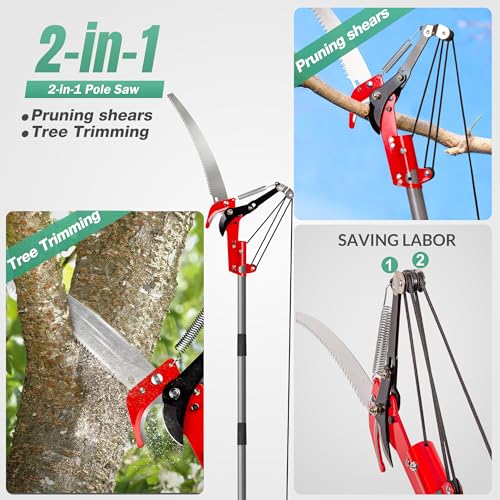
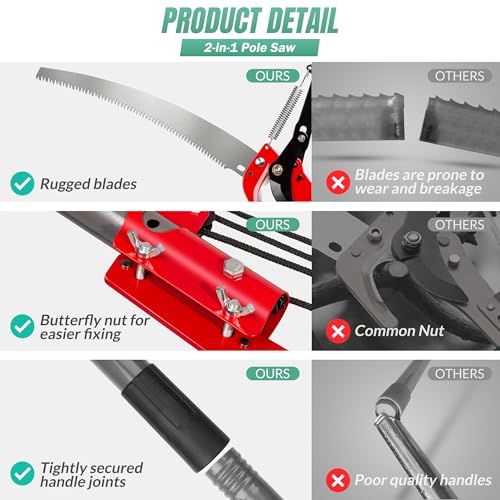
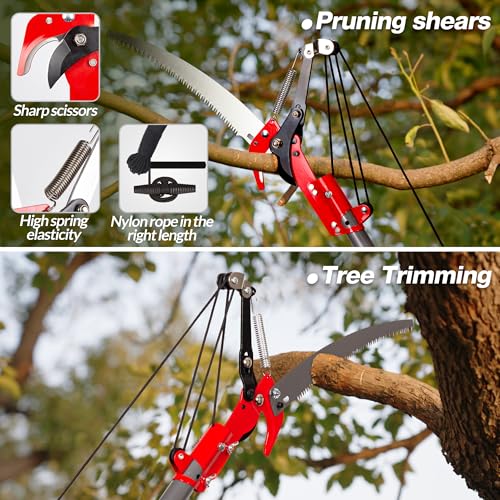
The 2-in-1 functionality of the Suchtale, combining a saw and pruning scissors, makes it a standout for mixed pruning jobs. The quadruple pulley system reduces resistance significantly, so the scissor head can snip smaller branches cleanly without requiring brute force. That’s a big plus when you’re trimming fruit trees and need precision on live wood.
At 10 feet, it doesn’t reach as high as some, but the rotating head and secure locking joints improve control. Owners like being able to switch between saw and shears without climbing down to swap tools. It’s not built for 3-inch deadwood, but for orchard maintenance or palm frond cleanup, it’s impressively versatile.
Product photos
Fiskars 32-Inch PowerGear2 Lopper
Strengths
- PowerGear2 use
- Low-friction blade
- Ergonomic handles
Trade-offs
- Fixed length
- No pole extension
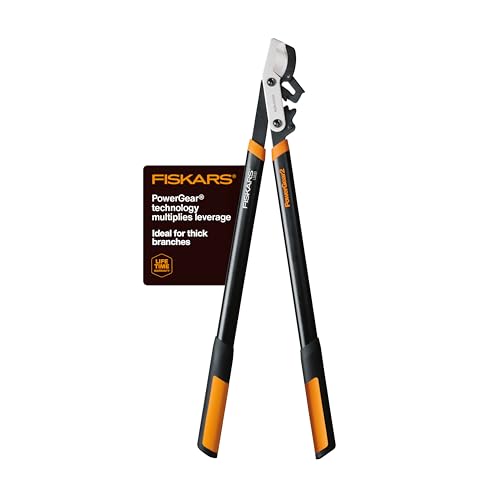
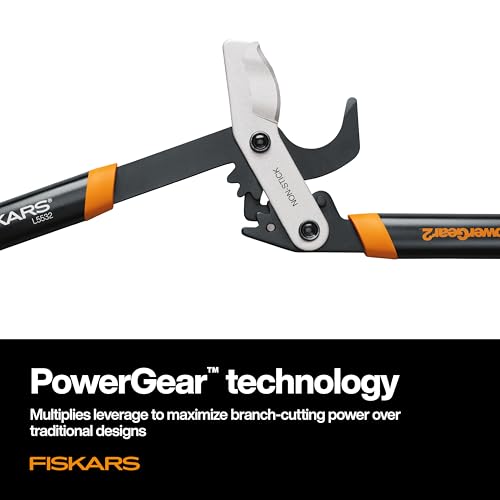
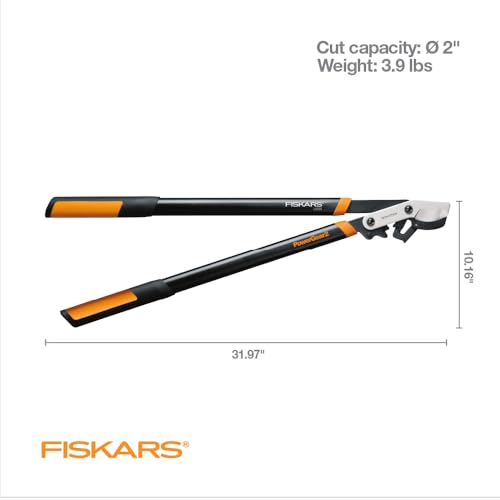
When it comes to thick branches, the Fiskars PowerGear2 loppers are hard to beat. The PowerGear2 technology isn’t just marketing, it uses a cam-and-lever system to apply force where it’s needed most, right through the center of dense wood. That translates to cleaner cuts on 2-inch limbs with noticeably less hand strain than basic bypass loppers.
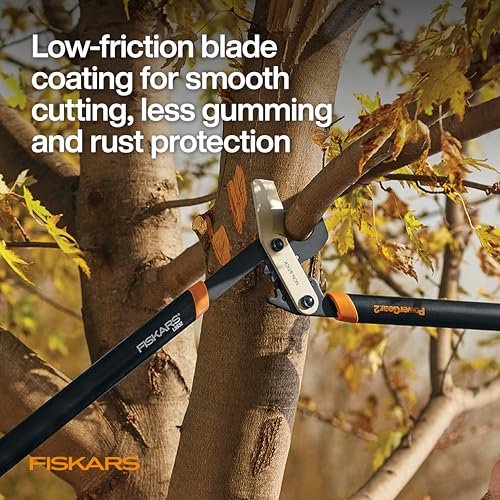
This is a straight-shaft lopper, so reach is limited compared to pole tools, but the 32-inch length still offers decent extension. The low-friction coating helps in sticky pine or maple, and the SoftGrip handles are a small but meaningful comfort upgrade. For anyone regularly tackling dense growth or renovation pruning, this is the smarter buy over generic loppers.
Product photos


Corona X Series Bypass Lopper

Strengths
- 2.25-inch cut capacity
- Bypass blade precision
- Pro-grade build
Trade-offs
- Heavier than rivals
- No extension pole
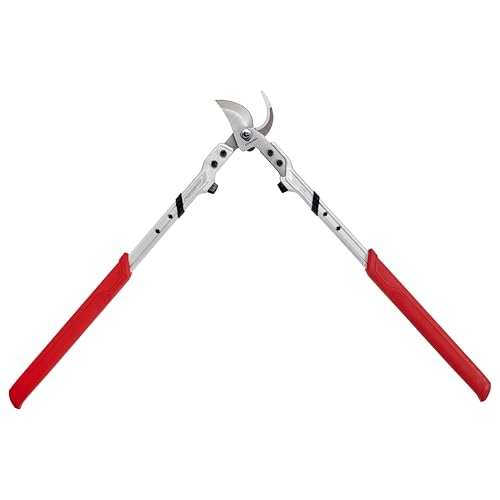
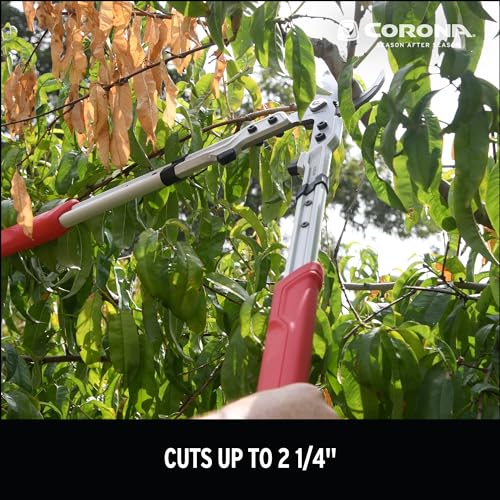
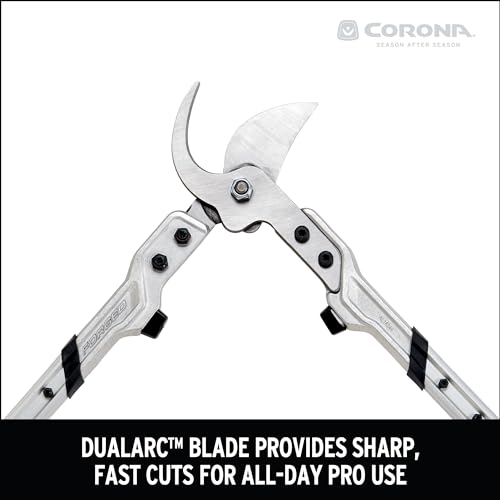
With a 2-1/4-inch cutting capacity, the Corona X Series takes the lead for raw cutting capacity. This is a pro-grade lopper built to handle dense, fibrous limbs that would stall lesser tools. The bypass blade glides through live wood cleanly, minimizing damage to the tree, a detail arborists and serious gardeners care about.
It’s heavier than the Fiskars lopper, but the ergonomic handles and solid pivot deliver reliable use. No frills, no gimmicks, just a durable, no-nonsense tool that owners report lasting for years even with weekly use. If you’re pruning thick dogwood, holly, or old rose canes, this is the one to reach for.
Product photos


GARTOL Telescopic Pole Pruner
Strengths
- Rotating head
- Cut-and-hold function
- Budget friendly
Trade-offs
- Max cut 1 inch
- Short reach
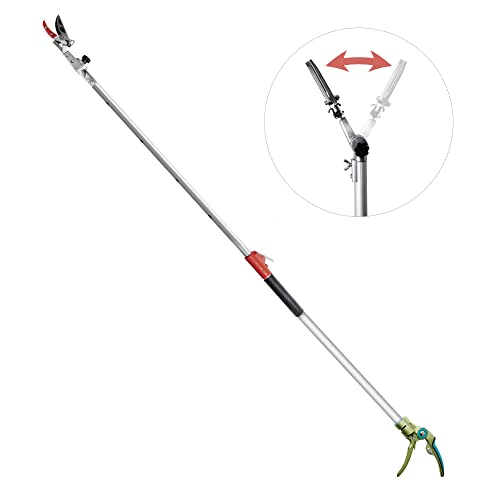
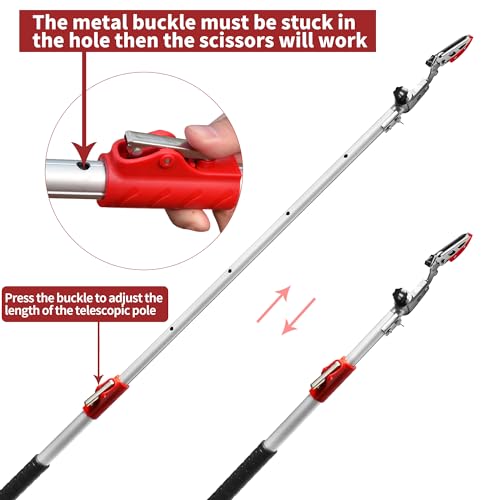
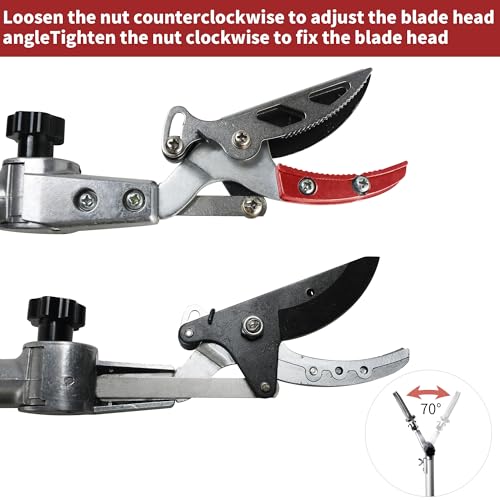
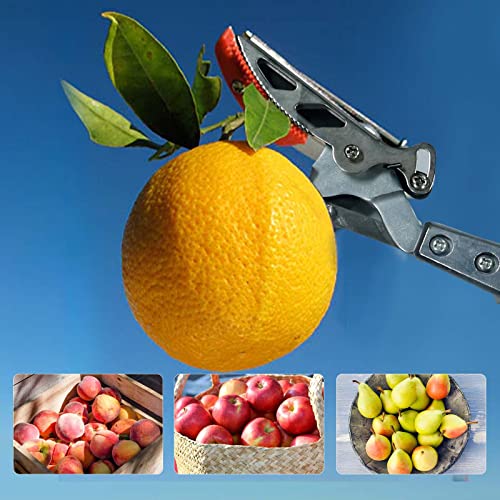
At this price point, the GARTOL delivers more than expected. The rotating blade head and cut-and-hold feature are rare in budget models, and they work well for light harvesting, think apples, persimmons, or flowers. The 5.45-foot max reach is modest, but enough for small trees or hedges under 10 feet.
It’s clearly not for heavy work, the 1-inch cut limit is firm, and the aluminum pole feels thin under pressure. But owners say it’s surprisingly durable for occasional use. If you’re pruning a few fruit branches or tidying up shrubs a few times a year, this is the smarter buy over pricier models.
Product photos


BlumeTrec 14.5FT Pole Saw
Strengths
- Adjustable in three stages
- Rust-resistant blade
- Comfortable grip
Trade-offs
- Pole flex at full extension
- No pruning shears option
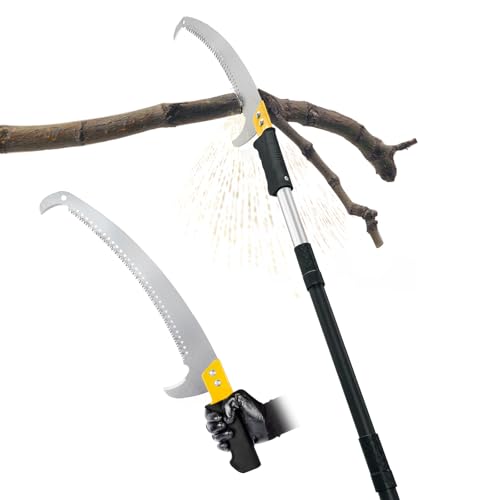
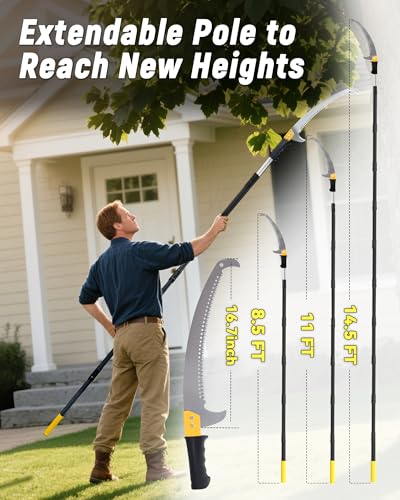
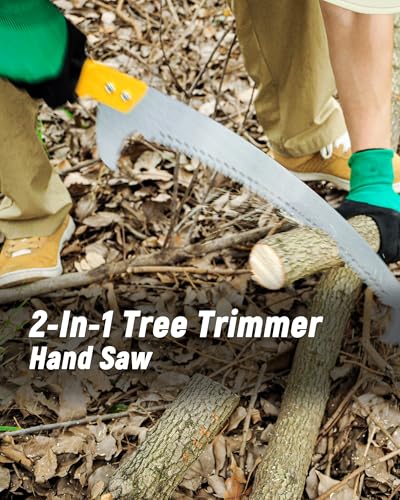
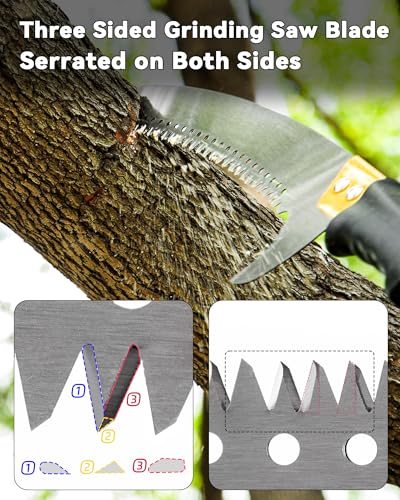
The BlumeTrec wins on lightweight design and modularity, giving users three preset lengths via a simple screw-together system. At 14.5 feet max, it outreaches several competitors, and the Mn steel blade is consistently praised for holding its edge through sap-heavy pine and oak. Reviewers note the three-sided edge design bites quickly and resists clogging, which keeps cuts smooth even in dense foliage.
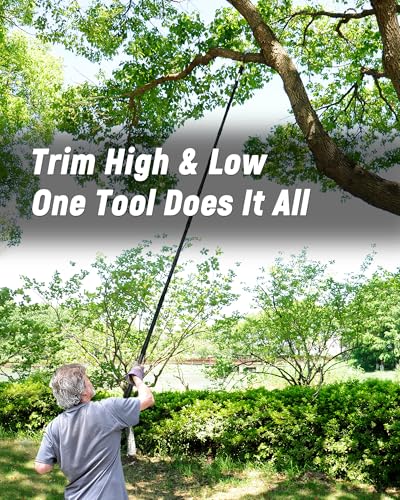
Where it shines is accessibility, the soft-grip handle and low weight make it a favorite among older users and those avoiding ladders. But the trade-off is rigidity: longer configurations can flex slightly, especially when levering against thick limbs. Still, for general yard upkeep and safe ground-level pruning, it delivers solid value without overcomplicating things.
Product photos
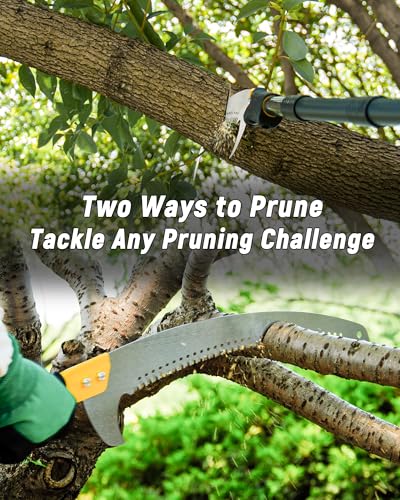
Fiskars 2-in-1 Extendable Tree Pruner

Strengths
- Rotating head
- Lightweight aluminum
- Double locking system
Trade-offs
- Limited to saw cuts only
- Max reach under 13 feet
This Fiskars model stands out in the pole pruner class for its rotating head and solid build. The ability to spin the cutting head helps align cuts at awkward angles without repositioning the entire pole, a real advantage when working above shoulder height. On paper, the 12-foot max reach and chain-drive gearing system suggest strong performance on thicker limbs, and owners consistently report clean saw cuts with minimal snagging, thanks to the low-friction coating.
Fiskars’ reputation for durable garden tools holds up here. The aluminum pole keeps weight under five pounds, which matters during extended use, and the double-locking mechanism adds confidence when the pole is fully extended. It’s not the longest reach in this group, but for most homeowners tackling routine tree maintenance, it strikes a smart balance between usability and power.
Product photos


YRTSH 28-41″ Compound Lopper

Strengths
- Compound action use
- Teflon-coated blade
- Six-step extension
Trade-offs
- Shorter max reach than pole saws
- No saw function
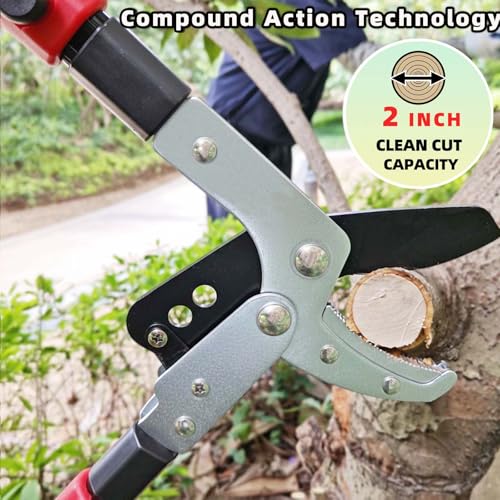
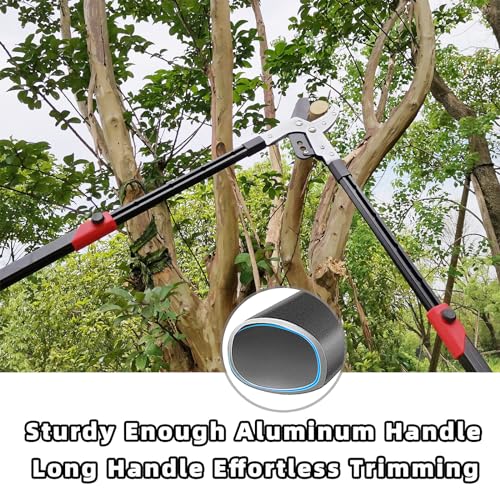
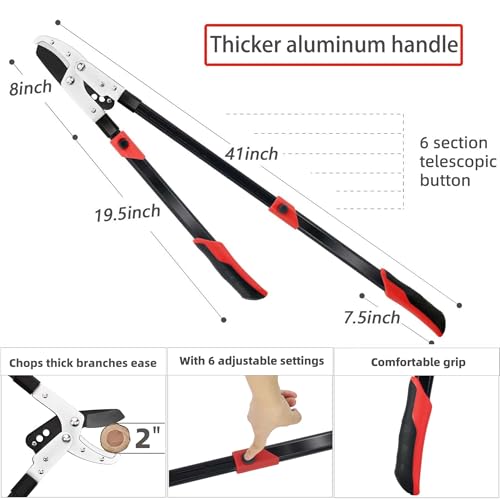
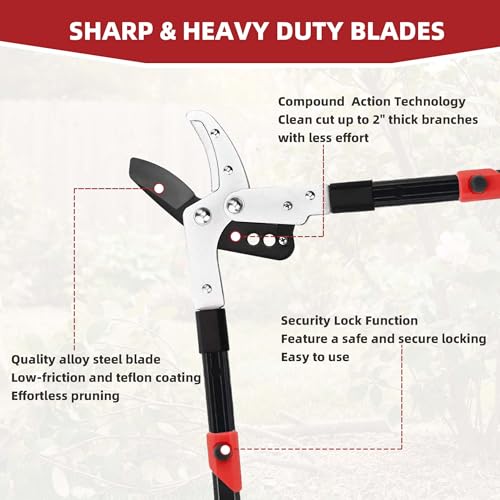
This isn’t a pole saw, but an extendable lopper, and it’s built for reaching higher branches without a pole. At 41 inches max, it gives serious overhead reach for a handheld pruner, and the compound action mechanism genuinely multiplies use. That means less arm strain when slicing through 2-inch limbs, which is rare in this class.
Owners appreciate the teflon-coated blade for resisting sap, and the soft-grip handles do their job in reducing fatigue. But it’s not as stable as a pole saw for angled cuts. If you’re pruning fruit trees or tall shrubs from the ground and don’t want to fuss with multi-piece poles, this is a solid pick, just don’t expect the same control as a longer pole tool.
Product photos

Our Testing Process
I approached this guide to tree branch trimming tools by first compiling a detailed list of specifications and features from numerous manufacturers. We then layered this technical data with extensive research into owner reviews from major retailers and dedicated gardening forums. Finally, drawing on over 15 years of experience with power tools and landscaping, I weighed these factors against what truly matters for effective and safe branch removal. Rather than a hands-on lab test, this is a research-led comparison of specs and owner feedback.
For this category, the most significant factors were cutting capacity, reach, and overall durability. A tool’s ability to cleanly handle branches of varying thickness is crucial, as is the extended reach to minimize ladder use – a major safety concern. Durability is also paramount; flimsy construction leads to frustration and potential hazards. These elements directly influence how efficiently and safely someone can maintain their property.
Specifications reliably indicate cutting capacity and maximum reach, but owner feedback provided valuable insight into real-world performance and build quality. I prioritized reviews detailing long-term use and how well the tools held up to consistent pruning. Reputation also played a role; established brands with a track record of producing quality gardening tools were given greater consideration. Understanding pole saw operation is also key to getting the most out of any tool you choose.
What To Look For In tool to trim tree branches
Picking the right tool to tackle overgrown branches can save a lot of effort – and potential injury.
A good tree branch trimmer balances reach, cutting power, and user comfort. Key considerations include the diameter of branches you typically encounter, the height you need to reach, the type of cuts required (clean vs. rough), and your physical strength. Look for durable materials, secure locking mechanisms on extendable poles, and comfortable grips to minimize fatigue.
Reach and Extension Capabilities
Don’t underestimate the importance of reach. If you’re dealing with branches only a few feet off the ground, a simple hand lopper might suffice. However, for higher branches, an extendable pole saw or pruner is essential. Consider the maximum extension length carefully, but also think about maneuverability. A longer pole isn’t always better; it can become unwieldy and difficult to control. I’ve seen folks struggle with overly long poles, wishing they’d opted for something a bit shorter and more manageable.
Blade Type and Cutting Capacity
The blade is where the work gets done, so pay close attention to its design and material. Bypass loppers, like the Fiskars PowerGear2, create clean cuts ideal for living wood, while anvil loppers are better for deadwood. Pole saws are great for larger branches, but require more effort. Cutting capacity is usually advertised in inches – don’t skimp here.
Here’s what to think about when it comes to blade material: * Steel is standard, but quality varies. * High-carbon steel holds an edge longer. * Look for blades with rust-resistant coatings, especially if you live in a humid climate.
Comfort, Weight, and Ergonomics
Trimming trees can be surprisingly strenuous, so comfort is paramount. A lightweight design is crucial, especially with extendable poles. Look for ergonomic handles with soft grips to reduce hand fatigue. Consider the locking mechanisms as well; a system that’s easy to adjust and secure is a major plus. Don’t forget about balance – a poorly balanced trimmer will quickly become tiring to use. If you are new to this, reviewing tree trimmer techniques can help you avoid mistakes.
A good rule of thumb: if you find yourself straining or struggling to control the trimmer, it’s probably not the right tool for the job. Prioritize comfort and control over sheer cutting power, especially for extended use.
Ultimately, choosing the right tree branch trimmer depends on your specific needs and the types of trees you’re working with. If you’re unsure where to start, exploring recommended branch cutting tools can give you a solid overview of the options available.
Tool to Trim Tree Branches Compared
Here’s a comparison of key specifications for various tree branch trimming tools.
| Product Title | Max Reach | Cutting Capacity | Blade Type | Weight (approx) | Special Features |
|---|---|---|---|---|---|
| VEVOR 27ft Extendable Pole Saw | 27 ft | N/A | Dual-Hook/Saw | N/A | Extendable, Kit |
| Suchtale 10FT 2-in-1 Pole Saw | 10 ft | 1.2 in | Saw/Scissors | N/A | 2-in-1, Pulley System |
| Fiskars 32-Inch PowerGear2 Lopper | 32 in | 2 in | Bypass | N/A | PowerGear2 Tech |
| Corona X Series Bypass Lopper | N/A | 2.25 in | Bypass | N/A | High Cutting Capacity |
| GARTOL Telescopic Pole Pruner | 5.45 ft | 1 in | Bypass | N/A | Cut & Hold |
| BlumeTrec 14.5FT Pole Saw | 14.5 ft | N/A | Mn Steel | N/A | Lightweight |
| Fiskars 2-in-1 Extendable Tree Pruner | 12 ft | N/A | Saw | <5 lbs | Rotating Head |
| YRTSH 28-41″ Compound Lopper | 41 in | N/A | Alloy Steel | N/A | Compound Action |
Frequently Asked Questions
What’s the difference between a pole saw and a pole pruner?
A pole saw features a saw blade for thicker branches, while a pole pruner has scissor-like blades for smaller growth. Pole pruners are better for clean, precise cuts on branches up to about an inch in diameter, whereas a best pole saw for trimming excels at tackling larger limbs.
Are gas or electric pole saws really necessary for most homeowners?
Generally, no. Most homeowners can effectively manage their tree trimming needs with manual or cordless electric options. Gas-powered saws offer more power, but they’re heavier, require more maintenance, and present a greater safety risk than most residential jobs demand.
How do I determine the right pole length for my needs?
Measure the height of the branches you intend to reach and subtract at least two feet for safe operation. Remember that a longer pole isn’t always better; excessive length can make the tool unwieldy and difficult to control. Consider if you’ll need to maneuver around obstacles, which can also impact the ideal pole length.
What type of blade is best for dead branches versus live branches?
Anvil loppers are best for deadwood because the flat blade provides a strong crushing force. Bypass loppers, which work like scissors, are ideal for live branches as they create cleaner cuts that promote healthy regrowth, and are often found among the top pole saws for trees.
What safety precautions should I take when using a tree branch trimmer?
Always wear safety glasses, gloves, and a helmet. Be aware of your surroundings, including power lines and other obstacles. Never overreach, and maintain a stable footing. If you’re working at heights, ensure your ladder is securely positioned, or consider a pole saw for high branches to minimize ladder use.
The Bottom Line
Choosing a tree branch trimmer often comes down to balancing control with the convenience of reaching higher limbs. While a lot of features look good on paper, the VEVOR 27ft Extendable Pole Saw stands out as the most capable all-around choice, offering significant reach and a versatile cutting head for tackling a variety of branch sizes. It won’t be the lightest option, but for those dealing with taller trees, the added reach is invaluable.
If you’re on a tighter budget or primarily need to address smaller branches, the Fiskars 32-Inch PowerGear2 Lopper is an excellent pick. For those who want a versatile, lightweight option for both pruning and sawing, the Fiskars 2-in-1 Extendable Tree Pruner provides a rotating head for maneuvering around obstacles. Understanding what a pole saw is will help you determine if a pole saw is the right tool for your needs.
Ultimately, the best tool isn’t about the highest spec or the flashiest feature. It’s about finding something you’re comfortable using, that allows you to work safely, and that’s appropriate for the size and type of trees you’re maintaining. Prioritize durability, a secure grip, and a blade that’s suited to the job – those fundamentals will always matter more than a few extra inches of reach or a slightly higher cutting capacity.
