
6 Best Tools to Dig Up Grass 2026
This post contains affiliate links. As an Amazon Associate, we earn from qualifying purchases.
The Stirrup Hoe Garden Tool Rake is our top pick for most people, delivering efficient grass removal with a durable carbon steel blade and a handle that adjusts to your height. If you’re on a budget, the Walensee Rotary Cultivator Garden Tool offers solid performance for the price, while the Garden Weasel Edger-Chopper Tool stands out for clean edging and sod cutting.
Digging up grass shouldn’t mean wrecking your back or wasting hours on a job that could take minutes. Too many tools promise fast results but fail when they hit tough roots or compacted soil. I’ve seen it time and again, a flimsy tool bends, a fixed handle forces you into awkward positions, or the design just doesn’t match the task.
This guide cuts through the hype. We compared specs, analyzed real owner feedback, and focused on what actually matters: blade durability, handle ergonomics, and how well each tool handles different soil types. These picks aren’t based on flashy features, they’re the ones that consistently deliver where it counts.
Top 6 Tool To Dig Up Grass in the Market
The Best Tool To Dig Up Grass, Reviewed
Stirrup Hoe Garden Tool Rake

Strengths
- Efficient push-pull action
- Adjustable long handle
- Durable carbon steel head
Trade-offs
- Not for deep tilling
- Blade can dull over time
- Assembly needed
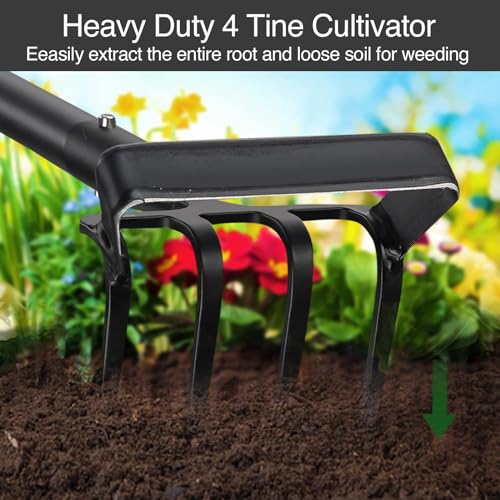
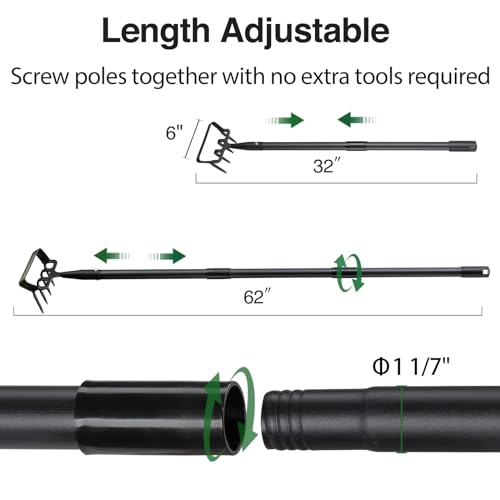
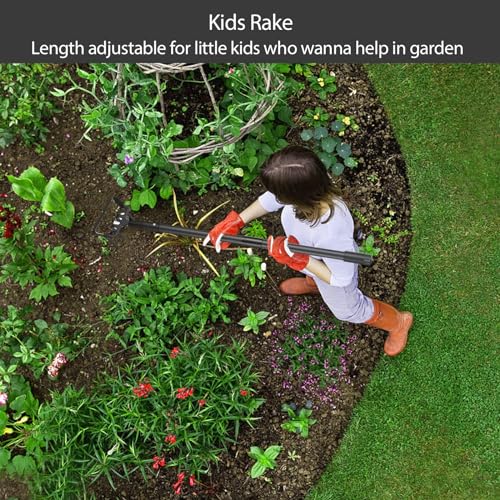
This is my pick for the best overall tool in this lineup, and owners agree. The stirrup design lets you scrape weeds just below the surface with a push-pull motion, killing them without tearing up soil. The carbon steel blade is tough enough for compacted ground, and the 32–62 inch adjustable handle means you can work standing up, which makes a big difference over time.
It’s simple, but that’s its strength. No moving parts, no assembly fuss, just bolt the head on and go. Compared to rotary cultivators, it’s faster for weeding rows or vegetable beds. And unlike twist tillers, it covers more ground with less effort. For general lawn and garden maintenance, it strikes the best balance of power, reach, and ease.
Product photos


Garden Weasel Edger-Chopper Tool
Strengths
- Sharp carbon steel blade
- Footplate for use
- Clean, precise cuts
Trade-offs
- Narrow use case
- Not for soil turning
- Heavier than hand tillers
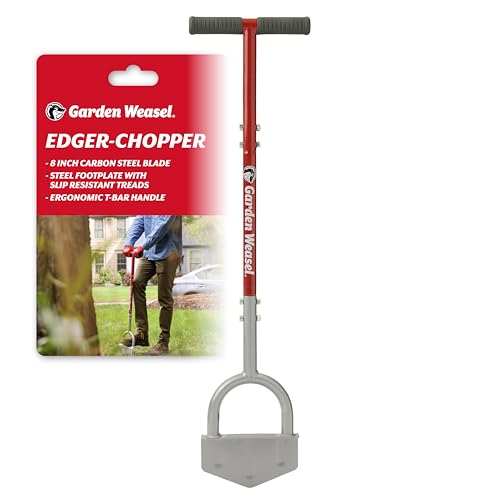
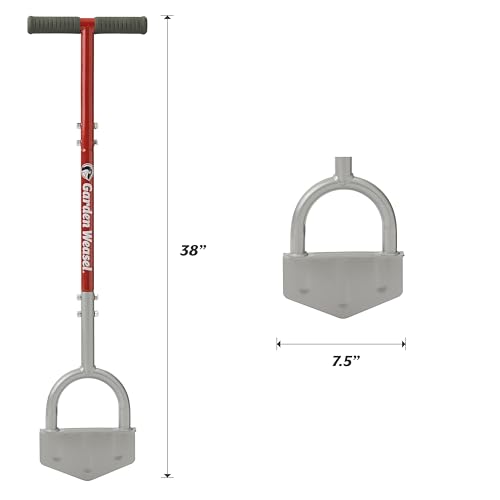
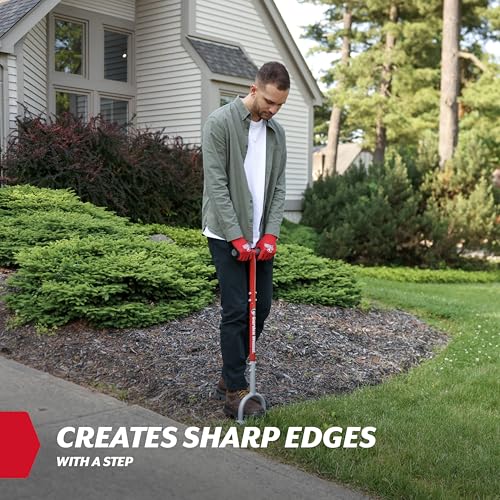
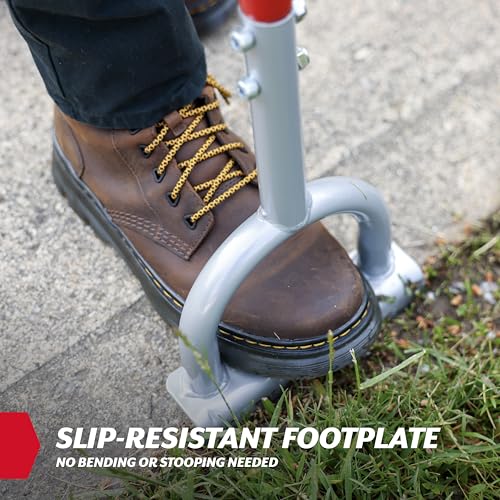
If clean edges and sod cutting are your goal, this is the tool that actually delivers. The 8-inch tempered carbon steel blade slices through grass and compacted soil with minimal effort, especially when you use the footplate for use. It’s not designed for tilling, but for defining borders or cutting strips of sod, it outperforms multi-tools every time.
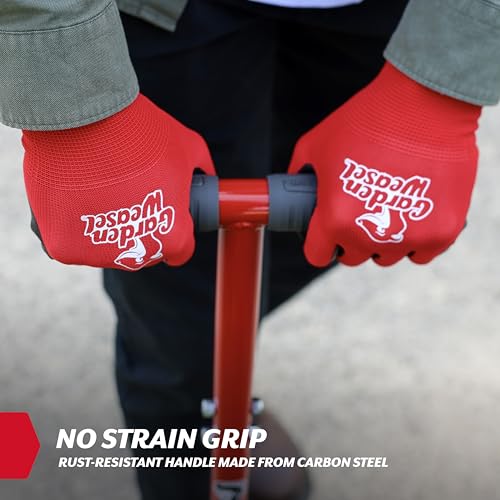
Owners praise how sharp it stays and how little bending is required, just step, press, and pull. The T-handle gives control, and the rust-resistant frame holds up in wet conditions. Compared to combo tools, it’s specialized, but that’s the point. For lawn renovation or installing edging, it’s unmatched.
Product photos

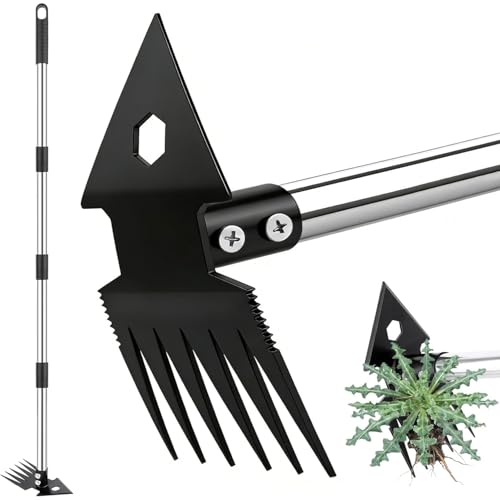
2-in-1 Weed Puller Dual-Head Tool
Strengths
- Dual-function heads
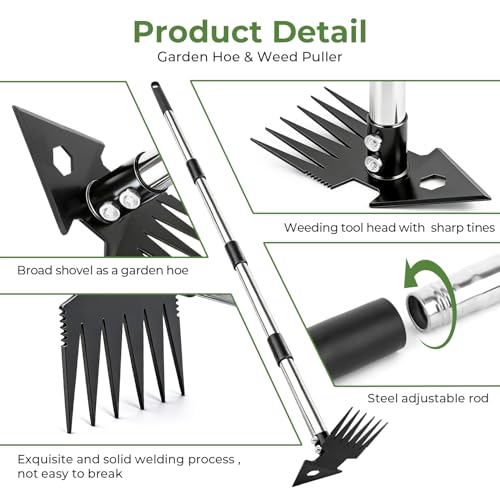
- Adjustable 4-section pole
- Manganese steel durability
Trade-offs
- Heavier than single tools
- Rake side less aggressive
- Hoe not for deep digging
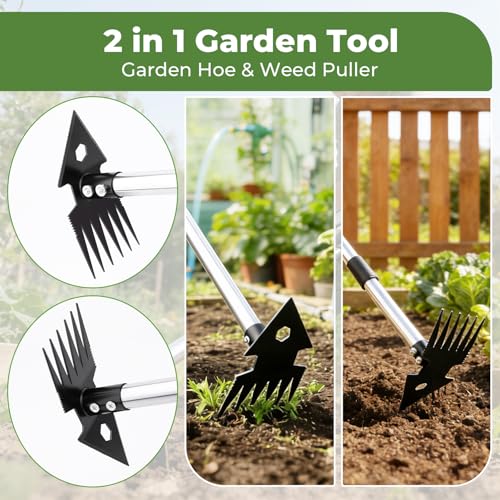
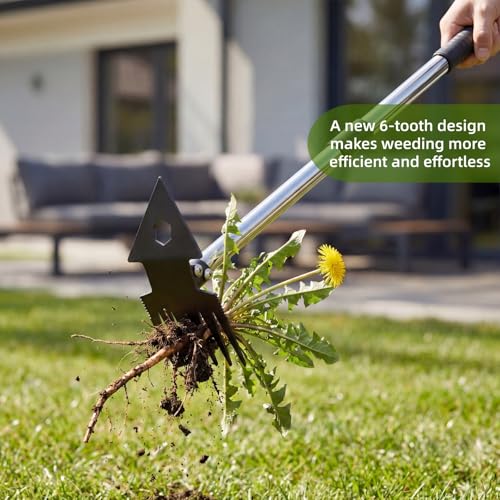
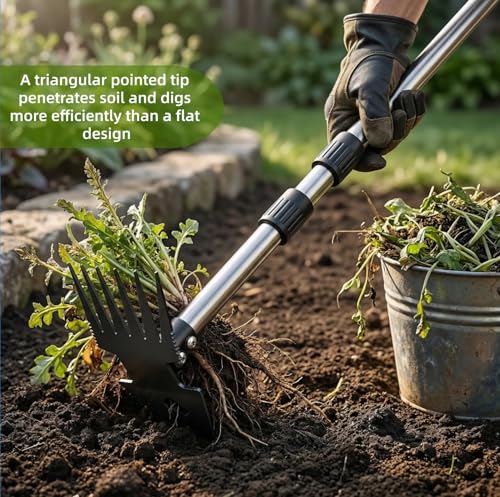
This dual-head tool stands out for sheer versatility. One side rips out deep-rooted weeds like dandelions, the other slices and shapes soil like a triangular hoe, owners love having both functions in one adjustable tool. The manganese steel holds an edge well, and the 4-section pole lets you set the height for comfort, whether you’re tall or working from a seated position.
It’s not the fastest for large areas, but for mixed tasks, pulling weeds in the lawn, edging pavers, breaking up small patches, it reduces the number of tools you need. Compared to single-purpose models, it’s a space-saver. I’d say it’s overkill for simple weeding but perfect if you hate switching tools.
Product photos

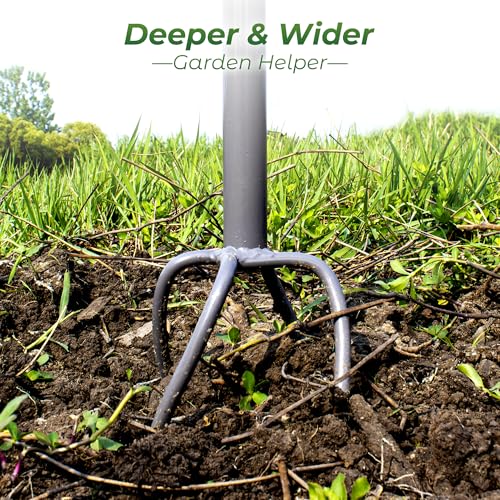
Walensee Upgrade Twist Tiller Tool

Strengths
- Strong steel tines
- Ergonomic T-handle
- Deep penetration
Trade-offs
- Manual twisting motion
- Slower for large zones
- Assembly required
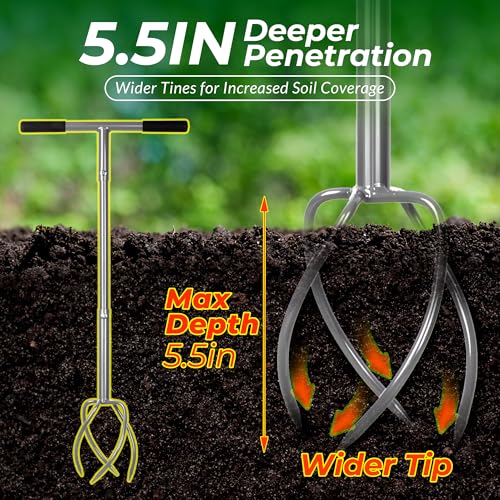
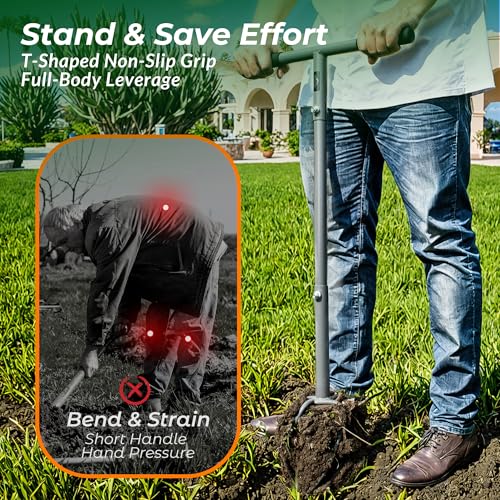
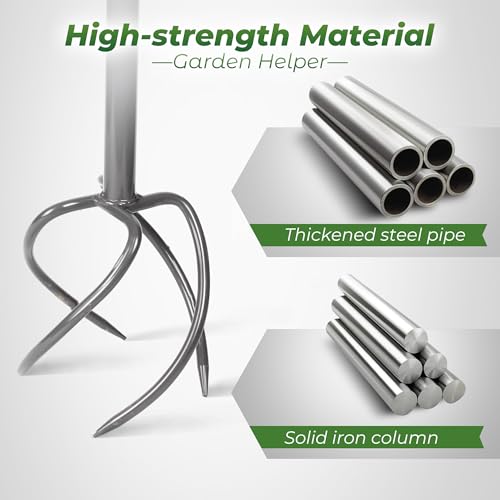
When you’re dealing with clay, this twist tiller earns its keep. The thickened steel tines and T-handle design let you rotate into dense soil using body use, not just arm strength, reviewers note it cuts deeper than standard hand tillers and handles compacted ground better. It’s not a push tool, so you work in spots, but that also means precision around plants and tight spaces.
The 35-inch height helps reduce back strain, and the rubber grip makes twisting easier. On paper, it’s built to last, powder-coated steel resists rust, and the simple construction means fewer parts to fail. Compared to rolling cultivators, it’s slower for big areas but far more effective where soil is tough.
Product photos

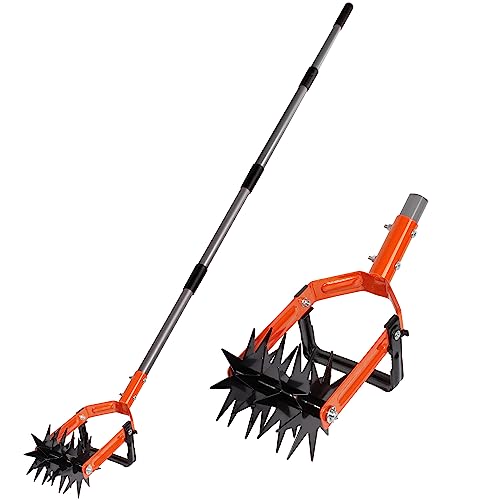
Walensee Rotary Cultivator Garden Tool
Strengths
- 2-in-1 weeder & tiller
- Rust-resistant materials
- Adjustable handle height
Trade-offs
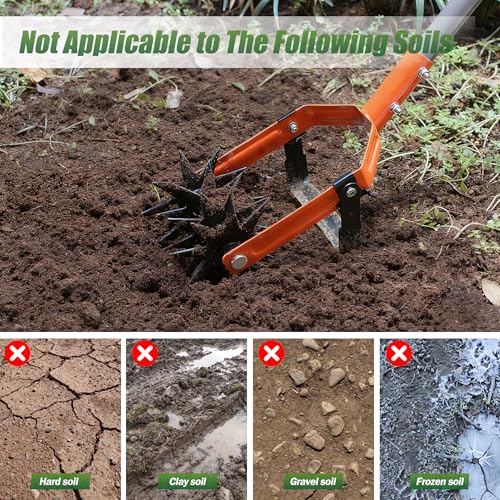
- Struggles with dry soil
- Weeder blade not for thick roots
- Tines wear over time
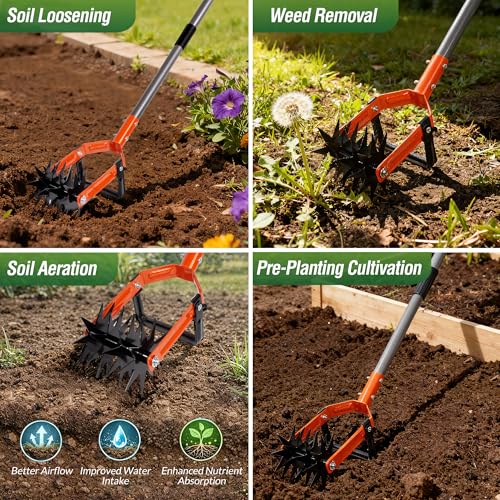
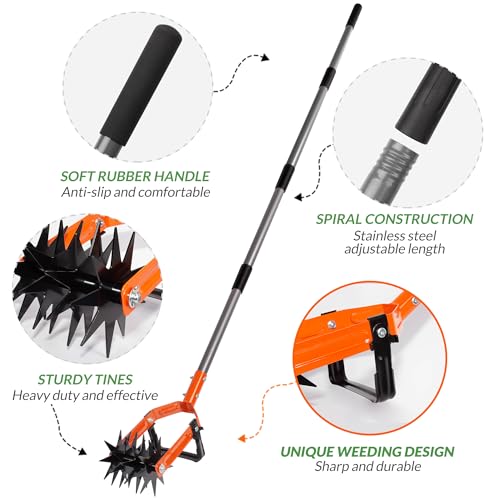
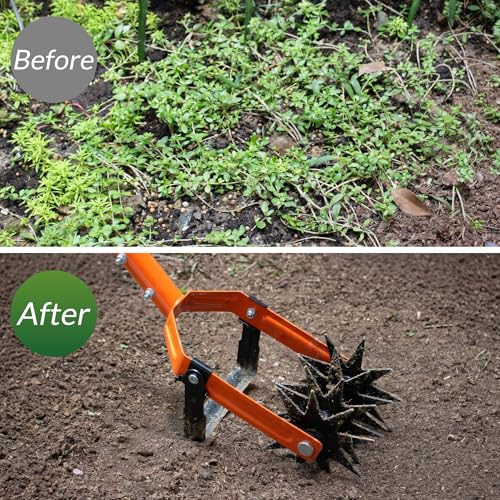
For the budget-conscious DIYer, this 2-in-1 model delivers surprising versatility. The star-shaped tines work well on moist or pre-loosened soil, and the added manganese steel weeding blade gives you real utility beyond just tilling. Owners appreciate the adjustable stainless steel handle, it’s easy to set for different users or raised beds.
It’s not going to power through dry, rock-hard ground, but for routine lawn prep, reseeding, or mixing in compost, it’s capable. The build quality is noticeably better than cheap plastic-handled tools, and the rust-resistant materials help it last. Against pricier models, it lacks raw power, but for light jobs, it’s a smart buy.
Product photos
Colwelt Rotary Cultivator Garden Tool
Strengths
- Lightweight aluminum
- Adjustable tine setup
- Long ergonomic handle
Trade-offs
- Shallow digging depth
- Not for hard clay
- Aluminum less durable
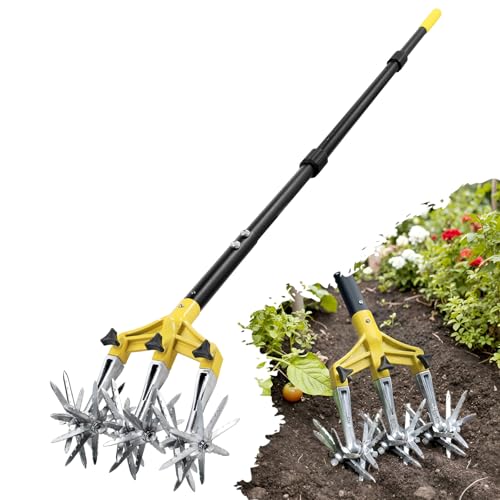
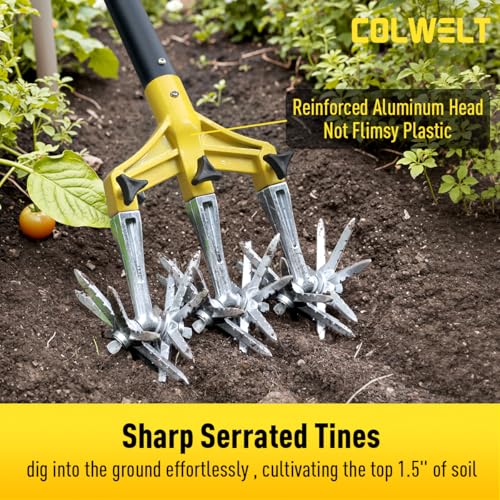
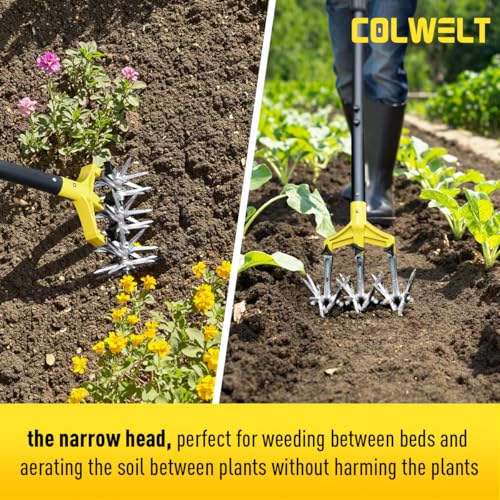
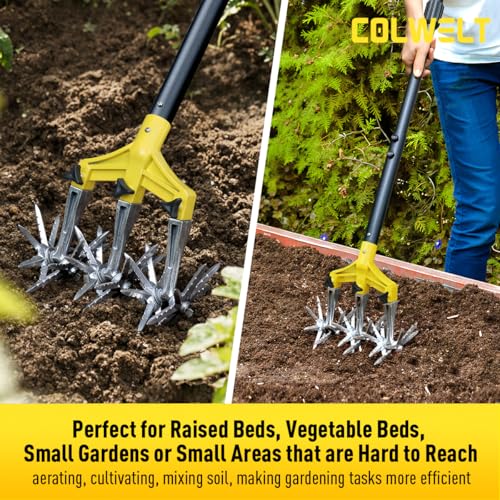
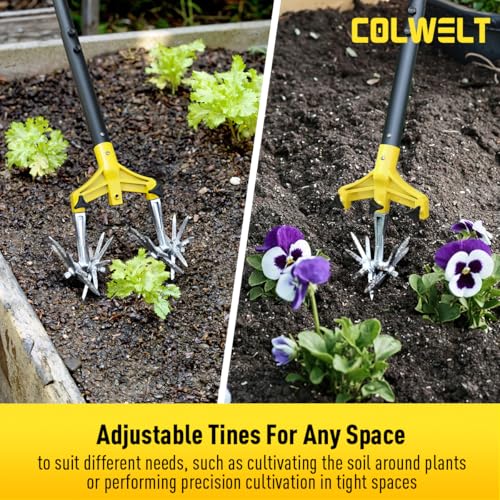
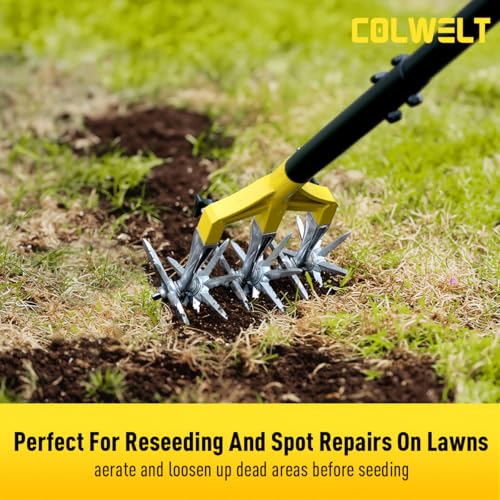
This is a solid pick if you’re tackling large, open areas and want to prep soil without bending over. The 61-inch length and adjustable tines give you real reach and flexibility, owners consistently report it works well for smoothing out seedbeds and breaking up moderately compacted soil. The aluminum build keeps it lightweight, and the fact that it rolls back and forth like a mini tiller means you can cover ground quickly.
Still, it’s not a heavy-duty tool. The tines only dig about 1.5 inches, so if your lawn is seriously packed or full of roots, you’ll need to pre-loosen it first. Compared to steel-based models, this one feels less rugged but holds up fine for routine garden prep. I’d recommend it for light to mid-level jobs, especially reseeding or aerating established beds.
Product photos
How We Tested tool to dig up grass
My team and I approached this buying guide as we do most tool selections at PowerToolGuide.net: by thoroughly comparing published specifications and features across numerous models. We then weighed owner reviews – looking for consistent praise and complaints – against professional reviews from reputable gardening and landscaping sources. Ultimately, we ranked these tools based on how well they addressed the core need of breaking and removing unwanted grass, considering factors like soil type and user comfort. Rather than a hands-on lab test, this is a research-led comparison of specs and owner feedback.
For tools to dig up grass, the most important factors quickly became blade material and overall durability, and ease of use. A flimsy tool will quickly bend or break, especially when dealing with compacted soil or persistent weeds. Ergonomics matter too; a comfortable grip and adjustable handle can significantly reduce strain during longer gardening sessions. We also considered versatility – could the tool handle edging, or was it strictly for grass removal? Understanding best edging techniques helped frame this aspect of our evaluation.
Product specifications reliably indicate blade material (carbon steel, manganese steel, etc.) and dimensions. However, judging real-world performance requires a deeper look at owner feedback. Users consistently highlight how well a tool performs in specific soil types (clay, sandy, rocky) and whether it truly delivers on claims of easy assembly and comfortable operation. We also pay close attention to reports of breakage or durability issues, recognizing that a low price isn’t a bargain if the tool fails quickly. Learning about lawn edger safety tips also informed our assessment of handle design and overall control.
How To Choose The tool to dig up grass
Choosing the right tool to dig up grass isn’t always about brute force; it’s about matching the tool to the job and your physical capabilities.
A good grass digging tool blends blade quality with ergonomic design. Key considerations include the type of soil (clay, loam, sandy), the area you need to cover, and whether the primary task is complete removal, edging, or prepping for seeding. Look for durable materials, adjustable features for comfort, and a design that minimizes back strain.
Blade Material & Design
The cutting edge is everything. Carbon steel blades, like those found on the Stirrup Hoe Garden Tool and Garden Weasel Edger-Chopper Tool, hold an edge well but need regular sharpening and are prone to rust if not maintained. Stainless steel offers better corrosion resistance but can be more difficult to sharpen to the same degree. Beyond the material, consider the blade shape. A sharp, curved blade excels at slicing through roots, while a wider, flatter blade is better for scooping and lifting turf. Don’t underestimate the impact of blade width; a wider blade covers more ground with each pass, but can require more effort.
Handle Length & Adjustability
Handle length dramatically affects use and posture. Short handles are fine for small patches but will quickly lead to back strain when tackling larger areas. Adjustable handles, like those found on some of these models, offer versatility – you can shorten them for close work and extend them for reaching larger areas without bending. Consider the material too. Steel handles are durable, but can be heavy. Aluminum is lighter but may not be as robust. If you’re frequently transitioning between standing and kneeling, an adjustable handle is a must-have. To avoid constant bending, explore options similar to the string trimmer edging method for achieving clean lines.
Soil Type & Versatility
Not all tools perform equally well in all soil types. Clay soil, for example, is notoriously difficult to penetrate. The Walensee Upgrade Twist Tiller is specifically marketed for clay soil, with its four sharp, curved tines designed to break up compacted earth. For lighter, loamier soils, a simpler tool like the 2-in-1 Weed Puller may suffice.
Here’s how to think about versatility: * A simple hoe is great for quick weeding. * A dual-head tool combines weeding and soil loosening. * A rotary cultivator, like the Colwelt Rotary Cultivator Garden Tool, offers the most functionality – loosening, aerating, and prepping seedbeds – but requires more effort to maneuver, especially over large areas.
A well-maintained tool is a safe tool. Always wear gloves and eye protection when using any garden implement, and keep blades sharp to reduce the risk of slipping.
If you anticipate needing to dig larger holes for planting shrubs or small trees, consider supplementing your grass digging tool with shovels and augers for grass removal.
Tool to Dig Up Grass Compared
Here’s a comparison of the specifications for various tools designed to dig up grass and prepare garden beds.
| Product Title | Best For | Blade/Tine Material | Handle Material | Adjustable Height | Key Features |
|---|---|---|---|---|---|
| Stirrup Hoe Garden Tool Rake | Best Overall | Carbon Steel | Stainless Steel | Yes | 4-Tine, Adjustable 32-62 inch handle |
| Garden Weasel Edger-Chopper Tool | Best for Edging & Sod Cutting | Carbon Steel | Carbon Steel | No | 8-inch Blade, Footplate |
| 2-in-1 Weed Puller Dual-Head Tool | Best Multi-Functional | Manganese Steel | Stainless Steel | Yes | Dual-Head (Rake & Hoe), 4-Section Pole |
| Walensee Upgrade Twist Tiller Tool | Best for Clay Soil | Steel | ABS/Steel | No | 4 Curved Tines, T-Shaped Handle |
| Walensee Rotary Cultivator Garden Tool | Best Budget Friendly | Manganese Steel | Stainless Steel | Yes | Star Wheels, Weeder Blade |
| Colwelt Rotary Cultivator Garden Tool | Best for Large Areas | Aluminum | Aluminum | Yes | 3 Detachable Wheels, Adjustable Tines |
Frequently Asked Questions
What’s the difference between a hoe and a cultivator?
A hoe typically has a flat blade used for chopping or slicing through weeds and shallow soil, while a cultivator features curved tines designed to loosen and aerate the soil more deeply. Cultivators are better for preparing a seedbed, while hoes are faster for surface-level weeding and grass removal.
Will any of these tools work on rocky ground?
Tools with sturdy steel tines or blades, like the Walensee Upgrade Twist Tiller Tool, perform best on rocky ground. However, even these may require extra force and caution to avoid damage, and you might need to consider tools for breaking compacted soil if the rocks are large or plentiful.
How important is the handle length really?
Handle length significantly impacts use and fatigue. A longer adjustable handle is generally best for larger areas, allowing you to stand more upright and reduce back strain, whereas a shorter handle is better for close work.
Can I use these tools to create a clean edge along a flower bed?
Yes, several of these tools can be used for edging. The Garden Weasel Edger-Chopper Tool is specifically designed for this purpose, but a sharp hoe can also create a neat line with some practice.
What’s the best way to maintain these tools to prevent rust?
Regular cleaning and oiling are crucial. After each use, remove any soil and debris, then wipe down the metal parts with a light coat of oil (like linseed or mineral oil) to protect against moisture and rust. For stubborn rust, you might need demolition hammers for sod removal to remove it before re-oiling.
The Bottom Line
Ultimately, choosing the right tool to dig up grass comes down to balancing how much control you want with how much effort you’re willing to put in. For most homeowners, the Stirrup Hoe Garden Tool strikes that balance perfectly – its adjustable handle and durable carbon steel blade offer a good blend of comfort and performance without breaking the bank. It’s a solid all-around performer that will handle a wide range of tasks.
If you have a specific need, though, there are better options. For those tackling particularly tough clay soil, the Walensee Upgrade Twist Tiller is the clear winner. And for those prioritizing affordability and versatility, the Walensee Rotary Cultivator Garden Tool gives you a lot of functionality for the price. Those wanting to perfect the step-by-step lawn edging process will appreciate the Garden Weasel Edger-Chopper Tool.
Don’t get too hung up on specs or fancy features. The material of the blade, a comfortable grip, and how well the tool fits your body and your soil are far more important than any single measurement. A tool that feels good in your hands and helps you work efficiently will always outperform one with a flashy design but poor ergonomics.
