4 Best Table Saws for Woodworking 2026
This post contains affiliate links. As an Amazon Associate, we earn from qualifying purchases.
The SKIL 10 Inch Portable Jobsite saw stands out as the best overall table saw for woodworking, offering solid performance and portability for most DIYers. If you’re on a tight budget, the SKIL 8-1/4″ Compact Portable delivers basic functionality without breaking the bank, while the POWSTR Table Saw with 98% Dust collection is the most versatile pick for those prioritizing a clean workspace.
Most woodworkers don’t need a showroom-floor beast, they need a saw that delivers straight, repeatable cuts without constant tweaking. Too many people end up frustrated by flimsy fences, poor dust control, or motors that bog down on simple rip cuts.
After comparing the field and weighing specs against real owner feedback, I focused on what actually matters: fence accuracy, motor reliability, and a clean working environment. This guide cuts through the noise to help you find a saw that matches your workload, space, and expectations, no hype, just practical picks backed by research.
Top 4 Table Saw For Woodworkings in the Market
The Best Table Saw For Woodworkings, Reviewed
SKIL 10 Inch Portable Jobsite Table Saw
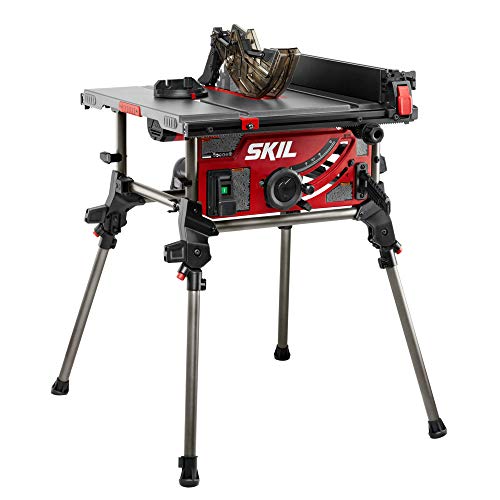
Strengths
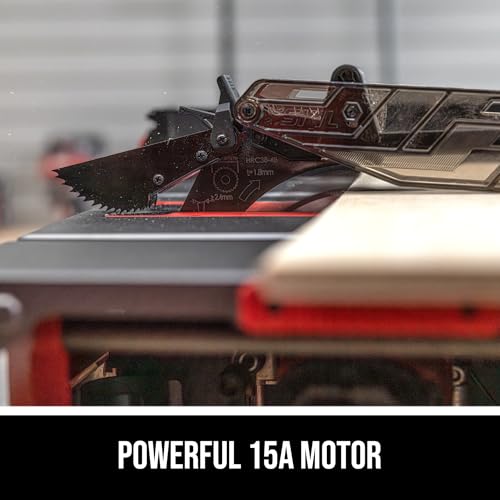
- 15-amp motor
- Folding stand included
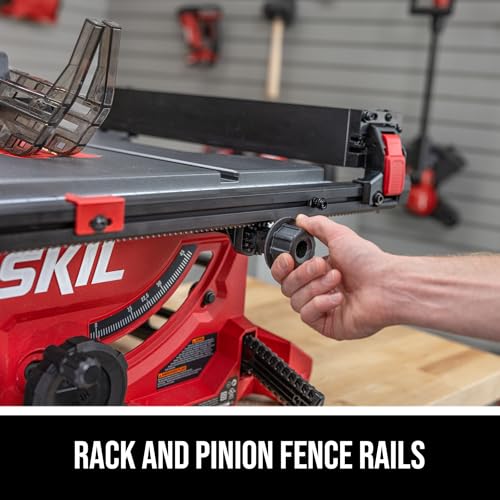
- Rack-and-pinion fence
Trade-offs
- Dust collection mediocre
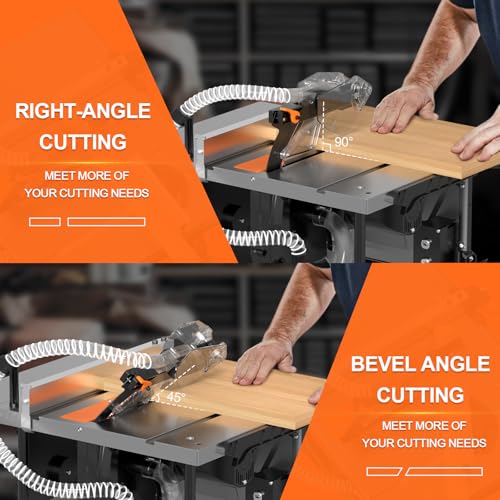
- Bevel only 0° and 45°
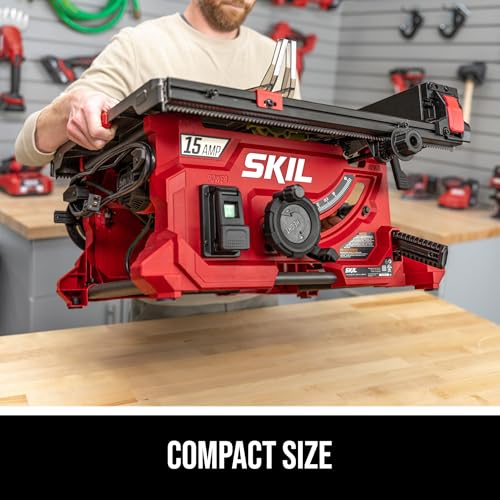
- Heavy for frequent transport
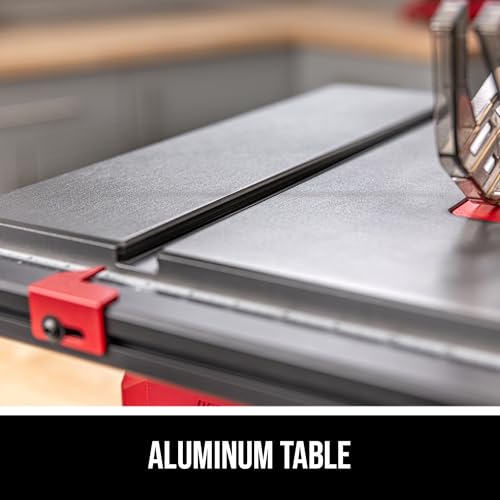
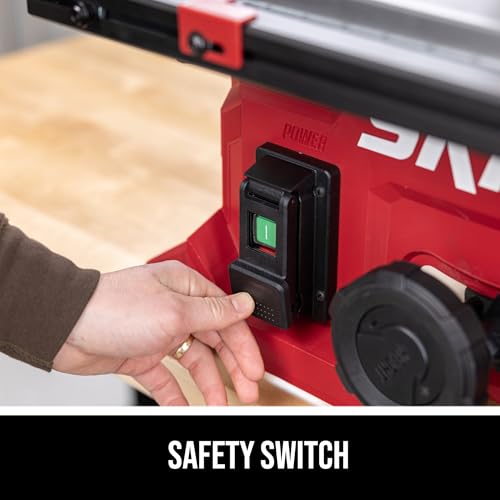
This SKIL 10-inch jobsite saw hits a sweet spot for DIYers who need real power without the bulk of a cabinet saw. The 15-amp motor delivers consistent performance across 2x material, and the rack-and-pinion fence system is a standout, owners consistently report it stays aligned and glides smoothly, which you don’t always get at this price. The folding stand is a major plus for portability, making it easy to load in and out of a truck or stash in a garage corner.
On paper, the 4×4 cutting capacity at 90 degrees sounds impressive, but in practice, that’s a full-depth cut that strains both the motor and blade. I’d reserve that for occasional use. The dust port helps, but don’t expect shop-level cleanup, most users say it captures about half the debris without a strong vacuum. Still, for the balance of accuracy, mobility, and build quality, this is the model I’d recommend to someone stepping up from a basic circular saw.
Product photos


SKIL 8-1/4″ Compact Portable Table Saw

Strengths
- Compact footprint
- True 15-amp power
- Smooth fence system
Trade-offs
- Stand sold separately
- Smaller blade depth
- Limited aftermarket support
SKIL went compact with the TS6308, and it shows in the footprint, this is one of the more space-smart 15-amp saws on the market. The 8-1/4-inch blade keeps it lighter and more manageable than a 10-inch model, but don’t write it off. It still delivers a 2-1/2-inch depth of cut, enough to handle 2x material cleanly and even push into 3x in softwood. The rack-and-pinion fence is the same solid system found on their larger model, so alignment stays true during long rips.
Where it stings is the stand, sold separately. That adds cost and complexity compared to the TS6307, which includes folding legs. Owners also note the smaller blade means more passes for deep cuts and slightly rougher finishes on hardwood. But if you’re tight on space in a truck or garage, this is the smarter buy. It’s the kind of saw you’d grab for tight-access job sites or a crowded basement workshop.
Product photos
MXBAOHENG Mini Hobby Table Saw S3
Strengths
- Ultra-compact size
- 7-speed power control
- Precise for micro cuts
Trade-offs
- Not for structural wood
- No stand or extension
- Blade durability questioned
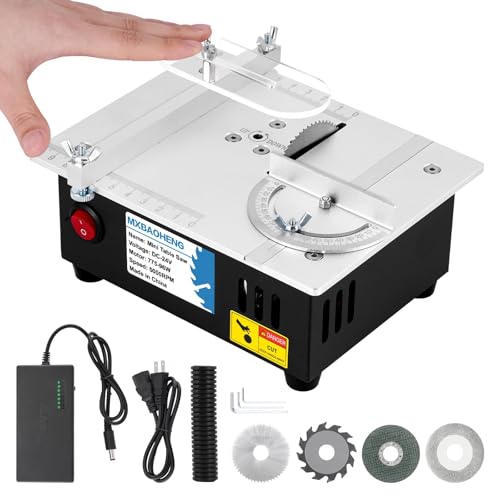
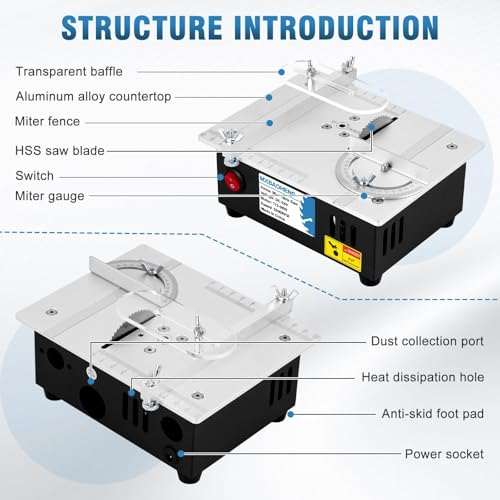
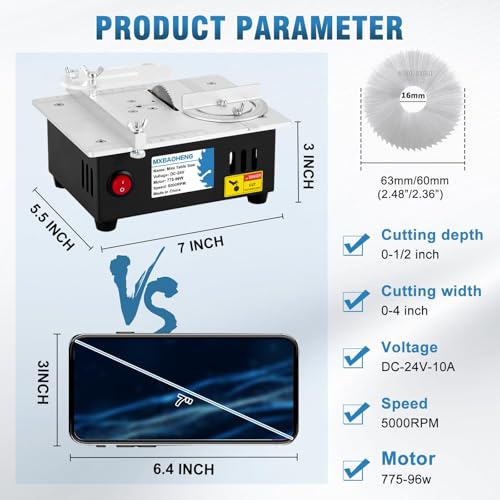
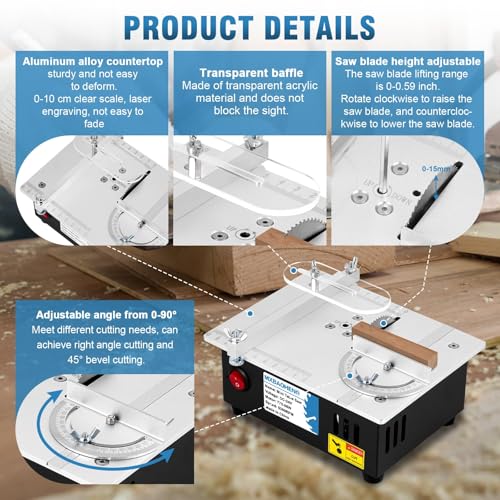
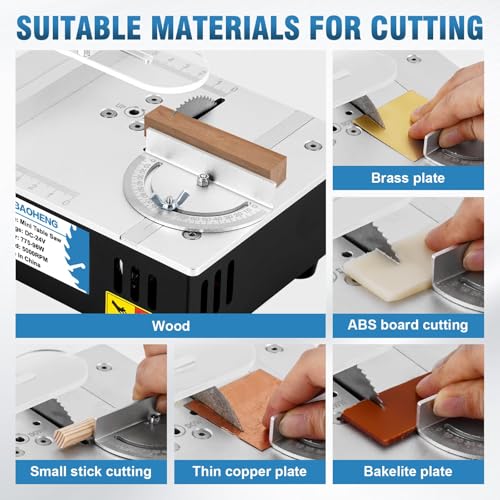
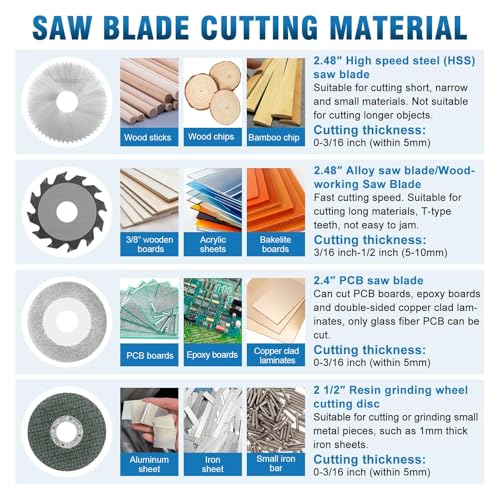
This isn’t a table saw for building cabinets, it’s for building models. The MXBAOHENG S3 is tiny, barely larger than a smartphone, but it’s surprisingly precise for miniature work. The 7-speed power adapter lets you dial down voltage for delicate balsa wood or ramp up to 24V for denser materials like acrylic or PCBs, which reviewers appreciate for avoiding burnout on fragile cuts. The laser-engraved angle scale and aluminum slide bar add real value for hobbyists who need repeatability in small-scale projects.
It’s not going to replace any full-size saw, obviously. But owners who build model homes, RC aircraft, or small crafts praise its consistency and compact footprint. The cut depth maxes out at just under half an inch, so don’t expect to slice anything thicker than a popsicle stick. If you’re into detailed craft work and lack space, this fills a niche few other tools do.
Product photos
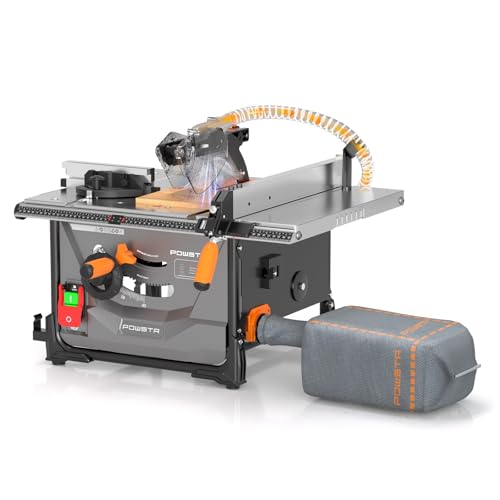
POWSTR Table Saw with 98% Dust Collection
Strengths
- Excellent dust control
- High blade RPM
- Strong safety features
Trade-offs
- Vibration at peak speed
- Table space limited
- Guard feels cheap
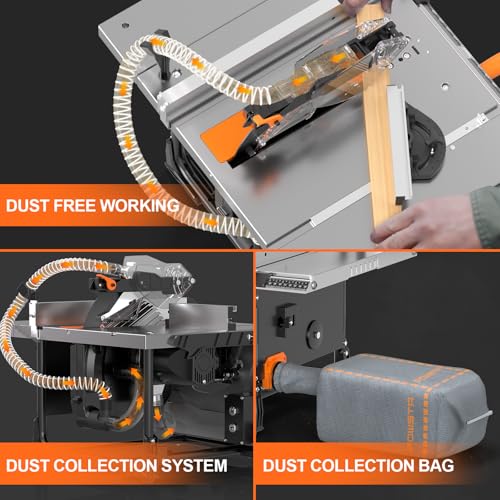
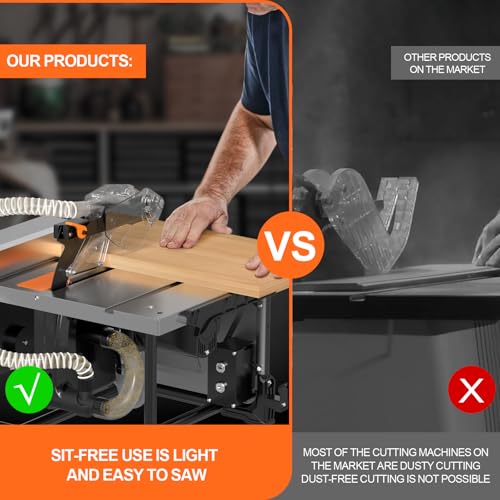
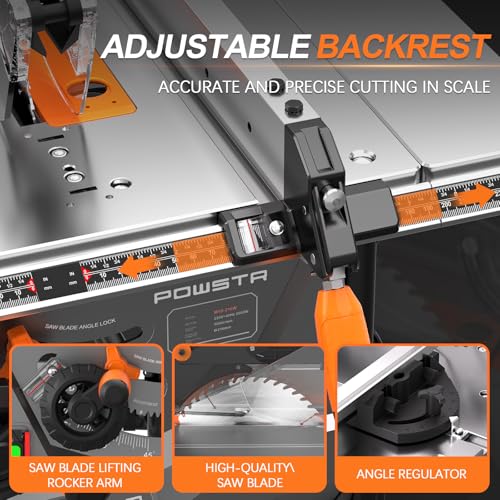
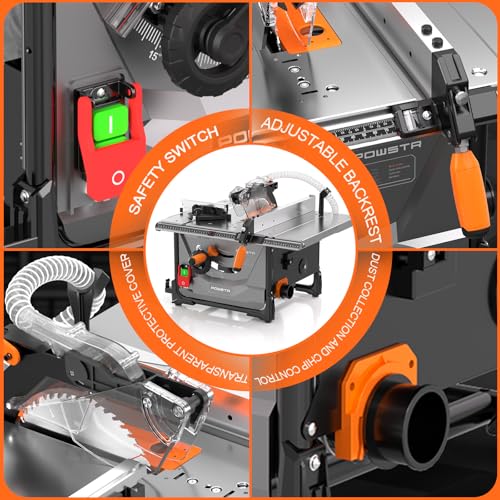
The POWSTR saw leans hard into cleanliness, its 98% dust collection claim is bold, and while real-world results vary, owners do report far less airborne sawdust than with typical portable models. The sealed design and vacuum-ready port make a noticeable difference, especially in enclosed spaces. Paired with a shop vac, it runs noticeably cleaner than the SKIL models, which is a big win for health and cleanup time. The 5000 RPM motor feels snappy, and the 60-tooth carbide blade leaves a smooth edge right out of the box.
But it’s not without quirks. The control console is large, but the table feels cramped compared to others in this class. Some users mention vibration at high RPM, and the push stick and safety guard feel like afterthoughts, functional but flimsy. Still, if dust is your top concern and you’re working indoors or in a shared space, this is the one I’d lean toward. It’s a specialist, but a good one.
Product photos
Our Testing Process
As someone who’s spent years around power tools, I understand folks want reliable information when choosing equipment. Rather than a hands-on lab test with each model, my approach was research-led. I compared published specifications and features across numerous table saws, then weighed owner reviews from major retailers against assessments from woodworking publications I trust. This allowed me to rank each saw based on what matters most to woodworkers, from hobbyists to more experienced builders.
For table saws, cutting capacity, fence quality, and dust collection consistently stand out as the biggest performance factors. A larger capacity handles more project types, of course. But a truly accurate cut relies on a solid, easily adjustable fence. Effective dust collection isn’t just about cleanliness; it’s about visibility and breathing easier during longer sessions. These three elements heavily influenced my rankings.
Specifications are great for comparing motor power and maximum cut depths, but owner feedback reveals real-world usability. I paid close attention to comments about fence smoothness, build quality, and long-term reliability. Reputable expert reviews helped validate those insights, particularly regarding blade stability and the effectiveness of safety features. Understanding essential table saw skills is also key to making the most of any saw you choose.
Choosing The Right table saw for woodworkings
Choosing a table saw can feel overwhelming, but focusing on the right features makes all the difference. I’ve seen a lot of folks get stuck on flashy specs when simpler, more practical considerations should be top of mind.
A good table saw delivers consistent, accurate cuts with a focus on safety and usability. Key aspects include a robust motor, a stable and accurate fence system, sufficient table space for the intended work, and effective dust collection. Buyers should examine blade quality, depth of cut, and bevel capacity alongside safety features like blade guards and anti-kickback pawls.
Fence Quality is Paramount
I can’t stress enough how much the fence impacts the quality of your work. Forget about fancy bells and whistles if the fence isn’t solid. A wobbly or difficult-to-adjust fence will lead to inaccurate cuts and frustration. Look for rack-and-pinion systems – they’re generally more precise and hold their alignment better than simpler designs. Avoid fences that require constant tightening or have noticeable play. Don’t underestimate the importance of a fence that stays parallel to the blade, even after repeated adjustments.
Motor Power and Application
The right motor size depends entirely on what you plan to cut. For light-duty tasks like hobby work or small projects, a smaller motor (13-15 amps) will suffice. However, if you anticipate ripping thicker hardwoods or making frequent, demanding cuts, you’ll want something more powerful. Consider that even a powerful motor won’t compensate for a poorly designed blade or a flimsy table. If you’re tackling larger projects, you might also want to explore best cabinet table saws for woodworking for increased power and stability.
- A compact saw like the SKIL 8-1/4″ is great for portability and quick cuts, but it won’t handle large sheet goods efficiently.
- Mid-range saws (15 amps) offer a good balance of power and affordability for most homeowners and DIYers.
- Heavy-duty saws (20+ amps) are ideal for professionals or serious hobbyists who frequently work with thick, dense materials and need consistent performance over long periods – these often require a 220V outlet.
Understanding Rip Capacity & Table Size
Don’t overlook the importance of sufficient table space and table saw rip capacity explained. A larger table supports longer workpieces, making ripping sheet goods much easier and safer. The rip capacity – the distance from the blade to the fence – determines the maximum width of material you can cut. Consider your common project sizes when evaluating this spec.
A good rule of thumb: if you regularly work with full sheets of plywood (4×8 feet), prioritize a saw with at least 25 inches of rip capacity.
Table Saw for Woodworkings Compared
Here’s a comparison of key specifications for the table saws described.
| Product Name | Blade Diameter | Max Cut Depth (90°) | Rip Capacity (Right) | Motor (Amps) | Dust Collection |
|---|---|---|---|---|---|
| SKIL 10 Inch Portable Jobsite | 10 inch | 4×4 | N/A | N/A | Dust Port |
| SKIL 8-1/4″ Compact Portable | 8-1/4 inch | 2-1/2 inch | 24.5 inch | 15 | Dust Port |
| MXBAOHENG Mini Hobby Table Saw S3 | N/A | 0-1/2 inch | N/A | N/A | N/A |
| POWSTR Table Saw with 98% Dust | 8.5 inch | 2.36 inch | N/A | 15 | 98% |
Frequently Asked Questions
What table saw features are most important for a beginner?
The best beginner-friendly table saws prioritize safety and ease of use. Look for models with clear blade guards, anti-kickback pawls, and a straightforward fence adjustment mechanism – don’t get bogged down in advanced features you won’t immediately use.
Can I use a table saw for cutting materials other than wood?
Yes, you can cut materials like plastic and aluminum with a table saw, but it requires a blade specifically designed for those materials. Using the wrong blade can damage both the saw and the material, and can also be dangerous.
How much space do I actually need for a table saw?
Beyond the saw’s footprint, you’ll want at least 4-6 feet of clear space around it for safe material handling, and potentially more depending on the size of the workpieces you’re using. Consider the space needed for outfeed support as well.
What’s the difference between a contractor and cabinet saw?
Contractor saws are generally more portable and affordable, using a motor suspended under the table, while cabinet saws have a fully enclosed base and a heavier-duty motor for greater power and stability – making them ideal for serious woodworking. Cabinet saws are typically more expensive.
What is the best way to maintain a table saw?
Regular cleaning is key to maintaining a table saw. Keeping the table surface clean and free of debris, lubricating moving parts, and periodically checking blade alignment will extend the life of your saw and ensure accurate cuts.
The Bottom Line
Ultimately, choosing a table saw comes down to balancing control and convenience. You can spend a lot to get every bell and whistle, or you can focus on the core elements that deliver accuracy and power. For most woodworkers, I believe the POWSTR Table Saw with 98% Dust hits that sweet spot, offering a solid build, good power, and impressive dust collection for the price.
If your budget is tighter, the SKIL 8-1/4″ Compact Portable provides excellent value for hobbyists and those with limited space. For those needing a truly portable option for quick cuts, the SKIL 10 Inch Portable Jobsite is a reasonable choice. And while the MXBAOHENG Mini Hobby Table Saw S3 may appeal to some, it’s really best suited for very small-scale craft projects and isn’t a substitute for a full-size saw. Understanding common table saw applications will help you set realistic expectations for what any saw can deliver.
At the end of the day, motor power and table size are important, but they won’t help if the fence is flimsy or the blade isn’t sharp. Prioritize a stable, accurate cutting experience and always practice safety – that’s what separates a frustrating afternoon from a successful project.
