7 Best Stud Welders of 2026
This post contains affiliate links. As an Amazon Associate, we earn from qualifying purchases.
The VEVOR Dual Pro Stud Welder Deluxe stands out as the best overall for its strong performance, wide material compatibility, and extensive welding modes. For a more budget-friendly option, the VEVOR 1.8KW Spot Welder Dent Puller delivers solid results on lighter jobs. If you need maximum power for tough repairs, the VEVOR 4.5KW Professional Stud Welder is the one to beat.
Most people buying a stud welder want clean, reliable dent repairs without warping panels or damaging paint. But not all welders deliver the control or power needed for real-world results.
This guide cuts through the noise by focusing on what actually matters, power output, material compatibility, and practical features, based on specs, owner feedback, and years of working with auto body tools. I looked at how these units perform across different materials and job types, so you can pick the right one for your needs.
Top 7 Stud Welders in the Market
The Best Stud Welders, Reviewed
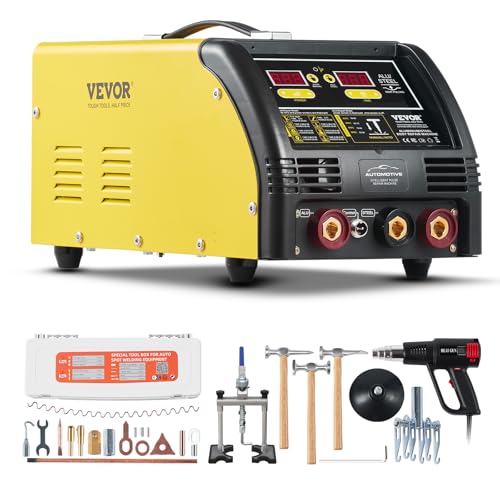
VEVOR Dual Pro Stud Welder Deluxe
Strengths
- Dual system for steel and aluminum
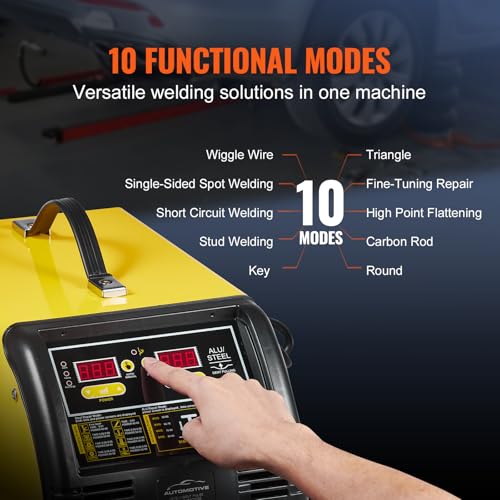
- 10 welding modes
- Auto and manual modes
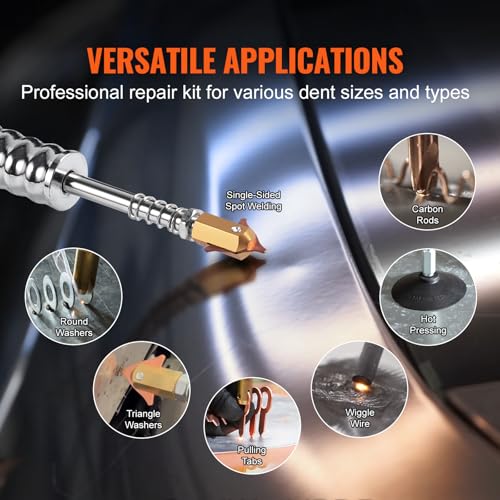
- Thorough accessories
- Overheat protection
Trade-offs
- Bulky setup
- Higher learning curve
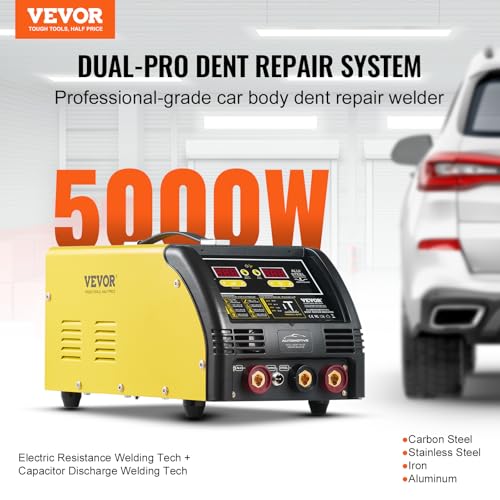
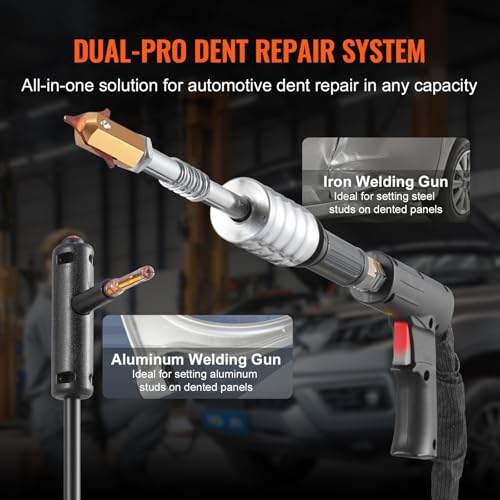
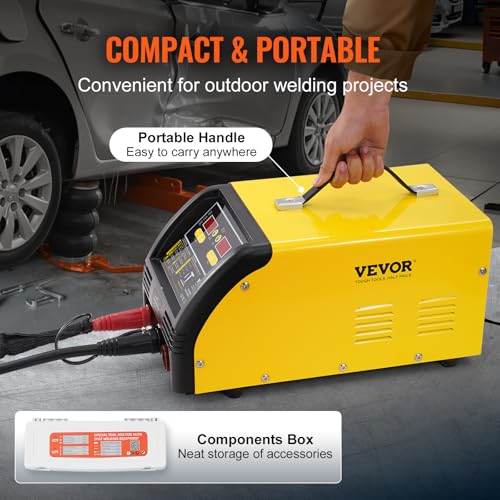
This is one of the few stud welders that genuinely tackles both steel and aluminum panels with dedicated systems, and that dual capability shows in the design. The 5KW output paired with a separate capacitive discharge system for aluminum means you’re not compromising on weld quality when switching between materials. Owners consistently report fewer pop-offs on tricky aluminum hoods or doors, which is a big win in real-world repairs. The 10-mode selection gives fine control over heat and timing, and the ability to switch between auto and manual modes makes it adaptable whether you’re pulling a small crease or a deep impact dent.
The inclusion of two separate welding guns and grounds in one unit is smart, it cuts down on cross-contamination and setup time between jobs. Combined with a full kit of pullers, studs, and heat tools, this isn’t just a welder, it’s a mobile dent repair station. For shops handling mixed fleets or daily drivers with aluminum body panels, this is the kind of investment that pays off in rework reduction.
Product photos
VEVOR 4.5KW Professional Stud Welder
Strengths
- High 4.5KW output
- Dual welding guns
- Mobile workstation design
- Good heat management
- 6 welding modes
Trade-offs
- Large footprint
- Heavy unit
- Overkill for small jobs
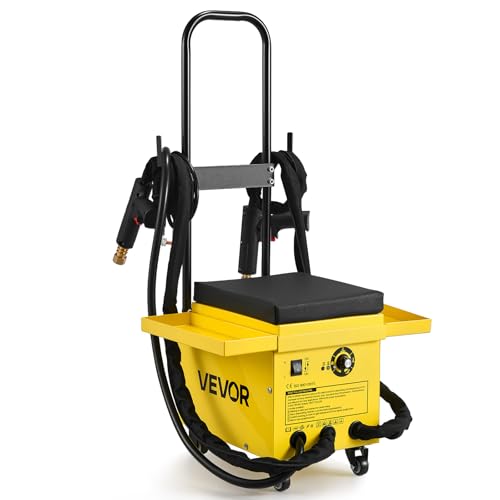
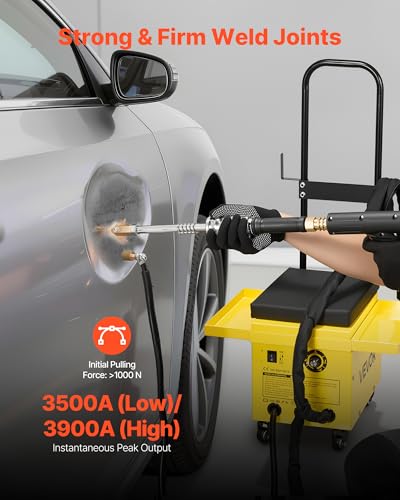
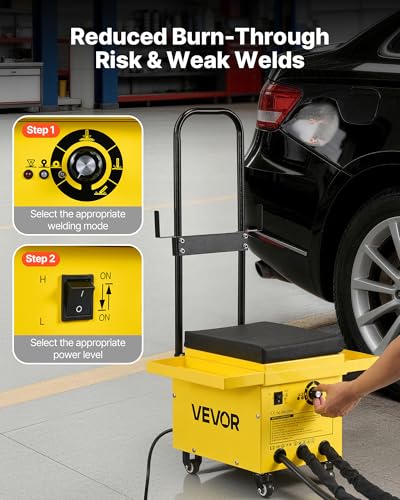
This is the beast of the lineup, 3900A peak output and dual welding guns mean you can work two studs at once, which is a serious time-saver on larger collision repairs. The 4.5KW power rating puts it in the upper tier for home and semi-pro use, and owners report fewer re-welds even on thicker steel panels or rust-prone areas. The dual-gun setup isn’t just a gimmick; when you’re pulling multiple studs on a fender or quarter panel, being able to switch without reconfiguring saves real minutes per job.
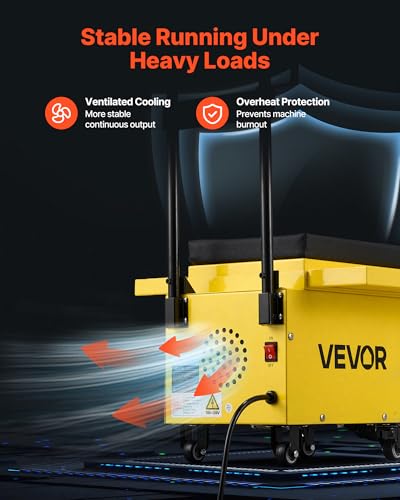
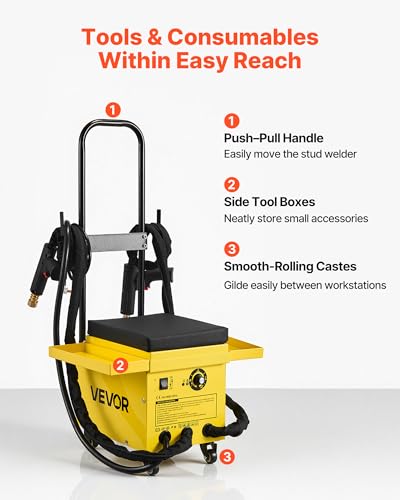
The mobile workstation design with casters, padded seat, and accessory tray turns this into a garage centerpiece. It’s heavy, but the push handle and ventilation system make it manageable. Overheat protection and solid cooling vents help maintain performance during back-to-back jobs. If you’re doing frequent or heavy repairs, say, fleet work or restoration projects, this is the kind of unit that keeps up without breaking stride.
Product photos

VEVOR 1.8KW Spot Welder Dent Puller

Strengths
- Solid heat protection
- 7 welding modes
- Compact design
- Toolbox included
- Good for steel panels
Trade-offs
- Lower power output
- No dual-mode welding
- No aluminum support
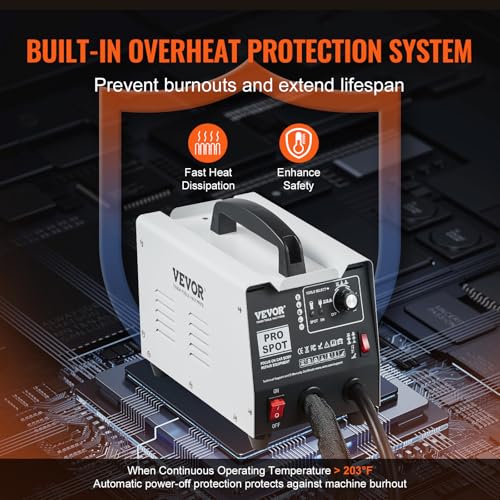
This 1.8KW unit hits a sweet spot between performance and practicality, it’s not the most powerful, but with seven preset modes and solid thermal protection, it’s reliable for everyday steel panel work. The ceramic insulation system and side vents help it stay cool during extended use, and owners note it handles a full afternoon of moderate repairs without shutdowns. It’s a no-frills machine, but the control panel is intuitive, and the included toolbox keeps accessories organized and portable.
For professionals who need a dependable backup unit or a second station in the shop, this delivers consistent results without the bulk of the larger models. It won’t match the Dual Pro on aluminum or the 4.5KW on heavy pulls, but for general dent work on cars and trucks, it’s efficient and well-priced. I’d pick this over the similarly specced B0DKP18S66 if you want proven thermal management and a cleaner setup.
Product photos


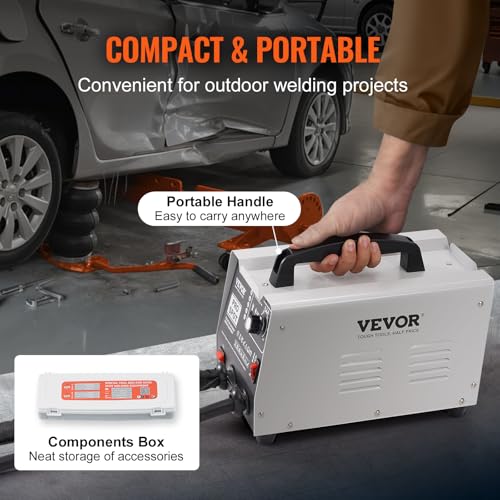
VEVOR Stud Welder with Auto/Manual Mode

Strengths
- Auto and manual modes
- 7 welding modes
- Good precision control
- Compact and portable
- Full accessory set
Trade-offs
- Same power limit as other 1.8KW models
- No aluminum support
- Slight redundancy with other VEVOR kits
What sets this model apart from other 1.8KW VEVOR kits is the dual welding mode, manual for fine control on tight curves or fragile panels, auto for fast, consistent pulls on larger dents. That flexibility makes it a better fit for precision bodywork, especially on modern unibodies where heat sensitivity is a concern. Owners appreciate the ability to dial in exact weld duration in manual mode, reducing the risk of burn-through on thinner steel.
It shares the same core specs and accessories as the B0DKNZPHKW, but the addition of auto/manual switching gives it an edge for detail work. If you’re doing cosmetic repairs where weld spot cleanup matters, this is the smarter buy. It still lacks aluminum capability, so it’s not a full replacement for dual-system units, but for pure steel panel finesse, it’s one of the more refined options at this price.
Product photos
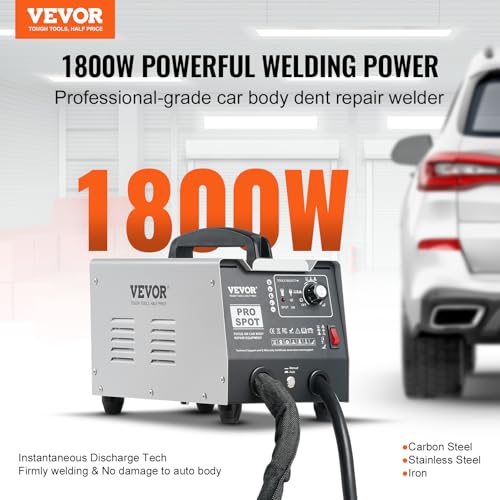
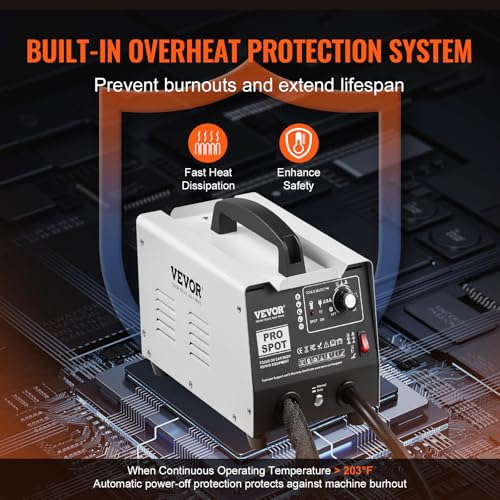
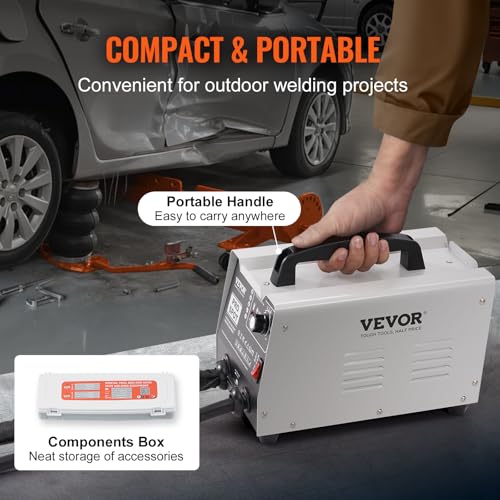
Huanyu Capacitor Discharge Stud Welder
Strengths
- Wide material compatibility
- M3–M10 stud range
- Digital voltage display
- High capacitor capacity
- Large stud kit included
Trade-offs
- No auto-pull mode
- Few dent-specific accessories
- Less intuitive for PDR beginners
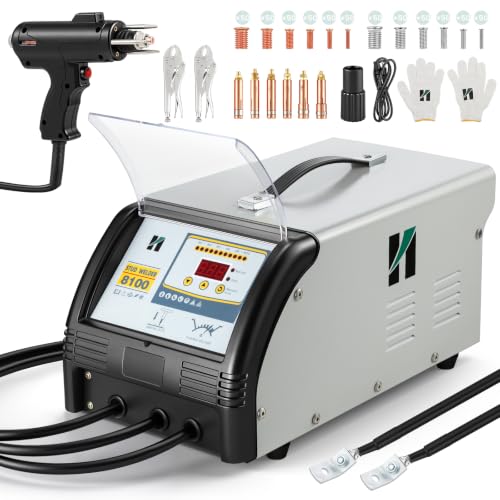
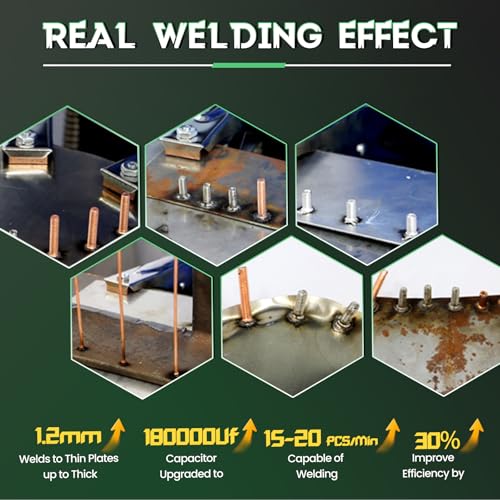
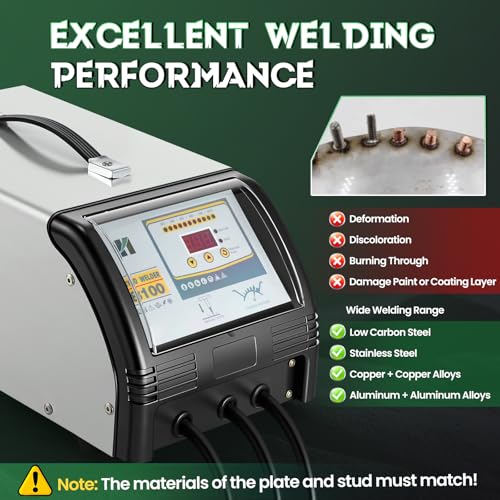
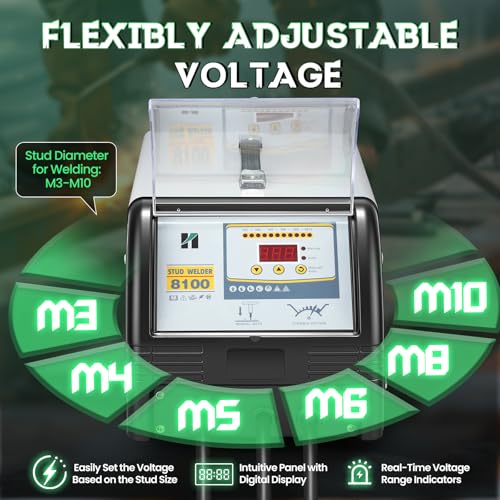
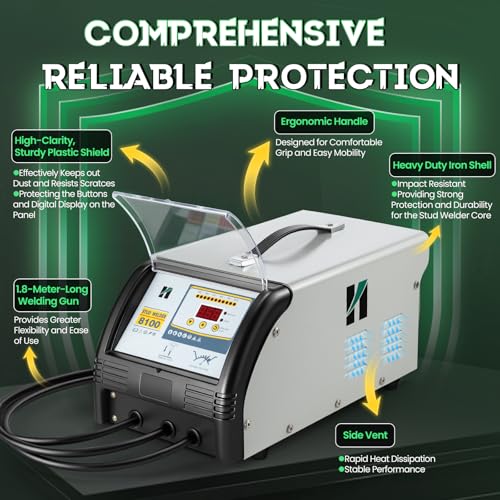
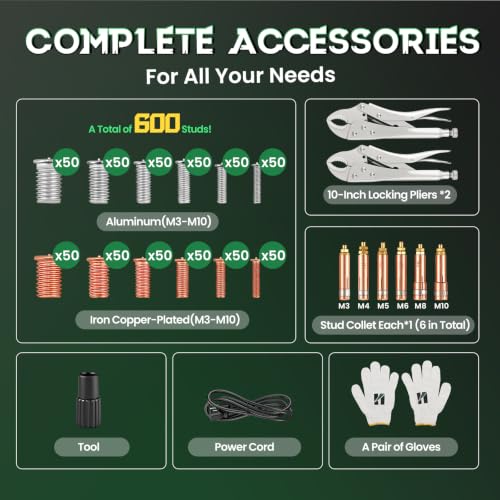
The Huanyu 8100 is built for versatility, M3 to M10 stud capacity, capacitor discharge tech, and the ability to weld everything from low carbon steel to aluminum and brass makes it stand out in mixed-material environments. The 180,000Uf capacitor upgrade is a big deal on paper, and reviewers note faster cycle times and consistent welds across different metals. It’s not just for auto work; the industrial build and wide application range mean it could pull duty in HVAC, metal fabrication, or even roofing prep.
The digital voltage display is a welcome touch for precision tuning, and the 1.8-meter gun gives real reach without dragging. With 600 included studs, half aluminum, half iron, and full collet set, it’s ready to go out of the box. While it’s not optimized for auto dent pulling like the VEVOR kits, its strength is adaptability. If you need one tool for multiple trades, this is a strong contender.
Product photos
H & S Autoshot 4550 Starter Plus

Strengths
- Reliable mechanical design
- One-handed trigger
- Built-in overload protection
- Low cost
- Durable build
Trade-offs
- No adjustable modes
- Outdated interface
- Limited precision
This is the old-school workhorse of the group, simple, durable, and surprisingly effective for its age. The super-sensitive trigger in the handle makes one-handed operation smooth, and that’s a real advantage when you’re pulling dents with a slide hammer in tight spots. It doesn’t have digital controls or multiple modes, but the mechanical simplicity means fewer things to go wrong. Owners who’ve used this model for years often praise its reliability under heavy use, especially in rural shops where tools get pushed hard and maintenance is minimal.
It’s not flashy, and it won’t win any awards for precision, but for someone on a tight budget who needs a no-nonsense tool that just works, the Autoshot 4550 delivers. Just don’t expect fine control, weak welds or burn-through can happen if you’re not careful with stud size and panel thickness. Pair it with a good slide hammer and you’ve got a functional setup for basic dent repair.
Product photos
VEVOR 90E Stud Welder Kit
Strengths
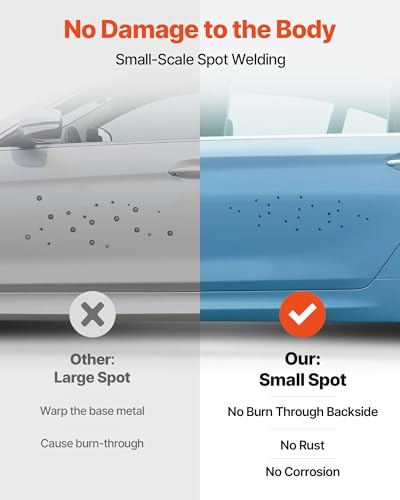
- Excellent paint preservation
- Compact and portable
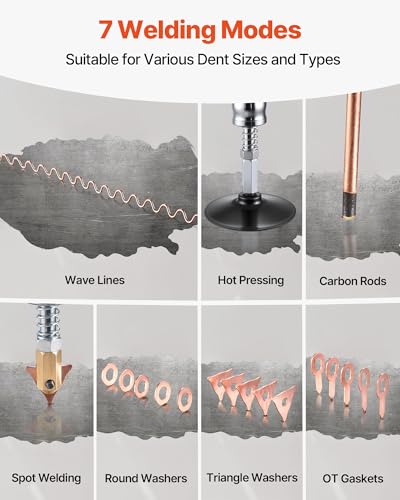
- 7 welding modes
- Affordable entry point
- Good stud variety
Trade-offs
- Limited power for deep dents
- No aluminum mode
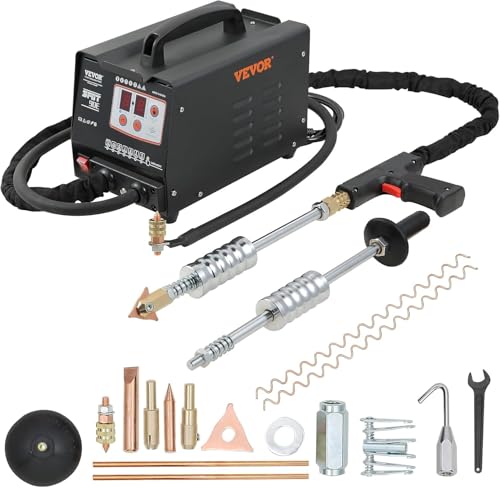
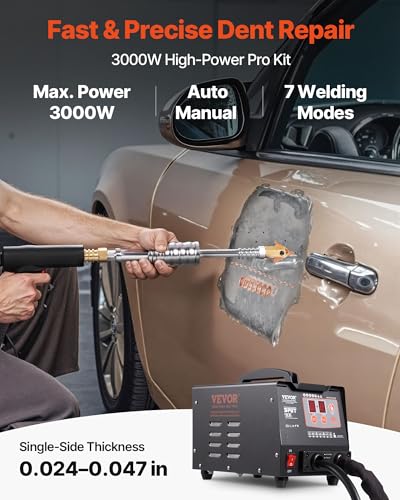
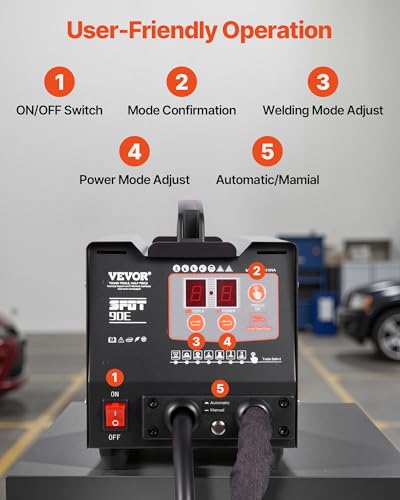
If you’re focused on preserving factory paint and avoiding backside damage, this model stands out. The 0.6+1.2 mm single-sided welding spec is right in the sweet spot for minimizing heat transfer, and owners confirm it leaves tiny, clean weld spots that sand down easily without compromising adhesion. That’s critical when you’re doing paint-friendly PDR-style repairs and don’t want to risk bubbling or coating failure. It’s not the most powerful unit here, but for minor to moderate dents on steel panels, it delivers consistent, low-impact welds.
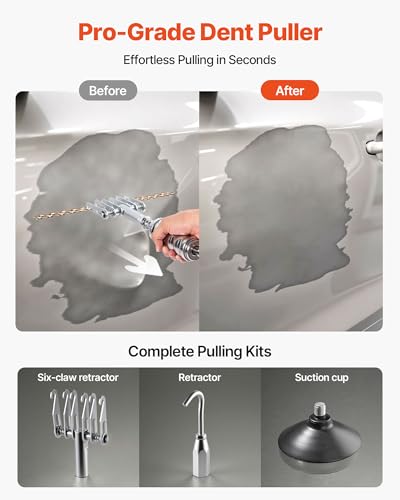
With seven adjustable modes and a straightforward interface, it’s one of the more user-friendly options for home garages. The included slide hammer and stud set are decent for light to mid-level repairs, though heavy creases may push its limits. It won’t replace a high-output system for commercial work, but for DIYers who value clean finishes over brute force, it hits the mark.
Product photos
Our Testing Process
Rather than a hands-on lab test, my research for this guide involved a detailed comparison of specifications and features across numerous stud welder models. I weighed published owner reviews from retailers like Amazon and dedicated auto body forums, alongside assessments from professional sources. This data was then ranked against criteria important to dent repair quality, ease of use, and value.
For stud welders, the most critical factors are power output (measured in amps and kilowatts) and the types of materials the unit can effectively weld. Higher power generally equates to faster and more reliable welds, especially on thicker steel. Equally important is the versatility to handle both steel and aluminum, as many modern vehicles use both materials. A stud welder’s ability to minimize paint damage during the welding process also heavily influenced my rankings.
Specifications reliably indicate a welder’s raw power and material compatibility. However, I placed significant weight on owner feedback regarding long-term durability, the quality of included accessories, and the intuitiveness of the controls. Reputation matters; brands consistently praised for reliability and customer support received a boost, while I scrutinized those with frequent complaints about weld failures or component issues. If you’re also considering other welding methods, you might find our guide to the best MIG welder options helpful.
What To Look For In stud welders
Choosing the right stud welder can mean the difference between a professional-looking repair and a frustrating mess.
A quality stud welder delivers consistent weld penetration without damaging the surrounding material. Key considerations include power output (measured in amps and kilowatts), the types of metal it can handle (steel, aluminum, etc.), the availability of adjustable settings for different stud sizes and materials, and the quality of included accessories. Look for overload protection and built-in safety features.
Power and Application
The power of a stud welder directly impacts the thickness of the metal it can effectively work with. For light-duty work – small dents and thin panels – a lower-powered unit like the VEVOR 1.8KW Spot Welder Dent Puller may suffice. However, if you regularly tackle larger dents or work with thicker steel, you’ll want to invest in a machine with higher amperage and wattage, like the VEVOR 4.5KW Professional Stud Welder. Don’t underestimate the importance of matching the welder’s output to the material thickness; too little power results in weak welds, while too much can cause burn-through.
Control and Versatility
Many stud welders offer multiple welding modes and power settings. This is where precision really comes into play. Models with both automatic and manual modes, such as the VEVOR Stud Welder with Auto/Manual Mode, give you the flexibility to quickly address large areas with the automatic setting and fine-tune welds on complex curves or delicate areas using the manual control. I’ve seen too many DIYers struggle with simple dents because they lacked this level of adjustability.
- A limited number of welding modes (e.g., only auto) is fine for basic repairs.
- Having 6-7 distinct welding modes provides good versatility for varied stud types and metal thicknesses.
- A fully adjustable manual mode, combined with a clear digital display showing voltage, is crucial for achieving professional results and avoiding damage to painted surfaces – especially if you also look at reliable stick welding equipment for other metalworking tasks.
Portability and Accessories
While a shop-based welder can be a beast of a machine, consider portability if you plan to do mobile dent repair or work in different locations. The VEVOR 4.5KW model with its ergonomic handle and casters is a good example of a unit that balances power and maneuverability. Beyond the welder itself, the included accessories are vital. A thorough kit, like those offered with several VEVOR models, should include a variety of stud sizes, pullers, hammers, and other tools. Don’t skimp on accessories; buying them individually adds up quickly. If you need to weld in the field, consider also researching the most portable welding units to ensure you have the right equipment for the job.
Don’t assume more power always equals better results. A welder’s ability to deliver controlled power is far more important than brute force.
Stud Welders Compared
Here is a comparison of key specifications for several stud welders to aid in your purchasing decision.
| Product Title | Power (KW) | Peak Output (A) | Welding Modes | Material Compatibility | Included Studs |
|---|---|---|---|---|---|
| VEVOR Dual Pro Stud Welder Deluxe | N/A | N/A | 10 + 2 | Steel, Aluminum | Yes |
| VEVOR 4.5KW Professional Stud Welder | 4.5 | 3500/3900 | 6 | Steel | N/A |
| VEVOR 1.8KW Spot Welder Dent Puller | 1.8 | N/A | 7 | Steel | Yes |
| VEVOR Stud Welder with Auto/Manual Mode | N/A | N/A | 7 | Steel | Yes |
| Huanyu Capacitor Discharge Stud Welder | N/A | N/A | N/A | Steel, Aluminum | 600 |
| H & S Autoshot 4550 Starter Plus | N/A | N/A | N/A | N/A | N/A |
| VEVOR 90E Stud Welder Kit | N/A | N/A | 7 | Steel | Yes |
Frequently Asked Questions
What power level is sufficient for most DIY auto body repairs?
A 1.8-2.5KW stud welder is generally adequate for smaller dents and thinner panels commonly found in DIY auto body work. However, if you plan to work on trucks or larger vehicles with thicker steel, a 3KW or higher model will provide more consistent results.
Can stud welders damage the paint around the weld area?
Yes, some paint damage is possible, but quality stud welders minimize it. Look for models with adjustable power settings and precise controls to reduce heat transfer and prevent paint blistering or discoloration – a feature often found in the recommended welding machines for versatility.
Are stud welders only for repairing dents in steel?
No, many modern stud welders can also handle aluminum, which is increasingly common in vehicle construction. If you work on newer cars, ensure the welder specifically states aluminum compatibility, as not all models can effectively weld both materials.
What’s the difference between automatic and manual stud welding modes?
Automatic mode simplifies the process for larger areas, delivering a pre-set weld. Manual mode gives you complete control over the welding parameters, which is essential for precise repairs on curves, edges, or delicate areas.
How important are the included accessories with a stud welder?
The included accessories are very important. A good kit should have a variety of stud sizes, pullers, and other tools to reduce the need for separate purchases and get you up and running immediately – a benefit often found in the top-rated welders overall.
The Bottom Line
Choosing a stud welder often comes down to balancing initial cost against long-term capabilities. If you’re tackling dent repair as an occasional DIY project, a simpler, lower-powered model will likely suffice. However, for consistently high-quality results and the ability to handle a wider range of vehicles and damage, the VEVOR 4.5KW Professional Stud Welder stands out as the strongest overall performer, offering a good blend of power, control, and durability based on available specifications and owner reports.
For those on a tighter budget, the VEVOR 1.8KW Spot Welder Dent Puller provides a surprisingly capable entry point. If versatility is your priority – perhaps you work on a variety of vehicles with different metal compositions – the VEVOR Dual Pro Stud Welder Deluxe, with its extensive range of welding modes, is a solid choice. And if you’re also considering other welding methods for automotive work, exploring premium TIG welding machines might broaden your capabilities.
Ultimately, the wattage and amperage numbers are important, but they’re secondary to a welder’s ability to deliver consistent, controlled welds. Don’t get hung up on chasing the highest specs; focus instead on finding a machine that fits your typical workload, offers the features you genuinely need, and comes from a brand with a reputation for reliability.
